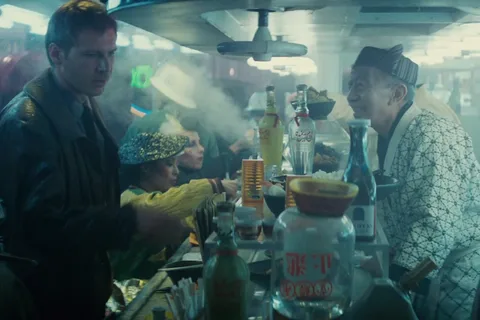
Blade Runner (1982): Plot, Cast, Production & Versions

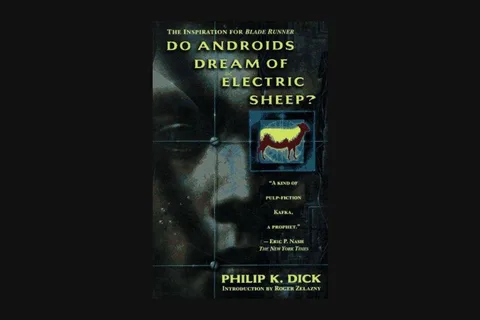
Blade Runner (1982) is a science fiction film directed by Ridley Scott. Hampton Fancher and David Peoples wrote the screenplay from Philip K. Dick's 1968 novel. In November 2019 Los Angeles, retired blade runner Rick Deckard is pulled back to hunt four escaped Nexus-6 replicants. The Tyrell Corporation built those units with a four-year lifespan, and Roy Batty led them to Earth looking for a way to live longer. Scott moved Dick's dusty San Francisco hunt into rain, neon, and Cityspeak, then later cuts dropped the theatrical voice-over and the drive into the mountains.
Plot Summary
In November 2019, blade runner Dave Holden ran a Voigt-Kampff empathy test on a new Tyrell employee in a high room overlooking the city. The subject, Leon Kowalski, sat through questions about his mother, then pulled a gun from under the table and shot Holden. Leon was one of six Nexus-6 replicants who had killed the crew of an off-world shuttle and come to Earth. One of the six died breaking into the Tyrell Corporation. That left four names for the Los Angeles police: Leon, combat model Roy Batty, pleasure model Pris, and assassin Zhora. Each Nexus-6 had a four-year lifespan.
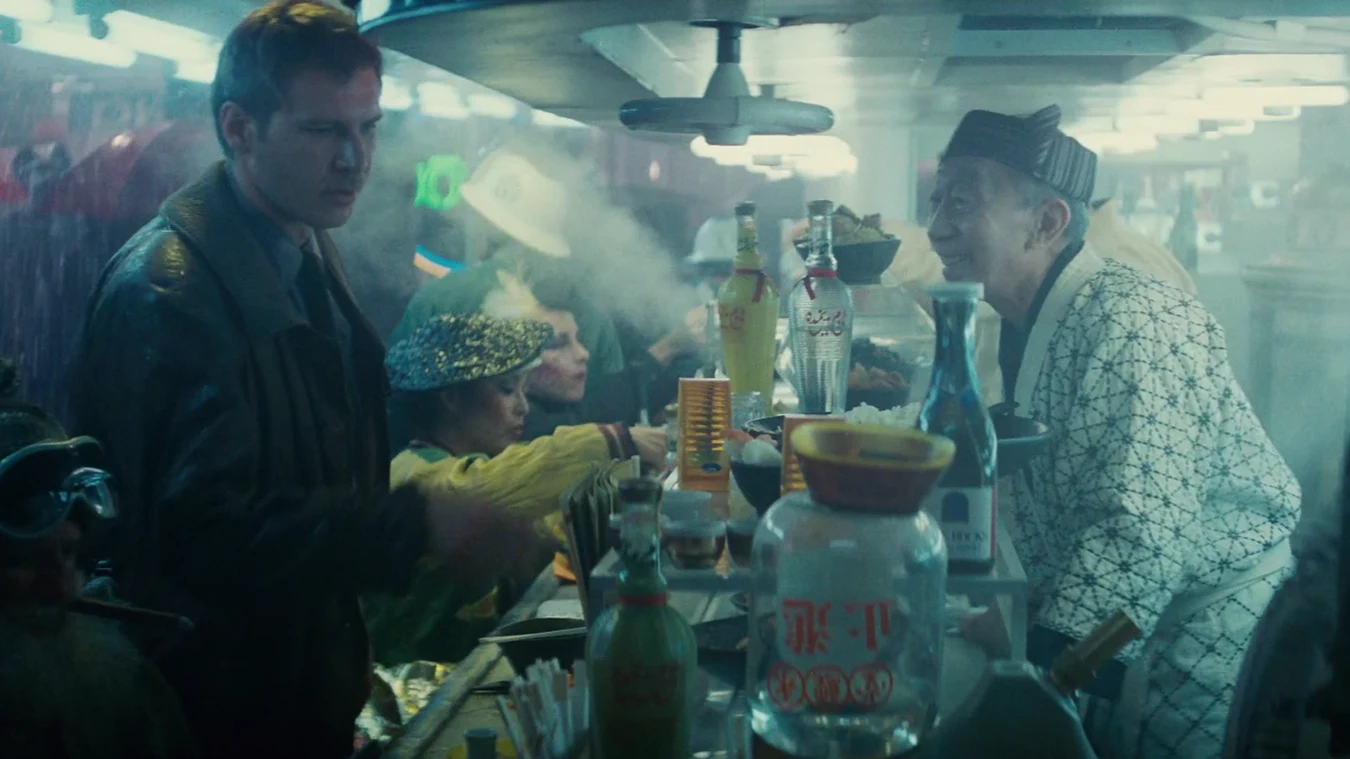
Captain Harry Bryant sent officer Gaff to take retired blade runner Rick Deckard out of a noodle stall at the White Dragon. Gaff spoke Cityspeak in the street, then flew Deckard to police headquarters in a spinner. Bryant showed incept tapes and put Deckard back on the case whether he wanted the badge or not. At Tyrell's pyramid, Deckard met Eldon Tyrell and his secretary Rachael. An owl watched the room. Deckard ran the test on Rachael after Tyrell asked to see it work on a human subject. The needles marked her as a replicant after more questions than a Nexus-6 usually needed. Tyrell told Deckard she carried implanted memories taken from his niece, so she would be easier to control. Rachael did not know she was a replicant.
Roy and Leon went to the eye designer Hannibal Chew in a frozen lab and wrecked the place looking for a path to Tyrell. Chew had made their eyes. He sent them toward genetic designer J. F. Sebastian, who lived among his own toys in the empty Bradbury building. Deckard searched Leon's room at the Yukon Hotel, found family snapshots, and put one photograph through his Esper machine. The machine let him move through the room in the picture until he found a woman on a daybed with a snake tattoo. He printed a hard copy, then lifted an artificial snake scale from the bathtub. The scale took him through Animoid Row to a maker named Abdul Ben-Hassan, and from there to a club run by Taffey Lewis, where Zhora was dancing with an artificial snake.
Deckard waited in Zhora's dressing room and tried to take her as a vice officer checking the snake license. She knocked him down with the animal and ran into the crowded street in a transparent raincoat. He chased her through the arcade and shot her through shop glass as she fled in the rain. Bryant arrived with Gaff and added Rachael to the list. She had walked out of Tyrell after the test, and Bryant wanted her retired with the others. Leon then caught Deckard in the street and beat him against walls and a car. Rachael picked up Deckard's gun and killed Leon.
Deckard took Rachael to his apartment in the Ennis House. She asked if he would hunt her if she left. Deckard would not hunt her, and she sat at his piano. She stayed the night. Across town, Pris hid in trash outside the Bradbury building until Sebastian drove up in his Armadillo van. She used a lost, damaged act to get inside his rooms.
Roy reached the Bradbury building after the visit to Chew and found Pris living in Sebastian's rooms among the toys. Sebastian learned they were Nexus-6 replicants and treated that as kinship, because Methuselah Syndrome had aged his twenty-five-year-old body. Pris pulled a cooked egg from a pot of boiling water to show him what a Nexus-6 could stand. Roy then studied a chess game Sebastian had left open with Eldon Tyrell and found a winning line. Sebastian agreed to take him into the pyramid using that unfinished game as the reason to go up after hours, and Pris stayed in the apartment.
Roy and Sebastian went to the Tyrell pyramid after dark and rode the elevator to the top on Sebastian's staff access. They used the chess finish as the reason for the late visit, without naming Roy, and Tyrell opened the bedroom. After they finished the game, Roy asked for more life. Tyrell treated the four-year limit as fixed in the Nexus-6 design and refused to change it. Roy kissed him, crushed his skull, and pushed out his eyes. Sebastian was killed on the same visit.
Deckard followed those deaths to the Bradbury building, where Pris was waiting in the toy rooms. She hid among Sebastian's dolls and attacked him from the floor. Deckard retired her in the apartment, and Roy came back from the pyramid, found her body, and howled through the building.
Roy broke two of Deckard's fingers for Zhora and Pris, drove a nail through his own palm, and forced Deckard out of the rooms and onto the wet roof. Deckard jumped for another ledge and slipped. Roy, dying as his four years ran out, caught the blade runner's wrist and hauled him back onto the roof. He spoke of attack ships off Orion and C-beams near the Tannhäuser Gate, then died in the rain with a dove in his hands.
Gaff arrived after the fight, treated the four retirements as finished work, and added that Rachael would not live. Deckard went home, found Rachael asleep under a sheet, and saw a tin-foil unicorn Gaff had left in the hall. The figure matched a unicorn Deckard had dreamed at the piano. They left the apartment together, and the elevator doors closed on them. The 1982 theatrical prints then cut to unused mountain footage from Stanley Kubrick's The Shining and a voice-over that Tyrell had given Rachael no termination date. Later versions end at the elevator.
Main Cast And Characters
Scott and producer Michael Deeley wanted lesser-known actors for the replicants, with Harrison Ford as the only familiar face in the hunt. Casting directors Mike Fenton and Jane Feinberg cast Roy, Rachael, Gaff, Bryant, and the Tyrell household on that basis.
- Rick Deckard (Harrison Ford) was a retired Los Angeles blade runner. Bryant forced him back onto the Nexus-6 case, and he left the city with Rachael after Roy saved him on the roof.
- Roy Batty (Rutger Hauer) was a Nexus-6 combat model and the leader of the escape. He reached Tyrell, killed his maker when the four-year limit could not be lifted, then saved Deckard and died in the rain.
- Rachael (Sean Young) was a Tyrell replicant with implanted memories who believed she was human. She killed Leon to save Deckard and left with him at the end of the film.
- Gaff (Edward James Olmos) was a police officer who spoke Cityspeak, folded origami, and brought Deckard to Bryant. He left the tin-foil unicorn that closed the later cuts.
- Harry Bryant (M. Emmet Walsh) was the police captain who assigned the four remaining replicants and then added Rachael to the list after she left Tyrell.
- Pris (Daryl Hannah) was a Nexus-6 pleasure model who hid with J. F. Sebastian in the Bradbury building and died there when Deckard shot her.
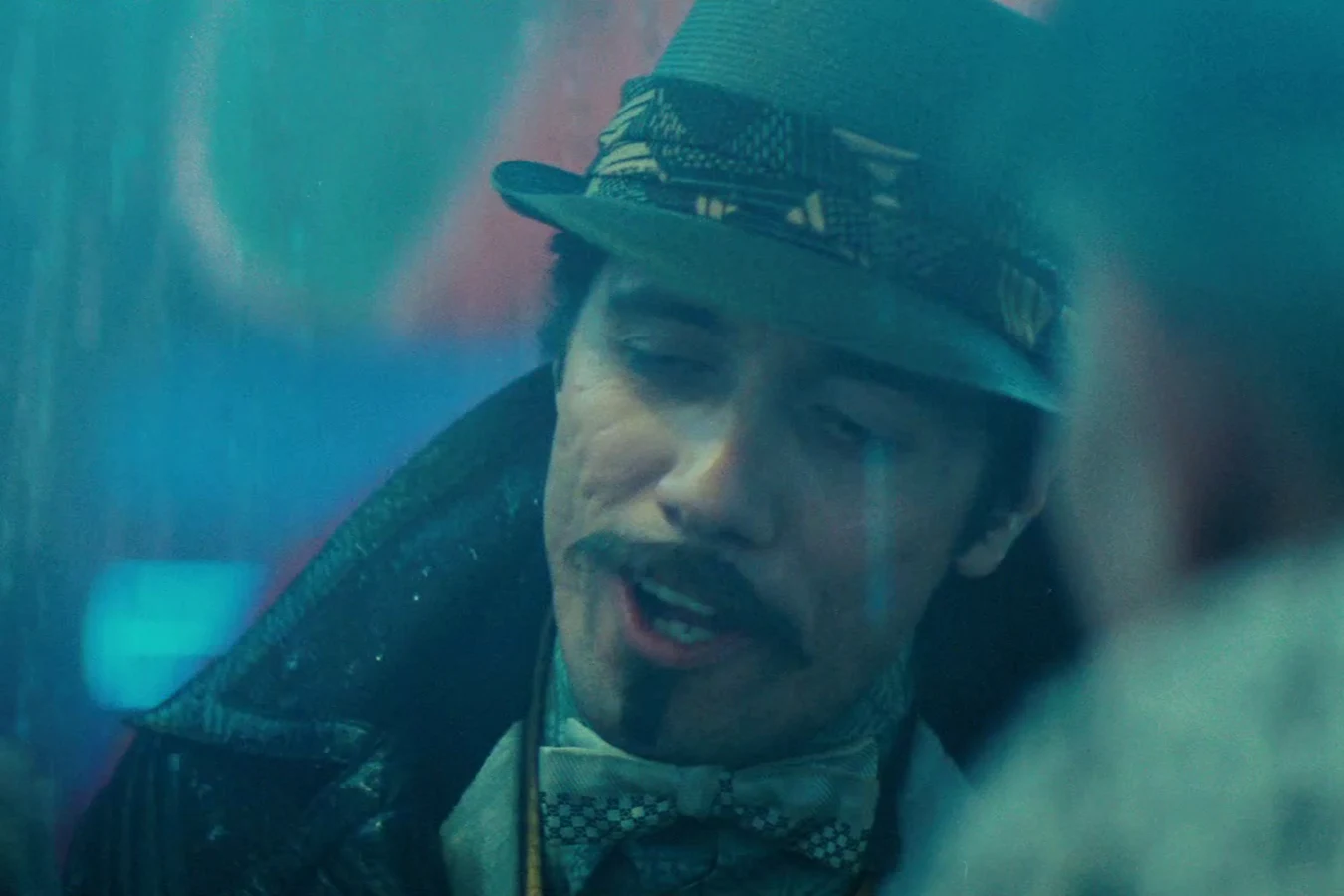
- Leon Kowalski (Brion James) was a Nexus-6 labor model. He shot Holden during the opening Voigt-Kampff test and later beat Deckard until Rachael killed him.
- Zhora (Joanna Cassidy) was a Nexus-6 assassin working as a snake dancer for Taffey Lewis. Deckard shot her through shop windows as she ran through the street.
- J. F. Sebastian (William Sanderson) was a genetic designer with a premature-aging disease who lived among his toys. He took Roy to Tyrell and was killed the same night.
- Eldon Tyrell (Joe Turkel) ran the Tyrell Corporation, built the Nexus-6 line, and died when Roy crushed his skull after the chess visit.
- Hannibal Chew (James Hong) designed replicant eyes and pointed Roy and Leon toward Sebastian after they wrecked his frozen lab.
- Dave Holden (Morgan Paull) was the blade runner who started Leon's test and was shot in the opening scene.
- Taffey Lewis (Hy Pyke) ran the club where Deckard found Zhora.
Differences From The Novel
Scott's film keeps Deckard, Rachael, Roy, and a hunt for escaped manufactured people, then changes almost every room around them. Dick's day is San Francisco on 3 January 1992, gray with radioactive dust, from the Lombard Street Hall of Justice to the empty peninsula south of the city. Most people have left for the colonies, so the streets are thin and whole buildings stand empty. The film is crowded Los Angeles in November 2019, wet with neon and packed sidewalks. Some later printings of the novel moved that winter to 2021 after the film's year had passed. The 1968 text stays in 1992.
Dick spelled the escape's leader Roy Baty. The film spells him Roy Batty, drops Irmgard, and pairs him with Pris. The book's androids are Nexus-6 products of the Rosen Association, retired for a thousand-dollar bounty. The film's replicants come from the Tyrell Corporation and live under a four-year limit that the book gives Rachael as a general android fact, not a Tyrell fail-safe. Bryant's briefing also counts six escapees and one death at Tyrell, which leaves a missing fifth name the shoot never filled after a replicant called Mary was cut.
Mercerism and Buster Friendly are the public culture of Dick's Earth. The empathy box, the shared climb, and Buster's twenty-three-hour show, including the exposé that Mercer was a bit player named Al Jarry, have no equivalent in the first film. Kipple is Dick's word for the junk that fills those deserted rooms and then whole floors. The film never uses it. Sidney's catalogue and the electric animals are also absent. J. F. Sebastian later takes some of Isidore's isolation, without the chickenhead test or the Van Ness truck.
The novel treats Deckard as a human bounty hunter. He is married to Iran, takes monthly police medical exams as a regular, and administers Voigt-Kampff rather than sitting it. Nothing in the book hints that he is an android. The film leaves that question open through Gaff's origami and Scott's later comments. Deckard's arrest at the fake Mission Street Hall of Justice, an android loop built around Garland, is a book subplot the film does not have. Gaff and Cityspeak belong to the movie alone. The film also leaves Deckard single, drops the goat and the toad, and ends on a rooftop run with Rachael instead of a kitchen order for artificial flies.
The words blade runner are not in Dick's text. Fancher took the phrase from William S. Burroughs's 1979 treatment Blade Runner: A Movie, which itself used Alan E. Nourse's 1974 novel about medical smugglers, then attached it to Deckard's police work. Deeley licensed both titles for under five thousand dollars. Dick saw rough cuts of the effects work before he died in March 1982 and praised the city Scott had built.
Different Versions
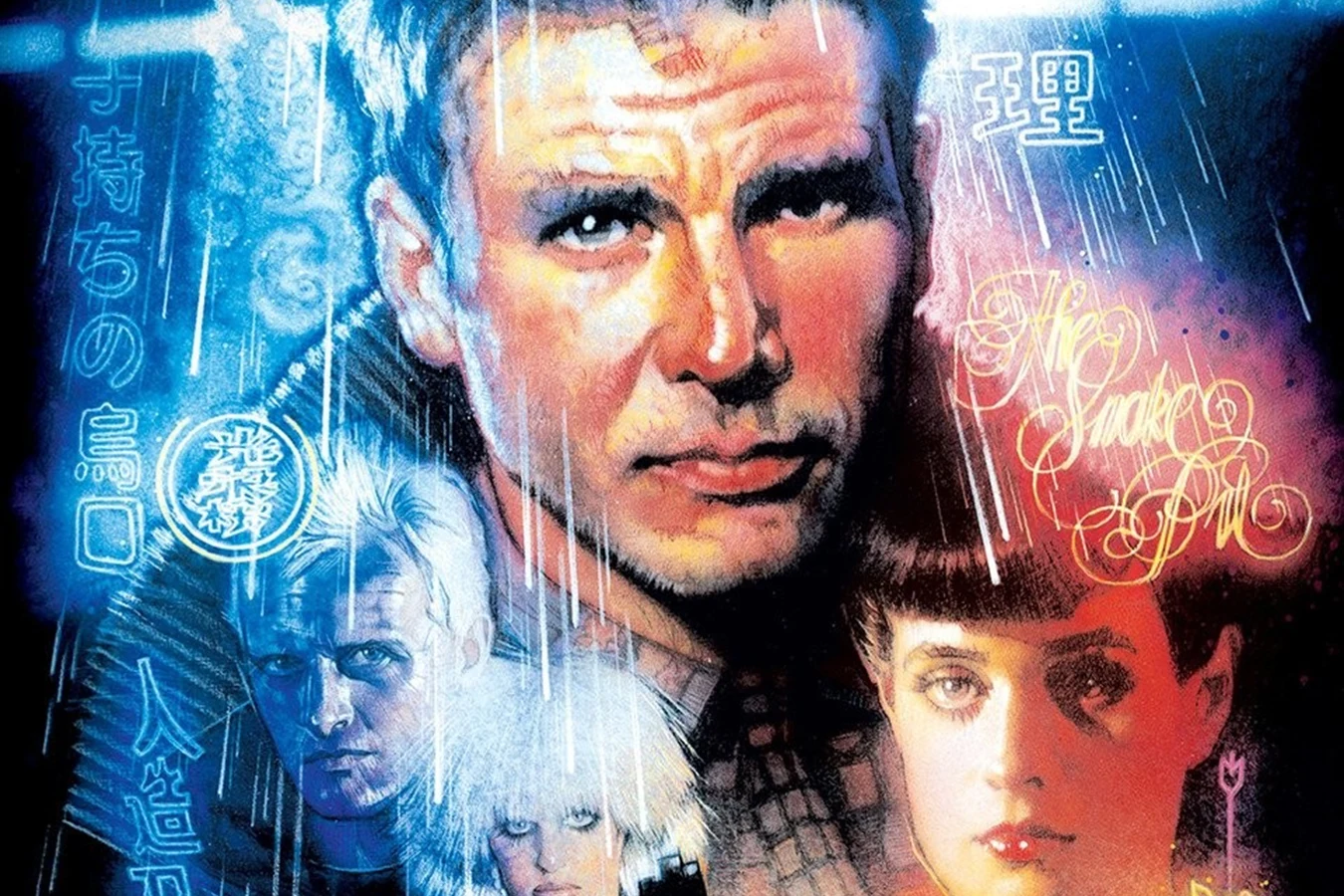
Blade Runner reached theaters as more than one cut, then kept changing on tape, disc, and later restorations. Paul M. Sammon's Future Noir treated those prints as a sequence of different versions rather than one locked film. The short account below follows the cuts most viewers meet: the workprint, the American theatrical release, the international cut, the 1992 Director's Cut, and Scott's 2007 Final Cut.
Workprint
The workprint was a rough assembly used for early audience sneaks, then shown again in 1990 and 1991 at Fairfax, UCLA, the NuArt in Los Angeles, and the Castro in San Francisco. It opened with a crawl that defined a replicant as a synthetic human with paraphysical capabilities, ran about 113 minutes, and closed on the elevator instead of a drive into the trees. It had almost none of the later Harrison Ford narration, used some temporary music, and still carried technical faults that a finished release would have cleaned. The packed revival houses pushed Warner toward a clean rerelease.
Theatrical Cut
Warner Bros. opened the American theatrical cut on June 25, 1982 at 117 minutes. Deckard's voice-over explained the case in the style of an old detective picture, and the last shot left the city for unused aerial mountain footage from Stanley Kubrick's The Shining, with a line that Rachael had no termination date. Scott had asked for a noir narration in earlier drafts, then later called the finished commentary Irving the Explainer. This is the cut most 1982 viewers saw in the United States.
International Cut
Prints sent outside the United States kept the voice-over and the mountain ending, then put back violence the American rating path had trimmed. Roy's killing of Tyrell ran longer, Pris died harder in Sebastian's apartment, and Deckard's shooting of Zhora held a few extra shots. Home video later mixed those reels with the American track, which is why some early tapes and discs do not match either theatrical house exactly. The Final Cut later took that extra violence as part of Scott's preferred picture.
Director's Cut
Warner issued a Director's Cut in 1992 after the workprint revival, at about 116 minutes. The voice-over and the mountain ending came out, and a short unicorn dream went in so Gaff's tin-foil figure would read as a comment on Deckard's own memories. Scott was consulted but did not run the rebuild the way he later ran the Final Cut, and the unicorn shot used in 1992 was a shorter insert than the one he wanted. Home video and this rerelease are the versions that built the later reputation.
Final Cut
Warner released Blade Runner: The Final Cut theatrically on October 5, 2007 for the film's twenty-fifth anniversary, then on DVD, HD DVD, and Blu-ray that December. It is the only version Scott fully controlled. The voice-over and mountain ending stay out, the longer unicorn dream is restored, the international-cut violence is back in, and digital work replaced Joanna Cassidy's face on the stunt that runs Zhora through the glass. Restoration producer Charles de Lauzirika also oversaw the documentary Dangerous Days that accompanied the five-disc set. Later Ultra HD discs and the 2017 run-up to Blade Runner 2049 used this cut as the standard picture.
Development
Jaffe Option
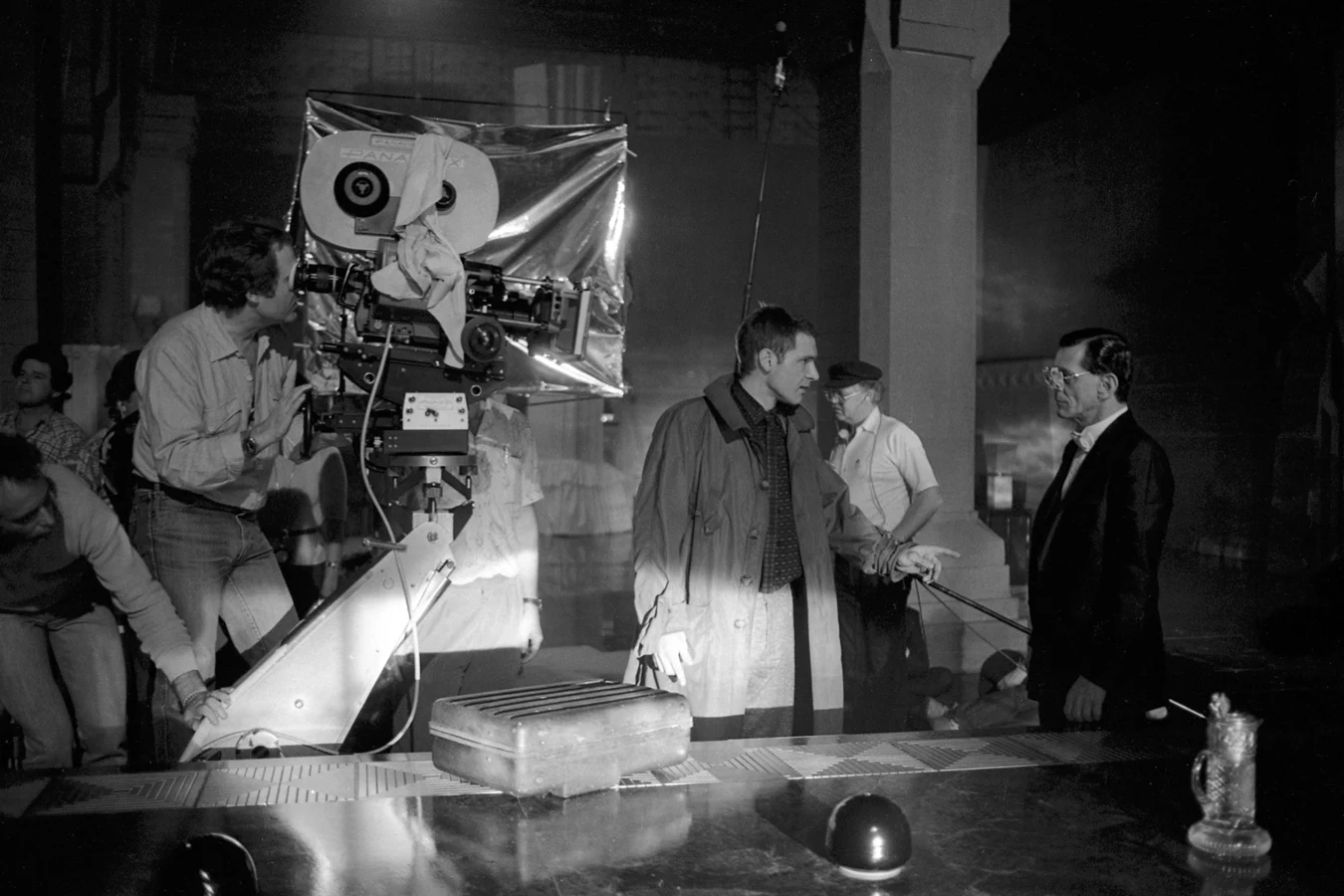
Martin Scorsese and writer Jay Cocks looked at Do Androids Dream of Electric Sheep? in the early 1970s and never closed an option. In 1974 Herb Jaffe Associates did. Robert Jaffe wrote a first screenplay that Dick later described as a comedy spoof in the register of Get Smart, filed under a pen name, and the author met him at the Santa Ana airport by asking whether the beating should happen there or back at the apartment. They spent a day talking through fixes, and Dick let the company renew once, then the option lapsed by 1977 while Jaffe Associates went on to Demon Seed.
Hampton Fancher came at the same book from the other direction in 1975. He had ten thousand dollars, wanted to option Naked Lunch first, and took Electric Sheep as a backup after his friend Jim Maxwell named it. Fancher had not read Dick before that paperback. He read it as a detective chase after androids in a ruined city, before Star Wars had made that kind of science fiction a studio habit. He also wanted a property a studio might finance so he could produce, not write, his way onto a set.
Finding Dick was the hard part. Agents in New York were polite and useless until Fancher ran into Ray Bradbury, who opened a pocket address book and handed over Dick's Santa Ana number. The two men met for long visits that stayed friendly on the surface. Dick suggested Victoria Principal for Rachael, pushed other novels such as Flow My Tears, the Policeman Said, and treated Fancher as a Hollywood hustler. Fancher later learned the Jaffe option was in place. He dropped the hunt.
Fancher And Kelly
In 1977 Fancher mentioned the novel to his friend Brian Kelly, the former Flipper actor who wanted to produce. Kelly's lawyer sent papers to Dick's lawyer, Dick took a two-thousand-dollar option, and Kelly never met the author. Kelly then carried the book to English producer Michael Deeley, who had made The Italian Job, The Wicker Man, The Man Who Fell to Earth, and the Oscar-winning The Deer Hunter. Deeley read Dick to the last page, liked the thriller-and-romance mix, and called the novel unfilmable anyway.
Fancher wrote notes, then an eight-page outline, and Deeley passed again, then suggested a screenplay. Fancher had come in as a producer and refused to write it until Kelly and Fancher's partner Barbara Hershey wore him down. They split a fifty-fifty deal and an executive-producer credit. Kelly paid Fancher's rent through 1978 while the first draft grew under Dick's own title, Do Androids Dream of Electric Sheep?, not Android as later articles claimed. Kelly dropped that script on Deeley's Beverly Hills desk and asked for an answer by Monday. Deeley called on Sunday and took the deal.
That first draft was a small drama Fancher thought could be shot for about nine million dollars, with few exteriors and little hardware. He moved the city from San Francisco to Los Angeles, shrank Iran, built Rachael into Deckard's lover, and made Deckard a bespectacled bureaucrat. The androids were on Earth without a clear reason. The ending he cared about most was ecological: Rachael stepped off Deckard's roof, Deckard walked into the desert to die, a turtle righted itself in the sand, and a long pullback left Earth as a blue speck. For Deeley the sanctioned killer falling for the person he was supposed to retire was the moral problem that sold the book, and Fancher's script was what finally pulled Scott in.
Early Financing
Deeley wanted a shorter title before the studios saw the pages. On Cape Cod in early 1979 the second draft became Android. In London it became Mechanismo, lifted from a British art paperback they could not clear, then Dangerous Days. Studios told Deeley they liked the writing and did not think the story would travel. Gregory Peck read a draft on his own and sent a letter under his letterhead saying the picture had to be made for its conscience and ecology, not because he wanted a part.
Katy Haber, who had come off Sam Peckinpah's Convoy and The Deer Hunter with Deeley, sat through the director search with Fancher, Kelly, and Deeley. Names on the list included Adrian Lyne, Michael Apted, and Scott. Fancher preferred Bruce Beresford after Breaker Morant, and Beresford was not free. Fancher then saw Robert Mulligan's Bloodbrothers and pushed the man who had made To Kill a Mockingbird. Mulligan signed on 17 August 1979 because the Deckard and Rachael affair was then a softer relationship picture, and Universal showed a cautious interest through him.
The Mulligan pass lasted weeks, not months. Haber treated Mulligan as pulling the material off the line Deeley and Fancher wanted. Deeley had a hundred and twenty thousand of his own money in the project and would not hand control to a director whose aim he could not read. Universal also wanted a happy ending and would not lock a budget. Fancher wrote a shootout finish as a decoy, with Sebastian thrown from a window and Deckard walking off with Rachael, while the desert pullback stayed the ending they meant to shoot. Mulligan left on 3 December 1979.
CBS Films, a new theatrical arm under Donald March and Nancy Hardin, then developed Dangerous Days for a few months. Ron Yerxa liked a future Los Angeles that still looked like the present, with used-car men selling animoids and a last polar bear found near the pole. Scott's arrival pushed the projected cost toward eleven million dollars as the design grew, and CBS stepped away at the end of February 1980. Deeley later treated the CBS months as a dead end.
Ridley Scott
Deeley had sent Fancher's Android script to Scott in late April 1979, while the director was the hottest name in the genre after Alien. Ivor Powell, who had worked with Scott on that film and with Stanley Kubrick on 2001, urged him to take it. Scott passed. He thought Fancher wrote well, but his plate held a dark Tristan and Isolde project and a commitment to Dino De Laurentiis for Frank Herbert's Dune, and he did not want another science-fiction picture on the heels of the Nostromo.
Scott had come up through West Hartlepool College of Art and the Royal College of Art, a BBC stint on Z-Cars, and more than two thousand commercials at Ridley Scott Associates. His first feature, The Duellists, won the Cannes Grand Prix in 1977 and then sat on the American art-house circuit. Alien made him bankable. He treated a film as a seven-hundred-layer cake, and he wanted that density in open city air after the closed corridors of the tug.
About seven months into Dune, after Rudolph Wurlitzer turned in a first draft, Scott's older brother died. He told De Laurentiis he could not sit another two and a half years on that book and needed work that would start soon. He asked Deeley for the latest Dangerous Days pages and signed on 21 February 1980 because he knew Deeley and because photography could start within a year. Principal photography would not begin for another year.
Screenplay
Filmways Pictures pledged the project on 9 April 1980 as a thirteen-million-dollar tale of technological terror, then raised the promise to fifteen when Scott told them thirteen would not buy the picture in his head. The hard cash Filmways actually put in was about two and a half million. Brighton Productions, a limited partnership Deeley's lawyers cut for this one film, moved into the Producer's Building at Sunset-Gower Studios in May. The start date on the board was 12 January 1981, with a Christmas 1981 release. Scott told Fancher the world outside the window had to be Heavy Metal, meaning the American reprint of the French Métal Hurlant, and Fancher bought an issue the next day.
In July 1980 Scott told Fancher they could not keep calling Deckard a detective. Fancher found Burroughs's slim Blade Runner: A Movie, Scott liked a Blade Runner unit as a name for police assassins, and Deeley licensed Burroughs, then Nourse. Scott briefly wanted Gotham City until Bob Kane objected, then told Sammon in 1981 that Blade Runner was only a working title. It stayed. The July 24 draft opened on Leon's test, put Bryant's briefing and Leon's snapshots in place, and ended with Deckard taking Rachael into snow and then shooting her after she chose suicide.
Most of Fancher's drafts also carried a sixth replicant named Mary, written as an American-dream mother out of Father Knows Best. Stacey Nelkin was cast, then the part vanished in the first days of photography when the budget could not hold her. That is why Bryant still talks about six escapees and one death at Tyrell while the finished film only hunts four. K. W. Jeter's 1995 sequel later built a whole plot around that missing name.
Fancher and Scott spent about eight months on the pages, the first four of them good. Scott supplied the reason the replicants were on Earth: they wanted Tyrell's help with the lifespan. He also swapped Fancher's griffin-delivery smuggle for the chess visit Fancher thought was too easy, took the electric-sheep motive he could not stage, and sanded down Rachael's early, cutting superiority. Haber put the split in plain terms. Fancher wanted a lyrical morality play. Scott wanted a harder detective thriller and more clues. In mid-November Fancher dared them to fire him.
On 17 November 1980 Deeley met David Peoples, who had been recommended by Ridley Scott's brother Tony after they worked on Peoples's spec My Dog's on Fire. Peoples had co-written and co-edited the Oscar-winning documentary The Day After Trinity, years before Unforgiven reached a screen. He read Fancher's draft at the Chateau Marmont and was hired anyway. Scott told him not to read Dick and to stay on Fancher's voice. Peoples wrote through Thanksgiving and delivered a first pass on 15 December.
That draft opened on an off-world termination dump where Roy, Mary, and Leon rose out of a pile of dead androids, a prelude later dropped for cost. Peoples put the snake scale into Leon's room, on Scott's suggestion, and tried to aim the hunt toward the spirit of Chinatown while sets were going up. He also needed a word other than android. Scott had joked that he would take a bat to anyone who used it on set, because the audience would hear robot. Peoples called his daughter Risa, who was working in microbiology, and she gave him replicating. He turned that into replicant and wrote it through the draft.
A December 22 script then appeared with Peoples's name on it and almost none of his new pages intact. Scott, Deeley, Haber, and Powell had pasted Fancher scenes back together with scraps from the fifteenth. Fancher found that draft at a dinner just before Christmas and left as screenwriter on 21 December 1980. He later read the December 15 pages, liked the way Peoples had put in the clues Scott wanted, and came back only for a few late scene fixes. The two men did not write in the same room, and they later became friends.
Warner Deal
Sets were going up at The Burbank Studios, effects crews were hired, and the January start was weeks away when Filmways walked. Scott, Deeley, and Powell confirmed the pullout the way Dick had learned his book was being filmed: they read it in the trades. A full crew was on salary. Gossip around the production blamed a shift of money toward Brian De Palma's Blow Out. Powell had been hearing that Filmways was unsteady.
In less than two weeks Deeley built a three-way floor of about twenty-one and a half million dollars. The Ladd Company, through Warner Bros., put up seven and a half million for domestic rights. Alan Ladd, Jr. had been president at Fox when Scott made Alien and treated that history as the reason to invest. Sir Run Run Shaw's company, through Harold Shaw, put up another seven and a half million for foreign rights after Deeley's earlier EMI work with the Shaws on pictures such as Convoy. Tandem Productions, with Bud Yorkin and Jerry Perenchio after Norman Lear stepped aside, came in as completion-bond guarantors for about seven million more, with the right to take the picture if it ran more than ten percent over. Yorkin later put Tandem's cash closer to four million. Principal photography slid from January to March.
Dick had learned about the film from Robert Jaffe, who had read the trades, and Ray Bradbury shouted that the snub was unacceptable. Early Fancher drafts with the Filmways stamp reached Dick later, and he hated them. He told Sammon the opening voice-over sounded like a dirty-town, dirty-job recitation, the ending had Rachael kill herself so Deckard could grow more cynical, and the book had been flattened into a you-or-me fight. In February 1981 he attacked the script in the Los Angeles Select TV Guide and took a swipe at Alien as a monster picture saved by effects, then mailed the piece to Warner. The production had phoned him only to demand where he got a script. He later saw Douglas Trumbull's effects reels, reversed himself on the world Scott was building, and died on 2 March 1982, more than three months before opening day.
Production Design
Industrial designer Syd Mead, billed as a visual futurist, drew the cars, street hardware, and add-on architecture Scott called retrofitting: new machines slapped onto old structures. Mead worked in color tempera on ten-by-fifteen boards at his then usual rate of fifteen hundred dollars a day, outside the Hollywood union scale. Scott told him the film was not a hardware picture like 2001. The machinery had to look like workaday technology that could still hold an audience. The first object they talked about was the police spinner, a word Fancher had coined.
Scott first pictured a compact coupe. Mead scaled it up to Chevrolet size so a full-size takeoff would read, then refused folding wings and helicopter blades. He treated the spinner as an aerodyne with an enclosed lift system, closer to a Harrier than to a flying Model T, and as a restricted LAPD vehicle that could fly faster than civilian traffic. Front wheels folded into the body, headrests held speakers, and the steering used two in-dash twist-wrist grips instead of a wheel. Bigger wipers were there because the air was supposed to be thick with pollutants.
Production designer Lawrence G. Paull and art director David Snyder had to build that city in three dimensions from Scott's small Ridleygrams. Sherman Labby storyboarded, Mentor Huebner illustrated, Linda DeScenna dressed the rooms, and Tom Southwell designed neon and future graphics. Deeley treated Scott as the real production designer on the picture. Douglas Trumbull's Entertainment Effects Group handled the miniatures, including the Hades landscape and Tyrell's pyramid, with Richard Yuricich and David Dryer. Jordan Cronenweth lit the wet streets, and Vangelis scored the picture on synthesizers after Chariots of Fire, with a tenor saxophone love theme from Dick Morrissey.
Casting
Fancher had first pictured Robert Mitchum after Farewell, My Lovely, then a bland bureaucrat closer to the book, then box-office names such as Tommy Lee Jones and Christopher Walken. On 7 August 1980 Scott went after Dustin Hoffman. Fancher hated the idea and sat through a six-hour talk in Hoffman's empty Upper West Side apartment, where the actor forgot to offer coffee. Hoffman knew the audience would not take him as that hero and asked for a rewrite that made Deckard meaner, then spent September in story meetings. A memo from 29 September shows Hoffman objecting to Roy slaughtering Tyrell's whole family, which is how the finished film arrived at a single murder of Tyrell.
Hoffman left on 16 October 1980. Scott thought money might have been the break. Deeley thought Hoffman was pushing the story toward a socially conscious picture none of them wanted. Cryogenics talk that Hoffman and Scott liked, and that Fancher resisted, left with him. Less than three months remained before the old Filmways start date, and the lead was open.
Harrison Ford was then a year short of Raiders of the Lost Ark and read to many people as a Star Wars character actor. Barbara Hershey heard Steven Spielberg praise him from the Raiders set in London. Ford took Deckard. Around him Scott cast Sean Young, Rutger Hauer, Daryl Hannah, Joanna Cassidy, Brion James, Edward James Olmos, M. Emmet Walsh, William Sanderson, Joe Turkel, James Hong, and Morgan Paull. Olmos built Gaff's Cityspeak himself from Japanese, Hungarian, German, French, and other scraps after work at a Berlitz school, which is why the noodle-bar arrest does not sound like any one language.
Principal Photography
Principal photography began on 9 March 1981 and ran about four months on the Warner backlot street the crew called Ridleyville, at the Bradbury Building, the Ennis House, and the Second Street Tunnel. Night shoots in rain machines wore the company down. Tandem's completion bond sat over the schedule, and the relationship between the filmmakers and the investors got bad enough that Deeley and Scott were fired on paper and kept working anyway. Crew members printed shirts that read "Yes Guv'nor, My Ass" after Scott compared American crews with British ones. Scott's side answered with "Xenophobia Sucks."
Ford later said he had played a detective who did no detecting, and the voice-over fight sat ahead of him. Hauer wrote much of Roy's last speech himself, including the tears-in-rain lines, on the night they shot the death. A dove in his hands was supposed to fly off the roof and would not, because the bird was too wet, so a pickup with another bird was shot later in England. Editor Terry Rawlings cut the picture with Marsha Nakashima. A hospital visit to the wounded Holden was among the scenes that later audience cards helped push out.
Test Screenings
Denver and Dallas sneaks in early 1982 did not play as a disaster on the numbers. About one in five cards in each city marked the film excellent, and another fifth marked it extremely good, with praise for the look and the effects. Warner's memos treated the split as too wide for a twenty-eight-million-dollar picture, and too many viewers would not recommend it. A San Diego sneak on 8 May then showed a later assembly, with Ford in the house, on the way to the June opening Ladd had picked because the twenty-fifth of the month had been lucky for Star Wars and Alien.
Scott had asked for a voice-over as early as Fancher's July 1980 draft, and Peoples had written more of it. After the sneaks the finished theatrical commentary grew into plot explanation Ford recorded with little enthusiasm, some of it shaped with veteran writer Roland Kibbee for Tandem. Rawlings had wanted Bogart-style talk about what the finds did to Deckard, not a man describing a pen in his hand. The mountain ending went on at the same time, using leftover aerials from Kubrick's The Shining. The voice-over and that ending went out with the 1982 American release, and later cuts removed both.
Music
Vangelis (Evangelos Odysseas Papathanassiou) scored Blade Runner at Nemo Studios near Marble Arch in London. He was born in Volos, Greece, on 29 March 1943, a self-taught keyboard player who could not read music, and he had just won an Academy Award for Chariots of Fire. Editor Terry Rawlings first met him during that score. Scott invited Vangelis and his manager Jiannis Zographos to watch a rough assembly, and the composer signed in late December 1981. Andrew Hoy, who worked with him through the sessions, treated the unfinished picture as the reason Vangelis took the job.
Hollywood scores of that size usually went on in a few days with a hired orchestra. Vangelis wrote, arranged, performed, and produced the cues himself, layering melody on tape the way Scott layered images. He mixed synthesizers with chimes, gongs, and bells he kept around the studio. Dick Morrissey played the tenor saxophone on the love theme. Demis Roussos, Vangelis's old partner from Aphrodite's Child, sang on "Tales of the Future." Gail Laughton's "Harps of Ancient Temples" and the Japanese piece "Ogi no Mato" on the advertising blimp were not his cues. "Memories of Green" had already appeared on Vangelis's 1980 album See You Later. The finished score reached the production in April 1982, close to the June opening.
The end credits promised a Polydor soundtrack that did not appear. In 1982 the New American Orchestra issued an orchestral cover album instead of Vangelis's tapes. Bootlegs and partial compilations filled the gap for more than a decade. Scott, Katy Haber, and Ivor Powell later thought the delay came from Vangelis having to rewrite as Scott recut the picture. Hoy disputed that as the whole reason. Michael Deeley recorded that the score arrived late and that Vangelis would not sign the album contract. The official album Blade Runner, on Atlantic and Warner Music UK, finally appeared in June 1994 with twelve tracks, including "Love Theme," "Memories of Green," "Tales of the Future," and the end title. Vangelis left some film cues off that disc and added other pieces, the way he later assembled the 1492 album.
Comic Adaptations
Marvel Comic Adaptation
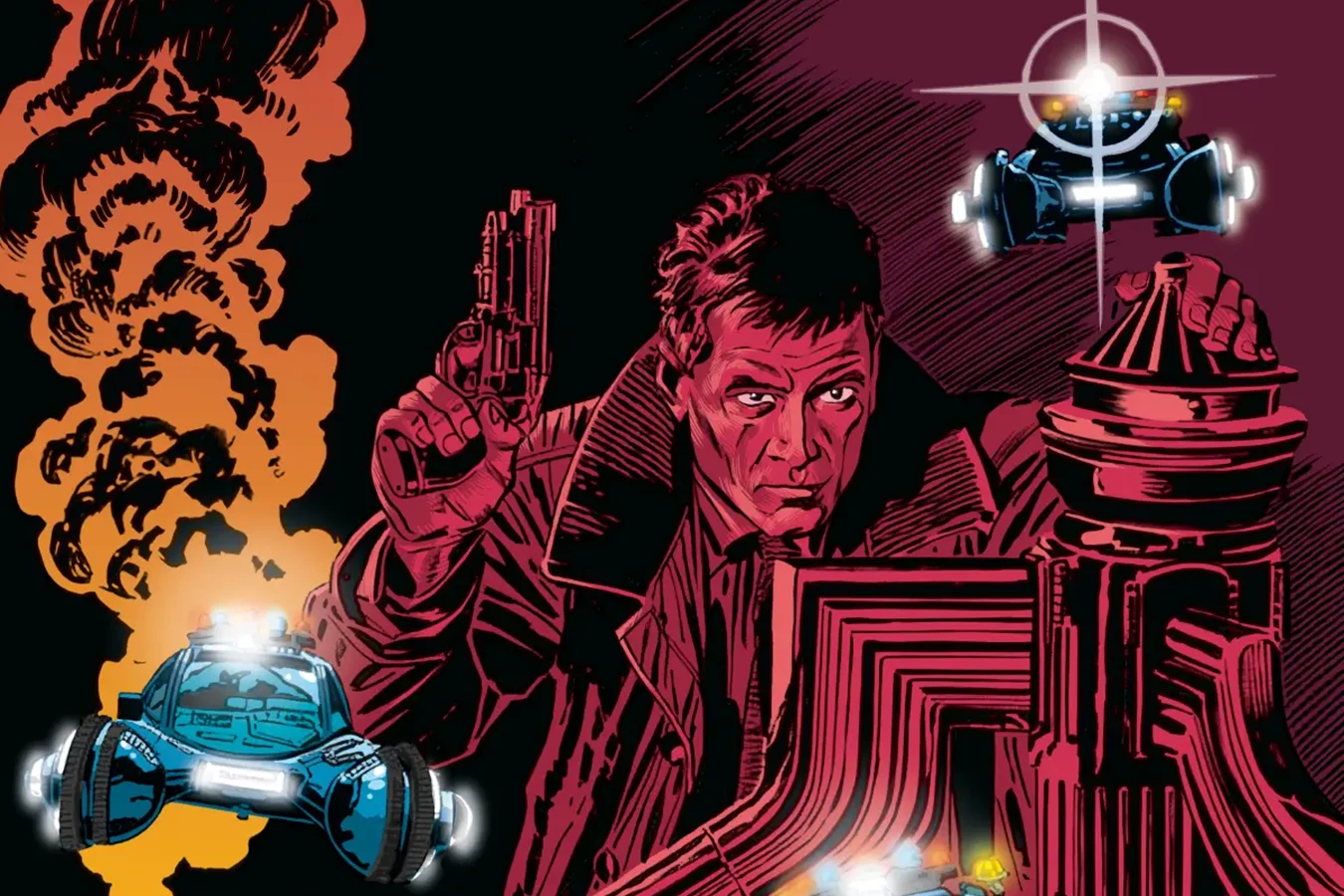
Marvel Comics published a forty-six-page film adaptation in Marvel Super Special #22, cover-dated September 1982 and on sale 25 May, a month before the movie opened. Archie Goodwin wrote it, Al Williamson and Carlos Garzón penciled, Williamson, Dan Green, and Ralph Reese inked, Marie Severin colored, and Ed King lettered. Jim Salicrup edited the issue, and Jim Steranko painted the Super Special cover. Marvel also issued the same story as a two-issue series in October and November, and as a combined Marvel Illustrated paperback.
Goodwin worked from the shooting script as much as from the finished cut, so some panels follow lines and bits of business that never reached the 1982 theatrical print. One caption explains the title as a blade runner always moving on the edge. The issue runs about fifty pages, so the club and chase scenes are short. Williamson drew the hunt from Holden's test to the roof in a clear adventure line.
BOOM! Comic Adaptation
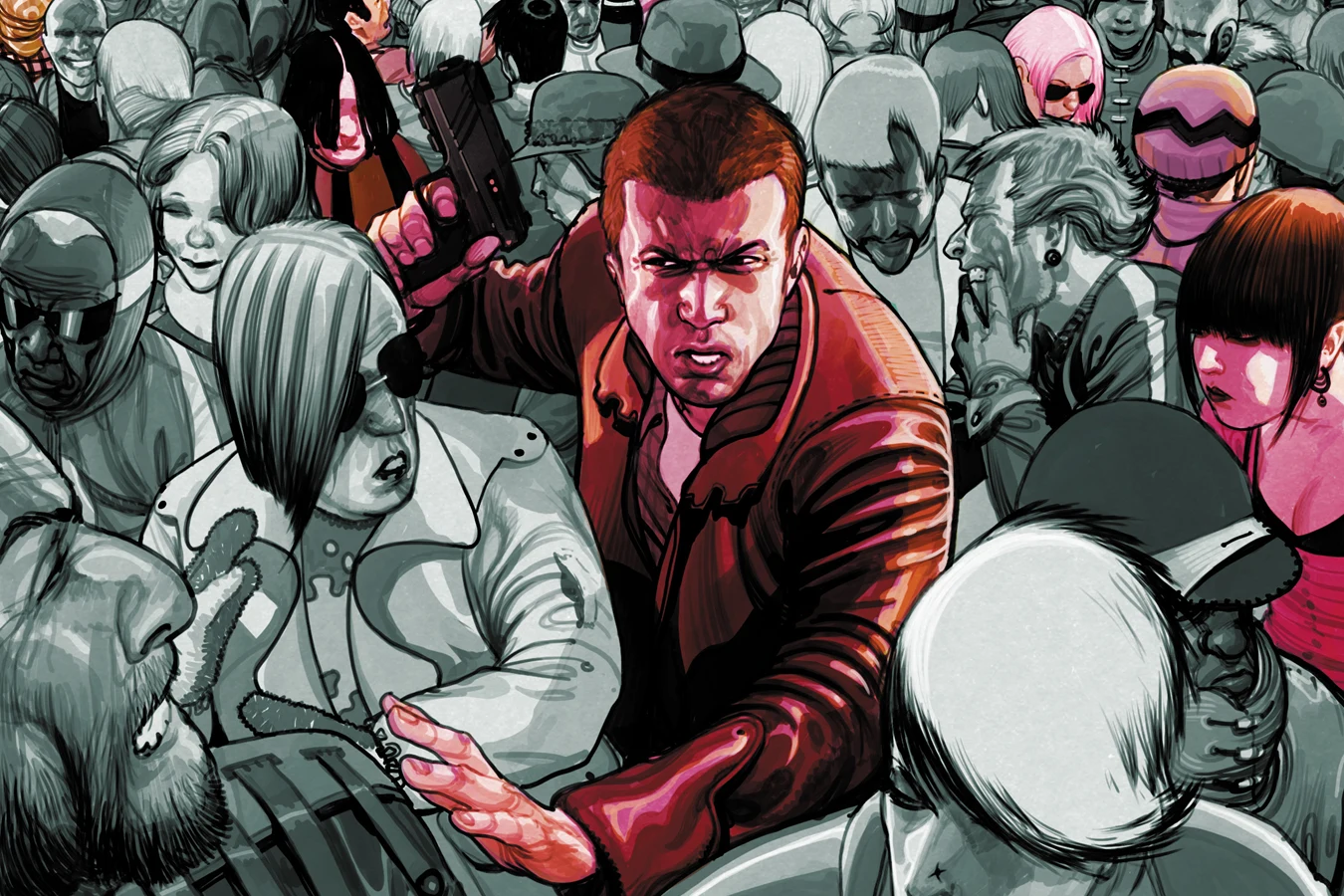
BOOM! Studios did not adapt Scott's film. From June 2009 to May 2011 it published a 24-issue monthly series of Dick's novel with Electric Shepherd Productions, the Philip K. Dick estate company. Tony Parker drew dusty San Francisco and the Nexus-6 from the book, Blond colored it, and Richard Starkings lettered Dick's prose in the balloons instead of a shortened film script. Ian Brill and later Bryce Carlson edited the run. That is why this comic has Iran, Isidore, Mercer, and the goat, and why it has no spinner and no Gaff.
BOOM! collected the issues in six hardcovers as they came out, four issues in each volume, and finished that set in 2011. The series was nominated for an Eisner Award for Best New Series. In 2015 the publisher issued the first complete omnibus of all 24 issues, with a cover by Mondo artist Jay Shaw and essays by Jonathan Lethem, Ed Brubaker, Warren Ellis, and Matt Fraction.
Book Sequels
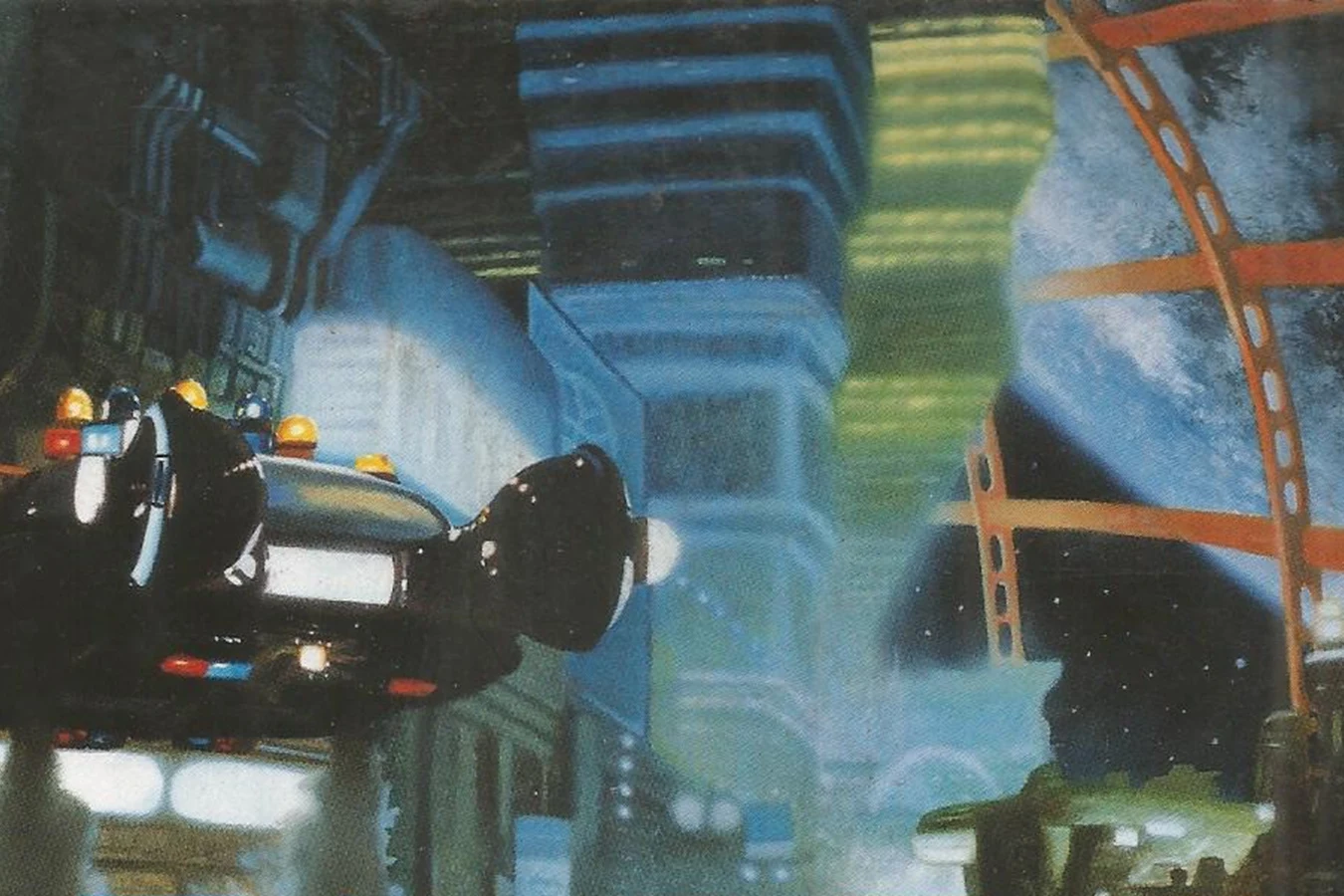
K. W. Jeter wrote three authorized sequels to Ridley Scott's film rather than to Philip K. Dick's novel. The Dick estate licensed the line, and the books treat the November 2019 hunt, the four-year lifespan, and the missing sixth replicant as canon. They sit with Dick's book as Blade Runner Books. Blade Runner 2049 later contradicted that sequence.
The Edge Of Human
Millennium in Britain and Bantam Spectra in the United States issued Blade Runner 2: The Edge of Human in 1995. Rick Deckard had hidden Rachael in an Oregon cabin after the elevator. In August 2020 Sarah Tyrell, the human model for that replicant, pulled him back to Los Angeles to hunt a missing sixth replicant, the gap left when Mary was cut from the film. Dave Holden survived the opening shooting in this book, and a white-haired human who used Roy Batty's name closed on the same file.
Replicant Night
Blade Runner: Replicant Night followed in 1996 from Orion and Bantam Spectra. Deckard and Sarah left Earth as Mr. and Mrs. Niemand. He took pay from director Urbenton to advise an orbital restaging of the November hunt, then learned a child named Rachael had slept for years inside the wreck of Salander 3. That book closed on Mars, with Deckard and the child moving on after the film set and the Tyrell papers had done their damage.
Eye And Talon
Blade Runner 4: Eye and Talon arrived from Gollancz in 2000 as the last licensed film sequel. Blade runner Iris Knaught hunted Scrappy, Eldon Tyrell's living owl, through monsoon Los Angeles after Tyrell Headquarters had fallen and Captain Bryant was dead. The trail ended in a desert lab where Deckard waited with the child from Mars, an ending the later theatrical sequel did not use.
Blade Runner 2049
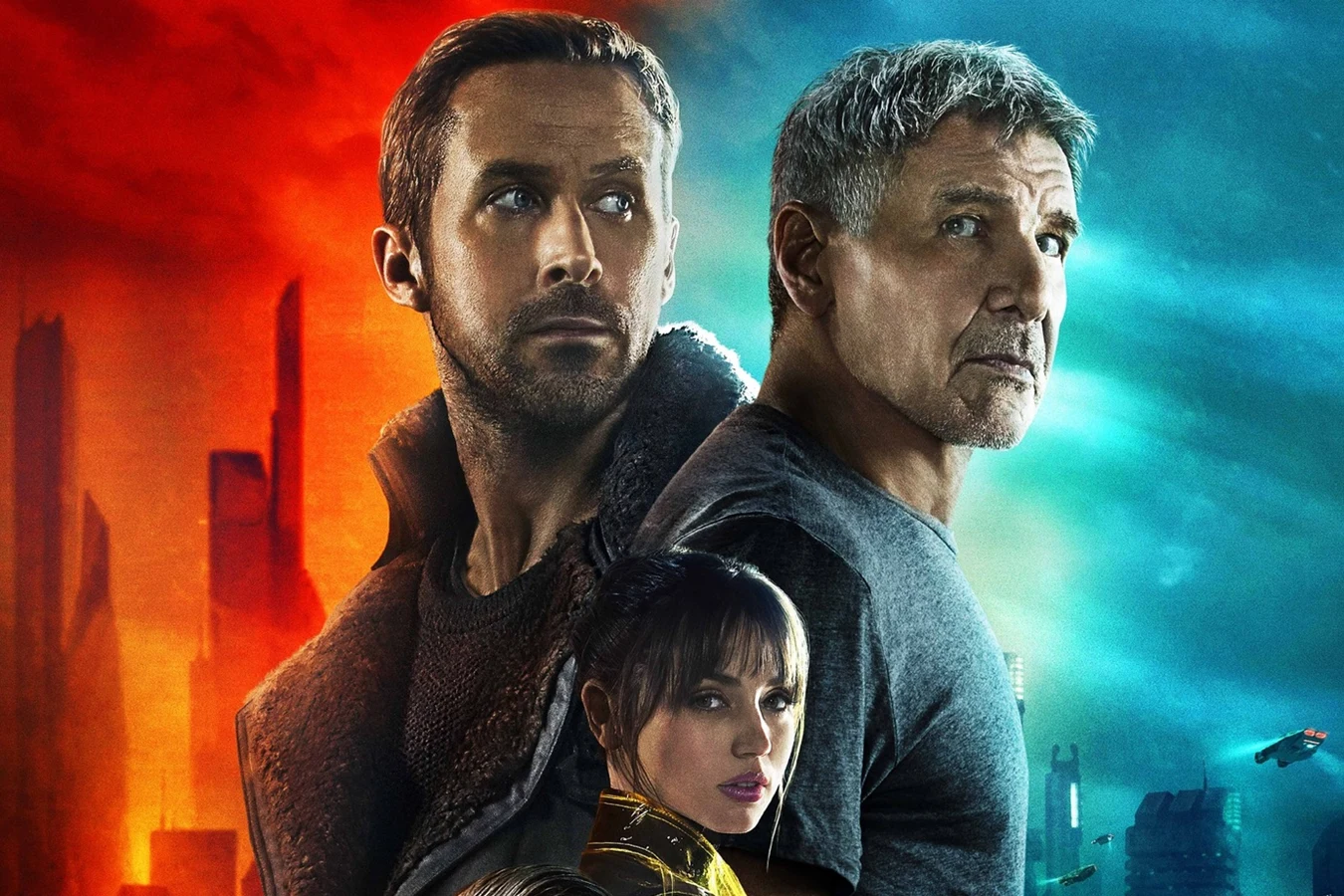
Denis Villeneuve directed Blade Runner 2049 for Warner Bros. and Alcon Entertainment, and the film opened on 6 October 2017. Hampton Fancher returned with Michael Green on the screenplay, and Ridley Scott produced. Ryan Gosling played Officer K, a newer blade runner who found evidence that a replicant had given birth, and Harrison Ford came back as Deckard after years off the grid. Jared Leto played Niander Wallace, the industrialist who bought what was left of the Tyrell Corporation after it went bankrupt in the late 2020s.
The film is set thirty years after November 2019. Officer K's investigation turns on a child born to a replicant, not on Jeter's sixth escapee, the orbital restaging in Replicant Night, or the desert owl hunt in Eye and Talon. Roger Deakins shot it, and the picture won Academy Awards for cinematography and visual effects.
Westwood Video Game
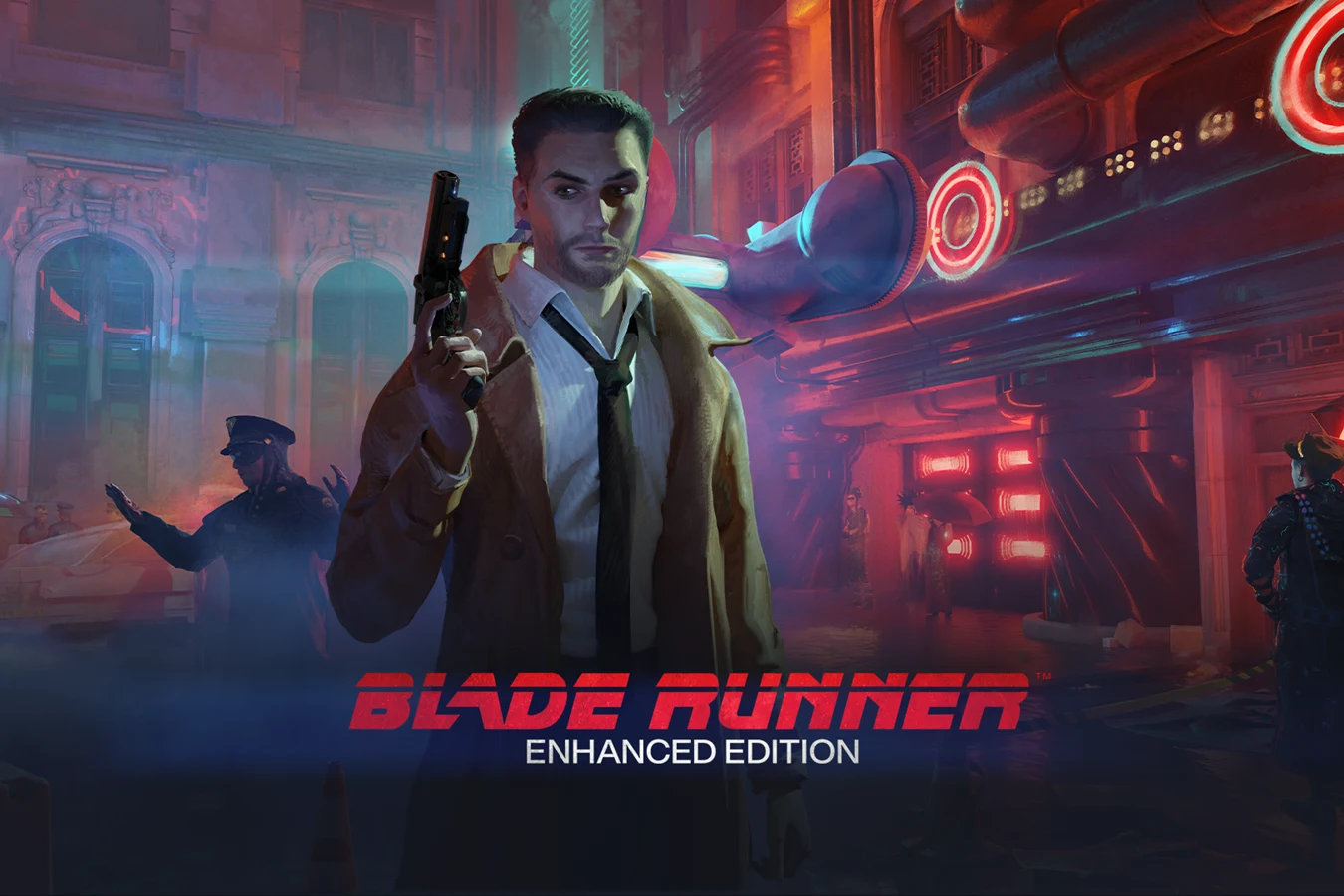
Westwood Studios released Blade Runner for Windows on 13 November 1997 in North America, with Virgin Interactive as publisher and a British date of 26 November. Louis Castle programmed and art-directed it, Donny Blank produced, David Leary and David Yorkin wrote, and Frank Klepacki scored, using extracts from Vangelis as well as new cues. The game was not a retelling of Deckard's four retirements. It ran beside the film in the same November week, and the player was rookie blade runner Ray McCoy.
McCoy started at the White Dragon Noodle Bar on a case of animal killings, then tracked a replicant group led by Clovis while Lieutenant Edison Guzza ran the unit with Captain Bryant on sick leave. Sean Young, Brion James, James Hong, Joe Turkel, and William Sanderson voiced Rachael, Leon, Chew, Tyrell, and Sebastian. Deckard appeared in the city and on reports, without a speaking part. Westwood built the streets as a real-time point-and-click hunt with software-rendered 3D figures, an Esper machine, and a Voigt-Kampff test, and McCoy's choices led to one of thirteen endings.
The game sold more than a million copies and won the Academy of Interactive Arts & Sciences award for PC Adventure Game of the Year. Virgin wanted a sequel, and Westwood dropped the idea on cost. Rights fights left it off digital storefronts until GOG listed it in December 2019. Nightdive Studios and Alcon issued an Enhanced Edition on 23 June 2022 for Windows, Nintendo Switch, PlayStation 4, and Xbox One.
Box Office And Reception
Warner opened Blade Runner on June 25, 1982 in 1,290 theaters. It took about $6.15 million on the first weekend, then sat in a summer with E.T. the Extra-Terrestrial, Star Trek II: The Wrath of Khan, The Thing, and Conan the Barbarian. The original domestic run reached about $27.6 million against a $28–30 million budget. Later counts that fold in the 1992 and 2007 rereleases put the worldwide total near $41.8 million. Warner treated the first run as a disappointment. Tape, laserdisc, and the Director's Cut later widened the audience.
Notices in 1982 split over pace and design. Many reviewers praised Cronenweth's wet streets and Mead's city and called the story slow or thin. The film was nominated for Academy Awards in art direction, for Paull, Snyder, and DeScenna, and in visual effects, for Trumbull, Yuricich, and Dryer, and lost both. BAFTA gave it cinematography, production design, and costume design for Charles Knode and Michael Kaplan. Vangelis was nominated for a BAFTA and a Golden Globe. The film won the Hugo Award for Best Dramatic Presentation. In 1993 the Library of Congress added it to the National Film Registry.
Famous Quotes
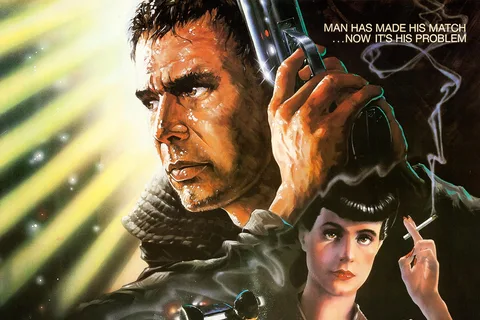
The 1982 campaign sold Blade Runner with the line "Man has made his match... now it's his problem." The film itself left lines from Tyrell, Roy Batty, Gaff, and the theatrical voice-over Ford recorded after the Dallas and Denver sneaks. Later versions dropped the narration.
- Tagline: "Man has made his match... now it's his problem."
- Deckard (theatrical voice-over): "They don't advertise for killers in the newspaper. That was my profession. Ex-cop, ex-blade runner, ex-killer."
- Bryant: "I need you, Deck. This is a bad one, the worst yet. I need the old blade runner, I need your magic."
- Tyrell: "Commerce is our goal here at Tyrell. 'More human than human' is our motto."
- Rachael: "Have you ever retired a human by mistake?"
- Leon: "Wake up! Time to die."
- Roy Batty (theatrical): "I want more life, fucker."
- Roy Batty (Final Cut): "I want more life, father."
- Roy Batty: "I've seen things you people wouldn't believe. Attack ships on fire off the shoulder of Orion. I watched C-beams glitter in the dark near the Tannhäuser Gate. All those moments will be lost in time, like tears in rain. Time to die."
- Gaff: "It's too bad she won't live. But then again, who does?"
- Deckard (theatrical voice-over): "I don't know why he saved my life. Maybe in those last moments he loved life more than he ever had before. Not just his life, anybody's life, my life."
Bloopers And Goofs
Paul M. Sammon's Future Noir lists continuity errors, redubs, and leftover effects work, from crane cables on Gaff's spinner to a dove that would not fly in the rain. Scott and Terry Rawlings saw some of them in dailies and left the shot. Others came from budget cuts, one-take street work at dawn, and new dialogue after the sneaks.
- When Gaff's full-size spinner lifts off by the noodle bar, two crane cables show on the nose and tail. Scott told Rawlings to leave them in.
- The miniature liftoff puts the police headquarters model on the right before the spinner has reached that building, and Leon's Yukon Hotel sign is scrambled as NUYOK.
- Gaff's mouth moves on the flight to Bryant's office. Olmos had insulted Deckard in Cityspeak, and that track was pulled so the flight would play without talk.
- Bryant says six replicants escaped and one was fried at Tyrell, which should leave five, but Deckard hunts four. Scenes for a sixth replicant named Mary were dropped. Scott tried a post-production dub of "two" fried and put the original line back after the sneaks because the lip match looked sloppy.
- Rachael's mouth says the owl is real. Young had recorded "Of course not." Scott had the line changed to "Of course it is" so the first animal on screen would be marked as artificial.
- Roy's first telephone-booth hand is a later shot of the nail through his palm. The smiling close-up is a reversed steal from Tyrell's bedroom, and Tyrell's fingers sit on Roy's shoulder while Leon is supposed to be outside the glass.
- The Million Dollar Theater marquee changes between the night Hannah hid in the trash and the night Sanderson drove up, because the real downtown house swapped its Spanish-language bills during the Bradbury week.
- Hannah slipped on wet pavement, broke the Armadillo van's real window with her elbow, and chipped the bone in eight places. That take stayed in the film.
- Pris's hair is wet outside the Bradbury, dry in the elevator, and wet again in Sebastian's rooms.
- The woman on the Esper daybed is a Zhora stand-in, not Joanna Cassidy, and the hard-copy face does not match the screen angle. Some later Esper views of Batty are a London double from the reshoot.
- The Animoid Row vendor reads snake-scale serial 990-6907XB71. David Scharf's insert does not show the 990-69, the scale stays in its bag, and the magnification is an electron-microscope photo of a female marijuana plant from Scharf's 1977 book Magnifications.
- Abdul Ben-Hassan's lips do not match the finished talk. The workprint and sneak dialogue were clearer on the day, and a post-production rewrite was dubbed over them.
- The Zhora chase was a dawn one-take. Cassidy leaves the dressing room in high heels and runs in flats. A black squib tube runs up her right sleeve on the second hit. The stunt double through the arcade glass has no shoulder wound. Both hits are the same shoulder from two cameras, and the body on the street has a hole in each shoulder.
- Deckard's cheek cut and his Tsing Tao bottle come and go after Zhora. Rawlings recut the night so Rachael saved Deckard and went home with him, instead of sending her down the far sidewalk after Bryant's talk. The cut returns after Leon dies.
- Bryant's "four to go" line would have been wrong after Leon if it had stayed later in the reel. The recut put that talk before the alley, which is why the count works on the finished print.
- Two fishing lines yank open the hole in Leon's forehead. Marvin Westmore pulled them off camera, and they show for a single frame.
- Deckard falls asleep with a shot glass on his chest and wakes without it. Rachael had taken the glass in a shot that was cut.
- Pris's raccoon makeup changes from the first application to the microscope and again at breakfast with Roy and Sebastian.
- The sky over the Tyrell pyramid is orange when Roy and Sebastian ride up, a leftover from Deckard and Gaff's earlier flight, then light blue on the miniature elevator.
- Sebastian's chess pieces do not match Tyrell's board, though they are playing the same game.
- A bloody squib and a midsection wound show on Pris before Deckard fires the first shot.
- When Roy pulls Deckard's arm through the wall, the false wall shakes under Ford's weight.
- Shadows of Scott and Jordan Cronenweth run ahead of Deckard in the dark rooms before the roof.
- After Roy drives the nail through his hand, bathroom tile sits in frame before he has entered that room. The nail beat was recut to motivate the wall-butt.
- A close-up of Deckard's hands on the Bradbury ledge is upside down. Rawlings flipped it to make the grip read, and the rain falls up.
- Rain on the roof starts and stops between shots. After Roy throws Deckard back onto the roof, Ford's shirt rides up, then sits down again on the next cut.
- The dove flies into a clear blue sky. The Los Angeles bird was too wet to take off, so Scott picked up the shot months later outside Elstree, in daylight.
Is Deckard A Replicant?
Philip K. Dick's novel treats Rick Deckard as a human bounty hunter. He is married to Iran, sits monthly police medicals, and gives the Voigt-Kampff test rather than taking it. The book's theme is that the hunt wears him down, not that he is an android. Scott and Dick disagreed on that point when they met. Dick wanted the androids to be cold and without empathy. Scott treated the Nexus-6 as stronger and faster than people, and he was not interested in filming Deckard's dehumanization as an idea on its own.
The 1982 theatrical cut never shows the dream. After the roof, Deckard finds a tin-foil unicorn Gaff left in the hall, nods, and leaves with Rachael. David Peoples treated that nod as Deckard realizing Gaff had been in the apartment and had let Rachael live. Edward James Olmos also read Gaff's roof line, "You've done a man's job, sir," as a hint that it was getting hard to tell men from replicants. A later script made that hint explicit and was cut. Hampton Fancher first rejected a unicorn, then later accepted the origami as Scott's idea.
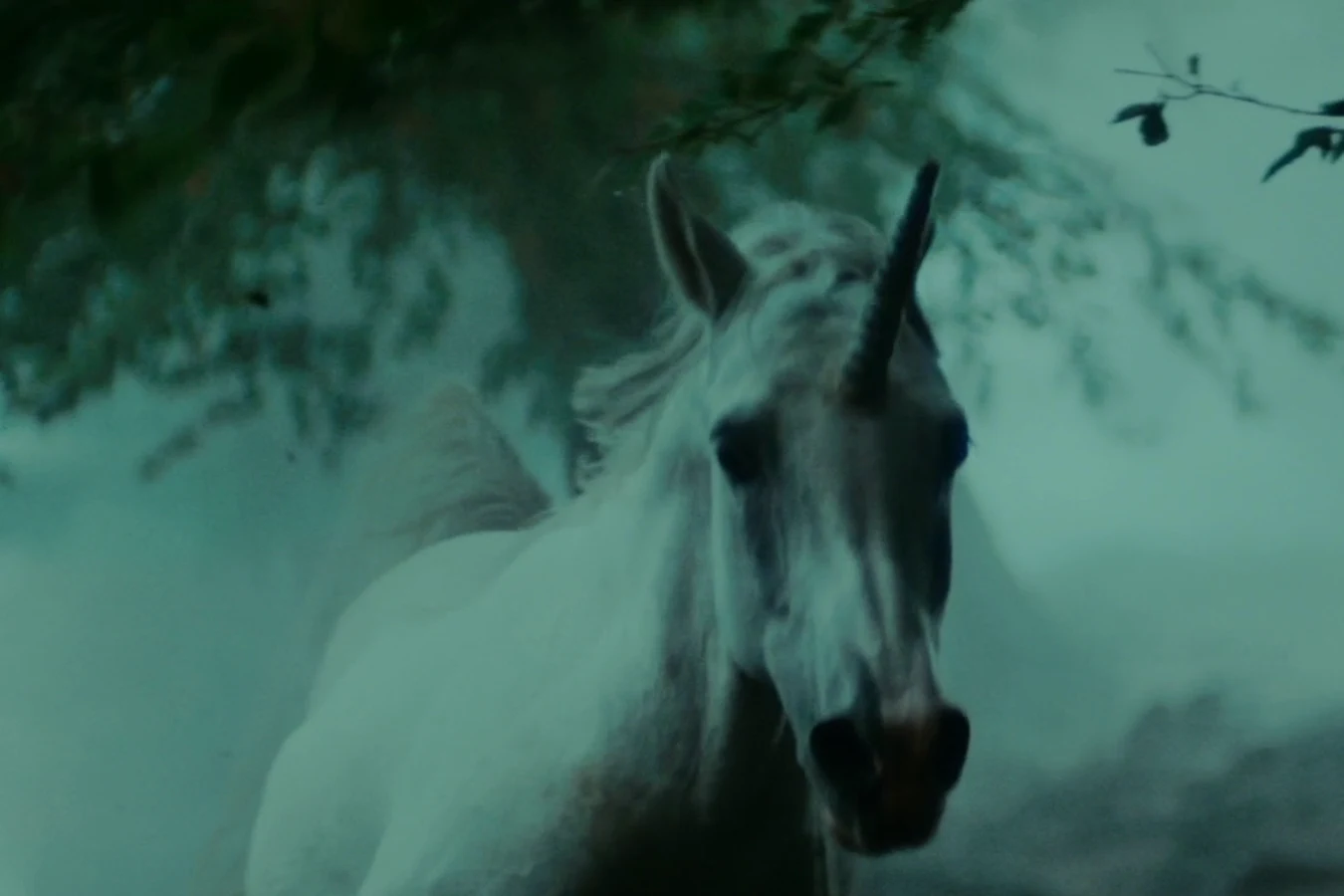
Scott wanted a shot of Deckard at the piano dreaming of a living unicorn, a memory Gaff would already know, which is why the foil figure matches the dream. The 1992 Director's Cut put in a short insert of that dream. The 2007 Final Cut restored the longer version Scott preferred: the unicorn running through a forest, then Deckard back at the piano. Scott has treated that match as proof that Deckard is a replicant with an implant. Harrison Ford played the part as a human hunter and held that line after the Director's Cut and through the later sequel. Fancher stayed with Ford on that reading.
Denis Villeneuve did not settle the question in Blade Runner 2049. Officer K is a replicant from the first scenes. Deckard has aged, hid for years, and fathered a child with Rachael, and Wallace toys with the idea that someone designed that meeting. Gaff returns with more origami. Those scenes do not name Deckard as a replicant. Villeneuve left him as unsure as the audience. Scott, watching the sequel, took Deckard as a replicant. Ford and Fancher did not. The finished picture leaves the question open.
Conclusion
Blade Runner is Ridley Scott's 1982 Warner film of Philip K. Dick's novel, written by Hampton Fancher and David Peoples and produced by Michael Deeley. It follows Rick Deckard's November 2019 hunt through Los Angeles from Holden's shooting to Roy Batty's death on the Bradbury roof. The theatrical cut then sent Deckard and Rachael into the mountains with a voice-over, and the Final Cut left them in the elevator.
External Sources
- Blade Runner (1982) on IMDb
- Blade Runner on Wikipedia
- Blade Runner on Box Office Mojo
- Versions of Blade Runner on Wikipedia
- Marvel Super Special #22 at the Grand Comics Database
- Future Noir: The Making of Blade Runner at Google Books
- Blade Runner soundtrack on Wikipedia
- Blade Runner 2049 on Wikipedia
- Blade Runner (1997 video game) on Wikipedia
Tag Categories: Blade Runner Lore