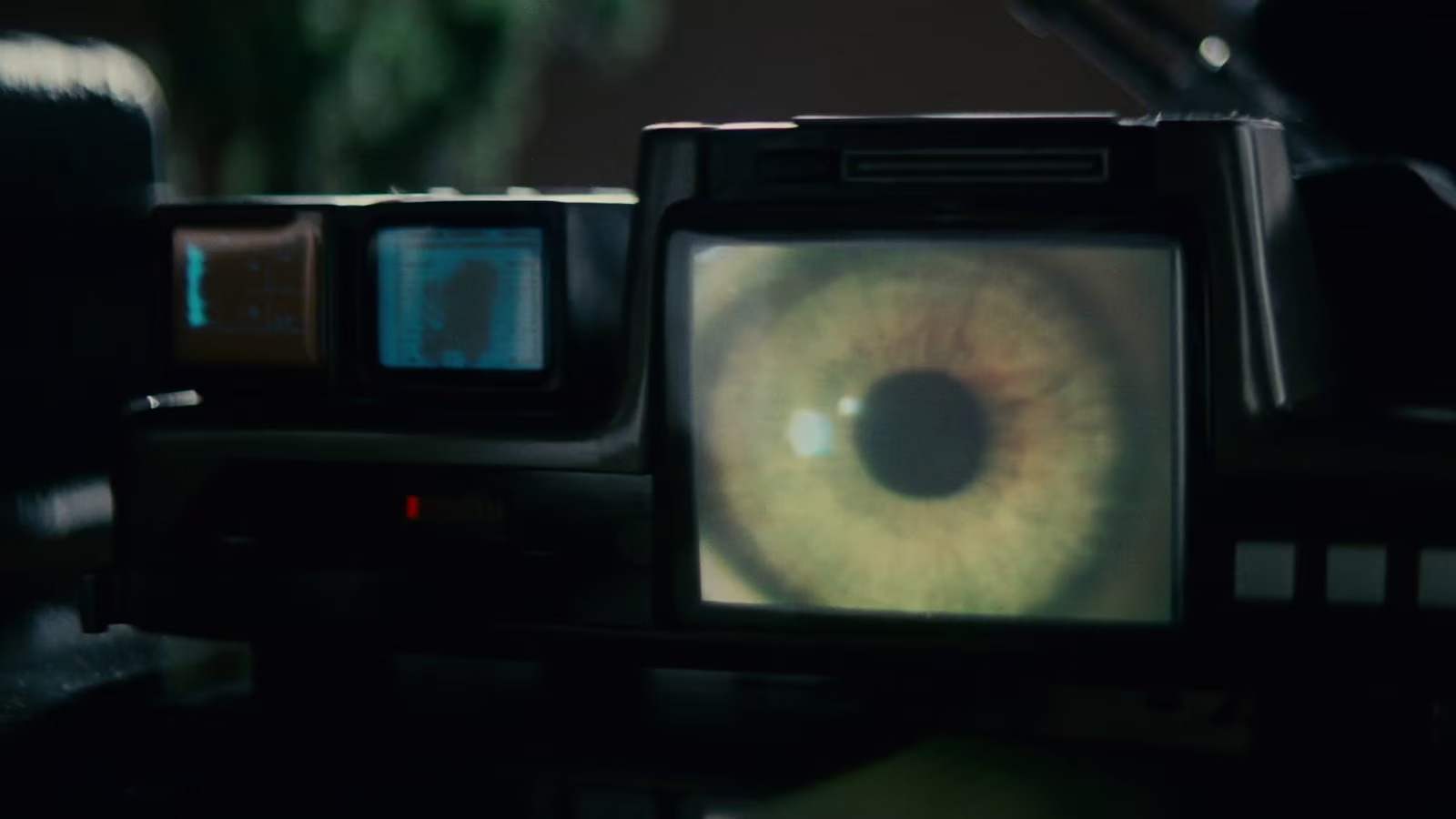

The Voight-Kampff test is the empathy detector blade runners use to tell a replicant from a human in Blade Runner. A desk machine with a breathing bellows, a camera eye and a row of small screens watches the subject's iris and the faint flush of the skin while the examiner asks questions built to provoke an emotional reaction. It caught Leon Kowalski for Dave Holden, it took more than 100 questions to expose Rachael, and it began life as the Voigt-Kampff scale in Do Androids Dream of Electric Sheep?. The K. W. Jeter sequels later turned its weaknesses into the heart of a conspiracy, and by 2049 a colder baseline test had taken its place for replicant officers.
What Is The Voight-Kampff?
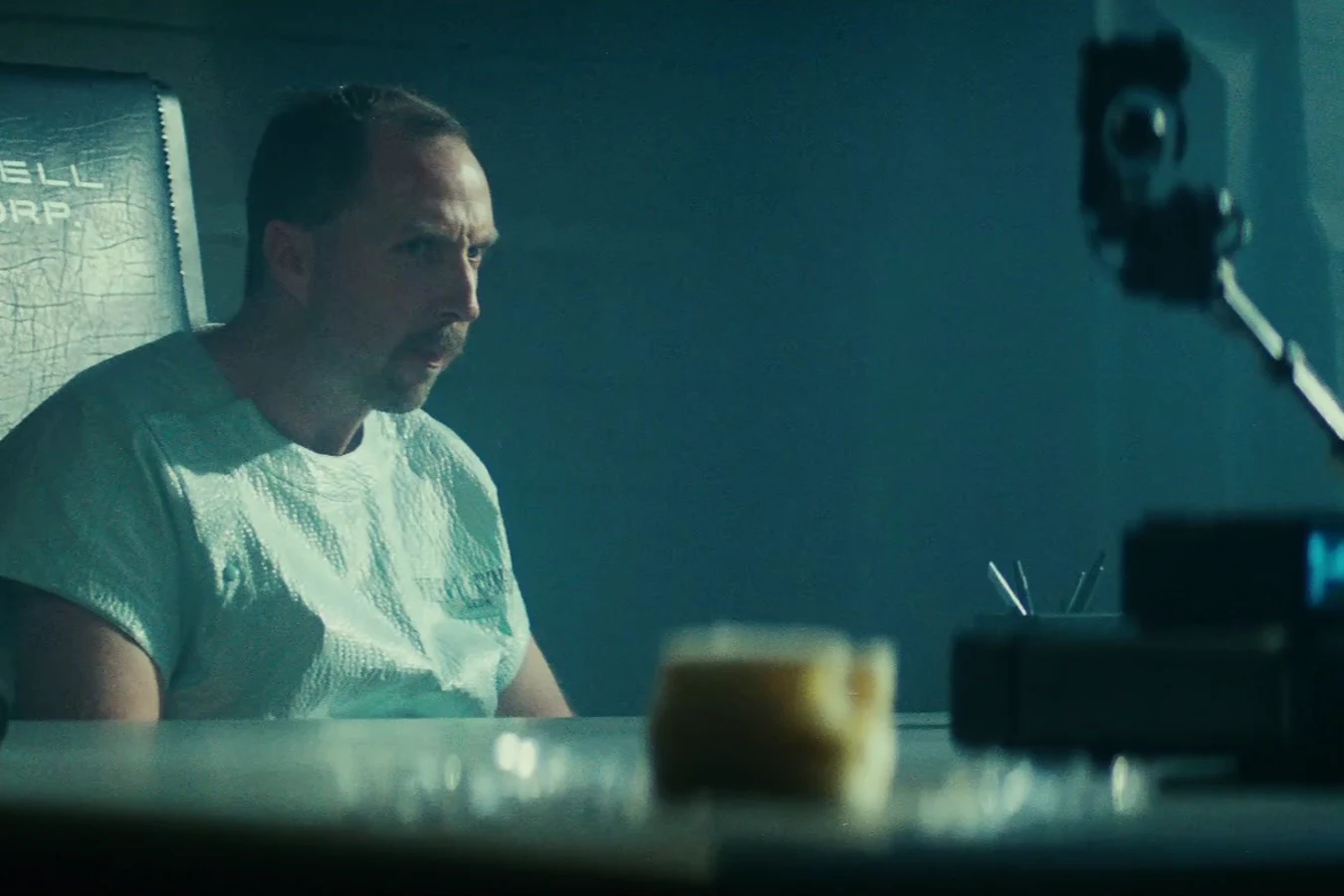
The Voight-Kampff is the standard tool of the Blade Runner units, a police test designed to catch a replicant hiding among humans. Physically a Nexus-6 is indistinguishable from a person, so the test looks for what the replicant models lack, an involuntary emotional response to scenes of cruelty, loss and intimacy. The examiner reads a scenario aloud, the subject answers, and the machine records what the body does in the seconds before the words come out.
In 2019 Los Angeles the test is the only reliable way to identify a replicant without killing it first, which makes it the legal hinge of every retirement. When the escaped Nexus-6 group came to Earth, Harry Bryant sent Holden to run the test on new workers at the Tyrell Corporation, on the theory that the fugitives would try to get inside the company that made them. The same logic later sent Deckard to the Tyrell pyramid to prove the machine worked on the newest models at all.
How The Test Works
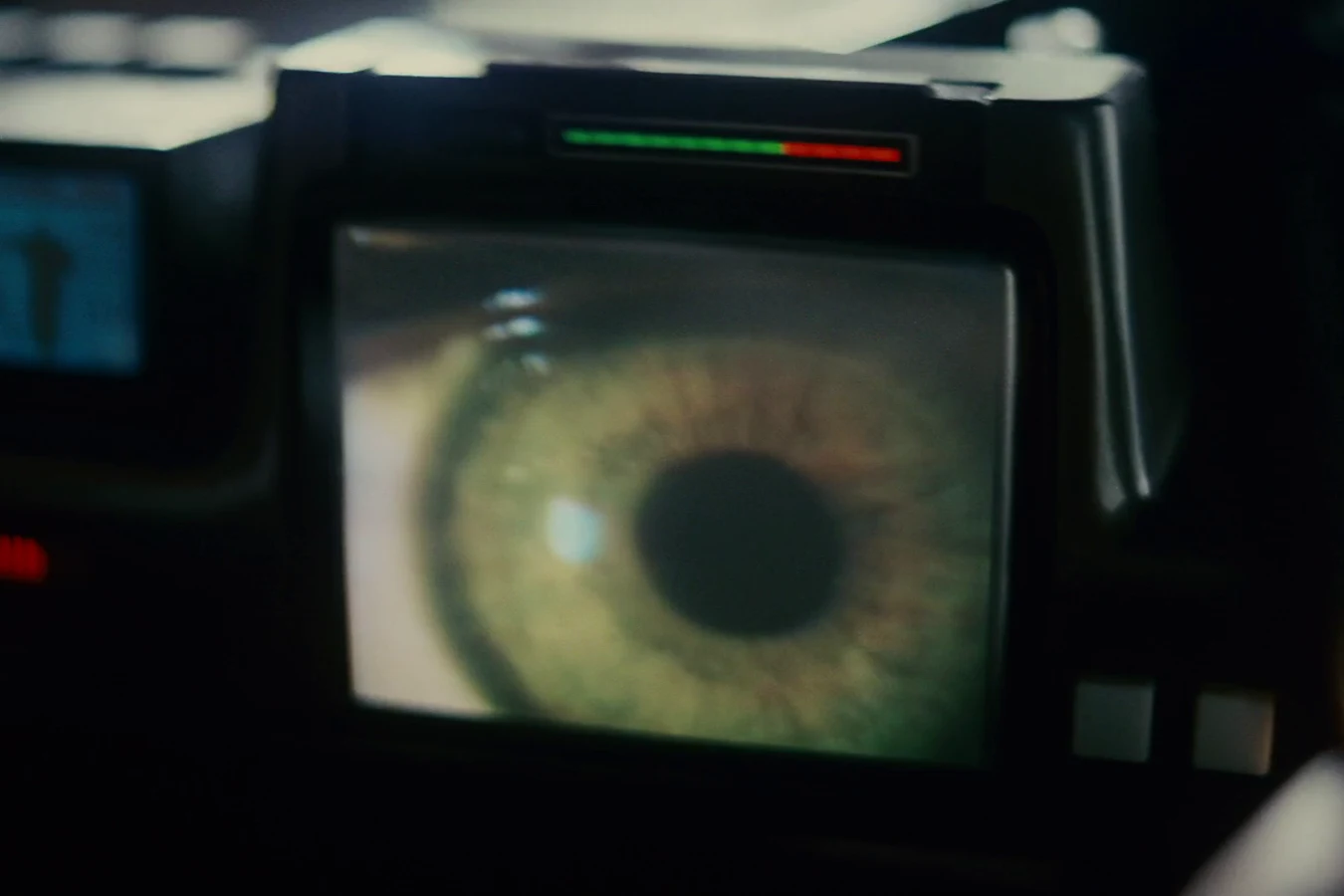
The machine measures capillary dilation, the so-called blush response, along with fluctuation of the pupil and involuntary dilation of the iris. A camera trained on one eye feeds a magnified image to the central monitor, while smaller screens and a light bar track the readings as each question lands. Questions about animals, children and bodily intimacy are chosen because a human reacts to them before thinking.
A standard test runs 20 to 30 cross-referenced questions, enough to separate a human from a Nexus-6 under normal conditions. The replicant's problem is rarely the answer itself but the delay, a reaction that arrives a fraction too late because it is worked out rather than felt. Implanted memories blur that gap, which is why a subject who believes she is human can hold out far longer than the test was designed for.
The Machine
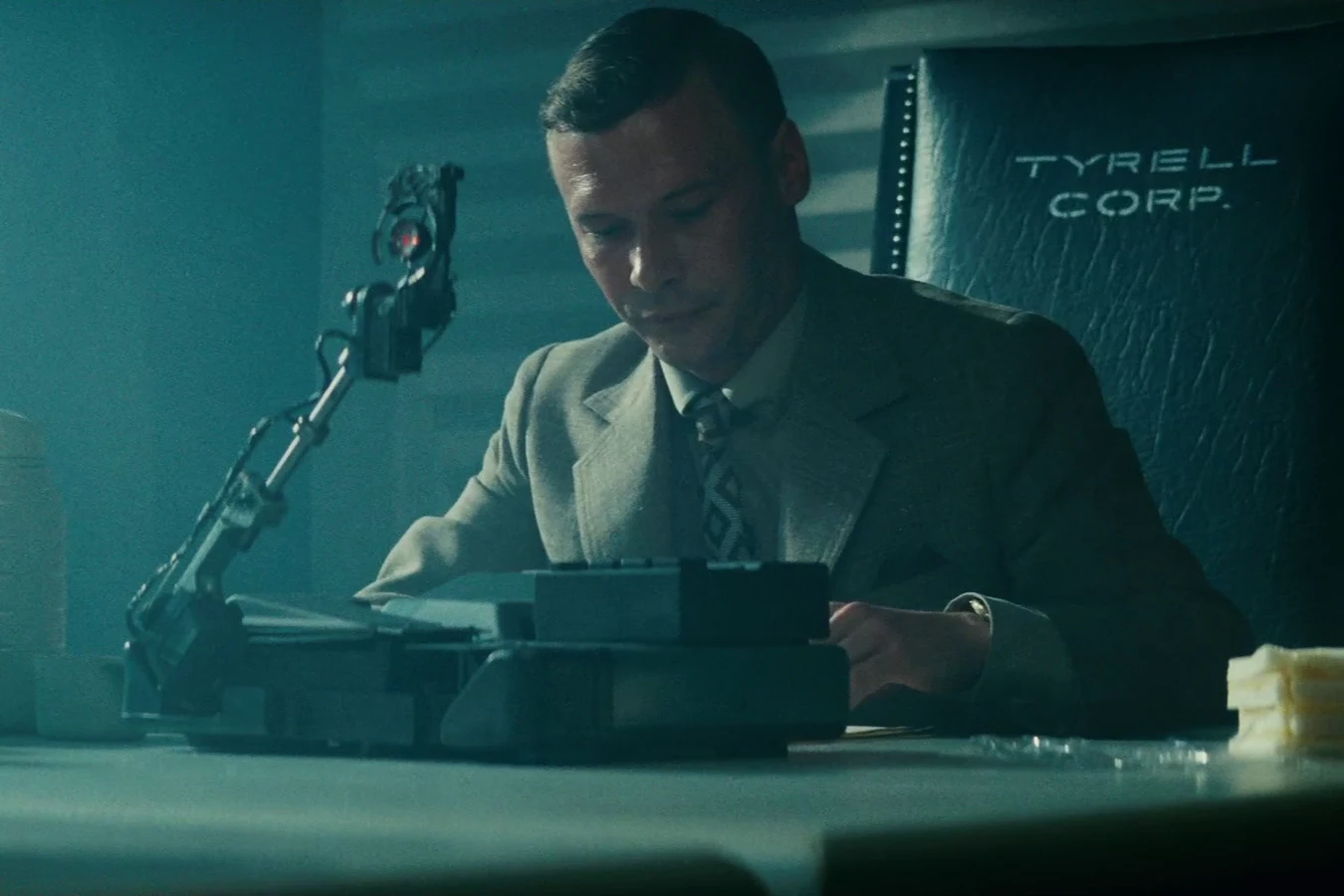
The unit is portable, a dark box the examiner sets on a table and unfolds, with a breathing bellows on top and an articulated arm that swings the camera eye toward the subject. The bellows rises and falls as it samples the air around the subject, giving the machine the look of something alive and patient.
Holden used a unit set up in a bare Tyrell interview room, while Deckard carried his own case into the darkened office at the top of the pyramid. In both tests the examiner smoked, sat across the table and kept his eyes on the monitor rather than on the face in front of him, trusting the readings over his own judgment.
Notable Uses
Across the film and its expanded universe the test is remembered less for its routine use than for the handful of sessions that went wrong, revealed too much or exposed the machine's limits. Each of the tests below changed what the people involved believed about replicants, about the test or about themselves.
Holden Tests Leon
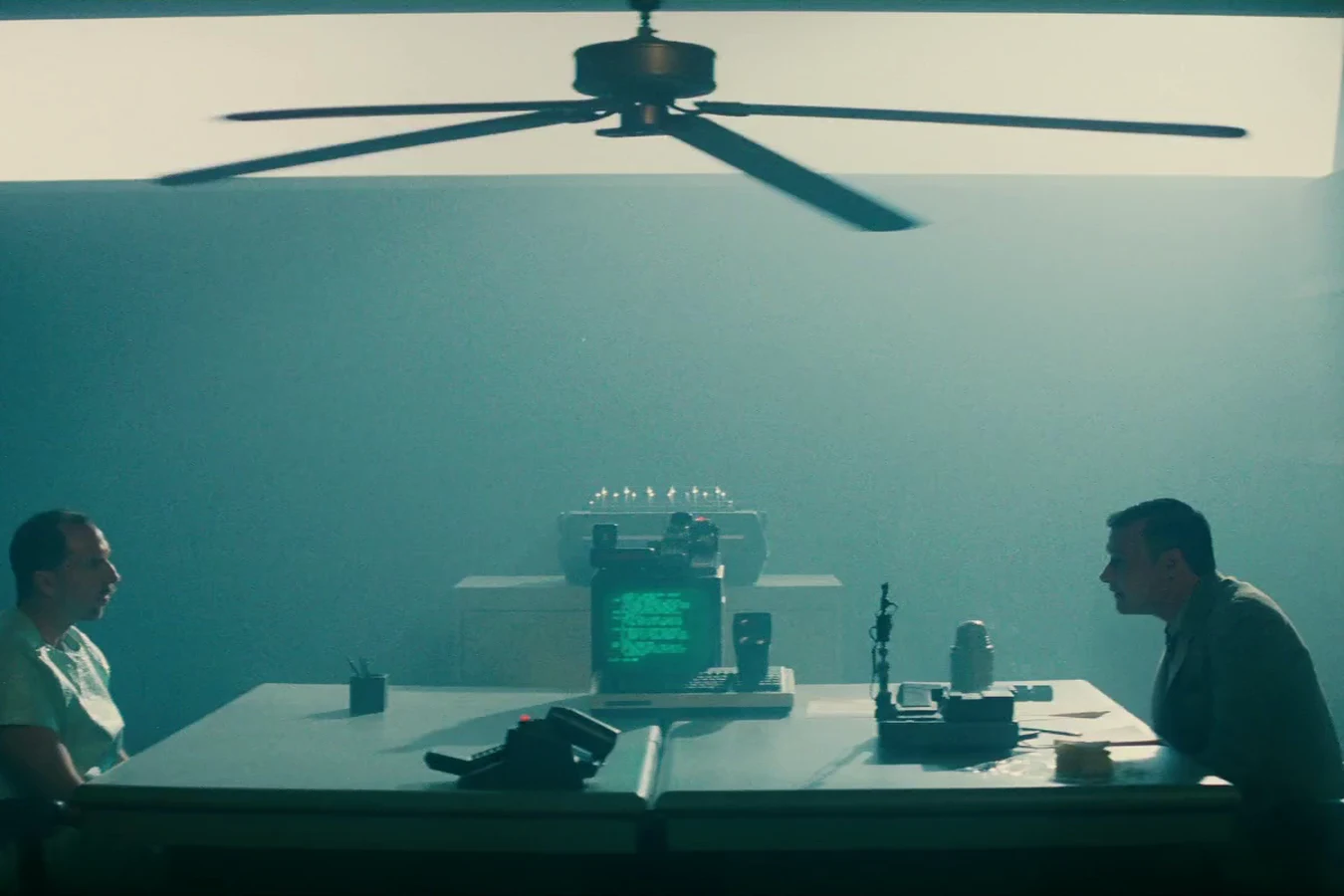
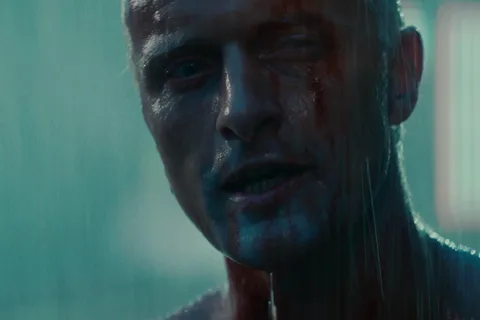
Holden's session with new waste disposal engineer Leon Kowalski showed the test working exactly as designed, and showed how dangerous that could be. Leon's agitation over the tortoise and his slow, confused answers marked him long before the final question, yet Holden followed procedure and asked about Leon's mother. Leon shot him through the table.
The recording became the evidence Bryant used to brief Deckard and proof that the escaped replicants were trying to infiltrate the Tyrell Corporation. It also established the test as the moment a blade runner is most exposed, seated and unarmed, asking a suspected killer to talk about his family.
Deckard Tests Rachael
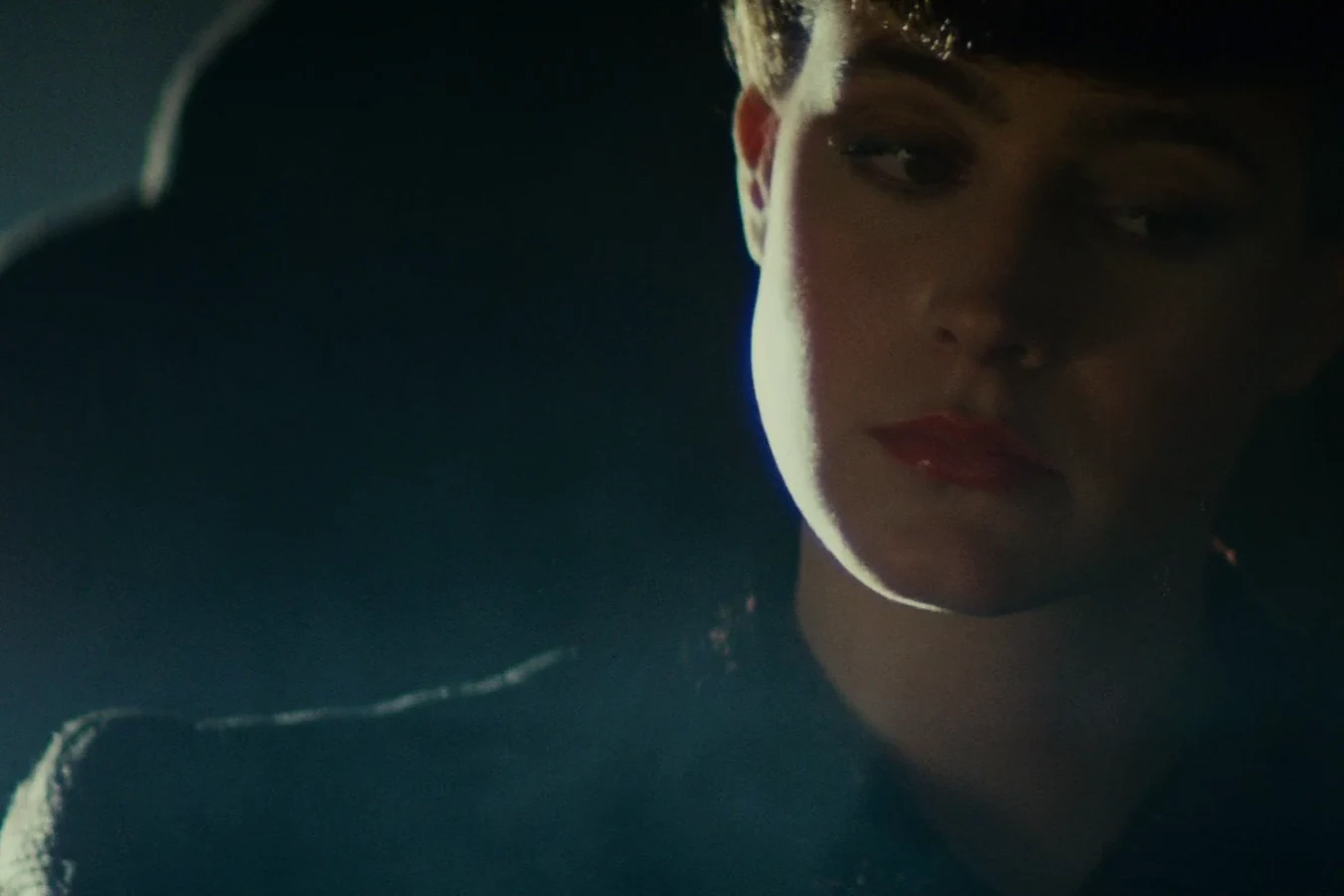
Eldon Tyrell asked Deckard to try the machine on a human before a replicant and offered his assistant Rachael as the subject. A normal test took 20 or 30 questions, but Rachael needed more than 100 before Deckard was sure, because she did not know she was a replicant.
Tyrell explained that she was an experiment, a replicant given implanted memories as a cushion for her emotions, which made her responses far harder to read. The result proved the test still worked on a Nexus-6 but showed how close the corporation had come to beating it, and it left Rachael asking Deckard whether he had ever taken the test himself.
Joseph Tests Elle
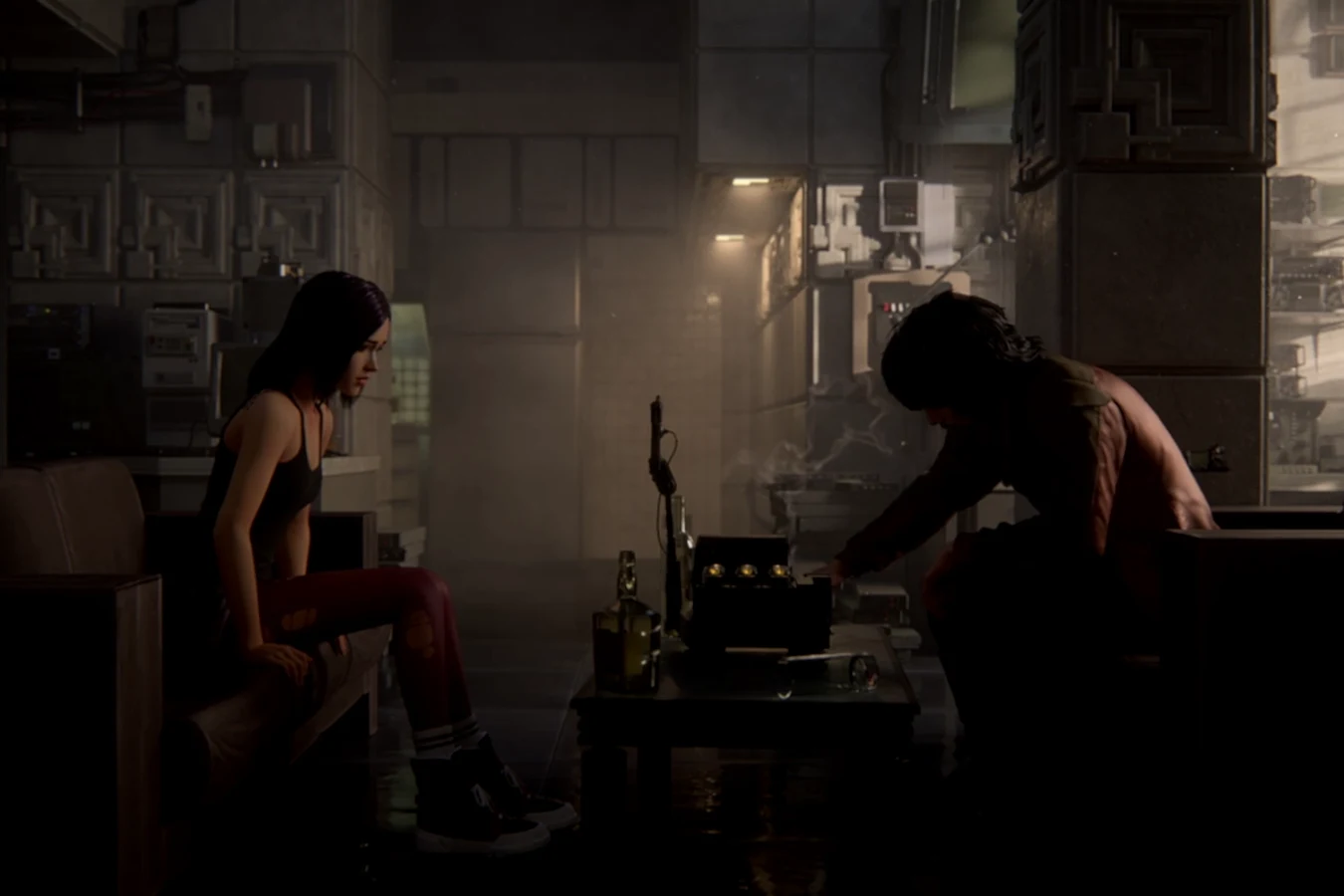
In Blade Runner: Black Lotus, set in Los Angeles in 2032, Joseph ran a Voight-Kampff test on Elle in the third episode, The Human Condition, after checking her eye for a Nexus-8 serial number. The questions about a mother who did not love her child and a kitten left beside a dumpster echoed the cruelty scenarios of the original test.
When she recalled the lover who gave her the black lotus tattoo, Joseph ended the test and told her she was not a replicant, a verdict that was a lie. A decade after the Tyrell office, the machine was still the instrument that decided what a replicant was allowed to know about herself.
Notable Questions
These are some of the most famous questions put to subjects during the test, from the film and from the novel.
- "You're in a desert, walking along in the sand... You look down and see a tortoise. It's crawling towards you."
- "You reach down, you flip the tortoise over on its back."
- "The tortoise lays on its back, its belly baking in the sun, beating its legs, trying to turn itself over, but it can't, not without your help. But you're not helping."
- "Describe in single words only the good things that come into your mind about your mother."
- "It's your birthday. Someone gives you a calfskin wallet."
- "You've got a little boy. He shows you his butterfly collection, plus the killing jar."
- "You're watching television. Suddenly you realize there's a wasp crawling on your arm."
- "You're reading a magazine. You come across a full-page nude photo of a girl."
- "You're watching a stage play, a banquet is in progress. The guests are enjoying an appetizer of raw oysters. The entrée consists of boiled dog."
- "You are watching an old movie on TV, a movie from before the war. It shows a banquet in progress; the guests are enjoying raw oysters."
- "The entrée consists of boiled dog, stuffed with rice."
Origins In Do Androids Dream
Philip K. Dick spelled the test Voigt-Kampff in Do Androids Dream of Electric Sheep?, where it grew out of an earlier Voigt Empathy Test developed at the Pavlov Institute. That first test had been devised after more than 50 Sudermann T-14 androids slipped onto Earth, some of them undetected for up to a year, and no T-14 was known to have passed it. Its foundation was empathy, the trait the novel tied to Mercerism and the one thing an android could not fake, and the film later added an h to make it Voight-Kampff.
Intelligence tests had no chance against the new Nexus-6 brain unit, and police agencies had protested its specifications since August 1991. The scale was the last line of defence, and Dave Holden had already used it to retire two androids before Polokov shot him in the middle of a test, leaving Deckard to inherit the rest of the list. Before he flew north, Harry Bryant warned him that psychiatrists in Leningrad wanted the scale applied to schizoid human patients, the ones who showed a flattening of affect.
The Voigt-Kampff Scale
The novel's equipment was a flat adhesive disk on the cheek to record capillary dilation and a pencil-beam light trained on the eye to track fluctuations of tension in the eye muscles. Deckard explained that the blush it caught was the shame reaction to a morally shocking stimulus, and unlike skin conductivity, respiration or cardiac rate it could not be controlled voluntarily. Two gauges registered the reactions, and the examiner judged whether each response came fast enough to be genuine rather than reasoned out.
Its weakness was the one the Rosen Association tried to exploit, the possibility that a human with a damaged or unusual upbringing might fail. The problem was old enough that Lurie Kampff had written about it eight years earlier in Role-taking Blockage in the Undeteriorated Schizophrenic. Deckard later told Roy Baty that once an android pulled a gun, any claim to a test was over, a reminder that the scale only mattered while both sides were willing to sit at the table.
Rachael Rosen And The Owl
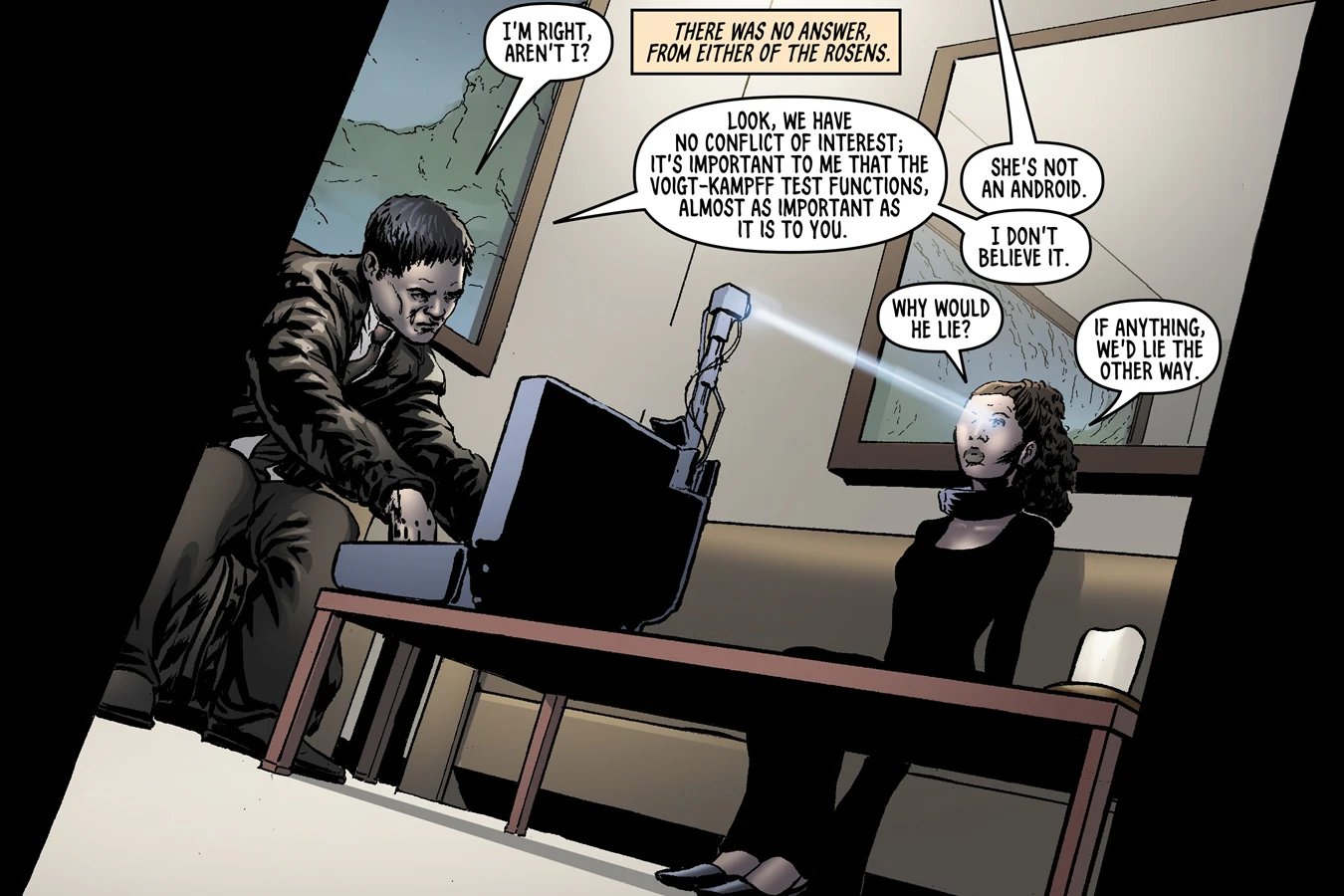
At the Rosen Association in Seattle, Eldon Rosen offered his niece Rachael Rosen as a control subject and claimed she had been raised aboard the Salander 3, far from ordinary human contact. By his account she had spent 14 of her 18 years living off the ship's tape library and the nine adult crew members, before it turned back a sixth of the way to Proxima. The gauges tagged her as an android, and the Rosens insisted the test had failed on a human, a failure they already had on tape and could use to have the scale withdrawn.
They offered Deckard their owl Scrappy to bury the result, until a final question about her babyhide briefcase made the needles jump only after a pause. Deckard knew the correct reaction period down to a fraction of a second, and the delay told him she was a Nexus-6. The session proved that the Rosen Association knew exactly how to attack the Voigt-Kampff, and that Rachael herself had been lied to about what she was.
The Boneli Reflex-Arc Test
Bounty hunter Phil Resch preferred the Boneli Reflex-Arc Test, which measured the reaction time of the spinal ganglia rather than empathy. The subject pressed a button in answer to an audio signal or a light flash, and after about ten measured reactions Resch believed his department had a reliable clue, with a bone marrow test as backup. Deckard insisted on the Voigt-Kampff instead, and Resch, who had begun to fear he was an android himself, tested human. Deckard then turned the equipment on himself, and a question about a female android pushed his needles to 4.0 and 6.
In the BOOM! Studios adaptation Resch even proposed running the Boneli test on police personnel, while Garland claimed Resch carried a synthetic memory system. The rival tests showed that nobody in the novel fully trusted a single measurement, and that even the hunters could doubt their own nature.
The Jeter Novels
K. W. Jeter's three sequels, The Edge of Human, Replicant Night and Eye and Talon, kept the Voigt-Kampff machine as standard LAPD issue, carried in a briefcase like the big black guns, with its bellows breathing in traces of sweat and fear and a tracking lens on a metal stalk. To the blade runners it measured something real, empathy, the ability to feel what another living creature feels, and that belief was an article of faith without which they could not do the job.
Jeter spent all three books attacking that faith. In his Los Angeles the test could be beaten by a retuned replicant, could condemn a human whose body chemistry was off, told an examiner nothing about a subject who already knew the questions, and could be dismissed by a rival as theatre built to make blade runners believe in it.
The Sixth Replicant Conspiracy
Sarah Tyrell told Deckard that the off-world report on the escape confirmed six replicants had reached Earth, while the file had been closed once Roy Batty was found dead. Bryant had purged the identification data on the sixth from the police files before he ever gave out the assignment, and Sarah did not want the LAPD to reopen the case, because the hunt was hers to steer against the Tyrell Corporation.
Batty later showed Holden the access record proving that Bryant had pulled the scans of the escaped replicants three times and printed hard copies, photographs that would have let Holden recognise them on sight. Instead Bryant told him no images existed and sent him to run empathy tests on every new Tyrell employee, so the Voigt-Kampff session that nearly killed Holden had been unnecessary from the start, and the sixth replicant's identity, possibly Deckard's, stayed buried.
A Test That Can Be Fooled
J. R. Isidore, running the Van Nuys Pet Hospital, admitted that he took in escaped replicants and fixed them, tweaking their involuntary reaction times, blush responses and pupil fluctuations so they could sail past a Voigt-Kampff machine. He boasted that they always passed, and since some real humans had flunked the test, his replicants were in a sense realer than real.
Isidore also forced Deckard to name the only absolutely accurate test, a postmortem bone marrow analysis that took days to run, and revealed that the marrow results showed one of his retirements, the woman known as Pris, had been human. Holden, for his part, refused to test Batty at all, reasoning that a professional who already knew the questions gave no baseline for involuntary responses, and Batty answered that blade runners running the machine on each other would get meaningless results.
The St. Paul Incident
The worst failure in the books was the St. Paul incident, a case so secret that its details were never recorded and lived only in the memories of the blade runners who knew it. An LAPD blade runner home for Christmas got drunk with an old high school girlfriend and ran the test on her as a joke, unaware that a local pharmacist had handed out a withdrawn flu medicine containing a mild central nervous system depressant.
The drug flattened her iris fluctuations and blush response, so he shot her, then tested everyone around him, including his parents, and decided he was surrounded by a nest of replicants. For the next 12 hours he stopped only to reload, until one of Deckard's old partners went to Minnesota to stop him, and Deckard still insisted the test had never produced a false positive.
Holden's Test Restaged
In Replicant Night, on the Outer Hollywood orbital studios, a production restaging the old hunt rebuilt the Tyrell interview room, and Holden, now kept alive by a bio-mechanical heart, found himself in the examiner's chair with a live Voigt-Kampff machine and a Kowalski replicant across the table. The man running the rehearsal told the replicant it was only a video, handed him a gun to hold under the table and asked Holden to take it from the question about his mother.
Holden knew what came next and could not stop himself from saying the line, even matching the superior half smile he had worn the first time. The Kowalski replicant flushed with anger and fired through the table into the chest where Holden's original heart had once been, repeating the most famous test in the city's history as a killing.
The Tortoise Questions On Film
In Eye and Talon, blade runner Iris watched film of the old hunt in which a woman cop took Holden's place, ran the desert and tortoise questions on Leon, skipped ahead to get out of the room faster and saw the needles quiver just as she knew they would. Iris herself had only ever been told which numbers to look for, and when those numbers came up the subject was finished.
Carsten told her the machine was designed less to detect replicants than to make blade runners believe it could, since breath sampling could be done invisibly without an antique pump, and he doubted Eldon Tyrell would have passed any genuine empathy test. Iris countered that replicants flunked because they lacked the empathic faculty, then admitted that the world in which those readings mattered was one she no longer lived in.
Games And RPG
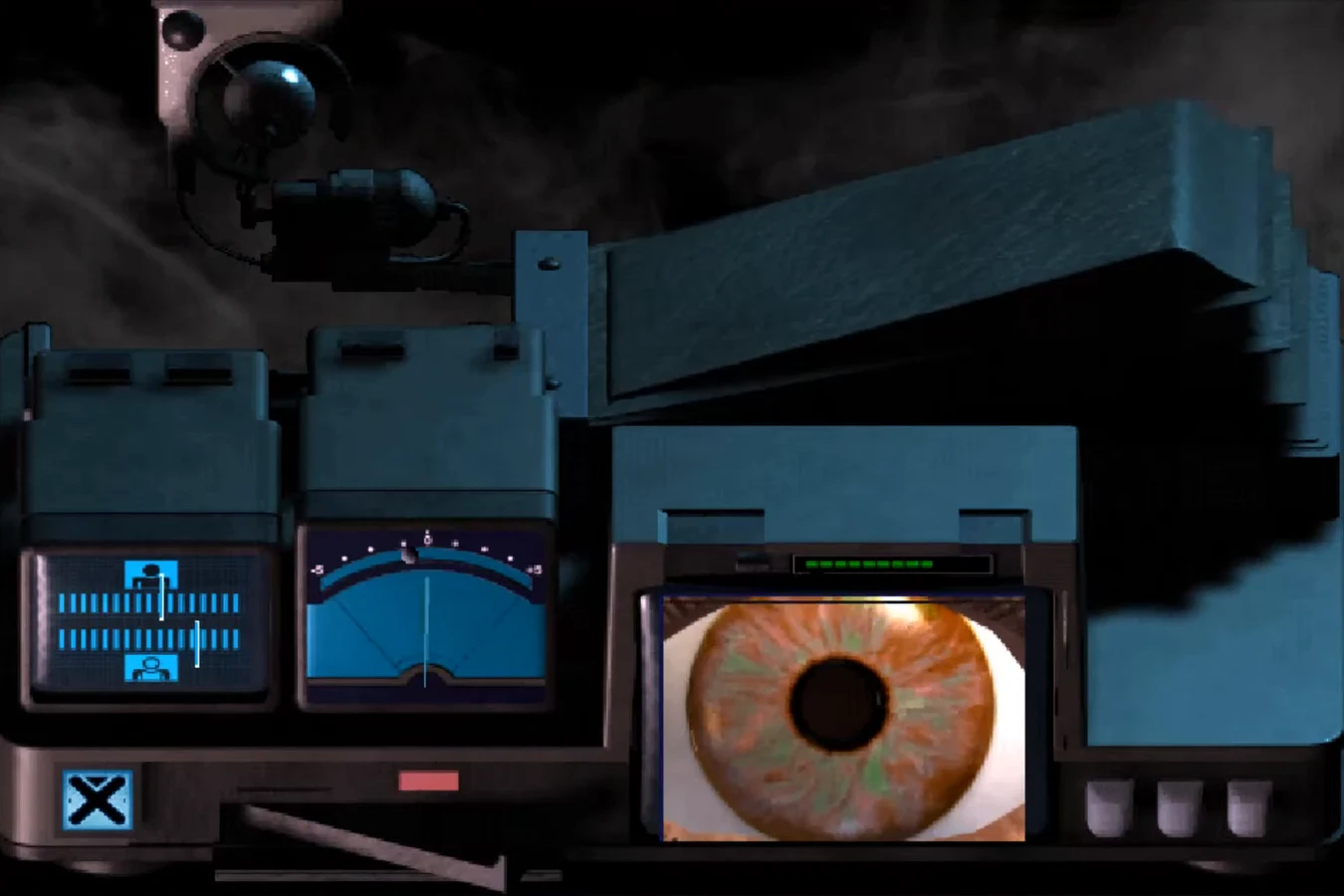
In Westwood's Blade Runner adventure game, McCoy can run the test on suspects and lock them as human or replicant if he keeps the questions inside the pressure limit. Suspects' identities were randomized on every playthrough, with only Clovis and Zuben always replicants, so the test was a genuine tool rather than a scripted scene. The top needle leaned right for a human and the bottom one for a replicant, while a sweeping needle tracked the intensity of each low, medium or high question, and pushing too hard ended the test before a verdict. A positive result left McCoy to choose whether to kill, arrest or let the subject go, with the choice shaping the rest of the story.
The Blade Runner RPG, set in 2037, makes a full test take a Shift and more than 100 questions, resolved as Insight against Manipulation. It names Holden, Gaff and McCoy as the old-timers who used the first machines, while Nexus-9 officers sit the newer Baseline Test. Free League Publishing released the game on December 13, 2022, carrying the machine into a tabletop setting.
The Baseline Test
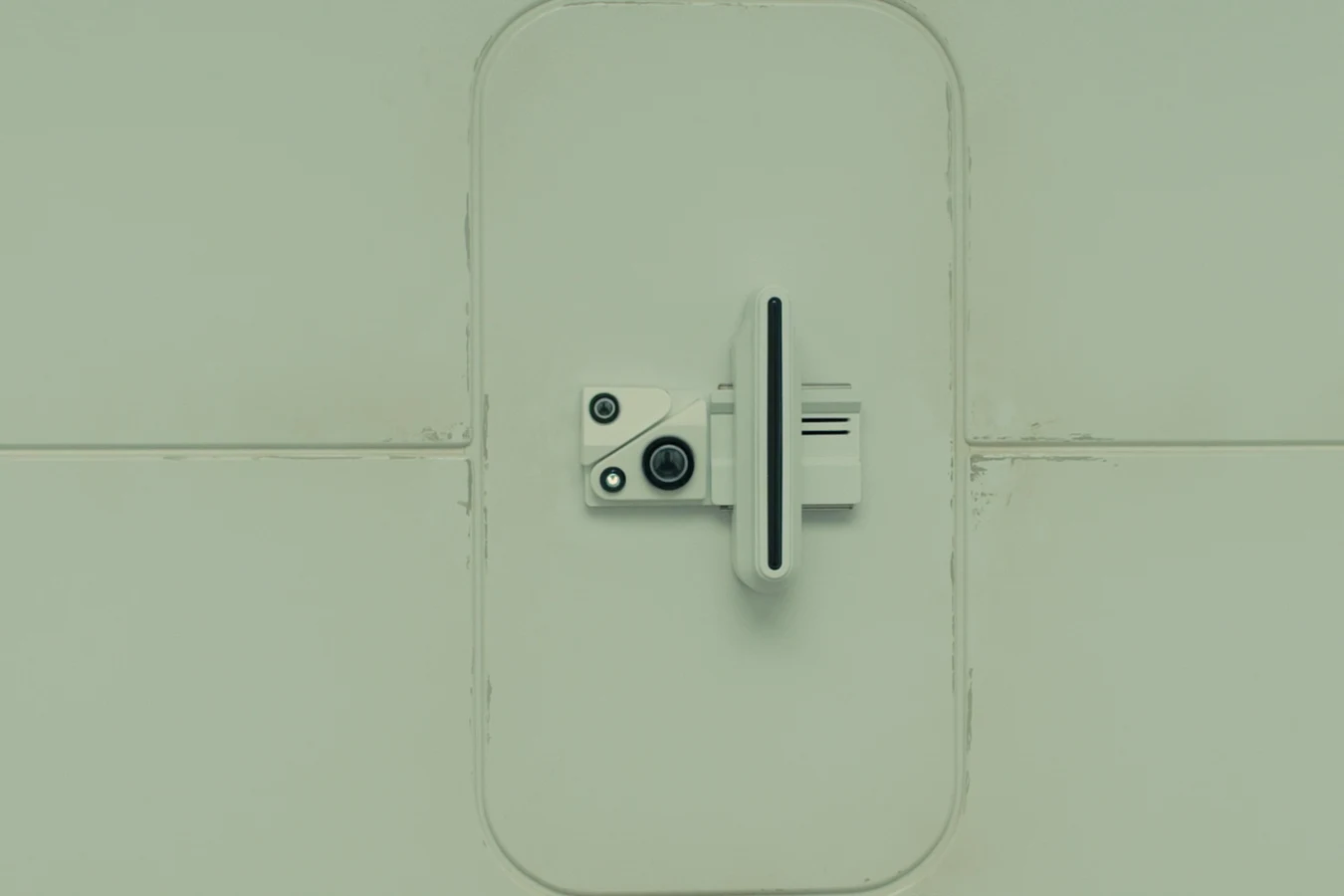
By Blade Runner 2049 the Voight-Kampff had a successor aimed the other way, a post-trauma baseline given to replicant blade runners after each retirement. Officer K recited lines from Pale Fire and repeated single words under rapid questioning, and passing meant showing no emotional deviation at all. The test took place in a bare white room at LAPD headquarters, where the examiner fired phrases such as "Cells" and "Interlinked" and K answered each one back without hesitation.
K passed after retiring Sapper Morton, but after his investigation became personal the examiner told him he was not even close to baseline. The baseline flipped the purpose of the old test, no longer hunting for a hidden replicant but checking that a known one felt nothing. After the failure Lieutenant Joshi gave him 48 hours to disappear, sparing him from being retired on the spot.
Behind The Scenes
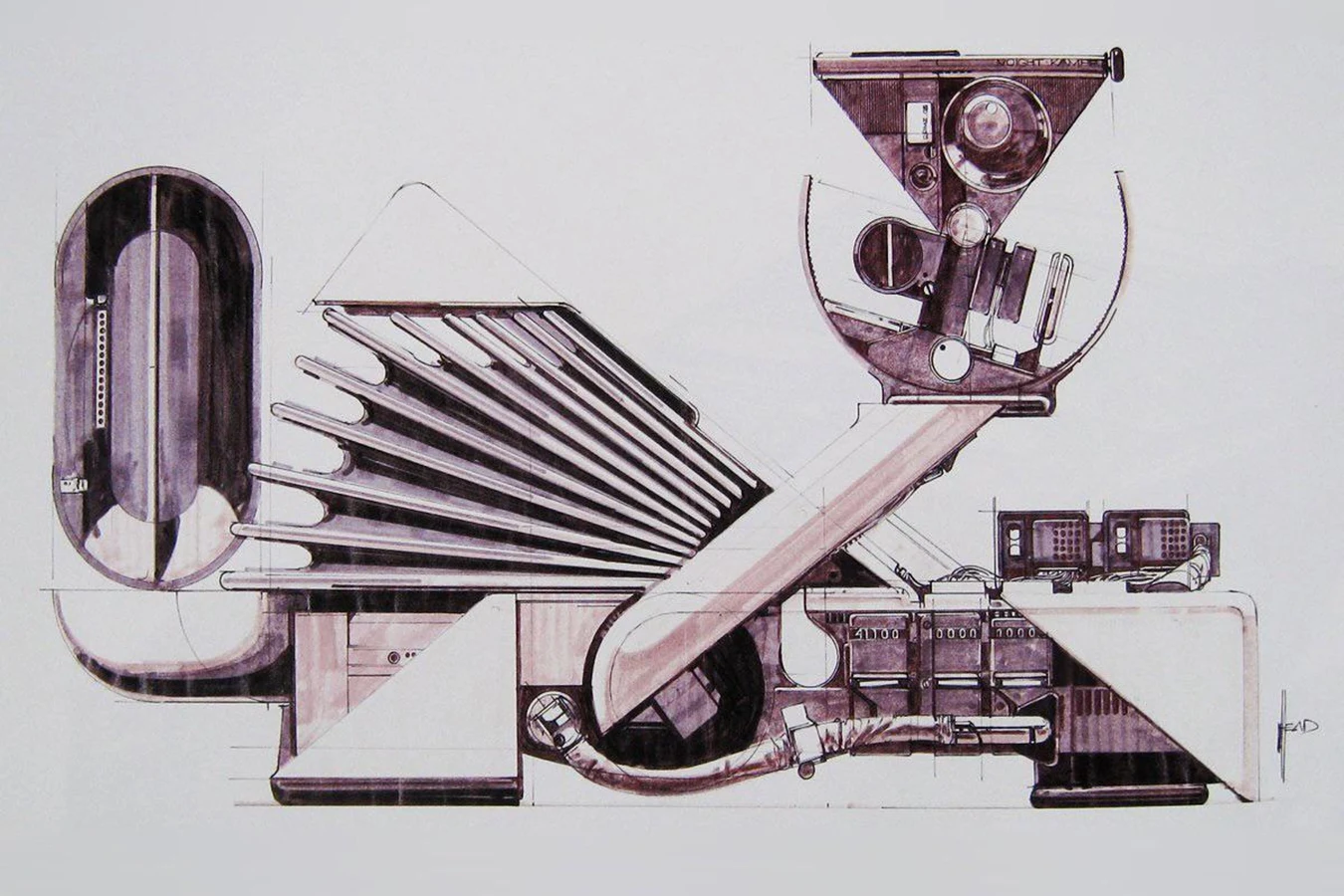
Visual futurist Syd Mead designed the machine after discussions with Ridley Scott and production designer Lawrence G. Paull, who later described it as a lie detector working three or four schemes into a unit that opens up with a breather and an oscillator. Mead explained that Scott wanted it delicate and briefcase sized but threatening on a desk, like a giant tarantula, so they decided it should breathe, with the bellows drawing in air to sample the chemistry a frightened body gives off.
Paul M. Sammon's Future Noir covers the machine among the effects work led by Douglas Trumbull and David Dryer, a prop that did nothing in reality but had to look convincing on screen. In the same book Scott called the replicants' glowing eyes a purely stylistic device, asking why anyone would need a Voight-Kampff machine to sniff them out if the glow were real, while the film changed Dick's Voigt spelling to Voight.
Conclusion
The Voight-Kampff is the device that turns Blade Runner into a story about empathy rather than a simple manhunt. In the film it exposes Leon and Rachael, in Dick's novel it competes with the Boneli test and the Rosens' bribe, and in Jeter's sequels it is so flawed that a human can die by it and a replicant can pass.
Its successor in 2049 and its return in Black Lotus show the same question surviving every new generation of replicants. Nobody who uses the machine can be entirely sure what it would say about them, and that doubt is what keeps it at the centre of the franchise.
Appearances
- Do Androids Dream of Electric Sheep? by Philip K. Dick (1968)
- Blade Runner (1982 film)
- Blade Runner Marvel comic adaptation (1982)
- Blade Runner 2: The Edge of Human by K. W. Jeter (1995)
- Blade Runner 3: Replicant Night by K. W. Jeter (1996)
- Blade Runner 4: Eye and Talon by K. W. Jeter (2000)
- Blade Runner (Westwood, 1997 game)
- Do Androids Dream of Electric Sheep? (BOOM! Studios, 2009-2011)
- Blade Runner 2049 (2017 film)
- Blade Runner: Black Lotus (2021-2022)
- Blade Runner: Origins (Titan Comics, 2021-2022)
- Blade Runner RPG (Free League, 2022)
- Blade Runner: Revelations (2023 game)
Tag Categories: Blade Runner Lore