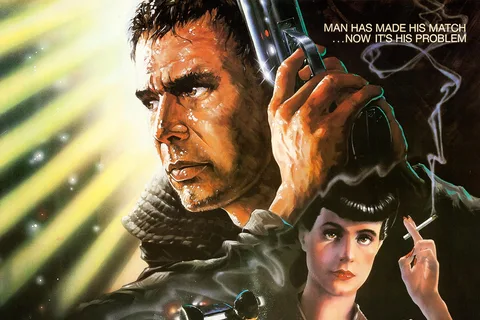
Blade Runner RPG: Rules, Setting & Case Files

Blade Runner: The Roleplaying Game is Free League Publishing's licensed tabletop game for the Blade Runner films, released as a 240-page core rulebook in 2022 under license from Alcon Entertainment. Tomas Härenstam led the game design, Joe LeFavi wrote the setting, and Martin Grip painted the art. Players take the roles of human and Replicant detectives in the LAPD's Replicant Detection Unit in 2037 Los Angeles, eighteen years after the events of the 1982 film and a year after the Wallace Corporation unveiled the Nexus-9. The book holds the rules, the city, its factions, the gear, and the tools for writing investigations called Case Files.
Book Overview
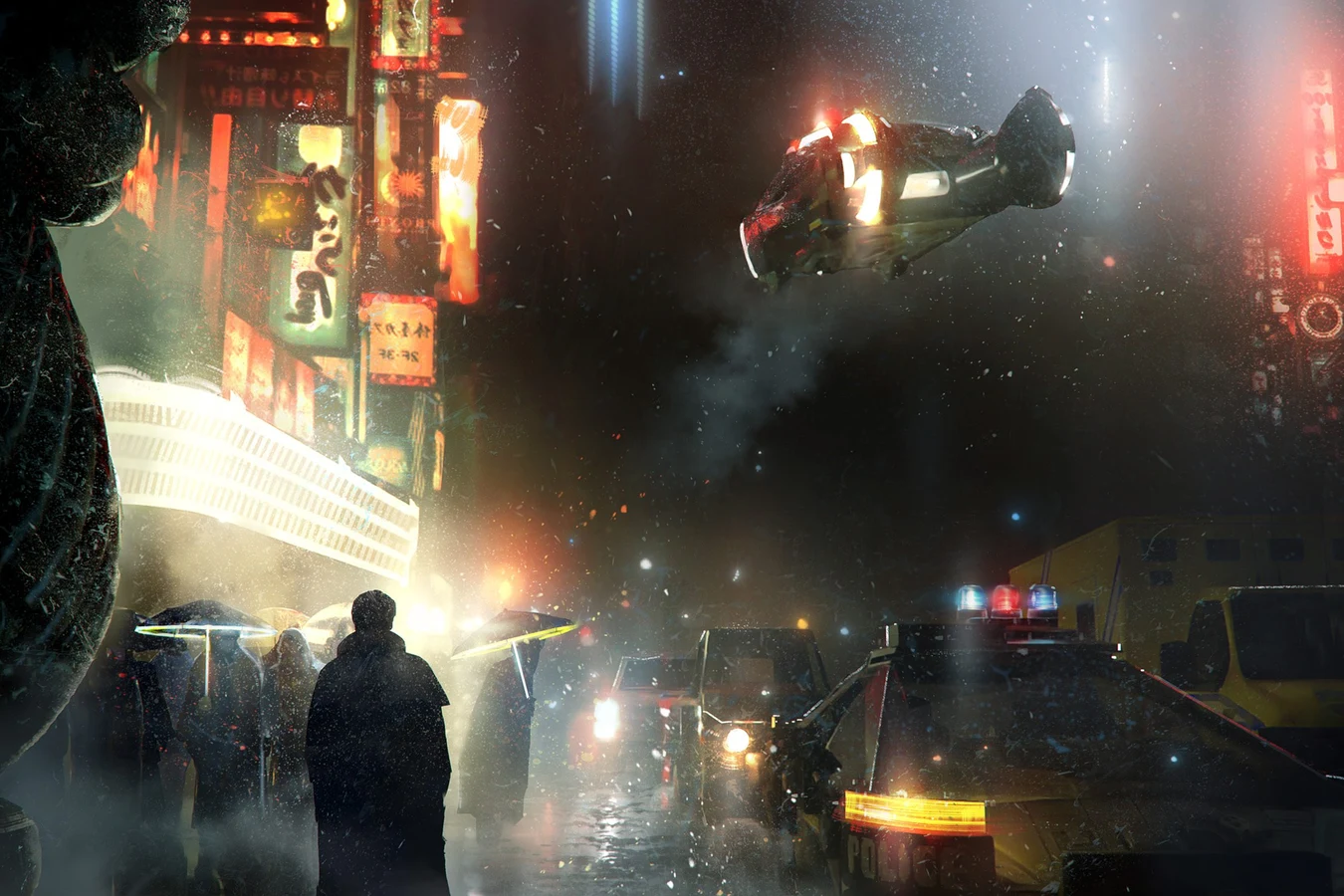
The core rulebook is divided into nine chapters, each opened by a quotation. Chapter 1, Fiery the Angels Fell, introduces the setting, the job of a Blade Runner in 2037, and the basics of play. Chapter 2, Your Blade Runner, walks through character creation, while chapters 3 and 4 cover skills, specialties, combat, and chases. Chapter 5, A Tale of Two Cities, describes Los Angeles sector by sector, and chapter 6, The Powers That Be, lists the governments, megacorps, syndicates, and Replicant models that shape the city and the cases its detectives are handed.
Chapter 7, Working the Case, describes the Replicant Detection Unit, its divisions, its resources, and the standard procedure at a crime scene. Chapter 8, Tools of the Trade, collects weapons, armor, medicine, investigative machines, synthetics, Spinners, public transit, and shopping. The closing chapter, Running Blade Runner, is written for the Game Runner, the game's name for the referee, and explains how to pace scenes, build Case Files, run Downtime, award points, and handle non-player characters. A map of Los Angeles is printed on the inside covers, and a random Case File generator and name tables close the final chapter.
The Game Runner chapter opens by saying that this game is not like other roleplaying games. Action and adventure are present, but the stories are also meant to explore philosophy and morality and to follow the personal development of the player characters. A sidebar titled It's Not About the Case states that the point of play is not to solve cases. The core purpose, the text says, is to confront the characters with personal and moral dilemmas and let them ask what makes them who they are. For that reason the Game Runner is told never to make clues too hard to find.
Timeline To 2037
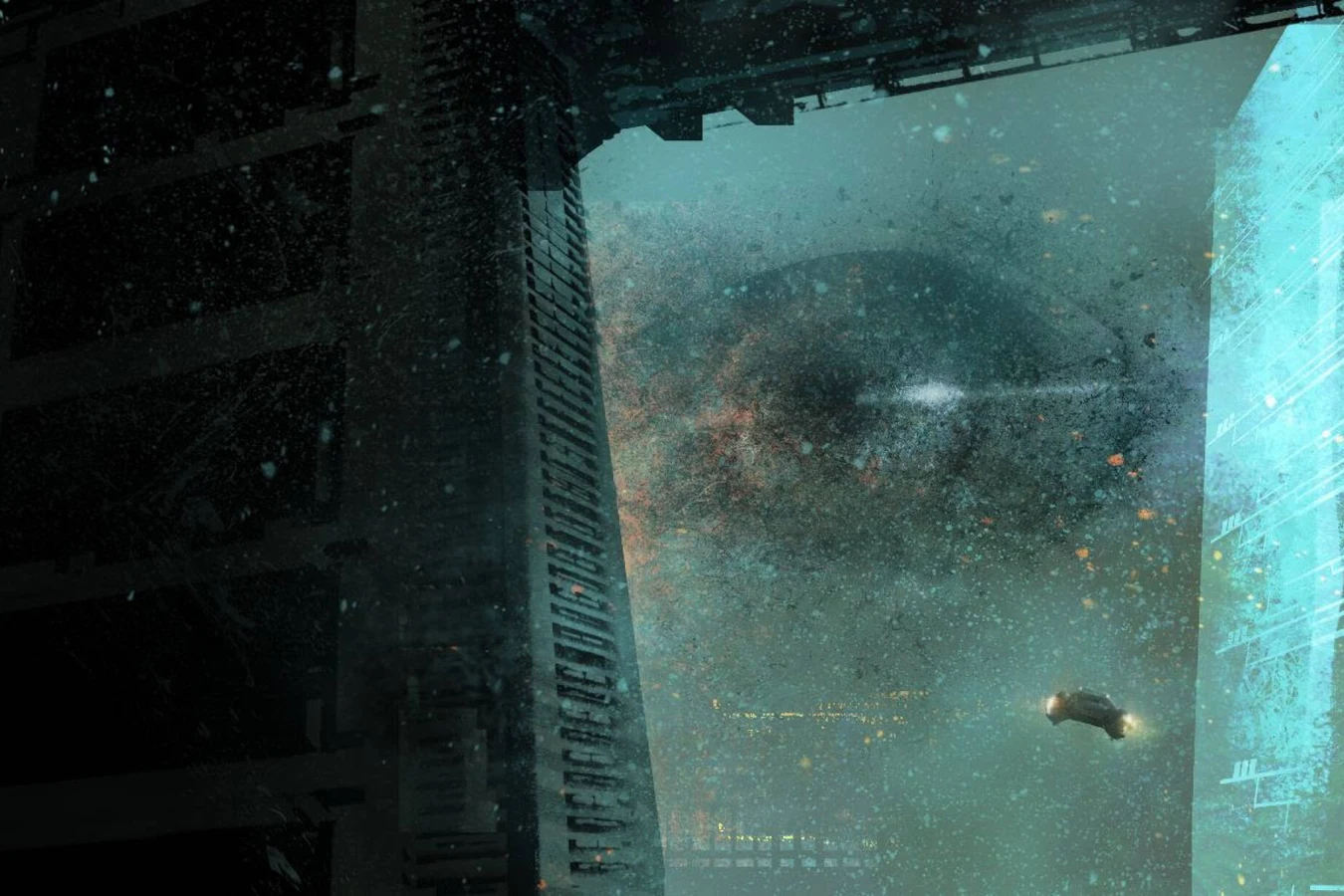
Chapter 1 opens with a history of the decades before 2037, told from the point of view of an LAPD detective, and the book adds a separate timeline written by Clara Čarija and Michael Andrews. The history follows the collapse of the old order, the off-world exodus, the Replicant crisis, the Blackout, and the rise of a new synthetic giant. AvP Central keeps its own Blade Runner timeline for the films and comics. The game's version runs from the founding of the Off-World colonies to the arrival of the Nexus-9 one year before the game opens, and the sections below follow the book's own order of events.
Collapse And Off-World Emigration
In the book's history, the old nations weakened after a global collapse, and megacorporations grew in power alongside a rebuilt United Nations. In the late 1990s the UN launched the Off-World Emigration Program, which sent settlers first to the moon and then to Mars, and by 2037 there were nine colonies. Those who passed the screening left Earth behind. Those who failed it were labeled Specials and stayed in the crowded cities below. Los Angeles grew into a single sprawl that reached from San Francisco to San Diego and held some 30 million people.
Tyrell And The Nexus-6
The Tyrell Corporation built the Replicants that made off-world labor possible, and its Nexus-6 model carried a four-year lifespan as a safeguard. When a dirty bomb aimed at Los Angeles was intercepted, its fallout wrecked Las Vegas, and the UN prohibited Replicants on Earth. The LAPD formed the Replicant Detection Unit, whose Blade Runners hunted down fugitive Replicants and retired them, the polite word the force used for killing them. In November 2019, Eldon Tyrell was murdered by a Nexus-6, and the book treats that killing as the end of an era for his company.
The Nexus-8 And The Blackout
Tyrell rushed the Nexus-8 to market around 2020, with open-ended lifespans and ocular implants that marked each unit. The Replicant Registration Database that was shared with the authorities was leaked, and Human Supremacy riots followed in the streets. In May 2022, an electromagnetic pulse caused the Blackout, a ten-day outage that erased vast amounts of data. In 2023 the UN passed the Replicant Prohibition Act, the LAPD formed the Replicant Underground Task Force, and the Tyrell Corporation went bankrupt. The Denabase entry in chapter 8 notes that Blackout data corruption still left gaps in LAPD records in 2037.
Wallace And The Nexus-9
The Wallace Corporation made its name in 2025 by sharing its synthetic protein patents freely, then bought the remaining Tyrell assets in 2028. Niander Wallace Jr. took over as chief executive in 2032 after his father's death. In 2036, Wallace unveiled the Nexus-9, the UN repealed the Prohibition, and the LAPD began recruiting Nexus-9 officers as Blade Runners. By 2037, the book estimates the Nexus-9 population at two to five percent of the populace, and the 44-year-old Niander Wallace is described as history's first trillionaire. A new LAPD headquarters tower had replaced the old one after a fire in 2029.
Game Modes And Themes
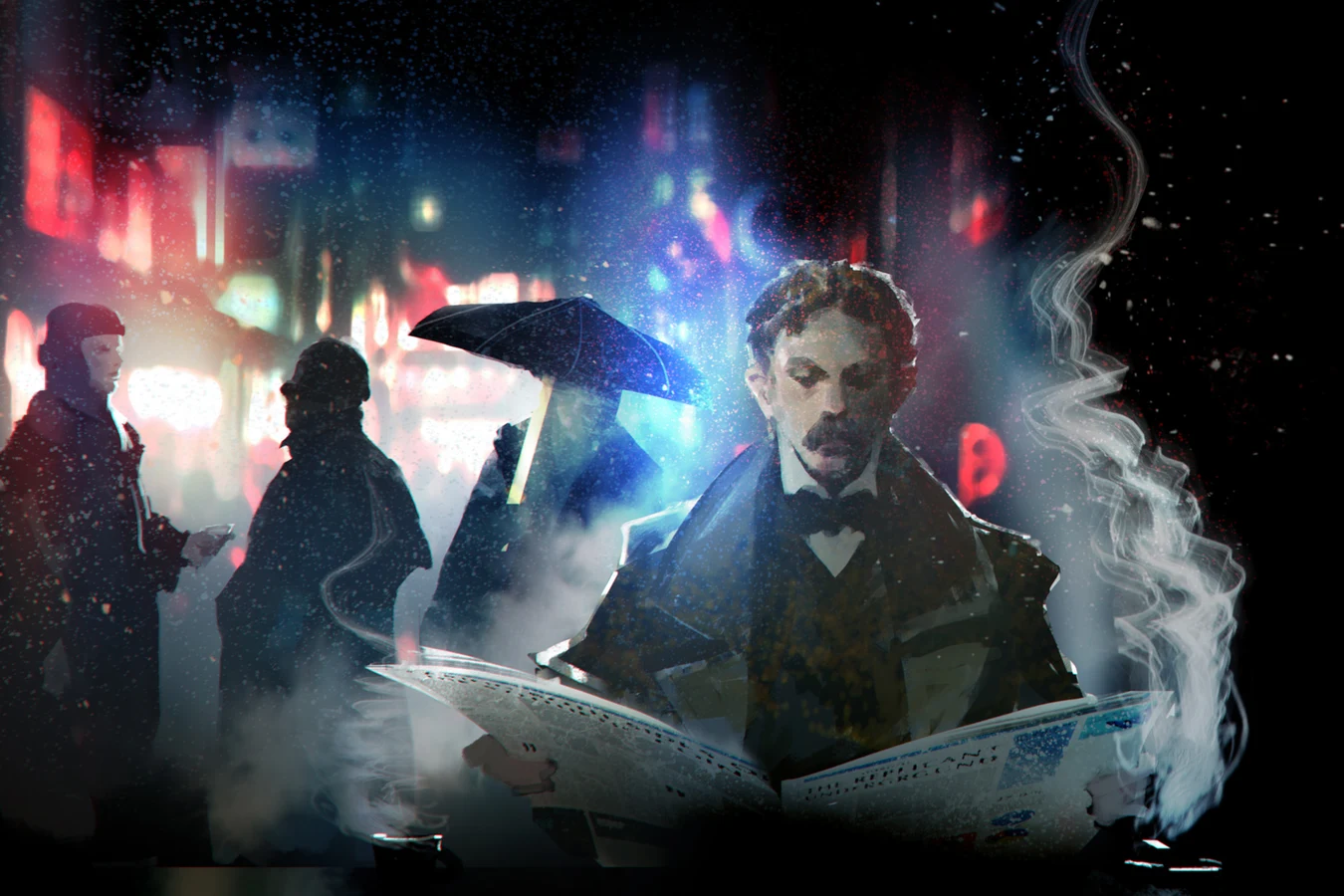
The players take the roles of Blade Runners, and one player acts as the Game Runner, who describes the world, plays the non-player characters, and runs the Case File. Play is organized around Case Files, prepared investigations with a briefing, locations, clues, and a countdown of events. Time is measured in Shifts, with four in each day: Morning, Day, Evening, and Night. In each Shift, each character can visit one location of the case, and in action scenes the clock drops to Rounds of five to ten seconds. Between Shifts of investigation the characters need Downtime, or stress begins to build.
Key Themes
Chapter 1 lists five key themes: Sci-Fi Action, Character Drama, Corporate Intrigue, Moral Conflict, and Soul Searching. Sci-Fi Action covers chases and gunshots in the neon-drenched night. Character Drama looks at how characters and NPCs come together or lose themselves under pressure. Corporate Intrigue drags the detectives into the schemes of industry titans, political puppets, and crime lords. Moral Conflict tests their empathy and moral code against an unsympathetic world, and Soul Searching makes them face the consequences of their actions and ask what it means to be human. The Game Runner chapter asks that every scene include at least one theme.
Scene By Scene
The game is designed to be played scene by scene. The Game Runner is told to act like the director of a film and cut to the next scene before the story drags, without describing what happens in between. A new scene needs only a few evocative details, a point on the Los Angeles map, and mugshots of any NPCs, and players should ask questions instead of hearing long descriptions. The city map is deliberately loose. Its purpose is to set the mood and give a sense of space, not to manage travel or combat. When an investigation scene runs dry, the Game Runner can simply say so and move on.
The book also asks for patience. Even though the characters are always on the clock, the players should take their time and let the mood of 2037 Los Angeles sink in. The chapter recommends leaving the handouts on the table to build a growing tableau of evidence, playing moody music, with the official film soundtracks as the obvious choice, and dimming the lights so that only maps and handouts are lit. Props such as clothes, gear replicas, and drinks served in glasses like those in the films are suggested as ways to deepen the Blade Runner mood at the table.
Splitting The Party
Unlike most roleplaying games, Blade Runner encourages the players to split up. The characters are always on a clock and often need to cover several locations at once, and the book argues that focusing on one or two characters at a time suits the noir feel better than a large group. The Game Runner is told to cut between players quickly, even leaving one in a cliffhanger while cutting to another. Each Blade Runner carries a KIA, a hand-held unit that lets separated characters talk, share evidence, and comment on scenes where they are not physically present.
Player Characters And Archetypes
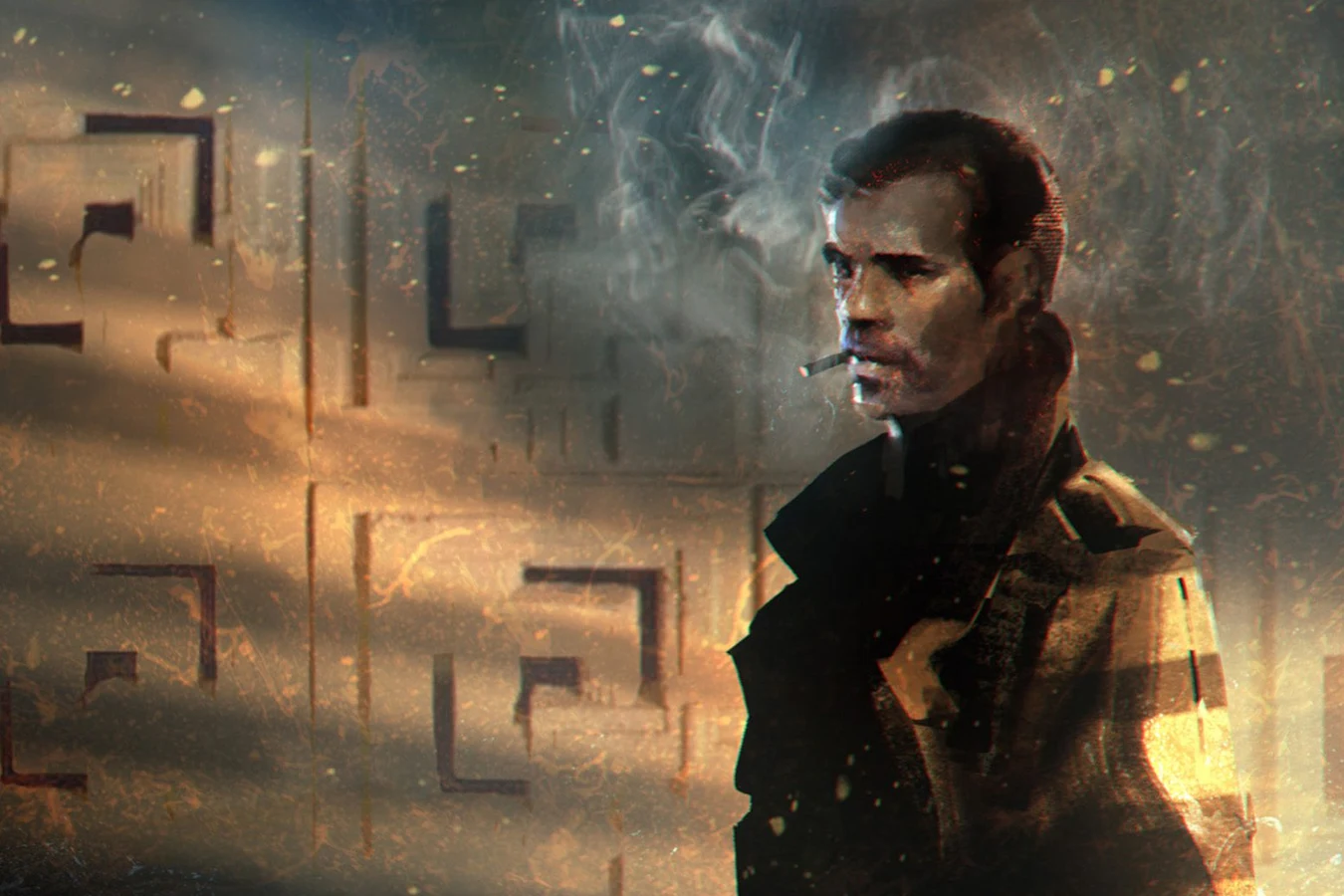
Character creation follows 15 steps in chapter 2. A player first decides whether the detective is human or Replicant, then picks an archetype, sets the years on the force, assigns attributes and skills, and chooses specialties. Later steps add a key memory, a key relationship, a signature item, starting chinyen, standard-issue gear, and a home. The worked example is JN7-4.79, a Replicant Enforcer known as Jane, partnered with a human Cityspeaker named Resch. Serial numbers in that style can be made with the Blade Runner Name Generator, which was built for fan fiction and tabletop play.
Human Or Replicant
Players can choose their nature or roll a D6, where one to three makes a human and four to six a Nexus-9 Replicant. Human Blade Runners are first-generation or next-generation officers, while Nexus-9 Blade Runners had only been active for the past year when the book opens. A Replicant gains an extra attribute increase on Strength or Agility, two more points of Health, and two fewer points of Resolve. It starts with one less Promotion Point and Chinyen Point, can push a roll twice, and always takes stress when it pushes. An optional rule lets a character believed to be human turn out to be a Replicant on a roll of six.
The Seven Archetypes
The book offers seven archetypes. The Analyst leans on Intelligence and the skills Observation, Medical Aid, and Tech, with specialties such as Insider, Musician, and Scientist. The human-only Cityspeaker leans on Empathy and works through Mobility, Connections, and Insight, with specialties such as Gutter Rat, Hardened, and Origami. The Doxie is Replicant-only and leans on Agility, with Hand-to-Hand Combat, Mobility, and Manipulation and specialties such as Fast Reflexes, Interrogator, and Merciful. Each archetype also sets a starting chinyen die, a D8 for each of these three.
The Enforcer, a veteran of the Off-World Colonization Defense Program, leans on Strength with Hand-to-Hand Combat, Stamina, and Firearms, and can pick Fast Reflexes, Killer, or Tough. The Fixer leans on Empathy and works through Connections, Manipulation, and Insight, with Cashflow, Insider, or Protected. The Inspector leans on Agility with Firearms, Observation, and Connections, and can pick Hardened, Married to the Job, or Smokes. The human-only Skimmer leans on Empathy with Firearms, Connections, and Manipulation, takes Cashflow, Kickbacks, or Sycophant, and starts with the richest chinyen die, a D12, against the D6 of Enforcers and Inspectors.
Years On The Force
Experience is set by years on the force. A Rookie with up to a year of service gets four attribute increases and eight skill increases but no specialties. A Seasoned officer of two to seven years gets three attribute increases, ten skill increases, and one specialty. A Veteran of eight to fifteen years gets two attribute increases, twelve skill increases, and two specialties, while an Old-Timer of sixteen years or more gets one attribute increase, fourteen skill increases, and three specialties. Longer service also means more starting Promotion Points, rolled on a die that grows from a D3 to a D10, and better Chinyen Points.
Memories, Relationships, And Items
Every character rolls or picks a key memory from five tables. Once per session, a player can invoke it for an advantage, and engaging with it earns Humanity Points. A key relationship, drawn from three tables, gives the character a person who matters and who can return during Downtime. A signature item, rolled on a D12 table that runs from a photograph and an origami bird to an animoid pet and a tombstone, heals one point of stress once per session. Standard issue covers the LAPD badge, a PK-D Blaster or a .357 Subcompact, a KIA, and access to a Detective Special Spinner.
Promotion And Humanity
The game tracks two kinds of advancement. Promotion Points measure standing in the department. A character who earns five or more in one session receives a distinction from Deputy Chief Holden, and five points buy a new specialty after a Shift at the LAPD Training Grounds. Points can be lost for failing duties, and each loss forces a Connections roll, with disciplinary action from Holden on a failure. Humanity Points measure the inner life of the character and are spent to raise skills, at a cost of five to go from D to C, ten from C to B, and fifteen from B to A.
Skills, Dice, And Stress
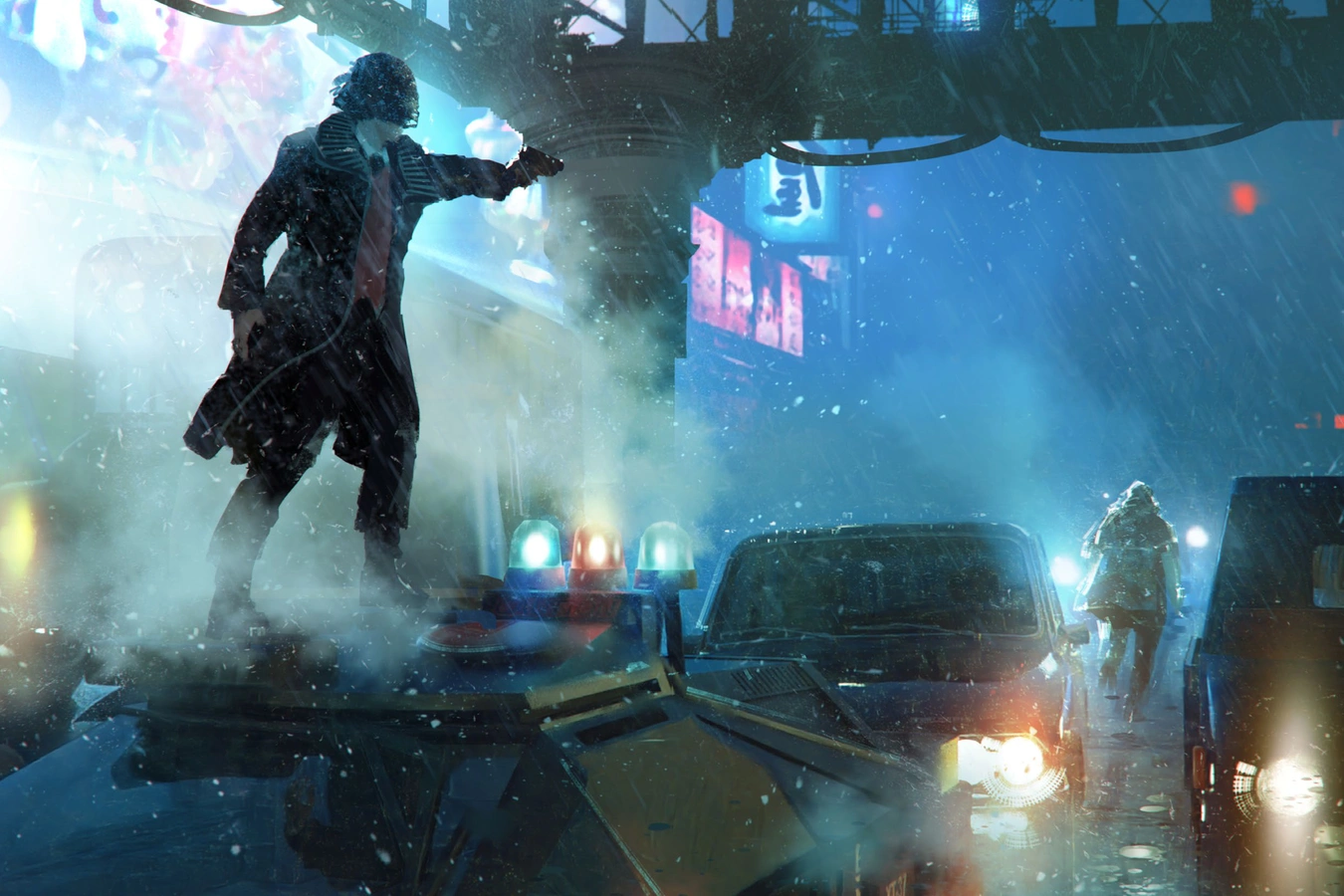
Characters have four attributes: Strength, Agility, Intelligence, and Empathy. Each is rated from A to D, which stands for a D12, D10, D8, or D6. Health is the sum of the Strength and Agility die sizes divided by four, rounded up, and Resolve is calculated the same way from Intelligence and Empathy. Damage lowers Health, and stress lowers Resolve. A character who reaches zero in either is Broken. The system sticks to die sizes from D6 to D12 throughout, and the Starter Set ships with two full sets of dice in those sizes for the table.
The Thirteen Skills
There are 13 skills. Strength covers Force, Hand-to-Hand Combat, and Stamina. Agility covers Firearms, Mobility, and Stealth. Intelligence covers Medical Aid, Observation, and Tech. Empathy covers Connections, Manipulation, and Insight. The thirteenth skill, Driving, is paired with a vehicle's Maneuverability rating instead of an attribute, so the same pilot can be safer in a nimble Spinner than in a lumbering truck. Skills are rated A to D like attributes, and a skill roll combines one die for the attribute with one for the skill, so a strong detective with weak training still has a fair chance.
Rolling And Pushing
A die that shows 6 or more is a success, and a die that shows 10 or more counts as two successes. Two successes on one roll make a critical success. Advantage adds an extra die of the lower type, and disadvantage removes the lower die. A failed roll can be pushed by rerolling every die that did not show a one, but each one rolled afterward costs a point of damage on Strength and Agility rolls or a point of stress on Intelligence and Empathy rolls. Humans can push once. Replicants can push twice and always take stress when they do.
Opposed rolls pit two characters against each other, and the side with more successes wins. A helper adds a skill die to the roll, and groups of NPCs can act together the same way. Specialties give narrow edges, and the list includes Bodyguard, Cashflow, Controlled, Counselor, Fast Reflexes, Gutter Rat, Hardened, Hip Flask, Insider, Interrogator, Kickbacks, Killer, Married to the Job, Martial Arts, Merciful, Musician, Origami, People Person, Protected, Scientist, Smokes, Sniper, Sycophant, and Tough. New specialties can be learned later at the LAPD Training Grounds for five Promotion Points and a Shift of practice.
Combat And Chases
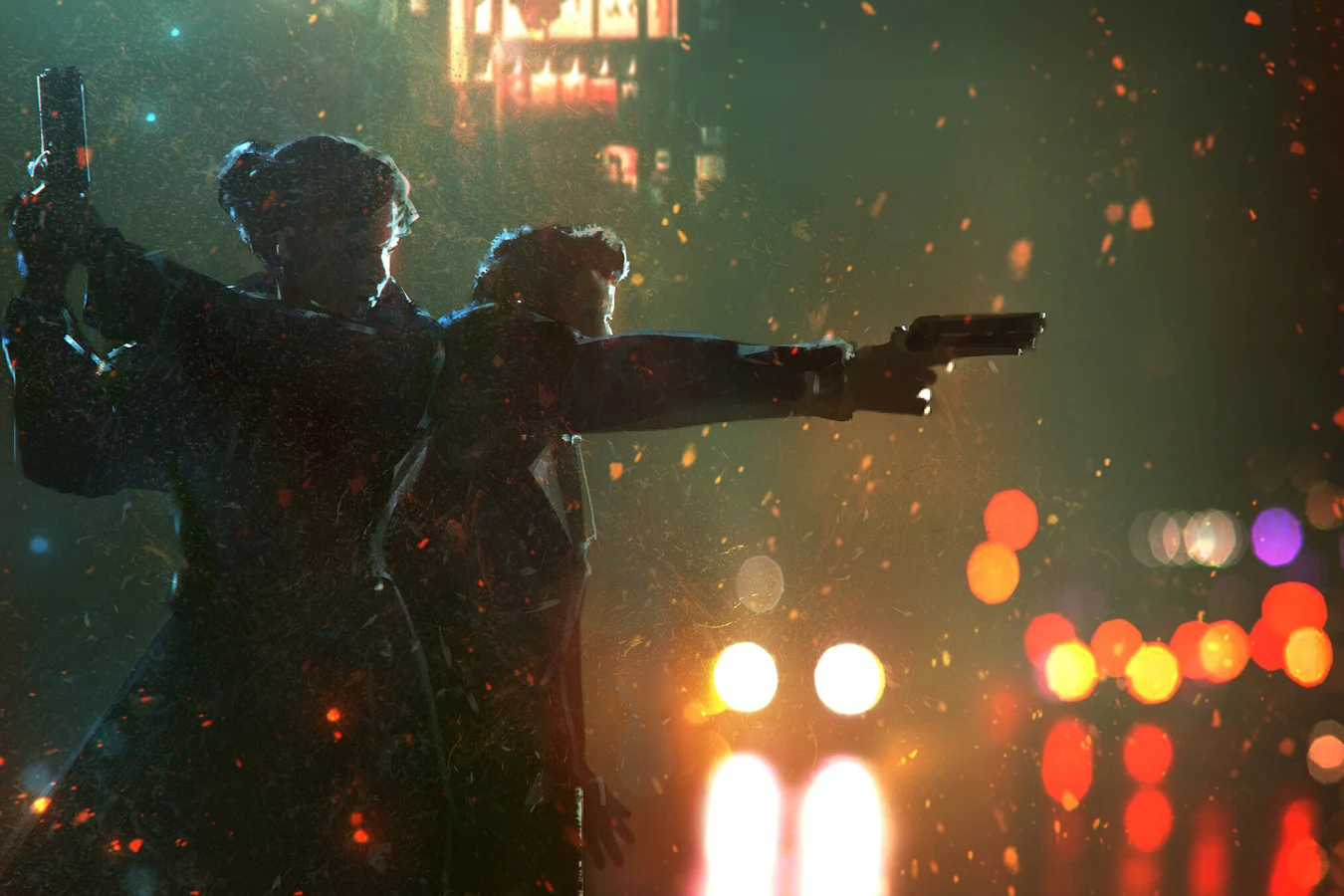
Combat is built to be brief and brutal. Battlefields are split into zones of up to about 25 meters across, and range runs from Engaged and Short through Medium and Long, roughly a hundred meters, to Extreme at about a kilometer. Each fighter draws an initiative card numbered from one to ten, and on a turn a character can take one action and one move. Close combat is an opposed roll, and the winner hits. Ranged fire is a straight roll against the target, with full auto as an option for some weapons. The game does not count ammunition, which keeps fights quick.
Damage And Critical Injuries
Every weapon has a damage rating and a critical die. A character whose Health drops to zero is Broken and suffers a critical injury, rolled on separate D12 tables for crushing and piercing damage. Some injuries are lethal unless treated, and a dying character rolls Stamina to hang on. Armor is rated A to D and can stop a hit. Explosions are rated by Blast Power, and the chapter adds rules for falling, fire, and drowning. The Game Runner chapter warns that every fight carries a real risk of death and suggests that Deputy Chief Holden introduce any replacement character quickly.
Stress And Breakdowns
Stress comes from frightening and traumatic events, rated by stress factors from one to three or more. A character who is Broken by stress suffers a critical stress effect, rolled on separate tables for humans and Replicants. The human table starts with To Live in Fear, while the Replicant table includes Let Me Tell You About My Mother and Twice as Bright, both lines from the 1982 film. Some effects cause permanent loss of Resolve. Downtime heals stress, and characters who go three Shifts without a Shift of rest start to take stress just from the strain of the job.
Vehicles And Chases
Vehicles are rated for Passengers, Maneuverability, Hull, and Armor, and Spinners also track altitude. Damage to a vehicle uses its own critical table. Chases use secret maneuvers chosen by each side: Pursue or Flee, Hide, Block, Cut Off, Stand and Shoot, or Other. Each round brings an obstacle from tables for foot, ground, and aerial chases, with neon umbrellas, crowds of monks, a Metrokab in the way, holographic ads, and bolts of lightning among the hazards. The Game Runner chapter suggests that a losing side in a fight cut and run, which turns a gunfight into a chase through the streets or the skies.
Los Angeles In 2037

Chapter 5 describes Los Angeles as two cities stacked on top of each other. The sprawl reaches from San Francisco to San Diego, but the game focuses on downtown, divided into 19 Sectors. Megabuildings rise as high as 500 stories, and life is split at the 100th floor. Below it, the crowds live with rain, smog, and street markets. Above it, the rich live in quiet towers and travel by Spinner. The book describes the Esper Network, a citywide camera system, along with Vid-Phon booths run by Bell Systems and the newer Wallace Data Network, as the threads that tie the city together.
Sectors 1, 2, And 4
Sector 1, the Entertainment district, holds Nightclub Row, the Snake Pit club run by Taffey Lewis, Rag Row, and Magazine Mile. Sector 2, the Arts district, is home to Hysteria Hall and the University of Los Angeles and its Medical Center. Sector 4, the Industrial district, holds the Wallace headquarters, the old Tyrell pyramid, DNA Row with its bioengineers, and Animoid Row with its synthetic animals. Hawker's Circle, the black market's main hub, is found there too, along with Piss Alley, the Runner Surplus store of Bob Gorsky, and Mantis's Prawn Shop.
Sector 5 And The Tower
Sector 5, the Central district, is the seat of law and government. LAPD Headquarters, also called Precinct 995, stands there beside the Courthouse and City Hall, where Governor Phelan holds office. The Little Tokyo Shopping District is found there too, along with the White Dragon Noodle Bar, which has served customers since 1982, and Bibi's Bar. The offices of the Independent Sentinel, a daily newspaper of colonial and local news, are found in the same sector. For player characters, Sector 5 is home ground, since the Replicant Detection Unit works out of the Tower and many officers live nearby in LAPD apartments.
Sectors 9 And 12
Sector 9, the Commercial district, covers the Fashion District, Ogilvy's department store, the Financial District, Grand Central Market, and the Central Library. It also holds Retirement Row and the old LA Viaduct, where the Replicant Underground was said to hide. Sector 12 surrounds LAX, the spaceport for off-world flights, and holds the Warehouse District, the kipple of abandoned goods, and docks along the Sea Wall. Across the city, every sector has its own shopping district, with vending malls, uplink cafes, and newsracks selling papers such as the Independent Sentinel, Synth, Creative Evolution, and the crime weekly KILL.
Beyond Downtown
The Sepulveda Sea Wall, begun in the 2020s along the old I-405, holds back the rising Pacific and defines the western edge of the city. To the south, San Diego has become the Trash Mesa, a landfill for the region. Other areas include the Energy Empire, the Los Angeles Hills, and the Santa Barbara Archipelago. Off-world, the book names Calantha as a warzone. These distant places give the Game Runner settings for cases that leave downtown, though the book warns that travel on the ground can cost Shifts and slow down an investigation that has no time to spare.
The Powers That Be
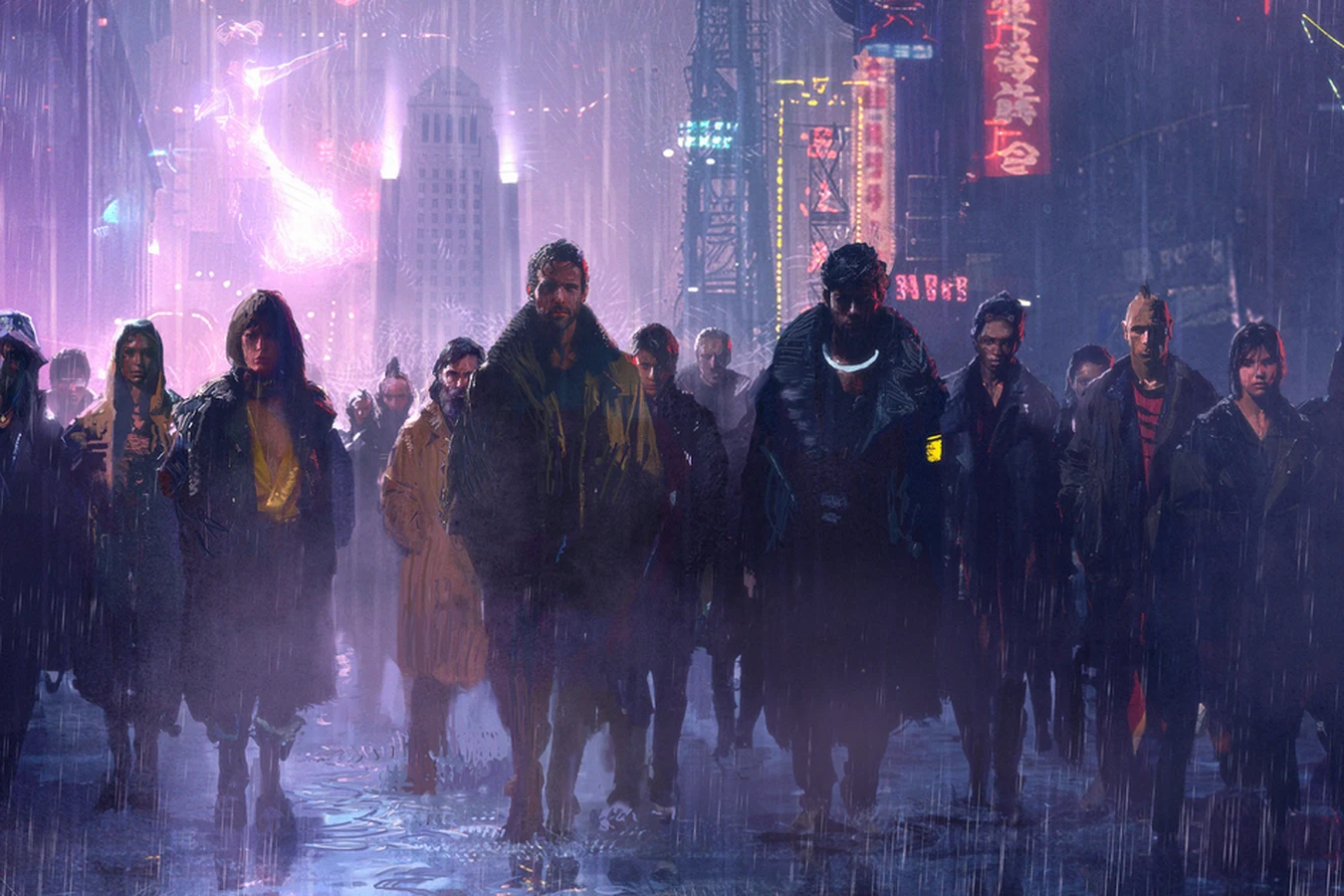
Chapter 6 lists the forces that run Los Angeles, from public office to the black market. The United Nations sets policy for Earth and the colonies, and the Off-World Colonization Defense Program fields its armies. In the city, Governor Phelan holds office at City Hall, and District Attorney Joe Cavallaro leads prosecutions with his assistant district attorneys. Corporations include Shimago-Domínguez, Shimata, Okazaki Oil, Canaan, and Bell Systems. The media, the syndicates, and the street gangs each get their own entries, and each entry suggests how the group can drive or complicate a Case File.
Wallace Corporation
The Wallace Corporation is the most powerful company in the book. Niander Wallace, aged 44, owns the Nexus-9 patent and the remains of Tyrell. His headquarters in Sector 4 was still under construction in 2037. The company's public face is Quell, designation QL440-52.1, a Nexus-9 serving as vice president of public relations, with an incept date of 26 September 2036. The game rules make Wallace hard to touch. A Blade Runner who accuses Wallace Corp of anything, with or without evidence, loses a Promotion Point, and the company's DiJis are trusted in the LAPD even as some officers wonder what they report.
The Underworld
The underworld is split among organized syndicates, street gangs, chop shops that trade in salvaged body parts, and traffickers in illegal Nexus counterfeits. The Replicant Underground shelters fugitive Nexus-8s and other Replicants and has radical factions that the book describes in the Case File tables. Human Supremacists stand on the other side and appear among the generator's threats. The Gray Bazaars grew inside the megacomplexes when outdoor markets became too dangerous, and a floor of 20 apartments could become a bazaar of 100 stalls. The LAPD turns a blind eye, partly because many low-paid cops shop there too.
Nexus Models
Chapter 6 also runs through the Nexus line. Tyrell began with the Nexus-1 through Nexus-5, then the Nexus-6, described as having 79 functions and a four-year lifespan. The company skipped the Nexus-7 and released the Nexus-8 with open-ended lives. Wallace's Nexus-9 begins life at an apparent age of about twenty, carries implanted memories, and was being produced in the tens of millions by 2037. Replicant player characters are Nexus-9s, while fugitive Nexus-8s are a recurring target of RDU casework. The book treats each model's limits and design choices as story hooks for Case Files.
Working The Case
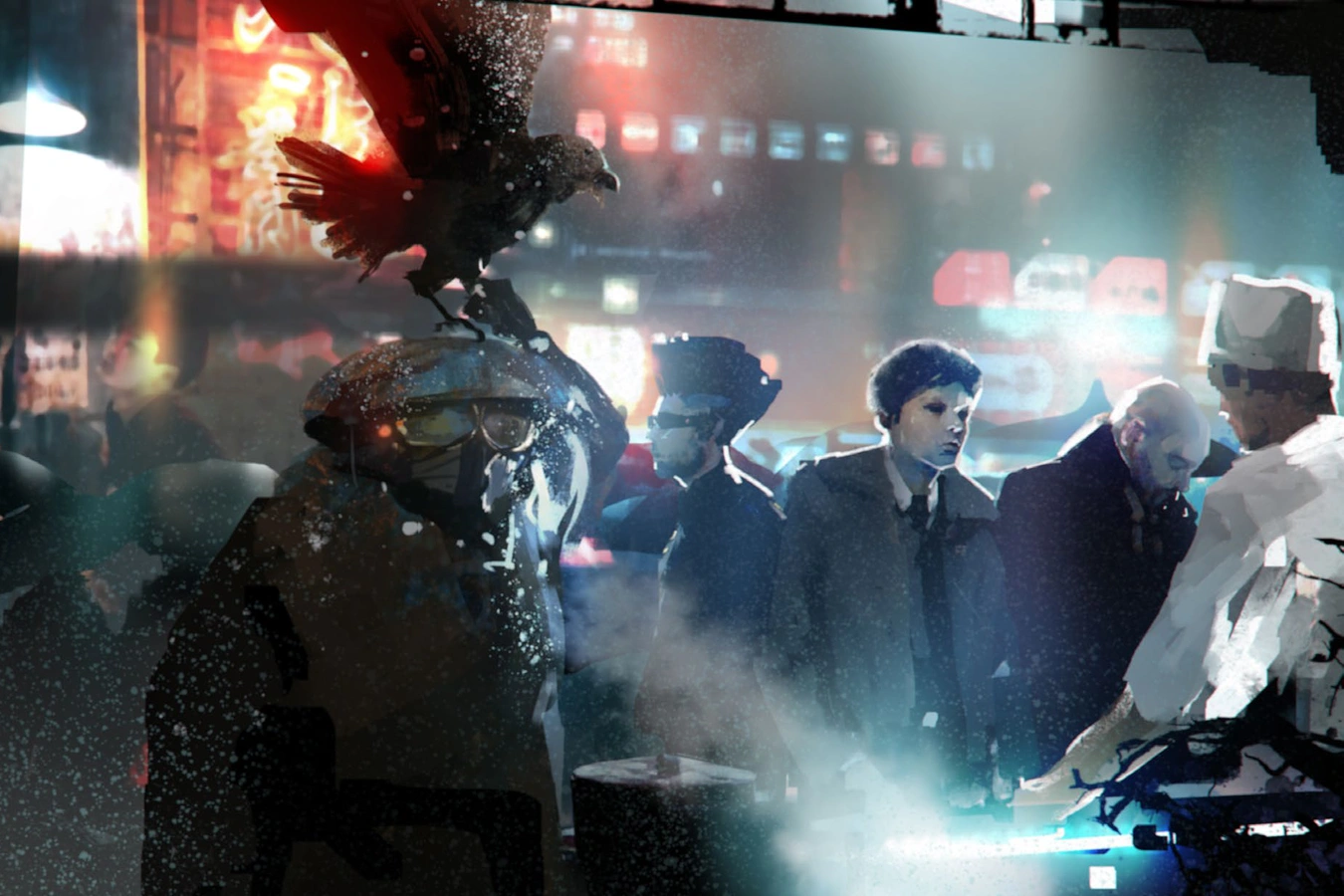
Chapter 7 describes the Replicant Detection Unit, based in the LAPD Tower in Sector 5. It is led by Deputy Chief David Holden, a 57-year-old veteran called Iron Lung, who was injured in 2019 and succeeded Harry Bryant in the late 2020s. Old-timers such as Holden, Gaff, and McCoy used the first Voight-Kampff machines. Coco serves as Chief Medical Examiner, and Dispatch, a DiJi, runs the switchboard. In 2037, the job had changed. The new mandate, in the book's words, was to crack open cases, not coffins, and most Replicants could no longer be retired without a Retirement Order.
Divisions And Resources
The RDU is organized into divisions. Criminal Investigation, known as Retirement, works cases. Security and Special Forces covers Special Ops, Animal Services, and the Armory. Forensic Sciences runs the Mainframe, the Esper Network, and the Denabase. Administration and Vice, added in 2023, round out the unit. Wallace Corporation provides its own resources, such as a Records Library, Memory Labs, a Memory Vault, and Stelline Scans that read a Nexus-9's implanted memories from outside. Officers can request resources at a cost in Promotion Points, with a Retirement Order costing two, and they can call on assets such as Corgi.
Standard Procedure
The chapter frames each investigation around means, opportunity, motive, and intent, and walks through the procedure at a crime scene, from securing the area to collecting evidence and calling the Crime Lab. Evidence must be uploaded to the Mainframe through each officer's KIA. The Game Runner chapter adds that a player who chooses not to upload a piece of evidence to protect someone can earn Humanity Points, but that officers who leave things out of reports would do well to get their stories straight. The tension between duty and conscience is the engine of the game, and Promotion Points and Humanity Points pull in opposite directions.
Tools Of The Trade
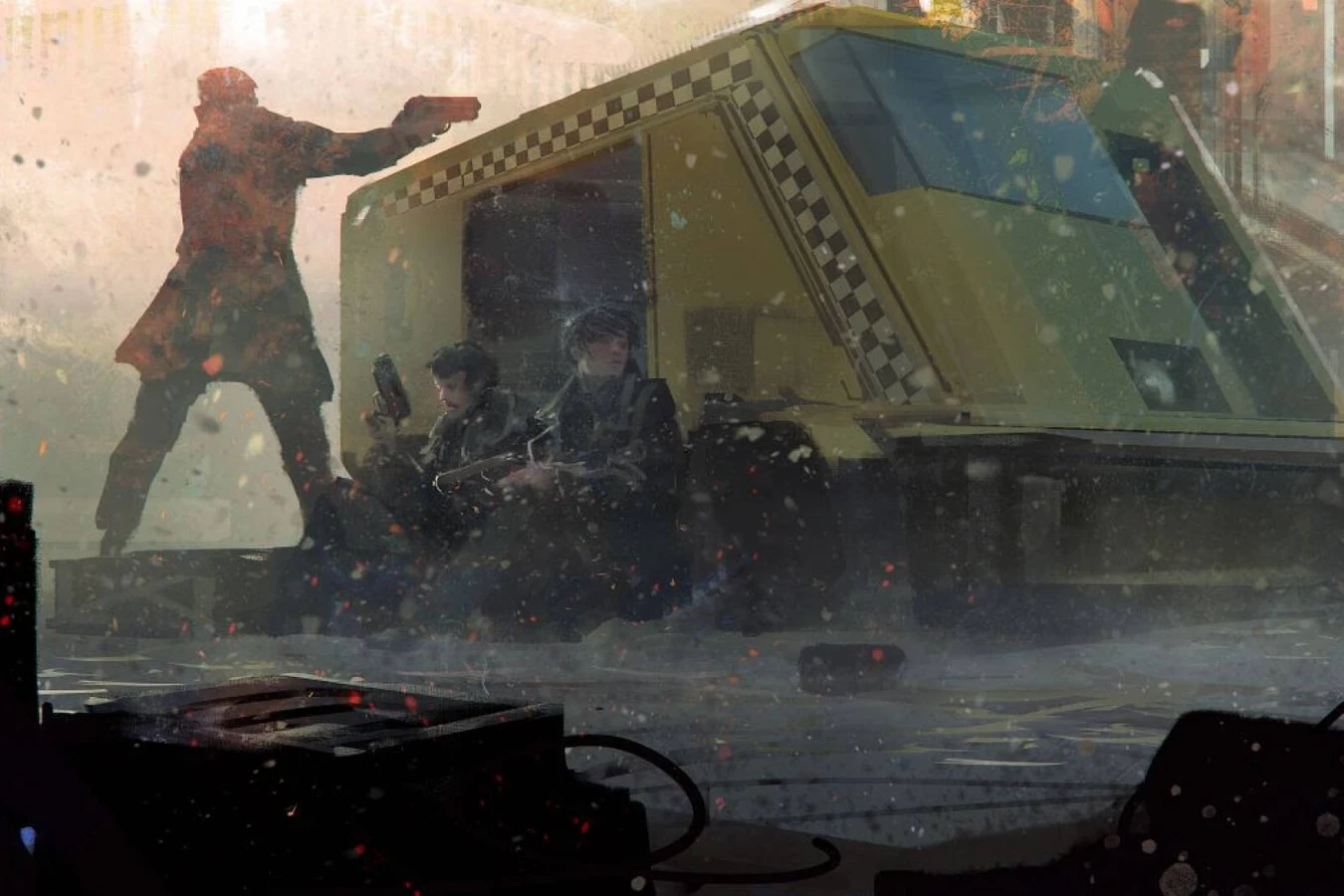
Chapter 8 is the equipment chapter, but it opens with the reminder that the RDU offers far more than guns. Every Blade Runner carries an LAPD badge, a KIA for comms and Mainframe access, and either a PK-D Blaster or a .357 Subcompact. Each item has an Availability rating from Incidental through Standard, Premium, and Rare to Luxury, which sets its price in Chinyen Points, how long it takes to find, and whether a Connections roll is needed. Players can also buy RDU gear on the black market with Chinyen Points instead of Promotion Points, as long as they are not caught doing it.
Voight-Kampff And Baseline Tests
The Voight-Kampff machine is the RDU's classic tool for telling humans from Replicants. In the game, a test takes a Shift and over 100 questions, and it is resolved as an opposed roll of Insight against the subject's Manipulation. Replicant officers face the Baseline Test, a post-trauma exam given to Nexus-9 officers. A first failure brings a warning, a second brings recalibration and the loss of one point of maximum Resolve, and a third means retirement. Passing a test earns a Promotion Point, while failing one earns a Humanity Point.
Blasters And Firearms
The signature sidearm is the PK-D 5223 Blaster from Pfläger-Katsumata. It holds five .44 Special rounds and a .222 round in its long barrel, can fire sonic rounds, and has a muzzle blast, with the .44 dealing two damage and a D12 critical die. Other firearms include the .357 Subcompact, the .357 Magnum, the PK-D M1887 shotgun, and Ender scoped and assault rifles. The PK-D FKM890 is a sonic weapon holding 16 sonic discharges. Grenades come in standard, tear gas, flash-bang, and sonic versions, and explosive charges cost more with every step up in Blast Power.
Close Combat, Armor, And Medicine
Close combat gear reflects a shift toward non-lethal arrests. The list includes truncheons, knives, brass knuckles, pepper spray, zip ties, and handcuffs, with some items needing an Observation roll to spot. Armor runs from Police Heavy Duty street gear to thin undershirt armor that plainclothes detectives can hide. The medical list starts with Glue, a translucent blue adhesive that seals wounds and that the book says every cop has used at some point. MedChecker kiosks can heal a point of Health and Resolve once per Shift, and pills such as Instant Fix and Soviet Happy do the same for one stat.
Esper, Mainframe, And Denabase
The Esper machine is described as a high-density Omniview image analyzer. With a voice command, it can pan and zoom inside a photo's three-dimensional space and reveal details hidden in the original. Every Blade Runner has a small Esper at home, while the giant Esper Wall at RDU headquarters runs the Esper Network, which holds about 24 hours of street footage. The LAPD Mainframe stores dossiers on suspects, cases, and evidence, and logs every inquiry. The Denabase is an EMP-proof archive of civilian files sorted by DNA code, and Replicants can run its data raw for faster results.
The Crime Lab
The RDU keeps its own Crime Lab, morgue, and medical unit, staffed by physicians and forensic scientists the book calls the brightest minds in the system. Coco, the Chief Medical Examiner-Coroner, runs it as a world-class think tank that handles chemistry, pathology, ballistics, toxicology, DNA analysis, and maintenance for Nexus-9 officers. The lab is also home to Biscuits, an animoid calico cat that once arrived as evidence, the sole synthetic witness to a crime. Someone let her out of her evidence locker, and years later not even the most seasoned Blade Runner had managed to catch her. She often keeps the aloof Coco company late at night.
Synthetics And DiJis
The Prohibition stopped Replicants, the book says, not progress. Companies such as the Rosen Association, Smithsonian, and Sudermann build legal synthetics for off-world work, while Syncers are humans who take synthetic implants for an edge. Animoids replace endangered animals, and the LAPD keeps a small pack of animoid dogs. Automatons handle most blue-collar jobs. The most widespread synthetic product is Wallace's digital companion, the DiJi, a hologram projected from consoles in a home. The LAPD uses DiJis for clerical work, comms, and training, and Dispatch, the DiJi on the RDU switchboard, can call in drones, alerts, and emergency transport.
Synthetic augmentations get their own table. Ocular and cochlear implants improve Observation, prosthetic arms and legs boost Force and Mobility, and synaptic implants let a character draw an extra initiative card. A medical implant can remove the permanent effect of a critical injury. Each upgrade requires surgery that takes a Shift and leaves the patient Broken, and a failed Medical Aid roll means a critical injury and possibly death on the table. Legal upgrade centers are joined by beauty salons and skin doctors in shadier Sectors, and the book says many of them help Nexus Replicants with repairs and new faces at little cost.
Spinners And Transit
The Detective Special Spinner, Model 294-02, is the RDU's unmarked cruiser. It is 4.62 meters long, carries two passengers, cruises at 120 km/h with a top speed of 250 km/h, and is rated Maneuverability B, Hull 4, and Armor C. It has a combustion engine, vector jet propulsion, and aerodyne turbines for vertical lift-off, plus a 360-degree Esper camera array and a biolock that only lets authorized officers fly it. The Spinner Cycle, Detective Special 08-3, added in 2032, is a one-seat stealth craft with a top speed of 295 km/h.
Larger craft include the standard LAPD Spinner DMV 137, the six-seat Squad Transport, and the twenty-seat Spinner Carrier used for raids, with twin .50 caliber guns and optional missiles. Off the clock, Blade Runners walk the same streets as everyone else. Metrokab taxis, tuk tuks, and pedicabs crowd the roads, buses and the Metrorail are free for anyone with an LAPD badge, and the automated rail loop links each sector's shopping district in ten minutes. Ground cars are rare, since an unattended car is looted within minutes, and few officers can afford a Spinner of their own.
Running Blade Runner
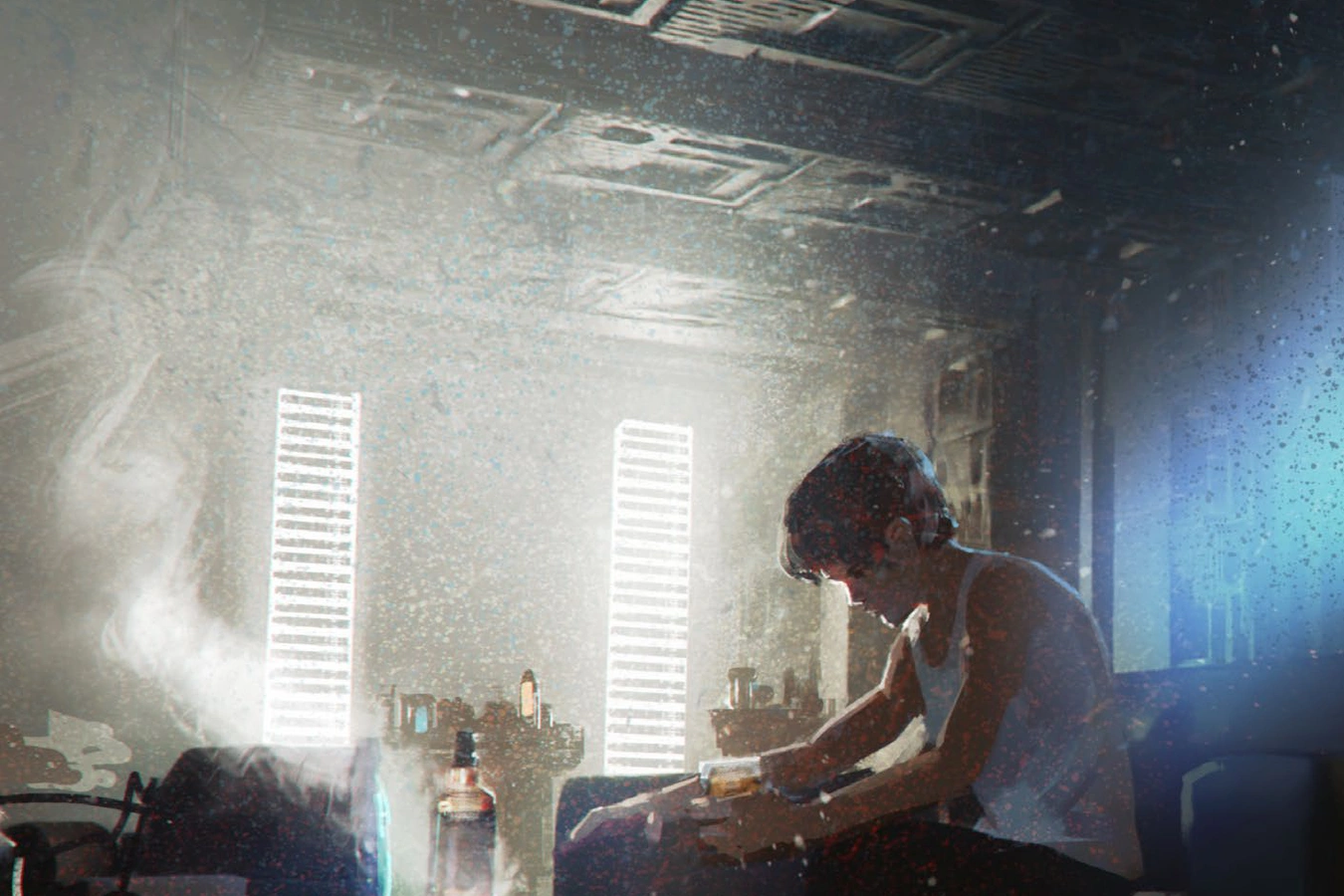
Chapter 9 is written for the Game Runner and begins with a statement of the core structure of play. The characters solve Case Files by visiting locations, finding clues, and meeting NPCs, Shift by Shift, until they reach the truth and decide what to do with it. The chapter also explains the official Crime Scene Photos, which hide clues inside an image for the players to find, and Esper photos, which come in an initial version and an enhanced detail that needs a Tech roll. Players are encouraged to appoint one of their number to take notes, since the evidence quickly piles up.
Anatomy Of A Case File
Every Case File follows the same structure. The Prelude sums up the themes and challenges. The Briefing, usually given by Deputy Chief Holden, is read aloud and comes with handouts. The Situation tells the Game Runner what is really going on, and the Countdown lists about five events that happen on set Shifts no matter what the players do. Main characters, typically four to six, get backgrounds, motives, locations, reactions, and stats. A case has between 10 and 15 locations, a Final Confrontation that offers several possible endings rather than one, and an Aftermath that lists the fallout for the city.
Clues And Time
Each day has four Shifts, and players track them on a Time Tracker sheet. Spinners make travel across downtown a matter of minutes, but travel on the ground requires a Connections roll, and failure costs an extra Shift. The book says no clue should ever be a dead end. There should be at least two paths to each new location, and if the players get stuck, Holden or a reporting officer can point the way at the cost of time and a Promotion Point. Players who chase a location not in the Case File still lose a Shift, and the Game Runner can steer them back.
Downtime And Dreams
The book calls the casework the backbone of the game and Downtime its heart and soul. A character needs a Shift of Downtime after three Shifts of work, and Downtime heals damage and stress. For each Shift of rest, the Game Runner rolls a D8 on a table with separate columns for home and street. Results include reliving the key memory in a distorted dream, a call from Holden, a mugging, a visit from the key relationship, or an advertisement so enthralling that the character must buy the product. A sidebar, Chasing Orphans and Unicorns, suggests dream sequences to nudge players who are stuck on a case.
Awarding Points
After each session, the Game Runner hands out Promotion Points for doing the job. Characters earn one for clues that led to progress, for revealing fugitive Nexus-8s, for arrests, for stopping crimes, for uploading evidence, for heroics, for reporting another officer's misconduct with proof, and for passing a Baseline Test. They can lose points for letting a fugitive escape, abusing authority, ignoring orders, losing gear, hurting innocents, leaking to the media, or accusing Wallace. Humanity Points reward risks taken for others, personal connections, talking someone down, refusing an unjust order, withholding evidence to protect someone, and time spent with memories, relationships, and Downtime.
NPCs And The Case File Generator
The chapter advises the Game Runner to ignore game mechanics for NPCs unless they act directly against a player character. An average human NPC has level C in all attributes, while a typical Replicant has a B in Strength, Agility, or both, and the stat table runs from uniformed officers and street thugs to Doxies, executives, corporate killers, and lab technicians. The Case File Generator then rolls a theme on a D10, from Replicant Crimes and Punishments to Monitored Entities and Technologies, followed by a specific assignment, between four and six main NPCs, and the details of a case.
The assignment tables give a sense of the cases the designers had in mind. One asks the RDU to retire a counterfeit Nexus-8 chef who killed a restaurant's kitchen staff. Another involves a Replicant star witness in a murder trial, and another a hostage crisis at the LAX Spaceport. Some cases point at politics, such as a death threat against Governor Phelan or an Internal Affairs probe into another Blade Runner. Others are stranger, like a real snow leopard loose on Animoid Row, an animoid owl with a dead scientist's memories, or a computer engineer who returns as a DiJi ghost.
Starter Set And Electric Dreams
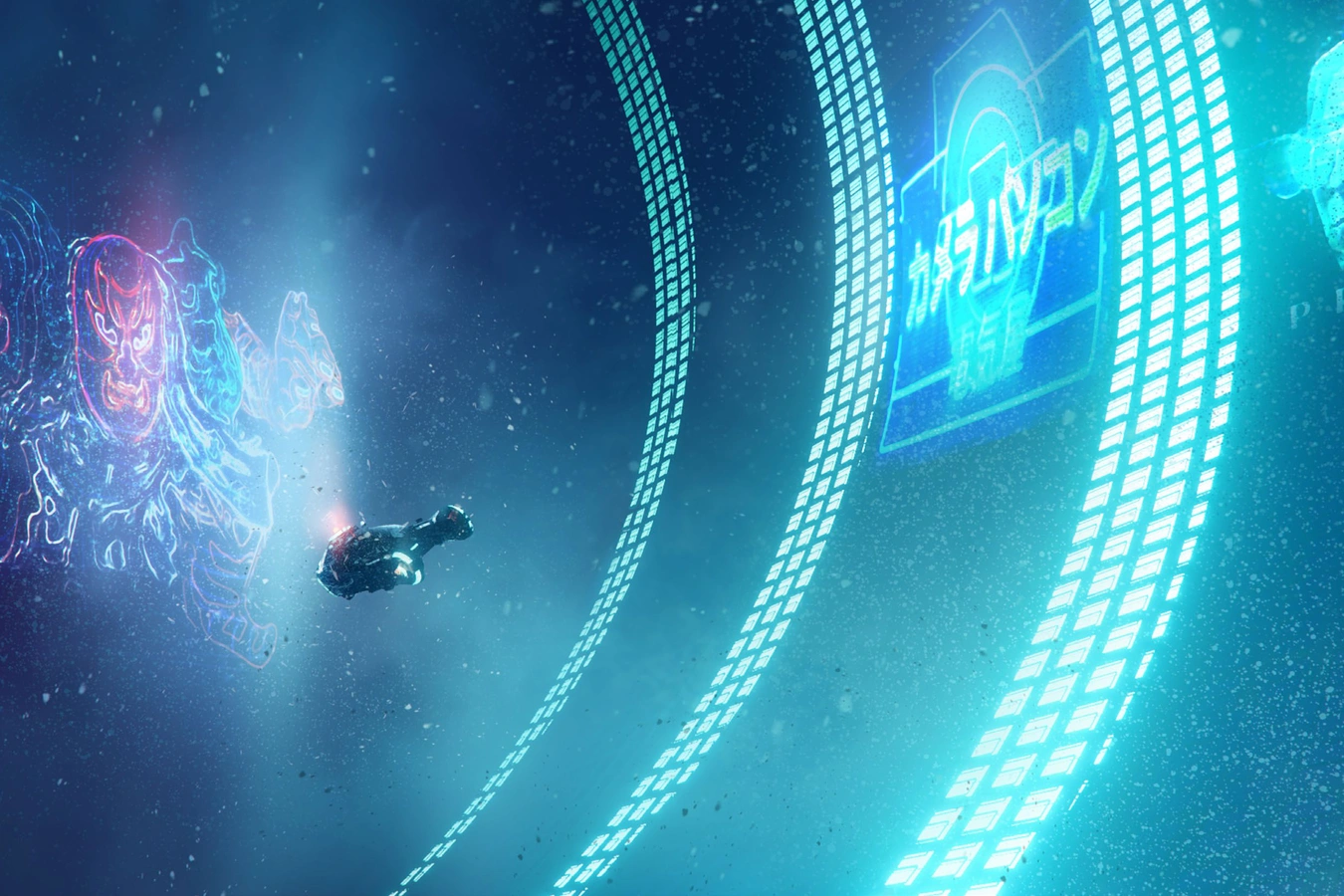
The core rulebook is designed to be used with Case Files, and the first official one, Electric Dreams, is part of the Blade Runner RPG Starter Set. The book describes it as an introduction to the rules and the setting for new players and as a model for anyone writing Case Files of their own. Electric Dreams is the first installment of a campaign arc called The Immortal Game. Each installment was planned to stand alone and to be playable in any order except the final episode, and the book says further episodes would follow over the years after release.
The core rulebook lists what the Starter Set adds to the table: a large map of Los Angeles, initiative cards, chase cards, two full sets of dice from D6 to D12, four character sheets, and a Time Tracker. The core rules also point to the Case File handouts, such as location maps, mugshots, data files, newspapers, and Esper photos, as central to the game. The Running Blade Runner chapter says official Case Files include examples of detailed NPCs, such as those in Electric Dreams, and suggests that other Case Files can be played between the campaign installments.
Behind The Scenes
Origins
In the preface, Tomas Härenstam wrote that he first saw Blade Runner at about thirteen in the mid-1980s, on a grainy VHS tape that his uncle Bror brought back from England, probably recorded from British TV. He watched it again and again and wondered what Roy Batty told Eldon Tyrell, since the line was bleeped out on his copy. In January 2018, Free League held a brainstorming session on dream licenses, and Blade Runner and Alien topped the list. A week later he spoke with Joe LeFavi of Genuine Entertainment. The Alien game shipped first as the Alien RPG.
Härenstam signed the preface in Stockholm in April 2022, after four years of design work. He thanked LeFavi for making the game happen and for his setting writing, Christian Granath for the graphic design, and Martin Grip for his illustrations. He also thanked Alcon Entertainment for carrying the Blade Runner torch with Blade Runner 2049 and other productions and for allowing the game. He closed by thanking Bror for the tape, which he said he still kept in a storage box, and by wondering what new things he would see if he watched it again after all those years.
Writing, Art, And Design
The credits list Joe LeFavi as lead setting writer, with additional writing by Nils Karlén and Gareth Mugridge and a timeline by Clara Čarija and Michael Andrews. Martin Grip was lead artist, Gustaf Ekelund added art, and Christian Granath handled graphic design and maps. Dan Algstrand ran prepress, and Brandon Bowling proofread the book. The art style of Grip's paintings, with rain, neon, and figures in long coats, carries across the whole book. Playtesters included Marco Behrmann, Nils Karlén, Kosta Kostulas, Jonas Ferry, and Kiku Pukk, and the game was backed by 15,323 supporters on Kickstarter.
License And Thanks
LeFavi also managed the brand through Genuine Entertainment, and the book carries a 2022 copyright notice for Alcon Entertainment. Boel Bermann handled PR, Anna Westerling ran events, Doug Shute and Matthew Jowett handled streaming, and Daniel and Jenny Lehto ran customer support. The game's links to the films run through its details, from the White Dragon Noodle Bar and Taffey Lewis to the old-timer Gaff and the Voight-Kampff machine, while the year 2037 leaves room for the book's own Nexus-9 detectives, its Wallace-era Los Angeles, and the cases of its players.
Conclusion
Blade Runner: The Roleplaying Game is Free League's 2022 core rulebook for Blade Runner, set in Los Angeles in 2037. Human and Nexus-9 detectives of the Replicant Detection Unit work Case Files Shift by Shift, with the Voight-Kampff, the Esper, and the Detective Special Spinner, while Promotion Points and Humanity Points pull them between duty and conscience. Electric Dreams in the Starter Set opened The Immortal Game campaign.
External Sources
Tag Categories: Blade Runner Lore