Urbenton: Replicant Night's Outer Hollywood Director

Urbenton was a video director and producer in K. W. Jeter's novels Blade Runner: Replicant Night and Blade Runner 4: Eye and Talon. Through his company, Speed Death Productions, he hired Rick Deckard as technical adviser on a docudrama about the 2019 replicant hunt, shot on studio sets at the orbital Outer Hollywood station. After a replicant and Dave Holden were killed on his sets, Deckard walked out unpaid. Urbenton later broadcast the finished video on Mars, made a deal with Sarah Tyrell, and helped the U.N. bring Deckard back to the station for a death on camera.
Biography
Speed Death Productions
Urbenton was short and heavy, with a round face that was turning to jowls even though he was fairly young, and he wore ordinary glasses. He gave Urbenton as his only name, and his business card showed Speed Death Productions above it, with a winged skull for a logo. He worked as both director and producer, and he answered to financial backers on Earth whom he called the money people. His company had a close arrangement with the cable firm that controlled broadcasting in the U.N. emigrant colonies on Mars, which let him travel there and back without trouble.
Urbenton came to Mars and found Rick Deckard, who was living in a colony hovel under the false name Niemand with Sarah Tyrell. Over coffee in the colony market, he offered Deckard a large fee, with residual payments to follow, to be listed as technical adviser on a video about his last assignment as a blade runner in Los Angeles. The contract also bought the right to digitally place Deckard's real face over the actor who played him. Deckard needed the money to get himself and Sarah out of the colony, so he signed and flew his old skiff to Outer Hollywood.
The Outer Hollywood Shoot
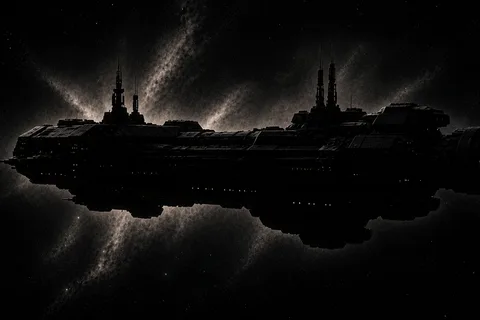
Urbenton staged the 2019 hunt on detailed copies of Los Angeles streets aboard the station, which orbited Earth. His cast included a human actor fitted with tracking dots for the face replacement and several identical Leon Kowalski replicants, which he treated as props. Deckard had agreed to take part only if no one, not even a replicant, was harmed. During the street scene in which Kowalski attacked the Deckard character, someone fired a real bullet into one of the replicants. Urbenton was missing from his director's chair when it happened, and Deckard went looking for him.
Deckard found Urbenton locked in an office, where he claimed he had been called away to take a phone call from the backers on Earth. Urbenton blamed accidents on the set and argued that killing a replicant broke no law, since the law treated them as manufactured goods. He complained that Deckard had been forced on him by the money people and that their thugs had been on the station since filming began. When he finally accepted that a live round had been fired, he turned pale and became frightened, warning that it was bad news for everyone on the production.
Holden's Death And Deckard's Exit
Gunshots then came from elsewhere in the studio offices, and Urbenton followed Deckard to a small set built as a Tyrell Corporation interview room. Another Kowalski replicant had shot Dave Holden dead there, and a tall man with a badge reading Marley took the gun from the replicant and killed it as well. Urbenton had never seen the man before and threatened to call studio security, but Marley ignored him. Urbenton had also told Deckard nothing about Holden coming to the station, which left Deckard unsure whether the director had planned any of it.
Deckard announced that he was quitting, and Urbenton followed him to the landing docks, pleading that the backers would punish him if his adviser left. He pointed to their signed contract and tried to hold Deckard back by the arm. When Deckard climbed into his skiff anyway, Urbenton lost his temper and told him that payment was due only when principal photography ended, so he would receive nothing. Deckard flew back toward Mars with a briefcase that a production assistant had brought from the office where Holden died.
The Mars Broadcast
Urbenton finished the video, titled Blade Runner, and it premiered on the single cable channel that served the Mars colony. The opening credits listed Deckard as technical adviser even though he had broken his contract. Deckard watched in a colony bar with Marley and expected his own face to appear, but the actor's face had been left undubbed. Marley told Deckard that Urbenton would follow whatever the U.N. authorities ordered, and argued that they had chosen to keep Deckard's face off the screen so he could move freely through the Martian colony.
Bargain With Sarah Tyrell
Urbenton came to the hovel after Deckard had left Sarah Tyrell, called her by her real name, and handed her his card. He said he knew she wanted Deckard dead and offered to make that possible. With U.N. backing, he stood beside Sarah outside the colony bar while U.N. troopers stormed it. They shot Marley, knocked Deckard unconscious, and took the girl who had come with him from Salander 3. Urbenton told Sarah he had wanted to use his own video crew for the raid, but his backers had overruled him.
Aboard the shadow Tyrell yacht, Sarah complained that Deckard had been left alive. Urbenton answered that the deal came with conditions, and that the authorities owed him a favor for broadcasting their version of the video on Mars. He admitted that Deckard's death mattered less to him than filming it, and he wanted a better set and a more striking scene than his last production. Urbenton's business card was left in the wrecked bar where Deckard would find it, and its only address was a studio contact at Outer Hollywood.
The Rooftop Set
When Deckard reached the station, Urbenton and his crew had cleared out and left Sarah and the girl on the Los Angeles set under live cameras. Deckard believed that Urbenton was watching from a transport in the same orbit. On a giant screen, Deckard saw the version Urbenton had first planned, with his real face mapped onto the actor, and the scene ran on until Kowalski killed the Deckard character. Urbenton's technicians had also built a detailed copy of the Bradbury Building roof, down to the turbines and pigeon droppings.
On that roof, Sarah confirmed that her arrangement with Urbenton was meant to supply him with real footage of Deckard's death. The U.N. wanted a new version of the video for Earth, one that ended with Deckard killed and showed how dangerous escaped replicants were. Urbenton could fix any mismatched details, such as a bullet wound in place of a fall, during editing. The plan failed when Sarah learned from a photograph that she had been born to replicants and shot herself in Deckard's arms instead, after which Deckard left the station with the girl.
Later Productions
In a buried theater beneath the ruins of Tyrell Headquarters, a man named Vogel later showed blade runner Iris Knaught the docudrama. The print Vogel screened had the real faces of Deckard, Captain Bryant, and the others mapped over physiology-matched actors, and he described Urbenton as a director obsessed with detail. Vogel added that Urbenton had made a sequel called The Edge of Human, which explained the destruction of the Tyrell buildings. He later warned Iris that Urbenton had gone off-script, and that the men digging down after them in the ruins were Urbenton's crew.
Eye and Talon also cut to an unnamed director in a control room who filmed Iris through hidden cameras across Los Angeles and at a buried desert laboratory. Like Urbenton, he was heavy and jowly, and he said he had worked on blade runner material before and knew it could get people killed. Vogel called the man in charge the director of the film Iris had watched. The director swore when Vogel told Iris that her face matched Rachael's, and near the end he ordered the camera operator to stay on her while he phoned unseen people to move in. Iris never met him.
Behind The Scenes
K. W. Jeter introduced Urbenton in Replicant Night, which Orion published in Britain in October 1996 and Bantam Spectra issued in the United States the following month. Jeter returned to him in Eye and Talon, published by Gollancz in December 2000, where other characters describe him and the control-room director is never named. Urbenton's docudrama shares its title with Ridley Scott's 1982 film Blade Runner, and the scenes Deckard watched being restaged follow that film, from the Kowalski alley fight to the Bradbury Building roof.
The sequel Vogel credited to Urbenton shares its name with Jeter's first sequel novel, Blade Runner 2: The Edge of Human, published in 1995, in which Urbenton does not appear. The novels give him no first name, age, or home city, and they never show what happened to him after the rooftop scene. Denis Villeneuve's Blade Runner 2049 did not follow Jeter's novels, and it has no orbital studio, no Speed Death Productions, and no restaged video of Deckard's hunt.
Conclusion
Urbenton was the Speed Death Productions director who turned Rick Deckard's last hunt into a docudrama at Outer Hollywood. He hired Deckard as an adviser, lost him after a replicant and Dave Holden were killed on his sets, and broadcast the finished video on Mars without Deckard's face. He then joined Sarah Tyrell and the U.N. in a plan to film Deckard's death on the copy of the Bradbury Building roof, but Sarah killed herself instead. In Eye and Talon, his film and his crew reached Iris Knaught in the ruins of Los Angeles.
Appearances
- Blade Runner: Replicant Night by K. W. Jeter (Bantam Spectra, 1996)
- Blade Runner 4: Eye and Talon by K. W. Jeter (Gollancz, 2000), named by other characters
Tag Categories: Blade Runner Lore | Blade Runner Characters