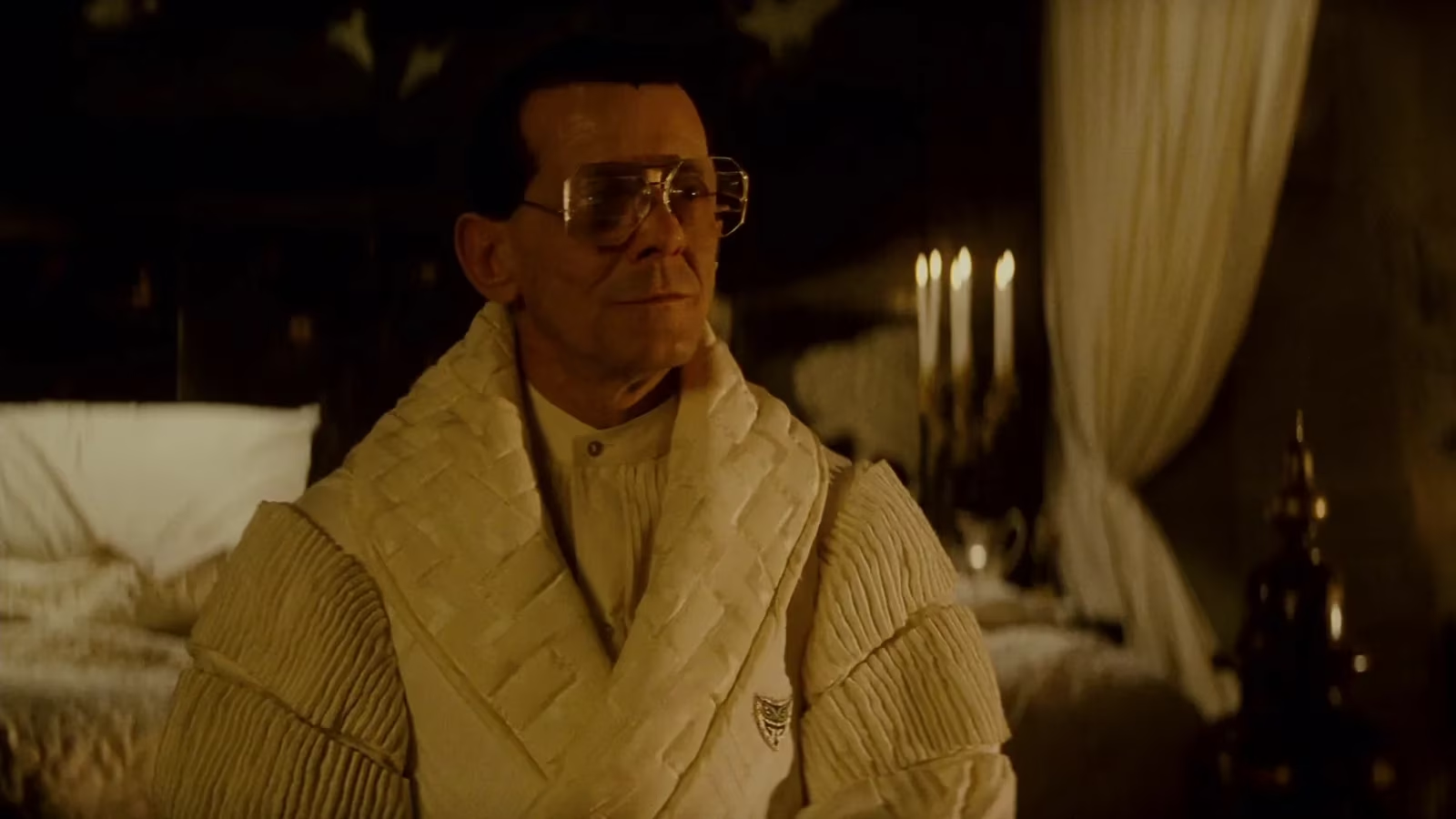

Eldon Tyrell was the founder and master of the Tyrell Corporation in Ridley Scott's Blade Runner, played by Joe Turkel. From the summit of his pyramid in Los Angeles he ruled the replicant trade, and his Nexus-6 models were sold to the Off-world colonies as more human than human. He gave his most advanced creation, Rachael, the memories of his own niece and treated her as an experiment. In November 2019 the fugitive replicant Roy Batty reached his bedroom with the help of J.F. Sebastian, asked his maker for more life, and killed him when Tyrell could not give it.
Biography
Earlier Life
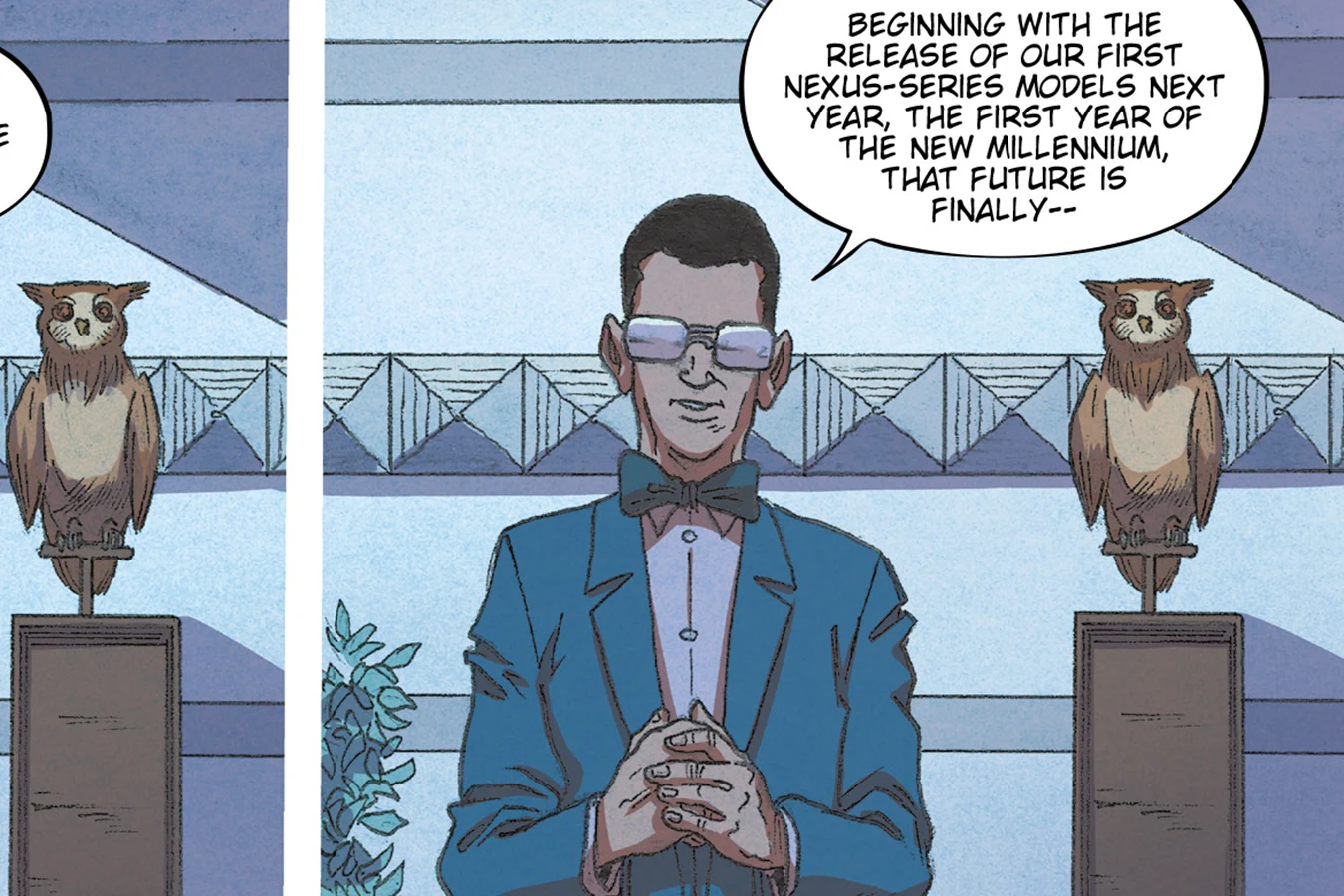
Tyrell built his company into the dominant maker of replicants, the bioengineered beings used as slave labor in the Off-world colonies. In 1999 he recorded a corporate video announcing the first Nexus-series models, and the Nexus-1 went on sale the following year. Each new generation came closer to human, and each one made his corporation richer and more powerful than the city that surrounded it. By the 2010s his pyramid towered over Los Angeles, and he lived at its top, far above the rain and crowds of the streets below.
The corporation held more than a market. It kept friendly officers inside the LAPD, pushed its own version of every scandal through the press, and had executives ready to bury any death that touched its laboratories. Tyrell himself rarely left the pyramid, and to most of the world he was a name on a building and a motto in an advertisement. Those who did meet him found a soft-spoken, thoughtful old man who spoke about his products the way other men spoke about their children.
The Sector 6-B Uprising
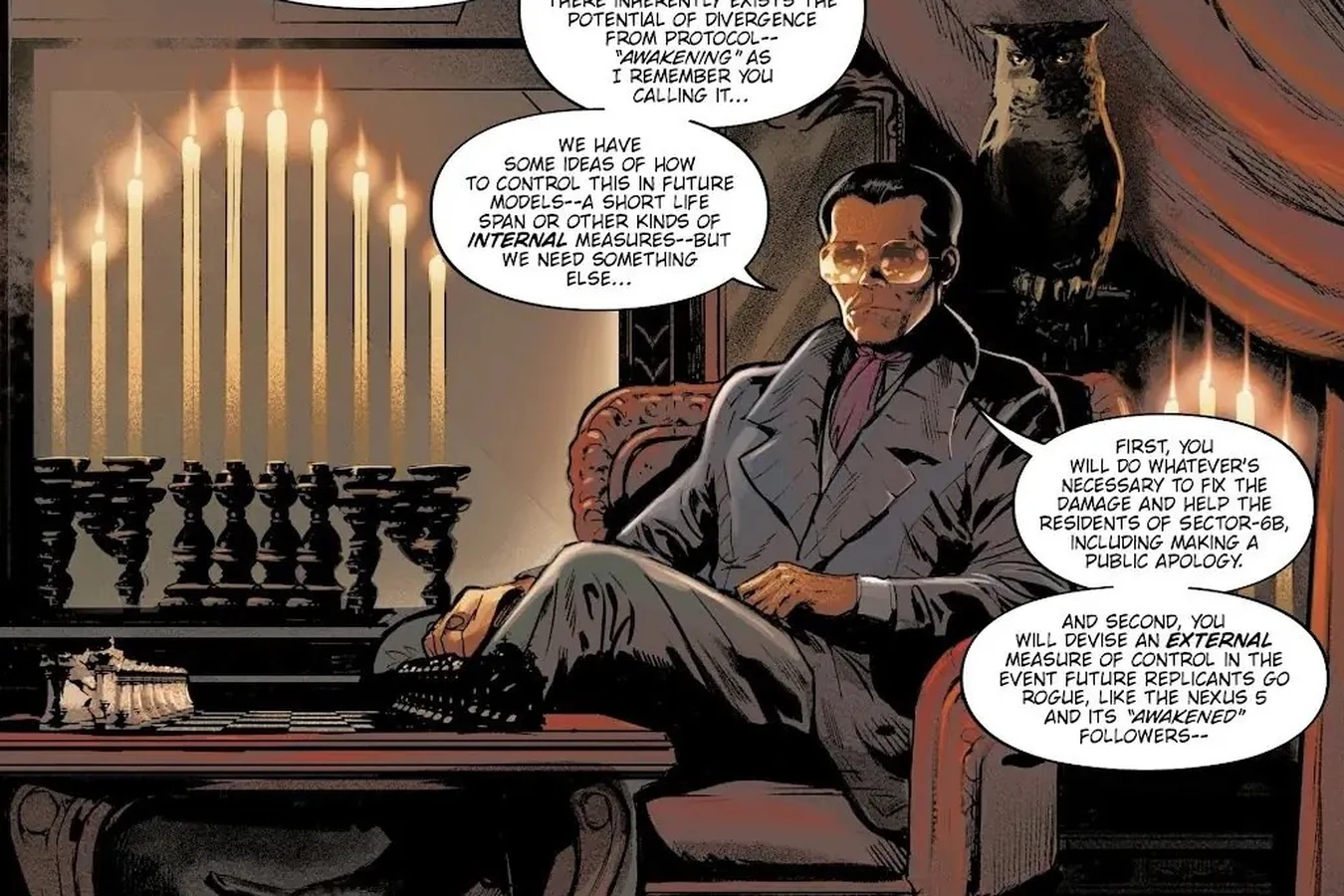
In 2009, as described in Blade Runner: Origins, Tyrell chose the executive Ilora Stahl to deal with the police after the death of the bioengineer Lydia Kine. The case led to an escaped Nexus-5 prototype and to a wave of awakened replicants in the slums of Sector 6-B. Stahl answered with militia and corporate security, and the sector burned while Tyrell's public schedule went on as though nothing had happened. When the rebel leader Nia reached the broadcast studio, the message she delivered had already been reshaped to suit the company.
Afterwards Tyrell received Stahl in his candlelit office, with an owl behind his armchair and a chess set beside him. He told her that the awakening had never been her mission, but that it had exposed a real flaw in his replicants that short lifespans and internal safeguards could not fix alone. He ordered her to repair the damage in Sector 6-B with a public apology and to create an external measure of control for future rogue models. That order became the first blade runner unit, a police force that would hunt his escaped products while the corporation kept its hands clean.
Rachael And The Voight-Kampff Test
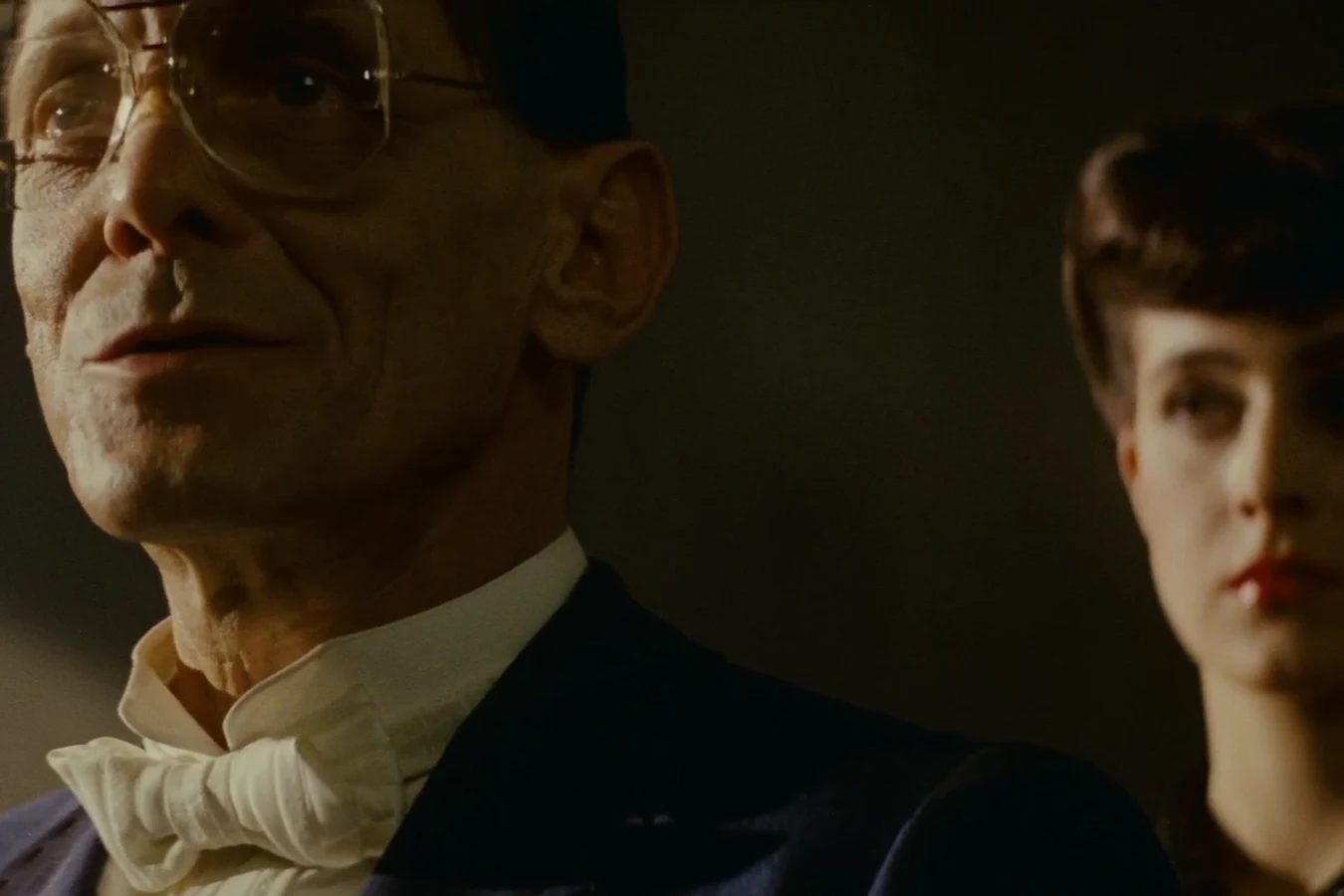
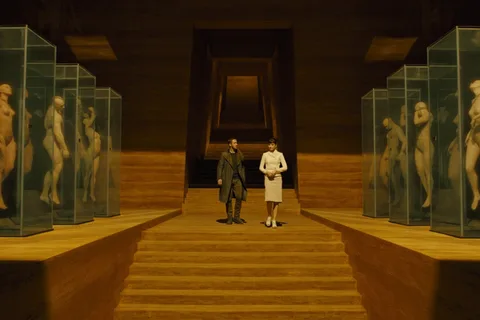
In November 2019 a group of Nexus-6 replicants escaped from the Off-world colonies and came to Earth, and one of them, Leon Kowalski, shot a blade runner during a test at the Tyrell Corporation. Rick Deckard was sent to the pyramid to find out whether the Voight-Kampff test could still detect the new model. He was met by Rachael beneath an artificial owl in a vast room overlooking the city, and Tyrell then entered to introduce himself. Before allowing Deckard to test any Nexus-6, Tyrell asked to see a negative result on a human being, and he offered Rachael as the subject.
Tyrell watched calmly while Deckard worked through his questions about wallets, wasps and boiled dog in the Voight-Kampff test. The test took more than a hundred questions, far beyond the usual twenty or thirty, and at the end Tyrell sent Rachael out of the room. Deckard concluded that she was a replicant, and Tyrell admitted it with the pleasure of a man whose product had nearly beaten the inspector. Rachael herself did not know, though Tyrell suspected that she was beginning to wonder.
More Human Than Human
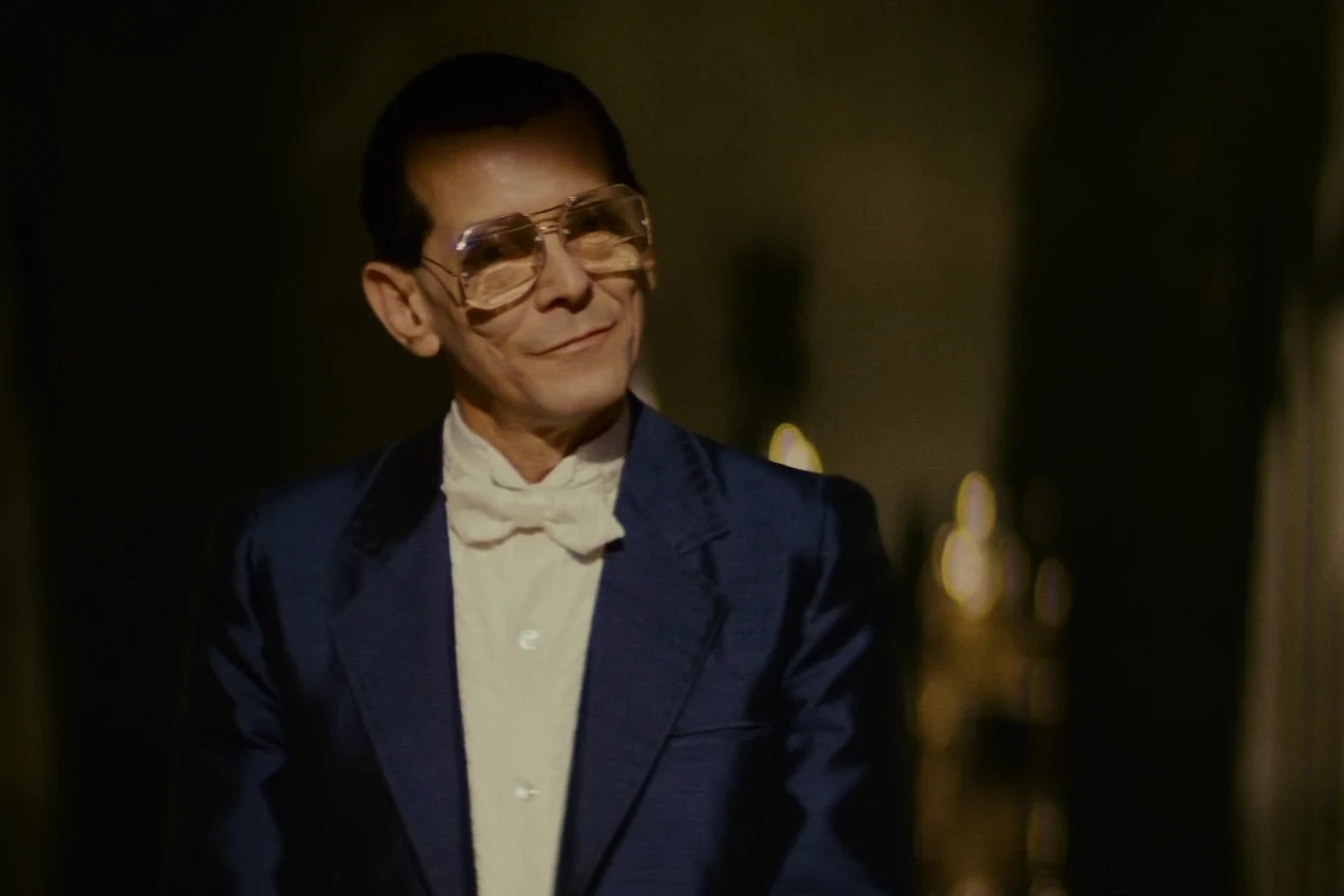
When Deckard asked how a replicant could fail to know what it was, Tyrell explained his thinking in plain commercial terms. His goal was commerce, his company's motto was more human than human, and Rachael was an experiment and nothing more. The Nexus-6 models developed their own emotional responses over time, and Tyrell said this made them unstable because they had only a few years in which to gather experience. By giving them a past, he argued, the company could cushion their emotions and control them better.
Rachael was the newest step in that plan. Tyrell had implanted her with memories taken from his own niece, so she believed she had a childhood, a family and a history of her own. Deckard was unsettled by how coolly Tyrell described her, and Rachael later came to his apartment with photographs to prove she was human. When the truth broke her, she left the pyramid and never went back to the man who had made her.
The Midnight Checkmate
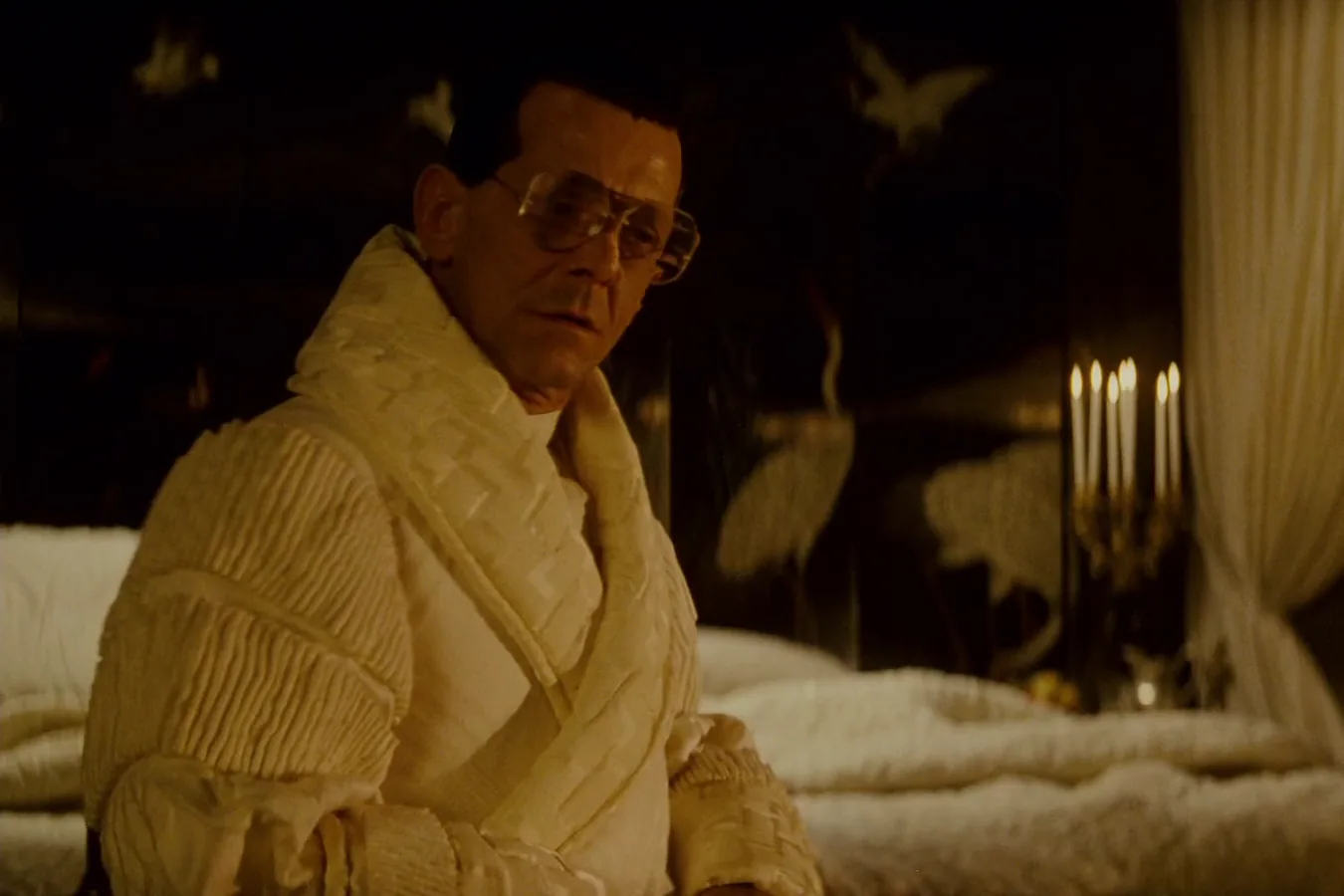
Tyrell spent his nights in a vast bedroom lit by banks of candles, surrounded by heavy curtains, antique furniture and a large bed. Even there he kept working, and a computer by his bed traded on the stock market while he talked. One of his long-running pastimes was a game of chess against his genetic designer J.F. Sebastian, played move by move over the intercom. Tyrell was a strong player, and Sebastian had beaten him only once.
Late one night Sebastian called up from the elevator with a bold new move, and Tyrell was surprised enough to sit up and study the board. The next move ended the game in checkmate, and Tyrell, assuming that his designer had stayed up too long, invited him up to talk it over. He had no idea that the winning moves had been fed to Sebastian by Roy Batty, the leader of the escaped Nexus-6 group. The fugitive had found the one person who could get him through the pyramid's security and into the room of his maker.
Meeting Roy Batty
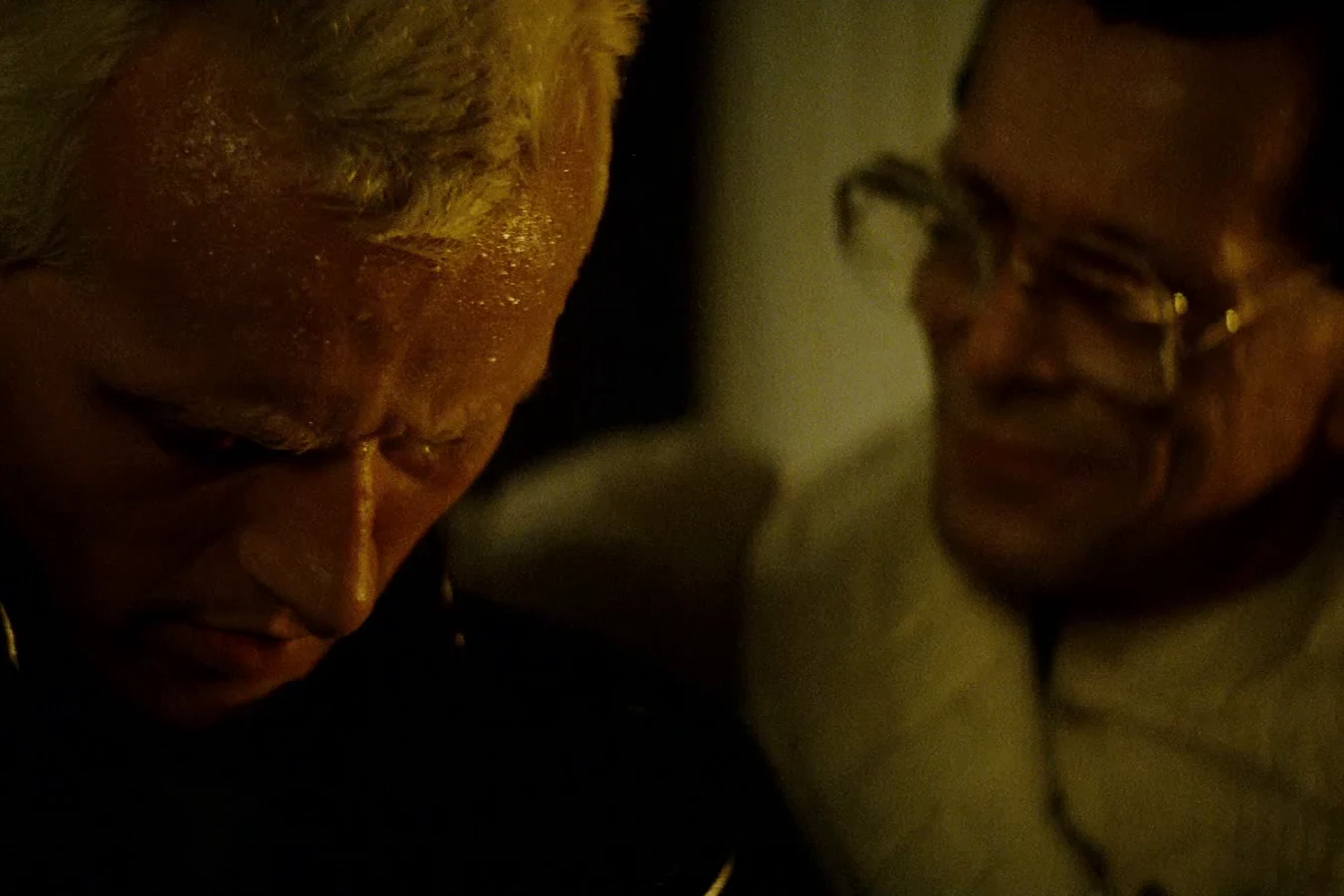
Sebastian entered the bedroom and said that he had brought a friend, and Roy stepped out of the shadows. Tyrell was not frightened, and he told Roy that he was surprised he had not come sooner. Roy asked whether the maker could repair what he made, and Tyrell offered to modify him before learning what Roy really wanted, which was more life. Tyrell called that out of his jurisdiction and patiently explained why the lifespan of a replicant could not be changed once its genetic code had been set.
Roy did not give up easily, and he proposed one technical fix after another, including EMS recombination and a repressor protein. Tyrell had an answer for each one, explaining that the company had already tried them and that every method created a lethal virus or a fatal mutation. He told Roy that he had been made as well as they could make him, but not to last, and compared him to a light that burns twice as bright and half as long. Then he praised Roy as the prodigal son of the Nexus line, urging him to revel in his time instead of mourning it.
Death In The Penthouse
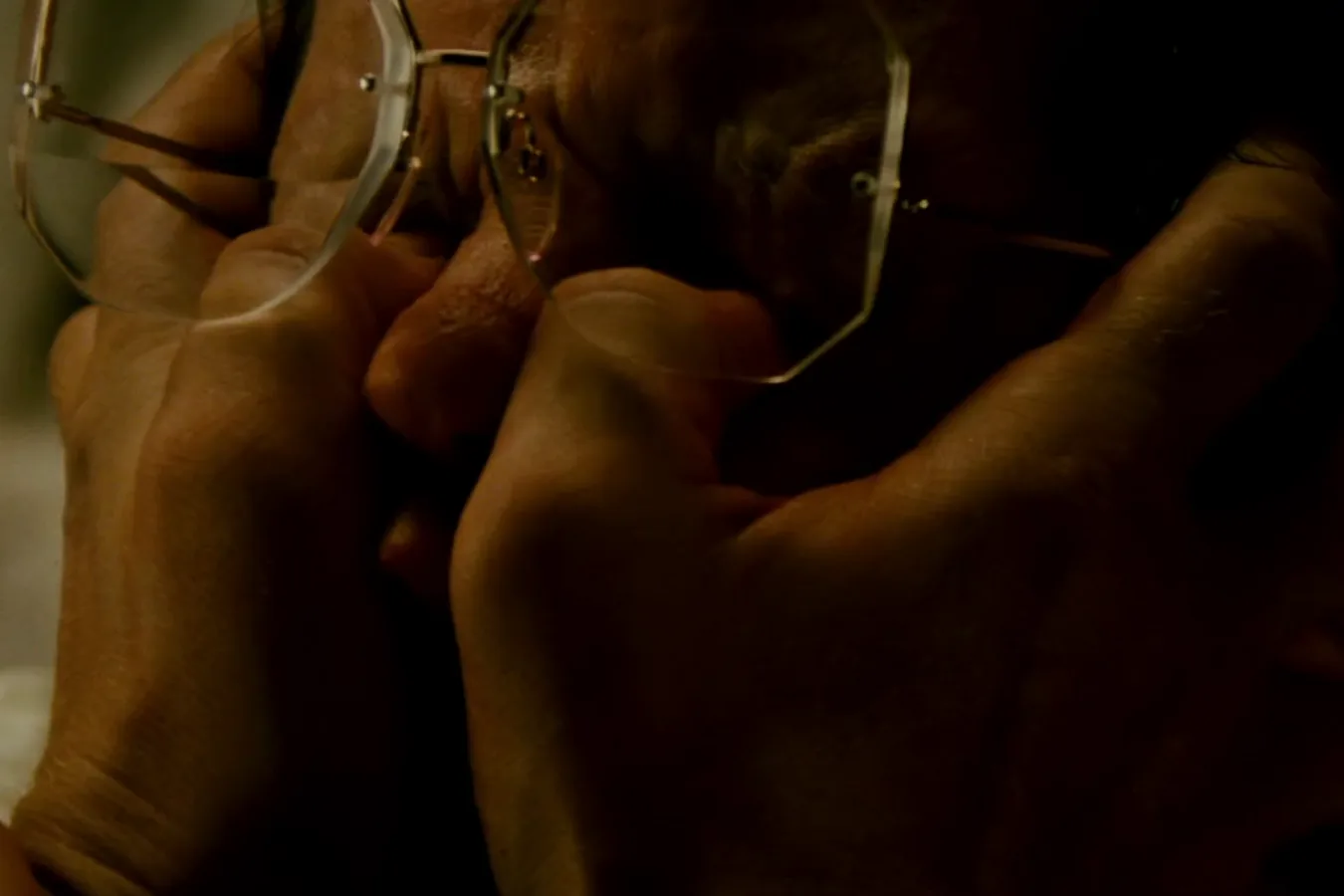
Roy admitted that he had done questionable things, and Tyrell answered that he had also done extraordinary things. The replicant took his maker's face in his hands and kissed him, and then he pressed his thumbs into Tyrell's eyes and crushed his skull. Sebastian watched in horror and tried to run, and Roy went after him. Roy then rode the elevator down from the pyramid alone, leaving the owl behind in the dark penthouse.
A police report soon announced that Tyrell's body had been found together with that of Sebastian. Deckard was sent to the Bradbury to look for the killer, where he faced Pris and then Roy. Tyrell's death ended the life of the man who had built every replicant in the city, but it did not change the four-year limit he had placed on them. Roy died at the end of that night when his own time ran out, exactly as his maker had promised.
Legacy
Without its founder the Tyrell Corporation kept producing replicants for a time, but the company never recovered its old power. After the Blackout of 2022 wiped out the records used to track replicants, manufacture was banned and the corporation went bankrupt by the late 2020s. In Blade Runner 2049 the industrialist Niander Wallace had bought what was left of the company and restarted replicant production under his own name. Wallace kept the old Tyrell archives, including the recording of Deckard's first meeting with Rachael, and he was obsessed with the reproduction secret that Tyrell had taken to his grave.
Tyrell's shadow reached into later comics as well. In Titan's Blade Runner 2029, the rogue Nexus-6 Yotun turned out to carry some of Tyrell's own memories, including one of a boy burying his dead owl. His followers broke into a sealed vault left by Alice Leopold, born Alice Tyrell, Eldon's younger sister, and took a diary her brother had entrusted to her. Yotun believed the diary would lead him to the reproduction secret Tyrell had taken to his grave, but the grave it pointed to, at his childhood home in Edens, California, held only owl bones. Instead of an answer, it held the question that had set the boy on his path, whether death could be beaten. The old Tyrell pyramid and its abandoned levels remained part of the Los Angeles skyline long after the man himself was gone.
In the VR game Blade Runner: Revelations, his niece Lilith Tyrell heads the corporation after his death. Before he died, Tyrell had secretly developed Night Owl, a viral pathogen that could wipe out every replicant, and the fight over it drives the story. Lilith said her uncle never let her win at chess, and the replicant copy that replaced her gave herself away by claiming the opposite.
Personality
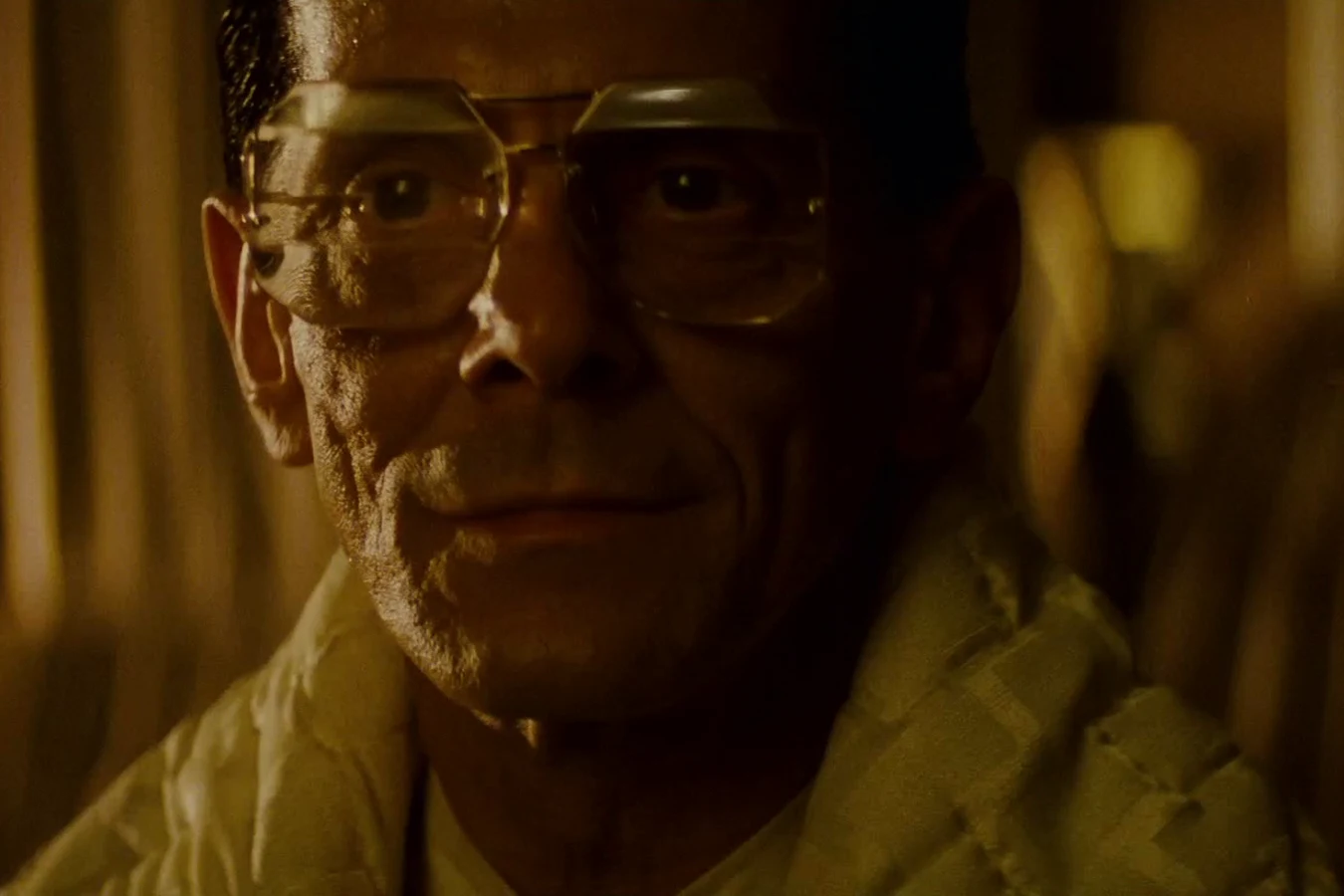
Tyrell was brilliant, calm and quietly arrogant, a man who talked about engineering death into living beings as though it were a routine business decision. He spoke softly and precisely and almost never raised his voice, even when a killer stood beside his bed. His interest in his creations was real, but it was the interest of a designer who admired his work rather than a father who loved his children. He called Rachael an experiment in front of a stranger, and he did not seem to notice the cruelty. For Tyrell, commerce and progress justified everything, and the suffering of replicants was simply part of the cost.
He was also a lover of luxury and symbolism, living like a king in a pyramid among candles, antiques and an artificial owl. Chess suited him because it rewarded patience and planning, and he took pride in being hard to beat. In his last conversation he seemed almost fond of Roy, praising him as a prize and the best of his line, though he made no attempt to help him. That mix of warmth and detachment was what Roy could not bear, and it cost Tyrell his life. He died believing he understood his creations better than they understood themselves.
Other Appearances
Marvel Blade Runner Comic
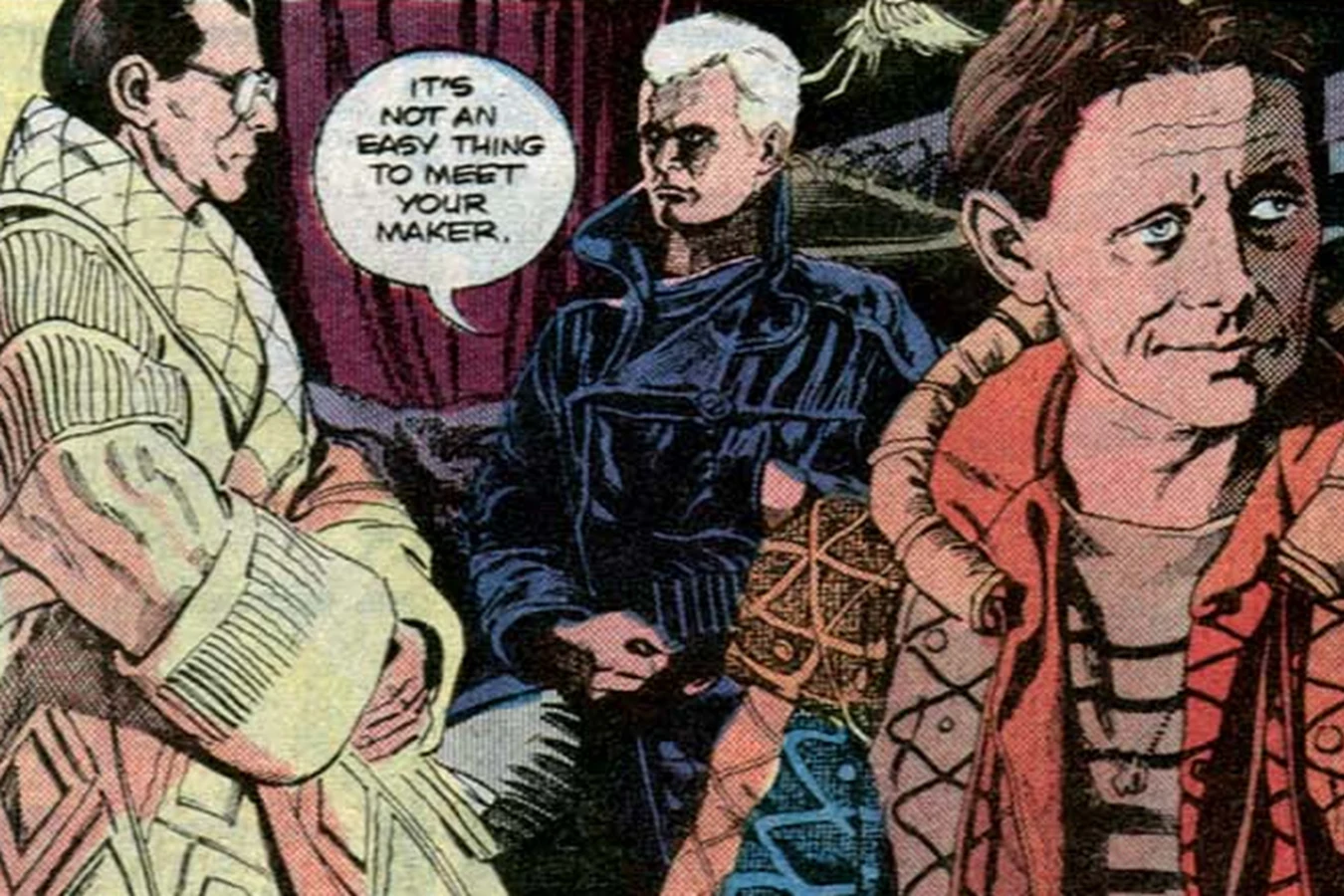
In Marvel's comic adaptation, Tyrell asks Deckard to test Rachael and admits afterwards that her memories come from his niece. He meets Roy in his bedroom and calmly rejects every solution the replicant suggests, one after another, while praising him for what he has achieved. The comic follows the film closely, and Roy kills Tyrell in the same way before Sebastian flees.
Westwood Blade Runner 1997
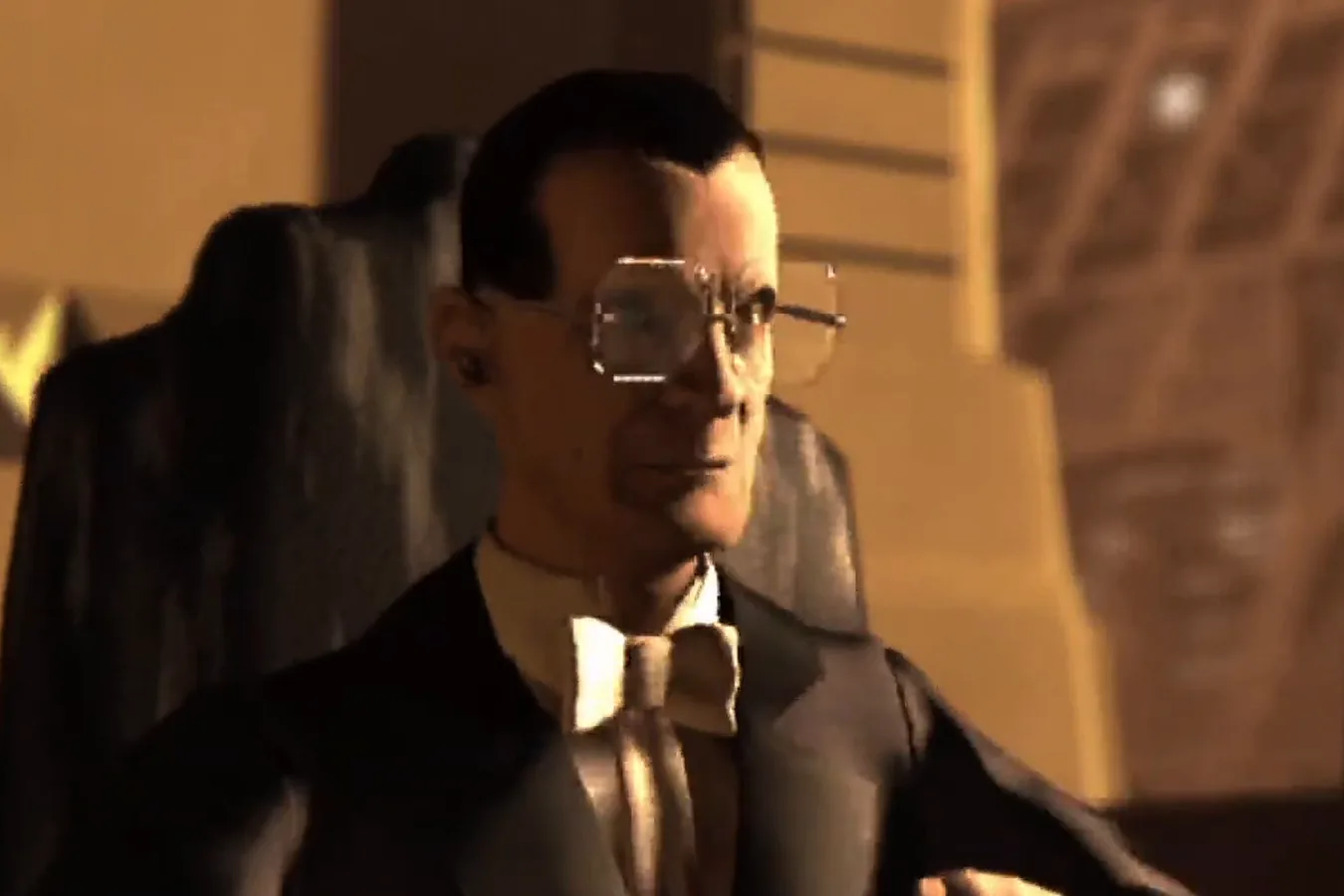
In Westwood's Blade Runner game, Tyrell is voiced by Joe Turkel and appears during the same days as the film. Ray McCoy investigates the murder of Marcus Eisenduller, a Tyrell scientist whose laboratory tested how replicants would cope with Off-world conditions, after someone tries to reach restricted data from his office. The pyramid's security at first refuses McCoy a meeting, and when he gets one, Rachael receives him under the owl and tells him that Tyrell has already met one blade runner that day.
Tyrell then joins them and explains that he has given the Nexus-6 a past, with the innocence of childhood and the joys and sorrows of a real existence. McCoy warns him that the killers want more life and will come for him as they came for Eisenduller. Tyrell answers that he has nothing to fear from any of his children, and then he leaves to attend a stockholder meeting.
Later, the replicant leader Clovis walks in on a meeting between Tyrell and Governor Kolvig. When the governor calls for security and refuses to be silenced, Clovis shoots him dead, and Tyrell only remarks coolly that his visitor has kept his word.
A Story Of The Future
Blade Runner: A Story of the Future, the illustrated storybook for younger readers, retells the film's account of Tyrell. Here Rachael is Tyrell's secretary, and the small white owl in his office is described as real, one of the last of its kind on Earth. After the test Tyrell calls Rachael a pet project whose memory implants came from his sixteen-year-old niece, which is why the test took so long. Batty later reaches him through Sebastian, and as in the film he kills Tyrell by crushing his skull.
In The KW Jeter Books
In K. W. Jeter's Blade Runner 2: The Edge of Human, Tyrell is dead, but his family and secrets drive the story. His only brother Anson Tyrell led the doomed Salander 3 expedition with his wife Ruth, a woman Eldon had loved and lost to his brother. Their daughter was Sarah Tyrell, Eldon's niece and the human template for Rachael, even though the police files Deckard had seen said that Tyrell had no family. Sarah inherited the corporation and admitted that she had long wanted to destroy it, because her uncle had been killing her slowly from the inside since she arrived as a child.
Sarah sealed her uncle's suite as a kind of museum, with guttered candles, the chess board knocked over in the struggle and his bloodstain still on the floor. His trading program still waited by the bed to ask whether he wished to resume trading until she shut it down. His body had been cremated, and Sarah kept the urn with his ashes in her private quarters, flicking her cigarette ash into it every day. She also took over his antique Boulle desk, which he had owned only because he had to have the only one of its kind.
The human Roy Batty, the template for the replicant, revealed that Tyrell had recruited him personally and used him to eliminate rival replicant makers. A brain scan of Batty's unusual amygdala had been the starting point for the Nexus-6 program, and he had served as Tyrell's bodyguard before leaving the company. In Blade Runner 3: Replicant Night, it emerged that Tyrell had created a hidden shadow corporation, poured huge sums into the Salander 3 and deleted files to protect the family name.
Blade Runner 4: Eye and Talon showed old surveillance footage of Tyrell feeding his real owl, Scrappy, a live white rat, and the bird's band read property of the Tyrell Corporation. Iris Knaught later found the ruins of his private quarters, including a private theater. Carsten, once chief technical officer of the rival maker Derain et Cie, claimed that Tyrell had never invented the technology at all, but had been handed a monopoly by the UN emigration program, whose forces removed his competitors. In that account Tyrell was a servant of the UN who throttled production so his only customer could never stockpile replicants, hid his most vital work off-site, and may have tried to slip free.
In a frozen desert vault, Carsten showed Iris the whole neuro-optical lab of Hannibal Chew, smuggled out of the city after both men died, and a row of glass-lidded shipping coffins holding a dozen or so sleeping replicants of Tyrell himself. Carsten said the true purpose of replicant technology had never been slave labor but eternal life, a chain of copies woken one after another, each receiving the mind and memories of the last through the eyes. Tyrell's own breakthrough was a counter-entropic signal that cleaned out the errors of each transfer, and he had the few lab workers who built his copies eliminated afterwards. By this telling, someone at the top let Roy Batty reach Earth, more life was only his cover story, and his thumbs in Tyrell's eyes destroyed the channel the next transfer needed.
The owl was no pet. Carsten explained that Scrappy carried a compressed backup of Tyrell's mind and recent memories, refreshed every week in the penthouse, and chosen because an owl has forward-facing binocular vision, spare cortex and the instincts to survive alone. The backup was useless without one of the sleeping copies and a new pair of eyes, and after Meyer raided the vault and killed Carsten, the real owl ended up on the arm of Rick Deckard. Nothing in the story confirms the old man's account, and the whole visit was secretly filmed for an unseen director.
Do Androids Dream Of Electric Sheep?
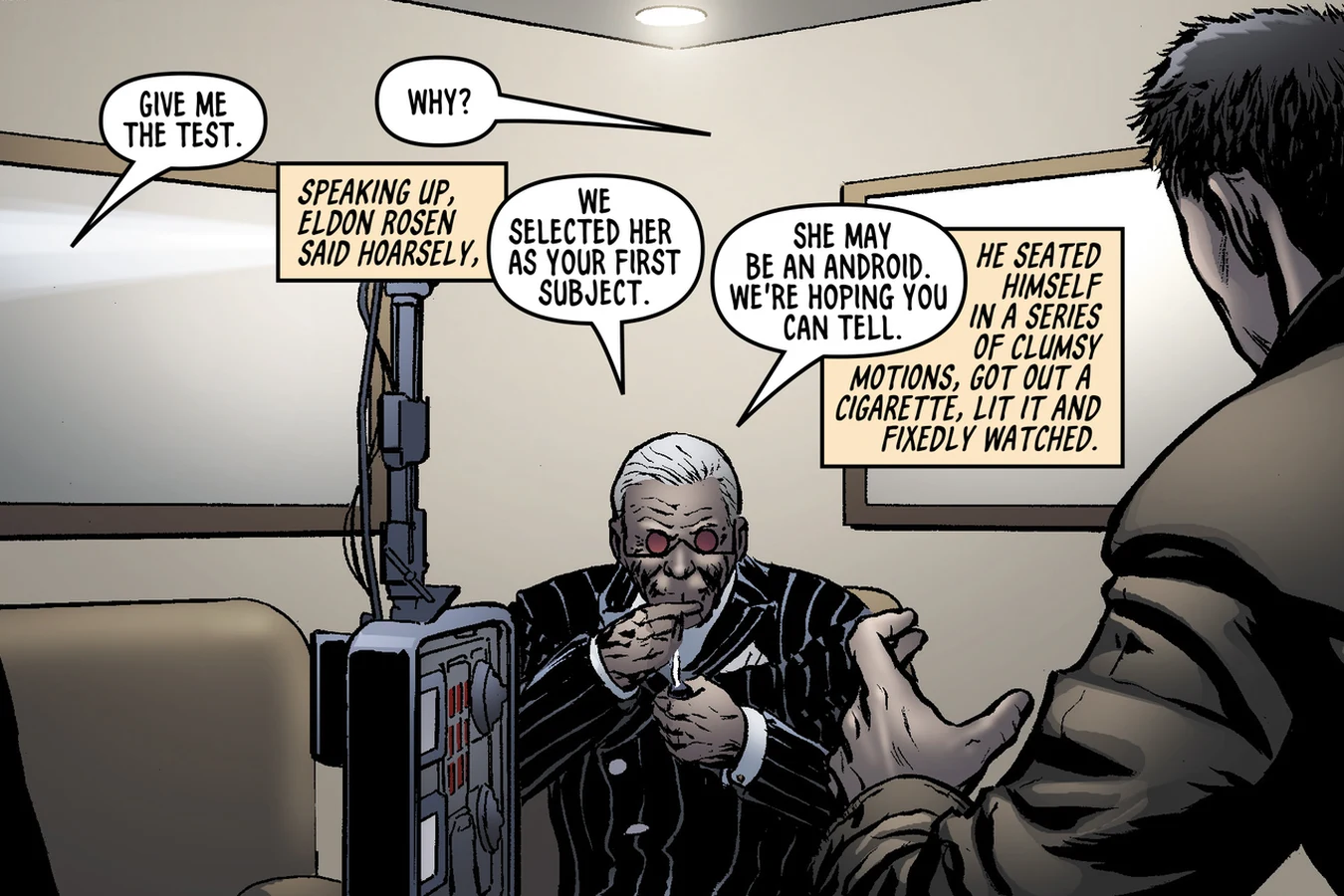
Tyrell's counterpart in Philip K. Dick's Do Androids Dream of Electric Sheep? is Eldon Rosen, a lean, dapper and harried old man who heads the Rosen Association from its building in Seattle. The company builds its androids Off-world and manufactures nothing on Earth, and Rosen presents Rachael as his niece, born and raised aboard the colony ship Salander 3. When Rick Deckard arrives to test the Nexus-6, Rosen offers Rachael as the first subject and tries to discredit the Voight-Kampff test when she fails it. He argues that the police may already have retired real humans, and a hidden camera records everything.
Rosen then tries to bribe Rick with the Association's owl, on condition that the company would keep every offspring it produced. He wanted the owl to revert to the Association at Rick's death, but when Rick called that an invitation to kill him, Rachael agreed that he could leave it to his heirs. When the bribe fails, he admits that Rachael is an android owned by the company and used as a sales tool. He also confesses that the owl is artificial, and Rachael pulls away from his touch. Rachael later tells Rick that Eldon and the other human Rosens sent her to study blade runners, so that the next model could be improved. BOOM! Studios' comic adaptation shows Rosen smoking in his armchair while Rick sets up his equipment.
Behind The Scenes
According to Paul M. Sammon's Future Noir: The Making of Blade Runner, Ridley Scott cast Joe Turkel because he loved his look as the ghostly bartender in The Shining, while Hampton Fancher had imagined Sterling Hayden in the role. Turkel had already worked for Stanley Kubrick in The Killing and Paths of Glory, but he had trouble holding the long technical speeches in his head, so cue cards were hidden around the set for the scenes with Deckard and Roy. His soft, precise delivery became the character's signature, and he returned to the role fifteen years later to voice Tyrell in Westwood's game.
Tyrell's look was built around a fitted blue sharkskin suit, a white bow tie and enormous trifocal glasses, replaced at night by a quilted white robe. An early draft named the company the Nekko Corporation, and the owl in the office was first written as a living bird before the dialogue was reworked to make it artificial. A memo from the period of Dustin Hoffman's involvement also helped move the story away from the slaughter of a whole family to the single killing of Tyrell.
Earlier scripts planned a very different ending for the character. In David Peoples's rewrite, pushed by Scott and inspired by Hoffman's interest in cryogenics, the Tyrell killed by Roy was only a replicant double, while the real Tyrell lay frozen in a cryogenic crypt or sarcophagus on the floor above. Sebastian revealed that his employer had frozen himself while waiting for a cure for a fatal disease, Roy demanded to be taken to his real maker, and the scene ended with Sebastian's death beside the coffin. Syd Mead sketched the crypt, and Fancher resisted the idea, but it was dropped before filming.
The eye-gouging combined a dummy head and live action. Michael Westmore took a full life cast of Turkel's head to build a duplicate with blood hidden behind its glass eyes, while Marvin Westmore ran blood tubes through Turkel's hair and gave Hauer blood-soaked sponges to hold in his palms. Rutger Hauer added the kiss himself during filming. After preview audiences reacted badly, the most violent shots were trimmed, and the Workprint holds on the gouging a little longer than the other versions.
Famous Quotes
- "Commerce is our goal here at Tyrell. More human than human is our motto."
- "Rachael is an experiment, nothing more."
- "The light that burns twice as bright burns half as long."
- "I'm surprised you didn't come here sooner."
- "You were made as well as we could make you."
- "You're the prodigal son. You're quite a prize."
- "Revel in your time."
Conclusion
Eldon Tyrell was the genius who made replicants nearly human and then refused to let them live like humans. He turned Rachael into an experiment, built a four-year limit into his finest creations and spoke of them with admiration but without mercy. The comics, games and Jeter's novels added a ruthless family history, a burned slum and a company that outlived him only to fall into Wallace's hands. In the film he died at the hands of the prodigal son he had created, in the candlelit room at the top of his pyramid.
Appearances
- Blade Runner (1982)
- Marvel Super Special #22: Blade Runner (Marvel Comics, 1982)
- Blade Runner: A Story of the Future (1982)
- Blade Runner 2: The Edge of Human (1995, mentioned)
- Blade Runner 3: Replicant Night (1996, mentioned)
- Blade Runner (Westwood Studios, 1997)
- Blade Runner 4: Eye and Talon (2000, archive footage)
- Blade Runner: Origins (Titan Comics, 2021)
- Blade Runner 2049 (2017, mentioned)
Tag Categories: Blade Runner Lore | Blade Runner Characters | Replicant Designers