Blade Runner: A Story Of The Future: Plot & Lore

Blade Runner: A Story of the Future is Les Martin's 1982 photo-illustrated novelization of Ridley Scott's Blade Runner, published by Random House as a 91-page trade paperback with more than sixty color stills from the film. Martin adapted the screenplay by Hampton Fancher and David Peoples, itself drawn loosely from Philip K. Dick's Do Androids Dream of Electric Sheep?, after Dick refused a separate film novelization deal. In 2019 Los Angeles, blade runner Rick Deckard is pulled back to hunt four escaped Nexus-6 replicants while Rachael learns she is one of Tyrell's experiments, and the short book ends with Roy Batty dead on a roof and Deckard leaving the city with her in a stolen police spinner.
Plot Summary
Deckard Returns To The Force
In 2019 a recruitment blimp drifted over a crowded, neon-lit Los Angeles and offered free Nexus replicants to anyone willing to leave for the Dominguez and Shimata space colonies. Rick Deckard heard that pitch while eating raw fish at an open-air bar and lost his appetite at the word replicant. He was a free-lance detective without work, still sick from hunting earlier Nexus models, when two black-uniformed cops and a short Japanese officer named Gaff pulled him out of the crowd.
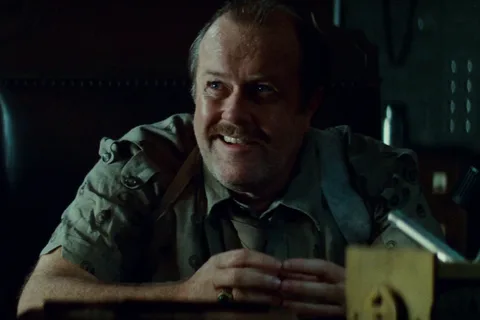
Captain Harry Bryant did not bother to stand when Gaff delivered Deckard. Four skin jobs had killed twenty-three people breaking out of Dominguez, hijacked a shuttle, and reached Earth, and Dave Holden was already in hospital after one of them shot him during a Voight-Kampff test inside the Tyrell laboratories. Bryant offered double pay, named Leon, Zhora, Pris, and Roy Batty as the remaining targets, and reminded Deckard that every Nexus-6 carried a four-year life span that Tyrell had built in as a fail-safe. Deckard refused at first, then sat down and took the file.
The Voight-Kampff At Tyrell
At the Tyrell pyramid Deckard met Rachael, Eldon Tyrell's secretary, and a small white owl that she said was real, one of fewer than a dozen still alive on Earth. Dr. Eldon Tyrell arrived and asked for an experiment before Deckard tested a Nexus-6: he wanted to see what score a human made on the Voight-Kampff. Deckard ran the test on Rachael for about an hour. Only the last questions remain on the page, including a meal of raw oysters followed by boiled dog, and the gauges finally showed she was not human.
Rachael left without knowing the result. Tyrell told Deckard she was a pet project with memory implants taken from his sixteen-year-old niece, which was why the test had taken so long to reach her nonhuman core. Deckard looked down across the smoking factories around the pyramid and treated the city as a chessboard with four pieces still to find.
Chew And The Snake Scale
Across the street from his hotel room, Leon watched Deckard and Gaff search the place and take the snapshots he had come back for. He left for a meeting with Batty, and the two of them went to the eye laboratory of Hannibal Chew. Frost coated their clothes while Chew worked in a fur coat. Batty pulled a perfect blue eye from the cold, tore Chew's coat away, and demanded how Nexus-6 bodies were made and when they died, while Leon smashed a glass aquarium of eyes.
Chew could only say he did eyes and that Dr. Tyrell designed their brains. Under pressure he named J. F. Sebastian at 2077 897th Avenue in Sector Six as the man who could reach Tyrell. Batty thanked him for the eyes and left Chew stiffening in the cold among the spilled eyes. Later Deckard worked an Esper machine over clothes and a speck from Leon's room, guessed wrong that the speck was a fish scale, and learned at an all-night market that it came from a snake.
Zhora And Leon
Rachael came to Deckard's apartment after the scale pointed toward an artificial snake and a show-bar act. He told her the Voight-Kampff result and that Tyrell had planted another person's memories in her, and she fled while he was in the kitchen. He called her back, apologized, and asked her to meet him at the Snake Pit in the Fourth Sector. She did not arrive in time, and Deckard went on alone to Zhora's dressing room.
He knocked, claimed he was from the morals squad, and pushed through when she opened the door a crack. Zhora swung a python from her act at him and the chase spilled into the street. Deckard shot her once, and she died after a bus hit her. Leon then caught Deckard in an alley, cracked a rib, and raised his joined hands for a killing blow before Rachael appeared with Deckard's blaster and shot Leon down. Bryant found Deckard alone afterward, counted Leon under the bus with Zhora's kill, and told him a new skin job had gone missing from Tyrell's own household: Rachael.
Rachael At The Apartment
Deckard sent Rachael to his apartment and followed when he could. She asked about the photographs on his wall, and he said they were his wife and child, who had gone Off-world while he stayed behind because he still wanted choices. She admitted she was beginning to have feelings for him and that Tyrell's niece must have lived a sheltered life, because she had so much left to learn. When Bryant rang on the video phone, Deckard kept her out of camera range, then kissed her softly. He also called Tyrell security chief Dr. Hermann Schlecht under investigative clearance and learned that only three people had direct access to Tyrell, which pointed him at Sebastian.
Sebastian Opens Tyrell's Door
J. F. Sebastian was twenty, aged by the Methuselah syndrome into the body of an old man, and lived among empty Sector Six apartments with toy companions that marched when he came home. Pris met him outside, said she had nowhere to stay, and moved in. Batty joined them later, flattered Sebastian for the body work on the Nexus-6 line, and reminded him that both of them were scheduled to die soon. Sebastian said he had argued with Tyrell for longer life for the replicants so that part of his own work would outlast him, and Batty used that hope to ask for a face-to-face meeting.
Sebastian's ongoing chess game with Tyrell was the key. He announced Queen to Bishop Six, check, and Tyrell admitted him to the eight-hundredth-floor bedroom. Batty stepped past Sebastian, asked his maker for more life, and heard that the four-year coding could not be changed after the second day. He crushed Tyrell's skull between his hands, told Sebastian not to blame himself, said goodbye, and left to rejoin Pris. The book does not show him killing Sebastian.
Batty On The Roof
When Batty returned to Sebastian's apartment, Pris was already dead on the floor from Deckard's shots. The novel skips her ambush on the page and picks up with Deckard standing over her body as Batty arrives. Batty moved faster than Deckard expected, smashed a fist through a wall, and took a shot that tore off an ear without slowing him. Deckard ran for the roof. At the edge his grip failed, and Batty caught his arm over empty space, then hauled him up.
Batty sank onto his back, praised Deckard's courage, and said he was glad he had been free not to kill at least once before he died. There is no "tears in rain" speech on the page. The next morning Deckard told Rachael in a police spinner that he had watched Batty die all night while Batty talked about distant outposts of space and what he had felt. She asked whether Tyrell's file showed how long she had to live, and Deckard said he had chosen not to look. Bryant called to praise the job and say Gaff could handle the last one, Rachael. Deckard answered that he had already taken his bonus, a spinner, and was leaving on vacation for the rest of his life. He drove into open country with Rachael beside him and answered her fear about how long they had with the old vow, for as long as they both should live.
Differences From The Film
- The opening spells out a world already past collapse, with Tyrell's pyramids finished just before leaders admitted civilization was running out, and the blimp naming the Dominguez and Shimata colonies.
- Rachael says the white owl at Tyrell is real, with fewer than a dozen left on Earth, instead of calling it artificial.
- Only the closing Voight-Kampff questions for Rachael are written out, and Tyrell states outright that her memories belong to his sixteen-year-old niece.
- Roy Batty tears off Hannibal Chew's coat and questions him while Leon smashes the eye aquarium. Chew freezes after they leave.
- Bryant later calls Deckard at his apartment to report that Chew was found dead, a beat the film does not stage as a phone call.
- Sebastian lives at 2077 897th Avenue in Sector Six and is twenty years old, not twenty-five.
- The Abdul Ben Hassan scene is omitted. Deckard traces the scale through a Cambodian maker of fish replicas who identifies it as snake.
- Deckard knocks on Zhora's dressing-room door, claims morals-squad business, and is attacked at once. He shoots her once, and she dies after a bus hits her.
- Deckard has an ex-wife and a child who went Off-world. Photographs of them hang in his apartment.
- The film's love scene is absent. Deckard kisses Rachael once, then keeps working the case, including a call to Tyrell security chief Dr. Hermann Schlecht.
- After Tyrell dies, Batty says goodbye to Sebastian and leaves. The book does not state that he kills Sebastian.
- Pris's ambush is skipped. The Bradbury sequence opens on Deckard standing over her corpse when Batty returns.
- Batty's rooftop death has no "tears in rain" monologue. Deckard later describes the long death to Rachael in the spinner.
- Gaff does not appear on the roof, and there is no origami unicorn. Bryant instead calls about a vacation while Deckard already has Rachael hidden in the spinner.
- The book marks time in days across the hunt, while the film plays as a tighter stretch of nights.
Editions
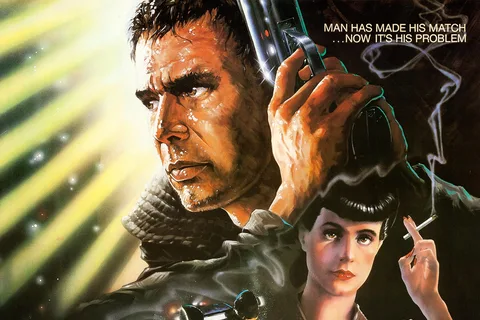
Random House published the first American trade paperback in May 1982 at 91 pages, credited as a story adaptation by Les Martin from the Fancher and Peoples screenplay and Dick's novel, with Ridley Scott and Michael Deeley named for the film. The cover carries the subtitle A Story of the Future, stills from the movie, and the line that the book is illustrated with more than sixty color photographs. The copy used for this page is that Random House paperback. Later printings and foreign editions kept the same short photo-novel format rather than expanding Martin's text into a full adult novelization.
Behind The Scenes
Philip K. Dick was offered a large sum to write what he called an "El Cheapo" film novelization aimed at younger readers and refused it. He preferred a reissue of Do Androids Dream of Electric Sheep?, which followed under the Blade Runner title, and he accepted a smaller deal tied to publishing The Transmigration of Timothy Archer instead. Les Martin, already a specialist in film and television adaptations, wrote this separate photo-illustrated version for Random House. Many of its departures match beats from a 23 February 1981 draft of the screenplay rather than the final cut, including the Schlecht inquiry, the skipped Pris fight, and Batty's death without the later "tears in rain" speech. The same year's Marvel Comics Super Special adapted the film in comic form, while Martin's book stayed a stills-heavy prose tie-in.
Conclusion
Blade Runner: A Story of the Future is Les Martin's 1982 Random House novelization of Ridley Scott's film. It follows Rick Deckard from Bryant's office through the Tyrell test, the snake-scale hunt, and the Bradbury Building, and it ends with Roy Batty dead on the roof and Deckard driving away with Rachael after telling Bryant he is keeping the spinner. The short book keeps the 2019 Los Angeles hunt while dropping several of the film's best-known beats and spelling out Off-world colonies, Tyrell's niece, and Deckard's Off-world family in their place.
External Sources
- Blade Runner (franchise) at Wikipedia
- Blade Runner at Open Library
- Blade Runner (Les Martin) at the Internet Archive
Tag Categories: Blade Runner Lore | Blade Runner Books