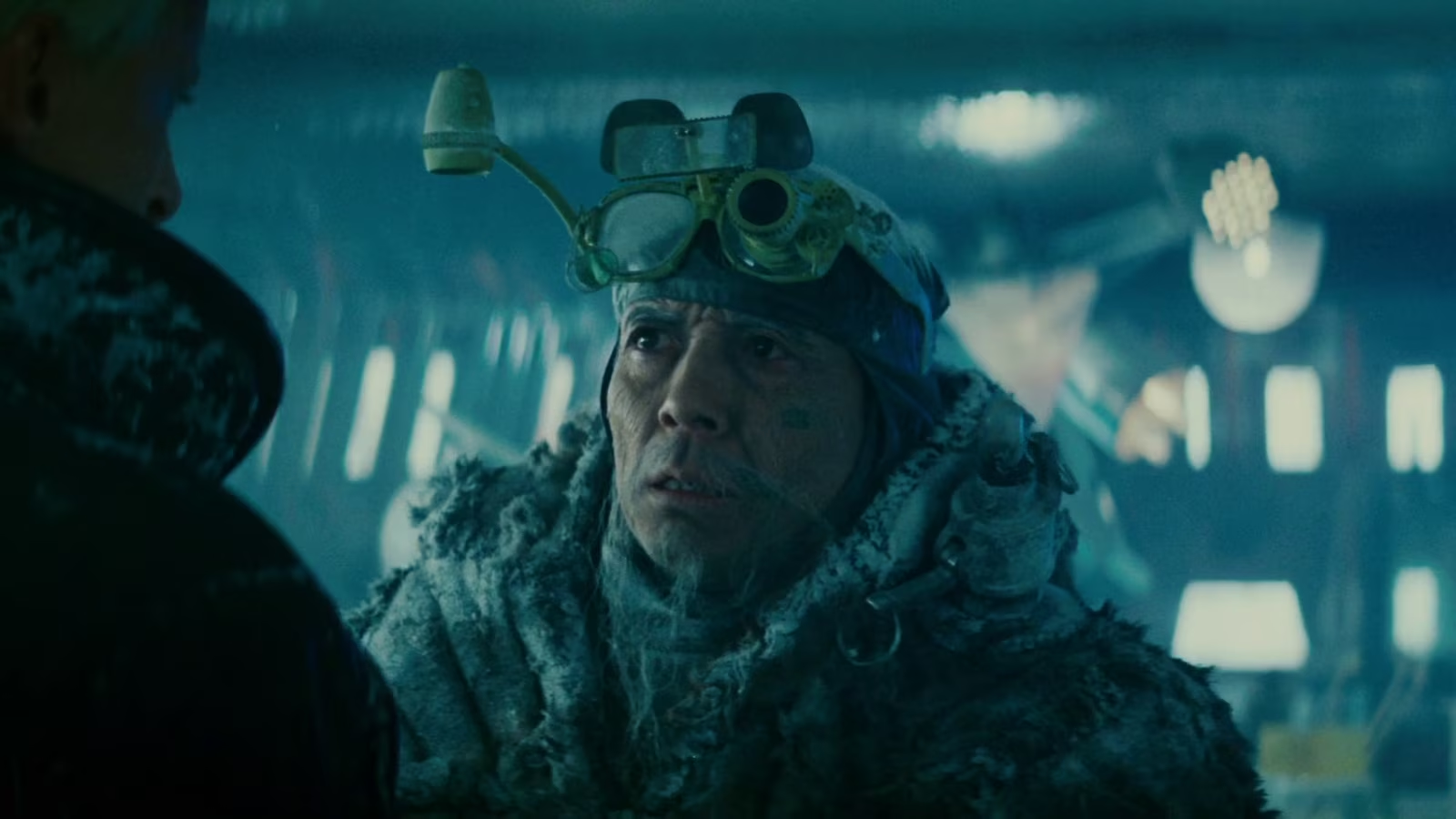

Hannibal Chew was a genetic designer who made artificial eyes for the Tyrell Corporation in Ridley Scott's Blade Runner, played by James Hong. He worked alone in a freezing laboratory in Los Angeles, wearing a heated fur coat, and he designed the eyes of the Nexus-6 replicants. In November 2019, the escaped replicants Roy Batty and Leon Kowalski broke into his lab, pulled off his coat in the cold, and questioned him about how long they had to live. Chew knew only about eyes, so he sent them to J. F. Sebastian, a designer who could get them to Eldon Tyrell. The film never showed what happened to him after that visit.
Biography
Earlier Life
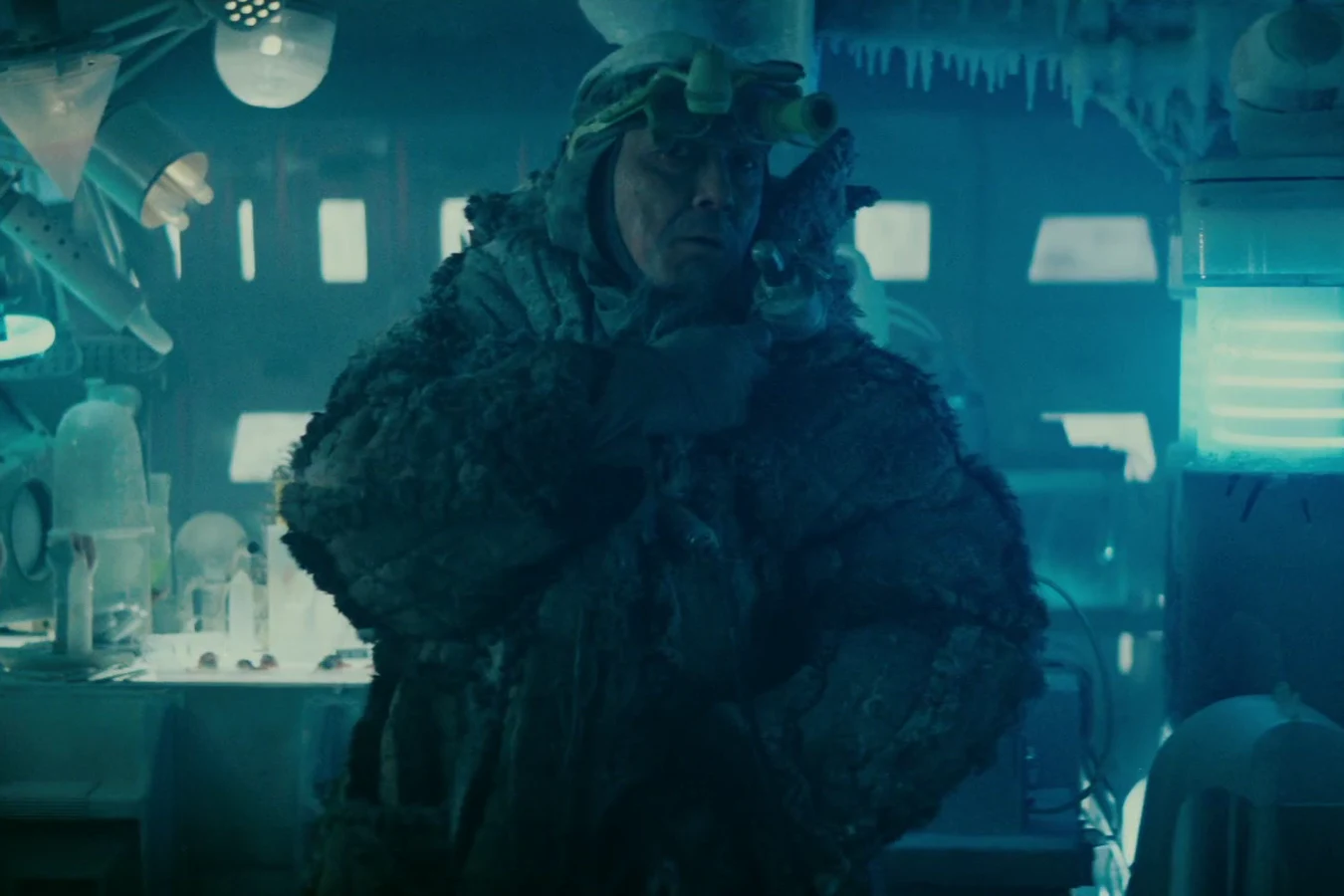
Chew described himself as a genetic designer who worked only on eyes, and he claimed no knowledge of any other part of replicant design. He created the eyes of the Nexus-6 models, including those of Roy Batty and Leon, and he regarded Eldon Tyrell as the genius who designed their minds. His laboratory stayed far below freezing for the sake of the eyes, which floated in tanks and storage trays around the room. To work in that cold, Chew wore a thick fur coat fed by heating hoses, with magnifying goggles on his head. The film gave no other details about his age, his background, or how he came to work for Tyrell.
The Eye Lab Visit
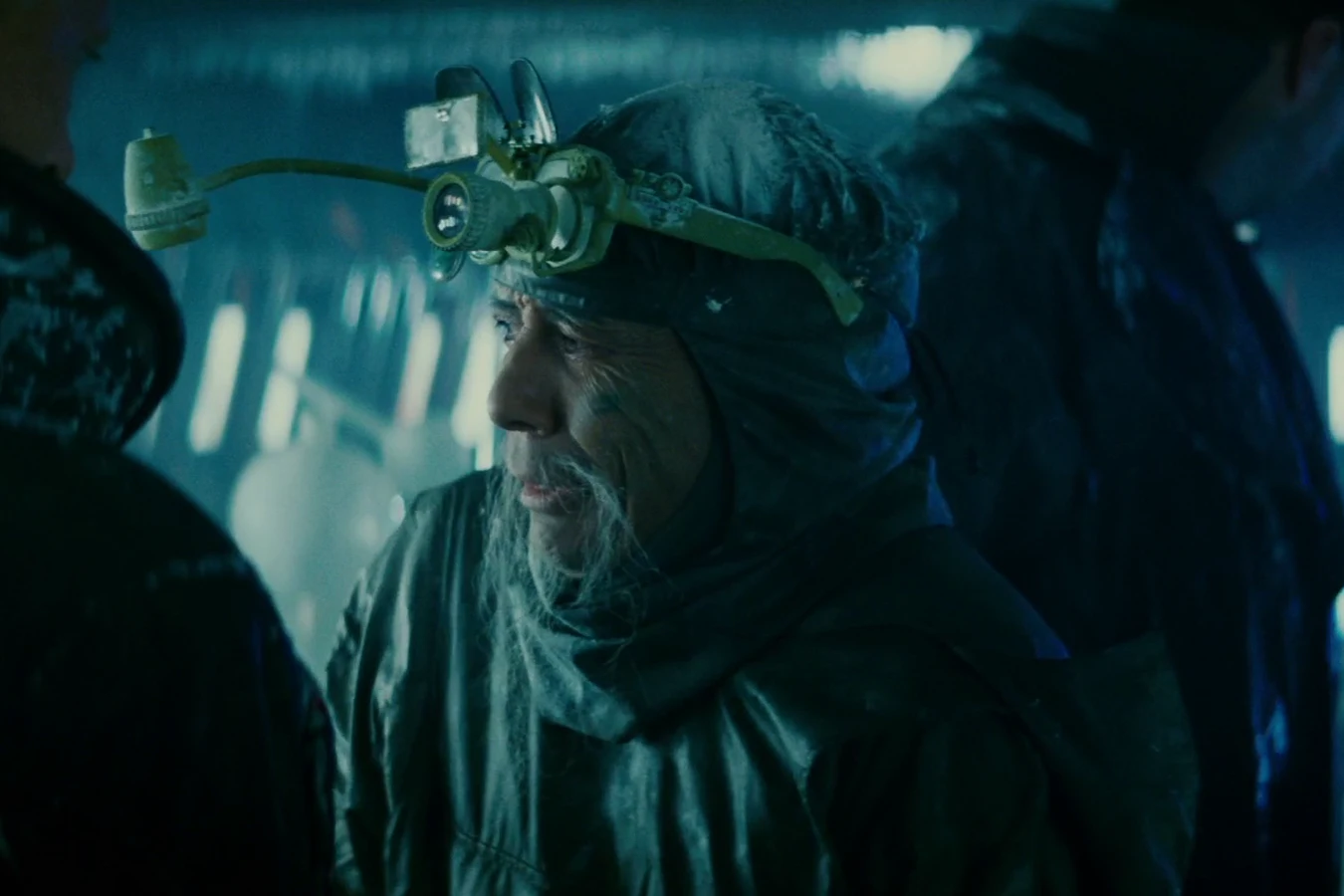
In November 2019, Roy Batty and Leon walked into the eye lab while Chew was examining eyes under a microscope. Chew shouted that they were not allowed to be there, and Leon tore the heating hoses out of the back of his coat. When Leon pushed his bare hand into a tank of freezing liquid and lifted out an eye, Chew cried out that the tank was cold and that the eyes were his. Roy recited a few lines of verse about falling angels and then asked about the morphology, longevity, and incept dates of the Nexus-6 models. Chew answered that he did not know such things and only made eyes.
Chew then realized that his visitors were Nexus replicants and told Roy that he had designed his eyes. Roy answered that he wished Chew could see what he had seen with those eyes. Leon pulled the fur coat off Chew's back and set eyes from the tanks on his shoulders, and Chew began to shake in the cold. He told them that only Tyrell had the answers they wanted and begged for his coat. When Roy remarked that Tyrell was hard to reach, Chew stammered out the name of J. F. Sebastian, who could take them to him. Roy's last question was where they could find Sebastian.
Fate
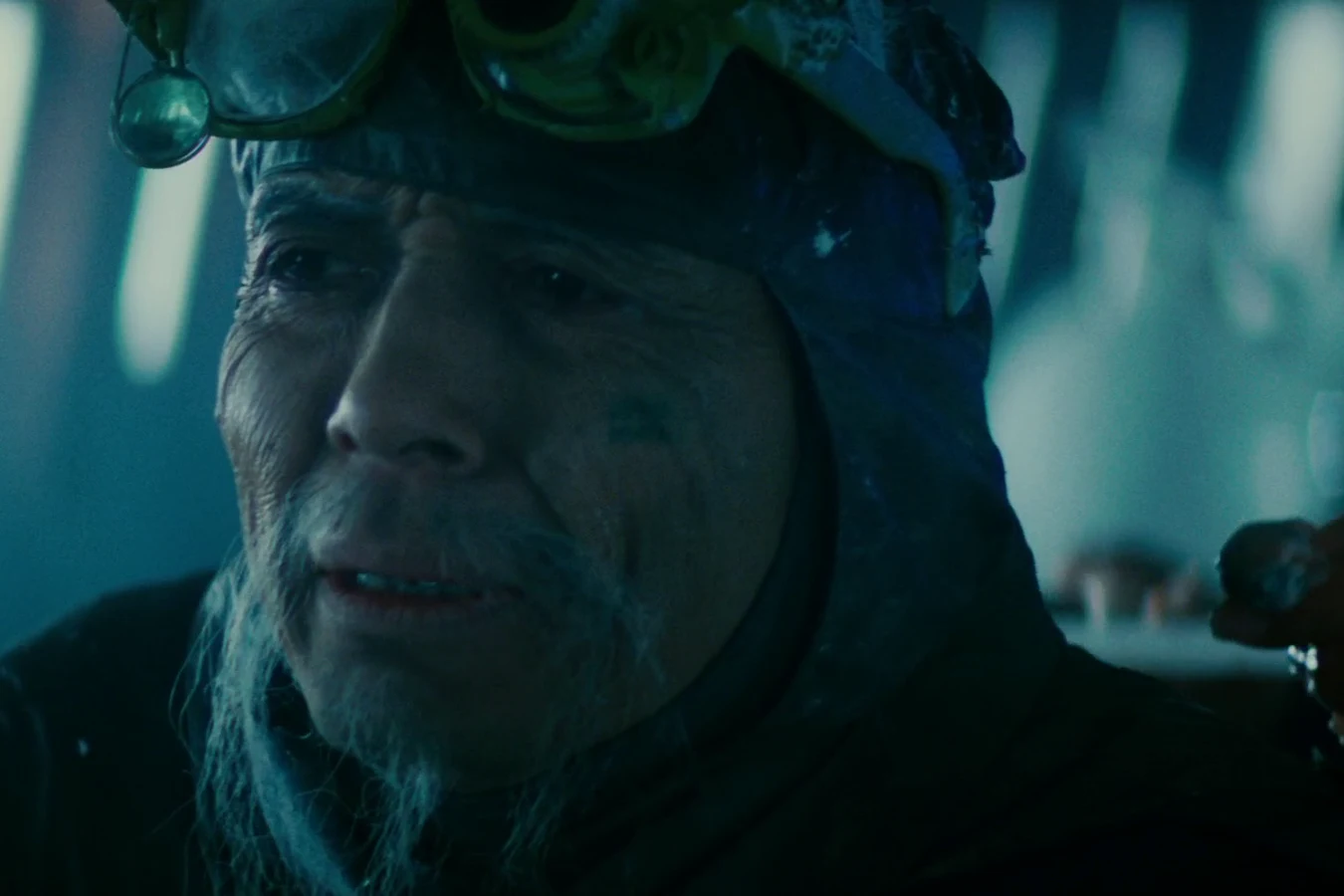
The film left Chew's fate open. His scene ended with him freezing without his coat while Roy asked where to find Sebastian, and no later scene showed him or mentioned him again. Roy later reached Sebastian through Pris, and Sebastian took him to Tyrell, so Chew's answer led the replicants where they wanted to go. An earlier draft of the screenplay included a scene in which Deckard and other policemen found Chew frozen solid in his lab, and one of them knocked the body over so that it shattered. That scene was never filmed, and the released film did not confirm whether Chew lived or died.
Marvel Comic Adaptation
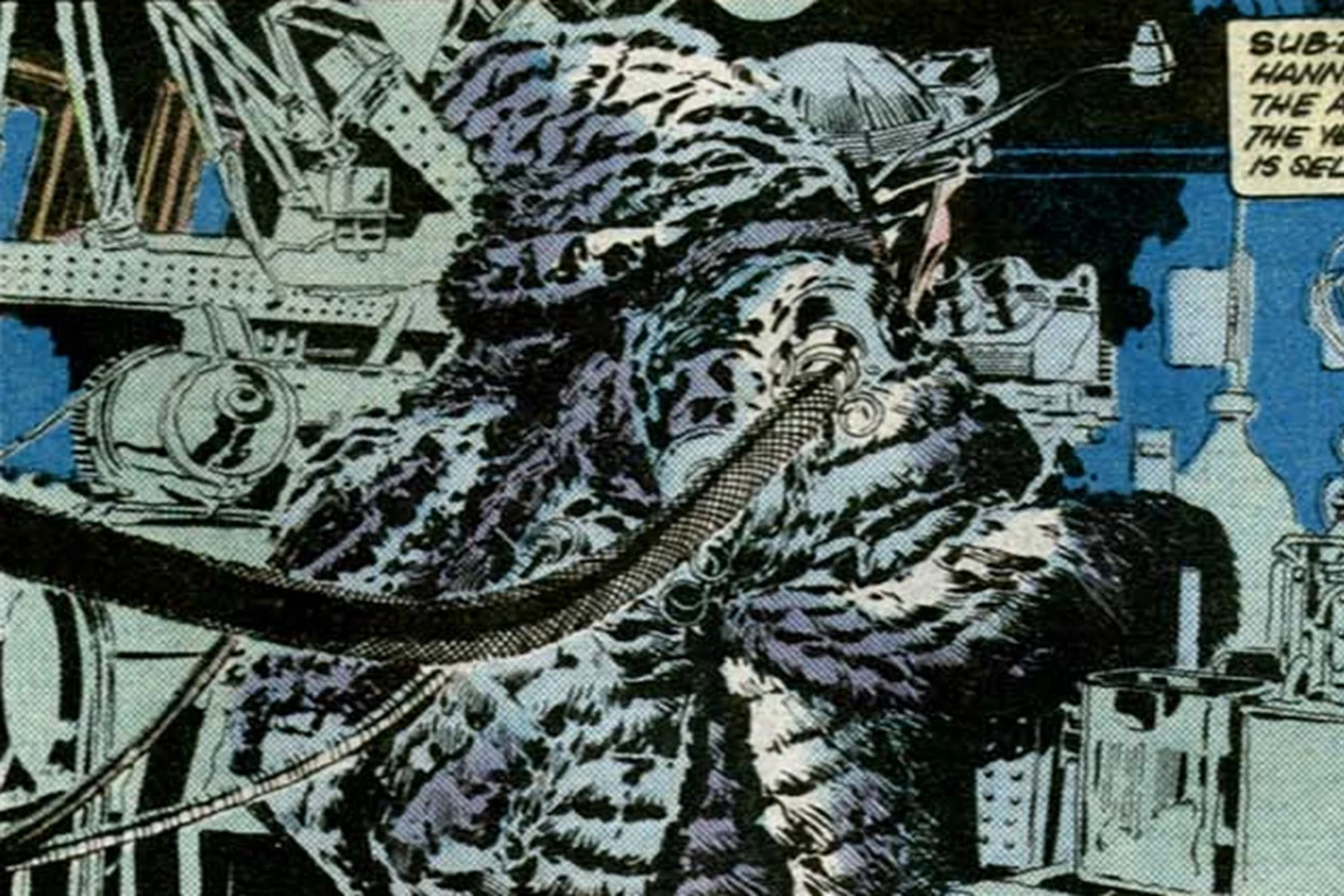
The 1982 Marvel comic adaptation by Archie Goodwin and Al Williamson gave him a full name that the film never spoke, calling him Hannibal Chew in a caption. The same caption described an old man who had grown used to working in sub-zero cold and rarely had visitors. The art first showed him from behind as a mass of shaggy fur with a heating hose trailing from his back, and later drew him with a long, thin beard under his goggles. His scene closed on a caption stating that Roy had several more questions and that none went unanswered, and the comic never showed his death.
Les Martin Novelization
Les Martin wrote Blade Runner: A Story of the Future, a short illustrated retelling of the film that Random House published in 1982 with more than sixty photographs from the production. Martin worked from the screenplay, and his version of the eye lab visit gave several actions to different replicants. Roy, not Leon, reached into the freezing liquid and tore off Chew's coat, while Leon smashed a tank full of eyes. Unlike the film, the book stated the outcome directly. Roy and Leon walked out as Chew froze solid, and Captain Bryant later called Deckard at his apartment to report that Chew had been found dead.
Westwood Video Game
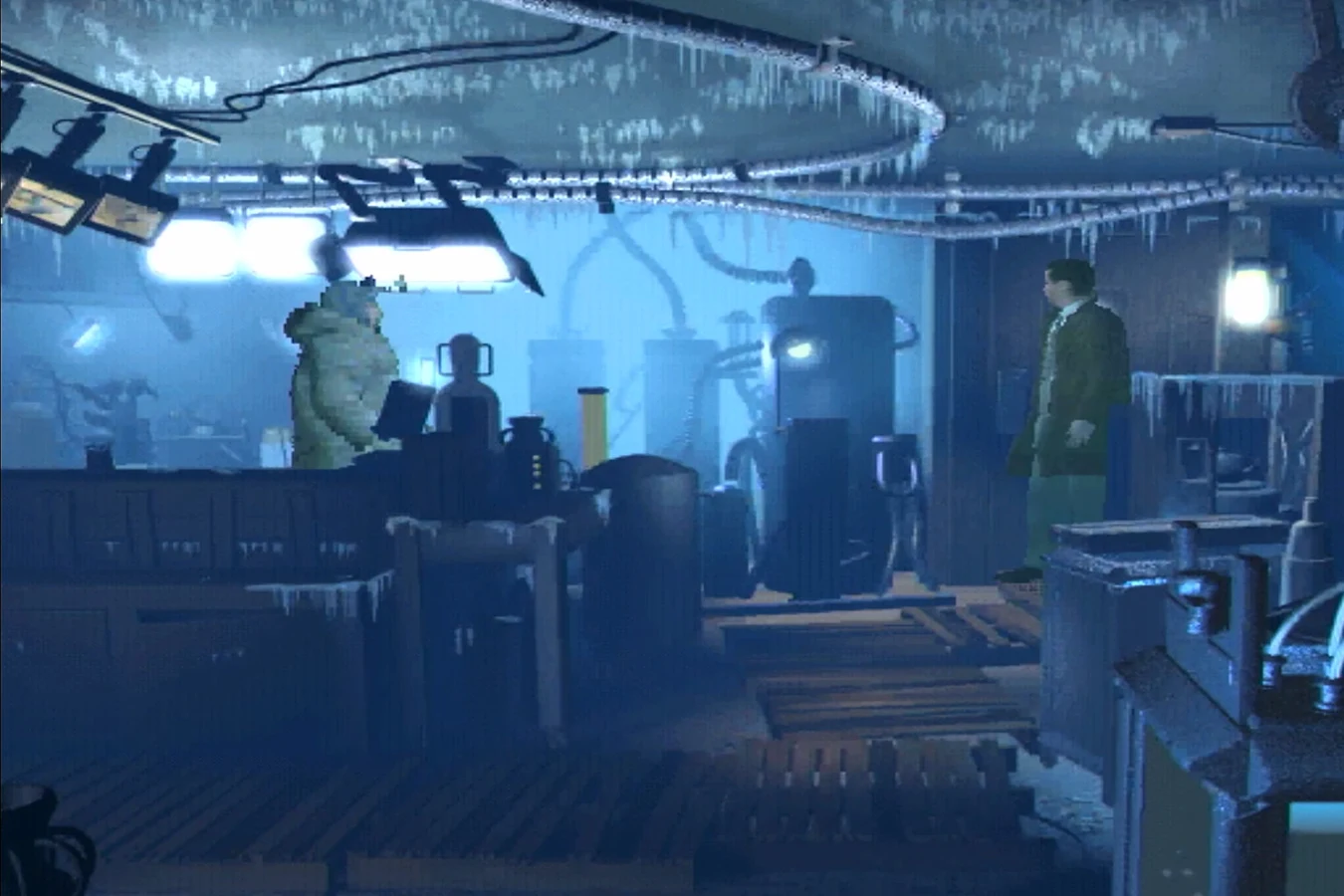
Chew returned in Westwood Studios' 1997 Blade Runner adventure game, with James Hong voicing him again. The game took place during the same week of November 2019 as the film and followed rookie blade runner Ray McCoy. In its second act, McCoy visited Chew's Eyeworld on DNA Row and could question him about Eldon Tyrell, the skin designer Moraji from the shop across the street, the twin designers Luther and Lance, an envelope belonging to Lance, and Sebastian. Chew was alive during those conversations, and the alley beside his building led McCoy to Sebastian's apartment in the Bradbury Building.
Jeter Novels
K. W. Jeter's first two sequel novels, The Edge of Human in 1995 and Replicant Night in 1996, did not mention Chew. He appeared only as a dead man in Eye and Talon, published in 2000. In that novel, the blade runner Iris Knaught was taken to a desert compound by Carsten, who spoke for Tyrell's old rivals in the replicant business. There she found Chew's whole neuro-optical lab buried in a chilled trench, with its LA EYEWORKS sign and jars of floating eyes. Carsten's group had taken the building apart and moved it out of Los Angeles in twelve hours, as soon as they learned that Chew and Tyrell were both dead.
Carsten told Iris that Chew had been the best designer in his field. Before Tyrell brought him to Los Angeles, Chew had been chief technical officer and operations manager at the eye facilities in Taiwan, which he built up from nothing. The name LA Eyeworks came from an earlier business at the address, and Chew left the sign up as a private joke, since the lab had only an invoice code in Tyrell's budget. According to Carsten, Tyrell had hidden the most important part of his replicant technology in Chew's lab and had wired the building with explosive charges that could be set off from Tyrell headquarters.
Hannibal Sloat In The Novel
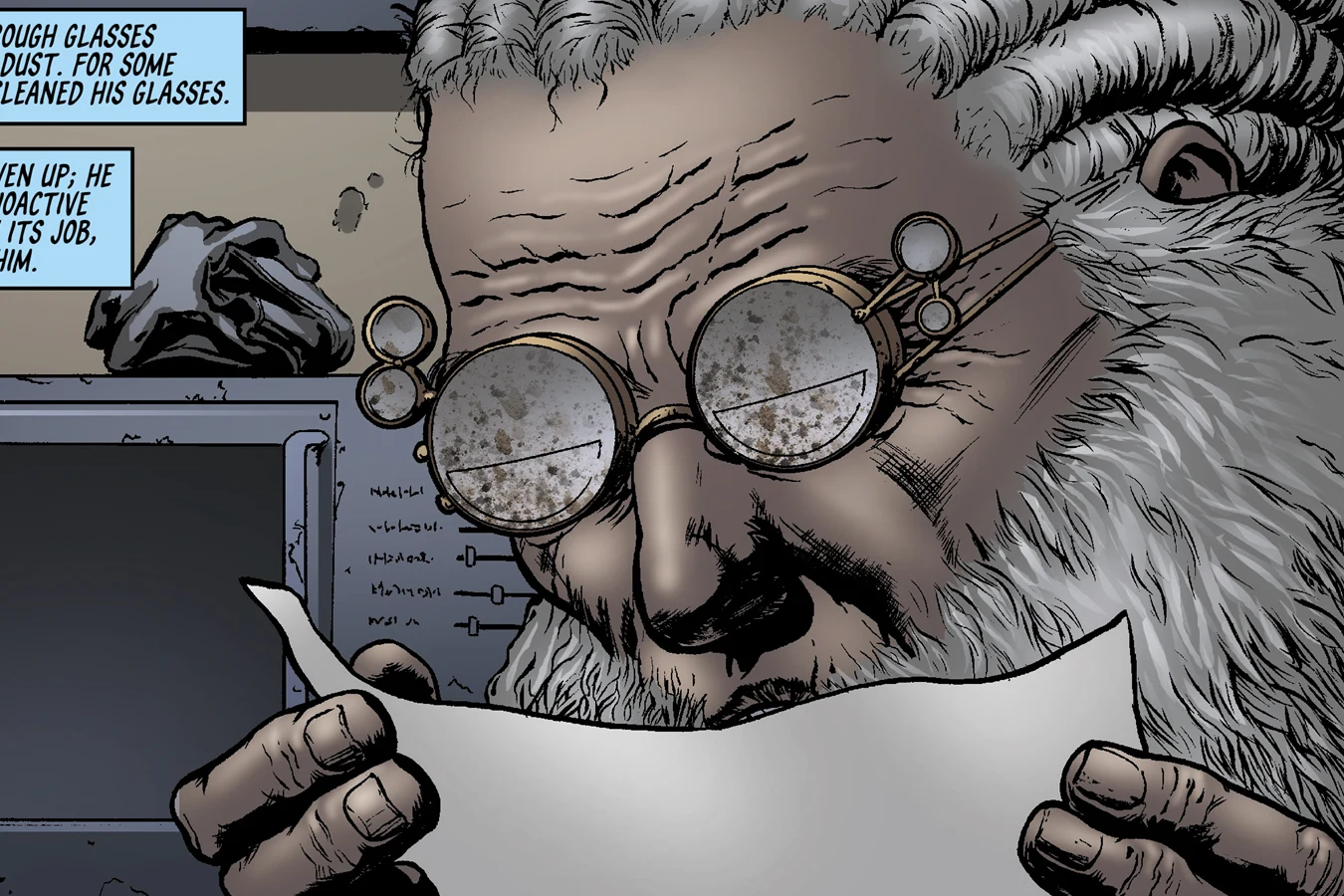
Philip K. Dick's 1968 novel Do Androids Dream of Electric Sheep? had no eye designer, but it had another Hannibal, Hannibal Sloat, who owned the Van Ness Pet Hospital in San Francisco. Despite its name, the firm repaired electric animals, and Sloat often quoted the Latin motto Mors certa, vita incerta. Sloat employed John Isidore, a man classed as mentally impaired, as his pickup and delivery driver, and he accepted Isidore as human. Too old to emigrate, Sloat had been worn down by the radioactive dust, which had turned his face gray, made his legs thin and his walk unsteady, and coated the glasses he never cleaned. He had once been a fine repairman.
One morning Isidore brought in a cat he believed had a short in its power supply. Sloat found that it was a real cat and that it had died, and he cursed the waste of another living creature. He then called Isidore a chickenhead and threatened to fire him unless he phoned the owner, Mrs. Pilsen, himself. In K. W. Jeter's 1995 sequel The Edge of Human, Sloat was dead and had left his business, renamed the Van Nuys Pet Hospital, to Isidore, who said Sloat had turned it into a refuge for escaped replicants. Chew has been described as loosely based on Sloat, but the film shares only the first name.
Behind The Scenes
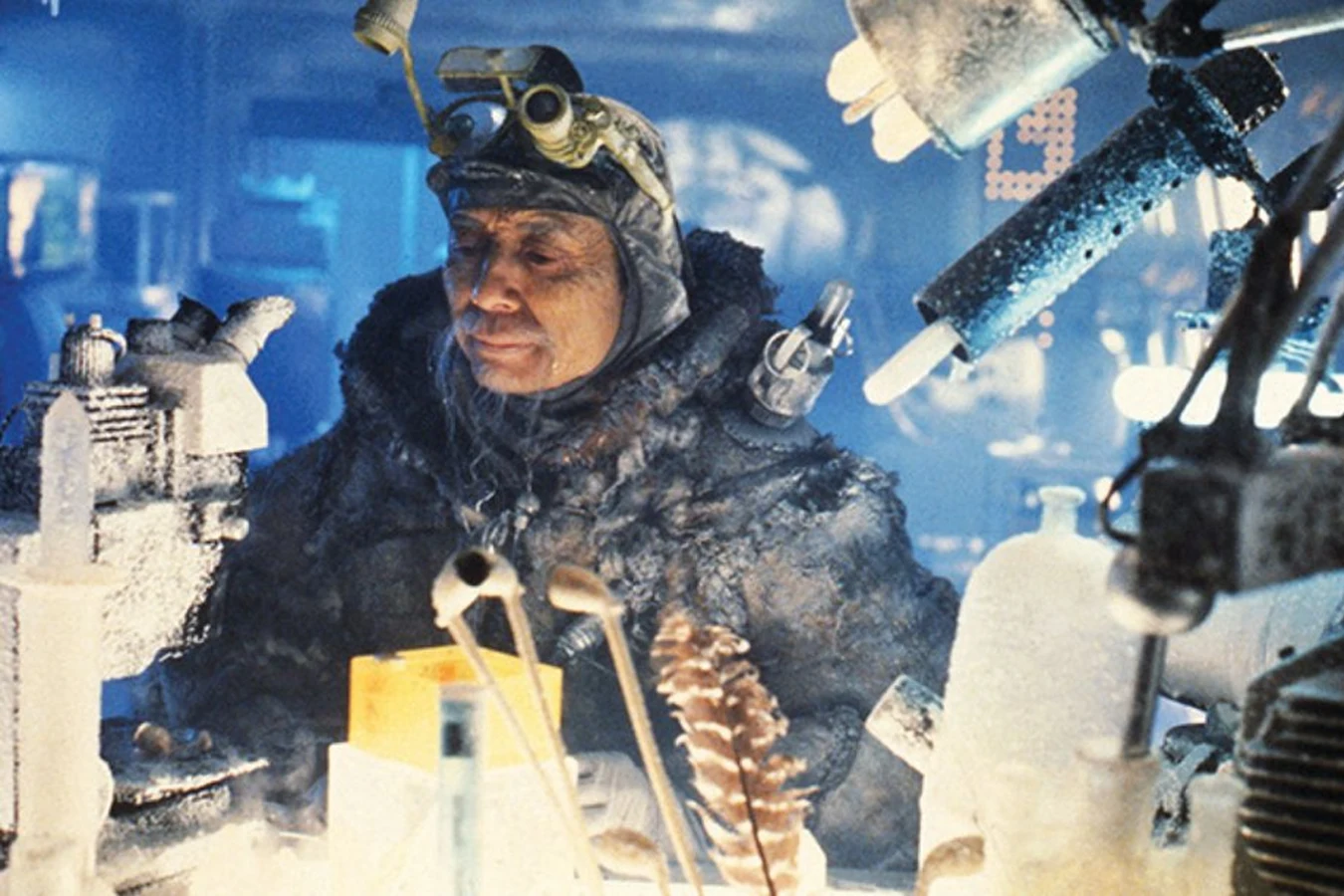
James Hong played Chew in Blade Runner, which was released in 1982. Hong was born in Minnesota and raised in Hong Kong until the fifth grade. He played Chew as a brilliant scientist close to senility who treated the eyes as his children, and he asked Ridley Scott if he could speak Chinese to them at the start of the scene. Makeup artist Marvin Westmore aged him with a stretch-and-stipple technique, added a false chin piece, and put a small mark on his left cheek because Scott wanted something different on his face. The first name Hannibal was never spoken in the film.
The crew called the set Chew's Ice House. It was shot over two days in early May 1981 inside a working meat locker in Vernon, California, where the temperature fell to seven degrees below zero while the street outside reached ninety-eight degrees. Terry Frazee's effects crew spent four days building up icicles by adding layers of water by hand. The eyes closest to the camera were real sheep's eyes from a nearby slaughterhouse, and the rest were artificial eyes from Max Factor of Hollywood, stored in ordinary aquariums. Hong recalled that the production squeezed five days of shooting into two under pressure from the studio.
Famous Quotes
- "You not come here! Illegal!"
- "Cold! Those are my eyes! Freezing!"
- "I just do eyes. Just eyes, just genetic design. Just eyes."
- "You Nexus, huh? I design your eyes."
- "He big boss. Big genius. He design your mind."
- "Sebastian. He take you there. He take you there."
Conclusion
Hannibal Chew was the eye designer who made the eyes of Roy Batty and the other Nexus-6 replicants for Tyrell. When Roy and Leon came to his frozen lab in 2019 looking for a way to extend their lives, he could only tell them that Tyrell had the answers and that J. F. Sebastian could take them to him. The film never confirmed whether he survived the cold. Later stories handled him in different ways, with the Marvel comic closing his scene on Roy's questions, the Westwood game showing him alive in his shop, and Eye and Talon describing him as dead.
Appearances
- Blade Runner (1982)
- Blade Runner comic adaptation (Marvel Super Special #22 and Blade Runner #1, Marvel, 1982)
- Blade Runner: A Story of the Future by Les Martin (Random House, 1982)
- Blade Runner video game (Westwood Studios, 1997)
- Blade Runner 4: Eye and Talon by K. W. Jeter (2000), mentioned only
Tag Categories: Blade Runner Lore | Blade Runner Characters