Blade Runner: Marvel Comics Adaptation

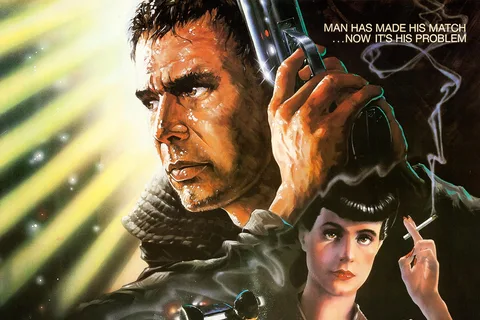
Blade Runner is Marvel Comics' 1982 adaptation of Ridley Scott's Blade Runner, scripted by Archie Goodwin with pencils led by Al Williamson. It went on sale on May 25, 1982, as Marvel Super Special #22, cover-dated September, about a month before the film opened, and Marvel split the same story into Blade Runner #1 and #2. Former blade runner Rick Deckard is ordered to retire four escaped Nexus-6 replicants, Roy Batty, Leon Kowalski, Zhora, and Pris, and the comic follows that hunt through Los Angeles in November 2019.
Plot Summary
Holden's Test
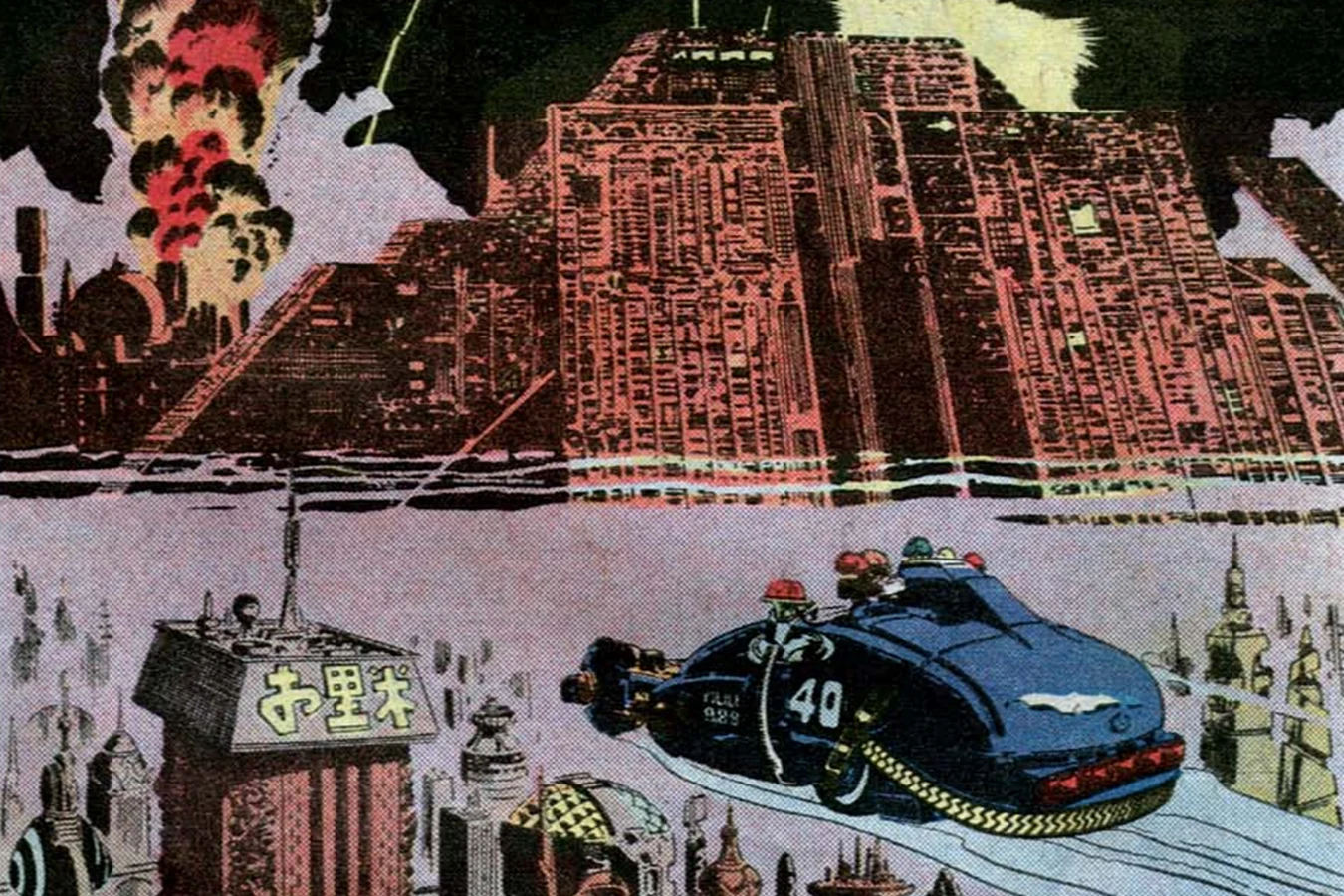
In Los Angeles in November 2019, the Tyrell Corporation built bioengineered humans called replicants. After a bloody mutiny in an Offworld colony, replicants were illegal on Earth, and police units called blade runners were sent to find and kill any who came back. At Tyrell, employee Leon Kowalski sat for an interview with blade runner Dave Holden. Holden ran the Voight-Kampff test, asking questions meant to provoke a feeling while the machine read Leon's body. Leon grew agitated at a question about a tortoise in the desert, and when Holden asked about his mother, Leon shot him. Holden lived, and the shooting showed that something inside Tyrell was wrong.
Former blade runner Rick Deckard was eating at a street stall when officer Gaff found him and took him to Captain Bryant. Deckard had left the police and did not want the work back. Bryant told him Holden was badly wounded and that replicants had escaped the Offworld colonies and reached Earth. Refusal was not a real choice. Six had escaped at first. One was killed trying to break into Tyrell, and another was already lost, which left four: Roy Batty, a combat model and their leader, Leon, another combat model, Zhora, trained for an assassination squad, and Pris, a basic pleasure model. All were Nexus-6 replicants, stronger than ordinary humans and able to develop feelings of their own. Tyrell had built in a four-year lifespan so those feelings would not run out of control. Bryant thought they had come back because they wanted more life, and Deckard's first stop was Tyrell.
Tyrell And Rachael
Deckard and Gaff flew to the Tyrell headquarters and met founder Eldon Tyrell and his assistant Rachael. Deckard wanted to try the Voight-Kampff machine on a Nexus-6, and Tyrell asked him to run it on Rachael first. A normal subject needed relatively few questions. Rachael needed more than one hundred before Deckard was sure. Tyrell sent her out, and Deckard told him the result: Rachael was a replicant, and she did not know it. The company had implanted memories from Tyrell's niece, so she had a detailed childhood that was not hers and a stronger emotional cushion than earlier models.
Deckard and Gaff then searched Leon's hotel room. The clothes and photographs looked ordinary, but Deckard took a small artificial animal scale and collected the pictures. Replicants had no real childhood, and Leon had surrounded himself with images anyway. While Deckard followed that trail, Roy Batty and Leon went looking for a way to reach Tyrell. They found genetic designer Hannibal Chew in a freezing lab where he made artificial eyes. The cold barely touched the replicants. Chew could only tell them he made eyes, and he sent them to another designer, J. F. Sebastian, who had direct access to Tyrell.
Rachael came to Deckard's apartment with a photograph of herself as a child with her mother, still trying to prove the test wrong. Deckard recited private childhood memories she had never told him, details Tyrell had already explained. She understood that those memories belonged to Tyrell's niece, and the photograph could not prove she was human. Deckard tried to take the revelation back as a joke. She left in distress.
Zhora And Leon
A specialist traced the scale from Leon's room to a genetically manufactured snake, and that serial number led Deckard through a dealer to a nightclub act. The performer was Zhora. Deckard went backstage pretending to investigate men who spied on performers in their dressing rooms. Once she saw what he was, she attacked, then fled into the crowded streets. Deckard chased her with his pistol and fired as she ran. She crashed through sheets of glass and kept moving until a later shot dropped her among the broken windows. He had retired the first replicant of the assignment, and the killing did not feel like a win. She had been running for her life, and calling it a retirement did not change what he had done.
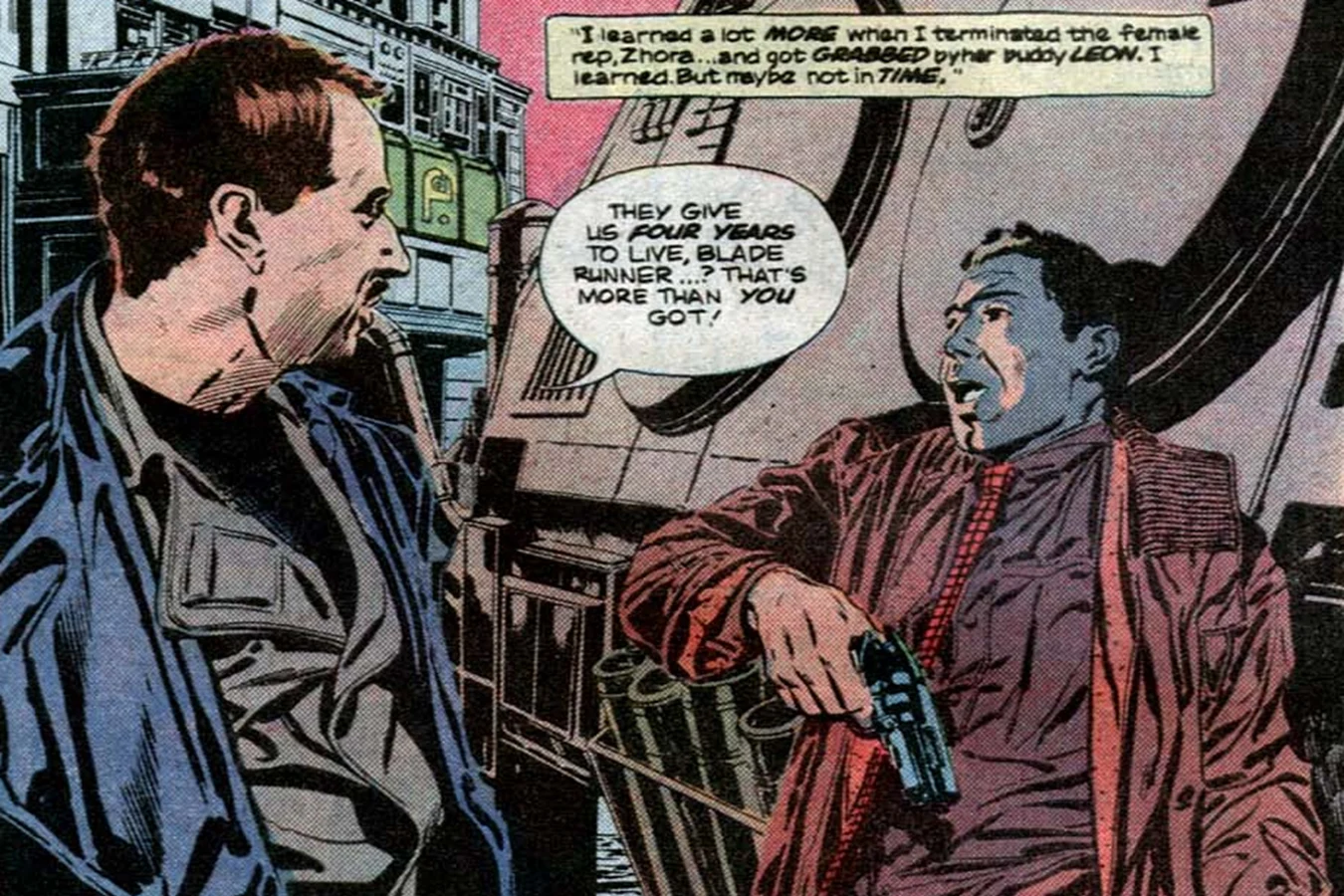
Bryant found Deckard after that and added Rachael to the list, because she had disappeared from Tyrell. Leon attacked next, knocked the gun away, and beat Deckard with strength far past a normal man's, asking how long Deckard expected to live against a four-year span. Deckard could not overpower him. A shot from his own pistol killed Leon. Rachael had picked the gun up and fired, and she saved the blade runner who had exposed her.
Deckard took Rachael back to his apartment. She drank while he cleaned up, then sat at his piano and found she could play, without knowing whether the skill came from the implanted memories or from something she had learned. He was drawn to her, and she was drawn to him even though he hunted beings like her. When she tried to leave, he stopped her. The argument turned intimate, they kissed, and she stayed.
Sebastian And Tyrell
Pris waited near the Bradbury Building and put herself in the path of J. F. Sebastian, as a young woman with nowhere to stay. He was lonely, and he invited her in. He lived among artificial companions he had built, and he had Methuselah syndrome, so his body aged early. Pris saw the link at once: he looked older than his years, and the replicants were built to die after four. Roy arrived later, and Pris introduced him as another friend. Roy saw that Sebastian worked closely enough with Tyrell to open a door to the founder, and the two of them pressed him into helping.
Sebastian reached Tyrell through a chess game, using a move Roy supplied, and Tyrell let him come up to the penthouse. Roy went with him and demanded more life. Tyrell explained that the Nexus-6 span could not simply be lengthened. The same systems that made Roy exceptional were unstable, and changing them after manufacture would kill him. Roy offered technical fixes, and Tyrell rejected them one by one. Tyrell praised him as the best of the replicants and told him to take pride in what he had done. Roy embraced his creator and killed him. Sebastian had brought him to the one man he thought could save him, and the meeting ended with Tyrell dead.
The Bradbury Building
Deckard traced Sebastian to the Bradbury apartment, where toys and artificial people made it hard to tell what was alive. Pris hid among them, then attacked. Her strength trapped him between her legs while she struck him, until he reached his gun and shot her. Her body convulsed and then went still. Roy came back, found her dead, and the hunt turned personal. He chased Deckard through the building, faster and stronger, treating the pursuit almost like a game and forcing him upward. Deckard wounded Roy's hand. Roy drove a nail through that hand to keep it working as his body started to fail, because the four-year limit was running out during the fight. Deckard climbed for the roof, exhausted and unable to beat him straight on, tried to cross between buildings, and was left hanging over the street.
Roy pulled Deckard onto the roof instead of letting him fall. Dying, Roy sat in the rain with a white pigeon and spoke about battles, distant worlds, and sights Deckard would never see. Those memories would vanish with him. He died moments after saving the man sent to kill him, and the pigeon flew off. Gaff arrived, congratulated Deckard, and reminded him that Rachael could not live forever. Deckard understood the warning.
Escape
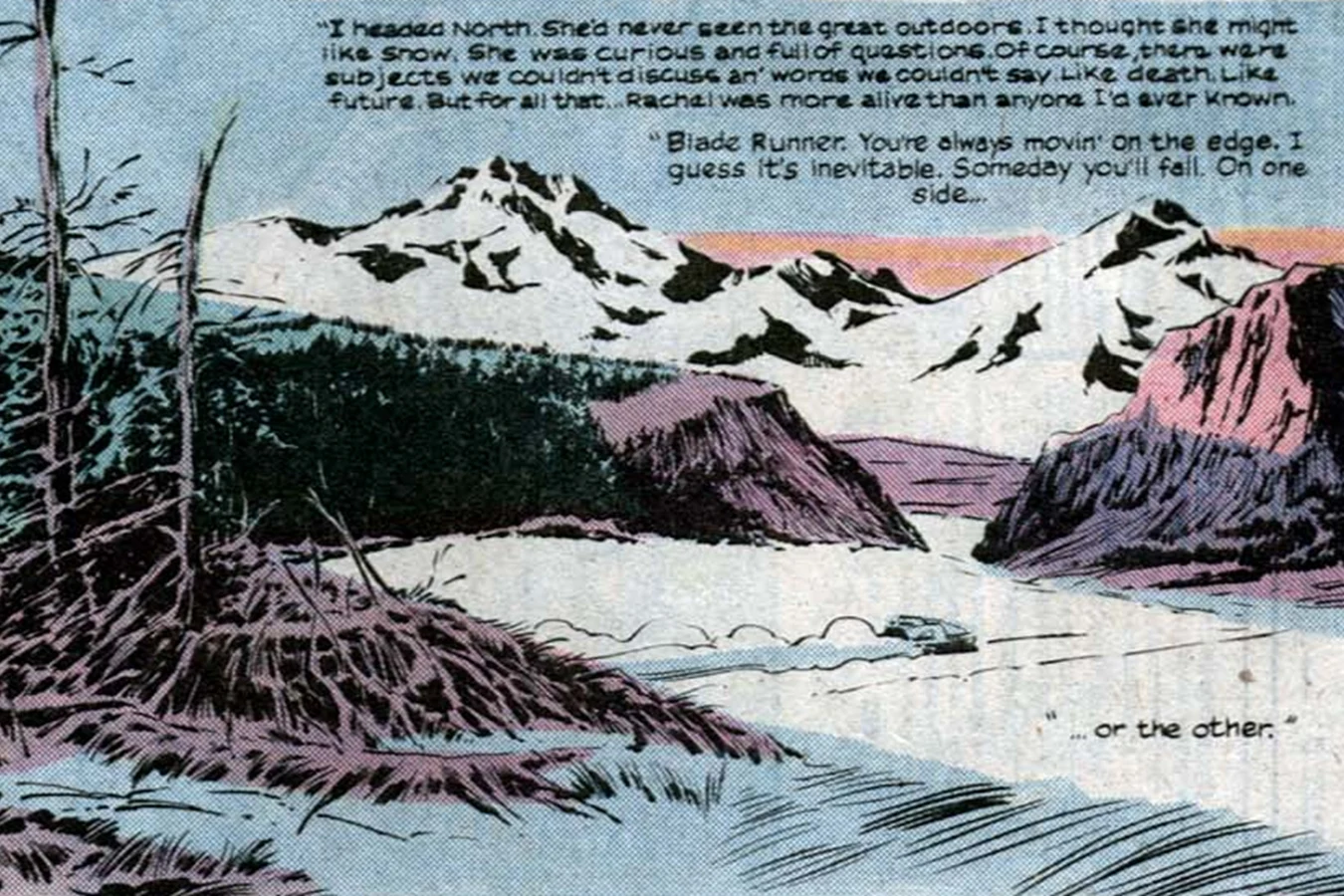
Deckard went back to his apartment and found Rachael alive. Gaff had been there and had chosen not to kill her. Outside, Deckard found one of Gaff's folded paper figures and took it as a message that Gaff knew about her and had left them a chance to leave. He woke her, asked whether she loved and trusted him, and she agreed. They left Los Angeles together. The comic ends with them driving through open mountains. Deckard knew the future was uncertain and that her life might be short, and he left with her anyway. His last narration returns to the name of the work: a blade runner was always moving on the edge, and sooner or later could fall on either side.
Key Characters
- Rick Deckard was a former blade runner pulled back after Dave Holden was shot. He hunted Roy Batty's group and grew troubled by the difference between killing replicants and killing humans.
- Rachael was an experimental Tyrell replicant given memories from Eldon Tyrell's niece. She killed Leon to save Deckard and later left Los Angeles with him.
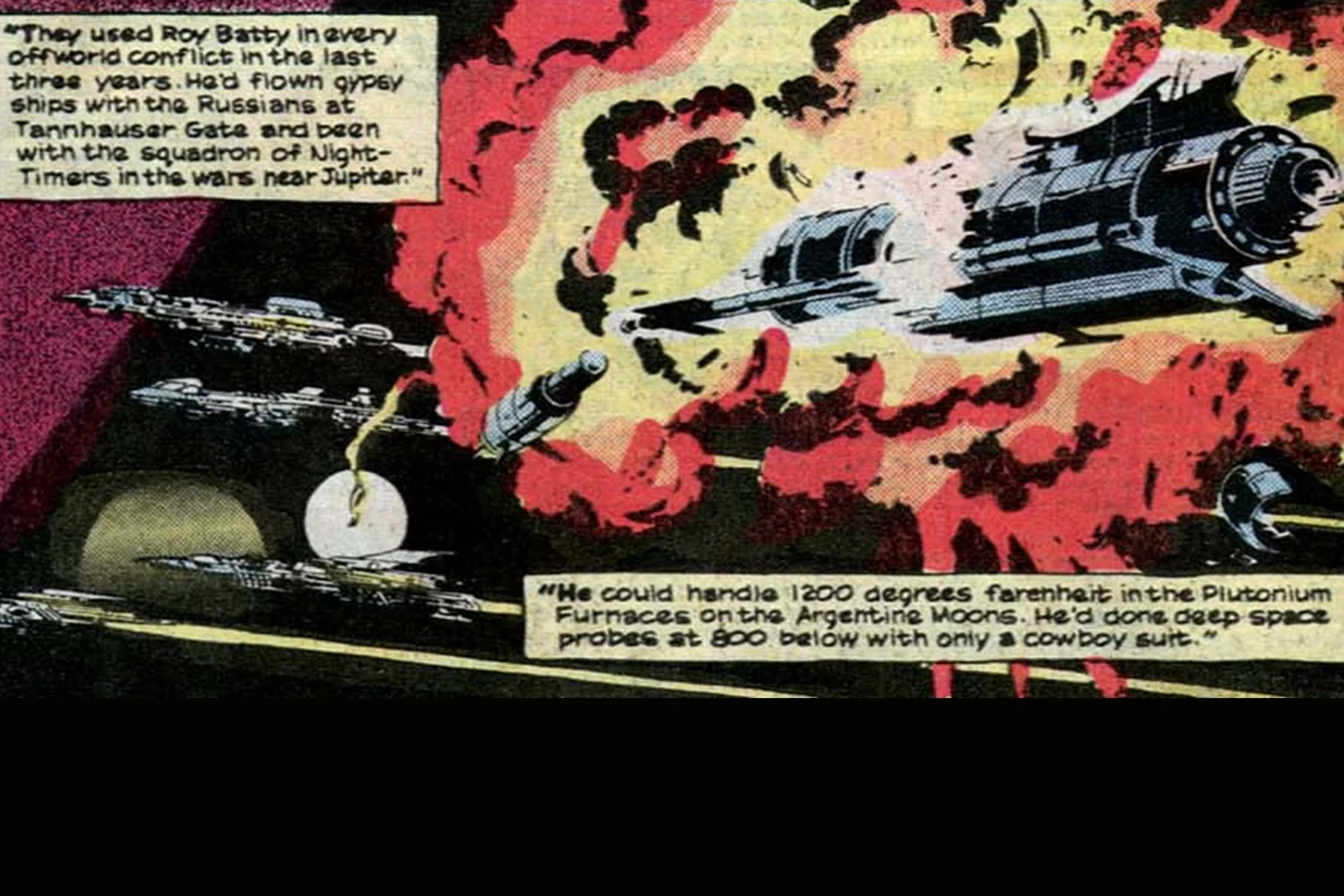
- Roy Batty was the combat-model Nexus-6 who led the escapees. He wanted more than four years, killed Tyrell after learning there was no cure, and saved Deckard shortly before he died.
- Leon Kowalski was a Nexus-6 whose attack on Dave Holden exposed the group. Rachael shot him while he was beating Deckard.
- Zhora was an escapee working as a club performer with an artificial snake. Deckard tracked the snake's manufacture and shot her as she fled.
- Pris was a pleasure-model Nexus-6 who got close to J. F. Sebastian so Roy could reach Tyrell. Deckard killed her in Sebastian's apartment.
- Eldon Tyrell was head of the Tyrell Corporation and maker of the Nexus-6 line. He told Roy the lifespan could not be extended, and Roy killed him.
- J. F. Sebastian was a Tyrell genetic designer with Methuselah syndrome. Pris and Roy used his access to reach Tyrell.
- Gaff brought Deckard back to Bryant and stayed with parts of the case. His paper figure showed Deckard that he knew about Rachael and had left her alive.
- Captain Bryant was Deckard's former superior. He ordered the Nexus-6 retirements after Holden was wounded.
Differences From The Movie
The comic follows the same hunt as the 1982 film, and it is not a panel-for-panel copy. Goodwin worked from shooting-script material as well as the finished cut, so some lines and bits of business never reached the theatrical print. About forty-six pages also forced the club and chase scenes short. Comic Deckard narrates in the first person almost the whole way: Bryant's manner, the history of replicants, the photographs in Leon's room, each step of the case, and what each retirement does to him. The film often leaves those connections in the images and the dialogue. The comic states them.
The issue opens with dictionary-style definitions of android and replicant, material from screenplay development that is not an opening title in the finished film. The spelling Rachel appears often in place of Rachael, and the text uses Offworld where the film usually prints off-world. Goodwin's captions also spell out the Offworld mutiny, the ban on replicants on Earth, what a blade runner is for, the Nexus-6 strength, their developing feelings, and the reason for the four-year limit. The closing narration gives the title a meaning the movie never states: a blade runner always moves along an edge and can fall to either side.
The last pages send Deckard and Rachael into a green mountain landscape, the optimistic ending attached to the 1982 theatrical version. Later cuts of the film stop as the two of them enter the elevator. Over that landscape, Deckard accepts that her remaining life may be short and leaves with her anyway, then ties that uncertainty back to the name blade runner.
Editions
Marvel Comics published the adaptation as Marvel Super Special #22, on sale May 25, 1982, with a September cover date. The story runs about forty-six pages. Archie Goodwin adapted the screenplay. Al Williamson and Carlos Garzón penciled, and Williamson, Dan Green, and Ralph Reese inked. Marie Severin colored, Ed King lettered, and Jim Salicrup edited. Jim Steranko painted the Super Special cover. The comic portion of that magazine was the film story. The two-issue Blade Runner series used October and November 1982 cover dates and dropped the extra feature material from the Super Special. Marvel also collected the story as a Marvel Illustrated paperback.
Behind The Scenes
Marvel Super Special had become Marvel's place for feature-film adaptations, and #22 was this one. Goodwin and Williamson already had movie-adaptation work behind them, including Star Wars and The Empire Strikes Back. The comic was finished close to the film's release, which is why it keeps earlier screenplay wording instead of only the theatrical edit. Changed dialogue, the android and replicant definitions, and the closing line about the title come from that timing. The film's look depends on production design, cinematography, Vangelis, and long stretches with little talk. Forty-six pages could not carry that, so Goodwin put the case in Deckard's narration and Williamson drew the hunt from Holden's test to the roof in a clear adventure line.
Conclusion
Marvel's Blade Runner is Archie Goodwin and Al Williamson's 1982 comic of Ridley Scott's film, sold first as Marvel Super Special #22 and then as a two-issue series. It covers the same hunt, from Leon's Voight-Kampff test through Zhora, Leon, Pris, and Roy Batty, and it ends on the theatrical mountain road with Deckard and Rachael. The narration, the screenplay leftovers, and the last line about a blade runner on an edge are the parts that belong to the comic.
External Sources
- A Marvel Comics Super Special: Blade Runner
- Off-world: The Blade Runner Wiki – A Marvel Comics Super Special: Blade Runner
Tag Categories: Blade Runner Lore