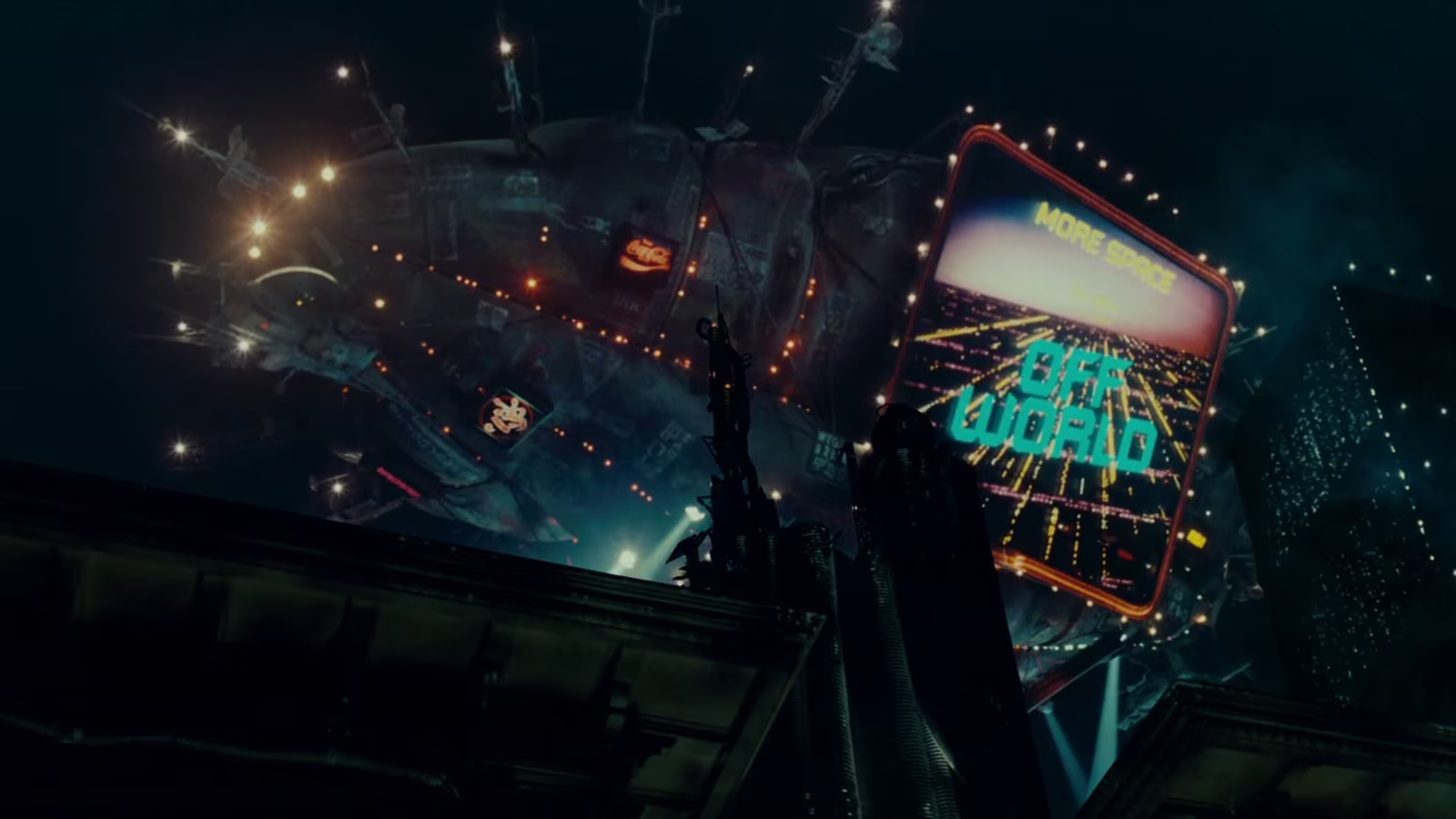

The Blade Runner Blimp was an airborne advertising platform that broadcast promises of a new life in the off-world colonies. Its screens, loudspeakers and searchlights carried the recruitment campaign above Los Angeles in Blade Runner. Later appearances included a crash during the Blackout, a redesigned blimp in Black Lotus, and a separate history in K. W. Jeter's novels, where attackers brought one down and its wreck became a home.
Blimp In Blade Runner
Design And Equipment
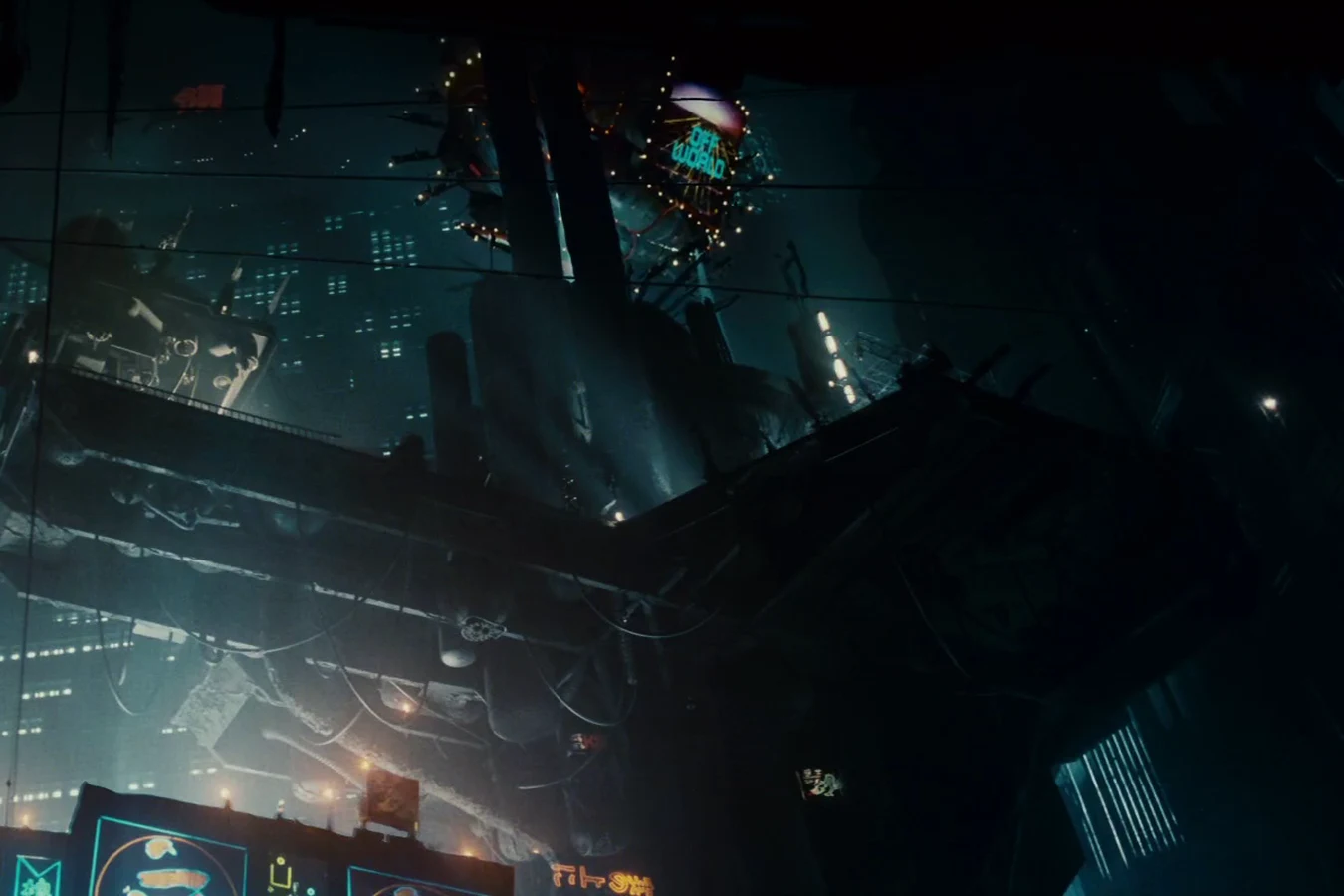
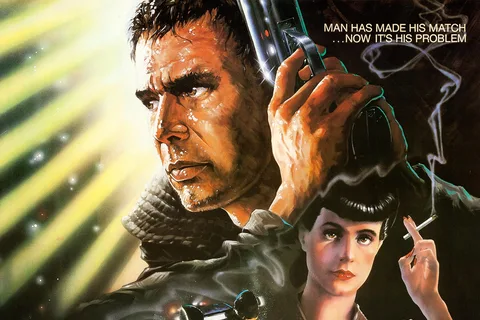
The Advertising Blimp traveled above Los Angeles in 2019, broadcasting to the streets below. Its rounded hull carried large illuminated display panels, protruding antennae, external framework and numerous lights. Loudspeakers carried its recruitment announcement beyond the people who could see its screens. Searchlight beams swept between the buildings as the vessel passed through the city.
The craft appeared above the commercial district near the food stalls where Rick Deckard waited for a meal. It later passed the Bradbury Building, where J. F. Sebastian lived. Its Overhead Position let the screens rise above street-level signs and the lights reach the upper floors of the surrounding buildings. Loudspeakers and moving beams made its presence noticeable even when the hull was hidden behind a tower.
The blimp's Searchlights served advertising and crime control. The beams illuminated streets and penetrated private rooms, extending the reach of the authorities above the city. Its illuminated panels carried short assurances about the future alongside the spoken recruitment campaign, while the surrounding antennas and exposed fittings gave the vessel a working industrial appearance.
Off-World Advertisements
The Recruitment Campaign encouraged people to leave Earth for the off-world colonies. Dave Addey's Typeset In The Future assembled the following longer message from dialogue heard across different versions of Blade Runner. It combined the promise of a new beginning with offers of colonial employment, recreation and a free replicant servant:
The Announcement: A new life awaits you in the Off-World colonies. The chance to begin again in a golden land of opportunity and adventure. New climate, recreational facilities, easy advancement, great pay. Plus, a loyal trouble-free companion, given to you on arrival, absolutely free. Use your new friend as a personal body servant, or a tireless field hand. The custom tailored genetically engineered humanoid replicant, designed especially for your needs.
The Workprint also carried a patriotic appeal urging Americans to support a renewed national effort in the colonies, followed by the Shimago-Dominguez Corporation's sponsorship credit. That ending went beyond the combined passage above, extending the pitch from individual benefits to participation in the country's expansion off-world.
The Release Versions used different portions of that recording. The American and international theatrical cuts fragmented the longer pitch and dropped the sponsor credit. The 1992 Director's Cut reduced the recruitment speech further but restored the corporation's closing identification. The Final Cut included more of the servant and field-labor offer, together with the patriotic appeal, while omitting the sponsor again. Dave Addey's Typeset In The Future combined dialogue from the different versions into a longer transcription, bringing together the opening promise, colonial benefits and free replicant offer.
The offer made replicants part of the Emigration Package, alongside climate and pay. While Deckard hunted escaped replicants on Earth, the same kind of manufactured person was being offered to settlers as property. The campaign addressed the human listener as a potential beneficiary of colonial labor. Its promise of freedom and opportunity depended on a workforce that could be assigned to another person's household or fields.
Crash During The Blackout
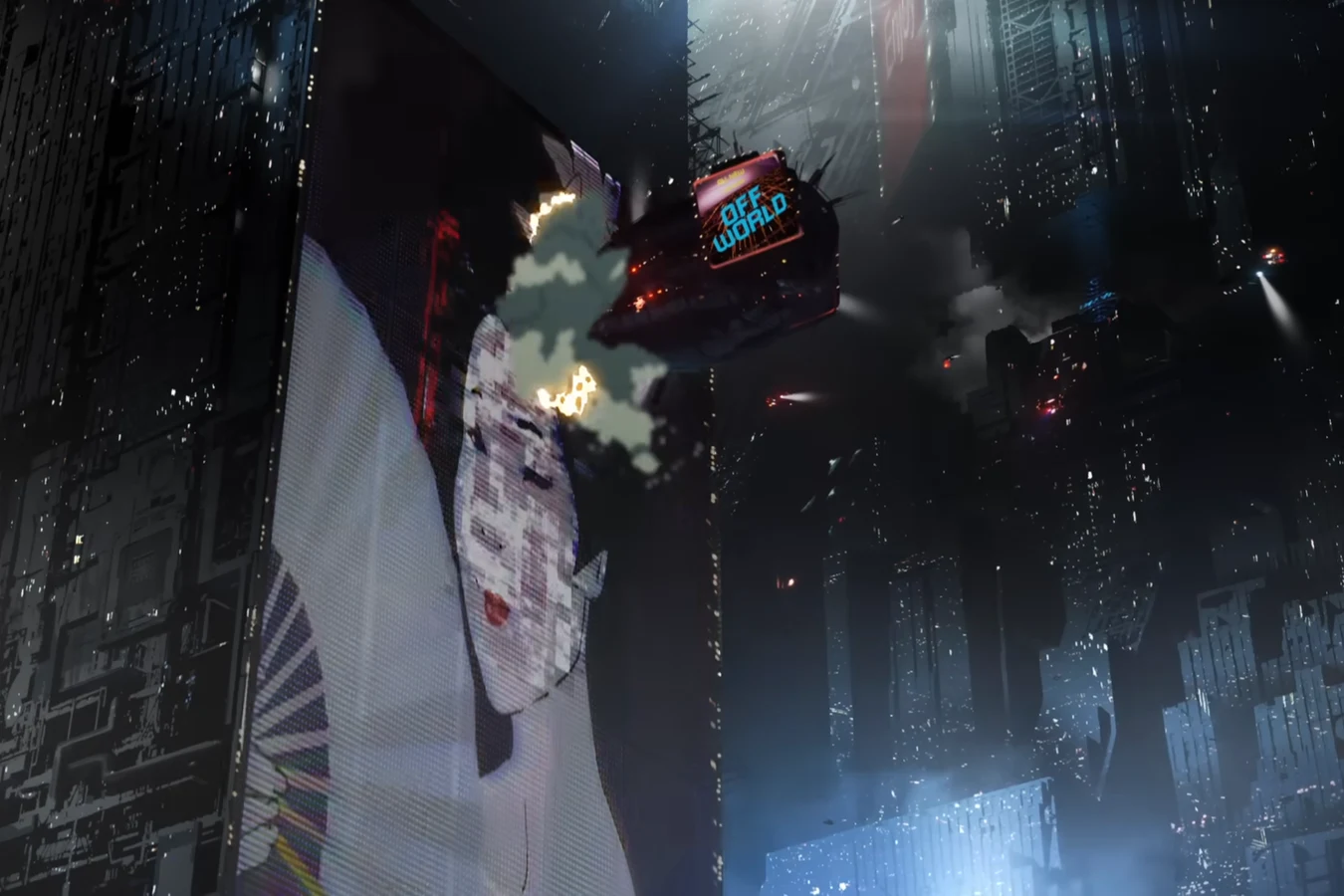
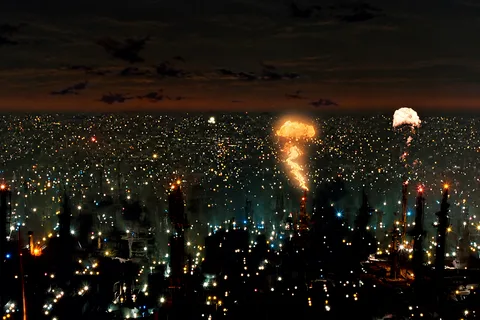
In Blade Runner Black Out 2022, an Off-World Blimp flew among the towers before an electromagnetic pulse disabled the city's electrical systems. The vessel carried illuminated recruitment panels and projecting lights, continuing to advertise emigration as the attack unfolded. The pulse accompanied a nuclear explosion above Los Angeles, while a separate assault targeted the physical backups of the replicant registration database.
The plan joined the efforts of replicants Iggy And Trixie with the human missile technician Ren. Destroying the records would prevent anti-replicant mobs from using them to identify their targets. As the pulse reached the city, electronic systems failed, spinners fell and the blimp struck a building bearing a giant illuminated advertisement. Fire and smoke surrounded its hull above the darkening streets. The crash was one of the immediate consequences of the citywide failure.
Advertising Blimps In Black Lotus
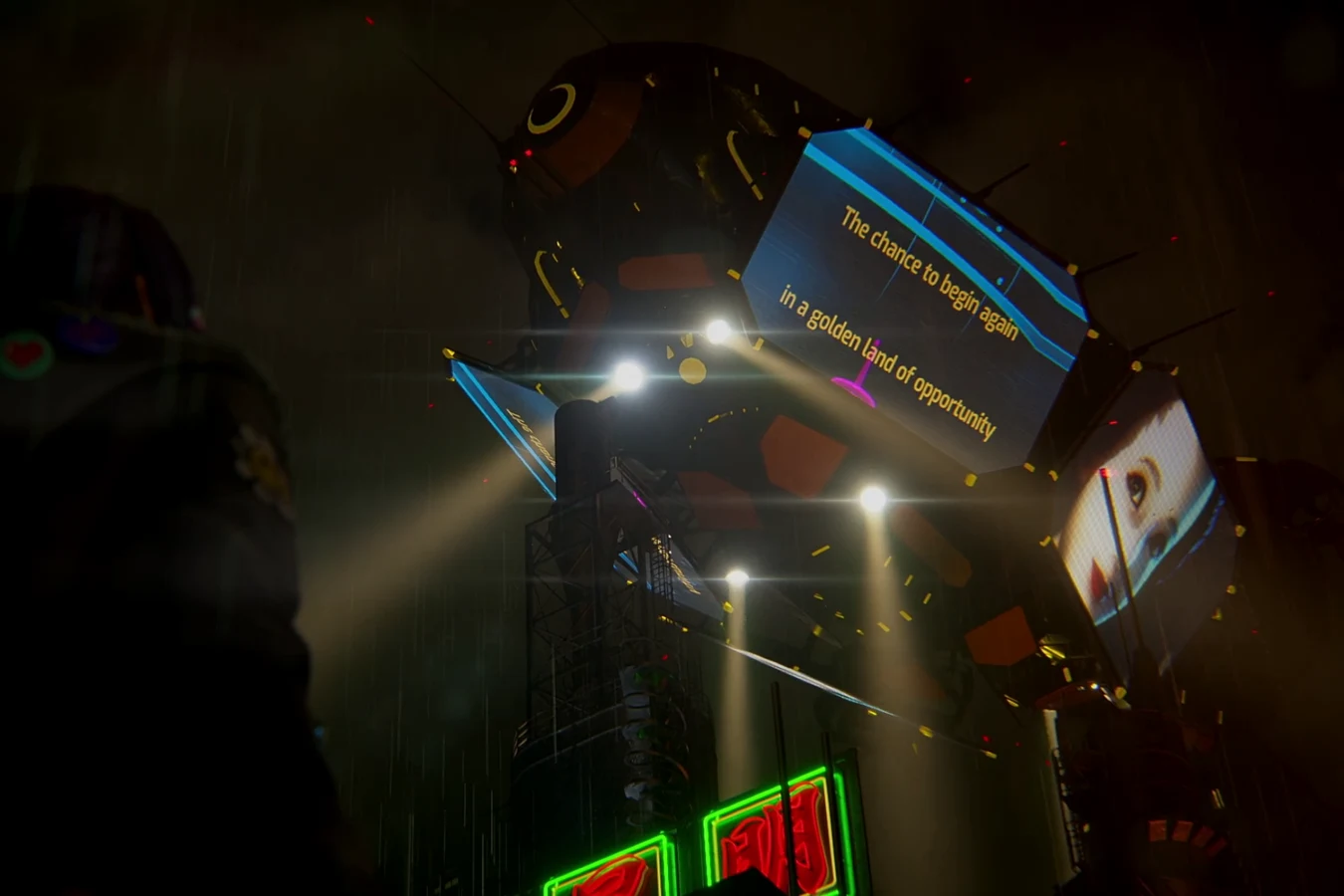
An advertising blimp operated above Los Angeles in Blade Runner: Black Lotus, set in 2032. Its angular display housings, projecting structures and multiple illuminated surfaces differed from the rounded vessel of the original film. The screens repeated the promise of a new beginning in the colonies, while the loudspeakers carried the familiar recruitment pitch through the city. Colonial advertising had continued after the Blackout.
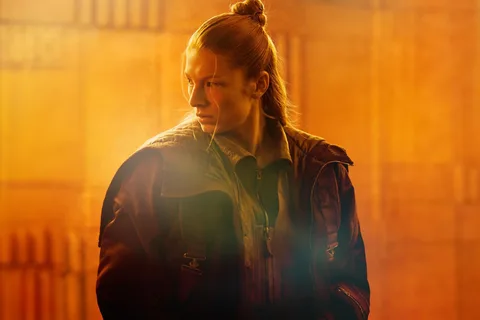
The blimp passed above Los Angeles early in Elle's Investigation, placing the off-world invitation alongside her search for the people responsible for her memories. Another rooftop appearance accompanied Joseph as he lay wounded and imagined himself with Elle in an open green landscape. The broadcast included the Shimago-Dominguez sponsorship line. Its advertised life away from Earth matched the escape Joseph imagined, even as he remained trapped in the conflict below.
Games And Comics
Westwood Video Game
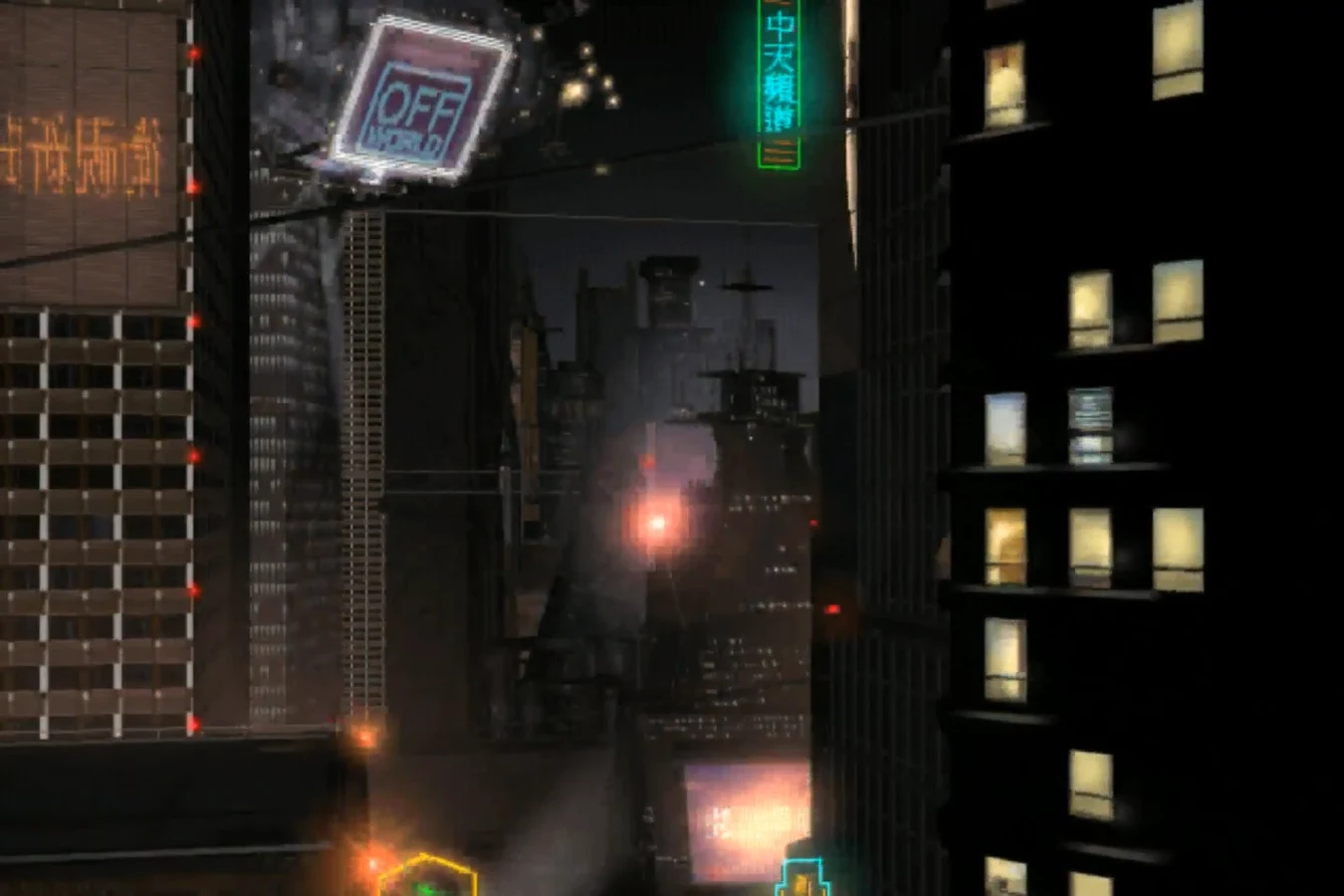
Westwood's Blade Runner video game included an Advertising Blimp among its views of Los Angeles. The illuminated off-world display and beams of light appeared between the buildings above the streets. The design retained the crowded mechanical outline of the film's airship, with bright advertising equipment attached to a much darker hull. Its elevated screen remained visible above the city's smaller signs.
The game followed Ray McCoy during an investigation running alongside Deckard's 2019 hunt. The blimp formed part of the city around that case, together with the rain, neon signs and flying police traffic. Its invitation to leave Earth continued over a population containing humans and escaped replicants. The craft was environmental scenery, while McCoy's movements and encounters took place in the streets, buildings and transport routes beneath it.
Blade Runner 2019
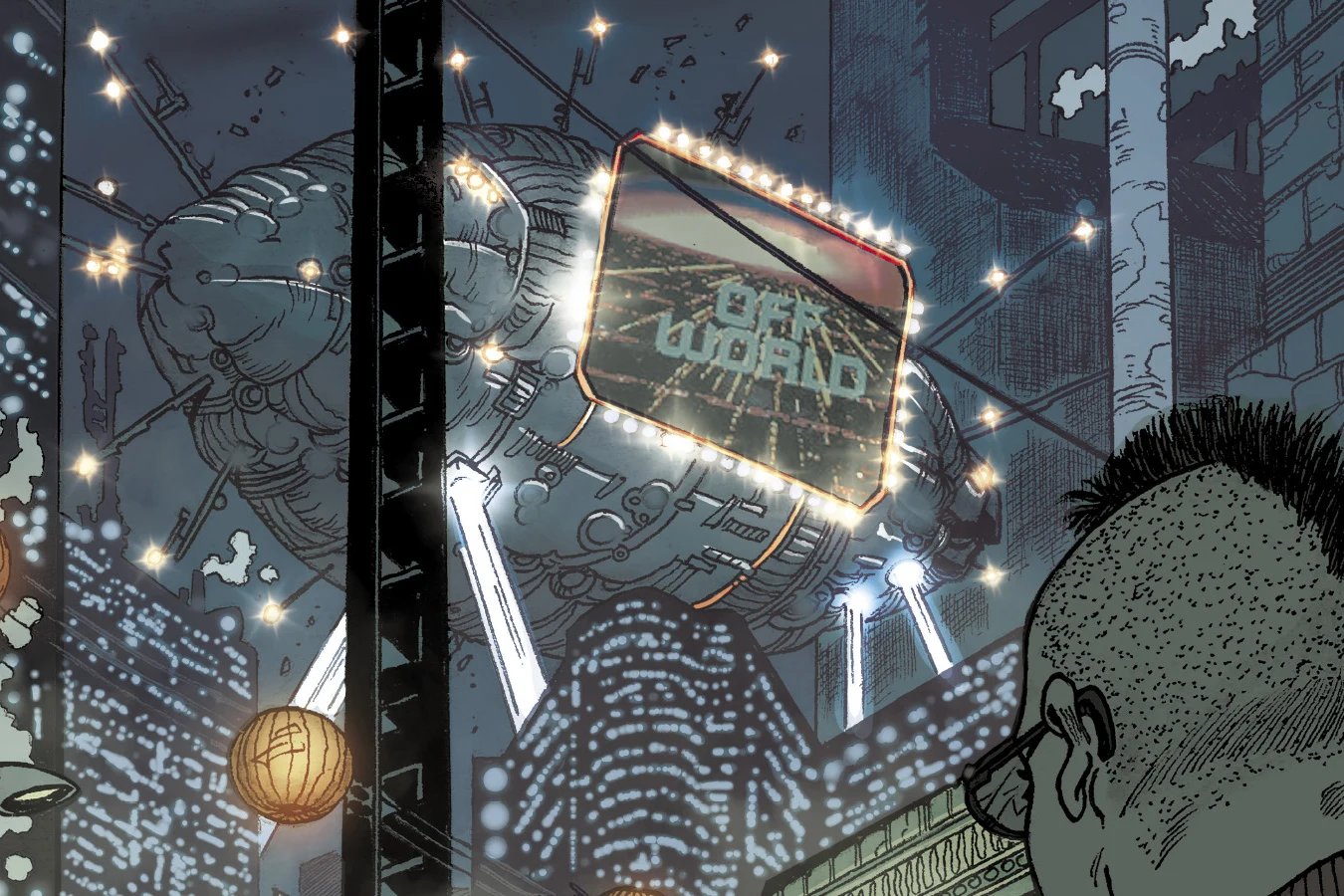
The blimp also appeared in Blade Runner 2019, with an illuminated Off-World display above the crowded streets. Its campaign ran alongside the story of Ash, whose family had been divided by emigration. Her mother left for the colonies intending to send money home, but the possibility of departure was not available equally to the relatives who remained on Earth.
Ash recalled that her grandmother had been too old to leave, while she herself had been too young. The Eligibility Requirements gave the promise above the street a more restricted meaning: the colonies selected the people they wanted. Ash's childhood medical problems added a further obstacle to that promise. Her mother had left after a consultation about Ash's spine, leaving Nani to explain the departure. Years later, the same invitation passed over Ash as she walked through Los Angeles.
Marvel Comic Adaptation
The Marvel adaptation of Blade Runner retained the Recruitment Broadcast, calling for supervisory personnel and families to join the Dominguez-Shimata colony. It also referred to health and experience qualifications for emigration. The opening street sequence carried the announcement without a clear, prominent view of the film's airship. The wording followed the earlier form of the colonial advertisement, rather than reproducing the finished film's familiar opening slogan.
K. W. Jeter Continuity
Attack In The Edge Of Human
In The Edge of Human, a United Nations Blimp promoted off-world emigration above Los Angeles. Deckard walked through a crowded street while dust blew in from the desert and a municipal truck cleared the gutters. Above him, the recruitment screen offered a more inviting version of Mars, showing canals and green soybean fields. The announcement was a routine part of the city's nighttime noise.
The airship descended between the buildings with part of its skin burning. Deckard watched a Mortar Round rise from an alley and strike its ridged frame. The damaged section burst open, and the hydrogen fire spread into an explosion that swept across the street. Pedestrians were thrown down, glass shattered and signs broke overhead. Deckard was far enough from the center of the blast to survive, though the pressure threw him against a wall.
The attackers then used the mortar to launch a Grappling Hook attached to a line anchored in the alley. Around half a dozen men in white Nomex suits braced themselves against the heat and pulled on additional hand-thrown hooks. The airship's nose gouged the street as it came down, while its tail fins tore through windows around the tenth story. Its screen struck the ground and briefly continued playing, with the recruitment recording accelerating into distorted fragments.
One attacker shattered the Viewscreen with another hook, then a man climbed the wreckage with a bullhorn. He denounced the colonial promises and preached that compassion had passed from humans to suffering replicants. A wounded policeman emerged from a toppled booth and shot him. The other attackers fled before more police arrived. Deckard used the confusion to lure the officer into an alley, incapacitate him and take his uniform.
The Wreck In Eye And Talon
The ruined airship remained in the street in Eye and Talon. Vogel led Iris Knaught to the Crash Site, where scorched steel ribs had cut deep trenches through the asphalt and concrete. Torn metallic fabric hung from the frame, antennas protruded from its joints and broken searchlight glass lay on the ground. Local superstition kept people away from the place, giving Vogel space to live inside it.
Vogel explained that Replicant Sympathizers had brought down the UN advertising vessel after it had spent years above the city. He questioned Iris's dismissal of the groups as ineffective nuisances and suggested their disappearance might have been enforced. Iris had missed the crash during her own absence from the streets. The wreck was familiar enough for her to recognize its former purpose from its remaining skin and antennae.
They climbed the bent crossbars to enter Vogel's Shelter. He had stitched together scraps of the outer covering to keep rain off a small chamber inside the hull. Candles fixed to the ribs provided light, but the cramped space retained sharp edges that Iris found dangerous to lean against. Behind a fabric covering stood a surviving section of the exterior advertising panel, taller than Vogel himself and covered in small display elements.
A gasoline generator powered the Salvaged Display, which Vogel connected to a portable data unit. Its startup sequence played colonial scenery and the old recruitment announcement before he interrupted it. He first showed Iris an archived recording of Scrappy, the Tyrell owl, then switched to current images of the bird in a guarded theater. The armed men around it carried illegally modified rifles. From his shelter in the wreck, Vogel supplied the intelligence Iris needed for the recovery operation.
Sebastian's Recreated Los Angeles
In Replicant Night, Deckard entered Sebastian's Recreated Los Angeles, a private world containing the old downtown streets and Bradbury Building. The streets lacked the crowds of the real city, but the building retained its iron walkways, brass rails, dirt and leaking roof. Light from an advertising blimp passed into the atrium as Deckard looked upward through the damaged glass.
The recreated UN Blimp carried its billboard screen, spiked antennae and a smiling geisha image. Deckard remembered watching the real airship burn after the mortar attack by replicant sympathizers. Sebastian had left the city before that destruction and reproduced the Los Angeles he remembered. The craft above the Bradbury therefore remained part of his older city, complete with the beams of light that had once swept through the building.
A Story Of The Future
Les Martin's Blade Runner: A Story of the Future opened with a recruitment blimp above Los Angeles. Its Loudspeakers addressed people seeking a better life for themselves and their children, subject to standards of health, age and ability. The offer included high pay, advancement, recreation and a controlled California-style climate in the Dominguez and Shimata space colonies. Its wording differed from the film announcement, adding explicit eligibility standards and naming the settlements.
The announcement offered a free Tyrell Corporation Nexus replicant, with the owner able to choose its size, color and sex. Deckard listened while eating at a street food bar, and the mention of the Nexus labor force spoiled his appetite. The salesman's pitch continued above the food bar as Deckard waited to eat, presenting replicant ownership as an ordinary benefit of settlement. It addressed potential families and workers together, offering personal service as well as a job and a different environment.
Decline Of Advertising Blimps
The Blade Runner roleplaying game described how Blimps had fallen out of favor after the Blackout. Police and corporations had used them for overhead lighting and advertising, but drones and trafficators increasingly took over their work. In the game's 2037 setting, overhead monitoring belonged increasingly to smaller machines and the city's electronic surveillance network. The older airships had combined a prominent physical presence with broad illumination, while the replacement equipment could cover the city without the same bulky hull. The familiar advertising airship did not return in Blade Runner 2049, whose city used other large electronic advertisements.
Behind The Scenes
Origins And Design
Illustrator Tom Southwell recalled taking billboard artwork to a meeting with Ridley Scott, production designer Lawrence G. Paull, art director David Snyder and associate producer Ivor Powell. During their discussion, a Goodyear blimp passed the office windows at Sunset Gower Studios. Someone suggested making it the billboard, and Southwell remembered the airship entering a revised script about a week later. The vehicle grew from work on the city's advertising rather than a passenger transport sequence.
Scott connected the Floating Billboard to barrage balloons he had seen around London during the Second World War. The design joined that older aircraft silhouette to electronic advertising, with antennas and exposed machinery added around the rounded hull. Its illuminated panels faced outward toward the buildings and streets.
The Blimp was an addition to the film's world rather than a vehicle taken from Do Androids Dream of Electric Sheep?. Dick's novel used television, posters and government mail to encourage emigration, with android ownership offered as an incentive. The film gave that campaign a moving source in the sky. Advertising could follow the streets and penetrate homes without depending on a television being switched on.
Screenplay Development
Hampton Fancher's July 24, 1980 Draft placed the servant advertisement on a large three-dimensional television in a restaurant. The broadcast offered an arriving colonist a free humanoid robot, with a choice of seventy-nine personality types. It proposed domestic service and agricultural labor while showing different servant figures. The sales pitch preceded the airship presentation, with the advertisement playing as Roy Batty and his companions met inside the restaurant.
The February 23, 1981 Draft, credited to Fancher and David Peoples, introduced a huge blimp drifting among the towers with flashing lights, loud sound and advertisements on its curved sides. Its recruitment campaign targeted supervisors and families for Dominguez-Shimata. Benefits included promotion, bonuses, nine paid vacations a year, a controlled California-style climate and access to the Elysium Crater Resort. Applicants needed health and experience qualifications. The blimp's lights swept across pedestrians before Deckard watched it disappear between the buildings.
Building The Miniature
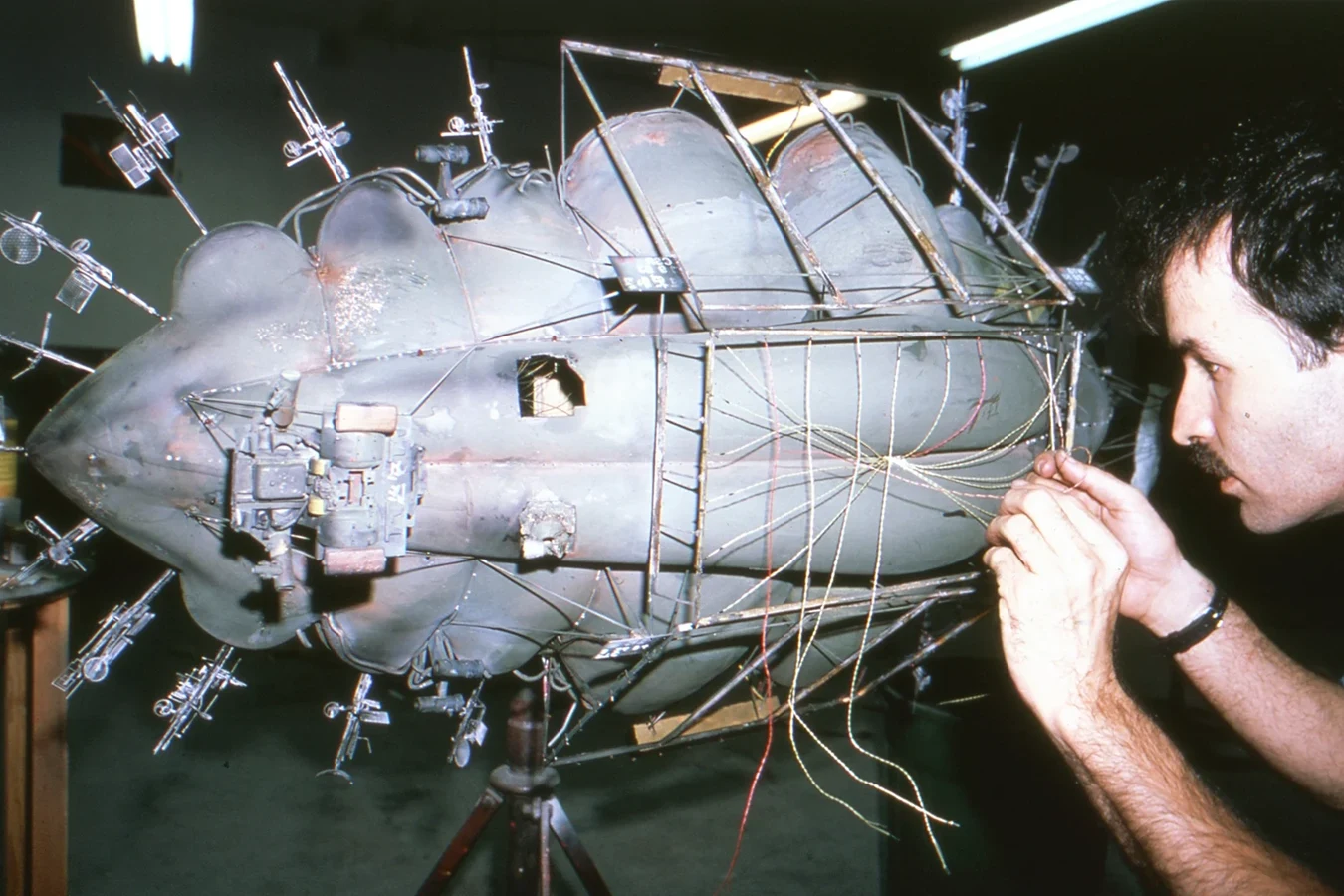
Entertainment Effects Group built a Miniature approximately four feet long and two feet high. Its effects supervisors were Douglas Trumbull, Richard Yuricich and David Dryer, with Mark Stetson leading the model shop. Michael McMillen and Bill George worked on the craft. Paul M. Sammon's Future Noir recorded both its dimensions and John Wash's display graphics, which included the short slogans Best Future, Breathe Easy and All New.
Stetson initially proposed forming the Hull Shape by stretching surgical rubber over an opening cut in plywood and allowing plaster to weigh it into a rounded mold. The plaster was too heavy for the method, so the crew developed the organic form another way. They fitted framework and small mechanical parts around it. The finished surface combined the inflated outline with the dense external detail visible when the miniature was photographed.
The Display Graphics mixed the colonial campaign with recognizable commercial branding. Typeset In The Future identified Coca-Cola advertising on the blimp's underside in the Bradbury roof shot. The same vessel could therefore carry a corporate product advertisement alongside its off-world recruitment material. Wash's short promises about the future and the spoken offer of a new life were separate elements of this crowded advertising surface.
Screens And Lighting
The model's three Projection Screens used trays from a children's magnetic-ball game. Black paint and silver dry-brushing emphasized their textured surfaces. A synchronized 35mm projector supplied the moving advertisements during a separate pass. Fiber-optic bundles produced chasing lights around the screen edges, supplemented by incandescent lamps. This let the crew photograph a solid miniature while adding the changing picture independently.
The blimp belonged to a larger 65mm Effects operation that combined models, paintings and separately photographed elements. David Dryer explained that the large negative helped reduce grain buildup through optical compositing. Repeatable camera motion let the crew expose different components with matching movement. The finished shots could combine the miniature's hull and lights with its display imagery and the city around it, rather than requiring the entire scene to be photographed together.
Filming The Bradbury Shot
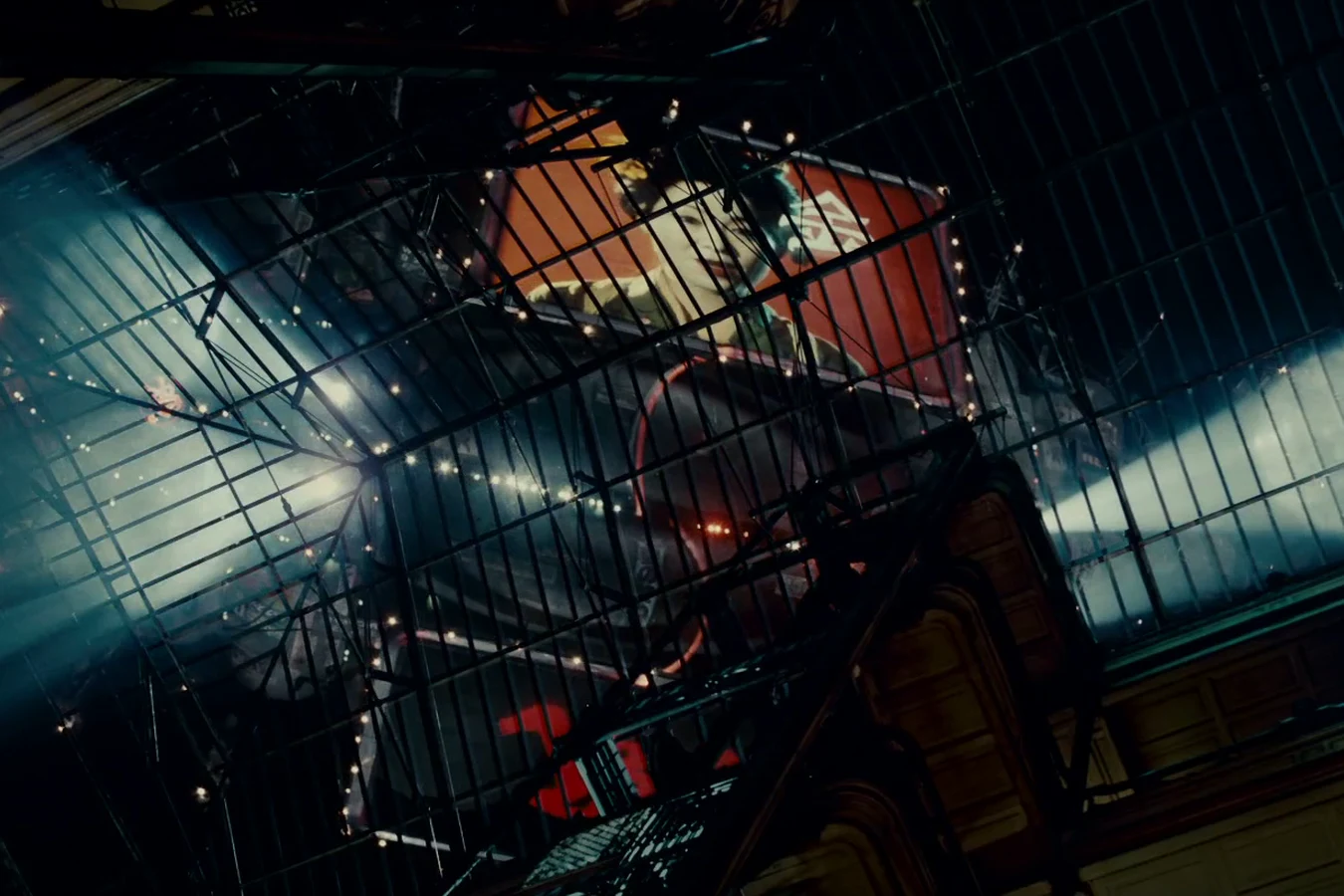
Future Noir credited Don Baker And Tim McHugh with most of the miniature blimp photography. One shot placed the craft above Pris as she approached the Bradbury Building. A later view showed it through the atrium roof after she entered with Sebastian. The second angle required the recognizable window structure in the foreground, with the airship appearing to move beyond the many small panes.
EEG still-lab artist Virgil Morano photographed the real atrium window with a large-format camera. A positive print was fixed to thick glass, and the areas between the window bars were cut away. The glass and photograph were mounted in front of the motion-control camera, moving with it while the blimp model remained stationary. Shooting through those openings created the apparent passage of the craft behind the roof. The foreground was a photographic element rather than a full miniature reconstruction of the building.
Searchlights And Surveillance
Cinematographer Jordan Cronenweth and Scott both wanted strong shafts of light moving through the city. Airships gave those beams a source within the setting. Cronenweth described their use for advertising and crime control, comparing the movement to searchlights over a prison. The light could enter a room even when its occupant had withdrawn from the streets, suggesting that privacy remained vulnerable to an authority outside.
The Passing Beams also connected interior scenes to the city beyond the windows. The blimp could be heard or its lights could sweep across a space without the vehicle occupying the shot. In the Bradbury sequence, the visible airship supplied a direct explanation for that illumination. Its screens and speakers promoted departure from Earth while its searchlights continued to examine the people who remained there.
Music And Announcement Versions
The Japanese music associated with the blimp included Ogi no Mato, performed by Ensemble Nipponia on a recording released in 1976. The piece used a sung narrative with biwa accompaniment. Future Noir identified the album as Japan: Traditional Vocal and Instrumental Music. This was source music placed within the city, separate from Vangelis's electronic score, and fragments accompanied the airship near the Bradbury Building.
The Director's Cut changed the balance of the blimp's sound as well as the amount of recruitment dialogue. Future Noir noted that the restored sponsor identification filled space previously occupied by Deckard's removed narration near his introduction. The airship's voice therefore became more exposed when his commentary disappeared. The differences between cuts affected how much the audience learned about the advertised labor offer and the company paying for it.
External Sources
- Hampton Fancher's July 24, 1980 screenplay draft
- Hampton Fancher and David Peoples' February 23, 1981 screenplay draft
- Typeset In The Future: Dave Addey on Blade Runner typography, blimp advertising and the combined recruitment announcement
- KippleZone: A Blimp Is Born, researched and compiled by C. A. Chicoine, including announcement transcriptions and production interviews
- American Cinematographer: Blade Runner photographic effects, with David Dryer
- American Cinematographer: Cronenweth on airship searchlights, advertising and crime control
- VFX Voice: The Miniature Models of Blade Runner, with Mark Stetson
Tag Categories: Blade Runner Lore