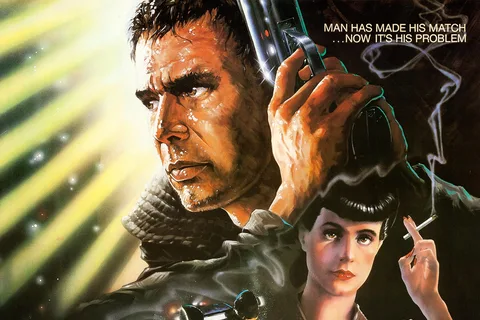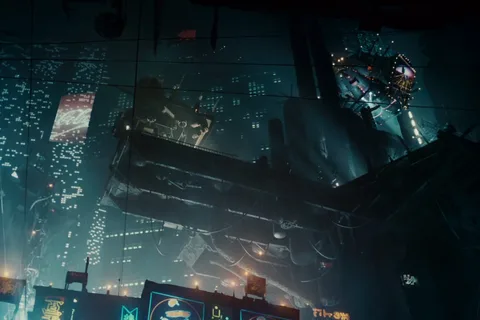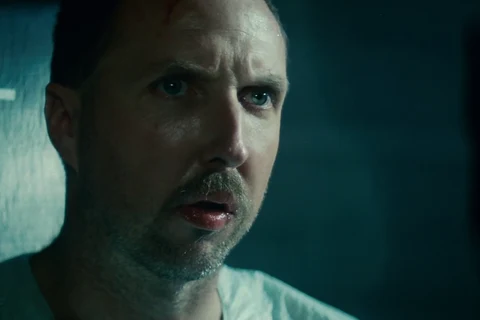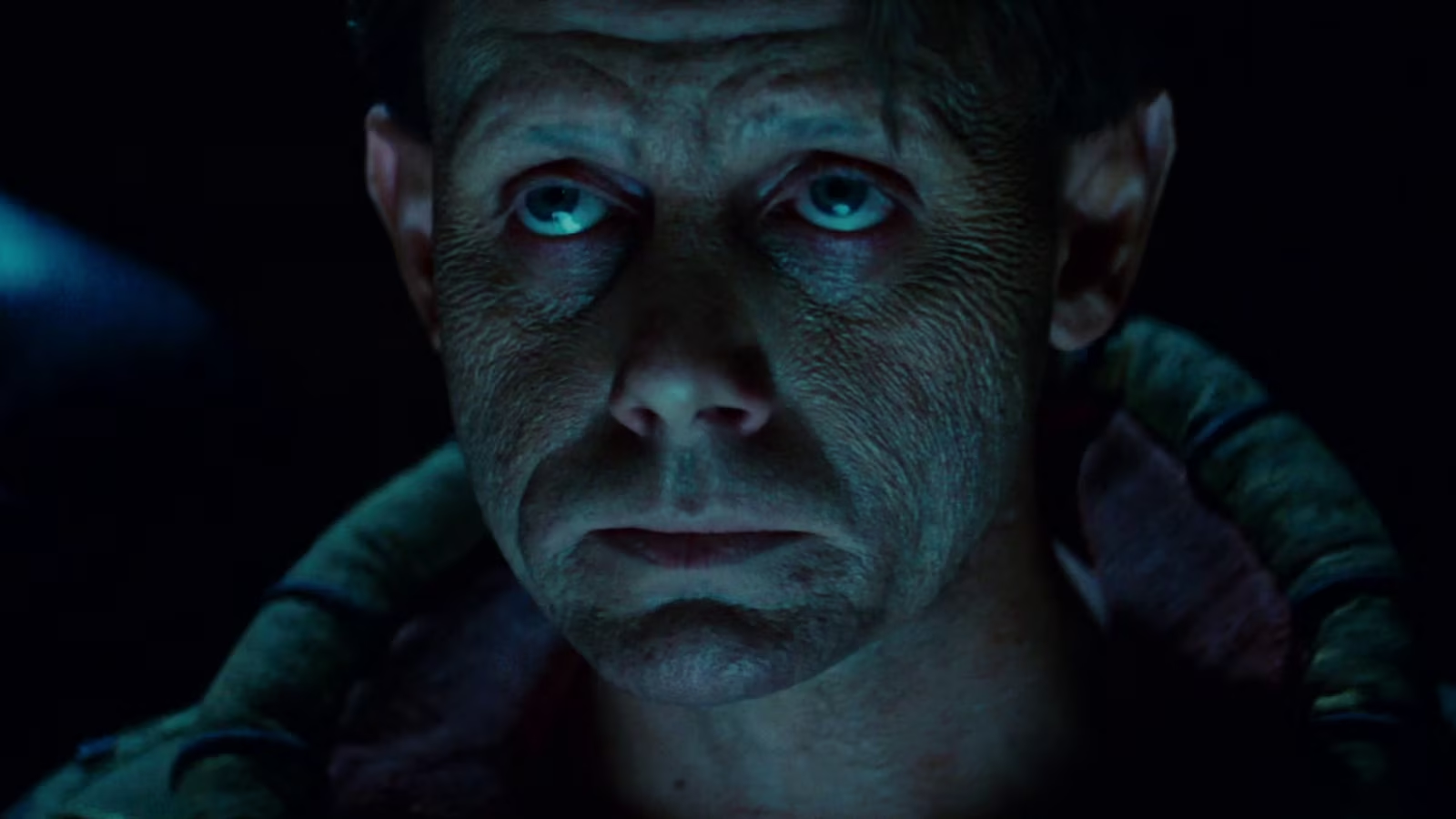

J.F. Sebastian was a genetic designer for the Tyrell Corporation in Ridley Scott's Blade Runner, played by William Sanderson. A rare illness had aged him far beyond his twenty-five years and kept him on Earth when most healthy people left for the Off-world colonies. He lived almost alone in the Bradbury Apartments with the living toys he built for company. In November 2019 the fugitive replicants Pris and Roy Batty used his kindness and his chess game with Eldon Tyrell to reach their maker, and the night ended with Sebastian dead beside Tyrell.
Biography
Earlier Life
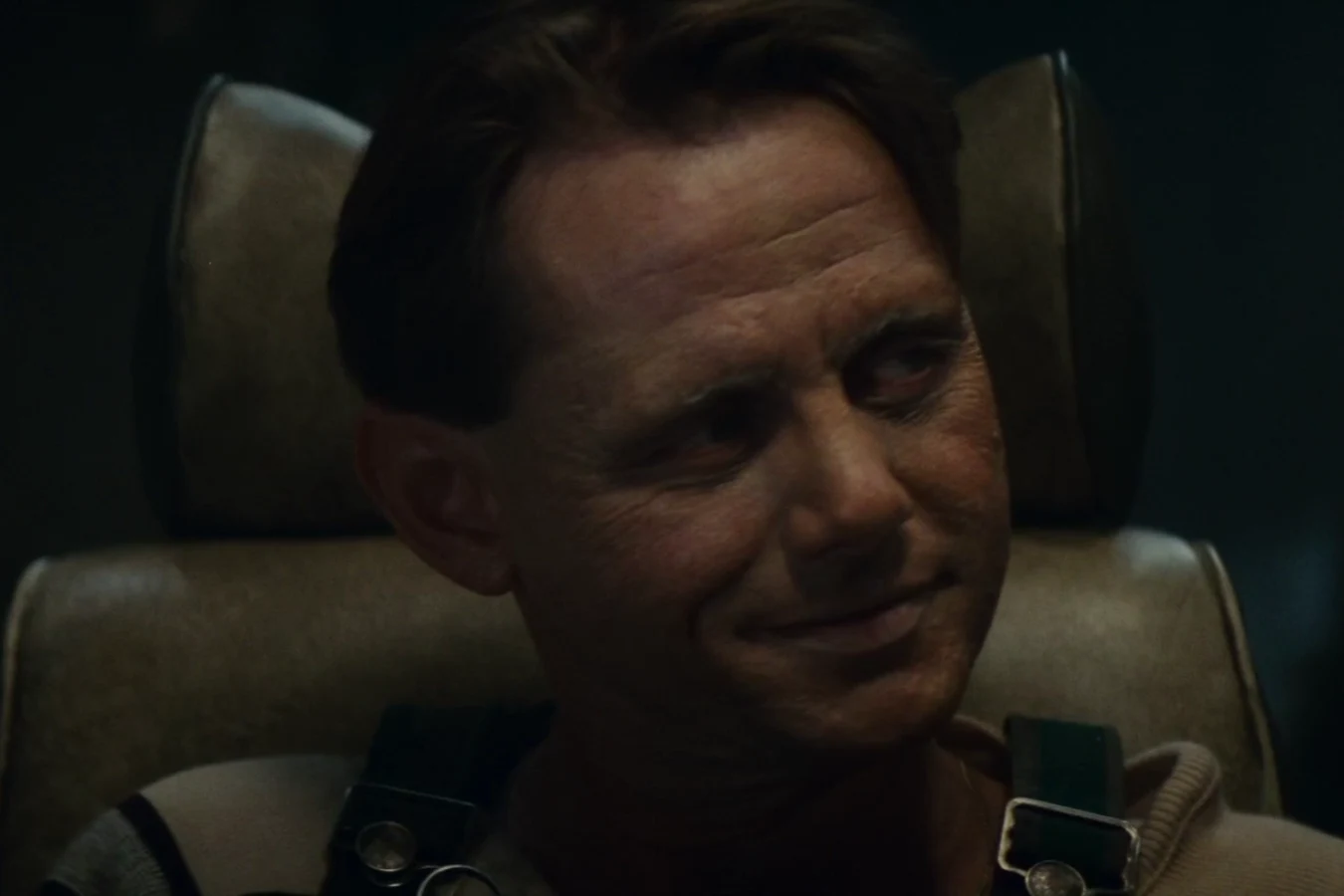
Sebastian was a genetic designer who worked for Dr. Eldon Tyrell, the founder of the Tyrell Corporation. He suffered from Methuselah syndrome, a disorder that made his glands grow old too fast, so at twenty-five he already had the lined face and stiff movements of a much older man. The illness meant he could not pass the medical examination required to emigrate Off-world, and he told himself that he liked it on Earth anyway. His work for the corporation reached into the Nexus-6 line itself, and he played a long-running game of chess with Tyrell, whom he regarded as a genius and had beaten only once.
When Roy Batty and Leon Kowalski forced the eye designer Hannibal Chew to tell them how to reach Tyrell, Chew gave them Sebastian's name. The frightened old craftsman explained that Sebastian worked closely with Tyrell and could take them to him. From that moment the escaped replicants regarded the lonely designer as the key to the Tyrell pyramid.
Meeting Pris
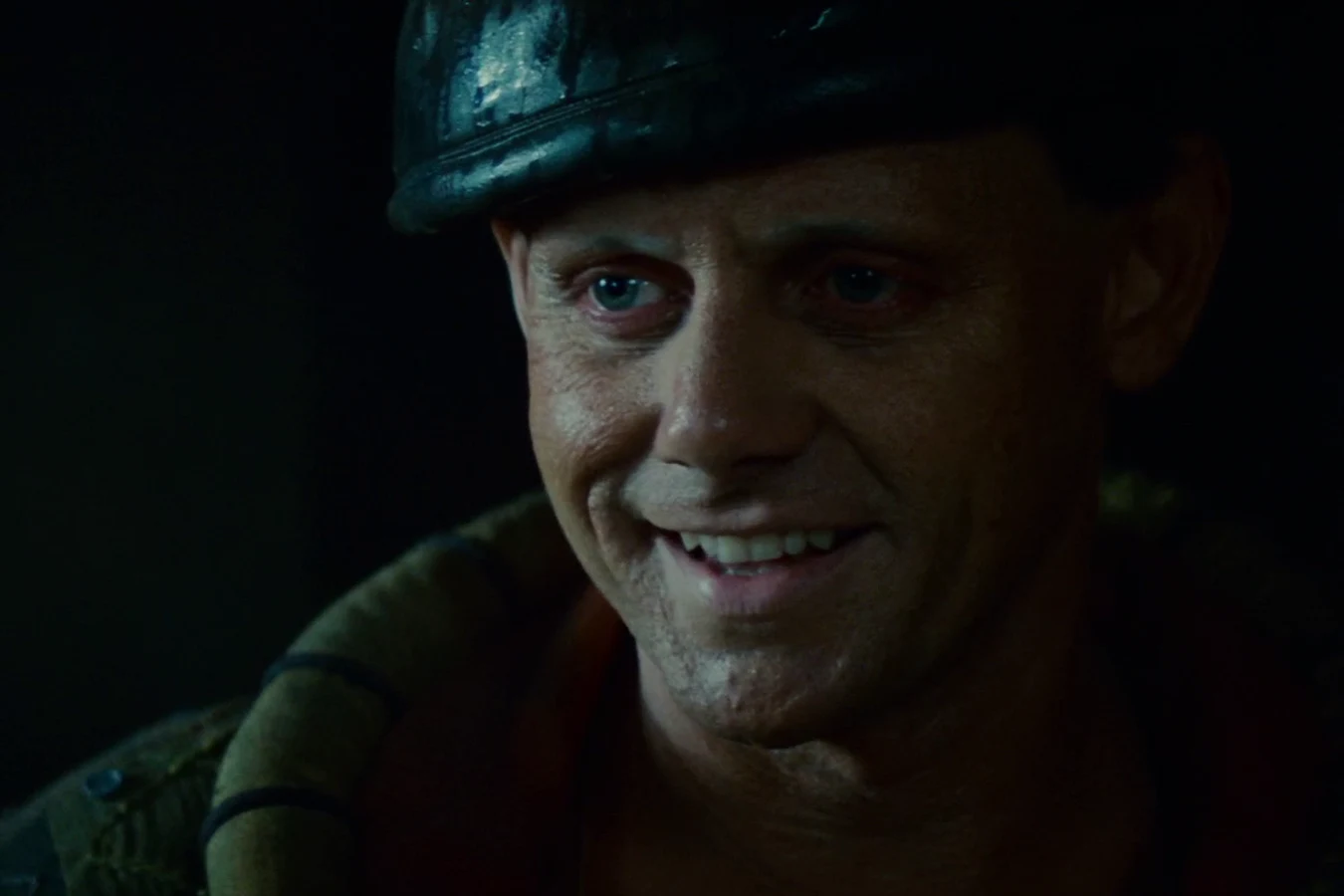
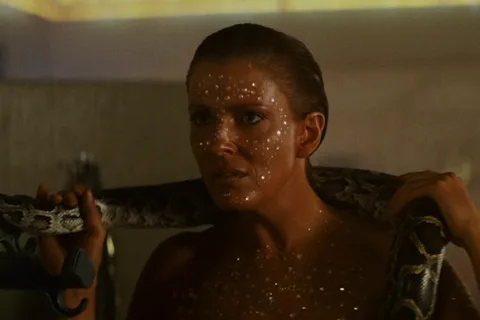
Pris waited for him in the rain outside his building, hiding among the garbage in the doorway as he returned home in his van. When Sebastian found her, she startled him and then played a lost young woman with no home and nowhere to go. Sebastian was nervous but plainly delighted to have company, and after a few awkward moments he invited her inside. He had no idea that she was a Nexus-6 pleasure model and that the meeting had been arranged to bring Roy to his door.
The Bradbury Apartment
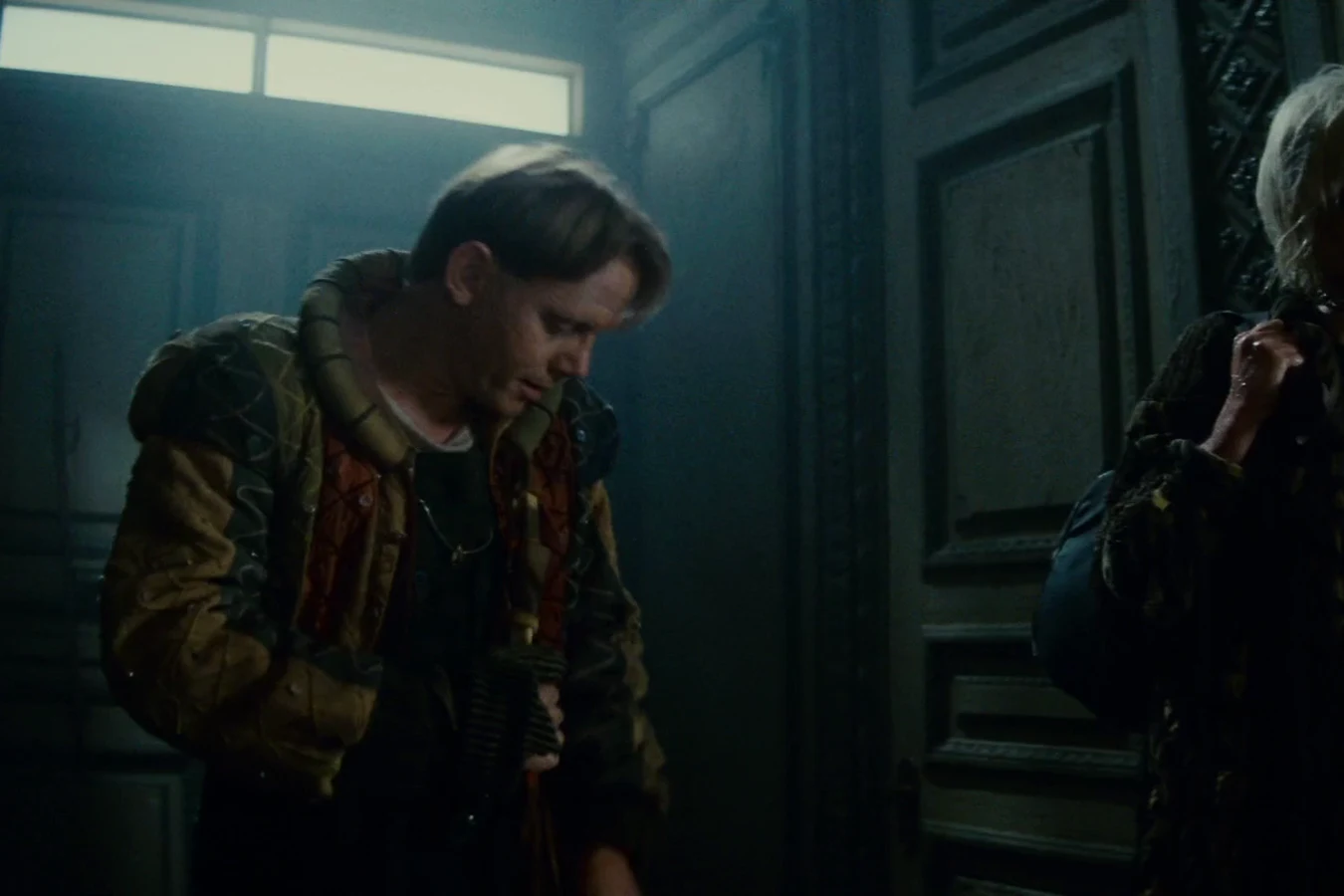
Sebastian lived in the Bradbury Apartments in the Ninth Sector, a decaying building that he had pretty much to himself. He told Pris there was no housing shortage there, since there was room for everybody in the half-empty city. His only friends were the toys he made himself, among them Bear and Kaiser, who marched up to greet him by name when he came through the door. He offered Pris dry clothes and a place to stay, and the next morning he found her made up and waiting for him, curious about his age and his illness.
Roy Batty And The Nexus-6
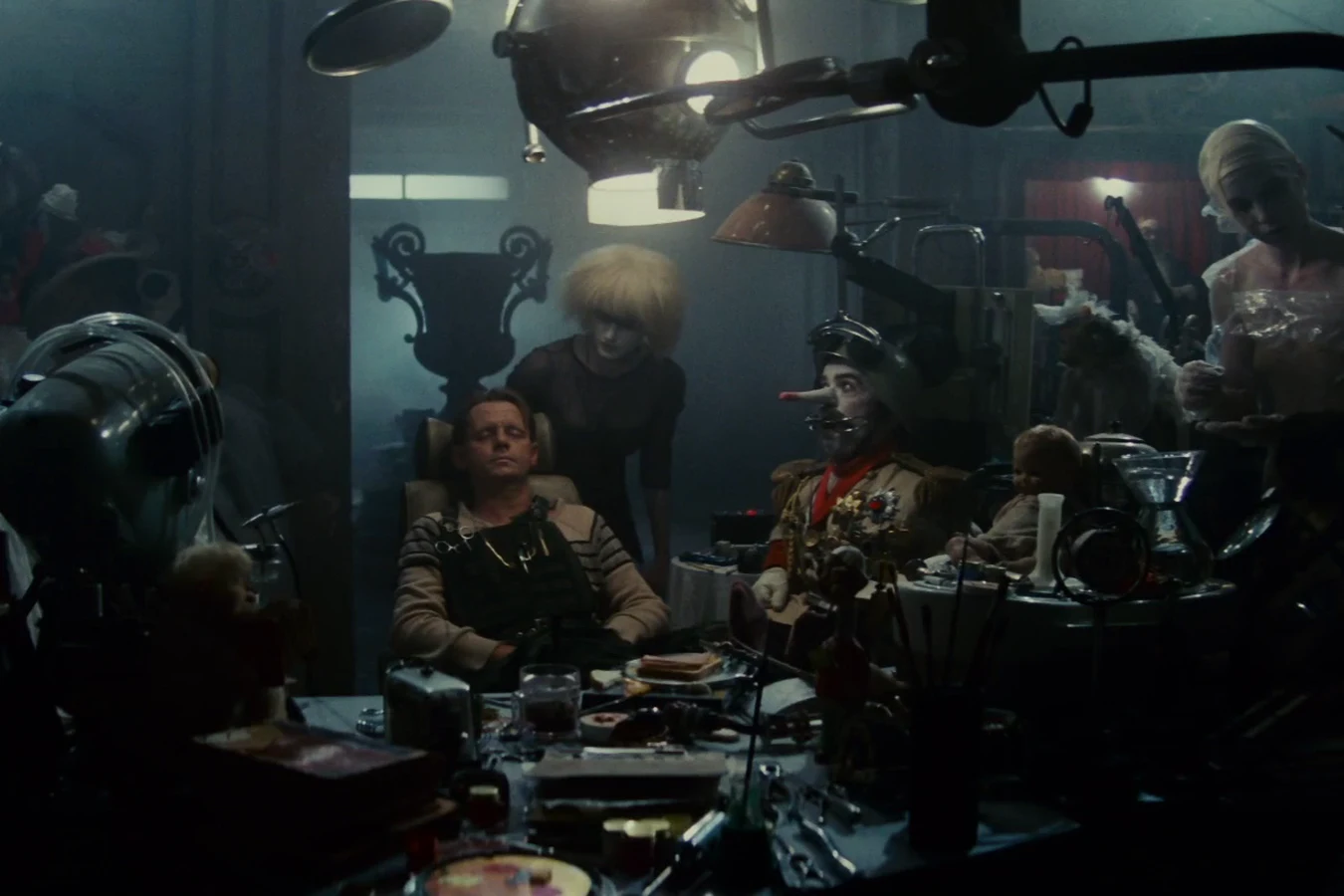
Roy arrived soon after, and Pris introduced Sebastian as the man who had saved her. Sebastian could not stop staring at his guests because they were so perfect, and he soon understood that they were Nexus-6 replicants. He told them that he did genetic design work for the Tyrell Corporation and that some of his own work was in them, and Pris showed off what she could do with a playful display. Instead of fearing them, he seemed proud and fascinated to meet two of the models he had helped to make.
Roy pointed out that Sebastian's condition was a kind of accelerated decrepitude, the same problem that was killing the replicants on their four-year lifespan. He insisted that Pris did not have long, and Sebastian offered to mention their problem to Tyrell. Roy wanted to talk to Tyrell in person, and when Sebastian said he could not help, the replicants called him their best and only friend. Reluctant but unable to refuse them, Sebastian agreed to take Roy to the pyramid.
The Chess Gambit
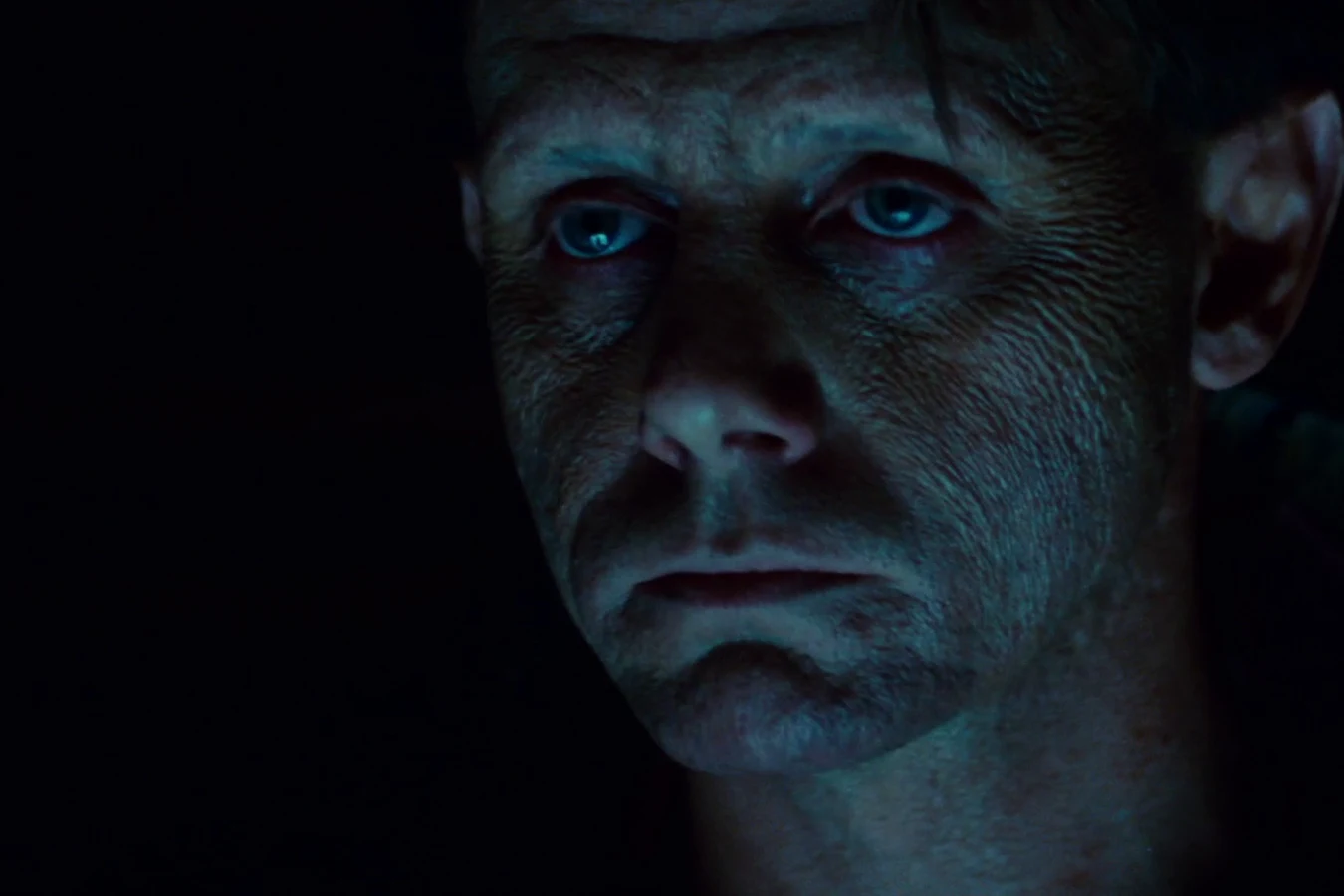
Sebastian rode the elevator up the Tyrell pyramid late at night with Roy standing behind him. At the intercom he gave his visitor number and announced his next move in the chess game he had been playing with Tyrell, queen to bishop six, check. Tyrell answered from his bed, surprised at the move, and Roy quietly fed Sebastian the mating reply, bishop to king seven. Tyrell assumed that his employer's midnight snack had kept him awake, recognized the checkmate, and invited Sebastian up to talk about it.
Meeting Tyrell
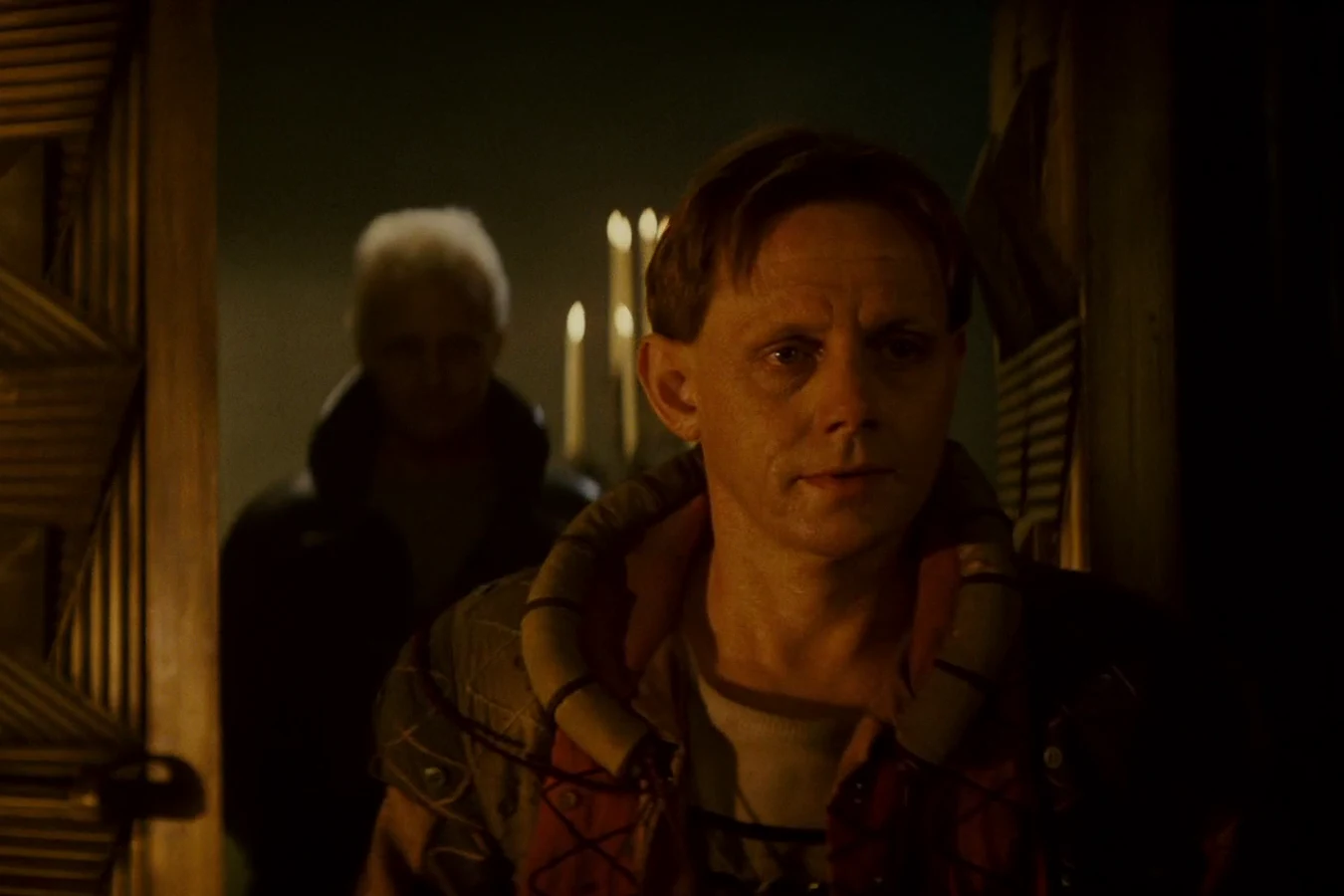
Sebastian stepped into the candlelit bedroom and told Tyrell that he had brought a friend. Roy stepped out of the shadows to face the man who had made him, and Sebastian stood back while the replicant asked for more life. Tyrell explained that the lifespan could not be changed and praised Roy as the prodigal son of the Nexus-6 line. Sebastian watched the conversation he had made possible without any power to steer it.
Death At The Pyramid
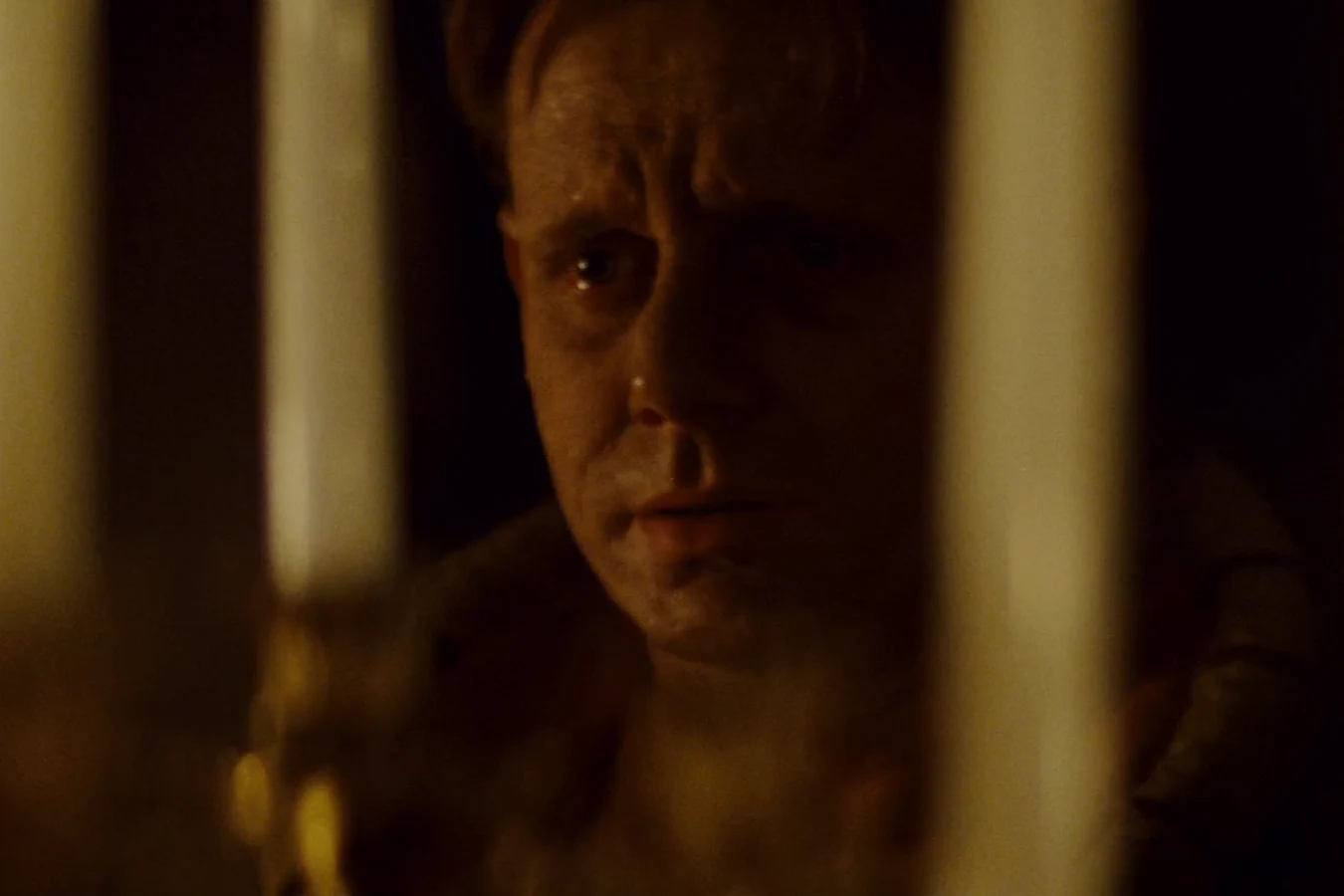
Roy killed Tyrell with his bare hands while Sebastian watched in horror. Roy then turned to Sebastian and apologized to him, and the designer backed away and fled into the shadows of the penthouse. The film does not show what happened next, but a police report later announced that his body had been found with Tyrell's, identified as a 25-year-old male from the Bradbury Apartments. Deckard was sent to the Bradbury to check his apartment, and Sebastian's toys greeted the blade runner as he made his way inside.
Personality
Sebastian was gentle, lonely and eager to please, a man who filled an empty building with company he built himself. He was shy around Pris, apologetic about his home, and easily embarrassed, yet he opened his door to a stranger in the rain without a second thought. His pride in his work was obvious, and meeting two Nexus-6 models made him feel part of something larger than his small apartment. That same trust left him unable to see how Pris and Roy were using him until it was far too late.
He respected Tyrell almost as a hero, describing him as a genius and treating their chess game as a privilege. Sebastian accepted his illness with a quiet resignation and told himself that he preferred Earth to the colonies he could never join. In Roy and Pris he found two beings whose short lives mirrored his own, and his sympathy for them was what led him to the pyramid.
Other Appearances
Marvel Blade Runner Comic
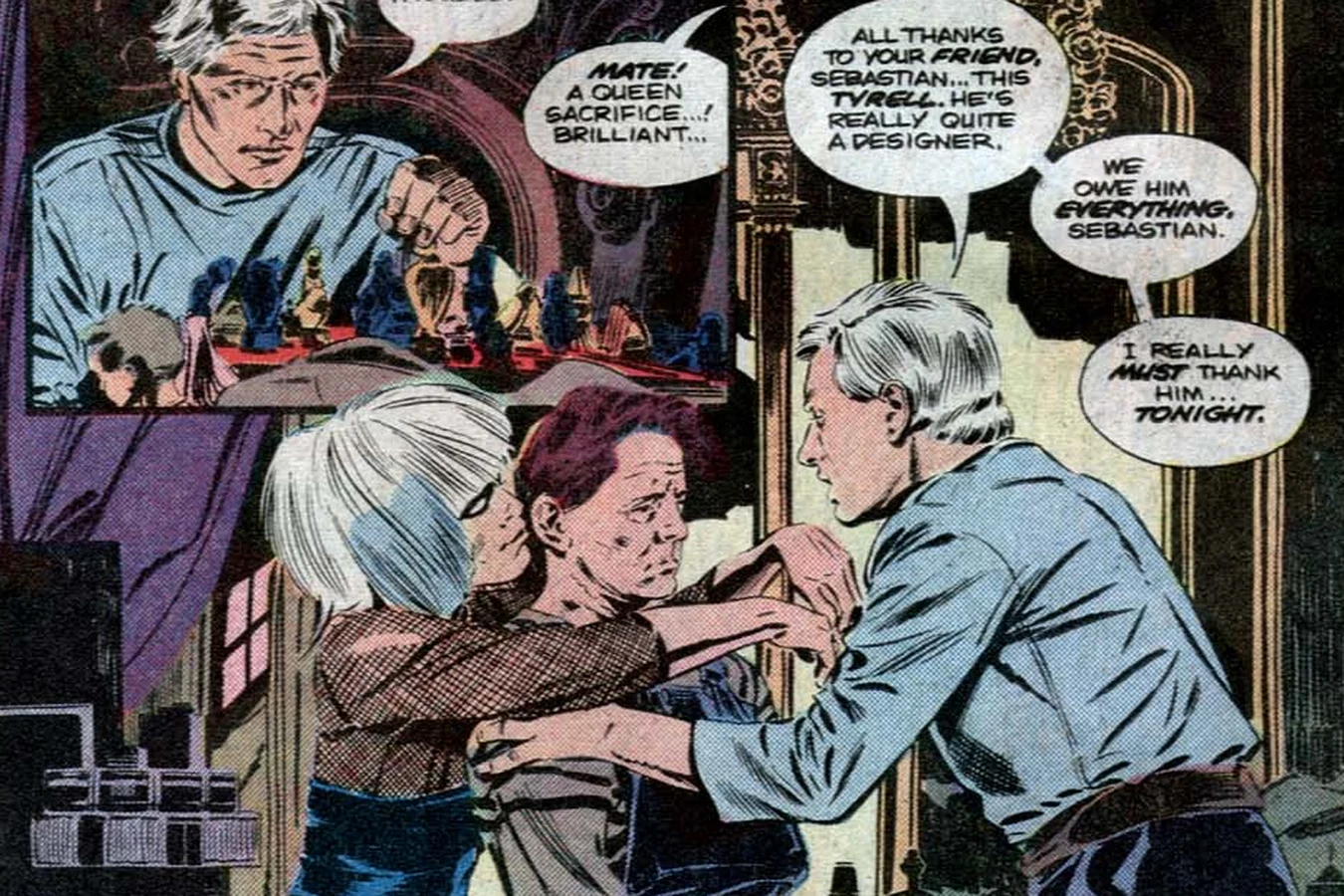
In Marvel's comic adaptation, Sebastian wakes to find Roy in his apartment with Pris and recognizes the pair as Nexus-6 models from his own genetic design work. Roy works out a queen sacrifice on Sebastian's chessboard, and the replicants hug him and credit his friend Tyrell as quite a designer. At the pyramid Sebastian gets past the security voice with the chess move, and when Tyrell answers that his knight takes the queen, the mating reply gets Sebastian invited up. Deckard's file gives his age as twenty and lists him as a grand master chess player, and after Tyrell's death the comic leaves Sebastian running for the elevator with no clear fate.
Westwood Blade Runner 1997
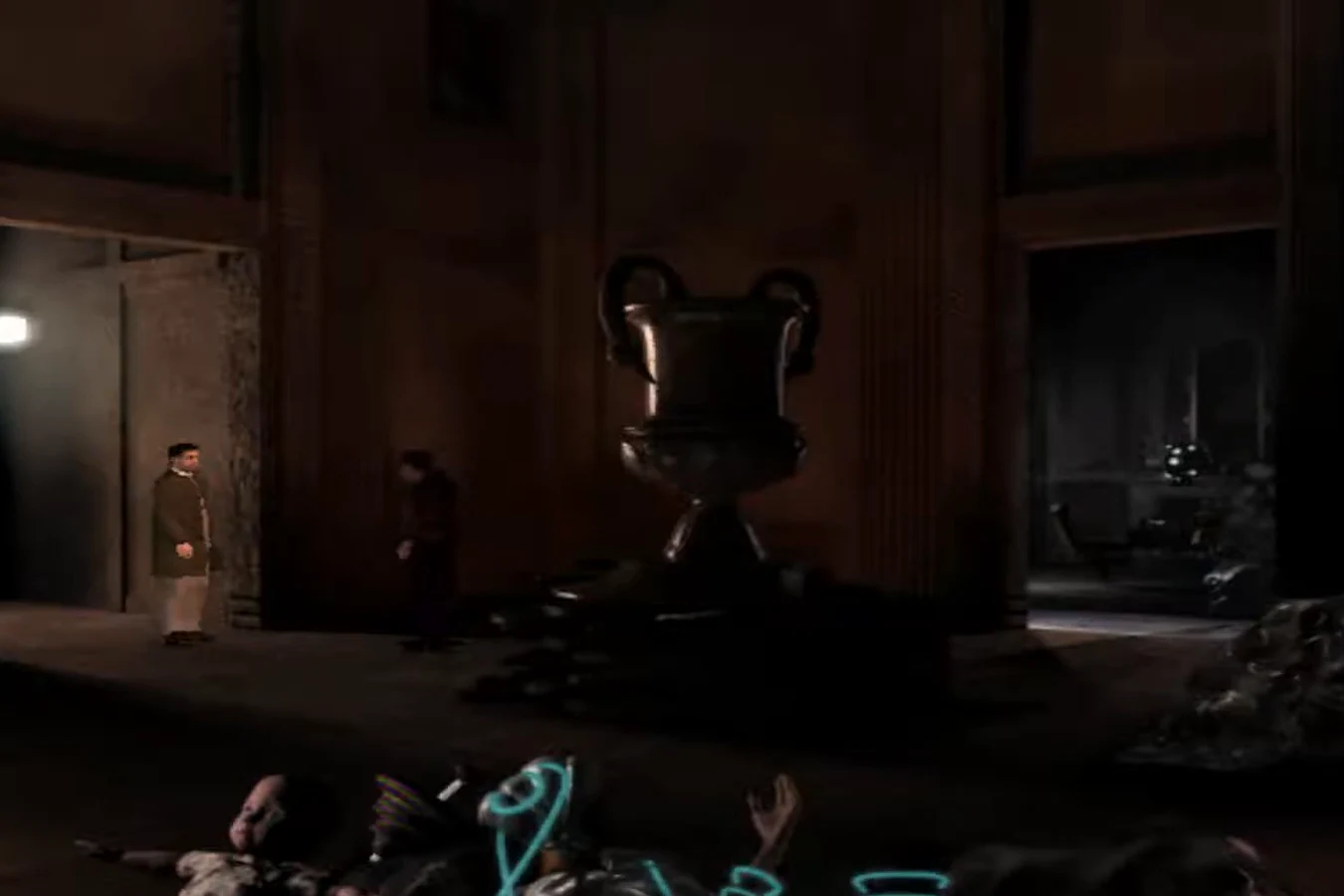
Westwood's Blade Runner game brings William Sanderson back to voice Sebastian, and Ray McCoy can visit him at the Bradbury. His apartment and laboratory are full of toys, and a printer in the lab produces data that McCoy can collect as evidence. Sebastian talks warmly about Tyrell as a great man and a brilliant designer, mentions their weekly chess games, and recalls that the twins Luther and Lance were once Tyrell's favorites before he let them go. McCoy can ask about the murdered designers Eisenduller and Moraji, but if he presses about replicants Sebastian realizes he is a blade runner and asks him to leave.
A Story Of The Future
Blade Runner: A Story of the Future makes Sebastian twenty rather than twenty-five and places his home at 2077 897th Avenue in Sector Six. He lives among empty apartments with toy companions that march when he comes home, and he tells Batty that he once argued with Tyrell for longer lives for the replicants. After Batty crushes Tyrell's skull, he tells Sebastian not to blame himself, says goodbye, and leaves, and the book never shows Sebastian's death.
In The KW Jeter Books
In K. W. Jeter's Blade Runner 2: The Edge of Human, Sebastian survived the night at the pyramid. The police found him in Tyrell's private suite and took him for dead, but he had only passed out, and his heart was restarted in the ambulance. Fearing he would be charged as Roy Batty's accomplice, he slipped out of a police-custody hospital, used his pass to collect Pris's body from the police morgue, and fled with his toys into the sideways zone, a toppled ruin at the edge of Los Angeles. He insisted that he had tried to warn Tyrell by adding a hesitant word to the checkmate Roy had fed him from the Immortal Game.
In the ruins Sebastian rebuilt Pris, stripping away much of her soft tissue and wiring in sensor relays and muscle-surrogate motors so that the skeletal figure could move and still knew who he was. Believing that his accelerated aging could be slowed by easing the demands on his body, he then cut himself down to a one-armed torso, carried in a papoose harness on the back of Colonel Fuzzy, a uniformed teddy bear, with the long-nosed toy soldier Squeaker Hussar at his side. He lived on welfare supply drops, and when the Pris-thing struck him and threw him across the room over a gift of chocolates, he took it as a sign that she loved him. The household later settled in Deckard's old safe-house apartment in the zone.
Deckard found them there, and Sebastian made him coffee while blaming the Nexus-6 design for Pris's troubles, unaware that bone marrow tests had shown she was human. Dave Holden joined them, and when Sarah Tyrell arrived she shot the Pris-thing dead, leaving Sebastian to rock the body and admit that her brain was beyond repair. He sprayed a farewell message to Deckard on the wall and set off east with his toys, and in the wasteland he met a camp of replicant sympathizers whose elder called him nearly human and gave him an old first-aid kit from the Salander 3.
By Blade Runner 3: Replicant Night the sympathizers had made him a dehydrated deity, a pocket universe sold as a powder packet bearing his name, which Deckard took on Mars at the urging of the talking briefcase that carried the human Roy Batty's voice. Inside, Sebastian had rebuilt the Bradbury and the old downtown streets exactly as they had been, toys and blimp included, but no matter how he tried he could not bring Pris back, and he came to suspect he had never truly known what she was.
After a tantrum that shook his world like an earthquake, he confirmed that Holden had died for the sympathizers' cause, urged Deckard to carry the briefcase's data to the colony insurgents, and hinted that the real secret concerned the difference between humans and replicants. As the drug wore off he pressed the first-aid kit into Deckard's hands, and he chose to go on existing in the hope that Pris had fled somewhere he could still find her. Blade Runner 4: Eye and Talon mentions him only in passing, as the only witness to Tyrell's death. Batty had injured him badly, and the first police report wrongly listed him among the dead.
Do Androids Dream Of Electric Sheep?
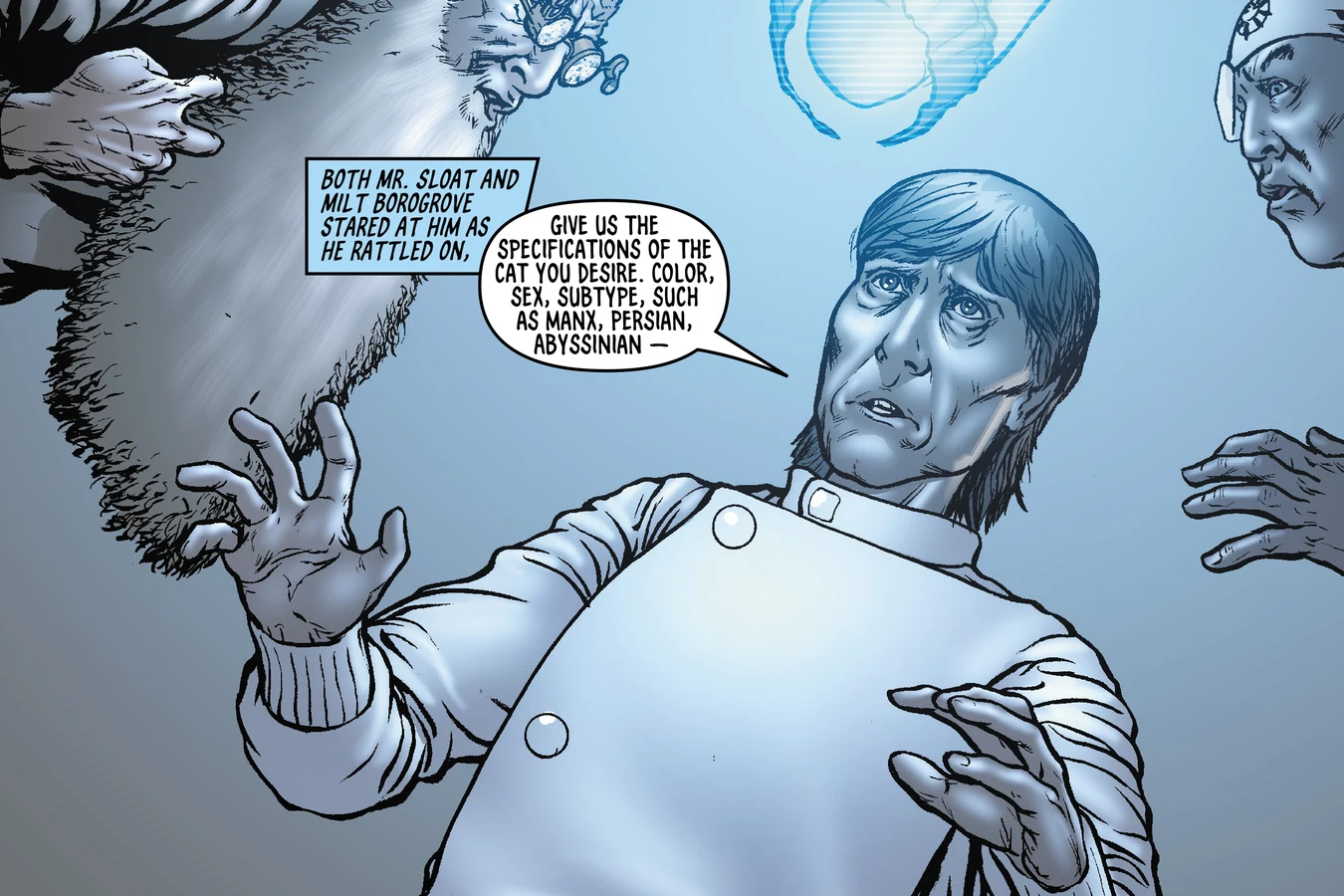
Sebastian has no direct counterpart in Philip K. Dick's Do Androids Dream of Electric Sheep?, but he inherits much of J. R. Isidore. Isidore is a special damaged by radioactive dust, barred from emigrating to Mars and labelled a chickenhead, who drives a truck for a false-animal repair shop. He lives alone in an empty suburban building until Pris Stratton moves in, and he shelters her and the Batys even after learning that they are androids. BOOM! Studios' comic adaptation shows him stammering through a vidphone call to the owner of a cat he took in for repair, only to learn it was a real animal, and unlike Sebastian he survives and leaves the building after the androids die.
Behind The Scenes
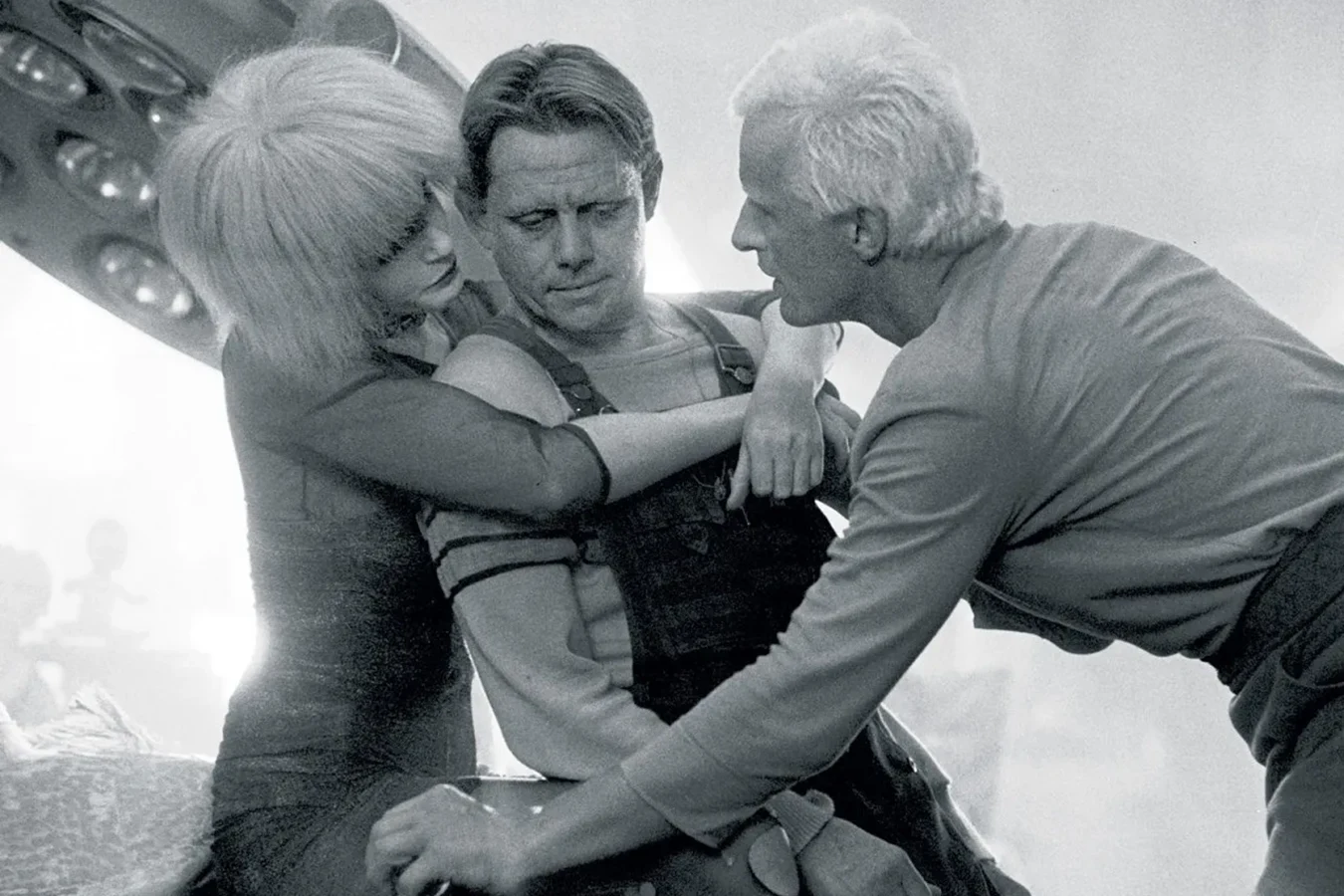
According to Paul M. Sammon's Future Noir: The Making of Blade Runner, Hampton Fancher and Ridley Scott conceived Sebastian as a painfully shy genetic engineer afflicted with a rare aging disease, who made astonishingly realistic toys both for the rich and as companions against his own loneliness. The character has no direct equivalent in Philip K. Dick's novel and draws on J. R. Isidore, the lonely special who shelters the androids in an abandoned building. Earlier drafts gave him other material that never reached the screen, including a David Peoples version in which Pris slipped into the building while Sebastian fed a mechanical cat that drank oil, and one script that named him a grand master of chess.
William Sanderson had trained in law in Tennessee before studying acting in New York and working in low-budget films such as Hootch and Savage Weekend. He credited Scott with widening his career, since before Blade Runner he had mostly played villains and drifters. To build the role he drew on the physical image of Albert Einstein and on footage of a child with progeria, borrowing the boy's careful walk, and he said Scott's direction to play a totally innocent man unlocked the part. Sanderson became best known on television as Larry in Newhart, and fifteen years after the film he voiced Sebastian again in Westwood's 1997 adventure game.
The old-age makeup used a stretch-and-stipple technique designed by Marvin Westmore and applied by Pete Altobelli, taking about two hours each day during hot June shooting. The walking toys Bear and Kaiser were played by Kevin Thompson and John Edward Allen; the bear was a pull-over costume, while the Kaiser's long latex nose was a late idea of Scott's made by Michael Westmore. Most of the more than one hundred automatons, clocks and mannequins in the apartment were genuine antiques, some centuries old, leased by set dresser Linda DeScenna from the San Fernando Valley collector Benny Marvin. Ridley Scott later added faint whispering from the toys during postproduction in England.
Exteriors, the lobby, stairways and atrium of Sebastian's home were filmed in the Bradbury Building in downtown Los Angeles, then in poor repair and dressed with trash, smoke, dripping water and mannequins. A false wall and door in the building stood in for his front door, but the apartment itself was an elaborate set on Soundstage 25 at Warner Bros., later reused for the Snake Pit nightclub. Syd Mead designed his asymmetrical Armadillo Van, and Daryl Hannah's collision with its window during the first meeting was an accident that chipped her elbow.
Sebastian's death was scripted to happen on screen, but according to Sanderson the scene was never filmed because the producers felt the film already had too much violence. His horrified reaction to Tyrell's murder was shot in close-ups on a separate day, with Scott talking him through what he was meant to be seeing. The Workprint gave Batty an extra line apologising to Sebastian as he approached him, and also had a police radio report naming Sebastian, aged twenty-five, at the Bradbury.
Famous Quotes
- "I make friends. They're toys. My friends are toys. I make them."
- "Home again, home again, jiggidy-jig."
- "There's some of me in you."
- "I brought a friend."
Conclusion
J.F. Sebastian was the gentle designer whose illness, loneliness and access to Tyrell made him the perfect door for the fugitive replicants. He took Pris in from the rain, welcomed Roy as a friend, and gave them the chess move that opened the pyramid. Marvel and the storybook left his fate open, and Jeter's sequels kept him alive with his toys and a rebuilt Pris. In the film he never left the pyramid, found dead with the maker he had admired.
Appearances
- Blade Runner (1982)
- Marvel Super Special #22: Blade Runner (Marvel Comics, 1982)
- Blade Runner: A Story of the Future (1982)
- Blade Runner 2: The Edge of Human (1995)
- Blade Runner 3: Replicant Night (1996)
- Blade Runner (Westwood Studios, 1997)
Tag Categories: Blade Runner Lore | Blade Runner Characters