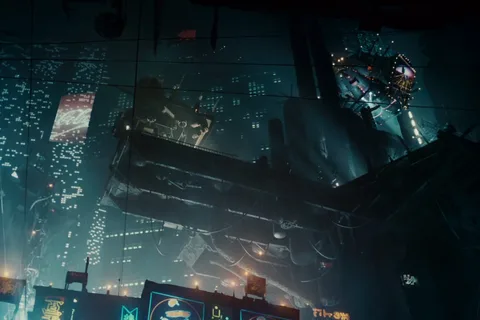

A replicant is a bioengineered human, built rather than born, and sold under the Nexus name across nine generations. The Tyrell Corporation made the first eight, beginning with the Nexus-1 in 2000 and ending with the rushed Nexus-8 after the events of Ridley Scott's Blade Runner. The Wallace Corporation then took over the trade with the obedient Nexus-9 seen in Blade Runner 2049. Each generation was stronger, smarter or more lifelike than the one before, and each brought new ways of keeping its makers in control.
Overview And Timeline
The Nexus line grew out of Eldon Tyrell's company in the first decade of the century, when early models were simple laborers that followed instructions. Independent thought arrived with the Nexus-3, human-level strength was passed with the Nexus-4, and by the Nexus-6 the replicants were stronger and faster than the people who built them. An off-world mutiny by Nexus-6 combat models made replicants illegal on Earth, and the 2022 Blackout and the ban that followed nearly ended the industry. The Blade Runner timeline follows the same years work by work.
- 2000: the Nexus-1, the inaugural Nexus model, goes on sale
- 2008-2009: Nexus-3 and Nexus-4 models are in service, and a Nexus-5 prototype escapes the Tyrell lab
- 2018-2019: the Nexus-6 is in production, and Roy Batty's group reaches Los Angeles
- 2019: the Nexus-7 exists only as prototypes, among them Rachael
- 2020-2023: the Nexus-8 is released, the Blackout erases replicant records, and production is banned
- 2036: Niander Wallace's Nexus-9 demonstration gets the ban repealed
- 2049: Nexus-9s work as blade runners and laborers while older models hide
Nexus Models
Nexus-1
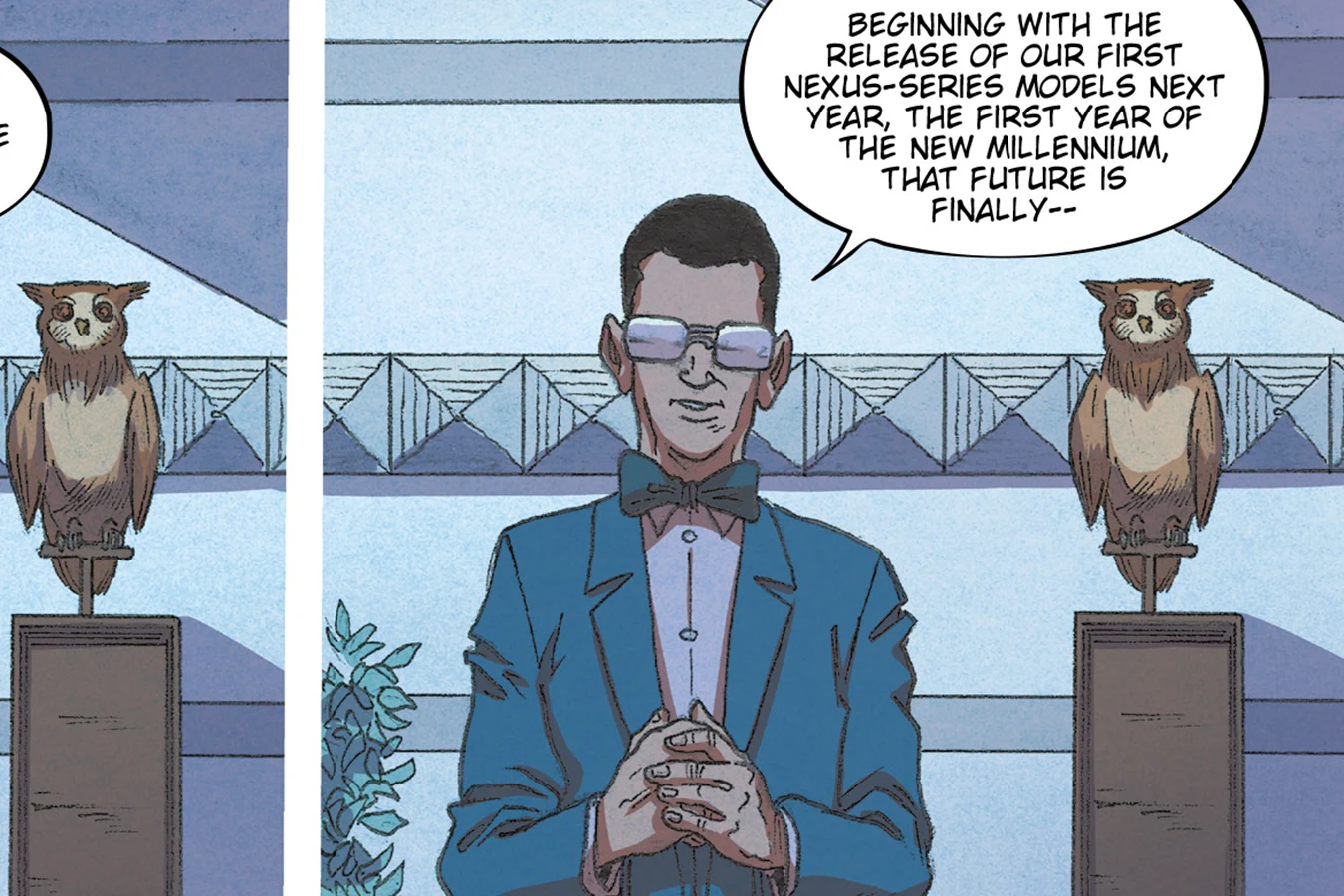
The Nexus-1 was the inaugural Nexus model, released by the Tyrell Corporation in 2000, and it marked the start of the replicant trade. A 1999 Tyrell video discussing the new product was later shown in the Blade Runner 2019 Free Comic Book Day special, but no Nexus-1 unit appears by name in the films, comics or games. A decade later, in Blade Runner: Origins, Tyrell was still planning shorter lifespans and internal safeguards for future models.
In the account of Blade Runner: The Roleplaying Game, the first models were basic automatons built for menial work too repetitive, unpleasant or dangerous for people, capable only of simple automated actions. Their positronic brains soon branched into purpose-built service models that looked more and more human. The core rulebook credits the Nexus line with winning Tyrell the race among the megacorporations to replace human labor, and by its own era it treats the classic models as relics, most of them returned or scrapped, while the LAPD's synthetic animoids are compared to a Nexus-1 for wits.
In K. W. Jeter's Blade Runner 2: The Edge of Human, part of the separate Jeter novel continuity, Sarah Tyrell says the company's old Nexus-1 models were more than adequate for colonial labor. In her account, Tyrell did not make later replicants more human for the sake of efficiency. He did it because the colonists wanted slaves that could suffer, something the simple early machines had never been able to do.
Nexus-2
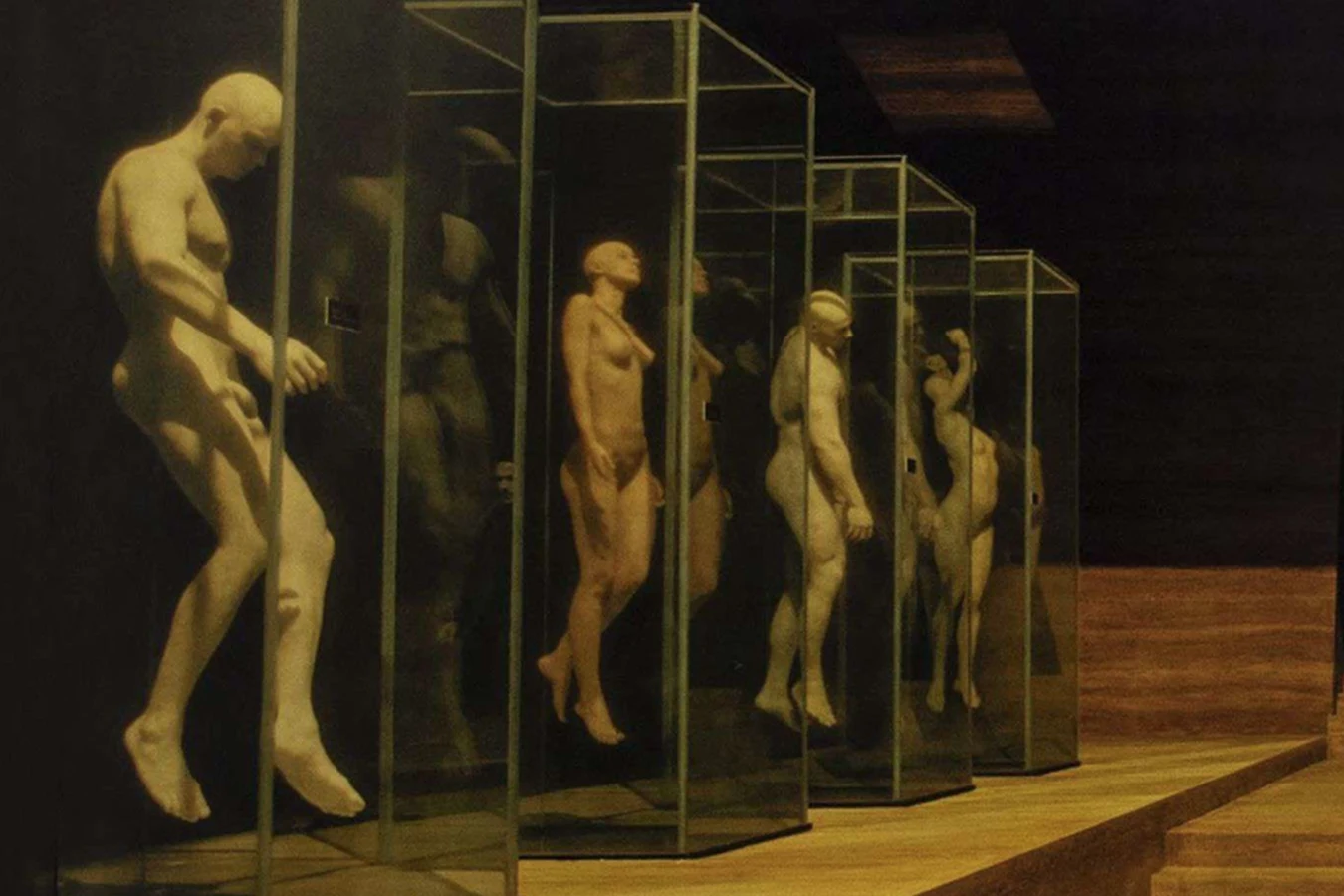
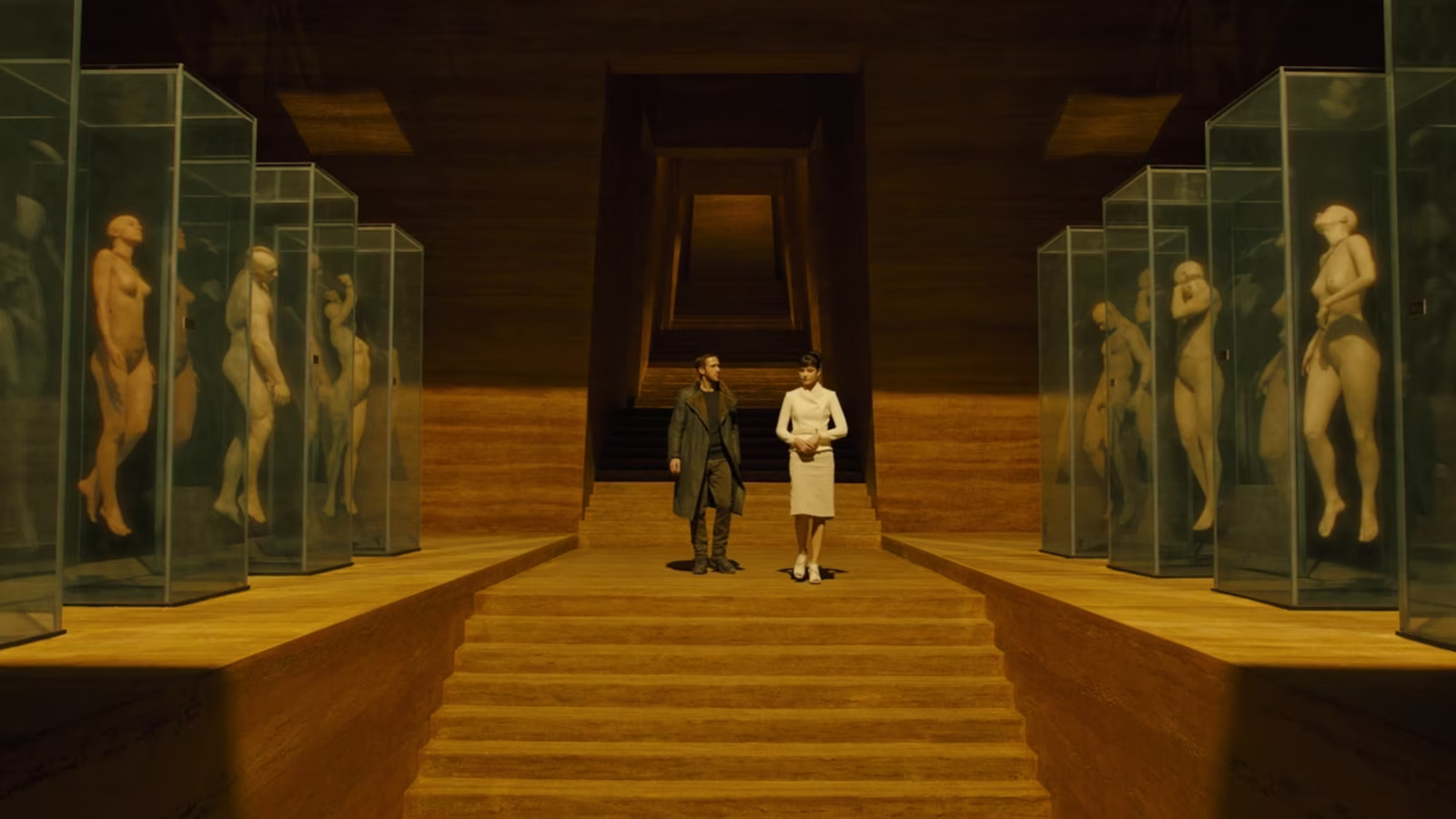
The Nexus-2 is the least documented of all the Nexus generations. It must have come between the Nexus-1 of 2000 and the Nexus-3 already in service by 2009, but no source names its release year, its abilities or a single unit. The early generations were designed at the Tyrell Corporation headquarters seen in Blade Runner: Origins. In Blade Runner 2049, Luv leads K through the Wallace Corporation headquarters past a row of glass cases holding earlier replicant models, and it can be speculated that the second figure from the left, a female, is a Nexus-2. Until a new story fills the gap, the Nexus-2 remains a step in the numbering rather than a known model.
Nexus-3
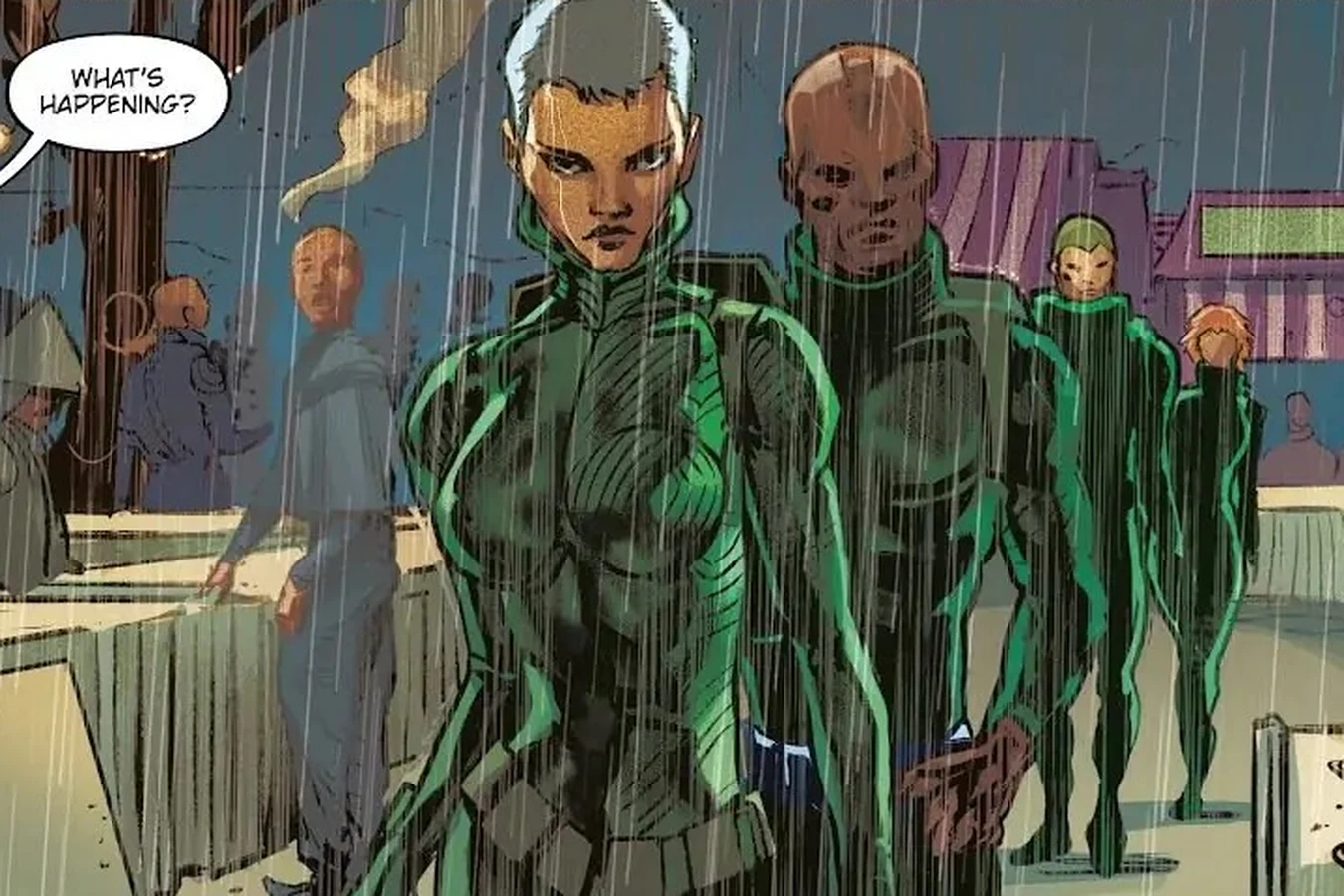
The Nexus-3 was the first replicant capable of independent thought and of carrying out complex tasks on its own. In 2009 Tyrell executive Ilora Stahl turned a militia of Nexus-3s on the Los Angeles slums in Blade Runner: Origins, and the green-suited units tore through the district under her orders. Unlike the Nexus-4s around them, they could not be awakened from their programming, and they could still feel pain. Older models of this kind were still remembered in 2019. In the film's novelization and Marvel adaptation, Deckard's first retirement was a Nexus-3 so smooth and human that it left him sick, and in the 1997 Blade Runner game Ray McCoy noted that Nexus-3, 4 and 5 models tended to give up once they were cornered.
Nexus-4

The Nexus-4 was the most advanced model on the market in July 2009, and it was the first replicant line stronger than a human. Tyrell sold them as servants, workers and pleasure models, and in 2008 Nia Moreaux trained Nexus-4 teachers for the Excel Program shown in Blade Runner: Origins. Pleasure model 331575 was blamed for the death of Tyrell scientist Lydia Kine, although the truth of her death was more complicated. Several Nexus-4s appear by name in Origins. Asa carried Lydia Kine's mind, the household servant Arnault began to malfunction after years in a kitchen, and Filip became a killer after the escaped Nexus-5 awakened him. By 2037 the model was considered antiquated.
Nexus-5

The Nexus-5 was stronger and more agile than earlier models and at least as intelligent as its designers, with a near obsession for optimization. One prototype held the consciousness of Nia Moreaux, transferred into it in 2008, and it escaped the Tyrell lab in 2009 on the night Lydia Kine died. Hiding in the slums, Nia began awakening Nexus-4 workers, and the hunt for her drove the plot of Blade Runner: Origins. The line outlived that first prototype. In November 2019 Tyrell recalled four entertainment Nexus-5 models from off-world, as recorded in the 1997 Blade Runner game. By 2037 the model, like the Nexus-4, was considered antiquated.
The Blade Runner roleplaying game gives its own account of the fourth and fifth generations, which outdid their makers in strength and agility and served off-world in terraforming, mining, colonial defense, sports and the sex trade. By its 2037 setting most early Nexus units have been returned or scrapped, and a working Nexus-4 or Nexus-5 is not especially rare but counts as an antique with charmingly limited abilities.
Nexus-6
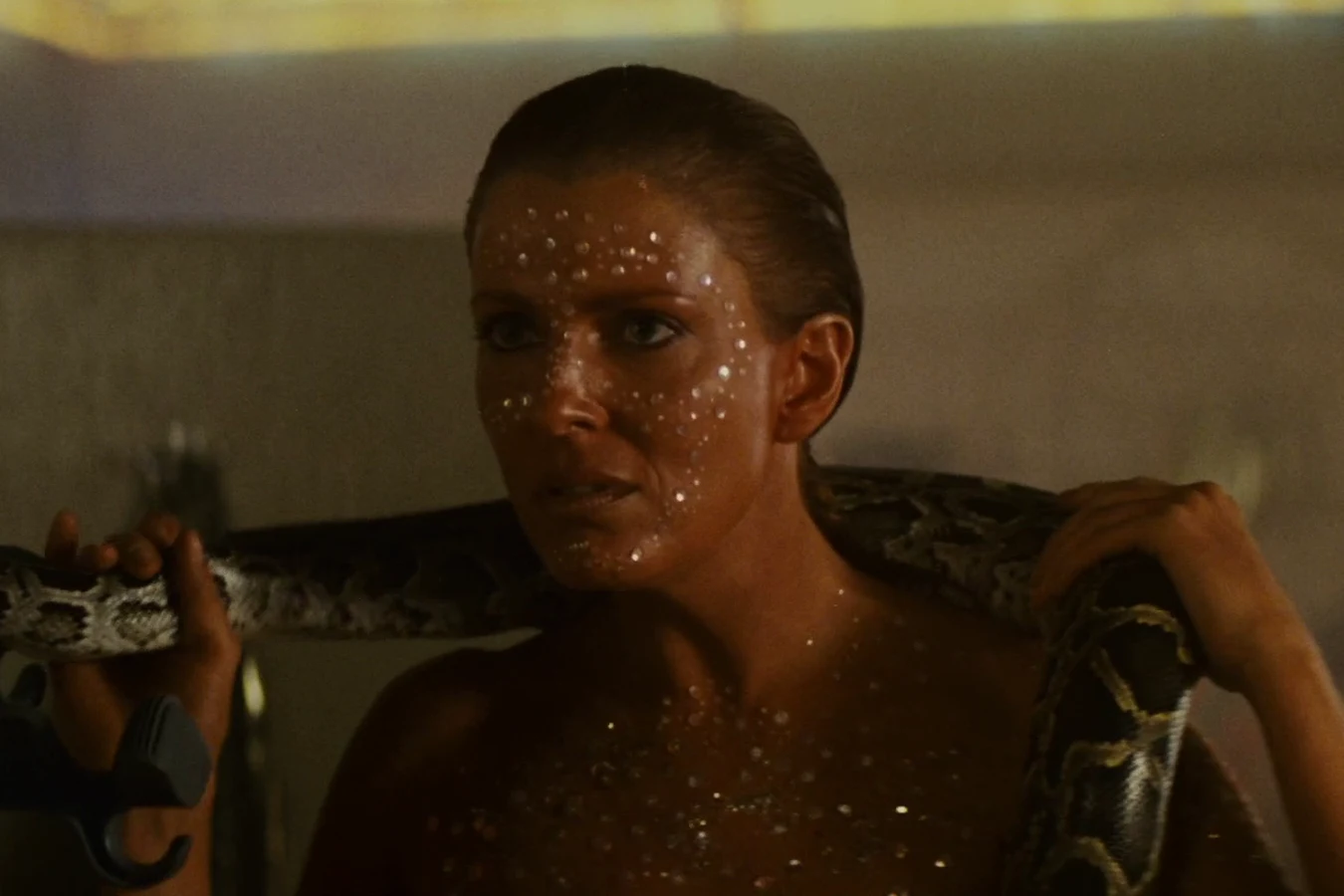
The Nexus-6 was in production by 2018 and was the most famous Tyrell model, with strength, agility and heat tolerance well beyond any human. Its intelligence varied by role, but the best units were at least equal to their designers, and Hannibal Chew designed their eyes. A bloody mutiny by Nexus-6 combat models off-world led to the Earth ban, and Chew was one of the people Roy Batty's group visited after landing.
Every Nexus-6 carried a four-year lifespan, a fail-safe against emotions developing over time. Roy Batty's group came to Los Angeles in November 2019 to extend that limit, and Deckard hunted Leon Kowalski, Zhora, Pris and Roy with the Voight-Kampff test. Unsold units were left to expire after Tyrell's death, though Yotun of the Blade Runner 2029 comics stretched his life with transfusions.
Jeter's novels give the Nexus-6 a different backstory. In The Edge of Human, each replicant is copied from a human templant, and a brain scan of the original Roy Batty, with his cross-wired amygdala, kicked off the Nexus-6 program. The same book says the four-year limit held only under normal operating conditions, and that the line's wide neural data channel let new memories be loaded long after the incept date. Blade Runner 4: Eye and Talon adds that Tyrell used Batty for a run of military-aggressor replicants and contracted parts such as the eyes to outside prototype developers.
Nexus-7

The Nexus-7 never reached the market and existed only as prototypes. Its known units were Rachael, Tyrell's assistant, and two versions of Isobel Selwyn in the Blade Runner 2019 comics. Nexus-7s carried implanted memories taken from real people, and Rachael needed more than a hundred Voight-Kampff questions before Deckard could identify her. The model's greatest secret came out in 2049: Rachael could reproduce, and her daughter Ana Stelline was born to her and Deckard. Her serial number, found on her remains, revealed her Nexus-7 status for the first time, and Wallace spent years trying to rebuild that ability. Tyrell's research was lost after his death, and the company skipped the Nexus-7 name and released the Nexus-8 instead.
Nexus-8

The Nexus-8 was rushed out in 2020 with natural lifespans and an ocular implant that tied each unit to the Replicant Registration database. Nexus-8 soldiers fought on both sides of the Calantha war, and veterans such as Freysa and Sapper Morton later went into hiding on Earth. In 2022 replicants destroyed that database in the Blackout shown in Black Out 2022, and production was banned in 2023.
The ban was never complete. Some companies kept making Nexus-8s in secret into the late 2020s, and pleasure models won an exemption by 2032. Elle passed a Nexus-8 check in Black Lotus because her eye carried no serial, and Sapper Morton lived as a protein farmer until 2049. His fight in 2048: Nowhere to Run exposed him, and K retired him at the start of Blade Runner 2049.
Nexus-9

The Nexus-9 was the first line of the Wallace Corporation, built after Niander Wallace bought the bankrupt Tyrell Corporation in 2028. In 2036: Nexus Dawn, Wallace showed lawmakers a Nexus-9 that cut his own throat on command, and the obedience on display got the ban repealed. The model kept the ocular serial, lived as long as its owner wanted, and could not refuse an order. Wallace's enforcer Luv was among the first Nexus-9s, and the blade runner K, serial KD6-3.7, hunted older models for the LAPD. Nexus-9s were made as grown, infertile adults and given childhood memories designed by Ana Stelline. Wallace wanted a model that could breed, which is why he searched for Rachael's child.
Behind The Scenes
This guide follows the main film continuity, as set out in the Blade Runner canon guide. In Philip K. Dick's Do Androids Dream of Electric Sheep?, the androids are Nexus-6 products of the Rosen Association, with no Nexus-7, 8 or 9 at all. Rachael in the novel is a Nexus-6 as well, and her role in the story has nothing to do with a child.
The novel has its own older models from rival makers. The Sudermann company's T-14 of 1989 slipped more than fifty units onto Earth, some undetected for a year, until the Pavlov Institute in the Soviet Union devised the Voigt Empathy Test. Deckard is also warned that the Nexus-6 androids are far smarter than the Grozzi Corporation's old W-4. The Nexus-6 brain unit selects within a field of two trillion constituents, or ten million neural pathways, and the androids still wear out within a few years because no one has solved cell replacement.
The Jeter continuity borrows some of those names. In The Edge of Human, the industry began in Stuttgart with Paul Derain, Sudermann and Grozzi, whose work Eldon Tyrell later took over, and Eye and Talon names Derain et Cie as the holder of key patents. In Blade Runner 3: Replicant Night, Marley claims that off-world replicants can outlive four years but revert once they come within range of Earth.
The early film materials also differ in places. Before Blade Runner 2049, Rachael was often described as a Nexus-6, and the reveal of her Nexus-7 serial changed that. The Nexus-1 to Nexus-5 details come mostly from Titan's comics, the 1997 game and Blade Runner: The Roleplaying Game, which sometimes fill gaps the films never touched.
Conclusion
The Nexus generations trace the whole history of the replicant, from Tyrell's simple first workers to Wallace's obedient Nexus-9s. Every step added strength or humanity, and every step added a new leash: short lifespans, implanted memories, serial numbers and finally built-in obedience. Many of the replicants who broke those limits have their own pages among the Blade Runner replicants.
Tag Categories: Blade Runner Lore