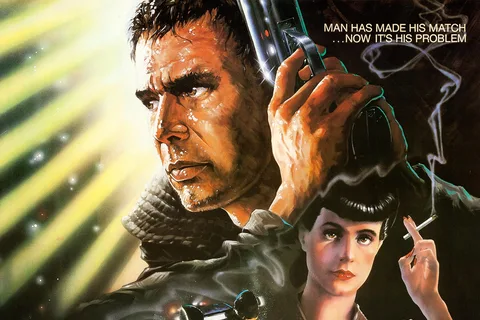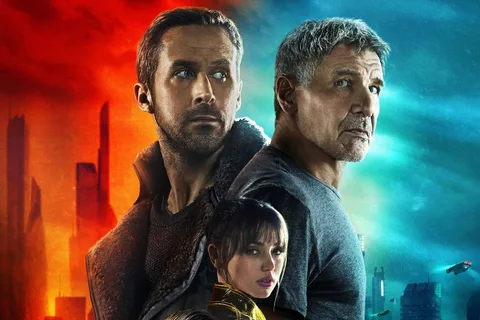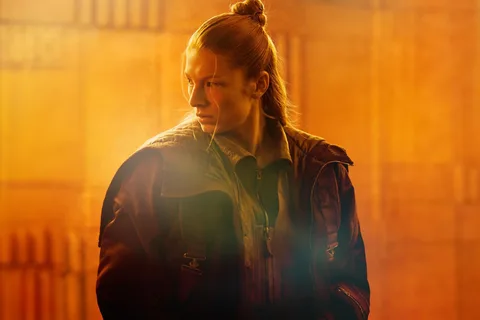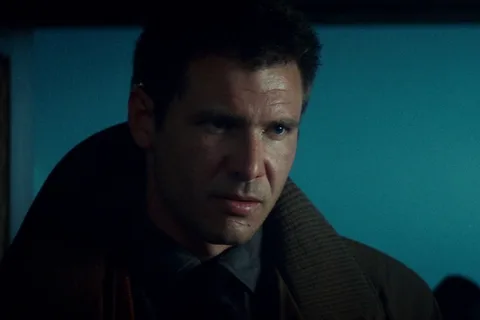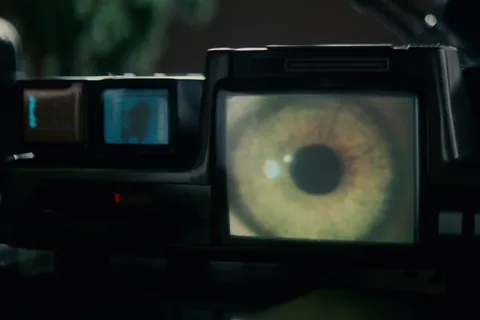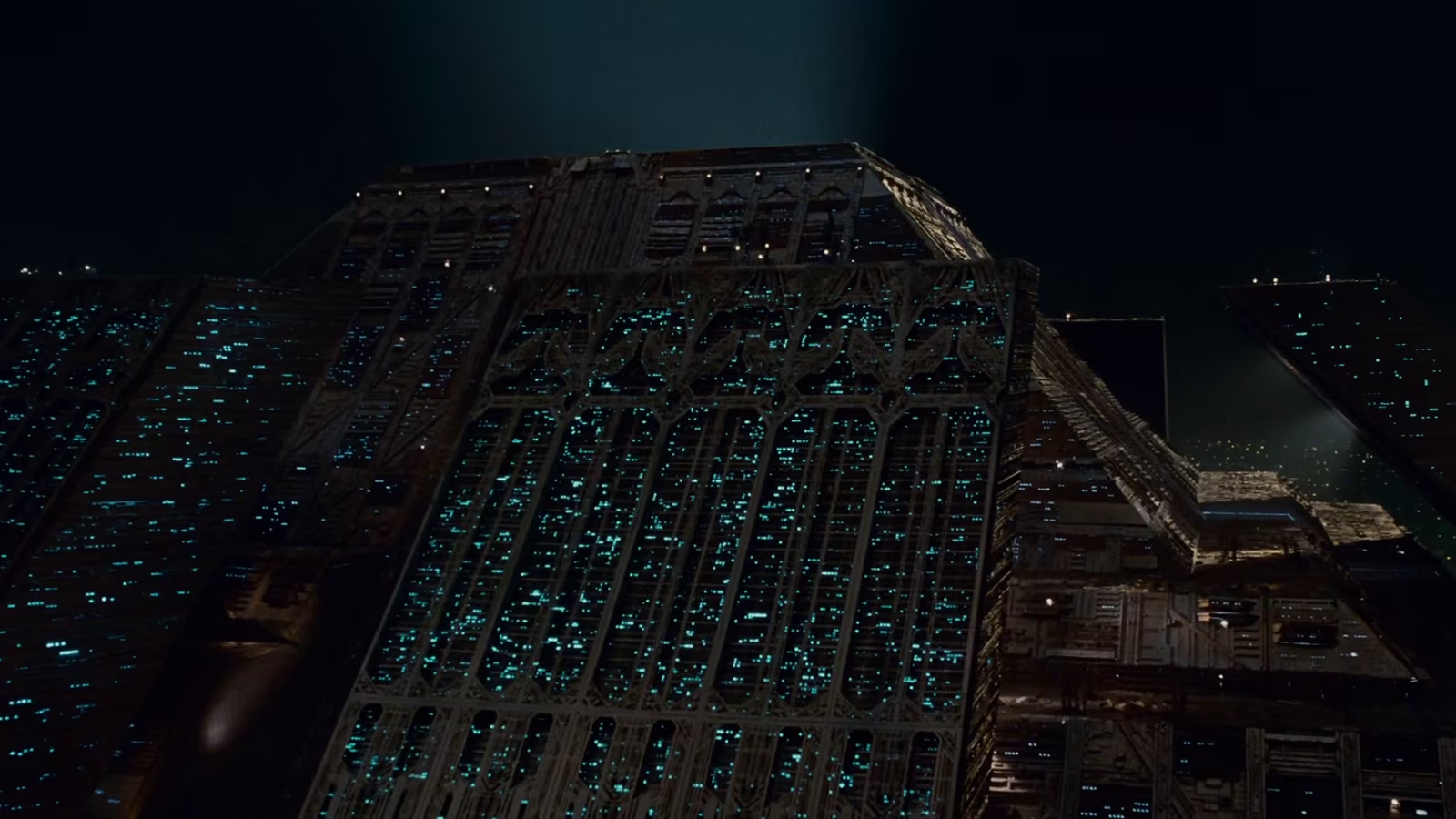

The Tyrell Corporation was the company that built replicants in Blade Runner, run from a pair of giant pyramids above Los Angeles. Its founder Eldon Tyrell took robot evolution into the Nexus phase and sold his artificial humans as slave labour for the Off-world colonies. Its motto was "More human than human." The firm survived his murder in 2019, then lost its records in the 2022 Blackout, went bankrupt under a ban on replicants and ended as part of the Wallace Corporation. Philip K. Dick's novel had an earlier version of it, the Rosen Association, and the novels of K. W. Jeter blew its headquarters apart.
Company History
The history of the company came together from the films, the short films, the Titan comics and the tabletop roleplaying game. The 1982 film gave only the outline, a firm that advanced robot evolution early in the 21st century and then lost the right to sell its products on Earth. The comics filled in the years before and after Roy Batty reached the penthouse, and the sequel film and its short prequels described how the company fell. The Blade Runner timeline places these events in order, though some sources disagree on exact years.
Founding The Corporation
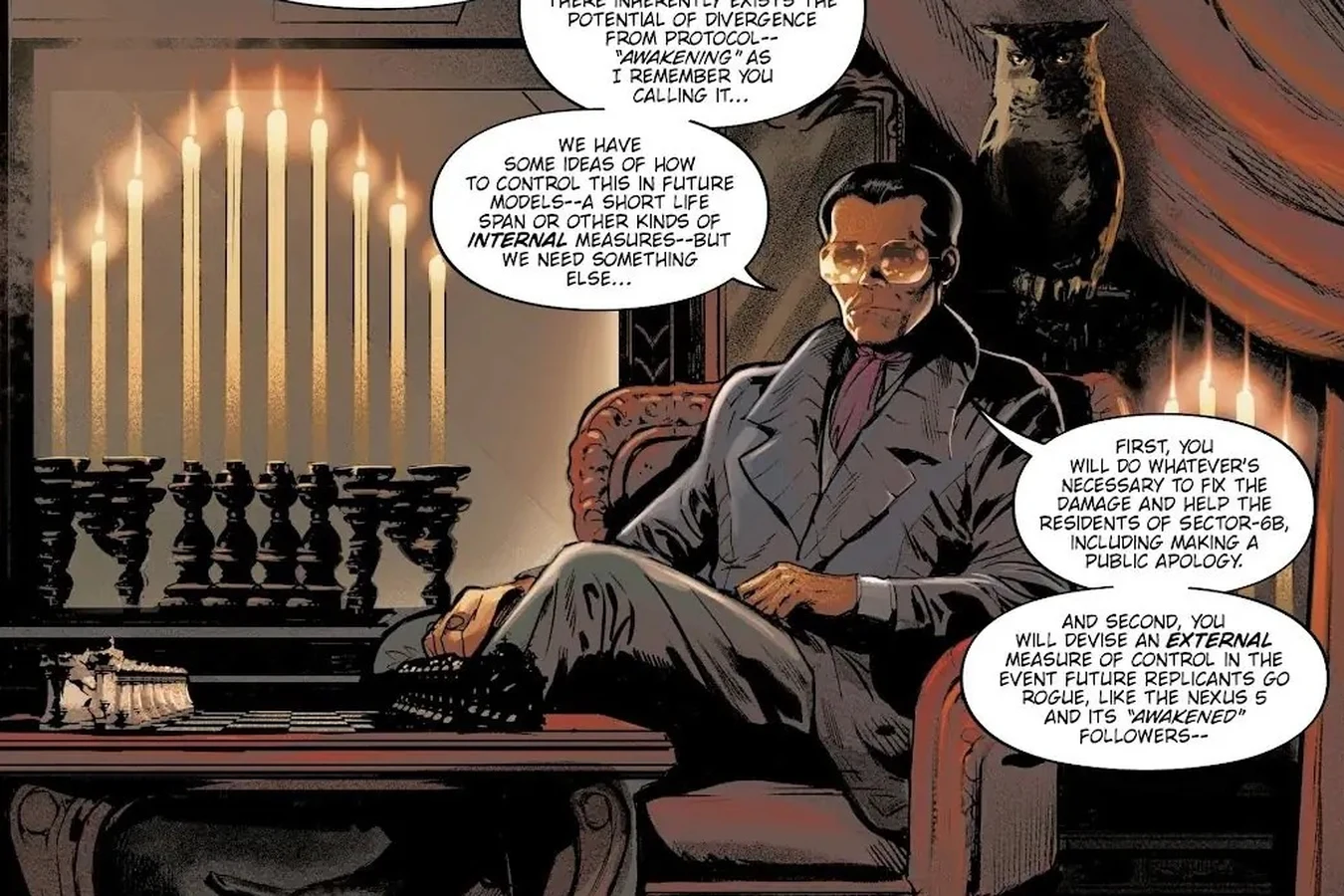
Blade Runner 2029 gave Eldon a hard start, growing up poor in a mountain cabin above the town of Edens in California with his sister Alice Tyrell. He built the company around genetic engineering rather than machines, and his replicants were grown flesh rather than robots. The virtual reality game Blade Runner: Revelations named Kano Nakayama as a founding partner and the firm's chief engineer. Eldon kept full control, and the company followed his tastes in everything from its products to the shape of its headquarters. Most staff never met him, and he ran the business from the top of the pyramid.
Building Replicants For Off-World
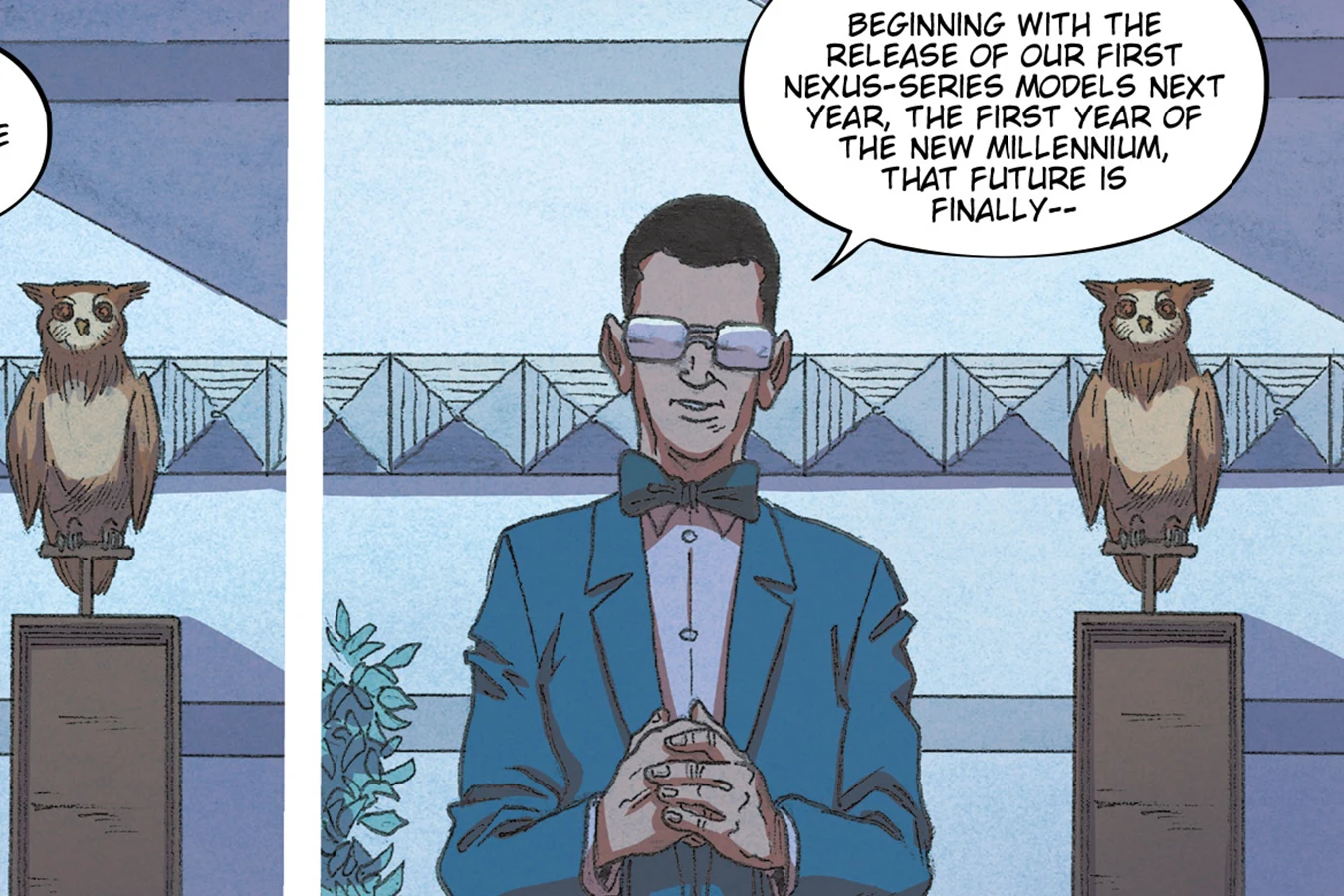
The comic Blade Runner 2019 reprinted a 1999 promotional film in its back matter, in which Eldon presented the Nexus line for the new millennium with his owl Athena on his arm. The same issue carried a July 2009 company memo naming Charles Edevane as a project head. Replicants went to the Off-world colonies as workers, soldiers and pleasure models for the hazardous exploration and settlement of other planets. Blade Runner: Origins was set in 2009 and opened with the death of Tyrell bioengineer Lydia Kine, found hanged while the firm worked on the Nexus-5.
Launching The Nexus-6
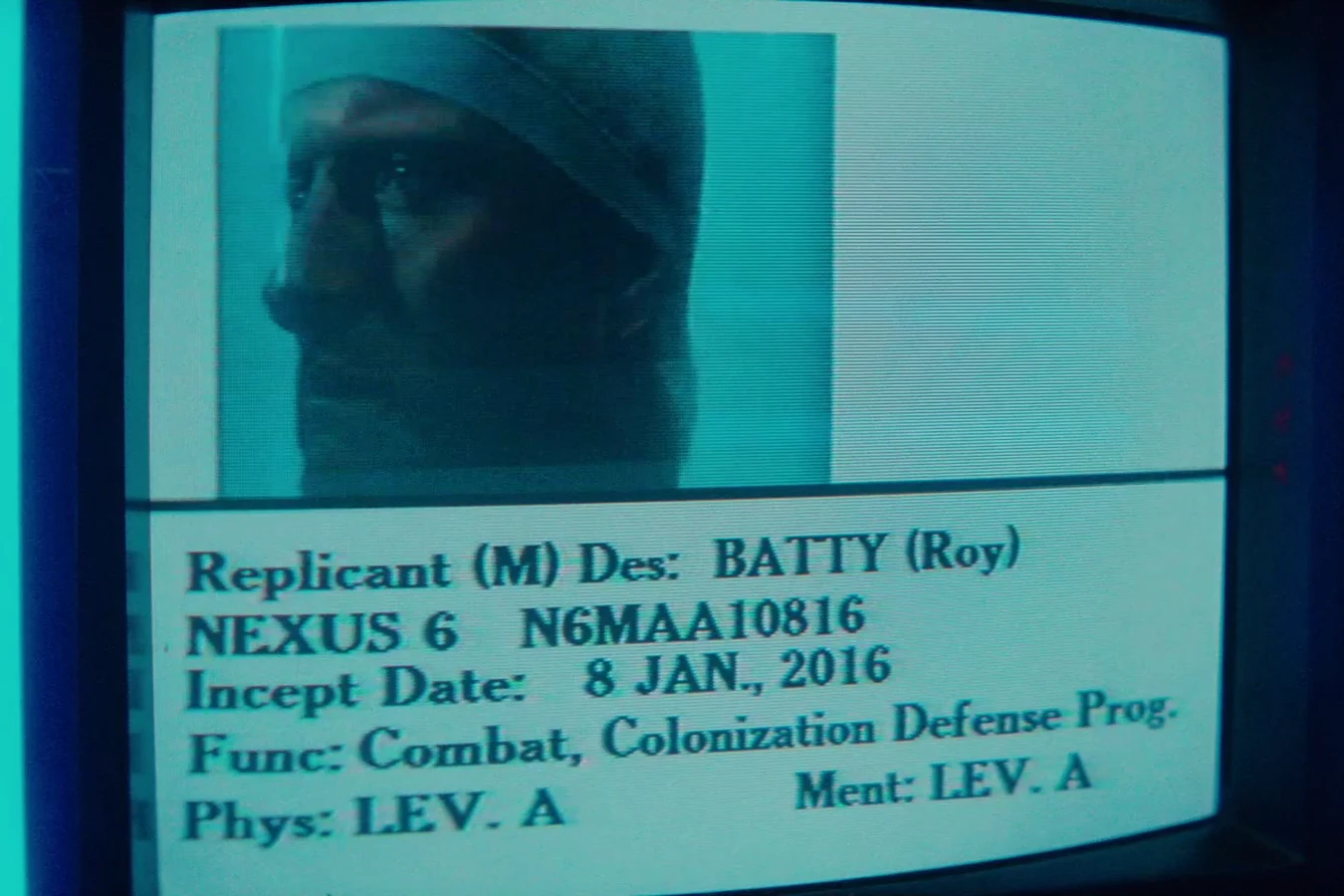
The Nexus-6 was superior in strength and agility to humans and at least equal in intelligence to the engineers who made it. Eldon gave the model a four-year lifespan as a safeguard, because replicants could form their own emotional responses over time. Hannibal Chew designed eyes for the company under contract, and the genetic designer J. F. Sebastian worked on the Nexus-6 from his apartment in the Bradbury Building. The replicant types page covers the full model range, from labour units to combat and pleasure models.
Banning Replicants From Earth
After a bloody mutiny by a Nexus-6 combat team in an Off-world colony, replicants were declared illegal on Earth under penalty of death. Special police units called blade runners were ordered to retire any replicant found on the planet. In 2019 six replicants seized a shuttle and came to Earth, and some were killed in an electrical field while trying to break into the Tyrell Corporation. Leon Kowalski had been hired as a waste disposal engineer six days earlier, and he shot blade runner Dave Holden during a Voight-Kampff test in the interview room.
Murder Of Eldon Tyrell
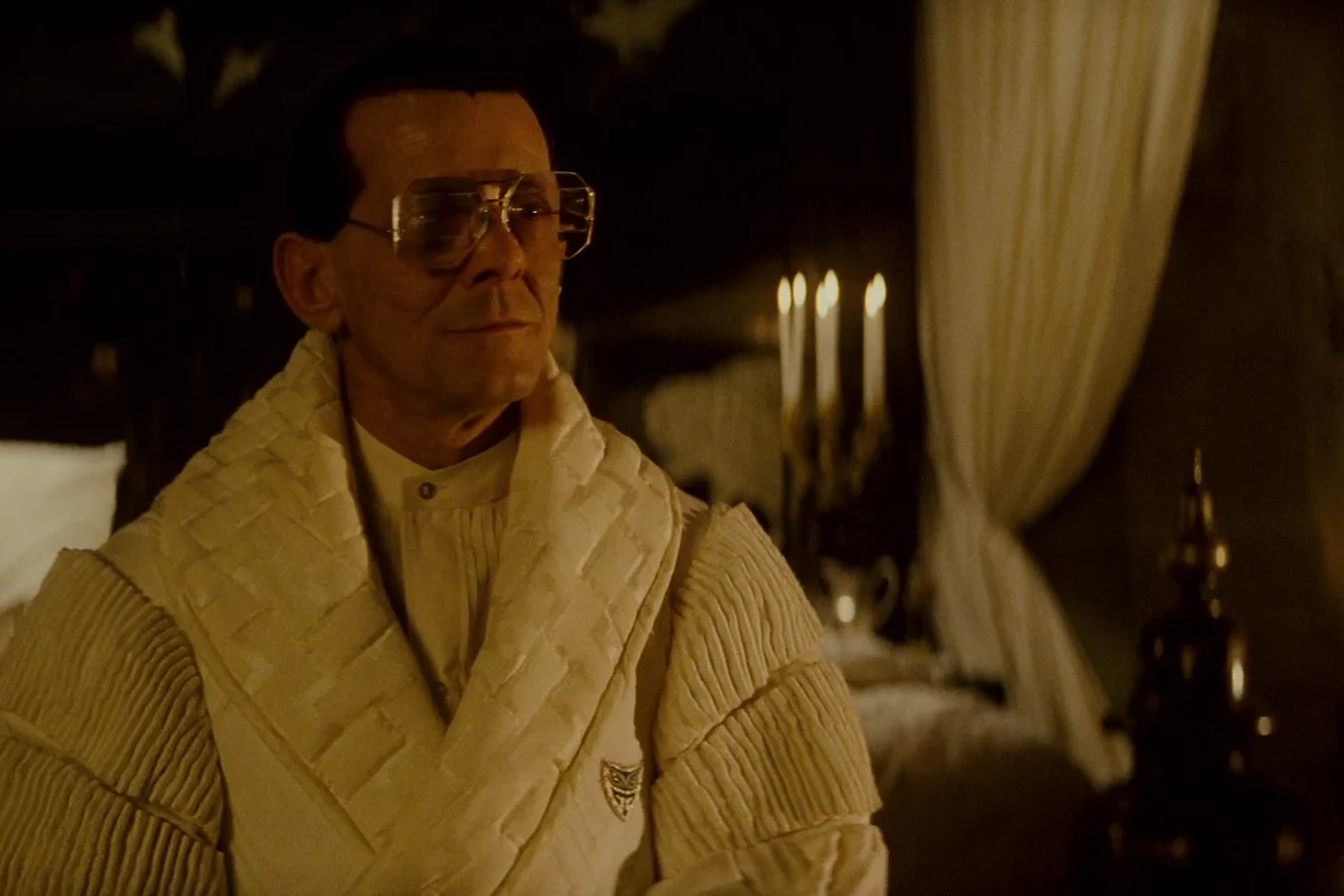
Roy Batty wanted more life and used Sebastian to reach his maker. Sebastian played chess with Eldon by remote, and Batty fed him a winning move that got the pair into the private elevator late at night. In the candlelit bedroom Eldon told Batty that his lifespan could not be changed and called him the prodigal son. Batty kissed him, then crushed his skull and killed Sebastian as well. The murder left the company without its founder in November 2019, and Rick Deckard learned of it from police radio.
Succession And The Nexus-8
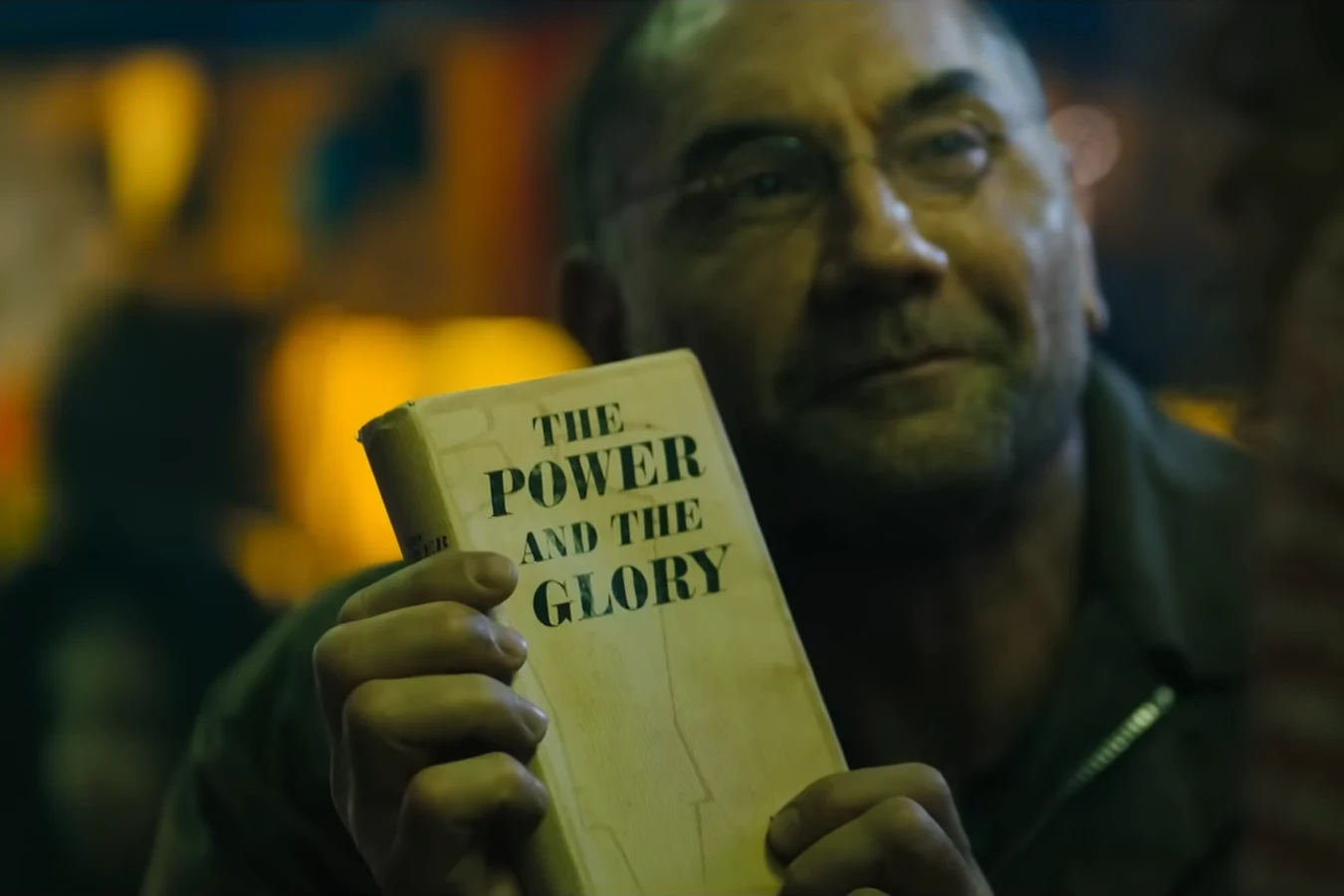
Sources gave the company different heirs after the murder. In Revelations, set in 2023, Lilith Tyrell headed the firm, and Nakayama remained its chief engineer. The Fiery Angels setting book of the roleplaying game said the company rushed out the Nexus-8 around 2020, with open-ended lifespans and an ocular implant for tracking. Many Nexus-8 replicants ran or went underground before the ban that followed. In the 2049 film, the blade runner K retired the Nexus-8 Sapper Morton and confirmed him by the serial number under his eye.
Surviving The Blackout
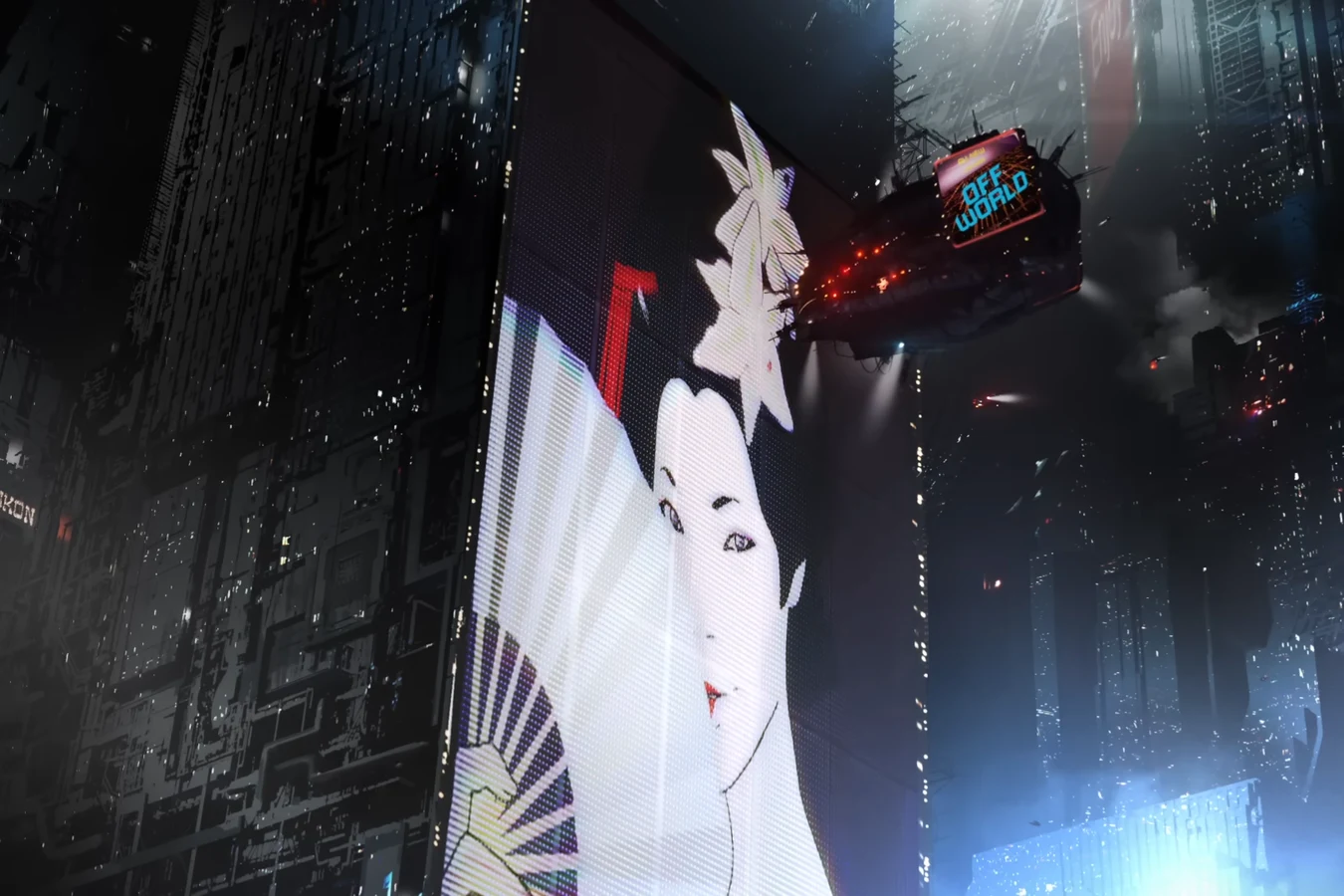
The short film Blade Runner Black Out 2022 showed replicants Iggy and Trixie setting off a nuclear blast over Los Angeles in 2022. With the help of a human technician named Ren, the blast created an electromagnetic pulse that wiped the city's data. Tyrell's registry of replicants was lost, and nobody could tell from records who was human and who was not. In the Titan comics, an attack on the company's servers that year erased the records stored at the pyramid, and the building was abandoned soon after.
Bankruptcy And Prohibition
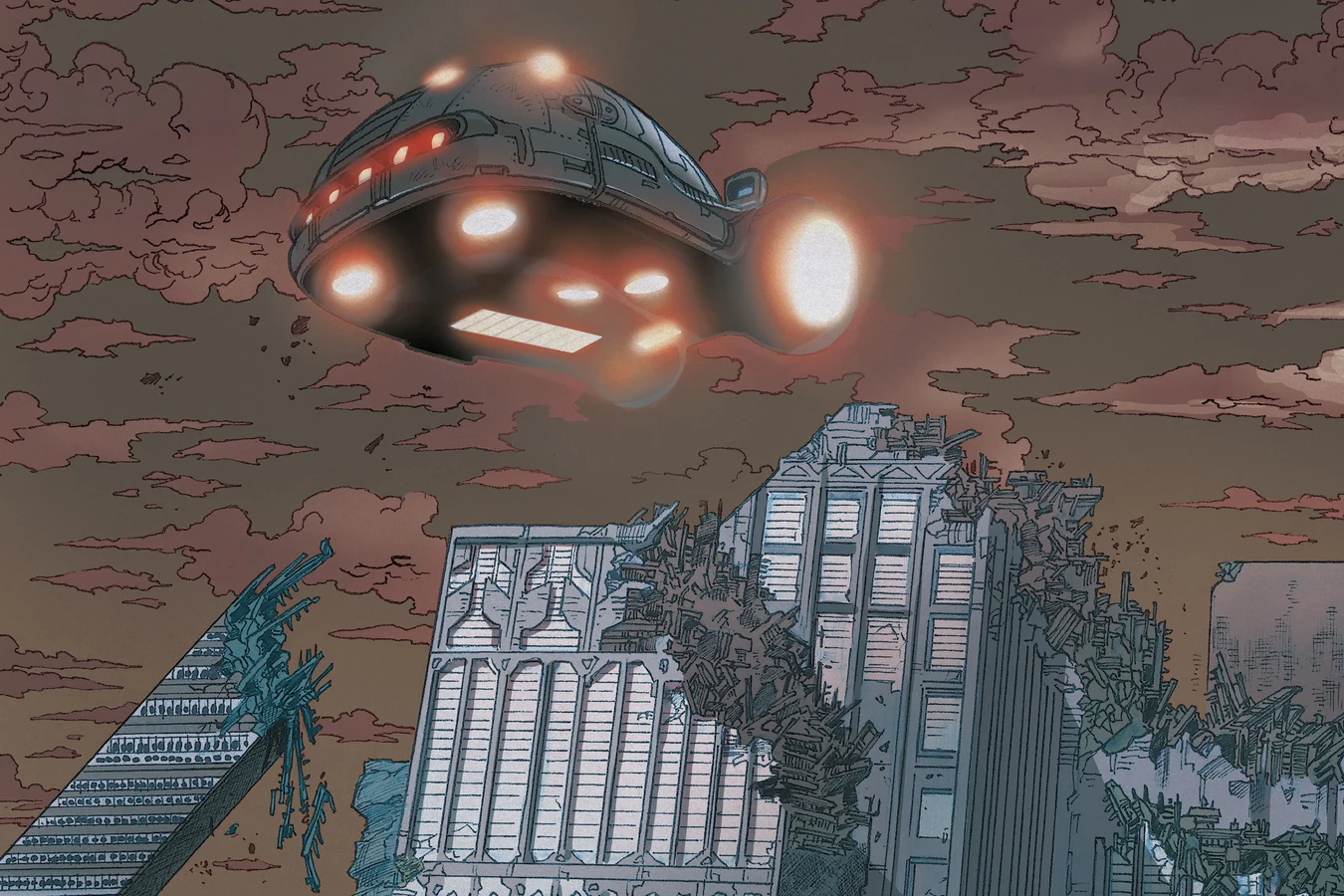
The opening text of the 2049 film said the Tyrell Corporation went bankrupt after the Blackout. The roleplaying game dated a Replicant Prohibition Act to 2023 and the bankruptcy to the same years. In issues 9 to 12 of Blade Runner 2019, the empty pyramid stood in ruins, with a worker named Fost still inside who believed it was 2022. The comic also showed that the Canaan Corporation of Alexander Selwyn took in Tyrell engineers after the Blackout and made new models for wealthy clients.
Absorption By Wallace
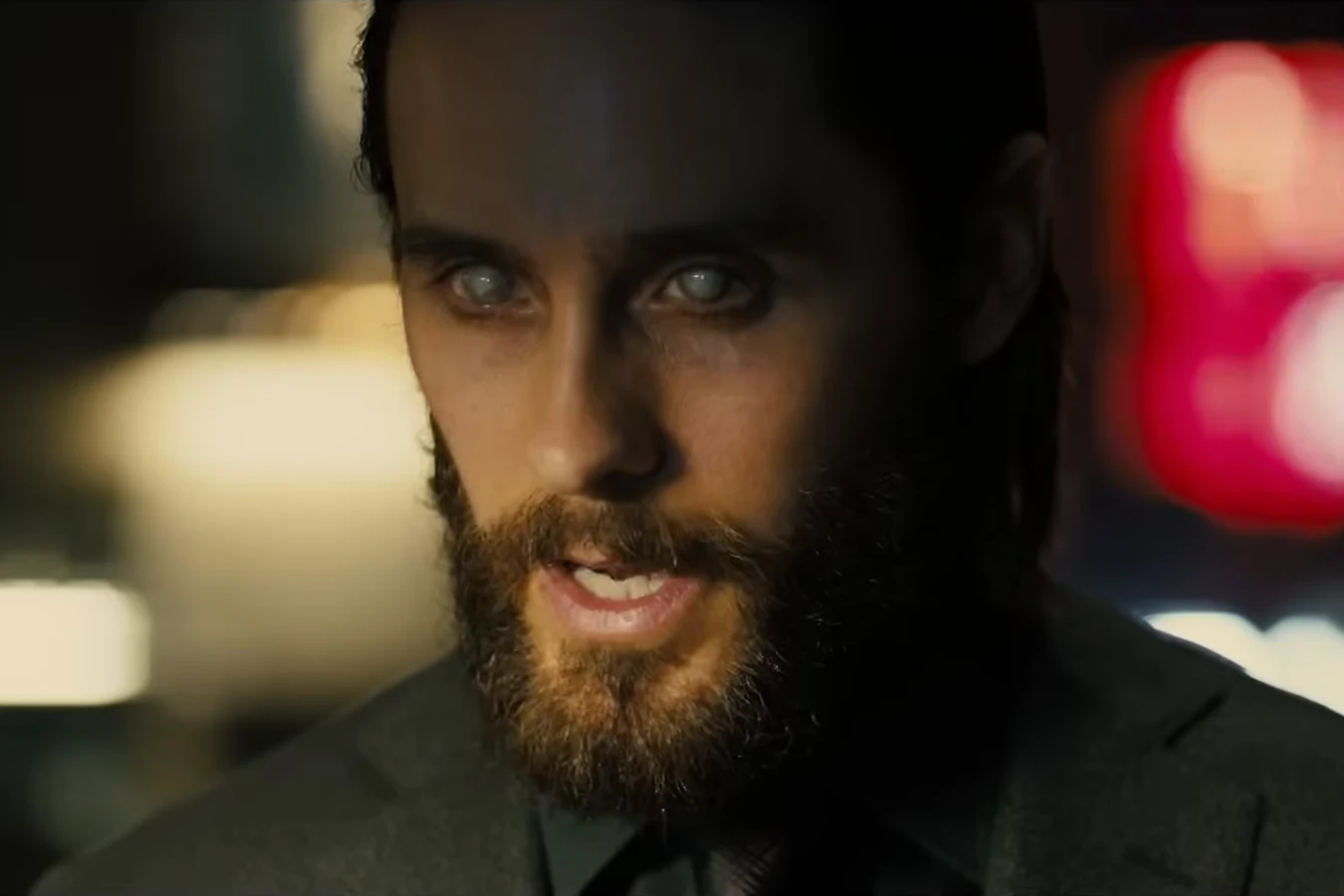
Blade Runner 2049 said that Niander Wallace bought the remains of the company and began a new line of replicants. The roleplaying game gave the purchase as 2028, and the game left the old pyramid in Sector 4 of Los Angeles. In the short film 2036: Nexus Dawn, Wallace asked lawmakers to lift the ban and showed them his obedient Nexus-9. By 2049 the Wallace Corporation held old Tyrell files, including the recording of Deckard testing Rachael. In Blade Runner: Black Lotus, set in 2032, the old pyramid still held a private Tyrell sanctum, and the series followed Elle into the remains of the company's world.
Headquarters And Facilities
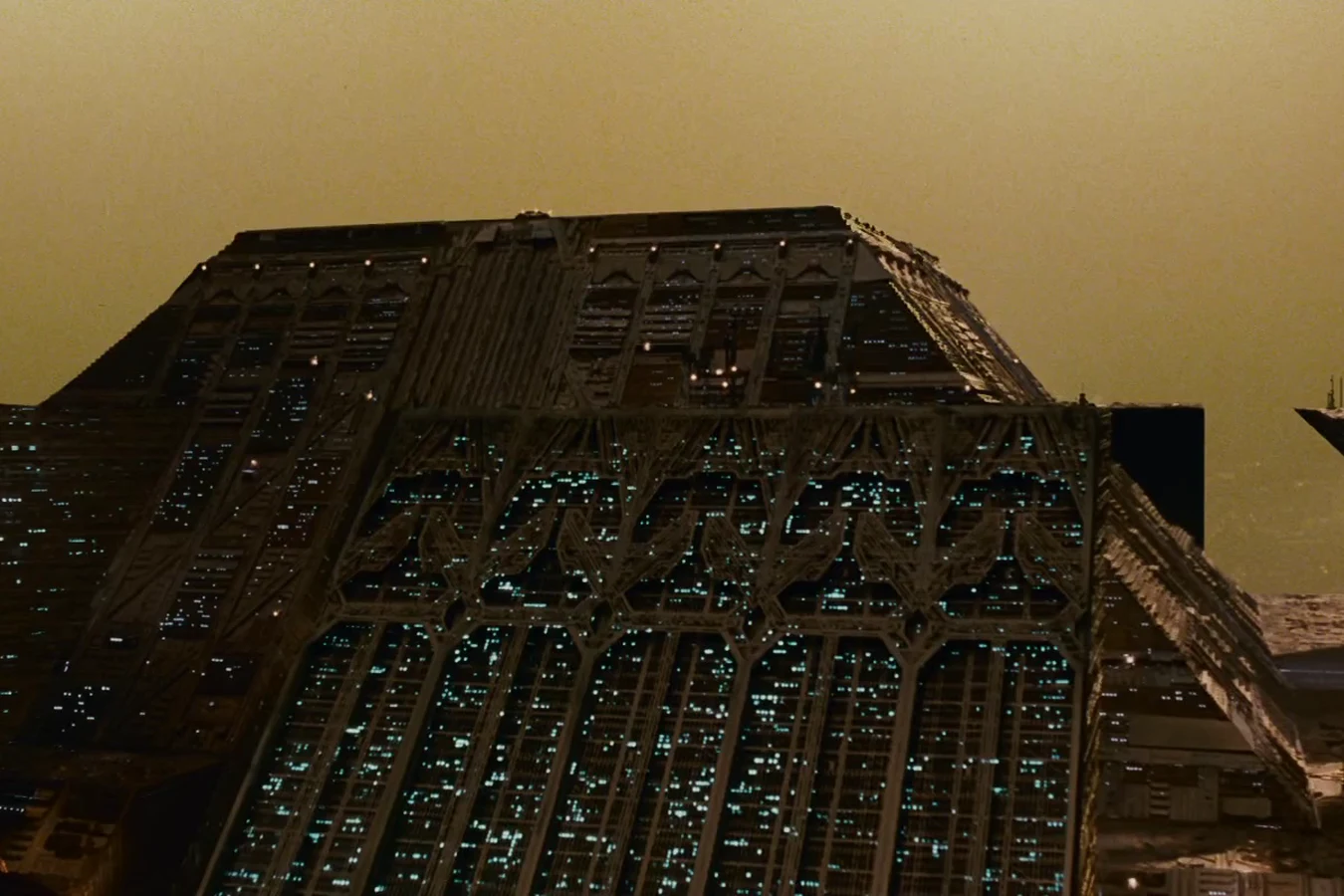
The headquarters was a pair of vast stepped pyramids in Los Angeles, lit from inside and ringed by searchlights. Flames from refinery towers burned in the landscape around them, and spinners landed on pads near the top. Eldon lived and worked at the summit, while offices, laboratories and testing rooms filled the levels below. The company also relied on outside workshops for parts of its products. In Black Lotus the pyramid was still standing in 2032, and the roleplaying game kept it in Sector 4 of Los Angeles as an empty landmark of the old company.
Inside The Tyrell Building
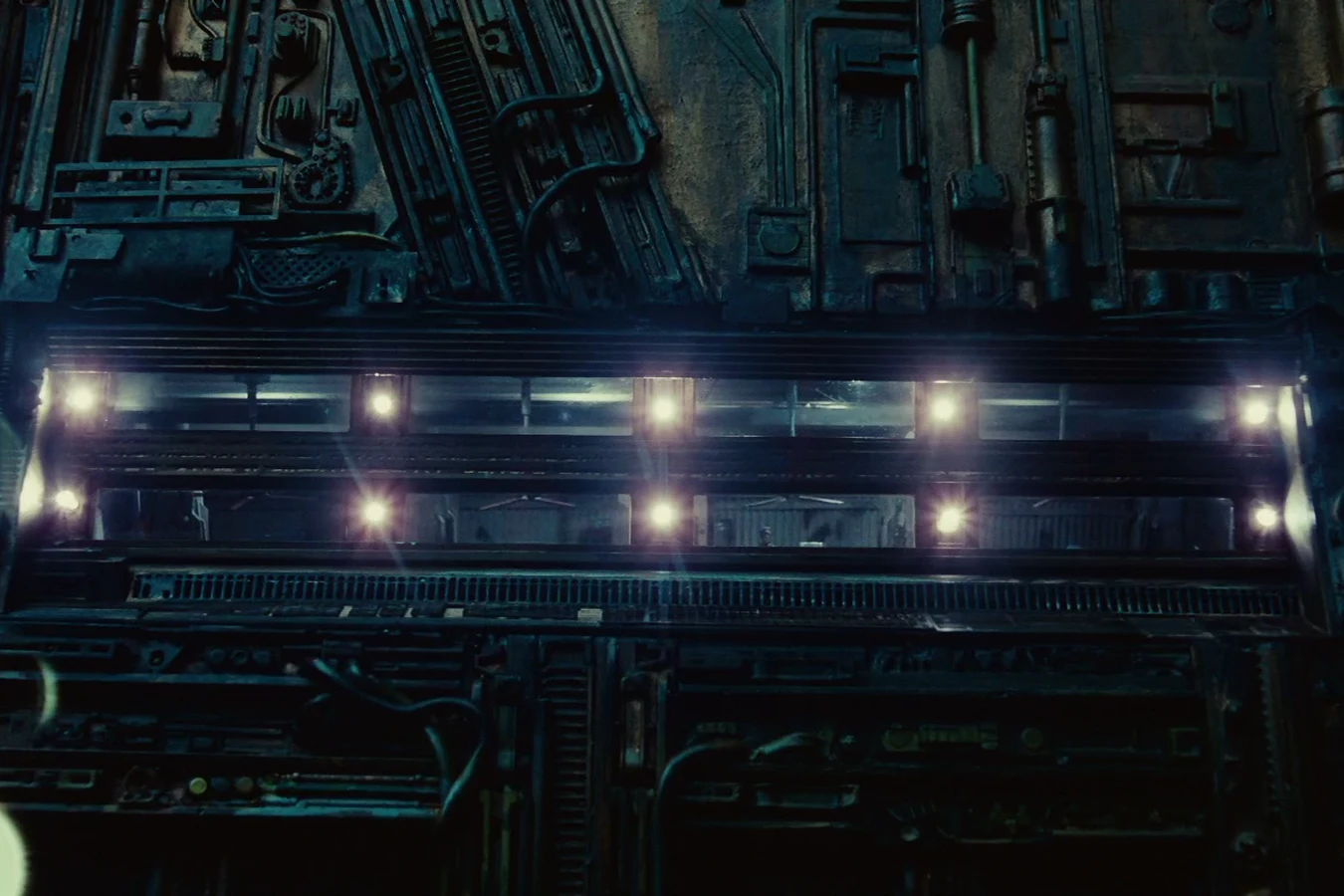
Production notes in Future Noir meant the building to be more than a mile high, with 600 to 900 stories. Blade runners tested new employees in an interview room with a slowly turning ceiling fan, where Holden ran the Voight-Kampff test on Leon. An electrified field guarded the building, and some of the escaped replicants died in it when they tried to break in. A private elevator ran to Eldon's apartment at the summit and asked riders for voice identification. Batty and Sebastian used it on the night of the murder.
Tyrell's Office
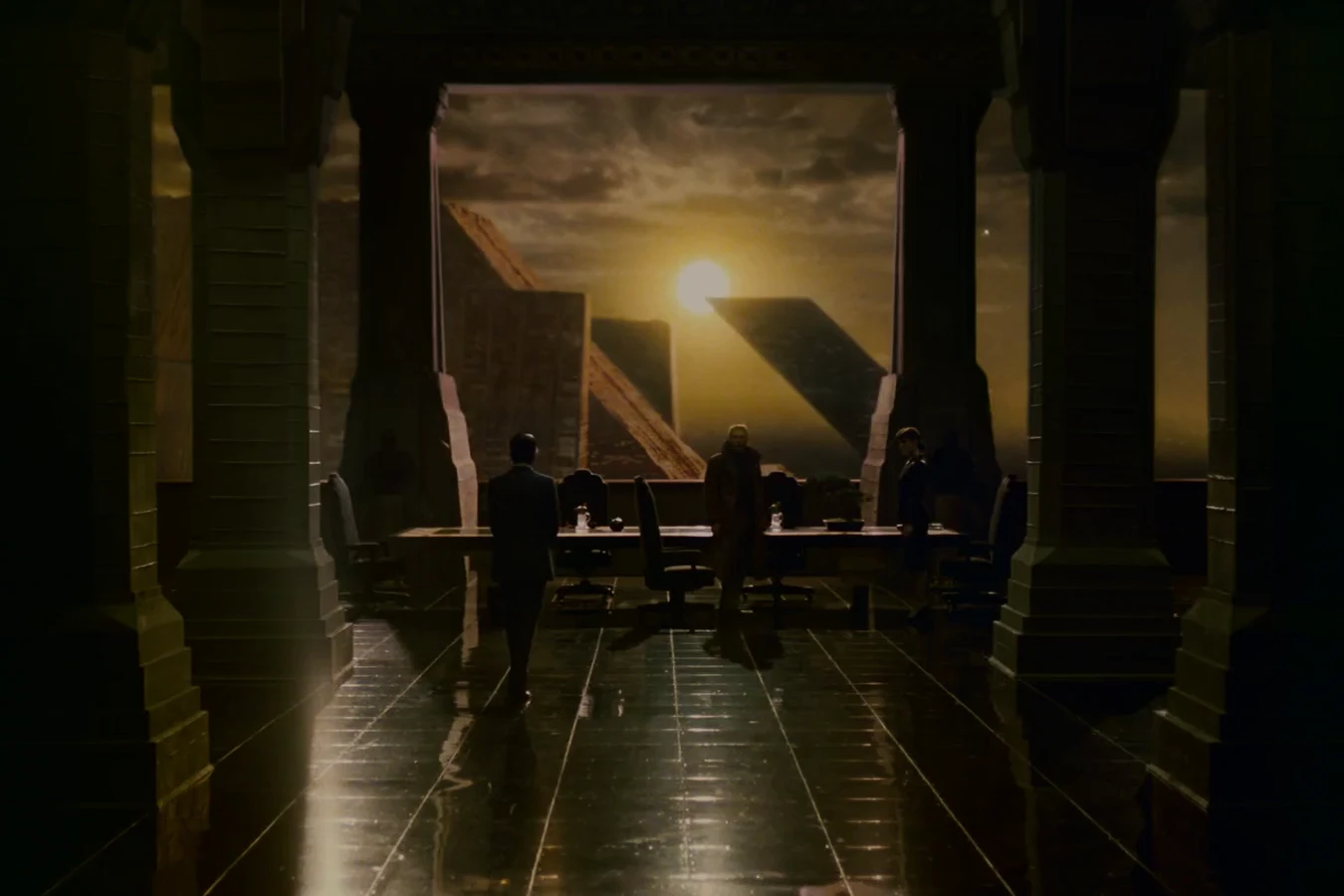
The office where Deckard met Eldon and Rachael was a huge room of stone columns, with a wall of windows facing the setting sun. Rachael lowered the blinds before the test began, and the owl flew across the room to its perch. Deckard asked over a hundred questions before he found that Rachael was a replicant. Eldon then told him she did not know, and the scene set up the questions about memory that ran through the rest of the film. The bedroom above was full of candles and antiques.
Supplying Eyes And Designs
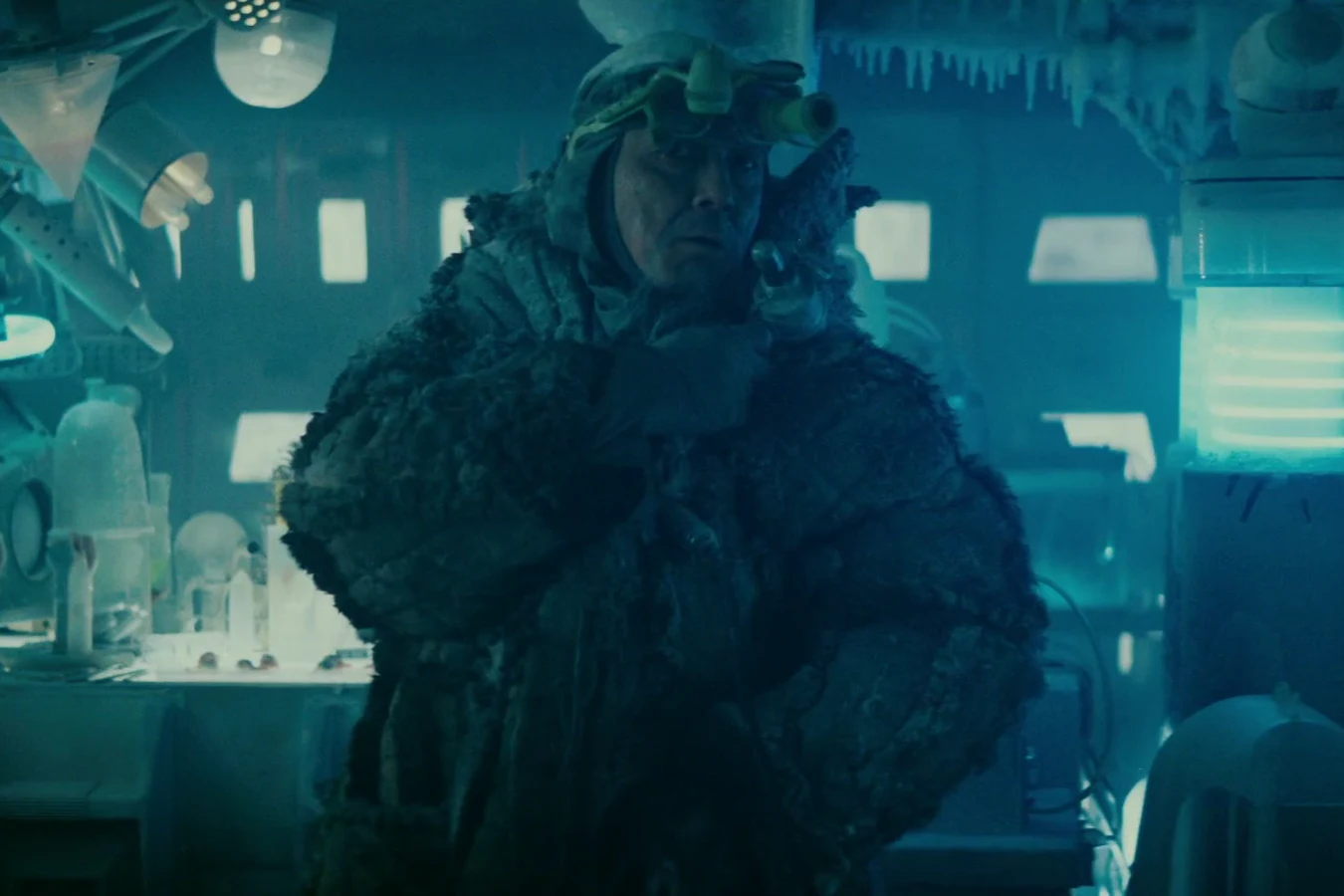
Not every part of a replicant was made inside the pyramid. Chew designed replicant eyes in his own freezing laboratory elsewhere in Los Angeles and wore a heated fur coat while he worked. Sebastian did his genetic design work from his apartment in the decaying Bradbury Building, surrounded by the living toys he built. Both men worked for the company as specialists, and neither knew the whole design. This spread of work was what let Batty trace a path from Chew to Sebastian and then up to Eldon himself in 2019.
Replicant Products
Nexus Generations
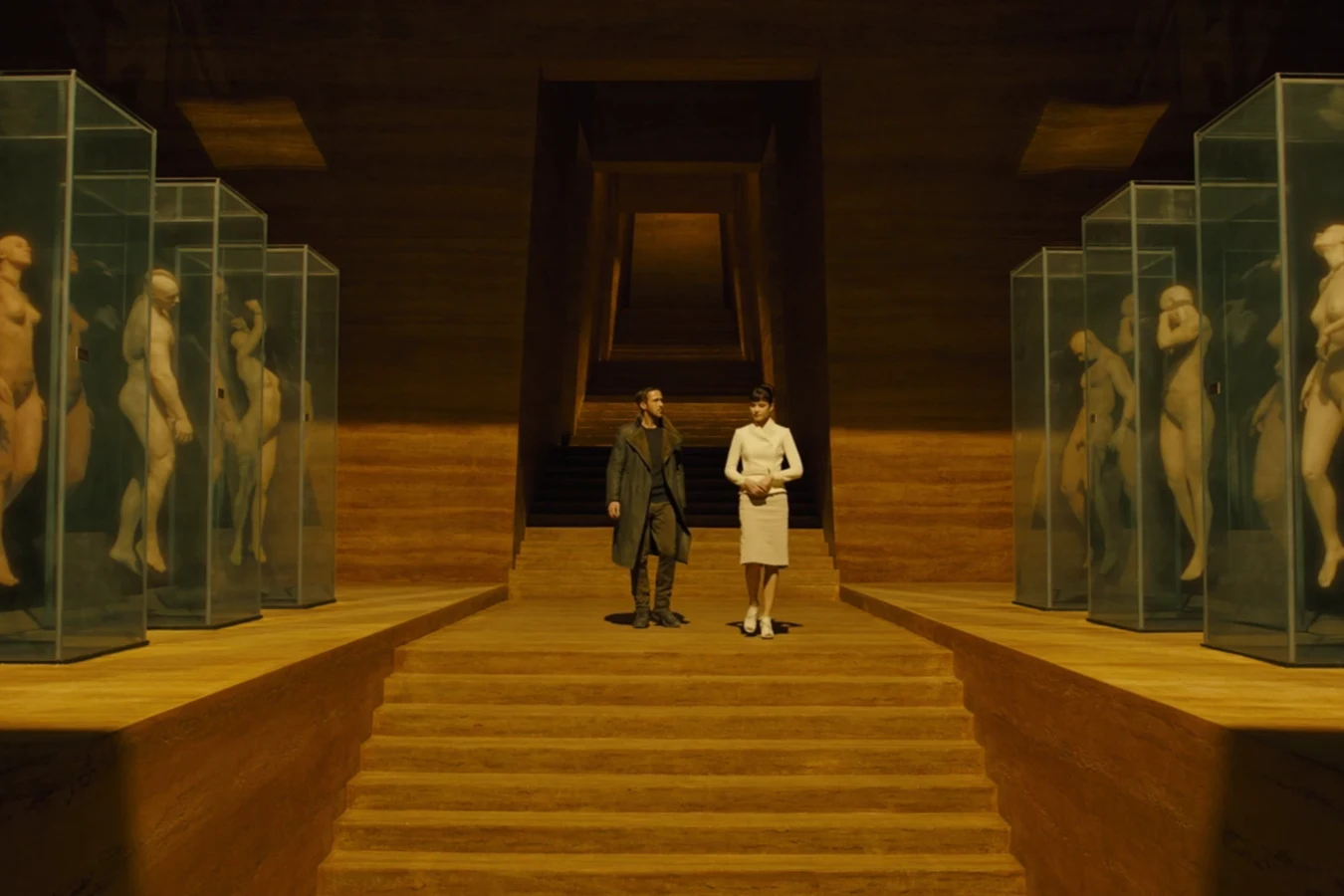
The company sold its replicants in numbered generations, each one closer to human. The Nexus-5 appeared in Origins, and the Nexus-6 of 2019 was the most advanced model in the first film. The Nexus-7 designation came from Rachael, an experimental model, and the Nexus-8 followed in the RPG and the 2049 film. Every model was grown from engineered tissue, with parts made by contractors such as Chew. After the sale, Wallace built the Nexus-9 on the same foundation.
Memory Implants And Rachael
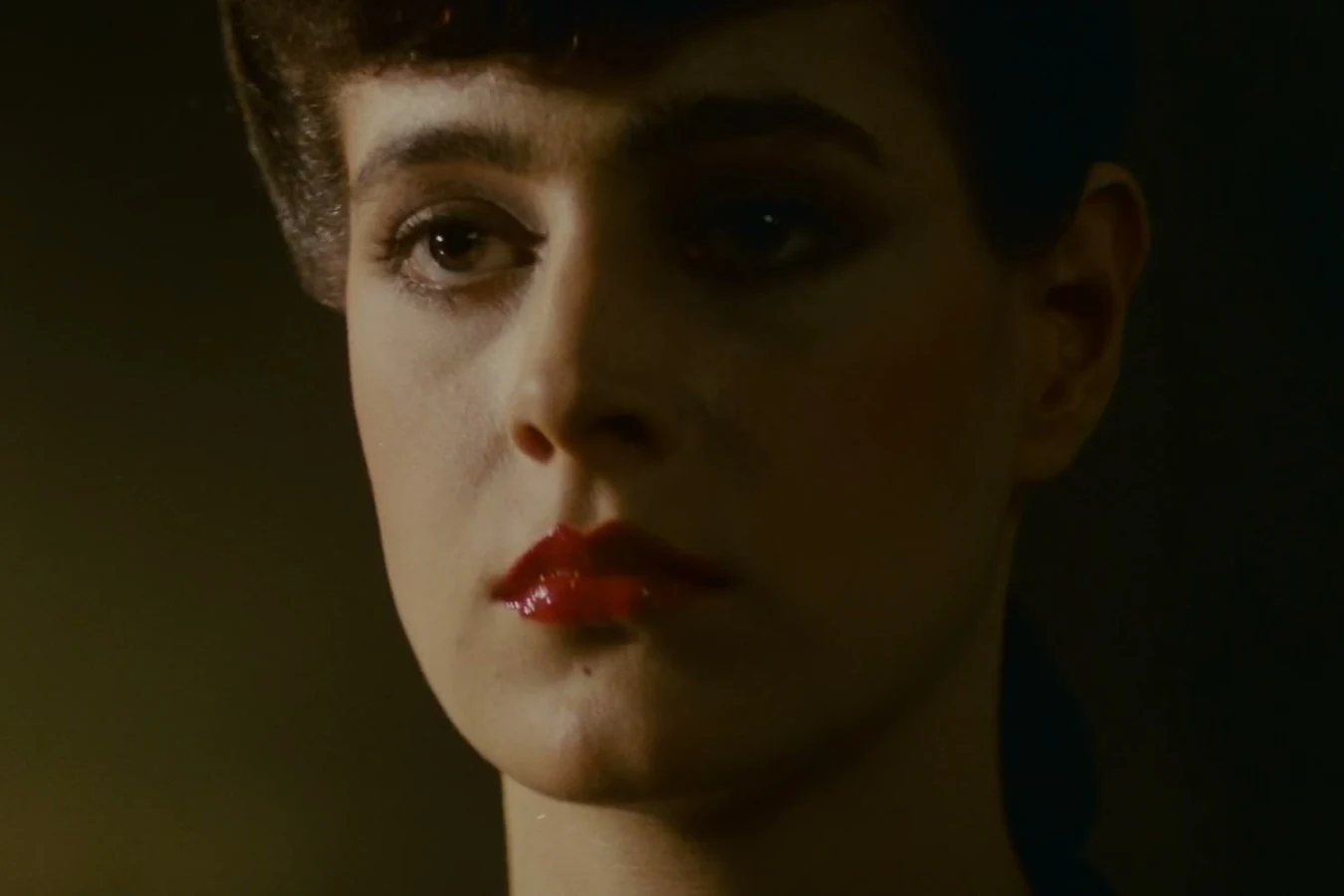
Rachael worked as Eldon's assistant and was his most advanced experiment. Her mind held memories taken from his niece, which gave her a past and made her believe she was human. Eldon told Deckard that implanted memories gave replicants a cushion for their emotions and made them easier to control. Rachael had no four-year limit known to her, and in the 2049 film she had borne a child with Deckard, the miracle that Wallace wanted to repeat.
Artificial Animals
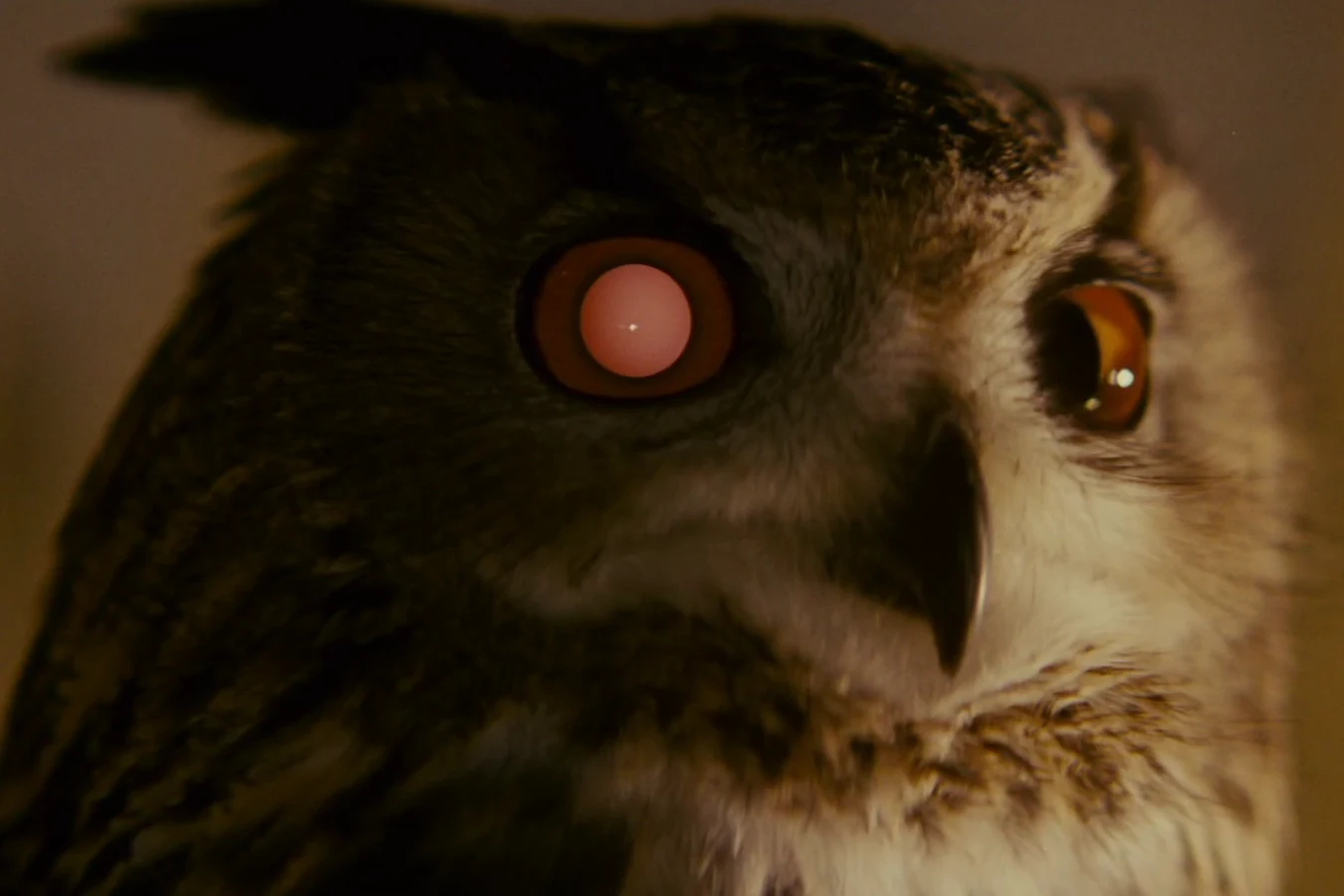
With real animals nearly gone, the company also made artificial ones. Deckard asked Rachael if the owl in the office was artificial, and she told him it was. In Blade Runner 2019 an artificial lion was one of Eldon's last works. The Jeter novel Blade Runner 4: Eye and Talon followed an owl that once belonged to Eldon and carried a band reading "Property of the Tyrell Corporation." Smaller makers sold other pets, such as the snake that Zhora used in her act, which Deckard traced to a dealer rather than to Tyrell.
Leadership And Staff
The company was run from the top of its pyramid by one man for most of its history, with a small circle of designers, contractors and relatives around him. The 1982 film named only a few of them, and most worked outside the headquarters on contract. Later stories added executives, engineers and heirs, though each continuity named a different successor after 2019. Other staff in the comics included the bioengineer Lydia Kine, the company voice Ilora Stahl and project head Charles Edevane, who are covered in the history above.
Eldon Tyrell
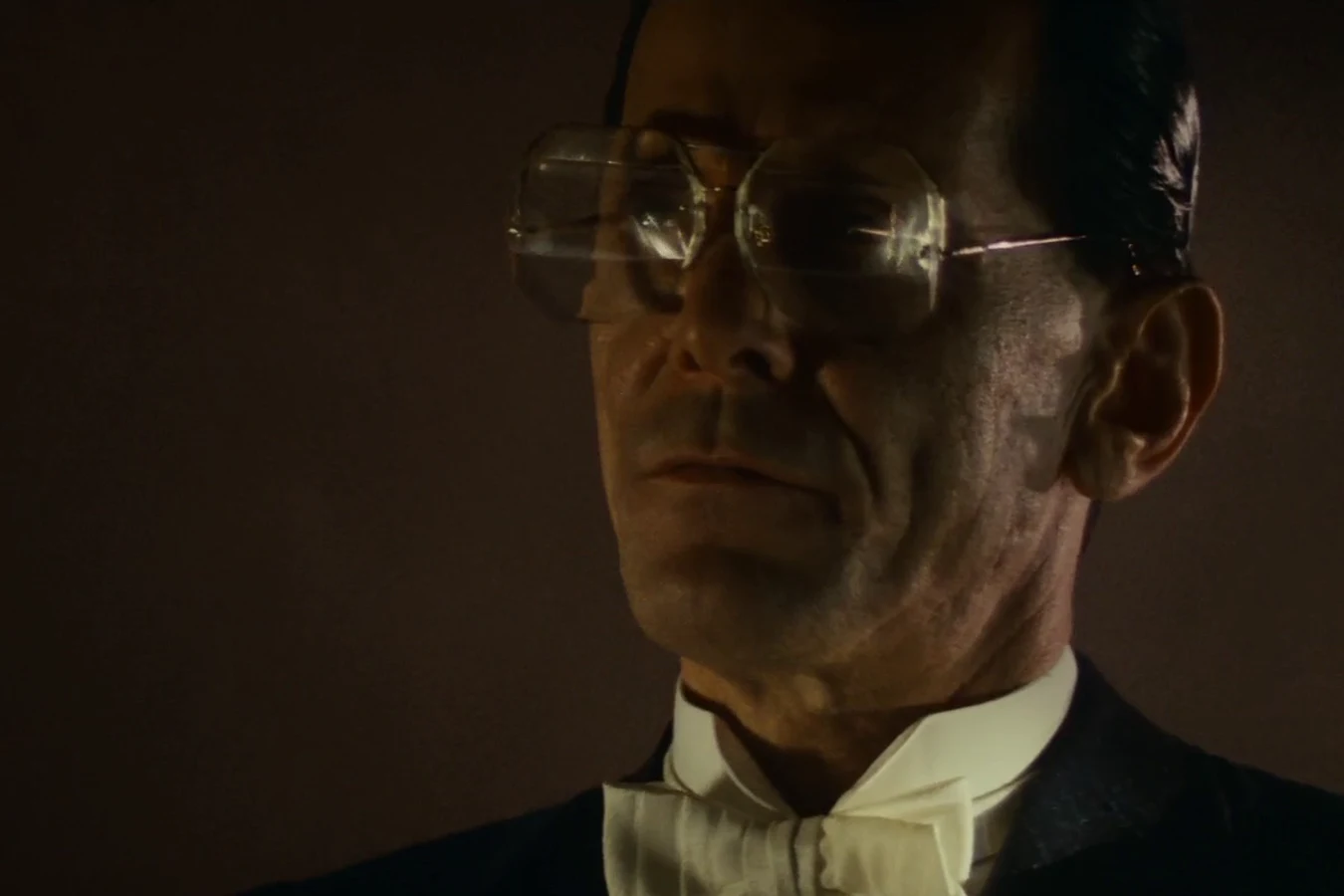
Eldon Tyrell founded the company and kept full control of it until his death in November 2019. He lived in a private apartment at the summit of the pyramid, slept in a candlelit bedroom and played chess by remote with his designers. He spoke of commerce as the goal of the business and of Rachael as an experiment. Played by Joe Turkel, he met Batty face to face only once, on the night he died. The comics and the Jeter novels later gave him a sister, a brother and a niece, and Eye and Talon added spare bodies kept in suspension.
Hannibal Chew
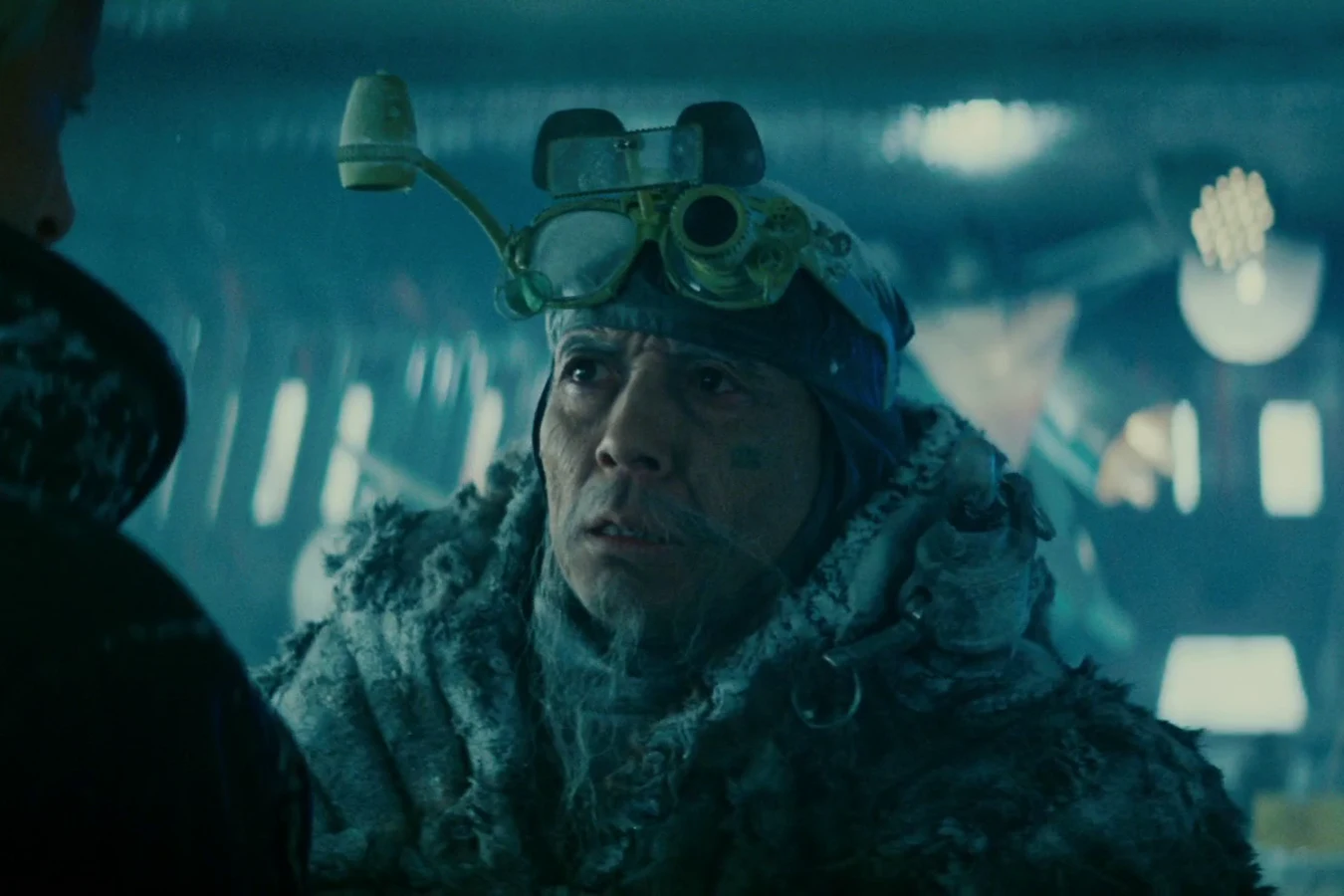
Hannibal Chew was a genetic designer who made artificial eyes for the company, and he designed the eyes of the Nexus-6. He worked alone in a freezing laboratory in Los Angeles, wearing a heated fur coat, rather than inside the pyramid. In November 2019 Leon and Batty broke into his lab and pressed him for answers about their lifespan. Chew said he worked only on eyes, so he sent them to Sebastian, a designer who could get them to Eldon. He was played by James Hong.
J. F. Sebastian
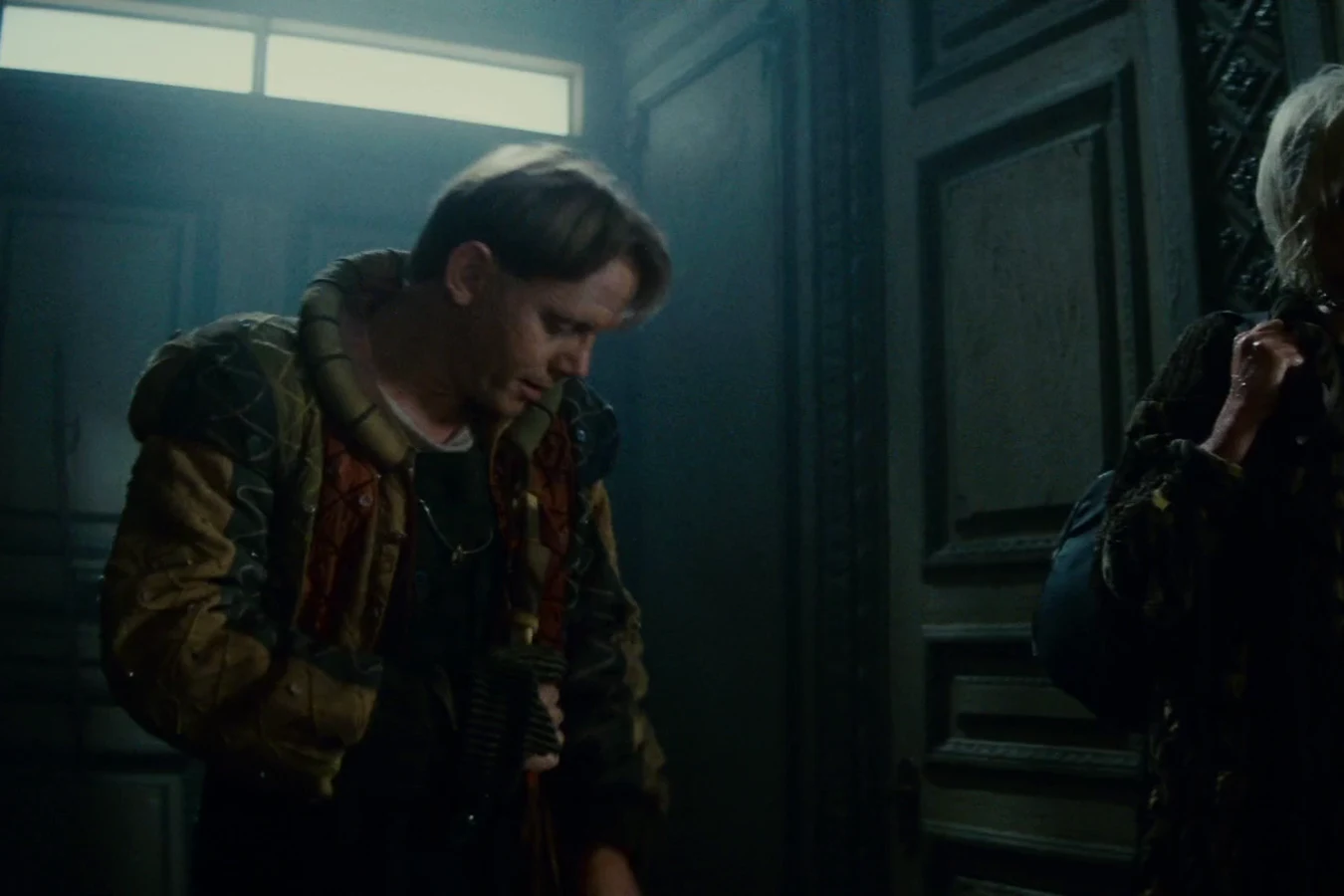
J. F. Sebastian was a genetic designer who worked for the company from his apartment in the Bradbury Building. He suffered from Methuselah syndrome, which aged his glands too fast, so at twenty-five he looked like a much older man. He lived almost alone with the living toys he built for company, and he played chess with Eldon by remote. Pris won his trust, and Batty used his chess game to reach the penthouse. Sebastian died the same night as his employer, played by William Sanderson.
Rachael The Assistant
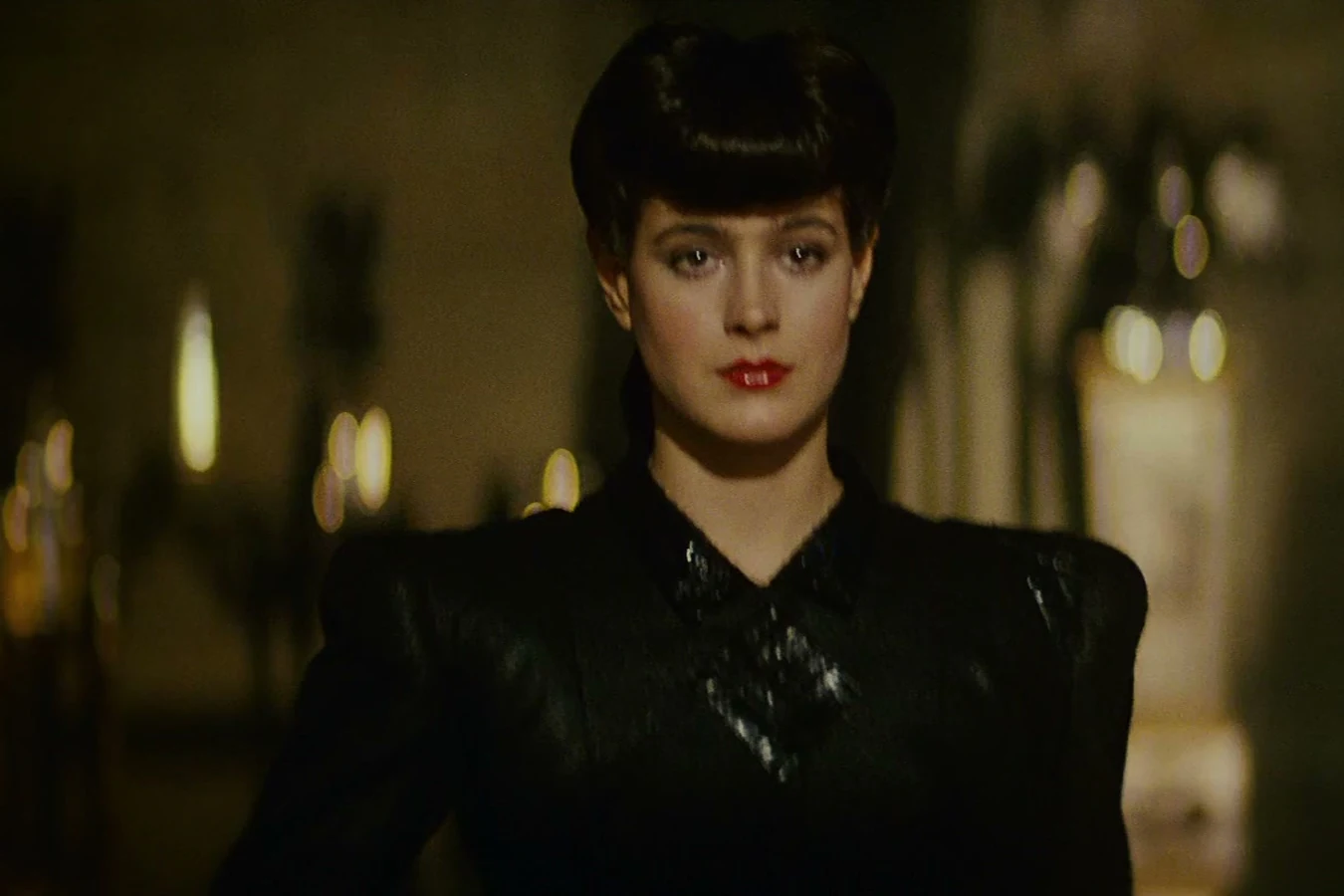
Rachael was the only member of the staff the film showed inside the headquarters. She worked as Eldon's assistant, met Deckard in the office and lowered the blinds before her own test. She was also the company's most advanced product, built with the memories of Eldon's niece and unaware that she was a replicant. After Deckard learned the truth, she left the pyramid and never returned to it. The Jeter novels later made the niece a person of her own, and the 2049 film showed that Wallace still held the record of her test.
Lilith Tyrell
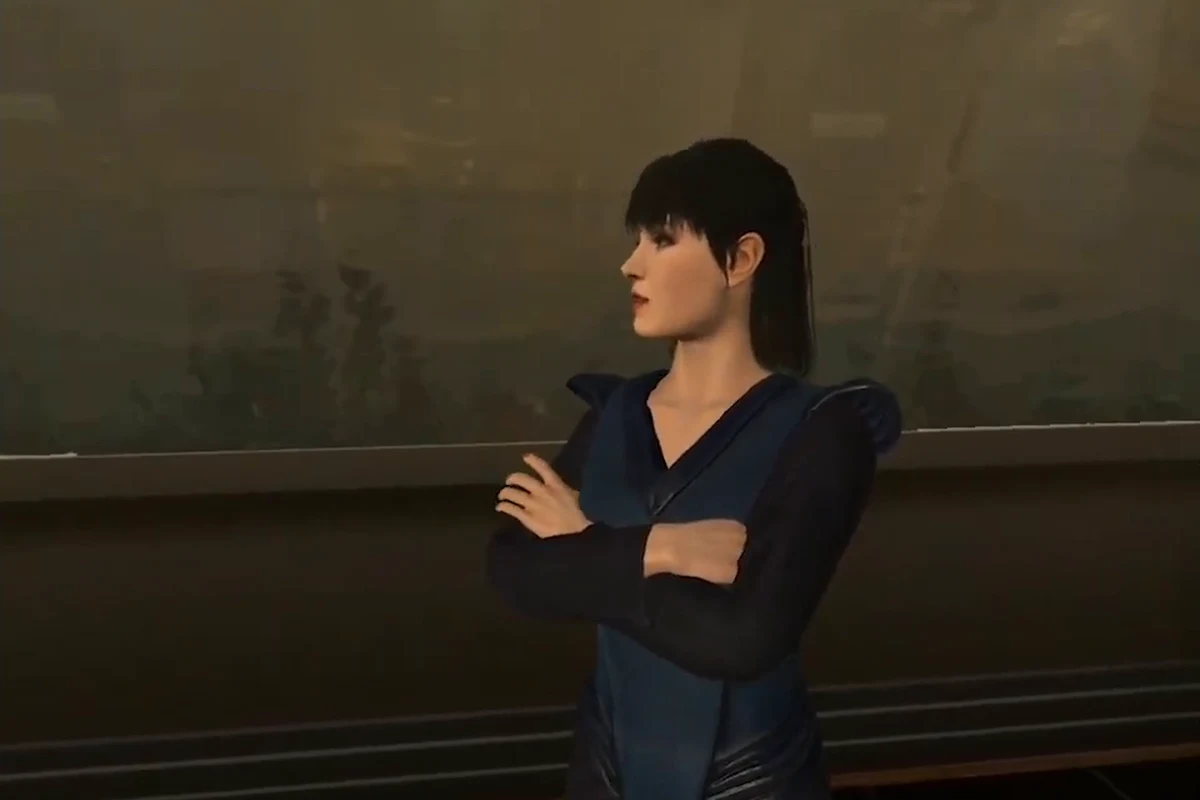
In Revelations, set in 2023, Lilith Tyrell was the current head of the company and a niece of the late Eldon. Blade runner Harper met her at Tyrell headquarters, where portraits of the founder and of Lilith hung in a lobby filled with relics and art. She asked him on a balcony whether he ever wondered if he was a replicant. Her chief engineer Kano Nakayama, a founding partner of the company, had disappeared two days earlier, and a photo of the two together became a clue in Harper's hunt for the Night Owl virus.
Security And Corporate Power
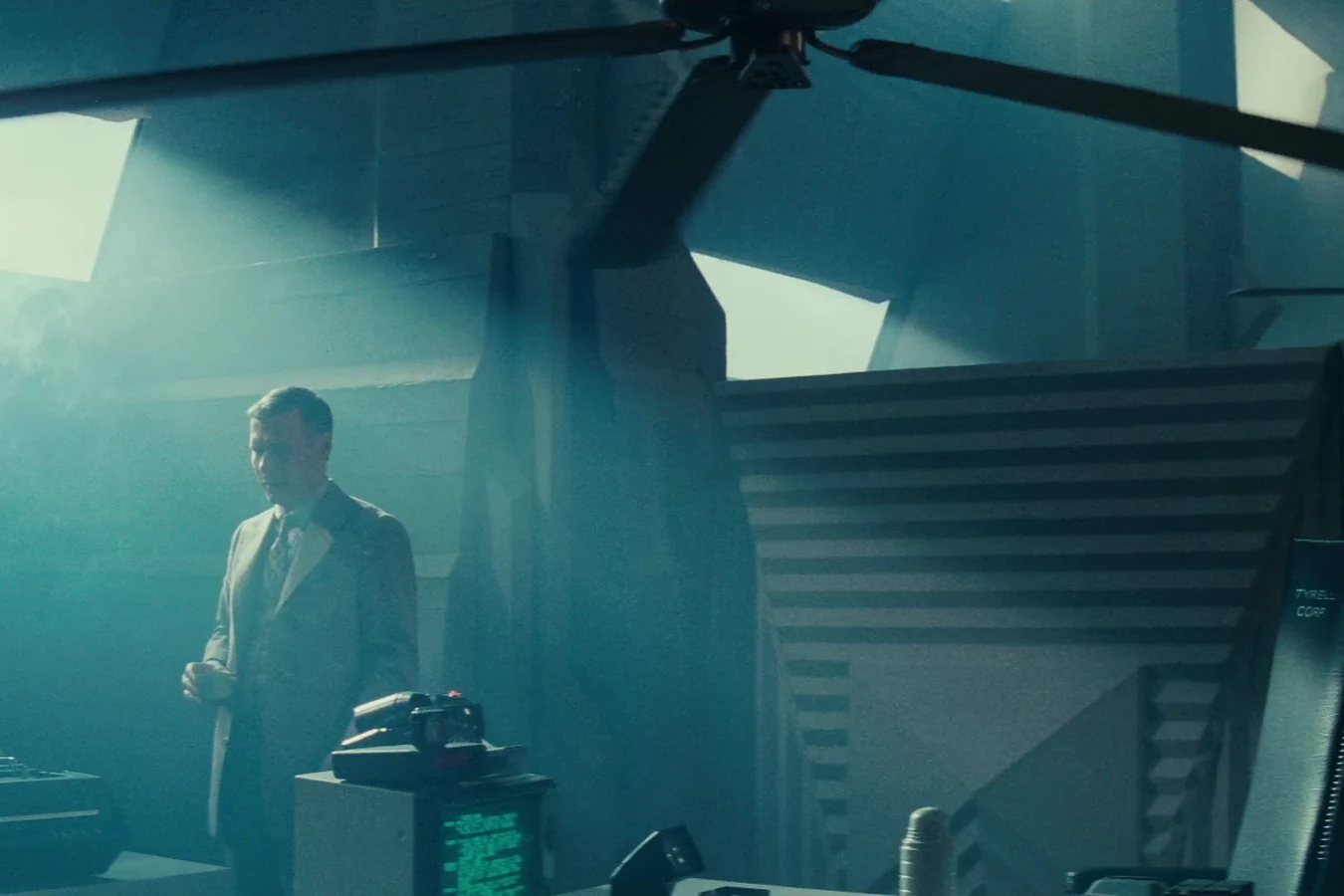
The company relied on the police to hunt its runaway products. Blade runners such as Deckard, Holden and Gaff worked for the Los Angeles police, not Tyrell, yet the firm hosted their tests in its own building and lent them Rachael for testing. Its electrified perimeter killed some of the escaped replicants in 2019. Eldon spoke of commerce as the purpose of the business, and the company had enough weight that the police went to it before they went to anyone else. In the RPG, its pyramid and its old secrets still drew blade runners years after the fall.
Rosen Corporation
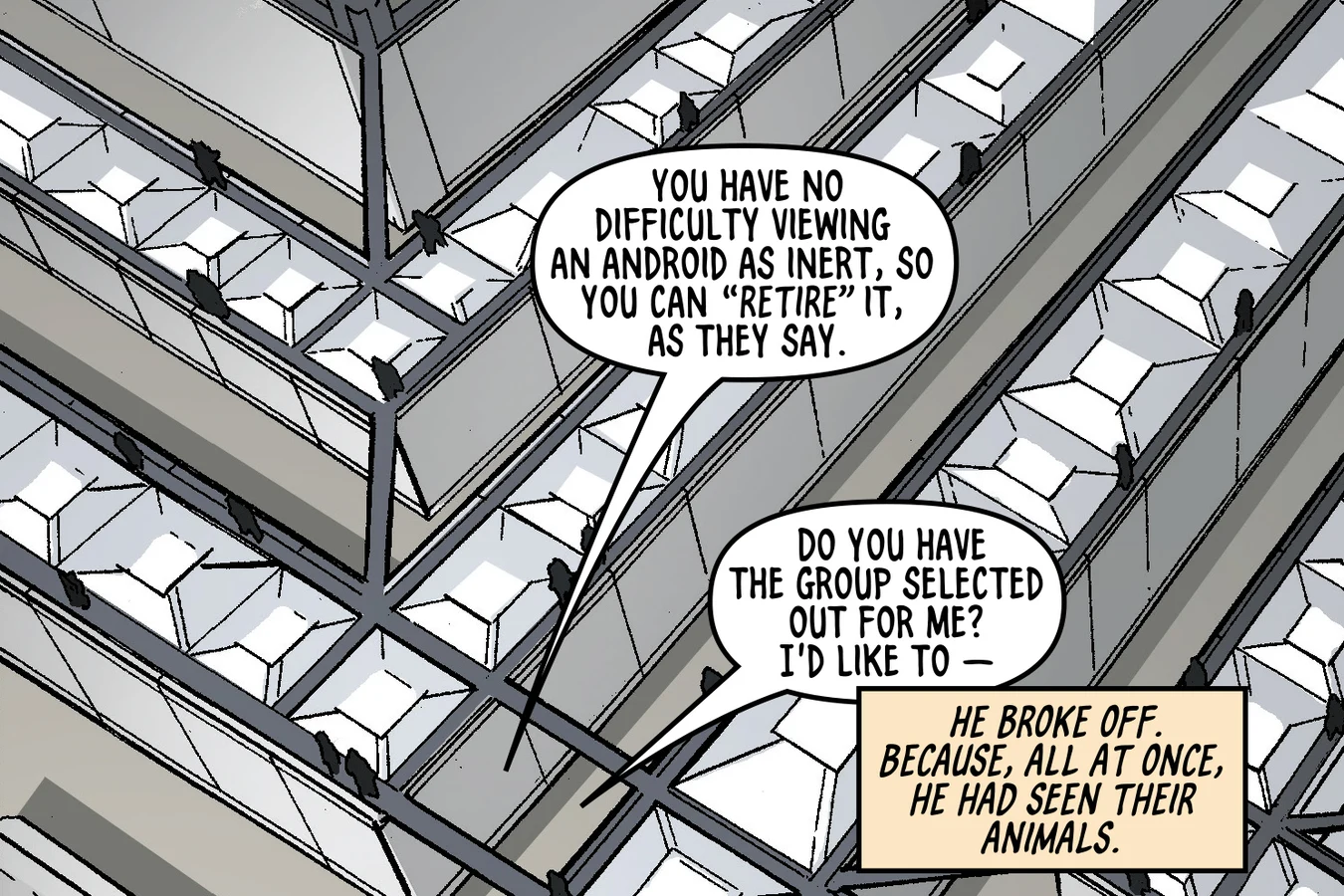
In Do Androids Dream of Electric Sheep?, the maker of the Nexus-6 was the Rosen Association, based in a building in Seattle. It was run by Eldon Rosen with his niece Rachael Rosen. The firm built its Nexus-6 brain units on Mars under colonial law, and complaints about its androids went to its factory representative East. The specifications for the brain unit had been released in August 1991. Police agencies protested from the start, as they had when the rival firm Sudermann sent its T-14 units to Earth in 1989.
The company's market was emigration. The U.N. gave every Mars colonist an android servant, and the Rosens built them to order. Rachael was legal Rosen property, a sales unit for prospective emigrants, not one of the escapees. Eight Nexus-6 androids had killed their way off a settlement near New New York on Mars and fled to Earth. Police chief Bryant wanted Deckard to go to Seattle first and prove that the Voight-Kampff scale worked on a Rosen sample before he hunted the remaining names.
Rachael met Deckard on the Seattle roof among live animals the firm could afford, including an owl. She failed the test, and Eldon then presented her as a human niece raised aboard the ship Salander 3. If true, the result meant the scale could not tell some humans from androids. The Rosens offered Deckard the owl and kept his failure on tape, a threat aimed at the only test his work depended on. Deckard asked one more question, caught Rachael out and proved that she was an android after all.
Rachael later told Deckard that she was the same Nexus-6 subtype as Pris and that she had gone to bed with bounty hunters nine times to take them off the list. She tried the same thing with Deckard at the St. Francis hotel, the night before he went after the last androids. He finished the hunt anyway. Afterwards, Rachael pushed the goat he had bought with his bounty money off the roof of his building. The book never punished the Rosens, and their trade with the Mars colonies went on.
The BOOM! Studios comic adaptation drew the Rosen building with pens of real animals on its roof. A raccoon named Bill had come from a subsidiary corporation, and guards carried rifles around the pens. The comic kept the novel's text, so the lettering used the name Rosen Association, though some listings for the series called it the Rosen Corporation. The film replaced the Rosens with Eldon Tyrell and moved the company from Seattle to Los Angeles. It also turned the real owl of the novel into an artificial one.
K. W. Jeter Novels
Blowing Up The Pyramids
In Blade Runner 2: The Edge of Human, Sarah Tyrell inherited the company after Eldon's death. She was his niece, born aboard the Tyrell colony ship Salander 3, and the human model for Rachael, called a templant in the Tyrell labs. Sarah was in Zurich when Batty killed her uncle. She came back to Los Angeles, received his ashes at a company ceremony and ordered his floor sealed as it had been found. When she reopened his suite, she shut down his trading program and moved the money into an account in her own name.
Company staff showed Sarah the self-destruct charges the U.N. had required in the towers, but the command series answered only to Eldon's voice. In August 2020 she drew Deckard back to Los Angeles to hunt a sixth Nexus-6 that did not exist, hoping the U.N. would decide that blade runners could not stop the model. She later told him that destroying everything her uncle built was the next best thing to killing him. The U.N. then sent the command series, and the charges brought down the slanted towers and the pyramid. Official records listed Sarah among the dead.
Reviving The Shadow Company
Blade Runner 3: Replicant Night opened with Deckard and Sarah living on Mars under the name Niemand. Deckard took pay from director Urbenton to advise an Outer Hollywood film about his last hunt, shot on an orbital studio with a copy of the Tyrell interview room. While he was away, two loyalists in square glasses like Eldon's, Wycliffe and Zwingli, came to the hovel. They served a shadow Tyrell Corporation, a hidden arm of the firm that had existed before the fall of the headquarters and had outlived it. They treated Sarah as the rightful heir and did not know she had arranged the destruction herself.
Their yacht took her to Scapa Flow in the Orkney Islands, where the scuttled Salander 3 lay under the water. Inside the wreck Sarah found a sleeping girl named Rachael, and she later shot both agents and took the child to Mars. On the Outer Hollywood set, Deckard told her that her parents, Anson and Ruth Tyrell, had been replicants, and that the girl was her twin sister. Eldon had sent the couple beyond Earth to learn whether replicants could have children. Sarah shot herself on the set, and Deckard left with the child.
Hunting The Tyrell Owl
In Eye and Talon, the third Jeter novel, the corporation was described as defunct and its headquarters was a ruin in monsoon Los Angeles. Blade runner Iris Knaught was sent after Scrappy, a living owl that had belonged to Eldon. Its leg band read "Property of the Tyrell Corporation," and it was the only living Tyrell property her superior Meyer could point to. Old recordings showed Eldon feeding the bird a live rat in his penthouse. Iris also learned from still frames that her own face matched Rachael's.
The novel explained the company's rise through a committee of the older replicant firms, among them Sudermann, Grozzi and Derain. According to their spokesman Carsten, U.N. troops had cleared those rivals to give Tyrell a monopoly on replicant design. The U.N. turned on Eldon when four years of life no longer satisfied him and he began working on a way to go on forever. Suspension caskets held several Eldon Tyrell bodies, and the committee needed the owl and a Tyrell body with new eyes. None of the later films used this version, and the 2049 film kept the pyramid standing.
In Other Media
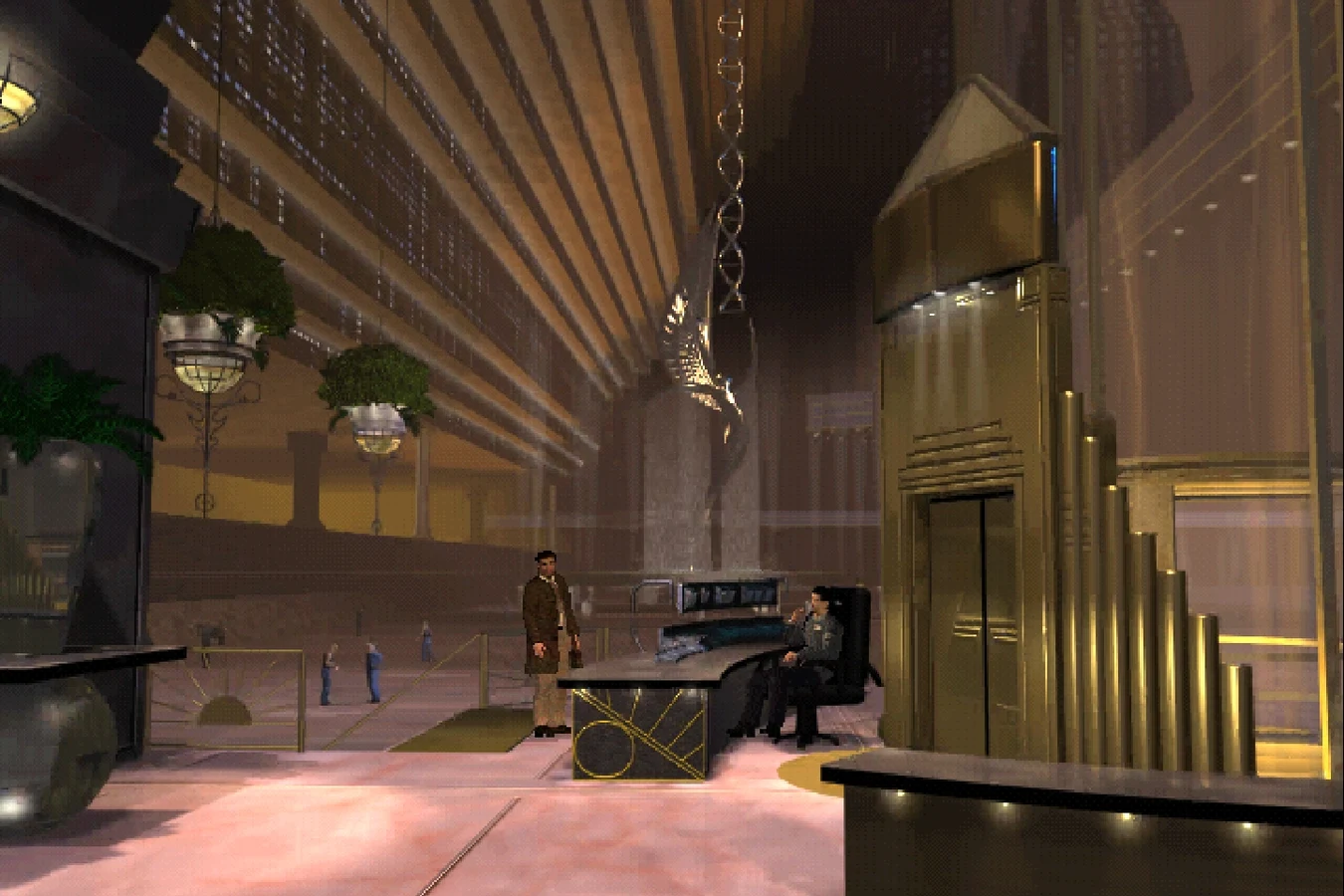
In the Westwood point-and-click game Blade Runner of 1997, detective Ray McCoy visited the Tyrell pyramid during his case, and Joe Turkel returned to voice Eldon. The Blade Runner roleplaying game used the fallen company as background for its 2037 setting, with Tyrell files, old models and the empty pyramid in its scenarios. The Marvel comic adaptation of 1982 followed the film's scenes in the office and the bedroom. The Titan comics added the most detail, from Origins in 2009 to the ruined pyramid of Blade Runner 2019.
Behind The Scenes
The company did not start with its famous name. Paul M. Sammon's book Future Noir recorded that the screenplay dated December 22, 1980, called it the Nekko Corporation. The name Tyrell was in place by the shooting script of February 23, 1981, which the crew used when filming began. Future Noir also noted that Fancher had wanted Sterling Hayden for Eldon, but Ridley Scott cast Joe Turkel because he loved Turkel's look as the bartender in The Shining.
The office was built on Stage 4 at Warner Bros. and was the first set filmed, with shooting starting on Monday, March 9, 1981. Production designer Lawrence Paull first planned a room of marble, but the cost was too high. The crew scouted downtown Los Angeles buildings for ideas, among them the Title Insurance and Trust building, the Arco Tower, the Crocker Bank, the Security Pacific Bank and the Bonaventure Hotel. Paull settled on raw concrete and granite that echoed the pyramid outside, in a moderne style he called neofascist or "Establishment Gothic."
The pyramid itself came from the effects house Entertainment Effects Group, which built foamcore mockups before the final model. Model maker Mark Stetson credited the design to EEG effects designer Tom Cranham, working from input by Douglas Trumbull. The building was meant to be more than a mile high, at 600 to 900 stories, and the model was built at about 1/750 scale. Its buttresses used acid-etched brass, and the middle section was cast clear polyester lit with fiber optics. Only one model was built, about 2.5 feet high on a 9-foot base, and the second pyramid was added optically.
The pyramid was the first major effects sequence of the film. Effects supervisor David Dryer joined in April 1981, about four weeks after the shoot began, and shared credit with Trumbull and Richard Yuricich. In long shots of the Hades landscape, the distant pyramids were backlit transparencies with neon tubing set in Plexiglas boxes. A separate insert model of the pyramid face, about 4 feet by 5 feet, held a miniature interview room with turning fans, motorized elevators about three inches tall and tiny versions of Eldon's office and bedroom.
The owl scene changed in post-production. In the February 1981 shooting script, Rachael answered Deckard's question about the owl with "Of course not." Producer Michael Deeley told Sammon that the line was relooped to "Of course it is," because the owl's glowing eyes already marked it as artificial and the change supported the idea of Tyrell's perfect copies. Sean Young's lips still say "not." The 1999 Alien DVD later tied the company to the Weyland-Yutani universe, with Nostromo crew dossiers that gave Dallas an earlier posting on the U.S.C.S. Shusett for the Tyrell Corporation, and the Blade Runner canon page covers how far such links go.
Conclusion
The Tyrell Corporation was the engine behind every replicant hunt in Blade Runner. It grew from Eldon Tyrell's lab into a pyramid over Los Angeles, built the Nexus-6 and Rachael, and lost its founder to its own creation. After the Blackout and the ban it went bankrupt, and Wallace took what remained. The novel's Rosen Association, the comics and Jeter's shadow company each gave it a different shape, but every version made the same thing: people who were more human than human.
Appearances
- Do Androids Dream of Electric Sheep? by Philip K. Dick (1968), as the Rosen Association
- Do Androids Dream of Electric Sheep? comic adaptation (BOOM! Studios), as the Rosen Association
- Blade Runner (1982 film) and Marvel's comic adaptation (1982)
- Blade Runner 2: The Edge of Human by K. W. Jeter (1995)
- Blade Runner 3: Replicant Night by K. W. Jeter (1996)
- Blade Runner (Westwood Studios, 1997 game)
- Blade Runner 4: Eye and Talon by K. W. Jeter (2000)
- Blade Runner Black Out 2022 (2017 short)
- 2036: Nexus Dawn (2017 short)
- Blade Runner 2049 (2017 film)
- Blade Runner 2019 (Titan Comics)
- Blade Runner: Origins (Titan Comics)
- Blade Runner 2029 (Titan Comics)
- Blade Runner: Black Lotus (2021 series)
- Blade Runner: Revelations (2023 VR game)
- Blade Runner: The Roleplaying Game (Free League)
Tag Categories: Blade Runner Lore