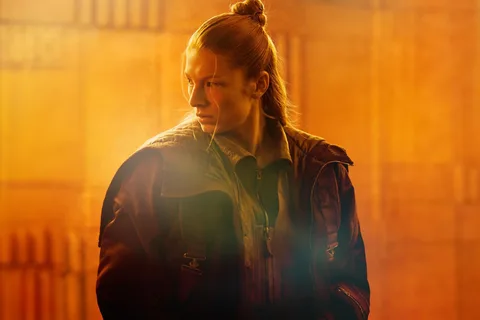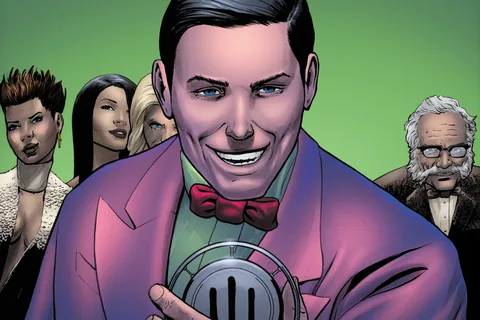

Luba Luft was a Nexus-6 android opera singer in Philip K. Dick's Do Androids Dream of Electric Sheep?, attached to the San Francisco Opera Company and hunted by Rick Deckard after he took over Dave Holden's list. Her sheet presented her as a twenty-eight-year-old performer from Germany, and Deckard found her rehearsing Pamina in Mozart's The Magic Flute at the War Memorial Opera House. Luba had him arrested and taken to a Mission Street station run by androids, and she was later retired in a museum elevator, after the bounty hunter Phil Resch burned a hole in her stomach and Deckard finished the killing.
Earlier Life
Luba Luft appeared on Dave Holden's bounty list as an opera singer, allegedly from Germany, and at that time attached to the San Francisco Opera Company. Inspector Harry Bryant assigned her to Rick Deckard as the next case after Max Polokov, and the sheet gave her apparent age as twenty-eight, the only useful standard for an android. She was a Nexus-6 built by the Rosen Association, and she had come to Earth from Mars with the rest of the escaped group in one ship. Garland later told Deckard that they had arrived together, and Luba herself, once she was caught, spoke of the life she had led since that landing.
Luba Luft chose to remain in the open as a public performer rather than hide. Roy Baty later told Irmgard that she had believed she would be safer as a public figure, and that he had warned her otherwise. Irmgard called it a poor concealment, since anyone could walk into the War Memorial Opera House and find her. The role gave her a stage, a company, and a German cover, but it also put her name and face in front of anyone who came to a rehearsal.
At The War Memorial Opera House
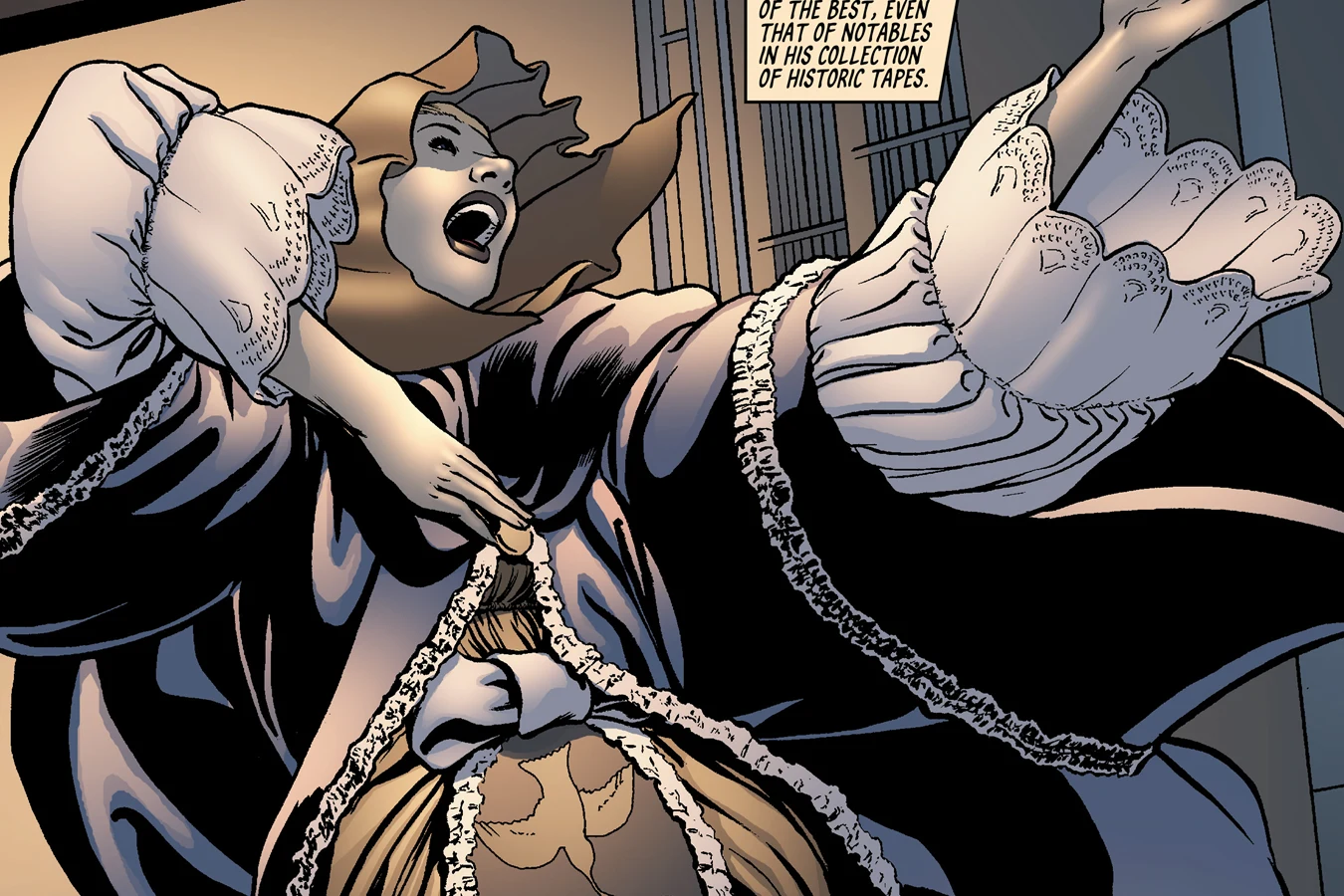
Rick Deckard entered the War Memorial Opera House during a rehearsal of Mozart's The Magic Flute, in the final scenes of the first act. From a dress circle seat he watched Pamina in heavy robes, with a wimple and trailing veil, and checked her against the sheet in his briefcase. He realized he was looking at his third Nexus-6 android, and that this was Luba Luft. When she sang, Deckard was surprised by the quality of her voice, which he judged equal to the best singers in his historic tapes. He waited until the conductor broke the rehearsal for an hour and a half before he went backstage.
A super pointed Rick Deckard to a dressing-room door marked Miss Luft Private. Luba Luft was at her table in costume and makeup, a clothbound score open, her hazel eyes fixed on him. Her spoken English had no remnant of an accent. Deckard told her he was from the San Francisco Police Department and had come to give a personality-profile test, then set up the Voigt-Kampff instruments and pressed a grid to her cheek. Luba asked whether he thought she was an android, denied she had ever been on Mars or seen an android, and turned the charge around, saying a bounty hunter who killed androids might be one himself.
The Test And The Arrest
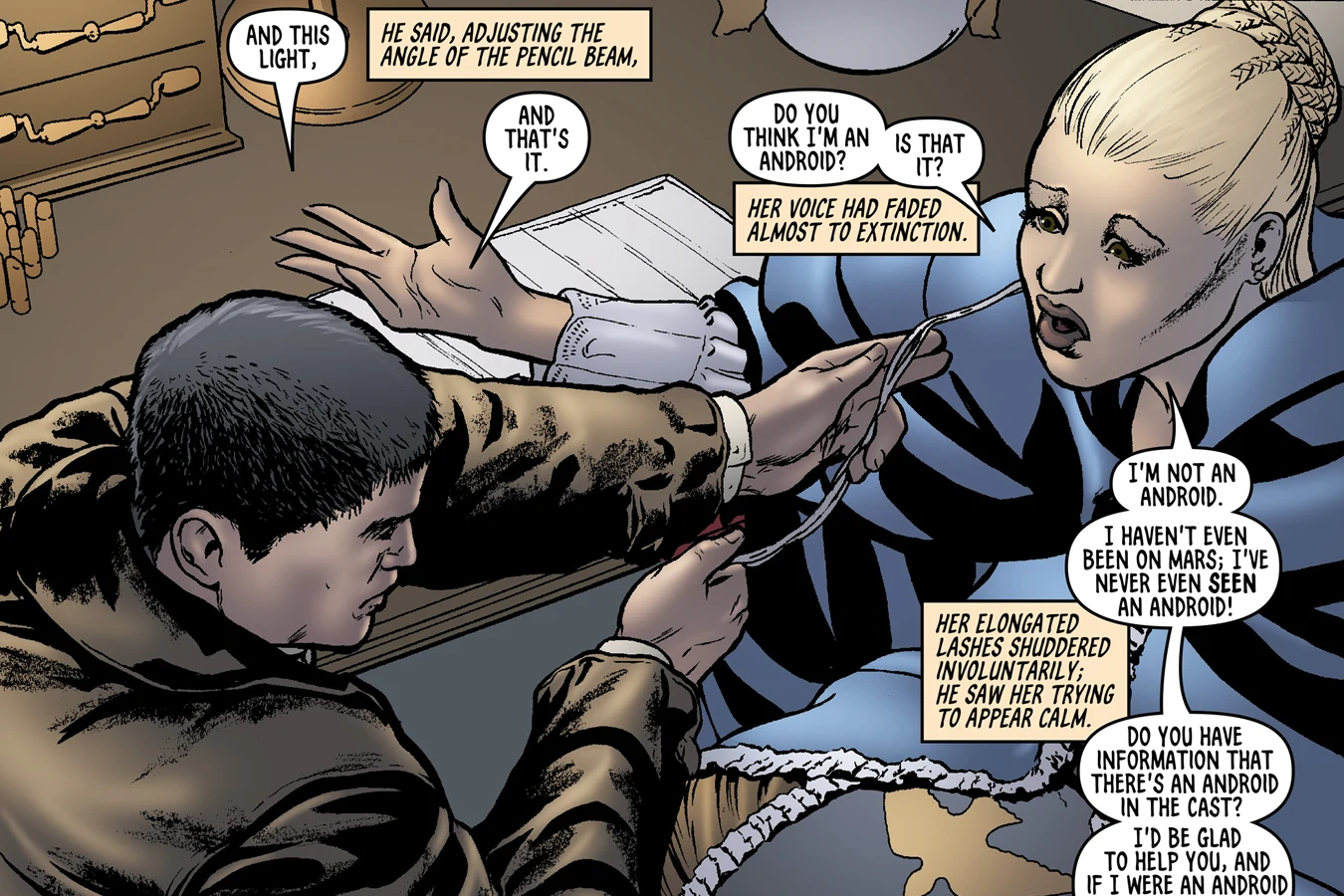
Luba Luft stalled the Voigt-Kampff questions from the start. Asked about a wasp on her wrist, she wanted the German word, and said her accent had to be perfect for roles by Purcell, Walton, and Vaughan Williams, even if her vocabulary was not large. On a question about an old film of boiled dog, she said she would turn it off and watch Buster Friendly. The needles on Deckard's dials swung in all directions. When a later question moved toward a man's apartment, she pulled the adhesive disk from her cheek, and as Deckard recovered it he found himself looking into a laser tube.
Luba Luft accused Rick Deckard of being a sexual deviant, kept the laser on him, and called the San Francisco Police Department. A uniformed officer arrived, took the tube, and accepted her statement that a stranger had entered her dressing room, pretended to be taking a poll, and asked her obscene questions. Officer Crams had never heard of Deckard or of Inspector Harry Bryant, and after a confused vidphone call he booked Deckard on Luba's statement. As they left, Luba told Crams that Deckard was a deviant who gave her the creeps, and Crams flew him to a Hall of Justice on Mission Street, a building Deckard had never seen.
The Mission Street Station
Officer Crams booked Rick Deckard in the Mission Street Hall of Justice, a headquarters that ran in parallel with Deckard's department on Lombard. There Deckard met Inspector Garland and the bounty hunter Phil Resch, and learned that his list named Luba Luft as well as Garland. Garland was an android, like the officer who had arrested Deckard at the opera house, and the Mission Street station was the organizing point through which the escaped group kept in touch. Phil Resch shot Garland and left with Deckard, then told him they would have to double back to the opera house and get Luba Luft before anyone could warn her.
Rick Deckard and Phil Resch flew north to the War Memorial Opera House, where the rehearsal had already ended. A stagehand told them Luba Luft had gone to a museum to take in an exhibit of Edvard Munch that was due to close the next day. Resch doubted they would still find her there, but the two men walked to the museum and went up to the Munch rooms. Among the paintings and woodcuts they passed a figure on a bridge, hands to its ears and mouth open in a soundless scream, before Deckard pointed her out.
At The Museum
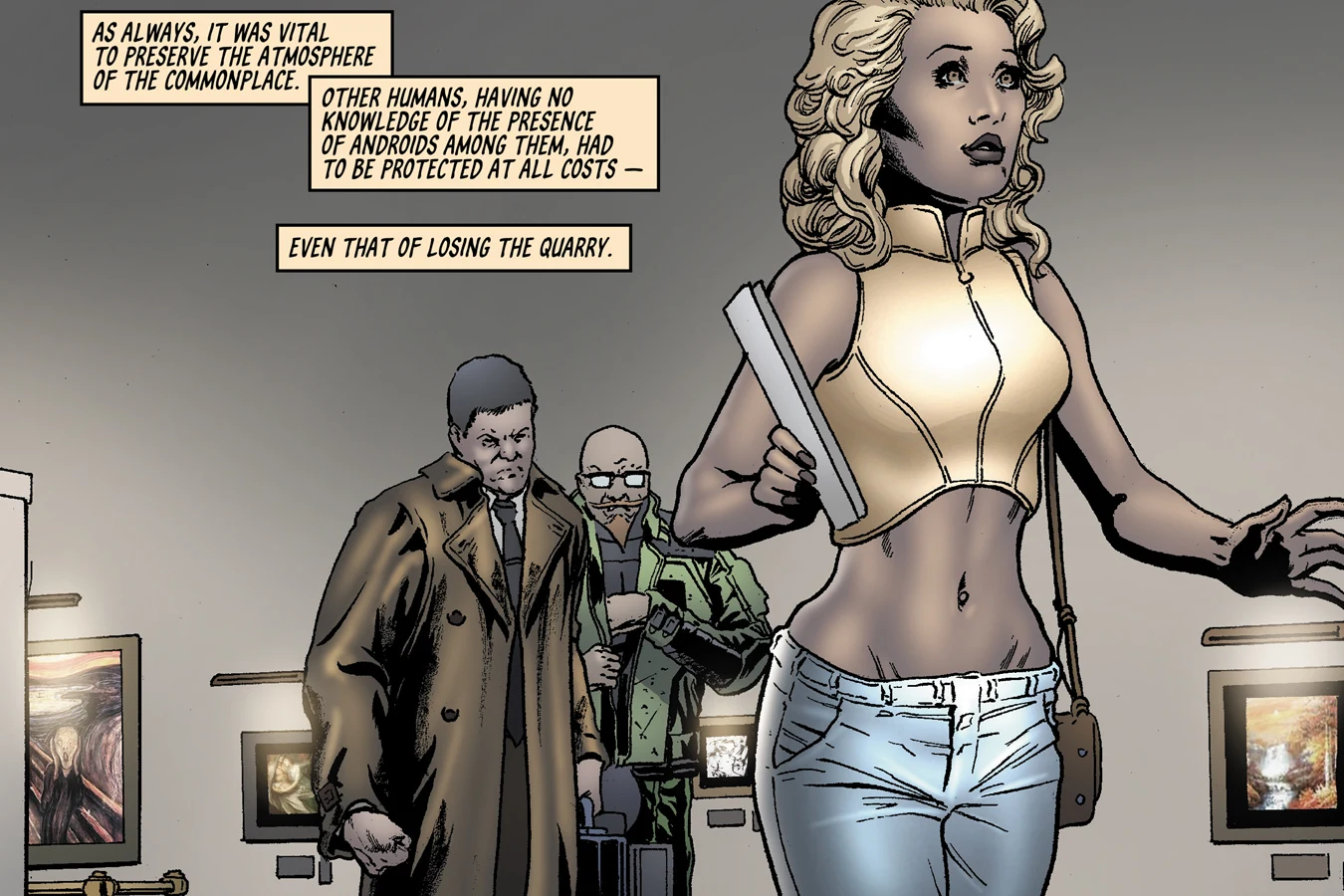
Luba Luft stood absorbed in a picture, a printed catalogue in her hands, wearing shiny tapered pants and an illuminated gold vestlike top. The drawing showed a young girl on the edge of a bed, her hands clasped, her face marked by bewildered wonder. Rick Deckard took her arm, and Phil Resch kept a laser tube ready at her shoulder. Luba recognized Deckard, asked whether the police had let him go, and then told Resch that he was not human either. The two men walked her toward the elevator, and she asked Deckard to buy a reproduction of Munch's Puberty.
A clerk had the image only in a book of Munch's collected work, and Rick Deckard paid with his own money and handed it to Luba Luft. In the elevator Luba thanked him and said there was something strange and touching about humans, and that an android would never have done that. She looked at Phil Resch with hostility, said she did not like androids, and described her life since Mars as an imitation of human thought and impulse. When she asked Resch if he had done the same, he drew his laser tube. Deckard tried to take it from him, then told him to fire, and Resch did.
Luba Luft's Death
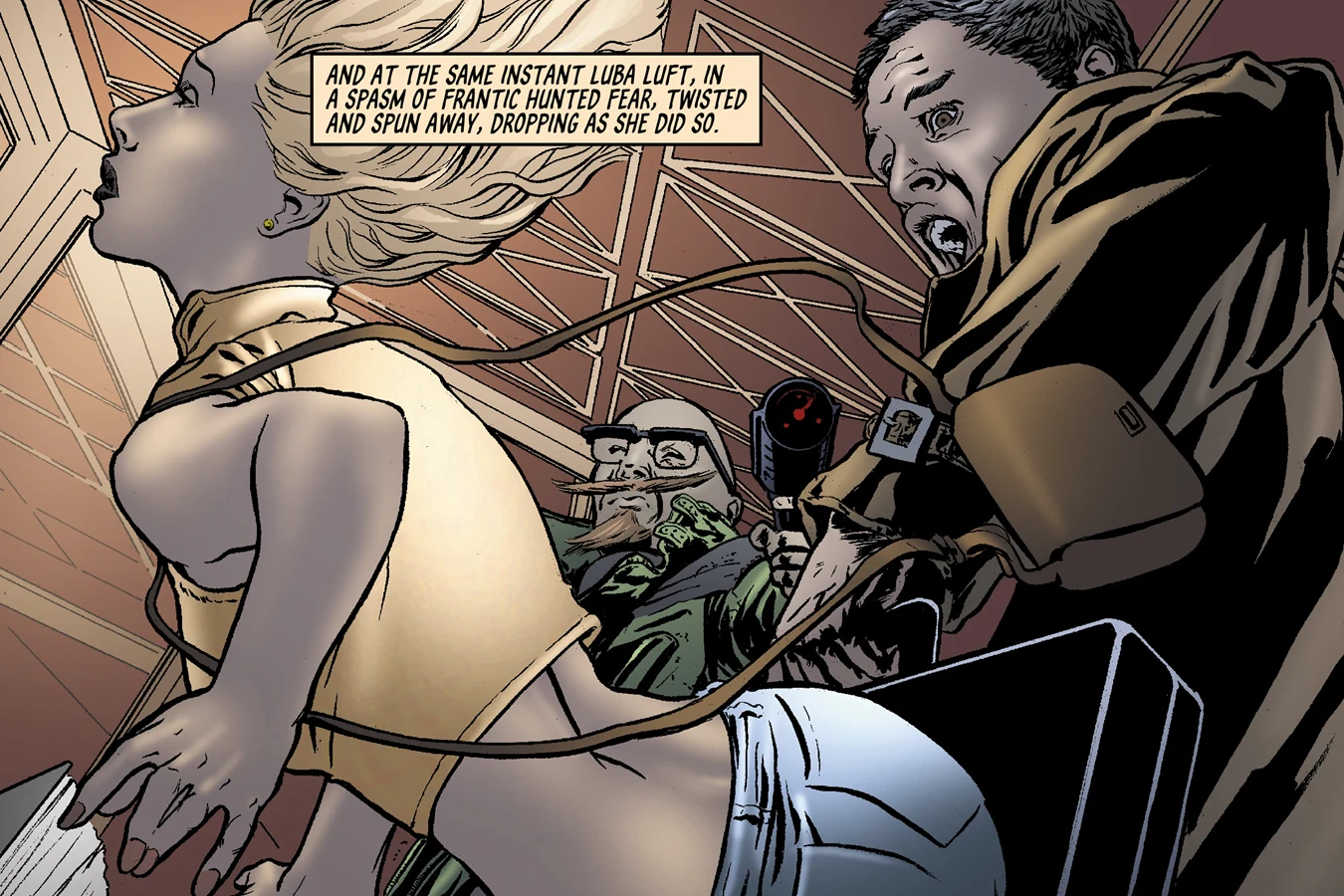
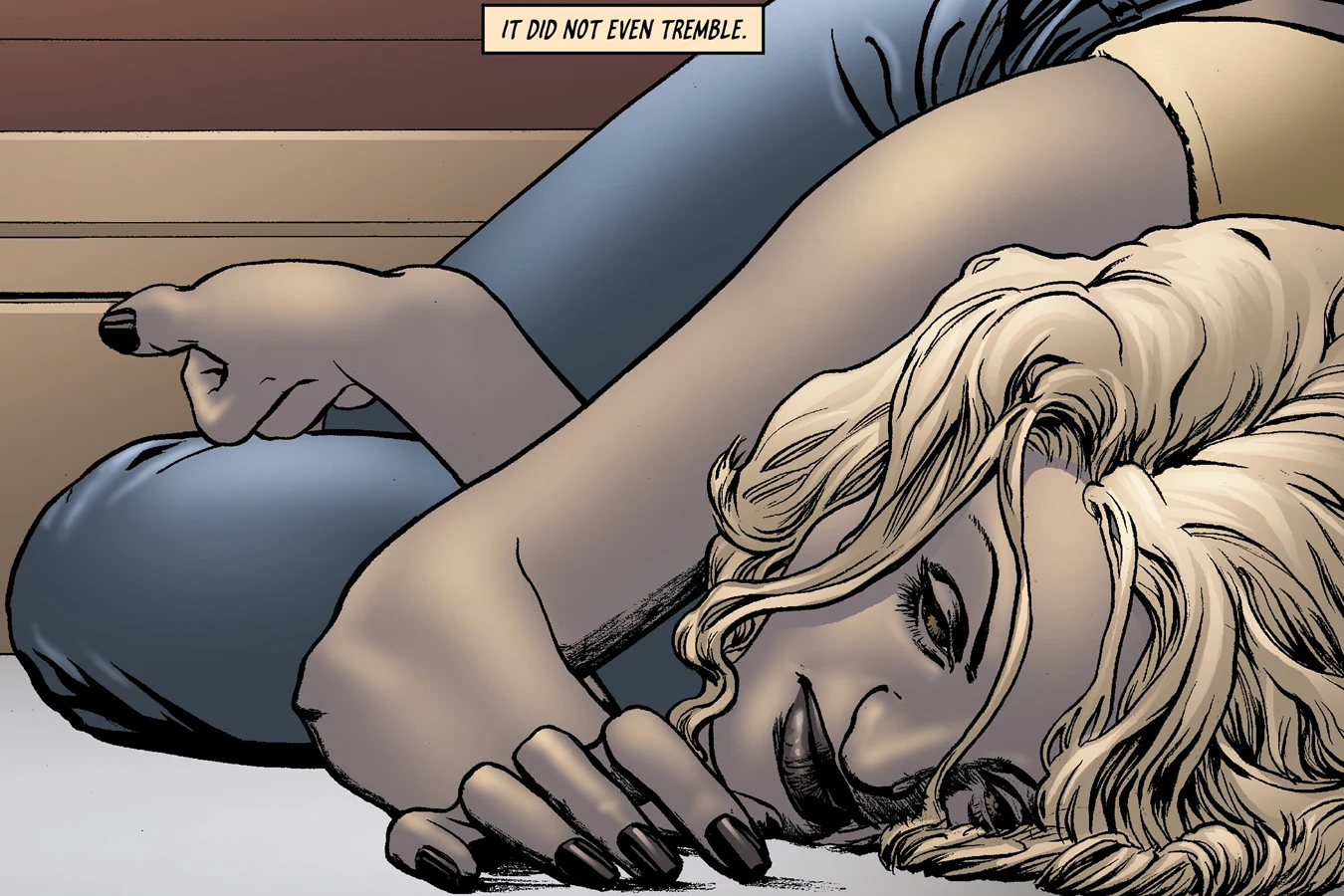
Phil Resch's first beam missed as Luba Luft twisted away, then burrowed a narrow hole into her stomach as he lowered the tube. Luba dropped against the elevator wall and began to scream, and Rick Deckard, thinking of the figure on the bridge, killed her with his laser tube. Her body fell forward, face down, and did not tremble. Deckard then burned the book of pictures into ash, and when Resch asked why, Deckard asked whether androids have souls. Resch claimed the retirement as his own, but Deckard said he would have to claim Luba Luft and Garland if he wanted the bounties, and he meant to test Resch.
After Her Death
Rick Deckard gave Phil Resch the Voigt-Kampff test in the hovercar, and Resch proved human. The death of Luba Luft had already shaken Deckard, because she had seemed genuinely alive, and her voice and her interest in the Munch pictures stayed with him after the elevator. He later told Rachael that he had liked Luba, and that Phil Resch had killed her. Rachael, who had been a close friend of Luba's for almost two years, had assumed Deckard was the one who had done it, because the group's communications had broken down around that time.
Roy Baty and Irmgard later brought Pris the news that Polokov, Garland, Luba Luft, Anders, and Gitchel were dead. Roy had already said that Luba wanted the public life at the opera, and Irmgard had called that choice a dangerous one. For Deckard, the retirement still counted on the list, but it was the Nexus-6 case that left him able to feel empathy for a specific android. He went on with the hunt for the remaining names, including Roy and Irmgard Baty and Pris Stratton, under that new doubt.
Behind The Scenes
Philip K. Dick published Do Androids Dream of Electric Sheep? in 1968, and Luba Luft belongs to that novel rather than to Ridley Scott's Blade Runner. The 1982 film does not include her, and the nearest figure on screen is the replicant performer Zhora, a snake-dancing assassin Deckard retired in the street, not an opera singer. Blade Runner 2049 does not include her either, and it also omits the novel's San Francisco opera and museum sequence. The name, the Pamina rehearsal, the Mission Street arrest, and the death in the elevator remain events of the 1968 book.
BOOM! Studios later adapted the novel as Do Androids Dream of Electric Sheep? (BOOM! Comic), and that version follows Luba Luft through the opera house, the Voigt-Kampff test, and the Munch exhibit. The comic is an adaptation of the book, not a separate history, and it does not place her in the 1982 film. Luba remains a Nexus-6 android of the Rosen Association, not a Tyrell replicant, and the films do not use her name.
Conclusion
Luba Luft made her living on a public stage, and that choice allowed Rick Deckard to find her. She stalled a Voigt-Kampff test, sent him into a police station run by her own group, and ended the day in a museum elevator, wounded by Phil Resch and then killed by Deckard's laser. Deckard burned the book of Munch pictures after she fell, and the bounty hunter who had admired her voice left the building able to feel the death of an android as a loss. Rachael mourned a friend of almost two years, and the remaining Nexus-6 androids learned, soon after, that the singer at the opera house was gone.
Appearances
- Do Androids Dream of Electric Sheep? by Philip K. Dick (1968)
- Do Androids Dream of Electric Sheep? (BOOM! Comic)
Tag Categories: Blade Runner Lore | Blade Runner Characters | Replicant Characters | Female Replicants