
Buster Friendly was the all-day television host of Philip K. Dick's Do Androids Dream of Electric Sheep?, whose program filled twenty-three hours of every broadcast day. John Isidore called him the most important human being alive except for Wilbur Mercer. Buster chipped away at Mercerism with jokes about beer on a mountainside, then aired a laboratory expose that named Mercer as a bit player called Al Jarry. In the novel, Pris and Irmgard later told Isidore that Buster was an android, a fact no human knew. A Blade Runner 2099 teaser later put his name on a Los Angeles tower sign.
Buster Friendly And His Friendly Friends
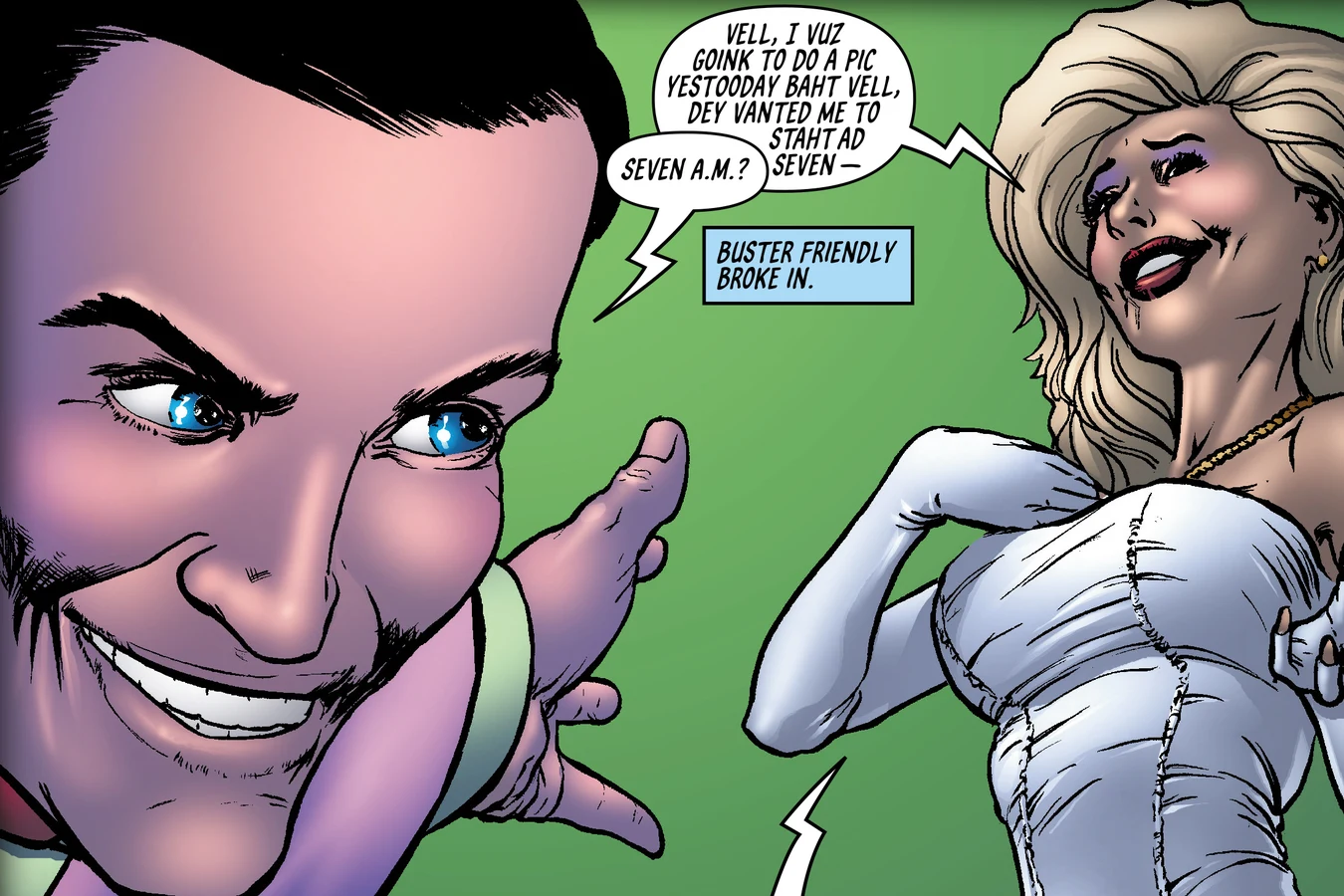
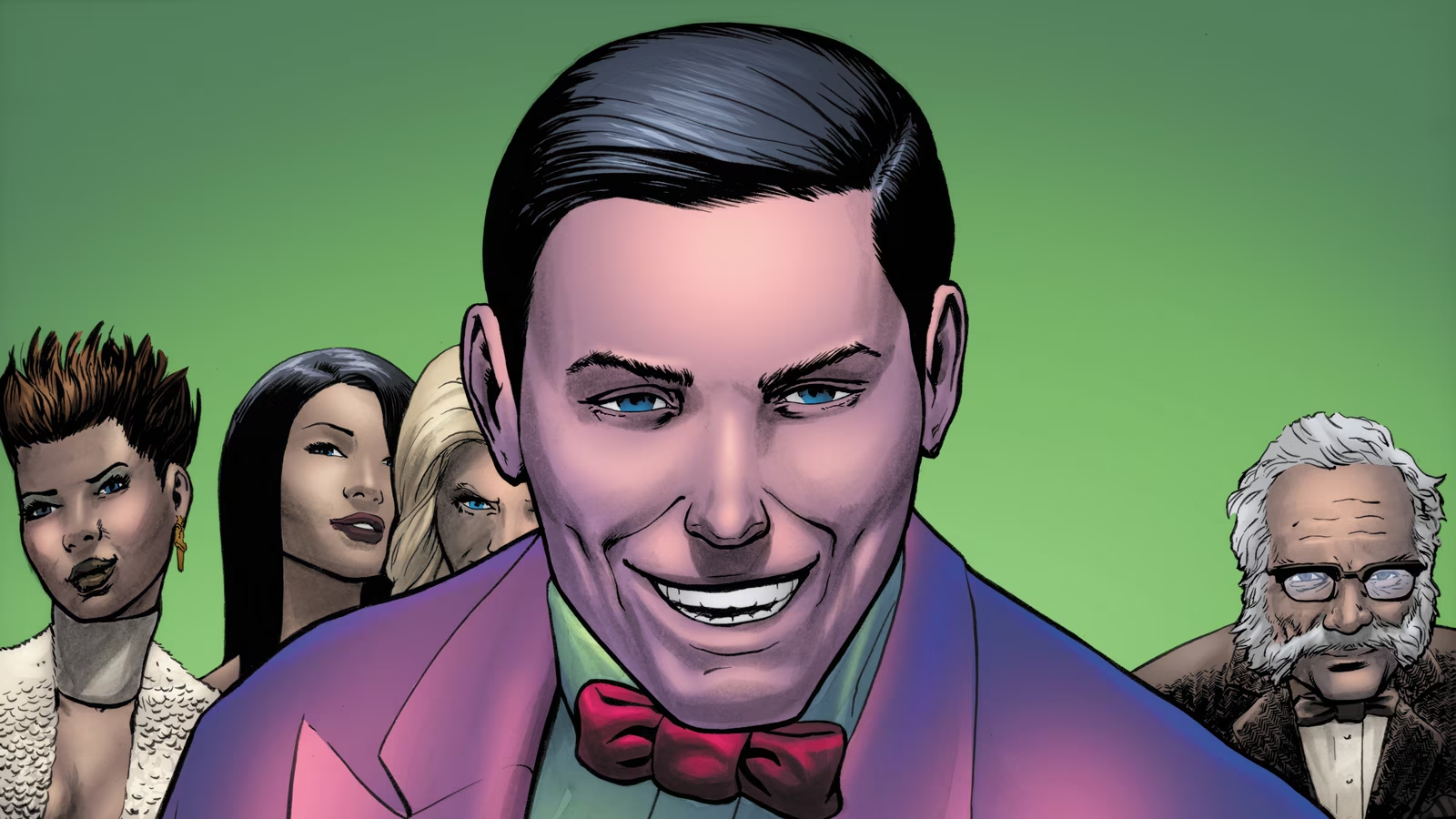
Buster Friendly and His Friendly Friends ran for twenty-three unbroken hours a day, with one remaining hour given to a religious sign-off, a short silence, and a sign-on. The program went out over Earth by satellite and poured down on the colony planets, and practice transmissions were even beamed toward Proxima in case humans ever settled that far. Had Salander 3 reached its destination, the travelers would have found The Buster Friendly Show already waiting. Regular guests included Amanda Werner, whose accented laugh was nearly as imitated as Buster's, and a small core of foreign ladies and bucolic humorists who seemed to live on the show.
John Isidore wondered how Buster found time to tape both an audio show and a video show, and how Amanda Werner could appear as a guest every other day without repeating herself. The jokes always seemed new, her hair always glowed, and the host never ran down. Hannibal Sloat, who ran the Van Ness Pet Hospital, told Isidore that Buster was immortal, like Mercer, and that they had never admitted it. Isidore asked whether that was how Buster could do forty-six hours of show a day, and Sloat said it was. The same, Sloat added, was true of Amanda Werner and the other women on the program.
Buster Friendly In Daily Life
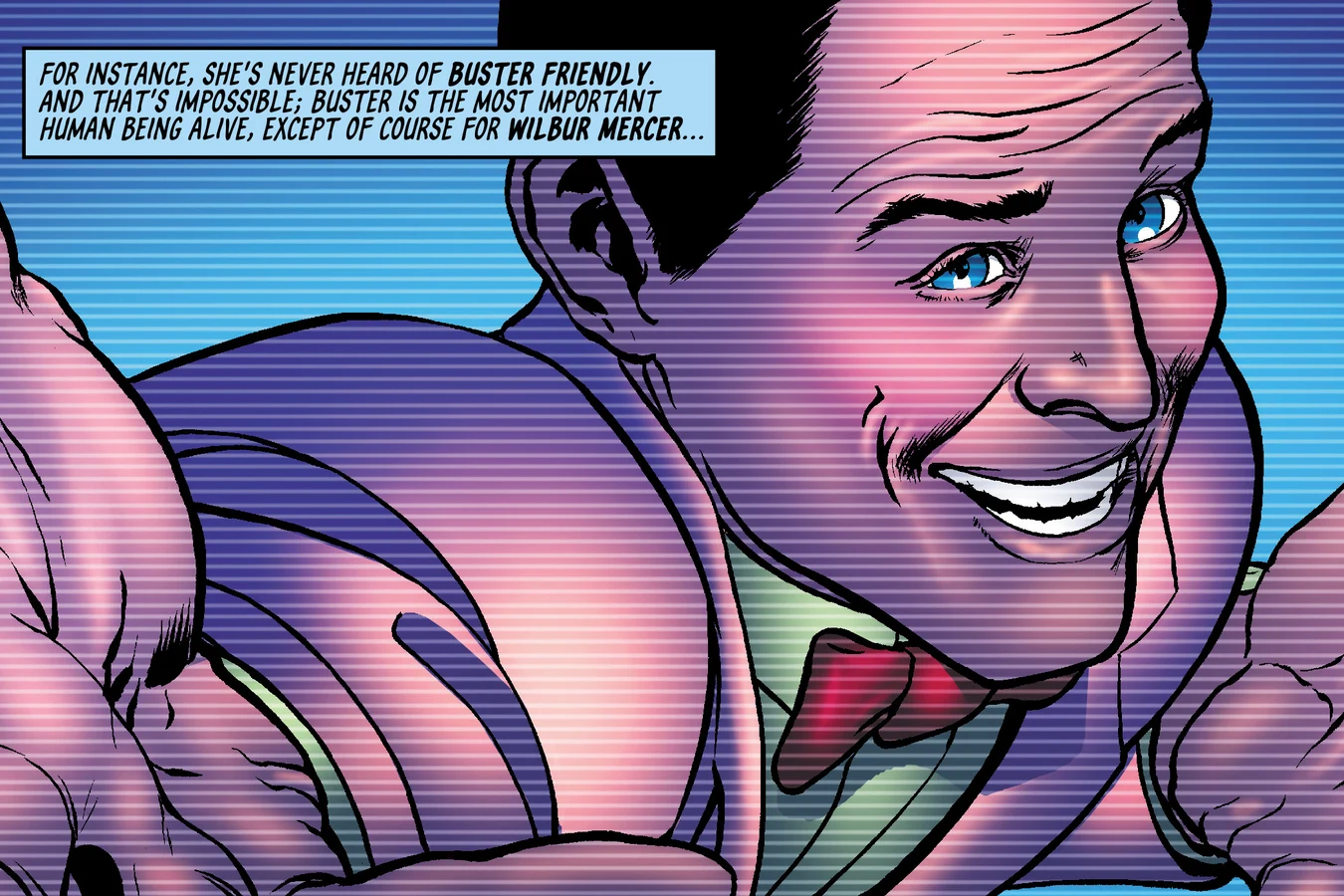
Buster's voice reached into ordinary homes long before the expose aired. Iran told her husband that she had once turned on Buster Friendly and His Friendly Friends while the host was promising a big news item. A commercial for Mountibank Lead Codpieces came on, she shut off the sound, and she heard the empty apartments around her. That same morning Rick Deckard turned the TV sound up, and Buster boomed out a Mongoose satellite weather note warning that fallout would peak toward noon. Iran shut the set off, and when Rick later called home, Buster's racket drowned out her words.
John Isidore heard the same voice from Pris's apartment, counting down the ten hours to the special expose. Isidore told her that he watched good old Buster every morning, over dinner, and late into the night until his own set broke. When Pris later explained bounty hunters, Isidore told her she was mistaken, since Buster Friendly had never mentioned such a thing. Rick's visit to the Bay Area Scavengers Company called up Buster's favorite warning that Earth would die under kipple, not radioactive dust. Asked during a test about an old film, the android singer Luba Luft said she would turn it off and watch Buster Friendly.
Rivalry With Mercerism
Isidore's real irritation was not the endless jokes but the way the host chipped away at the empathy boxes. On air he boasted that he had no rock nicks, joked about beer on a mountain, and teased an expose hours before it aired. The U.N. still preferred Mercerism's effect on crime, and Secretary General Titus Corning had said mankind needed more empathy. Isidore decided the host and Mercer were fighting for control of human minds, with guffaws on one side and shared pain on the other. When he put that theory to Sloat, the older man said that if so, Buster was already winning.
The androids preferred Buster for a colder reason. Pris had never heard of him when she first arrived at Isidore's building, which Isidore found almost impossible to believe. Roy Baty and Irmgard later waited all evening for the broadcast, and Rachael turned Deckard's car radio back on when he tried to shut the host off. From the androids' point of view, an expose of Mercer would cut the one experience they could not fake, the shared empathy that humans claimed as proof they were not machines. Buster, for his part, kept the joke running until the hour he had promised.
The Television Expose
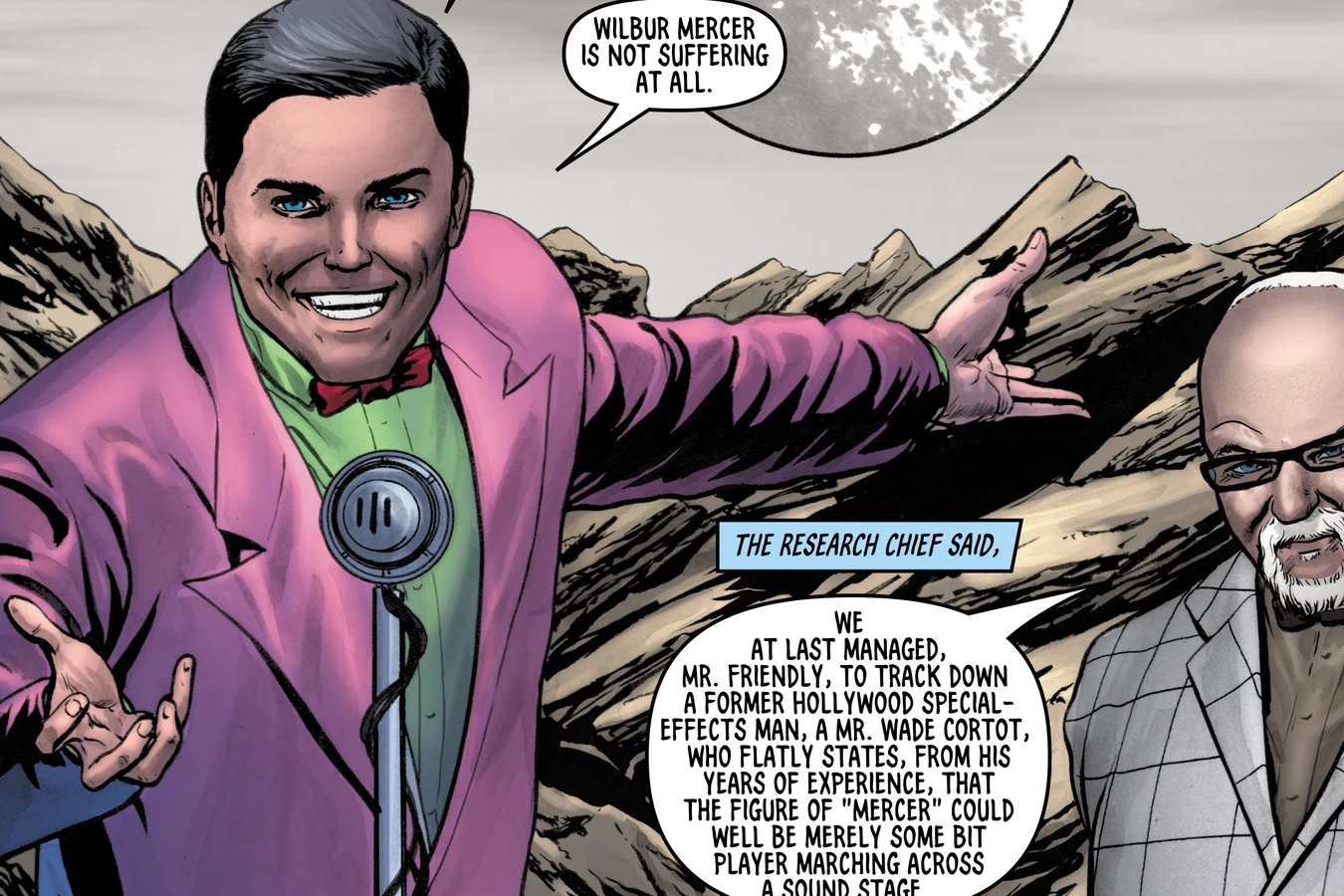
Buster appeared on television and handed the first proof to his research chief, Earl Parameter. Enlargements of the sky behind Mercer, the team said, showed brushstrokes on a painted moon, and even the weeds, the soil, and the stones might be fake. Buster broke in to say that Wilbur Mercer was not suffering at all. A former Hollywood special-effects man named Wade Cortot claimed he recognized the figure as a bit player on a sound stage used by a vanished moviemaker. The Do Androids Dream of Electric Sheep? comic shows the same reveal on a rocky set, with Buster at a microphone and the research chief beside him.
The research team, Buster said, had searched thousands of old Hollywood publicity stills and had found an old man named Al Jarry. A field team went to Jarry's house on Lark Avenue in East Harmony, Indiana, a tottering house at the edge of town. There, a technician claimed to have scanned Jarry's mind and learned that Jarry had shot a series of fifteen-minute films for an employer he never met. The rocks were rubber-like plastic, the blood was catsup, and Jarry's only real suffering was a day without whisky. Buster then put the charge to the whole Sol System: Mercerism was a swindle, and Wilbur Mercer did not exist.
Al Jarry And The Sound Stage
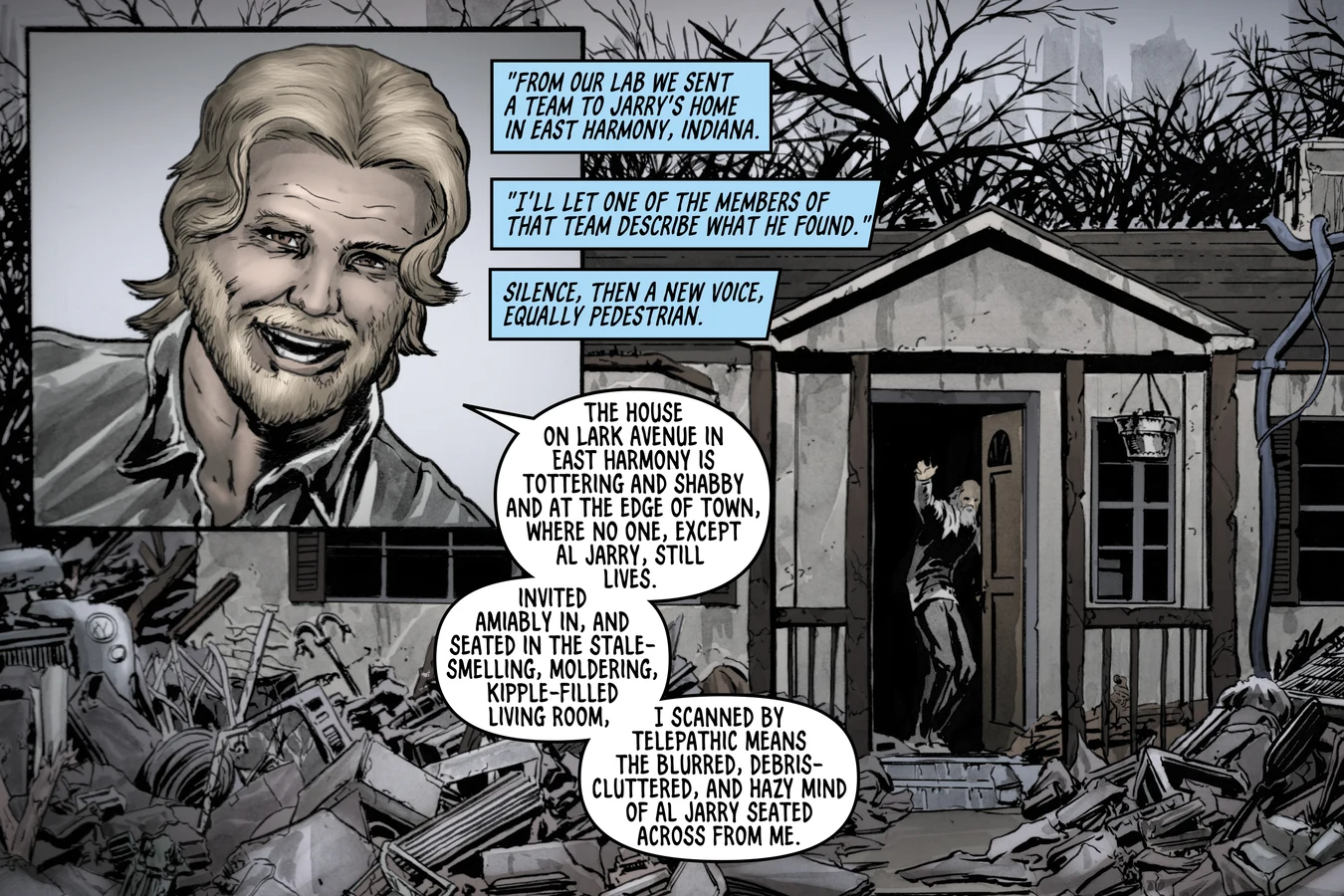
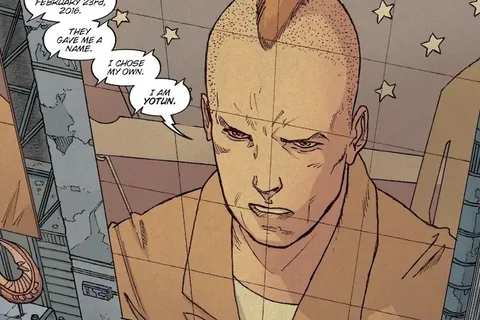
Al Jarry stands in the BOOM! Studios comic at the doorway of a kipple-choked shack the researchers call tottering and shabby. In the novel the same house is a moldering, kipple-filled living room on the edge of East Harmony, and the interviewer is invited in as if the visit were ordinary. Jarry, Buster told his audience, had never amounted to anything even in his prime, and he had made a dull, repetitious film for a patron he still could not name. Buster asked who had spawned this hoax on the Sol System. Irmgard murmured that they might never know, and Buster repeated the same line back to the camera.
Mercer himself later admitted the facts, after Isidore fused with him again and asked about the painted sky. Yes, Mercer said, from the androids' standpoint he was an elderly retired bit player named Al Jarry, and Buster's disclosure was convincing. The interview at the house had happened, the whisky story was true, and the researchers had done a sincere job. Mercer also said they would have trouble understanding why nothing had changed, because he would keep lifting his followers from the tomb world whether the set was fake or not. Deckard later told his wife Iran that everything was true, after she asked whether Buster's claim could be believed.
An Android Host
After the broadcast, Pris told Isidore a fact Buster had not said on air. "Well, why not," she said. "Buster is one of us." Irmgard explained that he was an android, and that no humans knew. The novel presents that claim through the androids, not through an independent test, but it fits the puzzle Isidore and Sloat had already circled: a host who never repeated himself, who filled forty-six hours a day, and who seemed immortal on both the audio and video feeds. Amanda Werner and the other regulars, Sloat had said, were immortal too.
Isidore did not take the news as a victory. Isidore had just watched Pris cut the legs from a living spider he had found on the stairs, a small cruelty that ran beside Buster's laboratory stills, and the two together broke him. For the androids the expose proved that empathy itself was a swindle, the last claim that set humans apart. For Isidore, Mercer remained eternal even after the fraud was named, and he had told Sloat earlier that Buster would ultimately lose because Mercer always rose from the tomb world. The novel leaves both voices standing, and it never shows Buster off the air or after the broadcast.
In Blade Runner 2099
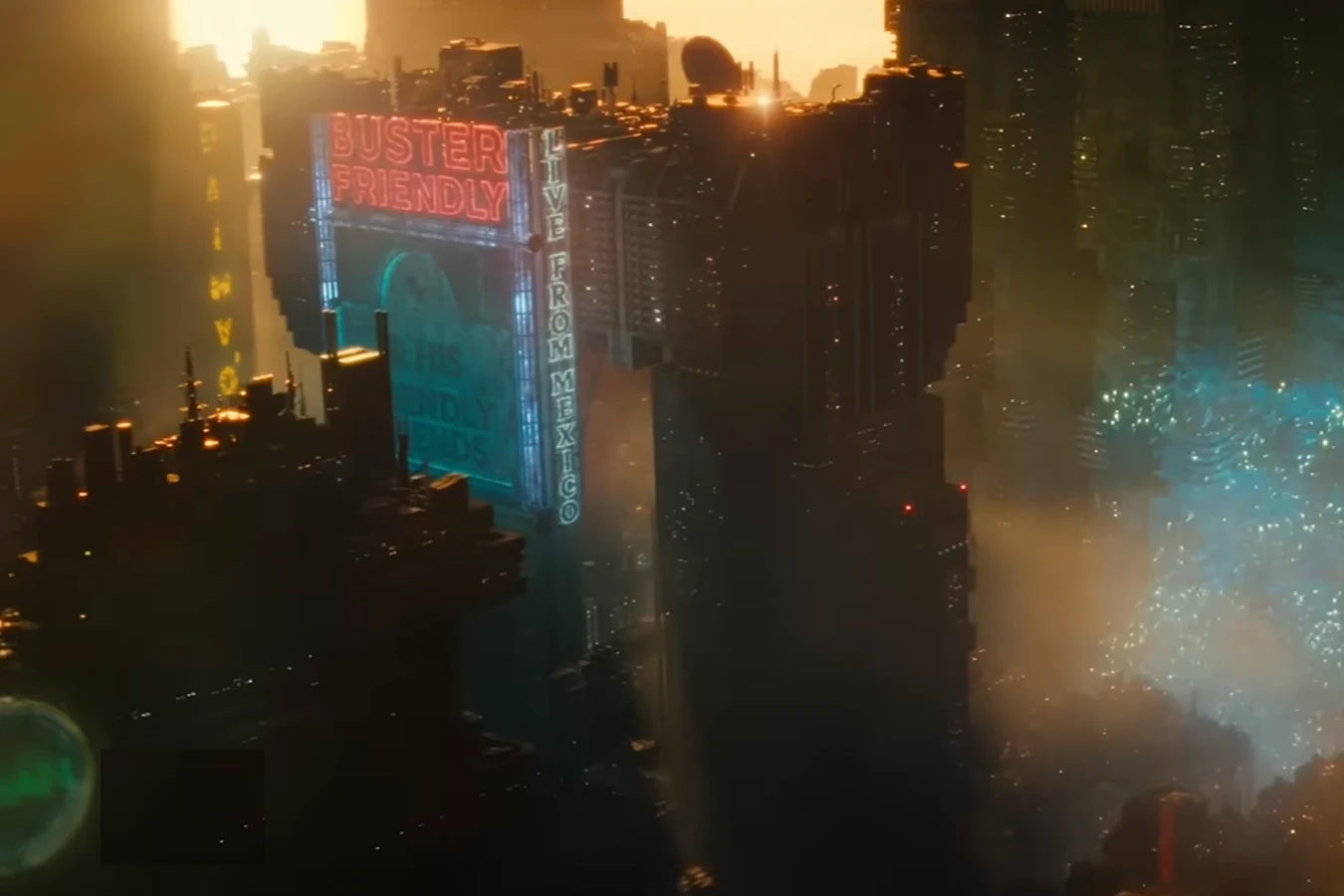
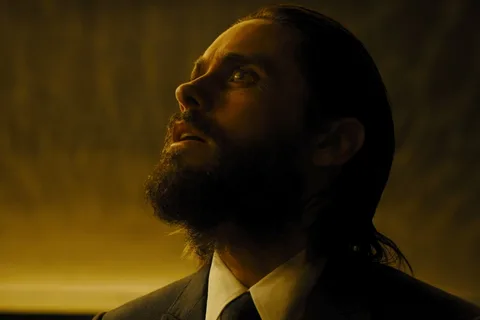
Prime Video's Blade Runner 2099 had not yet reached its 25 November 2026 premiere when trailer imagery put Buster's name back on a building in coastal Los Angeles. A tower-sized screen reads Buster Friendly in red neon, and Live From Mexico runs down the side of that same building. Neither the host nor the show had appeared on screen in Ridley Scott's Blade Runner or in Blade Runner 2049, and the 2099 boards place that name in the city the replicants hold. The teaser does not show Buster himself, and it does not confirm whether the program still airs in 2099 or is only remembered on a sign.
The same trailer campaign also returns climb imagery that echoes Mercerism, including a hillside hologram of a lone climber, while the Buster sign stands elsewhere in that city view. Coverage of the series has discussed those novel names as a visible return of book material the films left out, but the sign itself is the only verified Buster image the campaign has shown. Until the episodes air, the tower is a name on glass, not a new biography and not proof of the character's fate. In the novel, the host's last act is the expose itself, and Blade Runner 2099 so far only writes his name in lights.
Behind The Scenes
Philip K. Dick published Do Androids Dream of Electric Sheep? in 1968, and Buster belongs to that novel rather than to the 1982 film. Ridley Scott's Blade Runner dropped Mercerism, the empathy box, and Buster Friendly, and those names stayed off screen in Blade Runner 2049 as well. The BOOM! Studios comic later restored the host as a smiling showman in a pink jacket, and it gave a face to Amanda Werner and the research team. That comic is an adaptation of the book, not a new history, and it follows the same expose, the same Jarry house, and the same claim that Buster is one of the androids.
Do Androids Dream of Electric Sheep?: Dust to Dust does not stage Buster's expose. A broadcast in that prequel only promotes the coming premiere of his show, alongside electric pets, as one more fixture of the postwar world. What the later works add is a face, a sign, and a reminder that the films had set the host aside, while the novel still uses him as Mercerism's loudest public enemy. Buster's on-air rivalry and the Al Jarry reveal remain the core of his story, and later adaptations have returned to that core rather than inventing a later fate.
Conclusion
Buster Friendly was never a minor voice in Philip K. Dick's novel. He filled the day, mocked the climb, and then told the Sol System that Mercerism was a Hollywood fraud built on catsup blood and rubber rocks. The androids believed that reveal would end the cult, and they also believed the host was one of their own, a secret no human had been told. Mercer admitted the facts and kept climbing, and Deckard refused to call him a fake unless reality itself was fake. Later comics drew Buster's smile, and Blade Runner 2099 wrote his name across a tower, but his last confirmed act remains that broadcast.
Appearances
- Do Androids Dream of Electric Sheep? by Philip K. Dick (1968)
- Do Androids Dream of Electric Sheep? comic adaptation (BOOM! Studios)
- Do Androids Dream of Electric Sheep?: Dust to Dust (BOOM! Studios, 2010, premiere mentioned)
- Blade Runner 2099 (Prime Video, trailer imagery)
Tag Categories: Blade Runner Lore | Blade Runner Characters