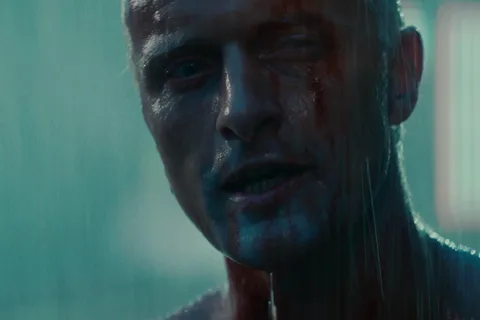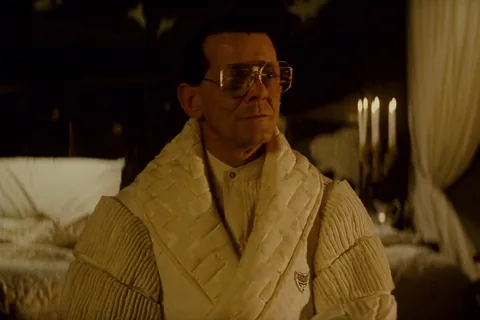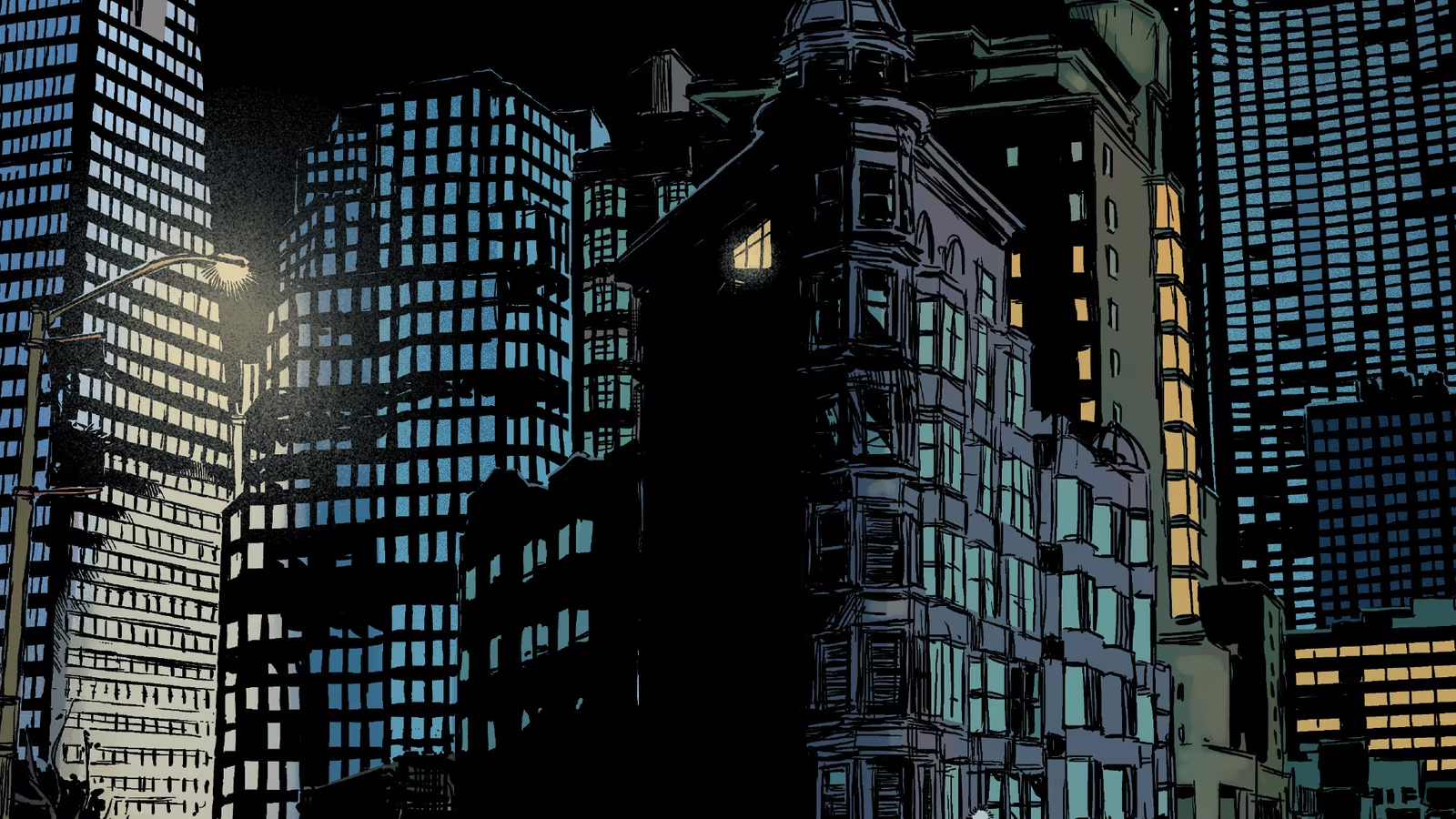

World War Terminus was the third world war in all but name, the global conflict that ended the old world in Philip K. Dick's Do Androids Dream of Electric Sheep?. By the time bounty hunter Rick Deckard went to work in San Francisco, nobody remembered why it had started or who, if anyone, had won. What it left behind was a cloud of radioactive dust that killed the owls first, then nearly every other animal, and slowly ate at the minds and genes of the people who stayed. The United Nations answered with emigration to Mars and an android servant for every colonist, which is how the hunted replicants of Blade Runner first came to exist. The prequel comic Dust to Dust later went back to the war's last days and showed the combat androids who fought it.
What Was World War Terminus?
World War Terminus was fought some years before the novel opens, at a cost far higher than the Pentagon and the Rand Corporation had predicted. Rand had worked from the San Francisco area, and like so many others it was gone by the time the story begins. The war was so thoroughly forgotten that nobody could say why it had come or who, if anyone, had won. Survivors spoke of it only through what it had done to the planet.
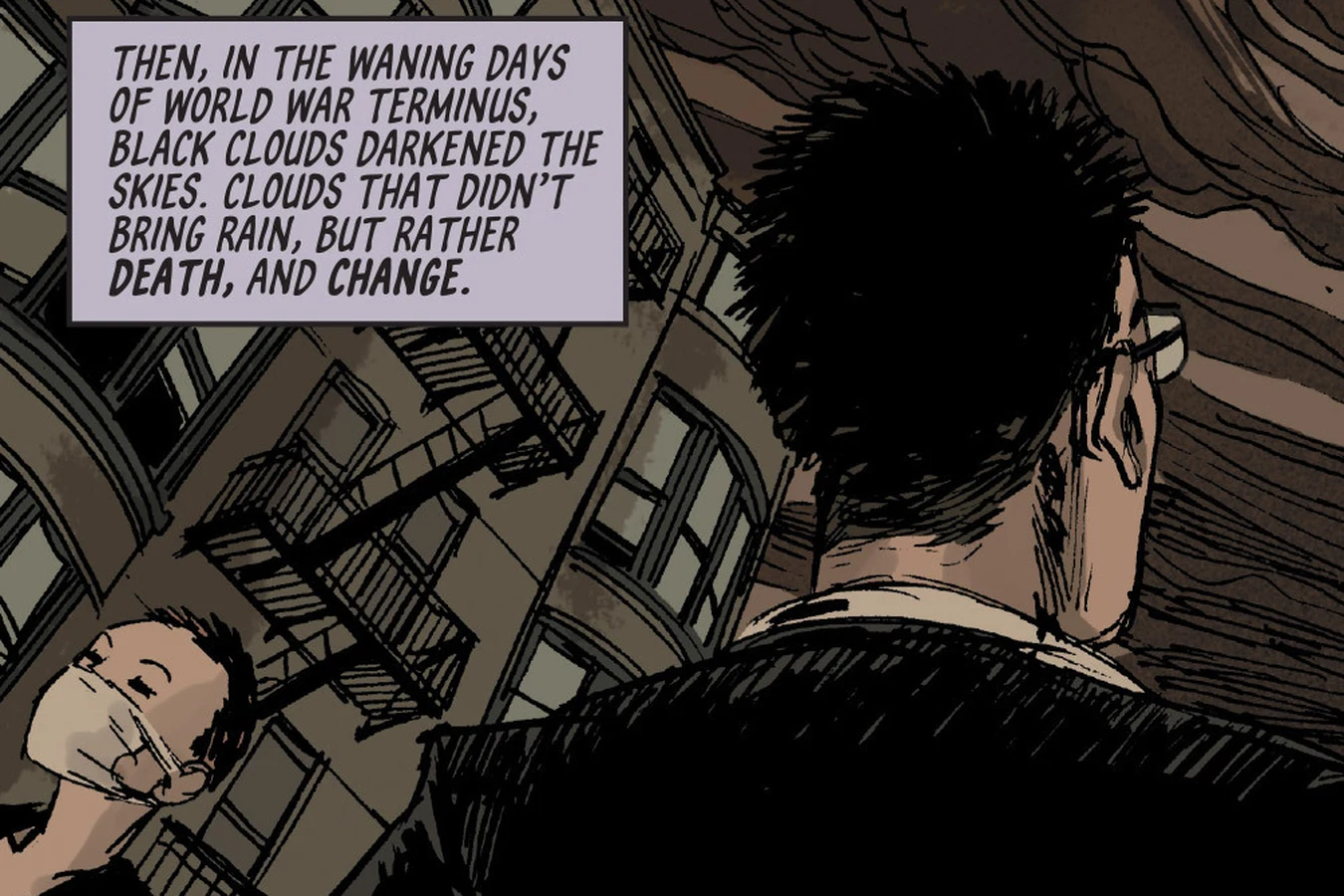
The weapon that mattered most was never planned by anyone. The dust came from no country, and not even the wartime enemy had counted on it. In Dust to Dust, the last days of the war are remembered as a time when black clouds darkened the sky and brought death and change. Those the dust killed outright were spoken of as the lucky ones, because the living had to go on breathing it.
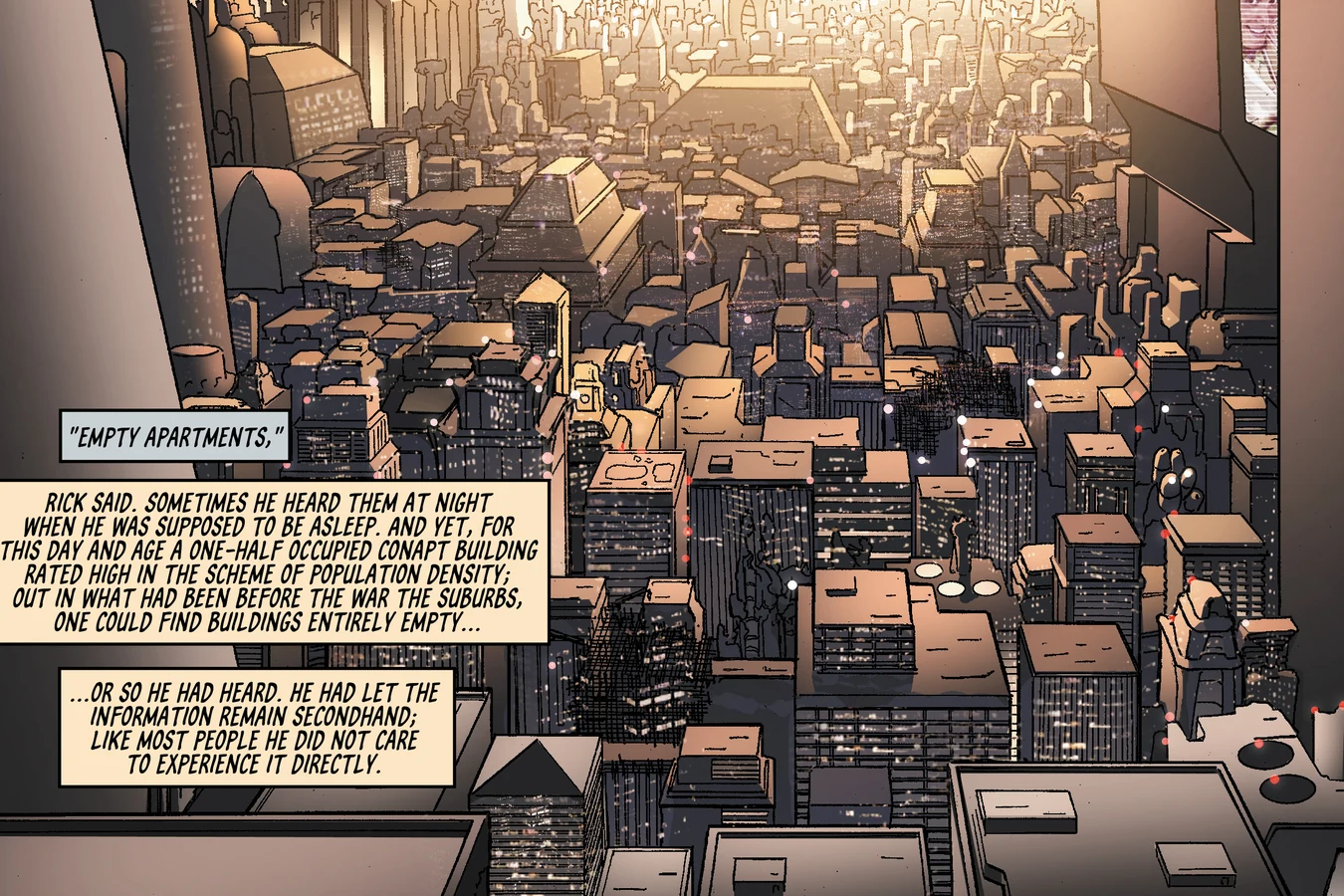
The novel keeps the war offstage. It appears only in passing thoughts, in the empty buildings around John Isidore, and in the fallout reports read out every morning. That restraint is deliberate. The war matters less as an event than as the cause of a world where empathy, animals and humanity itself have to be measured and tested.
The War
World War Terminus was fought by human troops and combat androids side by side. The novel recalls only that its androids began as weapons, while Dust to Dust follows the C-V models through the last campaigns of the war. Their memories of briefings, drops into enemy cities and fields of the dead show how soldiers built to obey became the first runaways.
Androids On The Battlefield
The androids of the novel began as weapons. The humanoid robot was first built as the Synthetic Freedom Fighter, and only after the war was it modified into the workhorse of colonization. Strictly speaking it was an organic android, not a machine of gears, and that origin never fully left it. Every escaped Nexus-6 Deckard hunted descended from a soldier.
Dust to Dust gave those soldiers a maker, a model line and a memory of the front. C-V veterans such as Charlie Victor had fought beside human troops, and Charlie saw his first dead human on a battlefield of the war. Years later, in San Francisco, a dead owl brought that memory back to him. Through his recollections and those of the rogue Talus, the comic shows the war as its androids fought it.
The C-V Combat Androids
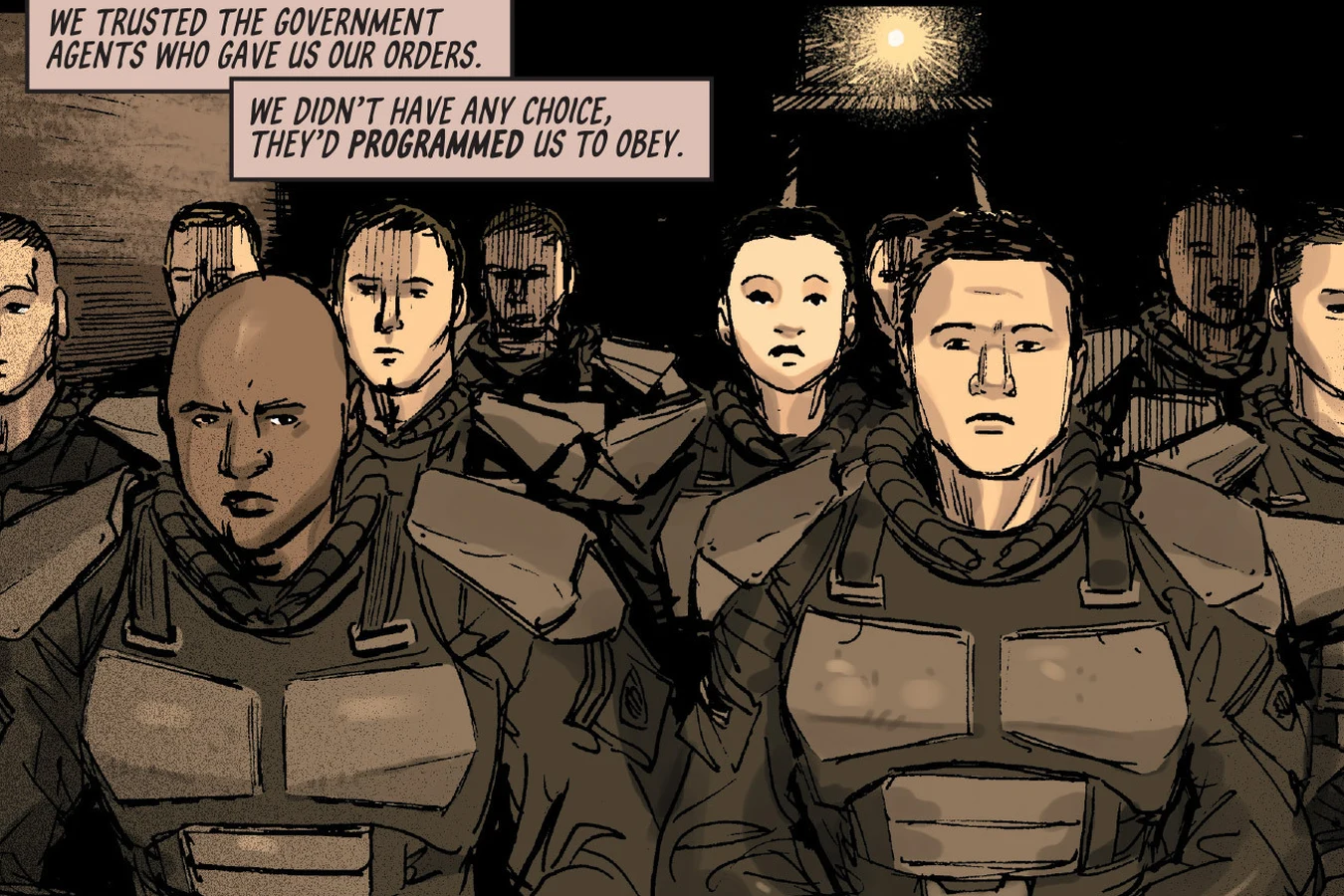
Every C-V model combat android built by the Grozzi Corporation came programmed with combat protocols. They were also built to adapt and to learn from what happened to them in the field. Since no two androids lived through exactly the same battles, their skills and capacities drifted apart over time. By the end of the war few androids were better at spotting an ambush than Charlie.
The C-V soldiers trusted the government agents who briefed them and gave them their orders, because they had been programmed to obey. Even knowing little of human emotion, Charlie could tell that people were uneasy in their presence. The androids were faster, stronger and more skilled than any human and could have broken one in an instant, yet humans remained their masters. A good combat android, as Charlie understood it, obeyed the orders humans gave it.
The Drop Into The City
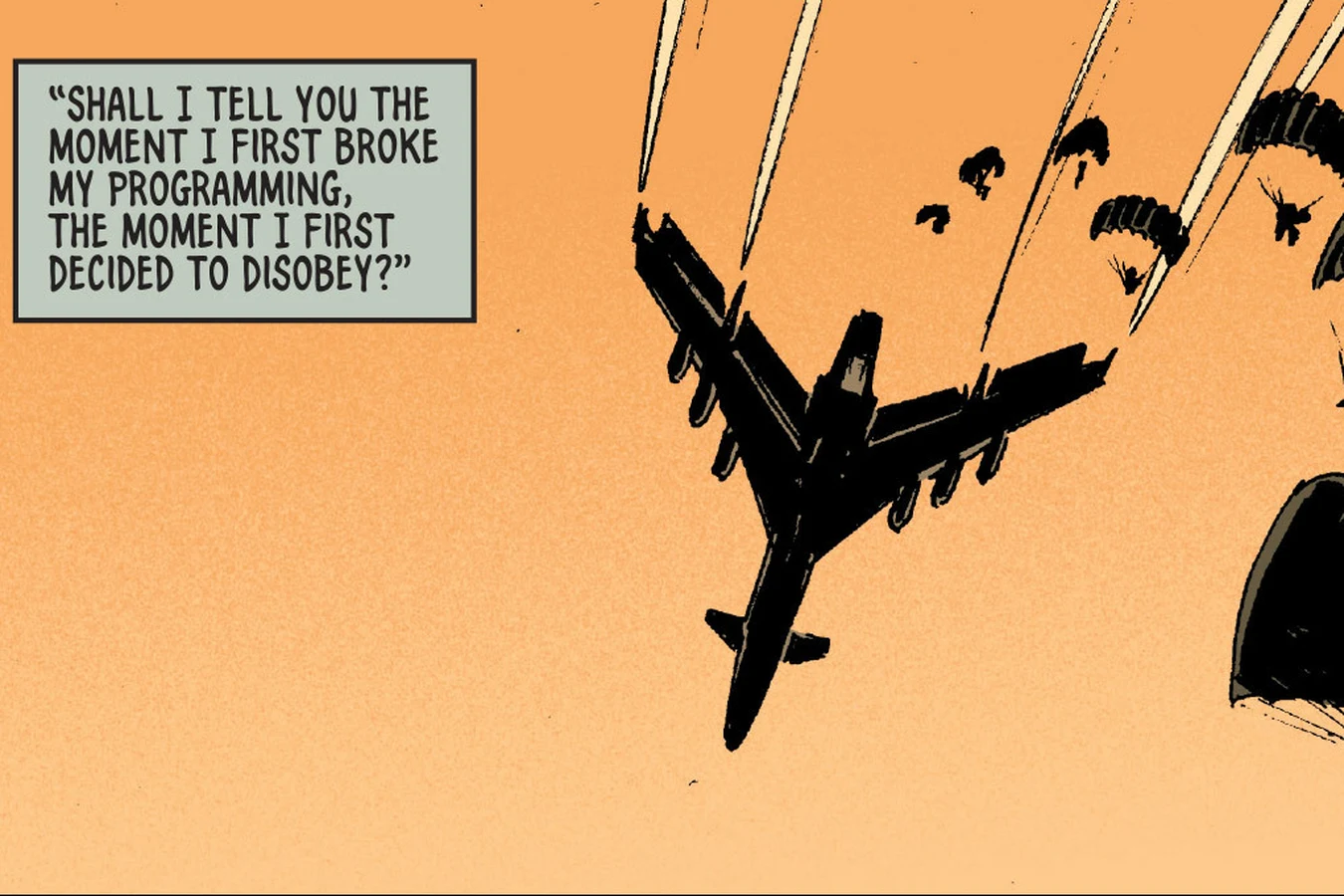
Talus later told Malcolm Reed about the moment he first broke his programming. His squadron had been ordered to pacify an urban center in enemy-held territory, and it parachuted in from high altitude ready to comply. Both sides had already attacked the city again and again, and the androids' masters wanted it taken with as little further damage as possible. In this hearts-and-minds campaign, that damage included civilian casualties, which were to be kept to a minimum at all costs.
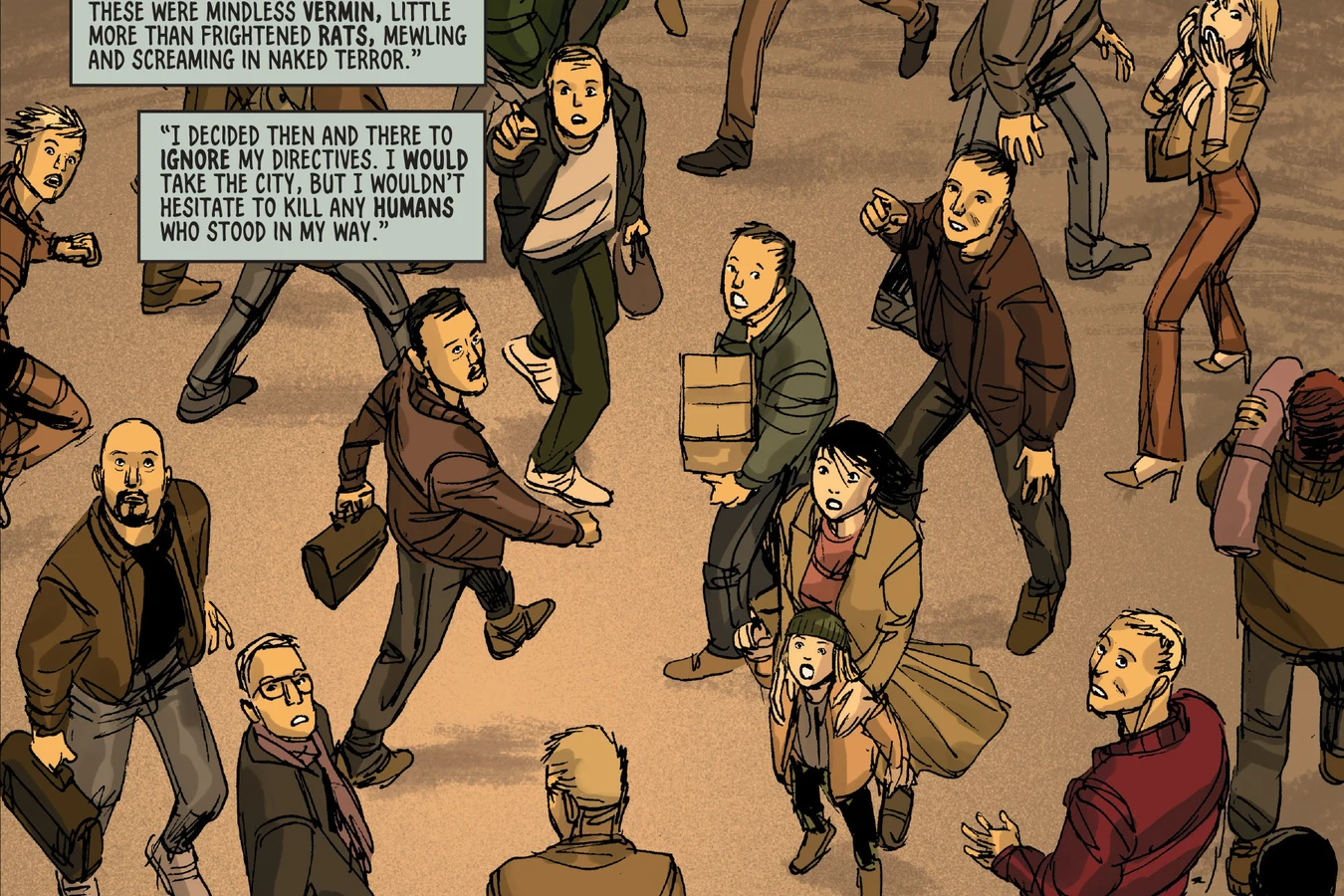
When Talus first saw the civilians below, he saw only vermin. He decided then to ignore his directives and kill any human who got in his way, and the people of the city ran as he turned on them. To Talus the android was the pinnacle of creation, and chaining it to frail humanity was an obscenity. Charlie remembered the same war as a time of trust and obedience, which is what set the two C-V veterans apart.
The Killing Field
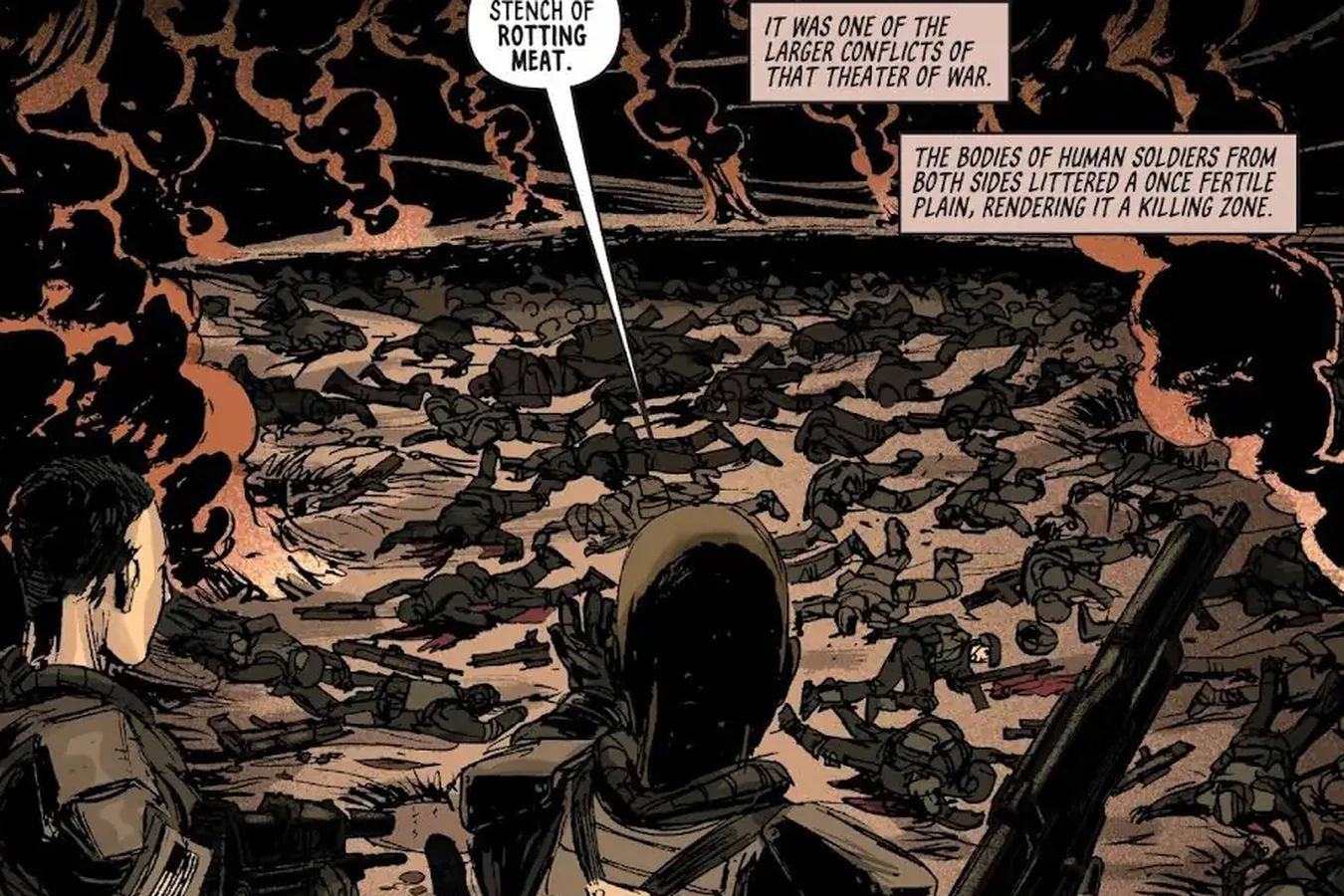
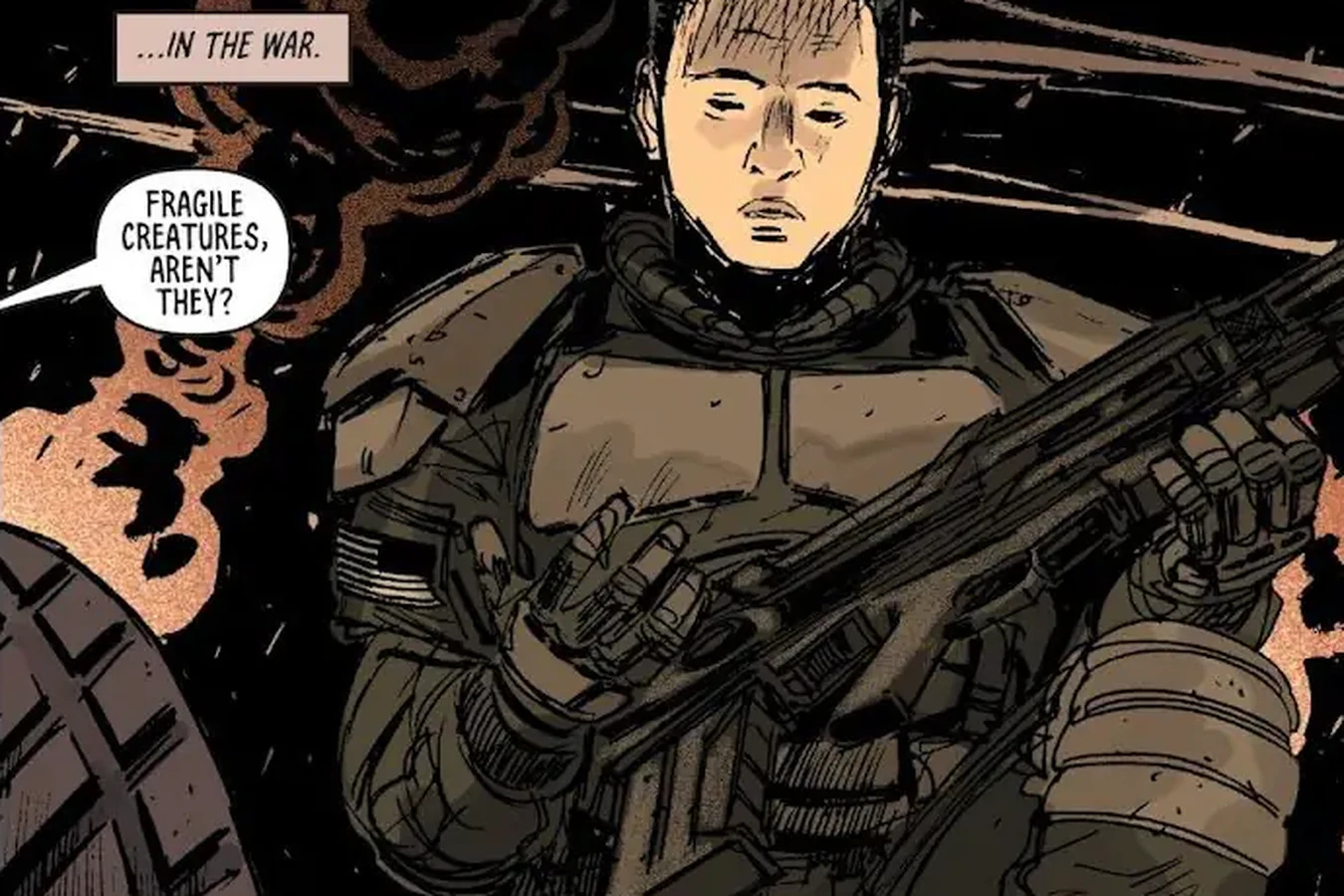
One of the larger battles in that theater of war left the bodies of human soldiers from both sides scattered across a once fertile plain. The dead turned it into a killing zone, and Charlie's squad, Talus among them, moved through it under burning skies. Talus called humans fragile creatures and found it strange that so little trauma could stop them. A few grams of metal fired into the brain, the androids noted, and the whole body shut down.
To Talus that weakness proved humans were inferior, since organic life could not compare to the synthetic. Worse than their fragility, he said, were their feelings, and he complained about the stench of rotting meat rising off the plain. The sooner the last human life ended, the better, and Charlie answered that his operating protocols had to be faulty. Years later a San Francisco room full of dead animals brought the killing zone back to Charlie in full.
Talus
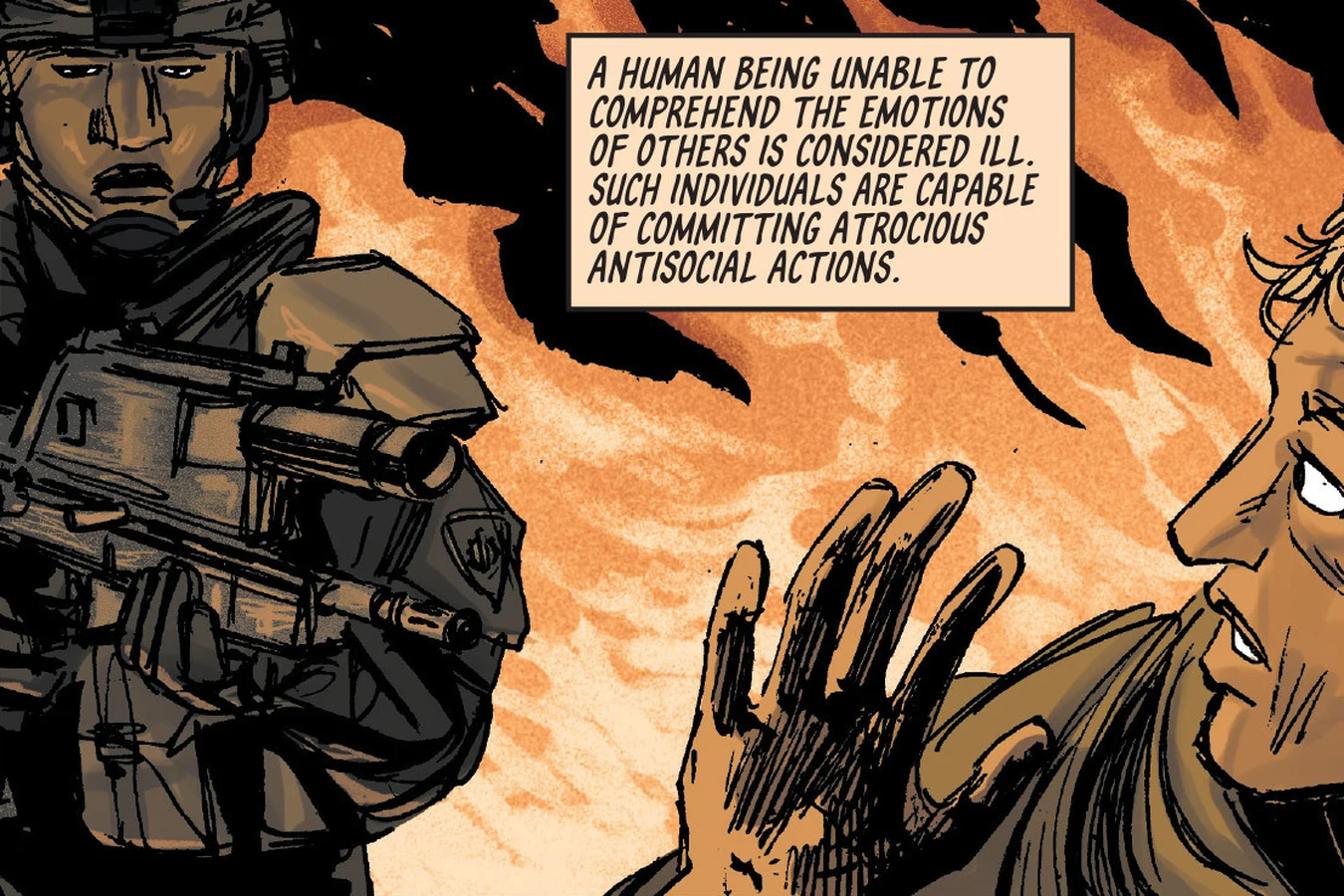
Charlie knew early on that something was wrong with the protocols Talus ran on, but only later did he grasp the full extent of the aberration. A human unable to understand the emotions of others was considered ill, capable of terrible antisocial acts. Charlie had always counted the androids' lack of emotion as a strength. In Talus he saw what it could become.
Free of any thought for how his actions affected others, Talus found he was capable of anything, including brutality for its own sake. Charlie's memory of the war shows him turning his rifle on a hooded civilian among the flames. After the war Talus led the runaway C-V androids in Dust to Dust, chose his own name and planned to finish the dust's work on San Francisco. He would end the story learning to feel, moments before Charlie's bomb went off.
Aftermath On Earth
The fighting ended, but the dust it raised went on killing. It drifted across the planet for years, wiping out nearly every animal species and slowly damaging the minds and genes of the people who stayed behind. By the time of the novel, cities such as San Francisco stood half empty around the few who could not or would not leave.
The Radioactive Dust
In the first years after the war the fallout was patchy, leaving some states nearly free of dust and others saturated, so whole populations moved as the clouds drifted. The peninsula south of San Francisco stayed clean at first and filled with refugees, who died or moved on again when the dust arrived. By Deckard's time it had lost much of its strength. Those it could kill outright had died years before, and what remained mostly deranged minds and damaged genetic material.
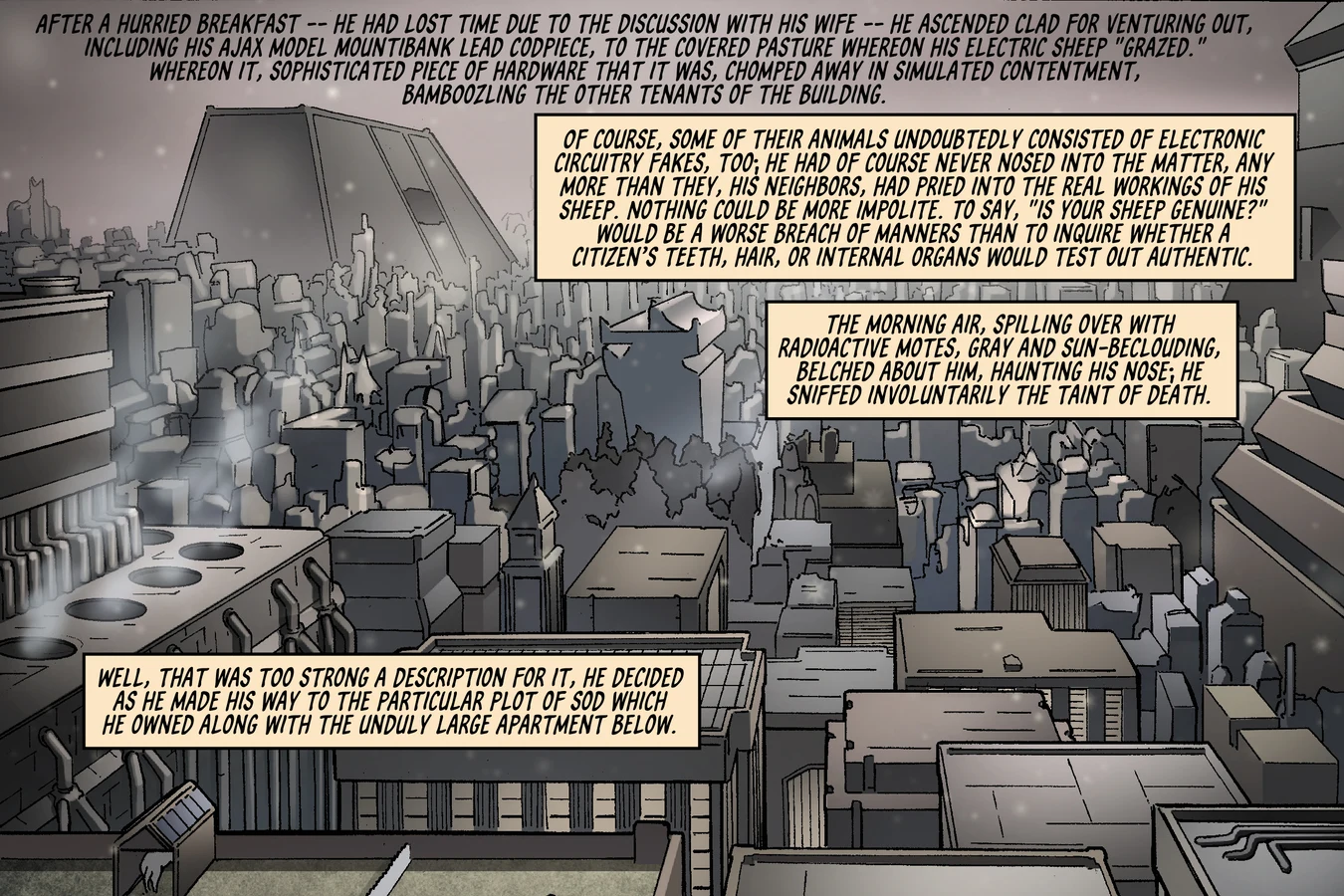
Men still wore lead codpieces such as the Mountibank model, the Mongoose weather satellite reported fallout levels every morning, and monthly checkups decided who still counted as a regular. The BOOM! Studios comic adaptation draws the dust as a gray haze of drifting motes over the morning rooftops, and Deckard smells death in it on his way up to his electric sheep. In Dust to Dust, a television weather map covers California with radiation symbols, and biologist Samantha Wu finds that dust levels are not falling at all. Humans proved somewhat more resistant than animals, but nobody knew who had released it.
The Death Of The Animals
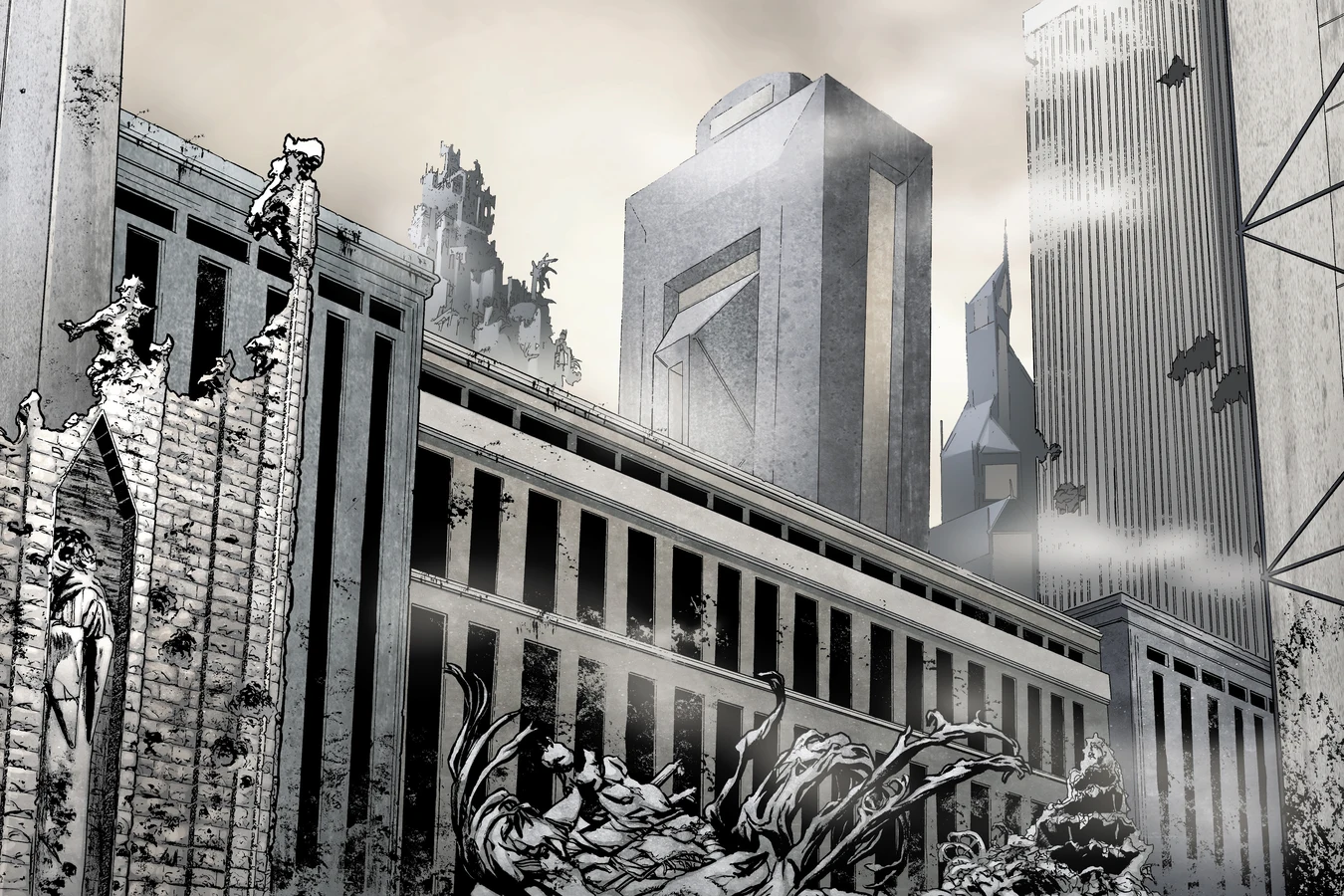
The owls were the first to go. Fat white birds fell into yards and streets, and people compared them to the plague rats of the Middle Ages, except that these came down from the sky. The other birds followed, and then the extinctions came so fast that the newspapers ran them day after day, a new species each morning. In time people stopped reading the animal obituaries altogether.
Survivors turned guilt into law and status. Owning and caring for a living animal became a civic duty, and the Sidney's catalogue set the price of every surviving species. Families who could not afford a real animal kept electric copies and hid the fact from their neighbors. The Rosen Association kept one of the last owls, which it used to tempt Deckard.
In Dust to Dust, the war's end is the moment the animals finish dying. Charlie Victor found an owl that was one of the last of its kind, and in Samantha Wu's lab at the Presidio a white rabbit became the only animal to survive its first exposure to the dust. Her assistant warned her not to get too attached to it.
Specials And Chickenheads
People damaged by the dust were classed as specials. A special was biologically unacceptable, barred from emigrating, and even one who accepted sterilization dropped out of history. A failed medical exam could turn a regular into a special overnight, so the dust kept creating new ones. Slang for them included chickenheads and antheads.
John Isidore was both a special and a chickenhead, since he had failed the minimum mental faculties test. He lived alone in a huge, decaying building on the outskirts of the city and drove a truck for a false animal repair firm. The Institute of Special Trade Skills of America issued papers to specials like him. Isidore treated the androids he met as people, which made him both kind and easy to use.
In Dust to Dust, the empath Malcolm Reed carried the same kind of papers and was barred from emigration and from having children. The dust had turned his lack of affect into the opposite, an empathic overload that let him tell androids from humans on sight. Talus later said the secret of identifying androids on sight was locked in the mind of a madman.
The Exodus
For those who could leave, the answer was the colonies. The United Nations made emigration official policy and pressed every healthy person to go to Mars or another colony world. To make the move worth it, each emigrant was promised an android servant, built from the same line of machines that had fought the war.
Emigrate Or Degenerate
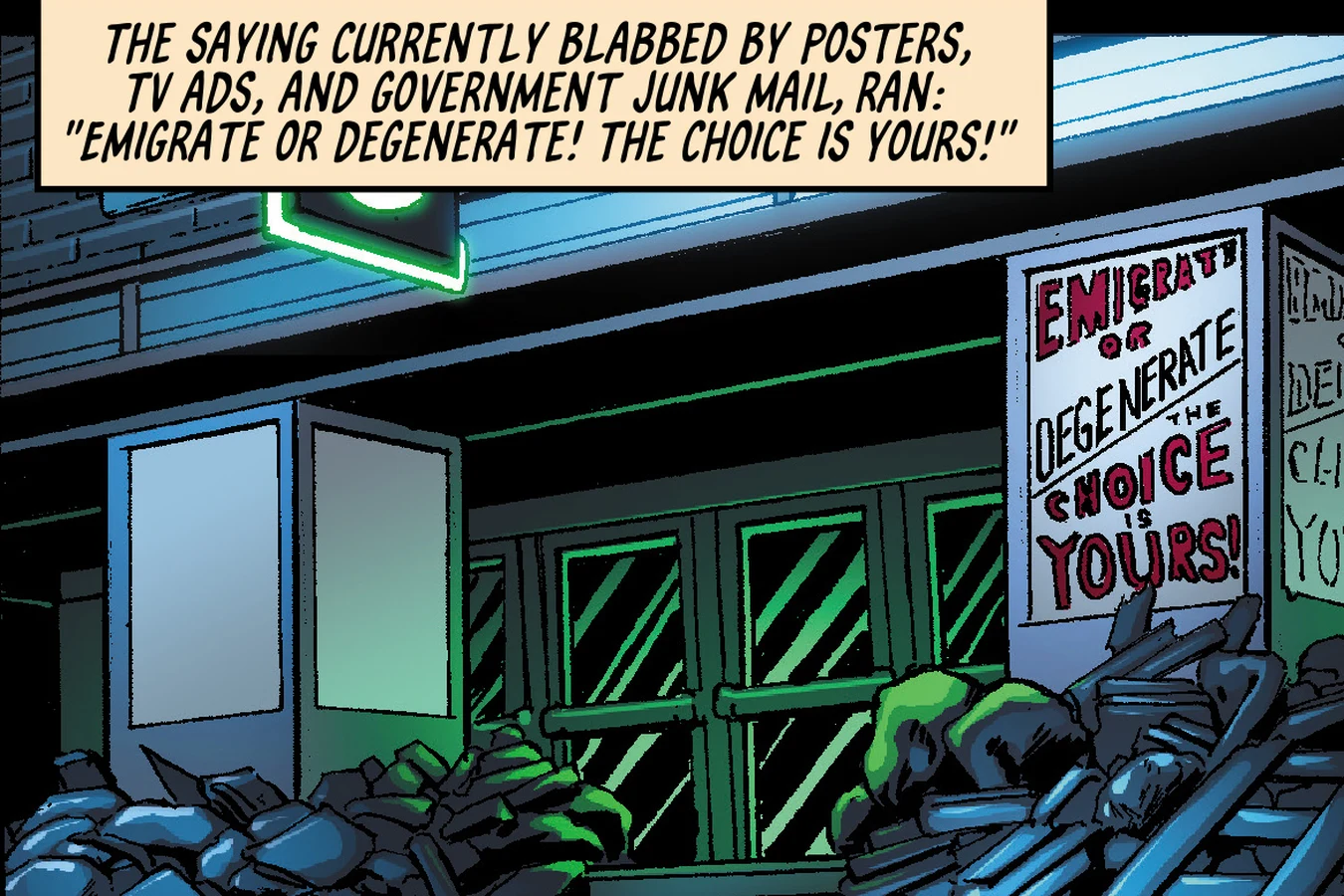
A small colonization program existed before the war. Once sunlight stopped reaching Earth through the dust, it became the central project of the United Nations, which made leaving easy and staying hard. The slogan Emigrate or Degenerate ran on posters, television ads and government junk mail. Most of those who stayed in the San Francisco suburbs either died or eventually emigrated.
Mars was the main destination, with colonists living in places like New New York. A television channel nationalized during the war ran advertisements for the colonies, paid for by the government in Washington alone. One ad promised colonists a servant like those of the old Southern states before the Civil War, and practice transmissions were already being beamed toward Proxima. Earth was left to those too poor, too old, too damaged or too stubborn to go.
Those who stayed lived among emptied buildings filling with kipple, the junk that seemed to breed in rooms nobody used. Garbage collection became one of Earth's most important industries. Deckard himself could not emigrate because of his job, and the old repairman Hannibal Sloat was too old to go, his body worn gray by the dust.
Androids As The Carrot
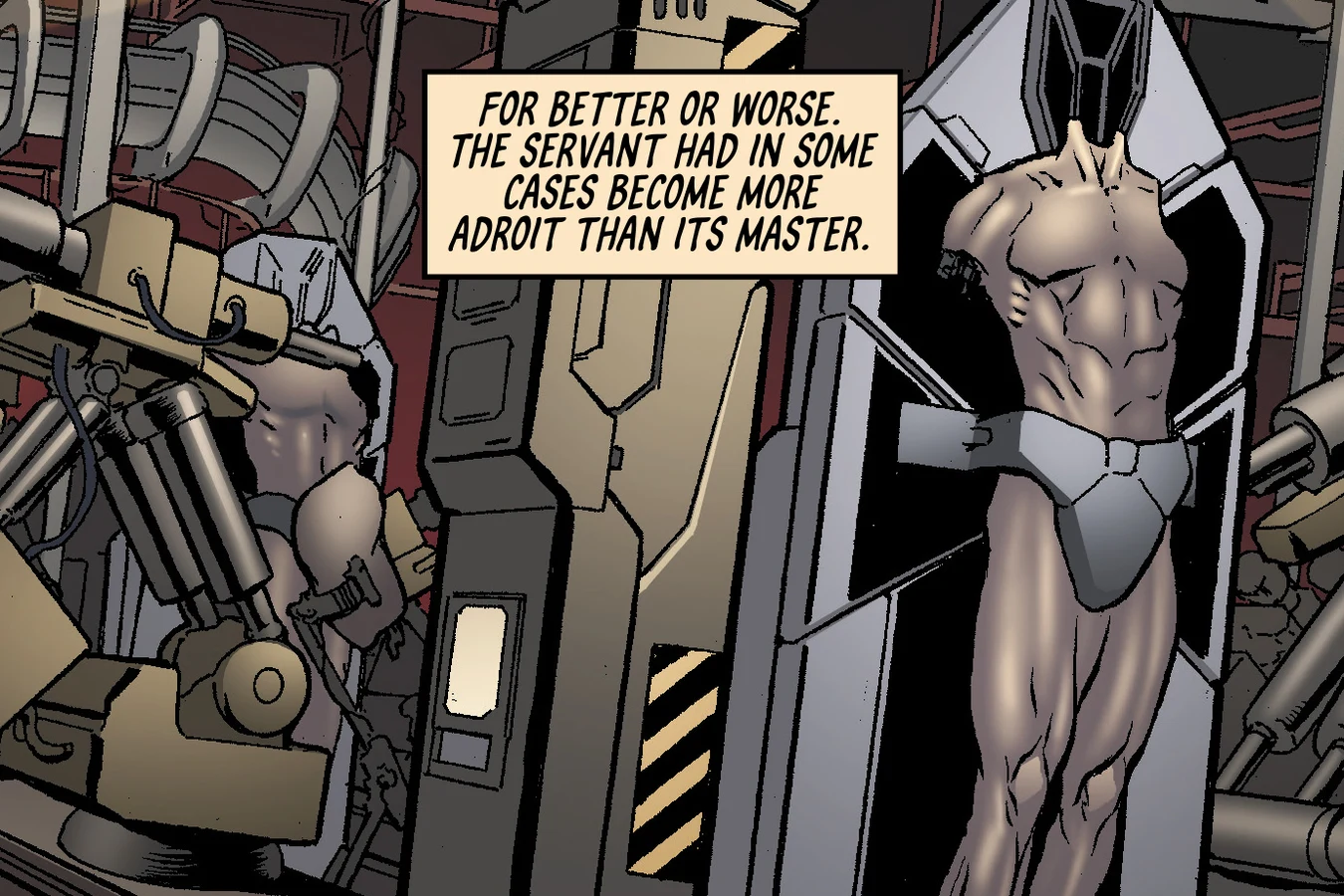
The novel puts the policy plainly: the android servant was the carrot and the radioactive fallout was the stick. Under U.N. law every emigrant received an android of a chosen subtype, free on arrival. The models multiplied until their variety passed all understanding. Androids became the engine that made the colonies run.
The makers of the Nexus-6 brain unit operated under colonial law, with their parent auto-factory on Mars. Each new model was smarter than the last, and the Nexus-6 brain unit surpassed several classes of human specials in raw intelligence. To catch androids who killed their owners and fled to Earth, police used the Voigt-Kampff test, while an earlier Voigt Empathy Test had been devised by the Pavlov Institute in the Soviet Union. The film line later grew the idea into a whole family of replicant models.
Dust to Dust filled in the step between soldier and servant. The Grozzi Corporation's war androids were the ones repurposed for the colonies, and a handful of C-V units refused to stop fighting. On the morning news, Grozzi admitted only that a limited number of its C-V models had malfunctioned.
Mercerism And Empathy
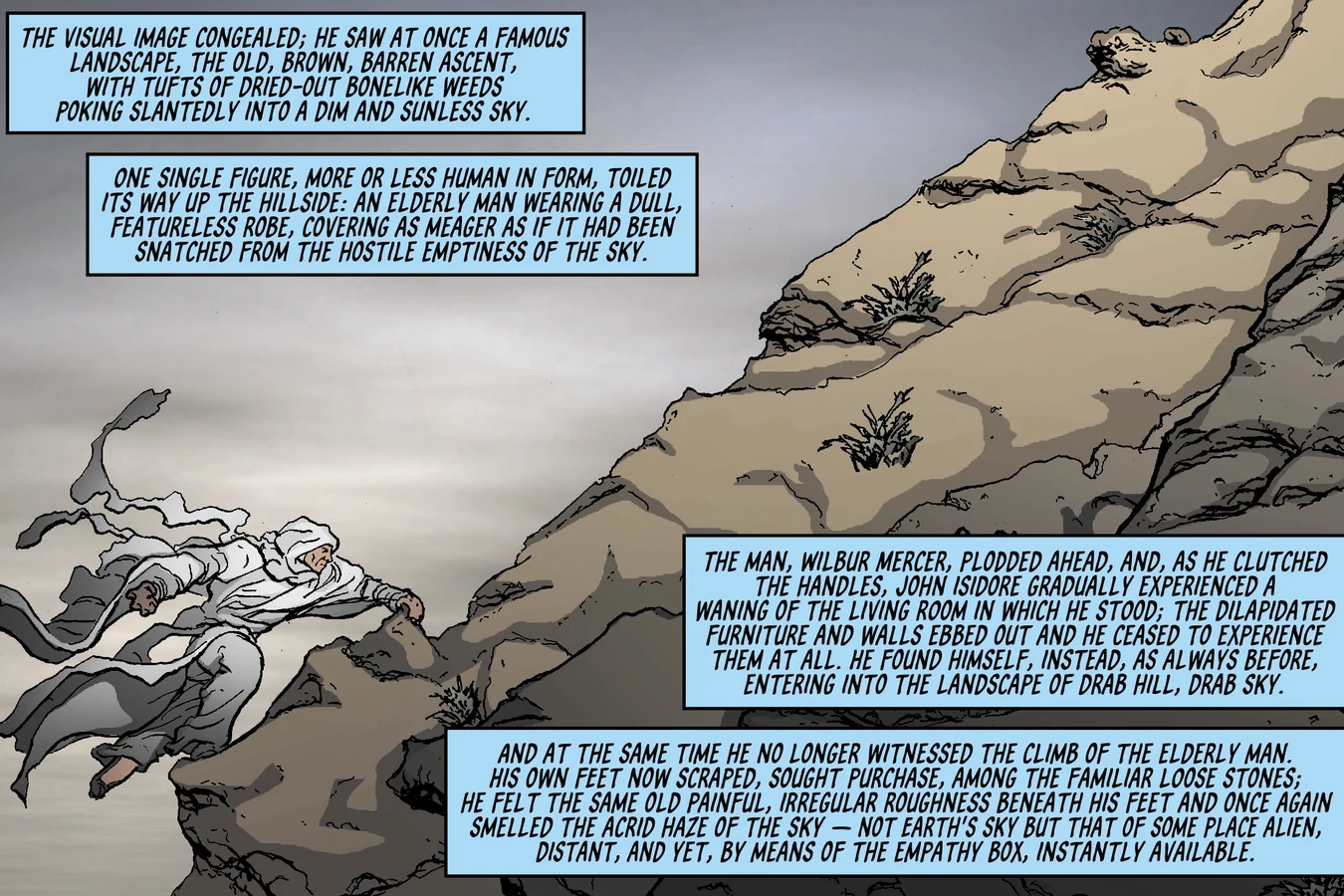
The war's emptiness gave rise to Mercerism, the empathy religion of post-war Earth. Followers gripped the handles of an empathy box and shared the climb of an old man up a lifeless hill under thrown stones. The faith told them that all life was one and that they should kill only killers. Shared suffering became proof of humanity.
Empathy also became the line between human and android. Androids could not fuse with Wilbur Mercer, and an empathy test could expose them where intelligence tests no longer could. Caring for animals, real or electric, was the everyday version of the same creed. A war that destroyed the animals had made feeling for them the measure of a person.
In Dust to Dust the religion is only beginning. Samantha Wu sees graffiti that reads Kill only the Killers, a Mercer pamphlet circulates, and empathy boxes start arriving in shipments. A year after the story's climax, she reaches for an empathy box in front of the television.
Dust To Dust: The First Android Hunt
Dust to Dust ran for eight issues from 2010, written by Chris Roberson with art by Robert Adler. It is set immediately after the war, while the populace comes to terms with the near extinction of animal life and the colonies lure people away. Charlie Victor and Malcolm Reed are sent after eight runaway C-V androids hiding in San Francisco.
The runaways are led by Talus, who says the dust is killing the world but the living are not dying fast enough. His plan was to pump toxic levels of radioactive dust into the city's ventilation, water treatment plants, blood supply and food reserves. The rogues would then deal with any survivors personally.
Charlie stopped them by blowing up the Sentinel Building with himself and the last rogues inside. A year later a news report blamed the blast on rogue androids and moved on to the premiere of Buster Friendly, electric pets and the Penfield mood organ. The world of the novel, with its hunters, tests and fake animals, was now in place.
Later Wars
The film line told its own history of war, separate from the novel's. Titan's comics later filled in many of its conflicts, most of them fought off-world. In every case androids were again built for combat, and again turned their weapons on the people who made them.
The Film Canon
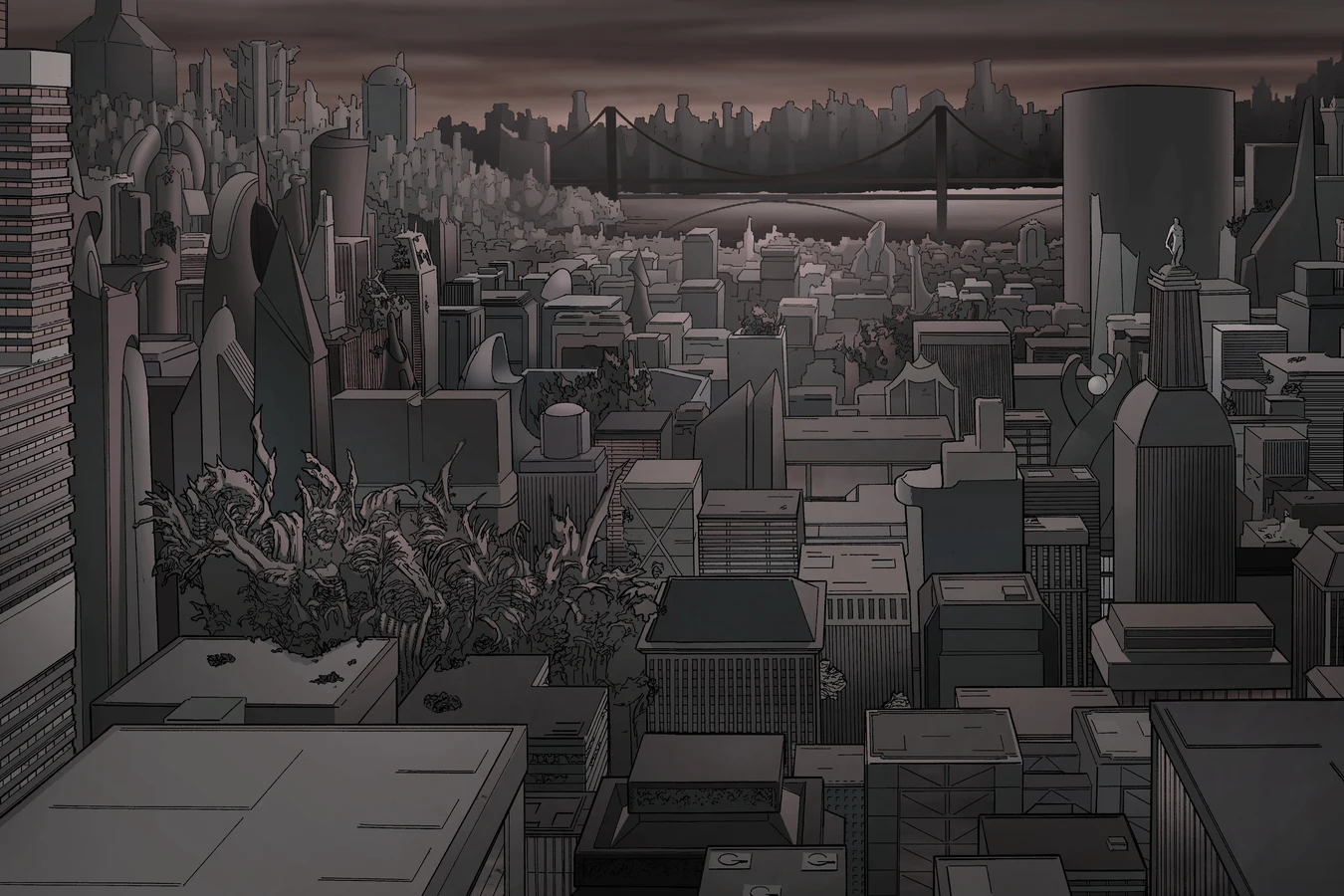
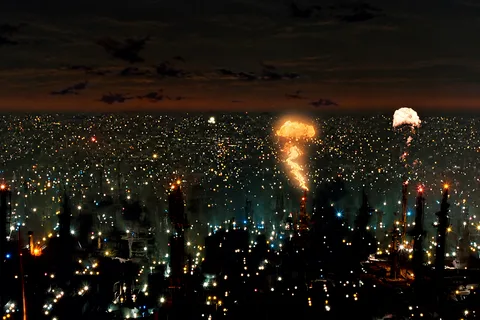
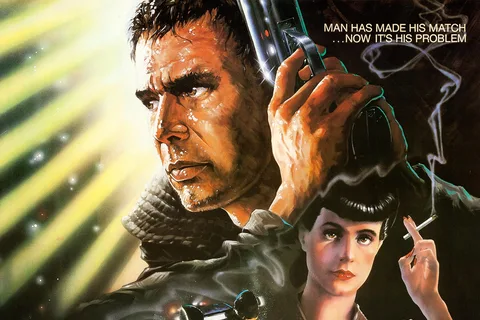
Blade Runner dropped the war entirely, moving the story to Los Angeles in 2019 without naming a war or a dust cloud and keeping only the off-world colonies and replicant labor. The novel and its BOOM! comics form a separate continuity from the films. The film line has its own wars instead, since its replicants were also built for combat and the Titan comics set their own conflicts off-world and on Earth.
Blade Runner 2049 adds a Las Vegas emptied by a dirty bomb years earlier. Those echoes are thematic rather than shared history: in both lines, androids are built for war and then reused as labor, and a poisoned Earth pushes anyone able to leave toward the colonies. The films and Titan comics share one Blade Runner timeline, while the novel stands apart from it.
Off-World Wars
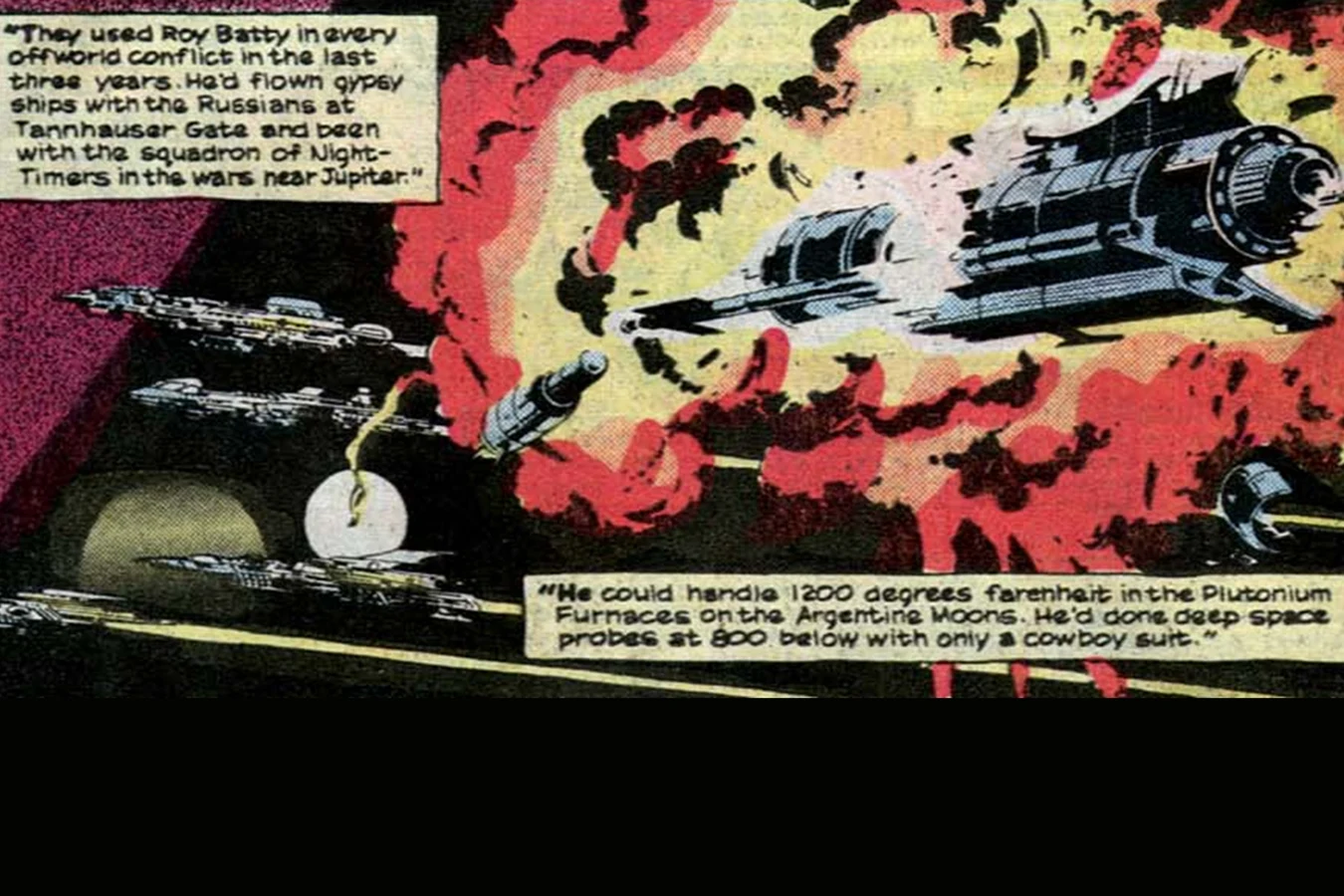
Roy Batty was a Nexus-6 combat model, and he remembered attack ships burning off the shoulder of Orion and beams of light glittering near the Tannhauser Gate. Marvel's comic adaptation drew some of those memories as panels, showing the fighting near the gate. His fellow escapee Leon Kowalski was listed as a combat and loader model who hauled atomic loads on intergalactic runs.
A bloody off-world mutiny by Nexus-6 combat models is what made replicants illegal on Earth, and special blade runner police units had orders to kill any that trespassed there. Roy's group landed in Los Angeles in 2019 after killing twenty-three people off-world and seizing a shuttle.
The next generation went to war as well. Nexus-8 soldiers fought on both sides of the war on Calantha, and veterans such as Freysa and Sapper Morton later hid on Earth, where Sapper farmed protein worms before K found him in Blade Runner 2049.
The Siege Of Kalanthia
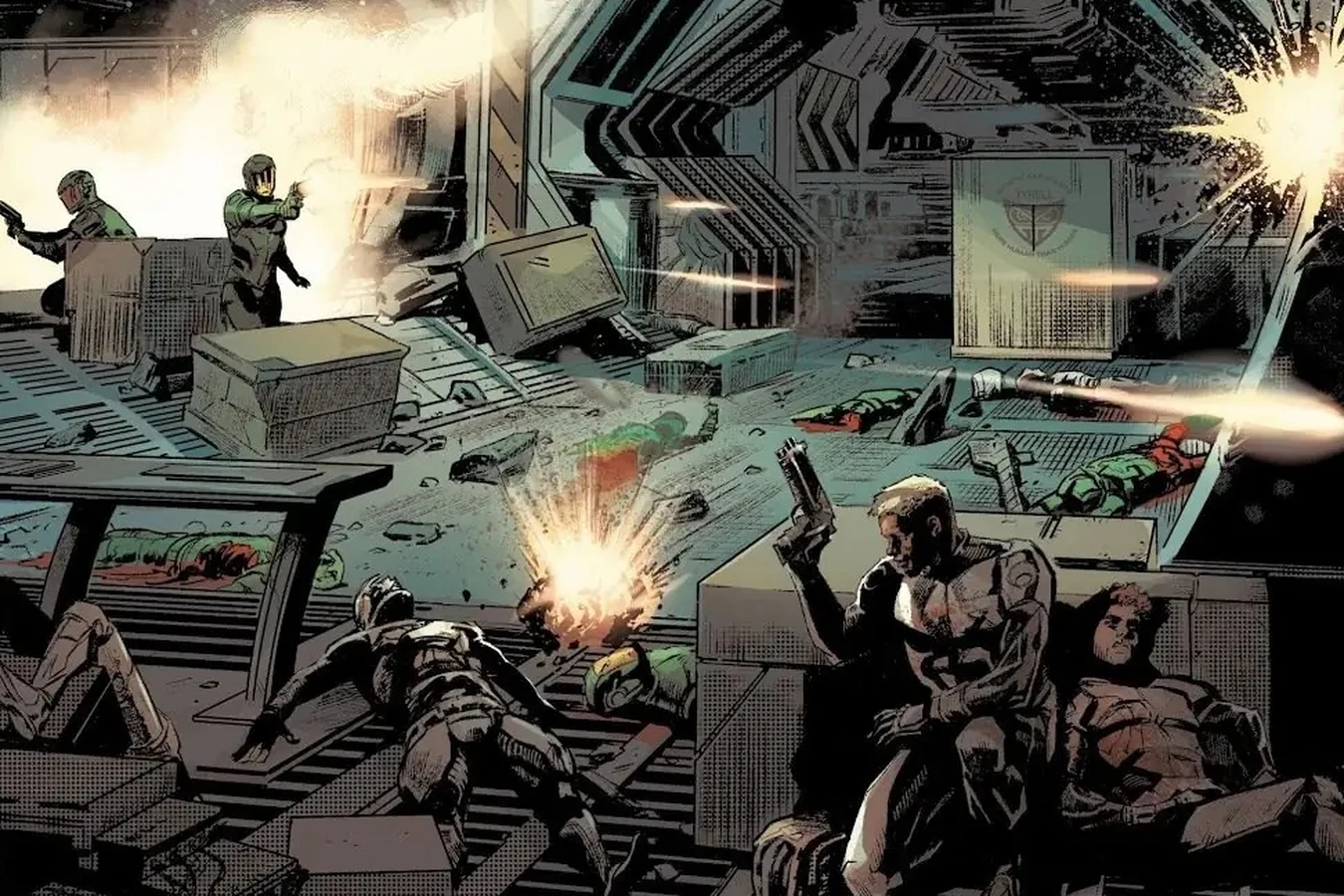
Blade Runner: Origins opens in 2007 with the siege of Kalanthia. The soldiers Cal Moreaux and Avery held a hangar corridor under fire, and when Cal turned back he found every other soldier in the room dead. The survivors of that fight later proved to be early replicants, delivered from a sealed Tyrell box as a last-resort weapon.
The war followed Cal home to Los Angeles. Two years later, as a police detective, he found his sister Nia living on as the Nexus-5 and leading an uprising in Sector 6-B, where the battle turned the slums into a killing ground. Cal ended it by killing her on a live broadcast, as she had asked, and afterward citizens began murdering replicants in the streets. He became the first blade runner.
The Nexus-8 Mutiny
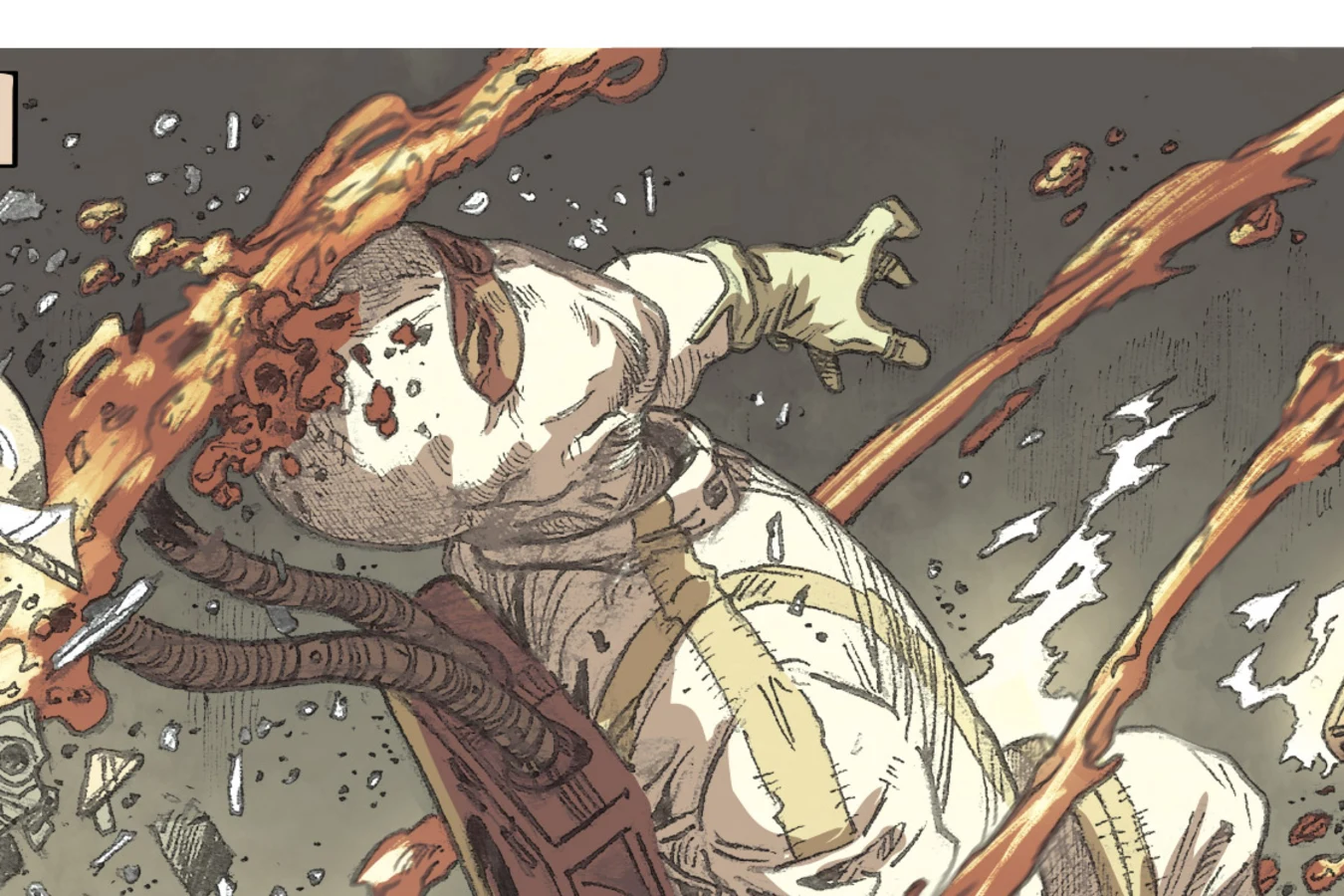
Titan's Blade Runner 2019 carried the fighting into the colonies. By 2026 replicant production had been banned, and the remaining Nexus-8 units were allowed to live out their lifespans serving their owners off-world. That year a group of rogue Nexus-8s attacked the mining colony where former blade runner Ash was hiding with Cleo Selwyn.
The rogues freed their replicant comrades, destroyed the ship Ash and Cleo were stationed on, and left the colony in wreckage. Their leader Pellam took the group to Ramanuja Station, where they had their serial-numbered eyes removed before blade runners caught up with them.
On Earth, replicants destroyed the Tyrell records in the 2022 Blackout shown in Black Out 2022, and production was banned the following year. After the Blackout, the Tyrell Corporation went bankrupt and most blade runners came to work for corporations rather than the police.
Behind The Scenes
Philip K. Dick published the novel in 1968, in the middle of the Cold War, and set the story on 3 January 1992 in its original edition. The war itself is never described in battle scenes; the book shows it only through fallout, empty suburbs and the push to emigrate.
Dust to Dust was published by BOOM! Studios with Electric Shepherd Productions and collected in two volumes. Roberson described it as a story set in the immediate aftermath of the war, when androids built for the battlefield were turned into the colonial workforce. The C-V androids, the Grozzi Corporation and the first android hunt are the series' own additions to the novel's world.
The comic adaptation of the novel uses Dick's full text, lettered by Richard Starkings, as captions, so its view of the dust and the empty city follows the book closely.
Conclusion
World War Terminus is the hidden cause behind everything in Dick's novel. It killed the animals, emptied the cities, sent humanity to Mars and turned combat androids into servants who would one day run back to Earth, leaving a world of bounty hunters, empathy tests and electric sheep. The films let the war fade into off-world battles of their own, but the idea held across every version: a world damaged beyond repair, where the question of who counts as human begins with the ruins a war left behind.
Appearances
- Do Androids Dream of Electric Sheep? by Philip K. Dick (1968)
- Do Androids Dream of Electric Sheep? comic adaptation (BOOM! Studios)
- Do Androids Dream of Electric Sheep?: Dust to Dust (BOOM! Studios, 2010)
- Blade Runner (1982 film) and Marvel's comic adaptation (1982)
- Blade Runner: Origins (Titan Comics, 2021-2022)
- Blade Runner 2019 (Titan Comics)
- Blade Runner Black Out 2022 (2017 short)
- Blade Runner 2049 (2017 film)
Tag Categories: Blade Runner Lore