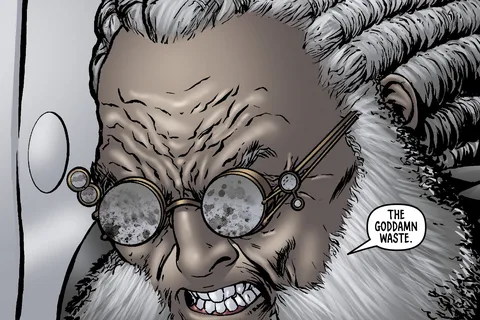

Garland was the Nexus-6 android posing as a police inspector in Philip K. Dick's Do Androids Dream of Electric Sheep?. He helped maintain an isolated police station on Mission Street, where Rick Deckard was detained while hunting escaped androids. His attempt to discredit Deckard collapsed when Phil Resch demanded an android test, leading Garland to draw a weapon on the hunter. The novel and its comic adaptation identify him by his surname and rank, without establishing a first name.
Biography
Escape And The Mission Street Station
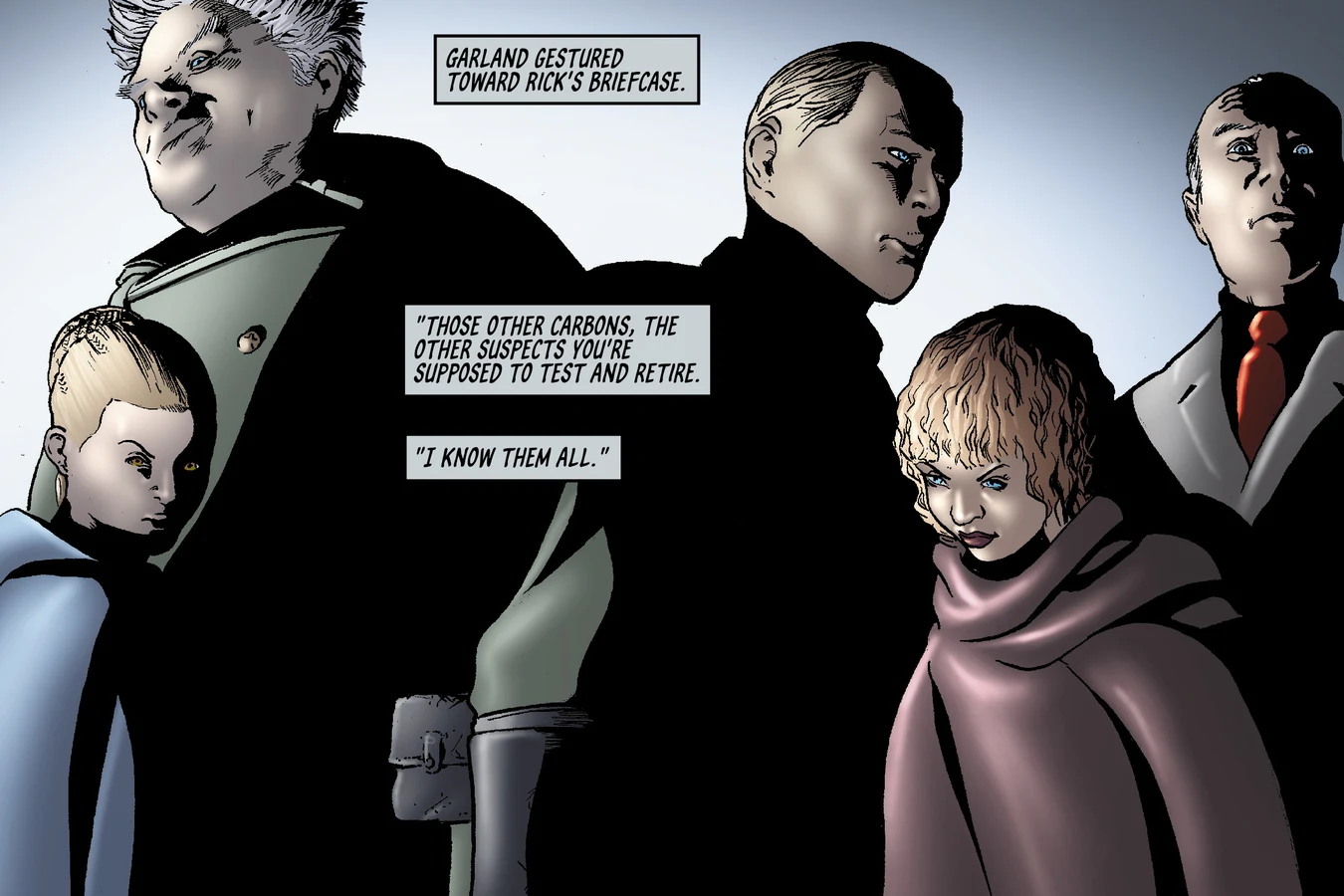
Garland was a Nexus-6 android who escaped from Mars with a group of fugitives that included Luba Luft and the remaining androids on Deckard's assignment list. On Earth, he occupied the position of police inspector at the Mission Street Hall of Justice in San Francisco. Holden's information instead described him as an insurance underwriter; Garland acknowledged that the physical description and other personal details were accurate, while disputing the occupation.
The station operated separately from the police department on Lombard Street. Its officers maintained the appearance of ordinary police work, processing prisoners and using a laboratory, identification equipment and bounty hunters. Garland later admitted that its telephone lines redirected calls into other offices inside the building. This isolation let the androids present their organisation as legitimate while preventing a detained outsider from easily contacting the real department.
Deckard's Arrest
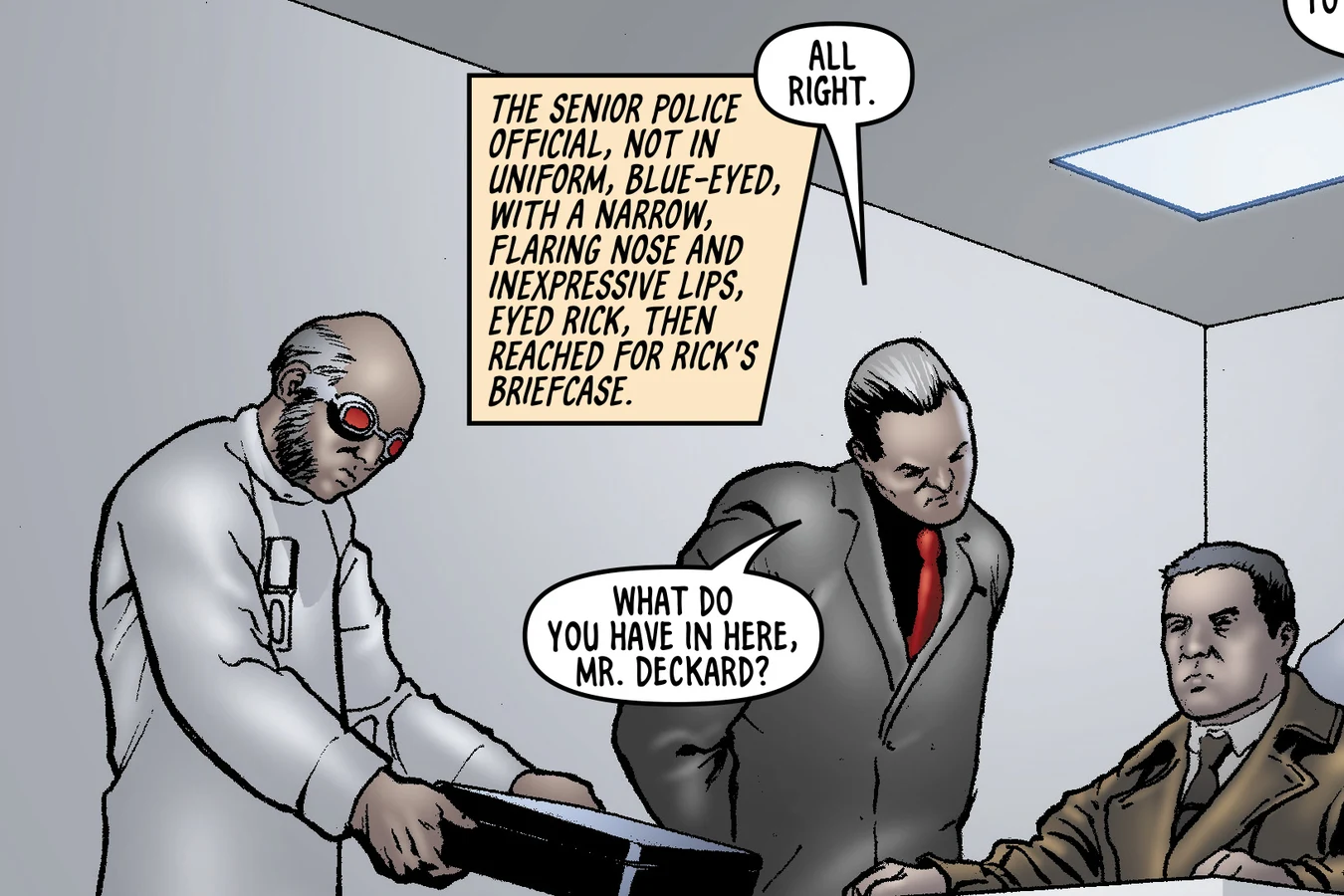
Officer Crams brought Rick Deckard to Mission Street after Luft interrupted an attempted Voigt-Kampff test by calling the police. Crams accused Deckard of posing as a police officer and found Max Polokov's body in his hovercar. Garland intervened during the booking procedure, examined Deckard's briefcase and asked whether the supposed bounty hunter might himself be an android.
Garland allowed Deckard to telephone his wife, but a stranger answered the number. Deckard did not yet know that the call had been diverted within the station. Garland then took him into his office and asked about the empathy test, claiming not to know that particular method of android detection. He introduced himself simply as Garland; neither the novel nor the supplied comic sequence establishes a first name.
The Retirement List
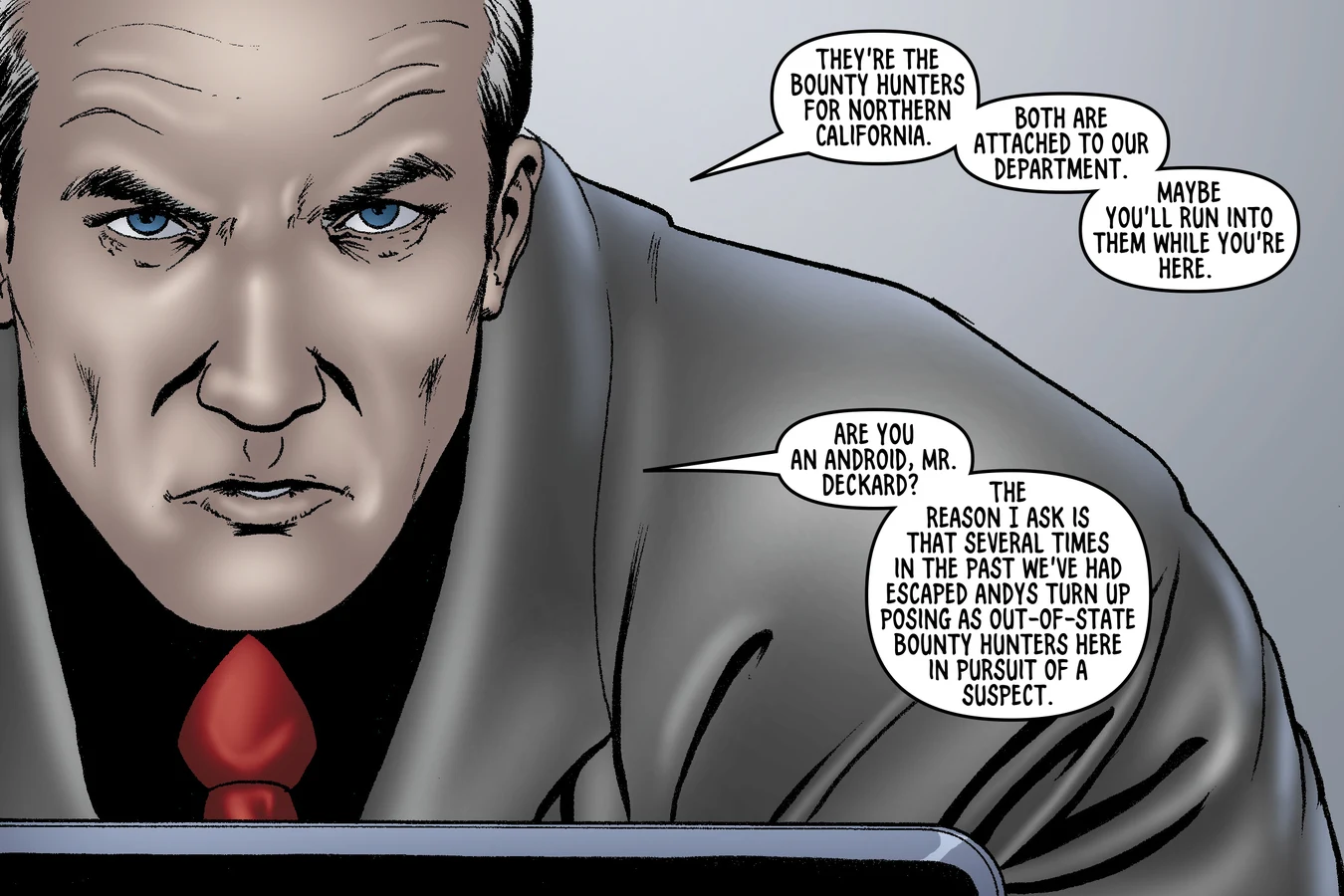
Inside the office, Garland revealed that Deckard's next retirement assignment was Garland himself. Deckard checked the carbon sheets and found that the inspector was telling the truth. Garland summoned Phil Resch, one of the station's bounty hunters, ostensibly to compare their information and establish whether Deckard belonged on Resch's own list.
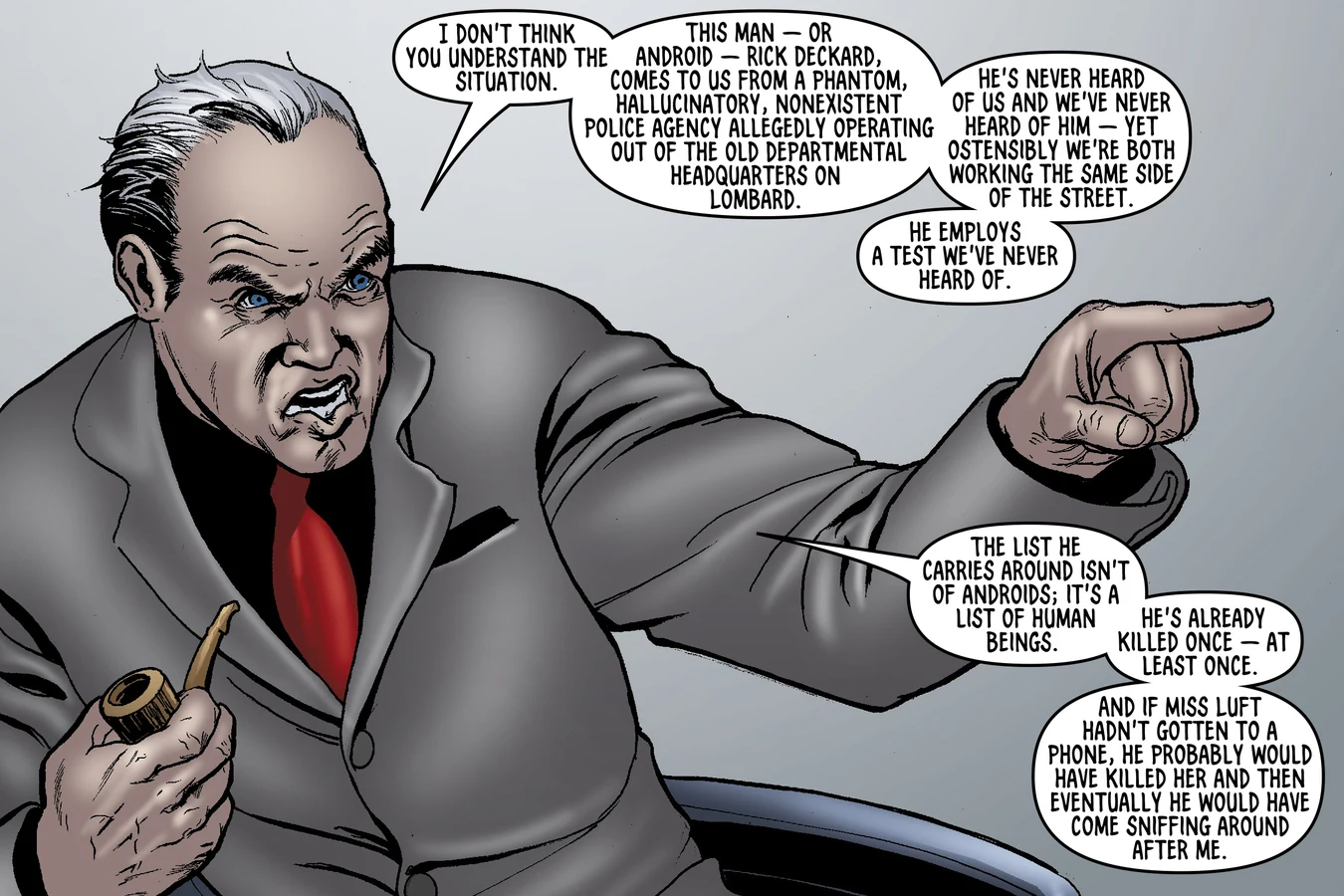
Garland insisted that Deckard had arrived from a nonexistent police organisation and was carrying a list of human beings to kill. Resch was less willing to accept that account: he remembered Polokov as unusually cold and calculating, and had previously considered testing him. Garland's attempt to use a fellow bounty hunter against Deckard instead brought another suspicious observer into the room.
The Tests And Polokov's Body
The station's laboratory reported that Polokov's bone marrow identified him as a humanoid robot. That result undermined Garland's claim that Deckard had murdered a human. Resch described the Boneli Reflex-Arc Test, which measured the slightly slower nervous response of an android, and argued that police personnel should undergo routine screening. Garland had opposed such testing on the stated grounds that it would damage morale.
Deckard and Resch now pressed for Garland to be tested. Garland reluctantly agreed, but warned Resch that he would dislike the results. Resch left to fetch the equipment, leaving the inspector alone with Deckard. The proposed examination threatened the protection Garland had gained by holding a position of authority inside the isolated department.
The Laser Threat
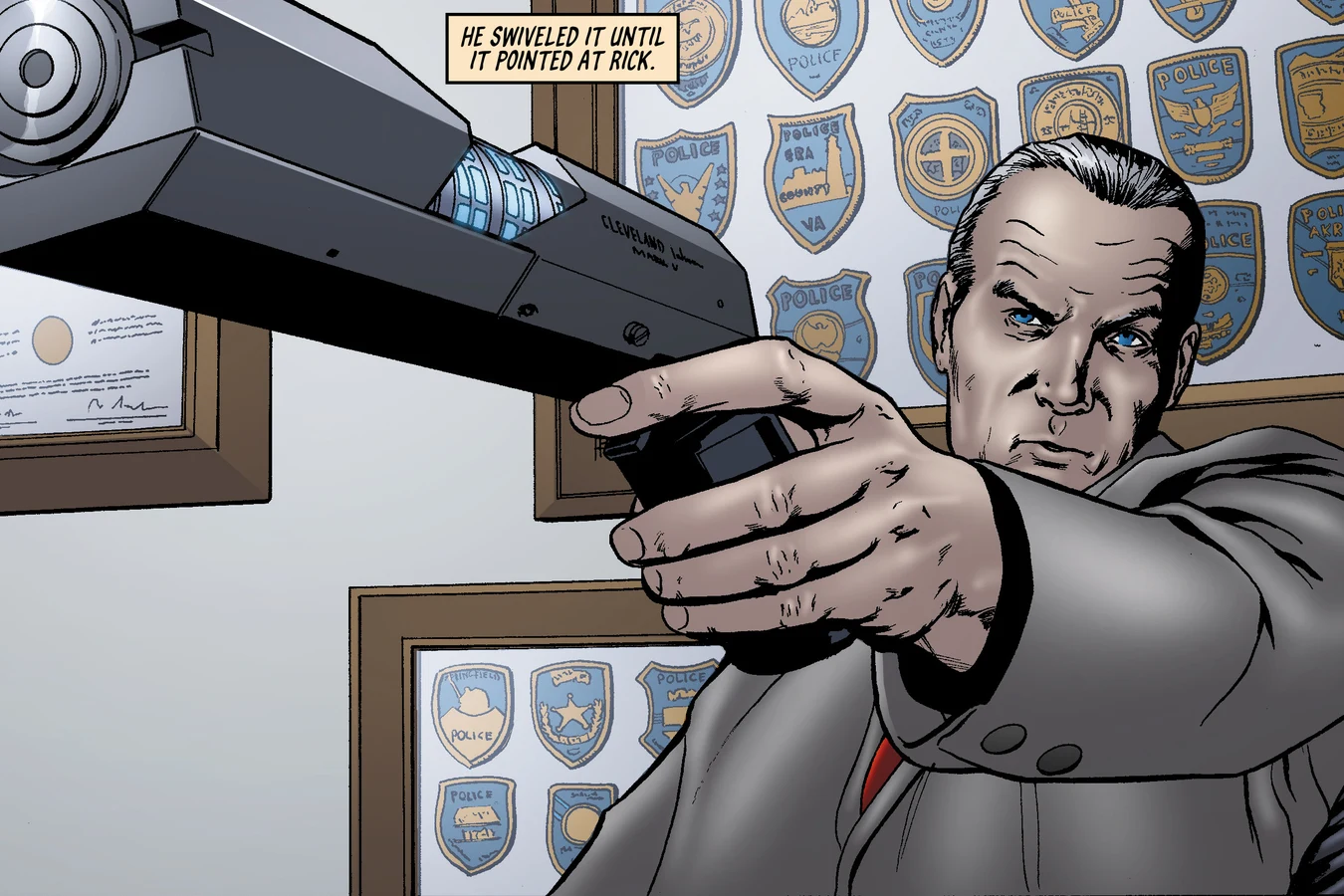
Garland took a laser tube from his desk and aimed it at Deckard. Deckard argued that killing him would not solve the problem: a postmortem would establish that he was human, and Resch would still insist on testing the inspector. Garland lowered the weapon and returned it to the locked drawer, acknowledging that he had intervened when Crams brought Deckard in because he sensed danger.
He then admitted being an android and knowing the fugitives on Deckard's remaining sheets. He explained the station's closed telephone system and its separation from the rest of San Francisco. His position had concealed him from the legitimate police, but it could no longer conceal his identity from the two hunters already inside his office.
The Claim About Phil Resch
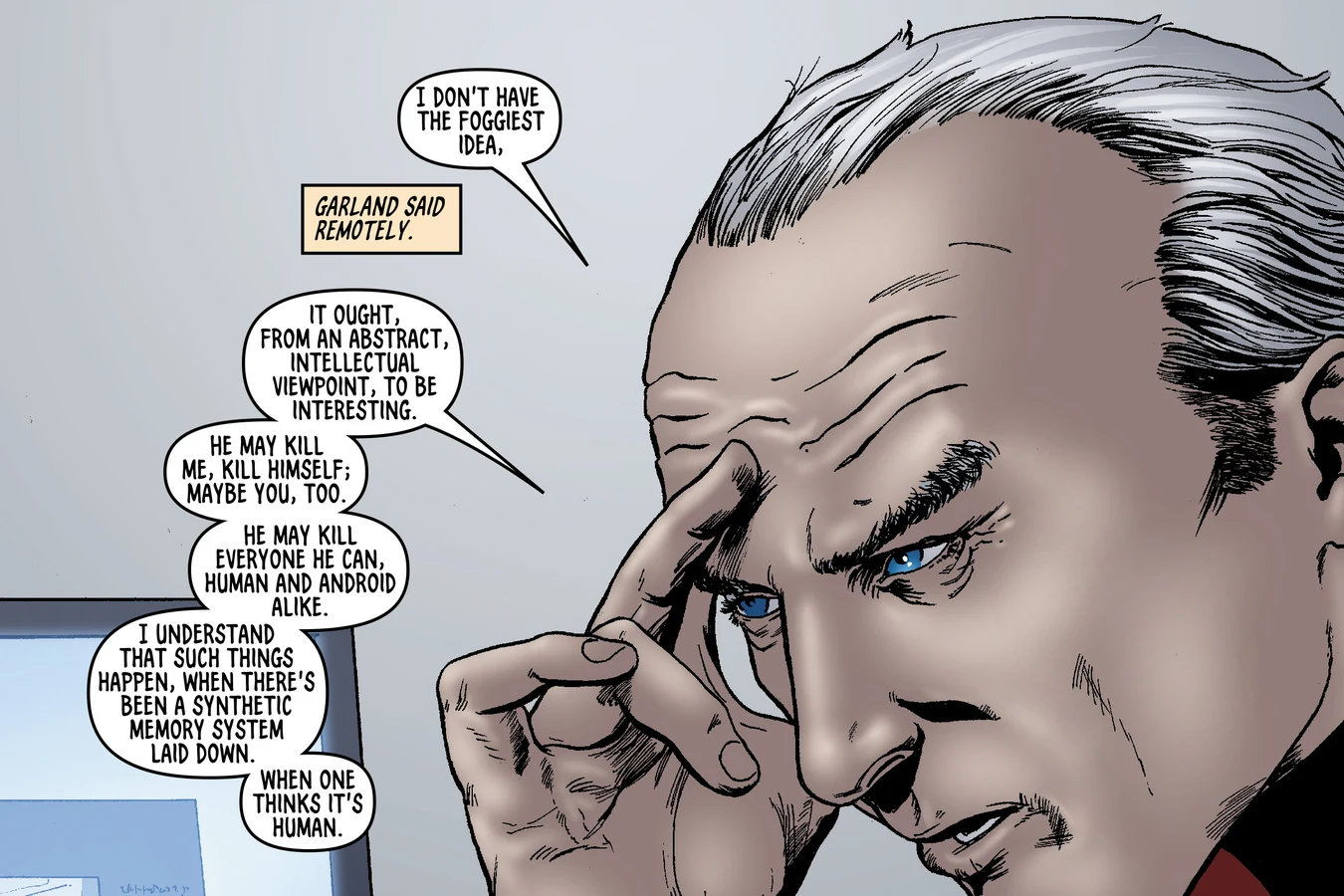
Garland claimed that Resch was also an android, separated from the escape party while receiving artificial memories. He suggested that Resch's belief in his own humanity could collapse violently if the tests exposed him. Deckard was left fearing that the man offering him a way out might turn on everyone, including himself, when he discovered what he supposedly was.
That claim was not reliable. After Garland's death, Deckard tested Resch and found him human. Resch's recollection that Garland had supervised him for three years also conflicted with the fugitives' recent arrival. Resch considered whether an earlier human inspector had been replaced, but the novel did not resolve that possibility into a confirmed history for Garland. His story about Resch should therefore be distinguished from the admissions about his own identity.
Garland's Death
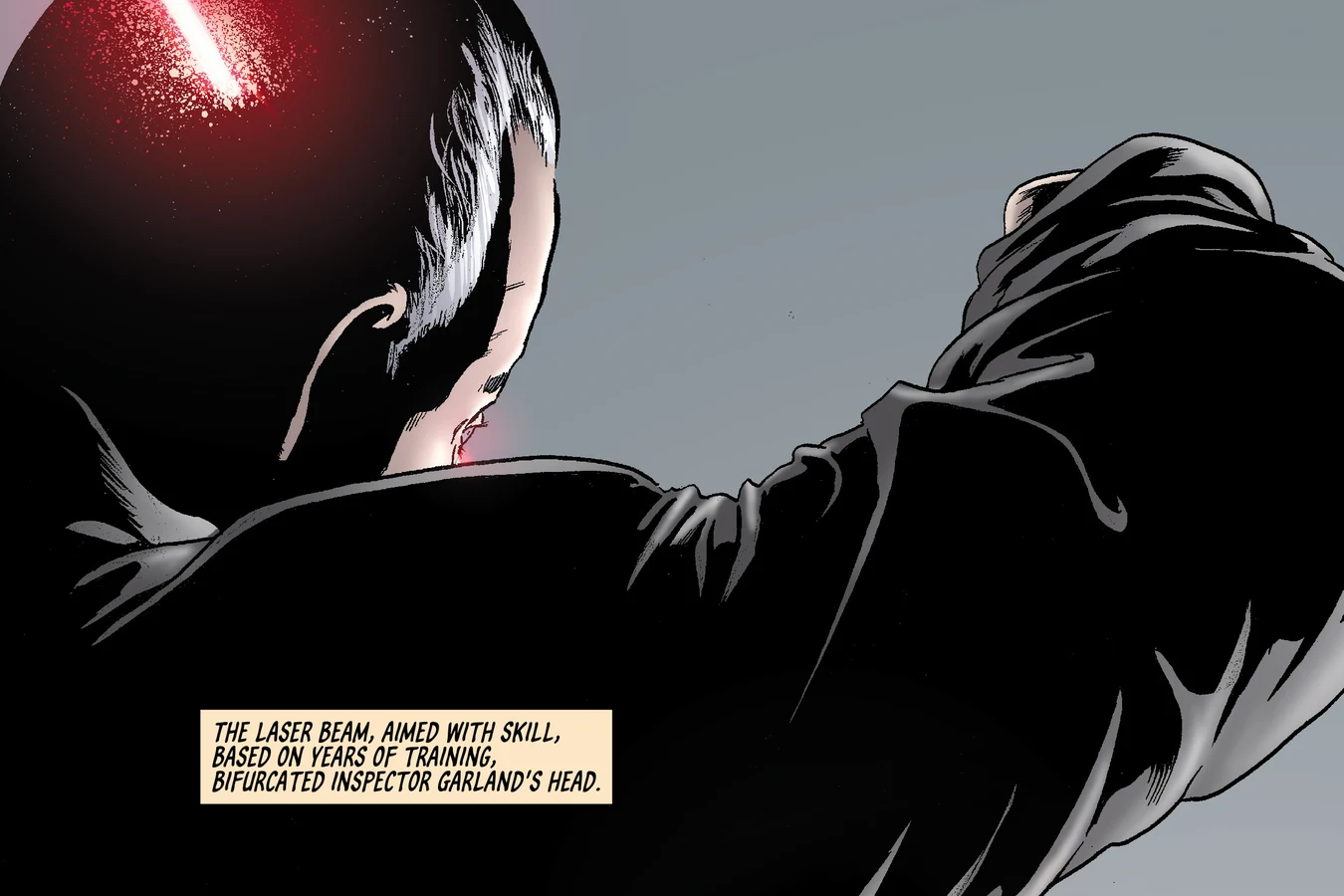
When Resch returned with the test apparatus, Garland aimed a miniature laser at him. Both hunters dropped from their chairs, and Resch fired as he fell. His beam split Garland's head, killing him before the inspector could complete the ambush. The weapon rolled across the desk as Garland's body slipped to the floor.
Resch and Deckard placed the body back in its chair and instructed the switchboard not to interrupt the inspector for half an hour. Resch handcuffed Deckard to himself and escorted him out as a prisoner. They left without the other officers raising an alarm, then resumed the hunt for Luft. Although Resch fired the fatal shot, the retirement became part of the bounty accounting discussed with Deckard after their escape.
Personality
Garland initially relied on the calm authority of a senior police official. He offered routine procedural explanations, questioned Deckard's legitimacy and used the station's apparent normality to make the prisoner doubt his own position. That composure deteriorated when Resch challenged him: irritation and anger replaced the measured manner with which he had first approached Deckard.
His concern for his own survival did not make him loyal to every other android. He admitted that Polokov belonged to a different group and that he had misjudged the risk of allowing a laboratory examination. He also complained that android lives were valued below even small animals on Earth. His conversation with Deckard combined that resentment with a willingness to exploit uncertainty about Resch, making his account of android persecution more revealing than his claims about the hunter's identity.
Appearance And Equipment
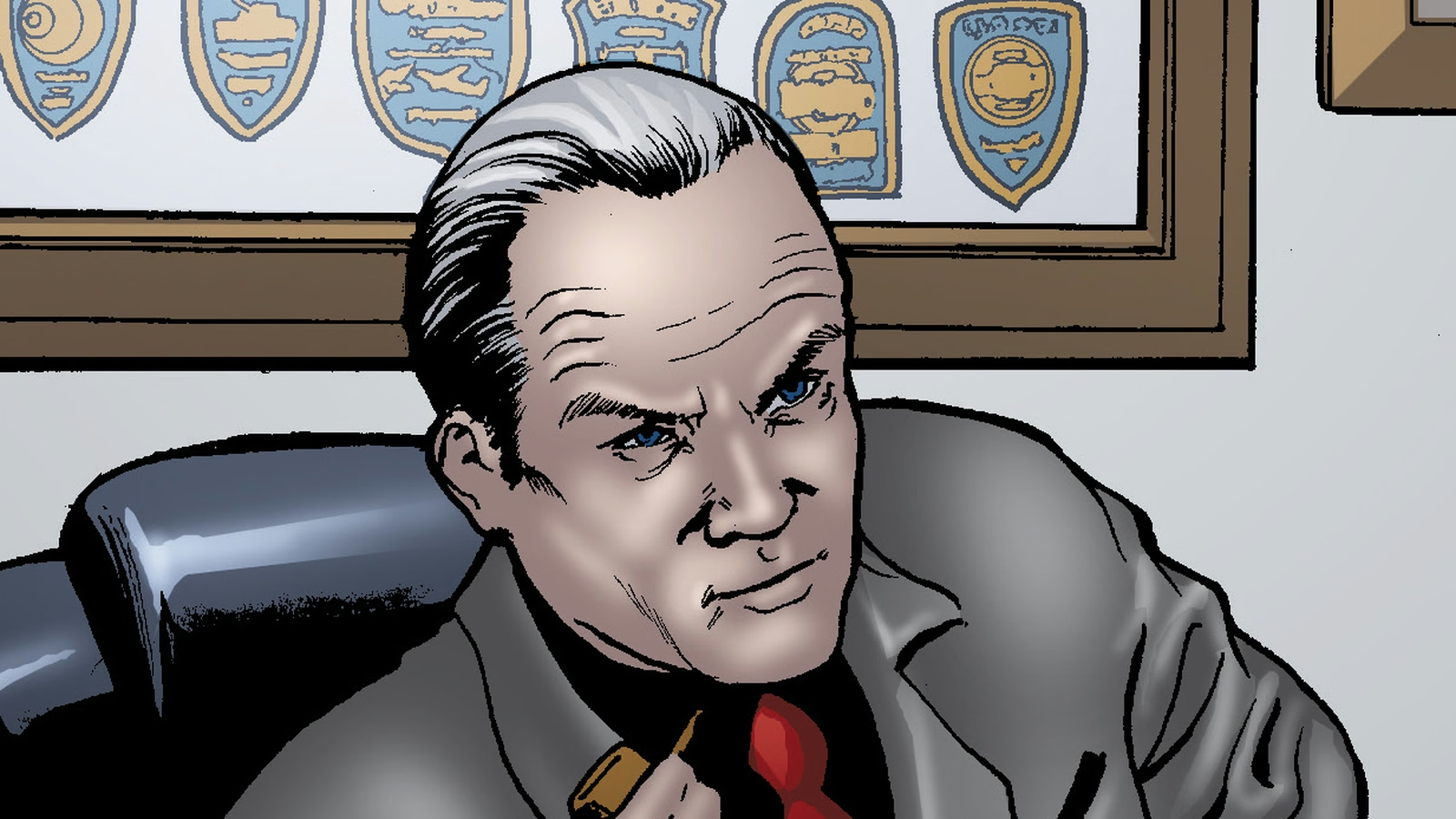
The novel described Garland as a plainclothes official with blue eyes, a narrow flaring nose and an expressionless mouth. He smoked a pipe during the interrogation. Tony Parker's comic depicted him with swept-back grey hair, a grey suit and a red tie. His desk concealed a larger laser tube, while the weapon he drew against Resch was a miniature model. His principal protection, however, was his official position and the station's controlled communications rather than unusual physical abilities.
Behind The Scenes
Garland appeared in the 1968 novel and Tony Parker's BOOM! Studios comic adaptation, which retained the Mission Street investigation and the confrontation in his office. The profile follows the novel where Garland's claims conflict with later events, particularly Resch's human identity. Neither his supposed insurance work nor the suggestion of a replaced human inspector should be treated as a fully established earlier career.
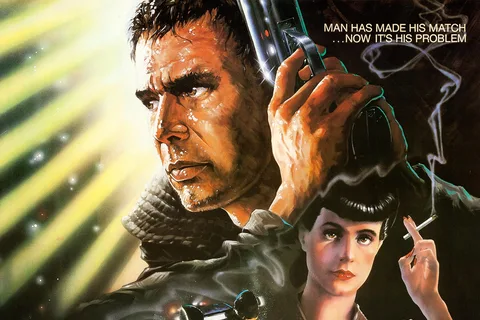
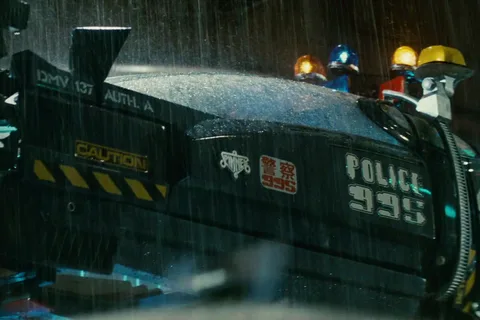
The Mission Street episode was omitted from Blade Runner, leaving Garland without a direct character counterpart in the 1982 film. His police rank belongs to the novel's San Francisco setting; he was not one of the film's Los Angeles police officials. His surname alone is used in the source dialogue, including his introduction to Deckard.
Appearances
- Do Androids Dream of Electric Sheep? (1968), Chapters 10-12
- Do Androids Dream of Electric Sheep? (BOOM! Studios comic adaptation, 2009-2011)
Tag Categories: Blade Runner Lore | Blade Runner Characters | Replicant Characters | Blade Runner Police Chiefs