
Phil Resch was a bounty hunter in Philip K. Dick's Do Androids Dream of Electric Sheep?, attached to a police department that worked from a Hall of Justice on Mission Street in San Francisco. He met Rick Deckard after Deckard was arrested at the opera house, shot the android Inspector Garland, and helped hunt the singer Luba Luft, whom he lasered in a museum elevator. Garland had claimed that Resch was an android with a synthetic memory system, and Resch began to fear that he might be one. Deckard's Voigt-Kampff test proved him human, but his cold attitude toward androids changed the way Deckard saw his own work.
Biography
Bounty Hunter On Mission Street
Phil Resch was one of the two bounty hunters for Northern California, alongside George Gleason, and both men were attached to the department that worked from the Hall of Justice on Mission Street. The building rose in baroque, ornamented spires, and Rick Deckard, whose own department worked from the Hall of Justice on Lombard, had never seen it before. Inspector Garland first named the two hunters when he asked Deckard whether he knew them, and he added that escaped androids had sometimes turned up there posing as out-of-state bounty hunters. Resch believed that he had worked under Garland for three years, from the very start.
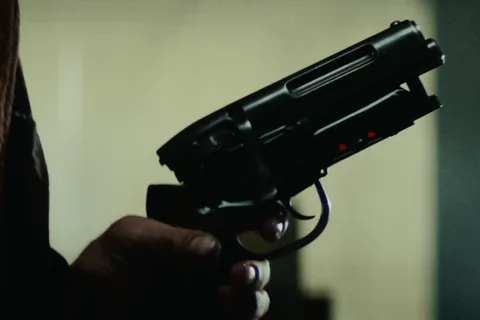
Resch carried a laser tube under his coat and drove his own hovercar, which he kept on the roof field of the station. He claimed that the work gave a hunter an almost psionic ability, and said he could nearly foretell what an android was going to do. His department did not use the Voigt-Kampff scale, and he had never heard of it before he met Deckard. He had long argued that a big police organization such as the W.P.O. would be the best hiding place for an android, and that police personnel ought to be tested as a matter of routine.
Meeting Rick Deckard
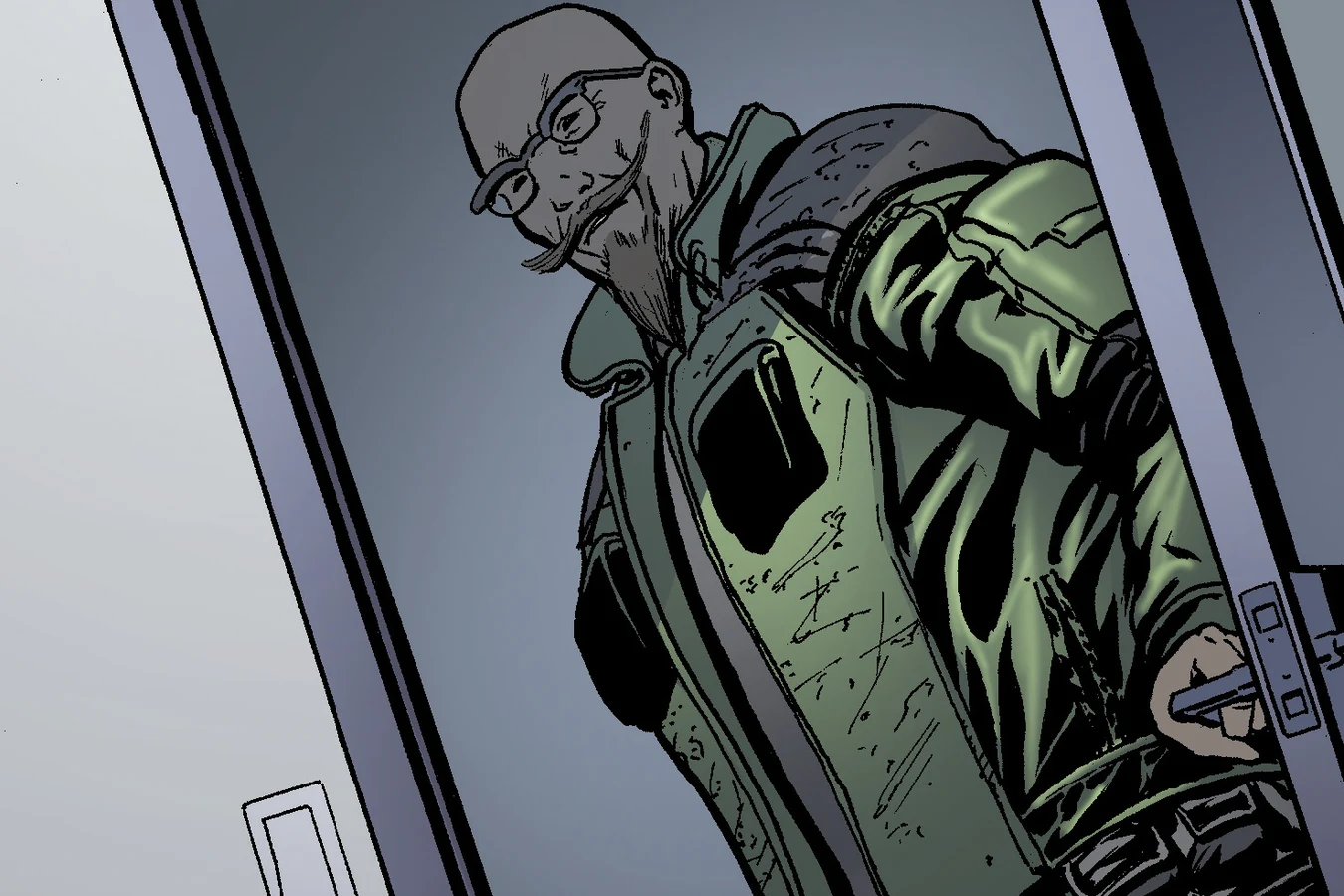
After Luba Luft had Deckard arrested at the opera house, Officer Crams booked him at Mission Street, and Garland found his own description among the carbon sheets in Deckard's briefcase, listed as an insurance underwriter. Garland pressed his intercom and asked for one of the bounty hunters, saying he wanted to see that man's list before he went any further. The office door opened on a tall, fleshless man with hard-etched features, horn-rim glasses, and a fuzzy Vandyke beard. Garland introduced Phil Resch to Deckard as a fellow bounty hunter, and Resch shook hands and asked which city Deckard was attached to.
Garland handed Resch the sheet with his own description, and Resch saw at once that it described his superior. Garland added that the list also named Luba Luft and Polokov, whom Deckard had already killed, and said the lab was running a bone marrow test on the body. Resch had talked to Polokov before and called him that big Santa Claus from the Soviet police. He thought the bone marrow test was a good idea, and when Garland asked why, Resch said that Polokov had struck him as cold, extremely cerebral, calculating, and detached.
The Boneli Test
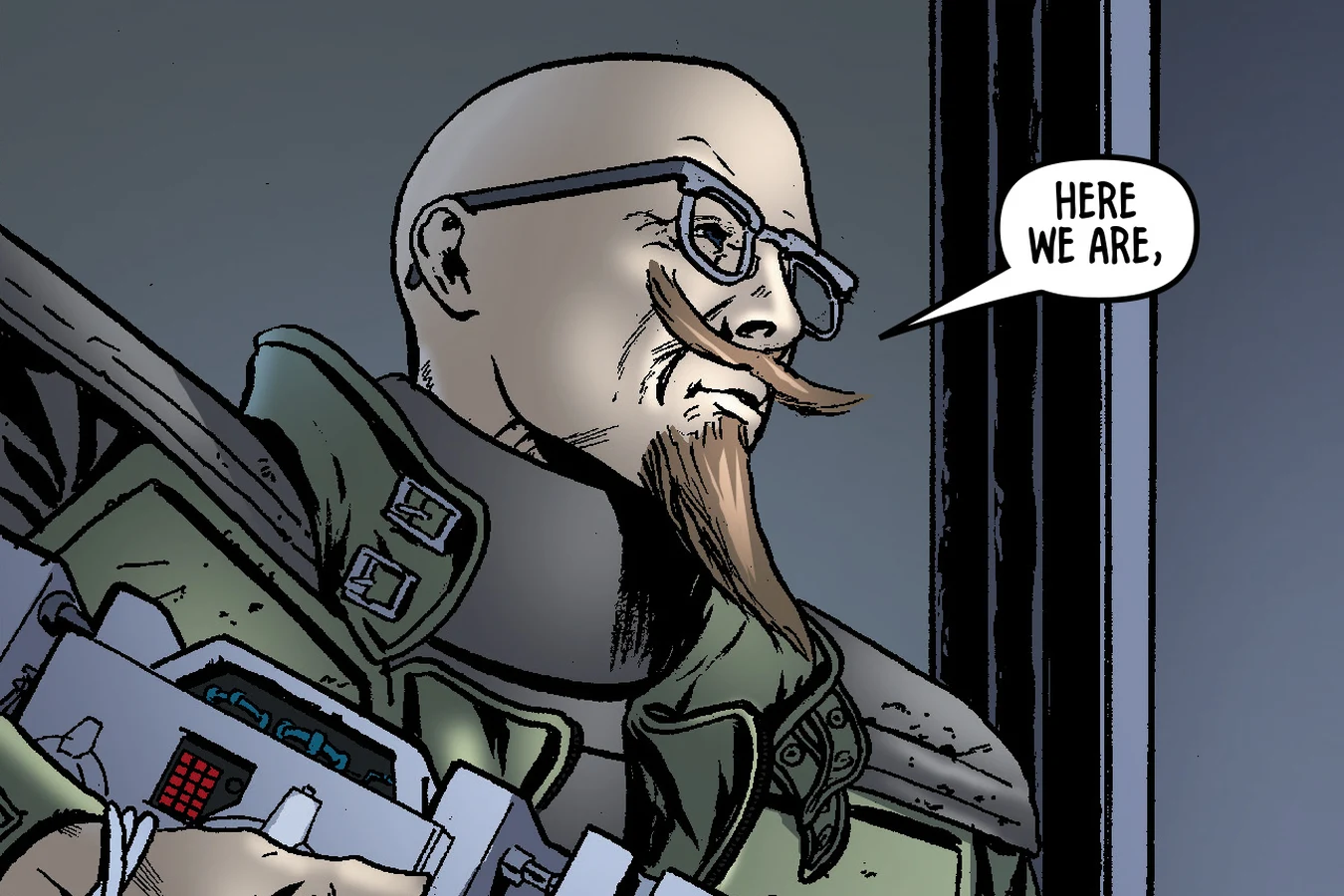
Resch said he had wanted to test Polokov ever since they first met, but no pretext had ever arisen, which was one of the values a police post would have for an enterprising android. Garland rose and asked whether Resch had wanted to test him as well, and Resch only smiled, shrugged, and stayed silent. When the lab report came through, Miss French announced on the intercom that Polokov had been a humanoid robot. Resch then asked Deckard about the Voigt-Kampff scale, and Deckard told him it measured empathic response in a variety of social situations, mostly having to do with animals.
Resch described his own department's method, the Boneli Reflex-Arc Test, and drew a sketch of it on a pad from Garland's desk. The test measured the reflex-arc response in the upper ganglia of the spinal column, which took several microseconds longer in an android than in a human. The subject pressed a button in answer to an audio signal or a light flash, and after ten measured reactions Resch believed they had a reliable clue, backed by a bone marrow test. Garland admitted that he had always opposed testing police personnel, then warned Resch that he would not like the results, and Resch went upstairs to fetch the gear.
Killing Garland
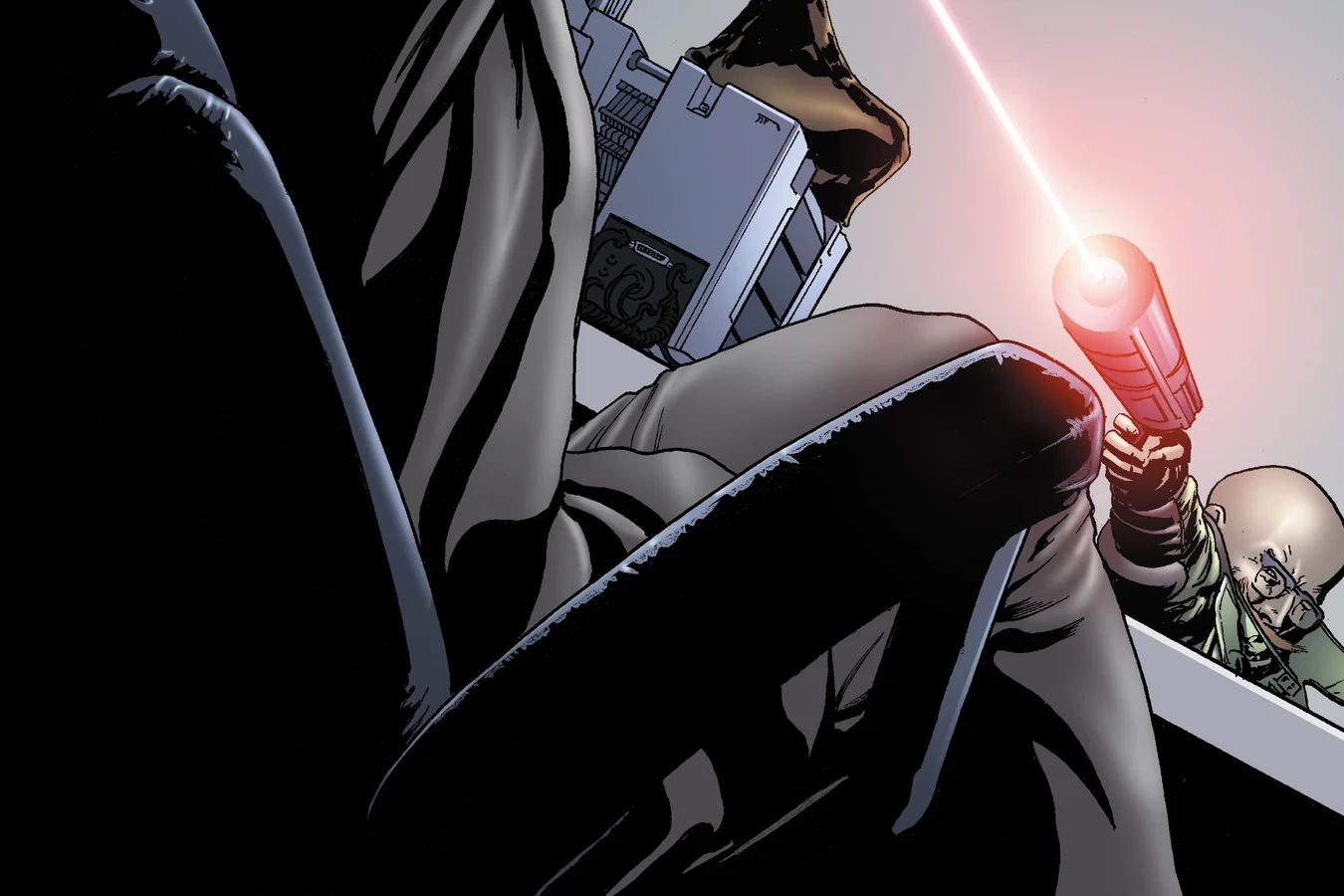
While Resch was gone, Garland took a laser tube from his desk drawer and pointed it at Deckard, then lowered it and locked it away again. He told Deckard that the tests would expose all three of them, and that Resch did not know or even suspect that he was an android. The escaped group had come to Earth together on one ship from Mars, Garland said, except for Resch, who had stayed behind another week to receive a synthetic memory system. He predicted that Resch might kill him, himself, or everyone he could once he found out, and called him an eager beaver with a handy portable test.
When Resch came back with a device that trailed wires, Garland brought out his right hand and pointed at him. Resch and Deckard both rolled from their chairs onto the floor, and as he fell, Resch fired his laser tube. The beam, aimed with years of training, split the inspector's head, and his miniaturized laser rolled across the desk as the body slid to the floor. Resch stood and said the android had forgotten that this was his job, then asked Deckard what it had told him while he was upstairs. Deckard said only that Garland was an android, and kept back what it had said about Resch.
Leaving The Mission Street Station
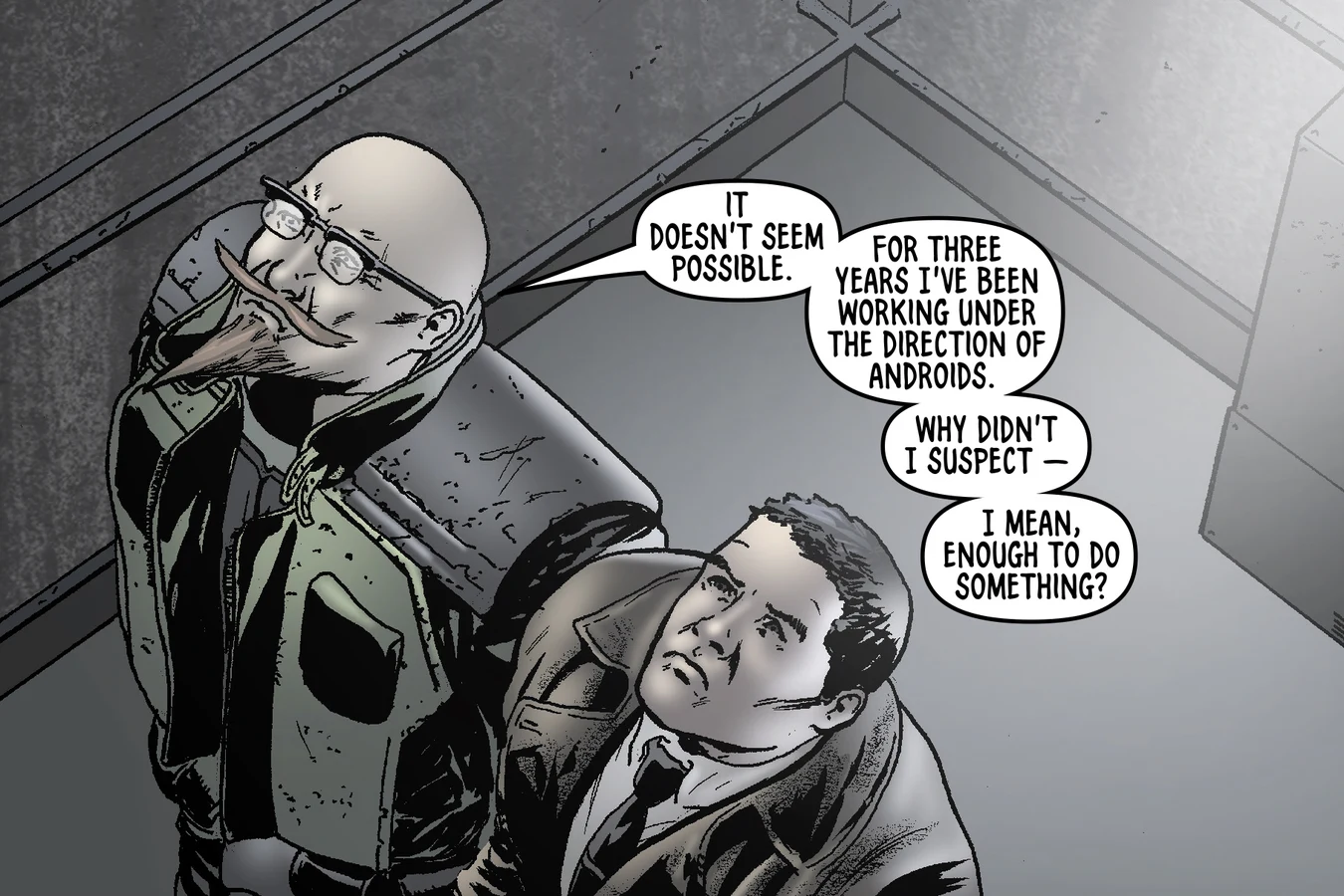
Resch dragged Garland's corpse back into its chair and arranged its arms and legs so that the posture looked natural to anyone who did not look closely. Over the intercom he told the staff that the inspector wanted no calls for the next half hour, then handcuffed Deckard to his own wrist and led him across a lobby full of uniformed police, none of whom looked up. At the elevator he worried that Garland had carried a dead man's throttle that would raise an alarm. On the way up he asked whether Deckard's department on Lombard would take him on, since he was now out of a job.
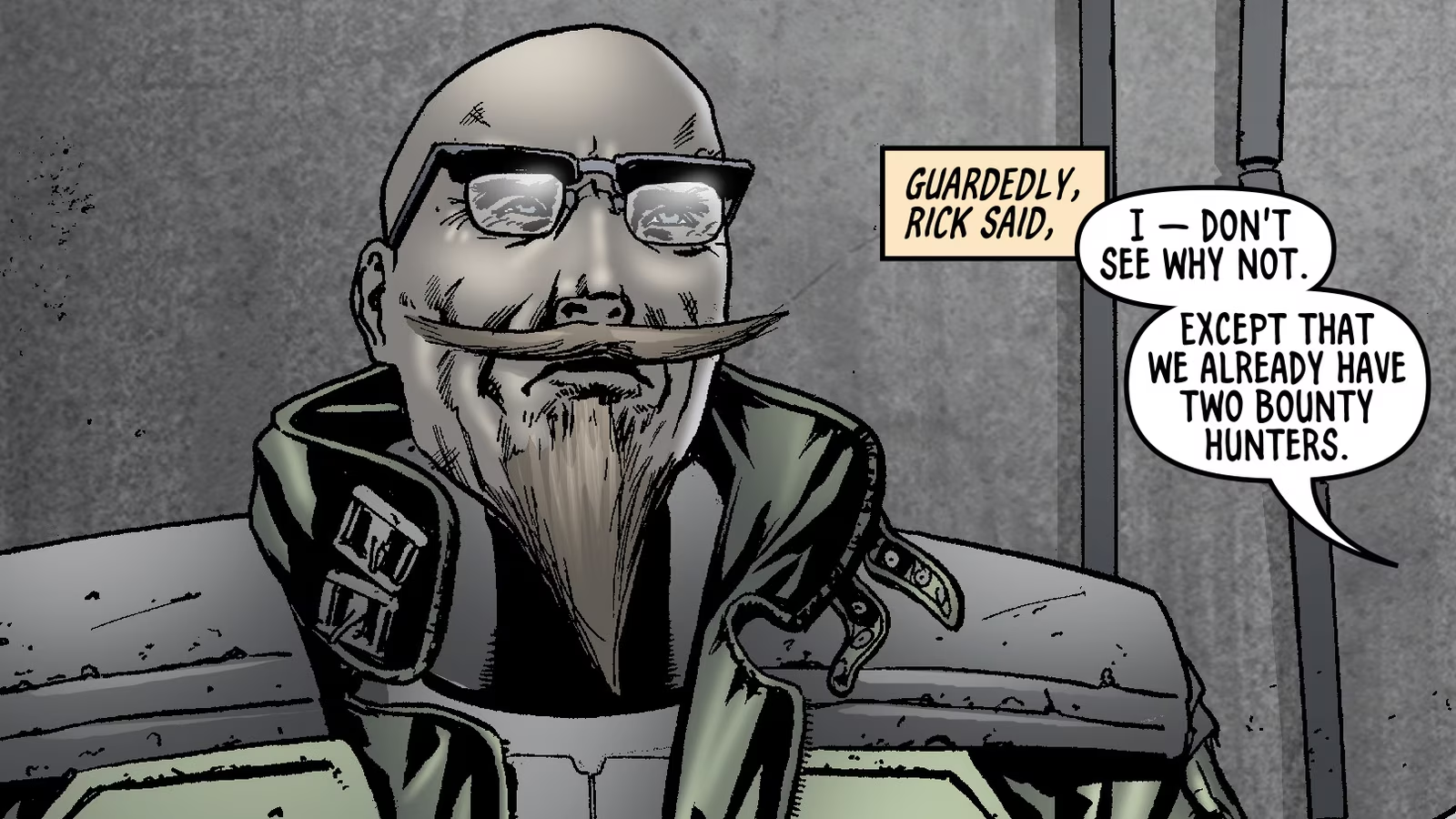
Deckard saw no reason why not, though his department already had two bounty hunters, and privately he struggled over whether to tell Resch the truth. Resch could not understand how he had worked under androids for three years without suspecting, and Deckard pointed out that the group had reached Earth only months earlier. Resch reasoned that a real Garland might once have existed and been replaced, or that he himself carried a false memory system. Flying north toward the War Memorial Opera House, he asked Deckard to test him after they retired Luba Luft, and spoke of Buffy, the real squirrel he fed every morning and let loose each evening.
Returning To The Opera House
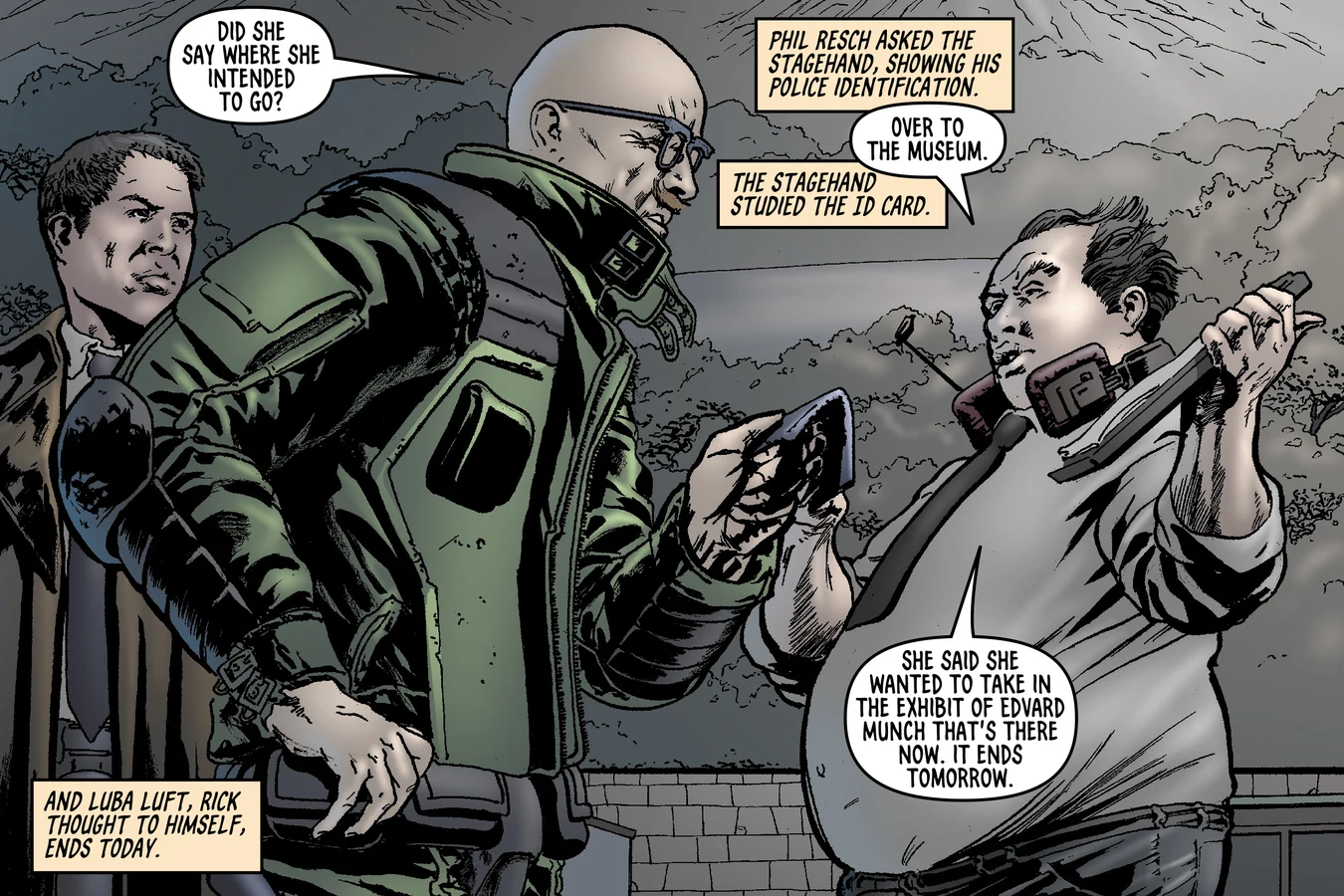
The rehearsal had ended by the time Resch and Deckard reached the opera house, and Luba Luft had already left. Resch showed his police identification to a stagehand, who said she had gone to the museum to take in an exhibit of Edvard Munch that ended the next day. As the two men walked down the sidewalk, Resch asked what odds Deckard would give, and said she had flown and they would not find her there. In the exhibit rooms, he asked Deckard whether he had ever heard of an android keeping a pet, and Deckard admitted it was rare and usually failed.
Resch insisted that Buffy was doing fine, as sleek as an otter, and said he groomed and combed him every other day. He then stopped before an oil painting of a hairless figure on a bridge, its hands clapped to its ears and its mouth open in a vast, soundless scream. Resch said he thought this was how an android must feel, traced the convolutions of its cry in the air, and began to say that he did not feel like that, so perhaps he was not one. He broke off as other visitors came up, and Deckard pointed out Luba standing at another picture.
Confronting Luba Luft
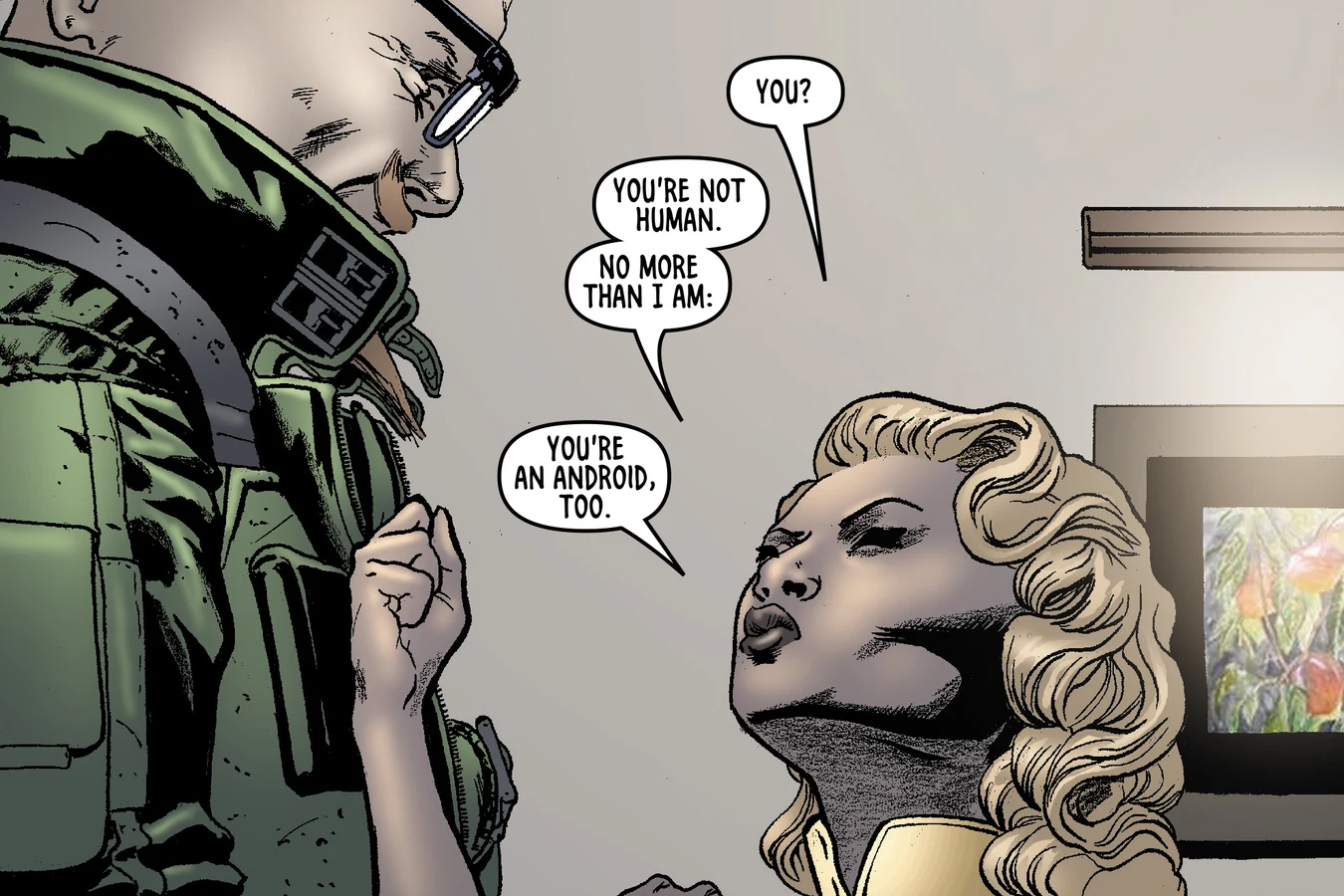
Deckard took Luba Luft by the arm as she stood absorbed in a drawing of a young girl, while Resch put a hand on her shoulder with the bulge of his laser tube showing. After the near miss with Garland, he did not intend to take any chances. Deckard introduced Resch to the singer, and Resch told her that the police department she had called, working out of the building on Mission Street, was the organizing agency through which her group kept in touch. He added that they had even felt confident enough to hire a human bounty hunter.
Luba answered that Resch was not human, no more than she was, and that he was an android too. After a silence, Resch said in a low but controlled voice that they would deal with that at the proper time, and told Deckard to take her to his car. At a little shop near the elevators, Luba asked Deckard to buy her a reproduction of Puberty, the picture she had been looking at, and the clerk had it only in a book of Munch's collected work. Resch objected that his departmental budget could never be stretched that far, so Deckard paid with his own money.
Luba Luft's Death
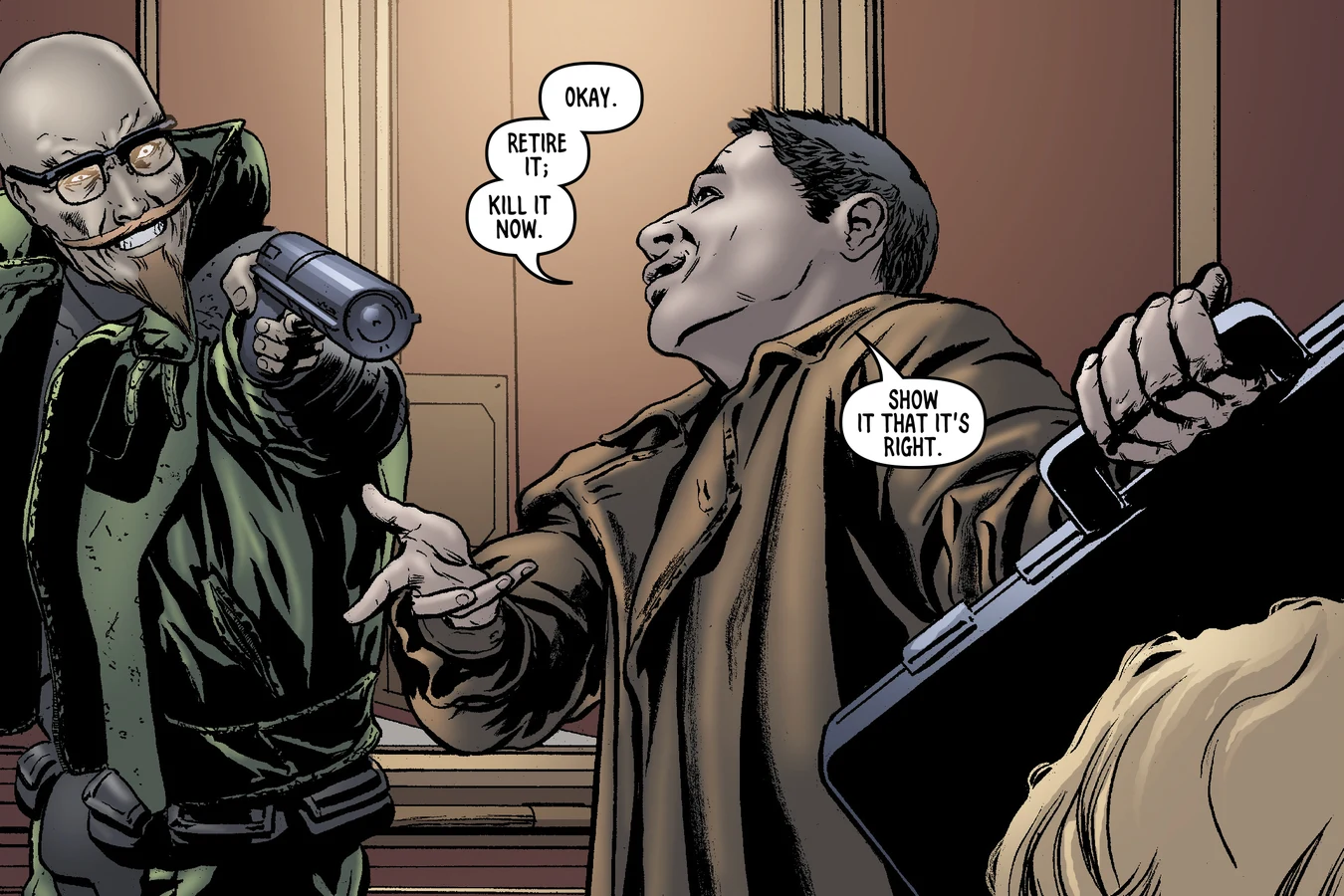
In the elevator, Luba thanked Deckard and said there was something strange and touching about humans, since an android would never have bought the book. She looked at Resch with hostility, said she did not like androids, and described her life since Mars as an imitation of a superior life form. When she asked whether it had been the same for him, Resch said he could not take it and dug into his coat. Deckard grabbed at his hand and urged the Boneli test, but Resch replied that she had admitted being an android and they did not have to wait.
Deckard tried to pry the tube away, but Resch circled back in the cramped elevator with his attention on Luba Luft only. Deckard then told him to retire her and show her that she was right, and saw that Resch meant to fire. Resch's first beam missed as she twisted away, then burrowed a narrow hole into her stomach as he lowered the tube. As Luba screamed against the elevator wall, Deckard thought of the figure on the bridge and killed her with his own laser tube.
Claiming The Bounties
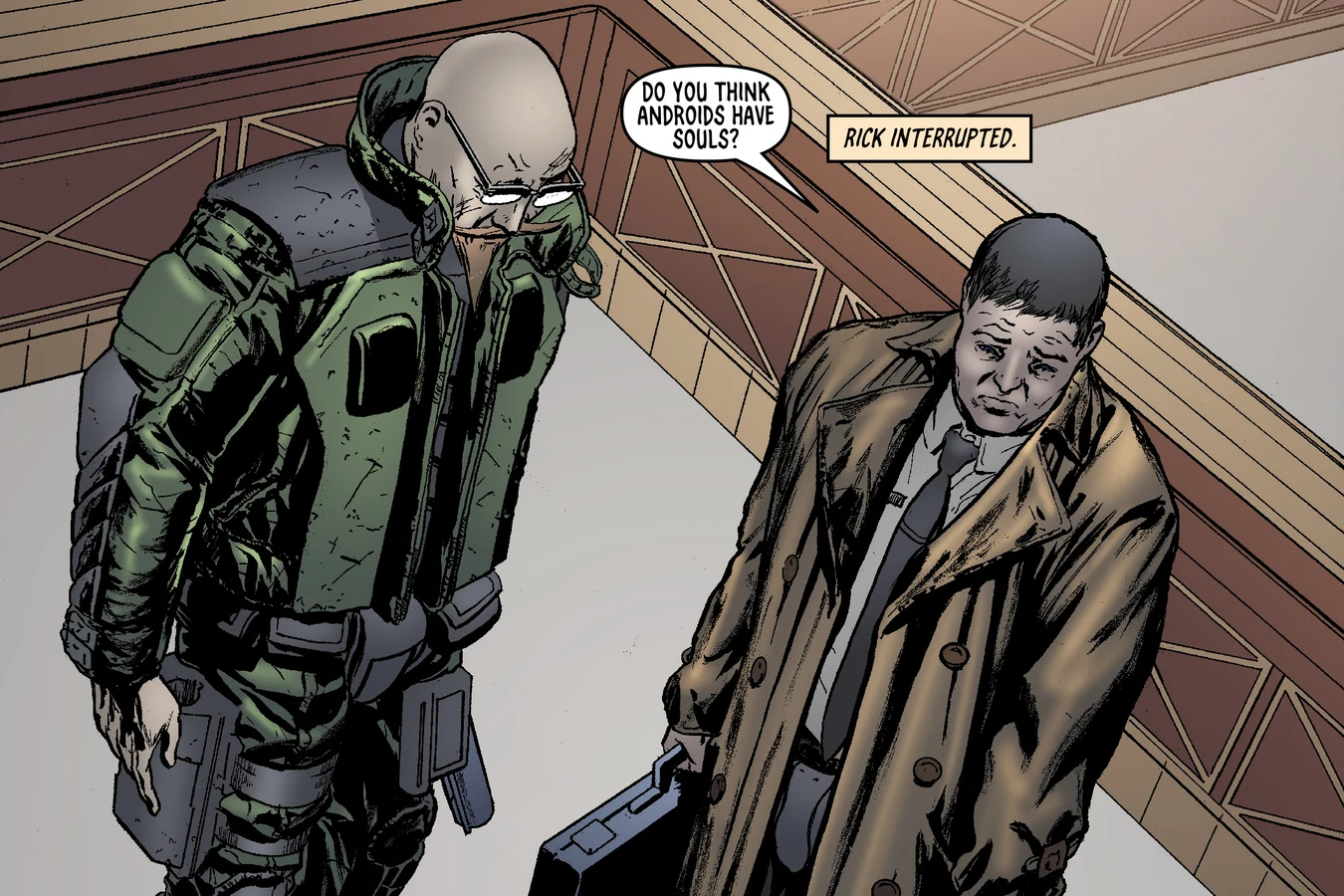
Deckard burned the book of pictures into ash with his laser tube, and Resch watched without understanding, then told him he could have kept it. Deckard answered by asking whether androids have souls, and Resch only cocked his head in greater puzzlement. Resch claimed both kills as his own, since he had shot Garland while Deckard lay on the floor, and had shot Luba as well. Deckard told him he could not collect from either department, that he was not on Deckard's list, and that he would give him the test at the car.
Resch asked whether Garland had really called him an android, then suggested that Garland had lied to split them apart. He admitted he should not have let Luba get to him, but argued that they would have had to retire her within half an hour anyway. When Deckard said he was getting out of the business, perhaps into insurance underwriting or emigration to Mars, Resch pointed out that someone had to do the job. He reminded Deckard that the androids had killed humans to escape and called them murderous illegal aliens, and Deckard finished the thought, saying they were masquerading as police and bounty hunters.
Willing The Squirrel
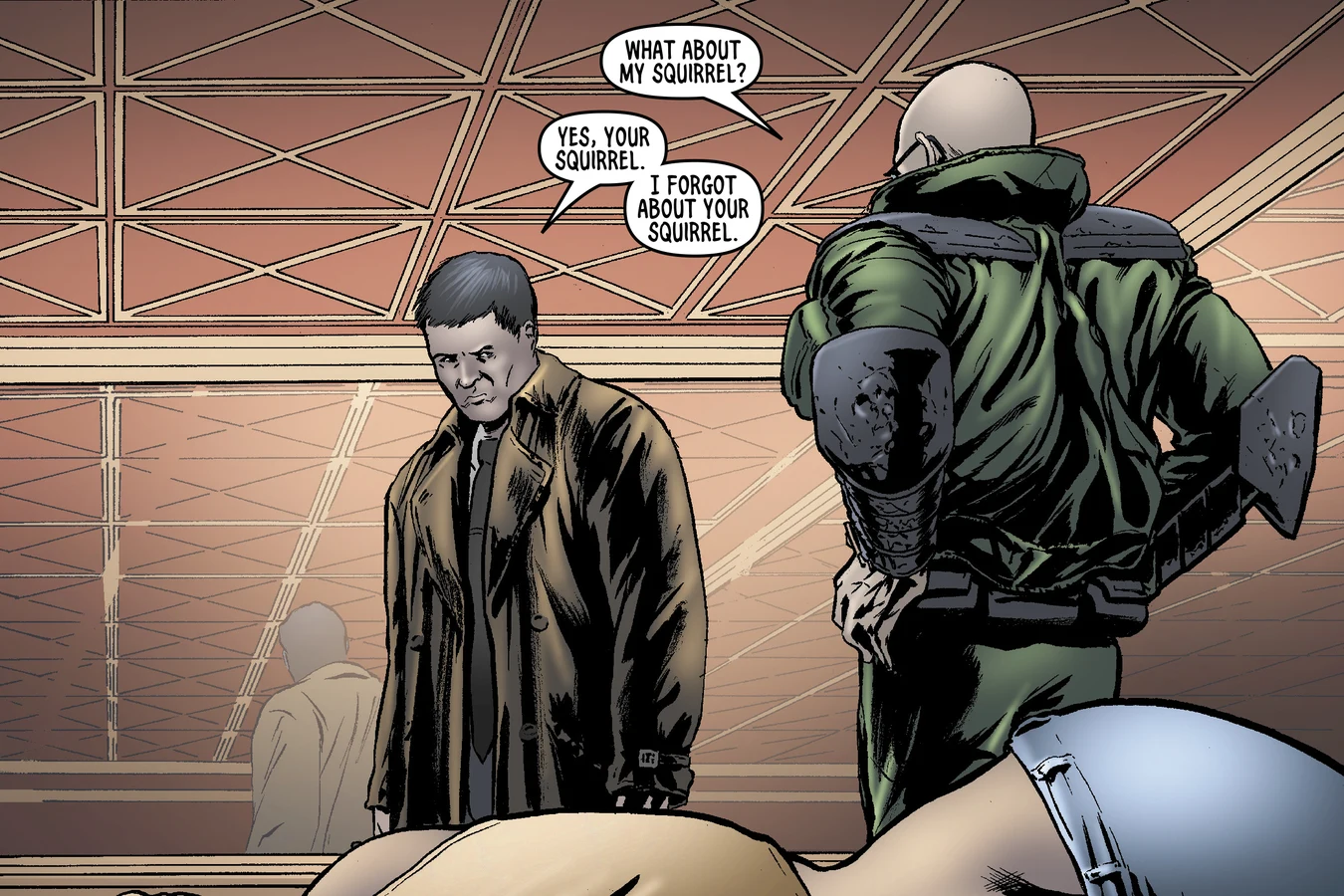
Resch asked again for the Boneli test, insisting that false memories were just not that good, and asked Deckard what about his squirrel. He offered to write out a will leaving the squirrel to Deckard if he turned out to be an android and Deckard killed him. Deckard said androids could not will anything, because they could not possess anything, and Resch told him to just take it. While Deckard phoned for a patrol car, a group of people gathered around Resch and the body of Luba Luft, and someone covered her with a coat that was not his.
Back in the crowd, Deckard found Resch smoking a small gray cigar and told him he hoped he would test out as an android. Resch marveled that Deckard suddenly hated him, when he had not hated him on Mission Street while Resch was saving his life. Deckard said he saw a pattern in the way Resch had killed Garland and Luba, and accused him of liking to kill whenever he had a pretext. Resch said that if he failed the test he would take care of it himself, and on the walk back he handed over his laser tube so that Deckard would not have to worry about his reaction.
The Voigt-Kampff Test
Asked how he would kill himself without the tube, Resch said he would hold his breath, because an android had no automatic cut-in of the vagus nerve. On the roof of the War Memorial Opera House, he relit his cigar in his hovercar and asked for the Boneli test, but Deckard did not know how to score it. Resch made him promise to tell the truth, said he did not care for the realism of Puberty, and named Picasso among his tastes. He recognized that the Voigt-Kampff gear measured a flinch reaction to verbal questions, and admitted he could not control its initial amplitude.
After the questions, Deckard gathered his gear back into the briefcase in silence, and Resch read the result on his face. He exhaled in almost convulsive relief and held out his palm for his gun. Deckard conceded that Resch had been right about Garland's motives, and said there was a defect in Resch's empathic, role-taking ability that the test did not measure, his feelings toward androids. Resch agreed that people could not protect themselves if they included androids in their empathy, and said that bounty hunters stood as a barrier between the Nexus-6 and mankind.
Advice To Deckard
Deckard then pressed the adhesive disk to his own cheek and asked Resch to read the needles while he described an android being killed without warning in an elevator. Resch reported no particular response, but when Deckard specified a female android, the needles rose to 4.0 and 6. Deckard concluded that he could feel empathy for at least certain specific androids, and that there was nothing unnatural about Resch's reactions after all. Resch, who seemed amused, told him he was in a spot.
When Deckard asked what he should do, Resch told him it was sex, because Luba had been physically attractive, and reminded him that colonists kept android mistresses. Deckard asked about love, and Resch replied that love toward a woman or an android imitation was only another name for sex. He admitted that he had felt the same way once, when he had just started bounty hunting, and said that Deckard had his order reversed. His advice was to go to bed with her first and then kill her, and Deckard, looking at Resch's hardened smile, began for the first time to wonder whether he was a good bounty hunter.
Influence On Rick Deckard
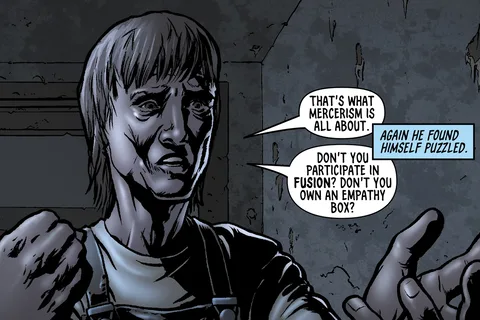
The meeting stayed with Deckard for the rest of the day. He put his whole bounty toward a black Nubian goat, telling himself that after the experience with Phil Resch he had to regain his confidence or lose his job. At home he began to sense the value that Iran found in Mercerism, and wondered whether meeting Resch had closed one neurological switch in him and opened another. He told her he had met a predatory bounty hunter who seemed to like destroying androids, and that after being with him he had begun to look at them differently.
That night Rachael Rosen told Deckard that no bounty hunter had gone on after being with her except one, the very cynical Phil Resch, who worked out in left field on his own. When she asked about Luba, Deckard said he had liked her and that Resch had killed her, and Rachael learned that Resch had been with him. Later that night, Deckard said he now understood why Resch had said what he said, because he had learned too much and the work had warped him. He put his laser tube away and told Rachael that he could not do what Phil Resch had said.
Personality & Traits
Phil Resch stayed calm under pressure and trusted his instincts, and he treated the killing of Garland as routine, rearranging the corpse before walking Deckard out through a station full of androids. He was curious and analytical, sketching the Boneli apparatus on a pad and quickly working out what the Voigt-Kampff gear measured. Deckard came to see him as predatory, a man who liked to kill and needed only a pretext, and Rachael called him very cynical. Yet he also loved his squirrel, worried openly about his own identity, and wanted to know the truth about himself.
Resch's fear that he was an android shaped his behavior after Garland's death. He asked again and again to be tested, offered to leave Buffy to Deckard, and promised to end his own life if he failed. His reaction to the Munch painting, which he said showed how an android must feel, belonged to the same introspection. Once the test proved him human, his confidence returned, and his blunt view of androids as a threat, and of love as another name for sex, became the standard against which Deckard measured himself.
Behind The Scenes
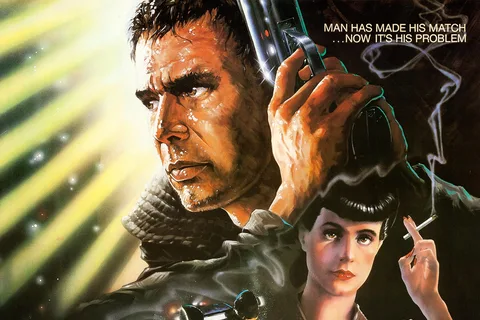
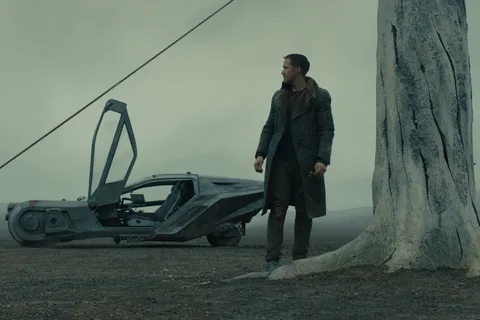
Philip K. Dick published Do Androids Dream of Electric Sheep? in 1968, and Phil Resch belongs to that novel rather than to Ridley Scott's Blade Runner. The 1982 film leaves out Resch, Garland, the second police department on Mission Street, and the museum hunt for Luba Luft. Blade Runner 2049 does not use him either, and the closest point of comparison in the films is loosely Gaff, the officer who shadowed Deckard through the 1982 hunt. The name, the Boneli test, the squirrel, and the killing in the museum elevator remain events of the 1968 book and its adaptation.
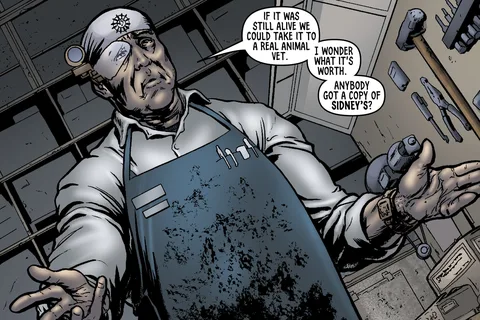
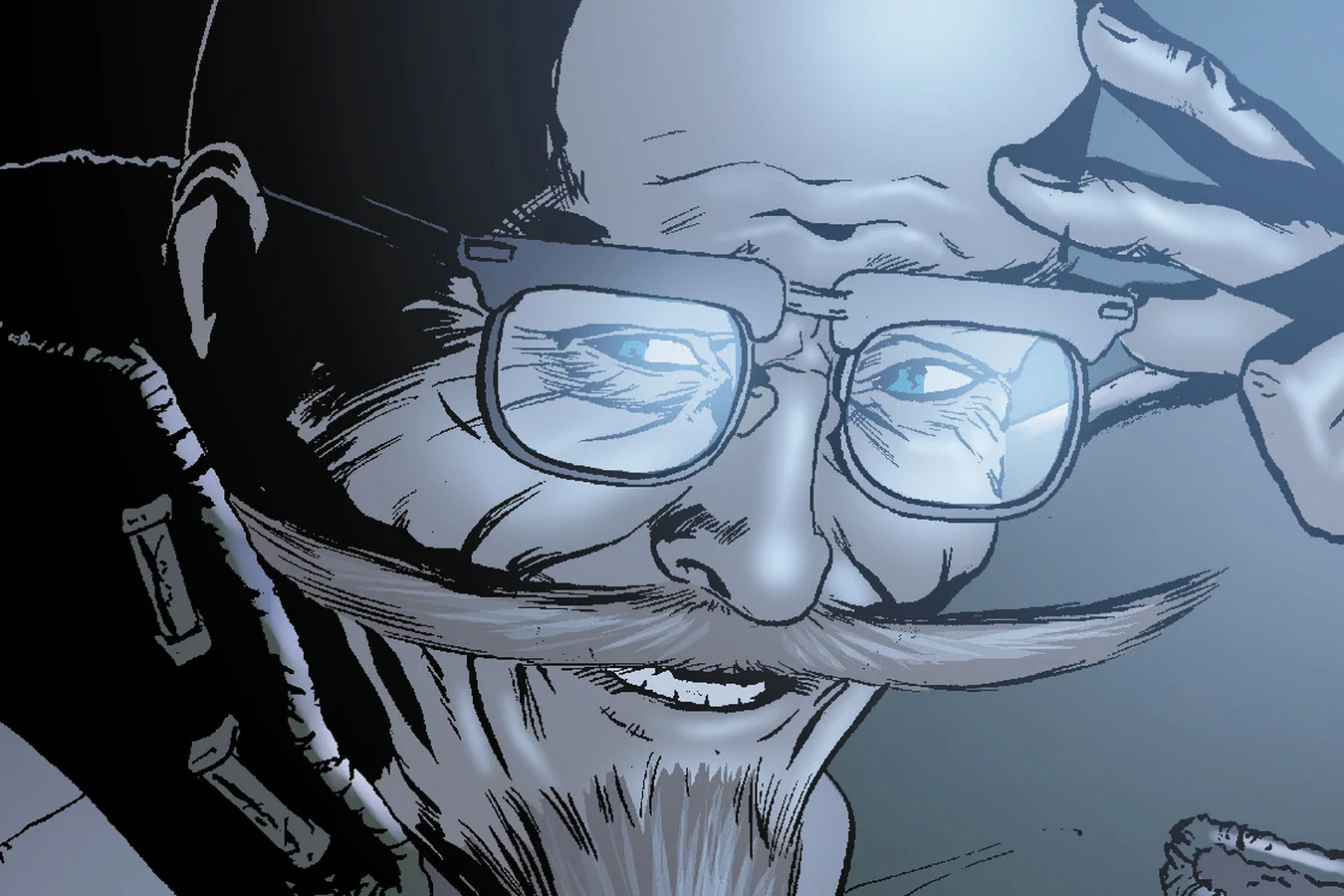
BOOM! Studios later adapted the novel as Do Androids Dream of Electric Sheep? (BOOM! Comic), which kept the complete text of the book. The comic drew Resch bald, with horn-rim glasses, a long curled mustache, and a pointed beard, and dressed him in a green armored jacket, while the novel describes a tall, fleshless man with a fuzzy Vandyke beard. Its art followed the same sequence, from Garland's office and the shot from the floor to the Munch exhibit, the elevator, and the talk in the hovercar. The comic is an adaptation of the novel, not a separate story, and Resch remains a human bounty hunter in both versions.
Conclusion
Phil Resch spent one day at Rick Deckard's side, and in that time he killed his own inspector, escaped a police station run by androids, and shot Luba Luft in a museum elevator. Garland's claim that he carried a synthetic memory system left him begging for a test, and the Voigt-Kampff scale proved him human. His relief did not end the matter for Deckard, who measured his own empathy against Resch's indifference and found that he could feel for an android. Resch's cynical advice followed Deckard to the end of his hunt, when he found that he could not follow it.
Appearances
- Do Androids Dream of Electric Sheep? by Philip K. Dick (1968)
- Do Androids Dream of Electric Sheep? (BOOM! Comic)
Tag Categories: Blade Runner Lore | Blade Runner Characters | Blade Runner Detectives