
Blade Runner equipment is the kit police used to tell a human from a replicant and to hunt a fugitive through the city. In Ridley Scott's Blade Runner, Rick Deckard flew a Spinner to a case, questioned suspects with the Voight-Kampff machine, and searched photographs on an Esper. Denis Villeneuve's Blade Runner 2049 sent K out in a later Spinner with a Baseline test and a forensic kit, while Philip K. Dick's Do Androids Dream of Electric Sheep? gave bounty hunters a Penfield mood organ and a detek-snout. Those same officers also carried a heavy police sidearm, and the novel added a portable Penfield wave transmitter.
Vehicles And Drones
Spinner
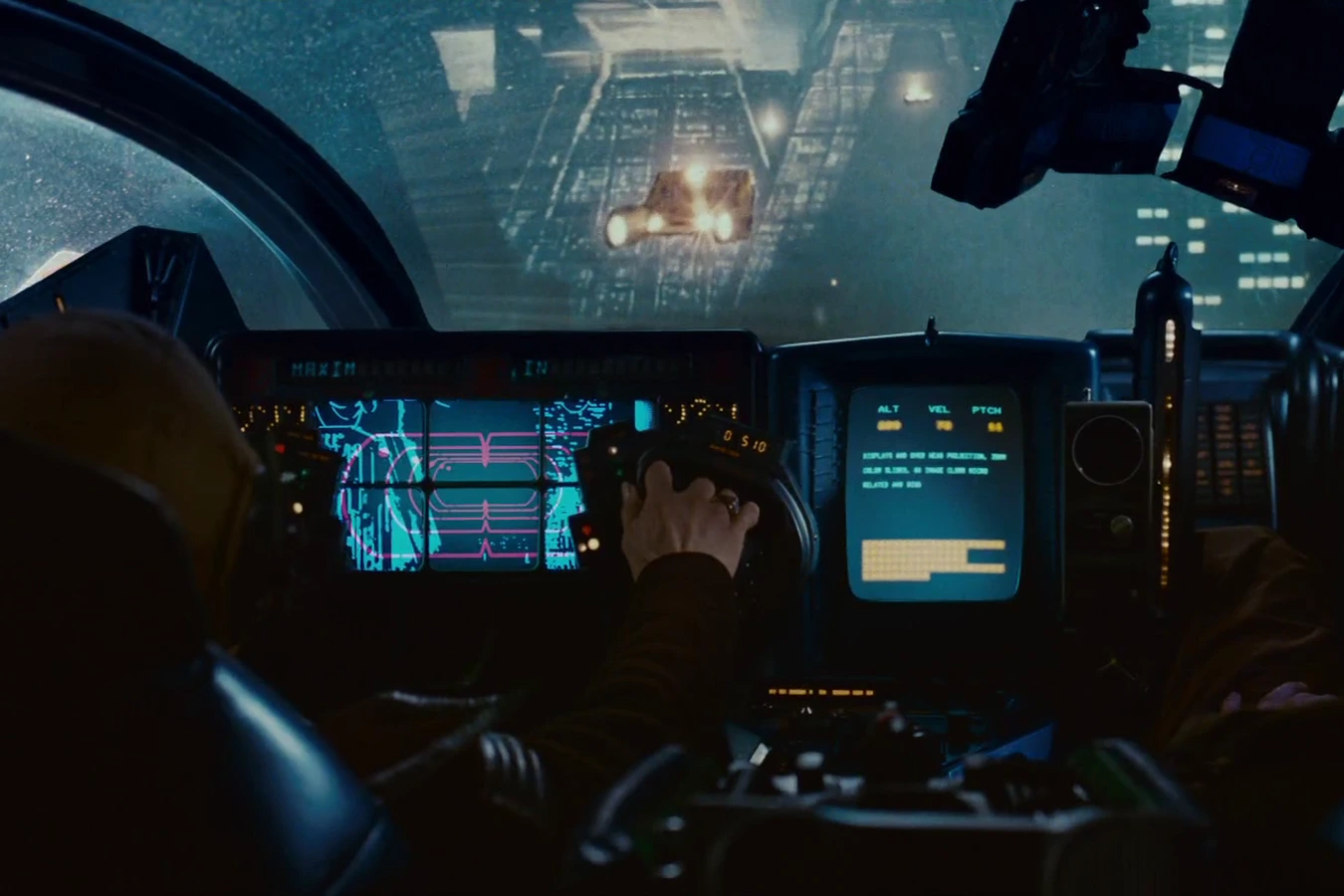
The Spinner is the flying police car of Blade Runner. Official 1982 press materials named it as a vertical take-off vehicle that could also drive on the street, and Syd Mead designed the cars that fill the night sky over Los Angeles. In the film, Gaff arrived in one to collect Deckard from the noodle bar, and later flew him to Bryant's office and out to the Tyrell Corporation. Deckard also took a Spinner of his own after he was put back on the job.
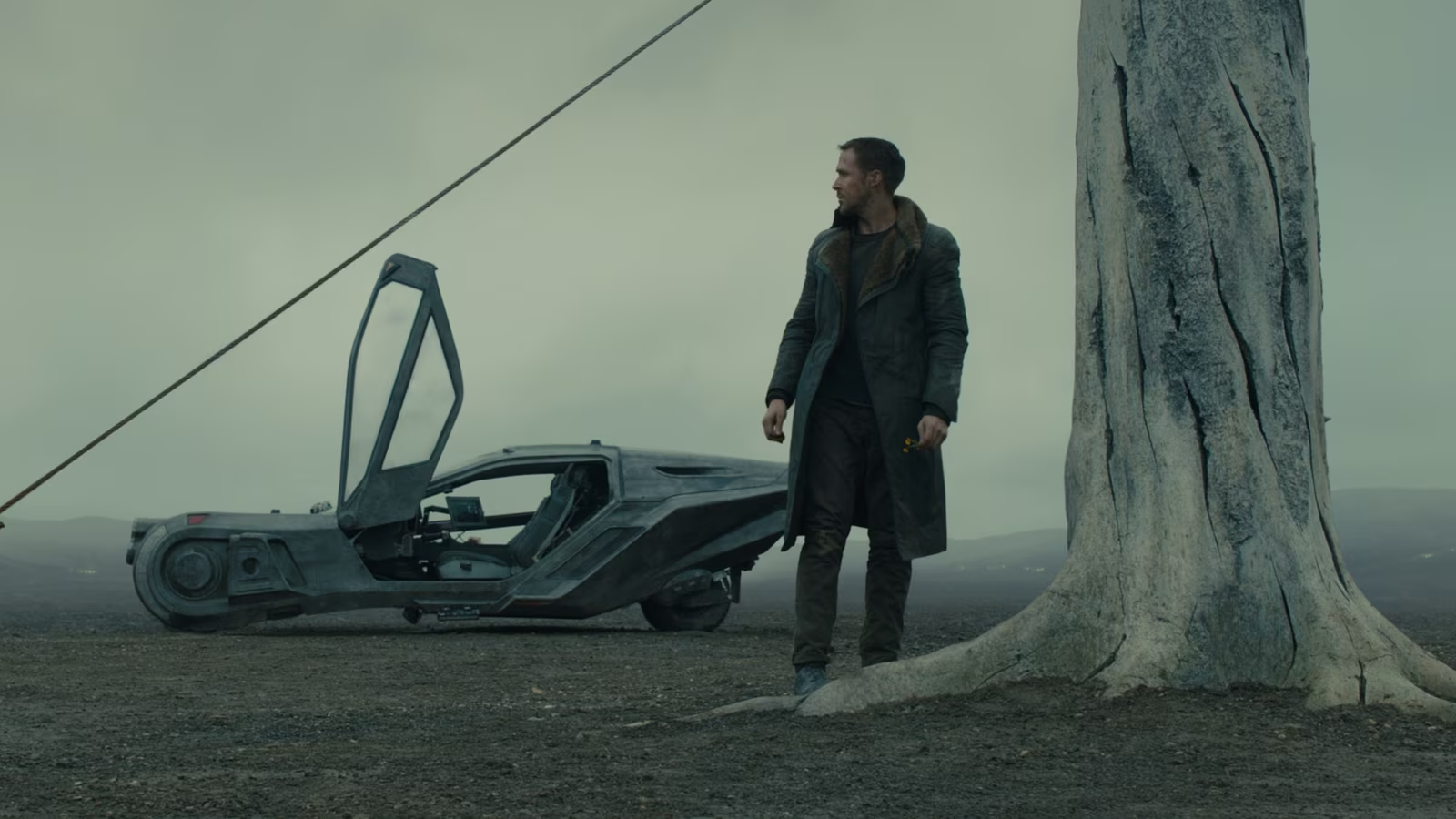
Blade Runner 2049 kept the Spinner in service with the Los Angeles Police Department, now as a heavier Peugeot-badged machine assigned to Officer K. K flew his to Sapper Morton's protein farm at the opening of the film, parked it under the dead tree, and later used it to reach the orphanage, Las Vegas, and the sea wall. The cockpit was packed with scan charts, a vehicle register, and target files, all routed to screens in front of the pilot. When a case demanded it, the same vehicle also carried a small detachable drone on the roof.
Philip K. Dick's novel does not use the word Spinner. Its bounty hunters fly a hovercar, a civilian and police aircraft that fills the same role when Deckard and other officers travel across a ruined Bay Area. The Blade Runner: The Roleplaying Game later catalogued the film car with police livery and variant bodies, details that do not appear in either movie. The films themselves never speak a chassis number. On screen the car is simply a Spinner, first in 2019 and then in 2049.
Pilotfish Drone
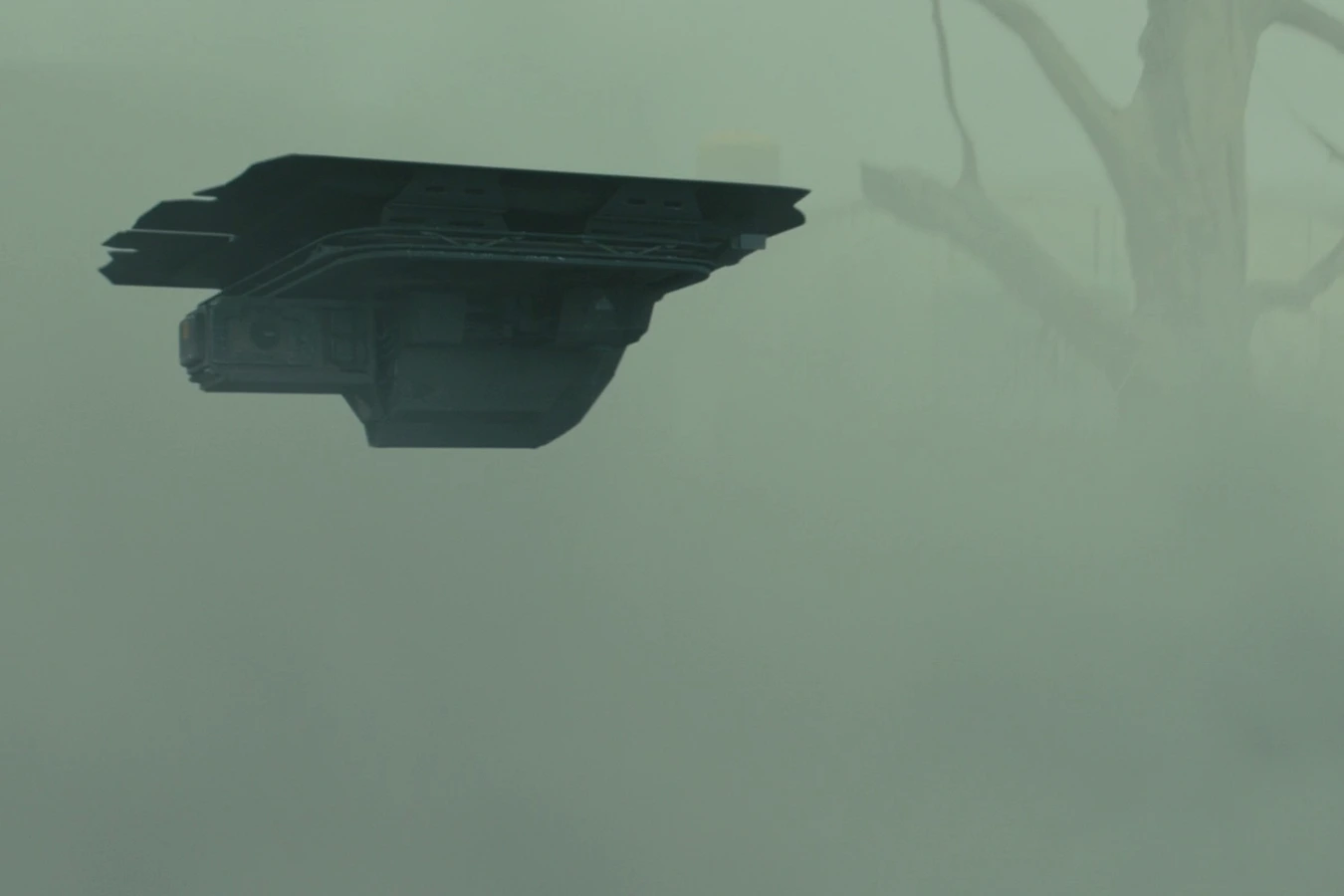
The small drone that leaves the roof of K's Spinner is never named in the dialogue of Blade Runner 2049. The production team at Territory Studio, who designed the cockpit graphics, called that unit the Pilotfish, a reconnaissance craft that undocks from the car, scans a site, and sends black and white imagery back to the screens in front of the pilot. Early in the film the drone lifted from the roof as K approached the protein farm, and it hung in the air above the fields while the car closed in. The name itself stays a behind-the-scenes label, not a word anyone speaks on screen.
As K flew toward Sapper Morton's farm, the roof unit dropped away from the Spinner and held position over the protein fields. Its camera feed returned to the cockpit as black and white reconnaissance, while the car itself continued toward the landing. Nothing in the spoken dialogue named the roof unit. The films left that device attached to the car that carries it, and the production label remained a studio name rather than a term painted on the hull.
Replicant Tests
Voight-Kampff Machine
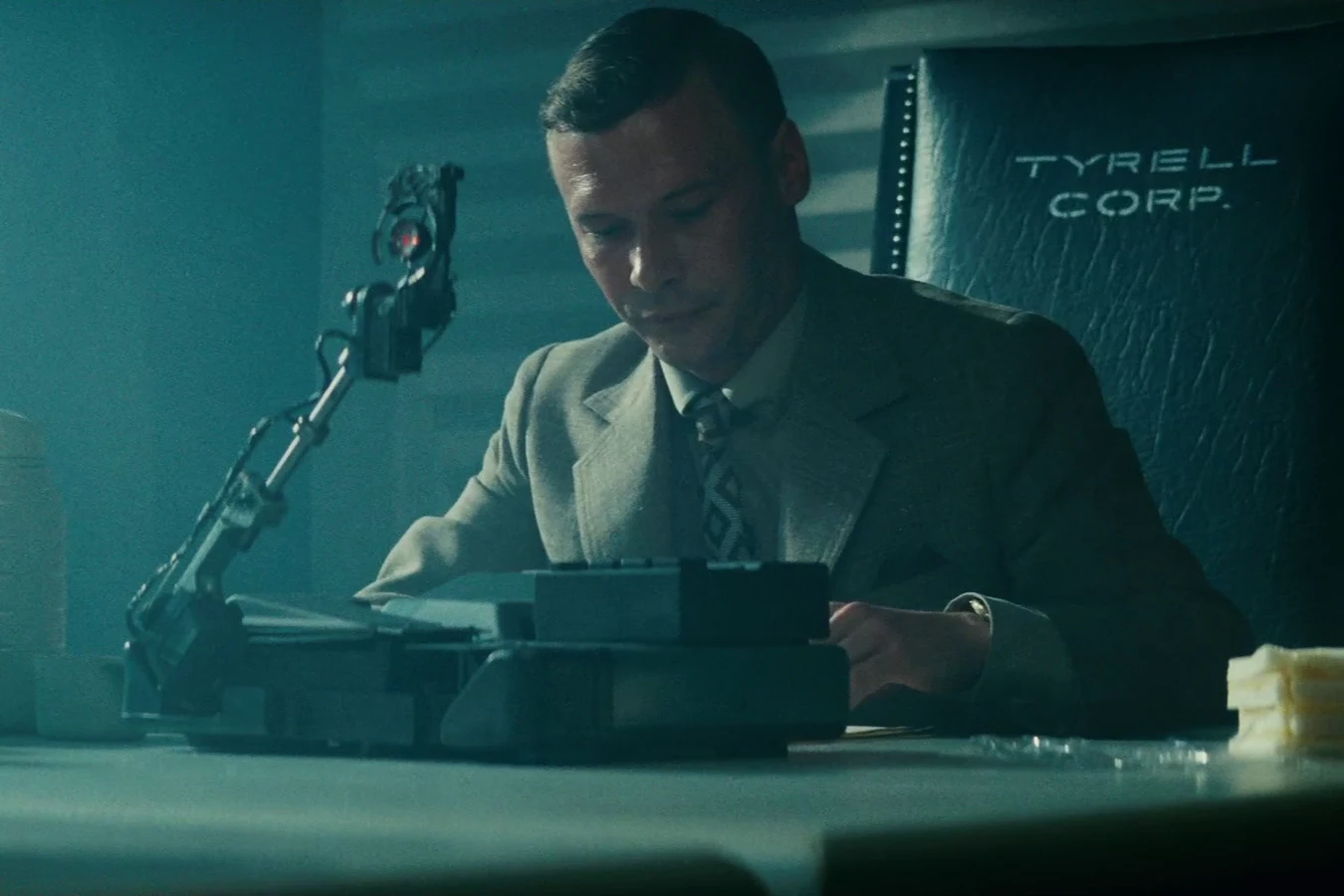
The Voight-Kampff machine is the empathy test at the center of Blade Runner. Dave Holden set it up in the Tyrell interview room and ran it on Leon Kowalski, measuring pupil response and other involuntary signs while a question list probed for empathy. Deckard later used the same kind of instrument on Rachael at the Tyrell Corporation, and needed far more questions than the usual official requirement before he was sure. The films keep the machine as a suitcase instrument with a bellows, an eye viewer, and a question deck.
Philip K. Dick's book already gives the test a central place. Bounty hunters use a Voigt-Kampff scale to check for appropriate emotional response, and the same scene later appeared in the BOOM! Studios comic. The novel spelling drops the h from Voight, but the device is the same empathy exam. Later sources such as the roleplaying game add an Altered Voight-Kampff Scale for newer replicant models, which is a tabletop expansion rather than a device shown in 1982 or 2049.
Baseline Test
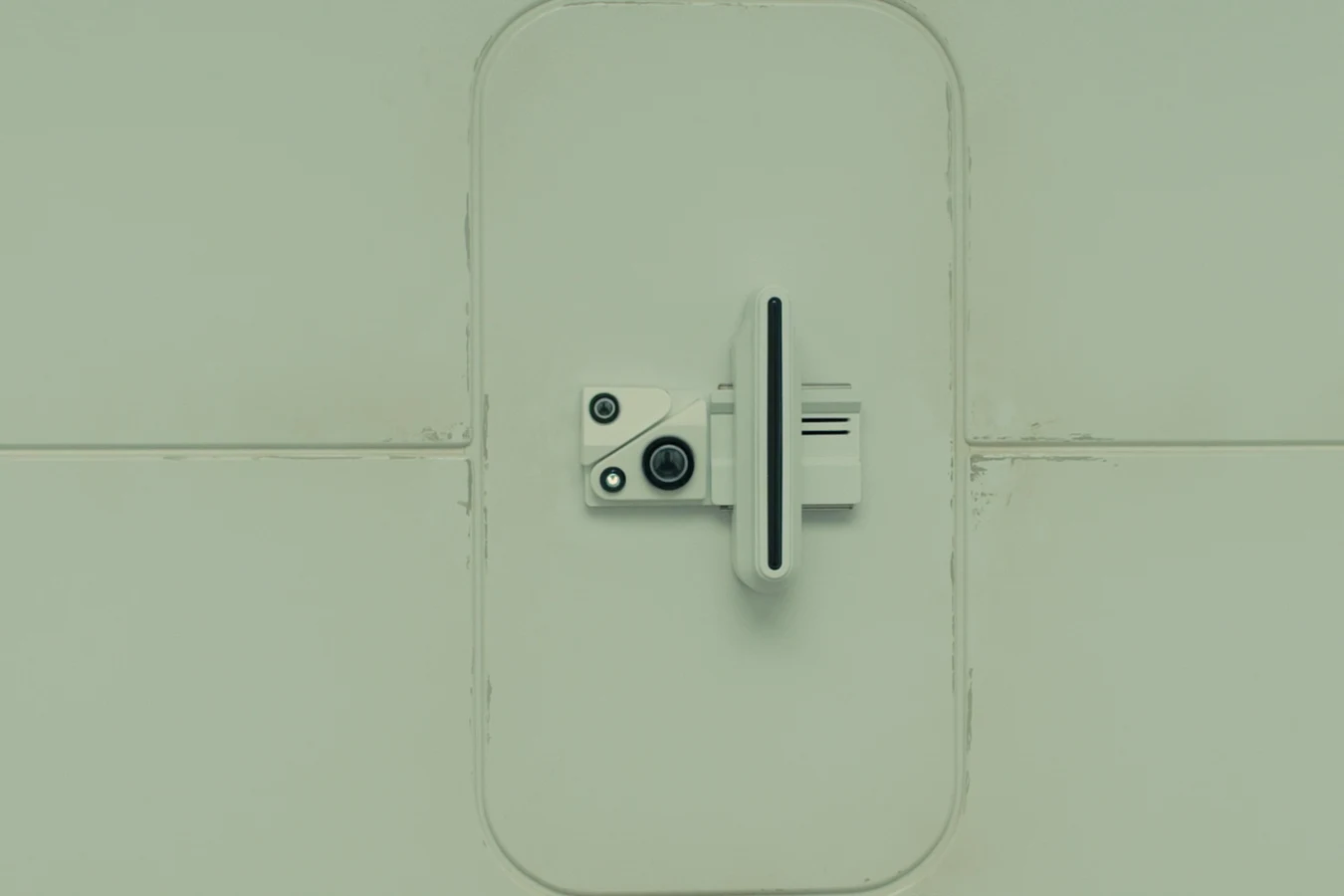
Blade Runner 2049 replaced the old empathy exam for blade runners themselves with the Baseline test. After a hard call, K took the test in a small enclosed booth at the station, answering a rapid prompt drawn from Vladimir Nabokov's Pale Fire. It does not ask whether he is a replicant, and instead checks whether a blade runner is still within his approved emotional range after stress, with a poor result leading to retirement. The first run in the film came after the fight at Sapper Morton's farm, and a later run went badly enough to put K under suspicion.
The spoken lines of the film never unpacked the scoring method, but the intent is clear from Lieutenant Joshi's pressure on K and from the second, failed test. Territory Studio and actor Ryan Gosling worked up the booth and the cadence of the questions for the production. The roleplaying game later formalized a Post-Traumatic Baseline Test as a tabletop procedure. That name, like the pilotfish, is a later or behind-the-scenes label rather than a term spoken in the movie.
Boneli Reflex-Arc Test
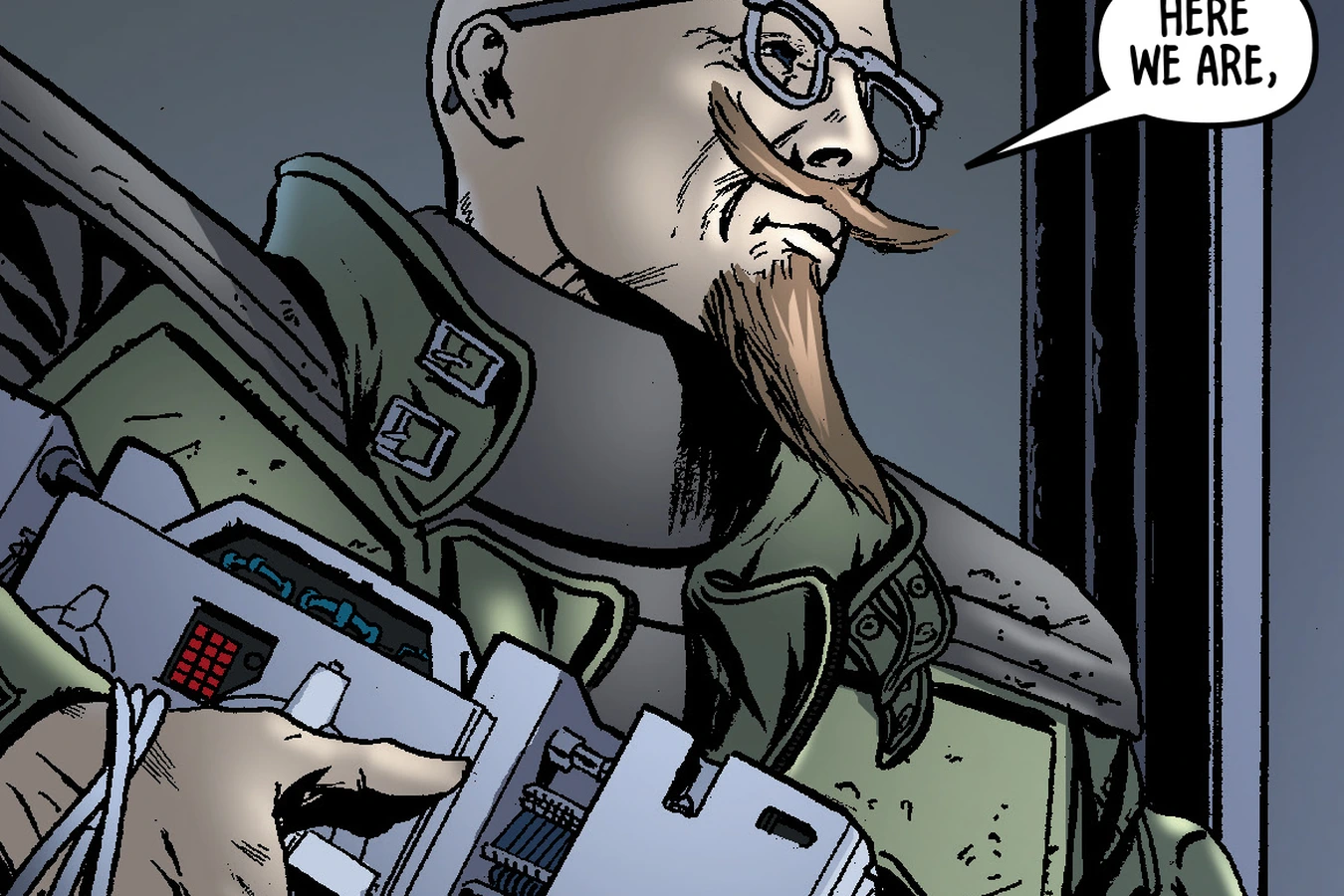
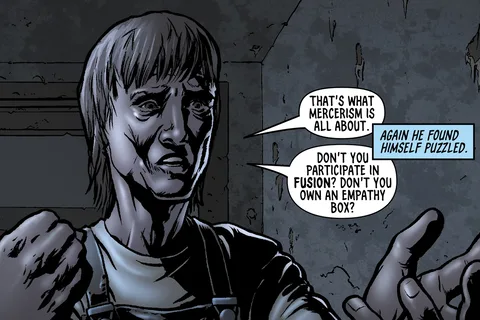
The Boneli Reflex-Arc Test comes from the book and from the comic, not from the 1982 or 2049 films. In Do Androids Dream of Electric Sheep?, Phil Resch preferred this check to the Voigt-Kampff scale. It looked at a reflex in the spinal ganglia rather than at empathy, and Resch treated that as a cleaner way to confirm a suspect. The same device appeared in the BOOM! Studios adaptation, where Resch arrived with the apparatus in his hands and said they had reached the right place.
Resch's reliance on the Boneli method is part of what made him unsettling to Deckard in the novel. A test that only checks a nerve arc can clear a killer who feels nothing, and that is the moral problem Dick built into the device. The films never staged this exam, and they never placed a Boneli instrument on a blade runner's desk. Deckard stayed with the Voigt-Kampff scale, and the two bounty hunters never agreed on which reading should decide a retirement.
Investigation Gear
Esper Machine
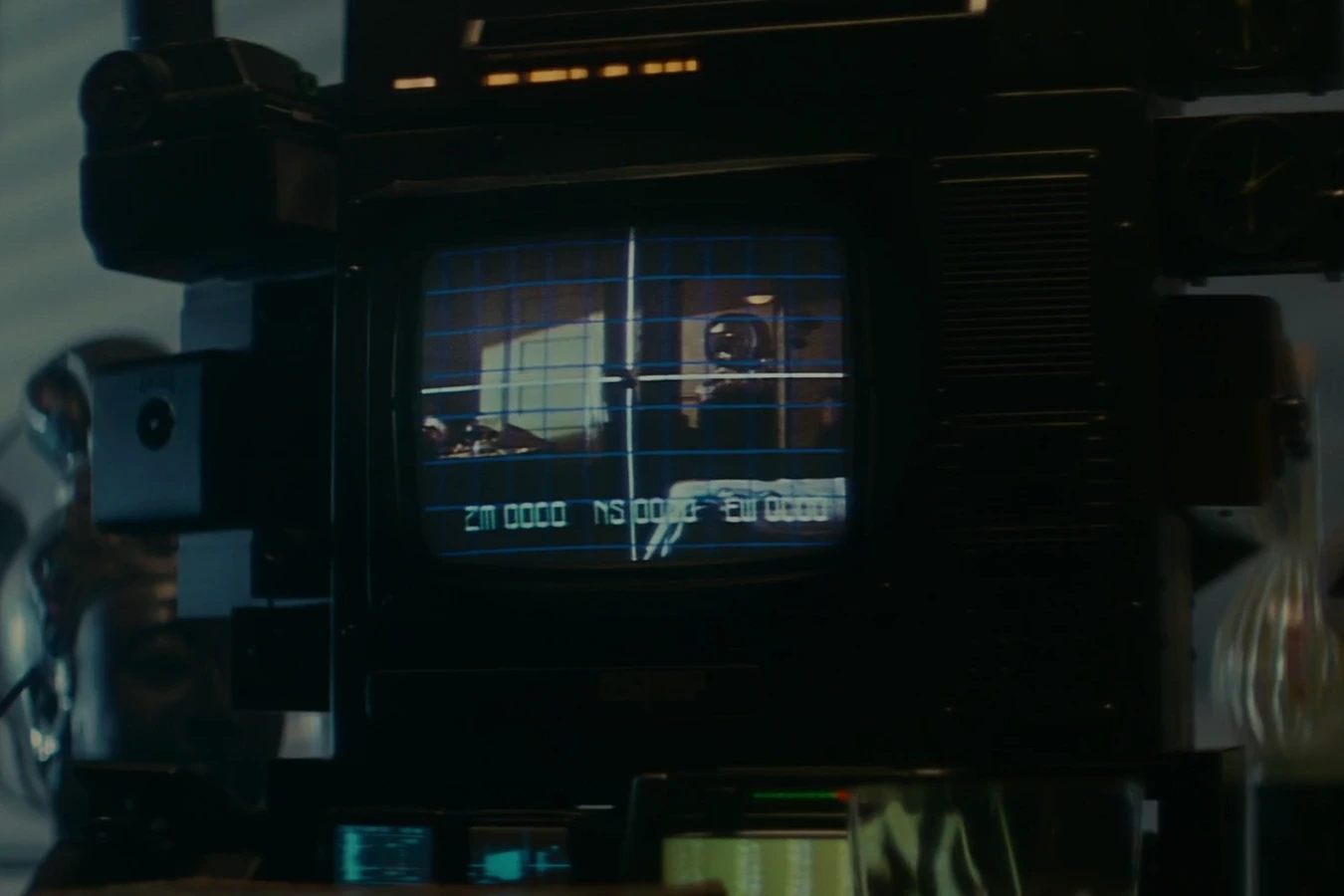
The Esper in Deckard's apartment is a photo analysis terminal that can move through a still image, raise resolution, and hold on a detail that the naked eye would miss. In Blade Runner, Deckard used it on a photograph from Leon's hotel room and tracked the reflection to Zhora. The official press kit described small Esper units in police cars and in Deckard's apartment, all able to channel into a larger machine at headquarters. Later novels and games expanded the same idea, but the apartment terminal of 1982 is the machine the film actually shows at work.
What the machine cannot do is invent a memory. It reads a photograph already in hand, and the operator still has to know which picture to load. Deckard's session was quiet, domestic, and slow, a contrast with the later police hardware at the station. That apartment session is the whole on-screen demonstration of the unit in 1982. The 2049 film does not restage this exact terminal, even as its detectives keep other forensic tools in the field.
The Police Esper
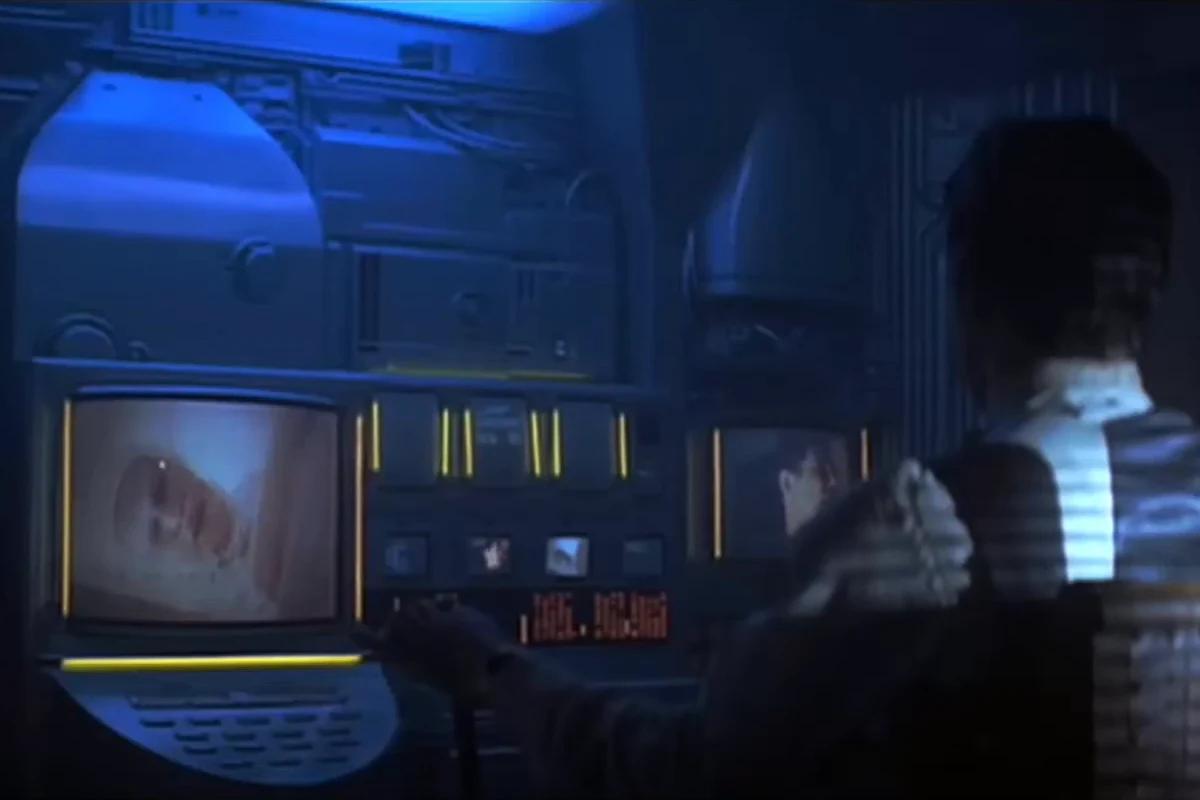
The larger machine at police headquarters appeared in a deleted scene included among the extras for later home releases of Blade Runner, rather than in the theatrical cut. Bryant and Gaff watched footage from Holden's hospital interview on a wide wall display, and they also used a desk terminal in the same suite. Editor Terry Rawlings and some draft materials described this as a police supercomputer, and older notes sometimes call it a super Esper. The films themselves never printed that label on the machine.
That deleted scene is also the best look at how the department wanted the Esper network to work, with a big display for several officers at once. Gaff worked at the desk terminal in the same police suite, with Holden's hospital capsule on the main monitor. Because the sequence was cut, the theatrical film never showed this headquarters hardware. A later K. W. Jeter novel, Blade Runner 4: Eye and Talon, added a Surround-esper, a further expansion of the same analysis idea.
K's Field Forensics And The Denabase
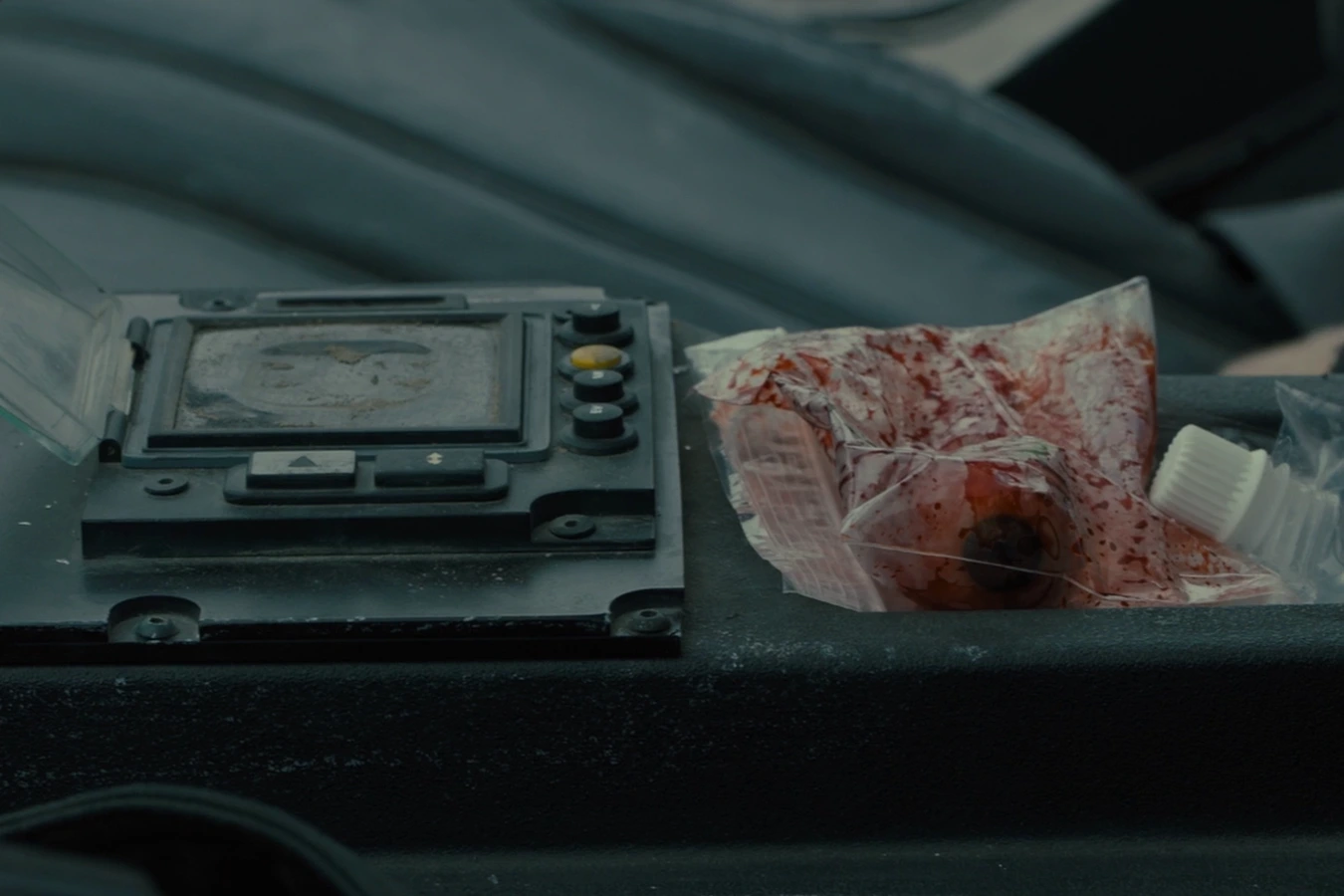
In Blade Runner 2049, K carried a compact field kit that never received an official name on screen. After the fight at the farm he bagged Sapper Morton's eye, and later he used the analyzer tray in his Spinner to study that sample. The same work continued at the station when Coco examined the remains. The book The Art and Soul of Blade Runner 2049 refers to a departmental database called the Denabase, which officers can query for a match, but the handheld scanner itself was left unnamed in the film.
That eyeball tool is not a Knowledge Integration Assistant, or KIA, even though later games gave blade runners a named scanner. The 2049 film shows a practical field analyzer and an evidence bag, not a branded handheld from a 1997 adventure. The Denabase, in the art book, is the archive behind the query, not the device in K's hand. The tree-ring photograph and the buried box follow the same method, a sample brought home and read, as Deckard's Esper work had been.
Detek-Snout Listening Gear
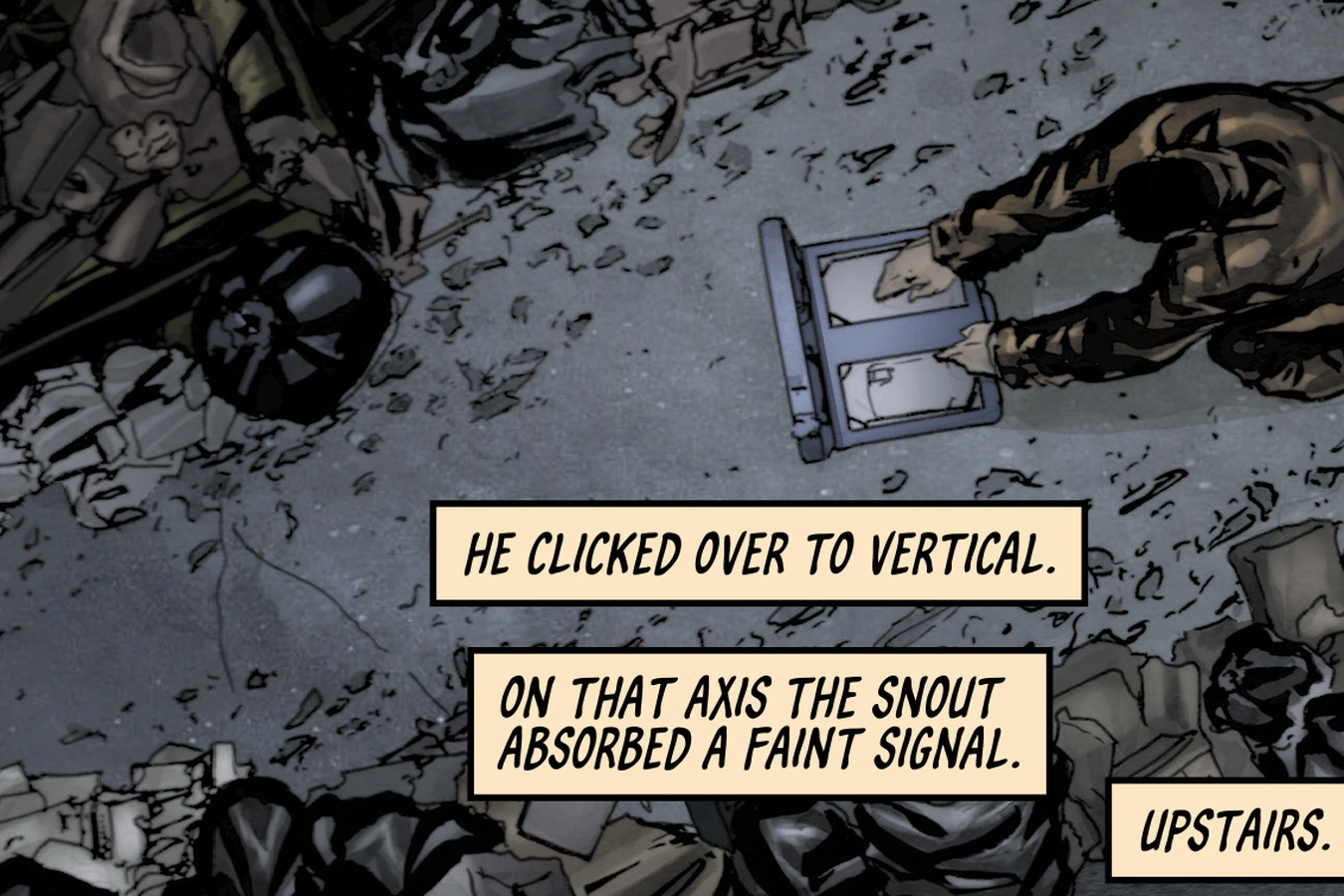
Philip K. Dick's novel gave Deckard a listening kit that never reaches the films. The book described a revolving detek-snout with a blip screen, a portable detector used to check a building for hidden encounters and electronic activity. Deckard took it into the apartment house where John Isidore had been sheltering fugitives, and he used the readings to work through the rooms. The BOOM! Studios adaptation shows him kneeling over the open briefcase, switching the snout to a vertical axis until the screen absorbed a faint signal from upstairs.
The detek-snout should not be confused with household alarms used by other characters in the book. Roy Baty's group, in Dick's novel, relied on its own warning devices in the apartment, and those are not police equipment. The snout is an investigator's tool, carried in and pointed at a space, with a screen that flags a blip when it finds something. At 3967-C Deckard followed that faint upstairs signal toward the rooms where the fugitives had been hiding.
Knowledge Integration Assistant
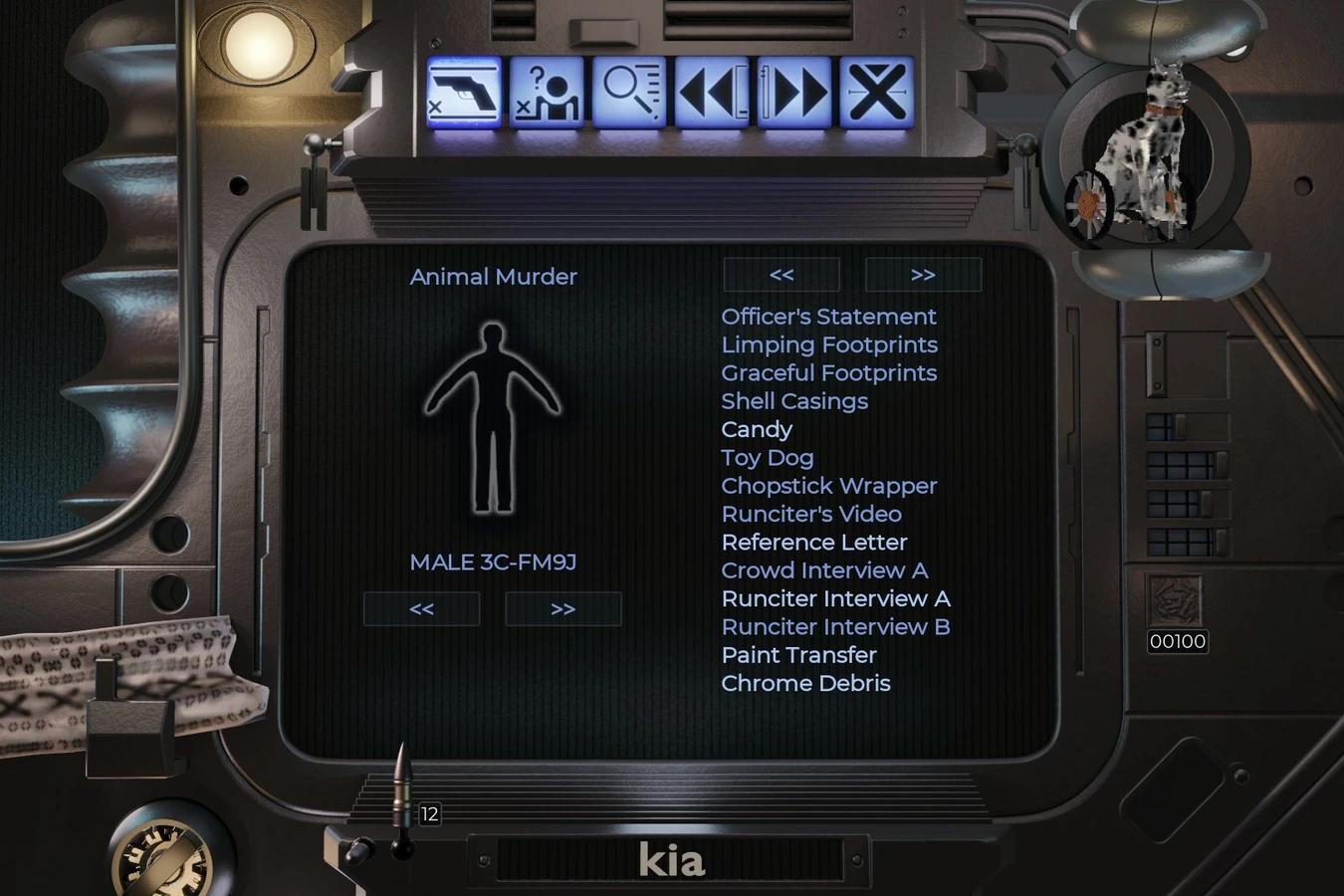
The Knowledge Integration Assistant, or KIA, is named in Blade Runner, the 1997 video game, and later in the roleplaying game. It is a portable computer and scanner for a detective in that adventure, and it is not a machine that appears under that name in either film. Ray McCoy used it in the game as he worked cases across the city, and the RPG expanded the idea with extras such as a bioscanner and a retinal scanner. Those additions belong to the tabletop rules, not to a close-up in 1982 or 2049.
On the unit's screen a crime scene can be logged as a case file, with a suspect record, a clue list, and a row of function keys along the top of the housing. In one file the display marked an animal murder, named a male suspect, and listed traces such as footprints, shell casings, and a toy dog, while a small figure of his dog Maggie stood on the housing. The 2049 film never flashes that logo on K's analyzer or in a line of dialogue. A retinal scanner in a later rulebook does not rename the anonymous field kit from the sequel.
Weapons
Pfläger-Katsumata Series D 5223 Blaster
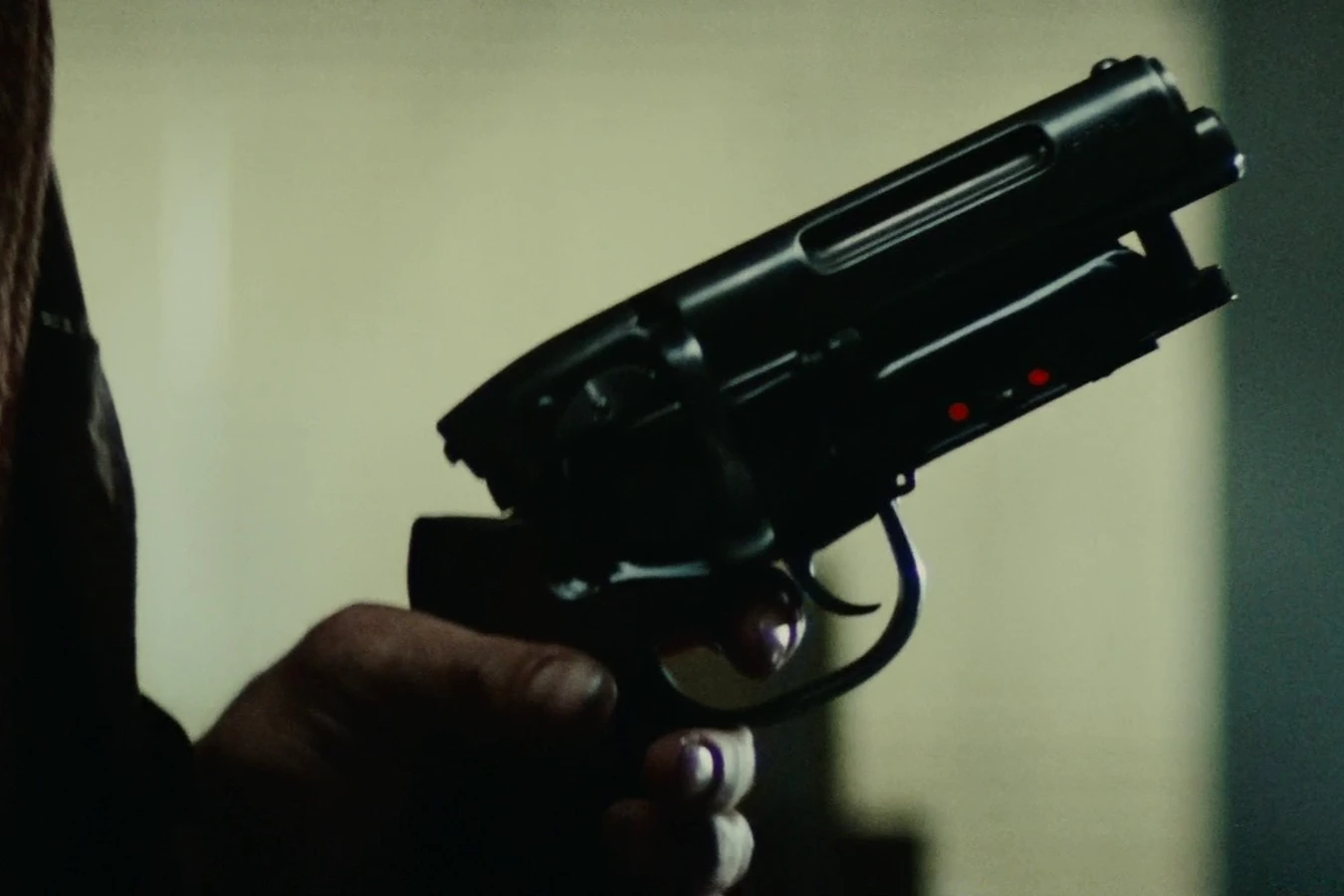
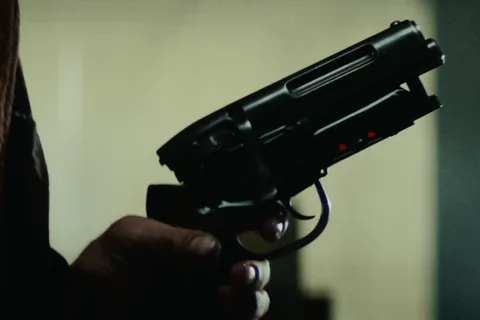
The Pfläger-Katsumata Series D 5223, nicknamed the Detective Special and shortened to PK-D, is the heavy blaster Deckard carried as a blade runner in 2019. Free League's roleplaying game later gave the pistol that designation and treated it as the standard sidearm of the job. Property master Terry Lewis built the original film prop from part of a Steyr Mannlicher rifle, according to Paul M. Sammon's Future Noir. Doug Harlocker's team, preparing copies for the sequel, found a Charter Arms Bulldog snub-nose revolver under a cosmetic rifle receiver, and that inner gun was the part that actually fired.
In the 1982 film, Deckard shot Zhora in the back, lost the gun when Leon knocked it from his hand, and watched Rachael pick it up and kill Leon to save him. He later used it on Pris and fired on Roy Batty during the final chase through the Bradbury Building. Thirty years later he still kept the blaster in his Las Vegas hideout, and he held K at gunpoint before the two men fought. The Art and Soul of Blade Runner 2049 records that Harlocker made four replicas for the sequel after the original prop had been sold to a collector.
Pfläger-Katsumata Series D FKM890 Blaster
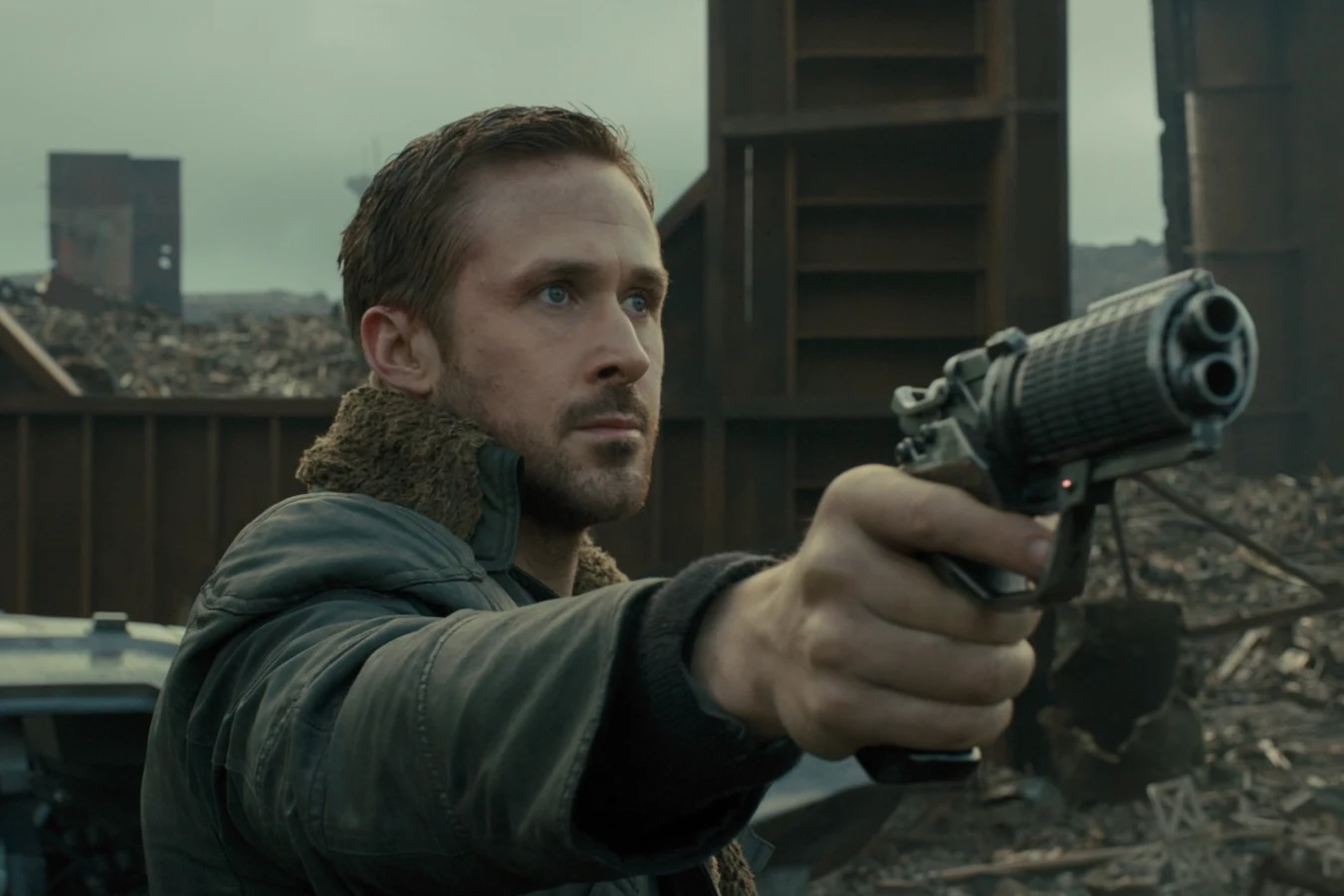
The roleplaying game names the newer police sidearm the Pfläger-Katsumata Series D FKM890, the latest PK-D issued to officers in 2049. Its twin barrels and boxy frame made it look like a direct descendant of Deckard's weapon. Doug Harlocker and his team custom designed the blaster for the film, and he described it as a new generation blaster that had gone through a number of incarnations as well as ergonomic studies. The in-universe name arrived later with the Free League rulebook, after the filmmakers had already put the gun in K's hand.
In the film, K carried the blaster on every assignment. He shot Sapper Morton dead at the protein farm after the older replicant attacked him a second time, and the department logged it as a retirement. When his spinner was brought down over the San Diego trash mesa, he stepped out among the scavengers with the gun raised one-handed. The roleplaying game later added a two-stage trigger and a rechargeable sonic charge, details that do not appear as spoken terms in the movie.
Personal Tech
Penfield Mood Organ
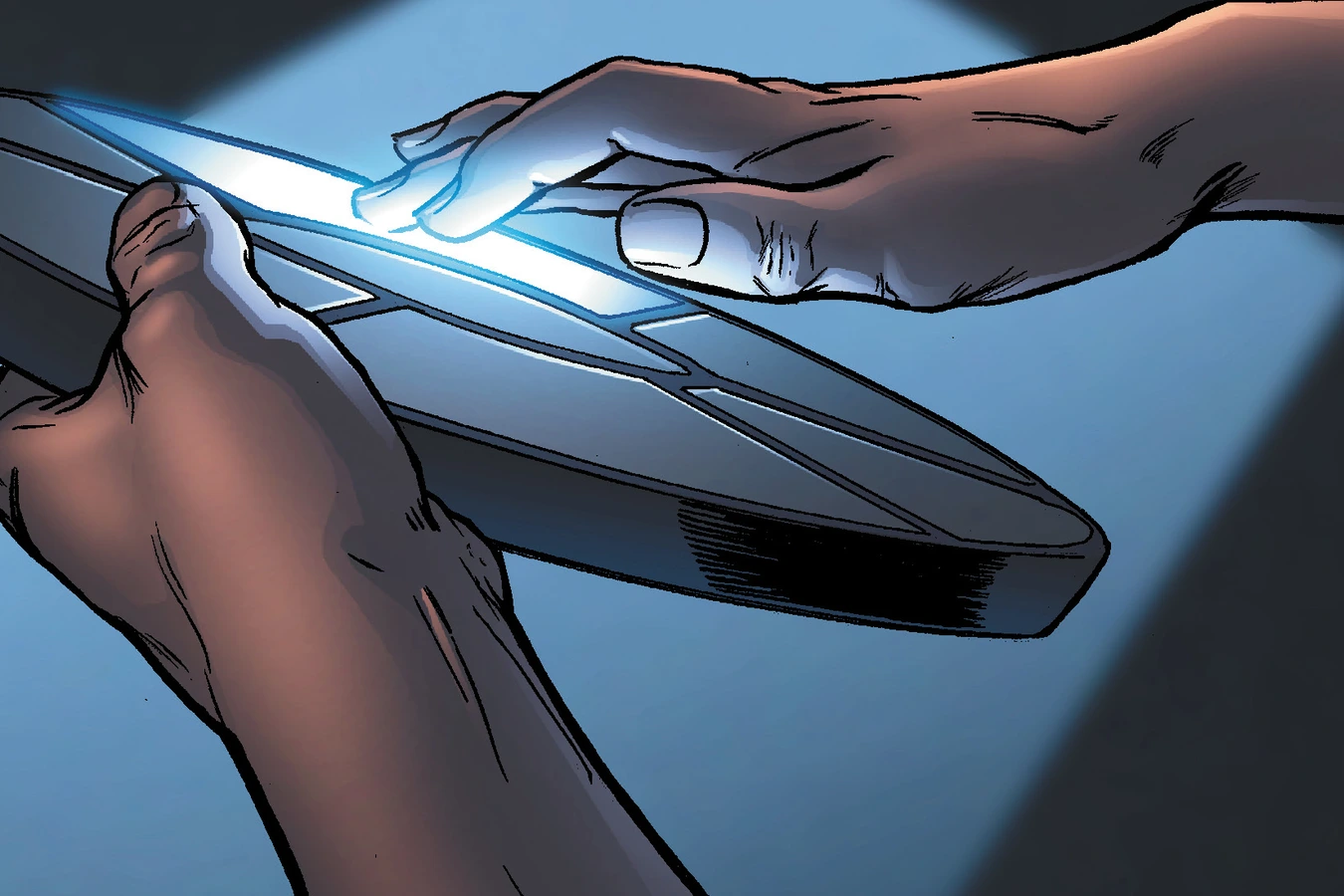
The Penfield Mood Organ is a household machine from Do Androids Dream of Electric Sheep?, not a police issue tool, but blade runners live with it like everyone else. Iran Deckard and Rick used the organ to dial emotional states at home, including settings that flatten a mood or push a person into a brighter one. The BOOM! Studios comic drew Rick's hands on the console as he chose a setting. Dick also described a portable Penfield wave transmitter, a related device rather than the living-room organ itself.
The mood organ stays a domestic machine, closer to a shared appliance than to a weapon. Dick placed it in the Deckards' living room, where Iran and Rick could dial a state instead of waiting for one to arrive. The portable cousin of that console is the Penfield wave transmitter, which Deckard carried in his weapons kit and used in the field. In the novel the household organ remains part of ordinary life, a console in the apartment rather than a tool issued by the department.
Penfield Wave Transmitter
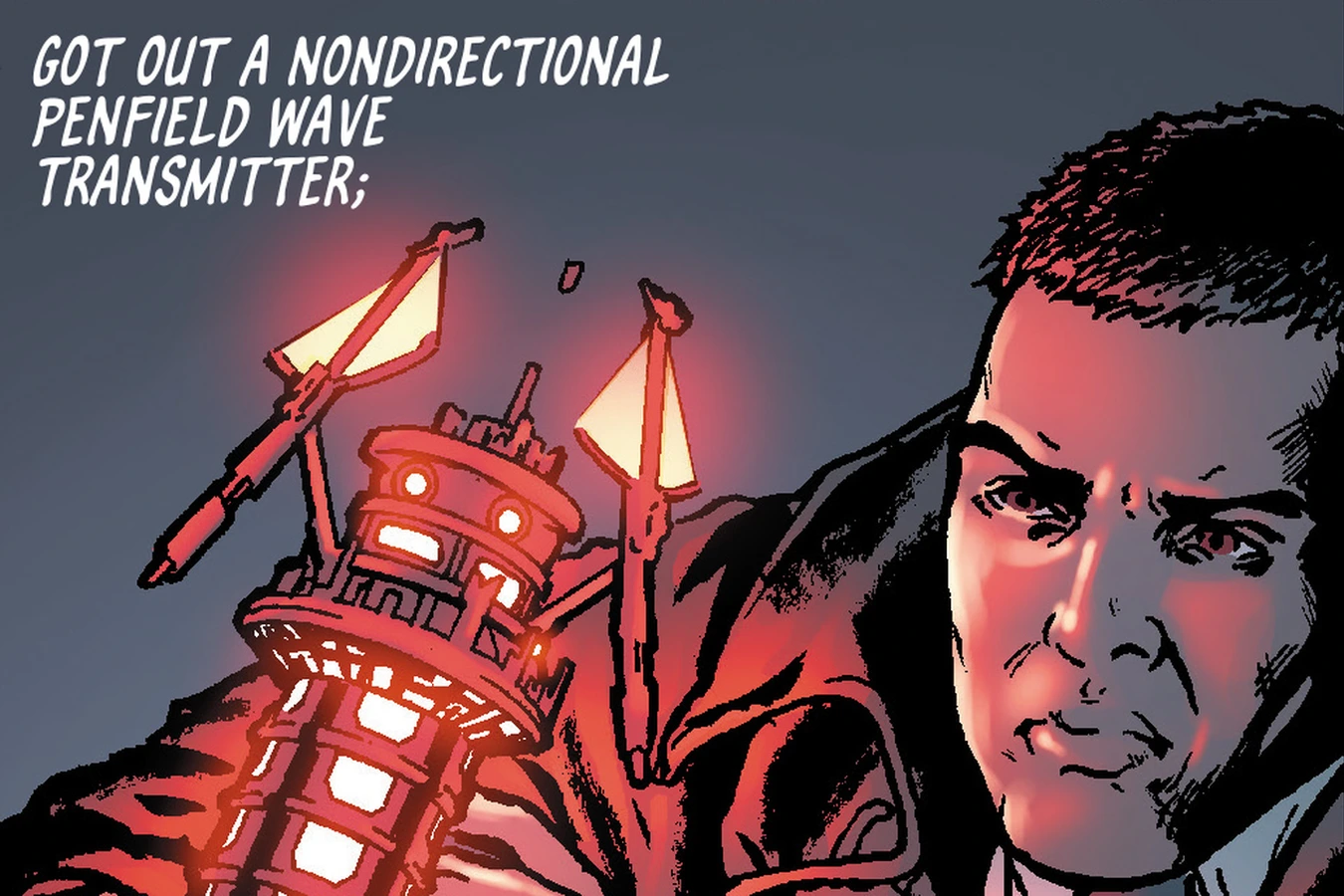
The portable Penfield wave transmitter is the same mood technology as the household organ, built as a compact unit Deckard could carry on a hunt. In Do Androids Dream of Electric Sheep?, Deckard carried it in his weapons kit and used it at Max Polokov's apartment. He took out a nondirectional transmitter, punched the key for catalepsy, and kept himself clear with a counterwave broadcast through the metal hull, directed to him alone. The BOOM! Studios adaptation draws that moment with the device in his hands.
That burst never appeared in Ridley Scott's film, where the fight with Polokov is a physical struggle in an apartment. The transmitter remains a book and comic tool, and it should not be confused with the living-room Penfield mood organ. Both devices use Penfield mood emission, but only the portable unit had a catalepsy setting and a protective counterwave. Deckard used it as part of his bounty hunter kit at Polokov's rooms, then went on with the case.
Joi's Emanator
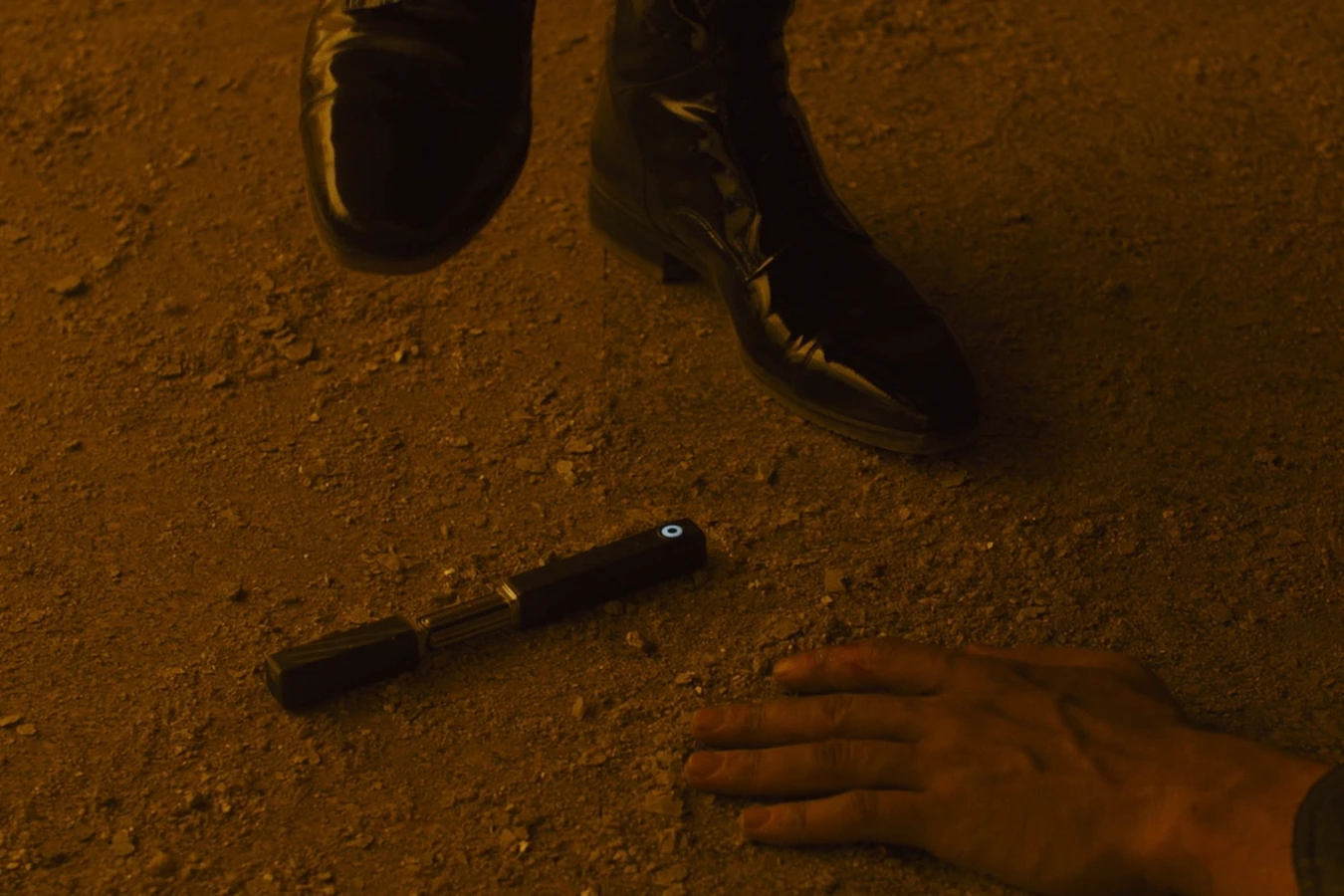
In Blade Runner 2049, Joi is a holographic companion who can leave the apartment console when K gave her an Emanator, a small portable projector. The gift let her appear on a rooftop, in the Spinner, and out on later trips, instead of remaining tied to the home unit. When K wanted to hide her from a search, he deleted her from the apartment console and relied on the handheld device. From then on she existed only on the unit he carried into the field.
Luv later crushed the device under her boot beside the injured K in Las Vegas, which ended Joi's portable presence for the rest of the film. The projector was a piece of consumer hardware from Wallace Corporation, small enough to carry, and it was the only copy left after K deleted Joi from the apartment console. Once the emanator broke, that version of her was gone. Wallace's men left K on the ground and took Deckard with them.
Behind The Scenes
Syd Mead's vehicle design is the reason the Spinner is still the face of Blade Runner technology, from the 1982 official press materials to the heavier Peugeot-branded cars of 2049. The Esper's voice interface and the Voight-Kampff suitcase were practical props first, then shorthand for the whole job. Territory Studio's graphic work on 2049 added a layer of screens and a production name for the roof drone. None of those later names overwrite what the characters actually say. Doug Harlocker's department built both generations of police blaster seen in the sequel, including the copies of Deckard's gun and K's new sidearm.
The novel's machines were always more domestic and strange than the film kit. A mood organ in the living room and a revolving detek-snout in a hallway do as much to define Dick's bounty hunters as any blaster. When the 2049 team added a Baseline booth and a field analyzer, they were extending that mix of workplace test and portable tool, not replacing it. The art book later named a departmental archive the Denabase, the 1997 game gave detectives a Knowledge Integration Assistant, and the roleplaying catalogues added official model numbers for cars and sidearms that the films left unnamed.
Conclusion
A blade runner's kit is wider than a gun. The job in 1982 already depended on a Spinner to reach the scene, a Voight-Kampff machine to justify the shot, and an Esper to find the next name. In 2049 the same shape remains, with a Baseline to check the hunter, a field analyzer to work a sample, and a drone that the production called a pilotfish. Around the edges, the book still offers a Penfield organ, a wave transmitter, and a detek-snout that Deckard carried into a darkened hallway.
Tag Categories: Blade Runner Lore