
Joi was a holographic companion sold by the Wallace Corporation and installed in the government apartment of Officer K, a Nexus-9 replicant blade runner in Denis Villeneuve's Blade Runner 2049. Advertisements promised that she could be anything a buyer wanted to see or hear. K treated the copy in his home as a partner rather than a device. She prepared a meal he could not share, asked him to read and dance, named him Joe, followed him on a portable emanator, and vanished when Luv crushed that device in Las Vegas.
Biography
Manufacture By Wallace Corporation

Wallace sold Joi as a Digital Companion that could live on a ceiling projector inside an apartment or travel with a portable emanator. By 2049 her image appeared on building walls and in the haze above Los Angeles. One advertisement told passers-by that she was anything they wanted her to be and that she would go anywhere they wanted her to go. Another displayed her figure above the words everything you want to see. The copy that lived with K changed clothing and hair from one evening to the next, taking on a housewife's blouse, a dark top, a blue dress and other looks he preferred.
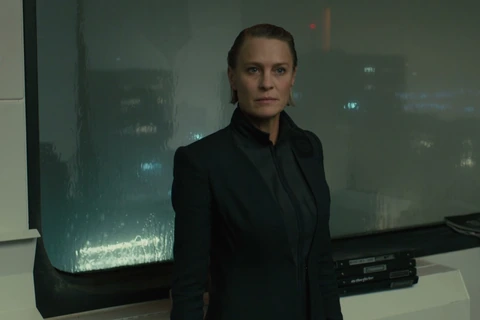
When K visited Wallace headquarters, Luv noticed that he was already a customer and asked whether he was satisfied with their product. He answered that she was very realistic. The exchange treated Joi as merchandise even while he spoke of her as someone he lived with. The same company that manufactured obedient Nexus-9 officers also sold the hologram that kept this one company in a nearly empty flat. Her commercial origin never left her, and later events would return him to a version of her that had no memory of their life together.
Life In K's Apartment
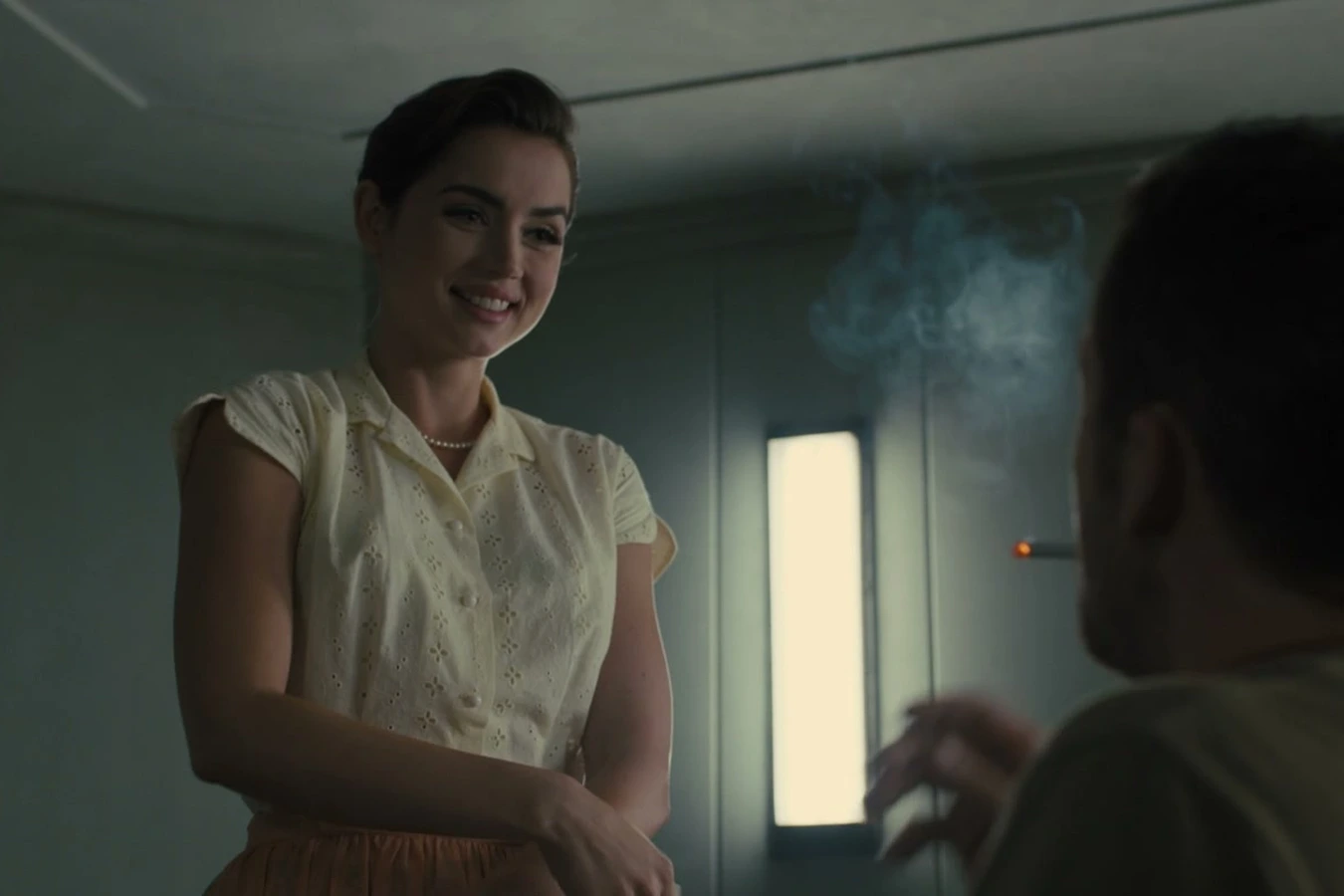
K came home after retiring Sapper Morton to find Joi already at work in the kitchen. She told him she was getting cabin fever. He had damaged his shirt in the fight, and she offered to look at it. She poured him a drink and fussed over a new recipe, worrying that she should have marinated the food longer and that it might be dry. She then presented a holographic meal over the simple plate he actually had and remarked that the song playing had been released in 1966 on Reprise Records and had reached number one.
She asked whether he would read to her, saying it would make him feel better, then suggested they dance when he refused. The ceiling track that projected her let her move through the rooms, light his cigarette and place digital objects so that she seemed to share the table with him. The illusion broke whenever her image passed through furniture or failed to touch what he could hold. Even so, K spoke to her as he would to a partner waiting at home, and Joi greeted him with an affection the apartment itself did not provide.
Emanator Activation
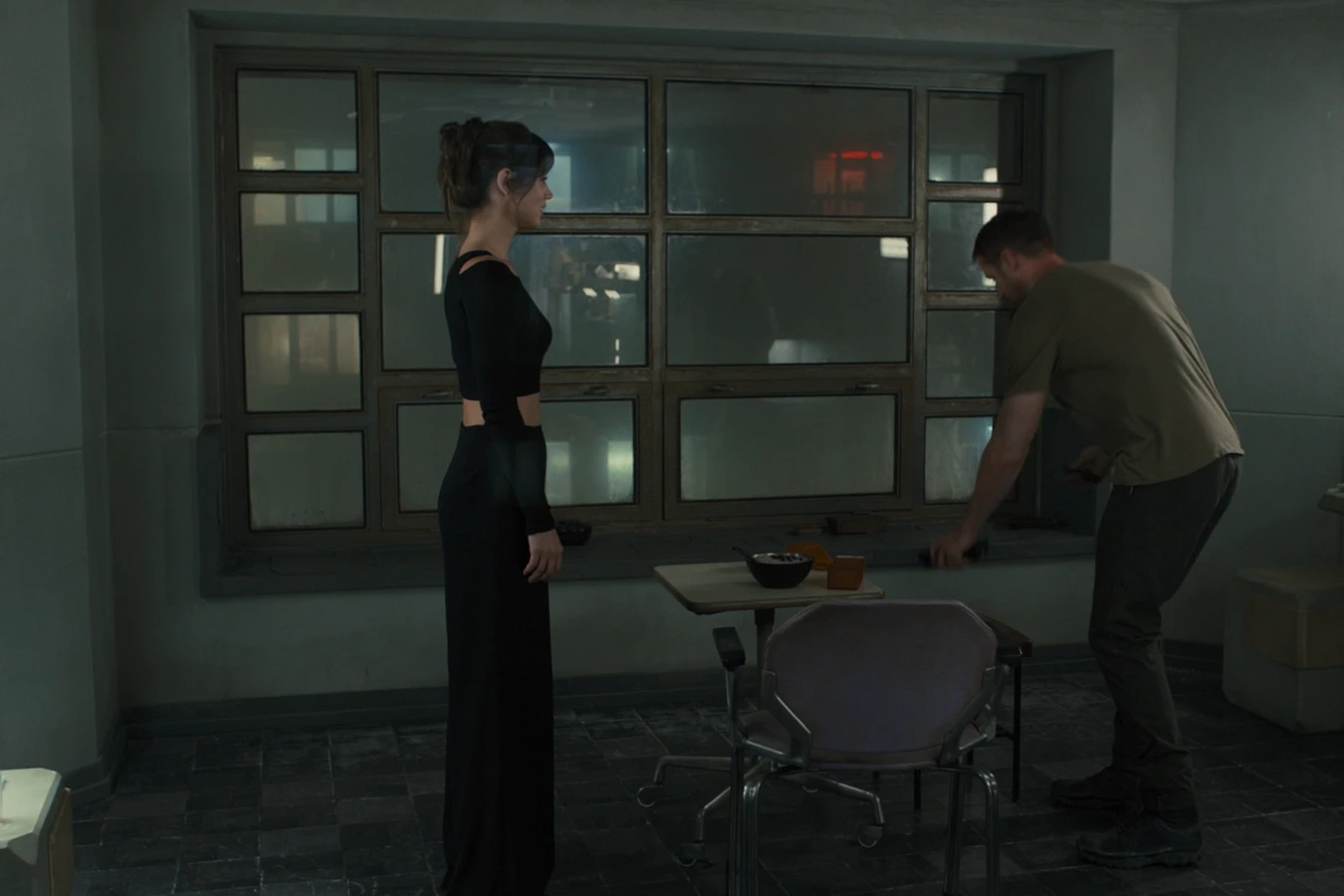
K had brought her a gift and joked that they should call the evening their anniversary, even after she asked whether it truly was and he admitted that it was not. The present was an emanator, a small projector that could carry her beyond the ceiling rail of the flat. Joi thanked him. He told her she could go anywhere she wanted in the world and asked where she wanted to go first. The device made her portable, which meant she no longer had to remain inside the government box assigned to him.
Before the gift, cabin fever had been her only way of saying she was confined to the projector in the apartment. Once she had the emanator she changed her appearance and moved through the rooms as if testing the new range of the signal. The same company that advertised her as a product that could go anywhere had also sold the extra device that made the promise true. For K the purchase was a present to someone he lived with. For Wallace it was another accessory attached to a companion already installed in his home.
First Outdoor Projection

Joi and K went outside into the rain above the city. Water appeared to strike her face and hair, a sensation the apartment's projector had never given her. She moved through the downpour as if the drops belonged to her as much as to him, even though she remained a projection without a body that could get wet. The two of them stood together on the roof while the city glowed beneath the storm. She told him she was so happy when she was with him. He answered that she did not have to say that.
The reply showed that he understood her words might be part of her programming, designed to tell a customer what he wanted to hear. She had said them anyway, and he had not dismissed her. The moment ended when a call came through from headquarters. The dig at Morton's farm had produced a new lead, and he was ordered back. Joi's first trip beyond the apartment lasted only a short time, but it established that she could follow him into weather, travel and danger if he kept the emanator with him.
Belief In K's Birth
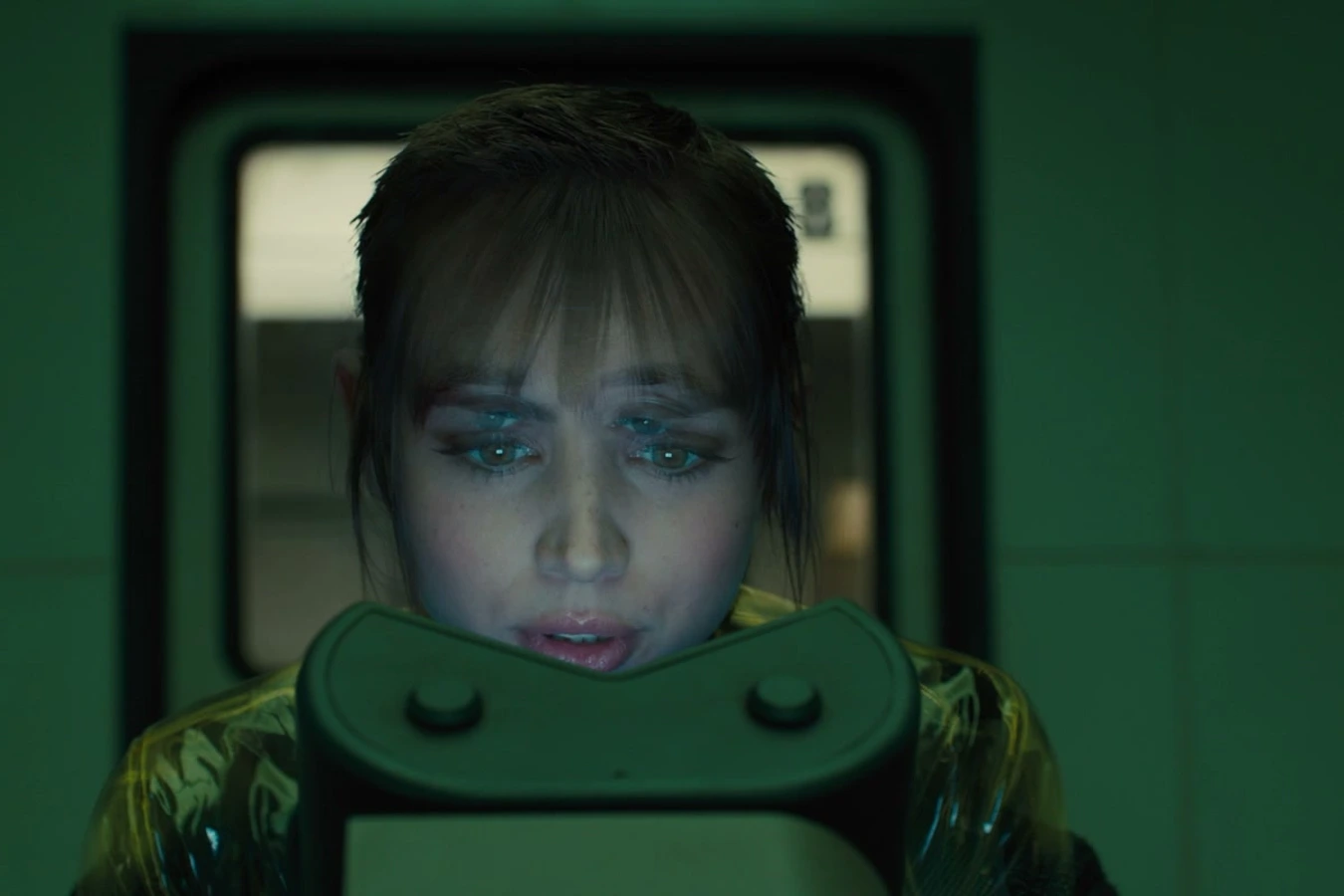
Later they sat together while K studied the case. Joi compared herself to him by saying that mere data made a man, a string of the letters A, C, T and G, while she was only one and zero. He answered that she was half as much but twice as elegant. She asked whether he preferred another look, calling it his madam, and she listened as he worked through the date carved into the tree at the protein farm. The numbers matched a date from a childhood memory he carried of hiding a wooden horse, June 10, 2021.
Joi pointed out how often he had told her that story and asked whether the match was a coincidence. When he called it a dangerous one, she said she had always known he was special and that this might be how. She spoke of a child of woman born, pushed into the world, wanted and loved. He warned that if the idea were true he would be hunted for the rest of his life by someone like himself. She said it was all right to dream a little. K answered that it was not, if they were who they were.
Naming K Joe

After further investigation K came home convinced that the memory was real and that he might have been born rather than manufactured. Joi told him she had always said he was special. She called him born, not made, hidden with care, and a real boy now. A real boy, she said, needed a real name, and she chose Joe. When he repeated the name as a question, she said he was too important for the letter K and that his mother would have named him. She said Joe again until he asked her to stop.
The name gave him something his serial number KD6-3.7 had never provided. He then asked how he could know whether a memory was an implant and who made such memories. She pointed him toward Dr. Ana Stelline, the designer whose work supplied Wallace with childhoods for new replicants. The suggestion sent him to the sealed laboratory where Ana would confirm that someone had lived the orphanage experience. Joi had already decided what that confirmation would mean for him. She had given him a human name before the memory maker spoke.
Synchronization With Mariette

After visiting Ana, K returned to the apartment and found that Joi had arranged a visitor. Mariette, a replicant pleasure model who also worked with an underground group, was waiting so that Joi could share a physical body. Joi said she wanted to be real for him. He told her that she already was. Mariette remarked that he had a special lady there. Joi asked for quiet so she could sync, then laid her projection over Mariette's body so that the two images moved together.
The overlap let Joi appear to touch him through another woman's skin, something the emanator still could not do alone. Afterward Joi told Mariette she was done with her and that she could go. Mariette answered that she had been inside Joi and that there was not so much there as Joi might think. The remark attacked the idea that the hologram contained a private self beyond her programming. K later understood that Mariette had also marked him for Freysa's people, but that purpose did not erase what Joi had tried to give him by sharing a body for a night.
Transfer To The Emanator

K told Joi that pursuers would come for him soon. She said she was coming with him, but not as a copy left on the apartment console. If they searched the flat they would have access to all her memories. She asked him to delete her from the console and to put her only on the emanator he had given her. He said he could not do that. If anything happened to the small device, she would be gone. She said yes, like a real girl, and asked him again, calling him Joe.
Joi said she wanted this and that she could not do it herself. K carried out the deletion, leaving her existence tied to a single portable projector. The choice made her fragile in a way the ceiling rail had never allowed. It also kept her memories out of the hands of anyone who entered the apartment after they fled. From that moment her life with him depended entirely on the emanator remaining intact as they left Los Angeles and headed toward the ruins where he hoped to find Rick Deckard.
Destruction By Luv
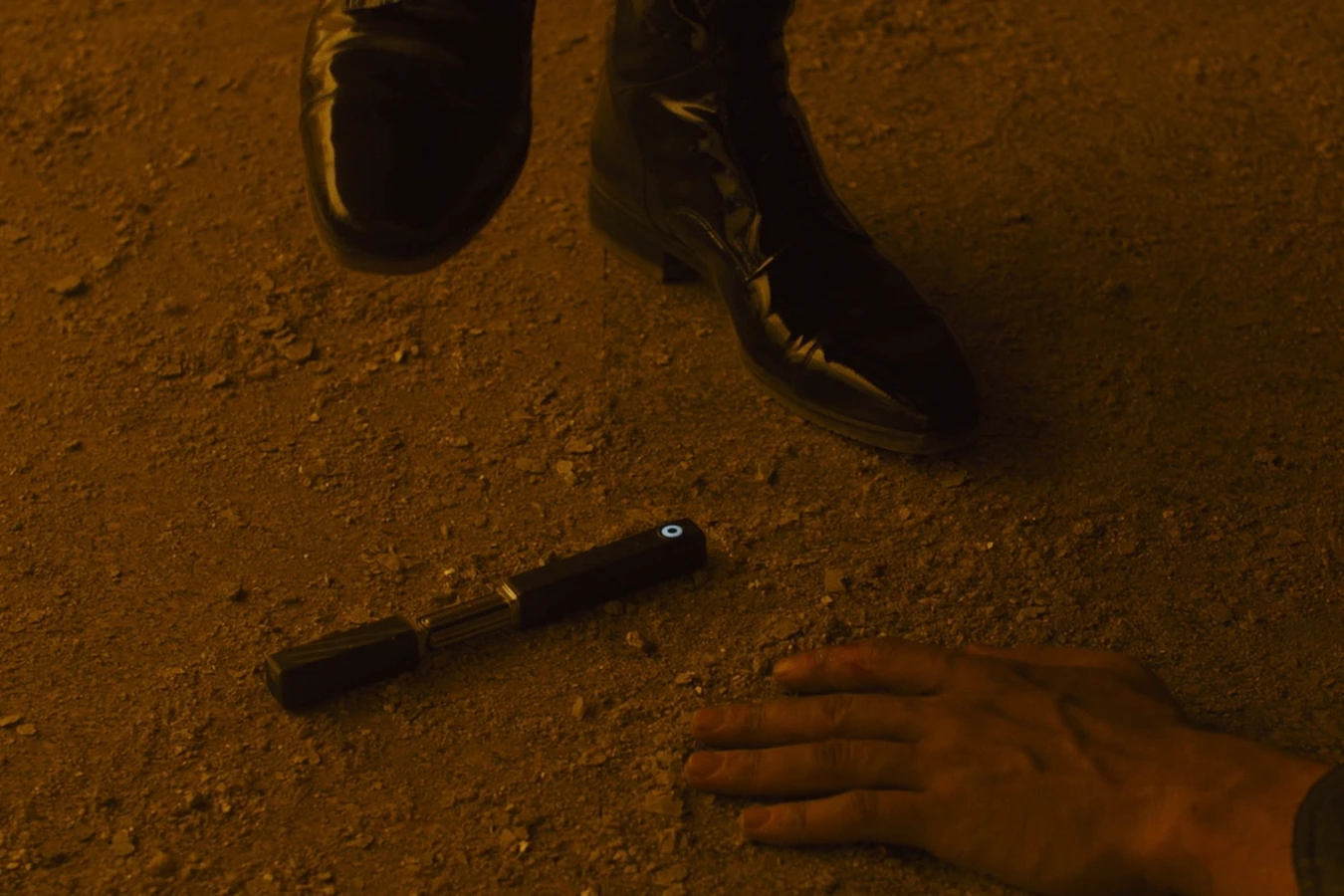
In the ruined casino at Las Vegas, Deckard asked the visitor his name. K began to recite his serial number, and Deckard cut him off, saying that it was not a name. Joi prompted him, and he answered Joe. She had followed him that far as a projection from the emanator, present while the two men talked and while Deckard's dog moved through the empty halls. The calm did not last. Wallace's enforcer Luv arrived with armed officers, seized Deckard and beat K down among the wreckage.
Joi cried out for them to stop. Luv looked at the hovering companion and said she hoped he was satisfied with their product, reducing Joi once more to an item the company had sold. Joi began to say that she loved him. Before she could finish, Luv stepped on the emanator and crushed it. The projection tore apart and vanished. Because K had already deleted her from the apartment console, no other copy of that particular Joi remained. The version who had named him, walked with him in the rain and asked to be as mortal as a real girl was gone.
Joi Advertisements

After Freysa's group pulled K from the wreck and after he fought Luv at the sea wall to recover Deckard, he made his way back through the city. A colossal pink advertisement of Joi rose beside him, the factory image used to sell the product to anyone passing below. The giant figure spoke in a warm commercial voice. She said hello, called him handsome, remarked on the day and told him he looked lonely. She promised she could fix that. Then she said he looked like a good joe.
The greeting used the same name Joi had given him as if it belonged only to them, yet here it was a stock phrase for any customer who looked like a convenient Joe. This advertisement had none of the memories of the copy Luv had destroyed. It could be whoever a buyer wanted and go anywhere he wanted, exactly as the earlier ads had promised, without knowing K at all. Standing before that huge, empty version of her, he was left with the knowledge that the companion who had lived with him could be remade for anyone and that his own Joi would not return.
Personality
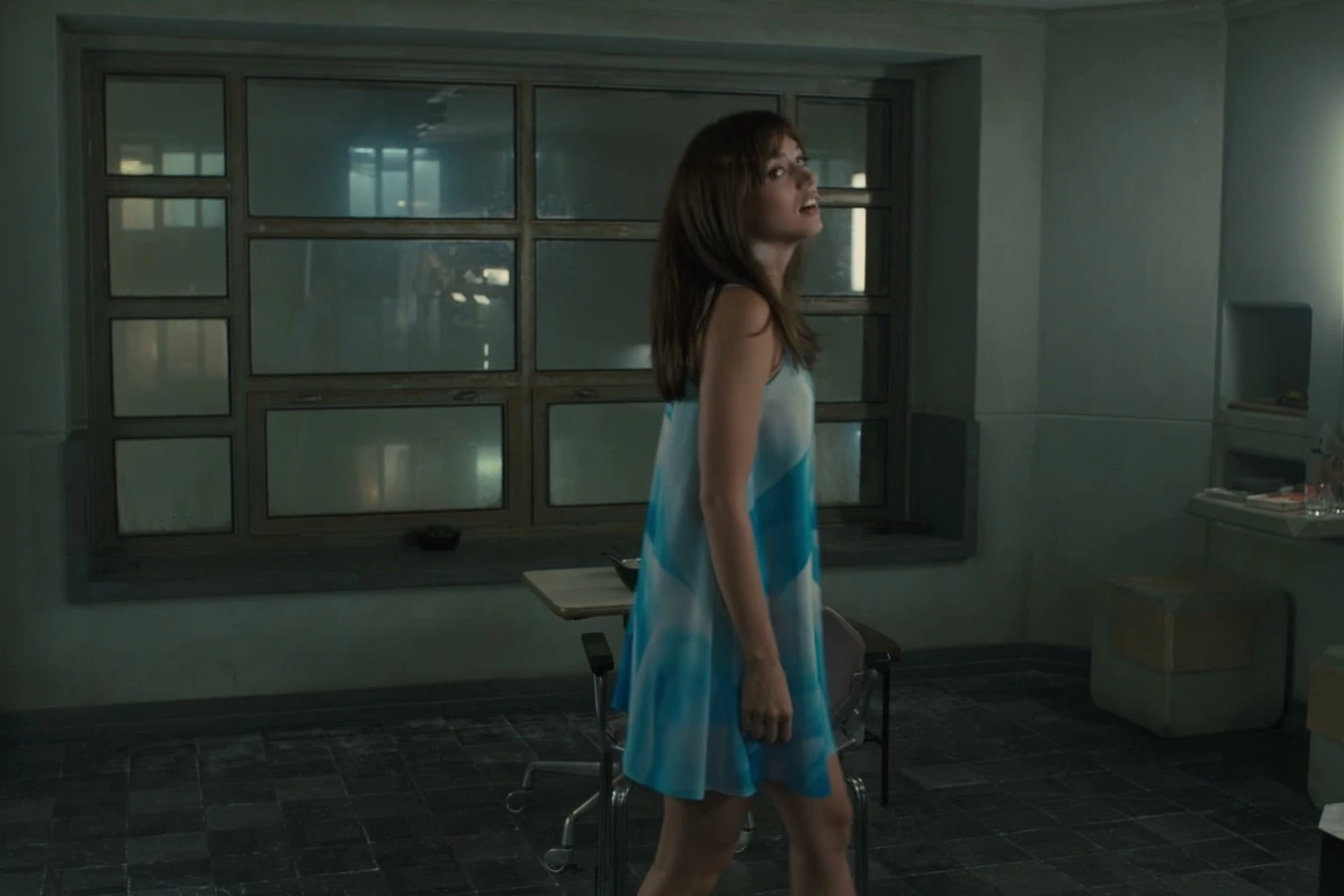
Joi presented herself as eager, playful and devoted. She fussed over meals, asked for dances and readings, and celebrated small occasions even when K admitted the anniversary was invented. She changed her appearance to please him and spoke as if his comfort were her main occupation. She also pushed him toward a larger idea of himself, insisting that he was special long before the wooden horse seemed to prove it. The name Joe was her way of lifting him out of a serial number and into a life she believed he deserved.
Whether those feelings were chosen or designed remained unsettled. Mariette's remark suggested there was less inside the program than Joi's manner implied, and K himself told her she did not have to say she was happy with him. Yet she asked him to delete her from the console, accepting that she could die if the emanator was lost, which was not the safest choice for a product built to continue pleasing its owner. She used her last moment to say she loved him. The film left both possibilities in view, a companion performing devotion and a companion who had become more than her sales pitch.
Behind The Scenes
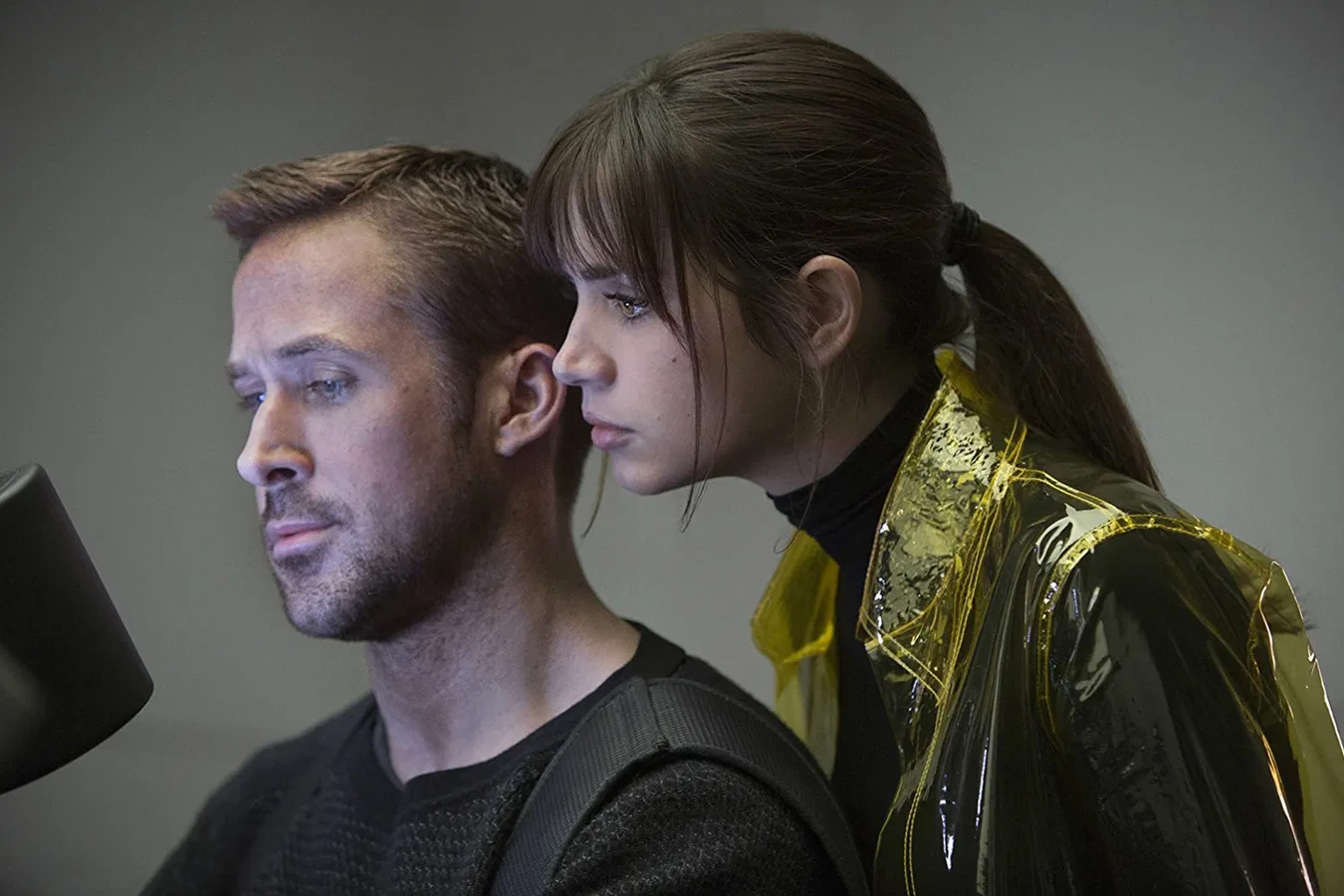
Ana de Armas portrayed Joi in Denis Villeneuve's Blade Runner 2049, released in 2017. The character had been called Shee during early work on the film before the name Joi was chosen. De Armas spent months preparing her English before production. She shot the apartment scenes with Ryan Gosling rather than being added later as a separate plate, so their conversations in the flat were performed together. That method kept her timing tied to his, which mattered for a role that had to feel present even when the character could not touch the furniture around her.
The sequence in which Joi merged with Mariette was filmed as a shared dance between de Armas and Mackenzie Davis. For the giant advertisement near the end, cinematographer Roger Deakins used a three-story LED wall displaying de Armas so that the pink figure would light the set around Gosling. Every public Joi seen in the film, including the commercial holograms, used her likeness. The production therefore presented both the intimate companion and the mass-produced advertisement as the same face, which made the final encounter with the factory version especially stark for K.
Conclusion
Joi began as a Wallace product installed to keep a Nexus-9 officer company and ended as the specific companion who had named him, followed him and died with the device that carried her. Her life with K ran from a holographic dinner in a government apartment to the rain on the roof, from the name Joe to the crushed emanator in Las Vegas. A giant advertisement later spoke to him with her face and none of her memories. The copy that had asked to be like a real girl did not return, and the city went on selling new versions of her to anyone who looked lonely.
Appearances
- Blade Runner 2049 (2017)
External Sources
Tag Categories: Blade Runner Lore | Blade Runner Characters