
Milt Borogrove was the repairman at Van Ness Pet Hospital in Philip K. Dick's Do Androids Dream of Electric Sheep?. He worked under Hannibal Sloat and serviced the false animals that John Isidore collected around San Francisco. When Isidore arrived with a cat that had died in transit, Milt recognised that Horace was a real animal, defended Isidore against Sloat's abuse, and took over the difficult call to Mrs. Pilsen. He later arranged an electric replacement and warned Isidore not to let the builders take the original body. The same scene appears in BOOM! Studios' comic adaptation.
Biography
Repairman At Van Ness Pet Hospital
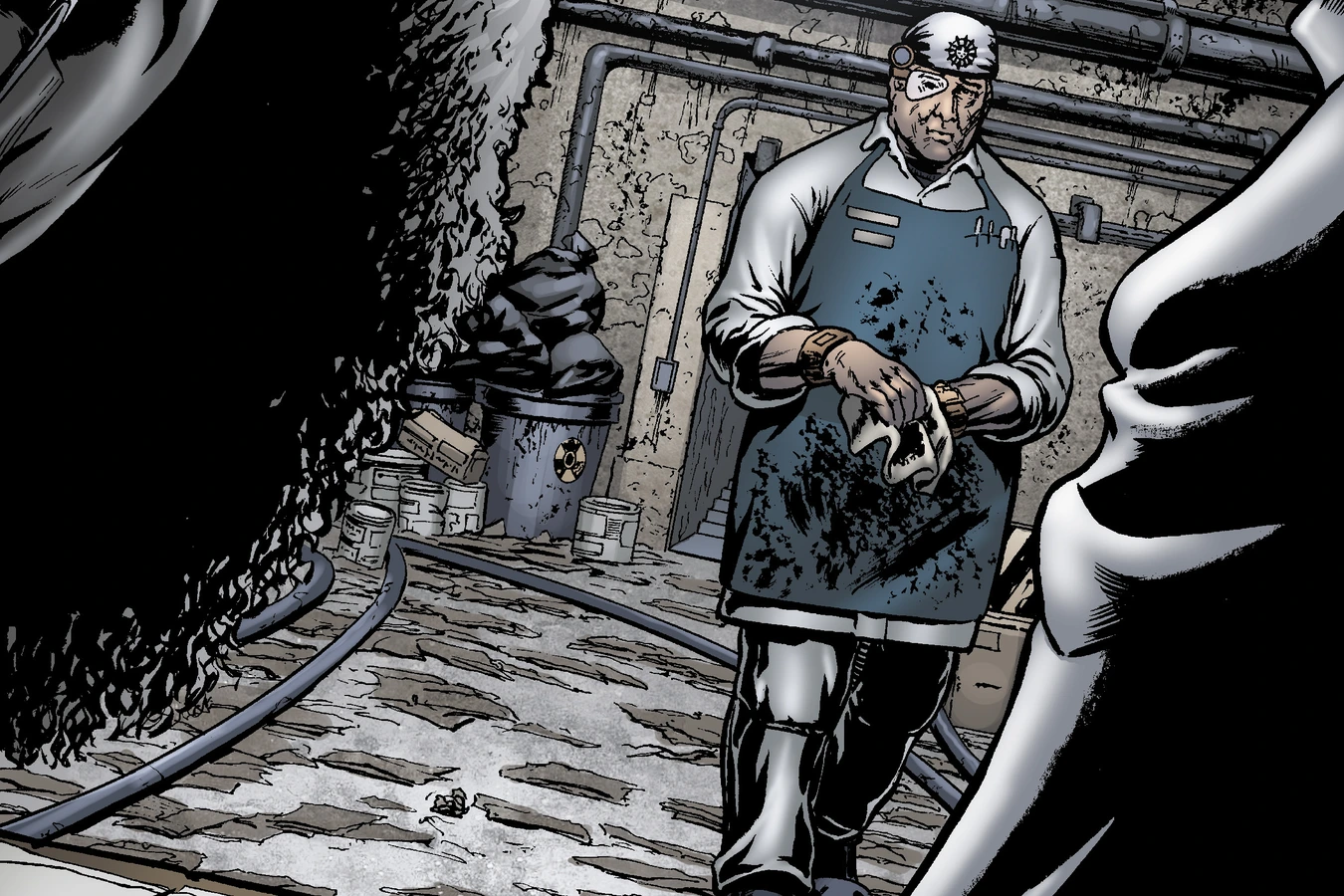
Milt worked as the technician at Van Ness Pet Hospital, a false-animal repair shop that operated under the appearance of a veterinary practice. Its proprietor, Hannibal Sloat, sent the firm's driver out to collect damaged constructs from customers in and around San Francisco, then relied on Milt to service them in the shop. Milt was a burly, pebble-skinned man who wore a grimy blue sailcloth apron at his workbench. The business was a carefully misnamed little enterprise, and it barely existed in a competitive trade, but living animals remained so scarce after World War Terminus that even a well-made imitation carried considerable value.
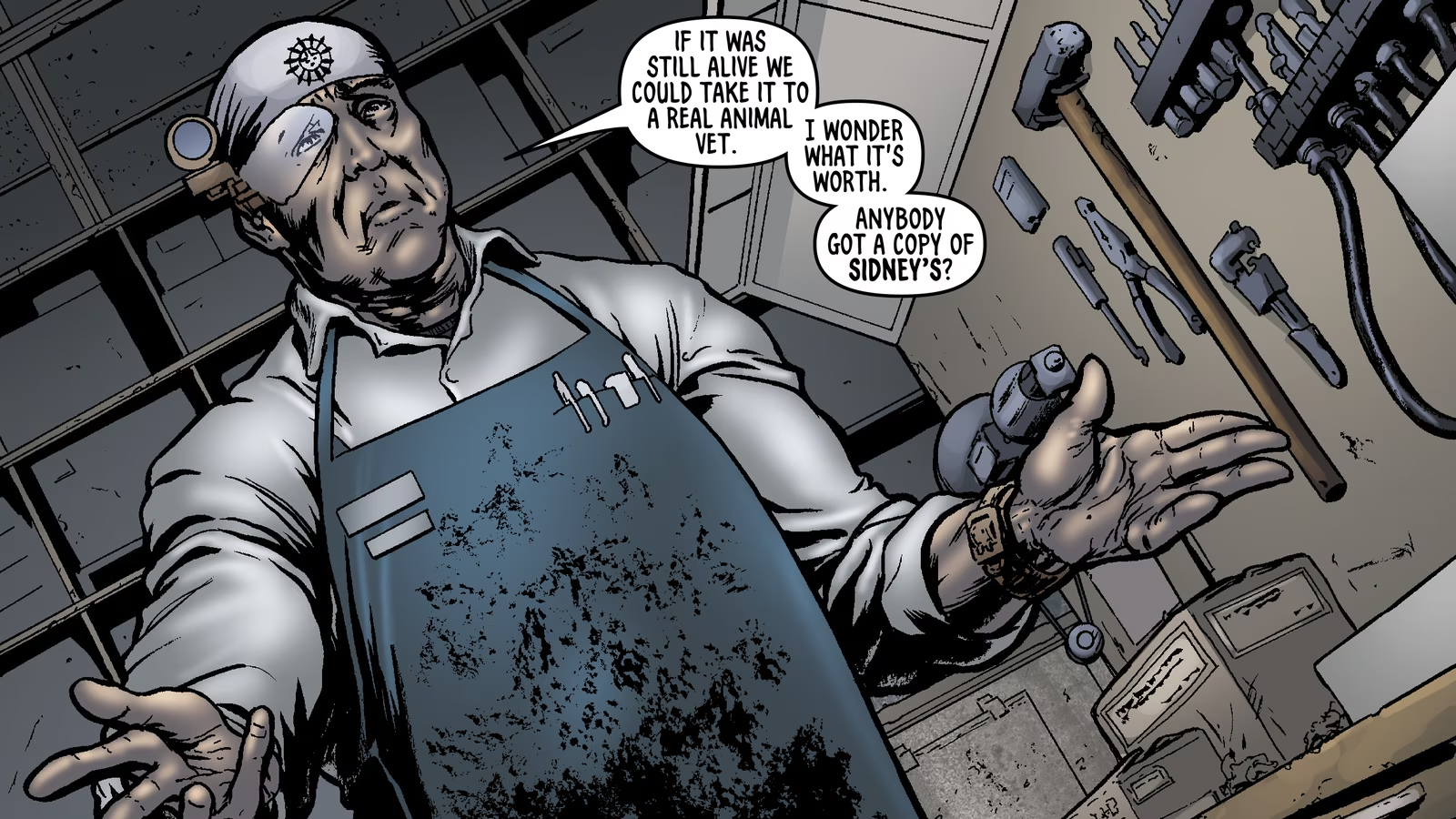
Isidore often thought of the more difficult jobs as work for Milt, including a cat that seemed to be burning out its circuits on the drive back to the hospital. Unlike his coworker, Milt was not distressed by the synthetic sufferings built into false animals. When the cat proved to have been a living creature named Horace, Milt still treated the loss as a practical problem. He asked whether anyone had a copy of Sidney's catalogue, wondered what the animal was worth, and noted that if it had still been alive they could have taken it to a real animal vet.
Horace's Death
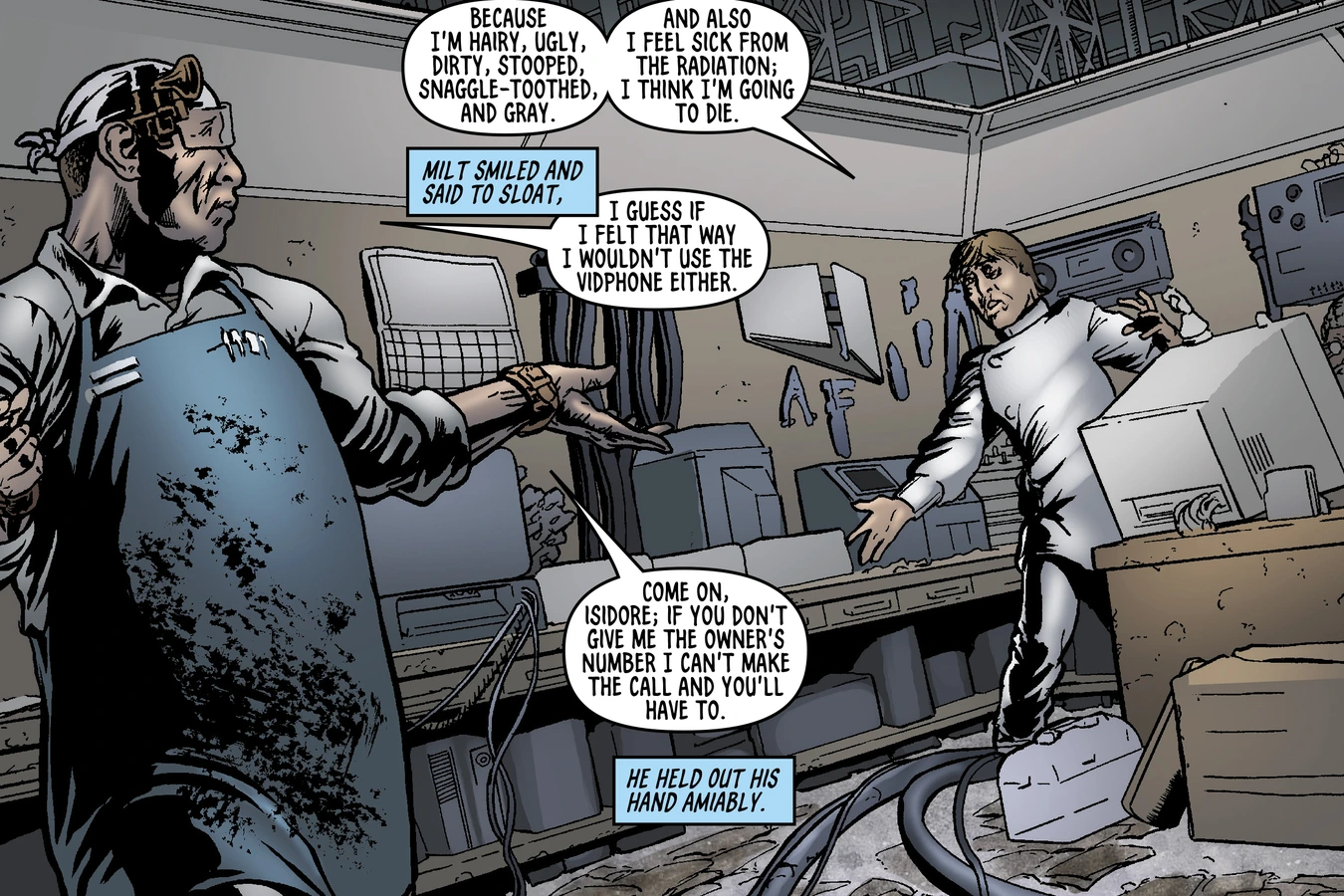
Isidore had been talking with Sloat about Buster Friendly and Mercerism when Milt appeared at the office door in his grimy blue sailcloth apron. Sloat had just discovered that the cat was real and already dead, and he cursed the waste of one more living creature. Milt entered, picked up the animal, and spoke up when Sloat blamed Isidore and used the term chickenhead in front of him for the first time. He said he did not think Isidore could tell the difference, because to him they were all alive, false animals included, and that Isidore had probably tried to save it.
When Sloat demanded that Isidore telephone the owner, Milt offered to make the call himself and held out his hand for the number. Sloat refused and threatened to fire Isidore if he did not do it. Milt smiled and said that if he felt as Isidore did, he would not use the vidphone either, then protested again when Sloat insisted. He also told Sloat that Isidore was right about the dust, which had left their employer nearly blind and would later damage his hearing. Sloat retorted that the dust had got to Milt as well, and that his skin was the colour of dog manure.
The Call To Mrs. Pilsen
Isidore reached Mrs. Pilsen on the vidphone and, once the conversation had started, found himself unable to stop, offering replacements and then an exact electric duplicate of Horace by Wheelright & Carpenter. Milt and Sloat stared at him as he rattled on, until Mrs. Pilsen protested that her husband must not hear that suggestion. Taking the receiver, Milt spoke in a professional tone that, of the three of them at the hospital, served him best in business calls. He offered a check in the amount of Sidney's list or a new cat, and expressed sorrow that Horace had died of pneumonitis, which was almost always fatal.
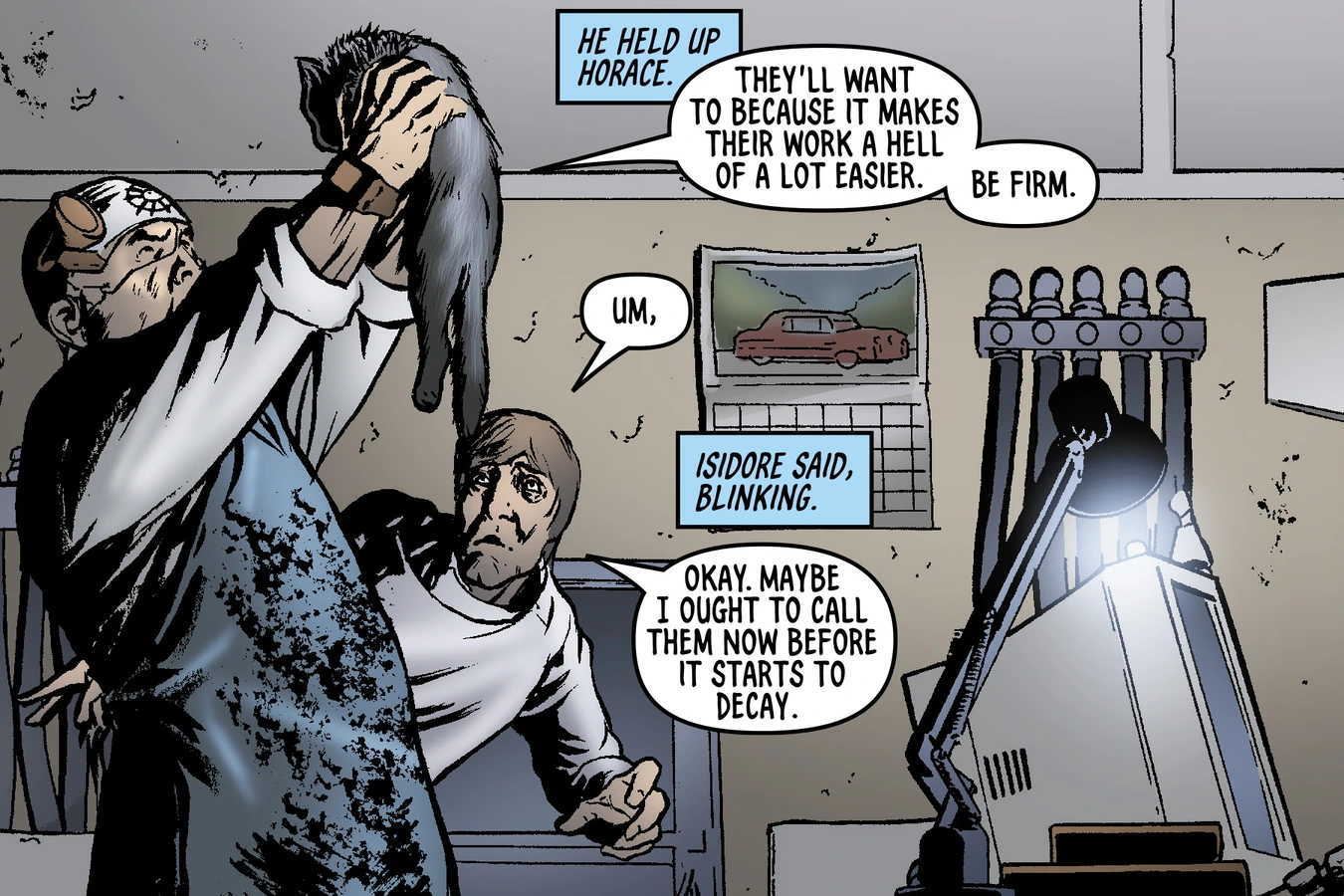
Mrs. Pilsen said she could not tell her husband, and Milt offered to telephone him at work. She then decided to commission the electric replacement in secret, hoping it would fool him. Milt warned her that the owner of an animal was never fooled, only casual observers such as neighbours, but he agreed to deliver a replica in ten days while the husband was at work. After hanging up he told Sloat the man would know in five seconds, but that was what she wanted. He picked up Horace, said he wanted to compare the replica himself, and told Isidore not to let Wheelright & Carpenter take the original.
Personality & Traits
Milt was the kinder of the two men at Van Ness Pet Hospital, and he repeatedly tried to take pressure off Isidore. He objected to Sloat's use of the chickenhead insult, offered to make the painful call himself, and later insisted that Isidore had been doing fine on the vidphone before he stepped in. The simulated pain of false animals did not distress him as it did Isidore, and he thought first of insurance and whether a real vet could have helped. When the Pilsens chose a secret replica, he agreed to do the work but did not pretend that the husband would be fooled.
Of the three staff at the hospital, he was the most assured on business calls, and he remained firm about shop practice when he told Isidore not to surrender Horace's body to the builders. After Pris Stratton, Roy Baty and Irmgard Baty sheltered in Isidore's building, Isidore wondered whether Milt, who was very inventive, could design a weapon against bounty hunters. He never asked Milt to do so, and the idea remained only a hope in Isidore's mind. The radiation dust that had marked Sloat had also affected Milt's pebble-coloured skin, yet he still argued with his employer and comforted a frightened coworker.
Behind The Scenes
Philip K. Dick introduced Milt in the 1968 novel as a minor figure whose one main scene still carries the book's concern with empathy. The Van Ness Pet Hospital subplot, including Milt, Sloat, Horace and the call to Mrs. Pilsen, has no counterpart in Ridley Scott's Blade Runner, which followed Rick Deckard's hunt and did not adapt the false-animal hospital. BOOM! Studios' 24-issue comic adaptation, published from 2009 to 2011, kept the novel's text and placed it around Tony Parker's art, so Milt's dialogue and the hospital episode appear in full.
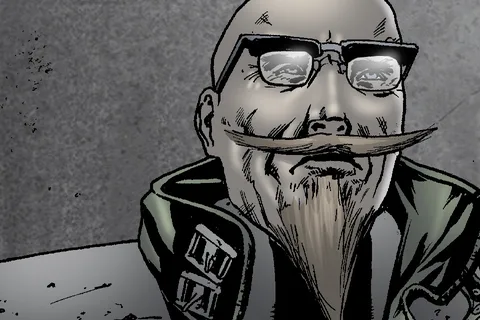
Parker's Milt matches the book's description: a burly, pebble-skinned repairman in a stained blue apron, here also given a work headlamp and a heavy wristwatch. The comic shows him appearing at the office door, arguing for Isidore, taking over the vidphone, and holding up Horace's body in the shop. Milt does not appear again after that day's work, and he is not a character in the later Blade Runner films. His brief role remains confined to the 1968 novel and to the BOOM! Studios adaptation of it.
Famous Quotes
- "To him they're all alive, false animals included."
- "Let the chickenhead off the hook, Han."
- "I guess if I felt that way I wouldn't use the vidphone either."
- "It's been our experience that the owner of the animal is never fooled. It's only casual observers such as neighbors."
- "He was doing fine. God, that was tough."
- "Just don't let them take the original."
Conclusion
Milt Borogrove appears in only a few scenes, but he is the colleague who treats Isidore as someone worth defending. He recognised that Horace's death was a real loss, tried to keep Sloat from taking it out on the driver, and then handled the call to Mrs. Pilsen with a professional calm the others lacked. His warning about the replica, and Isidore's later hope that he might invent a weapon against bounty hunters, both rest on the same quality: a practical mind that still made room for kindness. Tony Parker's shop scenes preserve that brief role, with the grimy apron and headlamp making the burly repairman easy to recognise.
Appearances
- Do Androids Dream of Electric Sheep? (1968)
- Do Androids Dream of Electric Sheep? (BOOM! Studios comic, 2009-2011)
Tag Categories: Blade Runner Lore | Blade Runner Characters