
Blade Runner weapons are mostly sidearms, because the franchise's detectives work up close in crowds, apartments and spinners rather than on battlefields. Rick Deckard's heavy blaster from Ridley Scott's Blade Runner is the most famous of them, and Blade Runner 2049 gave K a newer police model while bringing Deckard's original back. Free League's licensed Blade Runner: The Roleplaying Game later named both guns as Pfläger-Katsumata designs. This guide covers those blasters, Leon Kowalski's four-barreled pistol, the guns of Luv, Olwen and Ash, and the laser tubes and .38 magnum carried in Philip K. Dick's Do Androids Dream of Electric Sheep?.
Pfläger-Katsumata Series D 5223 Blaster
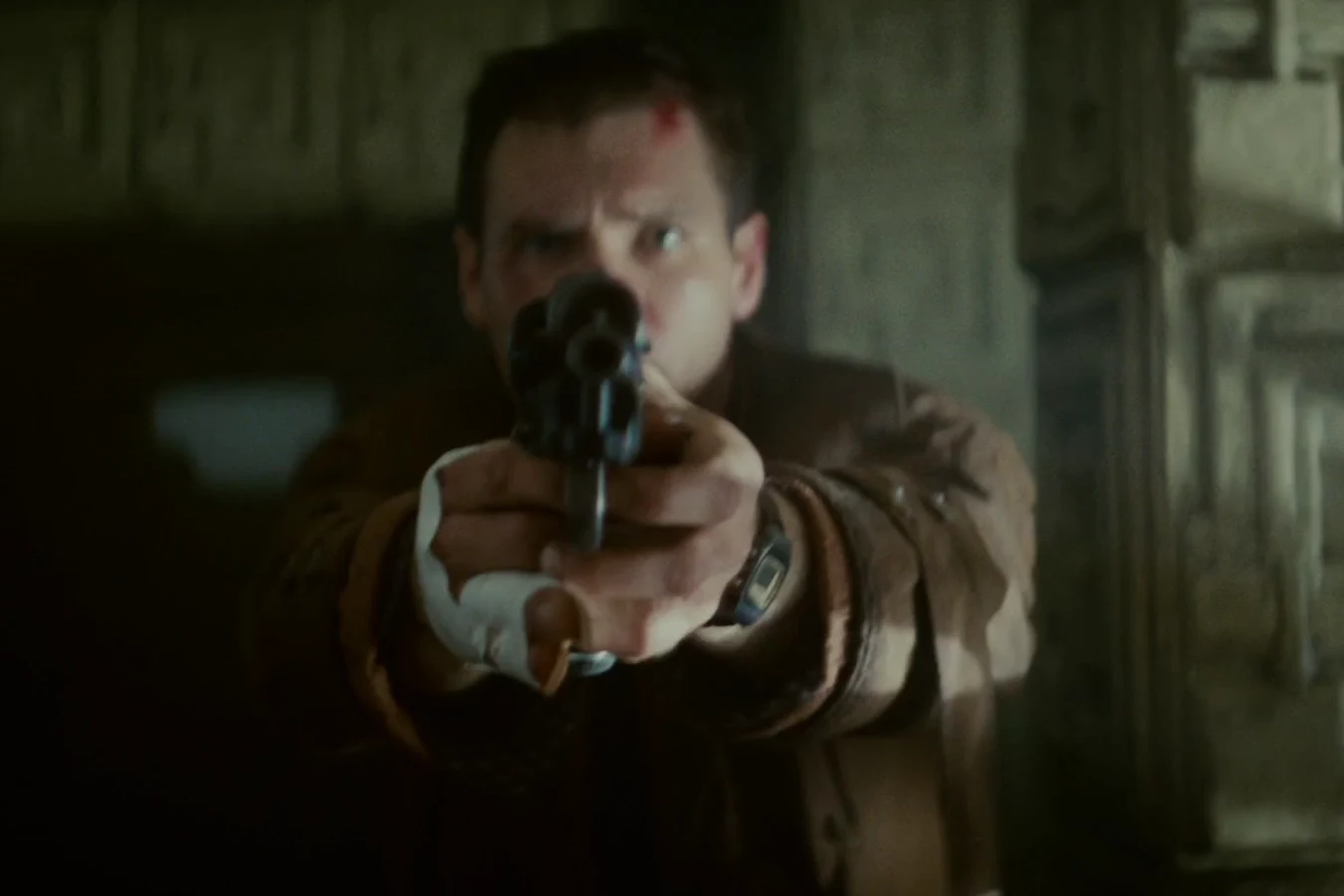
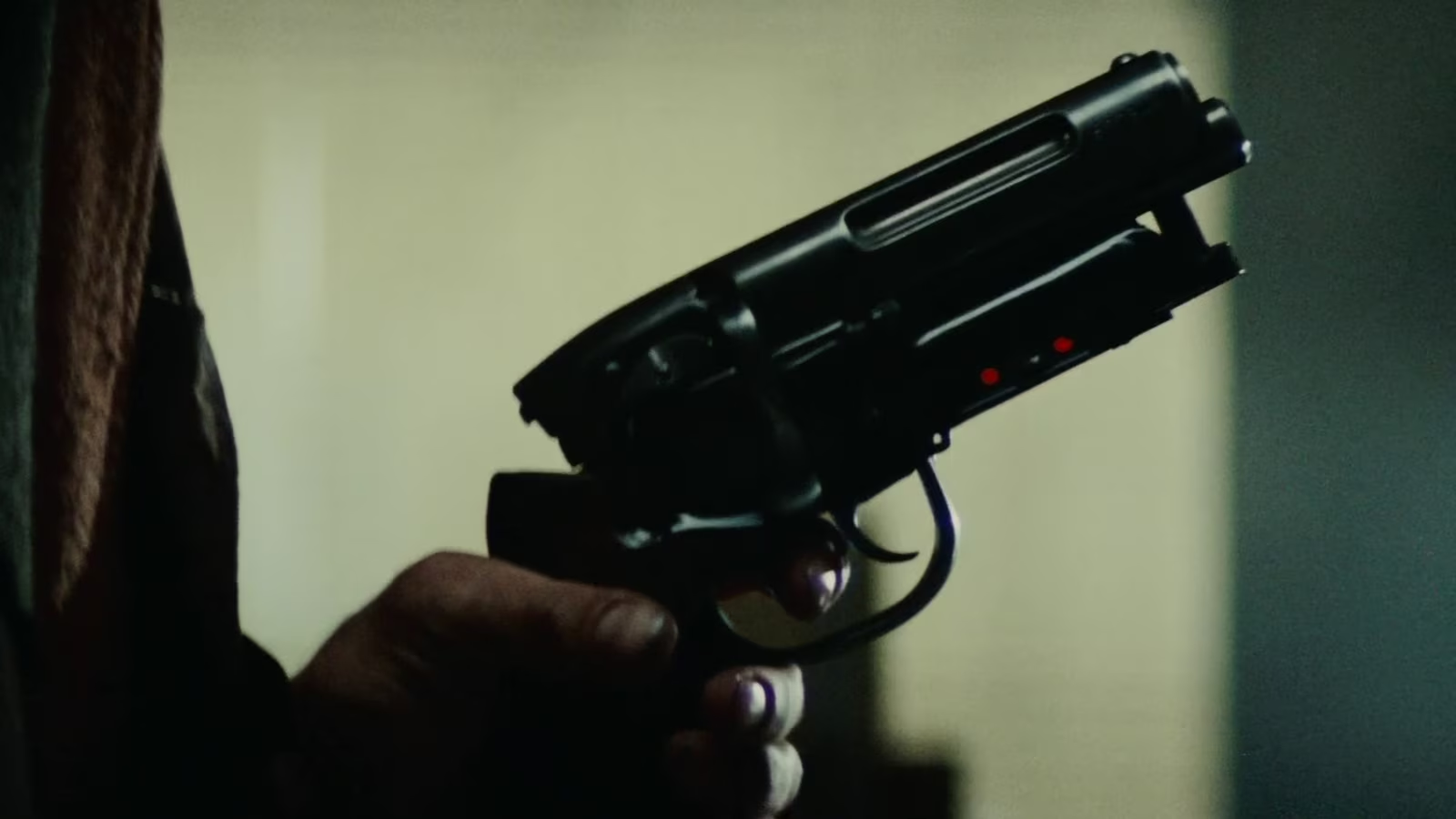
The Pfläger-Katsumata Series D 5223, nicknamed the Detective Special and shortened to PK-D, is the name Free League's roleplaying game gives the heavy blaster Deckard carried in 2019. The rulebook calls it the standard handgun of every blade runner and says only blade runners may carry it. Its cylinder holds five .44 Special caseless rounds, a separate bolt-action barrel fires a single .222 cartridge for long shots, and a switch on the right side primes a cartridge of non-lethal sonic rounds. A double-set trigger turns the back trigger into a hair trigger, and the muzzle gives off a distinct blast that warns crowds to take cover.
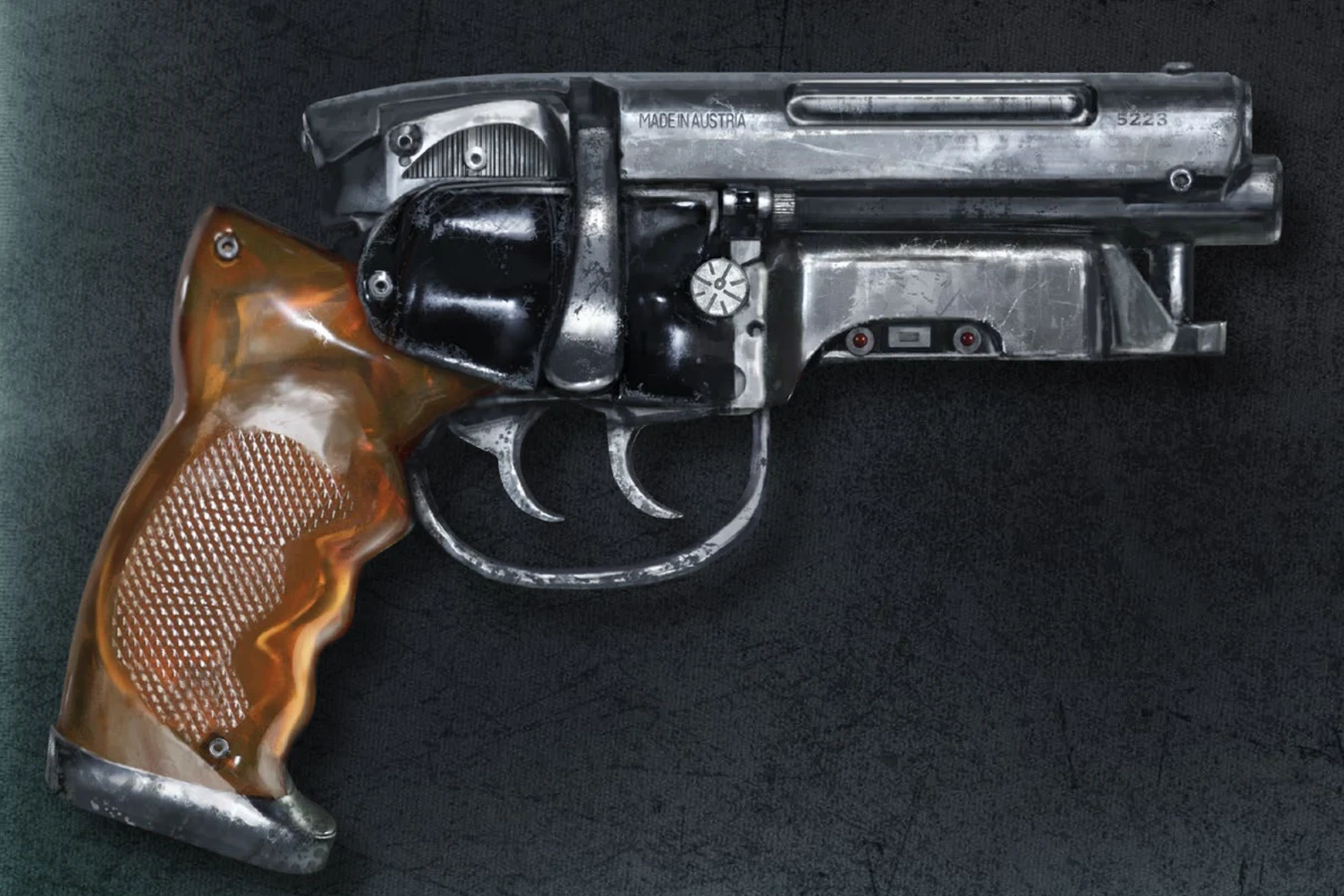
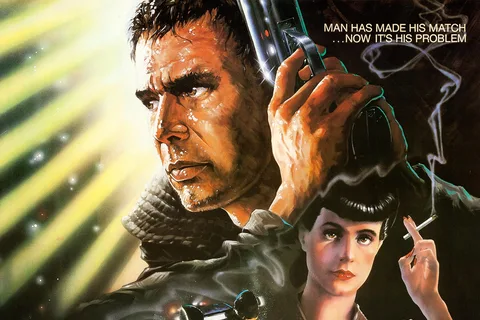
In the 1982 film, Deckard carried the blaster through his hunt for the Nexus-6 fugitives. He shot Zhora in the back, lost the gun when Leon knocked it from his hand, and watched Rachael pick it up and kill Leon to save him. He later used it on Pris and fired on Roy Batty during the final chase. Property master Terry Lewis built the prop from part of an Austrian-made Steyr Mannlicher rifle, according to Paul M. Sammon's Future Noir.
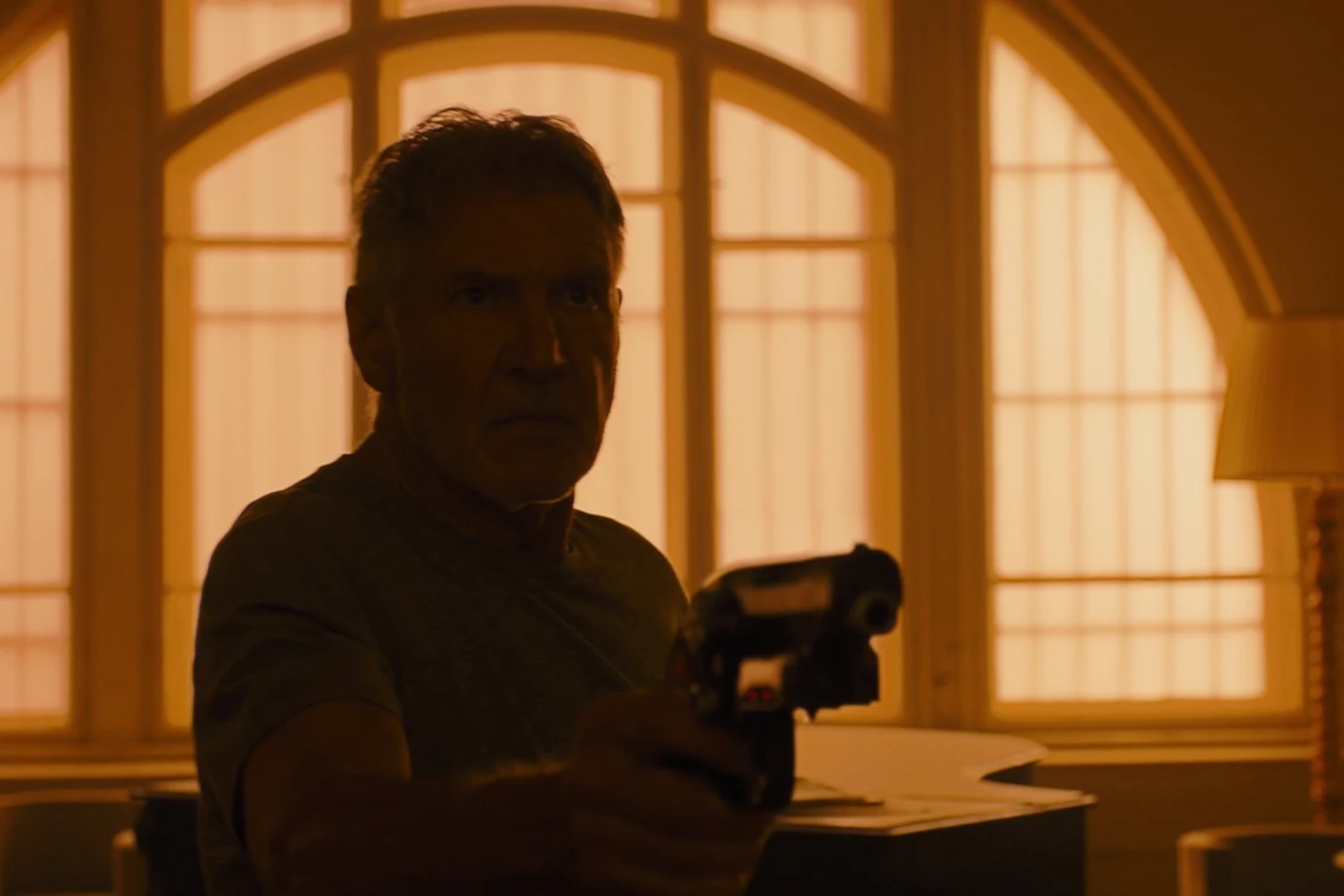
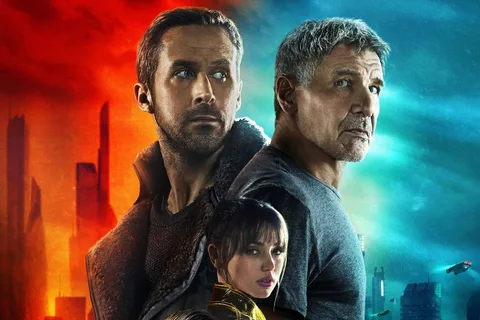
Thirty years later, Deckard still kept the blaster in his hideout among the abandoned casinos of Las Vegas, and he held K at gunpoint across a sunlit lounge before the two men fought through the empty showroom. Bringing the gun back meant rebuilding it. According to The Art and Soul of Blade Runner 2049 by Tanya Lapointe, published by Titan Books in 2017, the original 1982 prop had been sold to a collector in Los Angeles. Prop master Doug Harlocker contacted the owner and analyzed every detail so his team could make a perfect copy.
Harlocker was surprised to find that the handle was transparent, since it always looked dark in Deckard's hand, and he noticed a small switch on the side. The book describes the gun as two weapons in one, a cosmetic Steyr rifle receiver mounted over a Charter Arms Bulldog snub-nose revolver that actually fired. His department made four replicas for the sequel, three with real weapons inside and a lighter rubber version for action scenes. In the game's 2037 setting, some blade runners still prefer the classic 5223 to the newer FKM890.
Pfläger-Katsumata Series D FKM890 Blaster
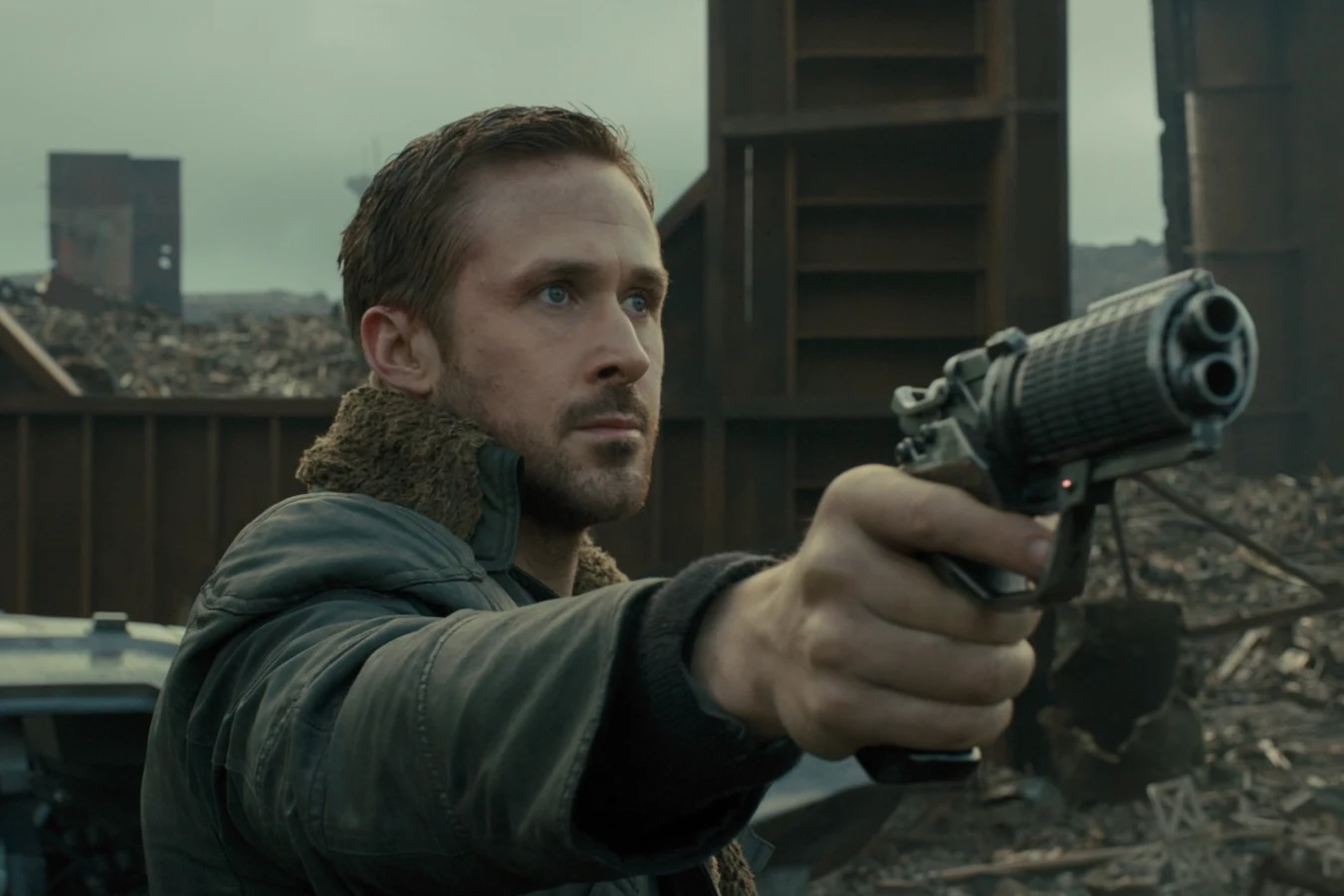
The roleplaying game names the newer police sidearm the Pfläger-Katsumata Series D FKM890, the latest PK-D, designed with the Replicant Detection Unit's new mandate on non-lethal arrests in mind. Its internal rechargeable battery primes up to 16 caseless sonic discharges, although firing too often overheats it and slows charging. A two-stage trigger fires a non-lethal sonic charge on a light pull and both barrels at once on a heavier pull, with stopping force the book compares to a 9mm round. It is a hammerless revolver that fires one charge per pull without needing to be cocked, and a fingerguard LED glows dull red when the sonic rounds are primed.
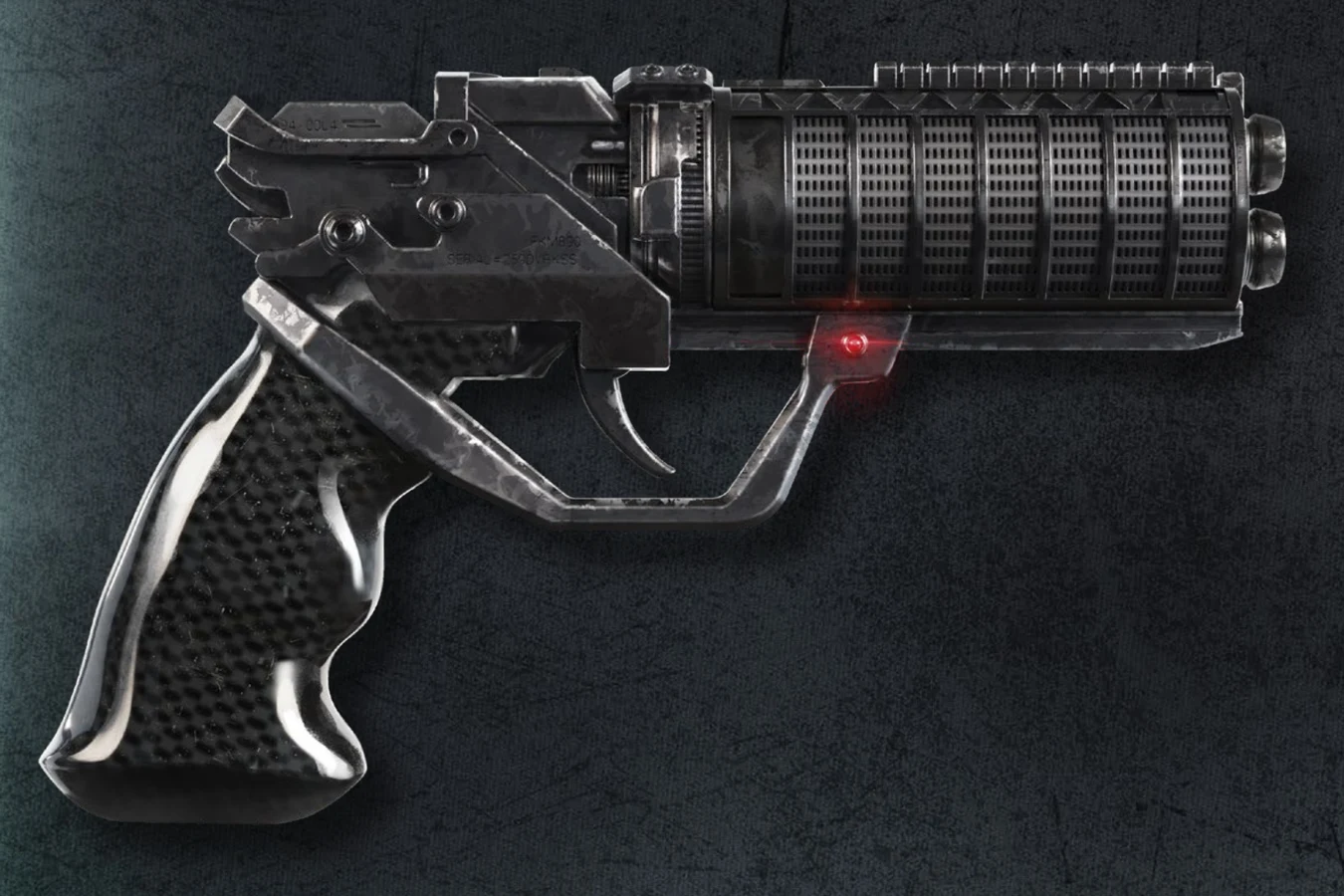
In the film, K carried the blaster on every assignment. He shot Sapper Morton dead at the protein farm after the older replicant attacked him a second time, and the department logged it as a retirement. When his spinner was brought down over the San Diego trash mesa, he stepped out among the scavengers with the gun raised one-handed until Luv's drone strike scattered them. Its twin barrels and boxy frame made it look like a direct descendant of Deckard's weapon.
Doug Harlocker and his team custom designed K's blade runner gear for the film, including his badge, his police LED ID, his blaster and his mini-reader, according to The Art and Soul of Blade Runner 2049. "K's gun is a new generation blaster," Harlocker told the book. "It went through a number of incarnations as well as ergonomic studies." That description is the closest the filmmakers came to naming the weapon, and its in-universe name arrived later with the Free League rulebook. The same department rebuilt Deckard's original for the film, so both generations of police blaster seen in 2049 came from one prop team.
Leon's Four-Barreled Pistol
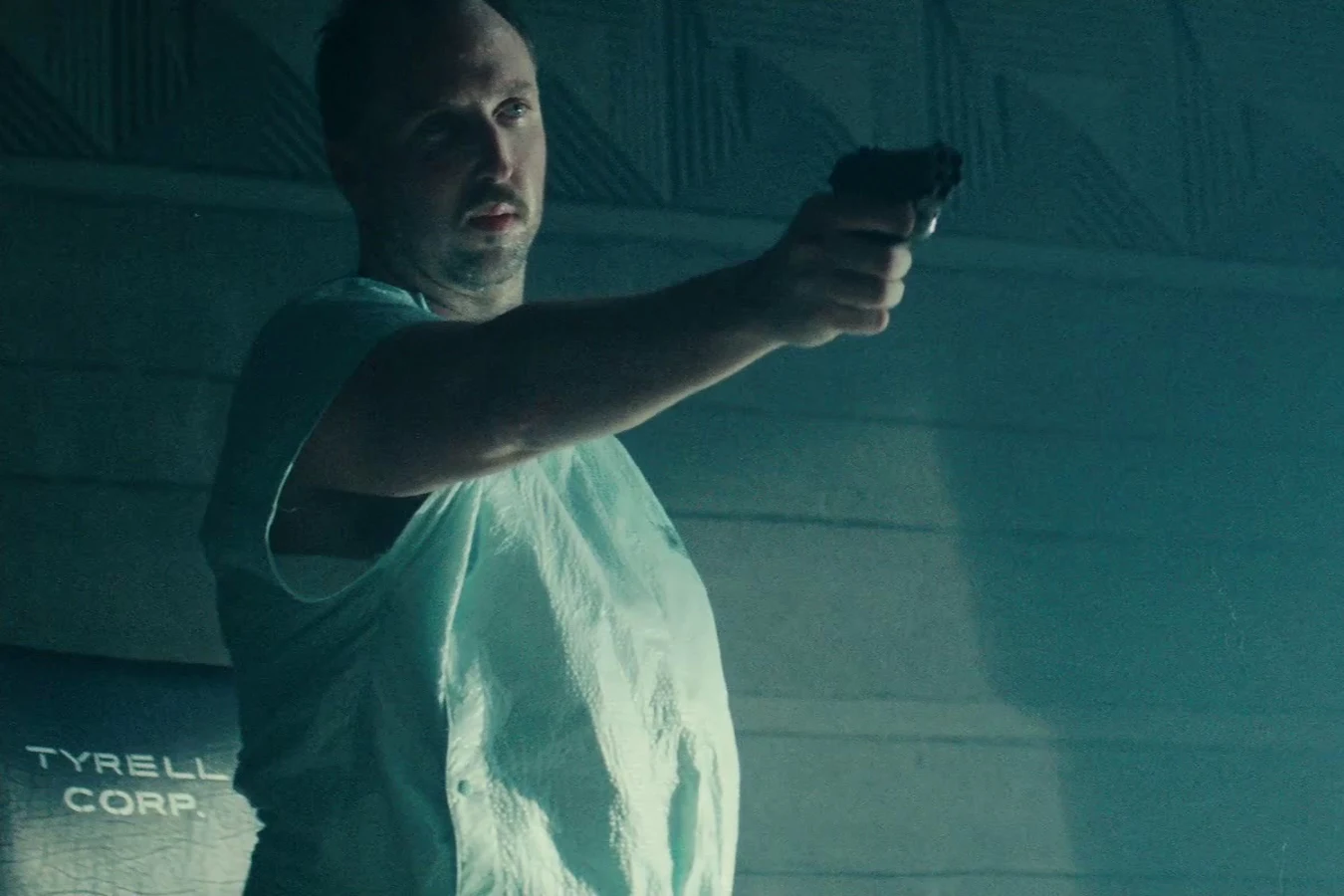
Leon's gun has no in-universe name in the film or its official books. Leon carried it hidden during his Voight-Kampff test at the Tyrell Corporation and fired it through the table into Dave Holden, then stood and fired a second shot that blew the blade runner through the office wall. Actor Brion James told Future Noir author Paul M. Sammon that the gun was a real weapon made in Compton, California, that only looked space-age. It had four barrels, so it could fire four shots one right after the other.
Special effects man Terry Frazee said the huge blue-white flash came from enormous flashbulbs the government used to photograph missiles, so the audience would believe the gun could blow a man through a wall. Stunt coordinator Gary Combs doubled for Holden on a cable rig that yanked his chair through a pre-scored wall, and the acid on his coat that faked a smoking exit wound blistered his skin. The roleplaying game's most common backup gun, a tiny four-barreled .357 Subcompact that fires two barrels at once, follows the same idea.
Luv's Pistol
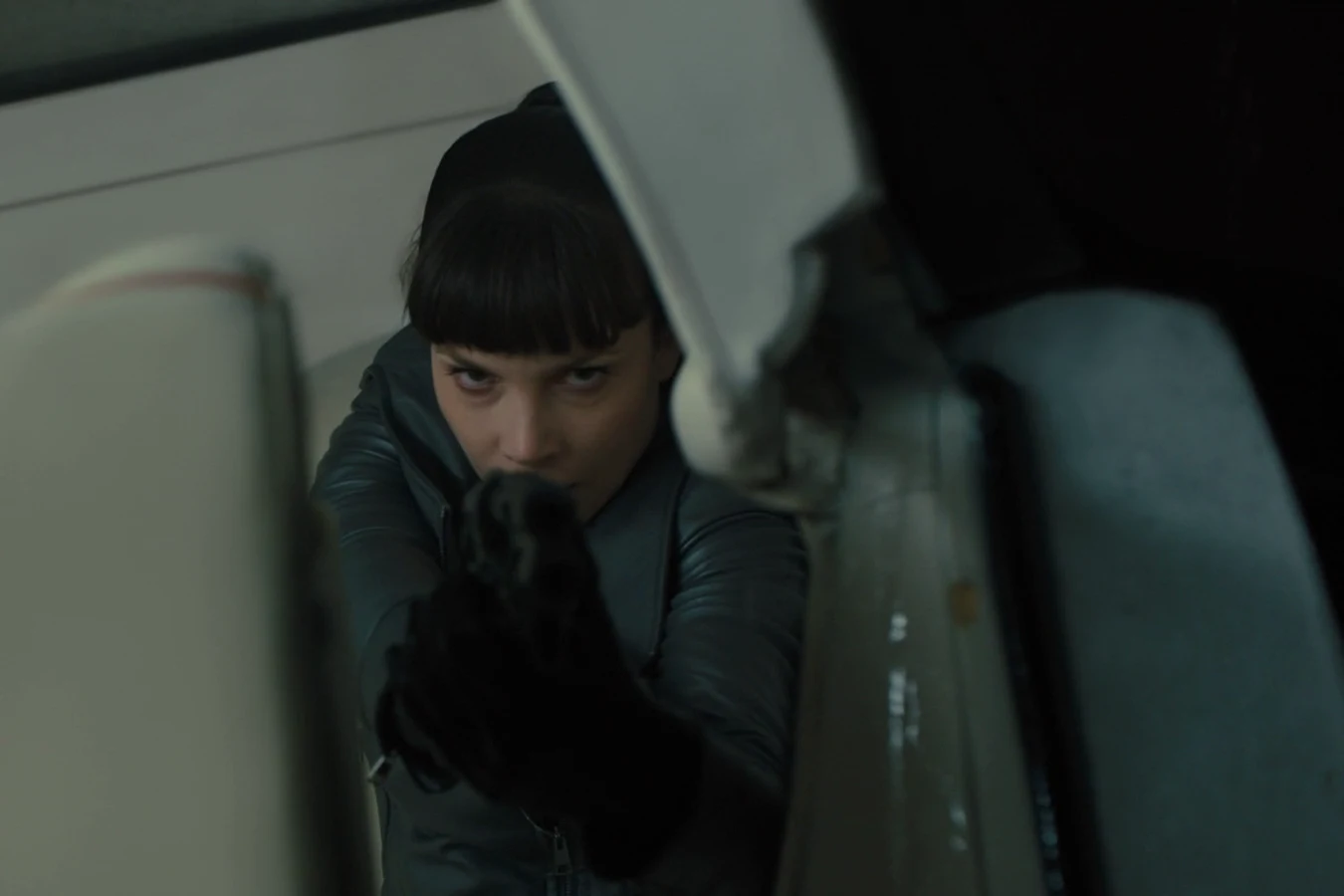
Luv carried a compact pistol as Niander Wallace's enforcer, and the moment it mattered most came in Wallace's office. Wallace offered the captured Deckard a new copy of Rachael in exchange for information about her child, and when Deckard refused, Luv raised the pistol and shot the copy dead. Wallace then had Deckard sent off-world for questioning, with Luv in charge of the transport, while the Wallace Corporation cleared away the body.
At the seawall climax, after her spinner crashed into the surf, Luv aimed the pistol at K from inside the wreck before the two fought hand to hand in the rising water. The Art and Soul of Blade Runner 2049 shows the pistol beside her curved chrome knife and collar as unique props designed for Luv, describing them as "stylish, pristine, precise, and deadly." Neither the film nor the book gives the gun a name.
Titan's Blade Runner 2039 comics showed Luv a decade earlier as Wallace's replicant blade runner with the police. She held Cleo Selwyn at gunpoint until Ash pointed out that killing a human would destroy the credibility of Wallace's experiment. Junggeun Yoon's cover A for the first issue shows her glowing behind Ash with a pistol in hand. Her partner Rash did most of the shooting in that series, killing Hythe and shooting Mack. The comics never name Luv's gun or describe how it works.
Ash's Blaster In The Titan Comics
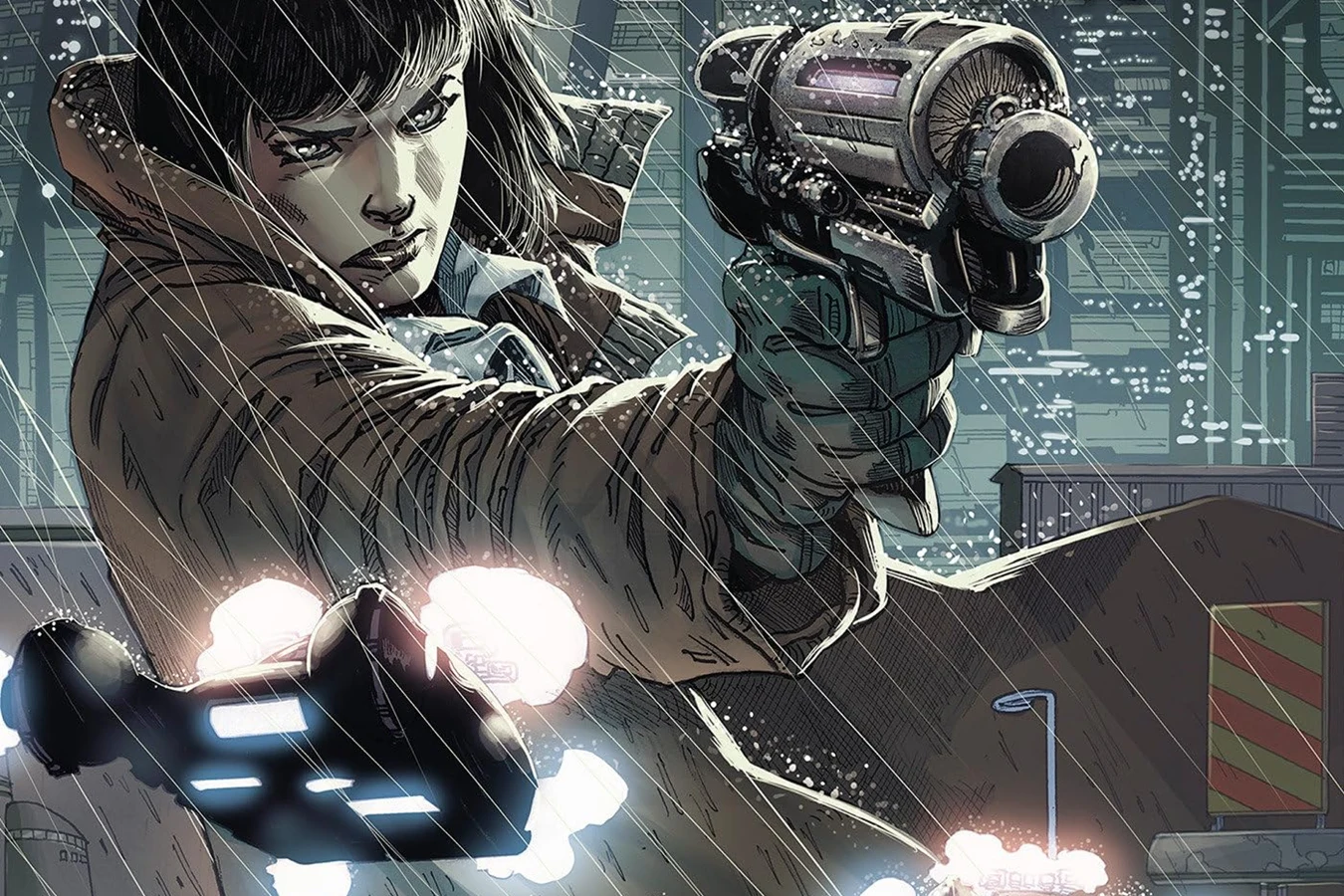
Aahna "Ash" Ashina carried a heavy blaster through Titan's Blade Runner 2019 and Blade Runner 2029 comics, but the books never name its maker or model. Cover art for the first issue shows it as a chunky handgun with a finned cylindrical barrel housing and a glowing window along the top, much bulkier than the PK-D. Her entrance interview in 2013 became her first case when she realized the official questioning her was a replicant and drew the blaster across the desk. In 2018 she shot the Nexus-6 Mack off a rooftop with it.
The blaster was not her only gun. In 2017 she waited for Yotun with a shotgun at the shop of a broker who had sold him out, but he overpowered her and let her live, as Blade Runner 2029 #1 showed. In Blade Runner 2019, the replicant Bellingham knocked her blaster away and threw a knife, and Ash recovered the gun and shot him before he fell through a window. Mack survived his fall and later held a shotgun on her as a farmer in Blade Runner 2039.
Ray McCoy's Blaster In The 1997 Game
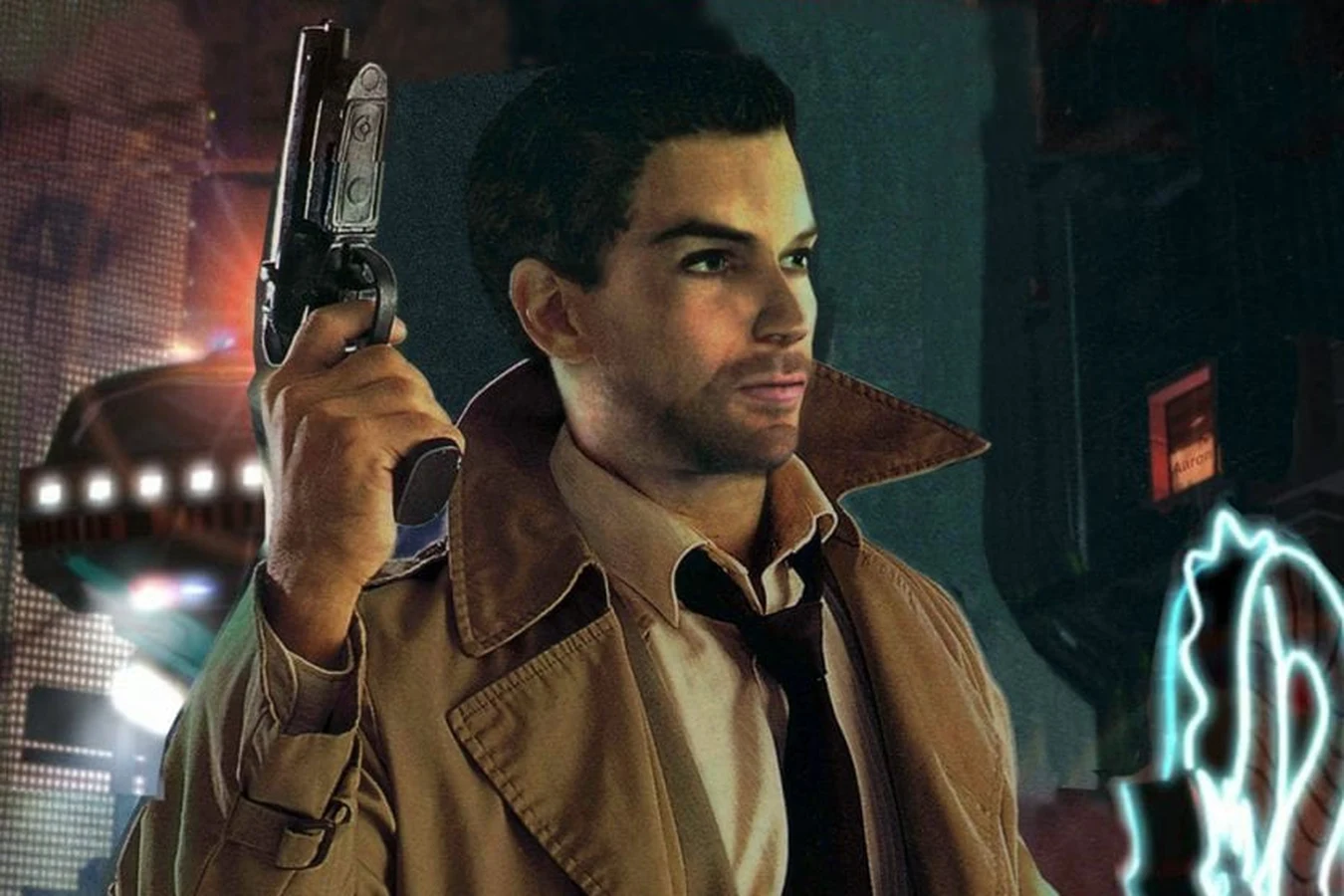
Westwood Studios' 1997 point-and-click adventure Blade Runner, published by Virgin Interactive, put rookie blade runner Ray McCoy on the streets of 2019 Los Angeles in a story that ran parallel to the film. His standard-issue police pistol was the only weapon in the game, and the game never gave it a name, maker or model, with the manual simply calling it McCoy's gun. On the box art it matched the design of Deckard's blaster. Combat was rarely compulsory, so many of his cases could be closed without firing a shot.
The only hint of a calibre came from Bullet Bob, who ran Runner Surplus on Animoid Row and called it McCoy's .45 blaster. No other source gives this style of blaster a calibre, and the 1982 prop was built around a .44 Charter Arms Bulldog, so the .45 is the game's own detail. Different ammunition types were loaded through McCoy's KIA, his Knowledge Integration Assistant. Deadlier rounds hit harder and steadied the bouncing crosshair but came in limited numbers, and in Act 2 Bob sold 24 medium-rate bullets for the handgun.
Olwen's Pistol In Blade Runner 2099
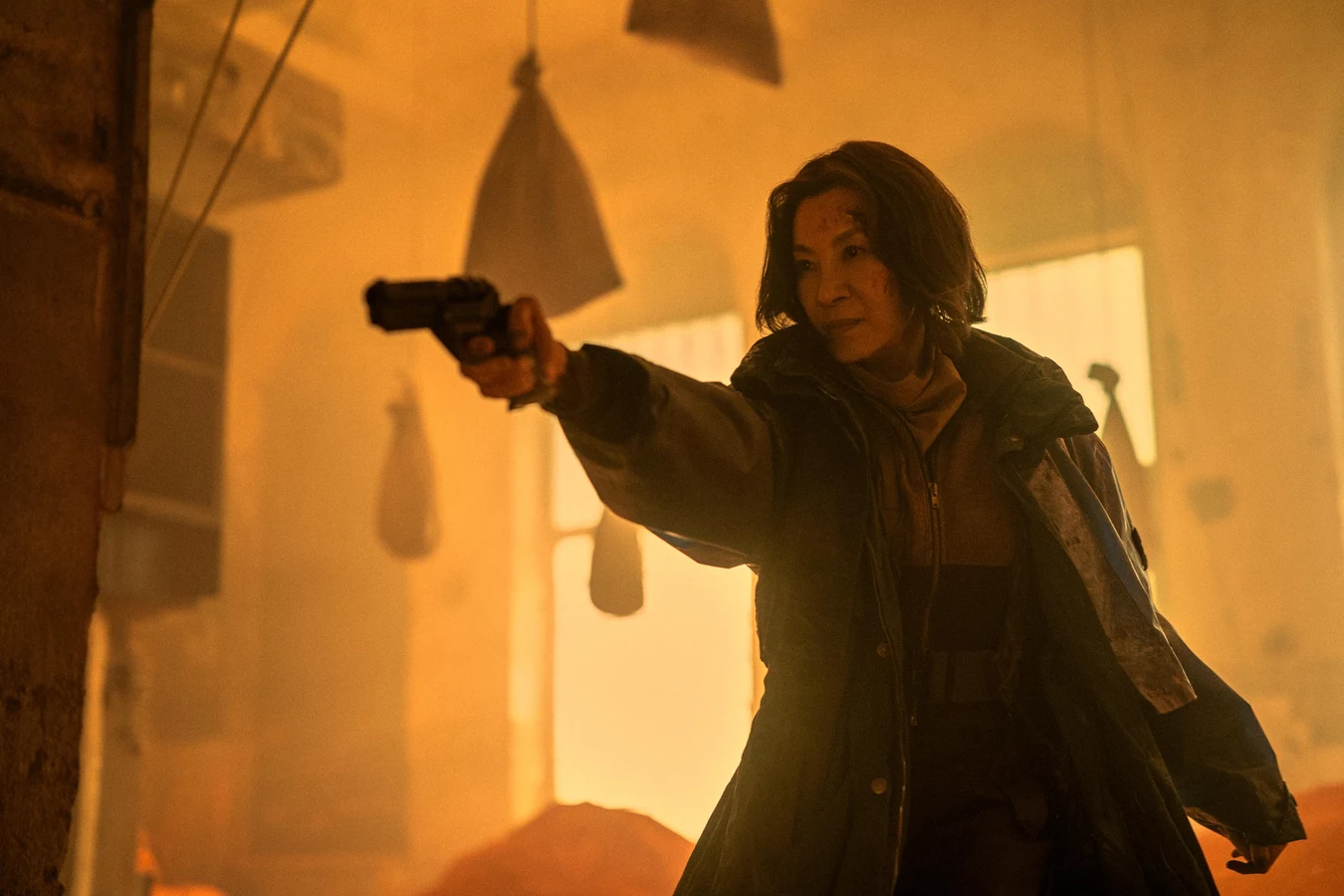
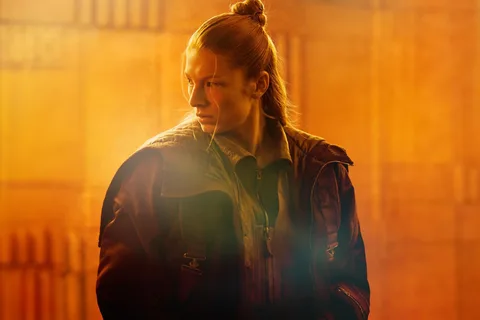
Olwen, the dying replicant blade runner Michelle Yeoh plays in Blade Runner 2099, is shown in a released still aiming a compact dark pistol one-handed through an amber haze. The trailers show her working a case of missing replicants with Cora, but Prime Video has not named her gun or said whether it belongs to the Pfläger-Katsumata line. All eight episodes premiere on 25 November 2026, so the weapon's maker, model and use on screen are still unknown. In the still, the pistol is far smaller than Deckard's blaster and closer in size to Luv's sidearm.
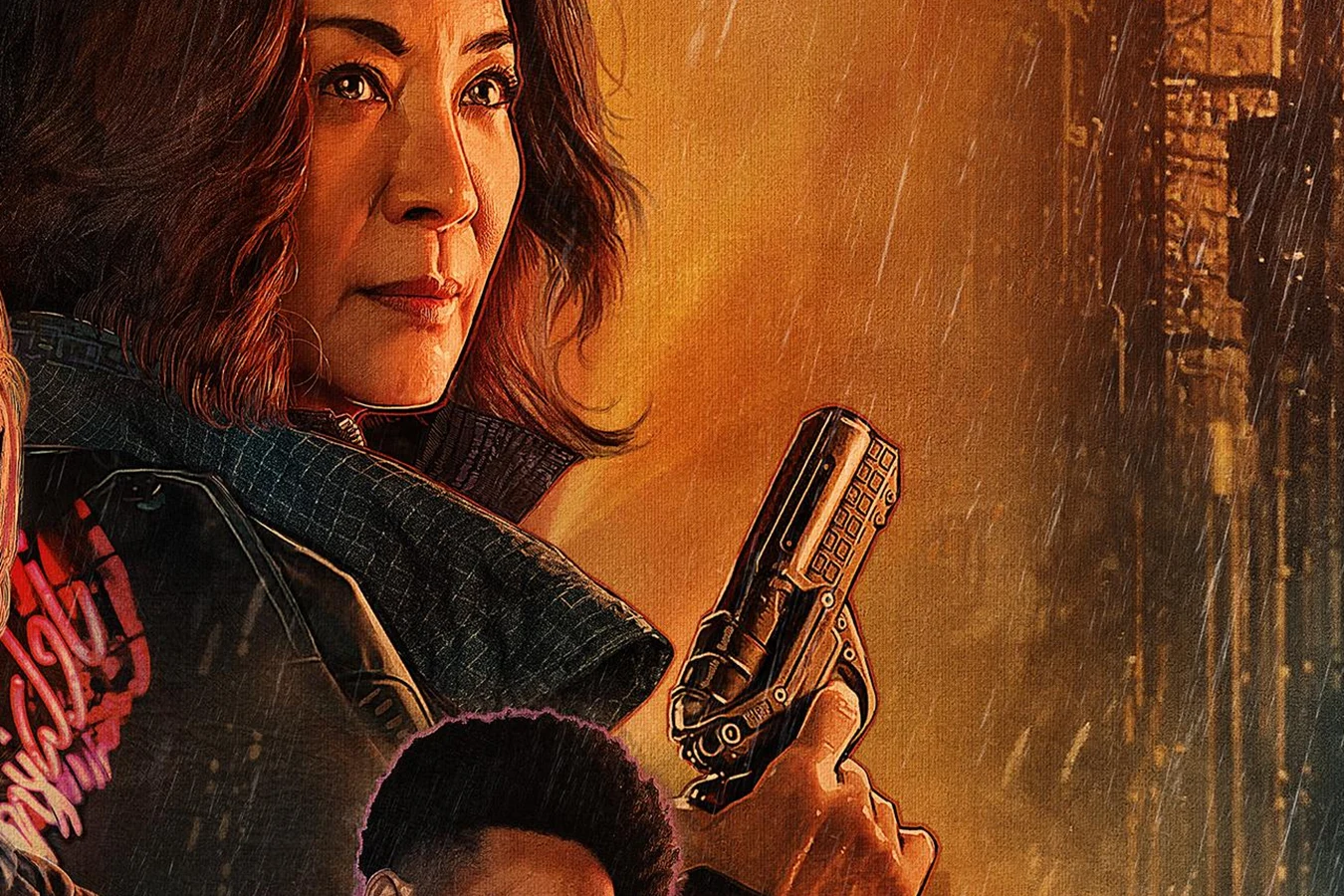
Prime Video released the official key art for Blade Runner 2099 on 26 October 2026, a month before the 25 November premiere. On the poster, Olwen holds her pistol aloft, echoing Deckard's pose on the original 1982 Blade Runner poster, and outlets such as Bloody Disgusting called the art a tribute. The painted pistol is compact and boxy, with a short flat slide and a grid of square recesses along its side. It is clearly shorter than Deckard's long blaster and looks nothing like K's ribbed dual-muzzle FKM890. As painted art, the poster does not identify a prop, and the gun still has no known name or maker.
Laser Tubes In The Novel
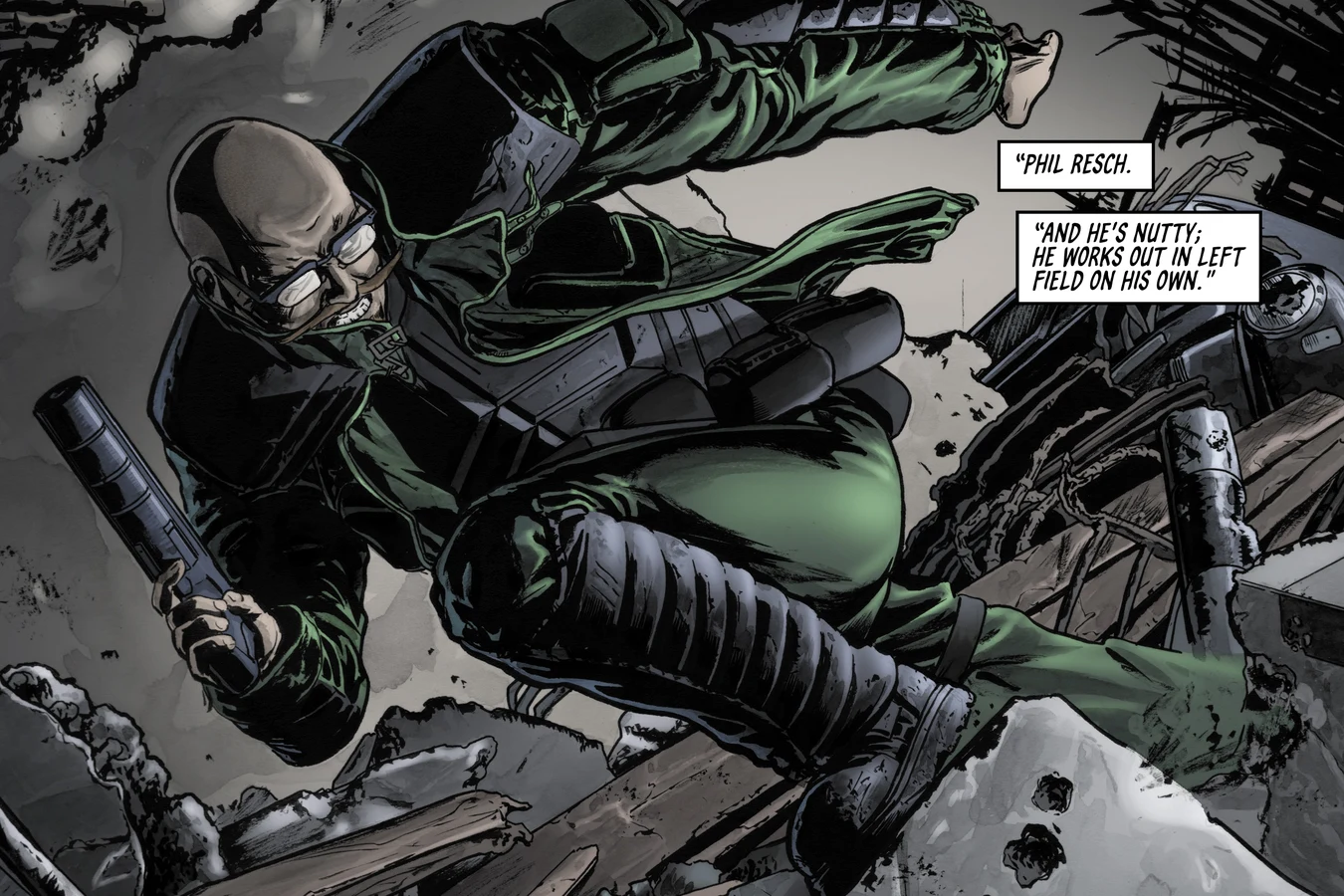
In Philip K. Dick's 1968 novel, the bounty hunter's main weapon was the laser tube, which the book also calls a laser beam or a laser gun. Rick Deckard patted his before going after Polokov, and Rachael Rosen reminded him that he was carrying one when she offered him an owl. Androids were not permitted to carry lasers, and Rachael told him the tube in her purse was a fake. The fugitives carried them anyway, and the android posing as Soviet policeman Sandor Kadalyi had a Martian-made tube whose triggering circuit he held separately in his palm.
That separate unit let him fire and aim the tube even while someone else held it, but when he tried it in Rick's car, nothing happened, because a sine wave in the police hovercar phased out laser emanation and spread the beam into ordinary light. At the Mission Street station, bounty hunter Phil Resch fired his laser tube as he rolled to the floor and split the head of Inspector Garland, whose own miniaturized laser rolled across the desk. Resch later lasered Luba Luft in the museum elevator, and Rick finished her with his own tube.
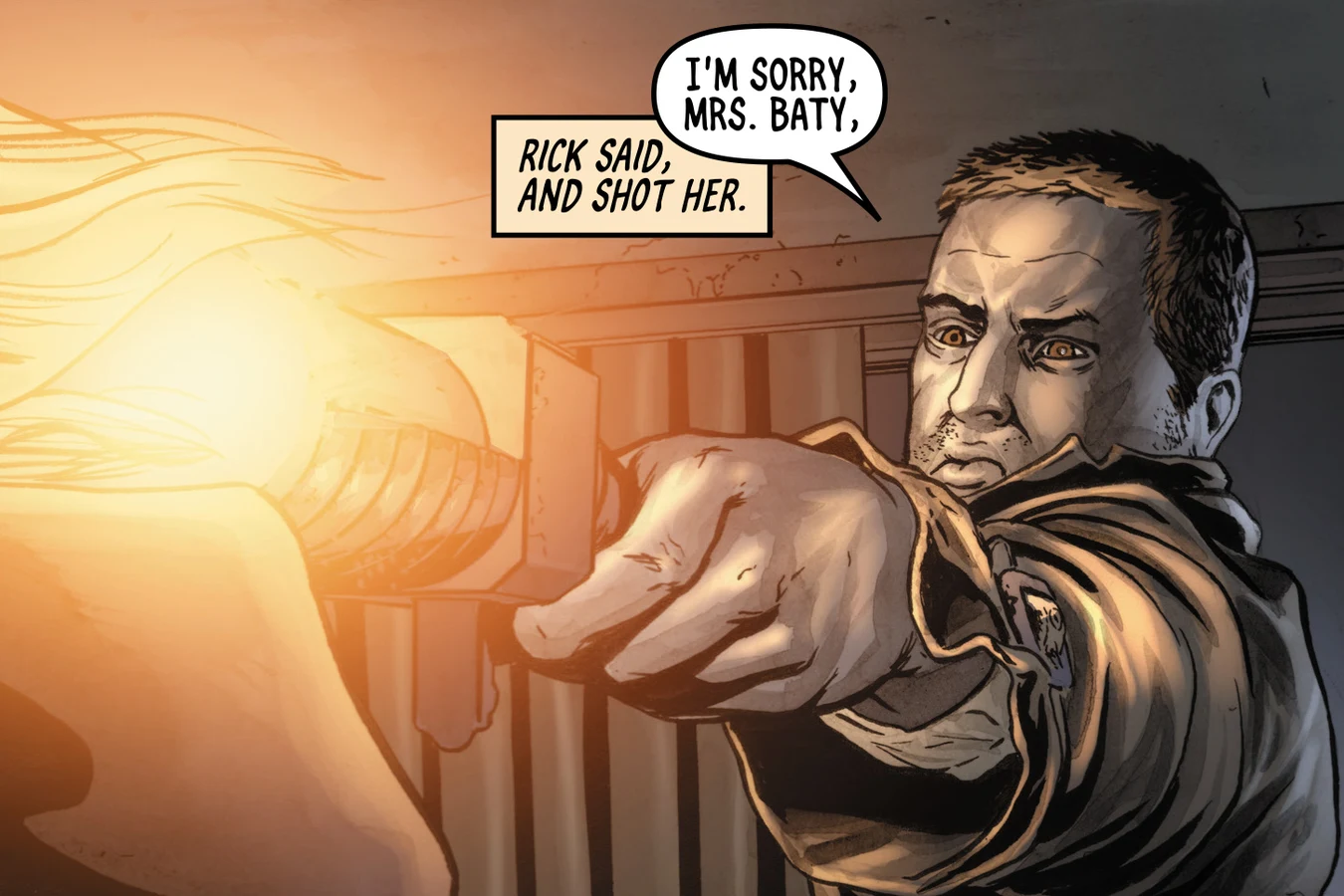
Rick's last hunt ran on lasers too. In the building where John Isidore lived, an android with Rachael's face came up the stairs at him carrying a laser tube, and he fired as she ran at him, sending her tube bouncing down the steps. That android was Pris Stratton. Roy Baty then fired at Rick twice from the apartment door, missed, and slipped his tube to Irmgard Baty so she could take Rick from behind, but he retired them both.
.38 Magnum Service Pistol
Rick's backup was what the novel calls his regulation issue old-style pistol, carried in a shoulder holster and loaded with .38 magnum rounds. When Polokov dropped his useless laser and grabbed him by the throat, Rick fired from the holster without drawing, and the slug burst the android's brain box. Rick then called in a message for Harry Bryant that he had got Polokov. Later that day, after Luba Luft called the police on him, Officer Crams frisked Rick, took his service pistol and laser tube, and sniffed the muzzle before declaring that it had been fired recently.
Deckard's Semi-Automatic In The BOOM Comic
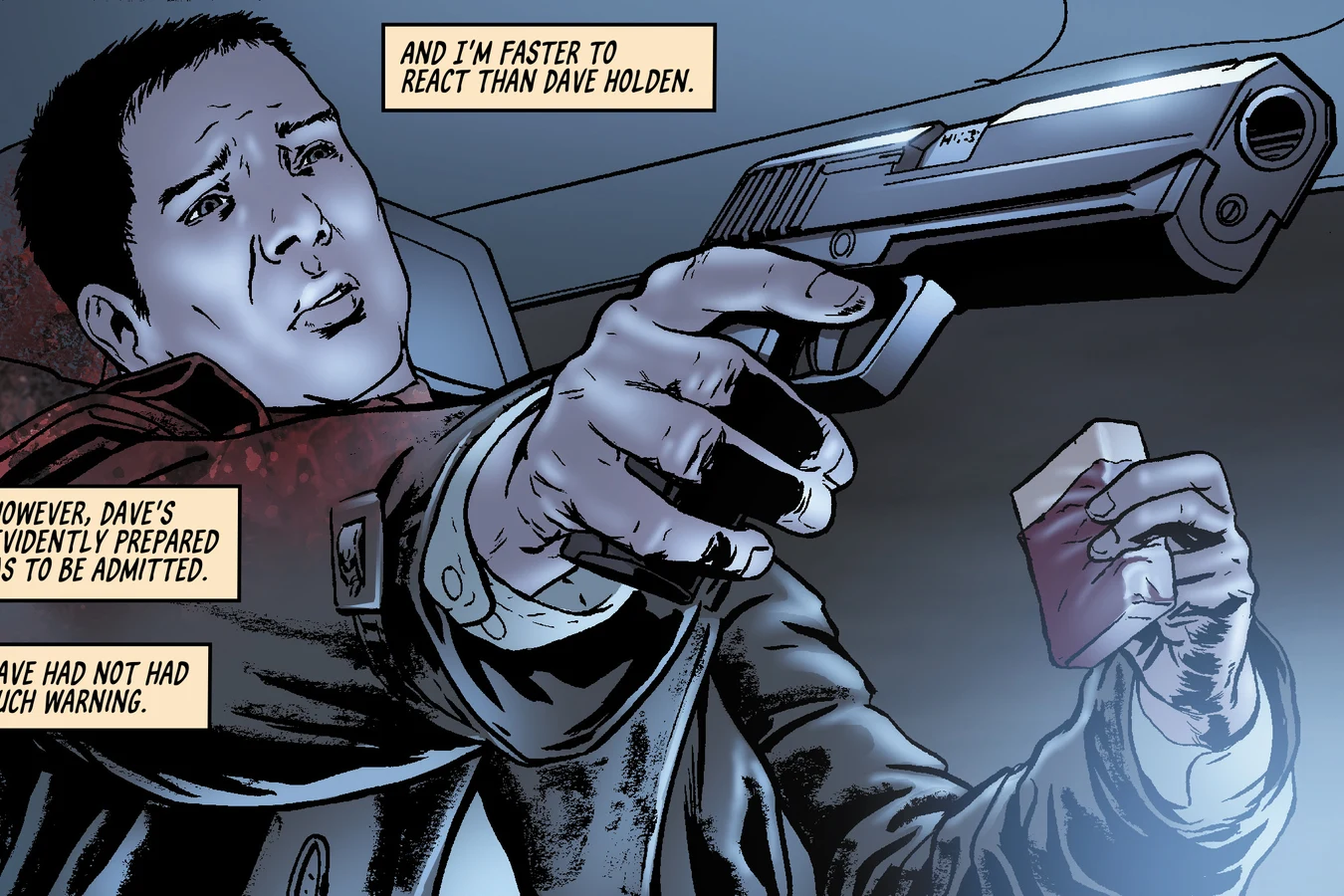
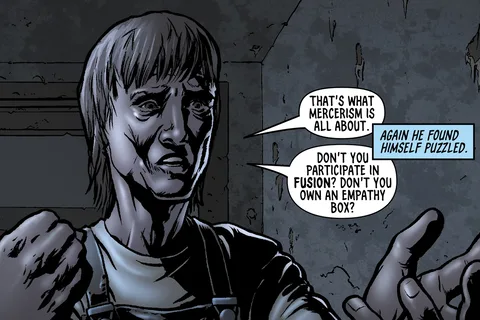
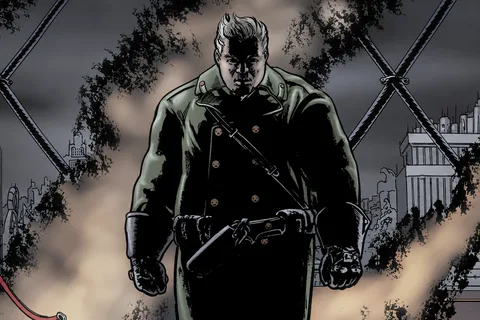
BOOM! Studios' comic adaptation used the full text of the novel, so its narration still calls Rick's sidearm a regulation issue old-style pistol and describes a .38 magnum slug. The art shows something else, a flat-sided semi-automatic pistol with a slide and a squared trigger guard rather than a revolver with a cylinder. After the shooting, Rick leaned back in his bloodied hovercar with the pistol raised, thinking that he was faster to react than Dave Holden and that Dave's experience had prepared him. The comic never names the gun's maker or model.
Other Firearms In The Roleplaying Game
Free League's 2022 rulebook, set in 2037, fills out the LAPD armory around the two PK-D blasters. Its chapter on the tools of the trade calls the PK-D the ever-present standard but notes that blade runners often carry more than one gun. Some prefer shotguns, and Special Ops teams bring long-range rifles and, given a decent excuse, military-grade assault rifles. The book gives every weapon its own damage, range and availability, and these are the guns and explosives it lists beside the PK-D models.
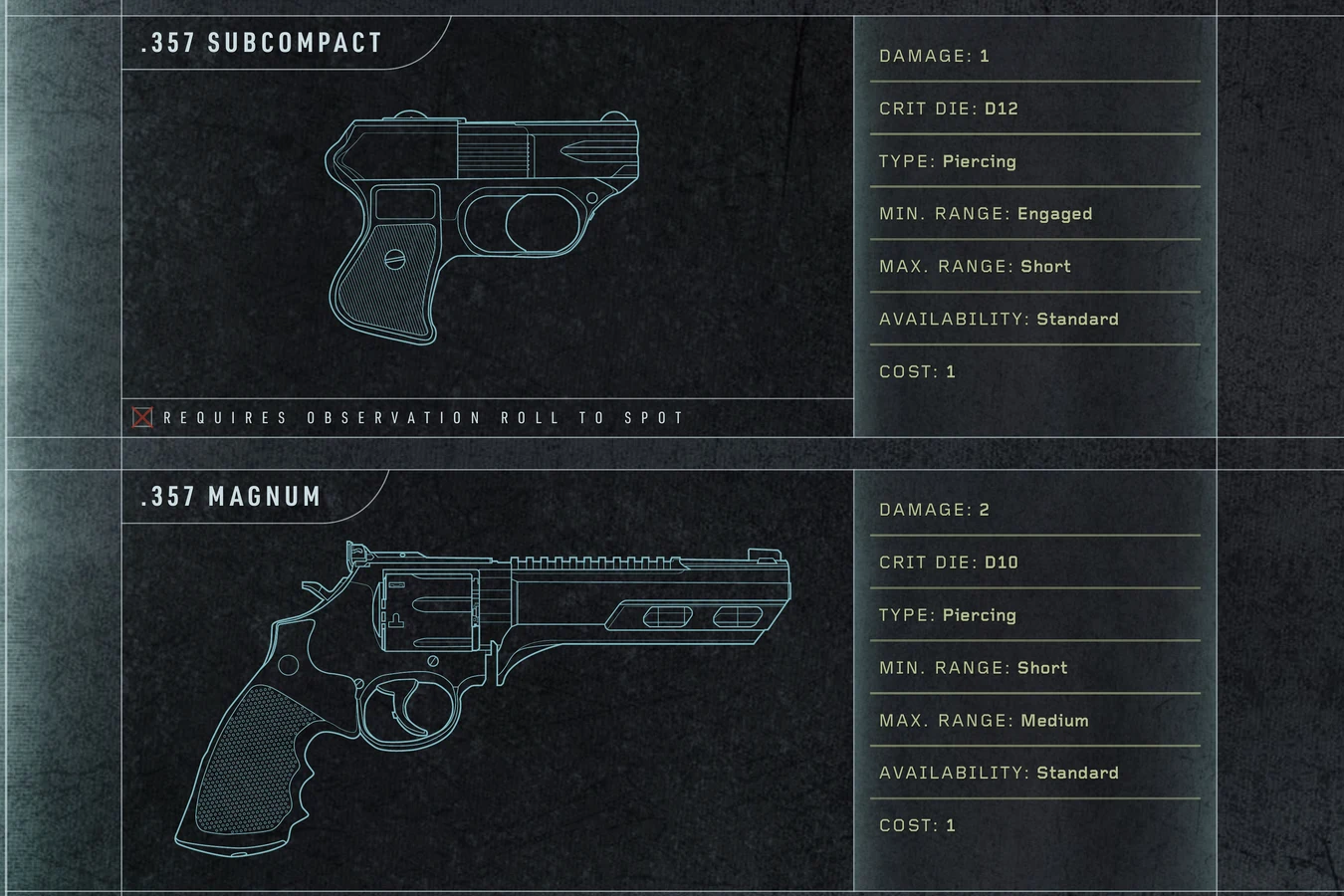
- .357 Subcompact: A tiny four-barreled backup pistol that fires two .357 barrels at once. It is hard to spot when carried and only reaches short range.
- .357 Magnum: A full-size revolver with standard availability. It hits twice as hard as the Subcompact and reaches medium range.
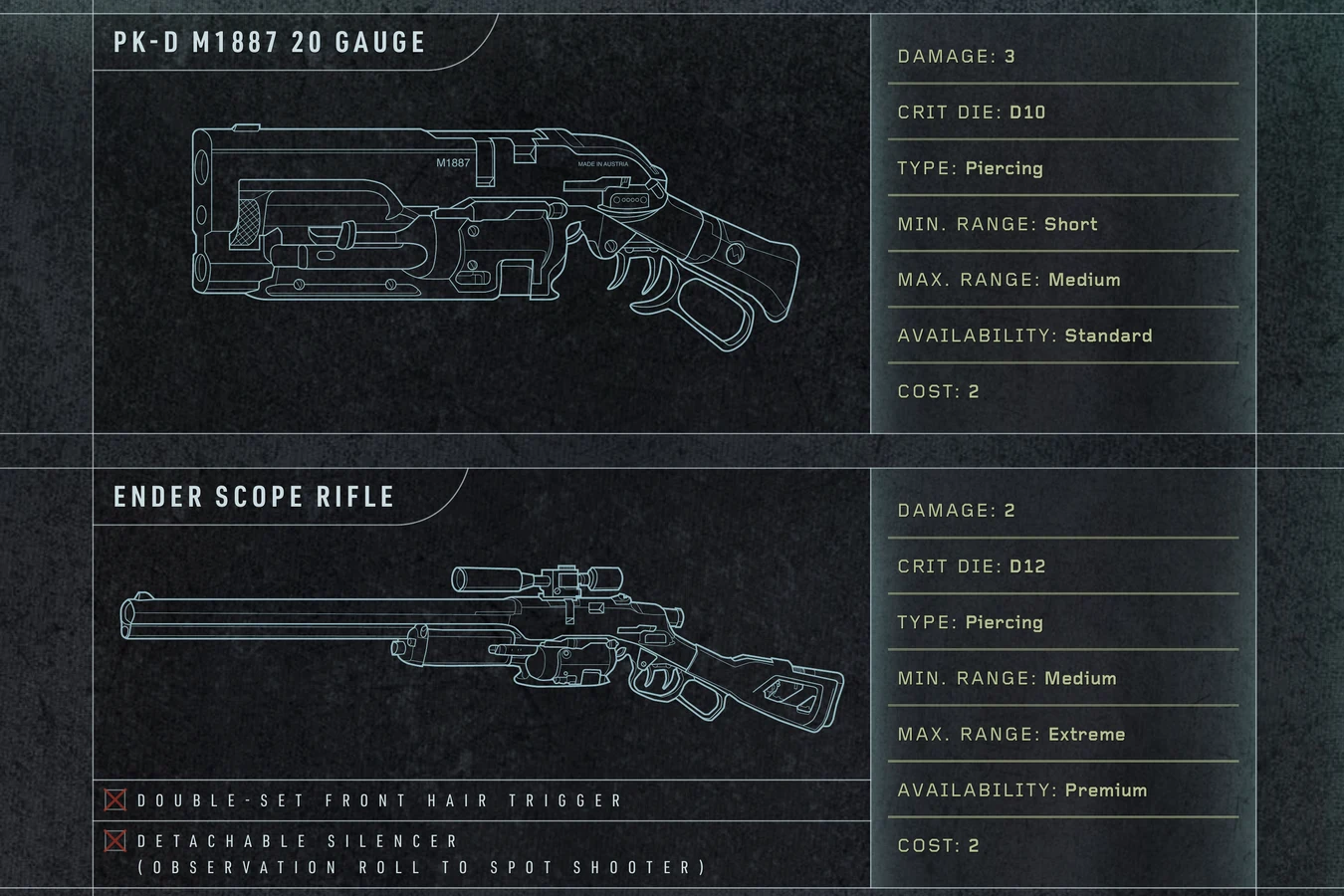
- PK-D M1887 20 Gauge: A Pfläger-Katsumata shotgun with M1887 stamped on the receiver. It deals the heaviest damage of any firearm in the armory, out to medium range.
- Ender Scope Rifle: A scoped long-range rifle with a double-set front hair trigger and a detachable silencer. It reaches extreme range and is a premium item.
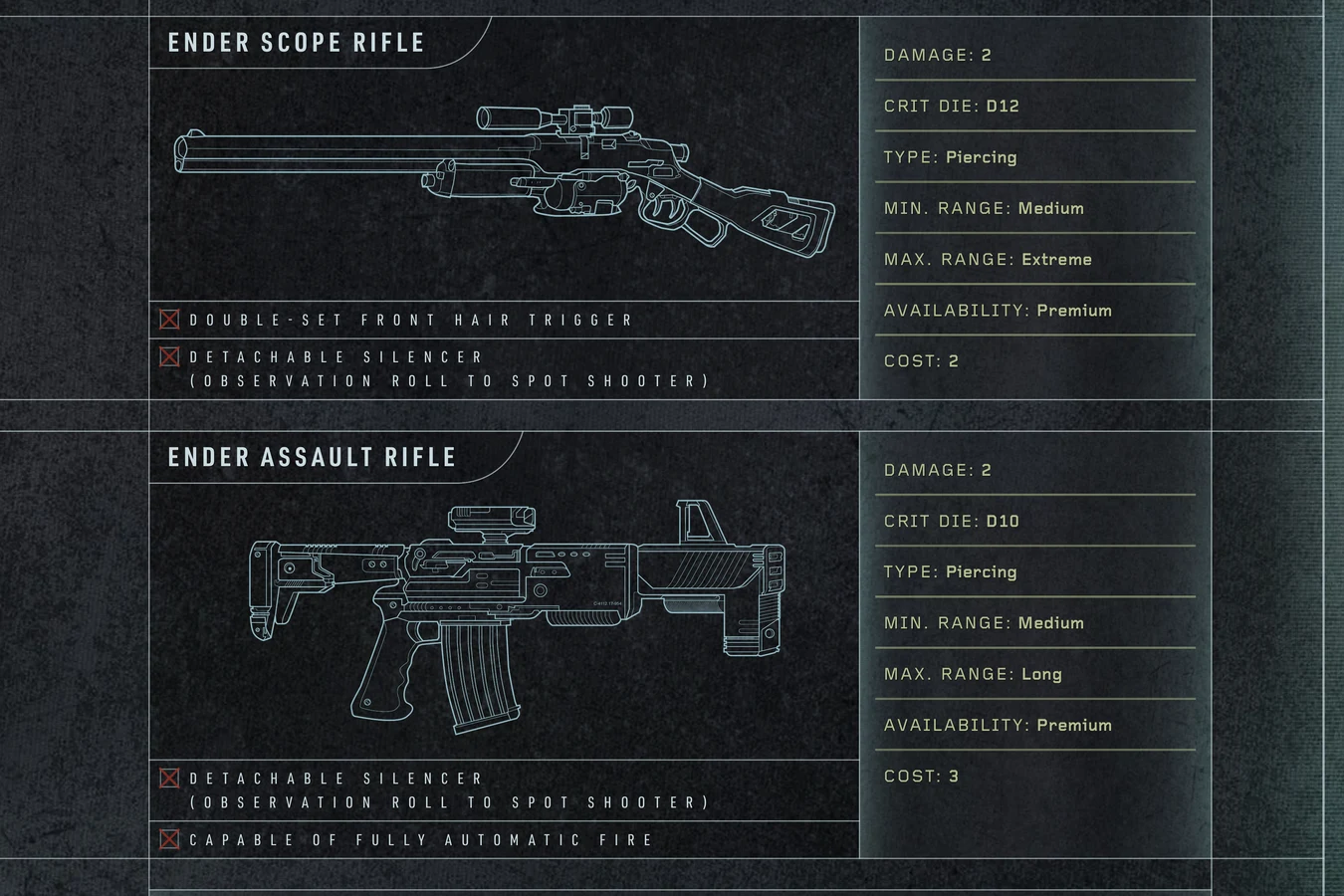
- Ender Assault Rifle: A military-grade rifle with a detachable silencer and fully automatic fire. It reaches long range and is also a premium item.
- Grenades: Standard, tear gas, flash-bang and sonic grenades can all be thrown to medium range. A heavier sonic charge cannot be thrown at all.
Every request at the Armory in the LAPD Tower is monitored, logged in the officer's personnel file and approved first, so nobody walks off with an Ender rifle on impulse. Off-the-books work sends players to Hawker's Circle or Runner's Surplus instead, paying in Chinyen points rather than promotion points. Standard issue for every player is an LAPD badge, a KIA for communications and either a PK-D blaster or a .357 Subcompact.
Guns In The Jeter Novels
K. W. Jeter's sequel novels kept the blaster as the badge of the job. Blade Runner 3: Replicant Night describes Deckard's gun as the heavy black piece that was standard issue in the LAPD's blade runner unit, able to blow a hole through the back of a fleeing replicant and a larger one through its front. He remembered its weight dragging at the shoulder holster under his long coat. The same novel notes that Dave Holden kept his gun when he quit the police and needed it more than ever.
In Blade Runner 2: The Edge of Human, the retired Deckard kept a gun inside his jacket at his remote cabin, and when he held it out to a visitor he half believed was imaginary, she slapped it away into the dark forest. He took the loss as proof that she was real. Blade Runner 4: Eye and Talon gave blade runner Iris Knaught a personal gun that was not regulation LAPD issue, and she was still making payments on it herself.
Conclusion
Blade Runner's guns stayed close to the detectives who carried them. The PK-D 5223, built from a Steyr rifle and a snub-nose revolver, became one of the most recognizable props in science fiction, and K's FKM890 updated it thirty years later. Philip K. Dick's laser tubes and .38 magnum show where the idea started, and the Titan comics, the Jeter novels and the roleplaying game have since filled in makers, models and backup guns. More of the people who carried them appear among the Blade Runner characters and the Blade Runner detectives.
Tag Categories: Blade Runner Lore