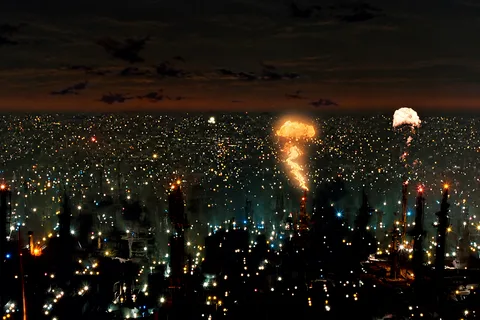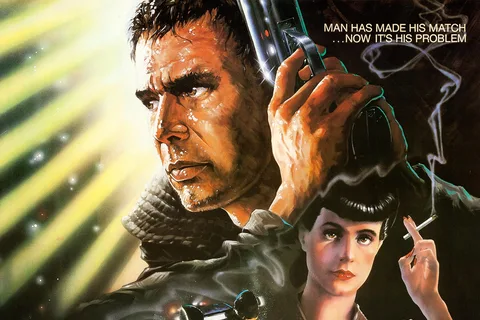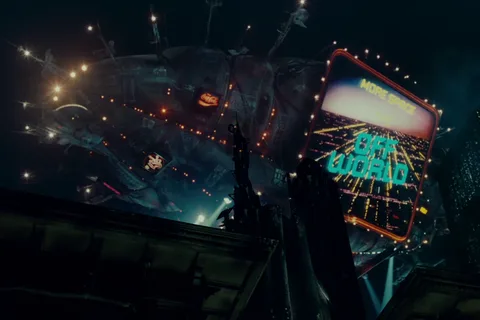

Tannhäuser Gate was an off-world location remembered by Roy Batty in Blade Runner. Before his death, Batty recalled seeing C-beams glittering nearby during his life away from Earth. Deleted narration and the Marvel adaptation connected the name more directly to his military service, while Soldier later included a battle at Tannhauser Gate in Todd’s combat history. The accounts established a place associated with warfare, but did not identify its coordinates, explain the Gate’s physical nature or show a confirmed structure bearing the name.
Tannhäuser Gate In Blade Runner
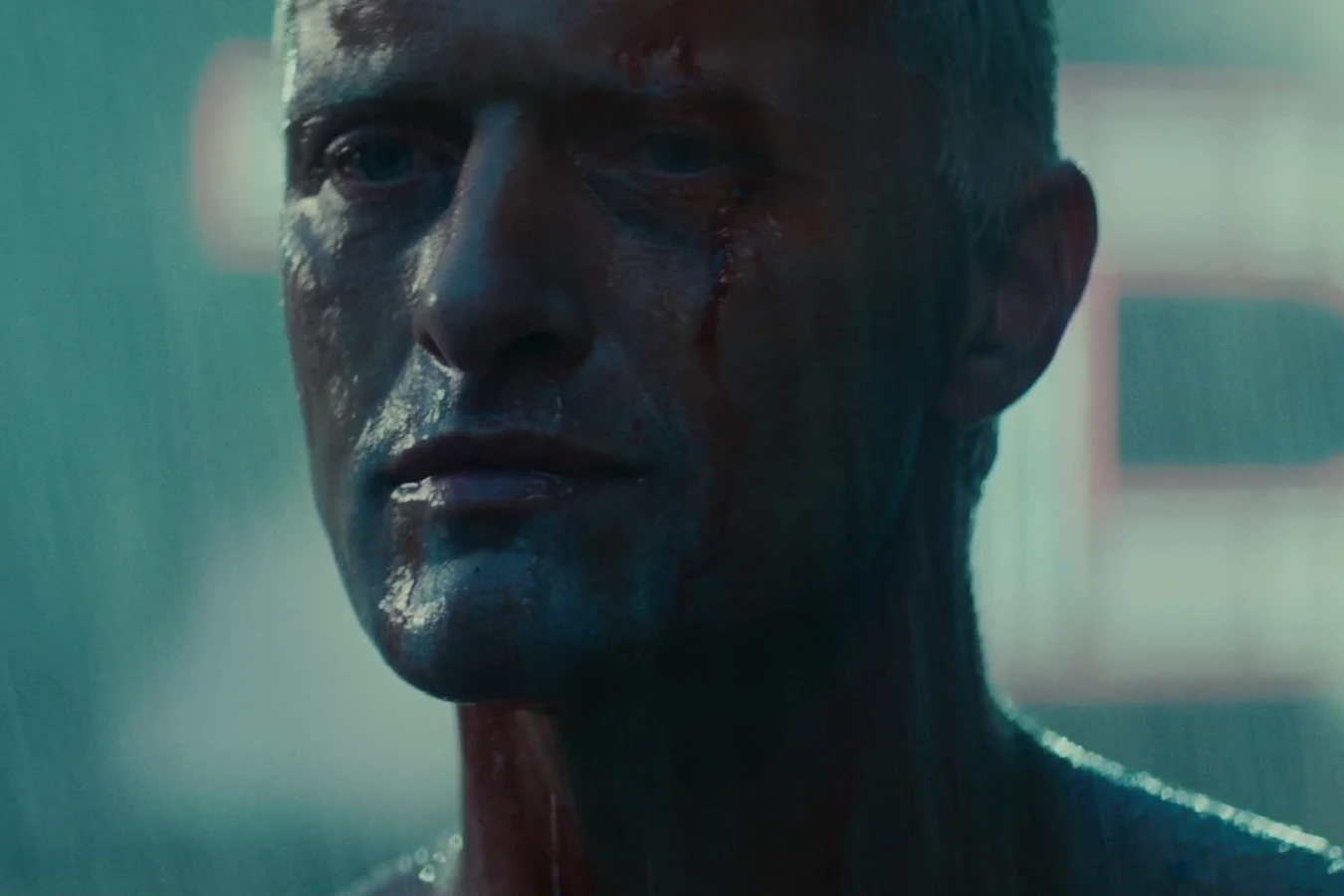
In November 2019, Batty rescued Rick Deckard from the edge of a rooftop and sat beside him as his four-year lifespan ended. He described extraordinary sights from his experiences beyond Earth, including attack ships burning off the shoulder of Orion and C-beams glittering near Tannhäuser Gate. These were separate recollections: his words did not place the Gate at Orion or identify both sights as events from the same battle.
The C-Beams were not explained in the released film. Their appearance suggested something Batty had witnessed in space, but neither their purpose nor their technology was established. The name Tannhäuser Gate could identify a location without establishing a transport portal, artificial gateway or particular kind of astronomical object. No physical Gate appeared on screen, and Batty did not name the forces involved, the campaign’s outcome or the date of his visit.
Roy Batty’s Military Service
The Deleted Military File
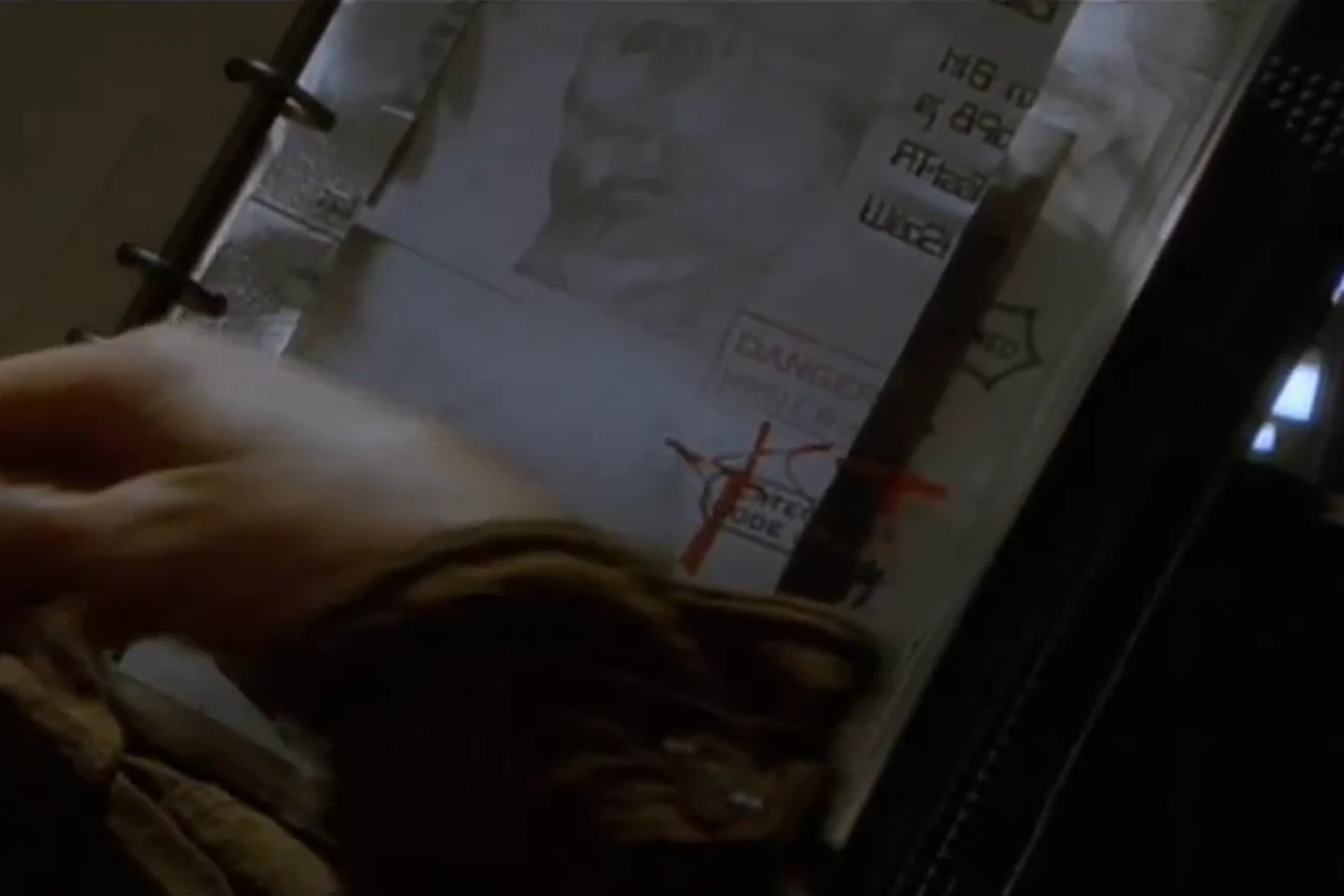
The deleted Rep Detect File sequence provided a more explicit military background. While travelling with Gaff, Deckard examined files on the escaped replicants. His unused narration described Batty as a three-and-a-half-year-old combat model whose military testing had taken him through off-world battles, including fighting at Tannhäuser Gate and a massacre on the Venezuelan moons. The file credited him with consistently excellent performance.
That account treated Tannhäuser Gate as part of Batty’s service history before his escape to Earth. It did not describe the battle itself or identify his opponents. The sequence was included among the deleted material released with the film’s later editions, rather than forming part of the finished theatrical briefing. Its reference to Venezuelan moons also differed from the Argentine moons named in other versions of his background.
The Marvel Comic Adaptation
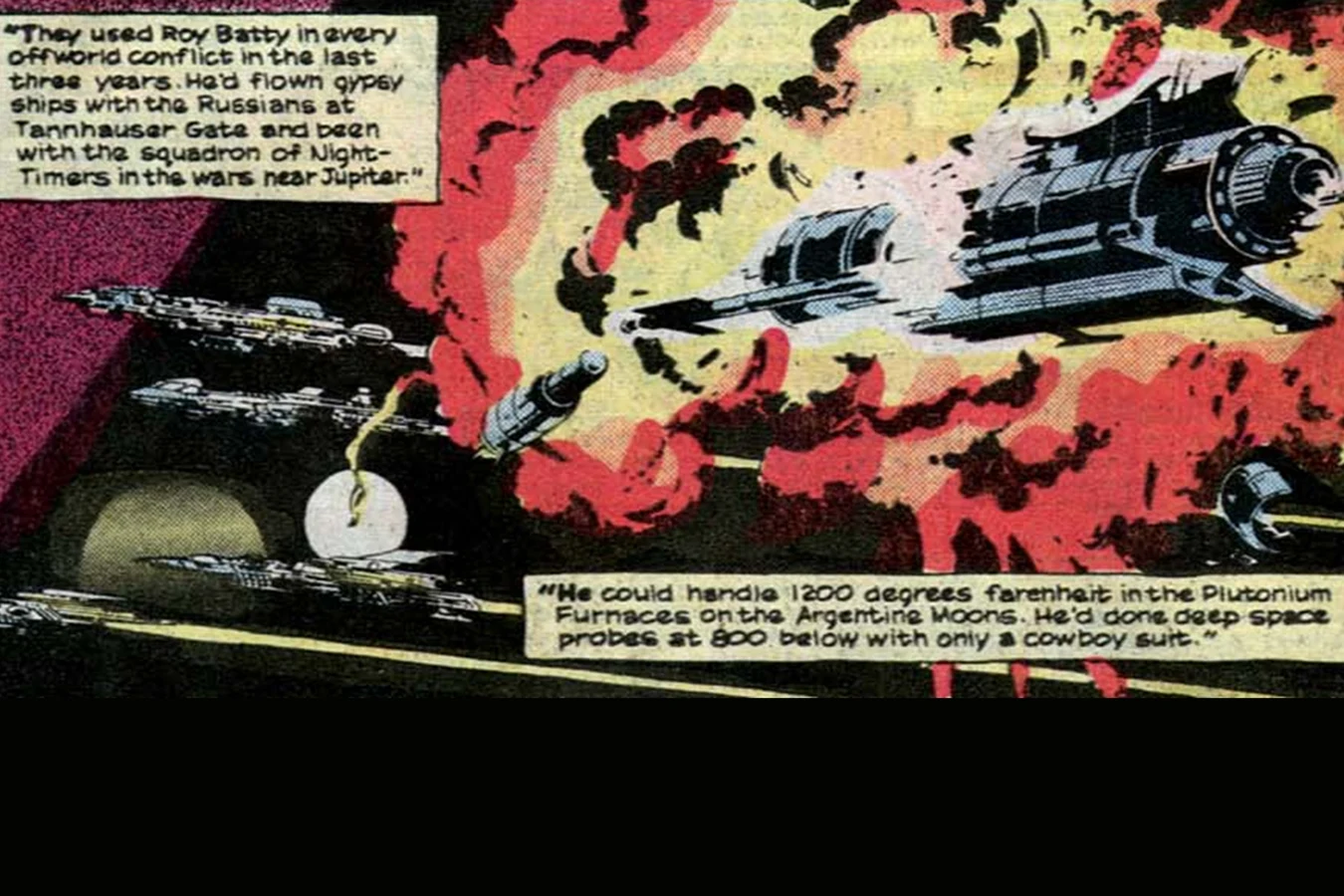
The 1982 Marvel comic adaptation expanded Batty’s Off-World Service and illustrated space combat. Its account placed him aboard gypsy ships with Russians at Tannhauser Gate. It also described service with a squadron of Night-Timers in wars near Jupiter. These details gave him companions and further campaigns beyond the brief memories heard in the film.
The Space Battle illustrated the scale of the fighting associated with Batty’s past, with spacecraft and weapons fire rather than a clearly labelled gateway. The comic did not provide a map or explain how the Gate operated. Its additional references to Jupiter and the Argentine moons broadened his service record without establishing that those locations were all part of the same campaign.
Tannhäuser Gate In Soldier
Todd’s Combat Record
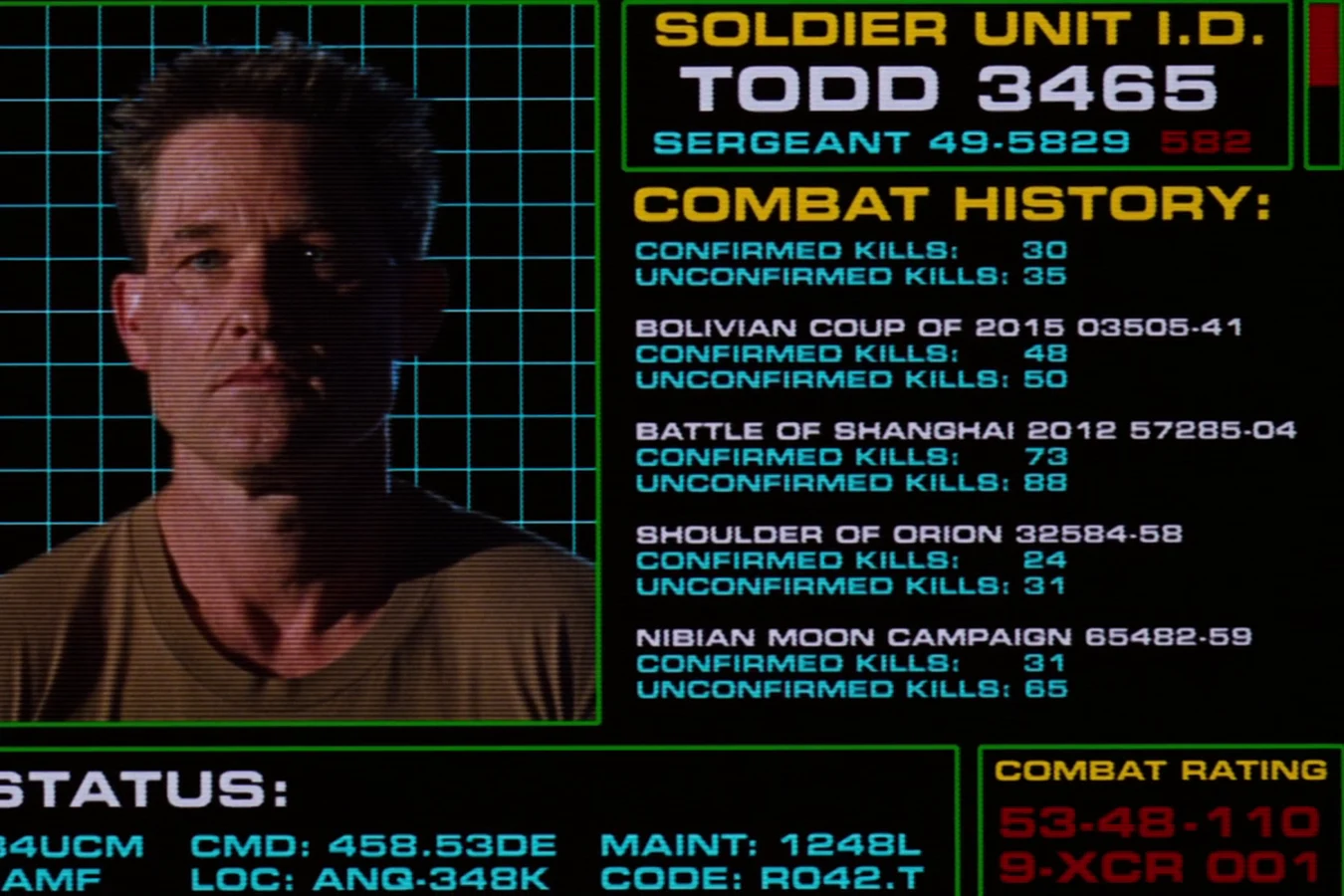
In the 1998 film Soldier, Sergeant Todd’s computerized combat history listed a battle at Tannhauser Gate. The entry credited him with 29 confirmed kills and 37 unconfirmed kills. It appeared alongside other campaigns, including the Battle of Argentine Moons, as part of the record of a soldier trained from childhood and repeatedly deployed throughout his adult life.
The Combat History established Todd’s participation in a named battle, but did not identify the enemy or describe the objectives. Its numerical entries were military record information, not an explanation of the Gate’s location. The released film did not establish that Todd and Batty fought together, served on the same side or participated in the same engagement.
The Campaign Tattoo And Dialogue
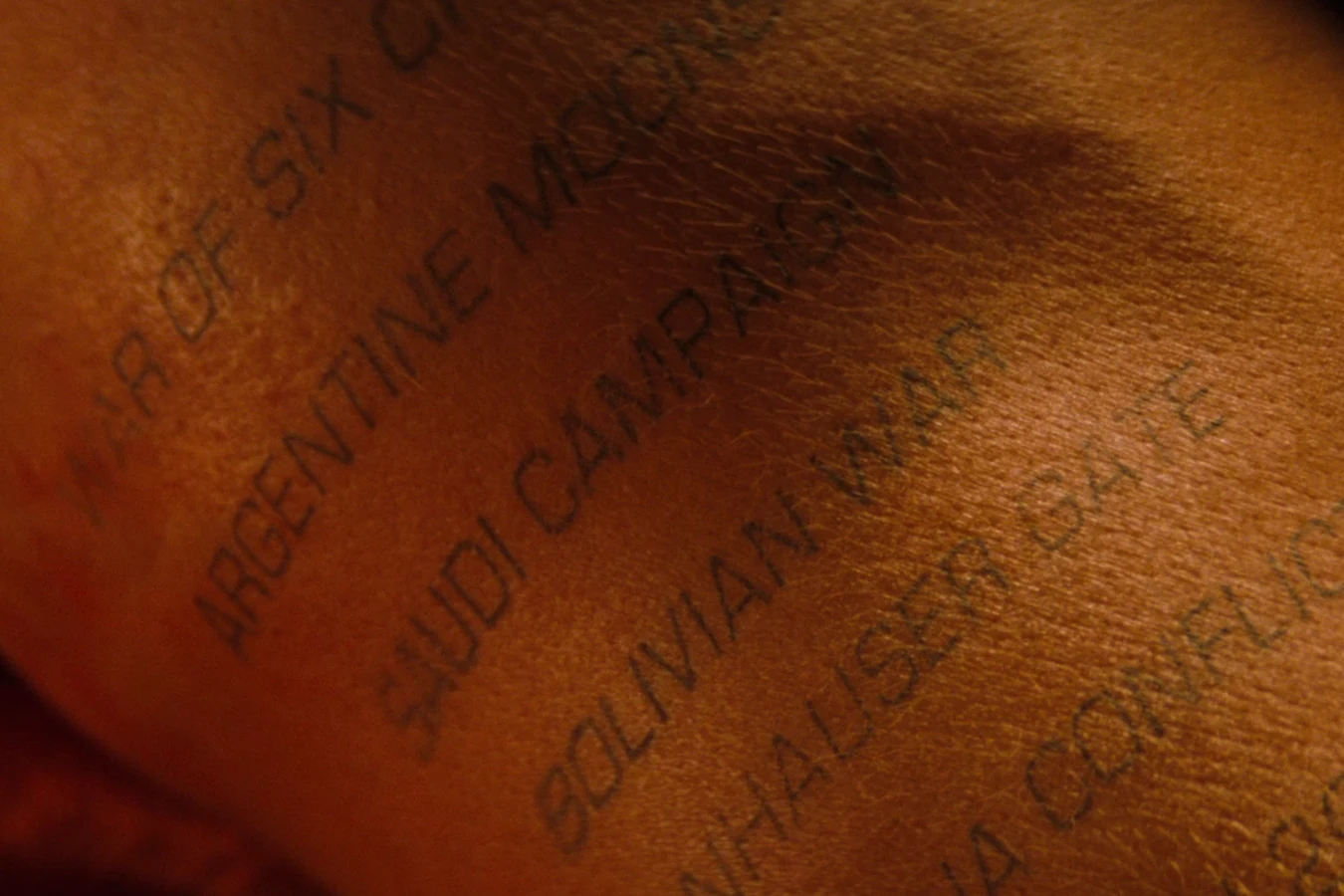
Todd also carried the Tannhauser name among the campaign markings tattooed on his shoulder. His conversation with Mace identified Tannhauser Gate as a battle, giving the name a spoken explanation in addition to the service record. The tattoo associated the campaign with Todd’s personal history after the military had discarded him and left him on Arcadia 234.
The 1997 Soldier Screenplay placed a Tannhauser Gate deployment in 2017 and described a scene in space. That date belonged to the scripted sequence and was not supplied by the released film’s Tannhauser service entry. It therefore did not establish a date for Batty’s battle. The connection between the two films also remained a production reference whose place in Blade Runner continuity was disputed, rather than a confirmed meeting between their characters.
Other Off-World Campaigns
The Argentine Moons formed another connection between the adaptations and Soldier. Blade Runner: A Story of the Future described Batty as a combat model who had survived extreme heat on those moons and extreme cold in deep space. Les Martin’s account presented these experiences as evidence of his endurance and military use, but did not name Tannhäuser Gate. The Marvel adaptation also referred to the Argentine moons in its description of his service.
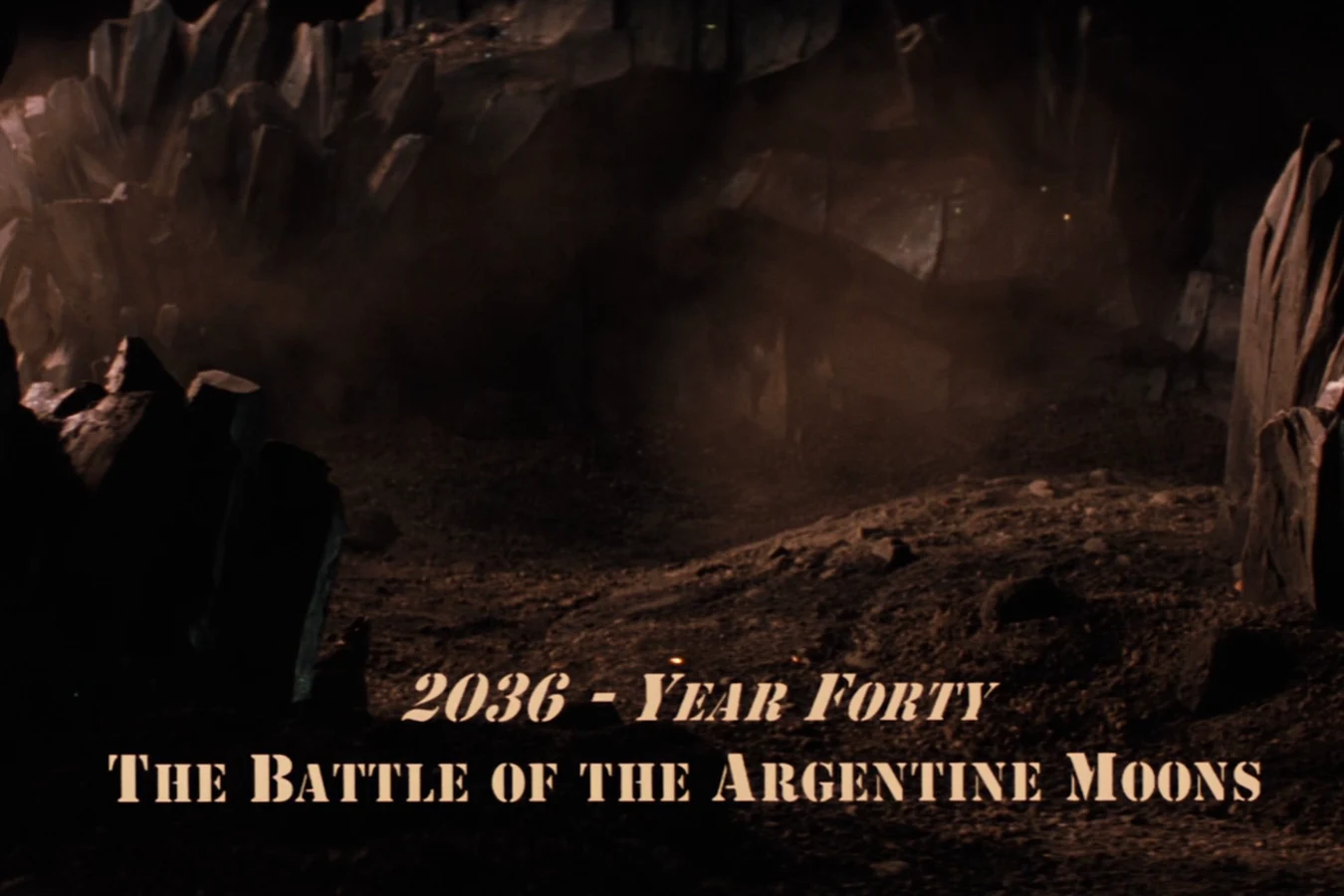
In Soldier, the opening campaign montage dated the Battle of the Argentine Moons to 2036, when Todd was forty. That was later than Batty’s death in 2019, so the repeated place name did not by itself identify the same battle. The moons, Jupiter, Orion and Tannhäuser Gate supplied different locations in the characters’ off-world histories; none of these references established that the Gate was one of the moons or a passage between them.
The Androids Novel Background
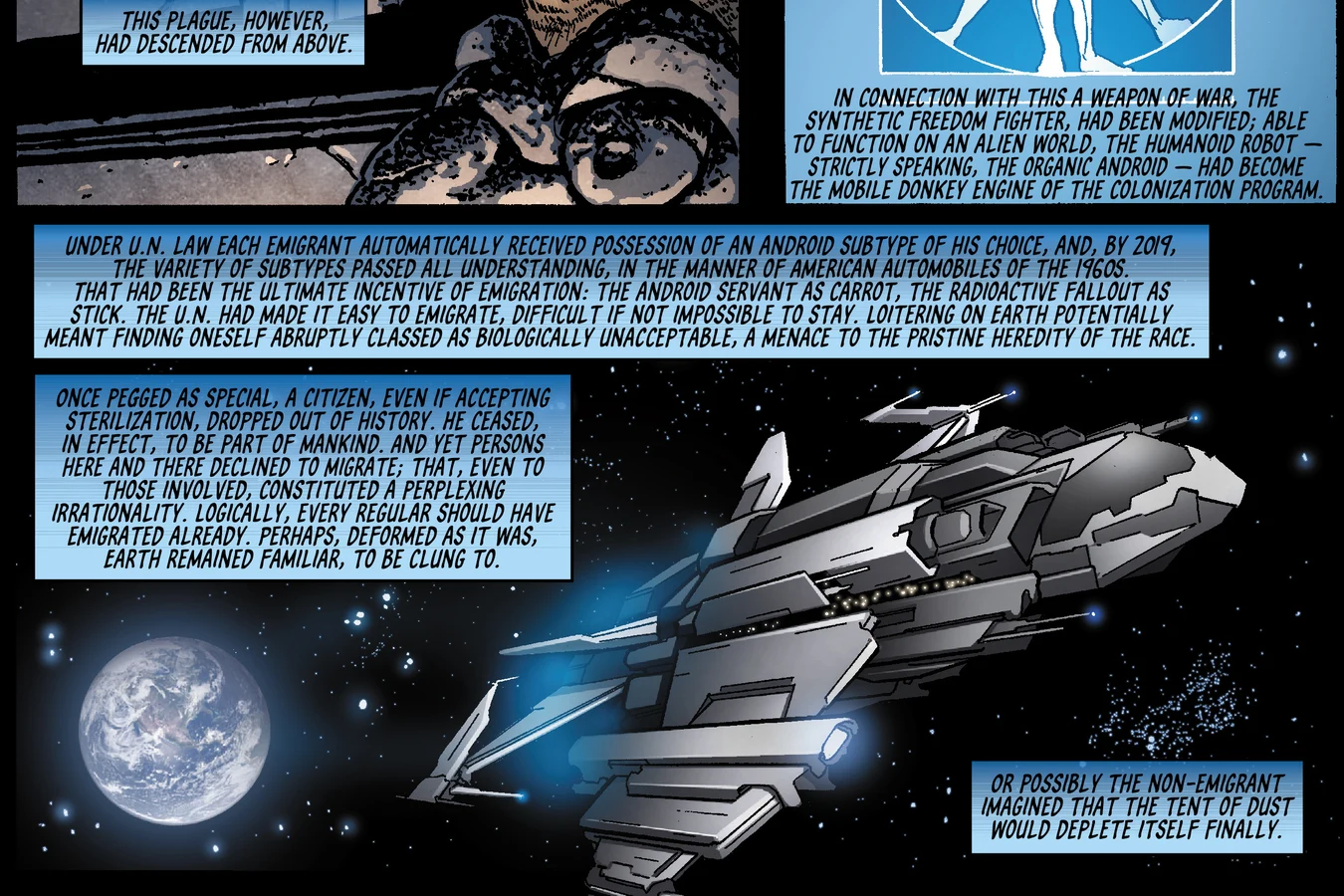
Philip K. Dick’s Do Androids Dream of Electric Sheep? did not mention Tannhäuser Gate. It did provide an earlier military background for artificial humans: the organic android had developed from the wartime Synthetic Freedom Fighter, then been adapted for colonial labour. The United Nations’ emigration programme supplied android servants to settlers leaving Earth after World War Terminus. Each emigrant could choose an android suited to personal needs, making artificial labour an incentive to abandon the polluted Earth. The same manufactured bodies had passed from military use into a system of colonial ownership.
The comic adaptation illustrated that Android History alongside an off-world spacecraft. It offered background for the connection between artificial people, warfare and colonization, rather than a depiction of Batty’s battle. Dick’s Roy Baty had a different biography from the film’s combat replicant. His file described him as a pharmacist on Mars, although Deckard suspected he had worked as a field hand. That account connected him to colonial society without giving him the film character’s military record or placing him at Tannhäuser Gate.
Behind The Scenes
Script And Performance
The February 23, 1981 Screenplay by Hampton Fancher and David Peoples included the Gate in Batty’s rooftop speech, spelling it Tanhauser. Its longer version placed him on the back decks of a blinker as he watched the beams. The script did not define that craft or describe a gate structure. This earlier wording established that the off-world imagery preceded Rutger Hauer’s final performance.
Future Noir described Hauer’s response to Peoples’ imagery and his decision to shorten the speech. Hauer retained the memories of Orion and the Gate and added the comparison with tears in rain. In his interview with Paul M. Sammon, Ridley Scott explained that he could not have afforded to show the remarkable sights Batty described. Keeping the camera on the dying replicant allowed those experiences to be conveyed through his recollection instead of a sequence of battle scenes.
Soldier And The Space Battle Footage
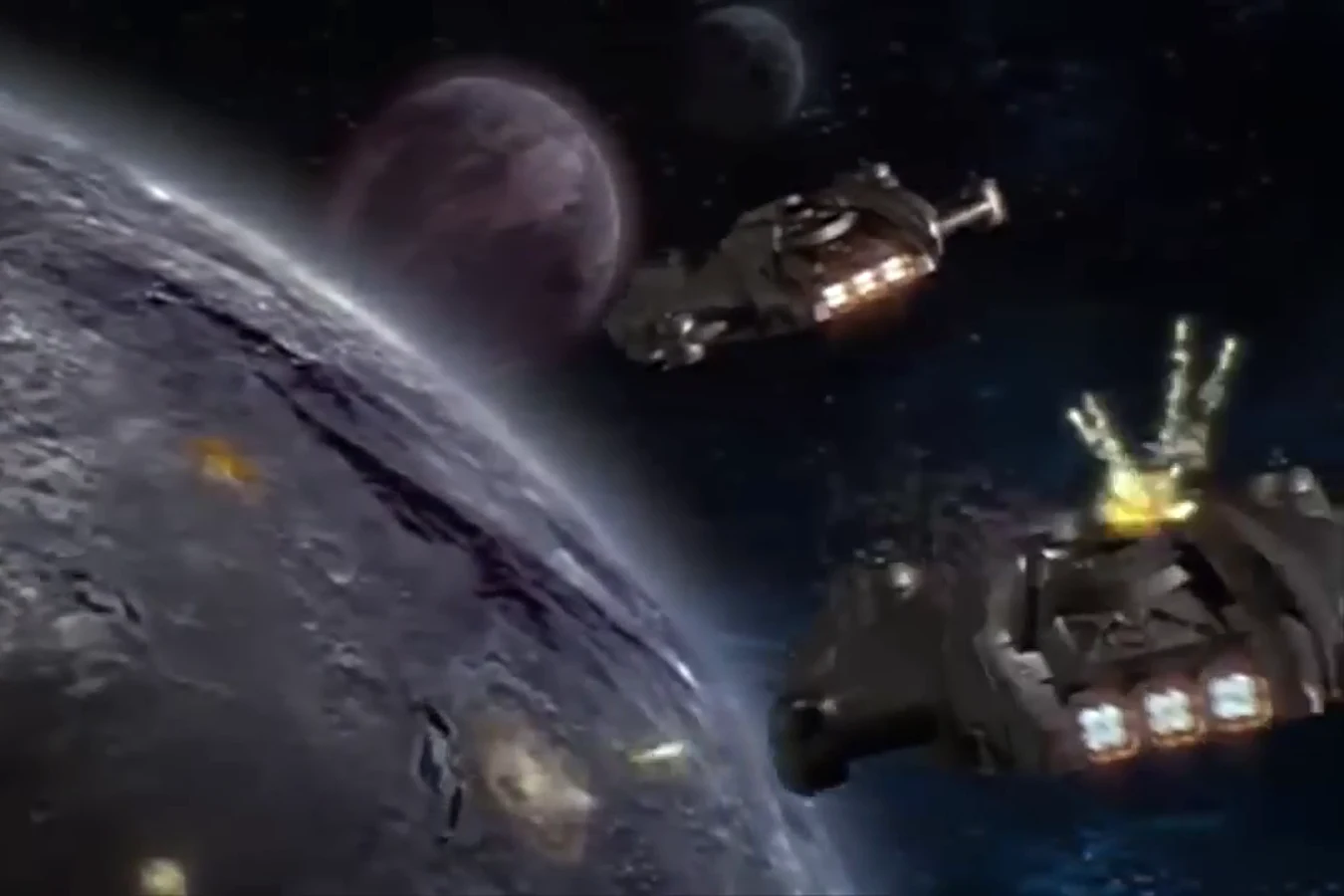
The Soldier Trailer included spacecraft fighting above a planet, providing a visual counterpart to the military campaigns named in Todd’s record. The footage was absent from the released film’s opening campaign montage. Although it has been associated with the unused Tannhauser sequence, the trailer did not label the battle’s location, and it did not reveal an identifiable Gate structure.
Director Paul W. S. Anderson discussed Soldier as a companion to Blade Runner, and the film included several deliberate references to it. However, Peoples later rejected the claim that he had originally conceived Soldier as a Blade Runner sidequel. Todd’s military record and tattoo were clear references to Batty’s speech; they did not resolve every question about the films sharing a single history or turn the trailer’s unnamed space battle into a confirmed view of Batty’s campaign.
Conclusion
Tannhäuser Gate remained a named part of Batty’s life beyond Earth, with the deleted narration and Marvel comic strengthening its military association. Soldier reused the name for one of Todd’s battles. Across these depictions, the Gate’s exact location, physical form and strategic importance were left unexplained.
Appearances
- Blade Runner (1982), mentioned by Roy Batty.
- Blade Runner (Marvel comic adaptation, 1982), Batty’s service history.
- Soldier (1998), Todd’s combat record, tattoo and dialogue.
- Blade Runner deleted scenes: Rep Detect File (released 2007), unused narration.
External Sources
- Blade Runner screenplay, February 23, 1981
- Soldier screenplay, October 2, 1997
- Soldier theatrical trailer
Tag Categories: Blade Runner Lore