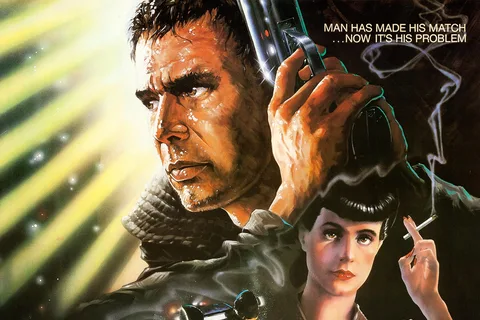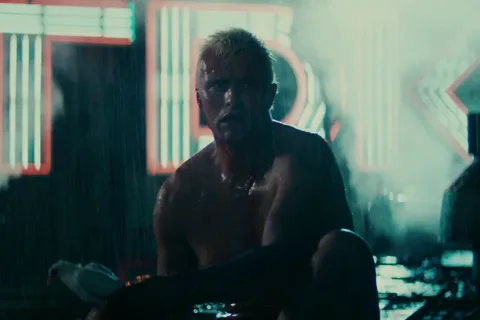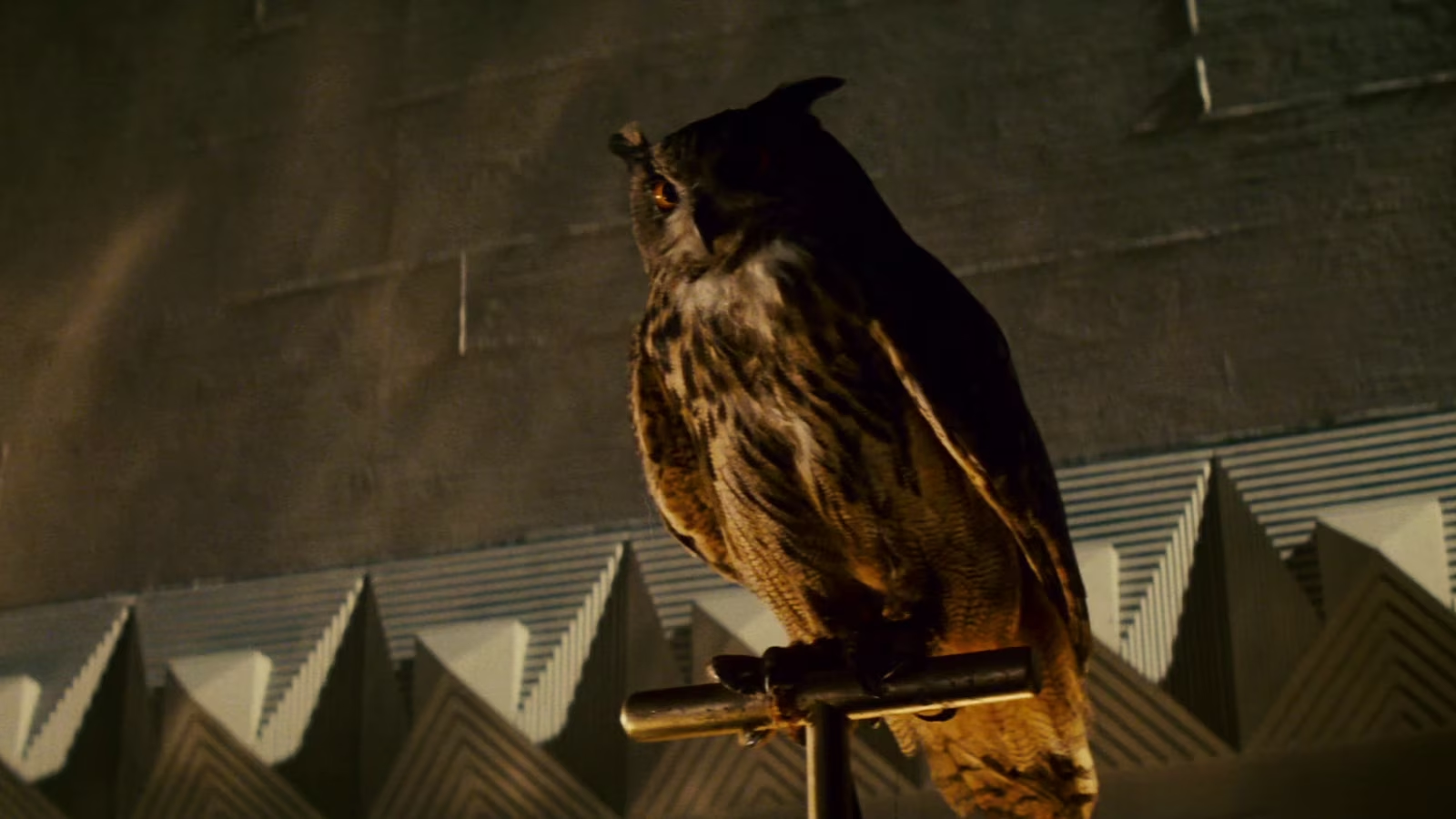

Tyrell's Owl was an artificial bird owned by Eldon Tyrell in Blade Runner. It lived in his penthouse and survived the encounter in which Roy Batty killed him. Later stories named the film-continuity owl Eden, while Philip K. Dick and K. W. Jeter used the name Scrappy for different versions of the bird. Those accounts ranged from an artificial animal offered to Deckard as a bribe to a living owl carrying a backup of Tyrell's mind. The comics also connected Tyrell's childhood encounter with a dead owl to his interest in overcoming death.
Movie And Comic Timeline
Tyrell's Original Owl
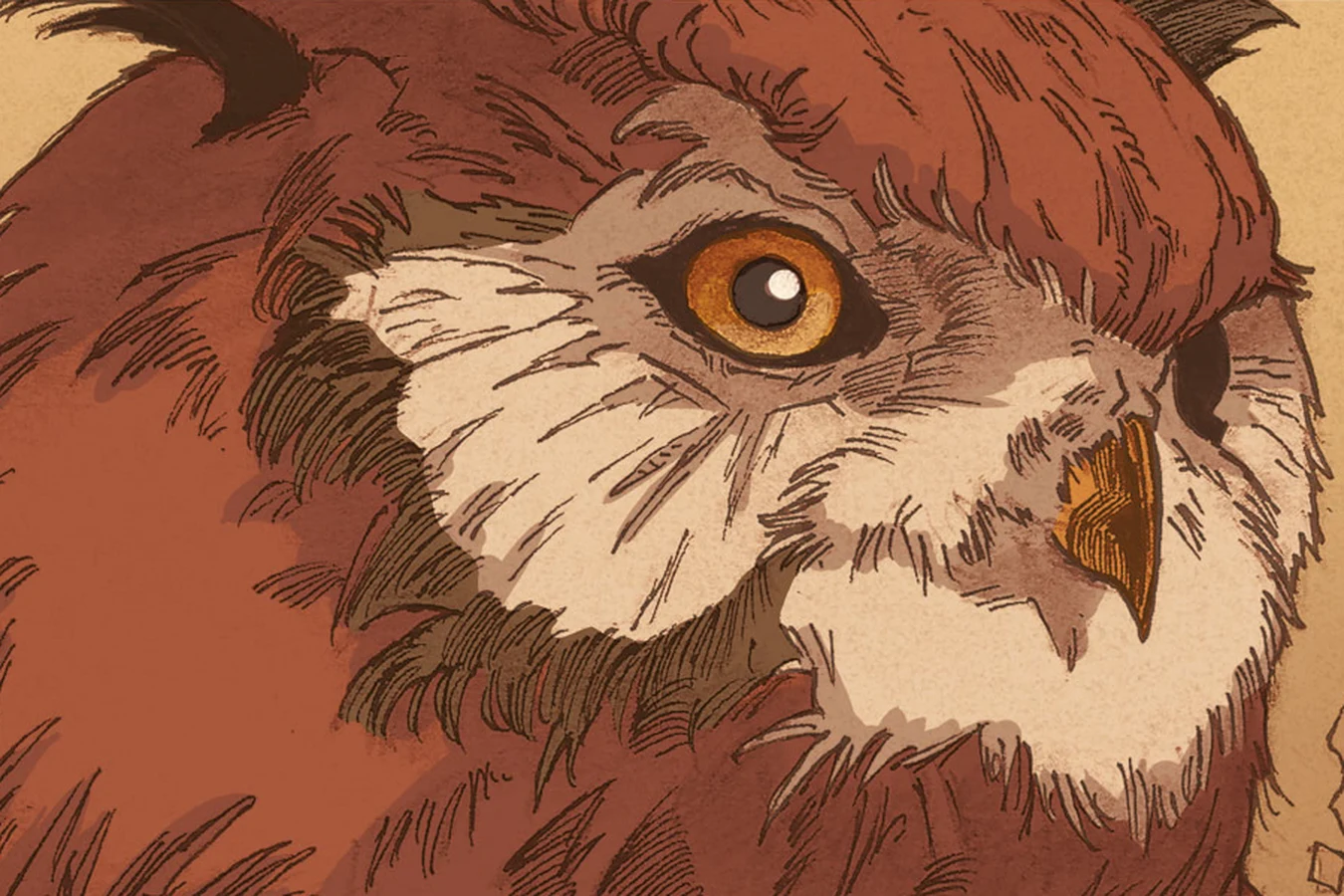
Eldon Tyrell encountered death through an owl during his childhood in the mountains above Edens, California. He found the dead bird in the snow and buried it near his family's home. His memories of the owl became part of the childhood recollections implanted in Yotun, alongside a school trip to Catalina and a lonely birthday. These were Tyrell's memories carried by the replicant, rather than memories implanted in the owl itself.
The Original Owl was a separate bird from the artificial animal Deckard encountered in 2019. Its burial later became important when Yotun searched for the secret of overcoming death. The childhood memory concerned a loss that had shaped Tyrell's interests; it did not establish that his later owls had all been the same animal. The discovery of its remains belonged to Yotun's search in 2029.
Earlier Life
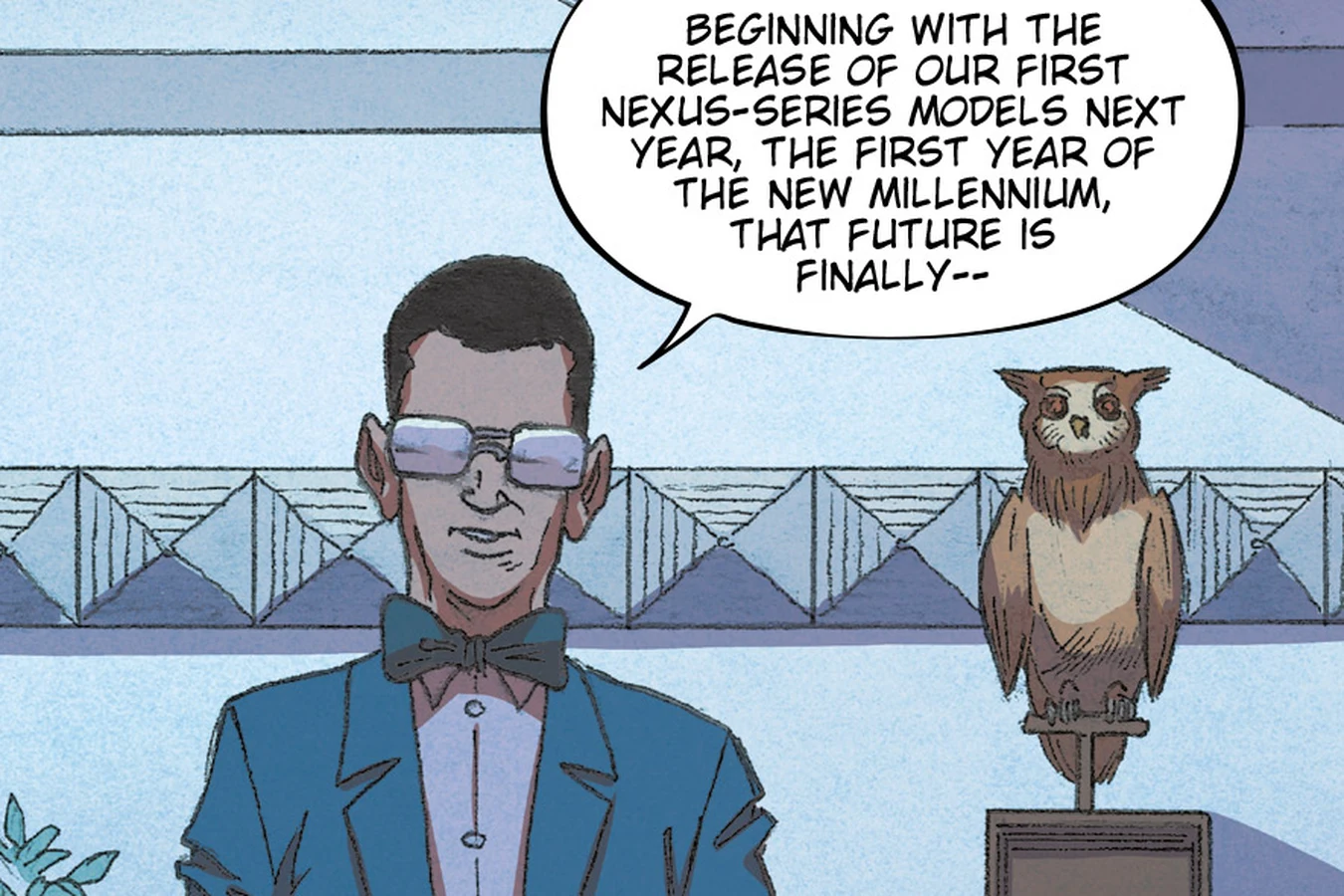
The Blade Runner 2019 Free Comic Book Day Special showed Tyrell with an owl named Athena in a promotional recording dated 1999. He used that presentation to announce the coming Nexus series for the new millennium. Athena was an earlier named owl associated with Tyrell, rather than a name supplied by the 1982 film for the bird Deckard encountered twenty years later.
Athena was associated with Tyrell before the owl Deckard encountered in 2019, appearing alongside him as he publicly introduced his company's next generation of products. The recording named the earlier bird, but did not establish that Athena and Eden were the same owl. Tyrell's history with owls also included the unnamed owl he buried during childhood, whose remains were recovered decades later.
The Owl In 2009
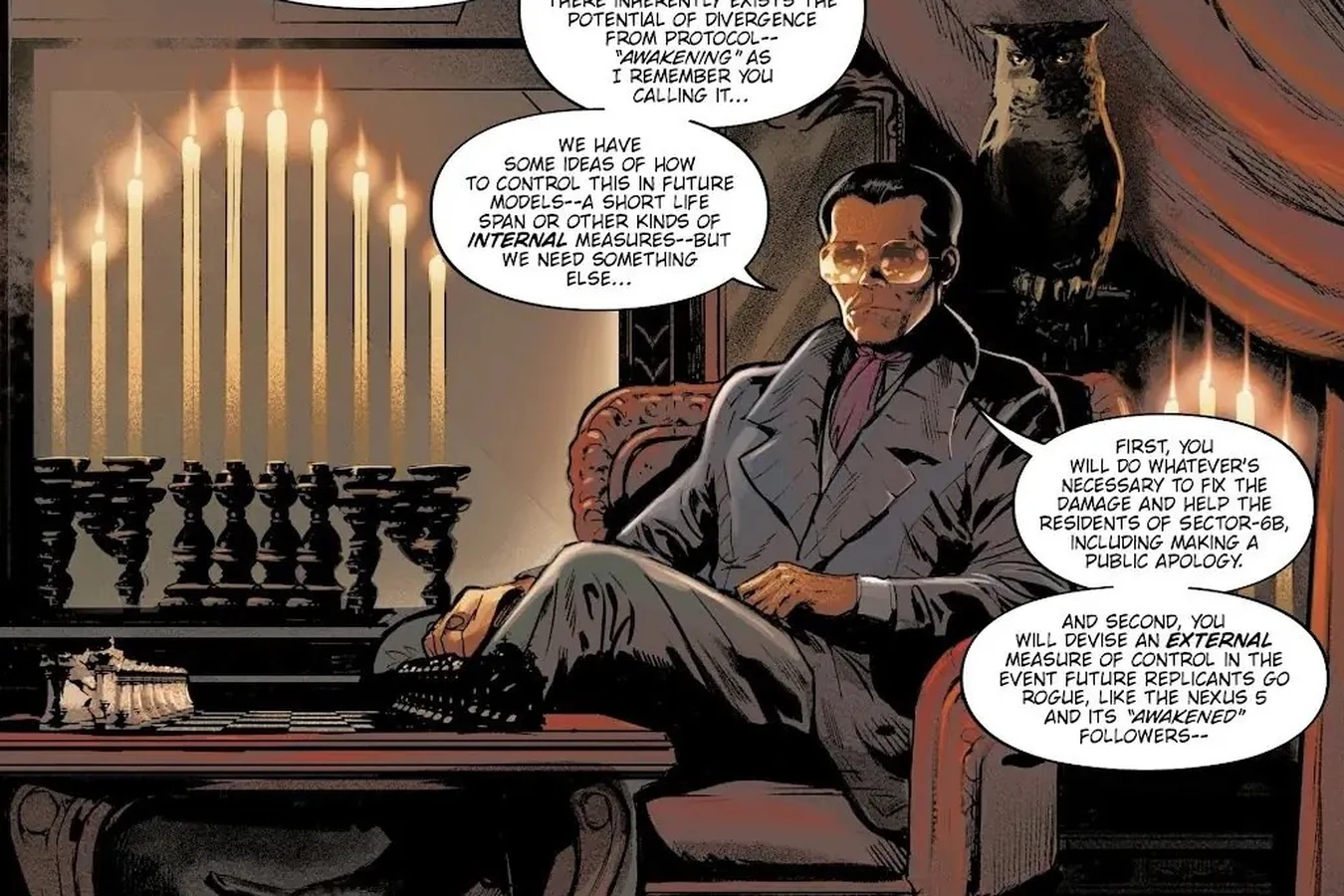
In Blade Runner: Origins, an owl appeared behind Tyrell's Armchair during his dealings with Ilora Stahl in 2009. His room contained a chess set and tall candles, with the bird perched behind him as he exercised control over the investigation. The comic returned to the association between Tyrell, his private rooms and an owl, without establishing that every owl seen with him across these decades was the same animal.
Tyrell received Stahl there after the Sector 6-B uprising and demanded a further means of controlling his products. The owl shared the setting in which he directed the company's response to escaped and awakened replicants. Its presence established another owl in Tyrell's household ten years before Deckard's visit, although the scene did not name it or explain its relationship to Athena or Eden.
Deckard's Visit
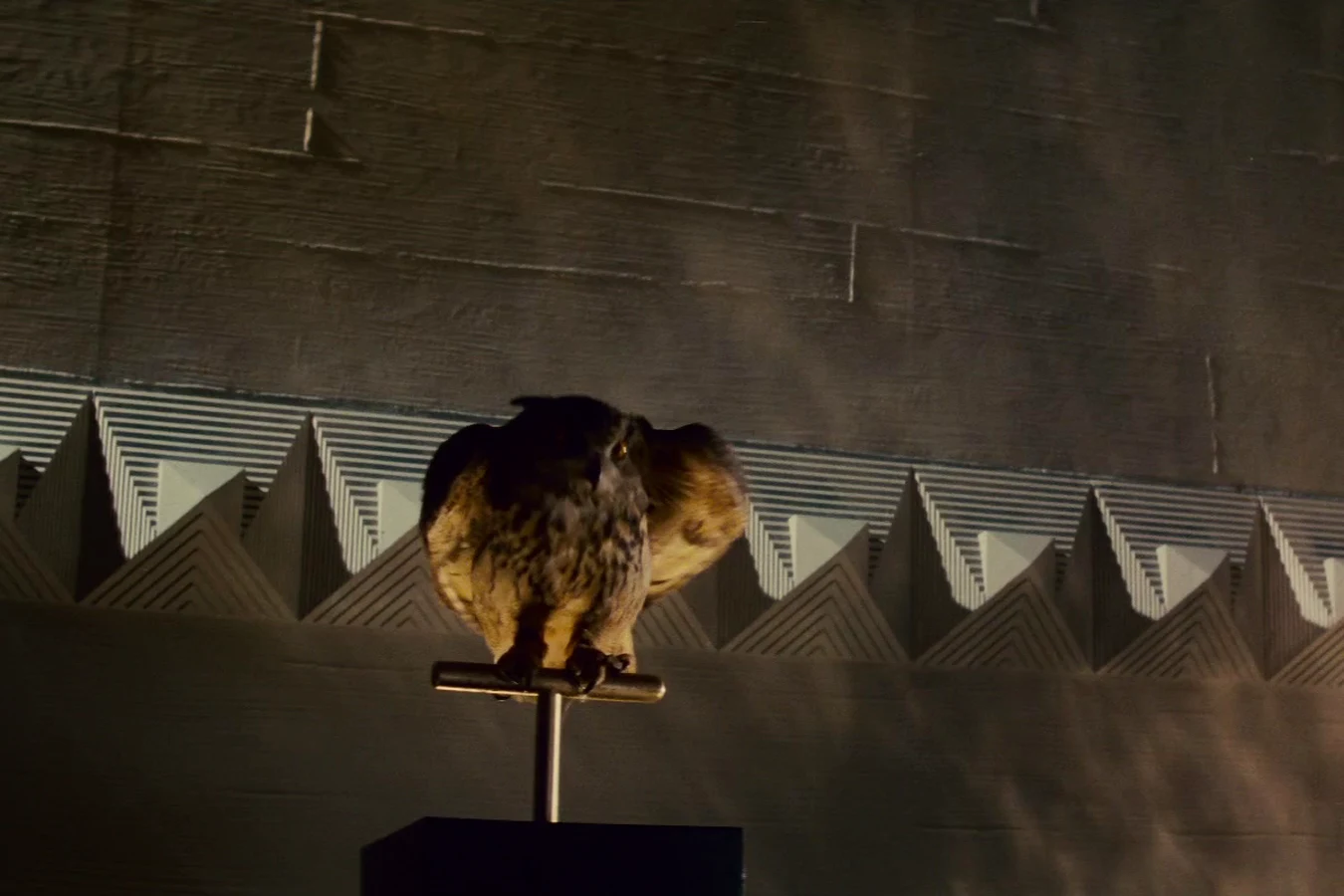
When Rick Deckard arrived to evaluate the Nexus-6 using the Voight-Kampff test, the owl flew across the office and settled on its perch. Rachael asked whether he liked it. Deckard asked if it was artificial, and she confirmed that it was. Their conversation established the bird's expense before turning to Deckard's work and his attitude toward the replicants he hunted.
Tyrell then asked Deckard to test Rachael before examining a Nexus-6 subject. The result revealed that she was herself a replicant, unaware of her manufactured origin and supported by implanted memories. The owl remained part of the same household in which Tyrell had placed that experimental replicant. Its artificial nature was openly acknowledged to Deckard, while Rachael's had been concealed from her.
Ray McCoy's Visit
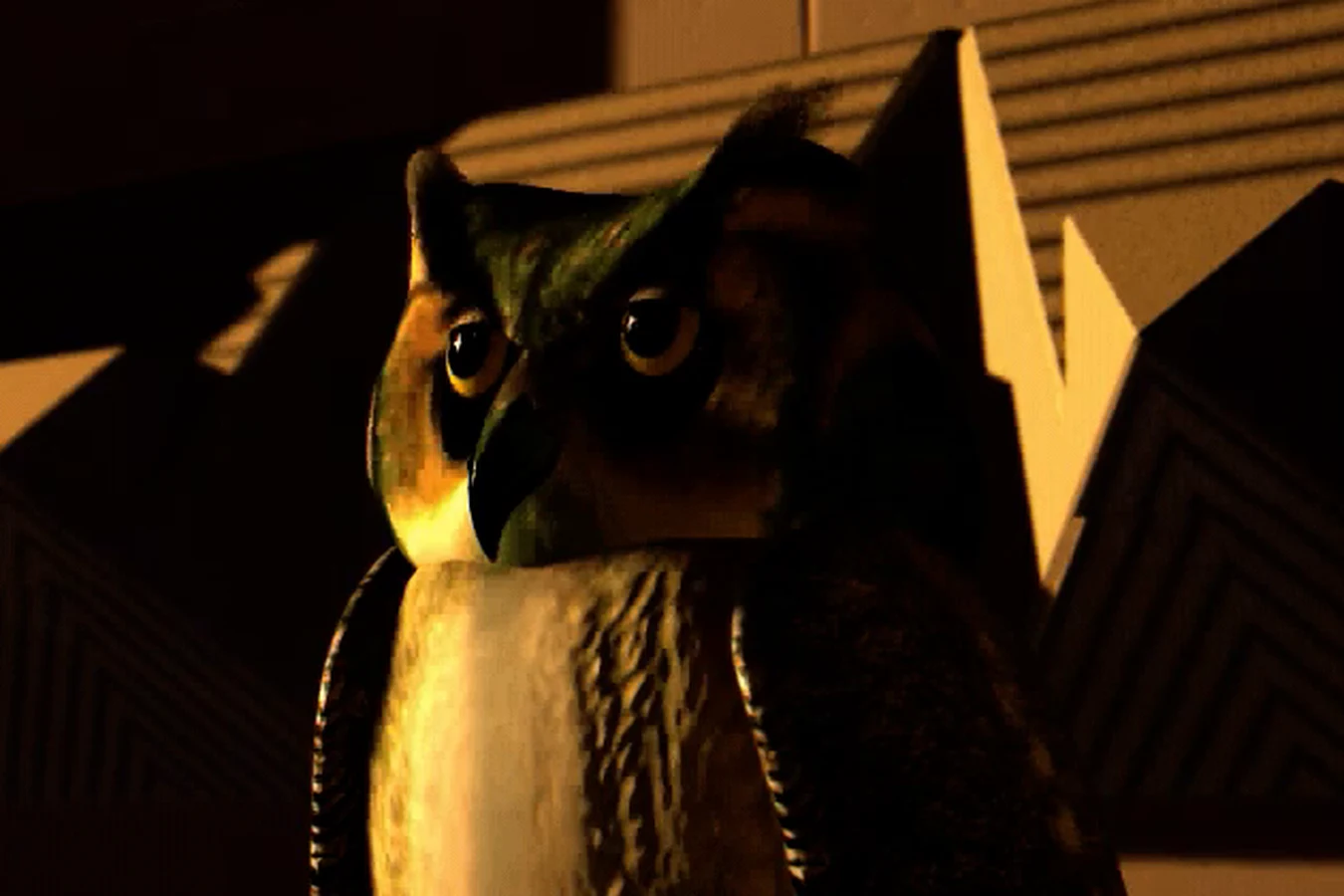
In the 1997 Blade Runner game, Ray McCoy visited Tyrell's office later on the same day as Deckard. Rachael referred to the earlier blade runner's visit, and McCoy subsequently met Tyrell himself, placing their conversation before Batty killed him. She reported that Tyrell had used a real owl as the model for the artificial one. McCoy doubted the story because Sidney's animal catalogue regarded owls as extinct, leaving him skeptical of Tyrell's claim rather than providing proof that a living specimen survived.
This account concerned the Model For The Owl, not a different answer about the artificial bird in Tyrell's rooms. A manufactured animal could have been copied from a living specimen without being that specimen itself. The game's conversation therefore preserved the uncertainty over surviving natural owls while maintaining the distinction between the original animal and its artificial reproduction.
Tyrell's Death
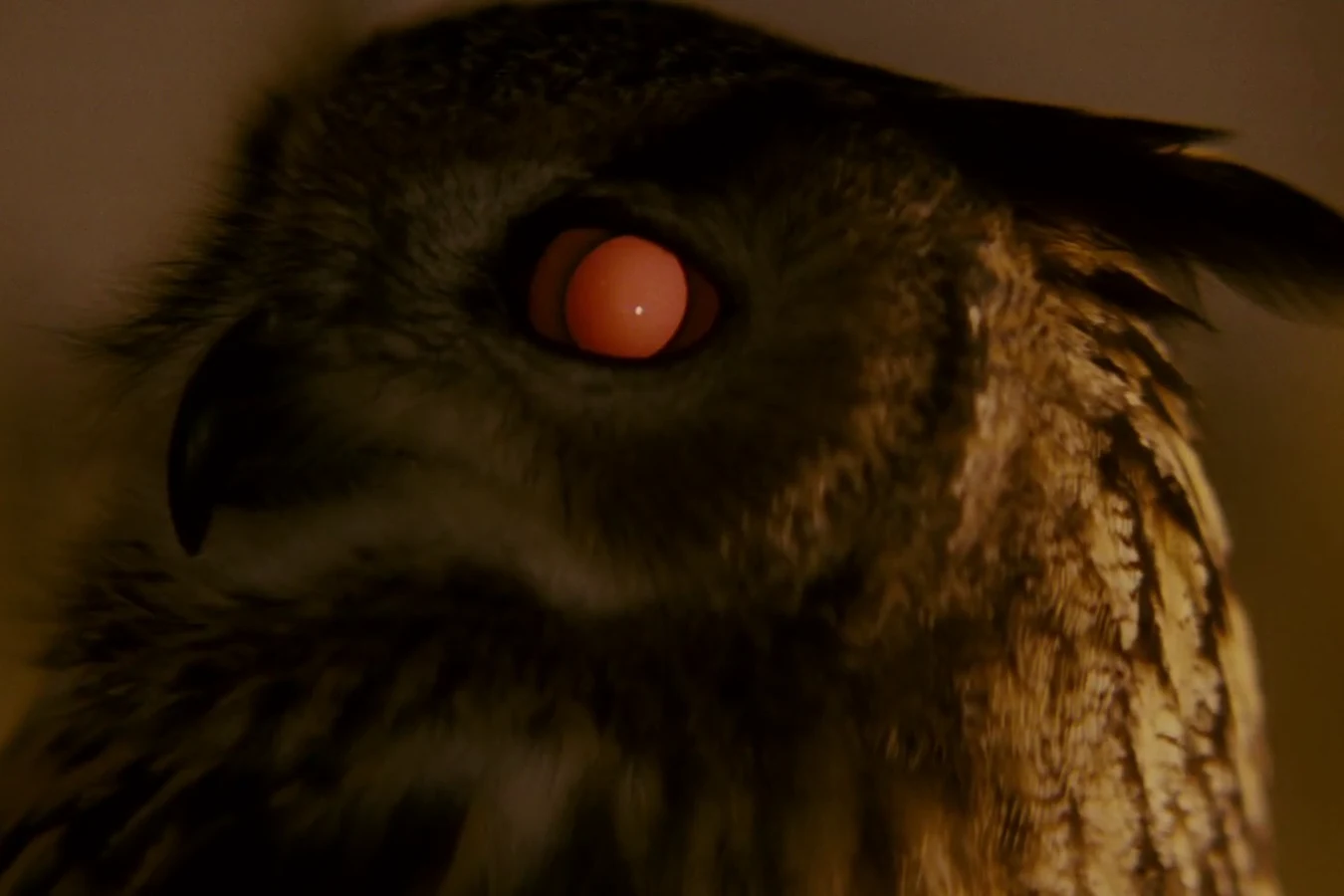
The owl was present in Tyrell's Bedchamber when Roy Batty reached the penthouse with J. F. Sebastian. Batty wanted his creator to extend his four-year lifespan, but Tyrell explained why the alterations Batty proposed would not work. The owl remained in the candlelit room during the encounter, its eyes reflecting the light as the confrontation developed.
Batty killed Tyrell after the request failed. The owl was subsequently shown in the darkened penthouse as Batty departed by elevator, remaining in the private rooms where its owner had received his final visitors. Nothing in that sequence showed the bird being destroyed, released or taken away. Its later ownership was developed in other works, rather than resolved by the ending of the film.
The Childhood Owl And Yotun
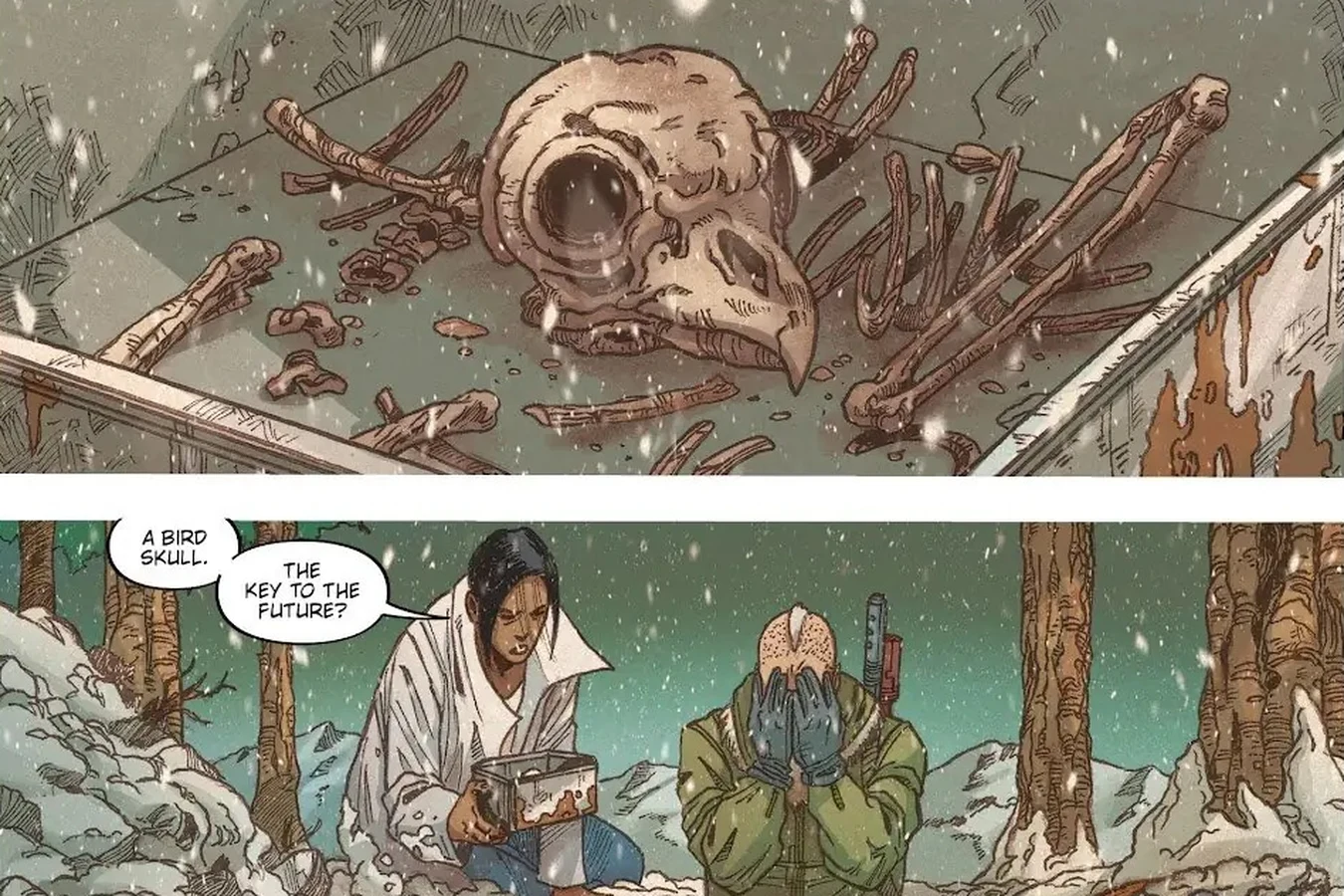
A different owl became important in Blade Runner 2029. Yotun possessed implanted memories from Tyrell's Childhood, including the discovery of a dead owl in the snow. He believed that Tyrell's memories and diary could lead him to a means of overcoming death. Those clues drew him to the mountains above Edens, California, where Tyrell's family had lived in an isolated cabin.
Yotun dug up a buried box and found an owl's skull and bones. He recognized that these remains were not a hidden technology or cure. They belonged to the childhood encounter with death that had prompted Tyrell to ask whether death could be defeated. Ash and Freysa confronted Yotun there, and Freysa killed him. The buried bird was not the artificial owl from the 2019 penthouse, and the comic did not identify its bones as Eden's remains.
Later Fate
The Blade Runner RPG case file Fiery Angels named the 2019 owl Eden and placed her in Emil Runciter's possession in 2037. Runciter's Zoological, on Animoid Row in Sector 4, traded in vintage artificial animals. Eden was a particularly valuable specimen because she had belonged to Eldon Tyrell, and Runciter regarded her as a priceless, unique bird.
Lilith Tyrell arranged for Eden to be stolen for sentimental reasons. On the evening before the investigation began, she and the replicant Ezekiel broke into the shop, smashed the door and tore open the cage. They took Eden without touching the other animals or the money in the register. Runciter reported the burglary, but the police had not responded when the investigating blade runners reached his shop.
An Artificial Owl Feather recovered during the investigation provided another route to Eden. Its serial number could not be matched to the mainframe's records, suggesting manufacture before the Blackout of 2022. Doc Badger could identify the feather as artificial and direct the investigators toward Runciter's trade in old animoids. The missing owl therefore connected the shop burglary with the people involved in Lilith's operation.
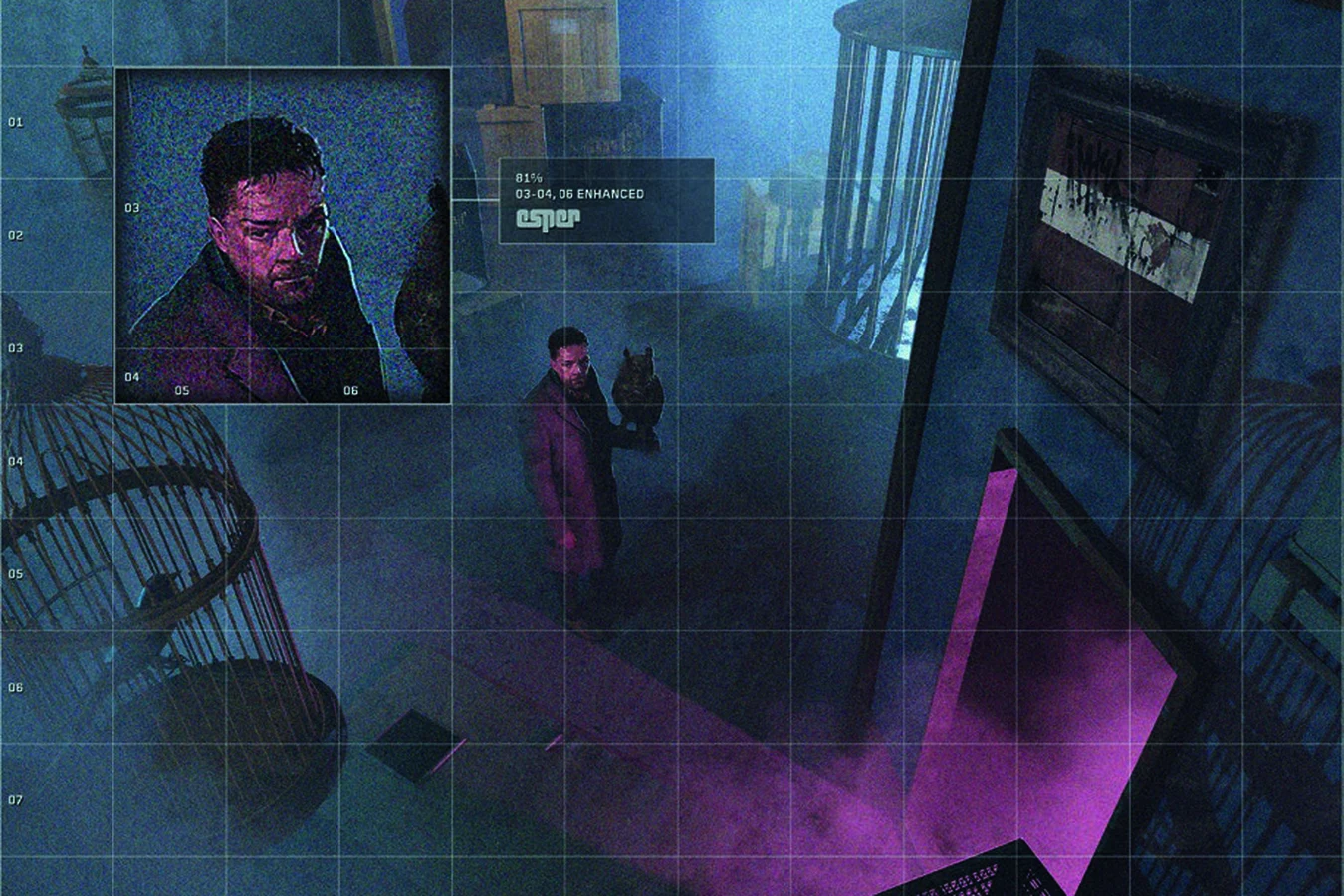
Enhanced surveillance footage showed a man resembling Ray McCoy carrying Eden away. Runciter recognized McCoy from an earlier investigation at the shop in 2019, but the thief was Ezekiel, a replicant made in his likeness. Lilith and Ezekiel had overpowered the real McCoy and kept him bound in his apartment while Ezekiel assumed his identity. The recording implicated the impersonator rather than establishing that McCoy had stolen Tyrell's owl.
Eden appeared beside Lilith during the confrontation in Wallace's executive suite, perched on a statue near her chair. Her presence reflected Lilith's attachment to her uncle's possessions as she attempted to reclaim the Tyrell legacy. The investigation's outcome depended on the players' actions; the case file did not establish a single later fate for the bird beyond that confrontation.
Was Tyrell's Owl Real Or Artificial?
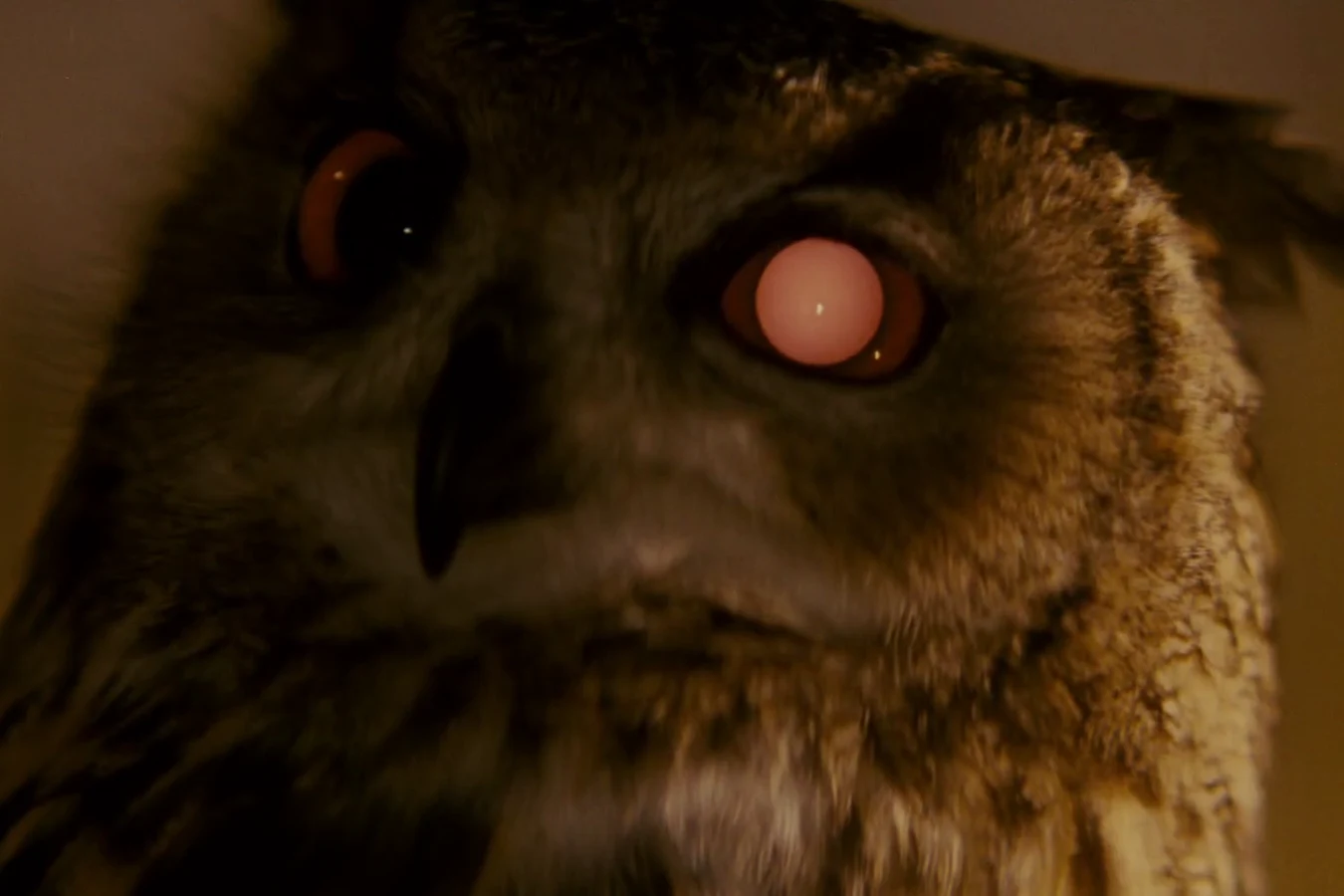
In the released Blade Runner Film, Rachael explicitly identified the owl as artificial. That answer applied to the creature in the penthouse, regardless of the real bird used during filming. Fiery Angels followed the manufactured-animal account by identifying Eden as an animoid and treating a recovered feather as artificial. The film did not describe the owl's internal mechanism or establish whether its body should be understood as an ordinary mechanical robot.
Les Martin's Blade Runner: A Story of the Future took a different approach. Its small white owl was a living animal, and Rachael told Deckard that fewer than a dozen remained on Earth. Deckard subsequently contrasted the genuine bird with the artificial Rachael. That account retained an earlier version of the encounter, rather than revealing that the released film's answer had secretly been false.
Do Androids Dream Of Electric Sheep? Continuity
The First Extinctions
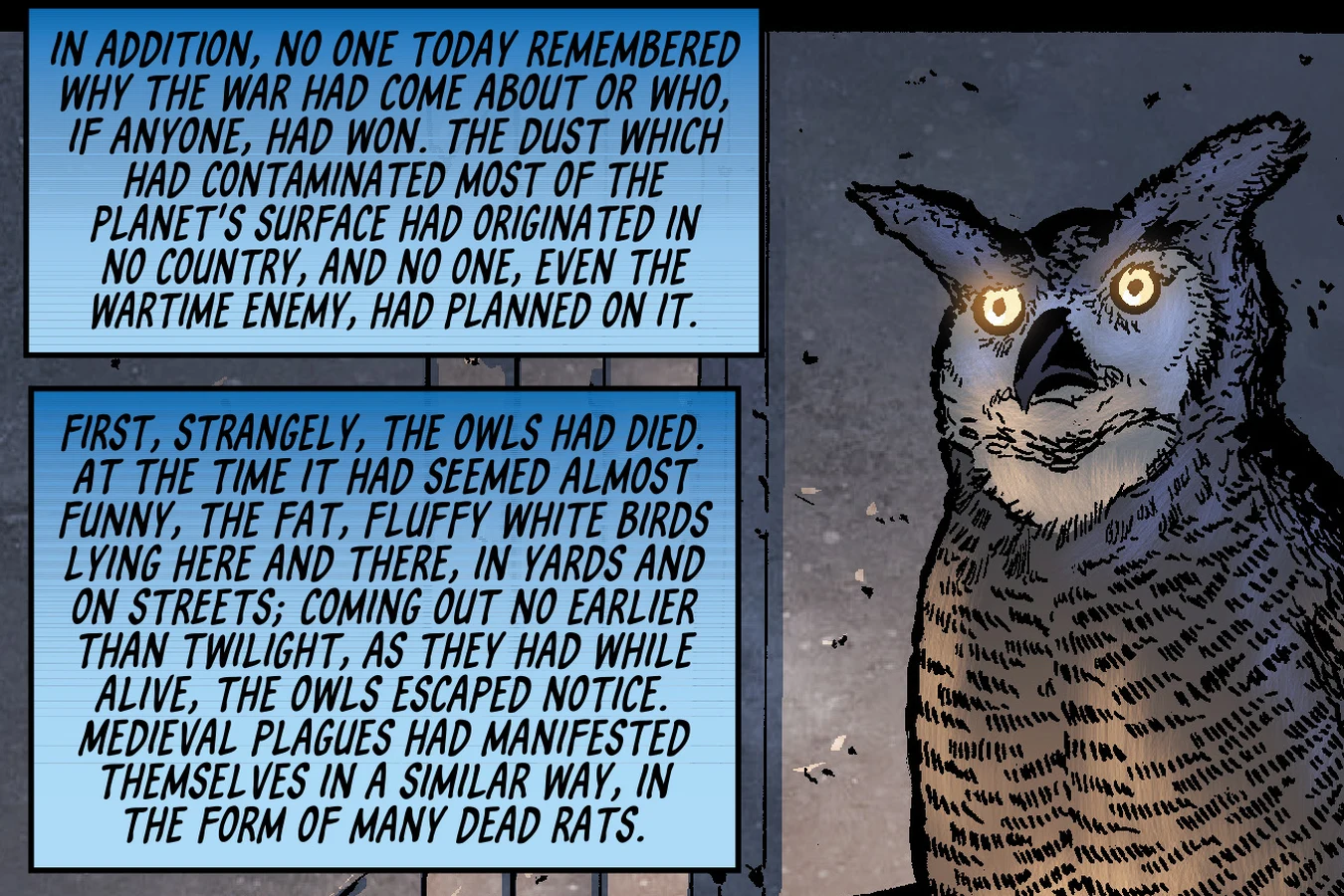
In Philip K. Dick's Do Androids Dream of Electric Sheep?, Owls Died First during the ecological disaster following World War Terminus. Dead white birds appeared in gardens and streets, but their nocturnal habits initially made the losses less conspicuous. Other birds followed as the effects of the contaminated dust became apparent. Owls became an early example of the species humanity had lost.
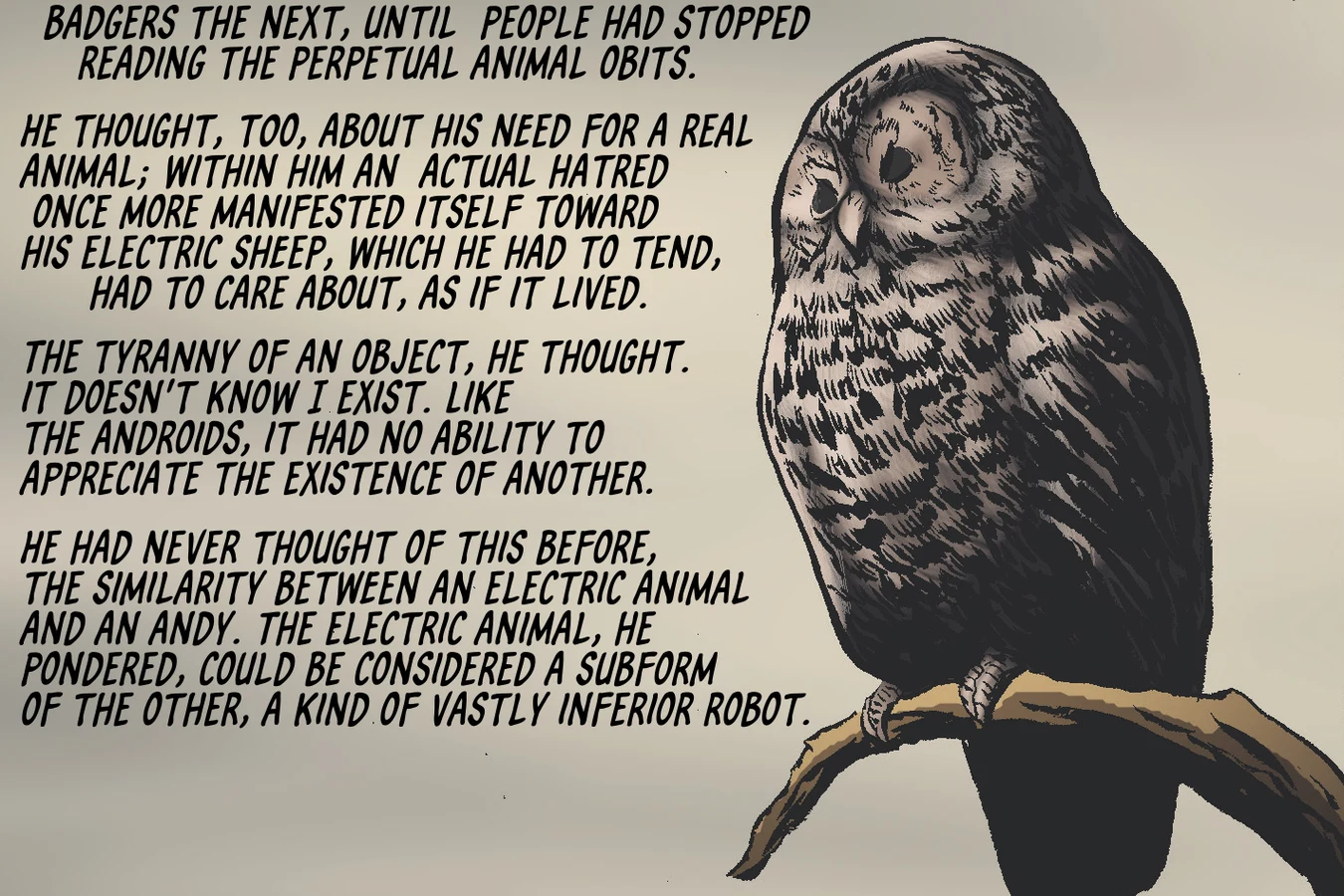
Rick Deckard remembered those extinctions from his childhood. By the time he worked as a bounty hunter, animal ownership carried immense social and emotional value, while Sidney's catalogue listed no available owls. Deckard cared for an electric sheep but wanted a living animal. The prospect of seeing an owl alive therefore affected him far more deeply than the sight of an expensive artificial pet would have done.
Scrappy And The Rosen Association
At the Rosen Association in Seattle, Rachael Rosen showed Deckard an owl named Scrappy. When he suspected that it must be artificial, she denied it and explained that the company bought animals privately and employed naturalists searching surviving Canadian forests. She also claimed that the firm intended to obtain a mate for Scrappy. Deckard asked what the owl would cost, but she told him it was beyond his means.
The Rosens later offered Scrappy as an inducement while attempting to control Deckard's judgment of the Voigt-Kampff test. They demanded ownership of any offspring and initially required the owl to return to the company after his death. Deckard objected to that condition, and Rachael allowed that he could leave it to his heirs. After he correctly identified her as an android, Eldon Rosen admitted that Scrappy was artificial and that there were no owls. The owl episode was also retained in the comic adaptation of Dick's novel.
Scrappy In K. W. Jeter's Continuity
After Tyrell's Death
In The Edge of Human, Sarah Tyrell ordered her uncle's rooms sealed after his death. A member of staff reminded her about the owl, which would otherwise have been left unattended. Sarah arranged for it to be cared for elsewhere in the complex, leaving its raised perch empty in the office she inherited, although she was unsure whether it required food or power.
Sarah considered taking the owl north and releasing it in the restricted forest where Deckard had taken refuge. She abandoned the idea because she believed the tame bird, whether living or artificial, would not survive among the forest's crows. Its empty perch remained in the office she inherited. This account established that someone had taken responsibility for the animal after Tyrell's death, without settling its nature through Sarah's own knowledge.
Iris Knaught's Hunt
In Eye and Talon, Scrappy became the subject of a police recovery operation. Meyer assigned Iris Knaught to find the owl and offered a bounty greater than the payment for a replicant retirement. The file identified a living great horned owl, approximately sixty-four centimeters tall, carrying a Tyrell Corporation leg band. Archived footage showed Tyrell feeding it a live white rat in his penthouse.
Iris traced Scrappy through the animal trade with Vogel's assistance. The owl was being held on an upper floor of a theater by armed men, and Iris recovered it during a raid. She carried it away in an oxygen sack, checked it against the archive and fed it mice trapped in her building. The living animal she brought home contradicted the claim, recorded during Deckard's visit to Tyrell, that the bird had been artificial.
The Stolen Owl
Scrappy was taken from Iris's apartment after a thief incapacitated her through her small artificial pet. Iris lost both the bird and her position in the police department. Coordinates concealed on the owl's broken leg band directed her to the ruined Tyrell headquarters, where Vogel involved her in a much larger investigation of Tyrell's work and her own identity.
The trail eventually reached Carsten's Desert Compound, which held numerous captive owls and a concealed laboratory containing copies of Tyrell. The birds were part of an effort to recover the technology associated with Scrappy. They were not all the original owl, and the presence of multiple specimens did not mean that Iris had found the bird she had lost. Carsten explained why that particular animal mattered.
Tyrell's Memory Backup
According to Carsten, Scrappy Carried A Backup Of Tyrell's Mind. A compressed set of memories and essential personality information had been stored in the owl's brain and updated approximately weekly. Tyrell intended it to preserve enough of himself to animate a replacement body if the normal transfer between successive bodies was interrupted. The backup omitted information, so a restored Tyrell would have suffered gaps in memory.
Carsten attributed the choice of an owl to its available neural capacity, forward-facing binocular vision and ability to survive independently. Optical transfer required a compatible visual arrangement, while the bird's own instincts allowed it to hunt after Tyrell could no longer maintain it. The stored information was passive baggage rather than a Tyrell personality visibly controlling the animal. Carsten's explanation belonged to Jeter's continuity; the film and the later comic owl stories did not establish that Eden contained Tyrell's mind.
Escape With Deckard
Meyer's Raid left Carsten and the other conspirators dead, together with the captive owls at the compound. Scrappy survived outside that slaughter. Iris recognized the bird flying through the desert night and watched it descend onto the raised arm of a man beyond the fence. The man was Deckard, accompanied by the child Rachael.
Deckard acknowledged taking the owl from Iris's apartment and told her that leaving it there would have put her life at risk. He led Iris and the child toward a waiting spinner, then allowed the owl to fly ahead. The story ended with Scrappy alive and free to fly around them, while Deckard challenged Iris's understanding of where they were by pointing out that the stars did not match Earth's sky. It did not show Tyrell being restored from the backup.
Behind The Scenes
The Live Owl
The long-running Blade Runner FAQ identified the filming owl as Aztec and credited birds-of-prey trainer Steve Beart with training it in England. That account supplied a production name for the real animal, separate from Eden and Scrappy in the fiction. The name and trainer were reported by the FAQ rather than established in the film's dialogue or Sammon's account of the owl's changed status.
From Dick's Owl To The Film
Philip K. Dick introduced Scrappy in the 1968 novel as an artificial animal falsely presented as a living rarity. The film moved the owl from the Rosen Association's Seattle rooftop to Tyrell's monumental Los Angeles office and removed the offer to give it to Deckard. The owl remained part of the encounter with Rachael, linking the adaptation's animal imagery with its manufacturer of artificial humans.
Paul M. Sammon's Future Noir: The Making of Blade Runner documented that the February 23, 1981 shooting script instead treated the film owl as real. Sean Young recorded Rachael denying that it was artificial. That version also survived in Les Martin's novelization, explaining why the film and A Story of the Future gave different answers to the same question. Neither version required treating Deckard's question as a mistake.
Changing Rachael's Answer
Michael Deeley told Sammon that Rachael's answer was changed through post-production dubbing. The owl's eyes glowed in a later scene, and the filmmakers wanted the first animal shown in the film to demonstrate that Tyrell could manufacture a convincing imitation of life. The replacement answer made that purpose explicit before Deckard discovered Rachael's nature, introducing artificial animal life during his first encounter with Tyrell's experimental replicant.
Sean Young's Lip Movements retained traces of the original performance, although the soundtrack identified the bird as artificial. Sammon returned to the discrepancy in his discussion of the film's continuity details. It was a documented alteration during production, rather than evidence that Rachael was secretly correcting or deceiving Deckard within the released scene. The owl's status changed between the shooting version and the completed film.
Eyes And Bird Imagery
Future Noir placed the owl within a wider pattern of bird imagery surrounding Tyrell. His rooms included a stuffed eagle, bird statues and heron imagery, while an owl emblem appeared on his robe. Sammon connected the owl with the traditional symbolism of wisdom and suggested that an artificial owl could imply a corresponding false wisdom. That was a production interpretation, distinct from a statement about what Tyrell believed the animal represented.
Ridley Scott also explained to Sammon that the replicants' retinal glow was primarily a cinematic cue for the audience. He did not present it as a simple substitute for the Voigt-Kampff test that every character could use to identify a replicant on sight. The owl supplied an especially clear example of that visual treatment. Its illuminated eyes also connected with the film's examination of vision, identity and the vulnerability of Tyrell's own eyes.
Sean Young's First Scene
Sean Young recalled that Rachael's introduction to Deckard was the first scene she filmed. In an interview reproduced in Future Noir, she described Scott repeatedly correcting her pronunciation of the word owl. She remembered twenty-six takes of the introductory line. The short exchange therefore involved considerable attention to delivery before its answer about the bird was altered later.
The names Eden And Scrappy came from different published accounts, rather than dialogue spoken in the film. Dick used Scrappy in his original novel, and Jeter reused it for the living owl at the center of Eye and Talon. Fiery Angels supplied Eden for the film-continuity animoid. Athena, the earlier bird in the 1999 promotional recording, and the unnamed childhood owl buried near Edens remained separate parts of Tyrell's history.
Conclusion
Tyrell's Owl survived its owner in the film, with the RPG later identifying it as Eden and following its theft from Runciter's shop. Other accounts gave the owl a different nature and purpose: Dick's Scrappy was an artificial bribe, Martin's white owl was a living rarity, and Jeter's Scrappy carried a claimed backup of Tyrell's mind. The comics added earlier birds and the childhood remains that Yotun mistook for the route to immortality.
Appearances
- Do Androids Dream of Electric Sheep? (1968), as Scrappy.
- Blade Runner (1982).
- Blade Runner: A Story of the Future (1982).
- Blade Runner 2: The Edge of Human (1995).
- Blade Runner (1997 video game).
- Blade Runner 4: Eye and Talon (2000), as Scrappy.
- Do Androids Dream of Electric Sheep? (comic adaptation, 2009-2011).
- Blade Runner 2019: Free Comic Book Day Special (2020), Athena.
- Blade Runner 2029 (2020-2022), Tyrell's childhood owl.
- Blade Runner: Origins (2021-2022).
- Blade Runner: The Roleplaying Game - Fiery Angels (2023), as Eden.
Tag Categories: Blade Runner Lore