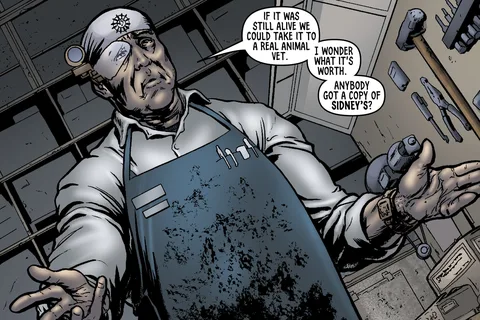

Hannibal Sloat was the proprietor of Van Ness Pet Hospital in Philip K. Dick's Do Androids Dream of Electric Sheep?. Too old to emigrate and worn gray by radioactive dust, he ran a false-animal repair shop in San Francisco and employed John Isidore as a driver and Milt Borogrove as a repairman. When Isidore brought in a cat he believed was electric, Sloat found that Horace was a real animal and already dead, then made Isidore telephone the owner. The same episode appears in BOOM! Studios' comic adaptation.
Biography
Proprietor Of Van Ness Pet Hospital
Sloat owned Van Ness Pet Hospital, a carefully misnamed false-animal repair shop that operated under the appearance of a veterinary practice. He had once been a fine repairman. After World War Terminus, living animals were so scarce that even a well-made imitation carried considerable value, and the little firm barely existed in a competitive trade. He sent Isidore out to collect damaged constructs from customers in and around San Francisco, then relied on Milt to service them in the shop.
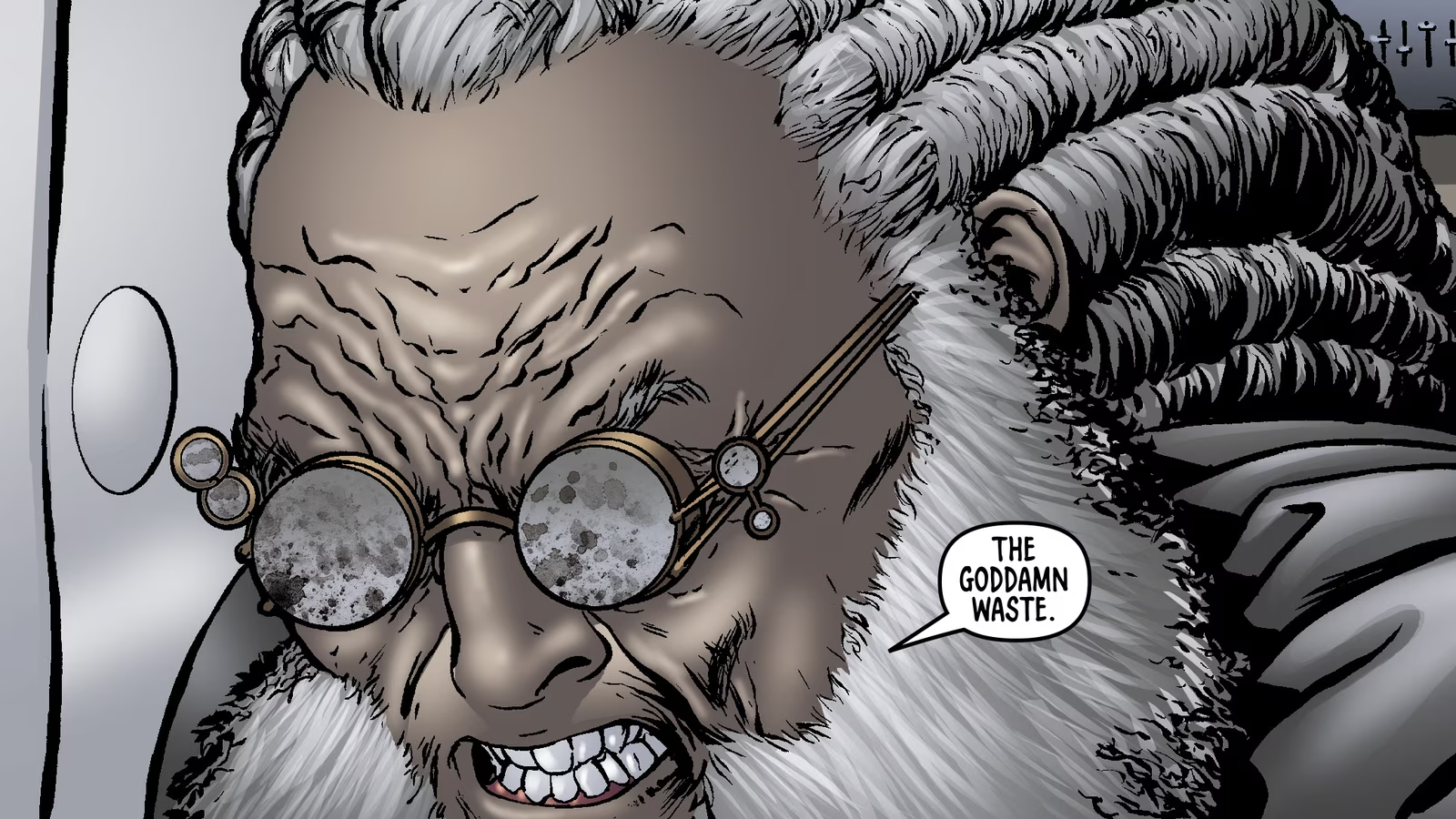
Too old to emigrate from Earth, although not classified as a special, Sloat was being eroded by the dust. It left his features gray and his thoughts gray, shrunk his frame, made his legs spindly and his walk unsteady, and coated the glasses he never cleaned. He had accepted the radioactive dirt, and it had begun the work of burying him. In the years he had left, the dust would damage his remaining senses, and it had already left him nearly blind. He still accepted Isidore as human, and Isidore appreciated that.
Horace's Death
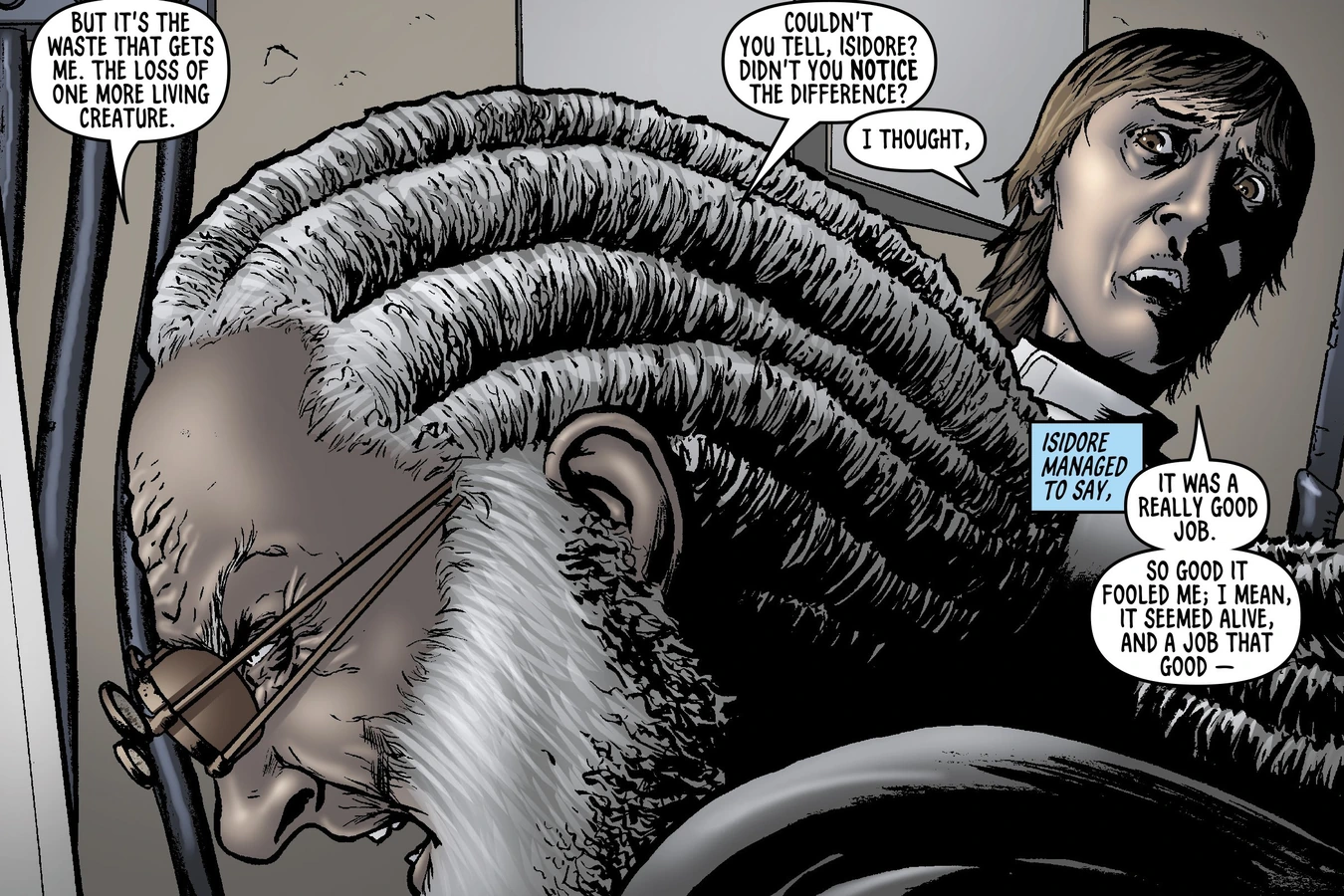
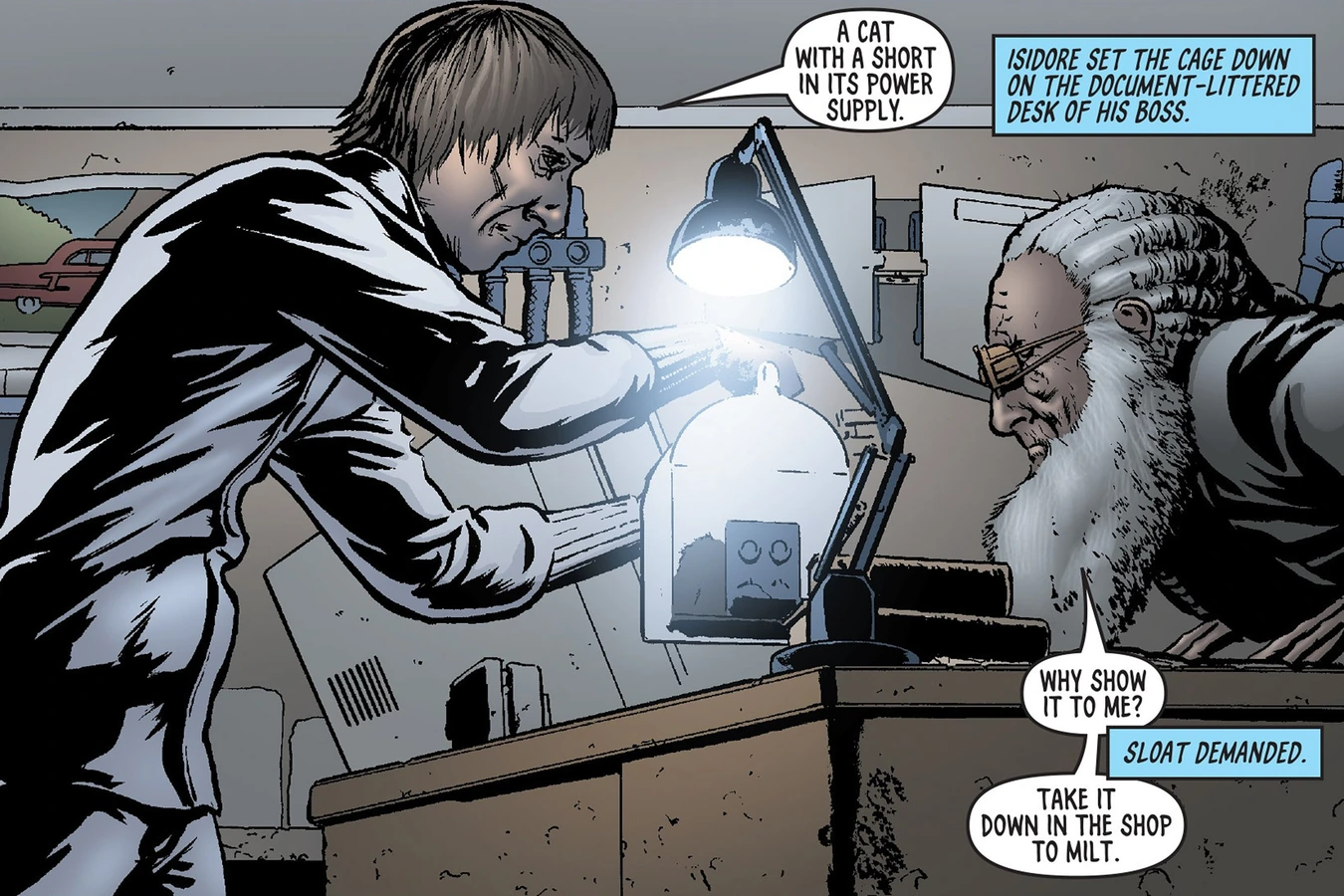
On 3 January 1992, Isidore arrived with a cat he thought had a short in its power supply. Sloat told him to take it down to Milt in the shop, then opened the cage himself. While he examined the animal, Isidore said he thought Buster Friendly and Mercerism were fighting for control of their psychic souls. Sloat said Buster was immortal, like Mercer, and that they had never admitted it, which in his view explained how the host could fill a forty-six-hour daily schedule no ordinary man could sustain. The same, he added, was true of Amanda Werner and the other women on the programme.
He then removed his dust-filmed glasses and found that Horace was a real animal, already dead. He cursed the waste of one more living creature, blamed Isidore for failing to tell the difference, and for the first time in front of him used the term chickenhead. Milt spoke up, saying he did not think Isidore could tell the difference because to him they were all alive, false animals included, and that Isidore had probably tried to save it. When Isidore later objected to the insult, he pointed out that the dust had affected his employer too.
The Call To Mrs. Pilsen
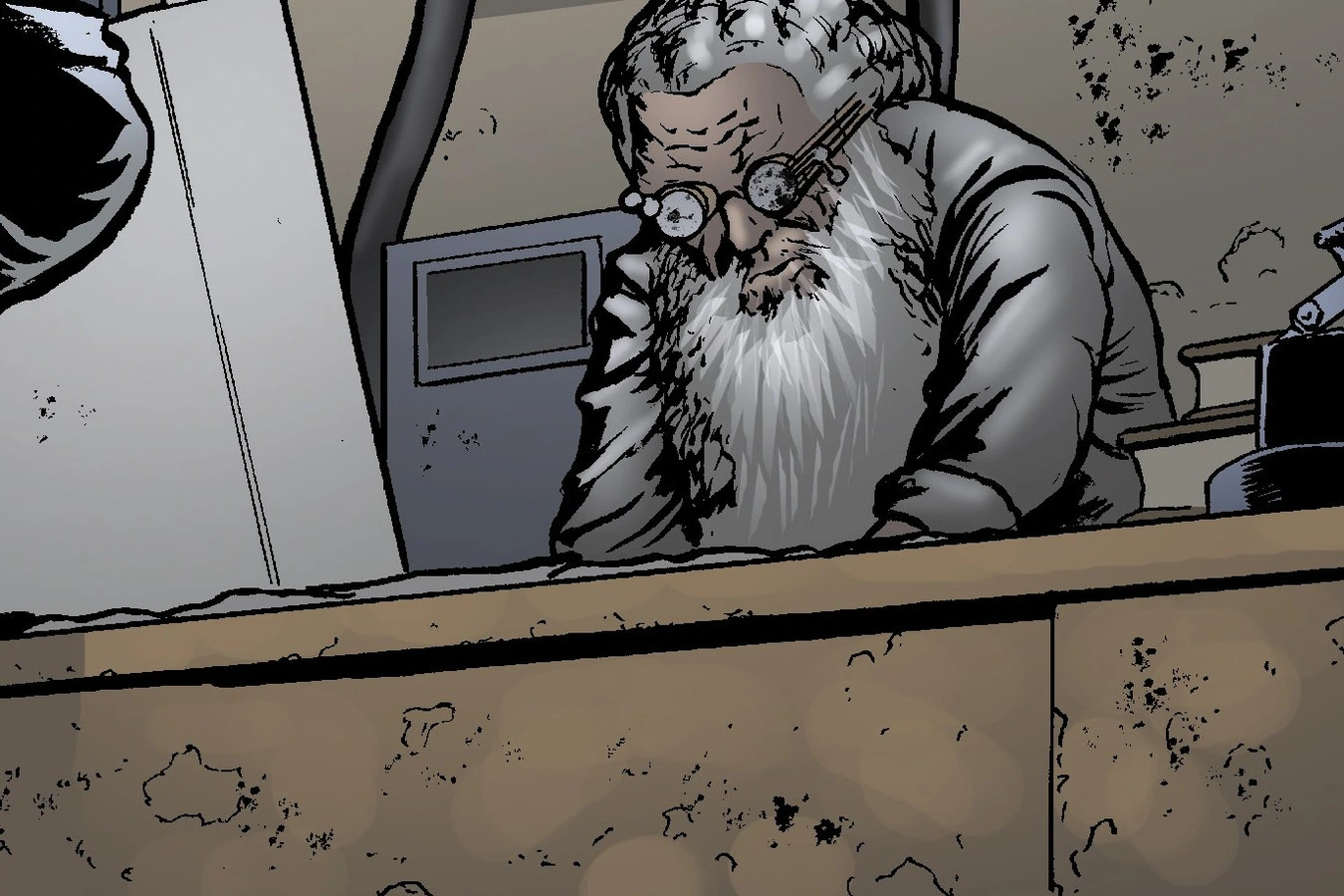
Sloat demanded that Isidore telephone the owner himself and threatened to fire him if he did not. Milt offered to make the call and held out his hand for the number, but Sloat refused. Isidore had a phobia of the vidphone, and Milt said that if he felt the same way he would not use it either. He also told Sloat that Isidore was right about the dust, which had left their employer nearly blind and would later damage his hearing. Sloat retorted that the dust had got to Milt as well.
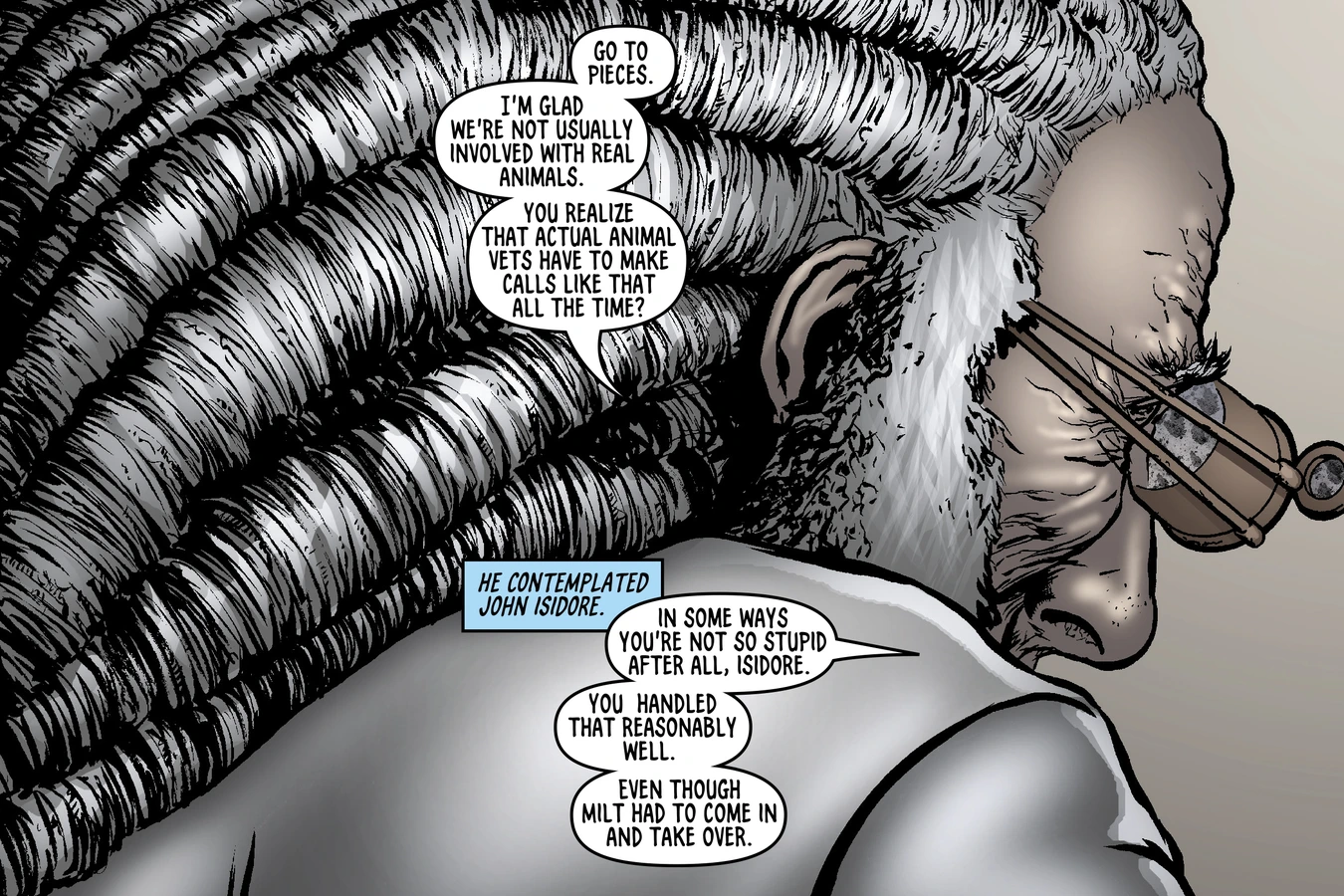
After Isidore reached Mrs. Pilsen and began offering replacements, Milt took over the conversation. She chose an electric replica from Wheelright & Carpenter so that her husband would not learn of Horace's death. After hanging up, Milt told Sloat that the man would know in five seconds, but that was what she wanted. Sloat then told Isidore that, in some ways, he was not so stupid after all, and that he had handled the exchange reasonably well, even though Milt took over. He assigned Isidore the follow-up with the builders and later advanced him two weeks' salary, which Isidore used to buy food on his way home.
K. W. Jeter Continuity
In K. W. Jeter's Blade Runner 2: The Edge of Human, Sloat was already dead. Isidore had inherited the business, now called the Van Nuys Pet Hospital and set in Los Angeles rather than at the original Van Ness shop in San Francisco. Isidore said Sloat had turned the hospital into a refuge for escaped replicants, a function the 1968 novel never gave the firm. The shop still dealt in animals, living and artificial, while also hiding surgery that helped fugitives assume human identities.
That version of the hospital belongs to Jeter's film-licensed sequel continuity, not to a second stretch of Do Androids Dream of Electric Sheep?. Sloat himself does not appear. He remains only as the man who left the business to Isidore and, according to Isidore, had already begun the work of hiding escaped replicants. The original Van Ness proprietor should therefore be distinguished from this later, unseen predecessor in Los Angeles.
Personality & Traits
Sloat was a gloomy, gothic employer, harsh with the driver he still kept on the payroll. He used the chickenhead insult when he was angry, yet he accepted Isidore as human and continued to give him work. He thought first of the value of a lost animal and of Sidney's list price, and he cursed the waste of one more living creature because real animals had become so scarce. He still gave that work to the man he was quick to blame when a collection went wrong.
He could also admit when Isidore had done reasonably well, and he trusted him with the follow-up work after the call. The Latin motto he sometimes quoted, Mors certa, vita incerta, fitted a man too old to leave Earth, who saw the world through glasses dense with dust and did not clean them. Milt was the kinder of the two men in the shop, and he argued with Sloat in Isidore's defence, but it was Sloat who ran the hospital and decided what the driver would do.
Behind The Scenes
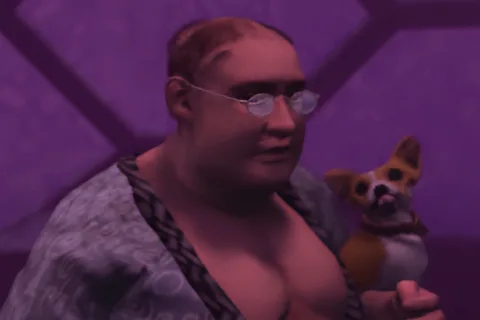
Philip K. Dick introduced Sloat in the 1968 novel as the worn proprietor of the false-animal hospital, a subplot that has no counterpart in Ridley Scott's Blade Runner, which followed Rick Deckard's hunt and did not adapt the Van Ness shop. BOOM! Studios' 24-issue comic adaptation, published from 2009 to 2011, kept the novel's text and placed it around Tony Parker's art, so Sloat's hospital scene appears in full. Parker drew him as an old, bearded man with dusty round glasses, a long braid, and an unsteady presence behind his desk.
The 1982 film instead used the first name for Hannibal Chew, a genetic designer of replicant eyes, and the two men share little else. Chew has been described as loosely based on Sloat, but the film shares only the first name, which was never spoken on screen. Parker's Sloat remains a San Francisco shop owner in the BOOM! adaptation, while Chew belongs to the film's Los Angeles and to an eye laboratory. Sloat's hospital, his driver, and Horace have no counterpart in that story.
Conclusion
Hannibal Sloat appears in only a few scenes, but they fix his place in the novel: a dust-worn shop owner who still employed a special, who raged at the death of a real cat, and who later conceded that his driver had handled a difficult call reasonably well. Later that day, Deckard used Isidore's name, the pet hospital, and Sloat's name at the apartment door when he came looking for the fugitives. Tony Parker's hospital scenes preserve that brief role. Jeter's sequel leaves him only as a predecessor, already dead, whose shop passed to Isidore as a hiding place for escaped replicants.
Appearances
- Do Androids Dream of Electric Sheep? (1968)
- Blade Runner 2: The Edge of Human (1995, mentioned)
- Do Androids Dream of Electric Sheep? (BOOM! Studios comic, 2009-2011)
Tag Categories: Blade Runner Lore | Blade Runner Characters