Blade Runner (1985): Full Game Overview

Blade Runner is a 1985 shoot 'em up published by CRL Group PLC for the ZX Spectrum, Commodore 64, and later the Amstrad CPC. It is the first Blade Runner video game, years before Westwood Studios' 1997 adventure. CRL could not secure rights to Ridley Scott's 1982 film, so the cassette inlay called the release a video game interpretation of the film score by Vangelis. The player is a bounty hunter who retires escaped Replidroids in a crowded Los Angeles, not Deckard by name and not under the Blade Runner job title used in the movie.
Plot
The premise tracks the film's outline at a distance. Replidroids built for off-world work are banned from Earth after a colony revolt. A unit of bounty hunters must find any that reach the city and retire them. The packaging and manuals lean on that setup rather than on scenes or dialogue from Scott's cut, and they avoid Philip K. Dick character names from Do Androids Dream of Electric Sheep?. Contemporary coverage noted the word Replidroid in place of replicant, and the player role as bounty hunter rather than blade runner, choices that kept the product clear of the film licence CRL did not hold.
Gameplay
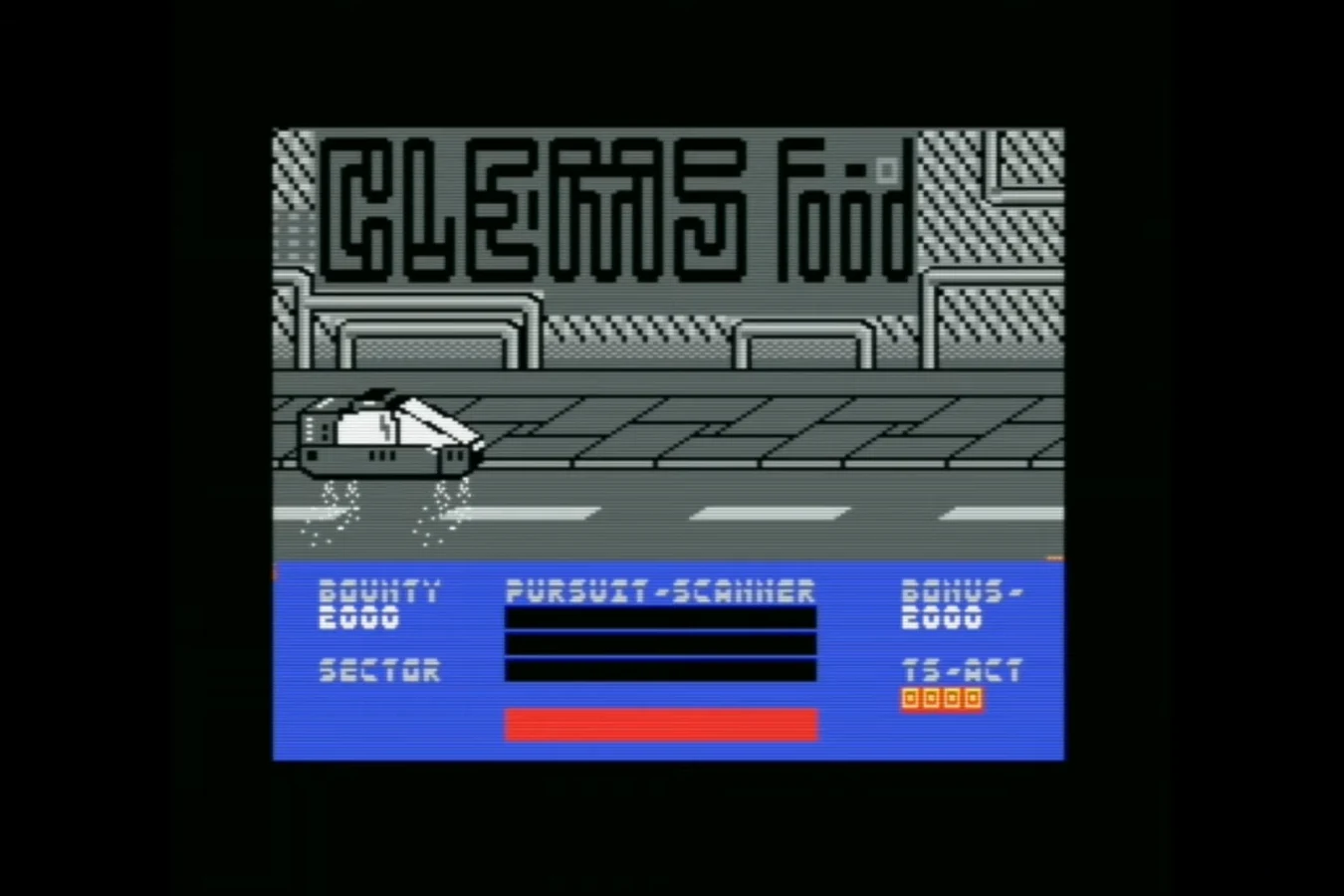
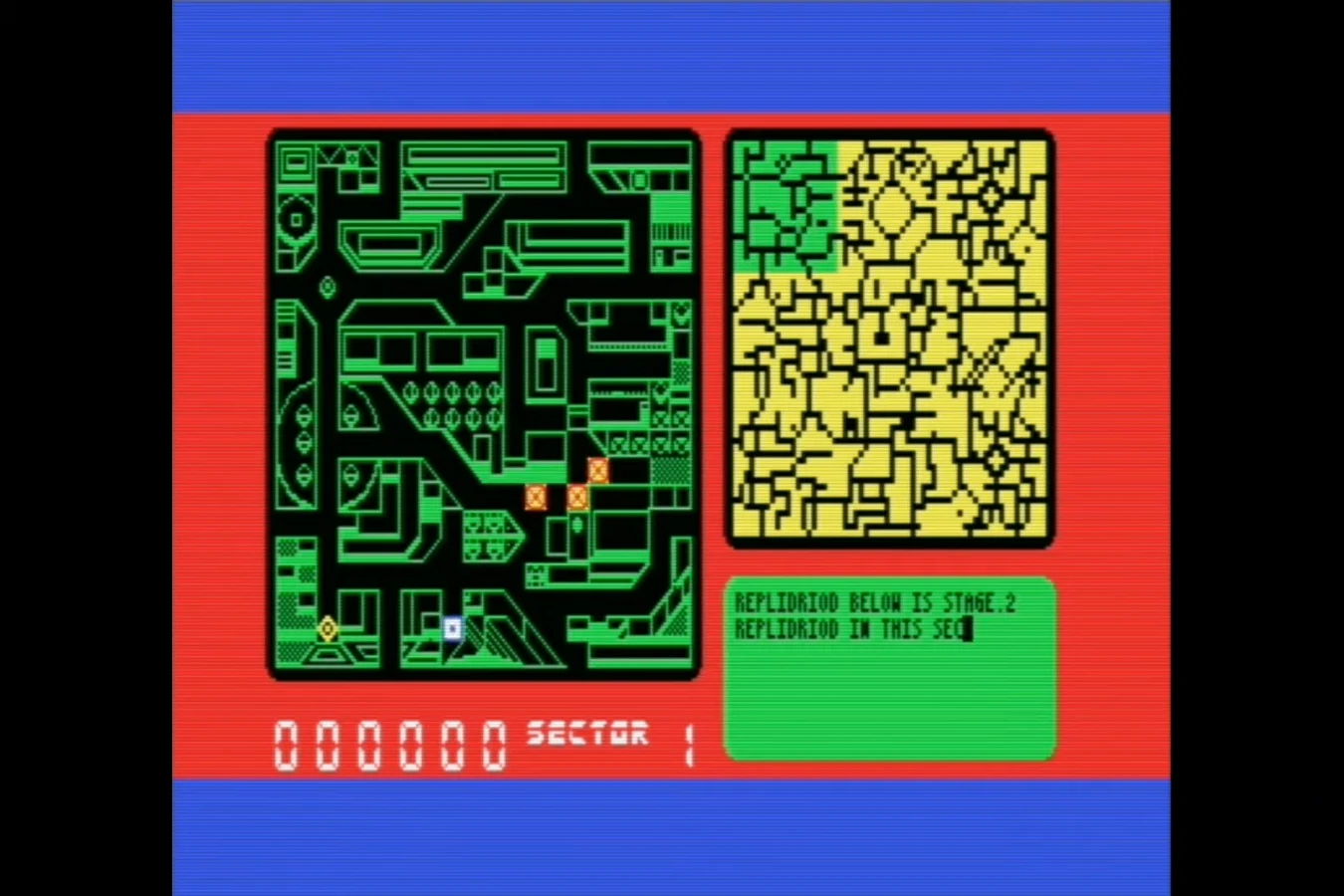
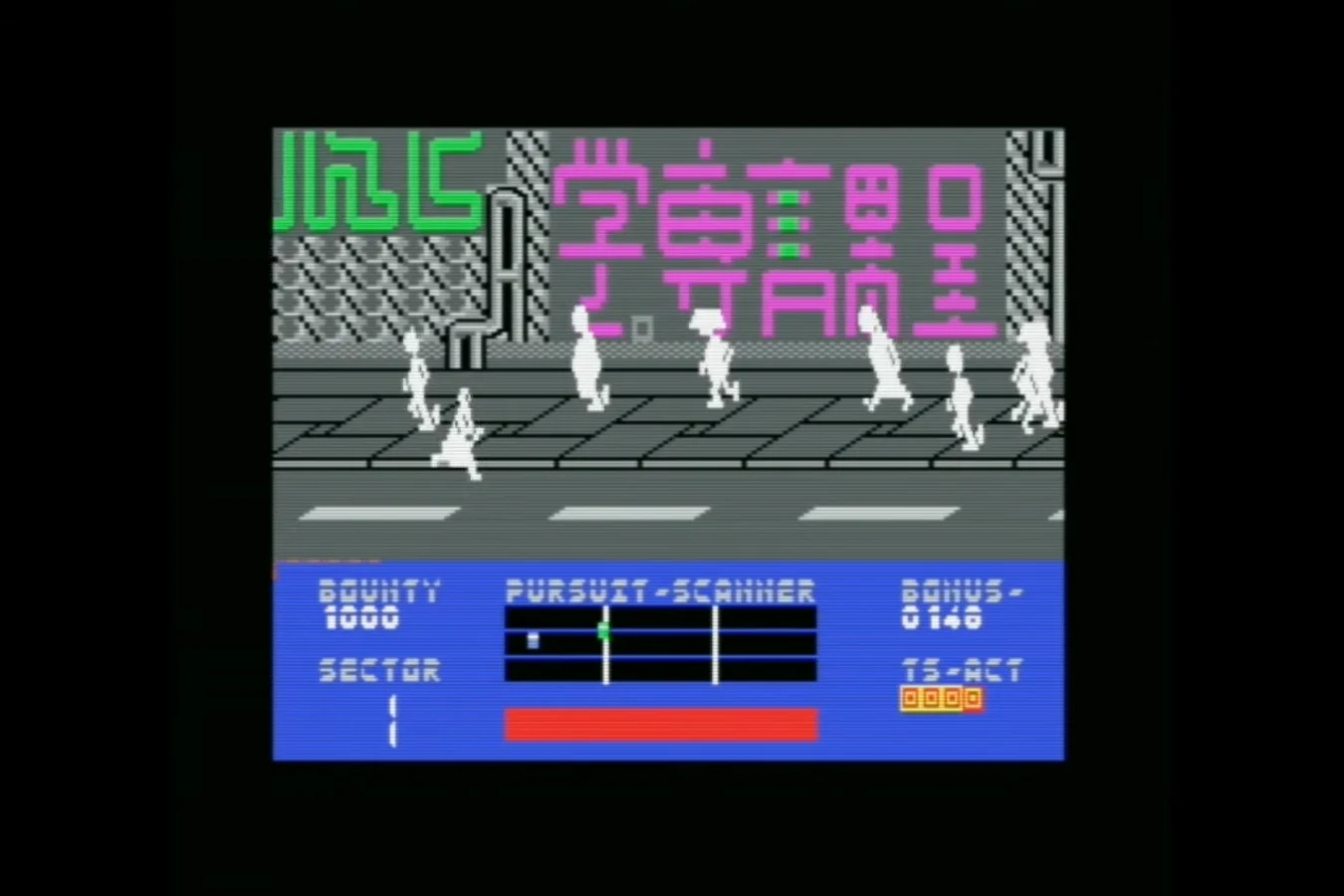
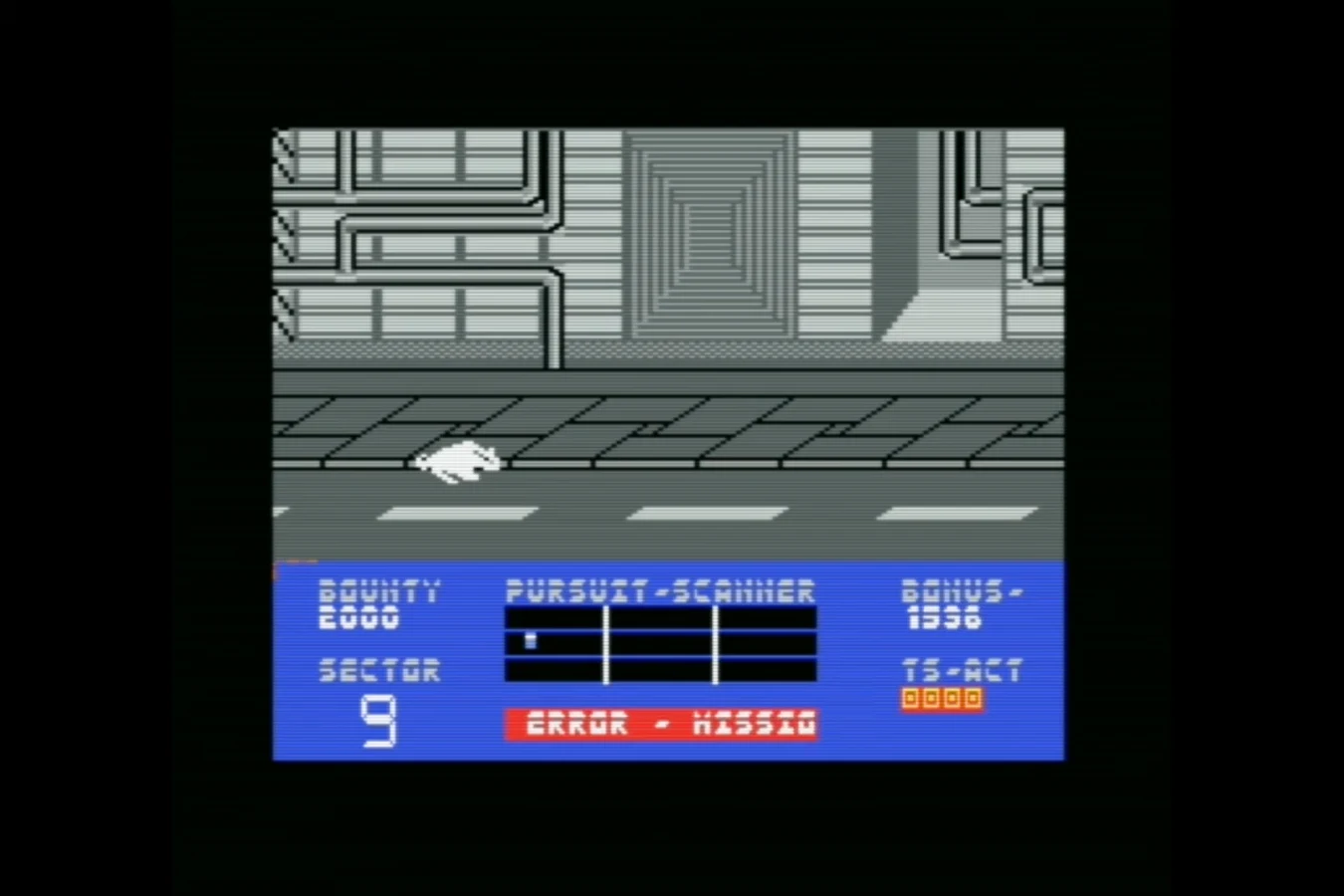
Play splits into two linked modes. From the skimmer the player reads a sector radar, a smaller city overview, and a text readout that names nearby Replidroid stages. Steering the skimmer over a marked target and firing drops the hunt into a side-scrolling street chase. On foot the bounty hunter must dodge cars and crowds, track the green marker on a pursuit scanner, line up with the target, and shoot for the bounty shown on the status bar. Hitting too many pedestrians ends the run. If the target leaves range, the skimmer retrieves the player and the map search begins again.
Replidroids run from stage 1 through stage 6. Lower stages move slowly. Higher stages outpace a human and take more hits. Hardcore Gaming 101 reports a win condition of retiring twenty-four Replidroids, far more than the six Nexus-6 units Deckard faced on screen. Loading and cut sequences include a long stretch of the licensed Vangelis theme before play starts, with no skip on the original machines. Will Brooker later wrote that home-computer sound hardware reduced the score's swoops to a thin single-channel line, a limit reviewers still paired with praise for the C64 SID arrangement.
Versions And Platforms
CRL shipped the game in the United Kingdom on cassette at £8.95. MobyGames and platform archives date the ZX Spectrum and Commodore 64 releases to 1985 and the Amstrad CPC release to 1986. Spectrum Computing lists the Spectrum build for the 48K machine with redefineable keys. Lemon64 lists joystick control on port 2 for the C64 build, with code and graphics credited to Ian Foster and music to Graham Jarvis and Rob Hartshorne. CPC-Power documents the Amstrad version as a Mode 1 run-and-gun that uses rasters to show more than four colours, and notes Spanish distribution by Zafiro Software. Spectrum Computing also records a 1988 Spanish Spectrum re-release under Zafiro Software Division.
Port character differs by machine. Hardcore Gaming 101 prefers the Commodore 64 build for in-game music on the SID chip, notes a stronger title screen and red-blue street colours on the Spectrum without gameplay music, and finds the Amstrad version closer in colour to the Spectrum while keeping music through the session. CPC-Power records several Amstrad bugs, including multi-hit Replidroids that also count as pedestrian hits, a scientist counter that does not reset between waves, and occasional returns to the title screen after a kill. Those notes are Amstrad-specific and should not be read as Spectrum or C64 behaviour without separate proof.
Behind The Scenes
- Score licence, not film licence. CRL could not afford or obtain rights to the 1982 film, so it licensed Vangelis's soundtrack instead. The title screen and inlay state that the game is a video game interpretation of that score. Crash and Spectrum Computing both record the music-first rights path.
- Renamed film terms. Manual and packaging language swaps replicants for Replidroids and blade runners for bounty hunters, while still using spinner and retire. Hardcore Gaming 101 treats those swaps as deliberate rights workarounds rather than random slang.
- Credits. Wikipedia and later summaries name Andy Stodart and Ian Foster as designers. Lemon64 credits Ian Foster for C64 code and graphics, with Graham Jarvis and Rob Hartshorne on the SID music. Spectrum Computing lists Paul Andrew Stoddart and Ian Ellery as Spectrum creators and Phil Gascoine for inlay and poster art, and marks an alternate Andy Stodart and Ian Foster SPOT entry as unconfirmed.
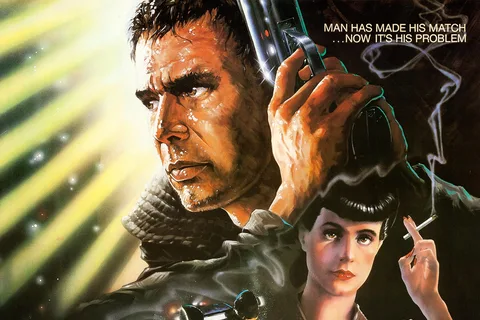
- Packaging. The C64 cover shown here carries the CRL Presents banner, the CBM 64 and £8.95 price mark, and the Vangelis interpretation line above the CRL Group PLC London address. Phil Gascoine's art work matches the Spectrum Computing inlay credit.
- Film and novel distance. The game gestures at Los Angeles, spinners, and a Deckard-like trench coat on the box, but it does not retell Deckard's four retirements or adapt Dick's novel plot. Academic writing by Barry Atkins later called the result a mundane shoot 'em up that only glances at the film.
- Place in the series. This cassette generation stands apart from Westwood's licensed 1997 adventure, Seismic Games' 2018 VR title Blade Runner: Revelations, and later announced games. It is the earliest commercial Blade Runner game on home computers.
Reception
Contemporary magazine scores were mixed to poor. On the Spectrum, Crash scored the game 58%, Sinclair User gave it 3 out of 5, and Your Sinclair gave it 7 out of 10. Spectrum Computing averages those magazine scores at about 63%. On the Commodore 64, Zzap!64 scored it 39% in issue 10 (February 1986), Commodore User gave it 1 out of 5, and Computer and Video Games scored it 6 out of 10. Lemon64's compiled magazine average sits near 37%.
Sinclair User called the game pretentious and the graphics plodding, and complained about long repeating cut scenes. Your Sinclair found little variety and an unfinished feel. Crash compared the street hunts to a cut-down Ghostbusters and disliked sluggish controls and lookalike characters. Zzap!64 attacked the difficulty and bland graphics. Commodore User thought the music excellent yet still called the full-price game disappointing. Later commentary by Atkins and Brooker kept the same line: thin shoot 'em up systems wearing glancing Blade Runner signs, held up mainly by the licensed score idea and the C64 music.
Conclusion
Blade Runner for ZX Spectrum, Commodore 64, and Amstrad CPC is CRL's 1985 bounty-hunter shoot 'em up built on a Vangelis score licence when a film licence was out of reach. Map search and crowded street chases make up the loop, with stage-rated Replidroids and a high retirement count. Reviews of the day were largely harsh, with music the usual bright spot on the C64. The cassette sits at the start of the Blade Runner game line that later moved to Westwood's 1997 adventure, Revelations in VR, and later announced titles such as Blade Runner 2033: Labyrinth.
External Sources
- Blade Runner (1985 video game) on Wikipedia
- Blade Runner on Spectrum Computing
- Blade Runner on Lemon64
- Blade Runner on CPC-Power
- Blade Runner (1985) on MobyGames
- Blade Runner (1985) at Hardcore Gaming 101
Tag Categories: Blade Runner Lore | Blade Runner Games