Colonial Marines Operations Manual: Book & Lore Overview

Colonial Marines Operations Manual is a 2021 campaign hardcover from Free League Publishing for Alien: The Roleplaying Game. Andrew E.C. Gaska was lead writer, Tomas Härenstam was game director and co-editor with Dave Semark, and Paul Elliott designed the locations. The book is the first campaign module for the rules, written for open play as the United States Colonial Marine Corps in 2183 and 2184, after Aliens and Alien 3.
Book Overview
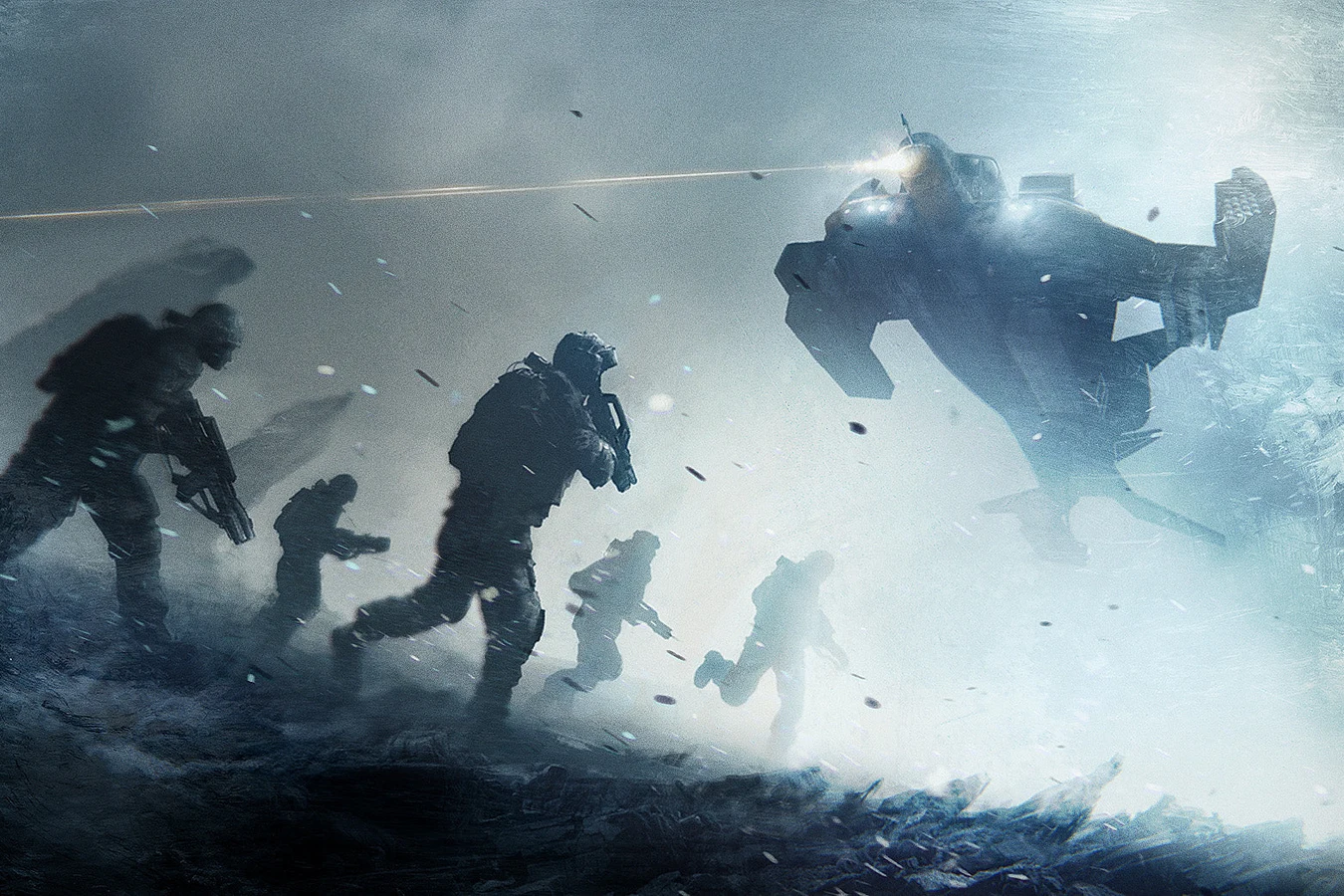
The hardcover splits into a players' section, chapters 1 through 5, and a Game Mother's section, chapters 6 through 10, which starts on page 108. Players are told to treat the first half as a field guide to weapons, vehicles, protocols, and politics. The second half holds the Frontier War campaign, mapped systems, black projects, and seven missions that can be run in any order before a closing operation. Balto printed the 2021 run, and the contents run through an aftermath on page 352.
The in-universe voice is a Marine briefing set a few years after the destruction of Hadley's Hope on LV-426 and the outbreak on Fiorina 161. The USS Sulaco is listed as missing, with later ghost-ship sightings, and a second Anchorpoint station has been established. Robert Morse's banned book Space Beast is already moving across the Network. The cold war with the Union of Progressive Peoples has turned into open fighting, and colonies along the border are being hit with a black chemical weapon.
A Life In The Corps
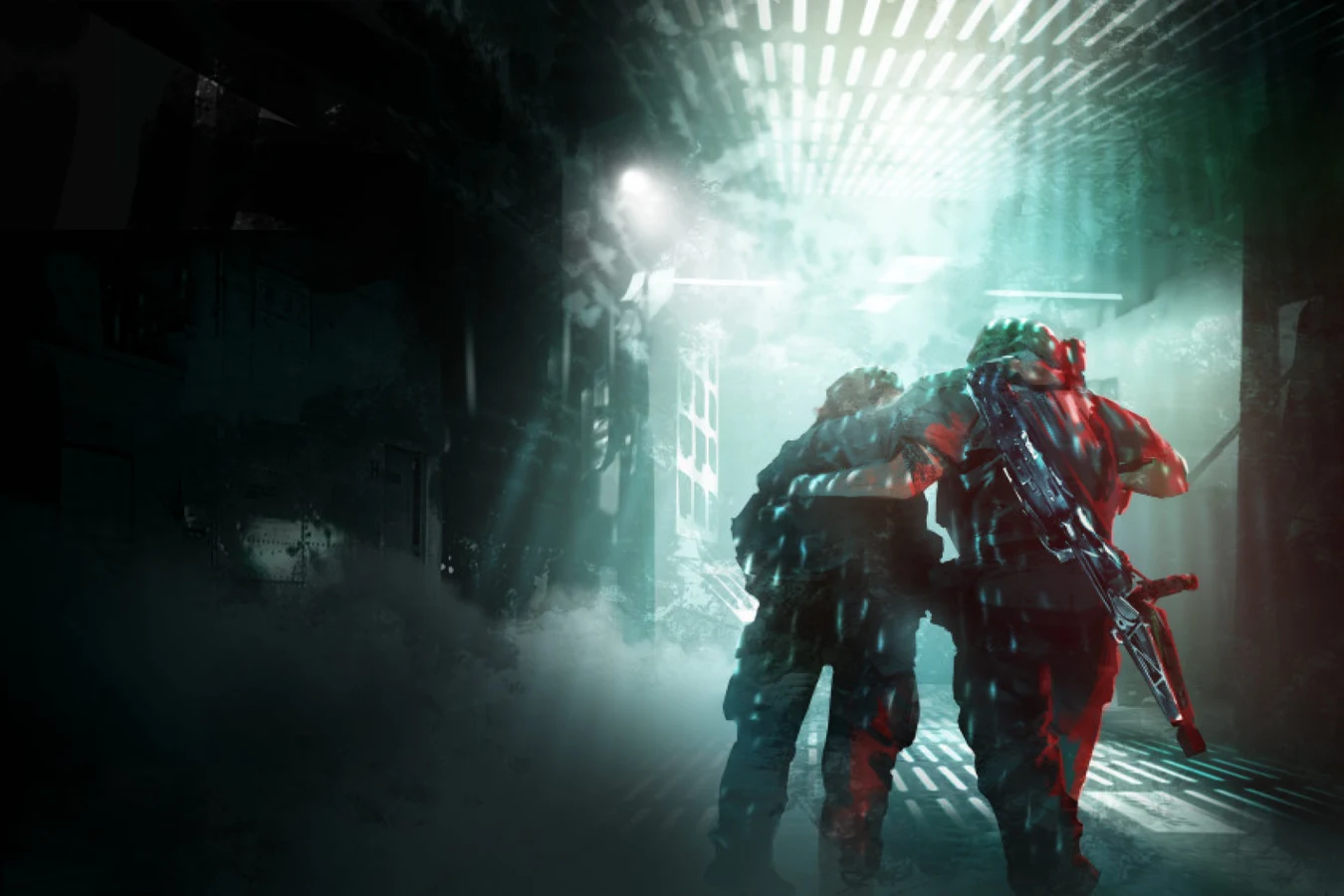
The opening chapter quotes the amended National Security Act. The Corps is part of the United Americas Allied Command and is supposed to protect United American colonies inside the Network. That duty is sometimes stretched to colonies of the Three World Empire. Inside the 20 parsec limit the Marines are the first force sent when a colony cannot handle a fight or a disaster on its own. If the Secretary of Defense and Allied Command are gone, the senior Colonial Marine officer is written in as head of an interim council under the President of the United Americas.
A later clause says the Corps is co-financed by Colonial Administration and Weyland-Yutani so it can also be called up as company security on joint-venture worlds. Travel time is the other constant. Even a fast ship needs almost three months to cross claimed space, and a slower hull can take three years, so a tour lasts longer than the waking months suggest. Most colonies the book sends Marines to are not open-air worlds. They use canned air, and the local animals, plants, and weather are treated as things the squad has to clear before colonists can stay.
The chapter names that clearance work a bughunt, including a platoon that fought a dinosaur on Moldoon's Moon. Human trouble is listed beside it: colonial revolts, pirates the Colonial Marshals cannot finish, and company fights that pull a platoon onto one side. By the book's present, the UPP is taking American systems, production worlds are threatening their own supply lines, and border worlds are being destroyed with a black biochemical agent the briefing calls alien. A short close on life after the Corps says most Marines who live through a tour do not go back to mining or farming, and that corporate prosthetic limbs can leave the wearer tied to the company that owns the hardware.
History
Weyland's Colonies And The New Corps
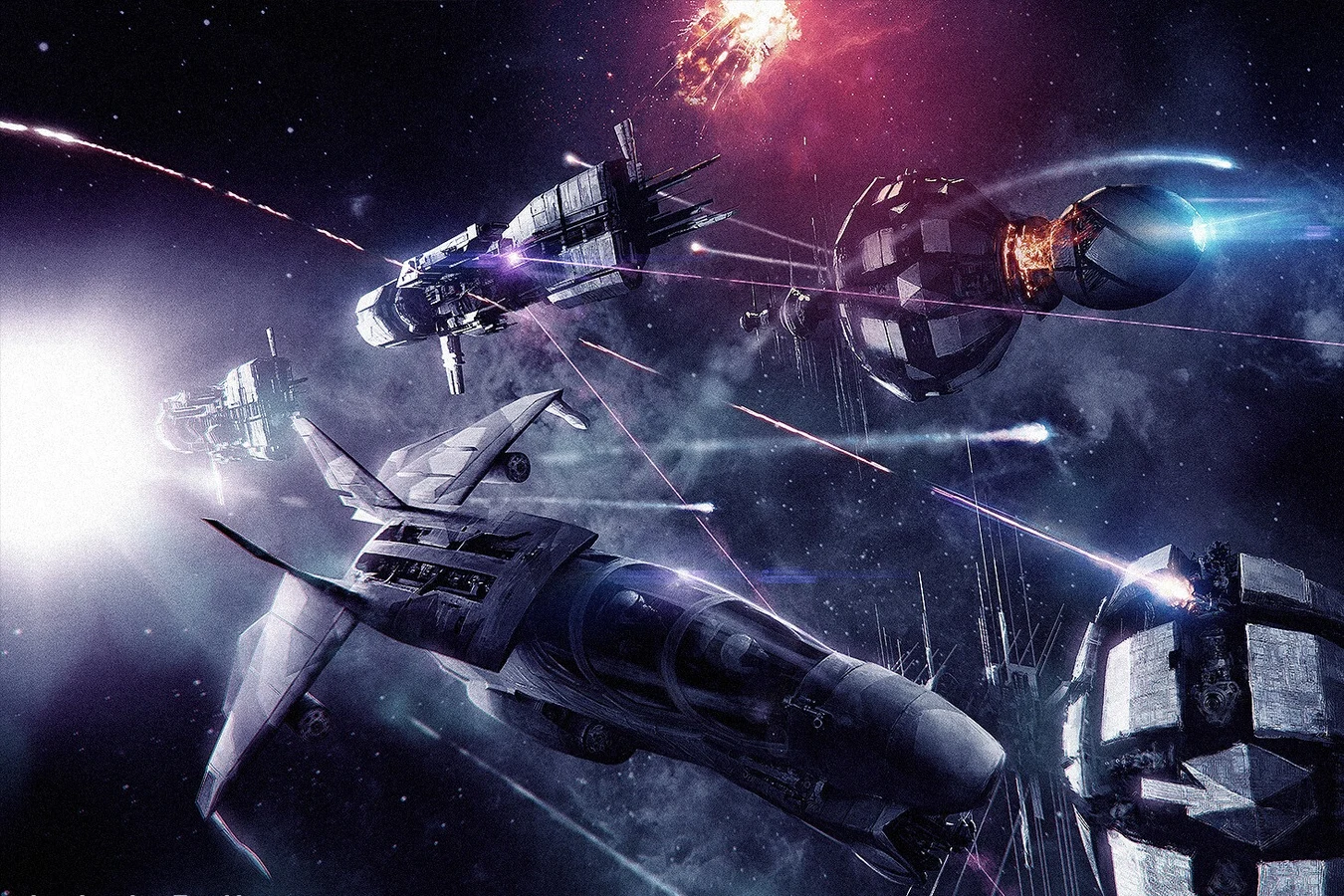
The history starts with Sir Peter Weyland. Weyland Corp found worlds, built faster-than-light travel, hypersleep, breathable air, and artificial people, and the colonies that followed were too far for most Earth governments to guard. The United Nations was recast as the United Nations Interplanetary Corps. Weyland Corp and the Yutani Corporation then helped form the Three World Empire from Britain, Japan, Mars, and Titan, while China built the Chinese/Asian Nations Cooperative and the Chinese Arm. By the mid-2090s Weyland and Meredith Vickers were lost with the Prometheus expedition, the company was in debt, and Hideo Yutani bought it.
The National Security Act of 2101 created the Colonial Marine Corps with four divisions, four aerospace wings, support services, and a fifth reserve division and wing. In 2103 the United States, Canada, and United Latin America left the old interplanetary body and began the United Americas. The new services answered to Allied Command under Secretary of Defense De La Cruz, and the United American Outer Rim Defense was stood up to guard the outer colonies. Weyland-Yutani and Hyperdyne Systems backed colony ships that included the USCSS Covenant, Concordat, Arceon, Affiance, and Allegiance. The FBI listed the Earth Savers, who wanted humanity forced back to Earth, as terrorists.
Torin Prime Breaks From The United Americas
The Paraguayan colony Torin Prime rejected the unification of the three Americas. The J'Har insurgency took the planet's energy plants and held United Americas loyalists in camps that doubled as headquarters. The revolt spread, and J'Har advisors pushed a labor dispute on Thedus that cut supply lines to Torin Prime. The Thedus dispute lasted four months. Taking Torin Prime back took nearly two years and embarrassed the new Outer Rim Defense.
After that loss of face, other countries built their own blocs. Germany and Spain joined Russia as the Union of Progressive Peoples, with China helping the Union form but keeping the Cooperative separate because the UPP charter rejected corporations and the Chinese Arm still depended on them. A proposed merger of Marines, navy, army, and aerospace into one extrasolar force died after the troop carrier UAS Archangel was destroyed on a peacekeeping run to Thedus. More than fifteen thousand people died. Captain A. Dallas lost his flight license and was discharged, and no criminal charges followed. The Outer Rim Defense was cut back into the Outer Rim Defense Fleet, a transport and supply service, and the expansion money went to the Colonial Marines instead.
The Twenty Parsec Limit
Congress refused a draft after the Archangel loss, so the Corps asked Weyland-Yutani for troops. The company started the Artificial Womb Soldier program, and over the next seven decades the Corps raised three generations whose surname was a weapon and whose middle initials were A.W. Contact then failed with far spinward and trailward colonies. Scout ships named Phebe, Cronus, Mnemosyne, and American went out and did not come back. In a joint decision the ICC, the United Americas, and the Three World Empire declared every world more than 20 parsecs from Earth lost. Hyperdyne kept the Hyades Cluster anyway. Companies that had invested past that line nearly failed, the United Americas bailed them out, and the old interplanetary corps faded before it was recast as the United Nations Interstellar Settlements Corps.
Synthetics And The New Deal
When the original Weyland patent on androids expired, Seegson built the cheap, mannequin-like Working Joe. Hyperdyne sold synthetics that did not share one face, including the unstable 120-A/2, then moved to Alexandria in the Central Space Consortium to get out from under the lawsuits and recalled that model. Weyland-Yutani answered with the Davis security drone and the Franklin combat synthetic, both less human in appearance and both used for and against Marines. Rogue synthetic incidents on Sevastopol, the Europa, and elsewhere pushed the ICC into the investigation that became the Core Conflict.
The 2151 New Deal barred synthetics from combat under a Geneva Convention reading, required behavioral inhibitors on new models such as the Chess and Zachariah series, and set 2160 as the year every synthetic had to comply or be retired. Davis and Franklin production stopped. Later Working Joe models were built to the new rules. The UPP then found a store of David 7 synthetics on the old Corinth Colony, refurbished them as combat androids, and fielded them anyway.
The Core Conflict
Alexandria, run by Hyperdyne inside the Consortium, declared independence in 2147 rather than submit to the ICC review of the 120-A/2. The Three World Empire would not risk wrecking the world in a civil war. The other Consortium colonies followed in 2148. The United Americas entered when Helene 215, site of a Colonial Marine headquarters, also left. Allied Command blockaded the disputed routes for two years while Marines and Royal Marine Commandos fought the Consortium's combat synthetics. The New Deal then recognized the Inner Core System Colonies, returned Helene 215 to the Three World Empire, banned combat synthetics, and dropped the Hyperdyne investigation.
Governor K. Watabe rejected that settlement and asked the UPP for help. Marines and commandos drove Cooperative troops off the Tokonigara and Shinowa colonies on Helene 215. The Corps then raided a secret UPP supply base on Lebanon II in the Khadaji system, and the United Americas annexed that system and claimed Helene 215 as well. The UPP left the settlements corps. Mining colonies in the Hyades Cluster seceded to the UPP after years of Hyperdyne neglect, and Marine clashes with the Union there ran until the 2165 ceasefire.
Arcturus And The Dog War
In 2124 a Weyland-Yutani expedition in the Alpha Boötis system met the Arcturians, a near-human people in a pre-industrial society, and the book treats that meeting as humanity's first confirmed contact with a sentient species from another world. Trade produced a planetside post, a marshal's office, and the Arcturus Loop, a smuggling route through Cooperative space near Tientsin. When the Cooperative found the traffic it invaded Alpha Boötis, put a garrison and a comfort station on Arcturus, and seized ships on the loop.
Operation Arcturan Shield in 2158 blockaded the system. Operation Arcturan Freedom in 2159 took the Xian Po garrison and the Li Huan comfort station and removed Governor-General C. Xú. Arcturus became a United Americas protectorate, with a permanent Weyland-Yutani post and a Marine rest station, and much of the local culture was destroyed in the assault. Cooperative trade sanctions followed, then the Dog War across the Chinese Arm. A crop blight the United Americas used in that war spread to older Weyland-era colonies, and the Pang Ho Treaty of 2163 made extrasolar quarantine rules common to the major powers. The Tientsin campaign that followed ended in 2165 with a nuclear strike, after which the Chinese Arm was dissolved and nicknamed America's Backhand.
The Frontier War Opens
The later timeline runs through the Linna 349 campaign, in which the Sulaco was badly damaged and not destroyed, and the Australia Wars, which ended with a nuclear strike on Canberra. In 2179 Hadley's Hope was destroyed in a thermonuclear blast, the Sulaco's 2nd Battalion Bravo Team was among the dead, and an EEV from the ship reached Fiorina 161. The book leaves the colony's end as either a viral outbreak or a Weyland-Yutani bioweapons site. The UPP then destroyed its own Rodina station with the battlecruiser SSV Nikolai Stoiko after an unidentified contagion. Anchorpoint I suffered a reactor overload, and the colony world Rim was destroyed after an outbreak.
In 2183 and 2184 the pattern continued. LV-666 was lost to an epidemic, the exploration ship USCSS Cronus reappeared, and a CBRN platoon was killed at Yaophora station. Gunnery Sergeant L. Mason, the only survivor there, reported a metal-mouthed monster like the one in Space Beast. Those reports were written off as delusions. On Berringett's Moon, 200 armed workers seized a Hyperdyne palladium mine. A typhoon trapped hostages and strikers in the flooded workings, the mine was destroyed, and 52 colonists died. The UPP then took LV-038, unknown parties destroyed border colonies with bioweapons, and the United Americas started its first draft in more than twenty years. Colonies including Lebanon II, Linna 349, Ariarcus, and Rigel 9 armed themselves as the Colony Wars began.
Organization
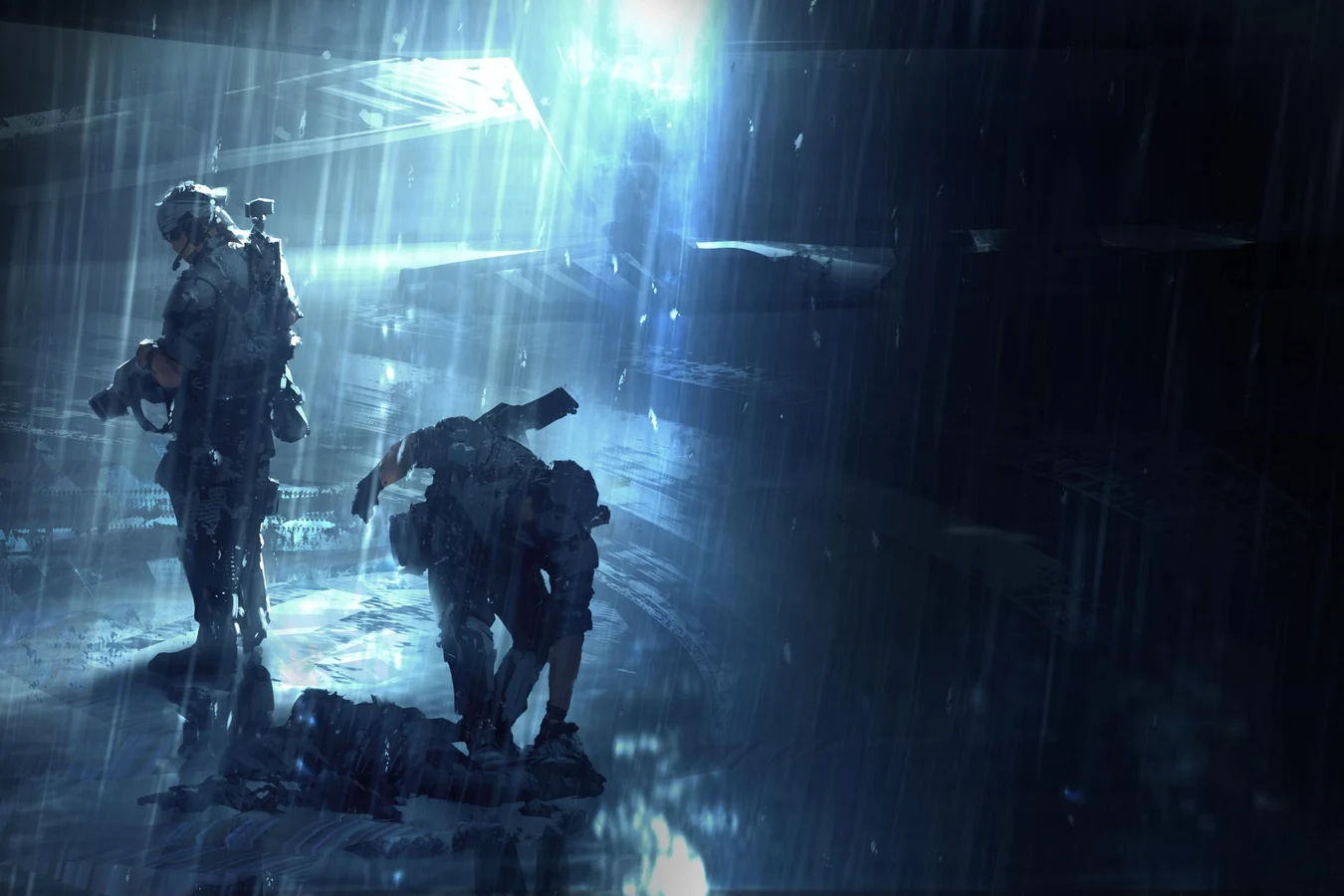
The Corps is the only United States branch the book says can send a task force without another service beside it. Three Marine Space Forces cover the map, and their areas overlap. In 2180 the divisions were redrawn for the expanded Frontier. Sol guards the core and the blockade of the Inner Core border, with a second division for the Sol system itself and a major base at Rigel Kentaurus. Eridani works the Anglo-Japanese arm, the Tartarus Sector, and out to Alpha Caeli, and it runs the only Colonial Marine base inside UPP space, at 52 Tau Ceti. Herculis is under pressure from the UPP and from the border bombings, and reserves have been sent to reinforce it. The Border Bombings have already cost the Corps several battalions and their ships.
Platoon, Section, And Fireteam
A platoon is 24 Marines in two sections of twelve, plus a commander and an adjutant. The commander is usually a Lieutenant or Captain, with a junior officer or a service synthetic beside them. That synthetic holds a non-combatant grade treated as equal to Warrant Officer. Each section is built around a dropship, an M577, two squads, a support team of pilot and crew chief, and a tactical team in the APC. A sergeant or a senior officer runs that tactical team from the vehicle's command center.
A squad is two fireteams, usually a rifle team and a gun team, and a fireteam is two Marines. The rifle team carries the medic and talks to command. The gun team is an automatic rifleman on the M56A2 smartgun and a combat technician. A recon team uses ghillie suits, a forward observer, and a dedicated marksman. An assault team is built for urban fighting, with shields, electroshock grenades, shaped charges, and rubber U1 rounds. A CBRN team handles spills, dirty bombs, outbreaks, and quarantine, and its technicians are also trained to shut down fusion reactors. The book notes a proposal to grow a fireteam from two Marines to three.
Other United Americas Forces
Allied Command is the joint headquarters. The United States Aerospace Force flies with the Corps on many deployments. The Canadian Colonial Armed Forces and the Latin American Colonial Navy are the other large member services, and the Outer Rim Defense Fleet moves and supplies them. Off the battlefield the book lists the Colonial Marshal Bureau, the FBI, the United American Colonial Guard, and the United States Colonial Coast Guard. The United States Army is mentioned as still existing, and as outside the short list of forces that matter on the Frontier.
Three World Empire, Companies, And The UPP
The Three World Empire's ground force in these chapters is the Royal Marine Commandos, with the Imperial Armed Space Forces above them. Weyland-Yutani fields its own commandos. The Central Space Consortium uses private military contractors. On the Union side the book separates the Union of Progressive Peoples Army, the Space Operating Forces, and the Ministry of Space Security. Those names come back as opponents in the campaign, not as alternate player careers.
Making Marines
Most player characters are Colonial Marines from the core rules, built together as a squad, a section, or a single fireteam. The steps assign a unit commander, a military occupational specialty, 14 attribute points, 10 skill points, a talent, a field-event roll, a rank, a name, an agenda, a buddy, and a rival. New recruits are usually 18 to 23 and train as riflemen at Camp Pendleton. They start as Private and, within about a year, move to Private First Class. Officers and pilots are possible, but the book warns that pilots stay with the ship and that commissioned officers command a platoon or larger, so the usual player squad is led by a noncommissioned officer.
The specialties are AFV Marine, automatic rifleman, assault Marine, comtech, CBRN specialist, dropship crew chief, dedicated marksman, hospital corpsman, forward observer, and rifleman. A standard four-Marine squad is a gun team and a rifle team, and one of the four is squad leader. A sergeant can attach and make five. One fireteam can be swapped for assault, CBRN, or recon. Separate specialties cover the two-person crew of a dropship or the driver and gunner of an M577 or an XT-37 fast attack vehicle. An artificial-womb Marine, if the table allows one, can start with Strength up to 7 and cannot start above 3 in Wits or Empathy, and the first talent must be Overkill.
Gear
Infantry Weapons And Armor
The gear chapter expands the core list rather than replacing the Aliens Colonial Marines Technical Manual. The service rifle is the M41A Pulse Rifle, with the heavier M41AE2 for support, and the sidearm remains the M4A3. Heavier entries include plasma weapons, rockets, chemical rounds, and the M240 incinerator. Armor runs from uniforms and hazard suits through M3 personal armor and the M10 helmet. Later mission loads add compression suits, rebreathers, hazmat, and underslung incinerators fitted in place of the grenade launcher.
Vehicles And Spacecraft
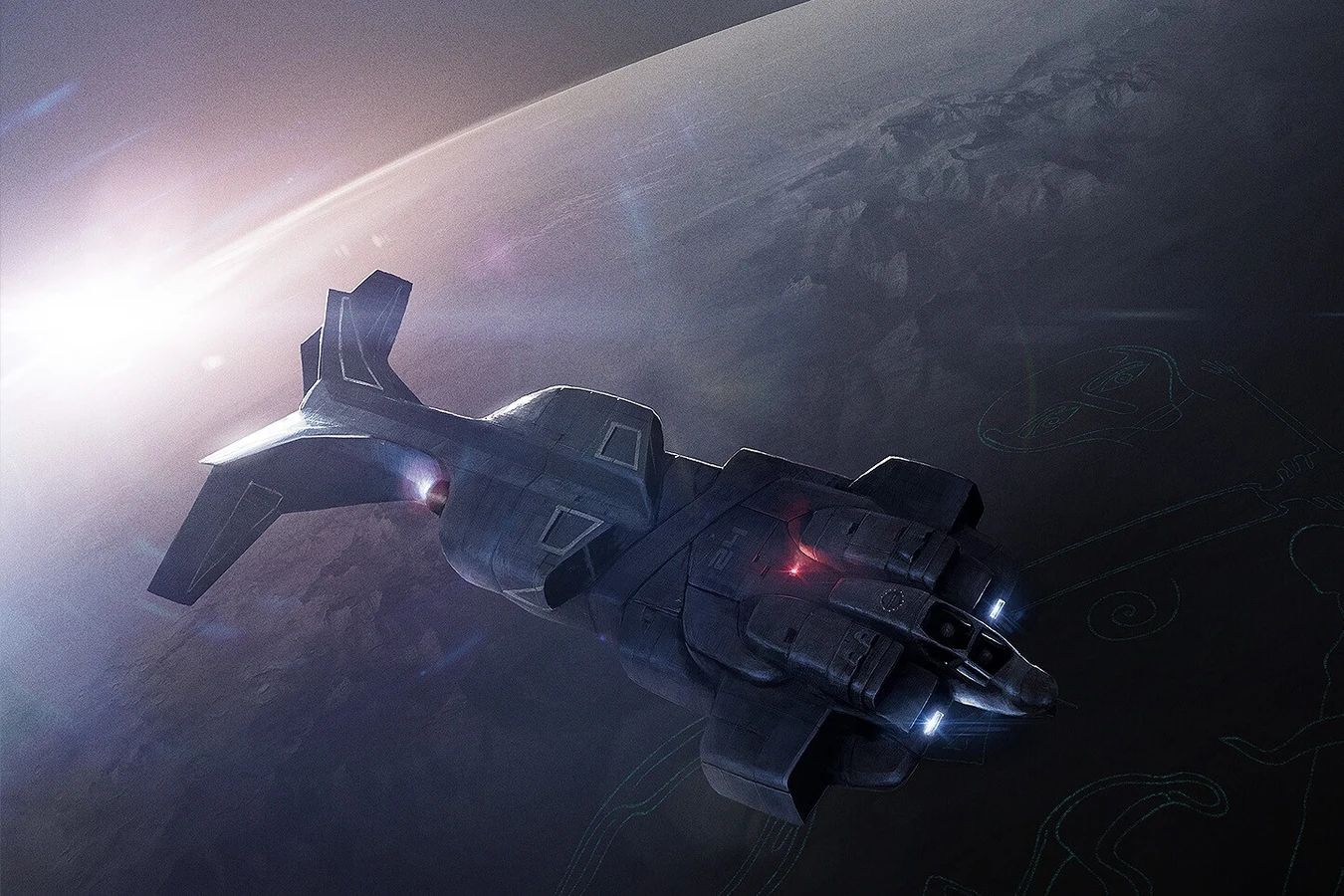
The ground line starts with the M577, 9.2 meters long, with a top speed of 150 kilometers per hour, a phased-plasma package, a pulse-cannon turret, and a 20mm gatling turret. The main weapons ride a rail so they can slide aft and drop the vehicle's profile. The driver controls air pressure in the wheels. The book calls the low chassis the weak point: a reckless driver on rocks can break the transaxle. The hull is amphibious, sealed for vacuum, and carried in a Cheyenne vehicle bay. The M579 air-defense variant drops the pulse cannon for four 20mm rotary guns and a front Hellcat missile launcher.
UPP ground armor is the Mikoyan-Liu Ox, a six-wheeled heavy truck three meters tall, sealed for water and vacuum, and used as transport, cargo, artillery, or a command post. Surplus Ox trucks also show up in civilian hands on United Americas and Three World Empire colonies. Lighter vehicles include the Seegson MX11A1 Hovertread and the Alphatech XT-37 Stinger. Tanks and guns run from the M22A3 Jackson medium tank and the M40-E Ridgeway heavy tank to the M292A2 self-propelled gun, the BP-33 Celestial defense gun, and the M201 multiple-launch rocket system.
Aircraft include the UA Northridge AD-19C/D Bearcat strikeship, the UD-4L Cheyenne and its variants, the UPP Mi-220 Krokodil attack dropship, the MiG-730 interceptor, and the Alphatech EVAC-3 fighter. The troop ship of the campaign is the Bougainville-class attack transport from Lunnar-Welsun, 300 meters long, with a crew of eight or a MU/TH/UR 7000 and one Hyperdyne 341-B android, and room for 40 Marines. Smaller craft include the RF-30F service skiff and the V-10A1113 Mantis. The UPP hunter-destroyer in the same chapter is the VP-153D Kremlin class.
Systems And Bases
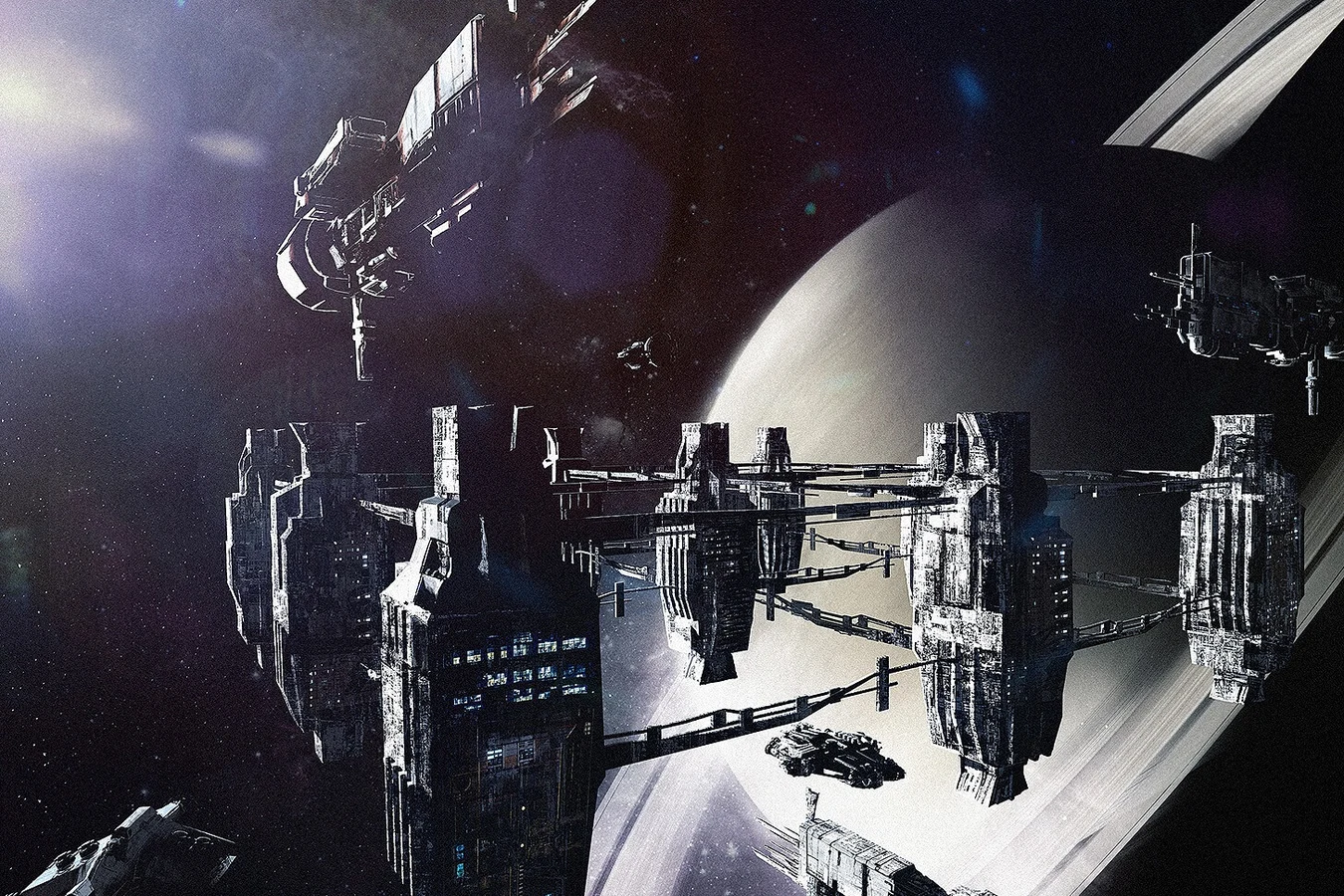
The systems chapter is a gazetteer for the Outer Veil, the Outer Rim, the Frontier, and space past the 20 parsec limit. Named stops include 70 Ophiuchi, KOI-571, Ross 619, GL408, Alpha Boötis, Mu Herculis A, and the Garrison systems Prime, Alpha, Beta, Gamma, Delta, and Upsilon. Frontier entries cover GJ1230AB, NN4374, GJ2005, GJ1256, and GL849. Beyond the limit the book places 78 Nu Ceti. The star map printed with the credits marks posts such as Fort Nebraska, Pendle Base, Skyfire Down, Liberty Echo, Wright-Aberra, Zhoy Outpost, Tanburo Station, Chinook 91, Kuat, Redlake, and Happy Days. Mission worlds are written up in this chapter and then reused when the campaign sends a squad there.
Black Projects
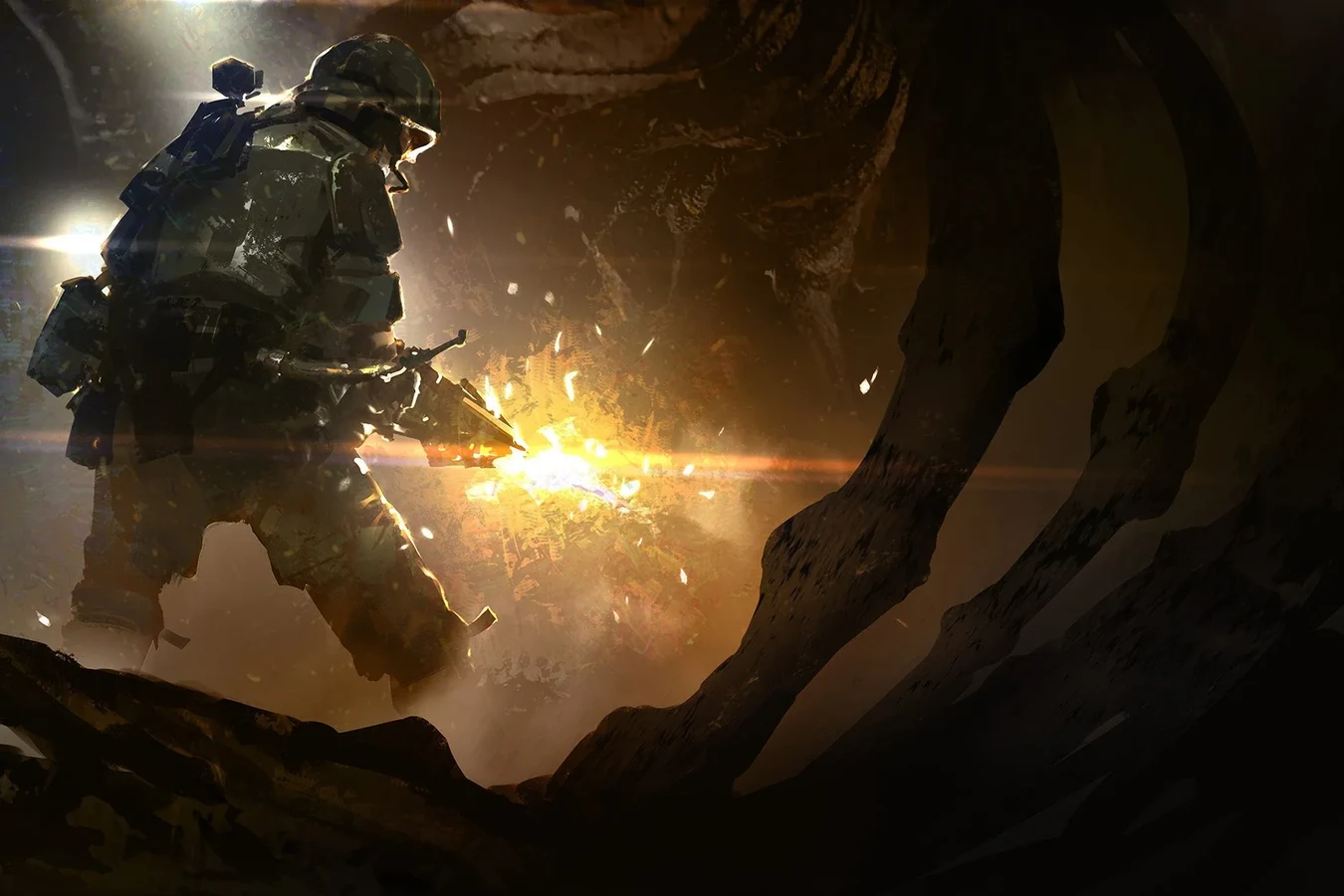
The Game Mother's black-projects chapter is the part of the book the players are not meant to read first. It frames several programs as possibly unsanctioned by Allied Command. Ordinary weapons work such as S.H.A.R.P. and phased-plasma rifles is mentioned only to set those secret programs apart. The through-line is Deep Void, an office inside the Corps that answers to General Vaughn and uses the Frontier War as cover for xenomorph and black-chemical research.
Artificial Womb Soldiers
The womb program is marked closed. It began in 2109 at Redlake after the draft failed, used gene therapy on embryos, and raised the children in a military commune that taught combat and nothing else. They fought in the Colony Wars, the Arcturian campaigns, and the Dog War, and they were pulled back midway through the Tientsin campaign after incidents the book does not treat as public. Growing a soldier still took 18 years, and enlisted Marines resented them. The last class was raised at Garrison System Beta after the program stopped, entered service in 2181, and includes people who now have their own platoons. The elite company is the Blackguard, aboard the Bougainville-class USS Tunku Allang, and it travels with General Vaughn. Named veterans include Major General Thomas Spears, Lieutenant Alexandra Gunn, Private Nathaniel Hammer, and Cadet Jericho Axe. Spears, later a colonel at Liberty Echo, killed Axe as a child in the program and was made a squad leader afterward.
Project Berserker
Project Berserker is a Hyperdyne exosuit built as an answer to xenomorphs and to Project Life Force. Engineers started from Sulaco flight-recorder data recovered at Fiorina 161 and tried to arm a power loader. The controls were too clumsy, so Hyperdyne executive Spencer Lyndon dropped the idea of a human pilot and hardwired a person into the Mobile Offensive Exowarrior. The occupant cannot be removed alive. Career Marines used as the first biological components killed themselves as soon as the suit came online. Later subjects were aggressive prisoners. The book marks the project ready for deployment and tells a Game Mother that friendly troops should leave if a Berserker is inbound, because the suit does not distinguish them from targets.
Project Life Force
Project Life Force is Deep Void's attempt to field the xenomorph as a timed weapon. Dr. N.L. Babak is the scientist attached to that work. The weapon is the XX121B biodrone, grown to drone stage, meant to kill, and meant to die about six days later. In the campaign Vaughn tests it by infecting the crew of a captured UPP transport and sending them to a colony that Deep Void expects to be empty once the week is over. The project is one of the clues the seven missions are built to uncover.
The Darkstar Program
Darkstar works on human and xenomorph hybridization and on the black chemical agent tied to the border bombings. The book calls a terminal infection from that agent an Anathema. Direct exposure is a disease of virulence 8. A failed sickness roll produces a Stage I Vitiate within one shift: paranoia, watery eyes, and symptoms easy to mistake for flu. Further failures move the victim through Stage II Febrile and Stage III Freak to Stage IV Terminal, and the book treats Stage IV as the end of that character. Darkstar's hybridization work is said to have recreated the same sequence by accident.
Aberrant Xenomorph Types
A short bestiary after the programs lists aberrant xenomorph forms for the table, separate from the Anathema stages that share some of the same stage numbers. The campaign later puts a captive Xenomorph Queen on a UPP station and uses Chestbursters as the means of seeding a biodrone outbreak. Standard Facehuggers are part of that life cycle when the book needs a host, but the timed biodrone is the weapon Deep Void is trying to control.
The Frontier War Campaign
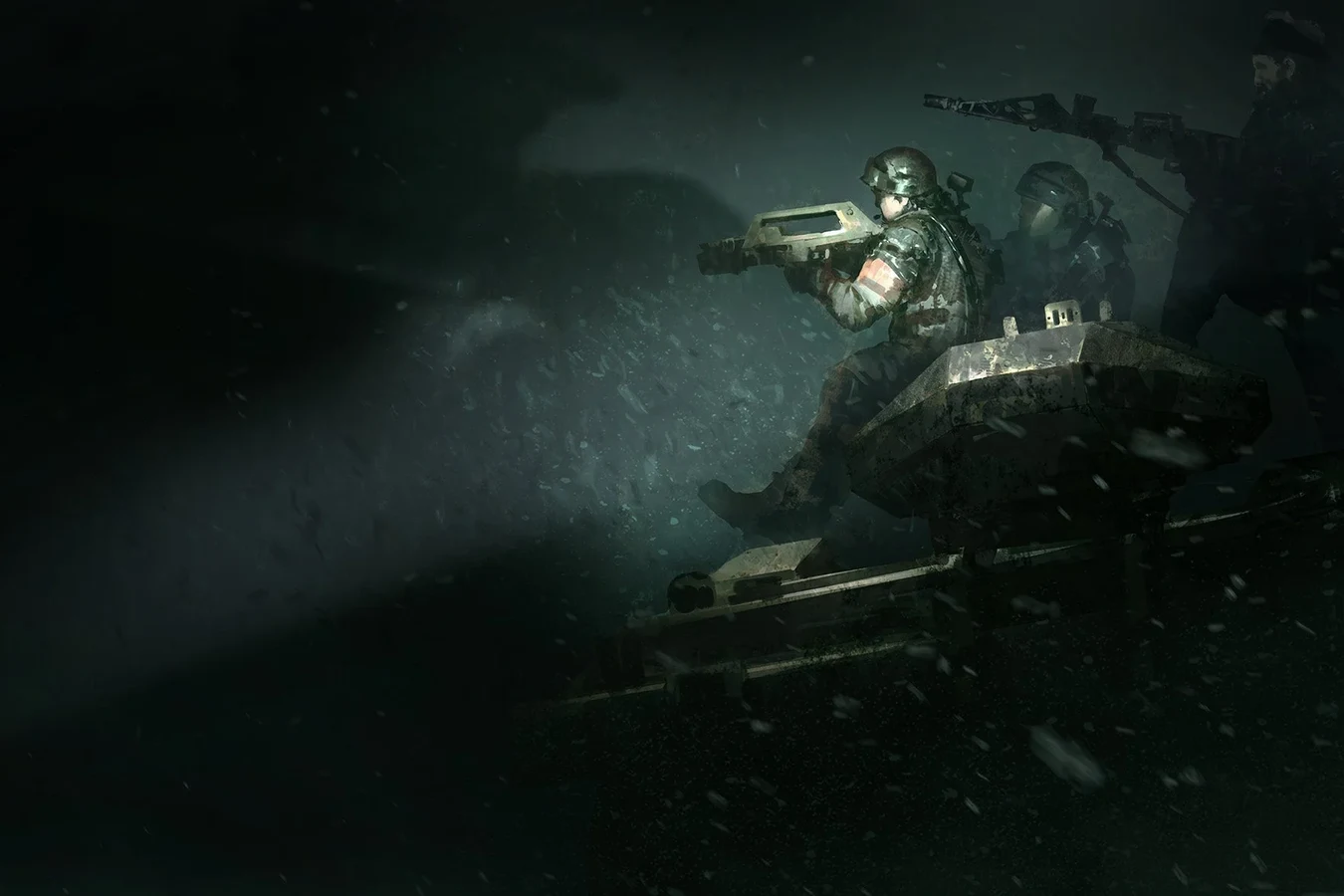
The campaign is set in the hot phase of the Frontier War. Player Marines belong to a small unit whose shipboard computer is MU/TH/UR 9000, and the Game Mother uses that computer as quartermaster when the squad asks for extra gear. Once a mission starts, the book tells the table to ignore the chain of command and let the players decide the next move. Casualties among non-player Marines, APC travel, patrols, and ambushes each get a short procedure. Mission types in the player chapter include assault, recon, defense, sabotage, search and rescue, peacekeeping, evacuation, bughunt, space assault, snatch, traffic security, and investigation. The seven operations can be played in any order. Clues called epiphanies still arrive in a fixed sequence, so the table learns the same conspiracy at the same pace no matter which world comes first.
The USS Tamb'Itam
The player unit is embarked on the USS Tamb'Itam, a Bougainville-class attack transport. The book maps the marine barracks and the dropship hangar, then the battalion landing team, the dropship squadron, and the combat logistics battalion around them. Rival factions in the same war are written up before the missions: Deep Void, United American Allied Command, the People's Armed Forces, the Children of the Two Divines, and the unknown bombers hitting the border. General Vaughn's Blackguard on the Tunku Allang are the force that cleans up after several of the squad's discoveries.
The Glory Goes Down On O'Bannon's World
Operation Blaze of Glory sends the squad to O'Bannon's World after the hospital ship UAS Glory crashes in jungle the orbital sensors cannot see through. The briefing says the wreck must be surveyed, the flight recorder taken, any survivors pulled out, and the hull destroyed with drums of QTC so nothing can be salvaged. An insurance man, Kent Ganon, comes along with the transponder codes. The hidden order is that the wreck is a UPP ship that attacked a Project Life Force transport and stole cryosleepers infected with biodrones. Ganon works for Weyland-Yutani and carries sealed orders from Vaughn to secure the recorder and any living sleepers.
The Children Seize The Grand Kivas
Operation Arcturian Apocalypse is an emergency stop at Arcturus. The Children of the Two Divines, led by Jannes Ruedi, have seized the main settlement, dropped a drum of QTC on the Marine station, and killed 27 Marines. The briefing counts more than 240 Arcturians and humans dead at the Grand Kivas and describes the group as people who want to erase Arcturian culture. The book instead has them hunting an Engineer temple under the kivas. Deep Void planted archaeologist Tejal Ahluwalia among the hostages so she could catalog whatever the Children dug up. The Blackguard listen on the squad's communications and move in after the hostages are clear.
Biodrones Overrun Corinth Colony
Operation Quiet Catch is a hazmat insertion into a nuclear wasteland and a testing facility, with Dr. Babak required to go in with the squad. The official story is a UPP bioweapons accident. Vaughn chose Corinth Colony as a Project Life Force test. The Blackguard had already captured the UPP transport PSV Yuvula, which was carrying 200 workers, and used those workers as hosts for biodrone Chestbursters while they slept. The adult biodrones then overran the colony. Deep Void expects them to finish dying within the week.
Codebreakers Vanish On Adagia
Operation Go Fish wakes the squad during faster-than-light travel because Anesidora Colony is under UPP attack. Two Geholgod Institute codebreakers, Deol Chawla and Velma Liu, have left their handlers and are believed to be on Adagia island, heading for Morgan's Bluff spaceport. The Tamb'Itam is to meet the Heinlein and the Tunku Allang in orbit. The squad is told to put a particle-beam phalanx on the port and find the two scientists while other troops evacuate the island.
A Queen Dreams On Talos
Operation Dreamcatcher is a covert boarding of Talos, a UPP network relay, flown in service skiffs and compression suits because a dropship is forbidden. Talos copies messages for the Ministry of Space Security and also holds a sleeping Xenomorph Queen for Project Morana. The project records her dreams, fails to control her with them, and finds that the dreams drive listeners mad. The station hides that recording inside messages it passes on. A defector, an android dream technician, and the captive Queen are the sources that expose Morana and Darkstar.
Black Goo Floods Sonderdatch
Operation Deep Shaft is a mine rescue at Sonderdatch, with compression suits, harpoon guns, and incinerators recommended in place of grenade launchers. The APC cannot pass the lower turns. Weyland-Yutani staff working for Deep Void had been drilling toward an Engineer cache of the black agent under the mine and did not want the Grandhi board to know. A core drill broke, the crew blasted into the pocket, and the agent flooded the deepest level. The ore body shifted, more than a dozen workers were infected, and at least three of them were already moving through the mine as monsters when the squad arrived. Thirty-seven workers were missing.
Vaughn Runs To Darwin Island
Operation Octopus Garden is the endgame, on Darwin Island at Pandora, where Deep Void keeps a safehouse and a bioweapons lab under a rig. The briefing credits the squad with keeping the Secretary of Defense alive and with exposing Deep Void inside the Corps. High-ranking officers are under arrest. Vaughn and her staff have gone rogue, and the squad is promoted one grade and sent to bring them in. The site is written as a descent through the island, the rig's sublevels, and a caldera.
Key Characters
The named people in this hardcover are original to the 2021 campaign. Its Colonial Marine characters are the Tamb'Itam officers, the Blackguard, and Deep Void's scientists, from General Vaughn at Garrison System Alpha to Dr. Babak in the field and the Blackguard company aboard the USS Tunku Allang.
- General Delyla S. Vaughn is Assistant Commandant of the Colonial Marine Corps and the head of Deep Void. She flies the stealth ship USS Black Bart, keeps the Blackguard as her bodyguard, and is the officer the squad is sent to arrest on Darwin Island.
- General Dellamarggio is Commandant of the Corps. Vaughn wants him dead so she can take the service into a war with the UPP.
- Dr. N.L. Babak is a Weyland-Yutani virologist and the lead xenomorphologist on Project Life Force. He goes into Corinth Colony with the squad and has no rank of his own inside Deep Void.
- Colonel Thomas A.W. Spears is an artificial-womb officer at Liberty Echo. He killed cadet Jericho Axe as a child in the program, fought at Tientsin and Linna 349, and wants a Colonial Marine bioweapons arm under Vaughn.
- Captain Gabriel A.W. Karambit leads a Blackguard commando team. His soldiers follow his order to kill civilians.
- Major Arnold A.W. Kiliij is a Blackguard major on Pandora who still follows orders and has started to treat Vaughn's break with the Corps as a betrayal.
- Spencer Lyndon is the Hyperdyne executive brought in as civilian advisor on Project Berserker. He is also named among Deep Void's company partners.
- Kent Ganon boards the O'Bannon's World mission as a Weyland-Yutani insurance investigator. His sealed orders from Vaughn are to take the flight recorder and any living cryosleepers.
- Lieutenant Colonel "Mac" Hanrahan commands the 3/5 Marine battalion landing team. He came up in armored reconnaissance and tanks, and he pressed to attach an M40-E Ridgeway tank platoon to the battalion.
- Lieutenant Colonel Eileen Morglas commands dropship squadron DMLA-265. Lieutenant Colonel "Bull" Griffin runs the combat logistics battalion that supports the same unit.
- Lieutenant Maria Casados commands 2nd Platoon, Kilo Company, the platoon the player squad belongs to. Staff Sergeant Szymborska is her platoon sergeant, and the android Roy is the platoon's technical specialist.
- Lieutenant Karen Eckhart flies the dropship Friday the 13th for that platoon. Her crew chief is Sergeant Samuel Petrovich.
- Jannes Ruedi leads the Children of the Two Divines at the Grand Kivas on Arcturus. His agent Mother Mishka is with him, and they are searching for an Engineer temple rather than simply wrecking Arcturian art.
- Tejal Ahluwalia is a Geholgod xenoarchaeologist placed among the Arcturus hostages by Deep Void so she can record whatever the Children uncover.
- Colonel Doctor Béla Balázs is the UPP associate minister of space security for the Borderline Region and the officer responsible for the Darkstar Program.
- Major Arietta Pichilemu is a former People's Army officer working as a security advisor for Norcomm. At Corinth Colony a biodrone knocks her out, and she is sick from the start of the egg-forming process when the squad finds her.
- Doctors Deol Chawla and Velma Liu are Geholgod codebreakers who leave their handlers on Adagia. The Go Fish mission is the search for them at Morgan's Bluff.
- Cassandra Mistry is general manager at the Sonderdatch mine. By the time the squad is underground she is a Stage II Anathema from the black agent in the lower levels.
Weapons
The gear chapter adds guns for the Corps, the UPP, Weyland-Yutani, and colonial militias, then prints a stat block for each one. The M41A pulse rifle, M4A3 pistol, M56A2 smartgun, and M240 incinerator stay the Marine standards from the core rules, and the missions issue them alongside the new pieces. The entries below are the weapons this book writes up on its own, from sidearms through the particle-beam phalanx and the off-Earth nerve agent.
Pistols
- The Bionational TX-9 is a short-range air pistol that fires darts loaded with drugs, toxins, or a biochemical tracer. Armor counts double against it, and the dart has to wound the target to deliver its load.
- The VP-70MA6 is a semi-automatic pistol about two centuries old. For decades it was limited to officers from influential Marine families, and in the decade before 2184 it started to replace the M4A3 as the service sidearm.
- The Weyland ES-4 is an electrostatic pistol that fires armor-piercing rounds with a stun charge. It shows a blue muzzle flash, and a shot from a pistol that was not cleaned that day can stun the shooter. Colonial marshal offices on the Frontier are testing a newer model.
- The Norcomm QSZ-203 is the UPP sidearm, a short-recoil pistol in 5.8mm, standard since the Union absorbed the Cooperative in 2164. Norcomm is the firearms arm of the People's Army.
Rifles
- The Armat P9 S.H.A.R.P. rifle is a sonic harpoon in field trials with the Corps. Its 9X-E dart sticks an explosive charge that detonates after one round, or at once if anyone in the zone moves who is not wearing a Marine locator.
- The Norcomm AK-4047 is the UPP pulse assault rifle, built as a cheaper and tougher counterpart to the M41A and common with mercenaries and insurgents.
- The Norcomm AK-104s is a pulse gun built into the forearm of the CCC5 combat compression suit, fed by an ammo pack beside the suit's oxygen. A hit on that pack detonates both the ammunition and the oxygen.
- The RMC F903WE is a century-old automatic rifle issued on early Weyland-Yutani colony fleets. It is not a pulse gun. Militias, mercenaries, and the Australian rebels used it.
- The Weyland-Yutani NSG23, or New Storm Rifle, is the Royal Marine Commando assault rifle, with a large drum and an ID23 incinerator under the barrel. The Corps tested it in the late 2170s and kept the M41A.
- The ID23 underbarrel incinerator has a shorter range and less fuel than the M240. A hit sets the target on fire. It is built to clamp under an assault rifle, and it is included on the NSG23.
Heavy Weapons
- The Armat U4A2 is a repeating grenade launcher issued to CBRN sterilization teams. It is usually loaded with U4 firebomb rounds and can also fire the other launcher grenades.
- The M5A3 RPG is a shoulder-fired rocket with a telescopic sight. The UPP equivalent is the Norcomm RPG122, a single-shot launcher without that sight.
- The Weyland 72A LEW is a shoulder energy cannon with a 15 megawatt pack. It fires vaporized cadmium telluride, cuts armor at close range, and must recharge for two rounds after each shot.
- The M78 PIG is the Corps phased-plasma infantry gun. The book treats it as the Marine counterpart to the 72A, with the same drop in damage as the range opens.
- The UA-102-20 particle-beam phalanx is a vehicle or city-grid weapon of twenty independently aimed beams. Focused on one target it hits harder and farther. On its own battery it must recharge between cycles, and a forced concentrated shot can detonate the weapon. Civilians cannot legally own one.
Explosives And Chemical Rounds
- The Armat M40 high-explosive dual-purpose grenade fits the U1 and U4 launchers and can be thrown once the red cap is removed. The UPP fields a Norcomm copy.
- The M72A1 starshell lights one combat zone. The M230 baton round is a rubber crowd-control projectile, and the M108 canister is a close-range buckshot load used by Colonial Marshals.
- The U4 QTC firebomb fills a target zone with quinitricetyline fire for decontamination. Mission briefings also issue drums of the same compound to destroy wrecks and buildings.
- The Armat Type 4 breaching charge is an adhesive door-and-wall charge fired by timer or remote. The M20 Claymore is a laser-trip anti-personnel mine, and the M111 is a pressure anti-vehicle mine that also detonates under a person.
- CN-20 nerve agent is a canister gas the book allows off Earth because the Geneva ban is treated as an Earth-only rule. One canister fills a zone until it dissipates, and a person without a hazmat suit keeps taking damage after leaving that zone.
Behind The Scenes
Free League published the book in 2021 for the 2019 Alien rules, with brand management by Joe LeFavi of Genuine Entertainment and a 20th Century Studios copyright of that year. Martin Grip, Gustaf Ekelund, and Jarek Kubicki illustrated it. Christian Granath designed the graphics and shared the maps with Elliott and Gaska. Vehicle and weapon art is credited to Team Comfort & Adam. Proofreading was by Brandon Bowling and Kosta Kostulas, and the special thanks name Clara Fei-Fei Čarija, Botos Imre, and Maitland Eaves.
The book is not a new edition of the 1991 Aliens Adventure Game, and it does not reprint the 1995 Technical Manual's tables. It uses that earlier manual's Corps, then moves the date to the middle of the 2180s, adds the UPP and Deep Void, and builds a sandbox of seven operations instead of a single Hadley's Hope return. Ranks in this book are billets on a United States Marine-shaped ladder, which is why a later Evolved discussion of grades still starts from these tables.
Evolved Edition
The 2021 hardcover was written for the 2019 Alien rules. Free League later issued an Evolved printing for the 2025 rules. That printing runs 252 pages. It rearranges the interior to the Evolved layout and does not rewrite the Frontier War, the seven operations, or the Deep Void material. A table that already owns the 2021 book can keep using it if talents, armor, ammunition, and Xenomorph statistics are brought in line with the Evolved lists. The campaign itself is the same book.
Conclusion
Colonial Marines Operations Manual is Free League's 2021 campaign book for Alien: The Roleplaying Game, written by Andrew E.C. Gaska with Tomas Härenstam directing the game. It puts a Colonial Marine squad on the USS Tamb'Itam in 2183 and 2184, gives them the Corps, the gear, and the border map, and then sends them through the Frontier War until General Vaughn's Deep Void program is exposed at Darwin Island on Pandora.
External Sources
Tag Categories: Alien Merchandise | Colonial Marine Lore | Alien Universe Reference Books