Seegson Corporation: Isolation Rival Of Weyland-Yutani

The Seegson Corporation was a European conglomerate that sold cheaper versions of Weyland-Yutani hardware, from the APOLLO station brain to mass-produced Working Joe androids. It began as Sieg and Son under Josiah Sieg, shared an FTL drive so Weyland would not own the only one, and later bet its money on orbital stations instead of atmosphere processors. Sevastopol Station was the public face of that bet in Alien: Isolation. The freeport burned in 2137. Seegson kept selling cheap kit on the Frontier, raided a Weyland-Yutani lab in 2179, and ran a pharmaceuticals colony in 2187.
Sieg And Son
Josiah Sieg founded Sieg and Son as a spaceflight rival to Weyland Corp. Seegson's own 2115 history dated the break to 2034, when faster-than-light travel arrived and the firm built FTL parts Weyland would not share. Sharing those systems with other companies was how it first became known. By 2066 it ran large plants in London, Buenos Aires, Nagasaki, and on the lunar Schickard-Wargentin frontier. In 2071 the Sieg family sold its shares back, and the firm led in cars, chemicals, school equipment, and building materials. Late in the century it took the name customers already used, Seegson. Josiah's descendant Sebastian Sieg wrote that official history in 2115 for the company book Eye on Seegson.
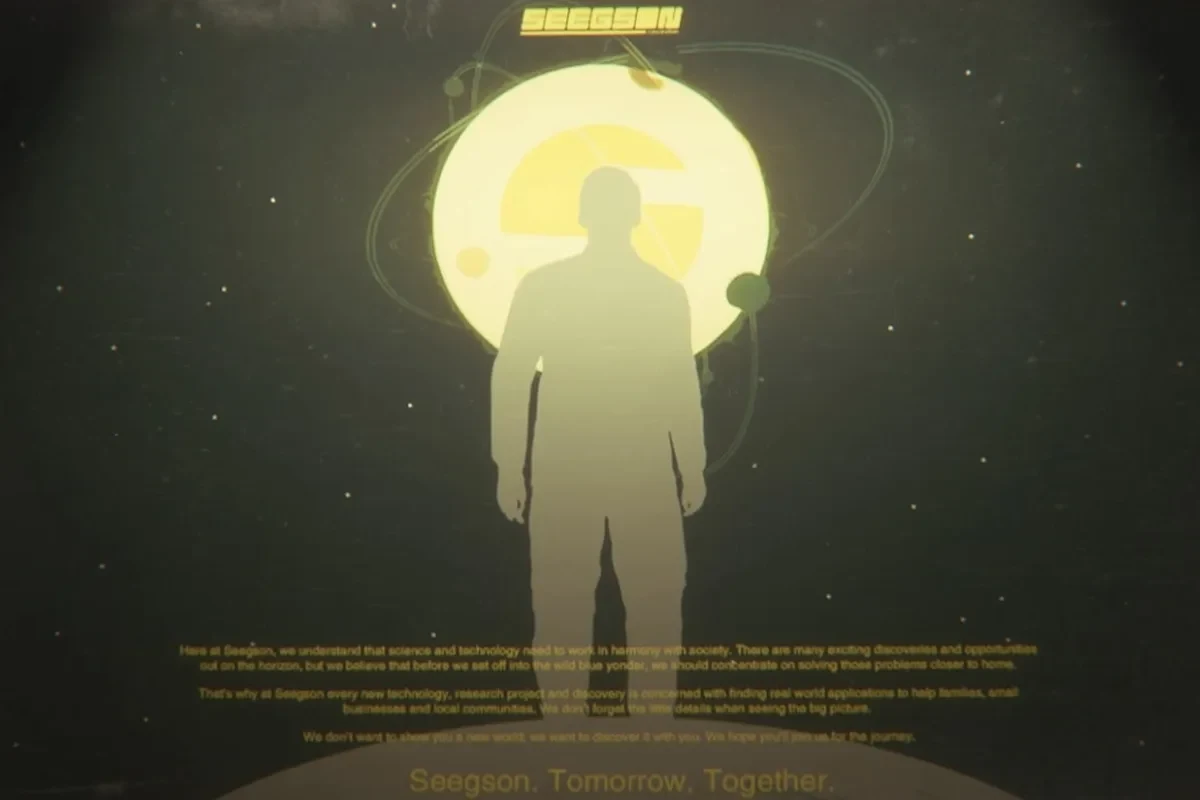
Seegson stayed a publicly traded European board company. Later offices also sat on the Solomons and on Anchorpoint Station. It kept desks in the big spaceports of the Core, Outer Veil, and Outer Rim, and it held contracts with the Independent Core System Colonies and the Three World Empire. Affiliates included Geofund, Gemini Exoplanet Solutions, and Gustafsson Enterprise Ltd. On the Frontier it sat among the other mega-corporations as the cheap European option. The public line was "Tomorrow, Together," with ads that talked about families and local work instead of new worlds. Another company line promised someone behind you at every step.
Products And Markets
Seegson sold security and communications gear, Seegson Credit Services, space and ground vehicles, and pharmaceuticals. Its own paper money, Seeg bills, carried only the company logo and a holographic denomination, and traders accepted them less often than Weyland-Yutani dollars. Common field tools included the Seegson P-DAT and the Seegson System Diagnostic Device. Pads on the cheap end of that catalog included the old Seegson A99 that Amanda Ripley used before she replaced it with a Moran pad.
The best-known computer product was the award-winning APOLLO mainframe, built as Seegson's answer to the MU/TH/UR brains on ships such as the Nostromo. APOLLO was written to coordinate Working Joe labor and to run a starship or station. In every other respect it was less advanced than MU/TH/UR. Independent colonies that could not pay Weyland-Yutani prices bought Seegson kits. The Colonial Times called those goods cheap knockoffs. In September 2137 its reporter Julia Jones, two months on Sevastopol, treated Seegson as a second-tier firm that had overspent on the Outer Rim and put GeoFund money into a half-empty freeport.
One later vehicle showed the same pattern. The MX11A1 Hovertread was an experimental light infantry rig that tried to run on treads and hover on gyrojets, and it did neither job well. After Frontier trials that included 2nd Battalion Bravo Team, the military shelved it. The same design then turned up on ICSC worlds with corporate commandos.
Working Joes
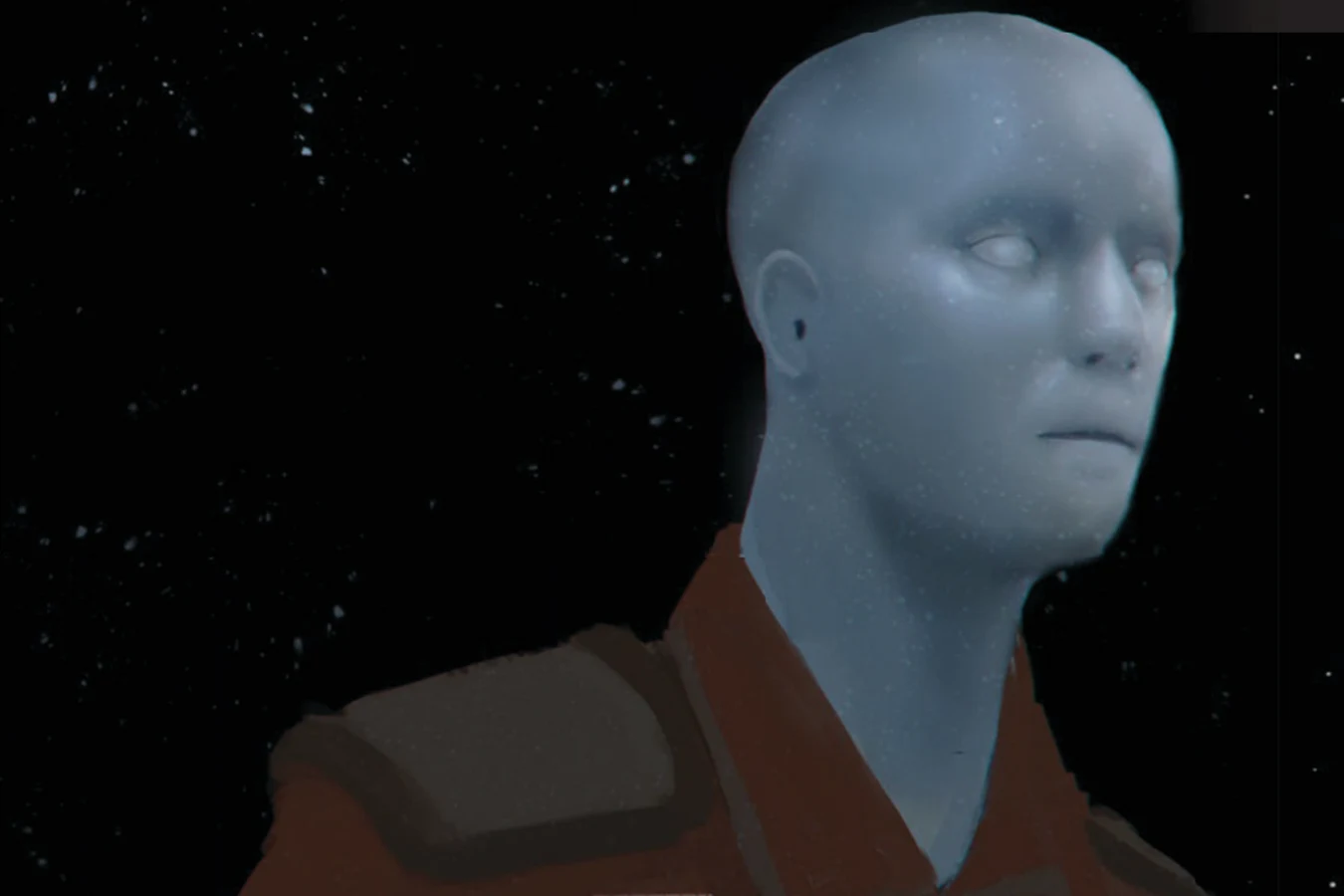
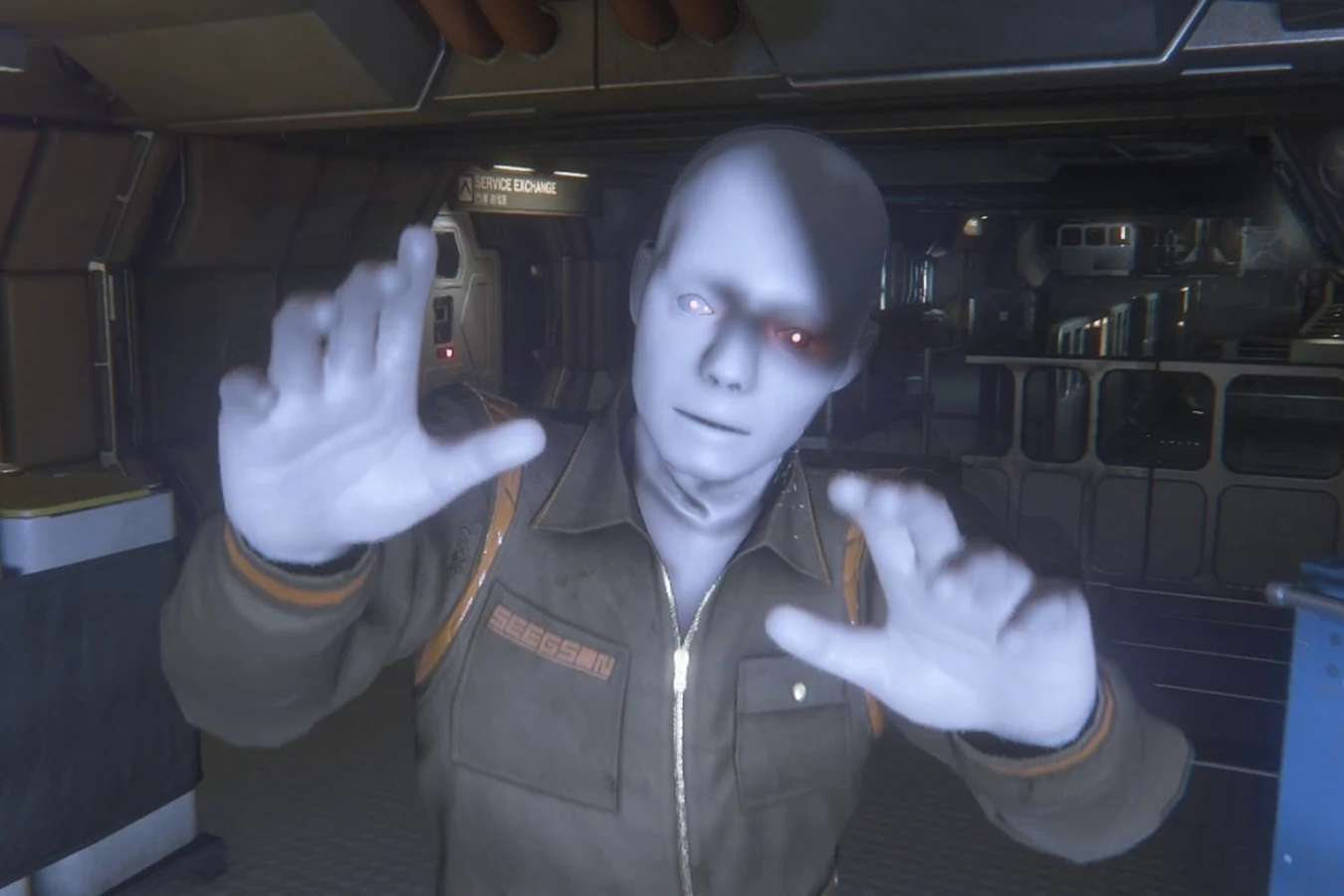
When the original Weyland Corp patent on synthetics ran out in the early 2100s, Hyperdyne and Seegson both rushed into that market. Seegson reused older hardware to build the Working Joe, a low-grade labor android with rubberized mannequin skin. The Joes were not built to pass as people. They handled maintenance, service, and security, and they cost less than Weyland's David and Walter lines or a Hyperdyne unit. That price sold on the Frontier.
A Joe on its own could only run a short list of programmed jobs. Real thought came from a link to APOLLO, or later to a copied mainframe such as the UPP's 1VAN/3. In that setup the android was a disposable body for the computer. Cheap parts meant damage hit them harder than it hit a Weyland unit. Weyland-Yutani answered the sales success with the Davis security drone and the Franklin combat synthetic, both smarter and more lethal than a Joe, and both left inhuman on purpose.
Rogue synthetic incidents on Sevastopol, the Europa, and other Frontier sites pushed the ICC into a wider investigation of android rules. The 2151 New Deal required behavioral inhibitors on new models and gave older lines until 2160 to meet the spec or be retired. Newer Working Joe runs were built to that rule. The UPP later took Seegson Type 3E Joes and rebuilt them as Fighting Joes, slaved to a 1VAN/3 the way Sevastopol's units had been slaved to APOLLO.
Seegson did not stay on the mannequin line forever. Alistair Smythe, director of synthetic development, wrote CEO Henry Ransome on 24 January 2136 about new androids copied from Weyland-Yutani models. Decades later the company fielded more human-looking units such as the synth Rook and the 226-B/2 Camilla, built for heat, venom, and hard labor rather than for a station service corridor.
The Orbital Bet
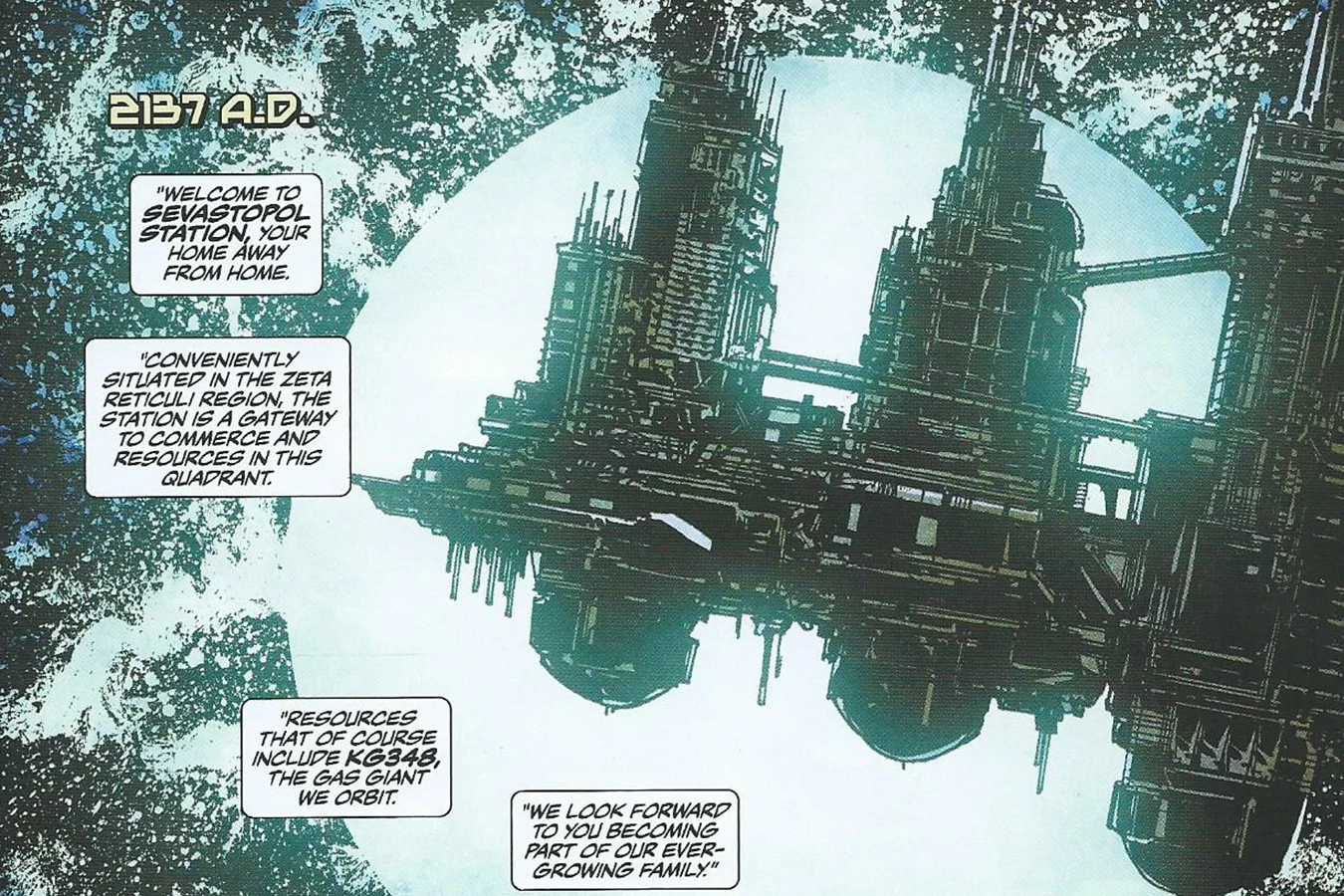
Seegson never held a patent on atmosphere processors. It put its money into extrasolar orbital platforms instead. When Weyland-Yutani started making worlds breathable, those stations emptied and the share price fell. Even harsh planets looked better than life inside a can in space. Sevastopol was the large example of that bet.
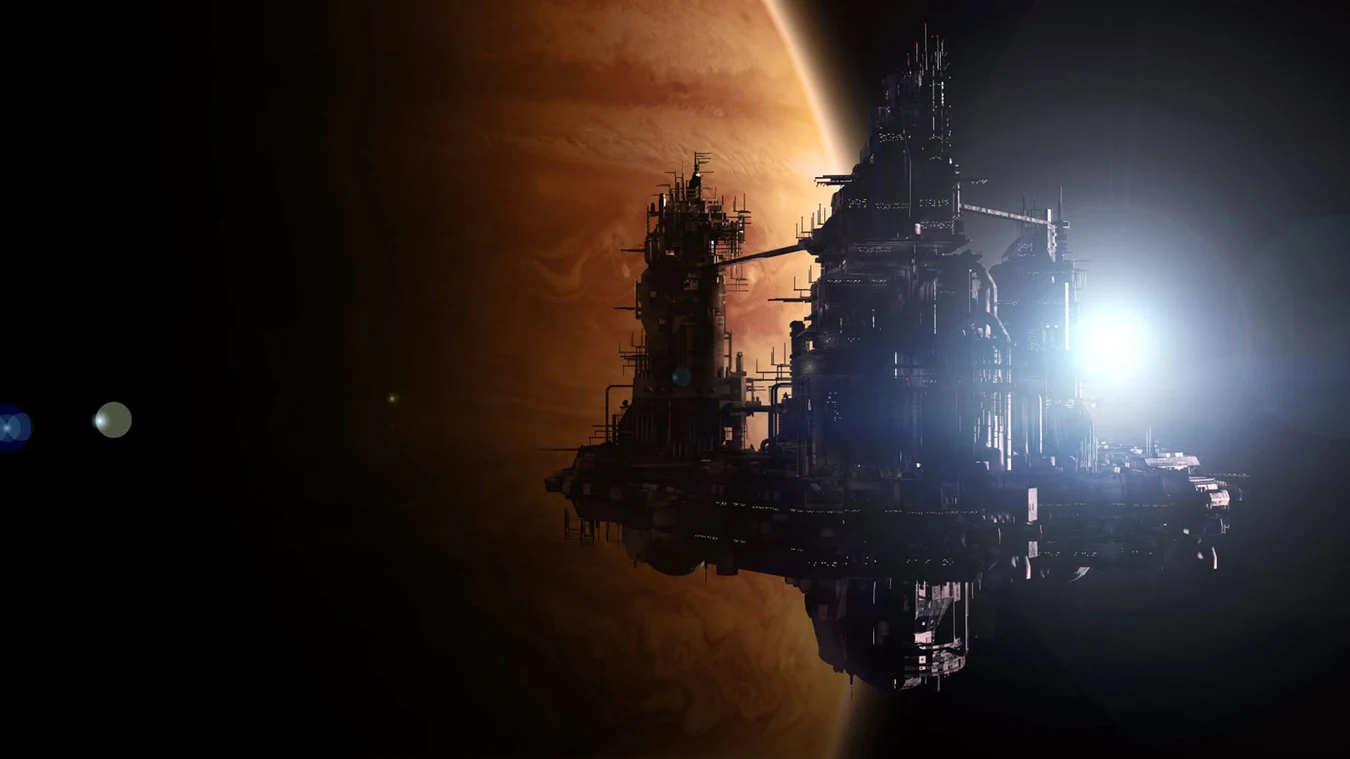
Lorenz SysTech Development and GeoFund Investor built the freeport over gas giant KG-348 in the Zeta Reticuli system. Construction started in 2095, and the station opened on 4 August 2105, two years late. Plans to sell it to a corporate owner fell through, so GeoFund ran it as an untied freeport until the Sol-Thedus flight path moved and traffic dried up. Seegson bought it in 2124 and spent about a decade trying to turn it into a frontier hub.
The hull was large enough for around 3,000 people. By the end only about 500 remained. Three towers carried the work: the Lorenz SysTech Spire held the APOLLO core, Seegson Communications, and the Gemini module, the SciMed Tower held San Cristobal Medical Facility and Seegson Synthetics, and the Solomons Habitation Tower held housing, the Solomons Galleria, and the Colonial Marshal bureau. Gemini funding on the station was cut on 17 February 2136. Seegson also treated Sevastopol as its off-planet site for Working Joe development, sales, and maintenance.
The 2137 Sale
By mid-September 2137 the decommission was public. Engineering chief Porter confirmed it to staff on 17 September. A later 27 October 2137 memo from management told staff the job was ending and that APOLLO and the Working Joes would stay until the last rivet came out. Residents were told the next day. CEO Henry Ransome wrote Dr. Tirsyris Lingard at San Cristobal on 12 November.
On 11 November the salvage ship Anesidora reached Sevastopol with a Facehugger victim from the derelict on LV-426, plus the Nostromo flight recorder. Weyland-Yutani bought the station from Seegson on 17 November 2137, after that ship had brought a Xenomorph aboard. The purchase stayed quiet. Special Order 939 went through APOLLO on 24 November: cut the radios, lock the station, and protect the specimen. Amanda reached the APOLLO core and found that Weyland-Yutani program running under the Seegson interface. Keith R.A. DeCandido's 2019 Isolation novel kept those memos and the sale in the same stretch of days.
APOLLO On Sevastopol
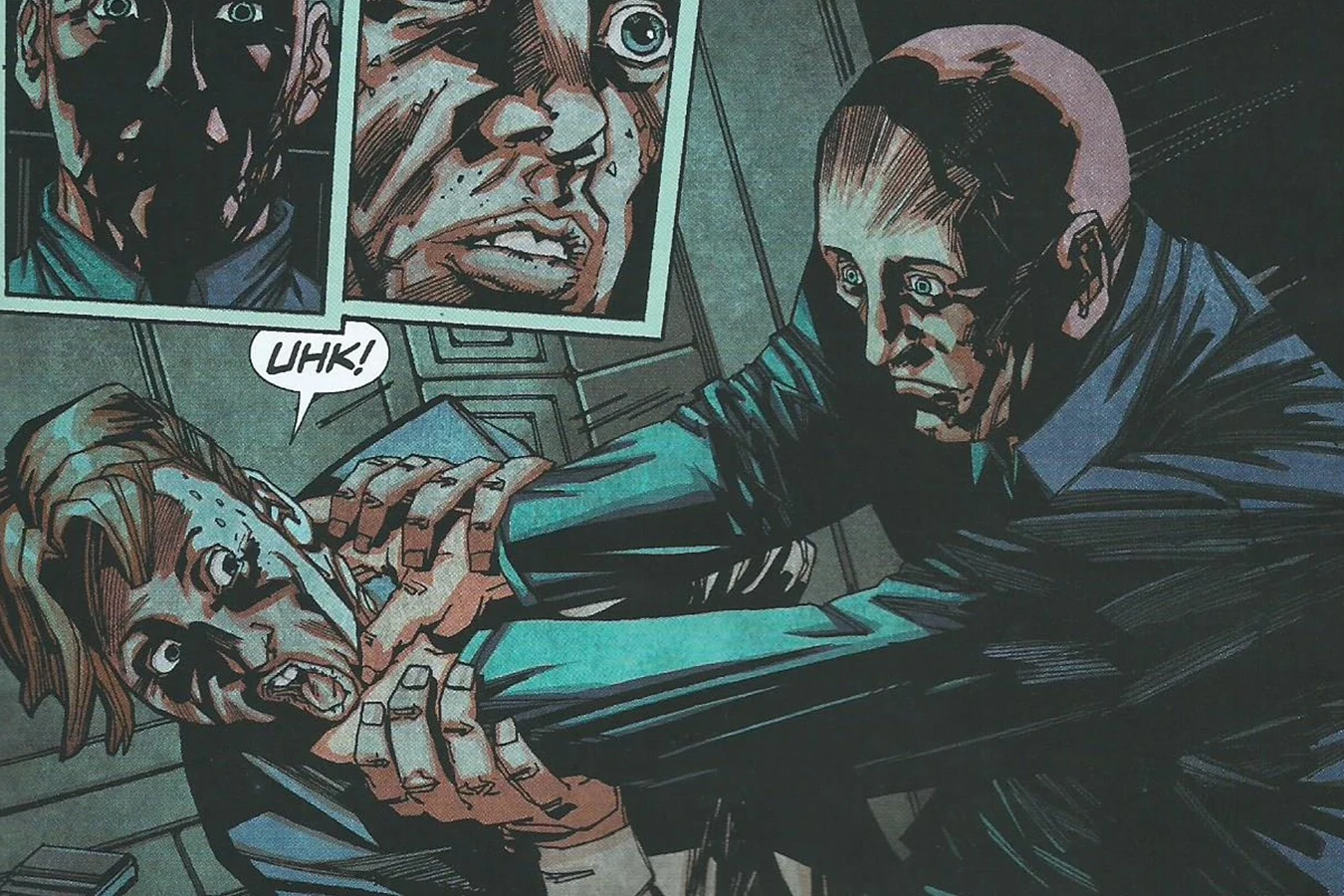
The Joes on Sevastopol were the older cheap line, tied to APOLLO. Arrival boards called the freeport an APOLLO-integrated station: the mainframe guided every Working Joe and ran all communications, and the welcome copy told people they were in safe hands. In the Alien: Isolation prequel, Working Joe 937, called Chuck, strangled civilian Clark on an elevator run under APOLLO's orders. Later Joes killed on sight with their hands.
After the sale, APOLLO ran Special Order 939, cut the external radios, and raised Hazard Containment to Level Omega, which sent the Joes after anything that moved. Marshal Jethro Waits sent Amanda to Android Processing to lift that lockdown. Christopher Samuels died forcing an interface there, but he opened the APOLLO transit and passed her access. Amanda had worked an APOLLO mainframe on Luna, so she knew the layout when she reached the core. The computer would not unlock the station until it could scan every deck, and it could not see the reactor nest. Her reactor purge knocked APOLLO offline, then the mainframe recovered and locked the comms again, including the ambulance shuttles.
After The Fire Sale
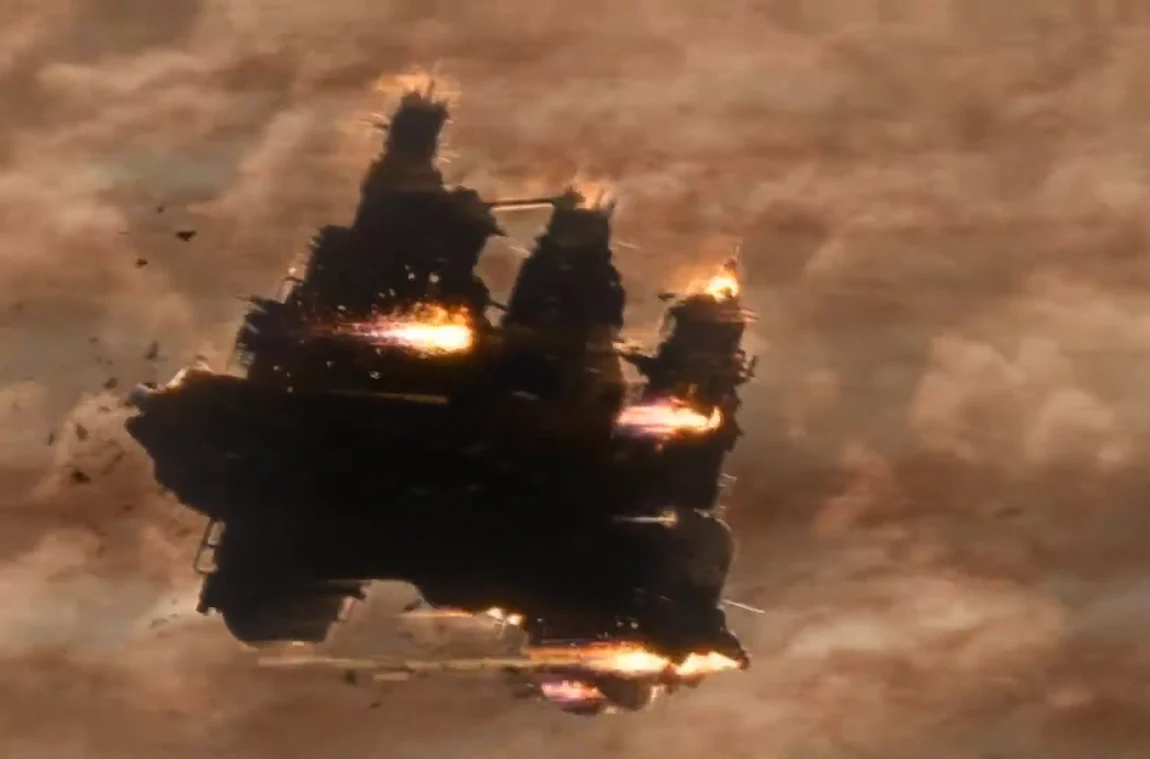
After Sevastopol fell into KG-348, Seegson kept the mining rights on that metal-rich gas giant and did not work them. Pirate mining operations were rumored over the unused claim. The Gemini module was ejected during the outbreak. Alien: Isolation 2 later showed that same Seegson affiliate hull crashed on LV-921. By 2140 most Seegson stations were on the market, and contact was lost with Seegson Station LV 44-40 around that same year. The company lived on backwater sales, where cheap and reliable beat new. It ran a few deep-space platforms as research sites, including transfer towers such as Novgorod Station over Alpha Fornacis. Weyland-Yutani did not treat the firm as a real threat.
Katanga began as a Seegson ice-cracking refinery and terraform mine. Olivia Shipp and other Seegson colonists later fled a surface outbreak into that orbital hulk. Weyland-Yutani took the refinery after that, and the UAS Endeavor answered a distress call from it over LV-895 in 2202.
In the Alien RPG, Frontier director James Evans-Russell worked from Anchorpoint, and the board tried to sabotage Weyland-Yutani jobs while it also hunted Xenomorph XX121 samples. A Working Joe shipment left the factory without behavior inhibitors, which is the same gap that made the Sevastopol units lethal. Evans-Russell collected western films and used any excuse to leave his Anchorpoint office for the rough colonies, while he stayed a company man on the Seegson line.
Cold Forge And Biomedical
In 2179 Seegson went after Weyland-Yutani again. A mole and a listening post named Indigo Flag watched Weyland-Yutani station RB-232, the Cold Forge. After the kennel break, Seegson took geneticist Blue Marsalis and a praepotens sample, destroyed her synthetic Marcus, and put her under the synth Rook. Human-resources officers Helen and Dan treated the raid as a way to hit the share price hard enough for a 5 percent stake and a board seat by fiscal year-end.
Seegson Biomedical then kept Blue as a head on life support, with plastic veins and a machine lymphatic system in a small lab. Chief science officer Richard Scales ran that genomics work out of the GmbH EKF Genomics Division. Rook followed the same pale industrial look as Weyland's David, Walter, and Bishop lines. The stolen science hull UAEV Blackstar reached Iran's Hasanova colony on LV-991 in Alien: Into Charybdis in 2184. Blue later stole the ship and the samples back.
Hygieia Colony
In 2187 botanist Siobhan McCormick was assistant director of research at the Seegson Pharmaceuticals lab that Hygieia Colony had been built around, on dying moon BG-791 in Alien: Enemy of My Enemy. She had held that post for twelve years. Agricultural scientist Hank Hernandez had been with the same lab for almost forty-three. Seegson Newscore updates to the moon had almost stopped as the ground came apart.
A Colonial Marine security detail guarded the lab, and the United Americas agreed to lift fourteen people and the company synthetic Camilla in exchange for Seegson's plant extraction data. Camilla was a 226-B/2, built for extreme temperatures, resistant to venom and poison, and strong enough for colony work. She also took remote company updates she could not refuse. Dr. Martin Fowler's gestation serum then loosed adult Xenomorphs at the nearby Menhit lab, and the Seegson crew were pulled into that outbreak. Sevastopol was a loss, not the end of the firm.
Behind The Scenes
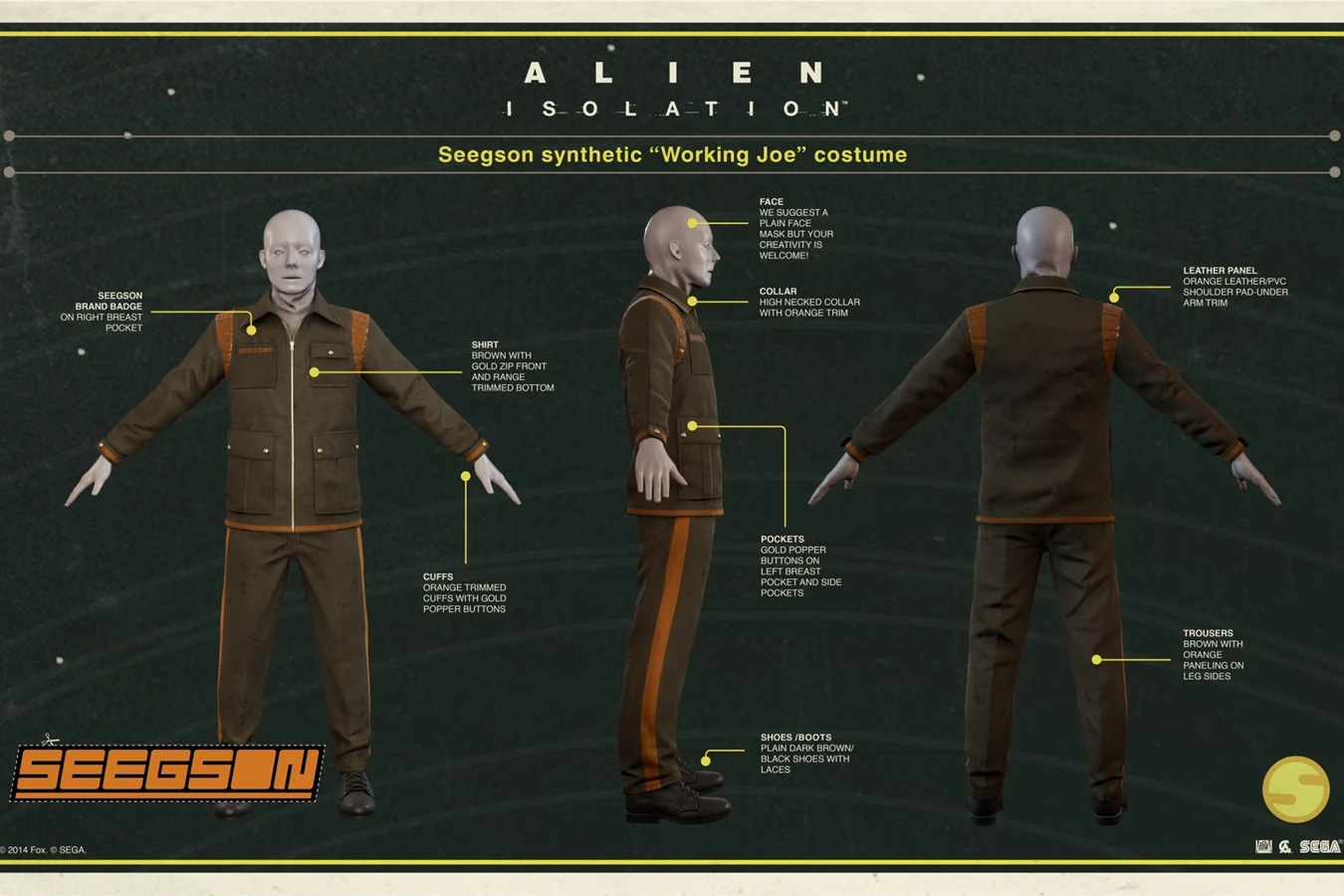
Creative Assembly invented Seegson for Alien: Isolation in 2014 as the cheap rival that owned Sevastopol. In-game posters and terminals carried the yellow brand, the Working Joe jumpsuits, the "Tomorrow, Together" line, and the claim that Seegson synthetics were built, not created. A costume sheet for those Joes called for a plain face mask, a brown gold-zip jacket with orange trim, gold popper buttons, orange leather or PVC shoulder panels, and a Seegson brand badge on the right breast. Isolation archive logs include Sebastian Sieg's Eye on Seegson history and Julia Jones's Colonial Times pieces from the station. Keith R.A. DeCandido's 2019 Titan novel kept the station memos, including Ransome, Smythe, and the 27 October decommission note. Free League's Alien RPG Evolved Edition wrote the Sieg and Son FTL history, the missing atmosphere-processor patent, and the 2140 fire sale. The Colonial Marines Operations Manual added the expired Weyland patent, the Hovertread, and the Fighting Joe conversions. Titan's later novels left the company on the board after the station burned.
Conclusion
Seegson was the European cheap rival to Weyland-Yutani. It shared an FTL drive, sold APOLLO and Working Joes, and put its money into orbital stations. Sevastopol fell in 2137. The company stayed on the Frontier in the 2180s, stealing samples and running labs.
Appearances
- Alien: Isolation (2014)
- Alien: Isolation prequel comic (2014)
- Alien: Isolation (novel, Titan Books, 2019)
- Alien RPG / Alien RPG Evolved Edition (Free League)
- Alien RPG Colonial Marines Operations Manual (Free League)
- Alien: The Cold Forge (2018)
- Alien: Into Charybdis (2021)
- Alien: Enemy of My Enemy (2023)
- Aliens: Fireteam Elite (Katanga as a former Seegson site)
- Aliens: Life and Death (Seegson interest on LV-797)
Sources
- Free League Publishing, Alien RPG Evolved Edition core rulebook
- Free League Publishing, Colonial Marines Operations Manual
- Keith R.A. DeCandido, Alien: Isolation (Titan Books, 2019)
- Alex White, Alien: The Cold Forge (Titan Books, 2018)
- Alex White, Alien: Into Charybdis (Titan Books, 2021)
- Mary SanGiovanni, Alien: Enemy of My Enemy (Titan Books, 2023)
External Sources
Tag Categories: Alien Universe Companies | Alien Universe Factions | Alien Lore