
Hyperdyne Systems was a mega-corporation that built human-looking synthetics for the colonies and, later, guns for the frontier during the 22nd and 23rd centuries. Its early line was the 120-A/2, and Ash was the science officer of that series on the USCSS Nostromo in Alien. Bishop, a 341-B, named that older model in Aliens and served as science officer for the Colonial Marines on the USS Sulaco. The firm went on working mines in the Hyades Cluster, sold control to Weyland-Yutani in 2167, and bought the shares back. Aliens: Fireteam Elite and Aliens: Fireteam Elite 2 later issued Hyperdyne weapons, including the Zvezda plasma rifle and the OCAP-91 Volcan.
Headquarters And Customers
Hyperdyne Systems sold synthetics that did not share one face, then guns and colony hardware. The Operations Manual places the firm on Alexandria in the Central Space Consortium after the 120-A/2 lawsuits. That world was part of the Inner Core System Colonies after the 2151 New Deal. The Alien RPG Evolved Edition groups Hyperdyne with Weyland-Yutani, Seegson, Chigusa, and the Jǐngtì Lóng Corporation as companies that hold planets in the Consortium. Armat Battlefield Systems supplied the rifles for those Marine squads. Hyperdyne supplied the platoon synthetic, and later a set of energy weapons and a frontier revolver.
Michael Bishop began as a synthetic designer at Hyperdyne and later held a senior bioweapons post at Weyland-Yutani. When Hyperdyne bought its shares back, he remained with Weyland-Yutani. The firm's customers included the United Americas colonization office, the Corps, and mining camps Hyperdyne operated after the twenty-parsec limit cut off the farther colonies.
Company History
Colony Ships And The Hyades
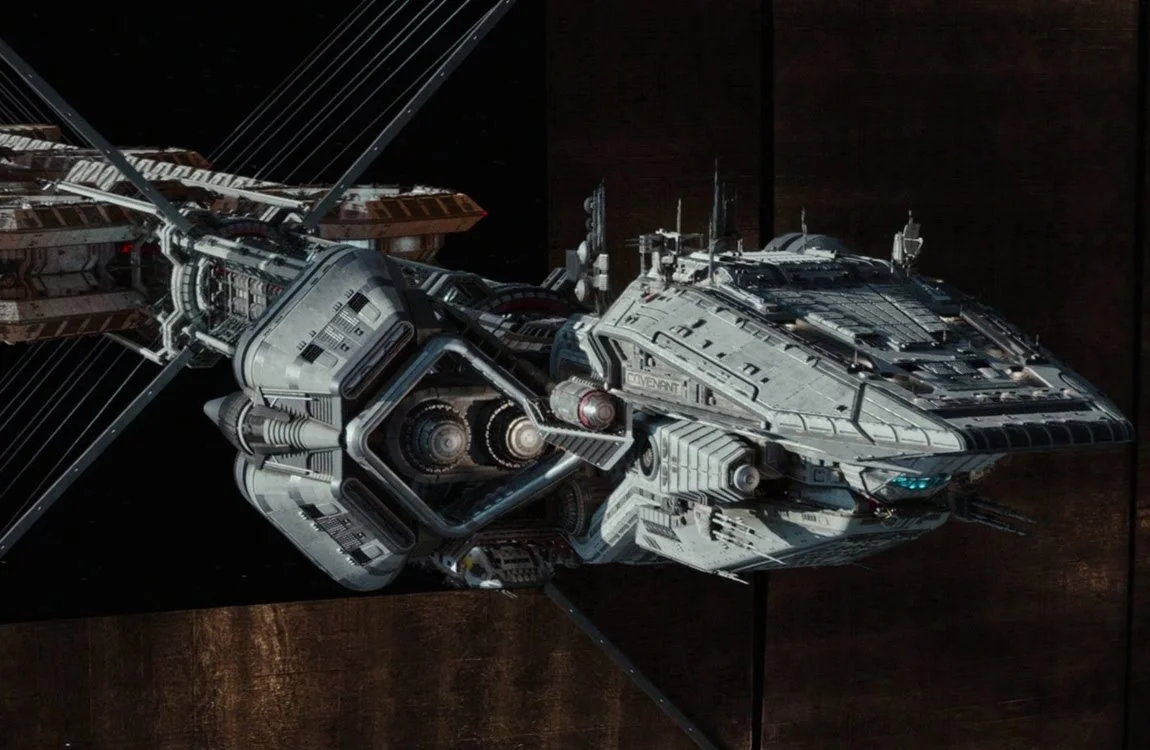
When the United Americas formed, Weyland-Yutani and Hyperdyne Systems backed large colony missions with the government, including the USCSS Covenant, Concordat, Arceon, Affiance, and Allegiance. Contact then failed with the far colonies. Scout ships went out, and only the Concordat run to the Hyades Cluster succeeded. That success left Hyperdyne a network of mining colonies there. Around 2110 the ICC, the United Americas, and the Three World Empire declared worlds more than twenty parsecs from Earth lost. Hyperdyne refused to abandon the Hyades and supplied those colonies on its own.
The original Weyland patent on synthetics ran out in that same stretch of the early 2100s. Seegson answered with the inexpensive Working Joe. Hyperdyne sold synthetics with different faces, built to pass as human. An early model, the 120-A/2, used synaptic algorithms from the Weyland David 7 and David 8, and the units were neurotic and unstable. Lawsuits followed. Hyperdyne moved to Alexandria, and by the end of that decade it recalled the 120-A/2 line and refurbished the units.
Alexandria And The New Deal
The ICC spent the 2140s looking at secret corporate holdings and synthetic rules, and it wanted a review of the 120-A/2. In 2147 Alexandria, run by Hyperdyne inside the Consortium, declared independence from the Three World Empire rather than submit. The other Consortium colonies followed in 2148. While that fight was open, Hyperdyne cut supply runs to the Hyades, and those mining colonies went without food. United Americas forces blockaded the disputed routes. For two years Colonial Marines and Royal Marines fought the Consortium's combat synthetics on the ground and in fleet actions.
The 2151 New Deal returned Helene 215 to the Three World Empire, recognized the Consortium as the Inner Core System Colonies, banned synthetics from combat, and dropped the Hyperdyne investigation. After that cutoff, the Hyades mining camps revolted and seceded to the Union of Progressive Peoples. Hyperdyne asked the United Americas to intervene past the twenty-parsec limit. Marine clashes with the Union there continued until the 2165 ceasefire. In Gavin G. Smith's Alien: Cult, decades after the failed Covenant and Affiance missions, the Hyades mine is the one human settlement beyond about twenty parsecs of Sol.
Buyout And The Marine 70 Order
The 2167 buyout gave reclaimed production worlds to Weyland-Yutani. Companies that could not survive the embargoes sold their major shares, and Hyperdyne became a Weyland-Yutani subsidiary. The Marine 70 program then re-equipped the Corps. During that program Hyperdyne introduced the 341-B, and the Corps ordered one for every platoon, in a non-combatant role. Hyperdyne bought the majority shares back, left Weyland-Yutani, and was restructured as the Hyperdyne Corporation. Michael Bishop, who designed the 341-B, remained with Weyland-Yutani.
After the split, both firms opened new mines and research posts and terraformed worlds the Corps could not garrison. During the Linna 349 campaign, the rebels received a weapons upgrade from a source UA Intelligence suspected was Hyperdyne. That suspicion was never proved. An orbital strike in the same campaign hit the USS Sulaco. A Bougainville-class transport could carry a crew of eight, or a MU/TH/UR 7000 and one Hyperdyne 341-B, with room for forty Marines.
Synthetics
120-A/2
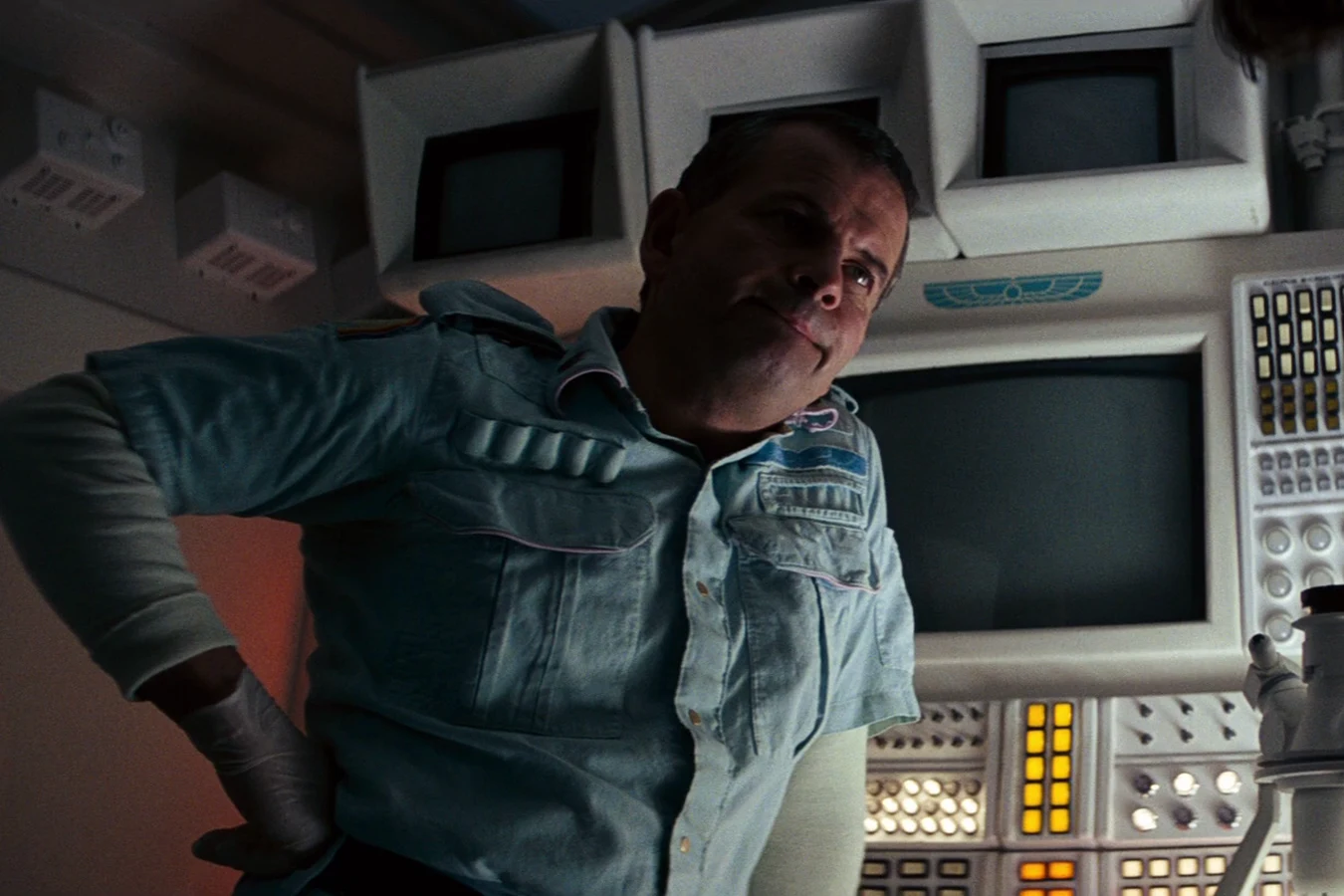
The 120-A/2 was Hyperdyne's early synthetic line, built so the units did not share one face. It used synaptic algorithms from the Weyland David 7 and David 8, and the units were neurotic and unstable. Ash was the 120-A/2 science officer Weyland-Yutani placed on the Nostromo. In Aliens, Bishop told Ellen Ripley that Ash was an older model, a Hyperdyne Systems 120-A/2, and a bit twitchy. After the lawsuits the firm recalled the line. Refurbished units remained in service, including the 120-A/3 synthetics that later worked at the Transept outpost.
341-B
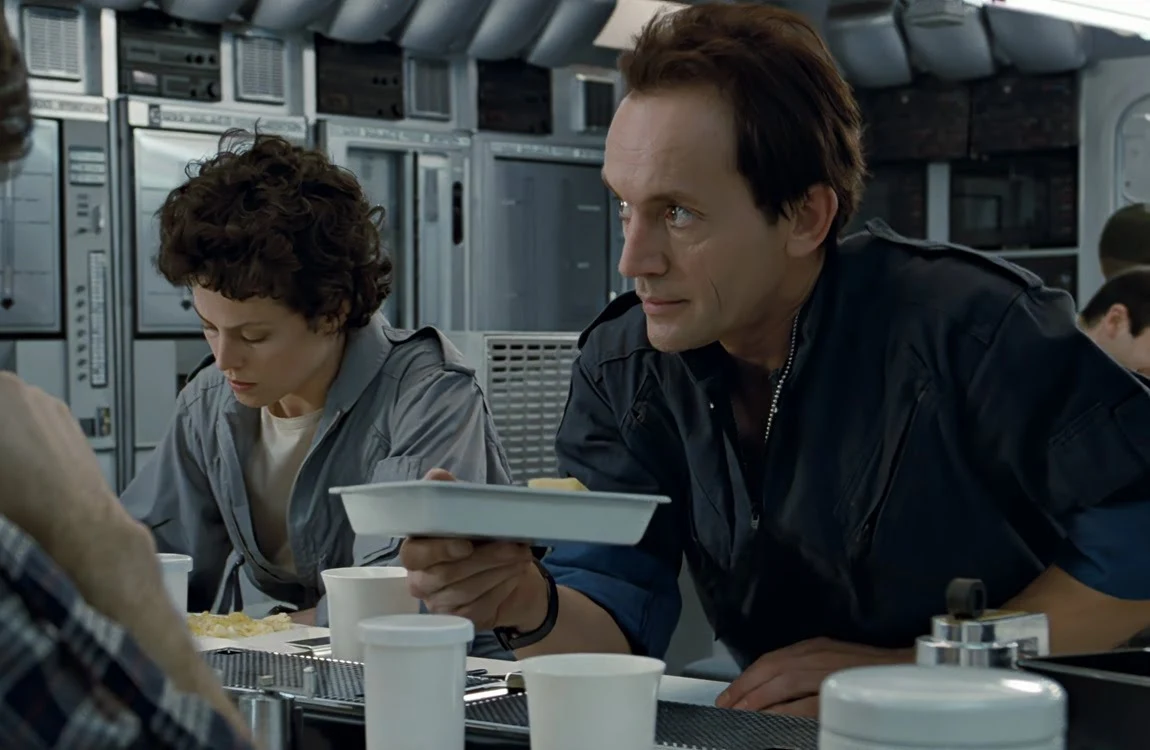
Bishop was the 341-B assigned to the Sulaco as executive officer and science officer for the 2179 mission to LV-426. The Corps order in the Operations Manual put one 341-B on every platoon and barred the model from combat, in line with the New Deal rule that synthetics were not to fight. Bishop crawled the colony conduit under Hadley's Hope, and the Queen tore him in half during the flight off the moon. On Fury 161 his remains were tagged as a Hyperdyne 341-B, and he asked Ripley to disconnect him. Aliens: Bishop follows that unit after he received a new body. In Alien: Cult, Serena recognized an older man called The Bish as a Hyperdyne Systems Model 341-B.
Other Series
Steve Perry's Aliens: Earth Hive includes two other Hyperdyne products. A Model 244-2 Diagnoster monitored one patient from the bed, logging heart, brain, and blood reads while it held him in place. A company man in that novel wanted a new 129-4, a pleasure model. William Gibson's unproduced Alien 3 screenplay gives the Sulaco synthetic a different designation, the Hyperdyne A/5, and treats him as a record of what he had observed.
Weapons
EV-87 Zvezda
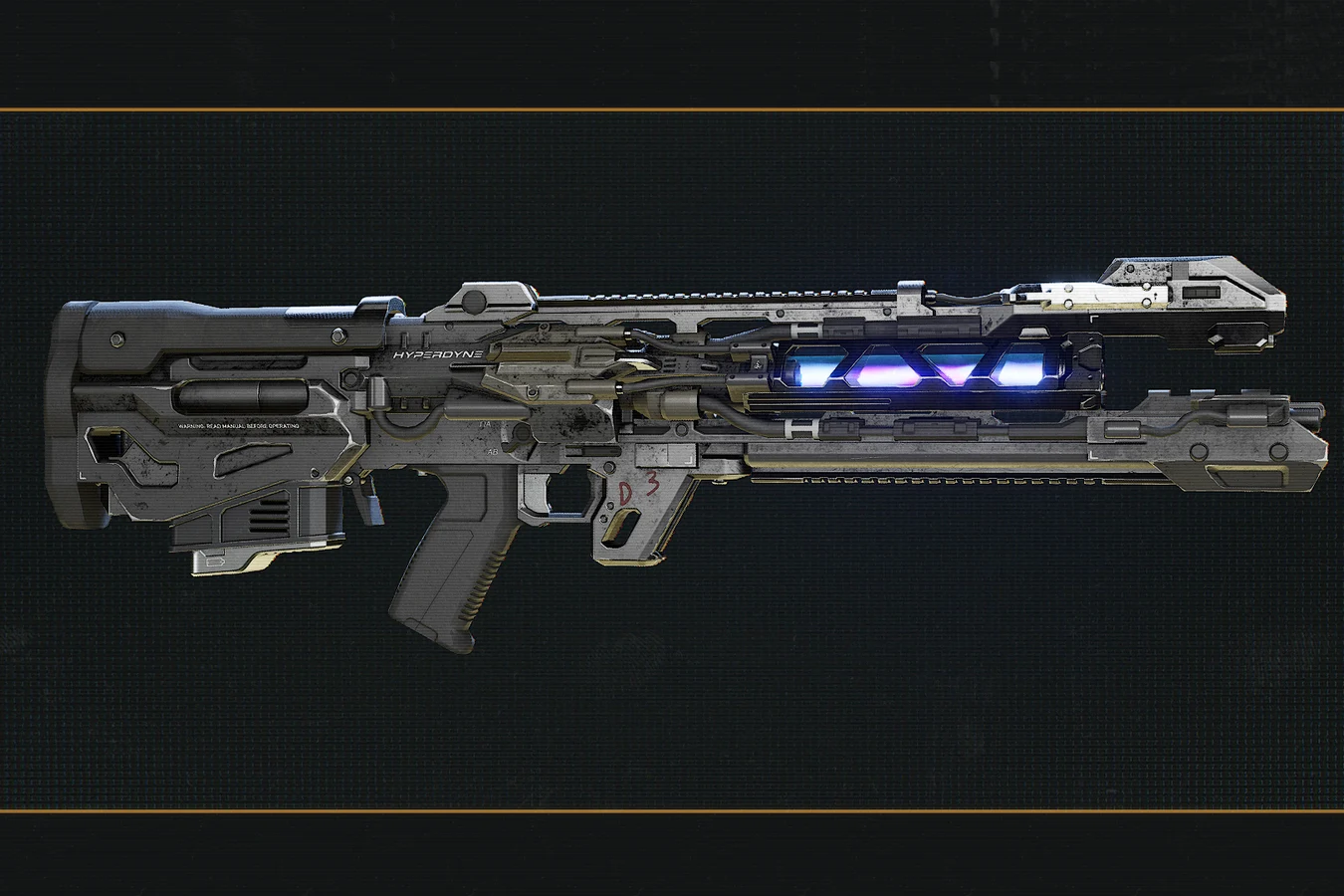
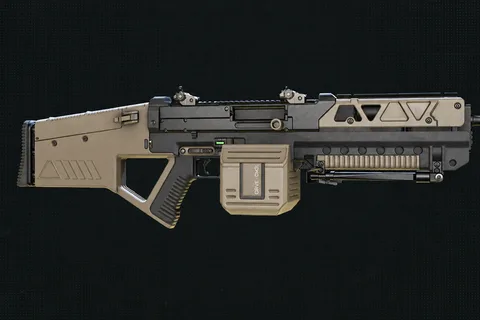
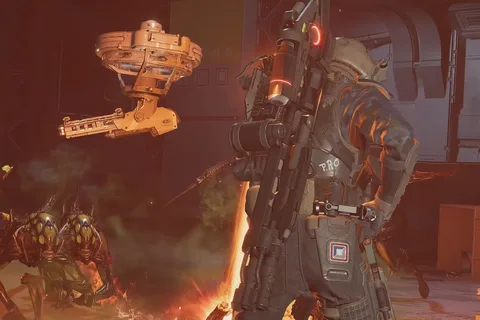
The EV-87 Zvezda Plasma Rifle Mk.2 is Hyperdyne's automatic plasma rifle in Aliens: Fireteam Elite 2, with low recoil. The first game listed the same weapon as the EVI-87, an experimental export outside the UPP. It was the fastest automatic Hyperdyne offered, accurate at close and medium range, and weaker once the target was farther away. Fireteam Elite 2 also includes the EDS-93 Zadak Plasma Discharger Mk.2, a close plasma gun that can fire at a shotgun pace or hold a tighter, overcharged blast.
Frontier Revolver
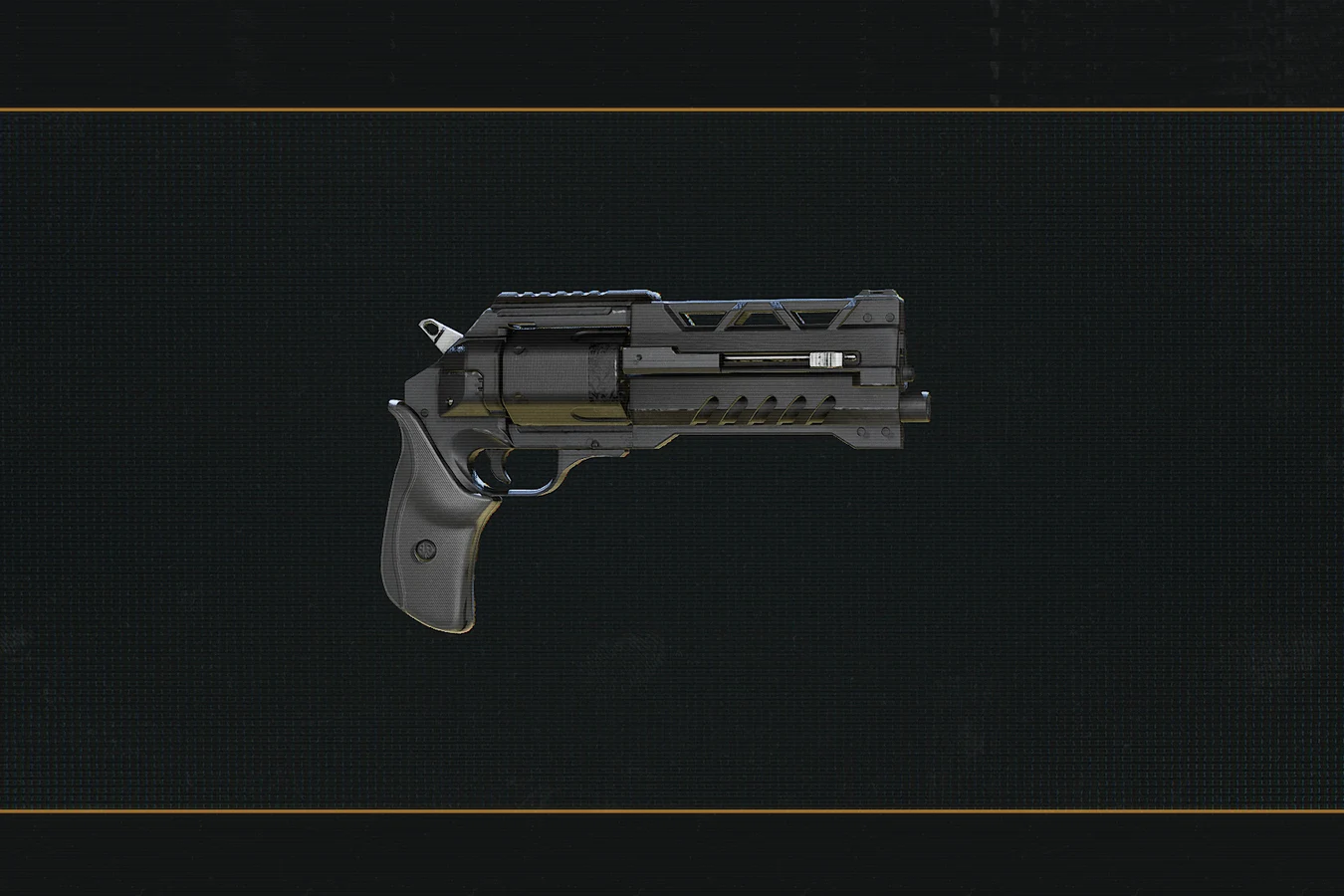
The Frontier Revolver is Hyperdyne's heavy single-action handgun in Aliens: Fireteam Elite 2, for explorers and miners who needed a sidearm they could repair on the outer rim. It hits hard and reloads one chamber at a time. It is not the Marine service pistol from Armat. Fireteam Elite 2 attachments also carry the Hyperdyne name on smaller parts: the Nyx magazine, the G220 Gambler heatsink, and the Artemis muzzle brake.
OCAP-91 Volcan
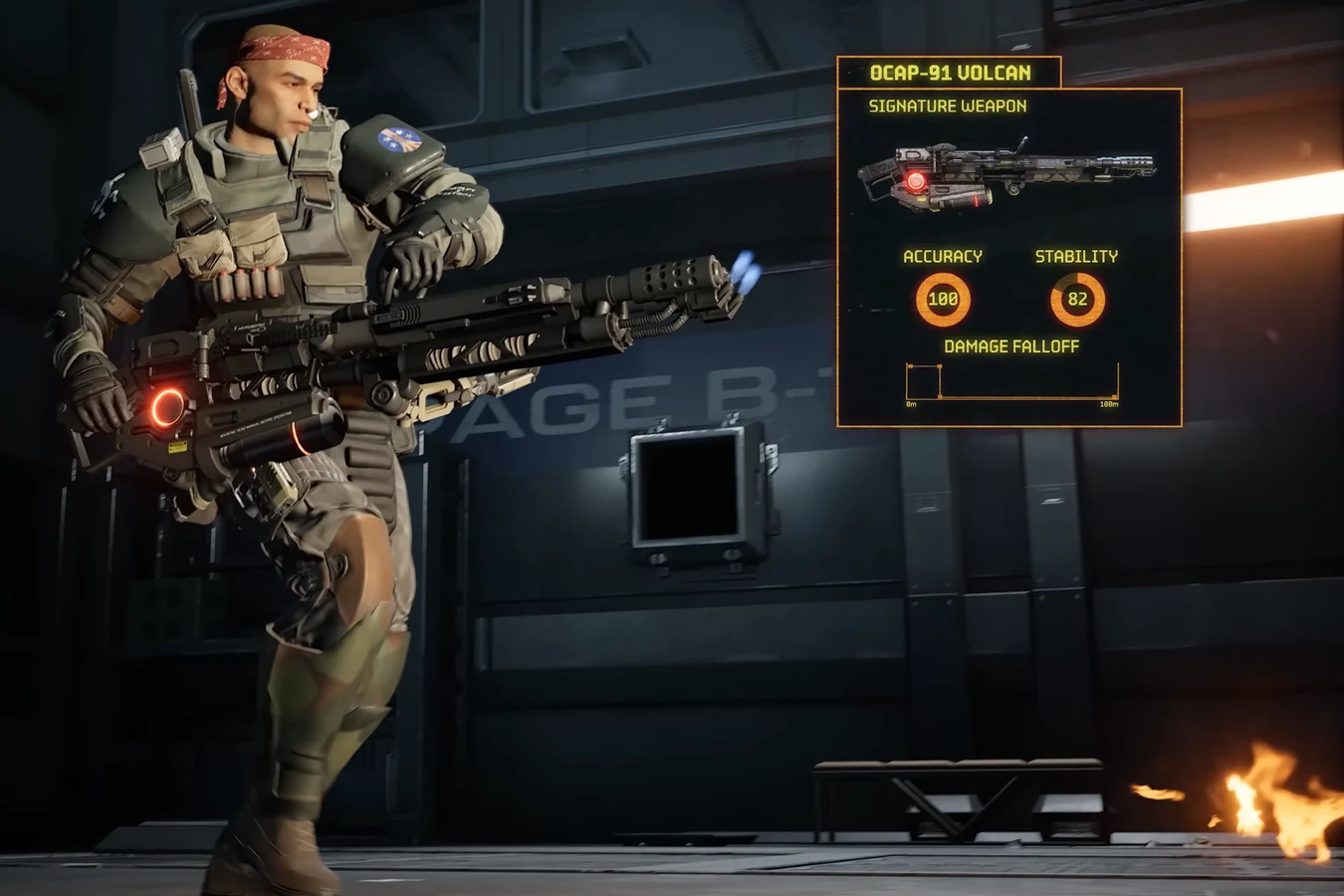
The OCAP-91 Volcan is Hyperdyne's heavy flamethrower. It had been in service against xenomorphs for years when Fireteam Elite 2 issued it. It is useful only at short range, and it is bulkier than the M240 carbine. The game groups it with the heavy weapons. On the Marauder class it is the short-range flamethrower beside a rocket launcher. In Philippa Ballantine's Alien: Inferno's Fall, Hyperdyne's zero-G factory Seneca orbited the northern hemisphere of the Shānmén mine world and supplied the security dome with company weapons.
Colonies And Industrial Sites
Transept
Transept, in the GJ2005 system, was a Hyperdyne starship and synthetic service outpost on a barren rock in orbit around twin brown dwarfs. Six surplus Heliades III exploration ships were under repair there, worked on by 120-A/2 and 120-A/3 synthetics. The ships were registered for spinward exploration, while the crews mapped quiet routes toward Anesidora. The outpost account does not say whether Hyperdyne took those Weyland-era hulls from a nearby defense-fleet graveyard or bought them quietly. The first of the ships, Epimetheus, had begun those mapping runs with an all-android crew.
Berringett's Moon
In 2184, two hundred armed workers seized a Hyperdyne palladium mine on Berringett's Moon after years of unsafe conditions. The local colonial marshal office tried to restore order, and the company agent sent to negotiate was killed. Colonial Marines were then sent to end the seizure. A typhoon struck the colony while they were there, flooded the mine, and trapped the workers and the remaining hostages inside, so what began as a short raid turned into a longer standoff. When it ended, the mine was destroyed and fifty-two colonists were dead. That same year, frontier fighting forced the evacuation of Hyperdyne's Groombridge and Zeus colonies as the Union of Progressive Peoples moved into Three World Empire space in the Outer Veil.
Espionage And Corporate Conflict
Pala Station
In Weston Ochse's Aliens: Infiltrator, Hyperdyne planted an agent inside a Weyland-Yutani laboratory rather than attacking the site outright. Logistics tech Steve Fairbanks returned to Pala Station on LV-895 after emergency leave because Hyperdyne had threatened his mother. Before his first shift he released three dozen tracker rats into the ducts and hid a relay on the station's comms wiring so the company could listen. The scientists later found the trackers on captured rats and matched them, along with a microscope in the lab, to Hyperdyne stock rather than Weyland-Yutani inventory numbers.
Hyperdyne Sector
The 1991 Aliens Adventure Game describes a Hyperdyne Sector that the firm first opened with Weyland-Yutani. Around the time the ICC was formed, Hyperdyne sabotaged critical Weyland-Yutani operations there and tried to take the sector for itself. The break was profitable for years. Hyperdyne discovered the Earthlike world Hilo, and New Chicago became a port for the company's fleet. Weyland-Yutani later recovered a position in the sector, and the two companies remained hostile without open warfare.
Project Berserker
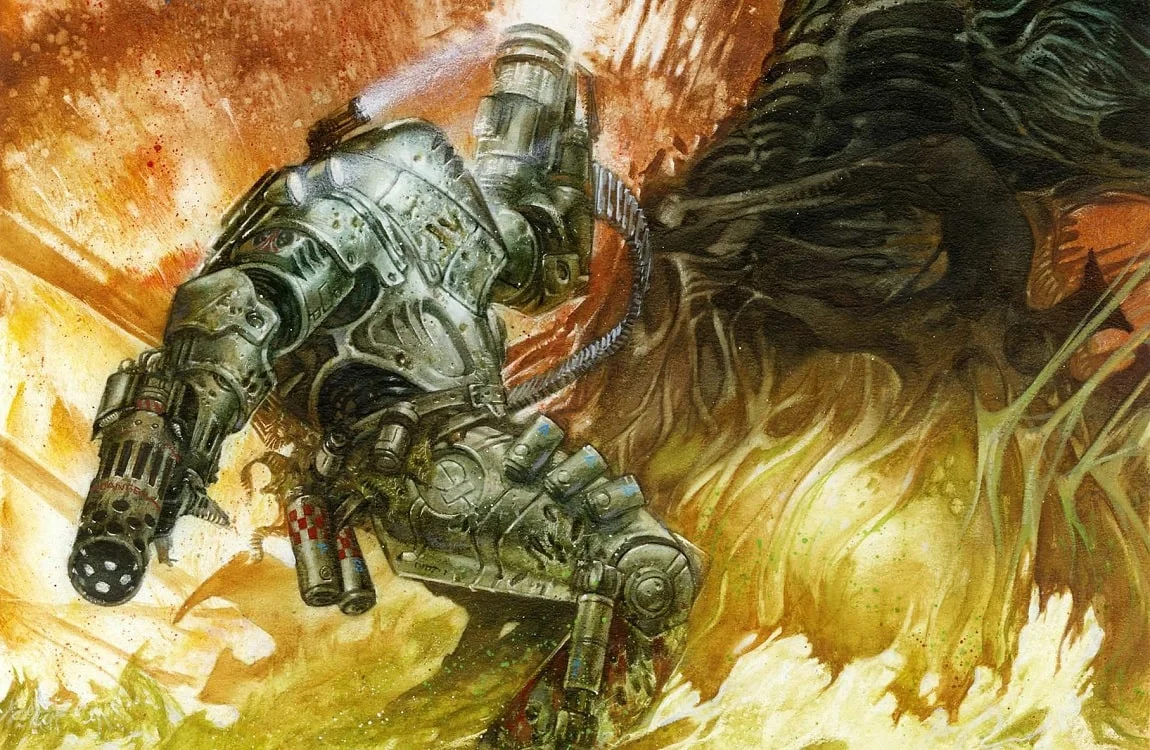
Project Berserker was Hyperdyne's enclosed exosuit, built as an answer to xenomorphs and to Project Life Force after Weyland-Yutani recovered Sulaco flight data at Fury 161. A weaponized power loader proved too clumsy for a human pilot. Hyperdyne executive Spencer Lyndon dropped that plan and hardwired a person into the machine as the biological part of a Mobile Offensive Exowarrior. Early subjects died from the sensory load or killed themselves as soon as the suit came online. Violent convicts from Skyfire Down lasted longer. One of those units cleared a Life Force outbreak on Garrison Alpha moon 3326 and also destroyed the squad, the outpost, and everyone in it. Hyperdyne proposed one Berserker per Marine squad, held back until a mission could accept the deaths of friendly troops, and fitted with an explosive kill switch.
Behind The Scenes
James Cameron's draft of Aliens, quoted in J.W. Rinzler's The Making of Aliens, has Bishop call Ash an older model from Cyberdyne Systems, a 120-A/2. Cyberdyne is the company in The Terminator, which Cameron had directed two years earlier. The finished film uses Hyperdyne Systems. The Colonial Marines Operations Manual (2021) and the Alien RPG Evolved Edition (2025) carry that name through the Hyades mines, the Alexandria revolt, the 2167 buyout, and the 341-B order. Cold Iron Studios used it on Fireteam weapons, including the Zvezda, the Frontier Revolver, the Zadak, and the Volcan.
Alien: Romulus
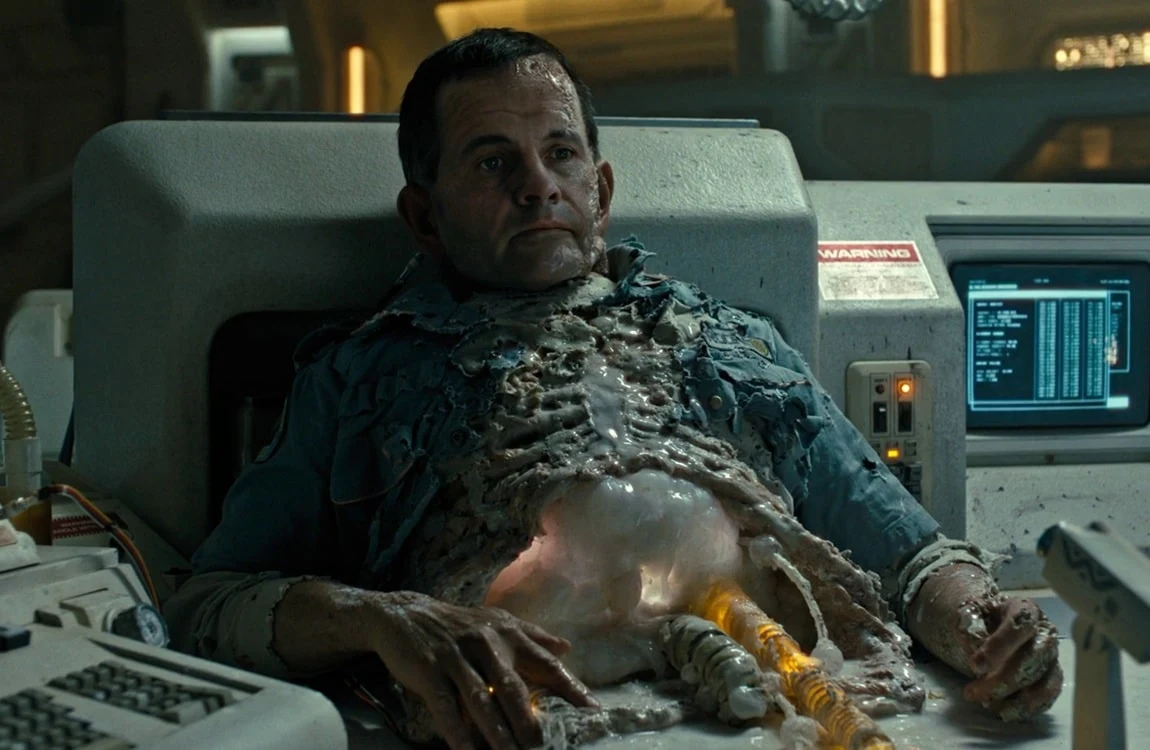
Alien: Romulus used a digital likeness of Ian Holm, who had played Ash, for Rook, the science officer on Renaissance Station. The film does not give him a Hyperdyne model number. He has Ash's face, which Aliens had already identified as a 120-A/2. Rook ran the station lab that held the Xenomorph recovered from the Nostromo wreck. After the outbreak tore him in half, he was still trying to return the samples to Weyland-Yutani.
Conclusion
Hyperdyne Systems manufactured the 120-A/2, including Ash, and the 341-B, including Bishop. It worked the Hyades mines after the twenty-parsec cutoff, moved to Alexandria, returned from the 2167 Weyland-Yutani buyout as the Hyperdyne Corporation, and supplied a 341-B to every Colonial Marine platoon. Its later record includes the Seneca weapons factory, the infiltration of Pala Station, an older 341-B in Alien: Cult, and the Zvezda, Frontier Revolver, and Volcan in Fireteam Elite and Fireteam Elite 2.
Appearances
- Aliens (1986)
- Aliens Adventure Game (Leading Edge Games, 1991)
- Aliens: Earth Hive by Steve Perry (Bantam, 1992)
- Alien 3, unproduced screenplay by William Gibson
- Alien RPG Colonial Marines Operations Manual (Free League, 2021)
- Aliens: Infiltrator by Weston Ochse (Titan Books, 2021)
- Aliens: Fireteam Elite (2021)
- Alien: Inferno's Fall by Philippa Ballantine, from a story with Clara Carija (Titan Books, 2022)
- Alien: Romulus (2024)
- Alien: The Roleplaying Game, Evolved Edition (Free League, 2025)
- Alien: Cult by Gavin G. Smith (Titan Books, 2025)
- Aliens: Fireteam Elite 2 (2026)
Tag Categories: Alien Universe Companies | Colonial Marine Lore | Alien Lore