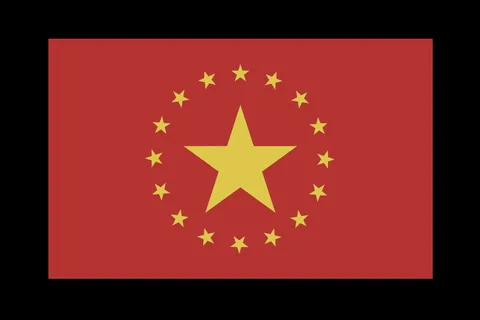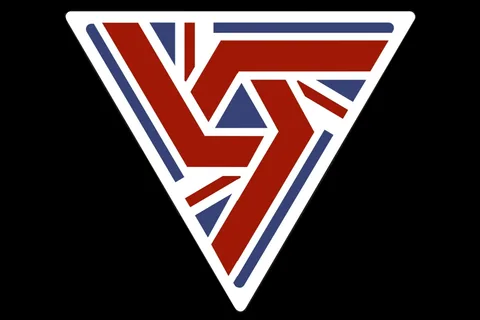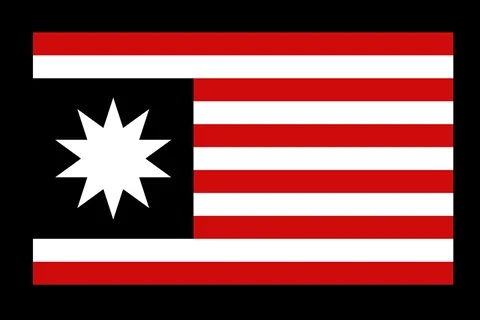

The Independent Core System Colonies were the corporate power among the colonial governments of the 22nd century, beside the United Americas, the Three World Empire, and the Union of Progressive Peoples. They began in the 2080s as the Central Space Consortium, a company-run territory inside the Three World Empire that was built so those companies could avoid Earth taxes. In 2151 the New Deal recognized the break and gave the colonies the name Inner Core System Colonies. The roleplaying game and the later novels call the same power the Independent Core System Colonies. By the 2180s the capital was Alexandria in the New Eden Sector, and a member world paid corporate forces for protection.
Formation
The Central Space Consortium
Andrew E.C. Gaska's Colonial Marines Operations Manual places the Central Space Consortium in the 2080s, as a corporate-run state inside the Three World Empire with special tax incentives and a great deal to hide. Free League's Alien: The Roleplaying Game tells the same origin from the company side: Earth governments were taxing the firms, so the firms planted major holdings off Earth, declared those holdings independent, and wrote their own laws. Hyperdyne Systems later moved its operations to Alexandria after the 120-A/2 synthetic line produced unstable units and the liability suits followed. By the end of that decade the 120-A/2 units were recalled. In the 2140s the Interstellar Commerce Commission opened a review of secret corporate holdings, synthetic rules, and hidden sites, and that review turned on the Consortium.
Alexandria Leaves The Three World Empire
The operations manual dates the break to 2147, when Alexandria, a Hyperdyne colony, refused an ICC review of the 120-A/2 synthetics and declared independence from the Three World Empire. The Empire would not fight a civil war that wrecked the world. From 2148 to 2150 the other company colonies of the Consortium declared independence as well. The United Americas entered when Helene 215, site of a Colonial Marine headquarters, left the Empire too. Hyperdyne cut supply runs to the Hyades Cluster, and those colonies went without food. Allied Command blockaded the disputed routes. For two years Colonial Marines and Royal Marines Commandos fought the Consortium's combat synthetics on the ground and in fleet actions. The ICSC made heavy use of android troops in that war.
The 2151 New Deal
In 2151 the United Americas, the rebel Consortium, and the Interstellar Commerce Commission signed the New Deal through the United Nations Interstellar Settlements Corps. The contract returned Helene 215 to the Three World Empire and gave the Empire wholesale prices on goods made inside the Consortium. In return the Empire recognized the Consortium as the Inner Core System Colonies, and only as a member nation in good standing. Combat synthetics were banned. New models had to carry behavioral inhibitors, and older synthetics had to meet the rule by 2160 or be retired. The Commission dropped the Hyperdyne investigation. The United Americas loosened the blockade enough to regulate traffic, colonists, and money moving in and out of the new colonies.
Government
The roleplaying game describes the colonies as a loose alliance of worlds that had left every larger interstellar government. Each colony used its own rules, and many of those governments were owned by a company. The Central Space Consortium ran the alliance as a board: one director for each major corporation, and one director for the member colonies outside the core systems. That office sent a representative to tour the independent worlds, to learn what they needed and what they could sell. From Alexandria the Consortium controlled the colonies as a republic of corporate representatives. The main stakes on that board belonged to six companies.
Member Corporations
- Hyperdyne - Ran Alexandria, led the 2147 break, and remained the colonies' synthetic house. After 2167 it was a Weyland-Yutani subsidiary.
- Weyland-Yutani - Held planets in the colonies, took the contracts reclaimed in the 2167 buyout, and bought Hyperdyne.
- Seegson - Held planets in the colonies. After the Colonial Marines shelved the MX11A1 Hovertread, that vehicle turned up with ICSC corporate commandos.
- Jĭngtì Lóng - Held planets, took contracts on former Cooperative worlds, founded New China, and was escorted out in the 2167 buyout.
- Lockmart - Built the colonies' commercial starships.
- Chigusa - Held planets in the colonies.
A skilled fugitive could ask the Consortium for asylum. The Consortium usually bought off that person's tribunal and made the newcomer an indentured citizen, which is how the companies filled their rolls. The game's colonial liaison was an android named Martin. He was calm, he listened, and most of the people he dealt with did not know he was synthetic. His instructions were to offer as little as possible and take as much as he could. The text has him notice that those promises were empty, which put him near a break in his programming. Large banks settled in the colonies because an account there was harder for an outside government to freeze.
Armed Forces
The colonies did not field a national army. Security came from Central Space Consortium private military contractors, hired to guard sites, train local forces, and run black operations. The quality of those forces depended on who hired them. A chief executive could pay for an elite unit, while a low-level company agent often got poorly trained contractors who did not work well beside other units. The roleplaying game adds a combined mercenary fleet drawn from the member companies and based in the Ventix system, close to Alexandria. Small teams were dangerous in a fight, while larger fleet operations suffered because the crews did not share one training system or one set of rules. The Consortium also held contracts to call in national forces if the Union of Progressive Peoples invaded.
The operations manual registers ICSC commercial ships as CSCSS, for Central Space Commercial Star Ship. Military ships used that same commercial prefix, because the manual treats a war as company business and gives them no separate naval code. Private starships from other powers were registered in the colonies as well, whatever flag they had come from. After the Colonial Marines shelved the Seegson MX11A1 Hovertread, the same light infantry vehicle appeared on ICSC worlds in the hands of corporate commandos, with a production turret of paired smartguns. The manual says the match was under investigation.
New Eden Sector
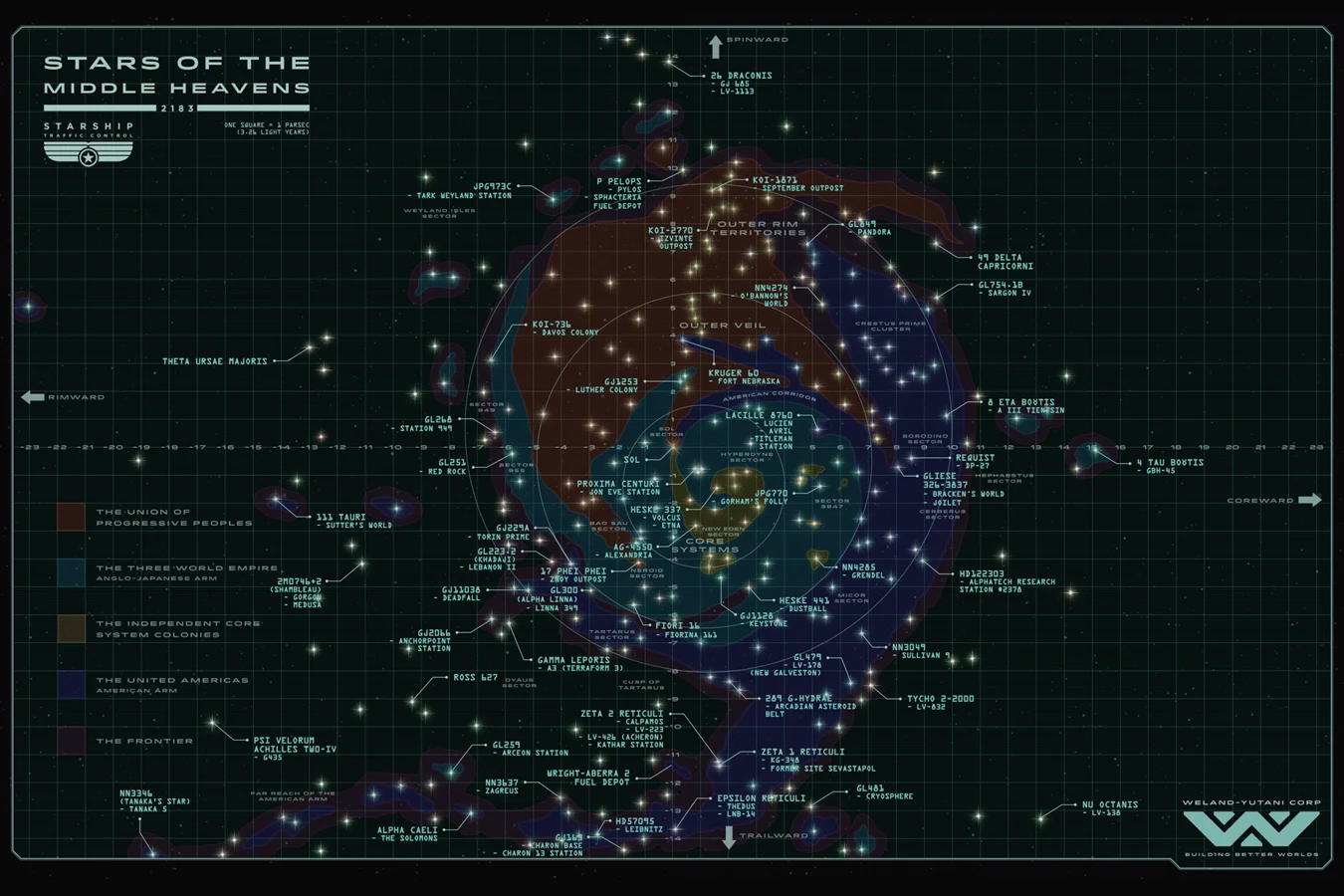
The roleplaying game clusters the colonies in the Core Systems, in the rich New Eden Sector. The named systems are Volcus, Ventix, and Grendel, and the named colonies are Alexandria, Exeter, and St. John. Alexandria was the capital and a nearly self-sufficient world, hot and dry after terraforming, with farms that cut the need for imported food. The mercenary fleet in the Ventix system covered Relitor, NE/JV, Alexandria, and the Olympia colonies. On the airless moon Etna, linked habitat domes held nearly 200,000 colonists, while about a hundred engineers lived on the collector station V-23 and shipped power cells out through the ICSC. Third Base, a classified United Americas bioweapons moon near New Eden and Sol, trained Marines for a first strike on an ICSC world if that order came.
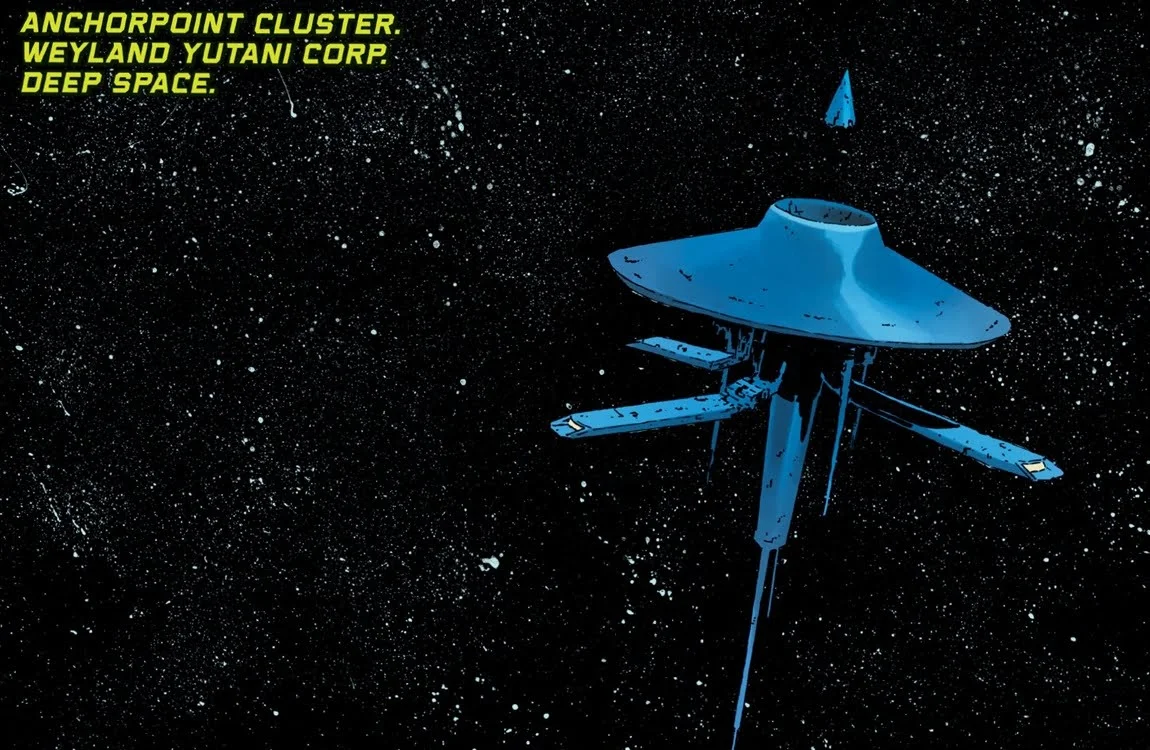
Outside the core, the colonies serviced and protected clients that included the Solomons and Anchorpoint. Anchorpoint was neutral ground. Ships from any government or company could dock, and the Interstellar Commerce Commission and Colonial Administration sent representatives there to settle disputes between colonies. On GJ2034 the ICSC colony Argos was another neutral hub, set apart from the newer Anchorpoint station. Colonial supervisor Carol Sherrer laid the town out so hostile parties could stay apart while her office mediated. She did not get United Americas and Three World Empire delegates into the same room. The star nations disliked the restraint that post put on them.
Sanctions And The Black Market
By the 2180s the United Americas and the Three World Empire had trade sanctions on the colonies and heavy taxes on what moved in and out. A major Colonial Marine base outside the ICSC watched the independent systems, and Weyland-Yutani wanted those Marines close. The Consortium sent recruiters to successful colonies to talk them into leaving their government and joining. Colonial Administration treated that recruiting as illegal and watched it. Inside the ICSC the companies were expected to deal cleanly with one another. Together they ran a smuggling ring and a black market between New Eden and the Frontier. Commission agents and colonial marshals policed the cargo, and shipments continued to move past them.
The operations manual adds the routes those cargoes used. The Arcturus Loop, opened in the 2130s to move people and goods out of the Chinese/Asian Nations Cooperative, bent through the Alpha Boötis system to avoid Commission customs in the Borodino Sector and the Crestus Cluster. Much of that traffic was sanctioned by the companies themselves, and the path shifted whenever a new patrol appeared. The Three World Empire's Imperial Armed Space Forces worked the New Eden border against smugglers. The United States Colonial Coast Guard patrolled the ICSC border beside the American Corridor, and Marine Space Force Sol maintained that blockade.
After The New Deal
In 2159 the United Americas, the Three World Empire, and the ICSC formed the Allied Frontier Force for the Dog War in the Chinese Arm. After the Pang Ho Treaty of 2163, the Jĭngtì Lóng Corporation and other ICSC holding companies received contracts to work former Cooperative worlds for the United Americas. Jĭngtì Lóng then founded New China inside ICSC space and opened it to Cooperative refugees who wanted neither the Union nor the United Americas. On the Borderline Region world Sahara, the manual has the ICSC courting the independent Grandhi Domes for membership, with the desert planet's suspected oil as the reason.
The 2167 Buyout
In 2167 company worlds inside the new American territory were caught applying for ICSC membership. The United Americas answered with a trade embargo and a blockade of the Inner Core System Colonies. Colonial Marines took the production worlds back and escorted the responsible companies out, including Jĭngtì Lóng. Weyland-Yutani received the reclaimed contracts. Several firms went broke in the process, and Weyland-Yutani bought them. Hyperdyne had to sell its major shares and became a Weyland-Yutani subsidiary. The roleplaying game lists Hyperdyne afterward as the ICSC synthetic house under that ownership.
The Oil Wars And The Silent War
The operations manual has the Oil Wars close when the petrol-rich ICSC opened sales to every side and, in exchange, had trade sanctions lifted. Retreating forces poisoned wells with an oil-eating bacteria first made to clean spills, which left less oil in the ground. In 2183 the same manual sets the Silent War, a fight between Weyland-Yutani and the Globe Corporation for worlds inside the ICSC. It was a company war carried on out of public view. The Colonial Marines entered on Weyland-Yutani's side, and that intervention decided it.
Hasanova And The Later Novels
Alien: Into Charybdis gives the ICSC the data colony Hasanova on LV-991, run for Iran. The United Americas wanted the site back and prepared the secret raid Cannery Grim. By the end of that novel the ICSC Board of Ministers voted for war on the United Americas. Alien: Colony War follows that breach into July 2186, when the British colony New Albion left the Three World Empire and claimed the empty ICSC oil world LV-187. The United Americas and the ICSC were in a war of words after Hasanova while the Union pushed on the Frontier.
Alien: Enemy of My Enemy puts UA, UPP, and ICSC delegates at a summit on LV-846 in 2187. The outbreak there killed the delegations. Six months later the three governments signed an armistice. During the outbreak an ICSC ship, the Soteria, lifted two survivors off the moon. Alien: Cult uses Alexandria as an ICSC core city, with a financial district at Hume City that hired former federal investigators because the colonies were buying them away from Earth. Alien: The Weyland-Yutani Report has four ICSC member states join the United Americas and the Three World Empire in the United Systems in 2202, together with China and Heelal Yo.
Behind The Scenes
Free League's Alien: The Roleplaying Game in 2019, and the 2025 Evolved Edition after it, are the main account of the board, the android liaison Martin, the capital at Alexandria, and the New Eden Sector. That game uses the name Independent Core System Colonies. Andrew E.C. Gaska's Colonial Marines Operations Manual in 2021 tells the Core Conflict, the 2151 New Deal, the 2167 blockade, and the ship prefix CSCSS, and it calls the power recognized in 2151 the Inner Core System Colonies. Later Titan novels, including Into Charybdis, Colony War, Enemy of My Enemy, and Cult, use the Independent name and put the colonies into the Hasanova crisis, the claim on LV-187, and the summit on LV-846.
Conclusion
The Independent Core System Colonies were the corporate government that grew out of the Central Space Consortium. The 2151 New Deal made the break from the Three World Empire official, under the earlier name Inner Core System Colonies, with a capital at Alexandria in the New Eden Sector. In the 2180s the colonies sold protection to any world that could pay, fielded mercenaries and a company fleet, and worked under United Americas and Three World Empire sanctions while their firms ran a black market out to the Frontier. Four member states joined the United Systems in 2202.
Appearances
- Alien: The Weyland-Yutani Report by S. D. Perry (Insight Editions, 2016)
- Alien: The Roleplaying Game (Free League, 2019) and the Evolved Edition (2025)
- Colonial Marines Operations Manual by Andrew E.C. Gaska (Free League, 2021)
- Alien: Into Charybdis by Alex White (Titan Books, 2021)
- Alien: Inferno's Fall by Philippa Ballantine (Titan Books, 2022)
- Alien: Colony War by David Barnett (Titan Books, 2022)
- Alien: Enemy of My Enemy by Mary SanGiovanni (Titan Books, 2023)
- Alien: Cult by Gavin G. Smith (Titan Books, 2025)
Tag Categories: Alien Universe Governments | Alien Lore