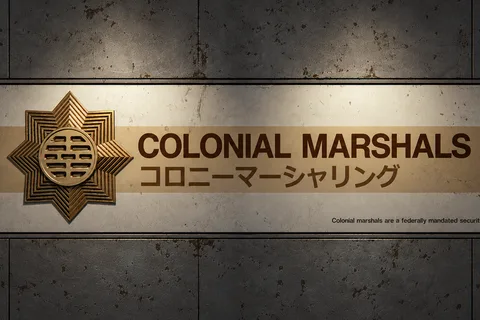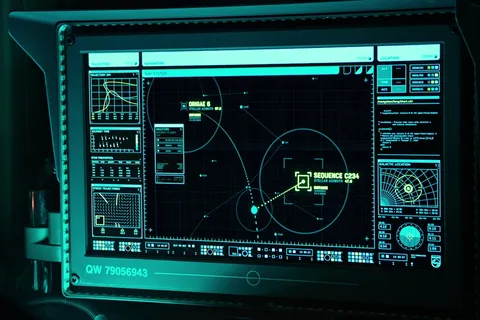

The Extrasolar Colonial Administration, also called the ECA and Colonial Administration, was the United Americas office charged with the rights of off-world colonists. It watched colonies and stations, moved food, parts, and vaccines, and was supposed to keep basic order on worlds a company ran day to day. The Colonial Marshal Bureau was its police arm. In Aliens, Carter Burke named the office among the people who would hear Ellen Ripley, and Weyland-Yutani had co-financed Hadley's Hope with it against the mineral rights.
The Office
The Colonial Marines Operations Manual places the founding after the troop carrier UAS Archangel was lost at Thedus on 25 December 2109, when the United Americas formed this office and the marshal bureau together. That account gives the full name Extrasolar Colonial Administration, then shortens it to Colonial Administration in the next sentence. The ship had gone down on a peacekeeping run after a miners' revolt, and more than 15,000 military and civilian people were killed. Captain Dallas, who had taken that command after Torin Prime, lost his flight license. The new office was meant to answer colonist grievances before another revolt on that scale, and it promised a law-enforcement office on every United Americas colony and station within ten years.
Alien: The Roleplaying Game charges the office with the rights of off-world colonists. It supported and monitored extrasolar colonies and stations, moved supply shipments, and distributed vaccines. For decades it pushed for a minimum wage for colonists, and corporate lobbyists blocked that wage. Through the 2100s, many United Americas and Three World Empire colonies received late supply ships, and the Marines and marshals were spread thin. Some of those colonies declared themselves independent, and without a company fleet they were open to pirates and to being taken back by a government.
Colonies And The Company
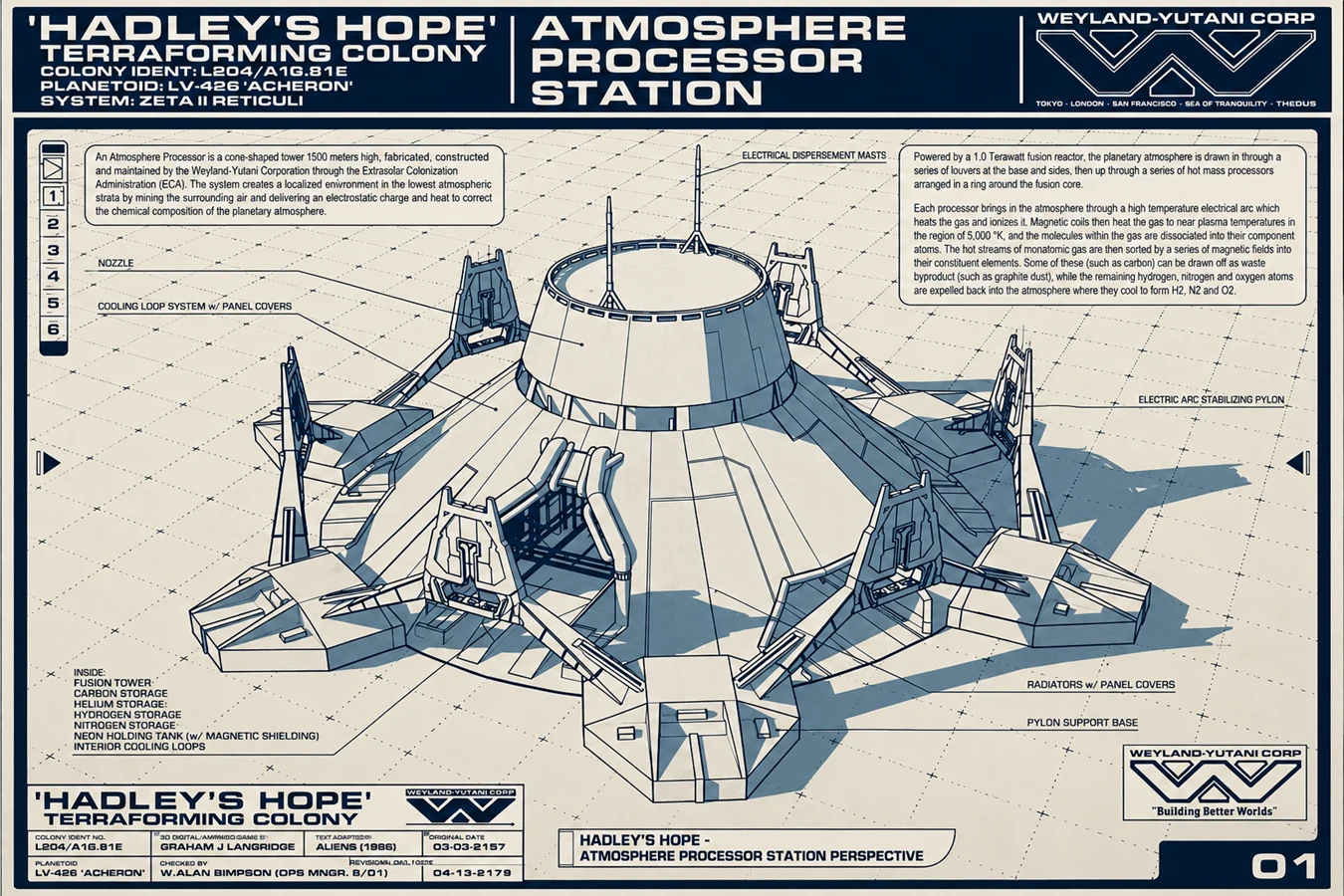
Weyland-Yutani and the administration founded Hadley's Hope on LV-426 around 2157. Burke gave the company's reason for the later mission as that co-financing, set against the mineral rights, under the terraforming line Building Better Worlds. The roleplaying game puts the settlement under the joint authority of the office and the company. Alien: The Blueprints, by Graham Langridge, draws the atmosphere processor as a tower about 1,500 meters high, built and maintained by Weyland-Yutani through the Extrasolar Colonization Administration.
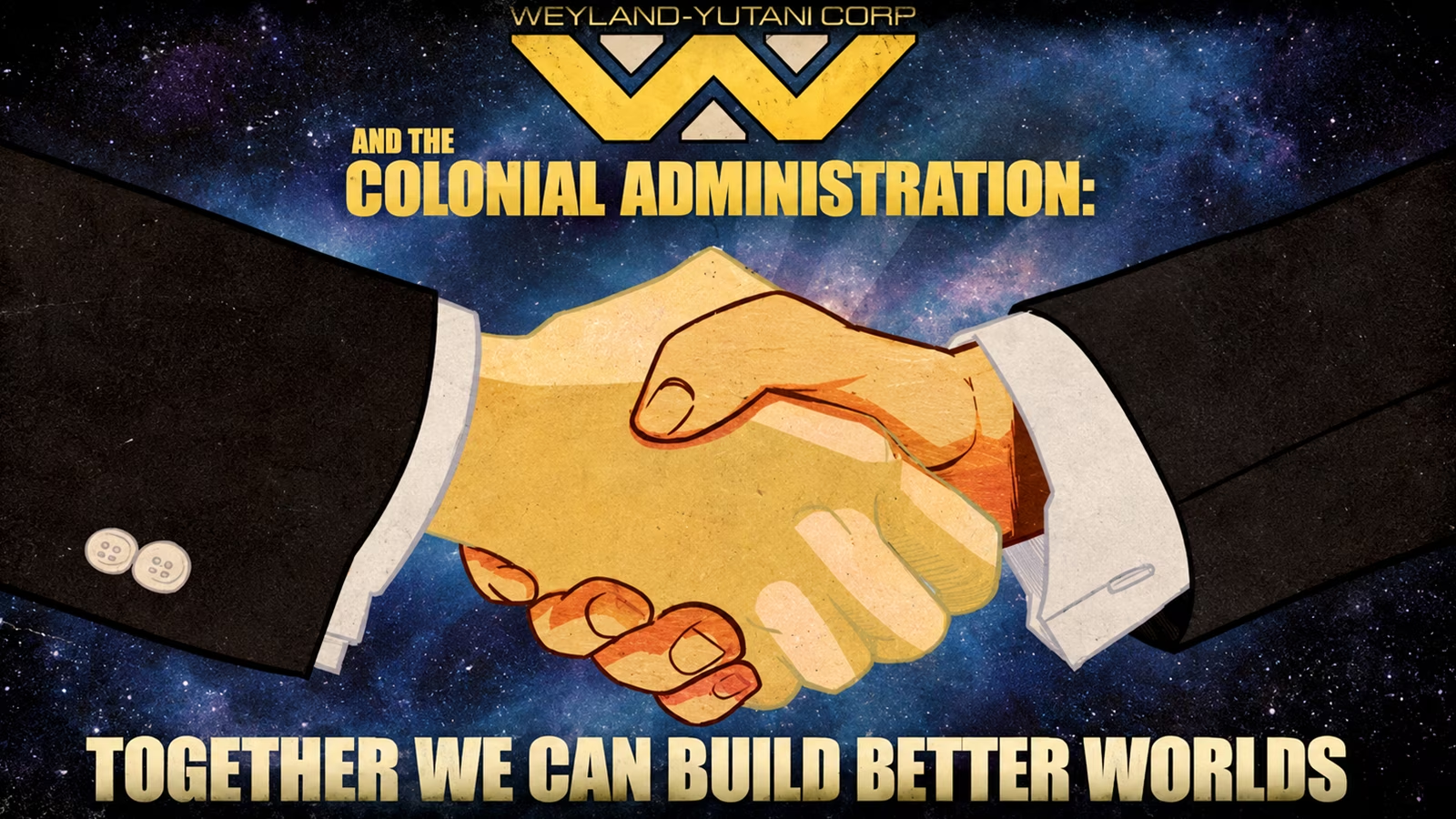
The Operations Manual says the Colonial Marine Corps could be called up as company security on those joint worlds, with the administration and Weyland-Yutani sharing the cost. Platoon commanders objected to those orders. Upper Deck's 2016 Alien Anthology set printed the same partnership as propaganda poster WY-10. The card names Weyland-Yutani and the Colonial Administration over a handshake, with the line Together we can build better worlds. The dark sleeve and the white cuff are the two parties on that poster.
Known Disputes And Incidents
The administration enters the record when a colony, a company, and another government office are in a fight, and when a war forces it to move civilians. Those cases run from the Gateway hearing after the Nostromo, to the investigation that followed Hadley's Hope, to station arguments the office was sent to hear, and to the evacuation after Fort Nebraska. Local police work stayed with the marshal bureau. The administration was the civilian side, whether the fight was a license hearing, a bioweapon accusation, a quarrel between colonies, or an order to empty a sector.
The Nostromo Inquiry
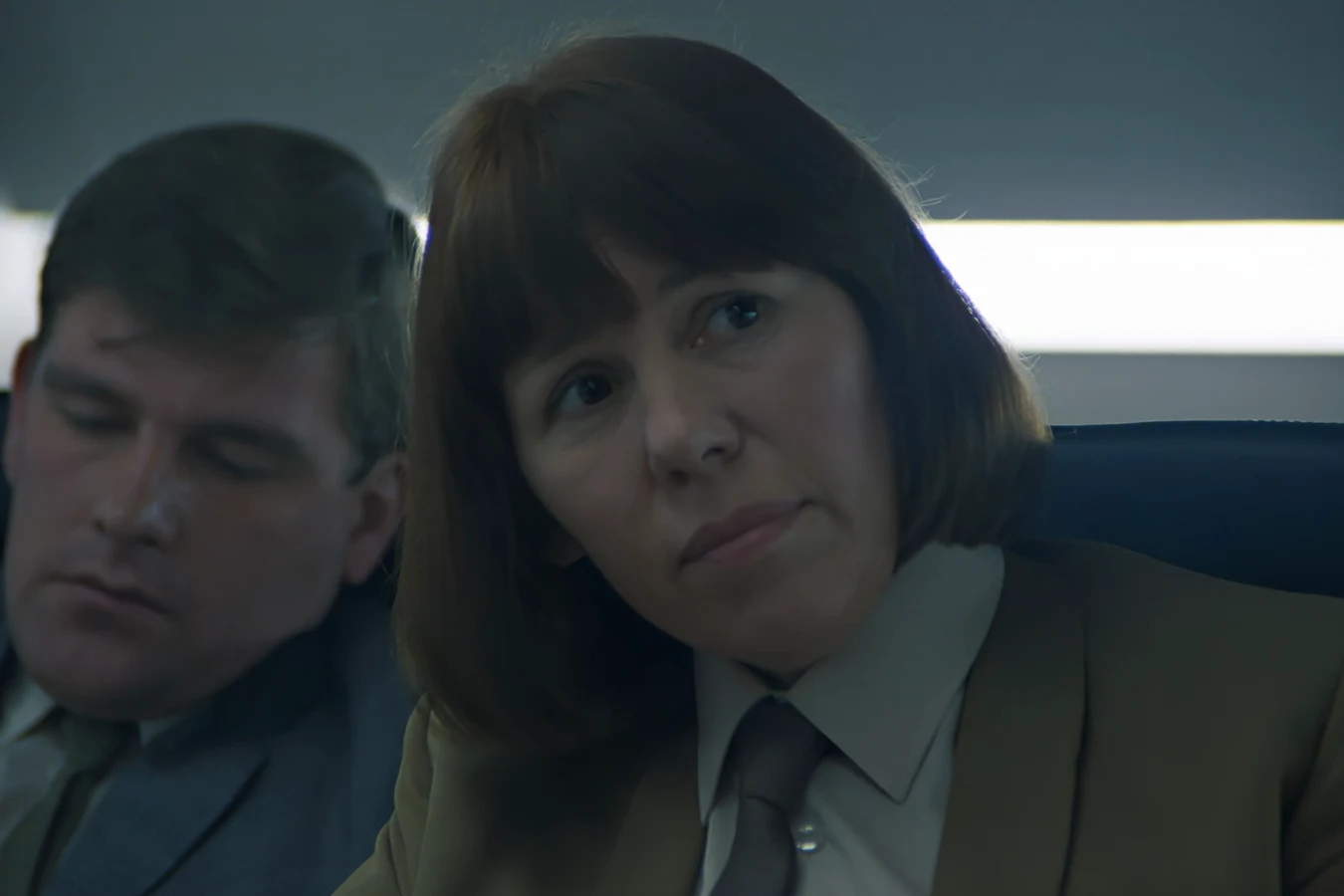
Valerie Colgan played the ECA representative on the eight-member board that heard Ripley on Gateway Station in 2179. Paul Maxwell's Van Leuwen chaired for the Interstellar Commerce Commission, and Alan Polonsky's insurance man put the lost Nostromo at forty-two million adjusted dollars, not counting the cargo. The representative called LV-426 a rock with no life larger than a virus, and she read back Ripley's account of a creature that grew inside a living host and carried acid for blood. She treated surveys of more than three hundred worlds as never having reported anything like it. One of the eight worked a crossword while Ripley was speaking, and another sketched her.
Burke, walking her in, listed federal officials, the commission, Colonial Administration, and insurance. The shooting script's name for Colgan's character is the Extrasolar Colonization Administration. Alan Dean Foster's novel uses that long name for the woman in the room, and Burke's line in that book is Colonial Administration. An earlier treatment uses Extrasolar Colonial Administration for a security officer on the same board. Foster adds six months of psychometric probation after Van Leuwen suspended her commercial license, with no criminal charge. The film credit is ECA Representative.
Hadley's Hope And Rodina
After Hadley's Hope was lost in 2179, and after the outbreak on Rodina, the administration investigated Weyland-Yutani and the Union of Progressive Peoples. The roleplaying game has Colonel Percival's reconnaissance troops treating the company as the cause of the colony's loss. The Operations Manual has the company blame a Space Operating Forces nuclear strike and deny that a bioweapon had been there. That same manual says the office gave little public account of the inquiry while the Frontier cold war became open fighting.
Anchorpoint
The operations manual places administration staff on the second Anchorpoint, next to commission representatives, to hear disputes between colonies. The Independent Core System Colonies governed that station, and the United Americas had a marshal office on board. Alien 3: The Unproduced Screenplay, Pat Cadigan's novel of William Gibson's unused draft, calls the station's civilian authority the Colonial Administration Authority. In that account a Marine officer treats a military takeover of the station as a breach of the Strategic Arms Reduction Treaty.
Steer City
In Alien: Cult, the office on Gamma Leporis 3 was the authority over Marshal Cassandra Stock in Steer City. It ordered her to make a welfare check on a member of a local church, and a later message from that same office reached her during the trouble in town. Her longer fight there was with Chisholm Meats, a Lasalle Bionational company that was squeezing the ranchers. The administration was the government behind a bureau that had few deputies for that cattle world.
The Frontier War
After Fort Nebraska was lost at Kruger 60, the administration ordered the 70 Ophiuchi sector evacuated. Refugees had pushed Georgia 525 from about 125,000 people to about 500,000. The Latin American Colonial Navy had lost its 6th Fleet in the fight for 61 Cygni, so the Colonial Marines carried most of that evacuation, and Weyland-Yutani sent liners and freighters.
Conclusion
The Extrasolar Colonial Administration was the United Americas office for off-world colonies, formed after the Archangel was lost at Thedus in 2109. It co-financed Hadley's Hope with Weyland-Yutani, fielded the Colonial Marshals as its police, and in 2179 its representative was on the Gateway board that took Ellen Ripley's commercial license. During the Frontier War it ordered the 70 Ophiuchi sector evacuated. The Gamma Leporis 3 office remained a marshal's chain of command in Alien: Cult.
Appearances
- Aliens (20th Century Fox, 1986)
- Aliens by Alan Dean Foster (Warner Books, 1986)
- Alien: The Roleplaying Game (Free League, 2019) and the Evolved Edition (2025)
- Colonial Marines Operations Manual by Andrew E.C. Gaska (Free League, 2021)
- Alien: The Blueprints by Graham Langridge (2019)
- Alien 3: The Unproduced Screenplay by Pat Cadigan (Titan Books, 2021)
- Alien: Cult by Gavin G. Smith (Titan Books, 2025)
Tag Categories: Alien Universe Organizations | Alien Universe Factions | Alien Lore