
The Interstellar Commerce Commission licensed trade ships and their crews, and it inspected cargo and biologicals moving between Earth and the colonies. Weyland-Yutani operated it from Ruby Colony in the Outer Veil. Agents worked with colonial marshals, and the commission could quarantine a system or call in national and company forces when a colony broke its rules.
Role And Authority
In Alien: The Roleplaying Game, the commission inspected cargo and biologicals for Earth and for any colony of 200,000 or more, and every trade ship and crew member needed a commission license. Headquarters was on KOI 812.03 at Ruby Colony, the largest spaceport in the Outer Veil. Every major office of the Colonial Marshal Bureau had a commission agent attached. Those agents worked with the marshals to block dangerous organisms and chemicals from moving in or out. On Gateway Station the commission had representatives beside the Extrasolar Colonization Administration, and on Anchorpoint its staff and Colonial Administration heard disputes between colonies.
The commission could order a quarantine, and in an extreme case it could order a world sterilized. It could also call in a police action or a military operation against a colony that broke its rules. The troops for those operations were borrowed from national militaries and from company security, and the Colonial Marines often led them.
By the early 22nd century the commission ran an Engineering Trade School with a campus on Mars and another on Earth. Dennis Parker finished the Mars campus, and Samuel Brett finished the Earth campus. Commission safety rules forbade a ship from leaving port without a full set of auxiliary vehicles or EEVs, so the escape gear would match from ship to ship. Smugglers on the Arcturus Loop bent through Alpha Boötis to avoid commission customs in the Borodino Sector and the Crestus Cluster.
Known Incidents
The Core Conflict
In the 2140s the commission opened a review of secret corporate holdings, synthetic rules, and hidden sites, and that review turned on the Central Space Consortium. In 2147 Alexandria, a Hyperdyne colony, refused a review of the 120-A/2 synthetics and declared independence from the Three World Empire. In 2151 the United Americas, the rebel colonies, and the commission signed the New Deal. The contract recognized the colonies as the Inner Core System Colonies, dropped the Hyperdyne investigation, and banned combat synthetics.
The New Earth Plague
In the Colonial Marines Operations Manual, the New Earth Colony was one of the Three World Empire's oldest settlements when an airborne bacteria that consumed living tissue broke out there in 2157. The New Earth Plague spread through the settlements and moons of the HD85512 system, and it moved quickly. Skin swelled and changed color, and the tissue began to break down within about a day. The commission ordered a quarantine, and the United Americas and the Three World Empire blockaded the system.
Scientists from BioNational and from Weyland-Yutani worked beside the Colonial Marines' chemical, biological, radiological, and nuclear troops. The bacteria changed as those teams worked, and no treatment stopped it. The commission then ordered the system sterilized. About 40 million people were killed, and New Earth was abandoned. Detection buoys and three Colonial Marshal frigates patrolled the system afterward so scavengers would not carry the plague farther.
The Nostromo Inquiry
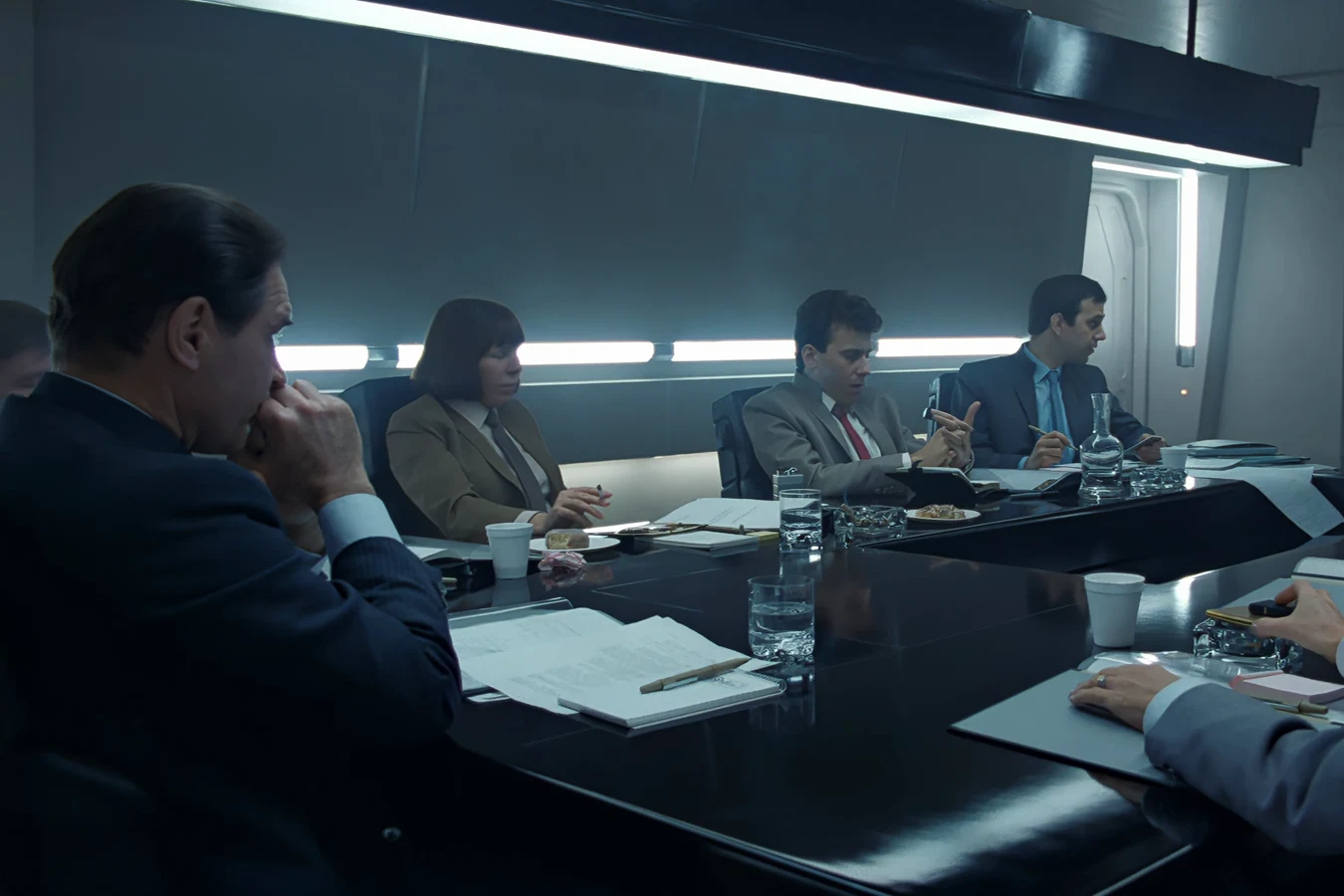
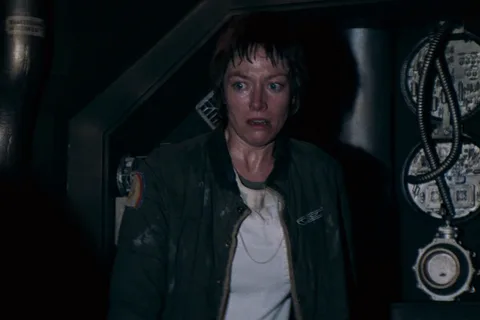
An eight-member board on Gateway Station heard Ellen Ripley's account of the Nostromo in 2179. Carter Burke was in the room and was not one of the people judging her. The flight recorder backed the landing on LV-426, the repairs, and the ship's self-destruct, and it did not back a creature on the shuttle. The Aliens novelization puts an Extrasolar Colonization Administration representative and an insurance investigator on that board, and it gives her six months of psychometric probation.
Ripley asked the board to check LV-426. Van Leuwen refused, because people had lived on that moon for more than twenty years and had reported nothing worse than a virus or a flatworm. The novelization calls the settlement Acheron and describes Hadley's Hope as a colony of about sixty or seventy families.
Carter Burke's Aborted Plans
At Hadley's Hope, Burke wanted the live medlab specimens returned to the company labs. Ripley cited Section 22350 of the Commerce Code, which barred a dangerous organism from passing ICC quarantine. He meant to bring the specimens in with no record, because the commission could not impound cargo it did not know about. The novelization adds five minutes with the customs inspector at Gateway as his way through that check. His other plan was to send Ripley and Newt home implanted, sabotage the freezers, and jettison the bodies so a quarantine inspection would not find the embryos.
Known Members
Van Leuwen
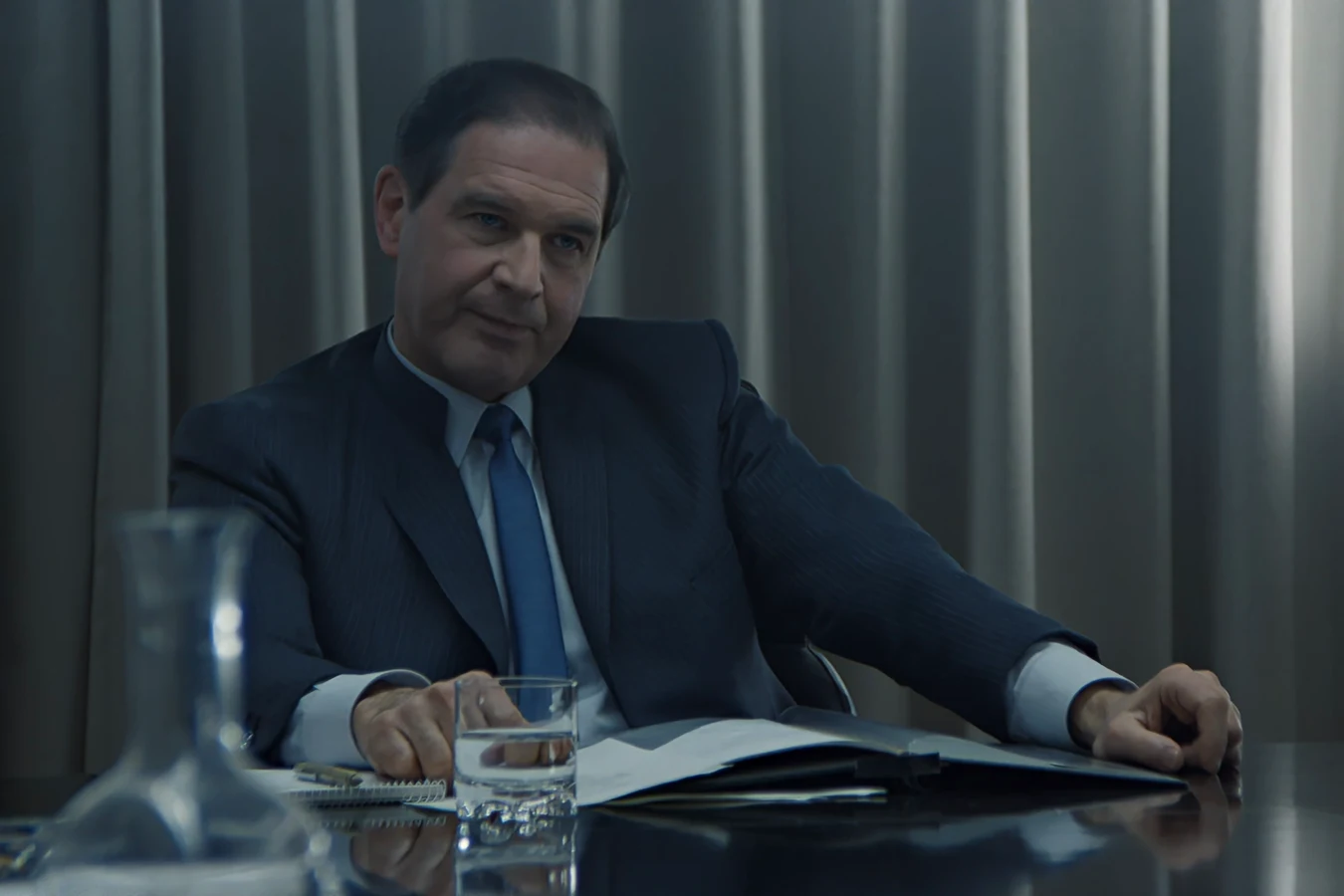
Paul van Leuwen chaired the 2179 board. He found Warrant Officer E. Ripley, NOC 14472, unfit for a commercial license and suspended that license, and no criminal charge followed. He took part in another commission inquiry after Hadley's Hope, and he traveled on company shuttles through Anchorpoint while that file stayed open, including after Robert Morse's book began to circulate. In the 2180s the commission searched commercial holds for unlicensed life.
Alan Decker
Alan Decker was a deputy commissioner around 2497. He logged failures on LV-178, the mining colony called New Galveston, for the commission. After an industrial accident there, Weyland-Yutani kidnapped him because his blood woke a dormant hive under the Sea of Sorrows. In Alien: Sea of Sorrows, the company identified him as a descendant of Ellen Ripley.
Tan Blatchman
In the Building Better Worlds supplement, Tan Blatchman was a commission inspector aboard the UNCSS Solovetsky Island. That United Nations Interstellar Settlement Corps ship was attached to the colony ship Ìyánlá for the Great Mother Mission, which was sent to make contact again with the Far Spinward Colonies. In 2186 he joined an expedition to Gorham's Colony on KOI-2650.01 to check that the crew followed commission rules, and he limited what they were allowed to remove as a valuable find.
Behind The Scenes
The inquiry is a scene in Aliens (1986), and Paul Maxwell played Van Leuwen. Alien: The Roleplaying Game in 2019, and the Colonial Marines Operations Manual in 2021, cover Ruby Colony, the cargo inspections, the New Earth quarantine, and the 2151 New Deal. The 1991 Aliens Adventure Game is a separate version, in which the commission is a joint authority of companies and nations and the Colonial Marine Corps is its armed arm, with Alexandria left as an open holdout.
James Cameron's Aliens script is the first place the commission is named. Alien (1979), in the script and in Alan Dean Foster's novelization, has a ship's quarantine rule and does not name a commission. Before the hearing, Burke tells Ripley that the room will hold federal officials, the Interstellar Commerce Commission, Colonial Administration, and insurance. The script then labels Van Leuwen as the ICC representative, and he is the one who suspends her license. Foster's novelization includes that corridor list and the license ruling, and it does not call him the commission's representative.
Conclusion
The Interstellar Commerce Commission licensed ships and crews and inspected cargo moving between Earth and the colonies, with Weyland-Yutani operating it from Ruby Colony. It signed the 2151 New Deal that recognized the Inner Core System Colonies, and in 2157 it ordered the New Earth system sterilized. In 2179 a board under Van Leuwen took Ellen Ripley's commercial license after the Nostromo. Commission staff after that hearing included inspector Tan Blatchman on the Great Mother Mission in 2186 and deputy commissioner Alan Decker on LV-178 around 2497.
Appearances
- Aliens (20th Century Fox, 1986)
- Aliens novelization by Alan Dean Foster (Warner Books, 1986)
- Aliens Adventure Game (Leading Edge Games, 1991)
- Alien: Sea of Sorrows by James A. Moore (Titan Books, 2014)
- Alien: The Roleplaying Game (Free League, 2019) and the Evolved Edition (2025)
- Colonial Marines Operations Manual by Andrew E.C. Gaska (Free League, 2021)
- Building Better Worlds (Free League, 2024)
Tag Categories: Alien Universe Organizations | Alien Universe Factions | Alien Lore