LV-178: New Galveston And The Kelland Mine

LV-178 was an Outer Rim planet in Alien: Out of the Shadows by Tim Lebbon and Alien: Sea of Sorrows by James A. Moore. It is a different world from LV-426 (Acheron), the colony moon of Aliens. In the mining years it had no proper colonial name beyond the survey designation. Centuries later, after Weyland-Yutani atmosphere processing, settlers called it New Galveston. The same rock held the Kelland Mining trimonite dig that wrecked the freighter DSMO Marion, a buried non-terrestrial ship and ruined city, and the black-sand stretch later nicknamed the Sea of Sorrows.
Designation And Setting
Both novels treat LV-178 as a planet, not a moon of a named gas giant. Neither book gives a star system, constellation, or charted coordinates. Out of the Shadows places the dig in the furthest quadrants of known space, with Kelland cutting corners on remote mining hardware. Sea of Sorrows describes a decent-sized rock whose colony-era gravity sat at about 88% of Earth's.
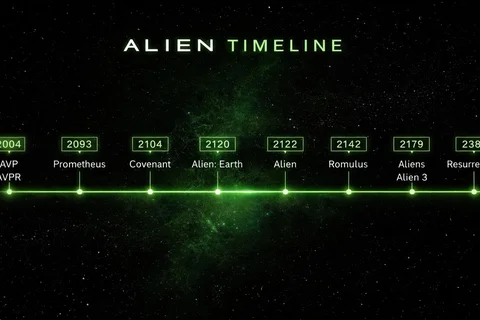
Site and secondary summaries often date the Marion crisis to 2159, in the gap between Alien and Aliens. The novel text itself anchors the timing through Ripley's hypersleep gap (about 37 years after the Nostromo) rather than printing that calendar year on the page. Decker's New Galveston story reaches Earth around New Year 2497.
Surface And Conditions
Before terraforming, LV-178 was a sand-blasted mining hell: unbreathable air, no potable water, electrical storms, and wind-driven sheets of sand that buried pads and chewed at hulls. From orbit the world read as an autumnal palette of storm-scoured rock and dust. The Kelland surface camp sat inside an environmental dome, with landing pads outside and short tunnels into the sealed dig.
After Weyland-Yutani atmosphere processors finished their decades-long work, New Galveston had grass, streams, farmland, high-speed trains, and working cities. Gravity and weather became colony-habitable, but the old mine poison and silicon growth under the Sea of Sorrows never fully left the map.
Kelland Trimonite Mine
Kelland Mining Company worked LV-178 for trimonite, described as roughly fifteen times harder than diamond and rare enough to justify remote fifty-day surface shifts. Ownership ran through Prospectia and San Rei up to Weyland-Yutani. The freighter Marion hung in orbit over the dig with a little more than three tons of ore in the holds.
The mine ran about nine working levels deep, on the order of a mile below the surface, with paired elevators and emergency stairs counted in thousands of steps. Levels near the top were mined out. Level 4 held spare fuel cells and emergency stores. Lower levels were still active when miners broke into a cavern that was not part of the ore plan.
Buried Ship And City
That cavern held a buried non-terrestrial ship with organic, grown construction, egg chambers, and a laboratory that included Queen eggs in enclosures. Age guesses in the book ran from about one thousand to ten thousand years. Next to the ship sat the start of a ruined settlement: mosaic paving, written marks, and statues of long-limbed dog-form beings on high plinths. The Marion survivors nicknamed those dead dog-aliens or dog-people. Later books in the expanded line named related beings Drukathi. That name does not appear in Out of the Shadows or Sea of Sorrows themselves.
Marion Outbreak
Miners on LV-178 woke a Xenomorph infestation that followed the dropships Samson and Delilah back to orbit. The Delilah collision wrecked docking arms on the Marion, killed most of the crew, and left the freighter in a decaying orbit under chief engineer Chris "Hoop" Hooper. Ash, still running as code aboard Ripley's Narcissus, diverted her shuttle to the Marion distress call.
Ripley, Hoop, and the remaining crew went back into the mine for spare fuel cells, burned Queen eggs, and fought through the derelict before Hoop overloaded a Level 4 cell and buried the complex under an ochre surface bruise. The Marion broke up in atmosphere afterward. A limited memory wipe left Ripley able to reach Gateway Station without remembering LV-178, which is how Aliens can still open as if she never lived that second outbreak.
Terraforming And New Galveston
By the Sea of Sorrows era, Weyland-Yutani atmosphere plants had remade LV-178 into a settled world. Colony founder Rick Pierce and the New Galveston Collective built three major cities plus farmland and rail. A fourth city planned over soft northern ground stalled when foundations would not hold. About thirty years after the first settlers landed, the colony had trains, grass, and working urban life, with ICC inspectors such as Alan Decker auditing safety on the surface.
Official paperwork still carried the old designation alongside the colonial name. Under the soft ground, company-linked Kelland files and the old shafts remained, even when ICC records claimed there had been no mine.
Sea Of Sorrows
Developers called the failed ground the Sea of Sorrows, though it was not a body of water. Roughly sixty miles of packed black sand, toxins, hollow silicon tubes, and glass nodules sat over the old trimonite workings and would not take city foundations. Decker's blood and empathic sense woke a dormant hive under that stretch after an industrial accident on a core-sampling platform.
Weyland-Yutani reopened the dig, recovered a living adult Xenomorph and implanted hosts, then had Captain Cherbourg drop four plasma warheads on the Sea. New Galveston was told the cover story of a viral hot zone. The colony cities remained, but the black sand stayed on the map as the place where the old mine and the new hive met.
Continuity Notes
LV-178 is the main locational bridge between the first two Titan Books novels of 2014. Out of the Shadows ends with a buried non-terrestrial ship, dog-form corpses, and a mine destroyed by Hoop's fuel-cell blast still under the surface. Sea of Sorrows returns centuries later to those same leftovers under New Galveston and treats Ripley's bloodline as hive memory through Decker. Neither novel names a star system for the world, and neither places LV-178 as a sister moon of LV-426.
Aliens: Descent
Alien: Descent was a free-roaming VR attraction developed by Pure Imagination Studios with FoxNext Destinations. It opened on 26 April 2018 (Alien Day) at The Outlets at Orange in Orange County, California, and later closed. Public write-ups place the mission on a Weyland-Yutani mining outpost on LV-178, also identified there as New Galveston, with Colonial Marines answering a distress call after an infestation cut communications.
Beyond that setup, this site does not yet have a primary playthrough or official script for map names, dates inside the attraction timeline, or kill details. Descent is a confirmed LV-178 appearance with thin documentation here until a fuller source pass is possible.
Conclusion
LV-178 is the novel-line planet that connects Ripley's second Xenomorph disaster to Decker's later New Galveston crisis. The survey designation stays the same while the surface changes from Kelland mining camp to terraformed colony, and the books keep the derelict, the dog-form dead, and the Sea of Sorrows on one continuous map instead of inventing a new world for each outbreak.
Appearances
- Alien: Out of the Shadows (novel, Titan Books, 2014)
- Alien: Sea of Sorrows (novel, Titan Books, 2014)
- Alien: Descent (VR attraction, 2018; mining outpost on LV-178 / New Galveston)
Sources
- Tim Lebbon, Alien: Out of the Shadows (Titan Books, 2014)
- James A. Moore, Alien: Sea of Sorrows (Titan Books, 2014)
- Related continuity: DSMO Marion, Chris Hooper, Alan Decker, Drukathi
Tag Categories: Alien Universe Planets | LV Planets | Alien Universe Colonies | Alien Lore