
Innominata Station was a military research facility where Colonel Doctor Paul Church conducted Xenomorph experiments in Aliens: Labyrinth and S. D. Perry’s novelization. Commanded by Admiral Thaves, it contained guarded laboratories, captive specimens and a maze used to study the creatures’ behavior. Beneath the declared research, Church maintained a concealed installation in which human subjects were surgically altered and connected to life-support machinery. Anthony Crespi and Sharon McGuinness uncovered that operation, but their investigation failed to remove Church or close the station.
Design And Location
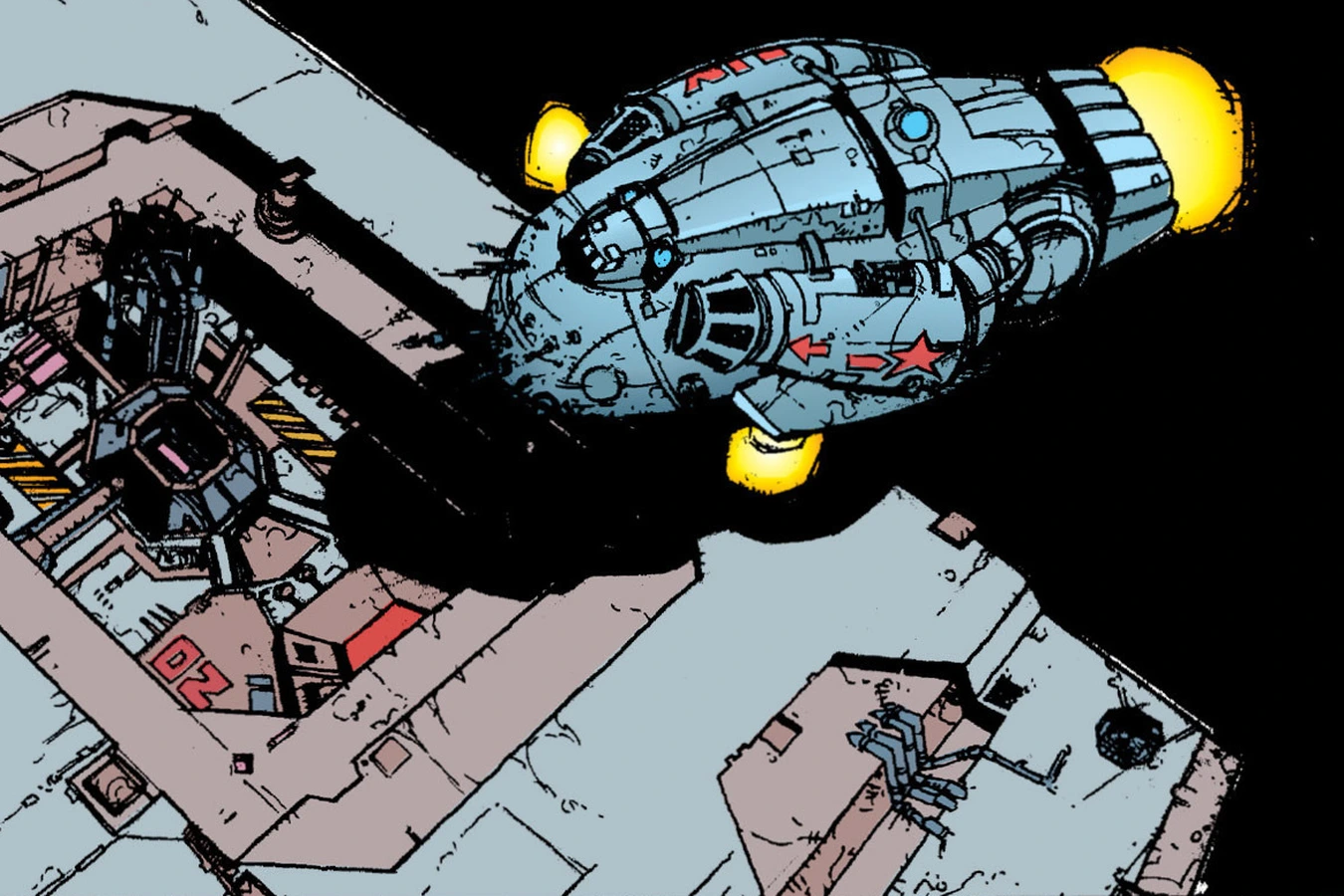
The Innominata belonged to the 700 series of military research stations. On approach, Crespi recognized a standard design similar to several facilities he had visited. He estimated that the multilaboratory installation could accommodate about 200 people, although its reported population was fewer than 100. The exterior included a landing and docking area served by transport craft, with Arkham bringing Crespi and a Marine contingent aboard at the start of his assignment.
Exterior And Internal Layout
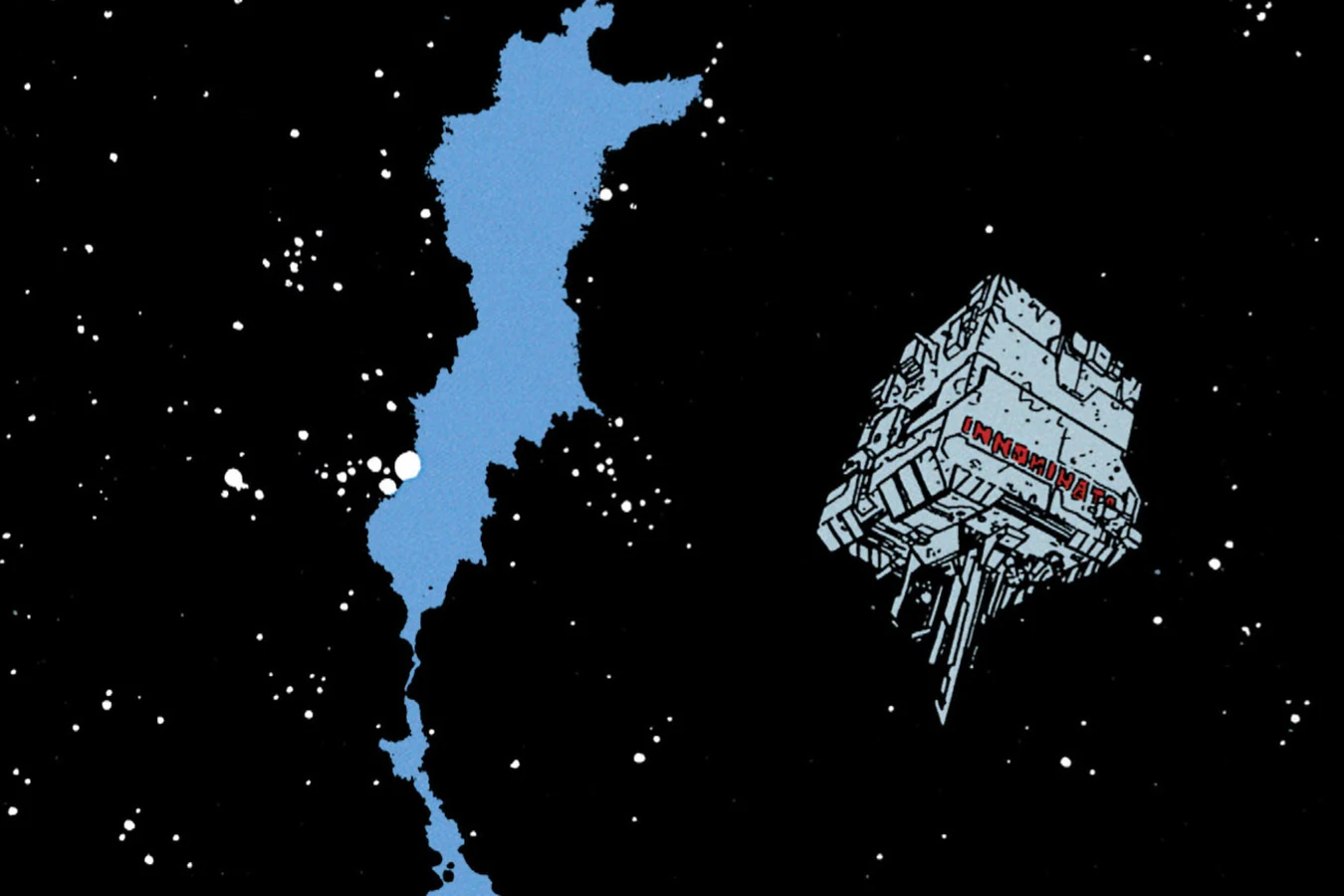
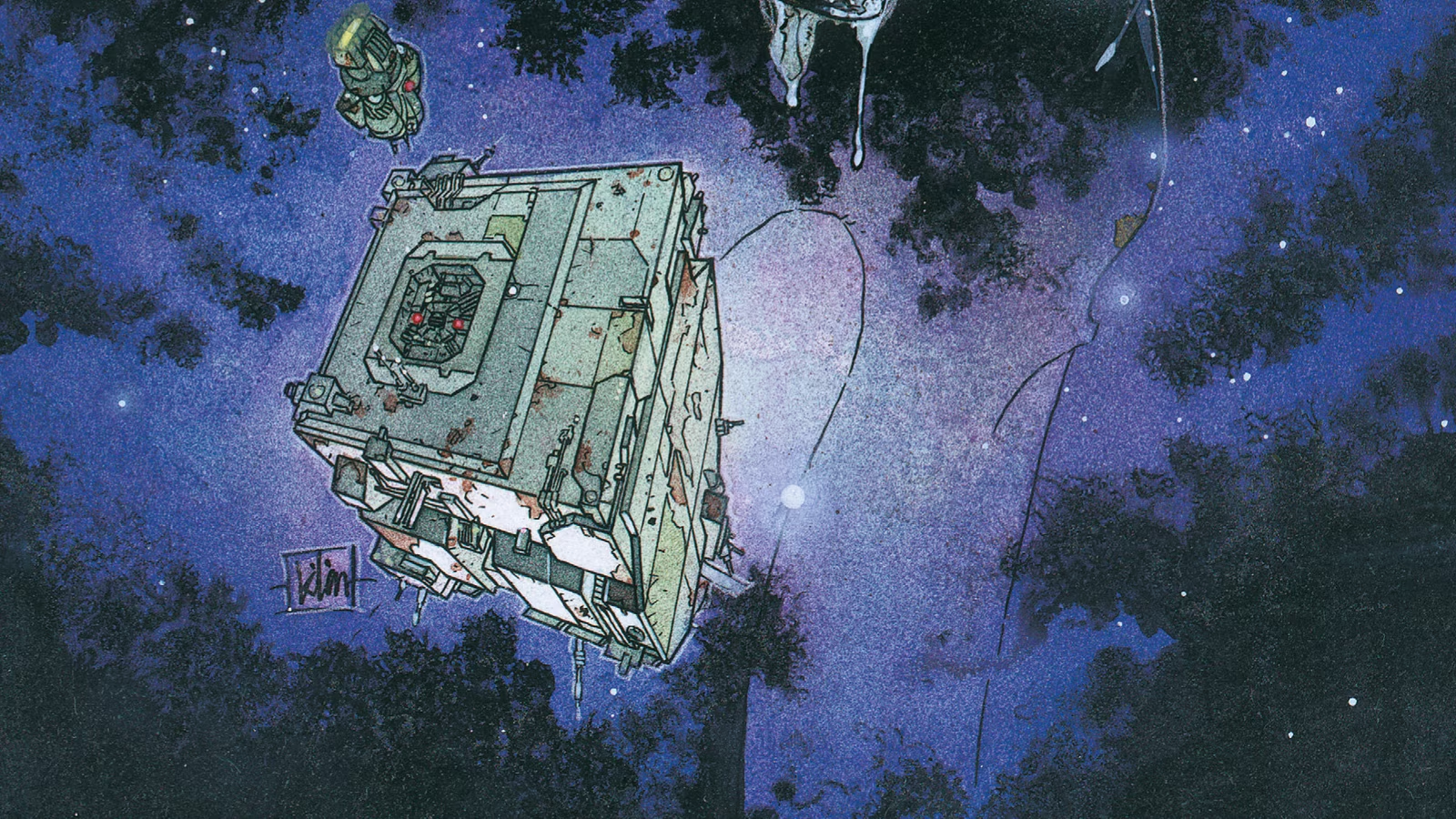
Internally, the Station contained multiple levels connected by corridors, ramps, stairs and lifts. Church’s central office and laboratory complex connected with the main research rooms, while industrial areas and service passages occupied lower decks. The concealed installation was reached at the end of the lowest deck. The final exterior view in the comic showed a compact, angular station with its name on the hull and an array of structures extending below its main body.
The Colonial Marines Operations Manual later placed Innominata in Garrison System Gamma, a restricted military research system also known as the Guinea Pig System. Access required United Americas Allied Command navigation protocols. The system’s isolated stations supported classified work by military personnel, cleared civilian scientists and corporate advisers. Patrols enforced departure codes and a 24-hour quarantine, with destruction threatened for vessels that failed to comply. These were system-wide security arrangements, rather than a description of Innominata’s individual weapons or defenses.
Research Facilities
G Lab And Containment
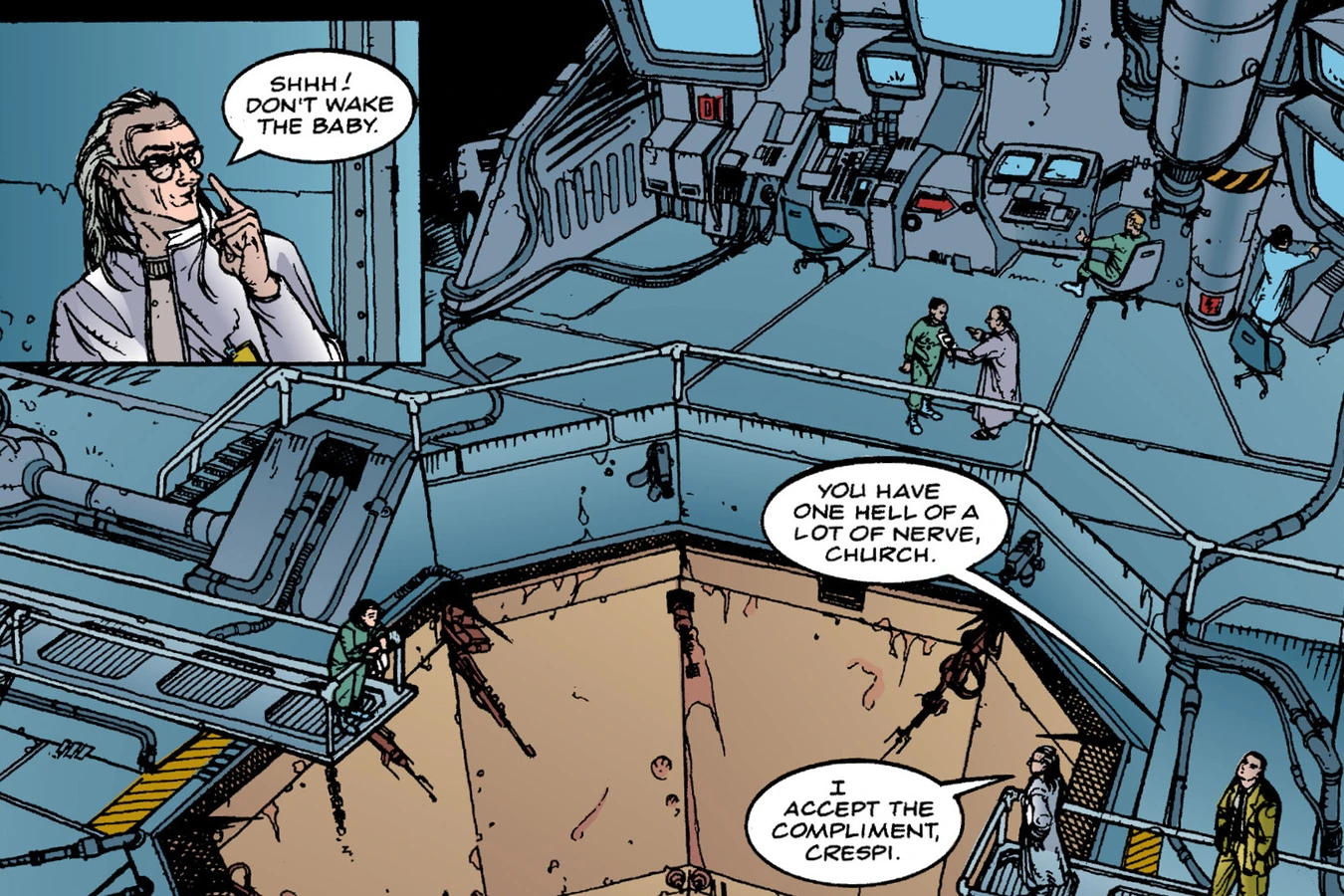
G Lab housed the declared Xenomorph operation. Its entrance was guarded by O’Hara and Lawless in acid-resistant battle armor, carrying automatic rifles with incinerator capability. Inside, a raised observation platform overlooked the main floor and a sunken specimen enclosure. Technicians worked at consoles, including a large installation occupying one side of the room. Church initially withheld Crespi’s biometric clearance, allowing him to control when the new researcher entered the facility.
The Containment Pit had smooth walls of acid-neutralizing alloy, a force field and motion-activated electrodes intended to stop a specimen from jumping out. The novel described a depth of seven metres, while the comic gave thirty feet. A dozen electrodes were positioned low in the enclosure, and shielded cameras transmitted the creature’s movements to the observation equipment. Church also held four additional adult Xenomorphs in semi-cryogenic kennels. Periodic shocks prevented dormancy, although the isolated captives deteriorated away from their own kind.
The Experimental Maze
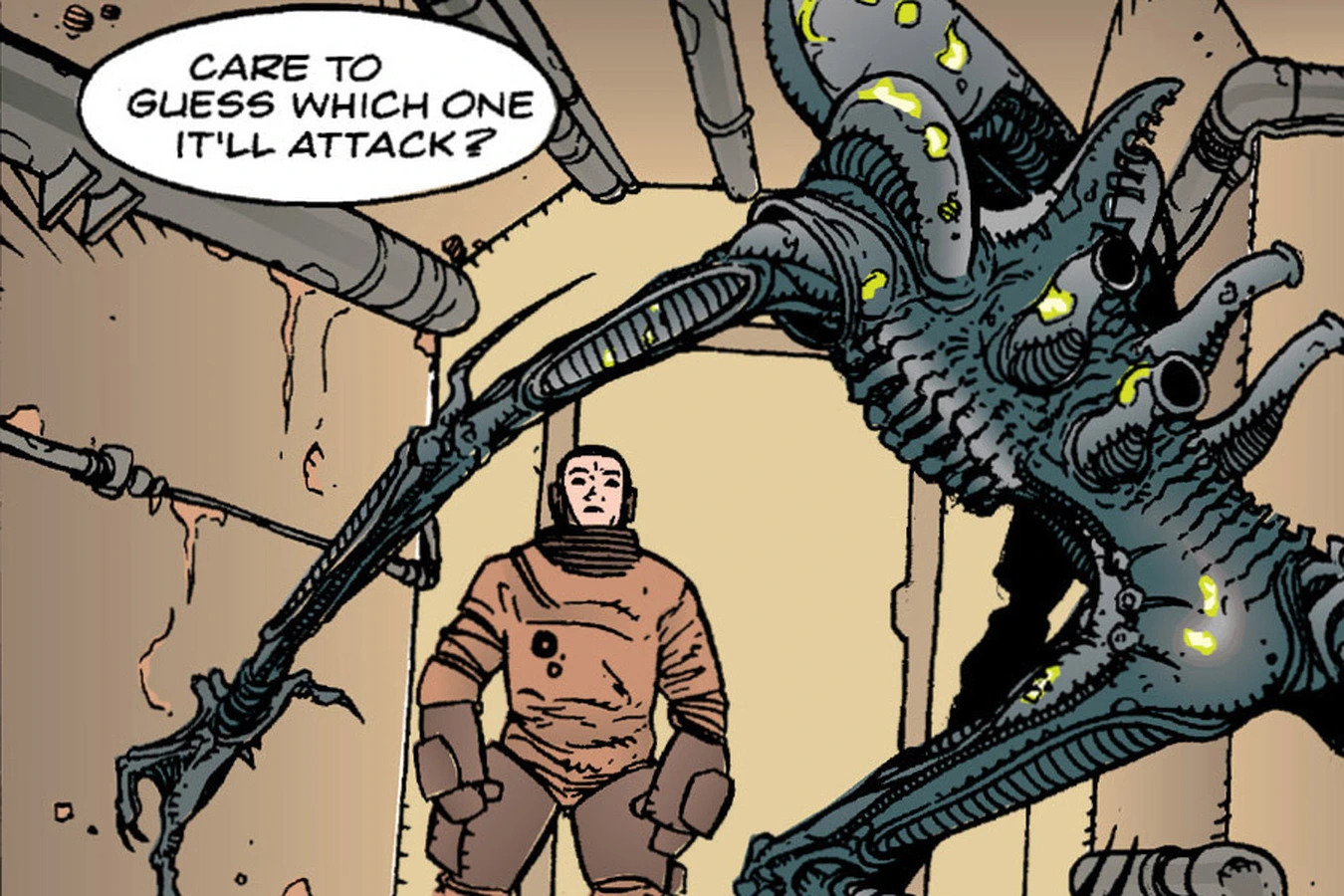
A door from the holding enclosure opened into the Maze, a network of passages in which the researchers arranged choices and obstacles. Church recorded responses to a human and a pig, food and a possible escape route, and armed and unarmed people. Electrical defenses interrupted some attacks, allowing technicians and subjects to leave the test area. New sensors were incorporated into successive arrangements, building a record of behavior rather than repeating an unchanged trial.
The trials also investigated human influence over Xenomorphs. In one Telepathine Experiment, a drugged subject appeared to interrupt an attack through mental concentration. Church interpreted the hesitation as evidence of psychic communication, although the initial demonstration did not settle his theory. Autopsies examined neural structures that might receive such signals. The scale of this operation was substantial: Church told Crespi that it consumed roughly five-eighths of the station’s nonrenewable resources.
The Concealed K Lab
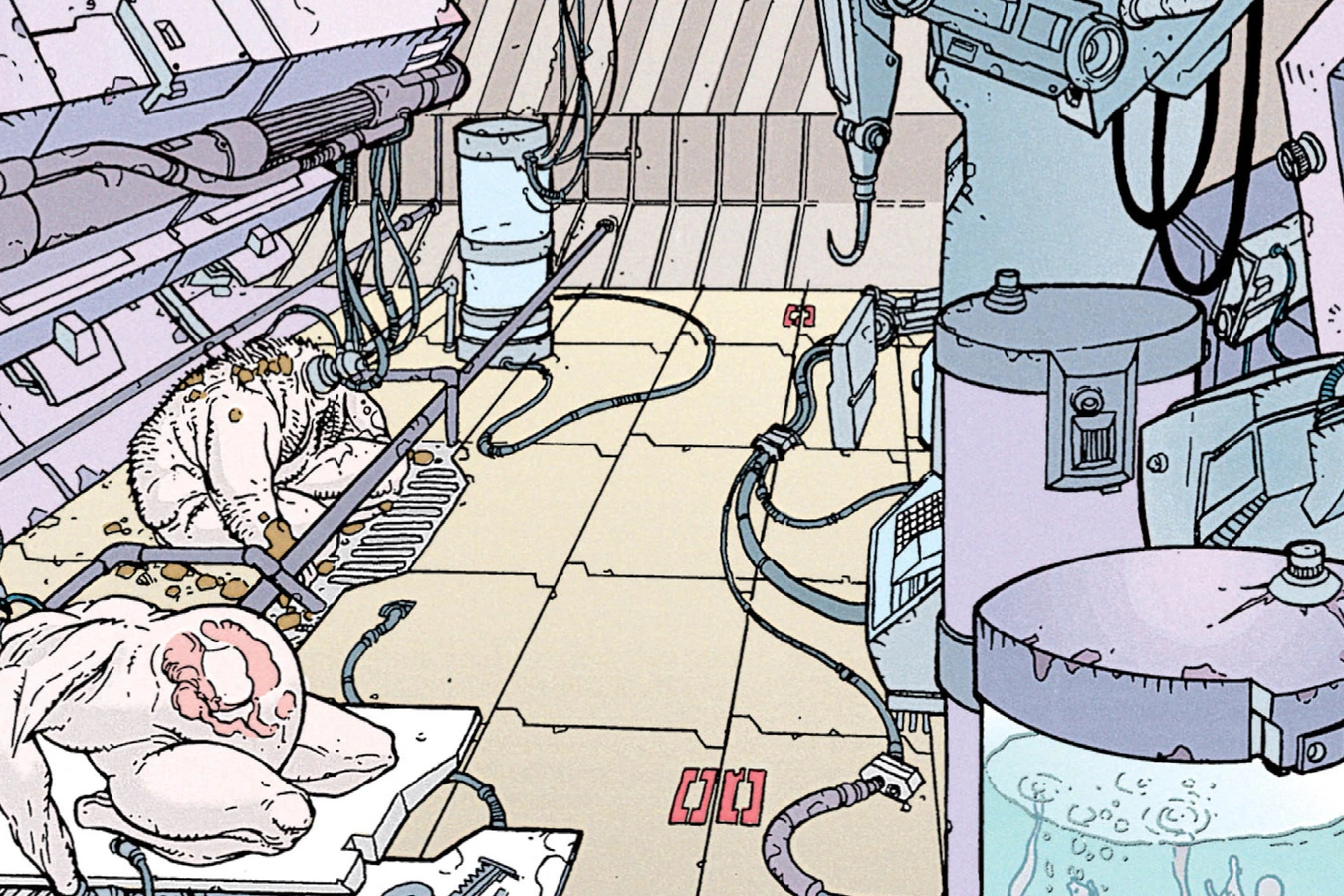
K Lab was officially designated a zero-gravity facility, but concealed Church’s experiments on human bodies. McGuinness identified it by comparing consumption with the station’s resource records. An unexplained installation drew roughly one-third as much additional power as all acknowledged systems combined. Church had isolated its three double-coded, single-access doors from the normal station control network, making his personal code slate necessary to enter.
The hidden Laboratory was L-shaped, with operating tables, refrigeration equipment, computers and tall fluid-filled holding tanks. Pumps maintained circulation in mutilated or reanimated subjects, while monitors displayed vital signs. Mortenson’s body was retained there despite a report that it had been jettisoned. David Lennox, declared dead after a heart attack, had been incorporated into machinery at the rear of the installation. Church’s purpose extended beyond controlling captive creatures to combining human and Alien characteristics in a new form of life.
Security And Support Systems
The Security Network combined armed guards, biometric entry controls, code slates and internal surveillance. Church’s private office used a bioscan that admitted Crespi but excluded McGuinness. She nevertheless accessed the station’s surveillance feeds and tracked the doctor’s movements for eighteen hours. The distinction between the main network and the concealed lab’s independent locks allowed Church to hide a major installation within an otherwise monitored military facility. Church also led a captive named Trixie along a level B corridor in a restraining shock harness, exposing unprotected personnel to the creature during his control demonstration.
Containment could also be turned against the Crew. In the novel, Church had fitted a kennel with a timed release as a lethal burglar alarm near his office. Crespi survived the resulting attack by exposing the creature to a generator’s electromagnetic field and calling a containment team. The station retained functioning medical facilities, accommodation and supply passages throughout the crisis. Church recovered in its sickbay and later used an electric wheelchair to return through the service corridors to his private laboratory.
Command And Personnel
Admiral Thaves commanded the station, while Church directed its research. Their relationship gave the scientist considerable independence. Church’s earlier medical work had saved Thaves’s daughter, and the admiral defended his reputation even after McGuinness’s accusations. The novel described Thaves approving releases and arranging transports without fully understanding what happened to the people brought aboard. His support helped Church keep the concealed research outside normal scrutiny.
- Paul Church controlled the laboratories, specimen handling and experimental programme. He restricted access to the concealed installation and resumed work after the investigation collapsed.
- Anthony Crespi arrived as Church’s new research partner with a covert investigative assignment. In the novel, his orders authorized him to assume emergency command if probable cause justified it.
- Sharon McGuinness investigated the records and power discrepancy after the reported death of her fiancé, David Lennox. She opened K Lab with Crespi using Church’s stolen code slate.
- David Lennox was the previous research partner, officially reported dead. McGuinness discovered that Church had retained his altered remains as part of the concealed installation.
- Mortenson was a security officer killed during an escaped-specimen incident. His body was diverted to K Lab instead of being disposed of as reported.
- O’Hara, Lawless, Hawks and Stockdale were among the guards and technical personnel who supported access control, containment and laboratory work.
Operational History
Research And Specimen Supplies
Before Crespi’s arrival, Innominata had acquired a reputation for concealed experiments and unexplained personnel losses. Church publicly presented the work as legitimate biological research, while McGuinness found a pattern of deaths concealed by reassuring explanations and altered records. Her count reached 34 crew members over three years in the novel. The retained bodies in K Lab demonstrated that the station’s casualty reports did not disclose the fate of its research subjects.
A separate shipment in Aliens vs. Predator: Booty carried Xenomorphs and a Queen toward Innominata. The cargo was described as stolen Weyland-Yutani property, transported by men posing as Marines. Two Yautja hunters intercepted the vessel and took the Queen through an airlock. That incident connected the station with another specimen delivery, but did not depict the cargo arriving at its destination.
Crespi’s Investigation
Crespi initially balanced his suspicions against admiration for Church’s scientific ability. The maze experiments and autopsy work persuaded him that the research could have genuine value. McGuinness’s evidence of hidden power consumption changed his assessment, and the pair entered K Lab. Their discovery exposed the altered human subjects and proved that Lennox’s supposed natural death had concealed a different fate. Church then trapped both investigators in the same maze used for his declared experiments.
The Final Maze Experiment left Crespi fatally injured. At his request, McGuinness broke his neck to end his suffering before confronting Church. She struck the scientist and threw him into a specimen enclosure, where the creature attacked him. Armed personnel intervened and Church survived. Recordings of McGuinness entering the facility with Crespi and killing him were subsequently used against her, while the circumstances that had led to his death were excluded from Thaves’s account.
Continued Operation
Innominata was not destroyed or evacuated at the end of Labyrinth. Church received treatment aboard the station, and Thaves assured him that McGuinness had been taken into Marine custody. The admiral rejected her accusations and continued to credit Church with lifesaving research. In the novel’s epilogue, she was transported toward Earth in a locked cell, unable to return and expose what she had found.
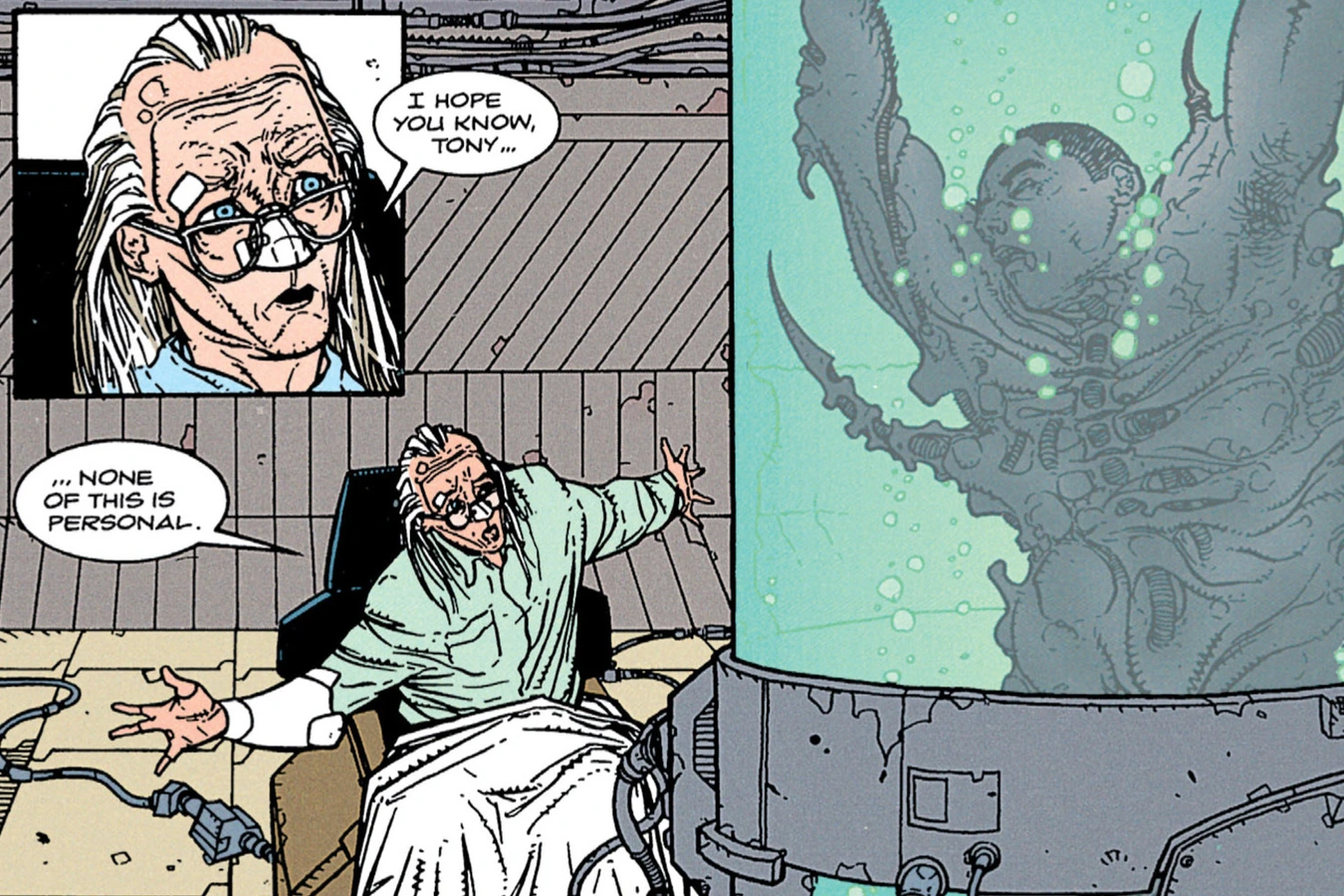
Church returned to the Private Laboratory during his recovery. A holding tank contained Crespi’s transformed body, with new skeletal plates and other Alien-like structures developing under observation. The investigator had become another subject within the installation he had tried to expose. The ending left the station operating under its existing command, with Church’s secret work continuing rather than being dismantled.
Behind The Scenes
Jim Woodring and Kilian Plunkett introduced the station in the 1993–1994 Aliens: Labyrinth comic. Its laboratories and maze provided the main setting outside Church’s account of his earlier captivity. S. D. Perry’s 1996 novel expanded the facility’s physical description, reported population, resource demands and access arrangements. The novel also made Church’s use of a timed-release specimen as a security trap explicit.
The Chronology differed between treatments. The novel’s opening message used the year 2467, while the Alien RPG later incorporated Innominata into its Garrison System Gamma setting. The RPG supplied a military location without retelling Crespi’s investigation or depicting the station’s destruction. Its system-level quarantine rules added context to the research facility, but did not establish a complete floor plan, reactor specification or weapons inventory for Innominata itself.
Conclusion
Innominata Station combined a guarded military laboratory with a concealed human experimentation programme. Its isolation, layered access controls and powerful research director allowed Church to conceal the full extent of his work. Crespi and McGuinness reached the hidden installation but failed to close it, leaving Church protected by the station’s commander and continuing his experiments after their removal.
Appearances
- Aliens: Labyrinth #1–4 (1993–1994).
- Aliens vs. Predator: Booty (1995–1996), mentioned as the cargo destination.
- Aliens: Labyrinth (1996 novel).
- Alien: The Roleplaying Game - Colonial Marines Operations Manual (2021), Garrison System Gamma.
Tag Categories: Alien Universe Space Stations | Colonial Marine Lore | Alien Lore