Aliens: Labyrinth Comic: Plot & Book Differences

Aliens: Labyrinth was a four-issue Dark Horse comic published from September 1993 to January 1994, written by Jim Woodring and illustrated by Kilian Plunkett, with colors by Matt Hollingsworth and lettering by Ellie de Ville. Its prequel, Aliens: Backsplash, followed Anthony Crespi through a disastrous Marine operation before his assignment to the Innominata station. There he investigated Paul Church's Alien experiments with Lieutenant Sharon McGuinness, uncovering altered records and a concealed laboratory. Church's account of surviving a diseased hive preceded a final experiment that left Crespi dead and the scientist in control.
Plot Summary
The Eco-Suit Assault
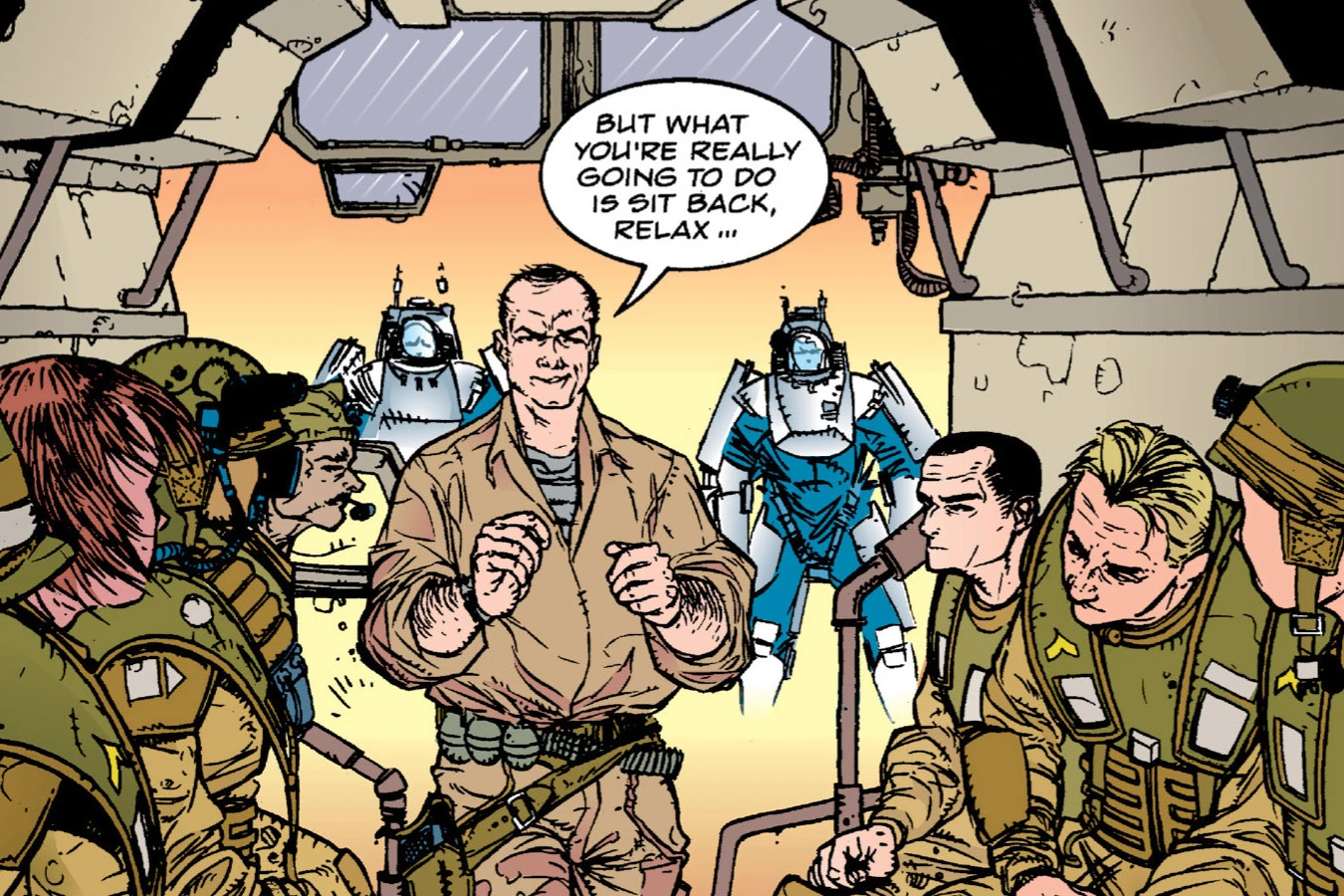
Anthony Crespi accompanied a Marine force into a cavern on Solano's moon, where Rupp and Hollister led an assault in experimental protective suits. The other Marines were assigned to support the operators and escort them back if a retreat became necessary. Their commander expected the particle-plasma projectors mounted on the suits to destroy every Xenomorph in the cavern. At first, Rupp and Hollister advanced successfully, killing the creatures they encountered while the supporting troops followed behind them.
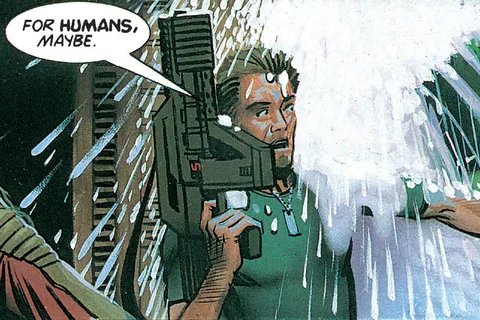
The operators fired into a larger concentration of creatures, releasing a mass of acid blood that engulfed their equipment. The protective mech suits were acid-resistant rather than acid-proof, and the concentration exceeded what their surfaces could withstand. Hollister and Rupp lost their vision as corrosive fumes entered the suits, while the nearby troop transport began dissolving. The surviving creatures attacked the exposed Colonial Marines as Crespi and his companions tried to fight their way out of the failed assault.
Escape From The Caverns
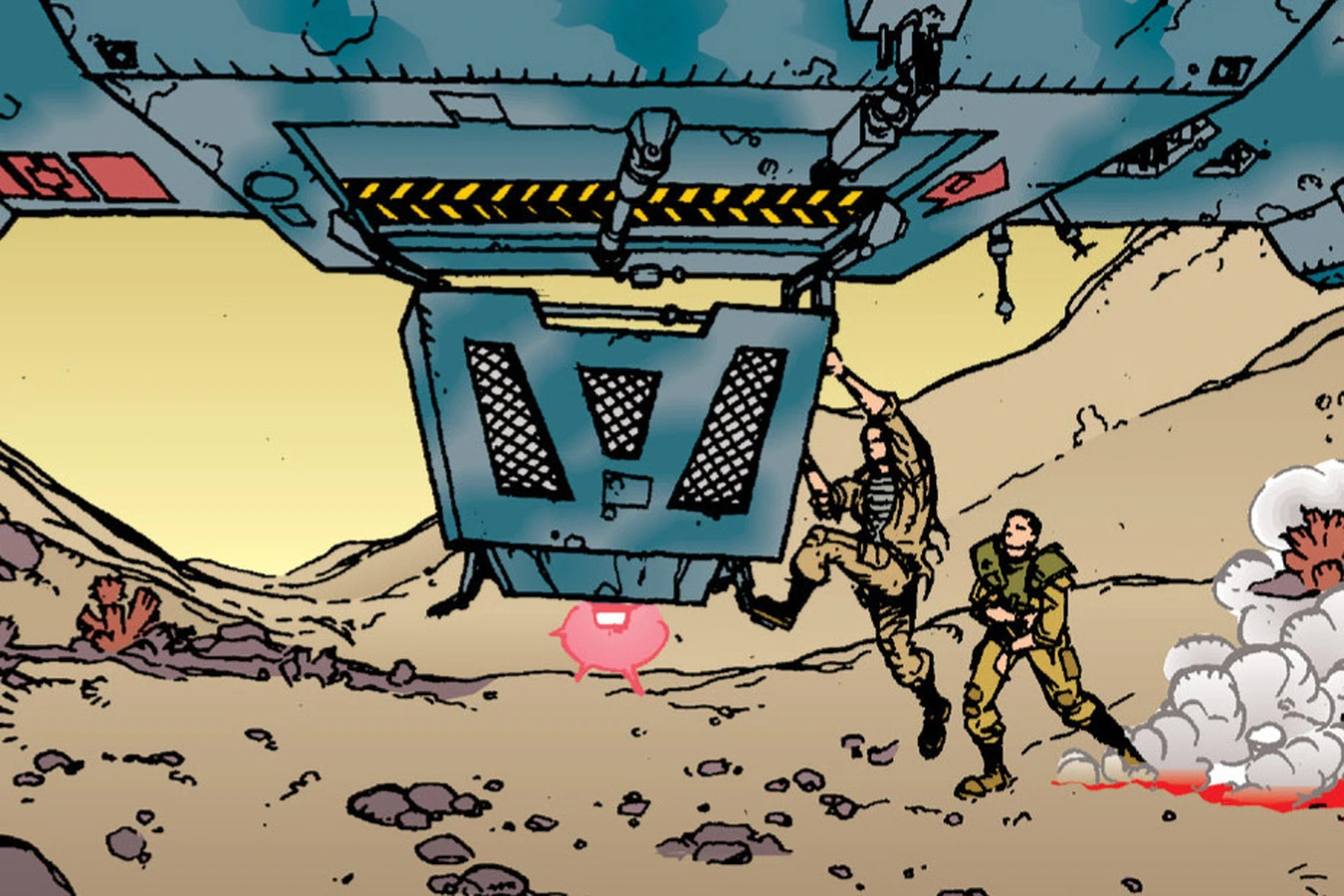
The destruction of the transport left Crespi and the surviving Marines without a vehicle inside the infested caverns. A desperate radio call reported that the car had been destroyed and requested immediate evacuation under a code red. The rescue crew refused to endanger their own ship by entering the attack area, directing the men to reach open ground instead. Crespi and his companions used rifle fire and grenades against the creatures blocking their retreat, attempting to escape on foot.
Daylight marked a route out of the caverns, but the Marines remained under attack as they approached the rescue ship. Gibbs helped Crespi onward and explained that the crew would not open the lock while an Alien could follow them aboard. The men therefore had to reach the craft without bringing their pursuers into its entrance. Gibbs was killed before he could escape, leaving Crespi as the only survivor of the squadron that had entered the caverns on Solano's moon.
Arrival At The Innominata
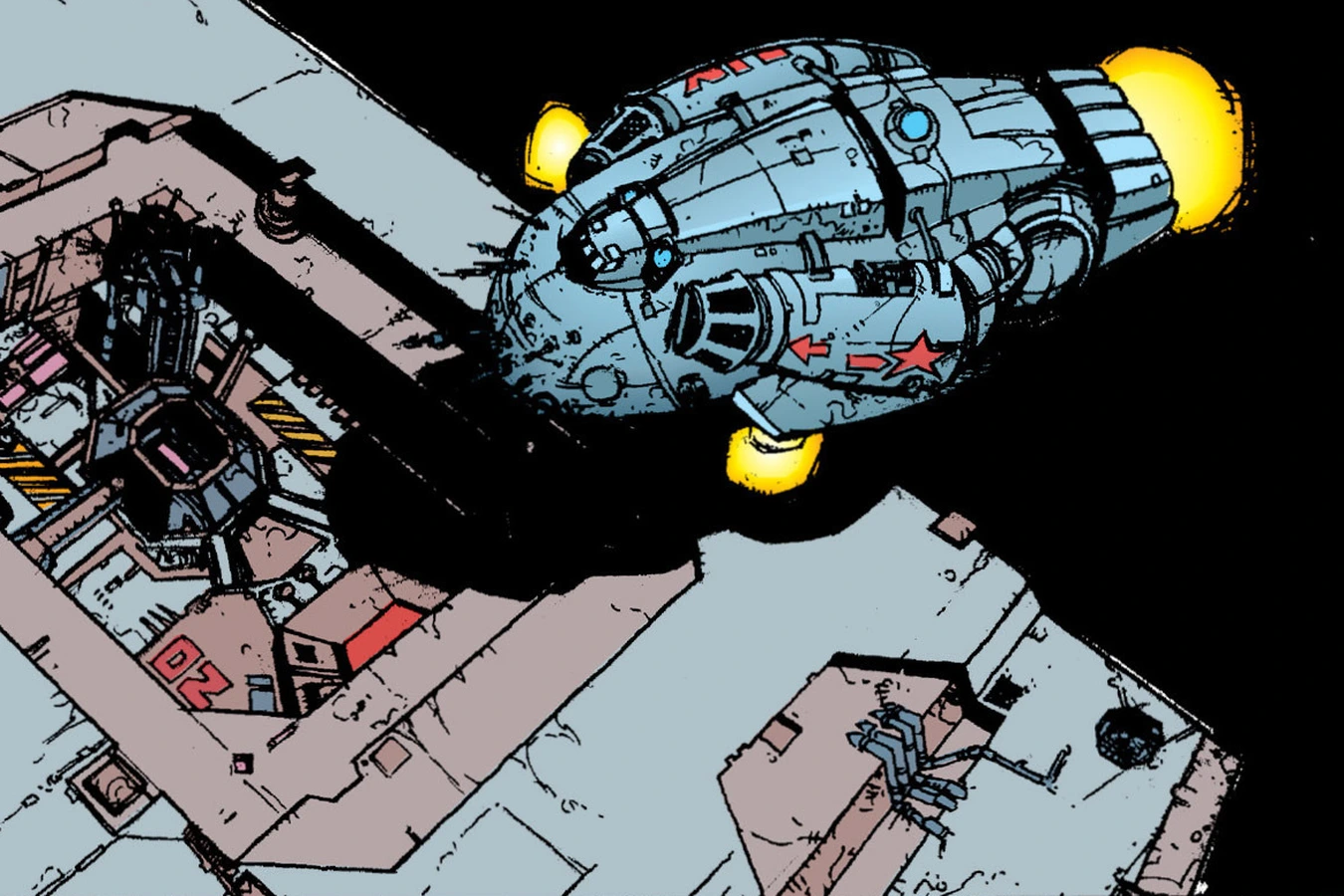
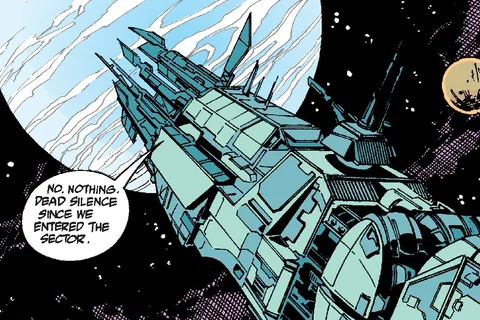
Nine years after the cavern disaster, Colonel Doctor Anthony Crespi travelled to the Innominata research station to replace David Lennox as Paul Church's research partner. During the journey, he received coded authorization to assume emergency command by force if probable cause justified it. A transport officer questioned him about rumors that station personnel were used in clandestine experiments, but Crespi discouraged the discussion. He also met Sharon McGuinness, who had volunteered for the assignment despite her misgivings about the station's secrecy.
Admiral Thaves welcomed Crespi aboard but avoided confirming that he would work directly with Church. He offered quarters, access to a large research area, and the station lounge rather than an immediate introduction to the scientist. When pressed, Thaves admitted that Church had decided he did not need a new second-in-command. Crespi refused the alternative arrangements and threatened to petition a higher authority to carry out his orders, finally securing the meeting that Thaves had tried to postpone.
Church And The Research Maze
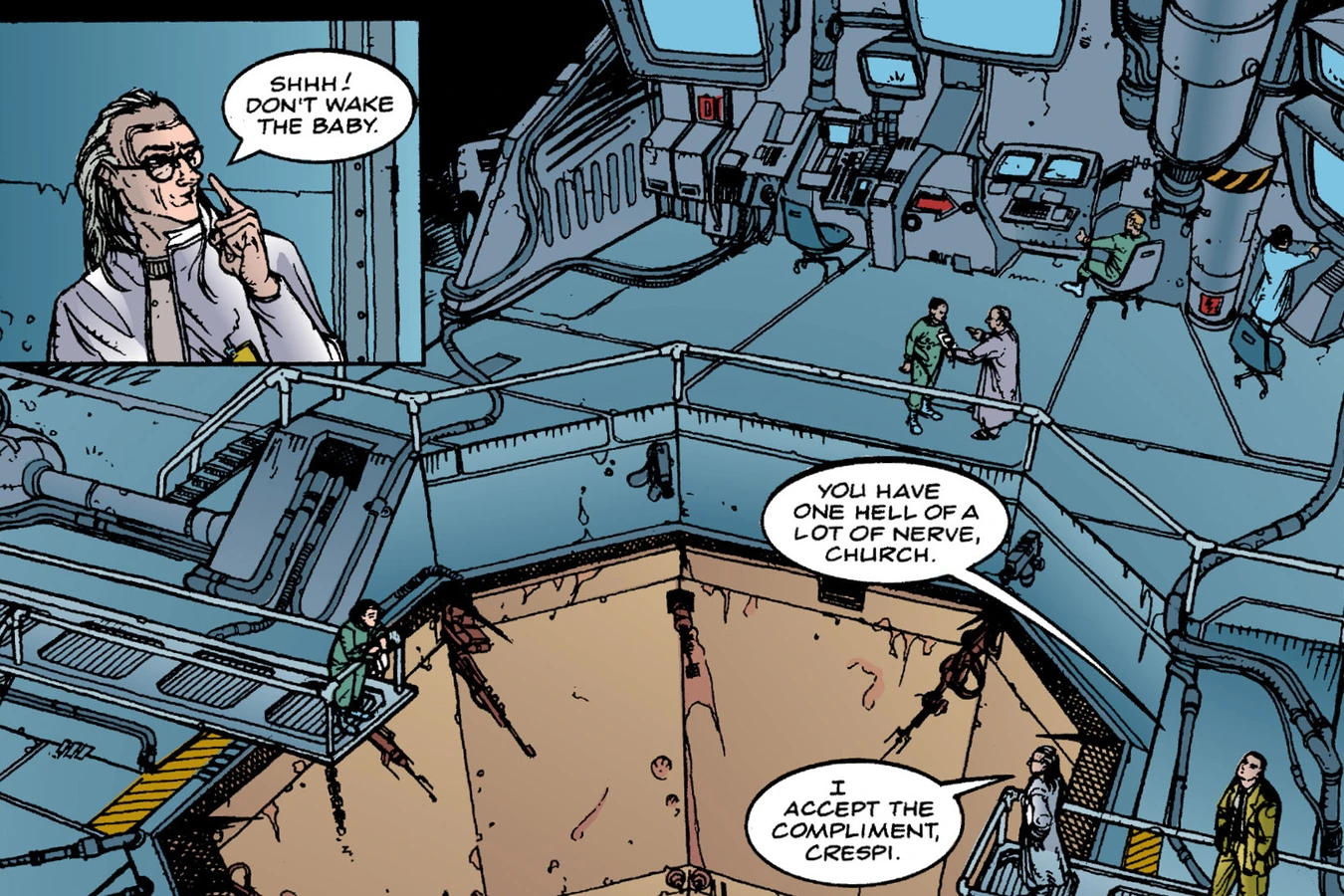
Paul Church received Crespi with an account of routine spaceborne virus research, claiming that his operation had been reduced and required no replacement for Lennox. Crespi challenged that explanation and raised the circumstances of his predecessor's death, threatening a board of review if Church continued obstructing him. The scientist then led him into the research installation and introduced personnel in G Lab. Rather than the minor operation he had described, Church revealed a live adult Xenomorph confined below an observation area.
The containment pit was thirty feet deep, with smooth walls made from acid-neutralizing alloy, motion-activated electrodes, and a force field above it. Church maintained four additional adult specimens in semi-cryogenic kennels and periodically shocked the captive to prevent it from becoming dormant. He explained that isolated specimens did not survive long away from their own kind, limiting the time available for research. A door connected the pit to a maze where sensors recorded responses to food, possible escape routes, and human subjects under Church's supervision.
Behavioral Experiments
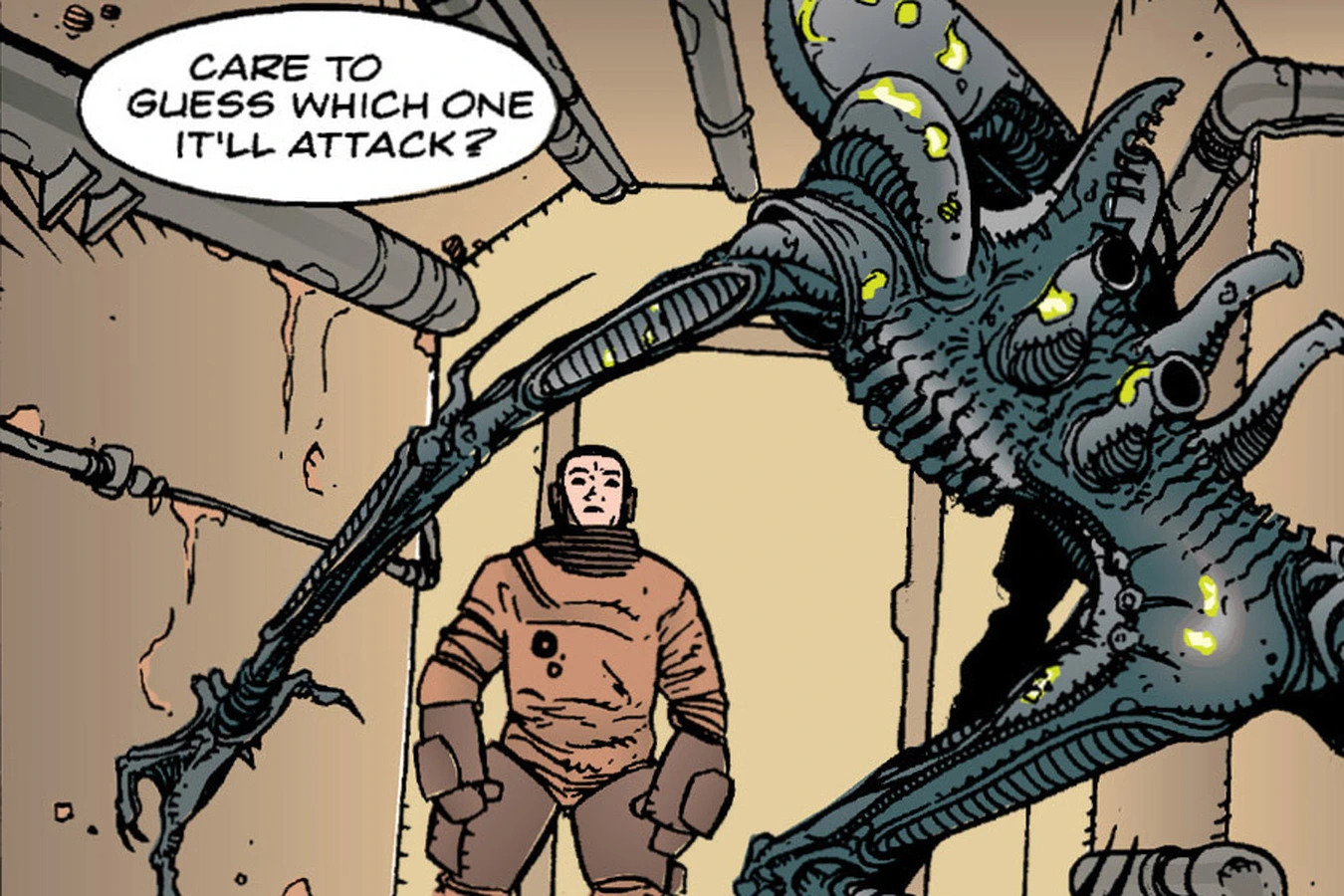
Church first presented the starving captive with a pig and a human, inviting Crespi to predict which it would attack. The creature chose the man before feeding, and automatic electrical defenses interrupted its assault. Further tests offered food against an escape route and an armed man against an unarmed one, establishing its preference for attacking a perceived threat. Crespi questioned why hundreds of repeated trials had been necessary, while Church explained that successive maze arrangements incorporated new sensors to collect additional information.
A later test placed a frightened, sober man beside an unarmed subject given ATR, a telepathine that increased confidence and mental strength. The creature initially moved toward the frightened subject but hesitated while the drugged man concentrated on stopping it. Church attributed the interruption to psychic communication and proposed that a human mind in an altered state could influence a weakened Alien. Crespi recognized the possible value of Xenomorph control, but demanded proof and questioned how many crew members had died during the research.
Mortenson And The Escaped Alien
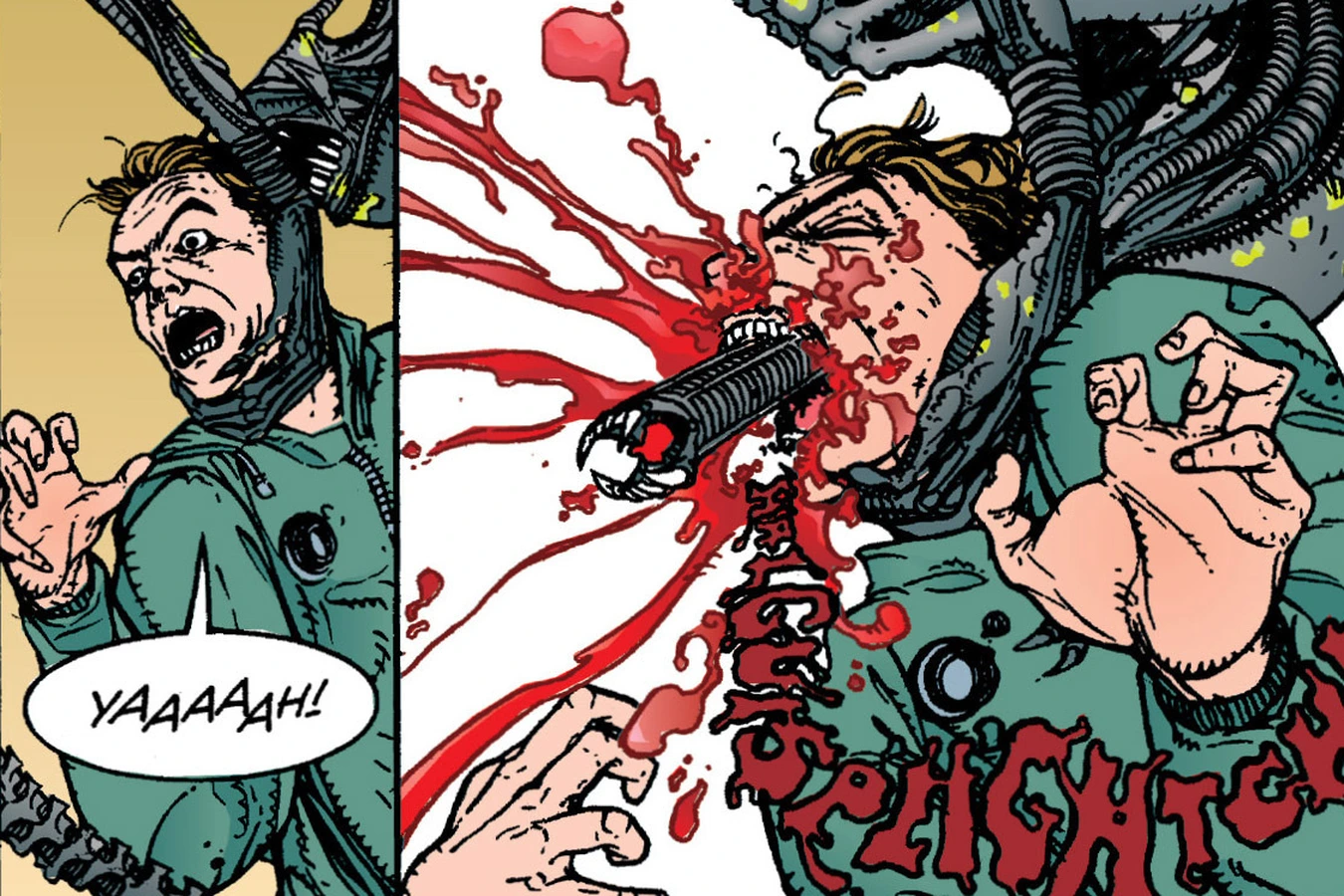
A report that kennel four stood open interrupted the laboratory visit, prompting Church to order the floor secured and personnel accounted for. Lieutenant Mortenson was the only missing crewman, and surveillance located him changing filters in decontamination suits. Although the specimens carried tracking devices, the escaped creature was found close to his position. Church contacted Mortenson directly and ordered him into the compressor room in sector SS 12, where he was to close and lock the door behind him.
Admiral Thaves questioned Mortenson over the communications link and learned that station orders had sent him to change the filters. The Alien reached the compressor room and killed him before the observers could get him clear. After its recapture, McGuinness discovered that someone had cut off the tracking device and smeared a pheromone-like substance on pipes near its hiding place. The station had also opened the kennel lock, leading Crespi to authorize a secret attempt to trace the orders behind the apparent accident.
McGuinness And The Station Records
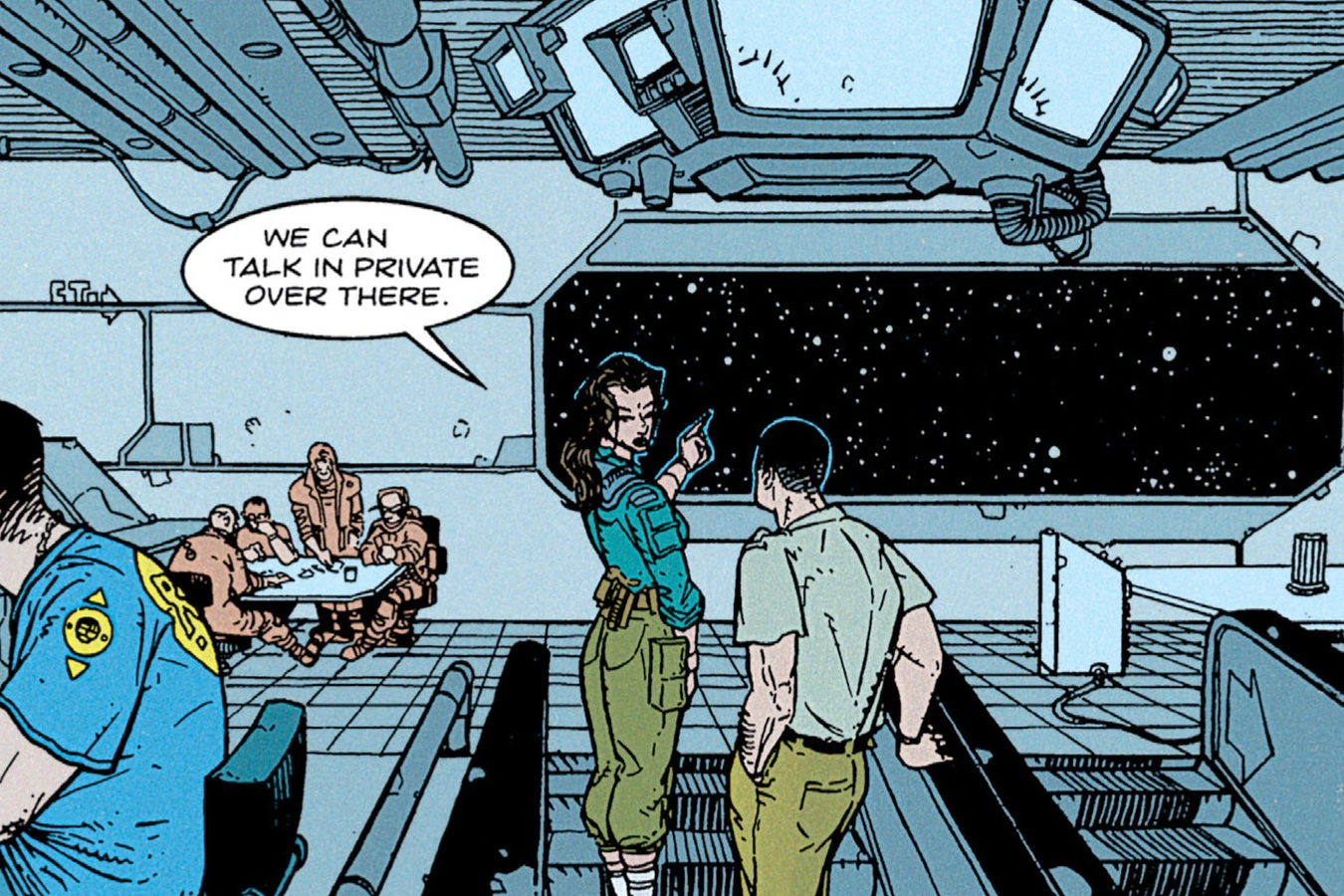
After Mortenson's death, McGuinness disclosed that David Lennox had been her fiance and that she had come aboard to discover what had happened to him. He had repeatedly failed to obtain a transfer, and a coded message he sent her had arrived scrambled. Following the report of his supposed heart attack, someone had burglarized her apartment and stolen all his correspondence, including personal letters. Crespi criticized her private investigation but listened as she described what she had uncovered in the station systems.
The records showed thirty-four crew deaths in three years and three unscheduled shuttle arrivals annually over the previous five years. McGuinness also found that every crew member's medical records had been altered, although the protected master record prevented her from establishing why. Crespi apologized for dismissing her and authorized her to continue, promising support if she was caught. Meanwhile, Church resisted Thaves's suggestion that Mortenson's organs be retained and insisted that he would personally dispose of the body through the discharge tube.
Church's Control Demonstration
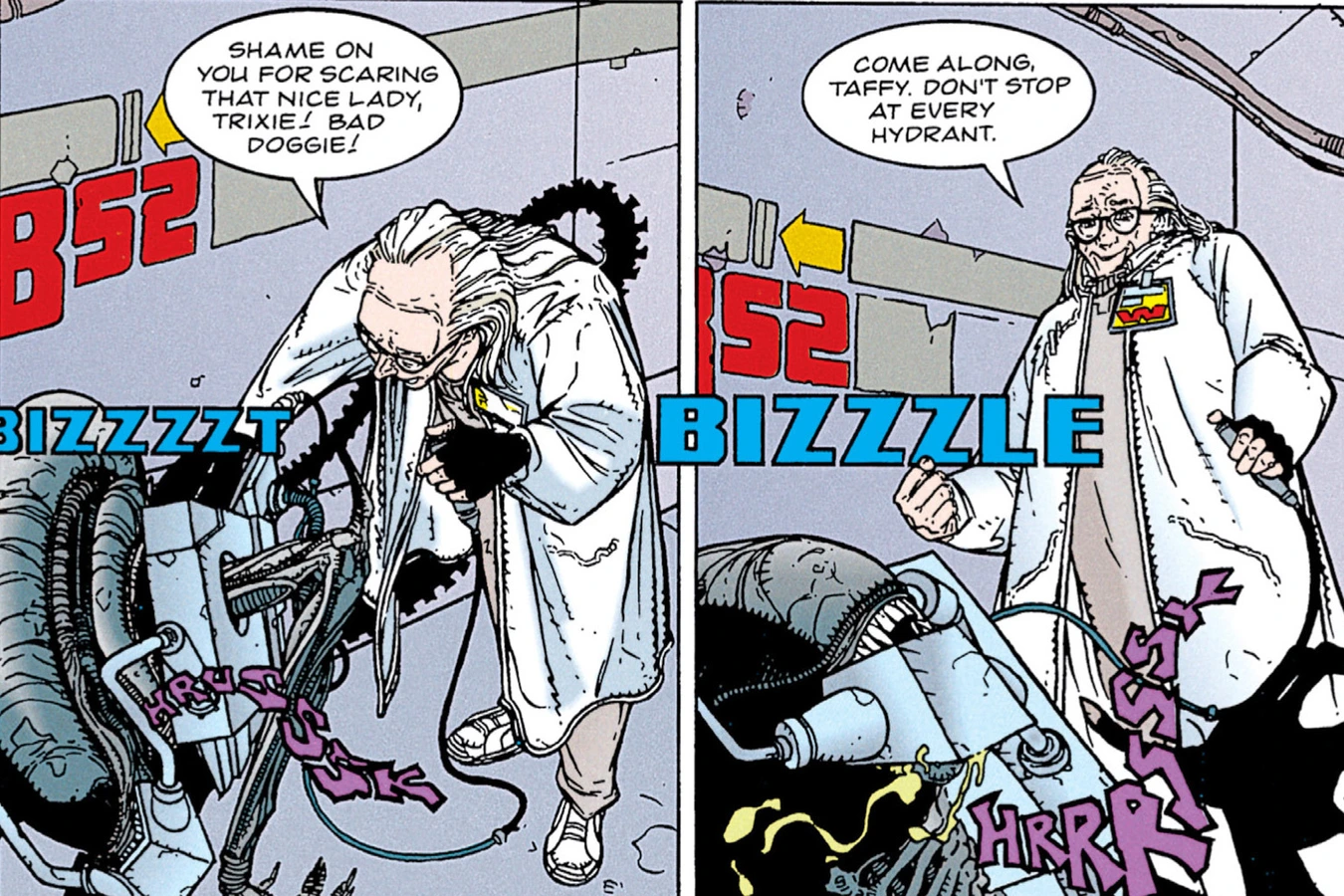
Church took a harnessed Xenomorph through an occupied corridor, alarming an unprotected woman as the creature approached her. He addressed it with pet names and used electrical punishment while treating the encounter as an ordinary walk. Crespi confronted him, listing offenses that included reckless endangerment, improper handling of dangerous life forms, and conduct unbecoming an officer. Church defended the outing as a demonstration that the captive was under complete control and therefore presented no threat to the people around it.
Crespi rejected that assurance by raising Mortenson's death, which Church blamed on the lieutenant being somewhere he did not belong. The dispute ended with an order to prepare the holding cell, and the creature was returned to confinement. McGuinness encountered Crespi afterward, but he deferred their conversation and went back to his quarters. Despite the confrontation, Church subsequently invited him to observe a specimen that was dying, drawing him back into the laboratory and offering a closer examination of its anatomy.
The Xenomorph Autopsy
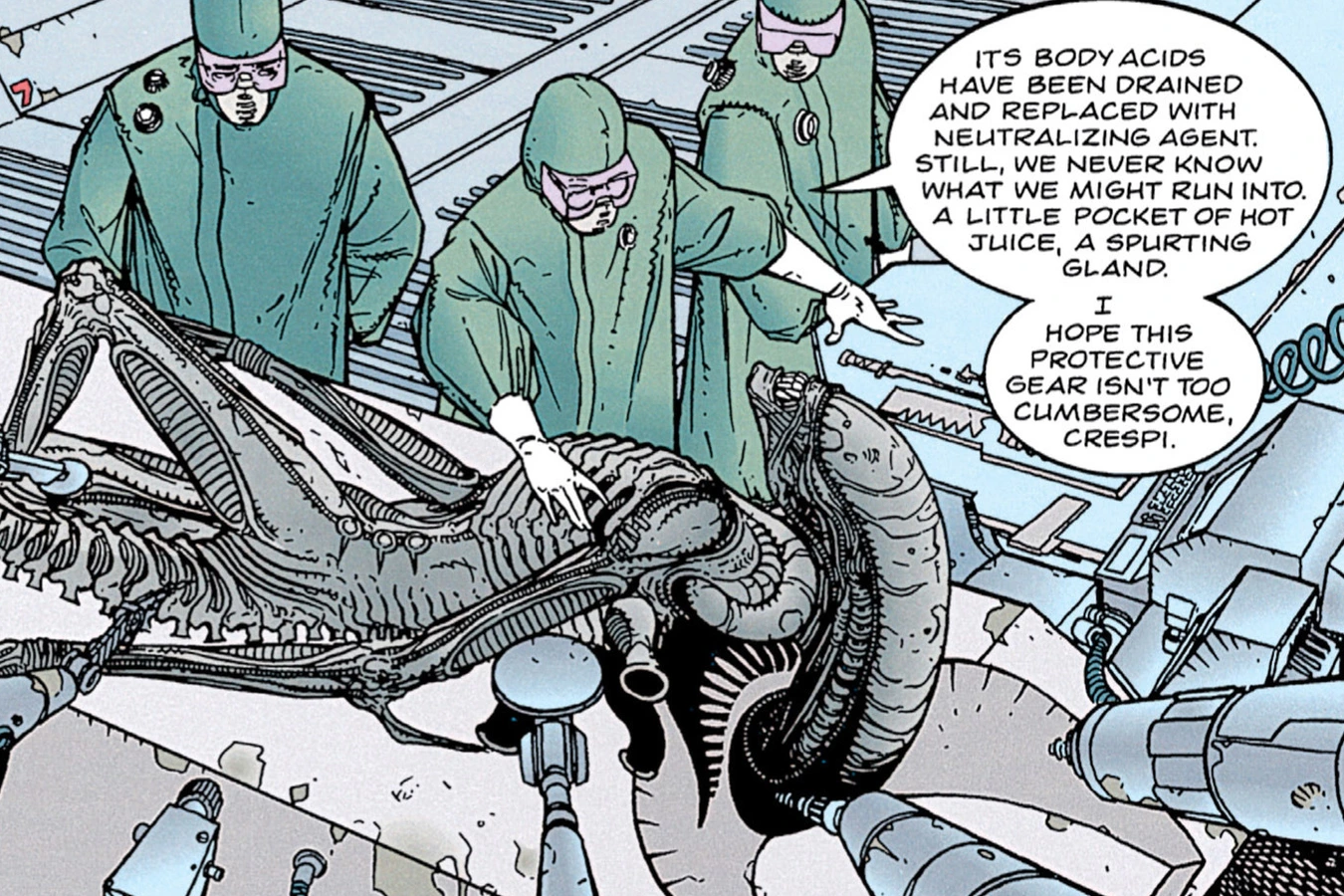
The captive died without Church identifying whether separation from its hive, age, or another cause had brought about its decline. He arranged for the body to be taken to B Lab, where he and Crespi wore protective equipment for the dissection. Its acids had been drained and replaced with a neutralizing agent, although isolated pockets or glands could remain dangerous. With Stockdale assisting, Church opened the specimen and drew Crespi's attention to an organ he believed received psychic signals.
Church described dense neural structures and compounds that could receive brainwaves and respond to electromagnetic fields. The organ had withered in captivity, unlike the fuller structure he had observed in healthier specimens, offering a possible explanation for the earlier control experiment. Crespi proposed reconstructing it in a cold tank or a computer model, but Church lacked sufficient structural data. After six hours working together, Crespi agreed to pursue further specimens and models, regarding the research as too important to dismiss as an illegal operation.
The Hidden Power Demand
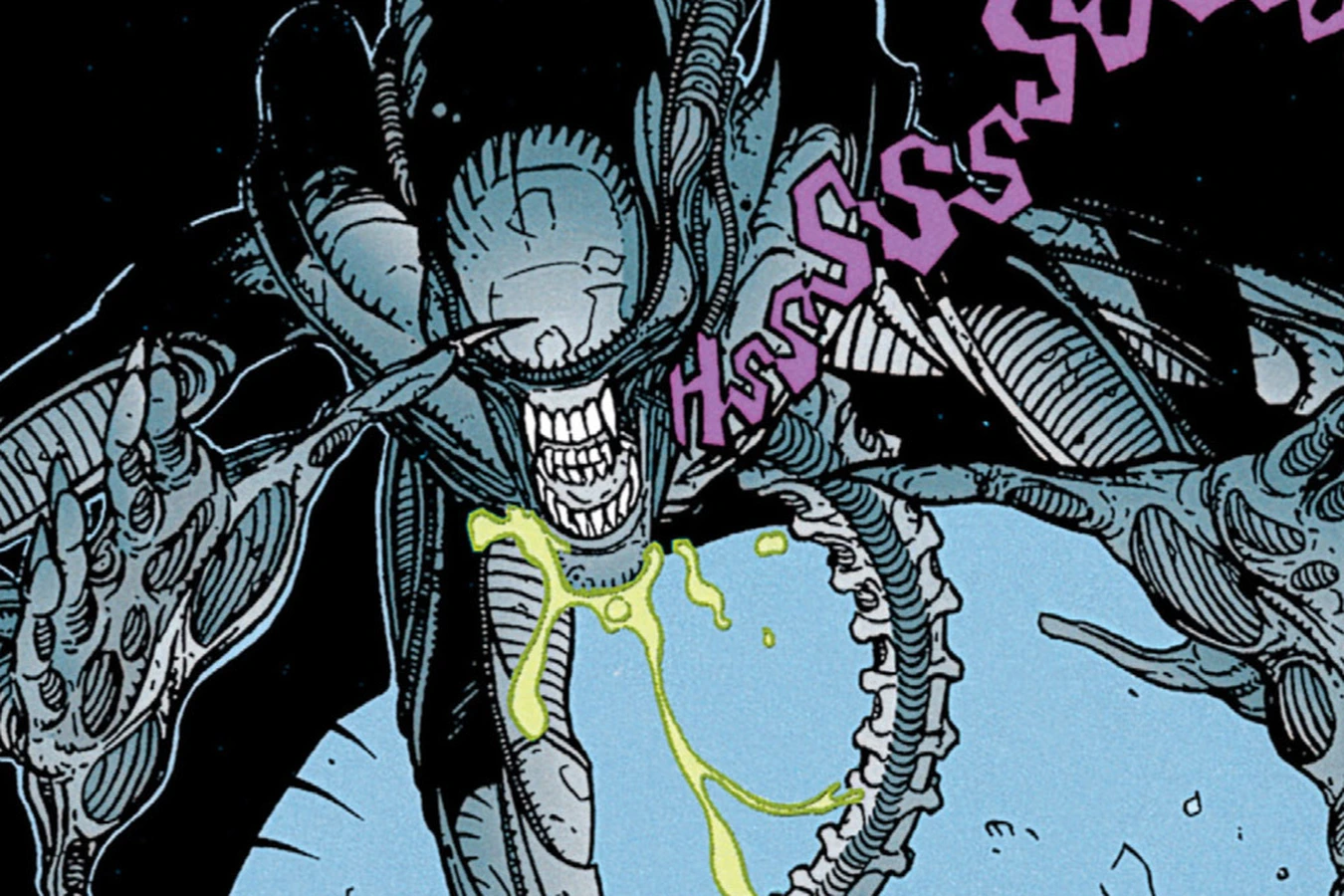
McGuinness intercepted Crespi after the autopsy, but his enthusiasm for Church initially led him to order an end to her spying. She countered with evidence from eighteen hours of stolen surveillance and station resource records. An unidentified installation was drawing almost a third as much additional power as all known systems combined. She traced the discrepancy to K Lab, officially a zero-gravity test facility, where Church had installed three double-coded, single-access doors outside the station's normal control system.
Opening the facility required the code slate in Church's private quarters, which Crespi could enter through the bioscan system while McGuinness could not. He retrieved it while the scientist slept, but an escaped Alien attacked him nearby. An open generator control panel allowed him to expose it to an electromagnetic field and survive long enough to summon a containment team. Suspecting a trap, Crespi assaulted McGuinness when he returned, then gave her one chance to prove her account by using the slate at K Lab.
The Hidden Laboratory
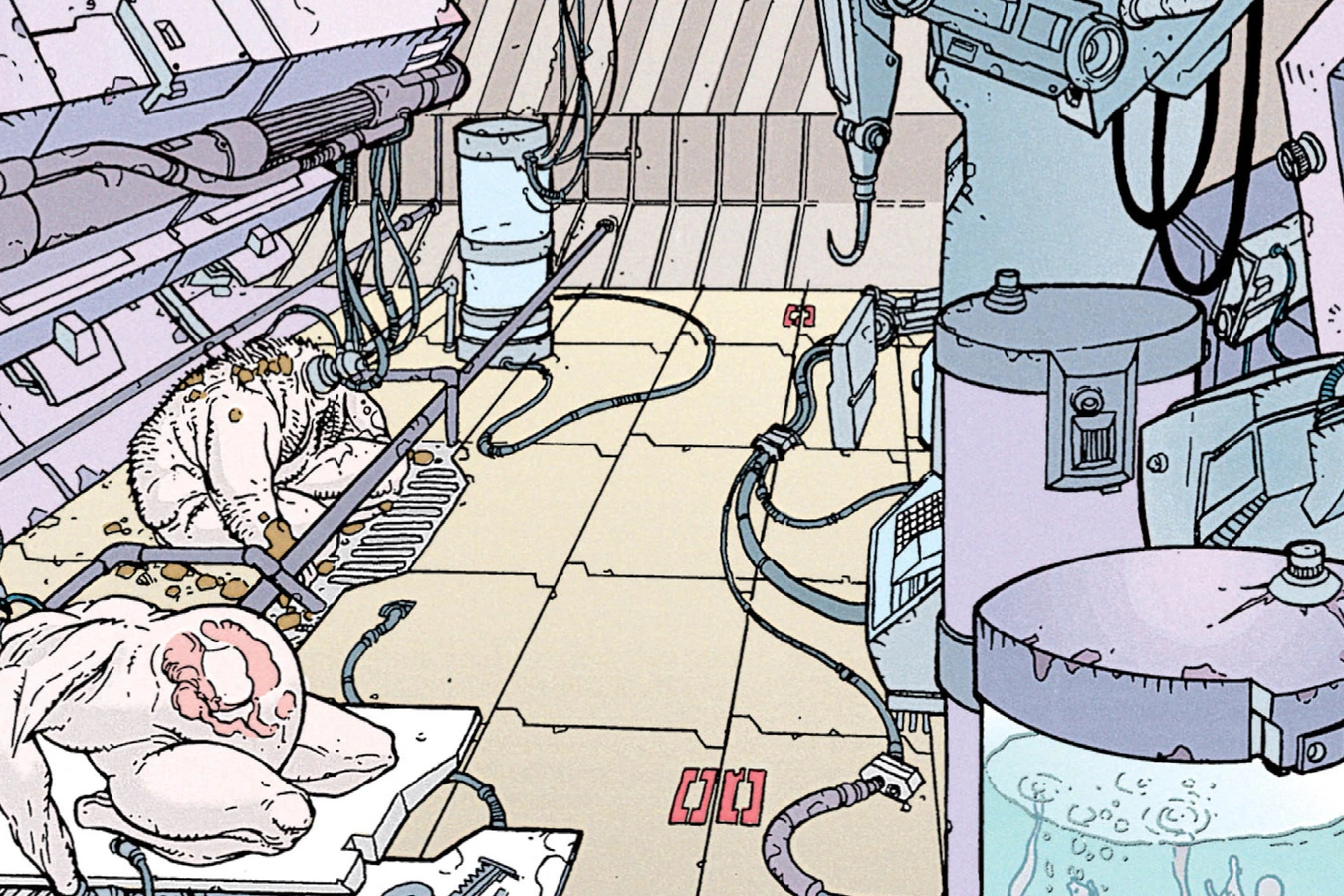
McGuinness extracted the key code and entered the concealed installation with Crespi, finding human bodies incorporated into its equipment. Among the altered remains, Crespi recognized Mortenson, whose supposed disposal had never taken place. McGuinness then discovered David Lennox alive in a severely mutilated condition, including damage to his eyes. When Church arrived, he assured her that Lennox felt no pain and suggested that the subject's experience was instead pleasurable, provoking her to attack him.
Church subdued McGuinness and refused Crespi's repeated orders to release her and get down on the floor. Crespi shot him, exposing machinery within the wound and briefly mistaking him for a synthetic. The scientist denied that explanation, describing himself as human apart from several implants, and continued addressing the intruders rather than surrendering. Church offered to explain the laboratory through his own history, asking them to hear how he had survived an Alien hive forty-two years earlier, when he was twenty.
The Incunabulum Expedition
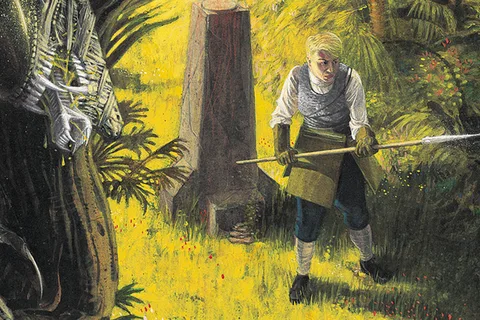
As a young man, Church travelled aboard the terraforming ship Incunabulum with his parents and a small working crew. He had spent much of his childhood on ships and at terraforming camps, and had already obtained a small government grant for immunization research. The ship also carried the scientists Quentin and Louise Clark and their daughter Rebecca toward another destination. Judith, a synthetic programmed for botany as well as sexual companionship, accompanied the crew members Taylor, Hewett, and Johanson.
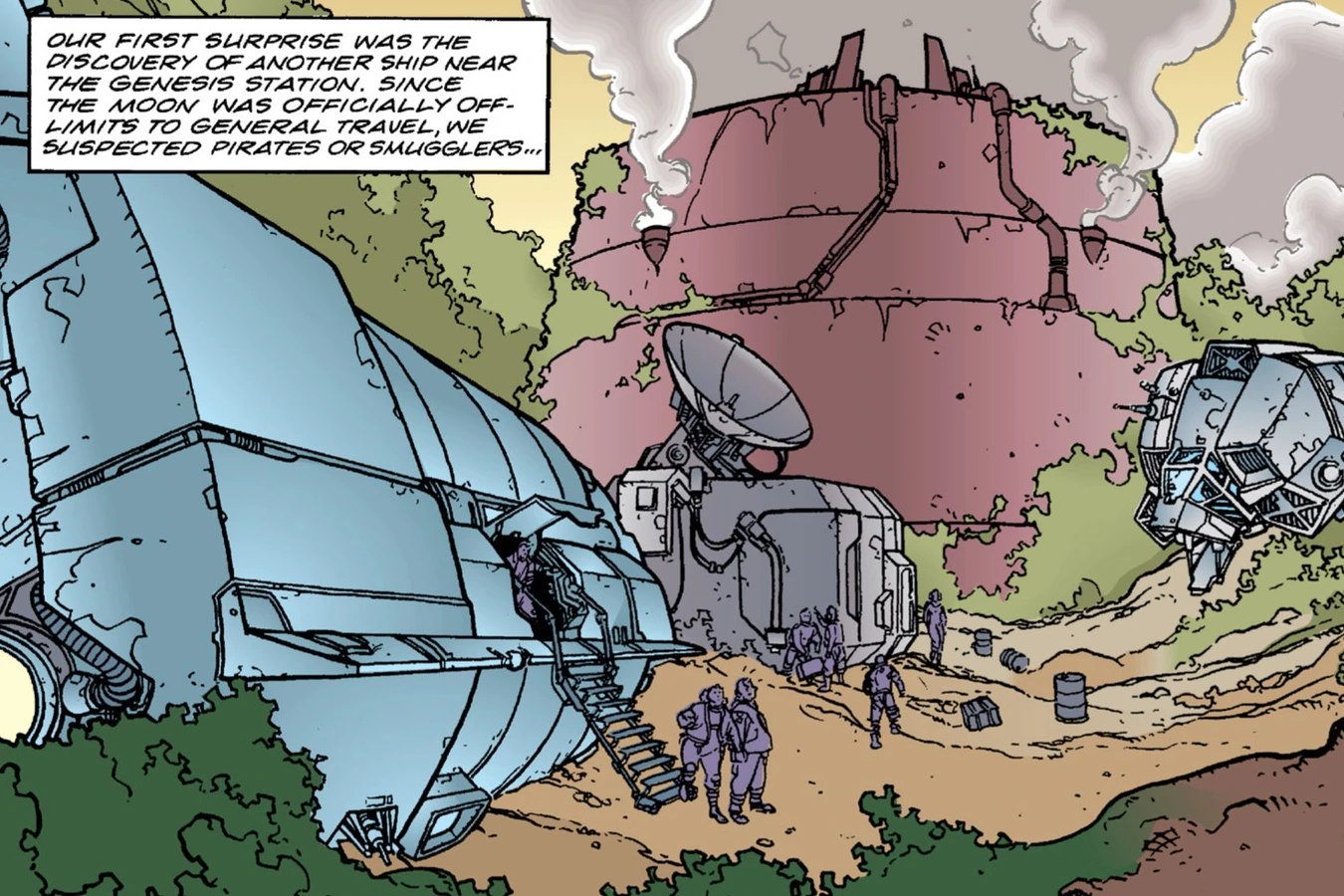
Before continuing the journey, the expedition stopped at a moon that Church's parents had terraformed fifteen years earlier to recover a scientific time box. Another ship stood near the station despite the moon being closed to general travel, suggesting that pirates or smugglers had landed there. The visitors retrieved their record but found no one to question before Xenomorphs attacked. Unable to stop them with their small weapons, the party was captured and taken to a hive whose vegetation had concealed it from the Incunabulum expedition.
Captivity In The Sick Hive
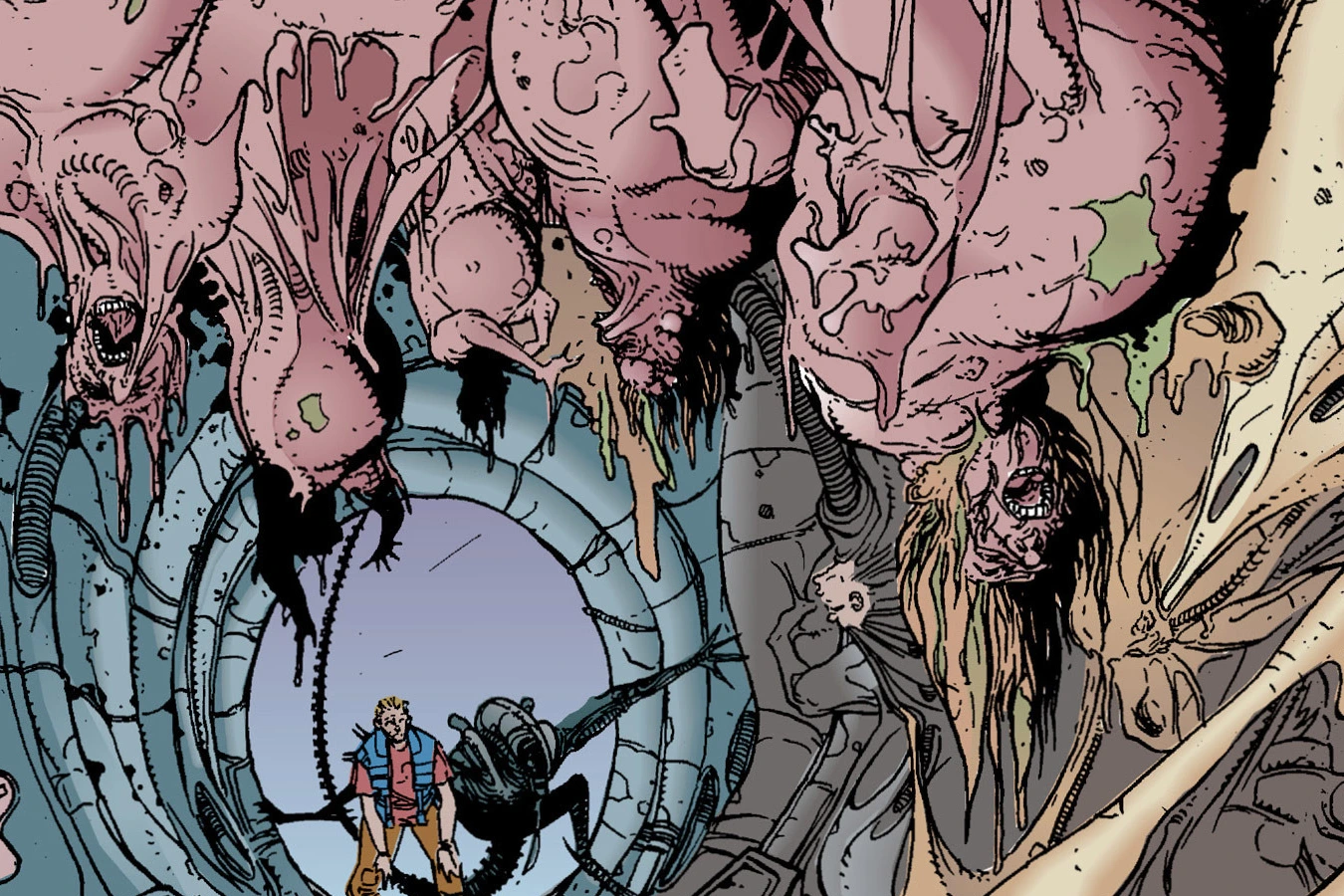
The Xenomorphs carried the captives into a foul-smelling hive and examined them by sniffing, licking, and probing their bodies. Two creatures struggled over Rebecca Clark and tore her apart, while Judith was destroyed trying to protect her through her human-defense programming. Taylor detonated a grenade, killing two Aliens along with himself. The remaining prisoners were separated, and Church was taken deeper into the hive, where swollen and mutilated bodies from the other ship hung throughout the chambers.
Secured to a wall by thick strands of mucus, Church endured the smell and the cries of other prisoners before the creatures returned to feed him regurgitated material. The feeding was interrupted when they dragged in Quentin Clark, who had already suffered extensive injuries. They lowered him into a pool of slime containing small tadpole-like organisms and fastened his head to the wall. When Church later passed the pool, Quentin Clark had stopped screaming and his body had begun to swell.
The Hive's Breeding Failures
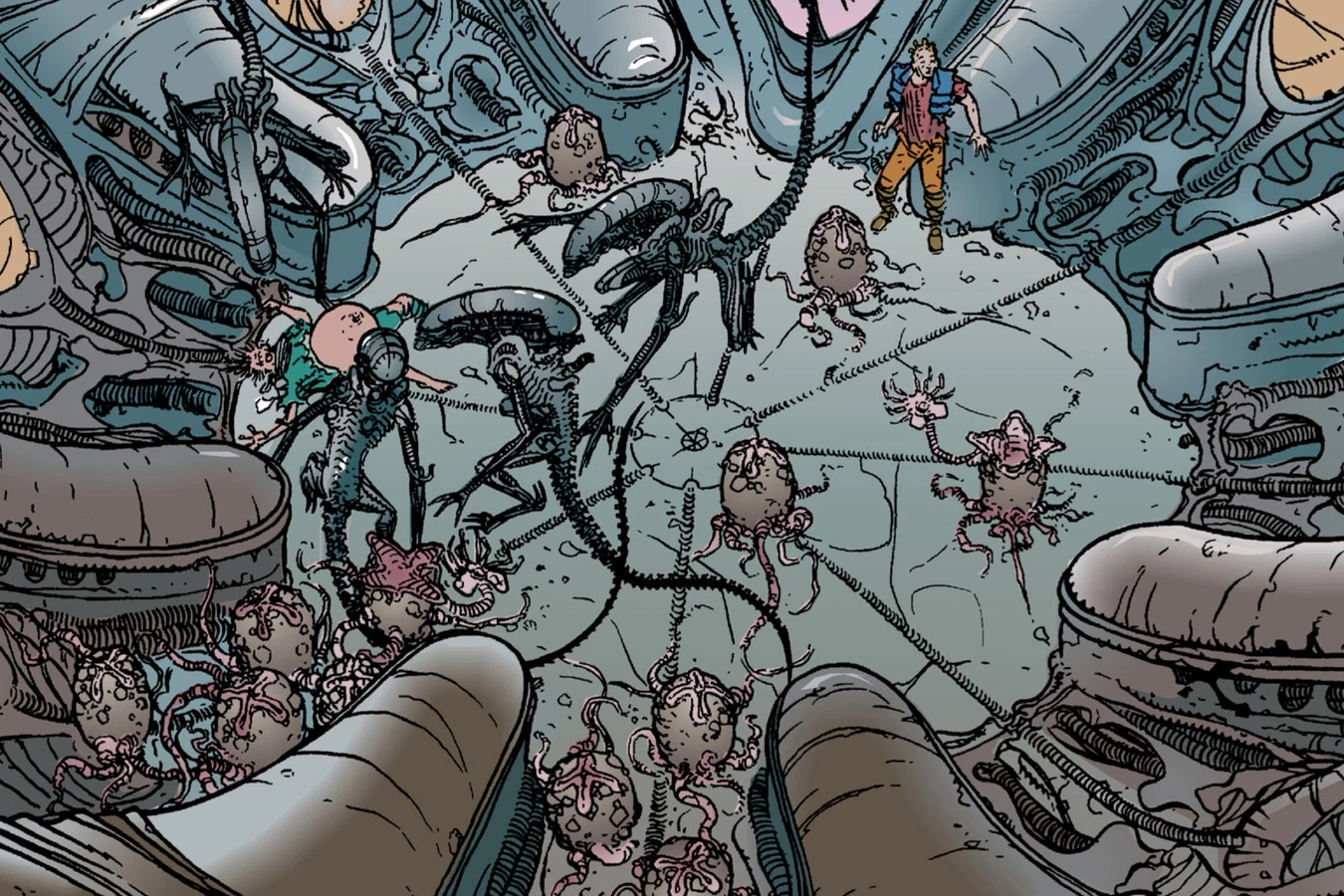
During another journey through the hive, the creatures brought Church into a breeding chamber containing distorted human captives. He recognized Louise Clark despite the enormous swelling of her body and could do nothing to help her. She died giving birth to malformed offspring that did not survive an hour. The failures convinced Church that something was wrong with the hive itself, because the Aliens' attempts to use the prisoners as hosts were producing creatures unable to live.
Church abandoned passive waiting and began watching for information that could help him survive and destroy his captors. Elsewhere in the hive, he encountered what remained of Hewett and Johanson, whose condition prevented them from recognizing him. The different treatments inflicted on the expedition's members gave him opportunities to observe what the creatures wanted from their prisoners. Rather than resist every demand, Church began anticipating their actions, hoping that cooperation would spare him the alterations he had witnessed in the other captives.
Church's Experiments In Captivity
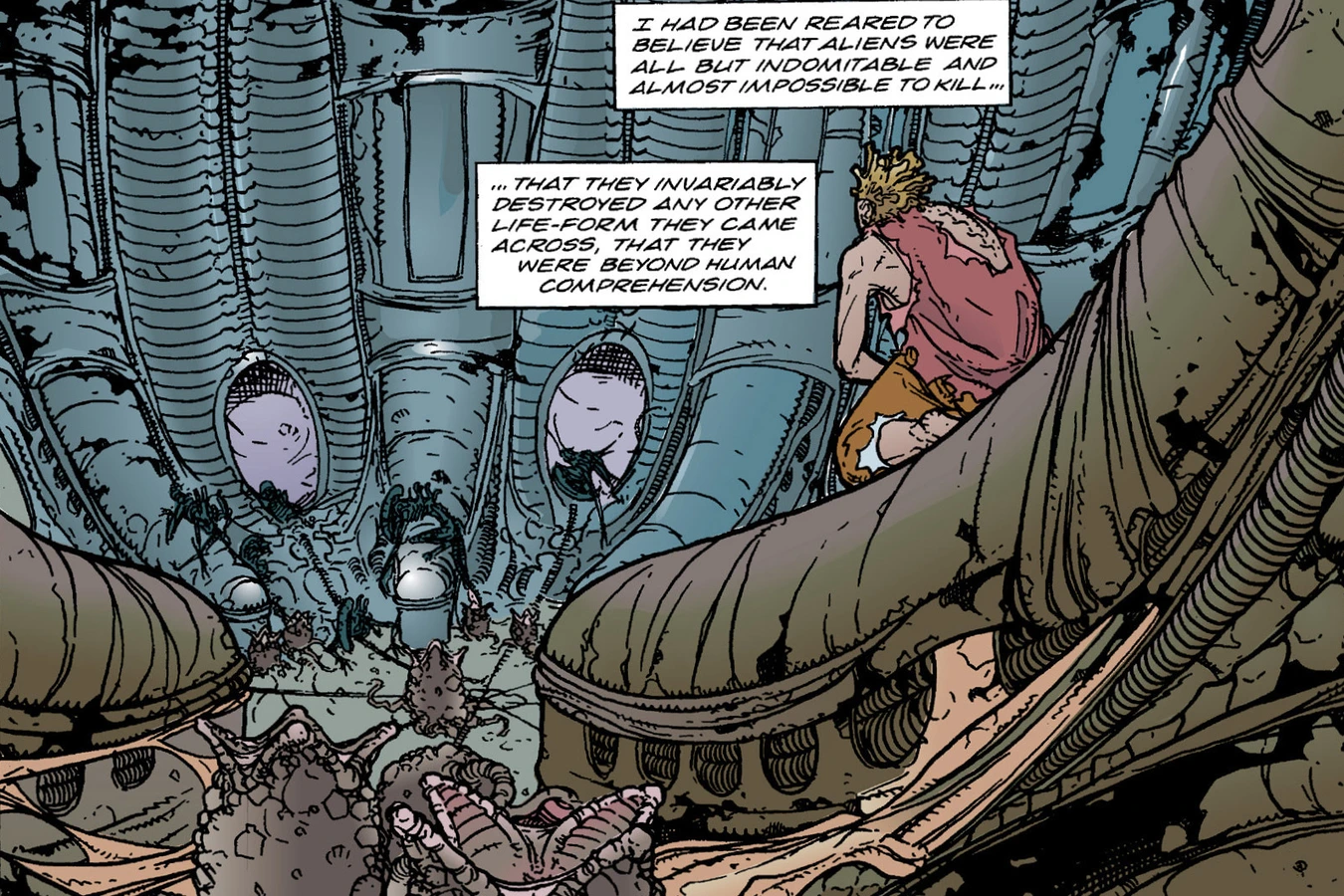
Church made a show of drinking from a pool before the creatures forced him and began feeding other captives when he saw how the task was performed. The Aliens interfered less when he anticipated their demands, allowing him to collect samples and conceal them in a small recess. He tested the substances against one another without proper instruments. His observations linked the hive's decline to toxins from a widespread black mold, giving Church a substance he could use against his captors.
The small leech-like organisms secreted a solvent-like colloid that the Xenomorphs cultivated, apparently as medicine against their condition. Church used his crewmates' remains as dishes, filters, tubing, and vessels, then conducted experiments and poisoned the creatures whenever an opportunity arose. His interest in the results grew until obtaining proper equipment concerned him more than escaping. Although these were sick rather than healthy specimens, Church found that he could deceive and damage creatures he had previously believed almost impossible to defeat.
Escape And The Dead Chestburster
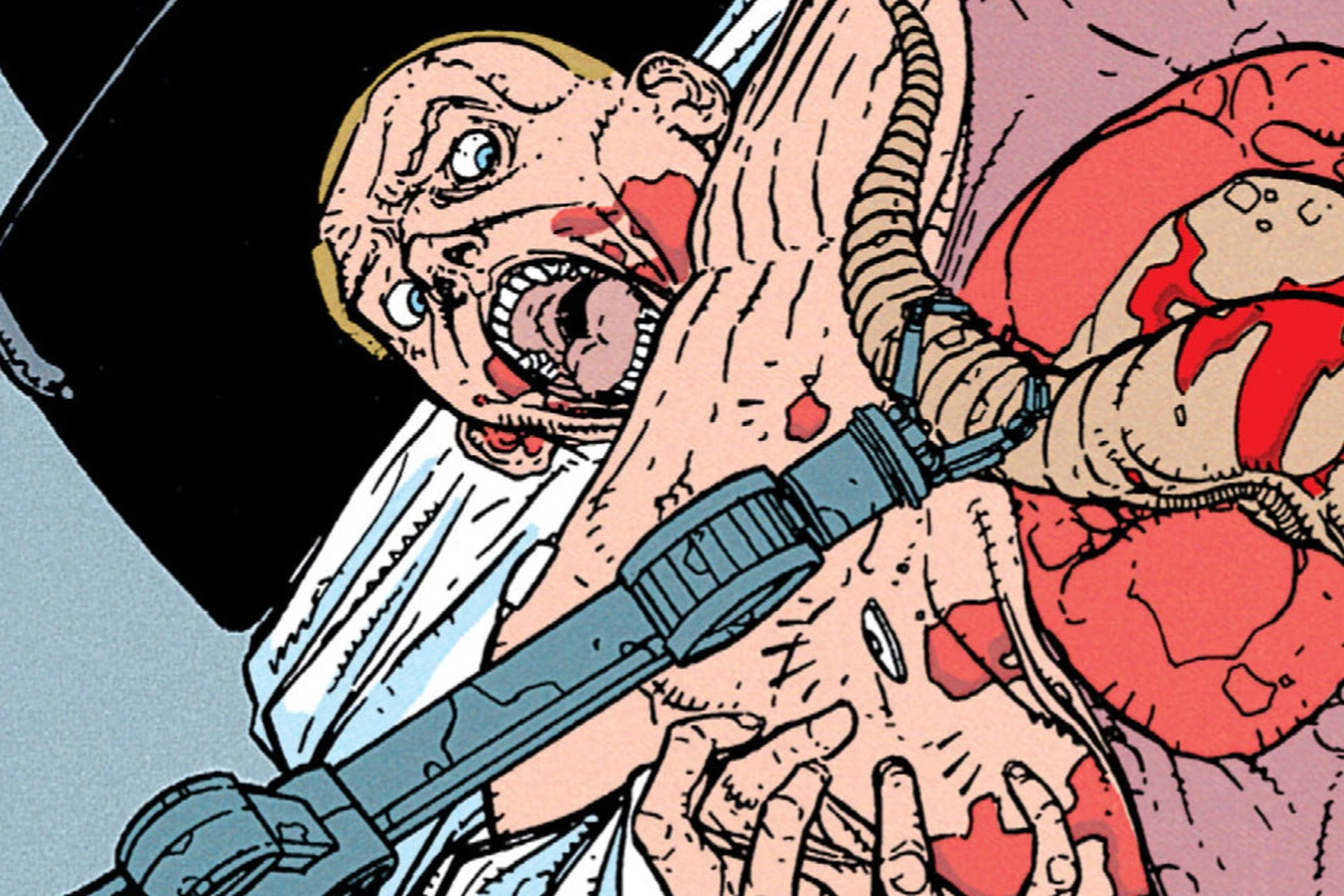
The creatures eventually brought Church to his mother, who lay mutilated in a cradle made from their secretions. Realizing that they wanted the two humans to mate, he killed her rather than comply, after which the Aliens overpowered him. They later restrained him against a wall and helped a weakened Facehugger attach to his face because the sickness had affected their eggs as well. Church lost consciousness after implantation and awoke to find the hive's creatures and prisoners dead.
Church escaped to the untouched Incunabulum, where the calendar showed that forty-three terrestrial days had passed, and transmitted a distress call. After cleaning himself and treating his wounds, he scanned his chest and found a dead, decaying Chestburster that required immediate removal. He completed the operation himself in seven hours and met the rescuers on his feet when they arrived a week later. His experience earned Church extensive biomechanical treatment, after which he continued studying Aliens with official support.
Church's Final Experiment
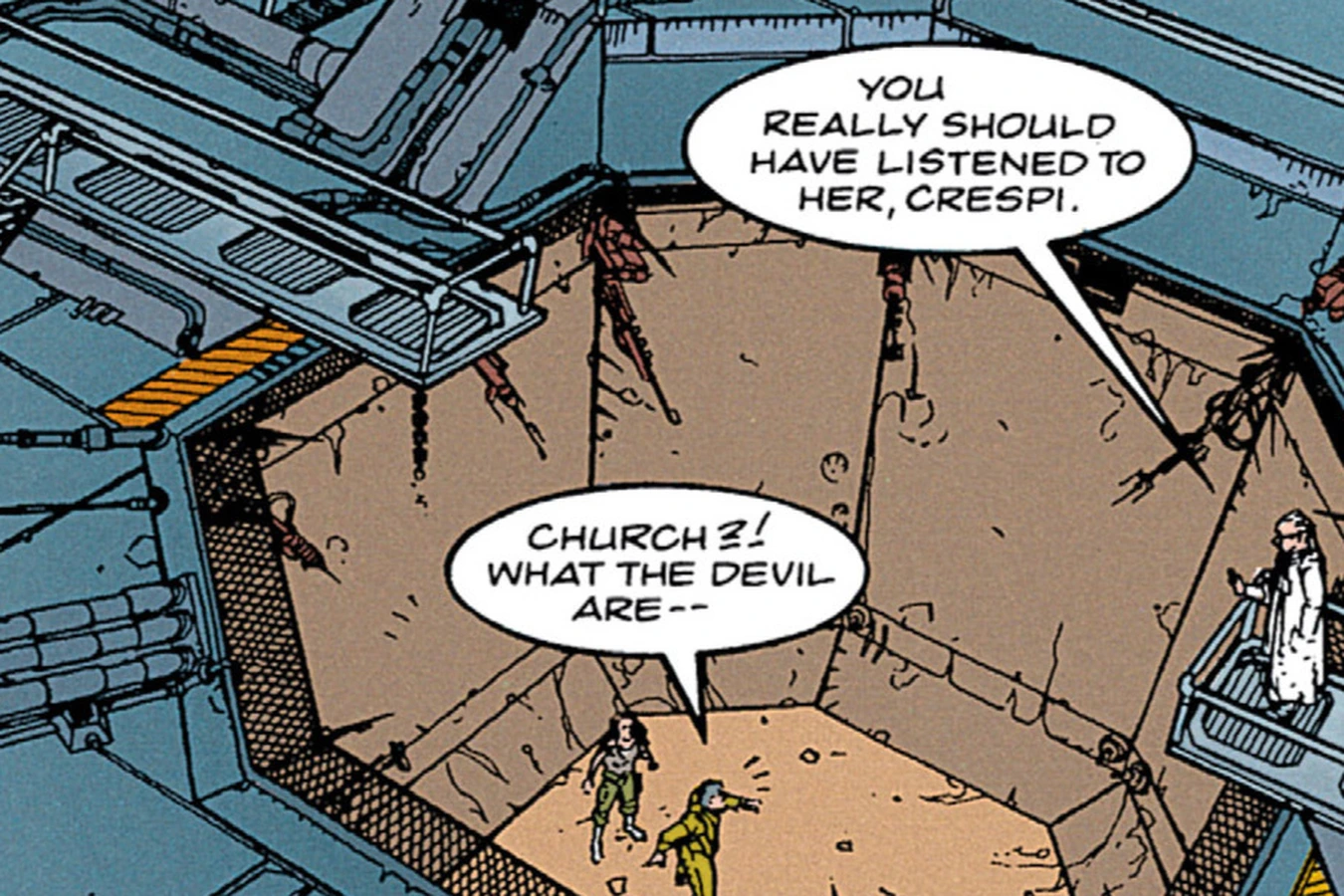
Returning to the concealed laboratory, Church described medical advances produced by research that had begun as an attempt to develop an anti-Alien viral weapon. He claimed to have used only the donated bodies of soldiers who died on duty and denied killing his subjects. He also accused McGuinness of fabricating her engagement to Lennox and identified her and Mortenson as spies for Grant Corporation. Crespi accepted the demand to arrest her despite her protests, allowing Church to turn the two investigators against one another.
Church then overpowered Crespi and openly mocked him for disregarding McGuinness's warnings. He abandoned his earlier reassurances and described an intention to combine human and Alien biology into a new form of life that could sustain itself. Both prisoners were to contribute to the research, but he forced them into the maze with a conditional promise of survival if they reached its end. Crespi apologized to McGuinness as they entered, recognizing that his confidence in Church had helped the scientist deceive him.
Crespi And McGuinness In The Maze
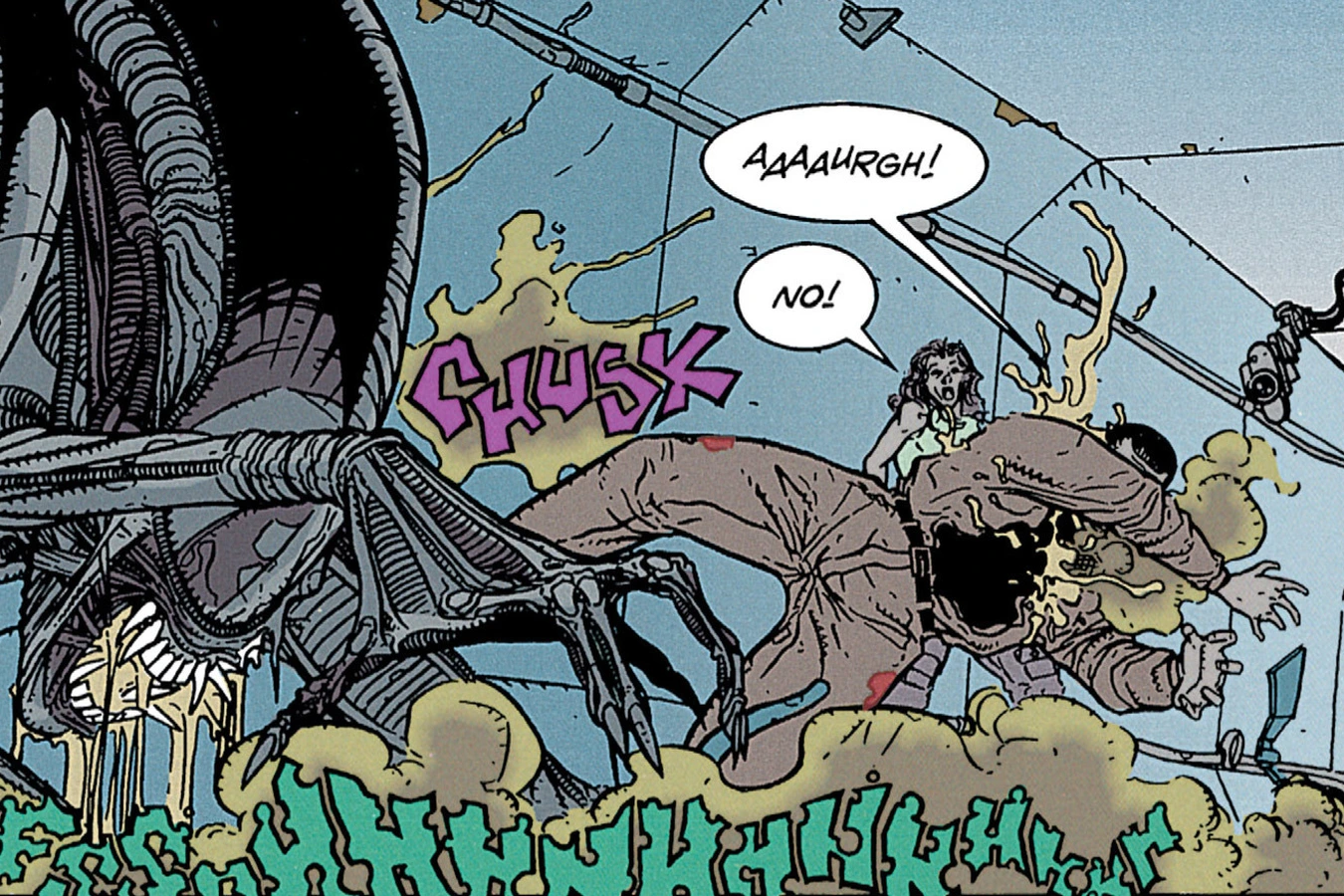
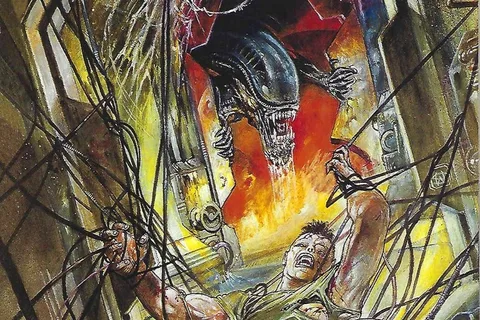
Crespi and McGuinness entered chambers occupied by Xenomorphs, discovering that some were held by harnesses that prevented them from reaching the prisoners. Church controlled their progress through the installation and threatened to electrocute them if they refused to move. A later creature was loose, although the experiments had weakened it enough for Crespi to believe they had a chance of escape. He urged McGuinness toward the next door as the creature attacked, sustaining serious injuries in the attempt to get them through.
Despite his wounds, Crespi insisted that he could get them out, but another encounter exposed him to a devastating spray of acid. McGuinness reached him and found that she could do nothing to save him. He begged her to prevent Church from recovering him for the laboratory, and she broke his neck to end his suffering. Continuing alone, McGuinness passed another creature and reached the observation area, where she confronted the scientist who had sent them into the maze.
McGuinness Confronted Church
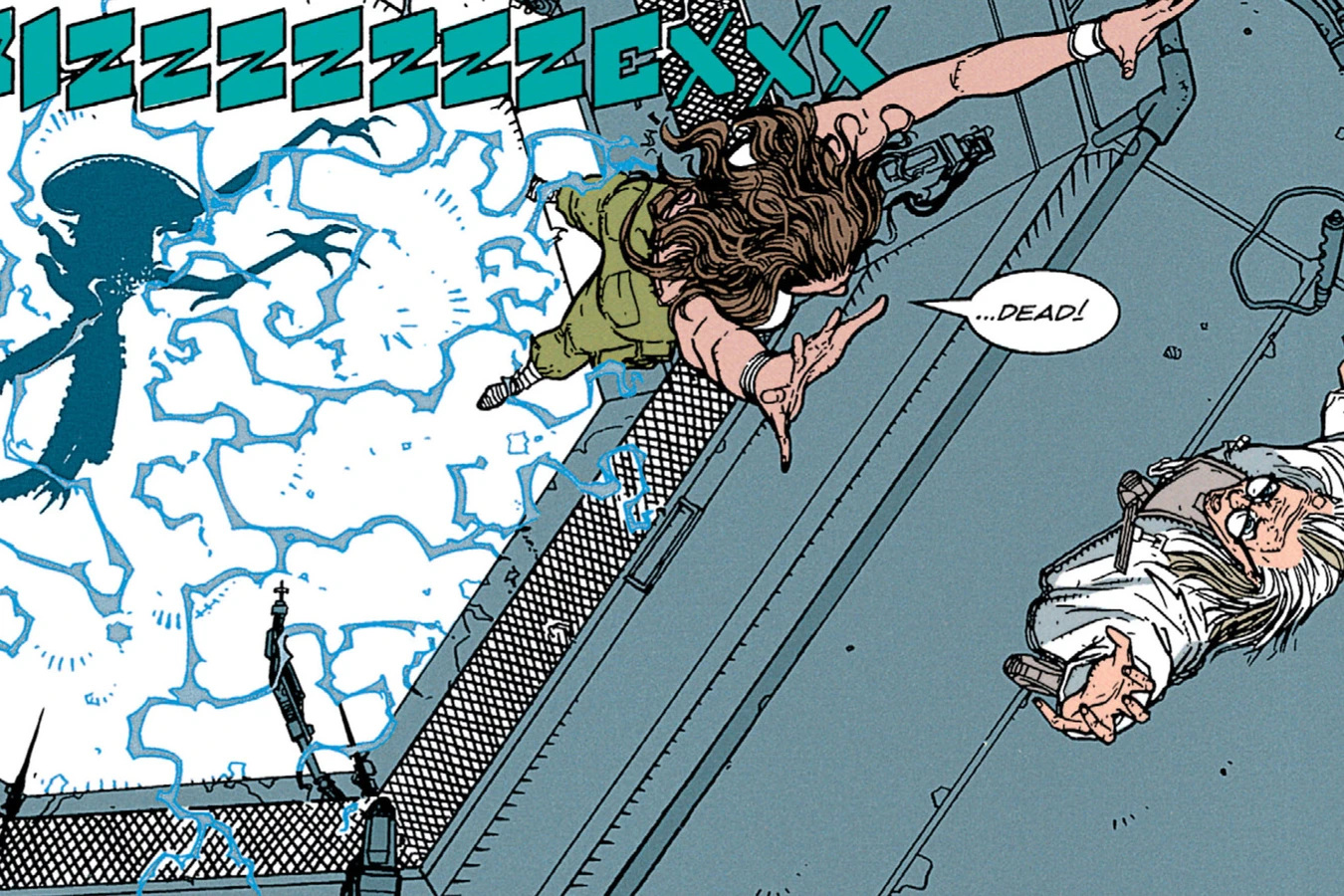
Church greeted McGuinness's return with threats of further experiments and the prospect of placing her with Lennox. When another captive Alien approached, she concentrated on turning it against him rather than accepting his control over the encounter. The creature responded despite her having received no telepathine, contradicting the condition Church had relied upon in his earlier demonstration. McGuinness struck the scientist and threw him into the enclosure, where the Alien attacked him before armed guards arrived to intervene.
The guards ordered McGuinness to stop while Church struggled with the creature, initially unable to obtain a clear shot. The scientist survived the attack and received medical treatment, but the investigation did not establish his responsibility for the prisoners' ordeal. Instead, recordings of McGuinness leading Crespi into the laboratory and breaking his neck were used against her. Admiral Thaves treated her as a saboteur and Crespi's killer, disregarding the injuries and threats that had caused him to ask her to end his life.
Church's Research Continued
During his recovery, Church wanted to return to work, but the medical staff required another week of rest. He raised McGuinness's accusations with Thaves and questioned whether his research had been wrong. The admiral dismissed her as a saboteur and credited Church's medical work with saving many lives, including his daughter's through a viral tent. Thaves also confirmed that Marines had collected McGuinness the previous week, reassuring the scientist that she would not return to threaten him.
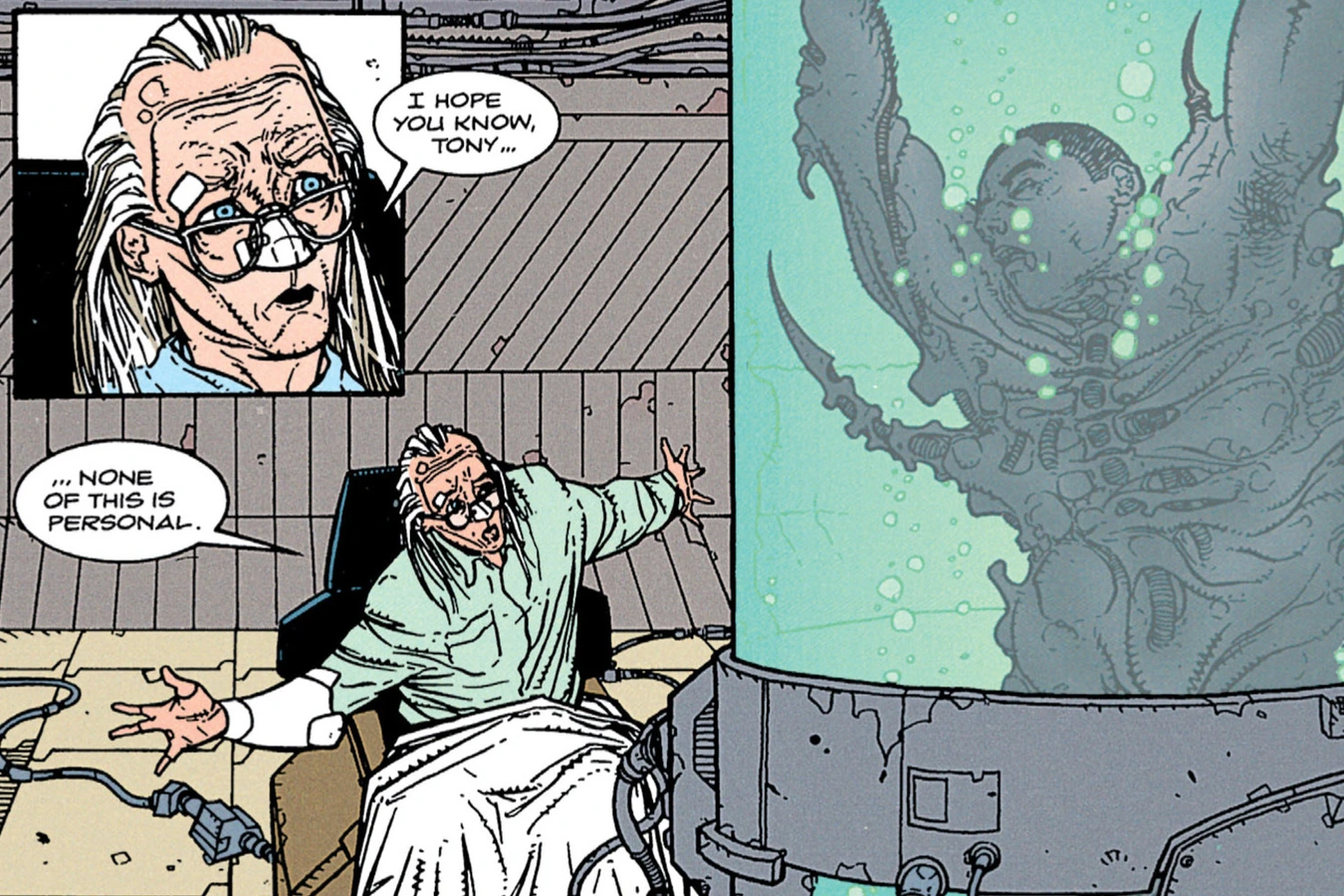
Church expressed regret about Crespi, while Thaves regarded the recordings of his death as further evidence against McGuinness rather than the laboratory's director. The scientist subsequently returned to the concealed installation and approached a tank holding Crespi's altered body. Its new Alien-like structures showed that the dead investigator had become another subject attached to the laboratory equipment he had discovered. Addressing him as Tony, Church insisted that none of it was personal and continued the research that Crespi had failed to stop.
Key Characters
- Anthony Crespi survived Backsplash and investigated the Innominata. His attraction to Church's research undermined his suspicions before the maze left him fatally injured.
- Paul Church directed the Alien experiments and maintained the human laboratory. His account of surviving a diseased hive preceded his admission that he wanted to merge human and Alien life.
- Sharon McGuinness traced altered records and opened the secret laboratory with Crespi. She ended his suffering, attacked Church, and was blamed for Crespi's death.
- Admiral Thaves obstructed Crespi's appointment and protected Church, whose medical work had saved his daughter.
- David Lennox was Church's previous partner. McGuinness found him alive among the laboratory's altered human subjects.
- Mortenson died after station orders sent him into danger. His body subsequently appeared in the concealed laboratory.
- Gibbs, Rupp, and Hollister took part in the failed cavern assault that Crespi alone survived.
- Quentin Clark was a scientist travelling with his family aboard the Incunabulum. The Aliens immersed him in a pool of small organisms, after which his body began to swell.
- Louise Clark travelled with Quentin and their daughter. She died in the hive's breeding chamber while producing malformed offspring that did not survive.
- Rebecca Clark was Quentin and Louise's daughter. Two Aliens tore her apart after the expedition was captured.
- Judith was the Incunabulum's synthetic botanist and sexual companion. She was destroyed while trying to protect Rebecca.
- Taylor was an Incunabulum crewman who killed himself and two Aliens with a grenade during the captives' first encounter inside the hive.
- Hewett and Johanson performed heavy work aboard the Incunabulum. Church later found them so severely altered that they could no longer recognize him.
- Stockdale helped contain the station's specimens and assisted Church during the Xenomorph dissection.
- Blackman worked with McGuinness after Mortenson's death, checking the Alien's confinement and securing the affected area for examination.
Editions
Dark Horse Comics published the four-issue Aliens: Labyrinth series from September 1993 to January 1994, following the prequel Aliens: Backsplash in Dark Horse Comics #12 and #13. The prequel supplied Crespi's earlier Marine mission and was later associated with the story as issue #0. Collected editions combined that assault with the Innominata investigation and Church's account of the diseased hive. Aliens Omnibus Volume 3 reprinted the material alongside Aliens: Rogue and Aliens: Sacrifice, placing the prequel before the station story rather than treating it as a later flashback.
Behind The Scenes
Jim Woodring wrote the story and Kilian Plunkett supplied the art and title illustration, with background inks credited to Monty Sheldon in the collected material. Matt Hollingsworth colored the comic and Ellie de Ville lettered it, while Ryder Windham edited the limited series. Kilian Plunkett also supplied cover art, including the first issue's laboratory scene. The first issue's publisher description introduced Crespi as the survivor of Backsplash, linking the anthology story to his new assignment before readers encountered the research station and Church's experiments.
Differences From The Book
Aliens: Backsplash came before the station investigation in the comic collection, but S. D. Perry's Aliens: Labyrinth began with a glimpse of Church's captivity followed by Crespi waking aboard the Arkham. The cavern disaster returned as a flashback in Chapters 5 and 6 rather than serving as the opening adventure. Perry also expanded Cady Trask into Crespi's recent lover, an aspiring biotech engineer whose death made the mission a personal loss. The comic prequel showed the failed assault without establishing that relationship.
Anthony Crespi received a more detailed military and scientific background in the novel. He was forty-one, had spent more than fifteen years in his research field, and awoke to a message carrying the year 2467. Perry identified the source of his emergency authority as Admiral D. U. Pickman, head of ETops, and connected that officer to the disastrous Waller operation on Myna 8. The comic gave Crespi the same secret command authorization but did not explain its sender through that account of Pickman's earlier operations.
Sharon McGuinness's history with Lennox changed between versions. In the comic, she stated that he had already been Church's research partner for six years when they met. In the novel, they had met five years earlier, two years before Lennox was posted to the station, placing their relationship before his work there. Perry also narrated her private memories and grief rather than leaving readers only her explanation to Crespi. Church's subsequent claim that Lennox had been his lover appeared in both versions, not just in the novelization.
Mortenson's apparent burial gained an additional scene in the book. After the private conversation about Lennox and the station records, McGuinness noticed a body bag floating outside the cafeteria window, and she and Crespi identified it as Mortenson's. The comic showed Church demanding a space burial and taking responsibility for disposing of the body, but did not include that later sighting. The novel therefore gave Crespi an apparent visual confirmation of the disposal before the concealed laboratory revealed that Mortenson's body had never actually left Church's possession.
Paul Church's account of his escape had an additional research aftermath in the novel. After describing the rescue and biomechanical treatment, he explained that the hive had been destroyed before he could tell his rescuers about the toxic mold and the colloid-producing organisms. He had repeatedly failed to reproduce the mold and had never encountered another species like the swimming parasites. The comic moved from his rescue and treatment to his later experiments without those explanations of the lost Xenomorph research material.
Church's recovery was described through his own thoughts in the book, making his questions about his work more than an exchange with Thaves. He privately admitted that McGuinness had frightened him, recognized changes in his confidence, and connected his unease to memories of his mother. The comic included his question about whether his work was wrong but did not supply that extended internal account. Perry retained Crespi's transformation in the tank, so the added doubts did not mean that Church abandoned his experiments or released his victim.
McGuinness received the novel's final scene after Church visited Crespi's tank. An epilogue placed her in deep sleep inside a locked cell aboard a transport bound for Earth, dreaming of returning and becoming strong enough to kill Church. The comic ended with Church addressing Crespi and an exterior view of the station, without showing her journey or those dreams. The transfer timing also changed in Thaves's hospital conversation: the comic placed her collection by Marines in the previous week, while the novel placed it on the previous day.
Conclusion
Aliens: Labyrinth was Jim Woodring and Kilian Plunkett's four-issue Dark Horse series about Anthony Crespi's investigation of a research station, preceded by the Marine disaster in Backsplash. Its investigation exposed Paul Church's experiments on Aliens and humans, along with the captivity that had shaped his methods. Crespi failed to stop him and died after entering the maze, while Sharon McGuinness was removed as the supposed killer. Church survived her attack, retained Admiral Thaves's protection, and resumed work with Crespi's transformed remains.
External Sources
Tag Categories: Alien Comics