Alien (1979): Plot, Cast, Production & Adaptations

Alien (1979) is a science fiction horror film directed by Ridley Scott. Dan O'Bannon wrote the screenplay from a story he developed with Ronald Shusett. H.R. Giger designed the creature and the wreck. The crew of the USCSS Nostromo answered a transmission from the moon LV-426. The Weyland-Yutani tug brought an unknown organism back from that landing. The film introduced the Xenomorph and a company order that treated the crew as expendable. Warrant Officer Ellen Ripley was the sole human survivor.
Plot Summary
The seven-person crew of the Nostromo came out of hypersleep when Mother locked onto a transmission from LV-426. The tug was hooked to its ore refinery on the haul home. Lambert read the signal as a warning rather than a distress call. Company rules required an investigation of a possible intelligent origin, so Captain Dallas separated the tug, left the refinery in a holding orbit, and took the ship down through a storm. The landing battered the hull, so Parker and Brett stayed with the repairs while Ripley remained aboard with science officer Ash.
Dallas, Kane, and Lambert left in EVA suits and crossed the storm on foot toward the source of the signal. They reached a derelict ship half buried in the rock. Inside the cockpit they found a giant fossilized Space Jockey fused to the control chair, with a hole blown out of its chest. Kane was lowered into a lower hold packed with strange eggs in a layer of mist.
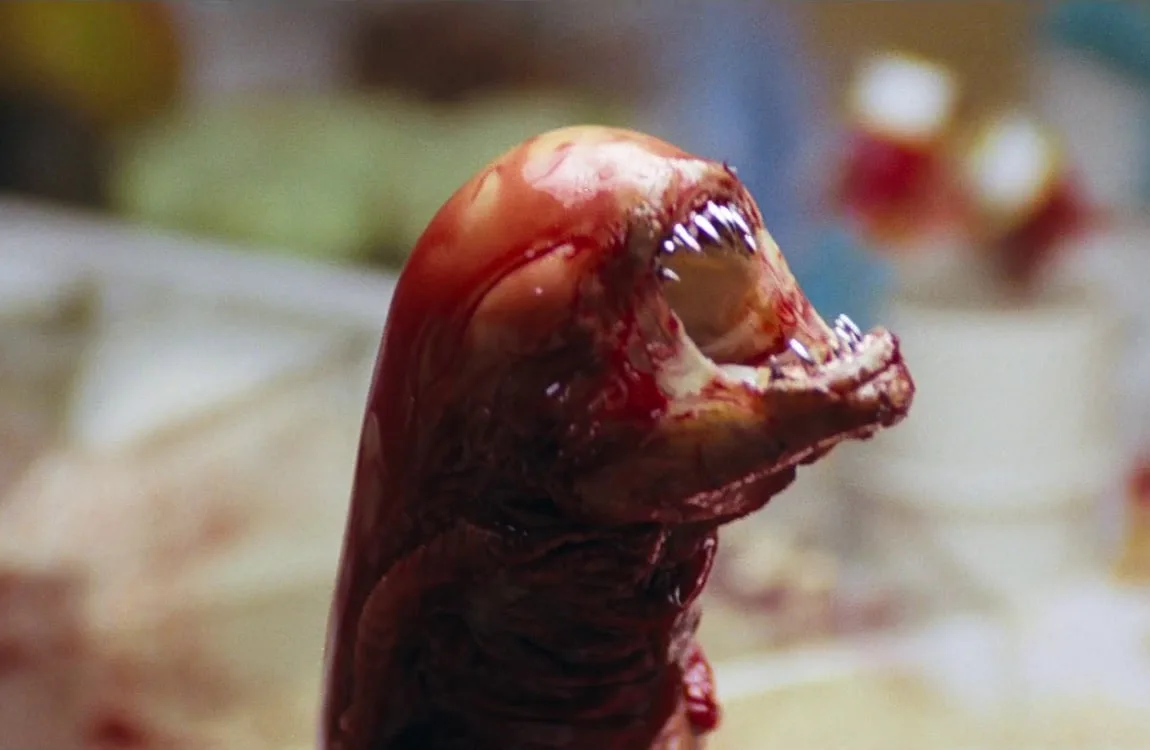
They carried Kane back after a Facehugger sprang from one egg and locked onto his face. Ripley held the airlock shut under quarantine. Science officer Ash opened it anyway and they took Kane to the infirmary. When they tried to cut the parasite free, its acid blood burned through deck after deck before it cooled. The Facehugger later dropped off dead, Kane woke, and the crew sat down to a meal.
During that meal the Chestburster tore out of Kane and fled into the ducts. It grew into an adult Xenomorph within hours. Brett went looking for Jones, the ship's cat, and was taken first in a landing-leg bay among the chains. Ash built a short-range tracking device so the survivors could hunt the creature in the vents.
Dallas crawled the air shafts with a flamethrower, hoping to drive the adult Xenomorph toward an airlock. Ripley and Lambert tracked the movement from outside the shafts. The creature took Dallas from behind in the dark. That left Ripley, Parker, Lambert, and Ash on a ship they could no longer hold.
Ellen Ripley forced Mother to open a hidden file. Special Order 937 told Ash to bring the organism home and treated the rest of the crew as expendable. When she confronted him, Ash attacked her. Parker smashed the science officer apart and exposed him as a Weyland-Yutani synthetic.
The three survivors decided to destroy the Nostromo and leave in the Narcissus shuttle. Ripley started the self-destruct in engineering. Parker and Lambert went to collect coolant for the shuttle and were killed in that bay by the adult Xenomorph. Ripley found their bodies after she lost contact on the radio. In the 2003 Director's Cut that search also took her through a hold where Dallas and Brett were cocooned. They were being turned into more eggs by eggmorphing, and she burned them.
She went back for Jones, then tried to abort the destruct once she was alone. Mother would not stop the count. Ripley reached the Narcissus with the cat and launched before the tug exploded.
She prepared the shuttle for hypersleep and found the adult Xenomorph hidden in the escape craft. Ripley put on a pressure suit, opened the airlock, and blew the creature into space with the grappling gun and the thrusters. She recorded a final log as the last survivor of the Nostromo and went into hypersleep.
Main Cast And Characters
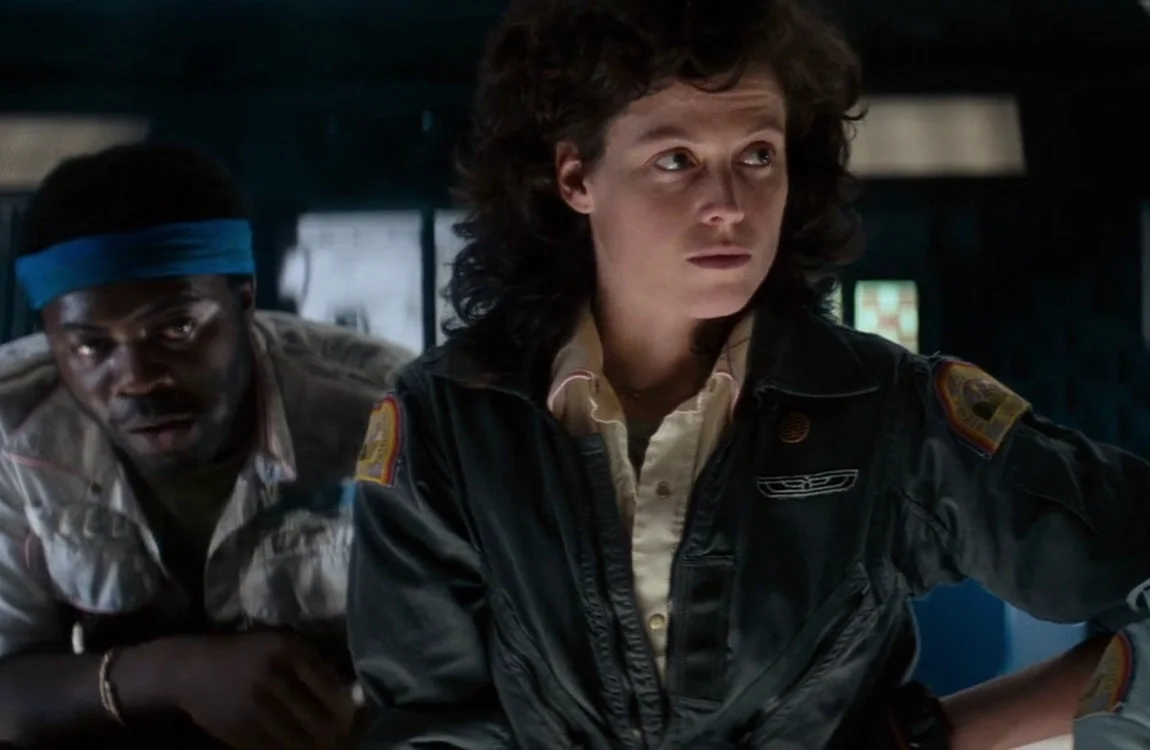
The Nostromo crew consisted of seven members, each responsible for different aspects of the ship's operation. Their arguments over quarantine, salvage, and company orders mattered as much as the Alien itself once the crisis began.
- Ellen Ripley (Sigourney Weaver) - Warrant officer who held the airlock under quarantine, opened Special Order 937, and escaped in the Narcissus as the sole human survivor.
- Arthur Dallas (Tom Skerritt) - Captain of the Nostromo. He led the landing party to the derelict and was taken in the air shafts while trying to drive the Alien to an airlock.
- Thomas Kane (John Hurt) - Executive officer. A Facehugger locked onto him in the egg hold, and he died when the Chestburster tore out of him during the crew's meal.
- Joan Lambert (Veronica Cartwright) - Navigator. She crossed to the derelict with Dallas and Kane, then was killed with Parker while collecting coolant for the shuttle.
- Dennis Parker (Yaphet Kotto) - Chief engineer. He smashed Ash after the synthetic attacked Ripley, then was killed with Lambert in the coolant bay.
- Samuel Brett (Harry Dean Stanton) - Engineering technician. He stayed on hull repairs after the landing and was taken first while looking for Jones in a landing-leg bay.
- Ash (Ian Holm) - Science officer who opened the airlock against quarantine. Parker later wrecked him and exposed a Weyland-Yutani synthetic working under Special Order 937.
- The Alien (Bolaji Badejo) - A 6 ft 10½ in graphic-design student who wore the adult Xenomorph. Stuntmen Eddy Powell and Roy Scammell played the creature in some shots.
- Mother (Helen Horton) - Voice of the Nostromo's computer, which held navigation, communications, and Special Order 937.
The Xenomorph In Alien
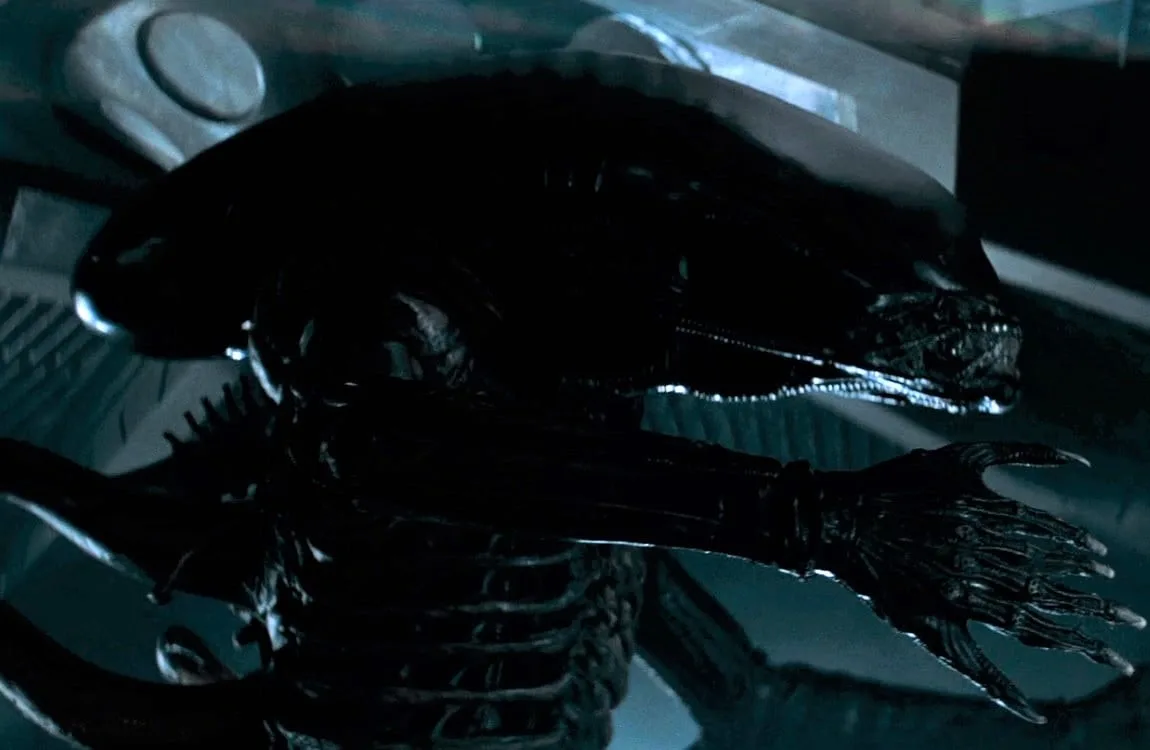
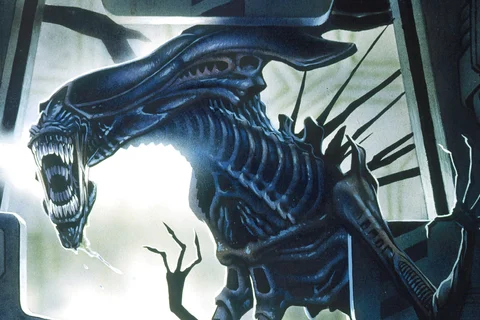
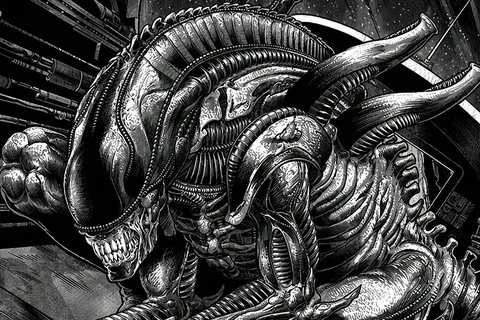
Alien introduced audiences to the full life cycle of the Xenomorph species. The creature progressed through several stages, beginning with the egg, followed by the Facehugger parasite, the chestburster larval stage, and finally the fully grown adult organism. This life cycle became one of the most distinctive elements of the Alien universe and remained central to later films and expanded lore. The adult Xenomorph aboard the Nostromo displayed extreme intelligence, stealth, and physical resilience. It navigated the ship's ventilation shafts and maintenance corridors, allowing it to ambush crew members with little warning. Its acid blood and powerful exoskeleton made conventional weapons ineffective, forcing the crew to rely on improvised tactics to survive.
The Nostromo
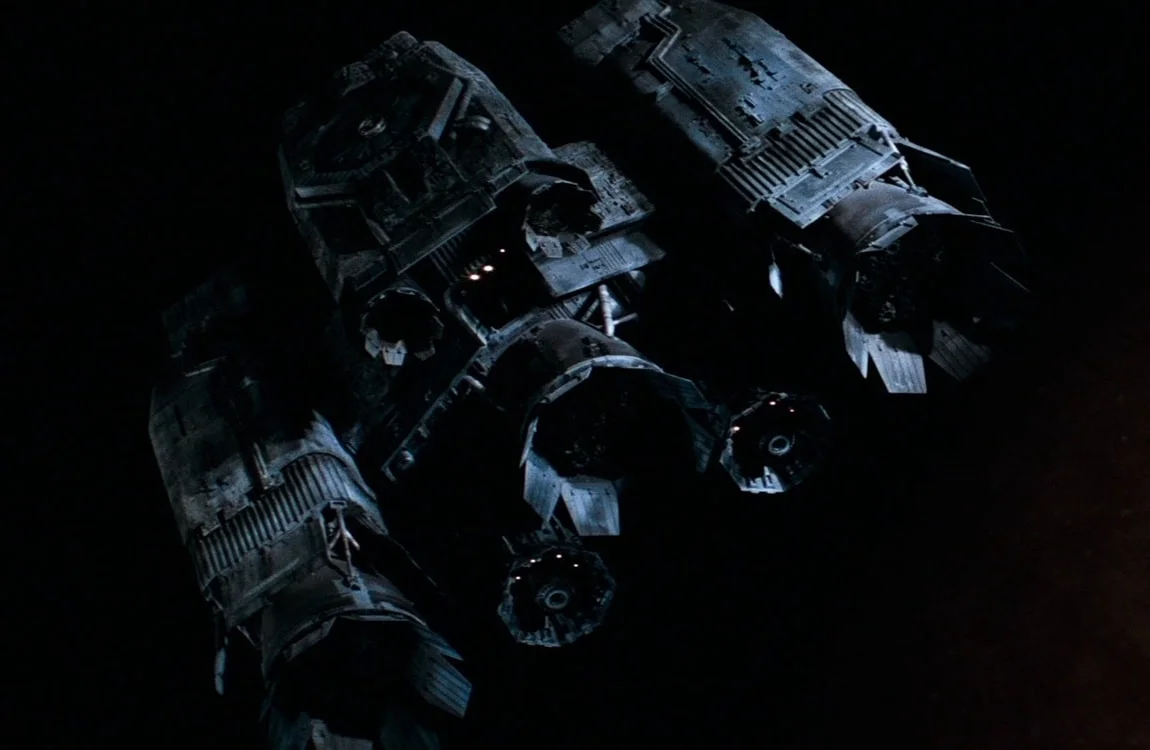
The USCSS Nostromo served as the primary setting of the film. It was a commercial towing vessel tasked with transporting large quantities of mineral ore across interstellar distances. The ship's industrial design reflected the working-class environment of its crew, contrasting sharply with the advanced technology often depicted in science fiction films. The Nostromo was operated by the ship's artificial intelligence system known as MU-TH-UR, which managed navigation, communications, and mission directives. Unknown to most of the crew, the system also contained secret orders from Weyland-Yutani instructing Ash to secure the alien organism at any cost.
Place In The Alien Timeline
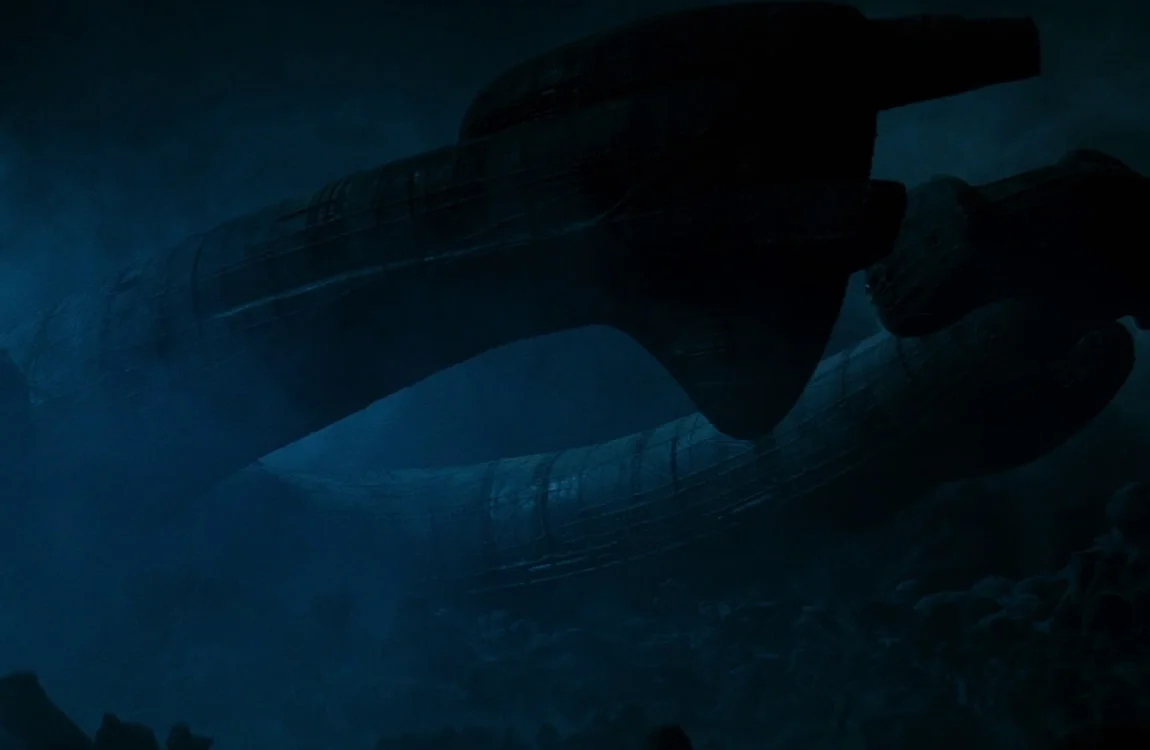
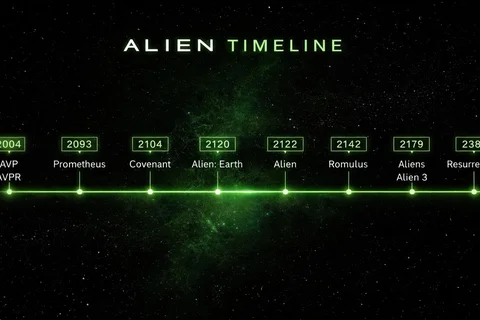
Alien (1979) takes place in the year 2122 within the wider Alien timeline. The events occurred decades after humanity began establishing colonies across multiple star systems under the influence of Weyland-Yutani. The Nostromo incident became one of the earliest recorded encounters between humans and the Xenomorph species. Closest to the first Alien movie in the timeline is Alien: Earth, set in 2120, and Alien: Romulus, set in 2142.
Production
Writing
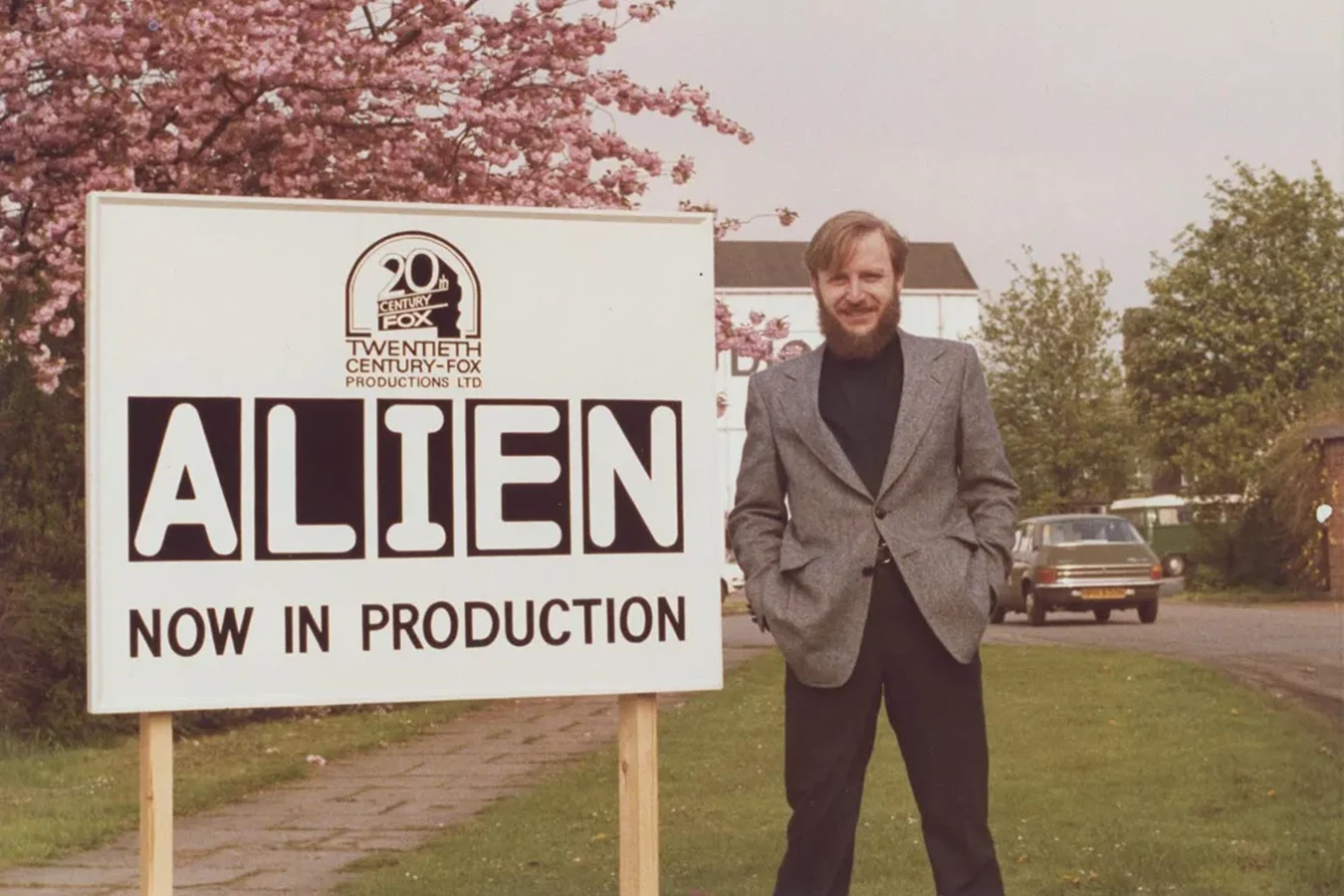
After the low-budget comedy Dark Star, Dan O'Bannon wrote a horror version of the same idea with Ron Shusett. The 1976 draft was titled Star Beast. Seven astronauts flew the freighter Snark, registration E180246, heading home when they intercepted an alien transmission. The landing party found a plantlike wreck, a star-headed pilot, and eggs in a nearby pyramid rather than in the ship's hold. First Officer Martine Roby was a man.
Brandywine Productions bought the script. David Giler and Walter Hill rewrote it around a company that wanted the organism, a science officer who was a machine, and a tug named Nostromo after Joseph Conrad. They also made the warrant officer a woman before anyone cast the part. O'Bannon kept the screenplay credit. Shusett shared the story credit. Giger later read the first version from O'Bannon's notebook, with the pyramid still in it and the adult labeled Alien III.
Development
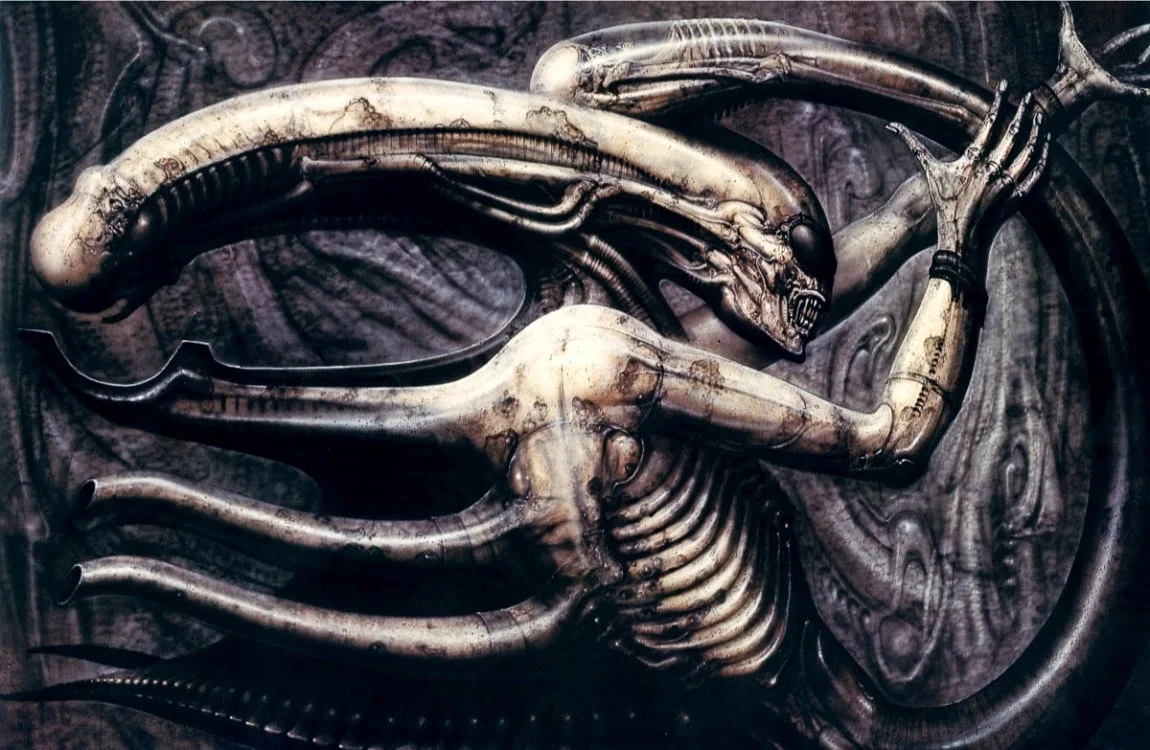
In July 1977, Dan O'Bannon called H.R. Giger from Hollywood after Alejandro Jodorowsky's Dune job collapsed. O'Bannon had written Alien with Ron Shusett while ill at Shusett's house, then asked Giger to design the monster. Brandywine Productions, run by Gordon Carroll, David Giler, and Walter Hill, was raising the money. On 11 July the letter arrived with sketches by O'Bannon and Ron Cobb, plus a thousand-dollar cheque.
Those pages put spore capsules inside a pyramid. Giger based the rooms on a Swiss egg carton and called the first stage Alien I, the Facehugger. He gave it a tail that worked as a spring, taken from a clockwork jumping toy, and a pincer that forced the mouth open so a tube could reach the throat. He sent O'Bannon the first copy of H.R. Giger's Necronomicon and waited. In October O'Bannon reported that the backing had come through.
In February 1978 O'Bannon rang from Los Angeles with the news that Twentieth Century Fox had taken the film and was putting in seven million dollars. The Necronomicon had convinced the company and director Ridley Scott. Carroll, Scott, and Giler reached Zurich on 8 February. Shepperton was booked, shooting was due in three and a half months, and the premiere was set for May 1979. Scott treated the adult monster, which Giger labeled Alien III, as the part the film had to sell.
On 14 February Fox flew Giger first class to the Hyde Park Hotel and then to Scott Free's office on Lexington Street. Scott had come off the advertising films he made with his brother and off The Duellists. Production designer Michael Seymour, art director Les Dilley, and costume designer John Mollo were on the job. European production executive Peter Beale fought Giger's fee until Carroll spent three hours getting a compromise. Giger held the contract for second-rights language, then signed on Fox's terms so he could enter Shepperton.
Casting
Mary Selway cast the picture in London. Scott wanted the last survivor to be someone the audience did not know as a star, and Sigourney Weaver came out of Yale Drama with almost no film work. She took the rewritten warrant officer. Tom Skerritt played Dallas, Ian Holm played Ash, and Veronica Cartwright played Lambert. Yaphet Kotto and Harry Dean Stanton played the engineers.
Jon Finch started as Kane. He left after the first days on set, and John Hurt took the role. Graphic-design student Bolaji Badejo, 6 ft 10½ in, was spotted in a bar and hired to wear the adult Alien. Stuntman Eddy Powell, 5 ft 10 in, covered the wire gags that Badejo could not do.
Filming
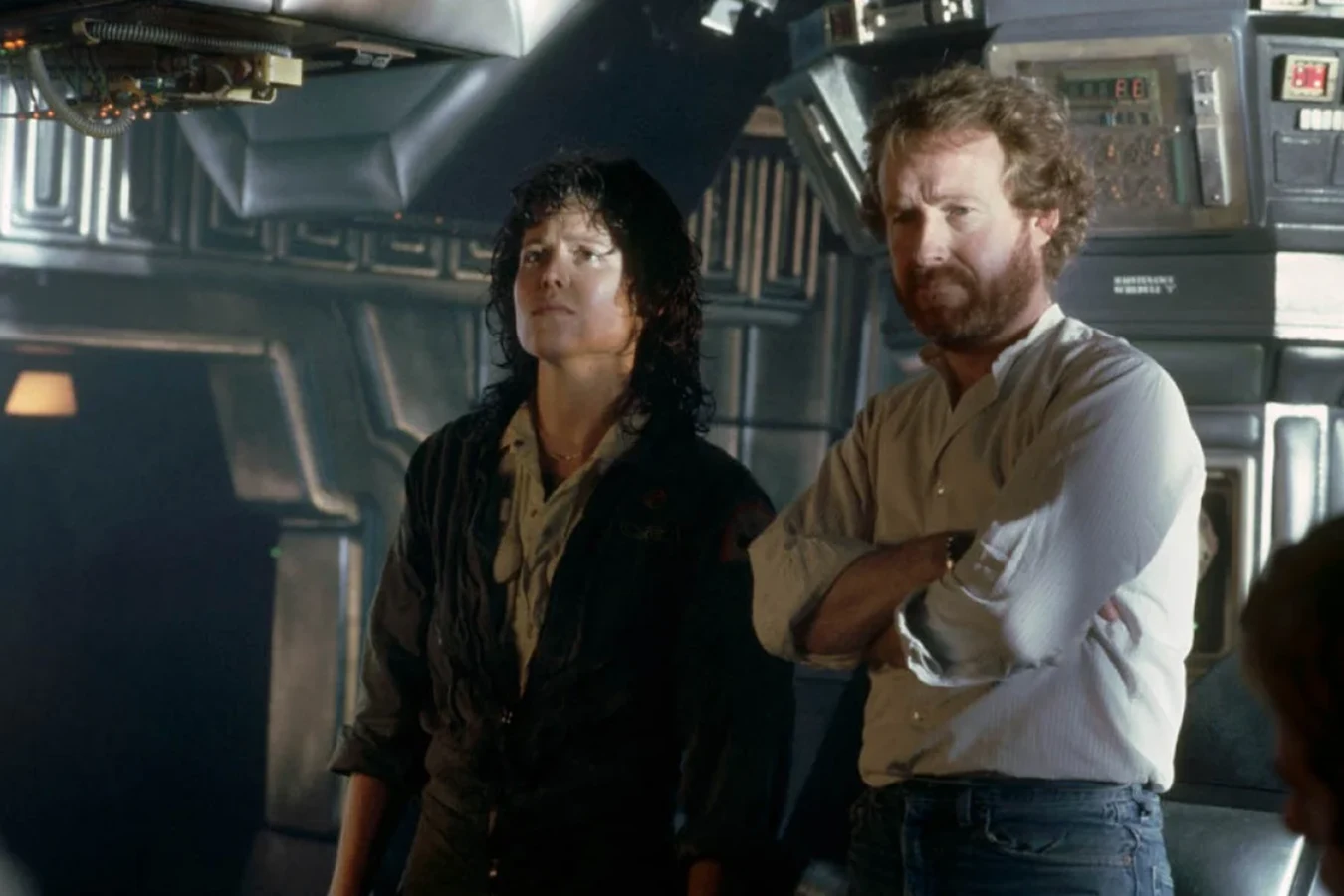
Principal photography sat at Shepperton Studios through the summer and early autumn of 1978. The lot had to be clear by 19 October for the next tenant. Cinematographer Derek Vanlint lit the wreck cockpit through oil smoke on 26 September. The moon landscape and derelict entrance on Stage H were filmed on 28 July.
Scott put children in miniature copies of the EVA suits beside the eight-metre pilot so the figure read larger. The mess-hall birth was shot on 4 August. The adult Alien first came onto a stage on 6 September, hanging on steel wires with Eddy Powell inside. Hurt sat under the table for the chest scene. The rest of the crew played the meal around him.
Nostromo And Ship Design
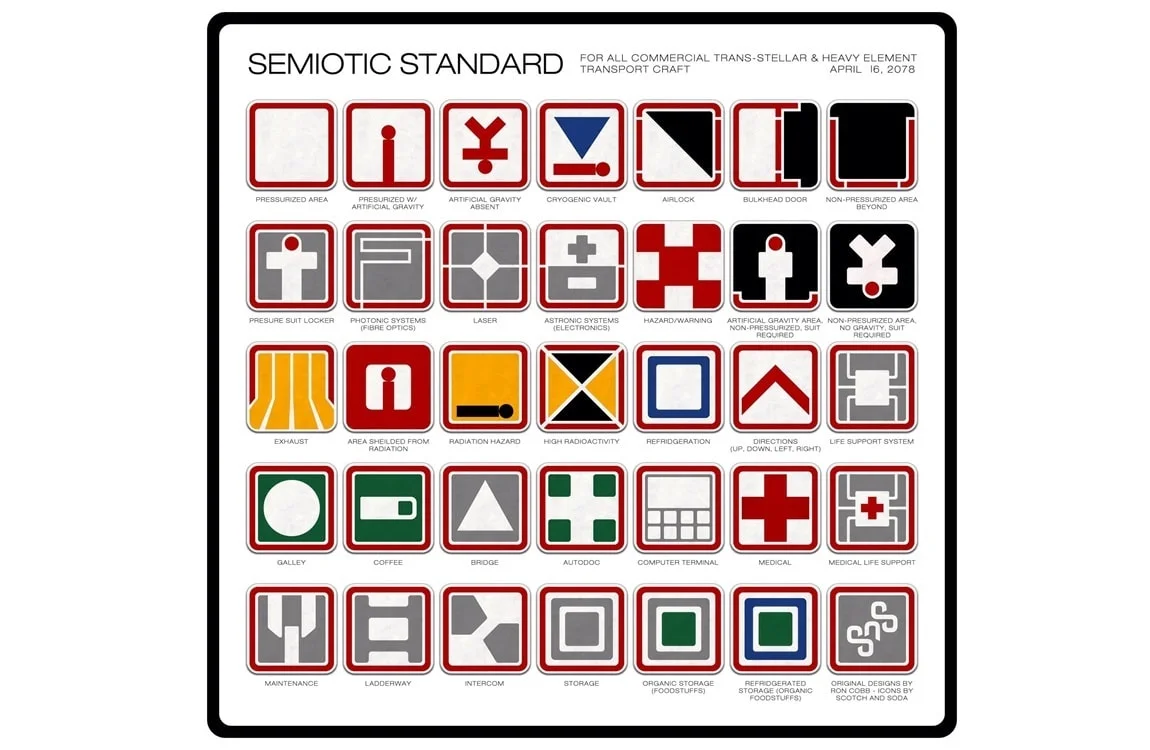
Ron Cobb designed the tug and its interiors. By late March he had been at Shepperton with O'Bannon for a couple of weeks, and Stage C was building those rooms from his plans. Seymour had papier-mache Nostromo models ready when Giger first walked the workshops. Chris Foss also drew hulls for the production. Mollo cut the landing-party suits from designs by Moebius.
Landscape
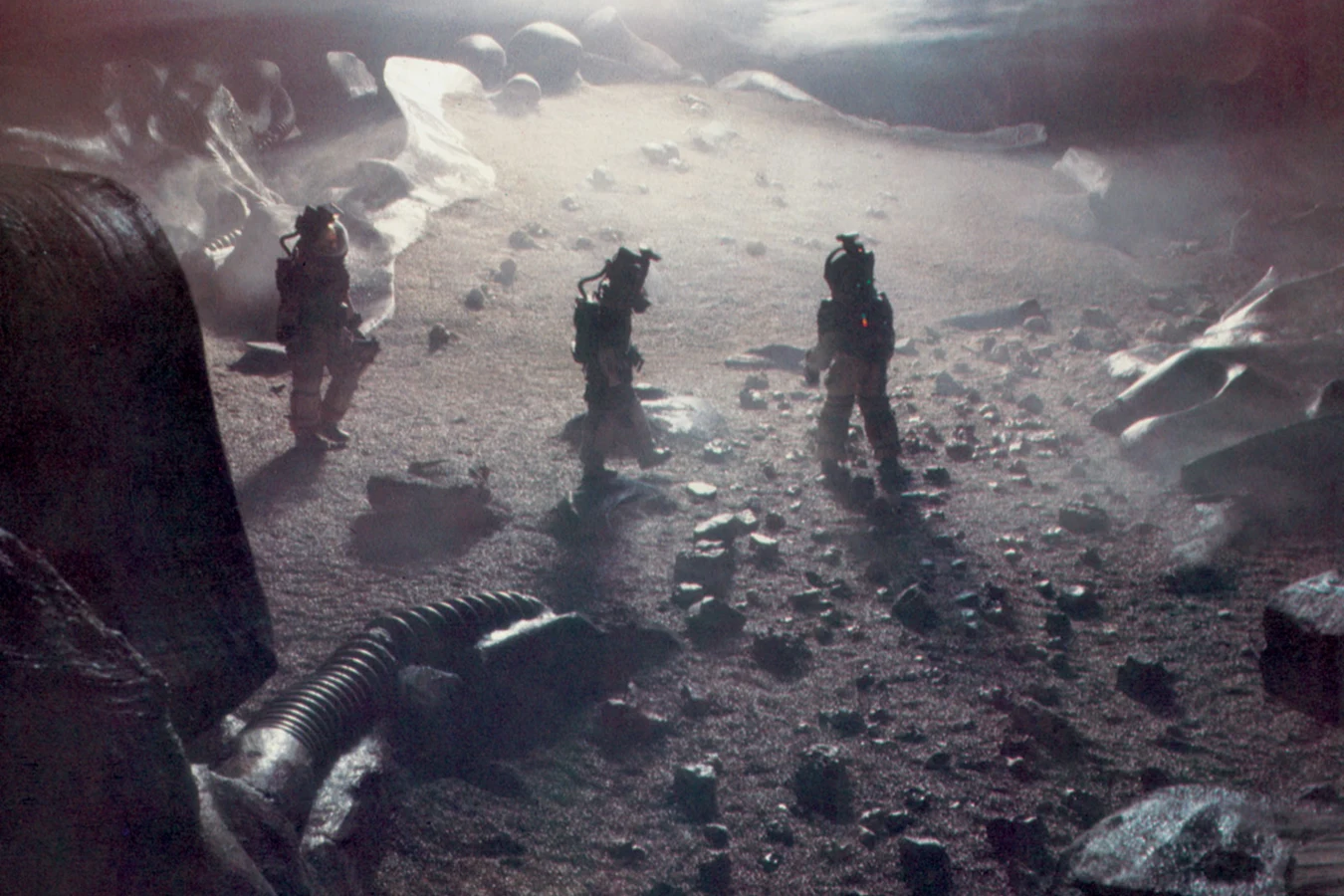
Giger reached Shepperton Studios on 30 March 1978 with a signed contract. About a hundred and fifty people were on the crew. Stages A, B, C, D, and H were booked. On Stage C the first Nostromo interiors were going up from Cobb's plans, and Cobb had been there with O'Bannon for a couple of weeks. The separate egg-chamber building was dropped as too expensive. Fox paid Giger off on 5 April, a week after he signed, then Carroll brought him back on 14 May to build the scenery models himself.
The moon surface sat on Stage H, a sixty-by-a-hundred-metre stage that had held work for Star Wars and Superman and was due for demolition after the shoot. The first rocks did not match the paintings, so Giger took the models over with sculptor Peter Voysey. They built them at half scale from sawn bones, plasticine, tubes, cables, and machine parts. Rubber moulds went to the plaster shop, the casts were sliced, and the outlines were rebuilt full size in wood, wire netting, styrofoam, and jute soaked in plaster. Scenic artist Ken Hill painted the stage walls from a dark base. Sand went down between the rocks, and the landscape with the derelict entrance was filmed on 28 July.
Derelict
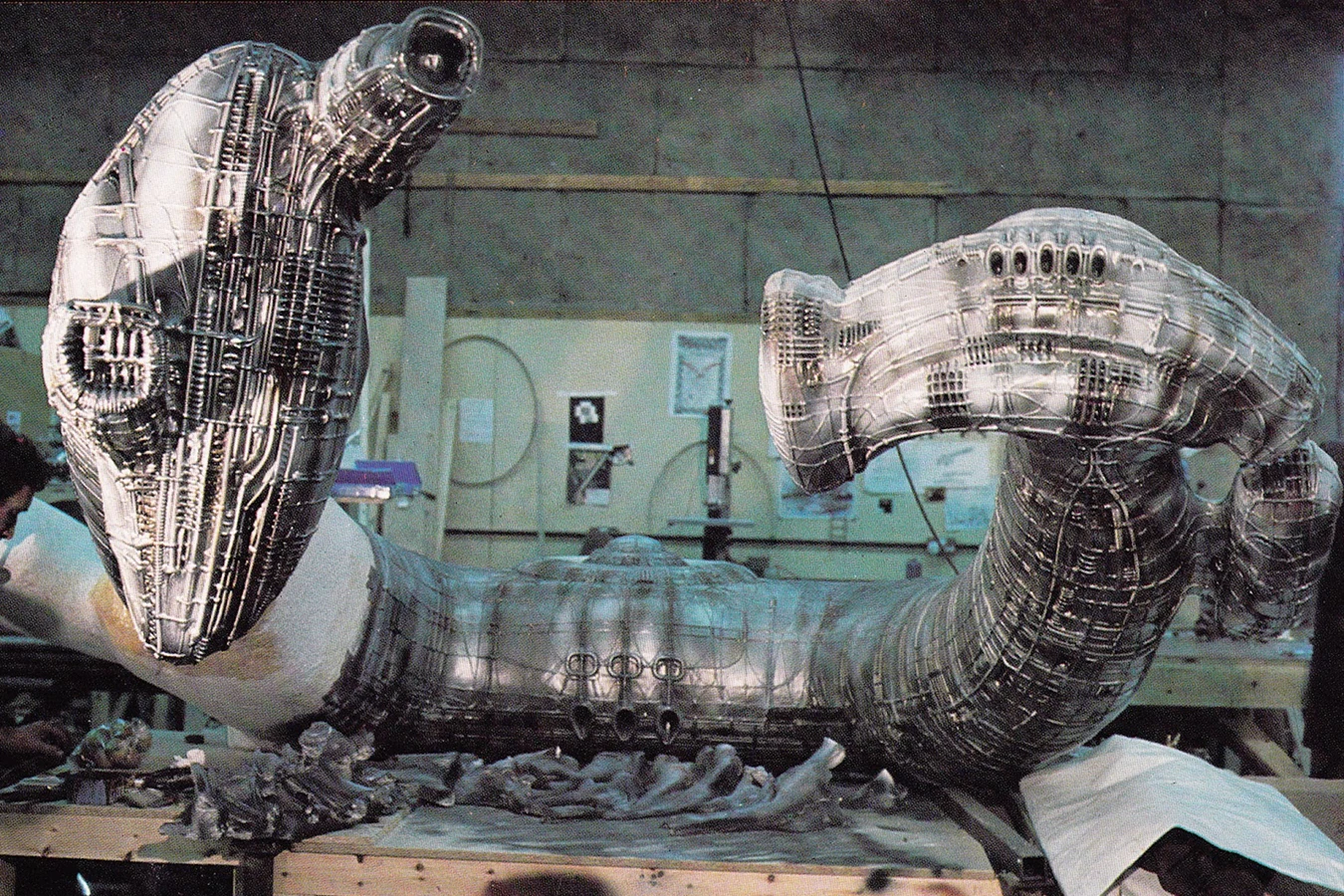
On 5 March 1978, in Scott's Lexington Street office, Giger showed a painting of a non-human wreck. Scott took the design, while O'Bannon wanted a more technical ship. Scott then asked for an entrance passage and a view with a glass dome over the cockpit. Effects supervisor Brian Johnson waited at Bray Studios for a plasticine model of that hull. On 19 July Carroll asked for a new derelict. The first shape read too much like a bone and was hard to build, so the entrance and landscape on Stage H stayed and the rest changed.
Voysey cut the oval wreck doors from styrofoam and hung them on wood with jute and plaster. Cork chips in the mix made the hull look weather-eaten. A single snail-shell corridor from the door to the cockpit was dropped for cost. On 21 July Scott used the underside of the finished wreck as the gangway. Art director Les Dilley dressed those walls with Giger's chest elements and membranes. The finished passage looked more like a mineshaft than a ship corridor. A hieroglyphics test on 17 August worked, and the studios had to be clear by 19 October.
Space Jockey
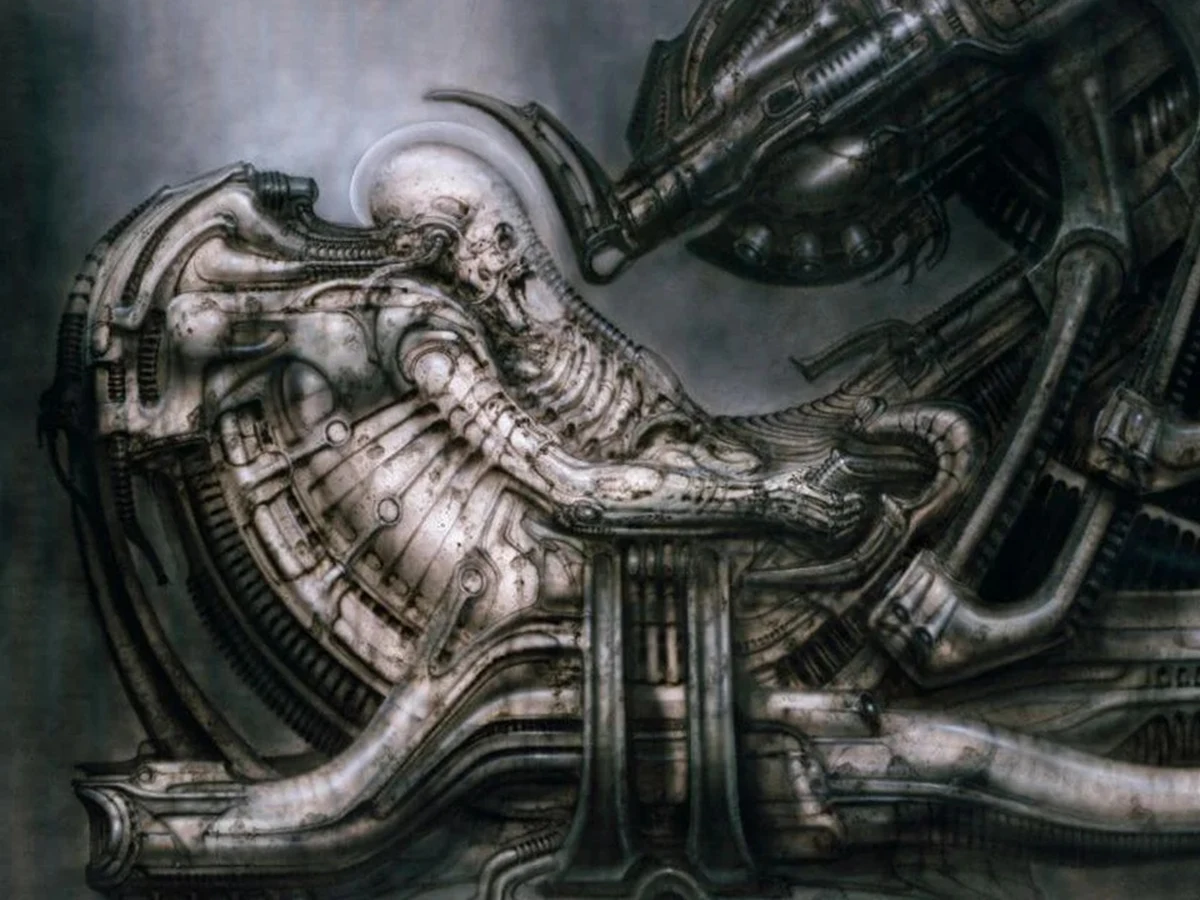
On 31 March 1978 Scott cut a plate from the Necronomicon and asked for an eight-metre pilot fused to the derelict chair. Voysey modeled the figure at 1/25, first in plasticine and then in clay. A polyester cast on a steel-tube frame was lifted onto a five-foot turntable in Stage A on 25 September. The same set had to become the egg chamber within a week. Giger sat on the scaffold, glazed the transparent body in sepia, and rubbed on thin latex so the skin looked porous and rotten.
Filming started the next day under cameraman Derek Vanlint. Effects men filled the stage with smoke from burning oil. Scott put smaller performers, including children in miniature copies of the EVA suits, beside the pilot so the figure read even larger. Giger's original corridor paintings no longer matched what reached the screen, but the cockpit shoot went up on time.
Eggs And Facehugger
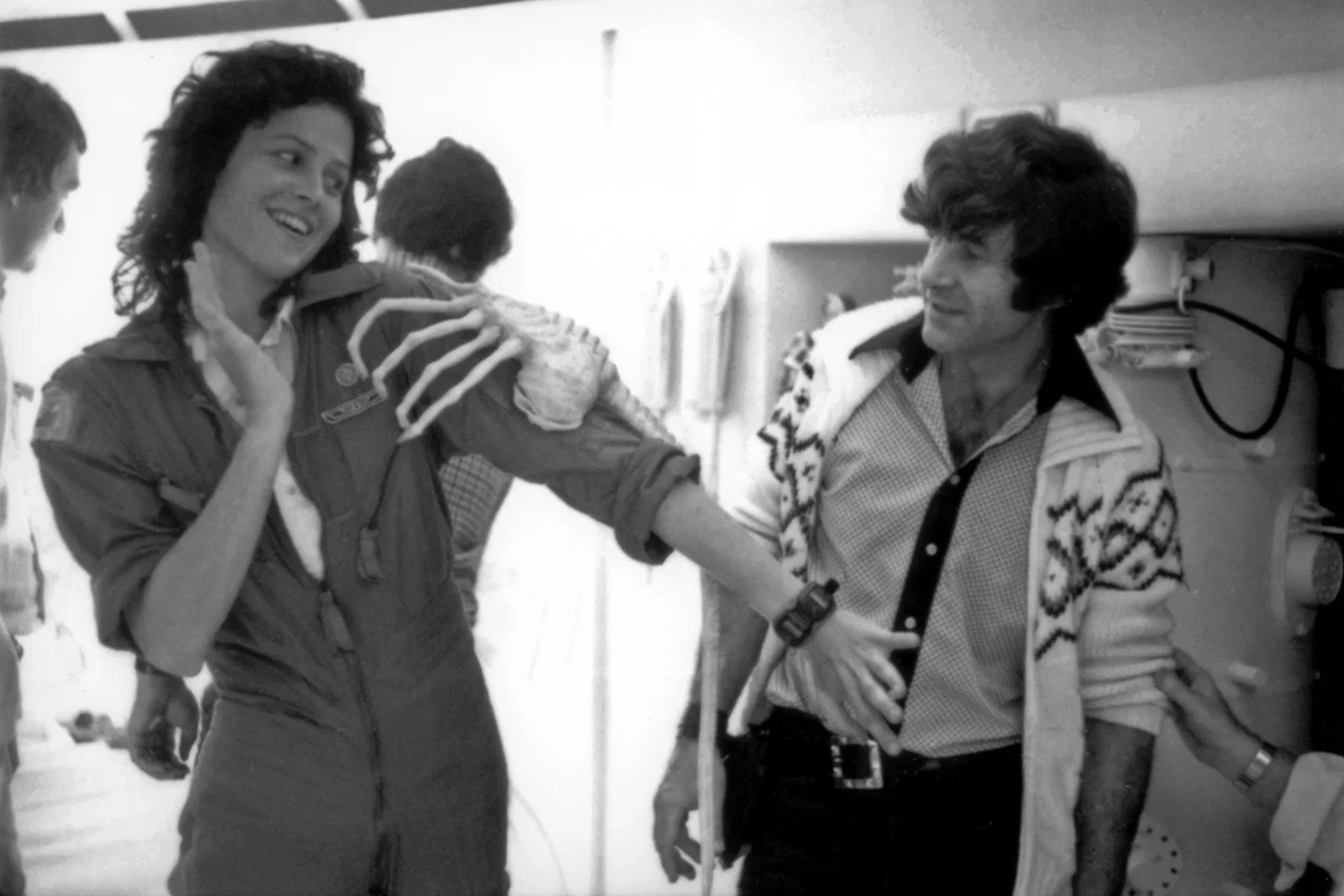
Scott wanted the eggs organic, closer to a vagina than to a hard capsule. Giger also wanted the Facehugger translucent, with the skeleton and organs visible through the skin. On 29 July production stopped that work and sent him back to the adult monster. Roger Dicken finished the parasite on 15 August in latex, jelly, smoke, and strings, without the see-through skin Giger had wanted. Scott accepted that version.
Scott also changed how Kane first met it. Giger had drawn the animal on the outside of the helmet. Scott wanted it under the visor, so the reveal came when the helmet came off. The Nostromo suits got a larger eye-hole, and acid blood ate through the faceplate to put the Facehugger on Kane's face.
Chestburster
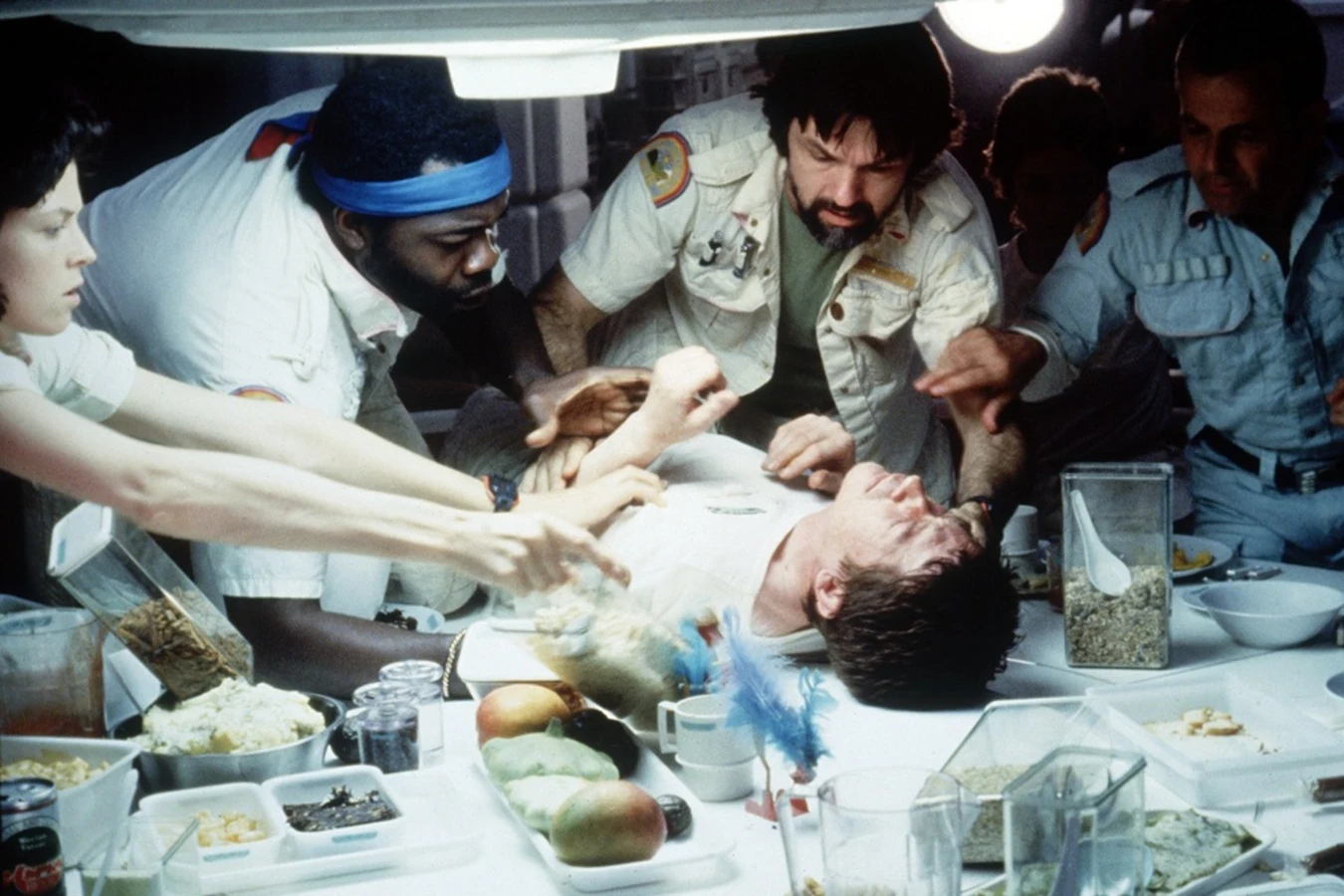
Giger called the next stage Alien II, the Chestburster. He wanted it blind, with a hard set of teeth taken from Francis Bacon's Crucifixion triptych, and he wanted the adult Alien's long head readable in the hatchling. The first London painting looked too much like a plucked bird. On 2 June Dicken showed a plasticine model built over aluminium from Necronomicon plate 303. The extra dinosaur limbs stayed too long, so the forefeet were shortened and the hind feet were dropped.
The mess-hall birth on 4 August used three puppets. One technical unit punched through a papier-mache chest. A second opened its mouth with a wind pump and could swell the neck. A third thrashed a tail worked by air pressure as it left the table. John Hurt sat under the table with his head and arms through the dummy torso. Pig entrails and raspberry-juice blood dressed the hole. The scene was shot three times, with three lenses, and the soaked shirts and chests were replaced between takes.
Adult Alien
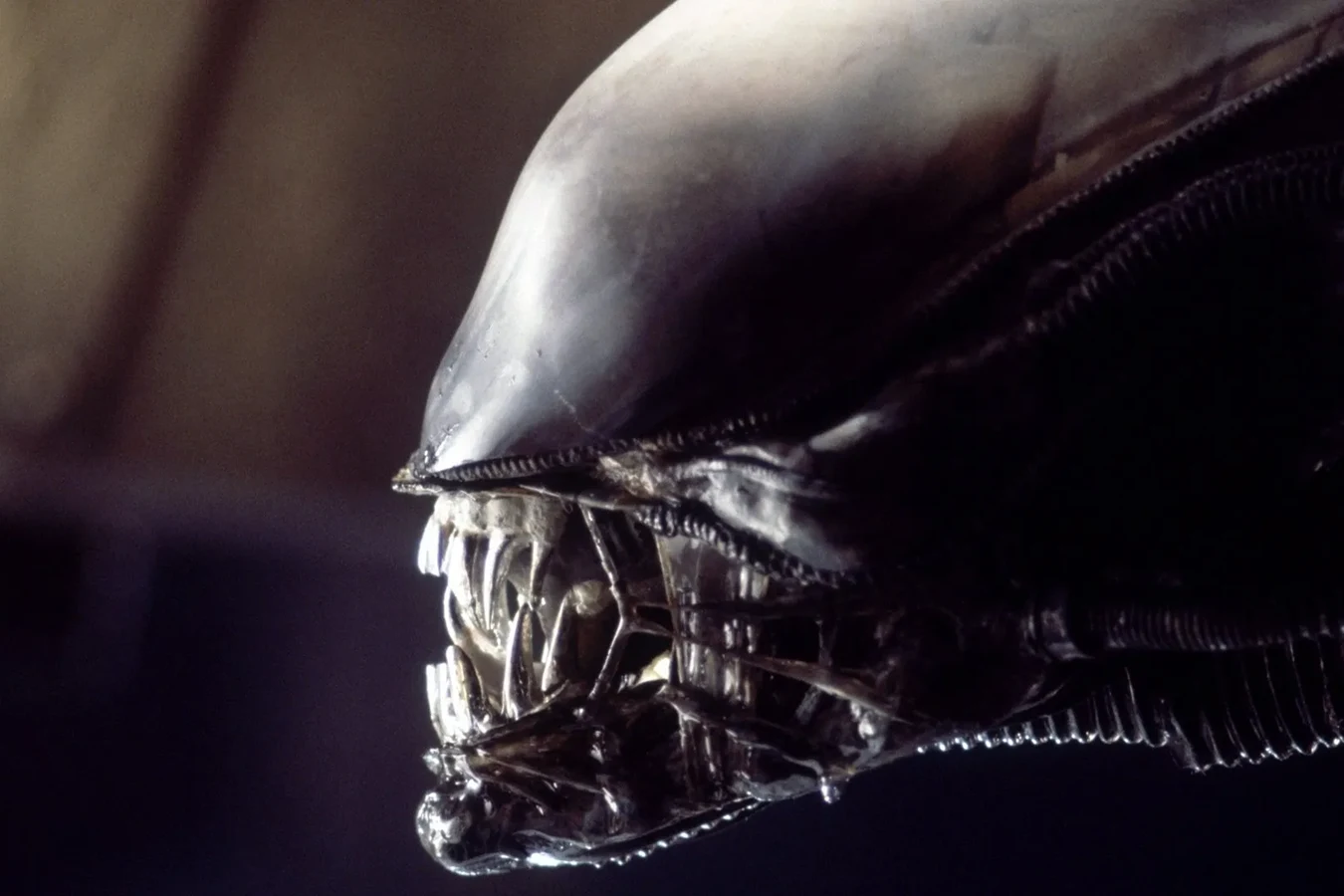
Scott refused a stiff man-in-a-suit walk and a robot that could hurt an actor. Tests that strapped children to a tall man and wrapped the group in rubber failed. The adult Alien was then designed as insect-like and fast. Giger hid a long toothed tongue inside the head, like an anteater, so the hatchling and the adult Alien shared one shape. A front view that read as motorcycle goggles was replaced by a dark semi-transparent cranium. A fully transparent skin, with cables and pipes under it, was dropped when the experimental PVC suits tore.
Scott showed a photograph of a Nubian more than two metres tall from a Leni Riefenstahl book and wanted a man of that size. Graphic-design student Bolaji Badejo, 6 ft 10½ in, was spotted in a bar and became the living core of the suit. Sculptor Eddy Butler and Andrew, who had made masks for Star Wars, worked with Giger on a Stage B shed. A polyester head mould went to Carlo Rambaldi in Los Angeles on 3 July. After the clear suits failed, Shirley, Patty, and Butler painted the body in layers of latex.
Badejo's made-to-measure suits then had to be copied for stuntman Eddy Powell, who was 5 ft 10 in, for wire gags that hung the Alien head-down. Rambaldi arrived on 21 August with a cable-worked head whose face muscles moved by ten hand lines. Six heads covered the shoot: one mechanized, one remote and unfinished, one half mechanized, two solid, and a foam unit for high falls. The first stage entrance came on 6 September, with Powell on steel wires. Between takes the suits were smeared with glycerine and slime, and Giger painted them again each night. The finished monster was kept locked away so the cast would not see it until they met it on set.
Miniatures And Visual Effects
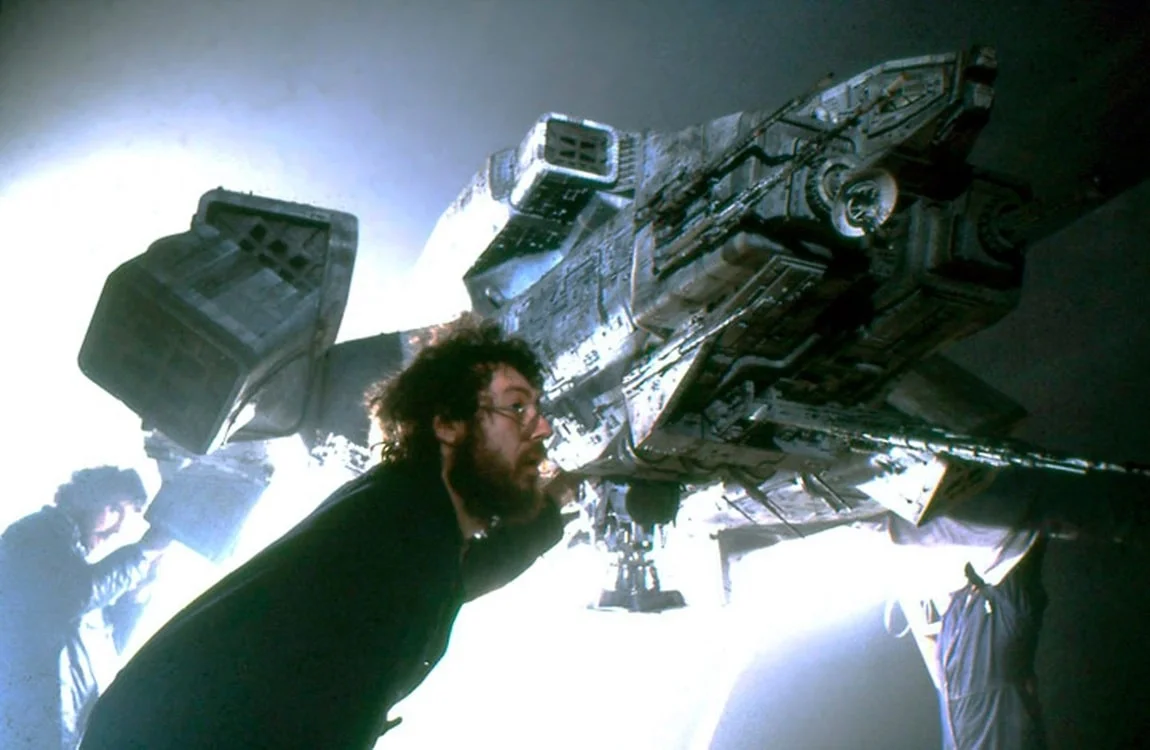
Miniature work sat at Bray Studios under effects supervisor Brian Johnson. He waited through June for Giger's plasticine derelict so the wreck model could match the Stage H entrance. Johnson built three Nostromo models: a 12-inch long-shot version, a 4-foot rear-angle version, and a 12-foot rig for undocking and close passes. Nick Allder and Dennis Ayling were on the effects unit that later shared the visual-effects Oscar with Giger, Rambaldi, and Johnson.
Music
Jerry Goldsmith scored the picture in England. Editor Terry Rawlings and Scott then recut and replaced some of those cues in the mix. Goldsmith was unhappy with how the finished track used his work. The score was nominated for an Academy Award.
Post-Production
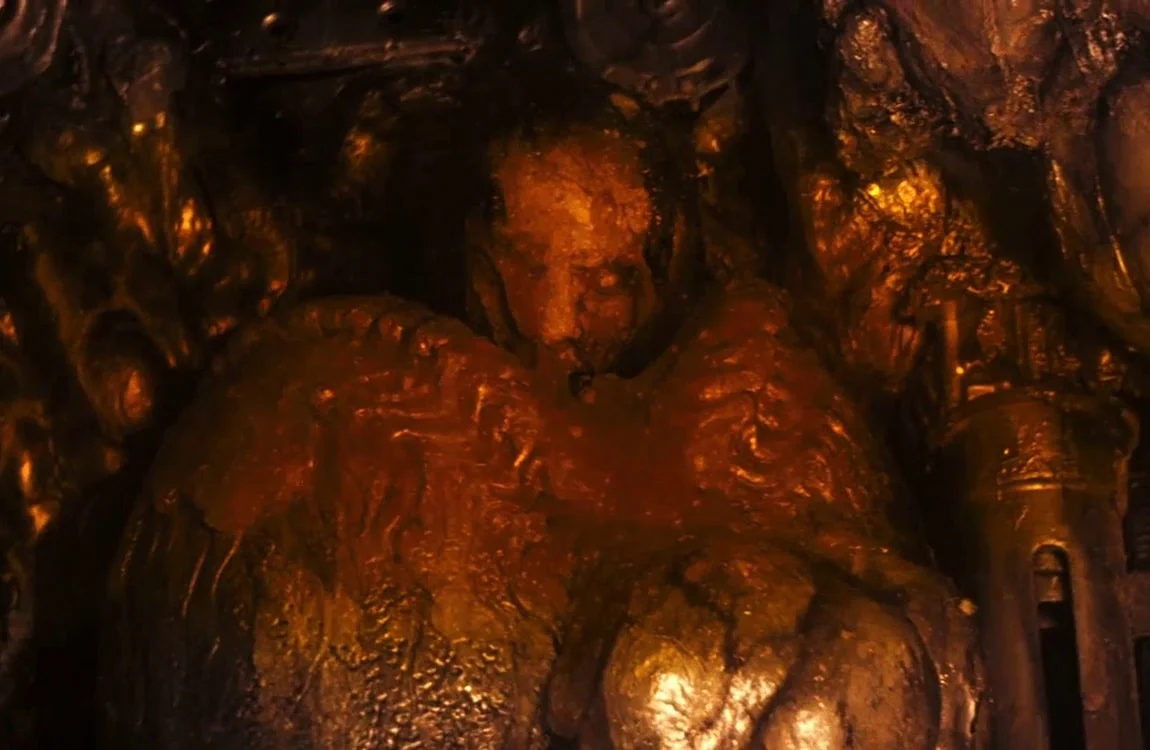
Rawlings cut the theatrical version to 116 minutes. A hold scene in which Ripley found Dallas and Brett cocooned, being turned into eggs, was dropped before release. Fox put that footage back in Scott's 2003 Director's Cut. On April 14, 1980, Farrah Fawcett read the visual-effects winners in Los Angeles. Giger, Rambaldi, Johnson, Allder, and Ayling took the Oscar. Johnson spoke for the group and thanked Scott.
Novelization
Warner Books published Alan Dean Foster's Alien novelization in 1979, working from Dan O'Bannon's screenplay. Foster woke the crew naked from the freezers, named Mother the ship's Mind Bank, and had Lambert call Antarctica traffic control with registration 180 246 while the tug towed crude oil and a working refinery. Company contract language forced them to investigate any systematic transmission of possible intelligent origin or forfeit pay and bonuses. Ash had been swapped in two days before they left Thedus. The landing wrecked intake 3, and Ash plotted the derelict about 3000 metres northeast. The chestburster had arms and legs, and the adult Alien had eyes.
Comic Adaptation
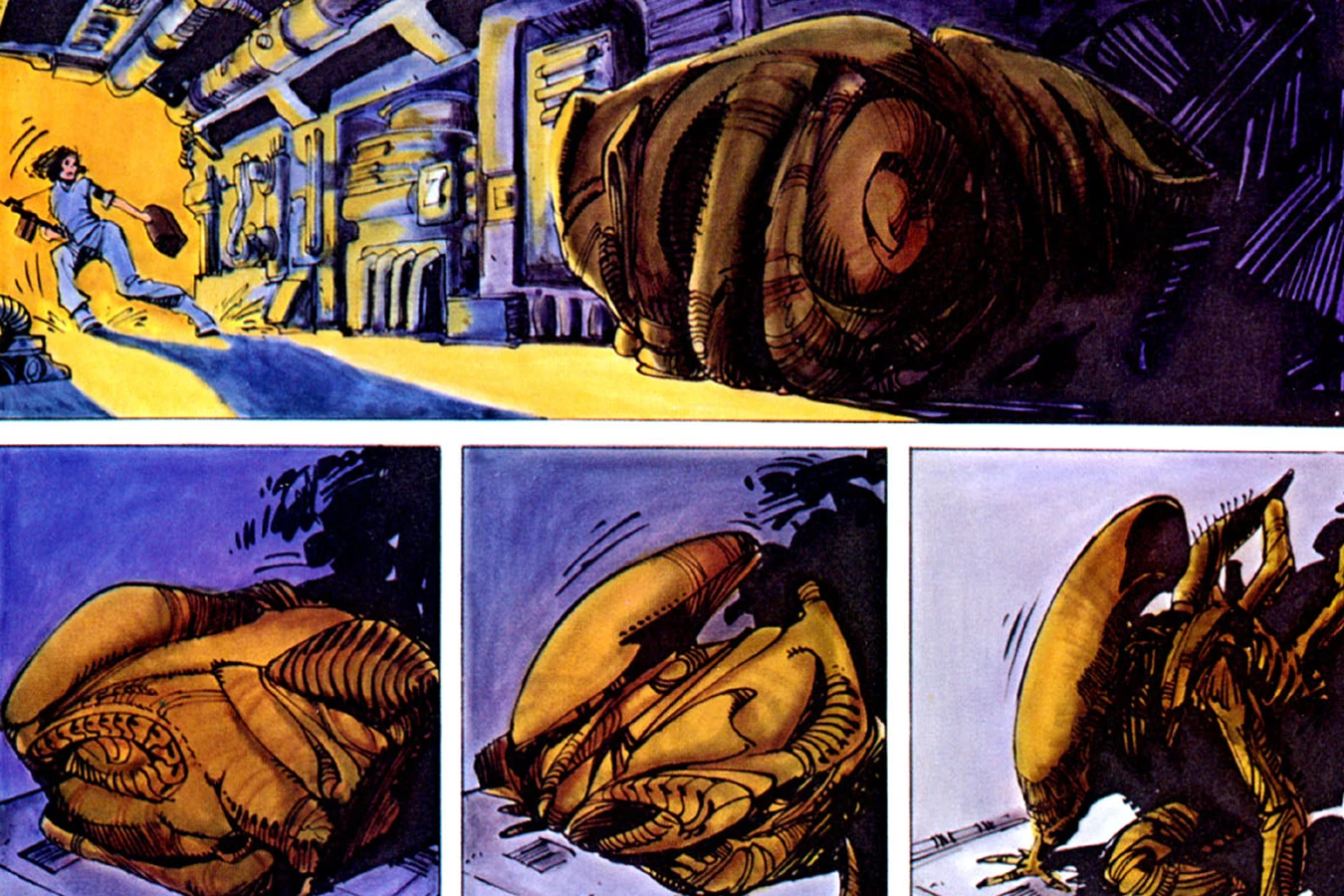
Heavy Metal published Alien: The Illustrated Story in 1979, scripted by Archie Goodwin and drawn by Walt Simonson. Dallas shut off the derelict beacon, and the chestburster was drawn with a different body than the film puppet. Simonson put Big Chap folded into a compact organic box in Ripley's path as she ran for the Narcissus with Jones. He had seen that unfold in a rough cut and was told it was still in the picture when he locked the pages. The theatrical film dropped it for a brief corridor glimpse, so the sequence survived mainly in the graphic novel.
Original Screenplay Adaptation
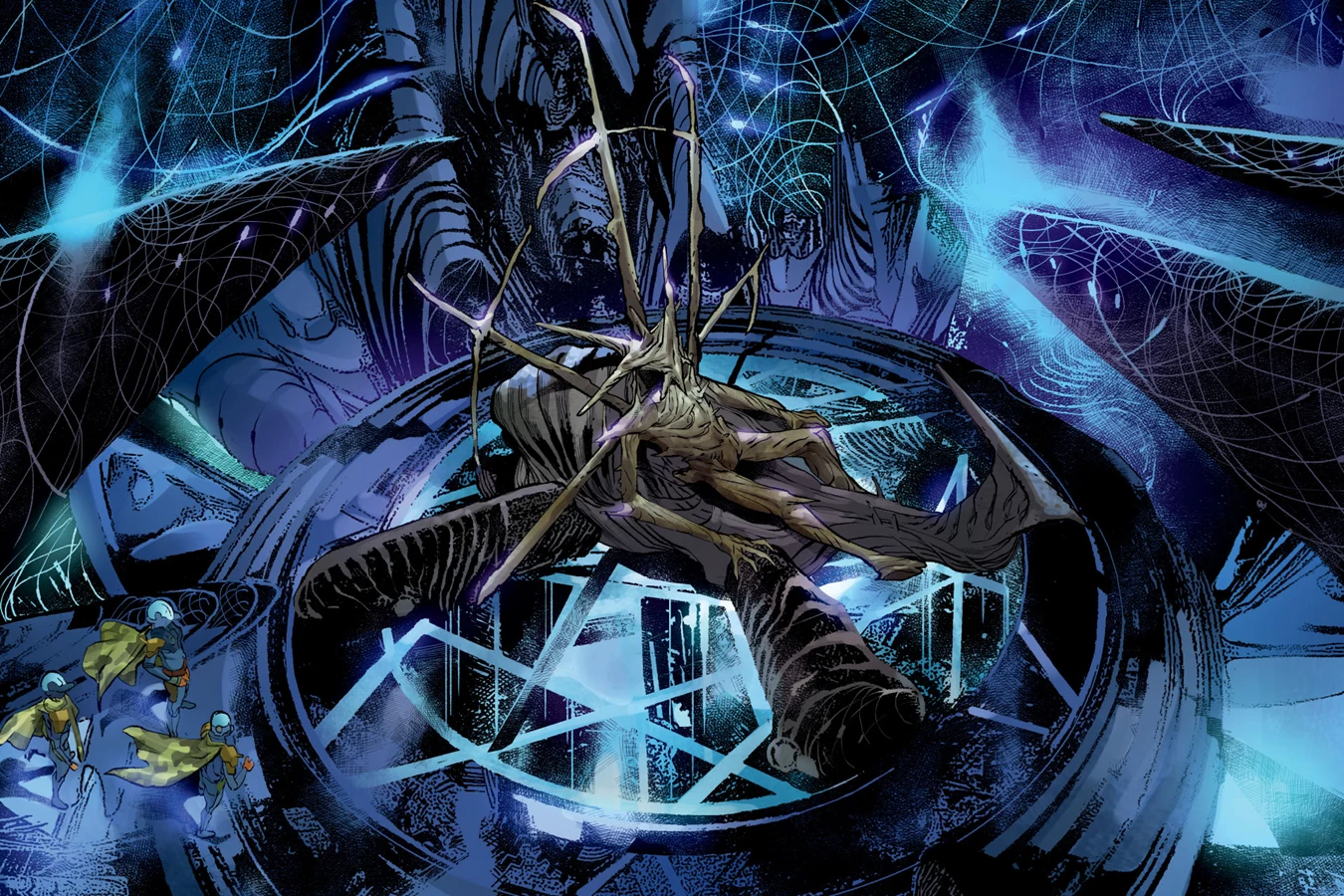
Dark Horse published Alien: The Original Screenplay in 2020, adapting Dan O'Bannon's 1976 Star Beast draft rather than the 1979 theatrical cut. Writer Cristiano Seixas and artist Guilherme Balbi put the crew on the commercial starship Snark, registration E180246, a standalone freighter already heading home when it intercepted an alien transmission. That ship was not towing a refinery, and the landing party found a plantlike wreck instead of Giger's biomechanical crescent.
Inside that wreck sat a star-headed Space Jockey, a giant multi-armed corpse in a chair with spikes radiating from the skull like a star over a glowing star-map floor. The landing party took the head back to the Snark and found the eggs in a nearby pyramid rather than the derelict hold. Navigator Dell Broussard was facehugged by a purple tentacled parasite, and a four-limbed hatchling later tore out of him in the mess hall before growing into an adult with a leaner animal silhouette than Kane's Son, a hard carapace, and a long crest instead of the film's industrial tubing. First Officer Martine Roby later found Captain Chaz Standard half-alive in a green cocoon as the Snark became the creature's nest.
Video Game Adaptations
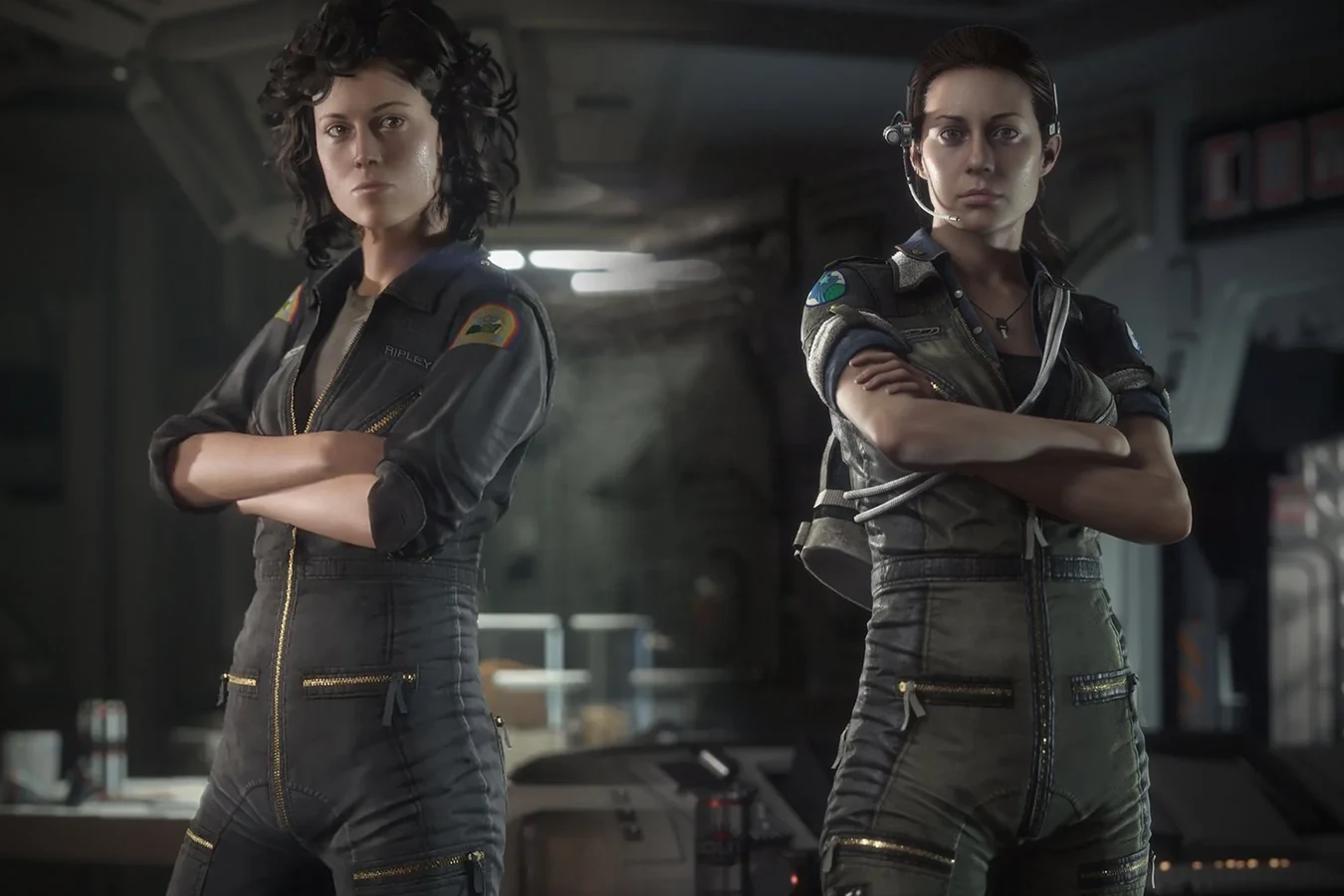
Fox Video Games put Alien on the Atari 2600 in 1982 as a maze chase through the Nostromo. The closest later remake sat inside Alien: Isolation: Crew Expendable and Last Survivor put players back on that ship as Dallas, Parker, Lambert, and Ripley. The 2014 campaign itself followed Amanda Ripley as she hunted the Nostromo flight recorder on Sevastopol Station, then rebuilt Kane's Son as a full digital suit.
Legacy
Fox issued Scott's 2003 Director's Cut with the Dallas and Brett cocoons restored, and the same Quadrilogy set became the home-video standard for the first four films. Company salvage crews later recovered Kane's Son from space and took that drone to Renaissance Station as research stock.
Sigourney Weaver's warrant officer stayed the through-line of the film series until her death on Fiorina 161, then returned only as a clone. Prometheus recast Giger's fossil pilot as an Engineer, which the 1979 shoot had left unnamed in the derelict chair. The Nostromo's industrial corridors, the life cycle, and Special Order 937 remained the template later films either copied or argued with.
Box Office
20th Century Fox opened Alien on May 25, 1979 against an $11 million budget. It took $3.5 million over the four-day Memorial Day weekend from 91 theaters, set 51 house records, and held number one in the United States for three weeks. The first US run reached $78.9 million. Worldwide totals then split by how later reissues are counted, from about $109.7 million to $188 million. In 1992 Fox listed the worldwide take at $143 million.
Reception
Alien opened on May 25, 1979 to generally strong notices for its design and its slow industrial horror. Variety treated it as a carefully made creature picture rather than a cheap shock film. Roger Ebert gave it four stars and grouped it with the rare science-fiction films that stayed frightening after the first viewing. Vincent Canby in the New York Times praised the look of the ship and the wreck, then found the last act more of a standard hunt. Pauline Kael in The New Yorker was colder on the gore.
At the 52nd Academy Awards, Alien won Best Visual Effects for H.R. Giger, Carlo Rambaldi, Brian Johnson, Nick Allder, and Dennis Ayling. It was also nominated for Best Art Direction and for Jerry Goldsmith's score. The Saturn Awards named it Best Science Fiction Film, gave Ridley Scott Best Director, and gave Veronica Cartwright Best Supporting Actress. It won a BAFTA for production design and the Hugo Award for Best Dramatic Presentation.
Famous Quotes
The 1979 campaign sold Alien with the line "In space no one can hear you scream." The film itself left lines from Ripley, Ash, Parker, Brett, and Mother.
- Tagline: "In space no one can hear you scream."
- Ripley: "If we let it in, the ship could be infected. You know the quarantine procedure. Twenty-four hours for decontamination."
- Brett: "Here, kitty. Here, kitty, kitty. Jones. Jonesy?"
- Parker: "This son of a bitch is huge! I mean, it's like a man. It's big!"
- Ripley: "We'll move in pairs. We'll go step by step and cut off every bulkhead and every vent until we have it cornered, and then we'll blow it the fuck out into space."
- Mother: "Bring back life form. Priority One. All other priorities rescinded."
- Parker: "It's a robot! Ash is a goddamn robot!"
- Ash: "You still don't understand what you're dealing with, do you? A perfect organism. Its structural perfection is matched only by its hostility."
- Ash: "I admire its purity. A survivor unclouded by conscience, remorse, or delusions of morality."
- Ash: "I can't lie to you about your chances, but... you have my sympathies."
- Ripley: "Final report of the commercial starship Nostromo, third officer reporting."
- Ripley: "This is Ripley, last survivor of the Nostromo, signing off."
External Sources
- Alien (1979) on IMDb
- Alien (1979) Official Movie Page
- Alien (1979) on Wikipedia
- Alien (1979) on Box Office Mojo
- Giger's Alien at Titan Books
Tag Categories: Alien Movies