
The Predator franchise contains many hidden maps, holographic displays, tracking overlays and tactical schematics scattered across the films. These visuals help explain where the hunts took place, how Predator ships tracked targets, and how the Yautja visualized terrain, structures and entire worlds. Some of these maps appeared only briefly on screens or wrist gauntlets, while others were shown as large holographic projections used during navigation and planning. This article collects the most notable maps from the Predator universe, including crash site charts, city schematics, planetary holograms and temple layouts from across the Predator movies.
Maps From Predator
The original Predator (1987) did not feature elaborate holographic interfaces like the later films, but it still included a few grounded tactical maps tied to the Val Verde rescue mission. These were human military maps rather than Yautja displays, which fits the movie's more stripped down style. Even so, they helped establish the hunt's geography and showed where the team believed the first contact had taken place in the jungle.
Val Verde Crash Site Map
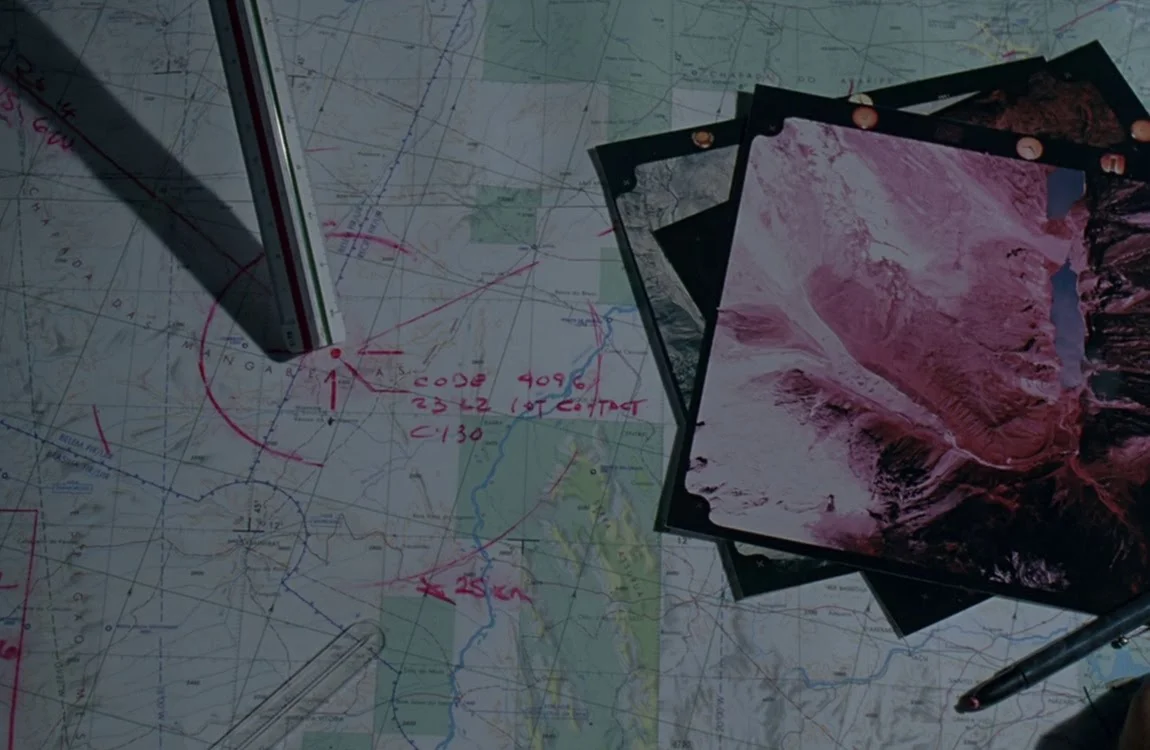
This map appeared during the Val Verde operation as Dutch Schaefer's team reviewed the reported location of the missing helicopter with the cabinet minister. Red marker lines circled the suspected contact point and highlighted the area the commandos needed to search in the jungle. Compared to the advanced holograms seen later in the franchise, this was a simple field map, but it grounded the mission in a believable military setting. However, the actual real-life location on the map seems to be somewhere in Brazil.
Val Verde Crash Site Map Closeup
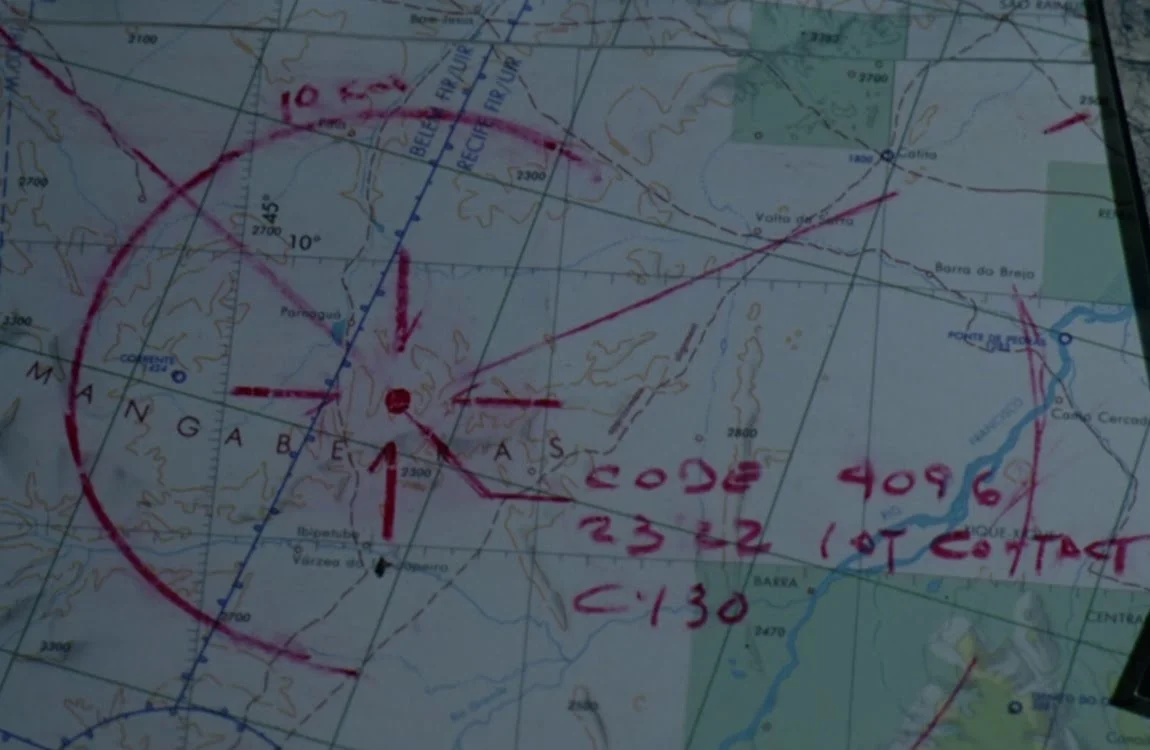
This closer view of the same map showed the handwritten field markings in more detail, including the central contact point and the rough search radius drawn around it. The scene conveyed the kind of quick tactical planning used for jungle reconnaissance, with the terrain map serving as the team's only guide before entering hostile territory. Unlike the Predator's own targeting systems, this human map relied entirely on estimation, coordinates and old-fashioned navigation. The area shows mountains, rivers, and the jungle they would encounter later.
Maps From Predator 2
Predator 2 shifted the hunt from the jungle to Los Angeles and introduced far more visualized tracking data. The film used screens, thermal overlays and schematic displays to show how the Predator and the human task force monitored movement through the city. These maps were more abstract than the later full holograms, but they already hinted at the series moving toward a more tech-heavy style.
Slaughterhouse Elevation Map
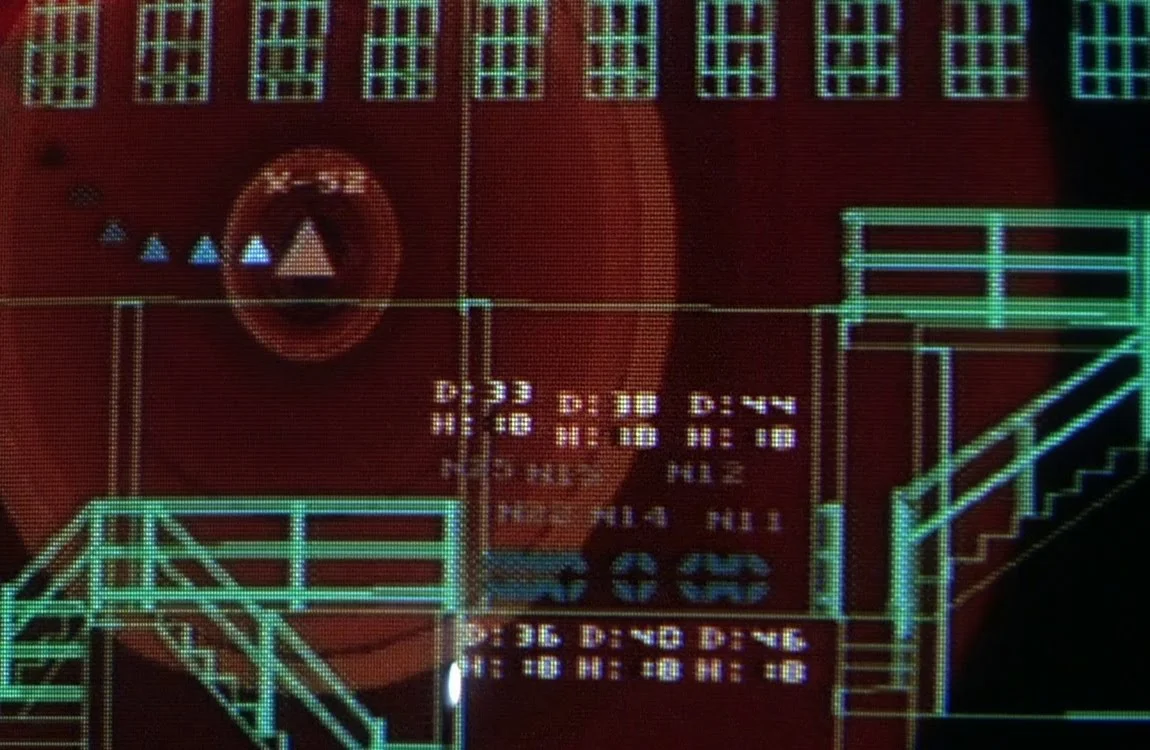
This display showed a simplified schematic of the slaughterhouse interior during the standoff sequence, where the OWLF team was searching for the City Hunter. The OWLF monitor overlaid target markers on top of a stripped down structural diagram, helping visualize where armed figures were positioned inside the building. Although fairly basic in design, it worked as an early example of the Predator franchise using map-like displays to turn action scenes into tactical hunts. The scene itself and the map are similar to the Colonial Marine's tactical displays from Aliens, which was covered in our Alien Universe Maps article.
Slaughterhouse Overhead Map
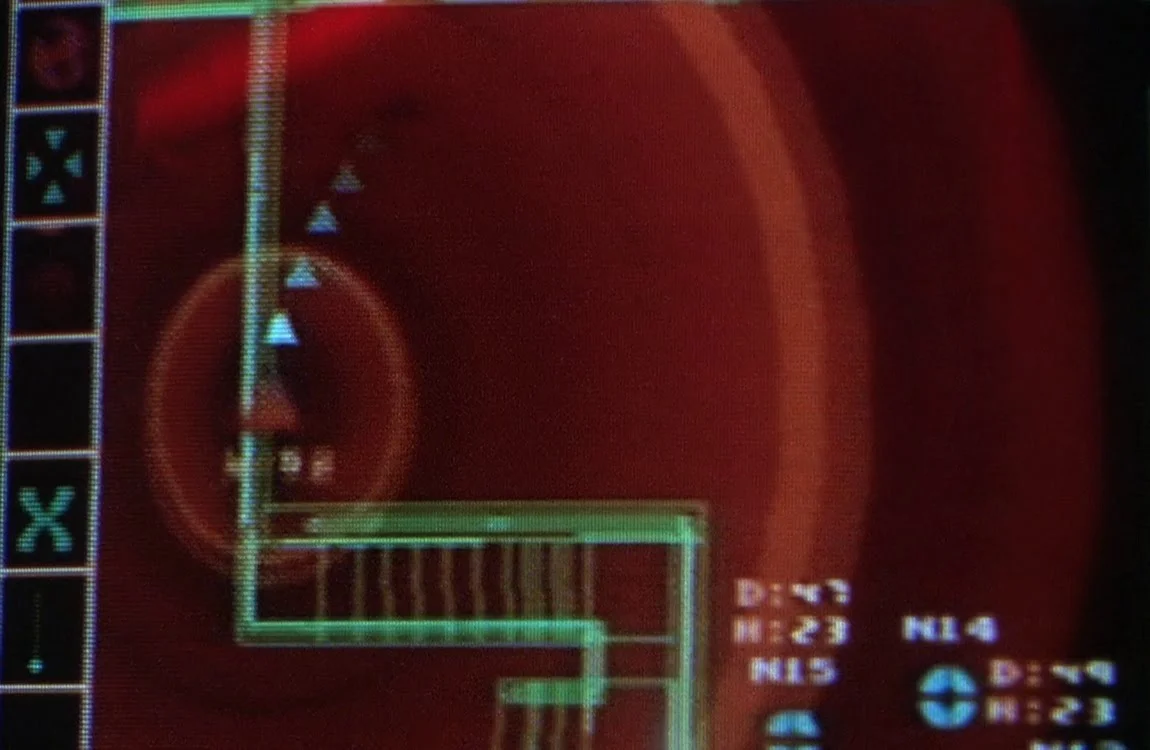
This closeup emphasized the catwalks, stairs and interior platforms inside the slaughterhouse. Several target markers were visible on the display, suggesting active tracking or a live tactical feed rather than a static blueprint. The bright simplified lines turned the building into a readable combat space, which matched the movie's urban war zone atmosphere. However, these OWLF displays did not help the team that much, as all of them were slaughtered by the Yautja.
Maps From Predators
Predators expanded the scale of the franchise by revealing an entire game preserve world used for hunts. In addition to bringing kidnapped humans to the planet, the Super Predators were fighting a civil war with the Classic Predators.
Solar System Holographic Map
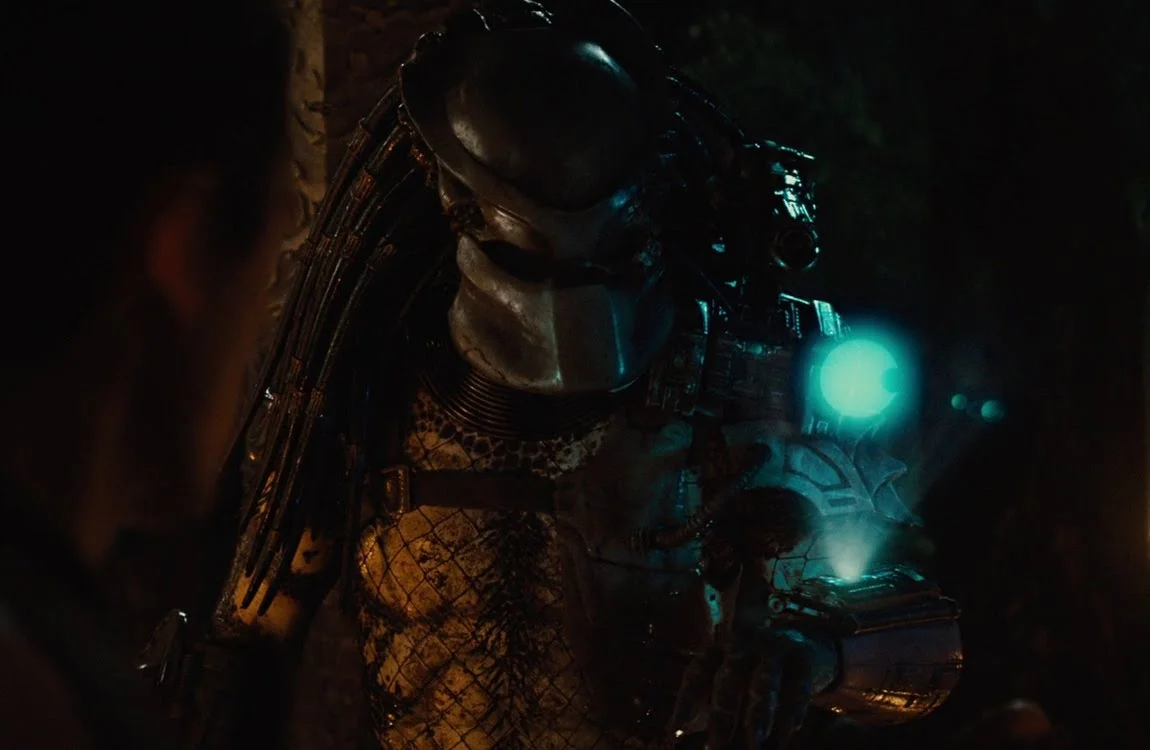
The only notable map-like hologram in Predators appeared on a Yautja's wrist gauntlet. A floating map of the Solar System was shown by the Crucified Predator to Royce. Royce made a deal with the Yautja to help him get home to Earth. Unlike the rough field maps in the earlier films, this interface looked clean, distant and almost ceremonial.
Maps From The Predator
The Predator leaned heavily into advanced Yautja interfaces, showing spherical projections, shipboard overlays and closeup tracking displays. Many of these visuals appeared inside Predator ships or on their masks, where entire environments could be rendered as glowing topographic worlds. The result was one of the franchise's most overt displays of Predator navigation technology.
Assassin Predator Orbital Insertion Map

This green human monitor displayed a large view of Earth with grid lines, coastlines and an incoming object marker approaching the planet. It looked like an orbital tracking or insertion screen, likely used to monitor a ship's descent path toward the surface. The display was clinical and highly readable, with the target highlighted against the globe rather than hidden inside a dense interface. This display was used by project Stargazer to track the incoming Assassin Predator.
Yautja Prime Map

In the scene showcasing Yautja hybridization, we see a map-like visualization of the Predator homeworld. This glowing red globe looked like a fully rendered planetary model, with bright contour lines and looping orbital paths wrapping around the sphere. The image suggested a world being scanned, selected or tracked within a larger navigation system. The presentation gave the planet a ceremonial importance that stood apart from a simple tactical feed.
Fugitive Predator Ship Location Map
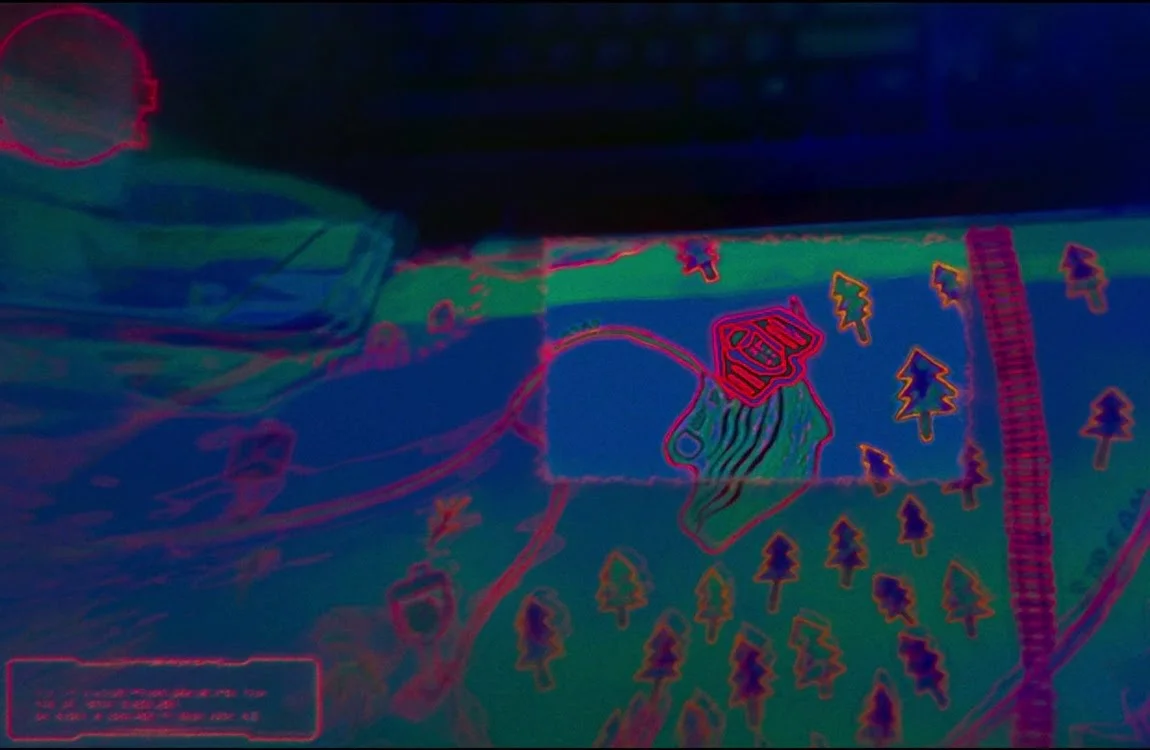
This map was different from any other in the franchise, being drawn by a child. However, Rory McKenna was highly intelligent and was able to understand and use Yautja technology. When the Assassin Predator scanned the Fugitive Predator's ship map in an old quarry, he was able to interpret where it was located. Combined with the Predator's vision, this display showed a more localized holographic terrain scan, with glowing landforms and layered topographic detail stretched across the Predator ship's viewing area.
Maps From Predator: Badlands
Predator: Badlands featured one of the most advanced hunting interfaces seen in the franchise. During a scene inside Kwei's ship, Dek and Kwei reviewed a series of possible hunting worlds, each represented by a large planetary hologram paired with a projected lifeform. The result felt like a Yautja hunting atlas, combining star travel, species selection and target evaluation into a single holographic display.
White Planet Hunting Holograph
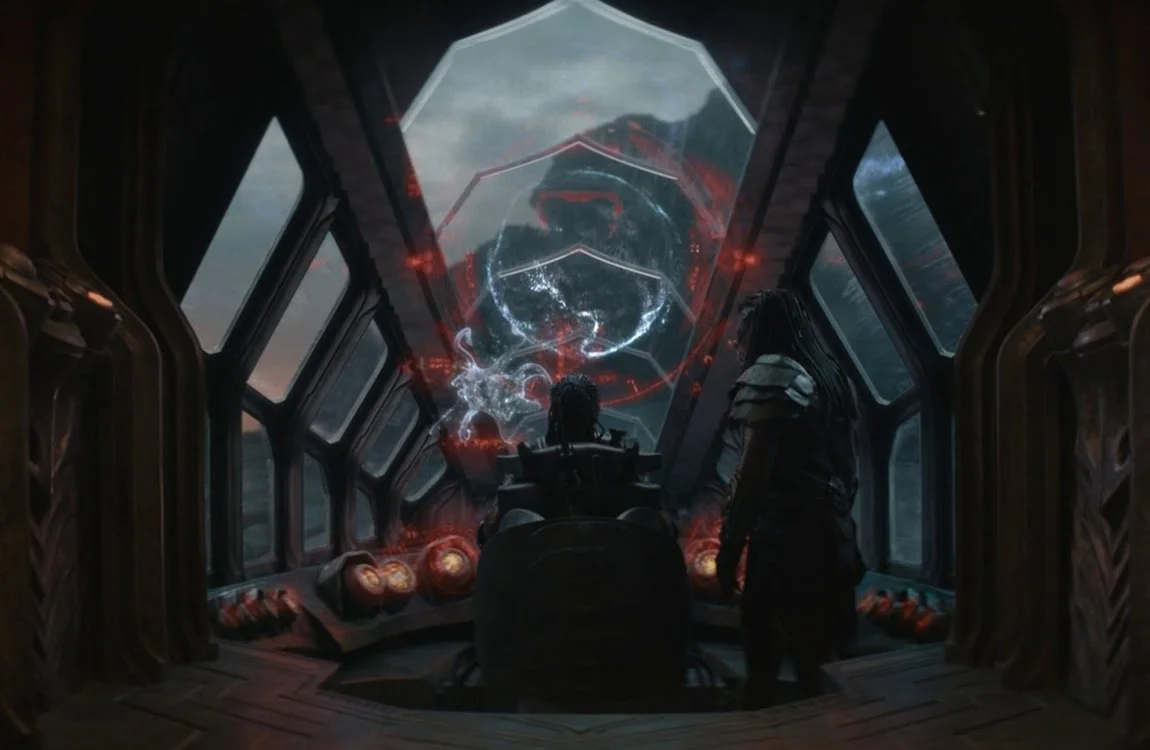
This display showed a pale, possibly ice-covered world accompanied by the holographic projection of a tentacled creature. Predators have fought giant tentacle monsters before, even going so far as hunting underwater. The image suggested that Dek and Kwei were cycling through candidate hunting planets, with each world visually linked to one of its most dangerous or notable lifeforms. The white coloration of the planet contrasted with the glowing creature profile, making the prey silhouette stand out clearly against the spherical world map.
Blue Planet Hunting Holograph
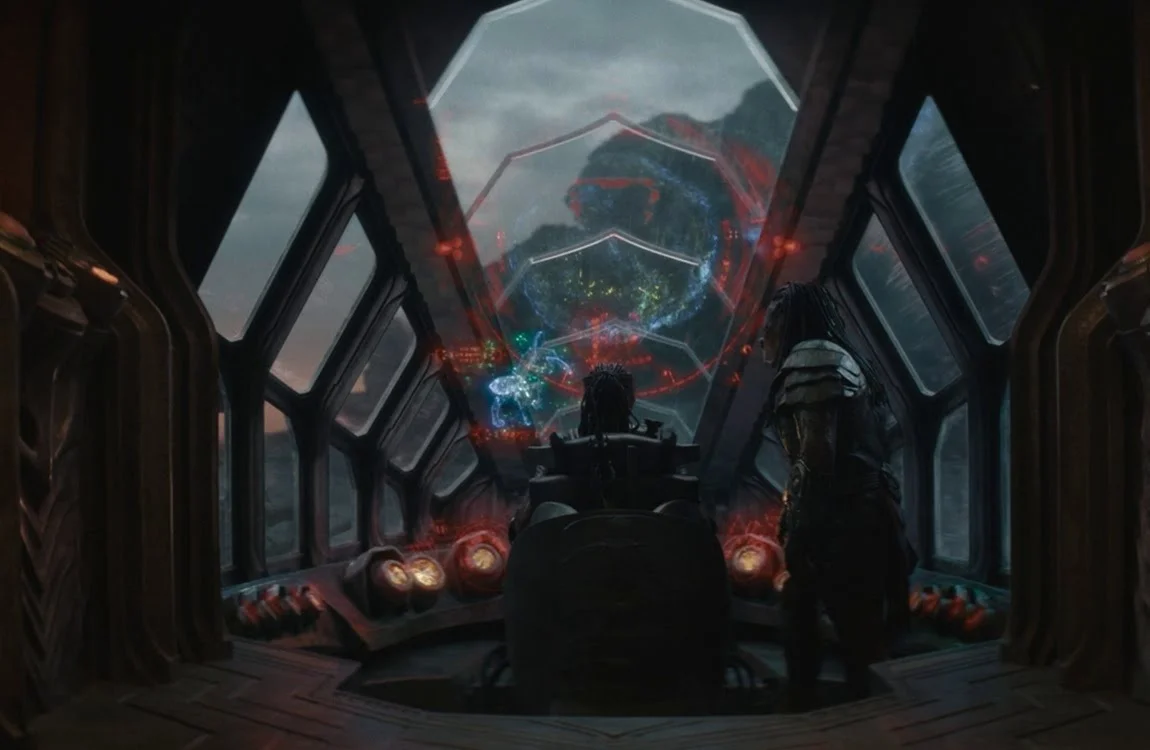
This hologram paired a blue world with the projection of a horse-like creature, possibly one of the Drukathi or another large species from that planet. It was also similar to the Direhorse from Avatar lore. The interface made it appear as though the ship could preview the dominant prey or inhabitants of each destination before a hunt was even chosen. In visual terms, the creature floated almost like a specimen label in front of the world behind it.
Yellow Planet Hunting Holograph
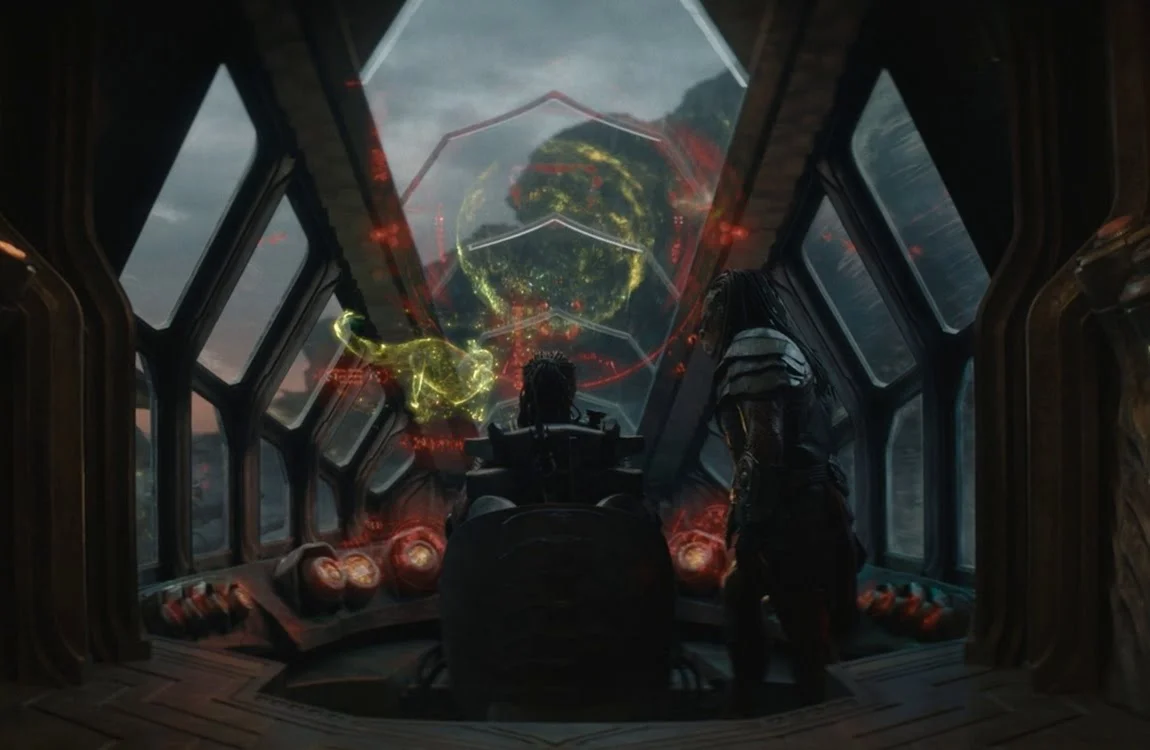
Here the ship displayed a yellow-toned planet together with a holographic dinosaur-like creature. The repeated format across the Badlands sequence implied that Kwei's ship stored multiple known hunting worlds in the same catalog system, each one tagged with a representative beast or species. The dinosaur projection made this particular world look especially suited for a more primal, large-game hunt. The Predators are known to hunt dinosaurs, as shown by the T. rex skulls displayed in several trophy cases.
Earth Hunting Holograph
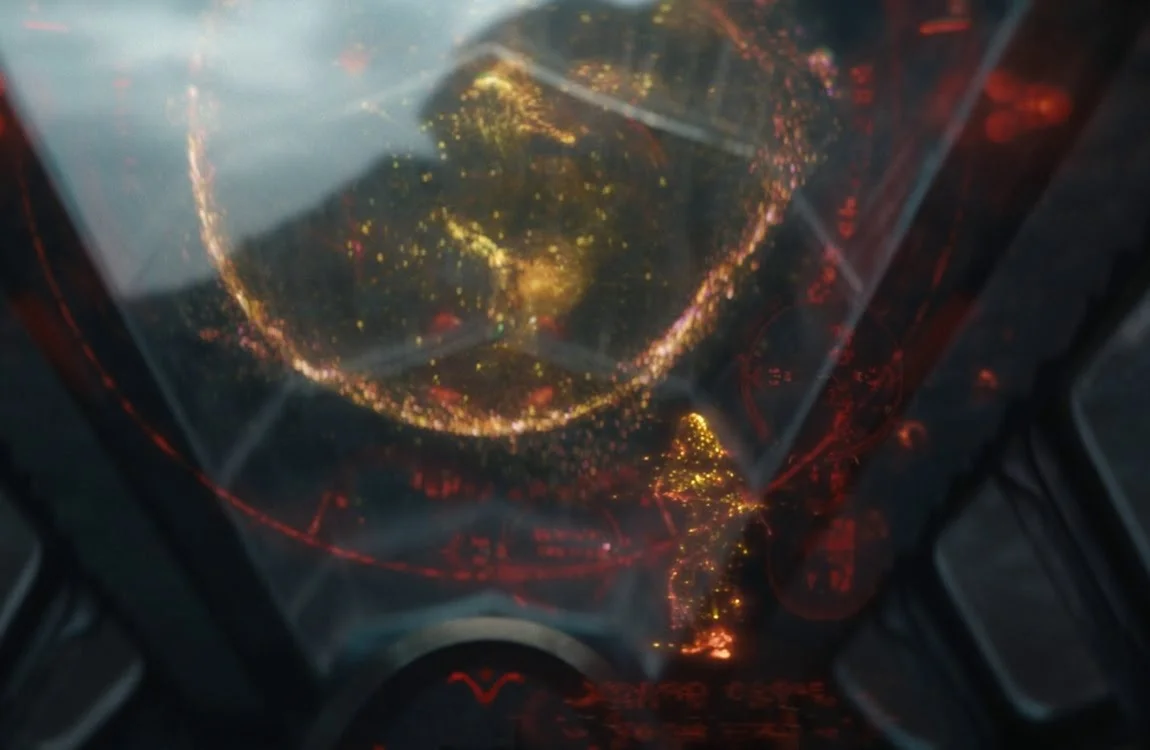
This hologram identified Earth as one of the known hunting worlds, and paired it with a glowing projection of Naru from Prey (2022). That choice was especially interesting because it suggested the Yautja system did not only catalog animals or monsters, but also individual warriors who had distinguished themselves in past hunts. In other words, Earth was remembered not just as a planet, but as the world of a specific human opponent worthy of record. In the expanded Predator timeline, Predators visited Earth countless times in the past, even going as far as kidnapping humans and storing them in their stasis farms.
Genna Hunting Holograph
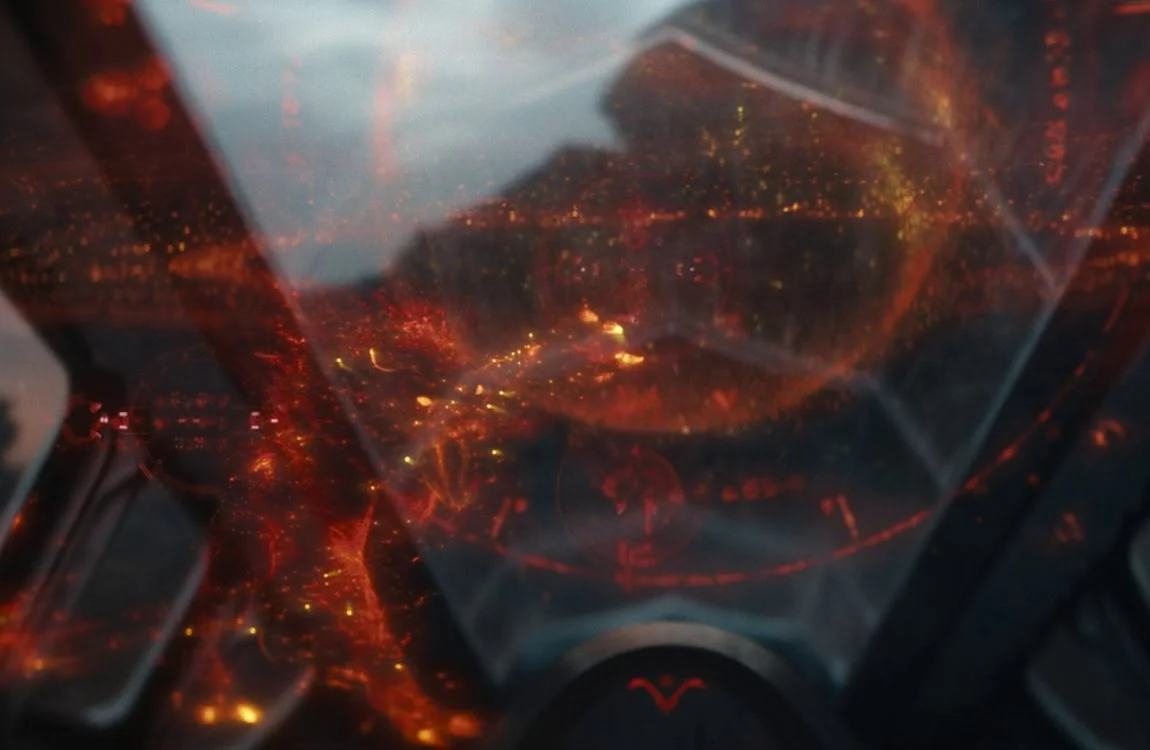
This display showed the planet "Death Planet" Genna together with a red holographic projection of the Kalisk. The Kalisk projection appeared prominently in front of the planet, making it the key point of interest. The Kalisk was the ultimate prey on Genna, rumored to be "unkillable" because of its regenerative abilities. This world remained pre-selected in the ship's computer and its autopilot took Dek to Genna after his escape from Yautja Prime.
Maps From Alien vs Predator
Although the Alien vs. Predator movies might not be considered canon by Alien and Predator purists, they did contain a few maps worth mentioning here. The maps from the first Alien vs. Predator (2004) focus on the hidden pyramid where the main events of the movie took place.
Antarctica Temple Orbit Map
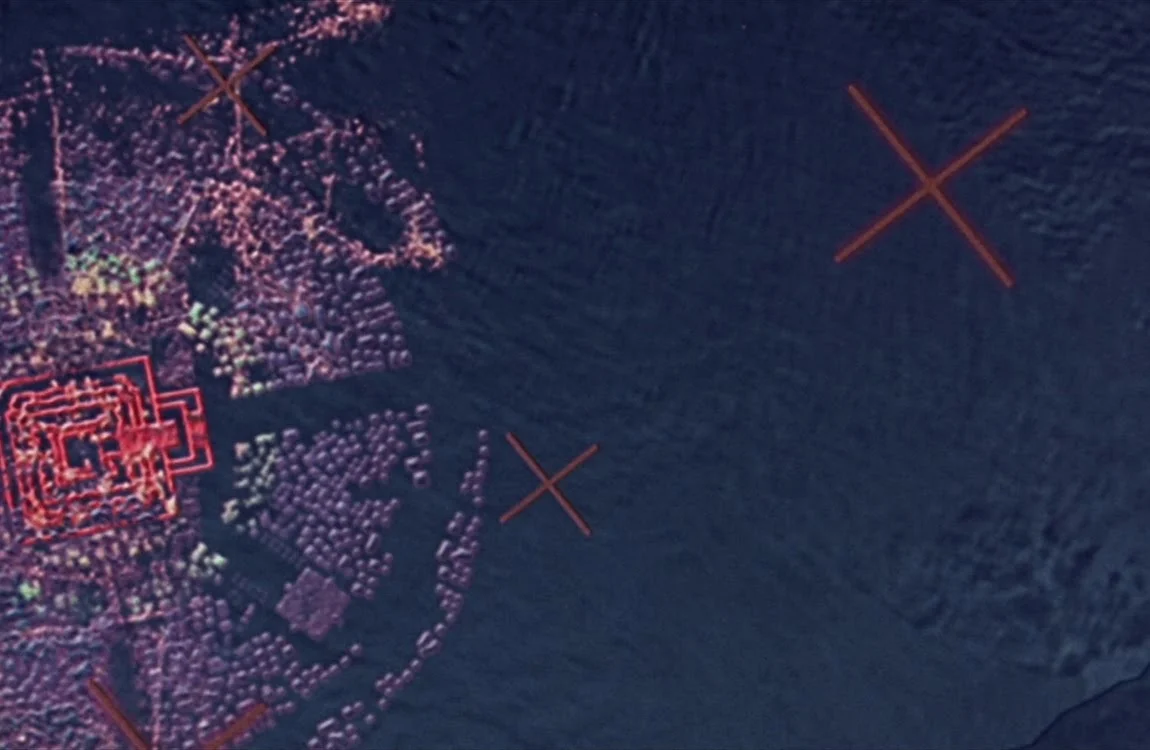
A Weyland Industries satellite detected a mysterious heat signature beneath the Antarctic ice. Orbital scans displayed the location of the buried pyramid temple used for Young Blood Predator initiation hunts. This map guided the Weyland expedition to the Bouvetoya island, specifically to the Razorback Point Whaling Station. The orbital picture seems to indicate there might have been more structures around the pyramid (shown in purple), perhaps buried deeper.
Antarctica Temple Holographic Orbit Map
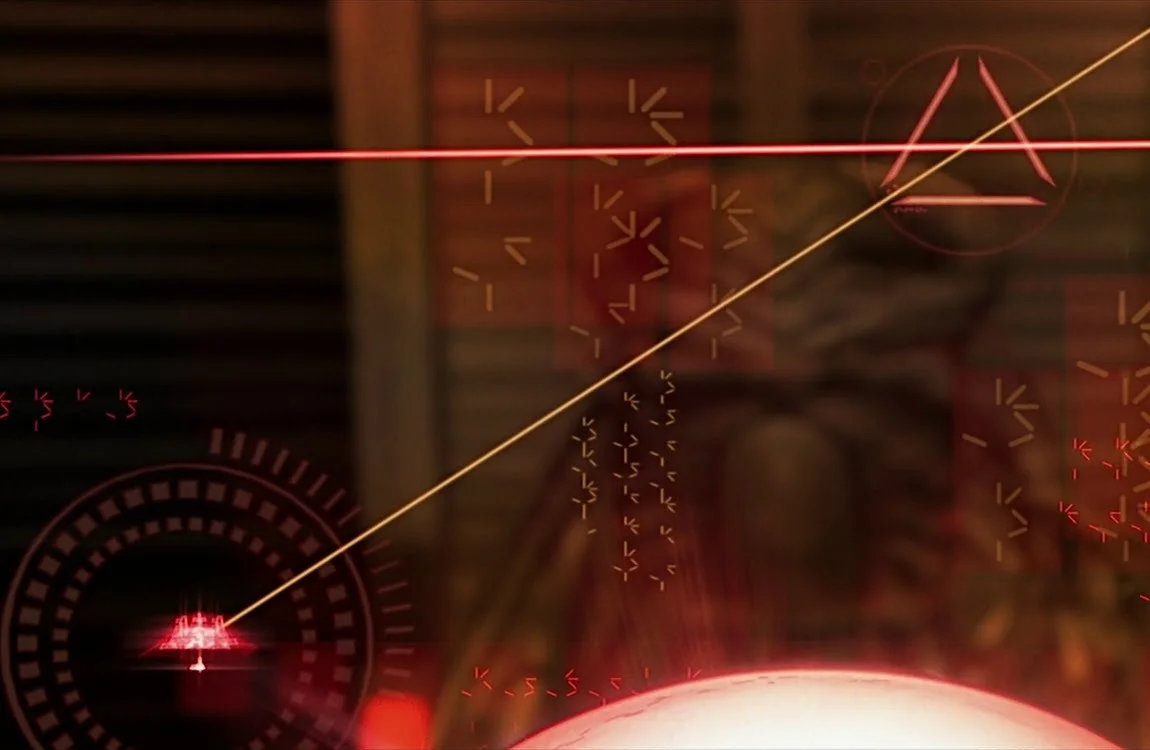
Like humans, the Predators scanned the temple from orbit, but were able to get a much clearer picture of it. The display mapped their trajectory from orbit to the temple, so the ship's laser could "drill" a hole straight down to it. The mothership would then release three drop pods containing the young Predators and their gear. The display was covered with Yautja symbols, possibly indicating numbers.
Antarctica Temple Holographic Map
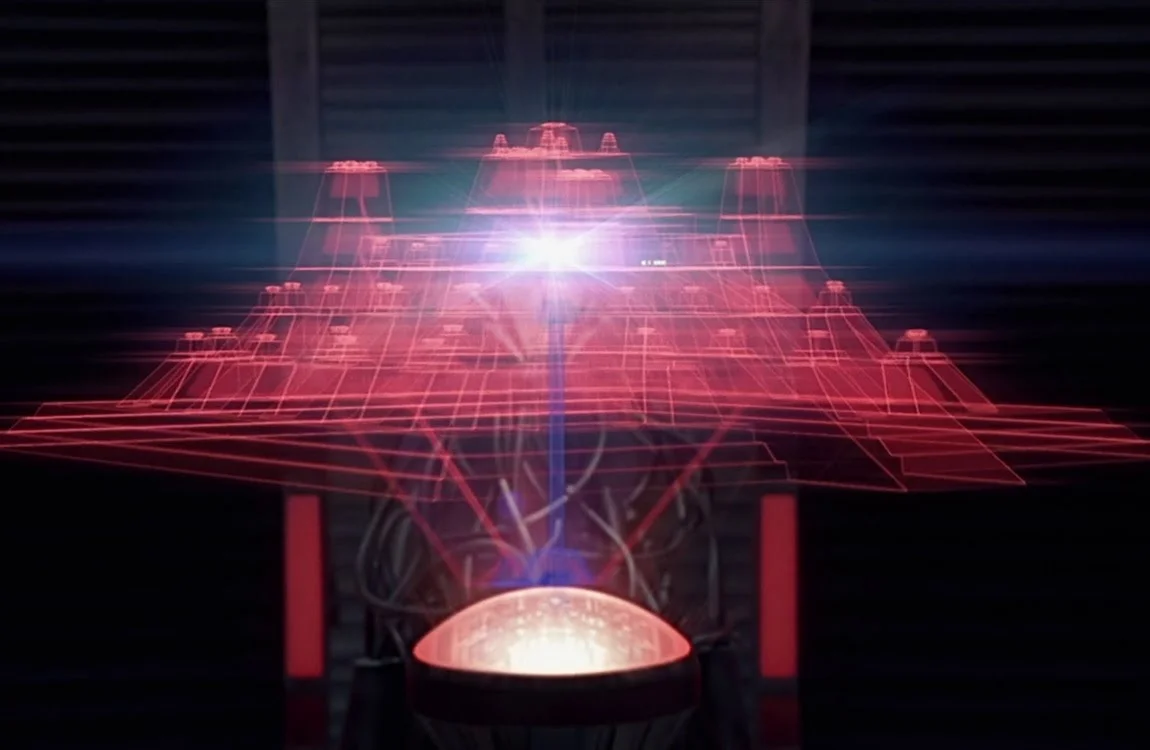
The Predators had more advanced displays than humans, and were able to produce a 3D holographic display of the entire temple. These displays revealed the pyramid's internal chambers and shifting corridors used during the hunting ritual. A notable area on the map is the blue Queen's chamber, which is much deeper than the rest of the pyramid, and connected with four tunnels.
Maps From Aliens vs. Predator Requiem
Anything in Aliens vs Predator: Requiem was hard to make out, due to an issue with brightness levels and a severe case of darkness. However, a few somewhat interesting maps were displayed in the movie, both from the perspective of humans and Predators.
Predator Universe Map
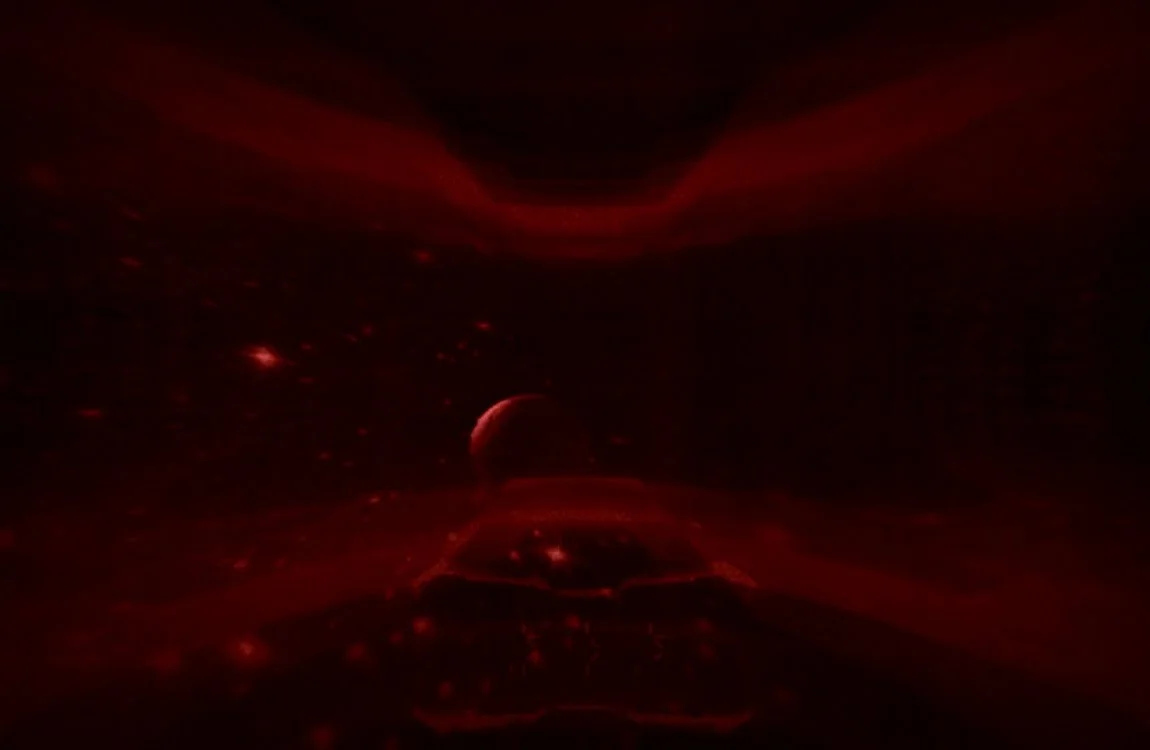
This image showed Wolf Predator interacting with a compact holographic display projected from his equipment. Predator navigation systems displayed complex galactic maps that connected various hunting worlds and star systems. These holographic projections hinted at the enormous reach of the Predator civilization across the galaxy. However, Wolf Predator was able to navigate his ship from Yautja Prime to Earth in mere hours, possibly using wormhole technology, also seen in The Predator (2018).
Gunnison Nuke Map
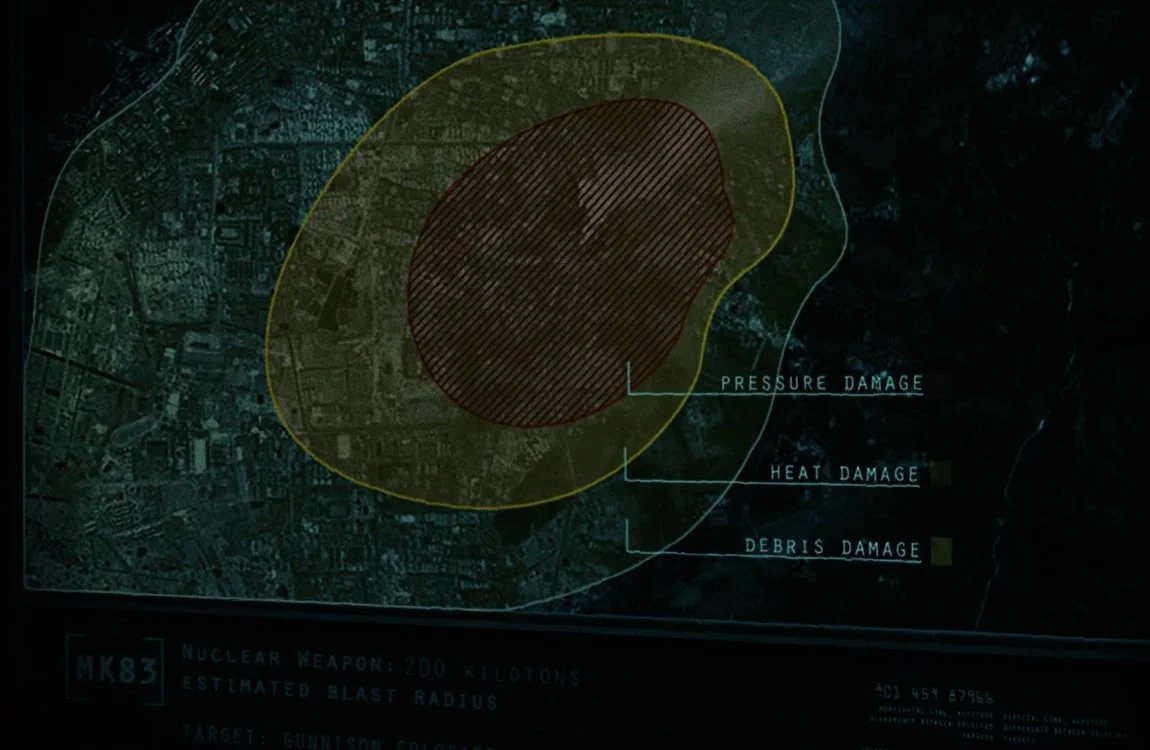
This tactical display showed an overhead map of Gunnison, Colorado with a nuclear strike overlay applied to the city grid. A dark red, hatched core marked the primary impact zone representing pressure damage, surrounded by a yellow band indicating the wider heat damage radius, while a pale blue outer contour traced the debris damage zone. On the right side, labeled callouts connected each damage category to its corresponding ring on the map. Along the bottom, the interface identified the weapon as an MK83 nuclear weapon with a yield of 200 kilotons. In comparison, the bomb dropped on Hiroshima was about 15 kilotons.
Final Thoughts
Although Predator films are best known for their hunts, weapons and creatures, the background maps and holographic interfaces reveal a surprising amount about how the Yautja viewed space, terrain and prey. Some displays were grounded military maps, while others turned entire planets and structures into glowing hunting diagrams. Many of these visuals appeared only for a few seconds, often during transitions or brief planning scenes. As the movie technology got more advanced in the later movies, so did the Predator holographic displays and maps.
Sources
Movies
- Predator (1987)
- Predator 2 (1990)
- Predators (2010)
- The Predator (2018)
- Prey (2022)
- Predator: Badlands (2025)
- Alien vs. Predator (2004)
- Aliens vs. Predator: Requiem (2007)
Tag Categories: Predator Lore | Predator Technology