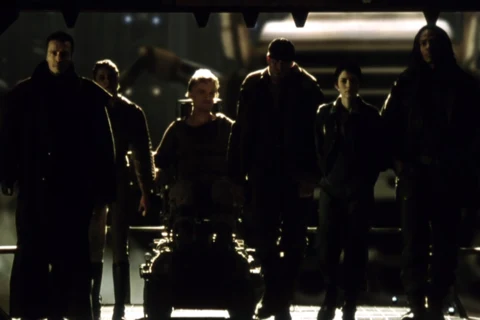
Aliens (1986): Plot, Characters, And Lore

Aliens (1986) is a science fiction action horror film directed by James Cameron and the direct sequel to Alien (1979). The story followed Ellen Ripley after a salvage crew pulled her from hypersleep and brought her back to civilization decades after the destruction of the USCSS Nostromo. When contact was lost with the human colony on LV-426, Ripley joined a mission of Colonial Marines sent to investigate. What began as a rescue operation quickly turned into a large-scale battle against an entire Xenomorph infestation. The film brought in the Colonial Marines, the Alien Queen, and the colony known as Hadley's Hope.
Film Overview
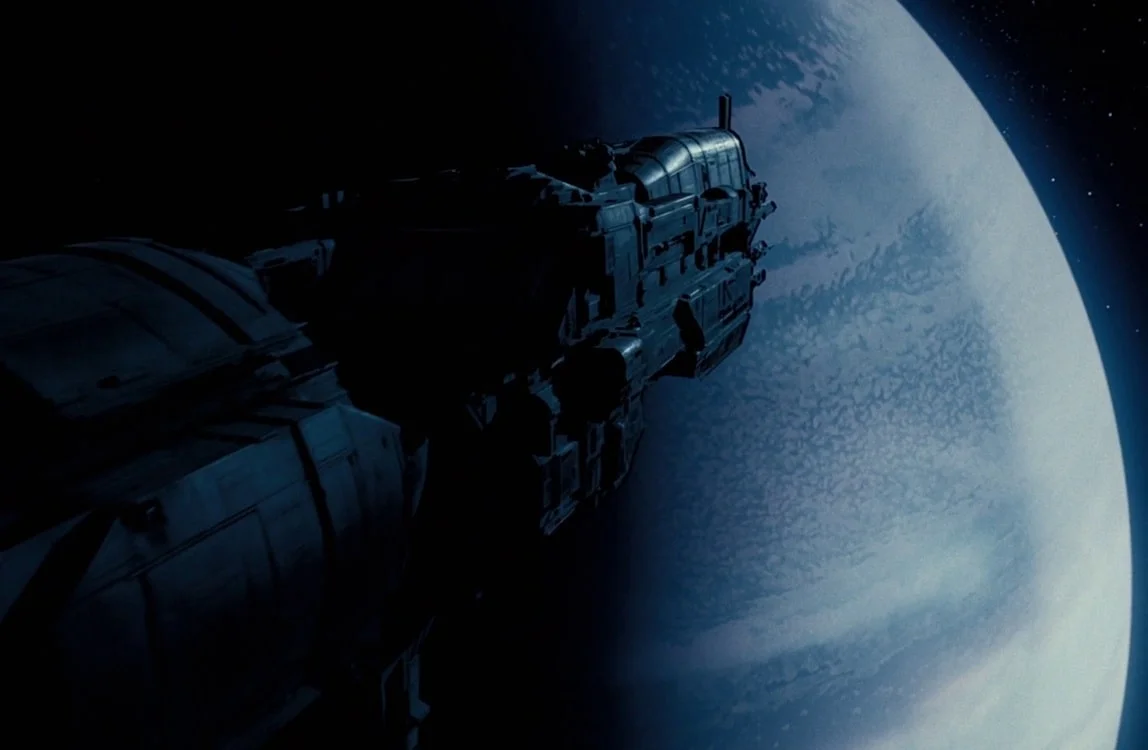
Released in 1986, Aliens shifted the series from slow-building horror toward military science fiction and survival action. While the first film focused on isolation aboard a single ship, the sequel widened the scale by placing Ripley alongside an armed combat unit on a hostile colony world. The setting centered on Hadley's Hope, the terraforming colony established near the site of the derelict alien spacecraft first discovered in Alien. As the Marines advanced into the colony complex, they found evidence that the settlers had been overwhelmed and cocooned by Xenomorphs. Ripley's struggle became not only a fight for survival, but also a mission to protect the lone surviving child, Rebecca "Newt" Jorden.
Plot Summary
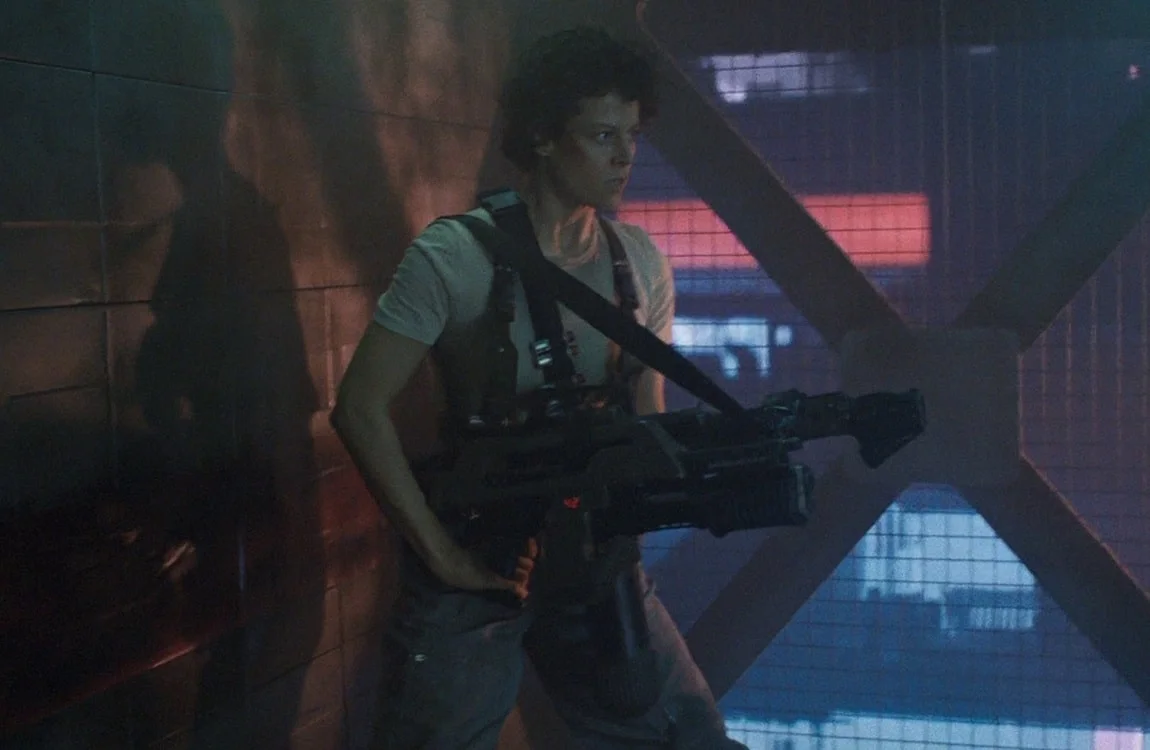
After drifting in space for decades, Ripley was recovered aboard the Narcissus shuttle with Jones and taken to Gateway Station. A Gateway board that included an ECA representative dismissed her account of the Nostromo, pulled her flight status, and told her a colony had been built on LV-426. When that colony went silent, Carter Burke of the Weyland-Yutani Corporation put her on a Colonial Marine team as an advisor. They shipped out on the USS Sulaco under green lieutenant Scott Gorman.
The drop found Hadley's Hope empty. Hudson's motion tracker picked up scattered movement while the squad cleared Medlab tanks that still held live Facehuggers. Ripley found Newt hiding in the ducts, the only colonist left free. Newt had already watched the settlers taken into the walls one by one.
The Marines followed the signal into the atmosphere processor and walked into a hive of cocooned colonists. Apone was taken after Gorman ordered the magazines collected, and Drake died on the way out when acid blood hit him. Gorman froze in the APC, so Ripley drove the vehicle through the nest and pulled the rest clear. The dropship then came down in flames after a stowaway killed Ferro and Spunkmeyer on the pad. With Gorman hurt, Ripley took command with Dwayne Hicks.
The survivors sealed Operations while the processor headed for a meltdown, and they set sentry guns on the corridor approaches. Burke tried to smuggle live specimens by locking Ripley and Newt in with two Facehuggers. Bishop crawled a pipe to the wreck and remote-flew a second dropship in before the plant cooked off.
The Warriors got past the guns and came through the ceiling into Operations, where they pulled Hudson down in the breach. The rest fled into the vents, and Burke was abducted in Medlab before wounded Gorman and Vasquez died together on her grenade.
Newt slipped into an airvent before they could reach the ship, and after a Warrior took her, Ripley went back into the hive alone. There she found the Alien Queen on her egg layer, burned the eggs to cover the rescue, and ran Newt out as the structure came apart.
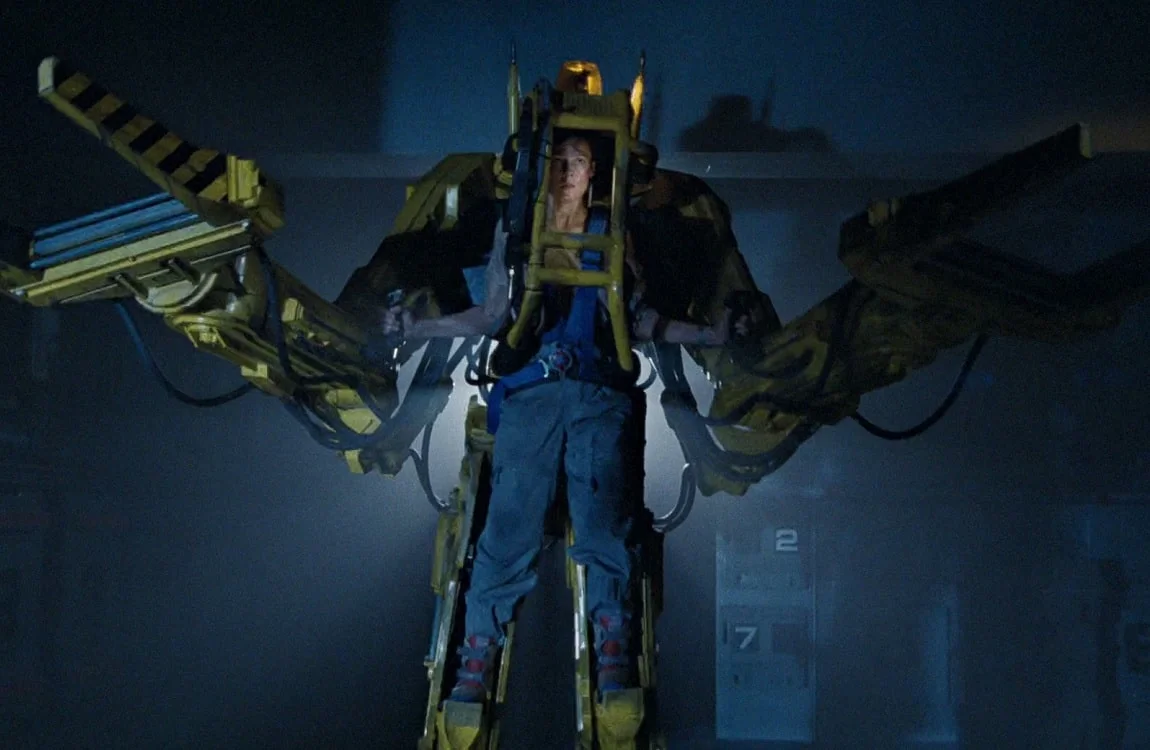
Bishop lifted them off as the processor blew. The Queen had ridden the dropship and tore Bishop in half on the Sulaco deck. Ripley strapped into a P-5000 Power Loader, drove the Queen into the airlock, and blew her into space. Ripley, Newt, Hicks, and the ruined Bishop then went into hypersleep for the trip home.
Main Cast And Characters
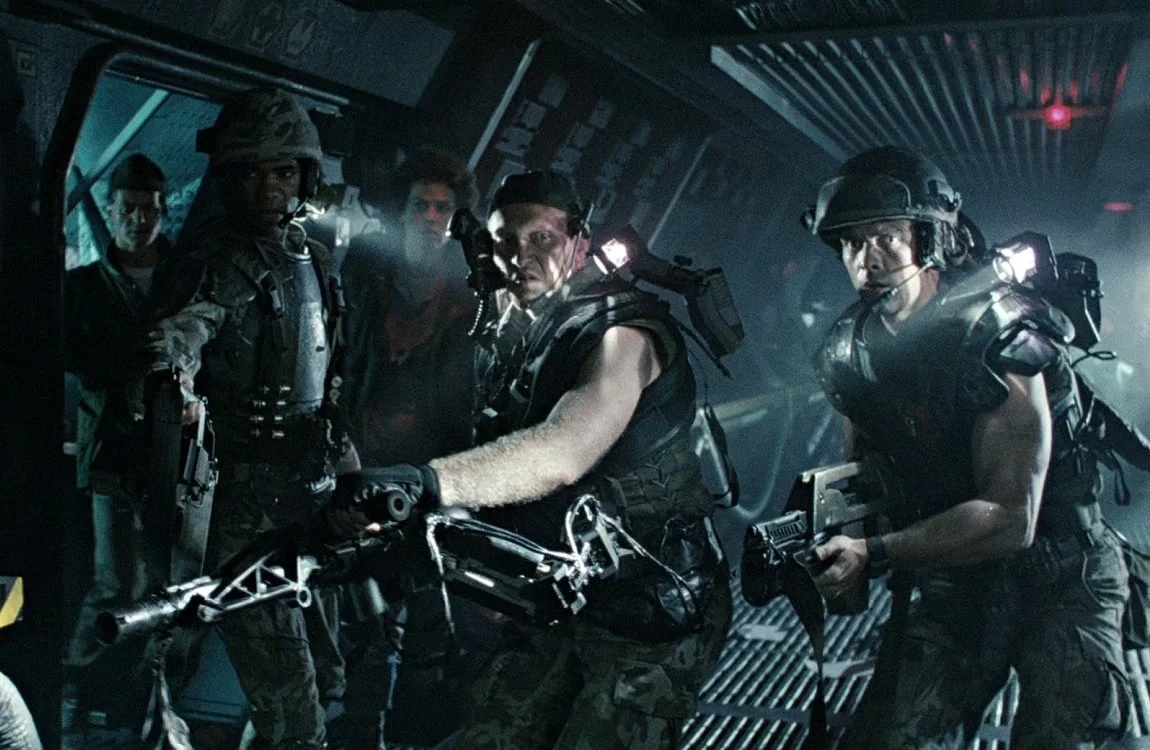
Aliens introduced a much larger cast than the first film, including Colonial Marines, company representatives, and colonists. Squad banter, chain-of-command friction, and Burke's company agenda drove a lot of the tension before the hive fight even started.
- Ellen Ripley (Sigourney Weaver) - Survivor of the Nostromo incident who returned to LV-426 and became Newt's protector.
- Dwayne Hicks (Michael Biehn) - A Colonial Marine corporal who became one of Ripley's closest allies.
- Newt (Carrie Henn) - The only surviving child from Hadley's Hope.
- Bishop (Lance Henriksen) - The Sulaco's synthetic science officer who proved more trustworthy than Ash.
- Carter Burke (Paul Reiser) - Weyland-Yutani representative who secretly tried to secure Alien specimens. Marvel's Aliens: What If? later explored an alternate timeline in which he survived.
- Apone (Al Matthews) - The tough sergeant who commanded the Marine squad.
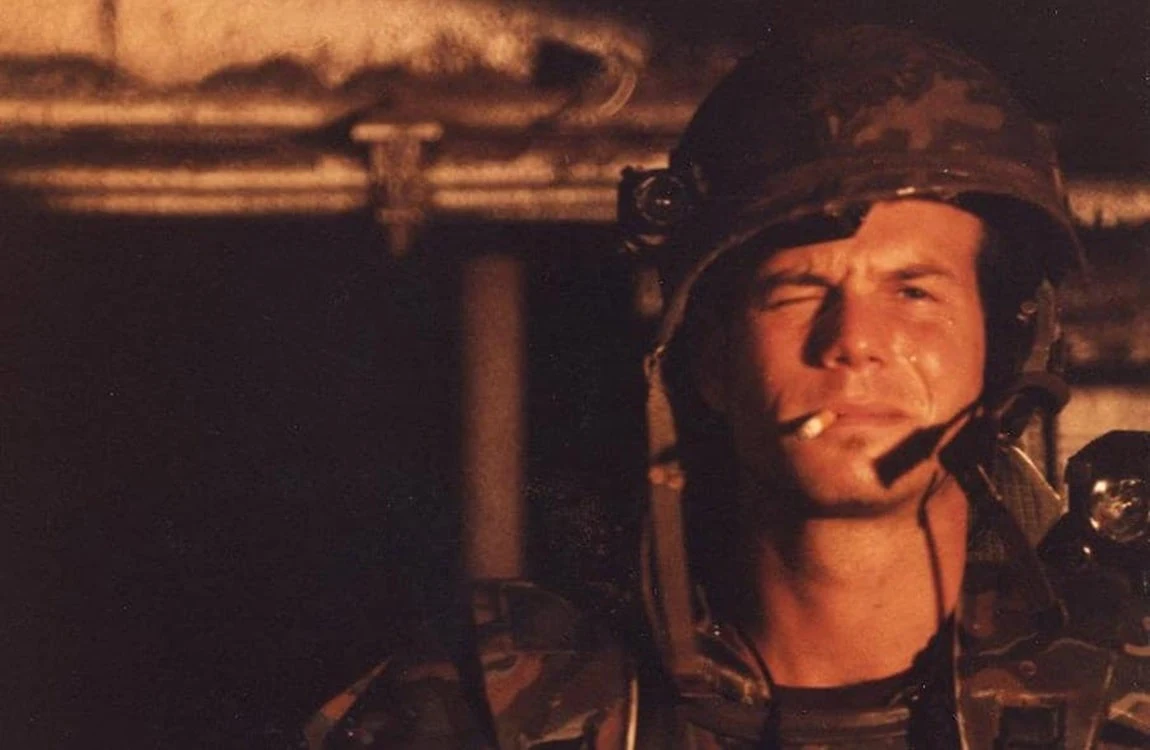
- William Hudson (Bill Paxton) - The squad's combat technician whose bravado gave way to panic under pressure.
- Jenette Vasquez (Jenette Goldstein) - A fierce smartgun operator and one of the squad's most capable Marines.
- Mark Drake (Mark Rolston) - The other smartgunner, paired with Vasquez until acid killed him on the hive retreat.
- Scott Gorman (William Hope) - The inexperienced lieutenant placed in command of the mission.
The Xenomorphs In Aliens
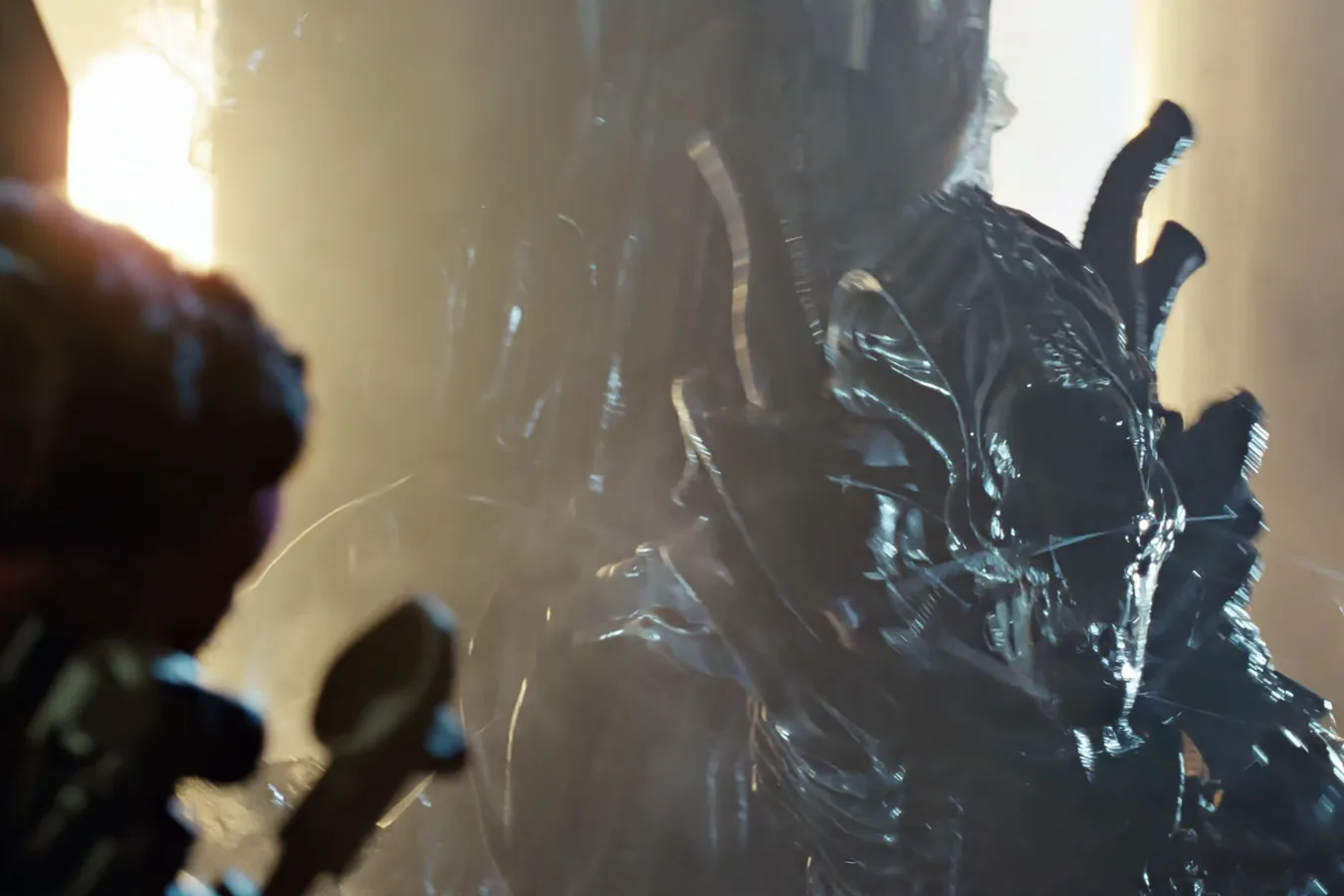
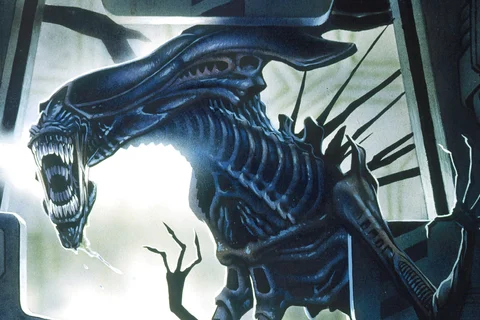
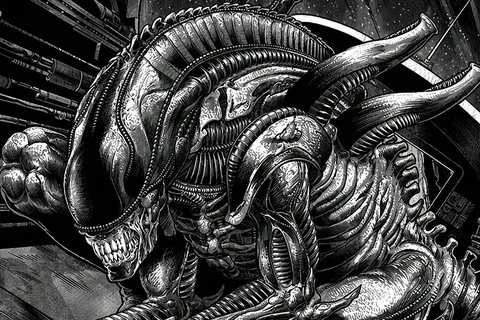
Aliens greatly expanded the depiction of the Xenomorph species. Instead of a single adult creature, the film showed a full hive composed of drones, eggs, facehuggers, and the newly introduced Alien Queen. This established the Xenomorphs as a eusocial species with a reproductive hierarchy, making them resemble a colony of insects in some respects. The film also reinforced their speed, stealth, and resilience, while showing how dangerous they became when encountered in large numbers.
The hive within the atmosphere processor contained living captives being used as hosts for chestbursters, showing the Xenomorph life cycle on a much larger scale than in the first film. The Aliens attacked from walls, ceilings, vents, and dark corridors, overwhelming even heavily armed soldiers. Their acidic blood, claws, tails, and coordinated behavior made them deadly in close quarters despite the Marines' advanced weaponry.
Hadley's Hope
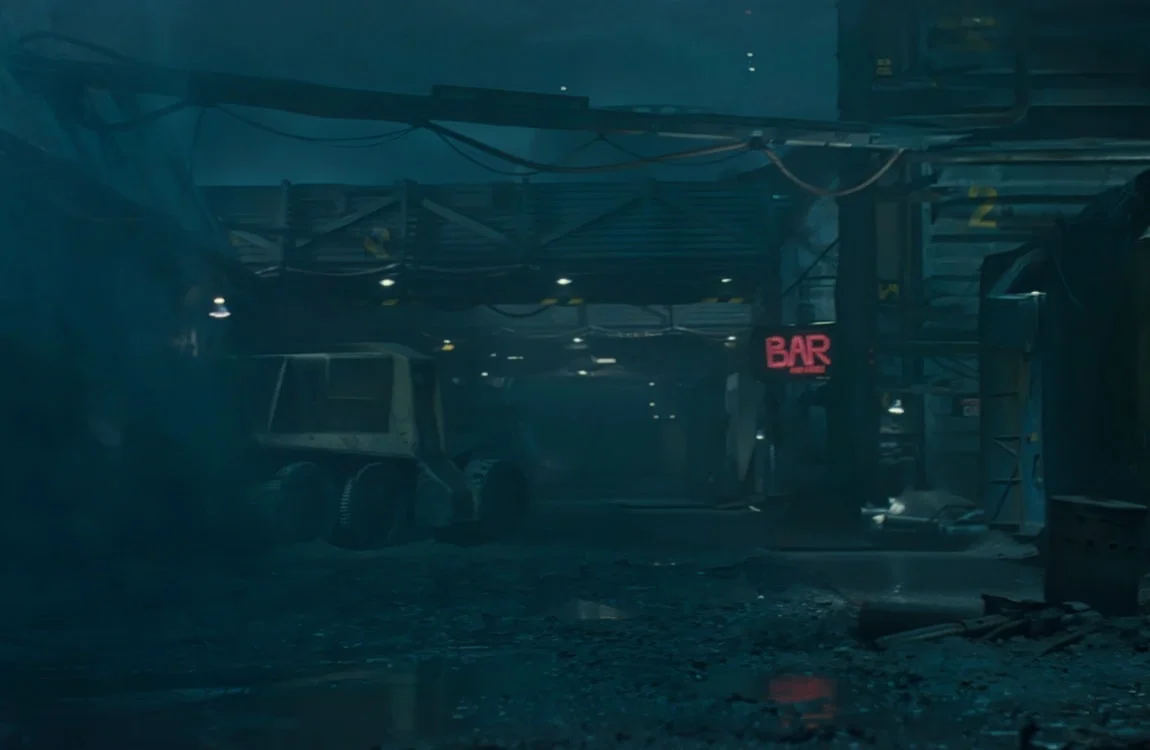
Hadley's Hope served as the primary setting of the film. The colony had been built on LV-426, later also designated as Acheron, as part of humanity's expansion into the frontier. It included living quarters, operations centers, industrial facilities, and the nearby atmosphere processor that helped terraform the moon. By the time the Sulaco arrived, the colony had already fallen, with its inhabitants either killed or cocooned within the hive. Hadley's Hope became one of the most important locations in the Alien universe because it connected human colonization directly to the Xenomorph threat.
The Colonial Marines
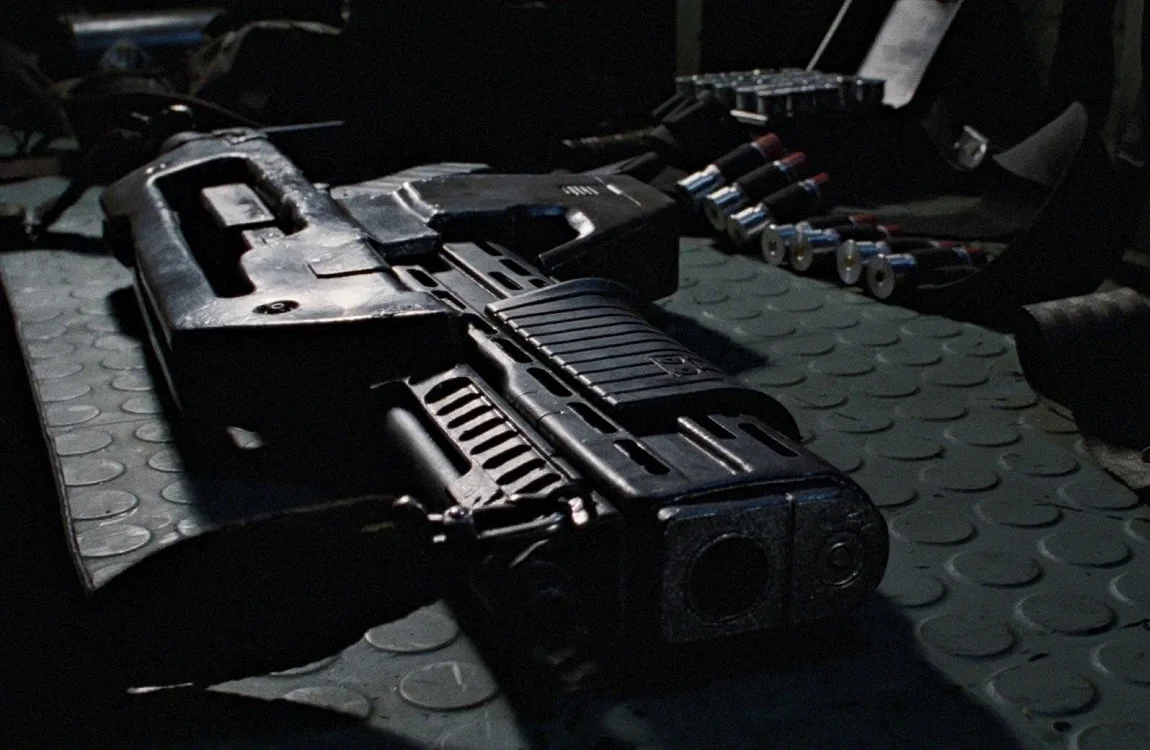
Aliens introduced the United States Colonial Marine Corps, one of the most iconic military forces in science fiction. Equipped with pulse rifles, smartguns, M3 body armor, APC transport, and the UD-4 Cheyenne dropship, the Marines initially appeared more than capable of handling the threat. However, the mission exposed the limits of conventional military force when faced with an entrenched Xenomorph hive in confined spaces. Characters such as Hicks, Hudson, Vasquez, Drake, Apone, and Frost helped establish the Colonial Marines as a major part of Alien lore that later expanded through comics, novels, games, and technical manuals.
The Alien Queen
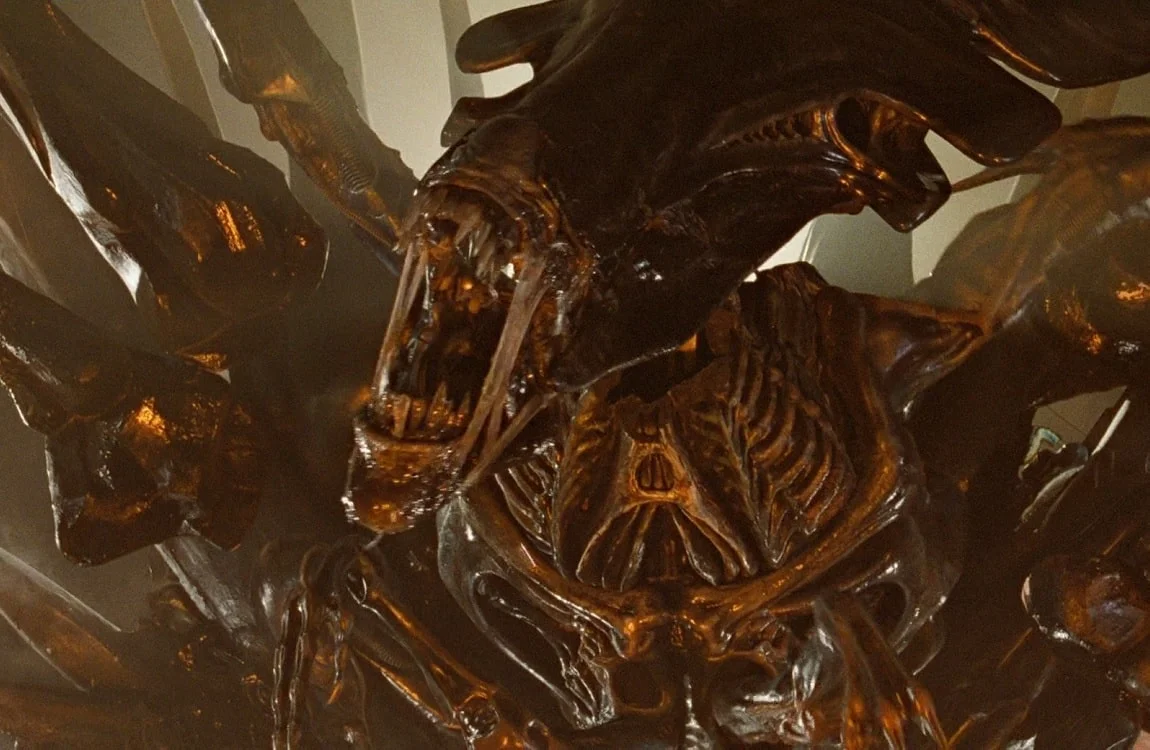
One of the biggest additions in Aliens was the introduction of the Alien Queen. Unlike the solitary creature in Alien, the Queen functioned as the reproductive center of the hive, laying eggs that produced the facehuggers responsible for infecting hosts. Her appearance transformed the Xenomorph species from a terrifying individual organism into a broader biological system with a clear hierarchy. The Queen was larger, stronger, and more intelligent than the drones, and her final confrontation with Ripley became one of the most famous moments in the franchise.
Place In The Alien Timeline
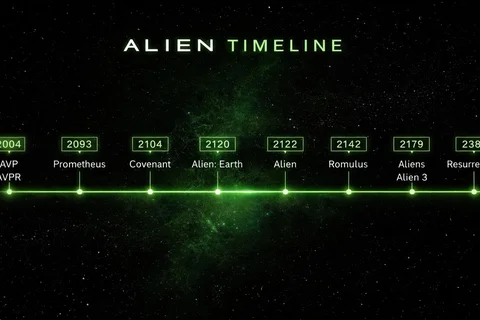
Aliens (1986) takes place in the year 2179 within the wider Alien timeline. The film occurred 57 years after the events of Alien, explaining Ripley's absence from civilization and the changed status of LV-426. The destruction of Hadley's Hope, the loss of the Sulaco mission team, and Ripley's second encounter with the Xenomorphs all became defining events in the later Alien saga. The film directly led into the opening events of Alien 3, while also influencing a large amount of expanded universe material centered on Colonial Marines and Acheron.
Production
Writing
In summer 1983, Fox settled a profit fight over the first film and had to put a sequel into development. David Giler and Walter Hill sketched a military story from Southern Comfort and The Magnificent Seven, then typed five pages titled Alien II. Larry Wilson put James Cameron's The Terminator script on Giler's desk. They first offered him a futuristic Spartacus. He declined. As he left, they mentioned Alien II.
Cameron wrote a forty-five-page Alien II treatment dated September 8, 1983 on yellow legal pads. He put Ripley and colonial Marines into his earlier story Mother, which had a woman in a powered forklift suit. He took the word dropship from Robert Heinlein's Starship Troopers and named the Sulaco after Joseph Conrad, the same source as the Nostromo. That lineage of armoured soldiers in space is widely seen as an influence on the Space Marines of Warhammer 40,000 and the UNSC marines and Spartans of Halo. He set the story on Acheron at the colony Hadley's Hope, and added a Queen based on a termite queen rather than turning victims into eggs.
Hill and Giler sent that treatment to Fox on September 21 with their names above his, and they were paid for the pages while Cameron was not. Fox talked about selling the sequel to the producers of First Blood, then asked him to expand the treatment into a script. The same morning he was offered First Blood II, and Giler told him to take both jobs and write fast. Cameron kept a desk for each script and aimed at 240 pages for a pair of two-hour films.
First Blood II rewrites ate the Alien II time, and when Arnold Schwarzenegger became free in February 1984, Cameron had about ninety pages and had to start The Terminator. Giler told him he would never work in Hollywood again, then hung up. Hill later said Brandywine would wait. The Terminator opened on October 28, 1984. Cameron signed as writer-director on December 4, and the title became Aliens because Alien II sounded like an endless series. The first full draft was dated February 26, 1985, and went to Fox hours before a threatened writers' strike.
Development
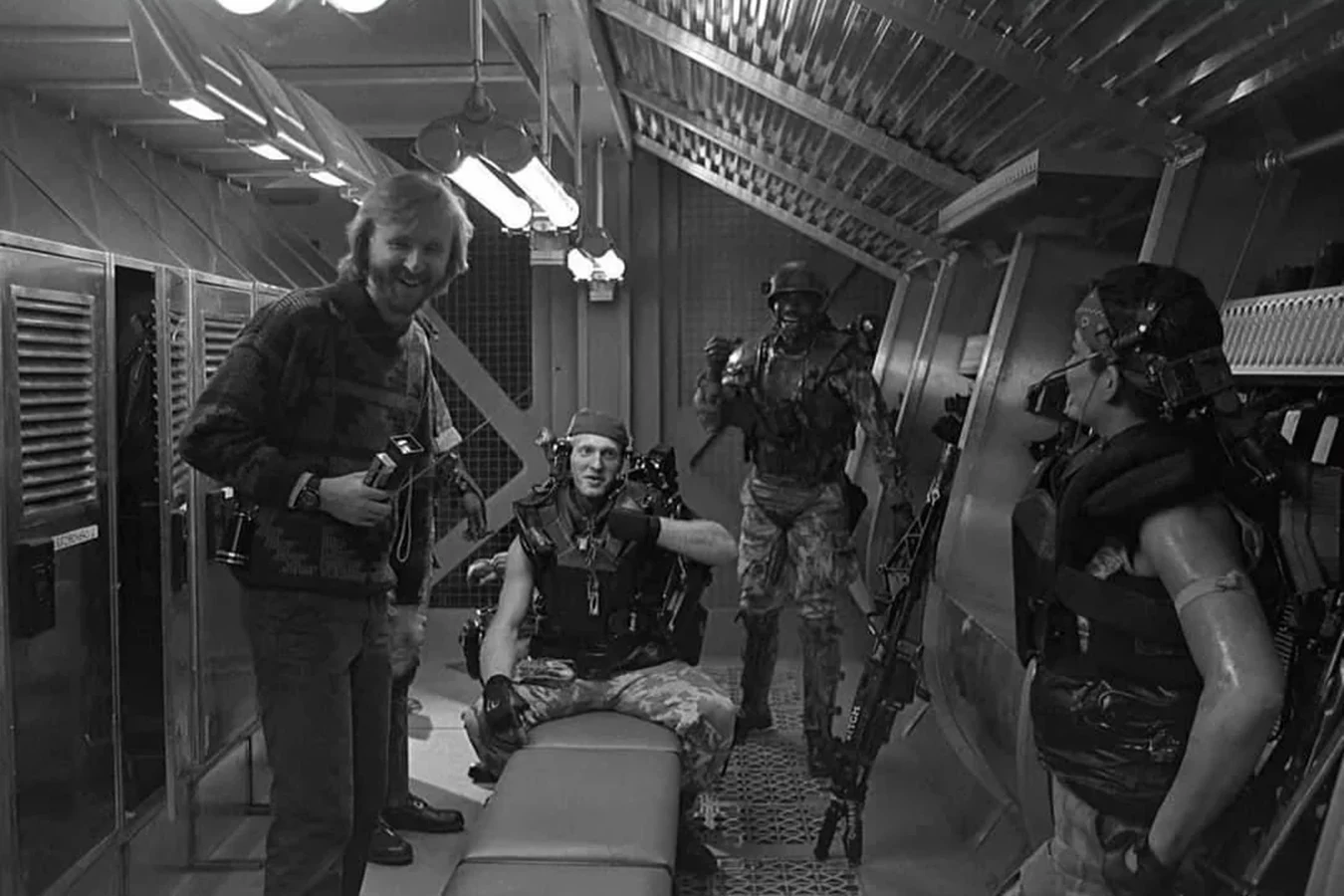
Fox floated $35 million if Sigourney Weaver starred, while Gale Anne Hurd and Cameron said they could make it for $15.5 million. Chairman Barry Diller wanted $12 million, and a March 20, 1985 studio budget listed $15,933,229. To keep costs down they moved the shoot and the effects to Pinewood Studios. They could not get the 007 Stage, which was booked for Little Shop of Horrors and Gunbus, so production designer Peter Lamont took E Stage and the insulated tunnel stages. Effects sat on L, M, F, and G, and about forty-five sets were listed.
Giler was ready to replace Ripley with a man, and the studio asked Cameron for a version without her. He and Hurd quit rather than shoot that story. Cameron phoned Weaver in France, where she was finishing One Woman or Two, and sent the draft. At a Santa Barbara hotel she asked for Ripley to die, to go unarmed, and to have a sexual scene with the Alien. He refused those three changes.
Fox would not say in public that the film needed Weaver, because that would raise her price. Cameron and Hurd quit again, married on Maui, and set a deadline. When they came back with no deal, Cameron told Arnold Schwarzenegger's ICM agent that he would drop Ripley and rebuild the story around Newt and the Marines. Weaver's contract closed that day: $1 million up front plus a share of profits. Set construction slipped to July 8. Photography slipped to September 30. A nearly final Fox figure dated June 22, 1986 listed about $20.3 million.
Casting
Mary Selway, who had cast the first film, hunted an American child in England, at US schools, and on UK military bases. About five hundred girls were taped, then nine went to Pinewood. Carrie Henn, eight, was photographed over lunch at school in Stoke-on-Trent. Her father was a US Air Force master sergeant at Lakenheath. She turned nine on May 7. From the first reading, Hurd treated Henn as the part. Weaver flew in on Concorde for a chemistry read. Henn's brother Christopher read with her and later played Tim.
William Hope first read Hudson, then became Lieutenant Gorman after turning down Stanley Kubrick's Full Metal Jacket. Ricco Ross took Frost when Kubrick would not release him from that same film. Al Matthews, a Marine veteran of Vietnam, was cast as Apone in about thirty seconds. Jenette Goldstein arrived thinking the title meant immigrants, wearing high heels and waist-length hair, until Hurd saw the biceps. A previous Vasquez had refused the swearing, so Goldstein cut her hair, put in brown contacts, and trained for four weeks. Bill Paxton dropped a Police Academy sequel for about half the money. Paul Reiser signed as Burke on July 29. Lance Henriksen took Bishop on August 5 and paid about a thousand dollars for scleral lenses with two pupils, which Cameron later dropped as too obvious.
James Remar started as Hicks. After the first ten days at Acton, a London drug arrest took him off the picture. Hurd called Michael Biehn on a Friday in Studio City. He flew in, took Remar's wardrobe, salary, and billing, and skipped boot camp. Remar had painted a heart and padlock on the chest plate. Biehn hated it as a target. A hive-entry long shot kept Remar's back in frame.
Cameron ran a ten-day boot camp on Stage F under ex-SAS trooper Tip Tipping, who played Private Tim Crowe, with Matthews and stunt coordinator Paul Weston. The Marines did five-mile runs and urban drills in Pinewood's sculpture gardens. Paxton ad-libbed the express-elevator line at the table read, and it went into the APC later.
Filming
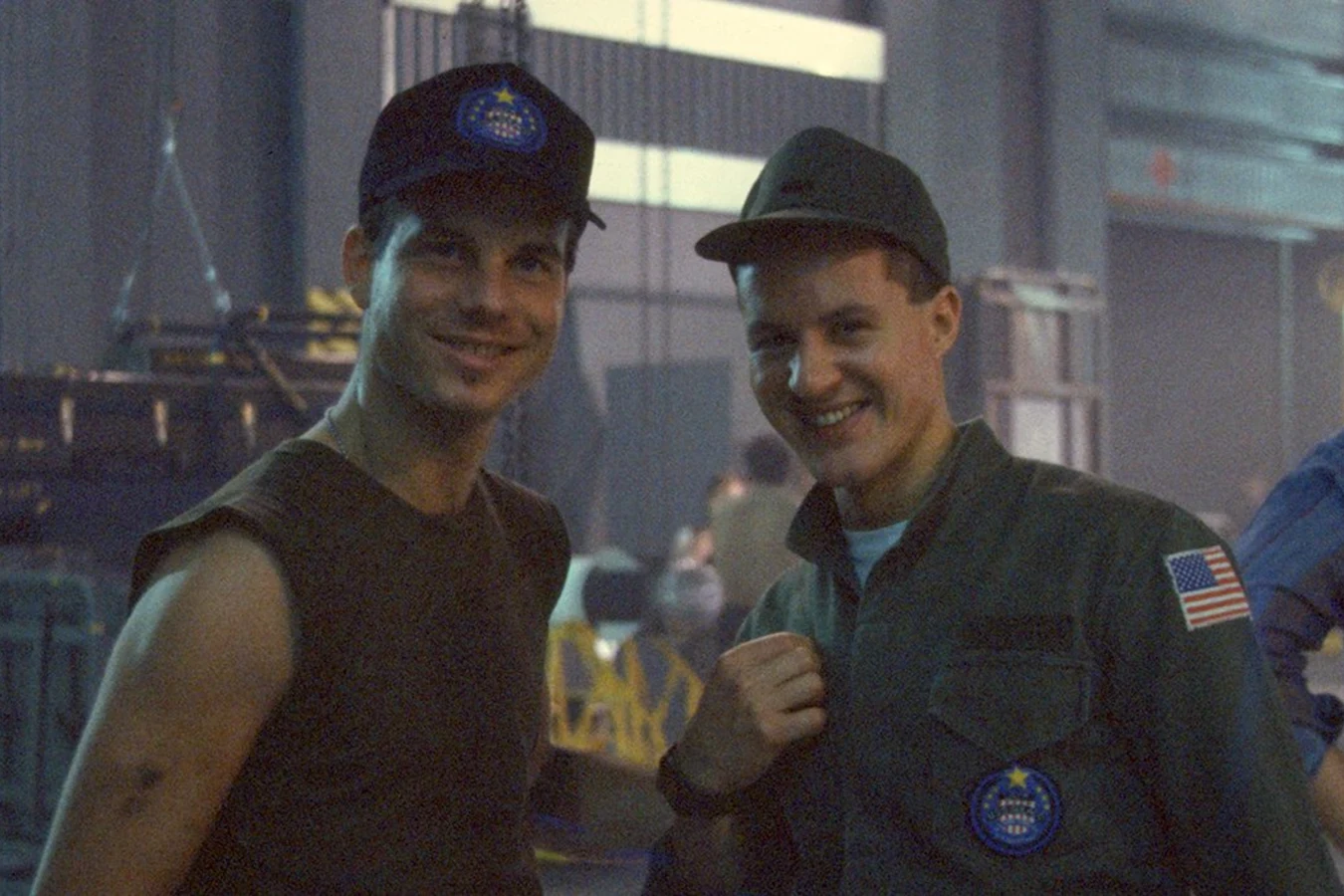
Day one was Monday, September 30, 1985. They wrapped on January 11 after seventy-six days, then kept shooting Queen pickups from January 20. The first ten days were at Acton Lane Power Station in Harlesden, about fourteen miles from Pinewood. Location manager Terence Ackland-Snow found the coal plant, closed since 1983, and crews spent three weeks dressing it after asbestos was removed. Grillwork floors stacked stories of see-through catwalks. They went back December 3 to 10 for the egg chamber and Newt's rescue.
Cinematographer Dick Bush lasted about two weeks, then said he could not hit the schedule. Adrian Biddle, a focus puller on the first film, replaced him. First assistant director Derek Cracknell fought Cameron over tea breaks and union hours that ended the day at 5:30. When Cameron and Hurd tried to replace him, the crew walked. Weaver talked both sides down, and Cracknell stayed.
Operations and Medlab were shot on E Stage from October 22 to November 7. Weaver did not arrive until October 21, because Half Moon Street overran at Elstree. The first three weeks were rewritten around her absence.
Colony And Ship Design
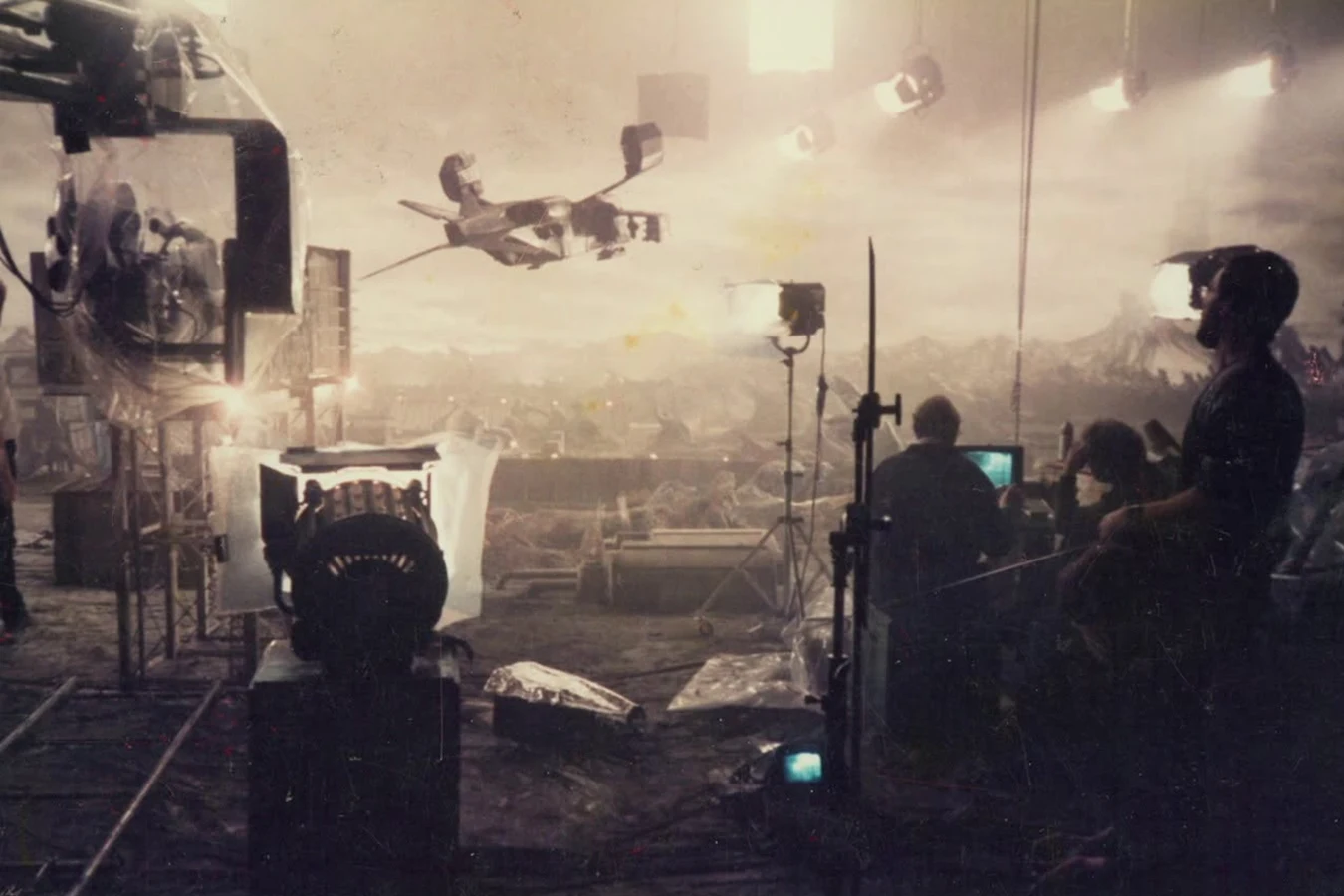
Design work started in early May 1985 with almost nothing drawn and a September start date. Ron Cobb took the colony: modular hexagonal cylinders on concrete piers, a boomtown of cargo containers, and a storm wall. During preproduction a d was added to Weylan, making Weyland-Yutani.
Concept artist Syd Mead, found judging Miss USA in Lakeland on about May 13, first drew the Sulaco as a melon-shaped rocket with a huge antenna field. Cameron rejected it because a bulge would throw the focus as it passed the camera. Mead redrew a long submarine hull, a vertical blade of hardware. He scaled the ship from a dropship bay about a hundred feet long.
Weapons And Vehicles
Cameron drew the guns, and Simon Atherton, one of two studio armorers with about six thousand weapons on the lot, built them with special parts from Terry Reed. The pulse rifle was a Thompson with a Franchi SPAS 12 under it, and Chrissy Overs molded a casing over the Thompson so the muzzle flame would read. Smartguns were MG-42s on Steadicam rigs with Kawasaki motorcycle parts, and British Aerospace lent a Mantis laser rangefinder. Terry English made the armor, with fiberglass light versions used when they were not firing.
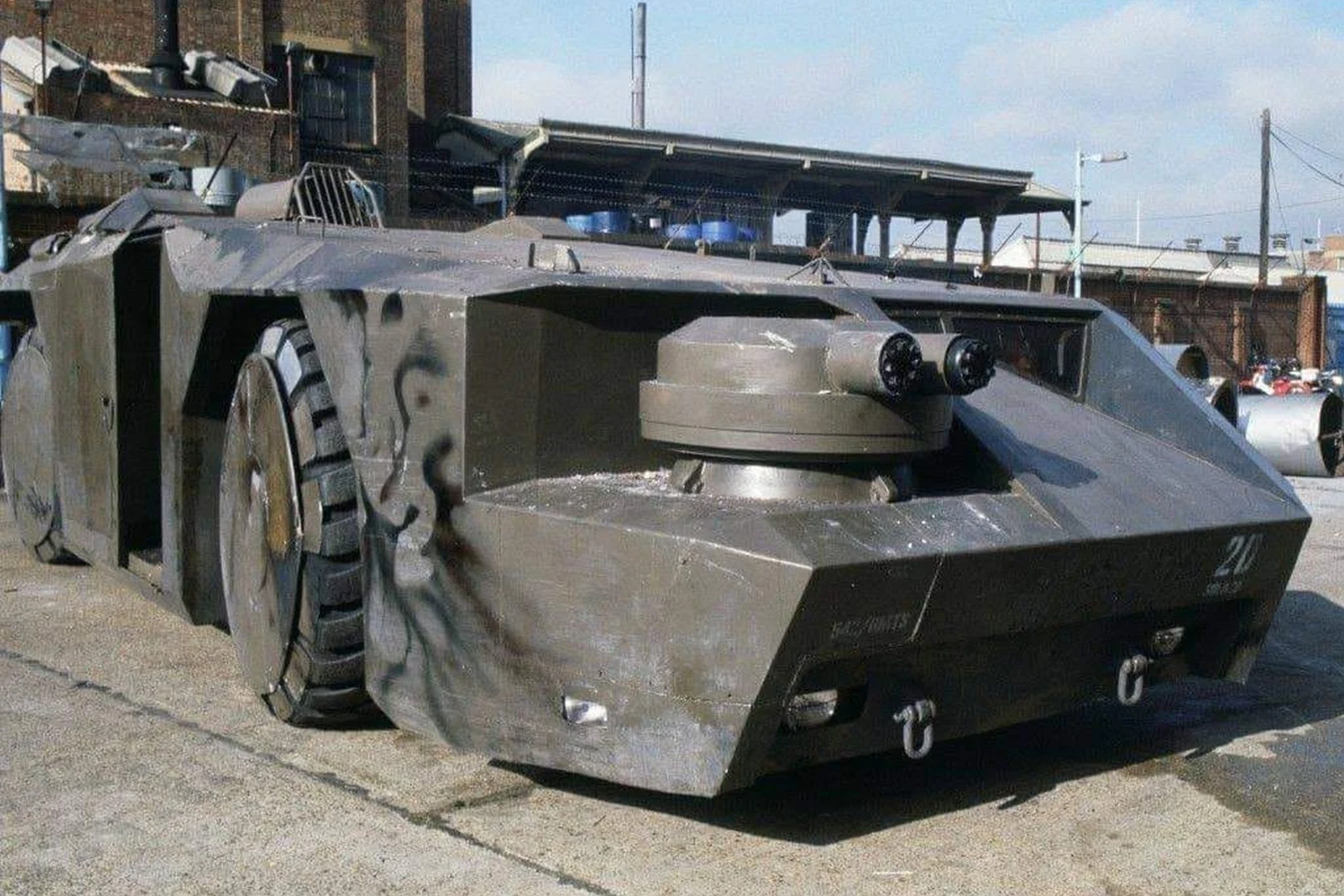
Cameron kitbashed a Sunday dropship from an AH-64 Apache kit and foam-core. Metalworkers from a nearby auto shop built a full-size mock-up first, and the miniatures were made to match it. Peter Astin patterned fiberglass shells. The flying miniature was about six feet, one-twelfth scale. About nine were made, and one was fully mechanized. The first ship carried the Bug Stomper decal. The second was lettered Smart Ass. The full-size APC started as an airport towing vehicle. Its interior was built larger than the exterior so a bank of video screens would fit.
Creature Effects
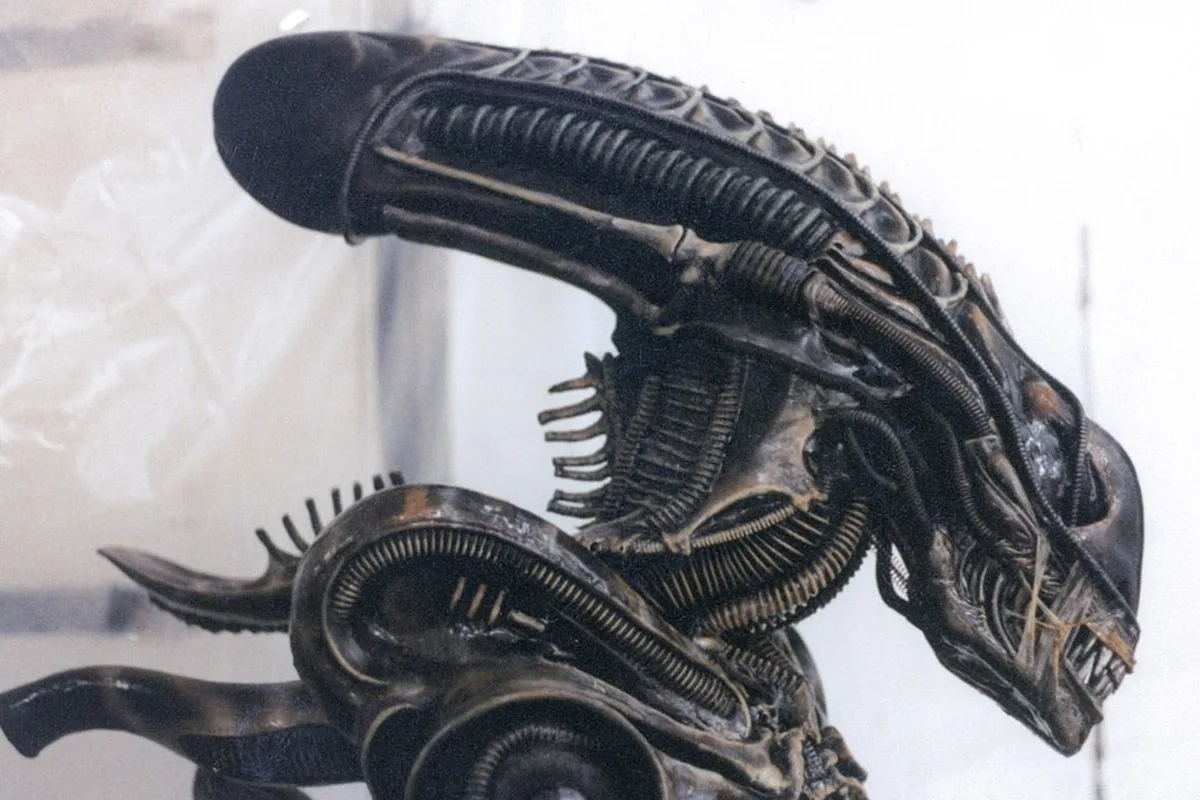
Hurd contacted H.R. Giger before the green light, but he was locked on Poltergeist II. Cameron also said the Queen was designed, and he did not want Giger to take over that work. Cameron promised Fox no more than six suits in a shot. Stan Winston's shop made about fifteen spandex suits and about ten articulated puppets around eight feet. Tom Woodruff sculpted a ribbed skull instead of Giger's smooth dome. Background Aliens were parts glued onto black unitards. Gymnasts and stunt players filled the suits, among them Carl Toop.
Winston's shop built about fifteen Facehugger types: jumpers, magnetized wall-walkers, and grabbing units with nine operators on the tail. Dead ones floated in fake formaldehyde. The Medlab fight used cold sprinklers to hide wires. Cameron preferred the 1979 sculpt to these rubber versions.
The Queen
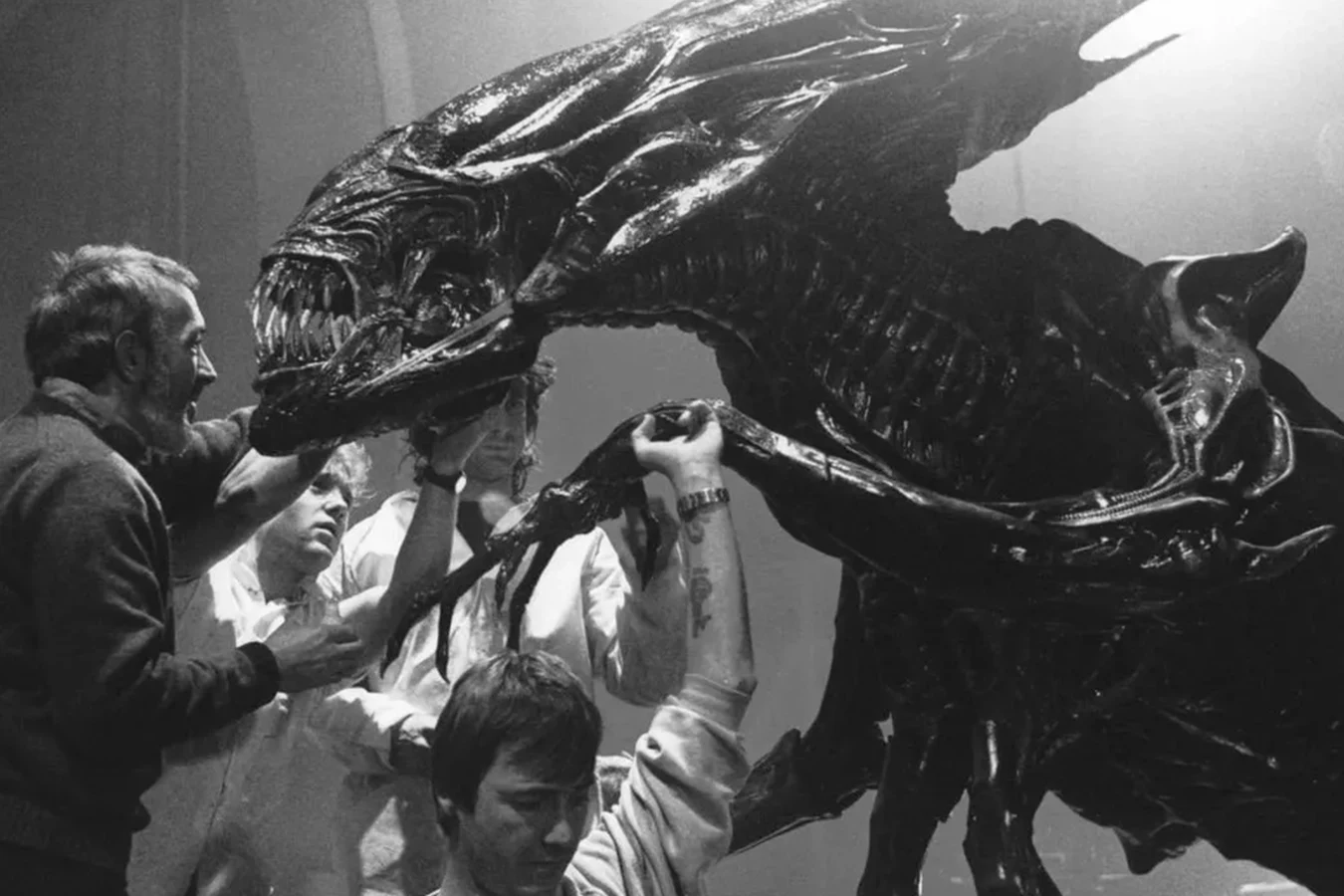
Cameron sold Brandywine a Queen with a Giger head and a triceratops frill. Winston first thought two men inside one suit was unworkable. In a Los Angeles parking lot they hung a fourteen-foot foam-core body wrapped in black trash bags from a rented crane. Stuntmen Dick Warlock and Ed Matthews stood almost back to back so the body had four arms. The crew later called that mock-up the Garbage Bag Queen.
The full-size English Queen used two puppeteers in the chest, a hydraulic neck, cabled jaws, and a crane or a rigid bracket out of frame. Doug Beswick built a three-foot quarter-scale Queen with forty-nine cables and ten joysticks. Stop-motion was dropped because slime strobed on the smaller puppet.
Power Loader
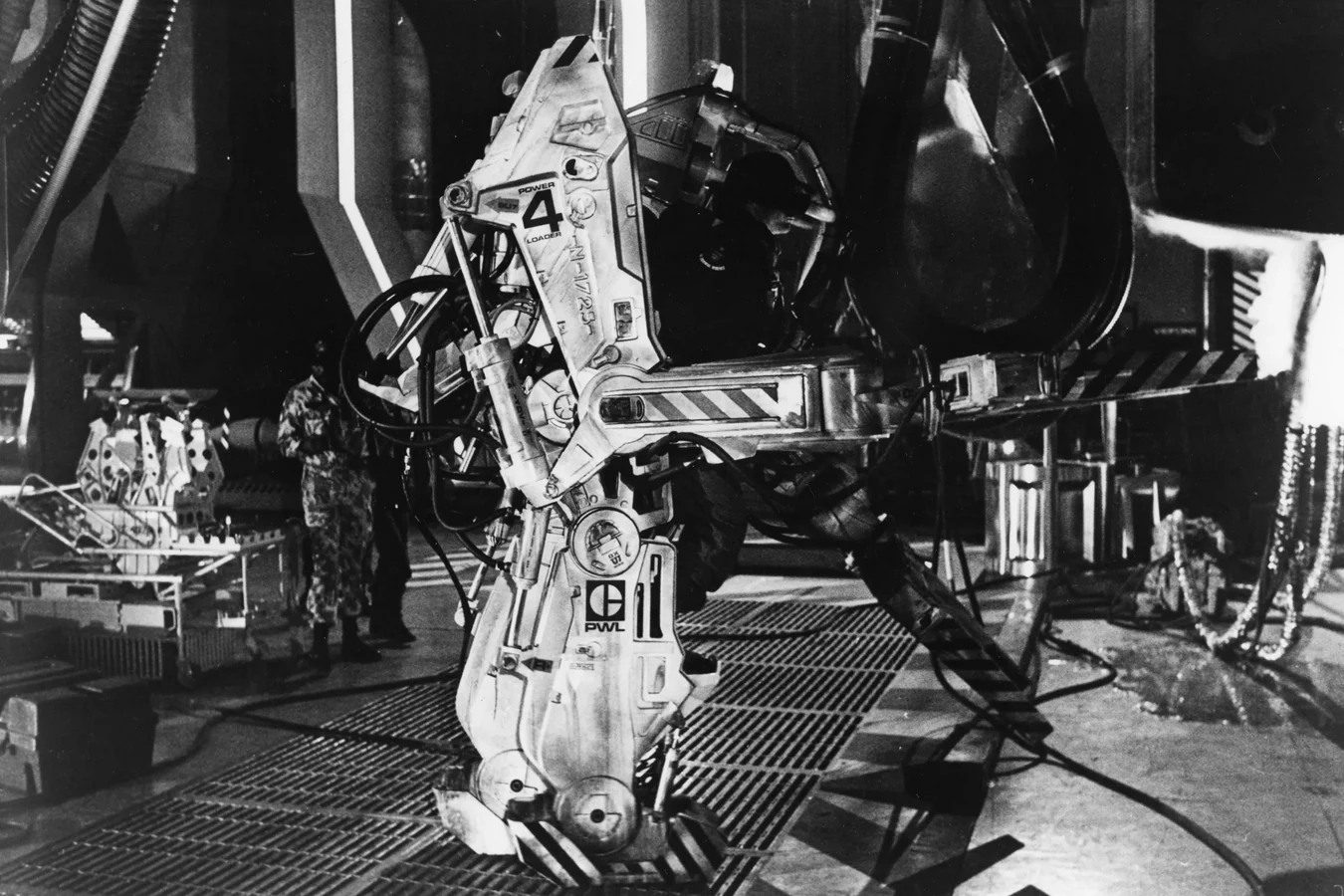
The loader came from the powered suit in Cameron's earlier Mother story. Mead's first version stood about ten feet and put the operator too high against the Queen. John Richardson's shop built from foam-core, then PVC and trash bags, then a pipe frame of about six hundred pounds. Stuntman John Lees stood behind Weaver and walked the legs. Set decorator Crispian Sallis got written permission from Caterpillar in Slough to put the name on the yellow-and-black body. Cables, a crane jib, and radio servos worked the claws.
Miniatures And Visual Effects
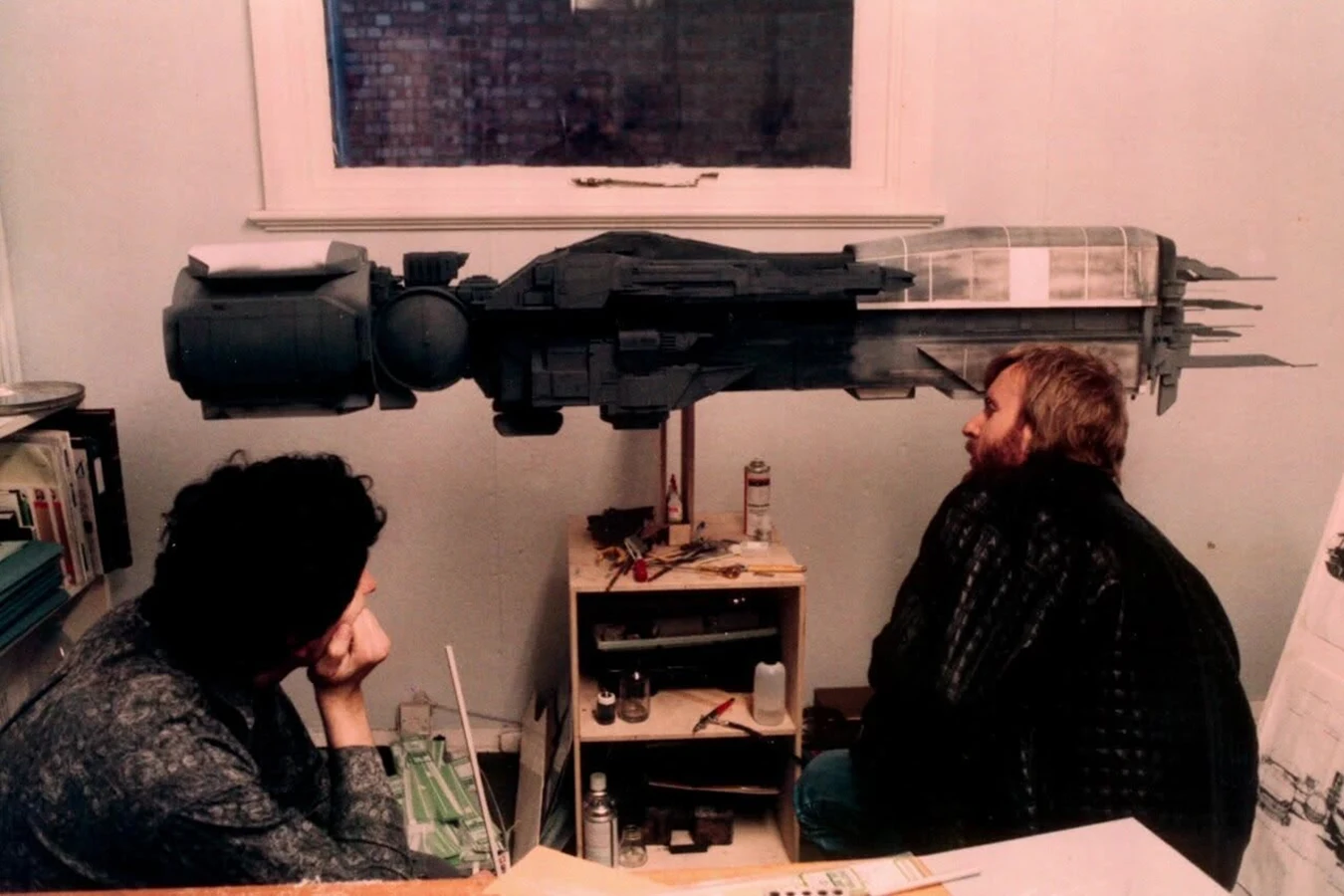
Robert Skotak and Dennis Skotak of LA Effects Group ran in-camera plates, front projection, and rear projection. Suzanne Benson produced the effects unit. They shot 143 shots across twenty-nine weeks and finished in April 1986. The model shop sat in a covered way with no real roof. Bob Burns had kept the twelve-foot 1979 derelict, and they used two tons of plaster on the landscape.
The atmosphere processor started as Cobb's cone. Cameron added outward fins for height. A six-foot model vented steam plumes about twelve feet high. When money ran out, the processor blast was a light bulb in cotton. Four unfinished colony shots were finished about four years later for the Special Edition. Hurd first asked Brian Johnson, then Cameron chose LA Effects. Union rules later let Johnson shoot some dropship plates.
Music
James Horner was hired in late October 1985 for a planned ten weeks. He reached London on March 21, 1986, to find the picture unlocked and live-action pickups unfinished. Hurd could not give him four extra weeks. He recorded more than ninety minutes with the London Symphony Orchestra at Abbey Road. Cameron later recut those cues in the mix, including the anvil piece several times. The airlock fight went out without score because Cameron wanted it to play as live sound.
Post-Production
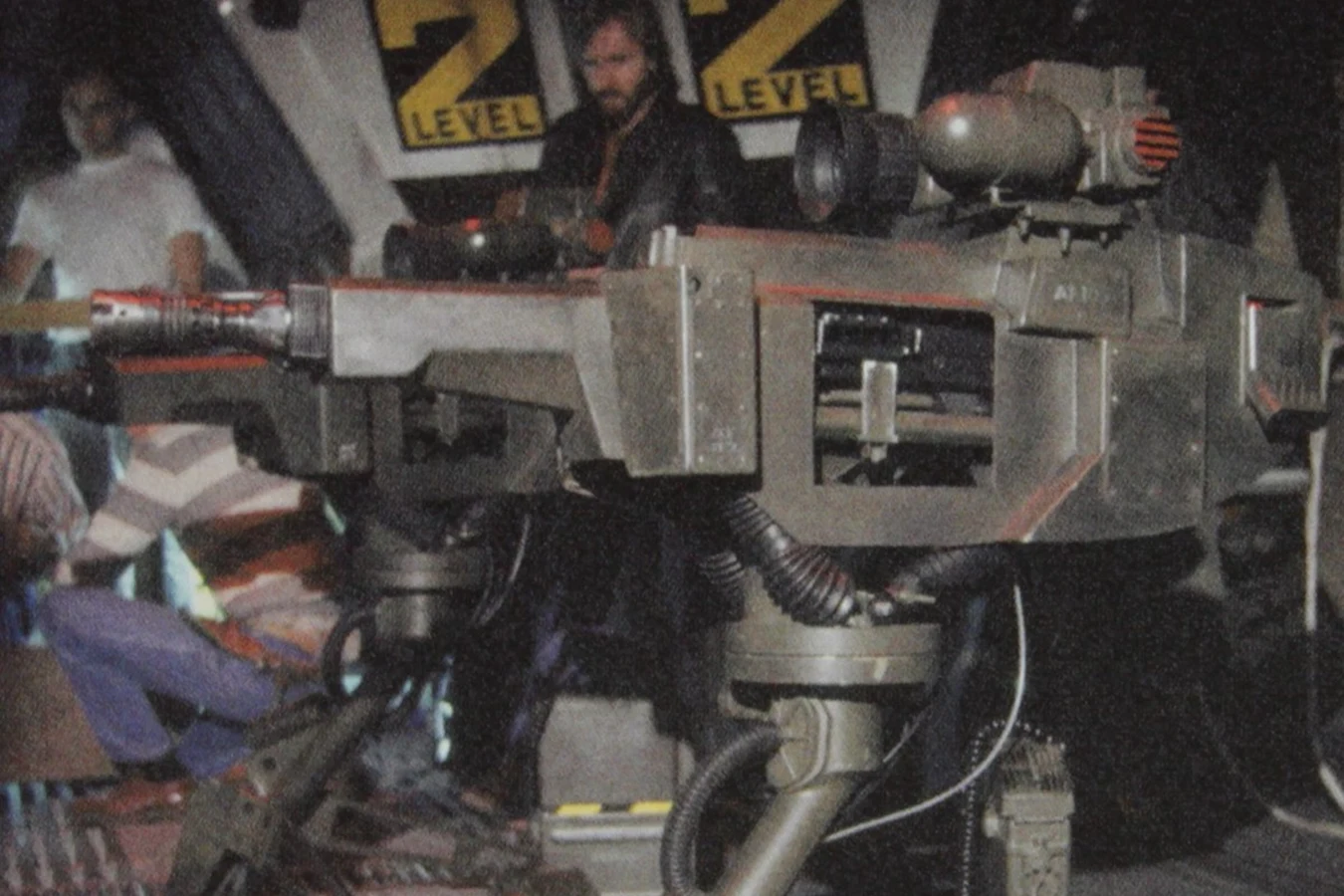
Editor Ray Lovejoy cut the theatrical version to 137 minutes. Cameron later said he had taken out about ten to twelve minutes, including the Jordens at the derelict, Ripley's grown daughter Amanda on Gateway, the sentry guns, and a Burke suicide take he disliked. The 1991 Special Edition put about 17.5 minutes back, for a 154-minute cut. Cameron called that the version they had meant to release.
Novelization
Warner Books published Alan Dean Foster's Aliens novelization in 1986, working from James Cameron's screenplay. Foster had the inquiry board call the moon Acheron, described Hadley's Hope as a shake-and-bake colony swimming in methane, and put about sixty or seventy families on the rock. He kept operations managers Al Simpson and Brad Lydecker in a cramped control block where dust got into every seal, a habit colonists nicknamed particulate osmosis. Burke claimed about thirty atmosphere processors scattered for injection, against the single plant the film shows, and the drop through Acheron's cloud hit winds over two hundred.
Comic Adaptations
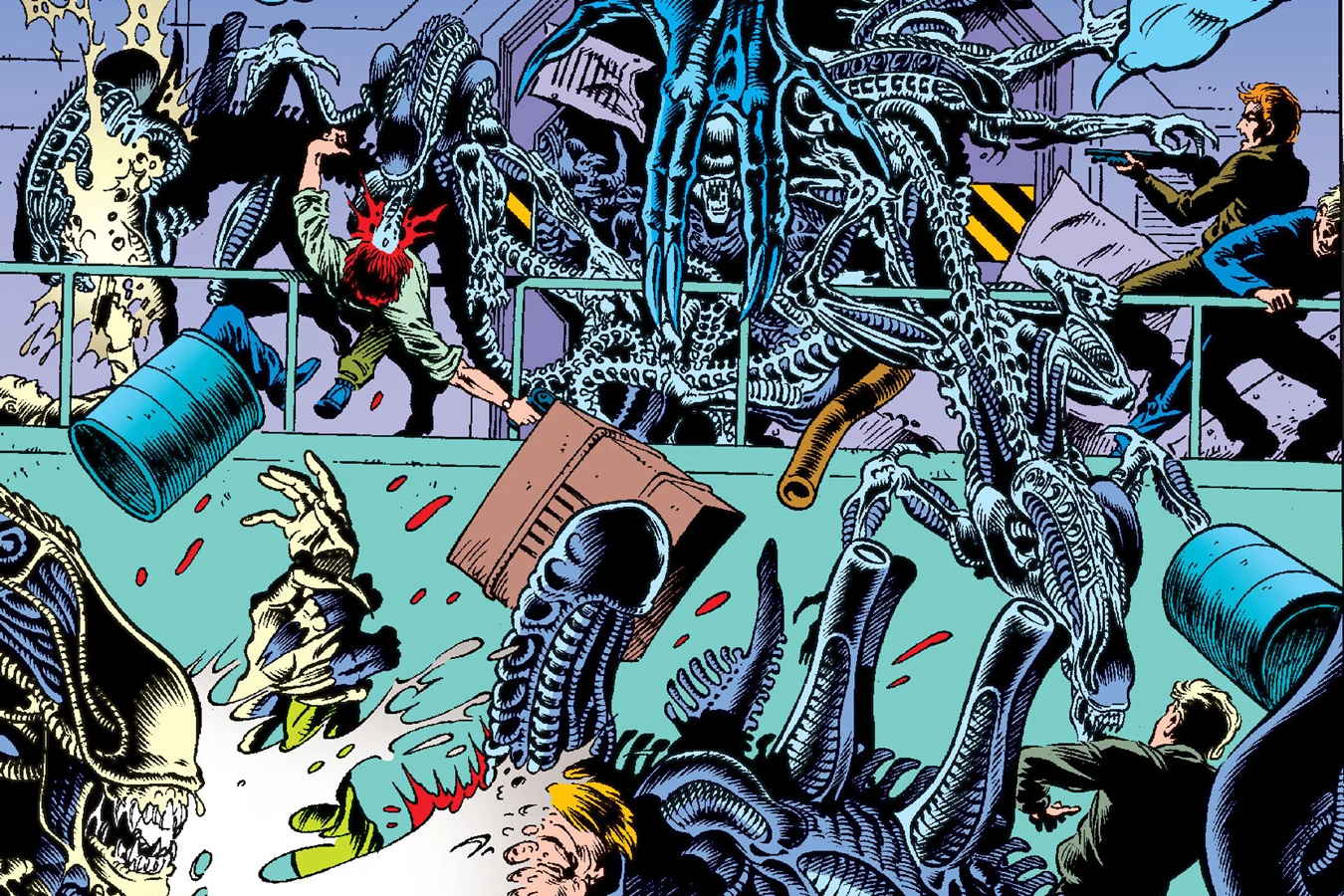
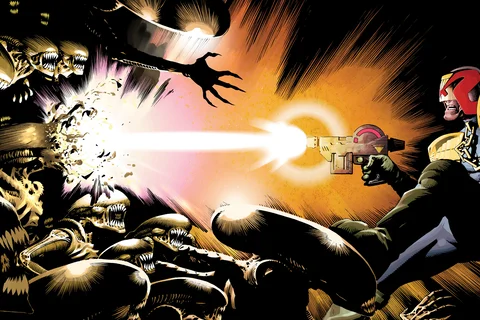
Dark Horse published Aliens: Newt's Tale as a two-issue miniseries in 1992, written by Mike Richardson with covers by John Bolton. It retold the colony fall from Rebecca "Newt" Jorden's side of the vents, including the kids watching Russ die in Medlab and the last stand in Operations, where Anne and Tim died after the hive faked a rescue at the barricade. The comic named civilians the film never did, among them Tim's friend Aaron, survey assigner Bill Andrews, Medlab doctor Kent, and nest-party colonists Drapers and Loney. Alien: River of Pain later treated those Newt's Tale beats as required continuity.
Aliens: Fire and Stone was the 2014 four-issue Dark Horse miniseries by Chris Roberson and Patric Reynolds, one leg of the Fire and Stone crossover. It followed about thirty-eight people who left Hadley's Hope on the short-range miner Onager and crashed on LV-223 with Xenomorphs still in the hold. The same year Roberson and artist Paul Lee published the short Aliens: Field Report in Dark Horse Presents volume 3, issue 2. That strip follows Hicks through the hive ambush. He notes the Onager missing from the pads, then the Medlab fire alarm cuts him off before the squad can chase the lead, which is why the film Marines never mention the escape.
Hungary got a 17-page film comic in 1987 under the local title A Bolygó Neve: Halál, drawn by Attila Fazekas for the Filmsikerek Képregény Változata line and bound with a Terminator strip. It jumps the plot in long strides. Hicks is lettered Hicks, then Qick, then Quick. The Aliens grow octopus arms and visible eyes.
Video Game Adaptations
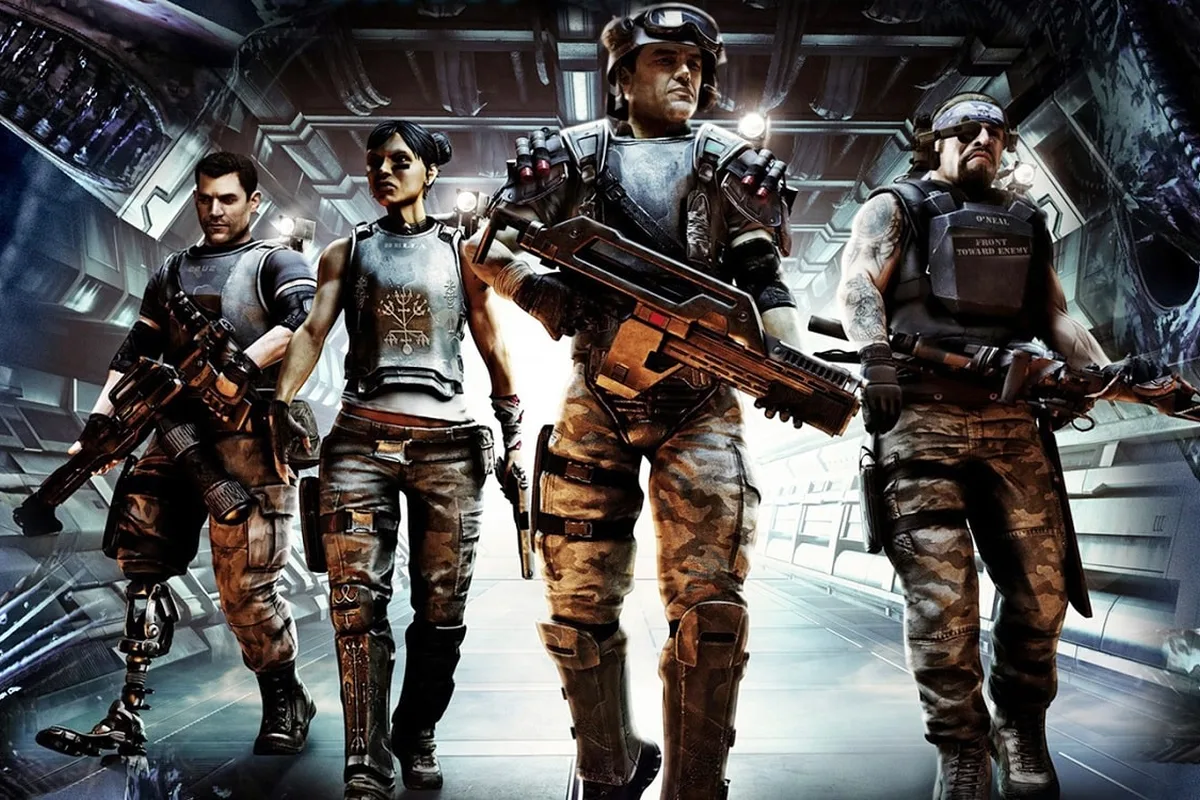
Activision put Aliens on home computers in 1986, and Konami followed with Aliens: The Arcade Game in 1990. Those first licensed games ran Ripley and the Marines through short action stages, not the full colony siege. Aliens: Infestation later sent USS Sephora Marines onto the drifting Sulaco on the Nintendo DS in 2011.
Gearbox Software and Sega sold Aliens: Colonial Marines as a "direct sequel to Aliens." Players boarded the Sulaco as Corporal Christopher Winter seventeen weeks after the film, then dropped into the ruins of Hadley's Hope. TimeGate Studios shared the campaign work, the 2013 release did not match the E3 2011 trailers, and the game became the franchise's most public letdown.
Legacy
The 1991 Special Edition added about seventeen minutes, including the Jorden family's trip to the derelict and the sentry-gun last stand in the colony corridors. That cut, later issued on the 2003 Quadrilogy, is the version that names how Hadley's Hope actually fell.
Cameron's marine kit and hive assault became the default for later squad games. Aliens: Fireteam Elite and Aliens: Dark Descent still run on pulse rifles, smartguns, and a Queen at the center of a nest. The film also locked the 2179 colony disaster that Alien 3 opens on weeks later, after the Sulaco fire and the deaths of Hicks and Newt.
Alternate Sequel Plans
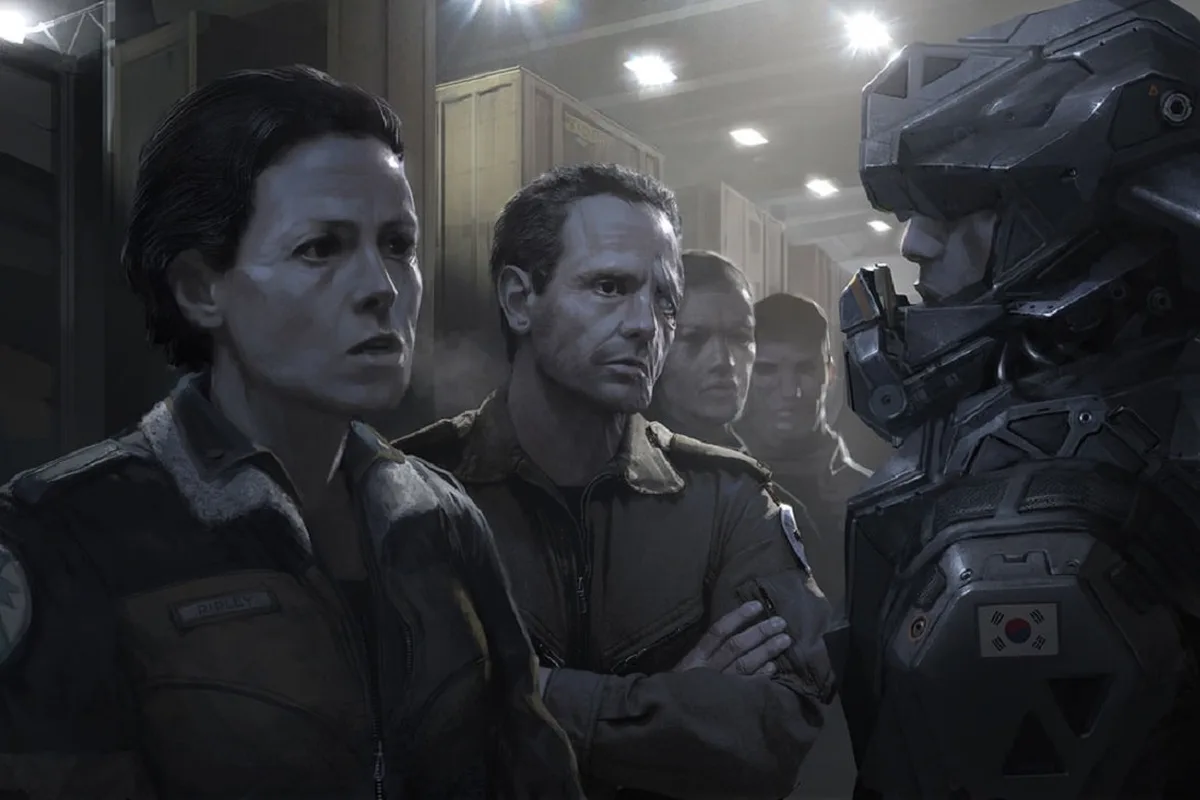
Fox spent years looking for a sequel that kept Hicks and Newt alive after Aliens. William Gibson's unused Alien 3 drafts sent Hicks and Bishop to Anchorpoint against the U.P.P., with Ripley sidelined, later novelized as Pat Cadigan's book of William Gibson's unused Alien 3 script. Vincent Ward then planned a wooden monastery on the satellite Arceon before the shoot became the Fury 161 prison story.
In 2015, Neill Blomkamp posted concept art for Alien 5, a fifth film that skipped Alien 3 and Alien: Resurrection. An older Ripley and Hicks would have gone back into the fight, with Newt still alive, new Xenomorph types, and upgraded Marine kit. Fox paused the project for Alien: Covenant, and Ridley Scott later confirmed it was dead.
Box Office
20th Century Fox opened Aliens on July 18, 1986 against an $18.5 million budget. The British premiere followed at the Odeon on July 27, with a wider UK opening around August 29. It took $10.1 million from 1,437 theaters, opened at number one, and held the top spot in the United States for four weeks. The first US run reached $85.2 million, seventh among 1986 releases in North America. Worldwide totals then split by how later counts are added, from about $131.1 million to $183 million.
Reception
Aliens opened to generally good reviews on July 18, 1986. Time put it on the July 28 cover as the summer's scariest movie. CinemaScore audiences graded it an A. Most critics treated it as a worthy follow-up to the first film, even when they argued it traded Gothic horror for military action.
Variety praised Weaver, Henn, and Goldstein, then called the picture the work of an expert craftsman next to Ridley Scott's more artistic first film. The Hollywood Reporter found the opening slow, then credited Cameron with the same relentless situation-building he had used on The Terminator. Sheila Benson in the Los Angeles Times called the film taut and funny around Weaver, but weaker as pure horror than Alien after years of creature effects, including John Carpenter's The Thing.
Roger Ebert admired the last hour's craft and walked out drained, with knots in his stomach, and did not treat that as ordinary entertainment. Gene Siskel dismissed the film as a long violent assault and objected to putting Newt in danger. Rex Reed found it too long, then treated the Queen as a shock he had not seen in earlier films. Walter Goodman in the New York Times disliked the racing close-ups and the way the camera kept off the Aliens.
At the 59th Academy Awards, Aliens won Best Visual Effects for Robert Skotak, Stan Winston, John Richardson, and Suzanne Benson, and Best Sound Effects Editing for Don Sharpe. Weaver's Best Actress nomination was rare for a science-fiction action film. The film also took nominations for Horner's score, Lamont and Sallis's art direction, Lovejoy's editing, and sound. It lost Best Actress to Marlee Matlin for Children of a Lesser God. Weaver was also nominated at the Golden Globes. The Saturn Awards gave the film eight prizes, including Best Science Fiction Film, Best Director and Best Writing for Cameron, Best Actress for Weaver, Best Supporting Actor for Paxton, Best Supporting Actress for Goldstein, Best Performance by a Young Actor for Henn, and Best Special Effects. It won a BAFTA for visual effects and a Hugo Award for Best Dramatic Presentation.
Famous Quotes
The 1986 campaign sold Aliens with the line "This time it's war." The film itself left lines from Ripley, Hudson, Hicks, Vasquez, Bishop, Newt, and Ferro.
- Tagline: "This time it's war."
- Hudson: "Is this a stand-up fight, sir, or another bug hunt?"
- Hudson: "We're on an express elevator to hell, going down!"
- Ripley: "Did IQs just drop sharply while I was away?"
- Ripley: "I say we take off and nuke the entire site from orbit. It's the only way to be sure."
- Bishop: "I prefer the term 'artificial person' myself."
- Hicks: "I like to keep this handy. For close encounters."
- Hicks: "I wanna introduce you to a personal friend of mine. This is an M41A pulse rifle."
- Ferro: "We're in the pipe, five by five."
- Hudson: "Game over, man. Game over!"
- Hudson: "They're coming outta the goddamn walls!"
- Vasquez: "Let's rock!"
- Newt: "My mommy always said there were no monsters. No real ones. But there are."
- Ripley: "Get away from her, you bitch!"
External Sources
- Official Movie Page
- IMDb
- Wikipedia
- Aliens (1986) on Box Office Mojo
- The Making of Aliens at Titan Books
Tag Categories: Alien Movies