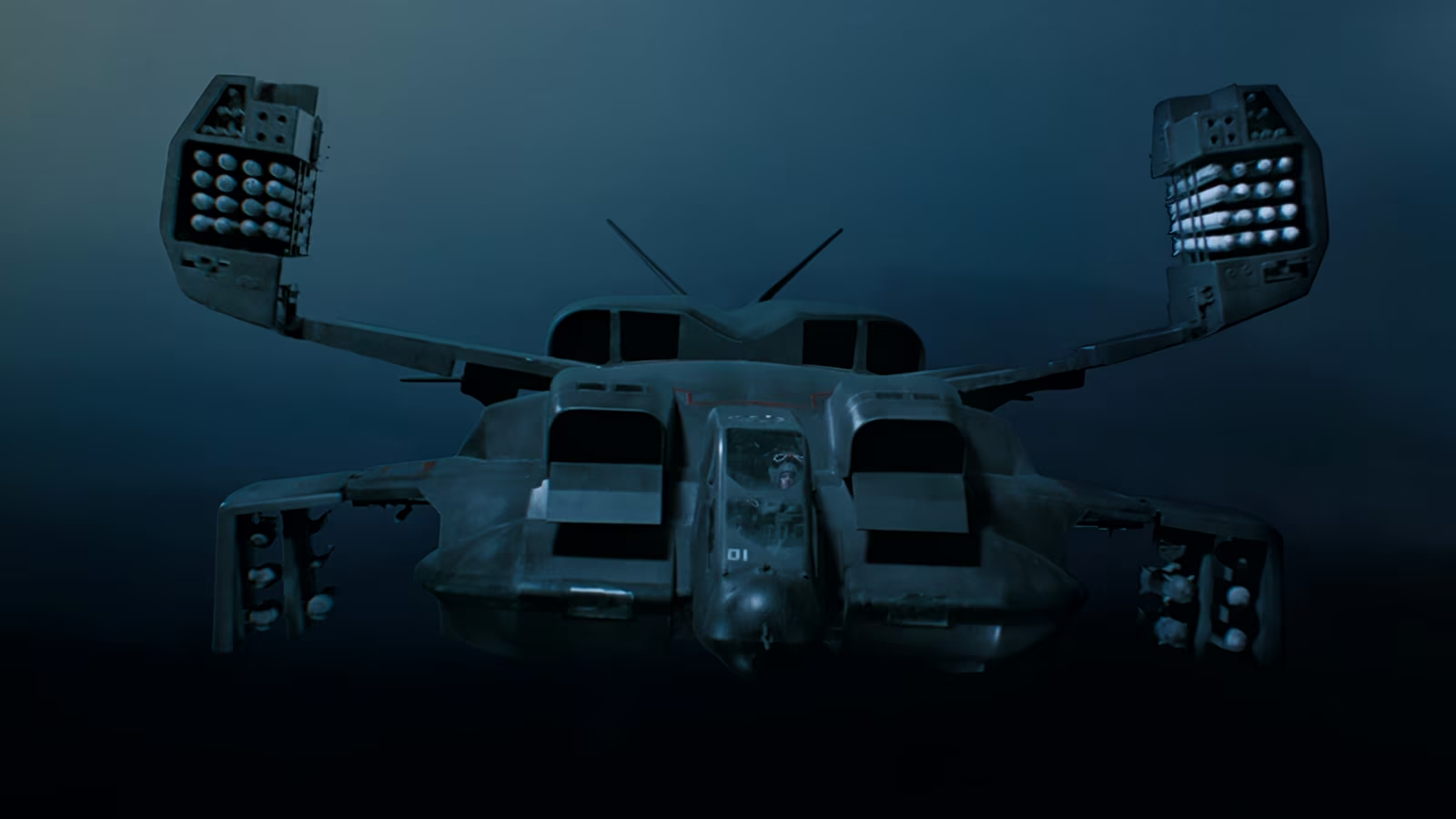

The UD-4 "Cheyenne" Utility Dropship was one of the most recognizable military spacecraft in the Alien universe. Classified as a Utility Dropship, it fulfilled multiple battlefield roles rather than specializing in only transport or combat. Operated by the United States Colonial Marine Corps, the Cheyenne served as a rapid insertion and extraction vehicle designed to deliver troops, vehicles, and supplies directly into hostile environments. It carried Marines from larger USCM warships in orbit (often Conestoga class) to planetary surfaces, provided close air support during engagements, and extracted survivors under fire. Built for versatility, the UD-4 combined atmospheric flight, vertical takeoff and landing capability, and heavy weapons support into a single compact platform.
Technical Specifications
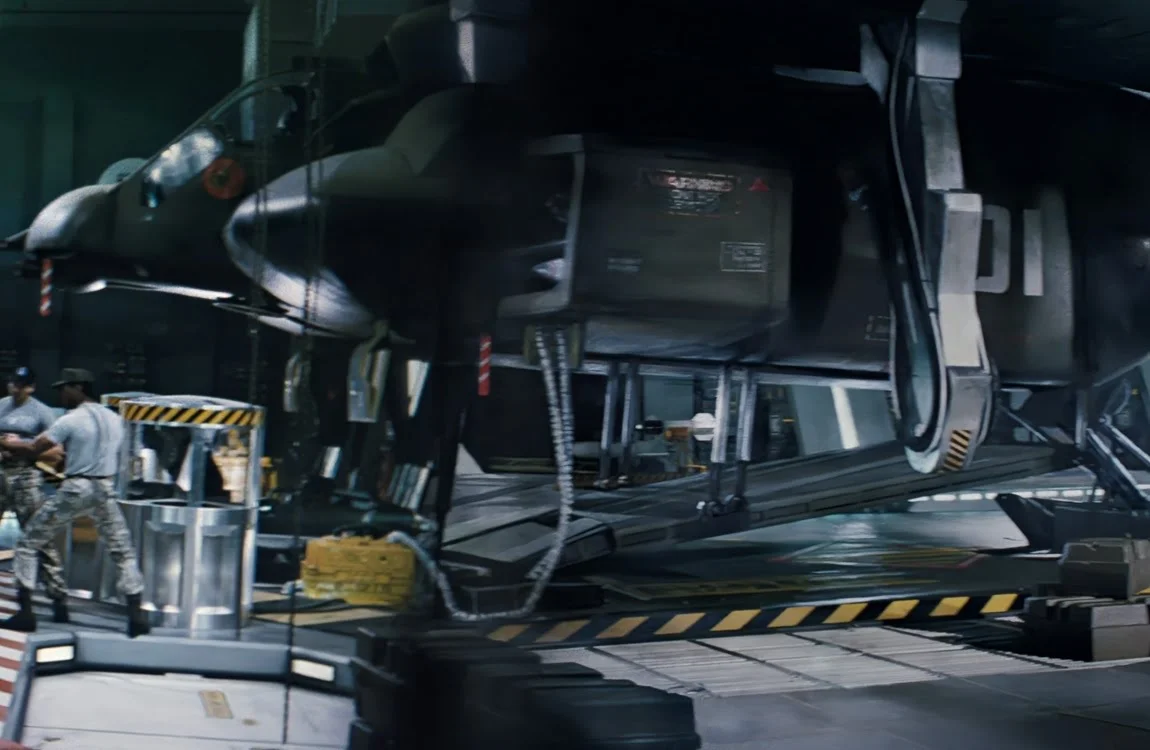
The UD-4 Cheyenne was powered by twin Republic Dynamics TF-900 turbine engines supported by TF-220/A-14 ramrockets, allowing the dropship to reach speeds approaching Mach 9 while maintaining full VTOL capability. Its cargo bay provided approximately 103.6 cubic meters of internal space and supported payloads of up to 16,000 kg, enough to carry a fully loaded M577 Armored Personnel Carrier. The standard airframe measured roughly 25.2 meters in length and expanded to about 15.3 meters wide when its weapons pods were deployed. The hull incorporated tri-layer carbon-ceramic armor to protect against small arms fire and light anti-aircraft threats. Typical loaded mass sat near 18,600 kg, with maximum operational mass exceeding 34,600 kg. Flight systems relied on vectored thrust and lift turbines for stable hover and controlled planetary descent, making the Cheyenne especially effective during low-altitude insertions and rapid extraction operations.
Armament and Combat Role
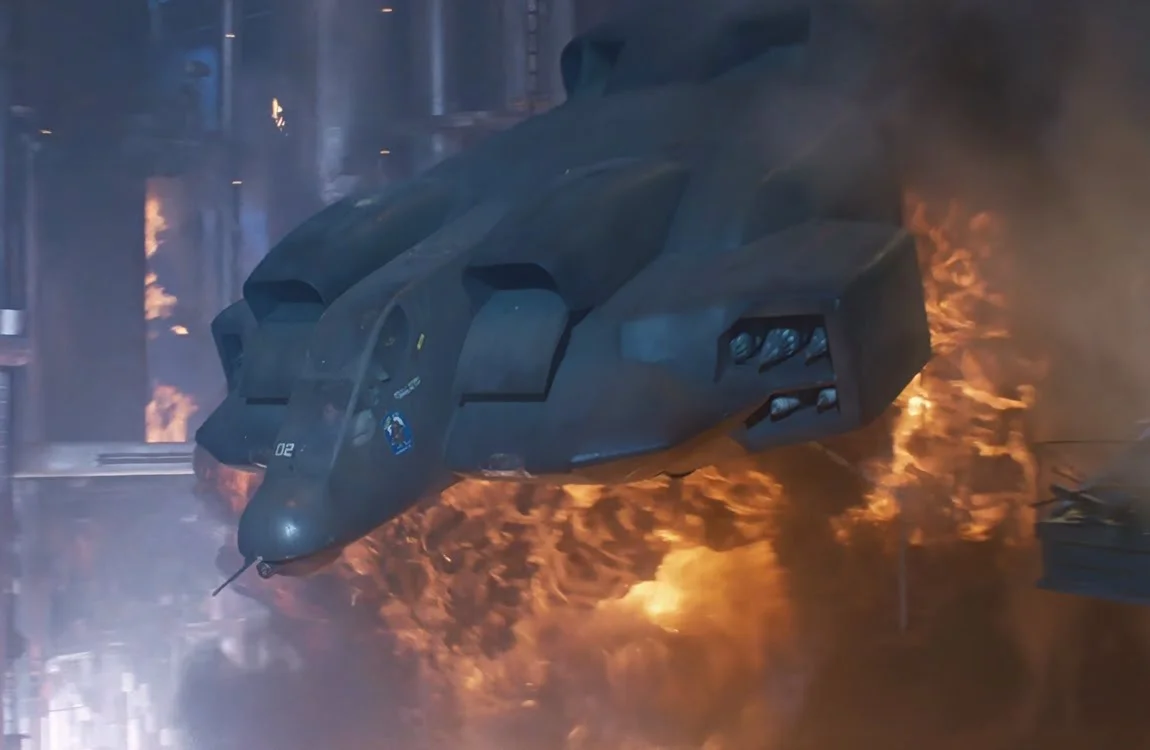
The Cheyenne mounted a GAU-113/B 25 mm rotary cannon beneath its nose, fed by a 900-round drum and capable of firing Armor Piercing Incendiary, Armor Piercing Discarding Sabot, and High Explosive Incendiary ammunition. The cannon turret provided forward and downward coverage, allowing the dropship to engage ground targets while supporting Marine deployments. Additional firepower came from wing-mounted weapons pods carrying Mk.16 Banshee 70 rockets, Mk.10 Zeus rockets, and Mk.88 SGW missiles. The dropship could also deploy guided munitions such as AGM-220C Hellhound II, AGM-204A TSAM, and AIM-90E Headlock missiles, giving it limited air-to-air capability. These systems allowed the UD-4 to function as both transport and gunship, delivering suppressive fire during landings and providing close air support throughout combat operations.
APC Transport Capability
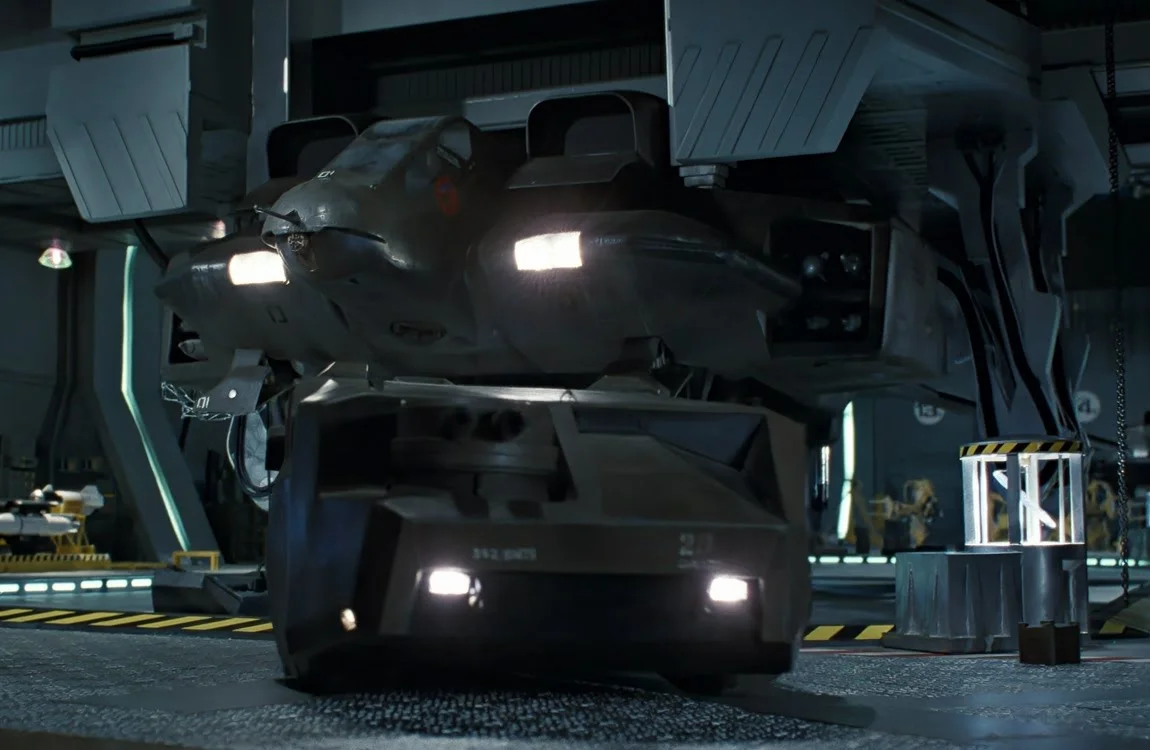
One of the Cheyenne's defining features was its ability to carry a full M577 Armored Personnel Carrier internally. The M577 APC fit securely within the cargo bay and could be deployed via the rear ramp within seconds of touchdown. This capability allowed Marines to arrive planetside with immediate armored support, dramatically increasing their operational flexibility. The combination of dropship and APC gave Colonial Marine units a rapid, self-contained assault package suitable for both reconnaissance missions and full combat deployments.
The Dropship's Crew
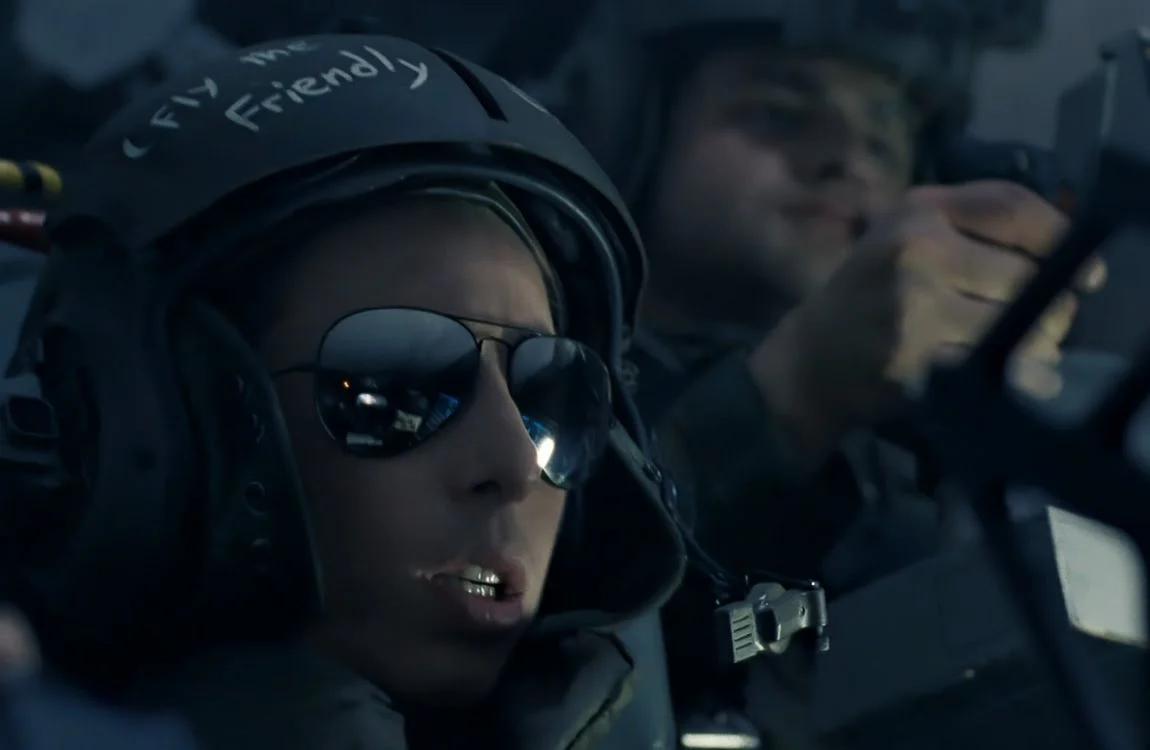
A standard UD-4 Cheyenne was operated by a two-person flight crew consisting of a pilot and co-pilot, both trained to handle atmospheric insertion, low-altitude combat flying, and emergency extraction procedures. During the LV-426 mission in Aliens, this role was filled by Ferro and Spunkmeyer, whose responsibilities extended beyond basic flight control to include weapons deployment, landing zone assessment, and coordination with ground teams. While the cockpit accommodated only two crew members, the dropship's operation depended heavily on communication with Colonial Marine command and onboard squad leaders. Somewhat surprisingly, the dropship's aviators held only Corporal and Private ranks, an unusual arrangement for a military aircraft, where pilots would typically be commissioned officers.
Dropship Variants
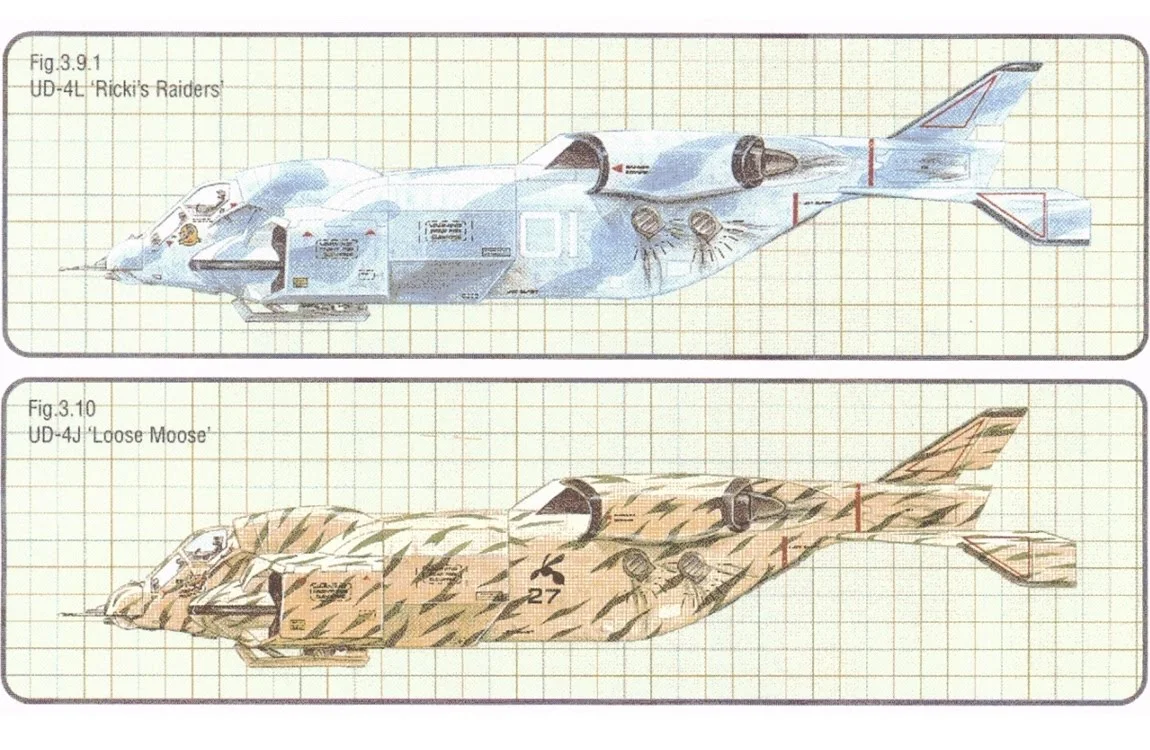
The UD-4 Cheyenne platform supported numerous variants throughout its service life, each tailored to specific operational roles. Early production models such as the UD-4B used Atco Wyoming F23 lift turbines and carried reduced armament, lacking the nose-mounted cannon and full weapons pod configuration seen on later dropships. These early units also transported fewer personnel and were primarily intended for basic troop insertion duties. Combat-optimized versions followed, including the UD-4C and UD-4L, which introduced improved propulsion systems, expanded missile hardpoints, and upgraded avionics. These variants supported heavier weapons loads and provided enhanced close air support during Marine deployments. The UD-4S focused on extended range and endurance, making it better suited for long-distance operations and prolonged patrol missions.
The "Stolen" UPP Variant
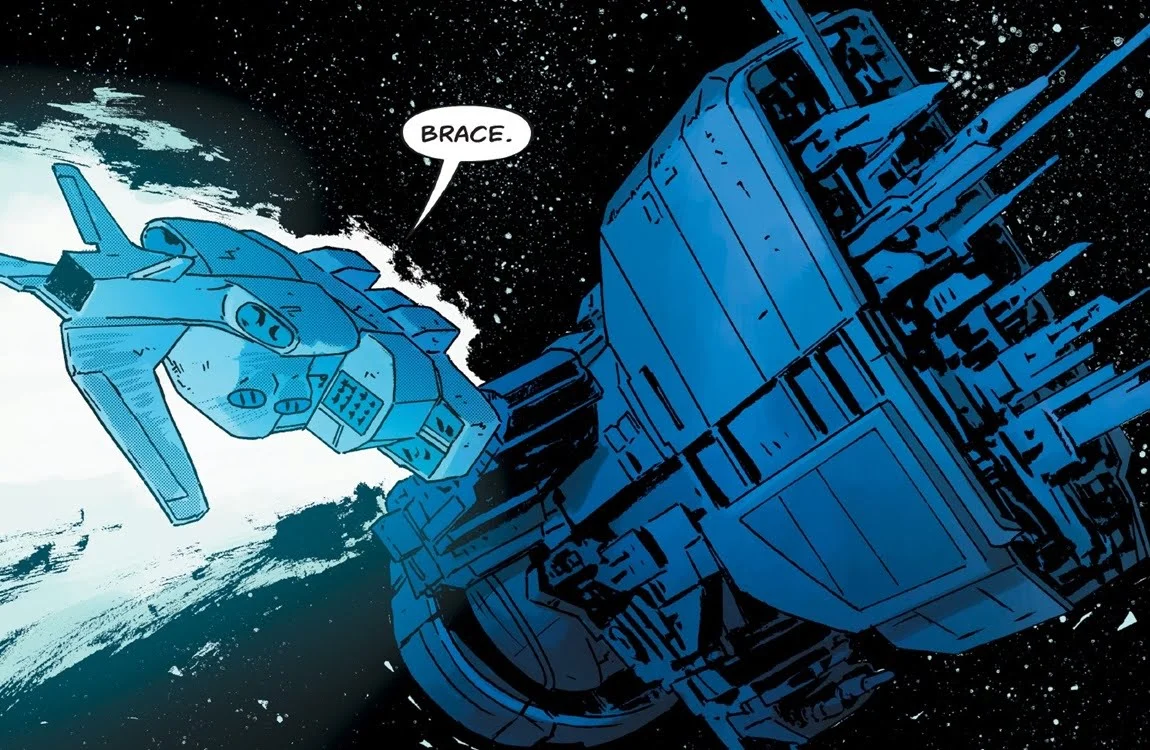
According to expanded universe sources, elements of the Cheyenne's design were later appropriated by the Union of Progressive Peoples. These stolen or reverse-engineered concepts appeared in UPP aerospace projects, suggesting that Colonial Marine technology was considered highly valuable by rival interstellar powers. They created the DS-3 Accipiter, adapting Cheyenne engineering concepts for UPP aerospace doctrine. In Pat Cadigan's book of William Gibson's unused Alien 3 script and the later comic, a UPP dropship landed on the hull of the USS Sulaco, and UPP soldiers entered the ship, leaving with the remains of Bishop.
Mission To LV-426
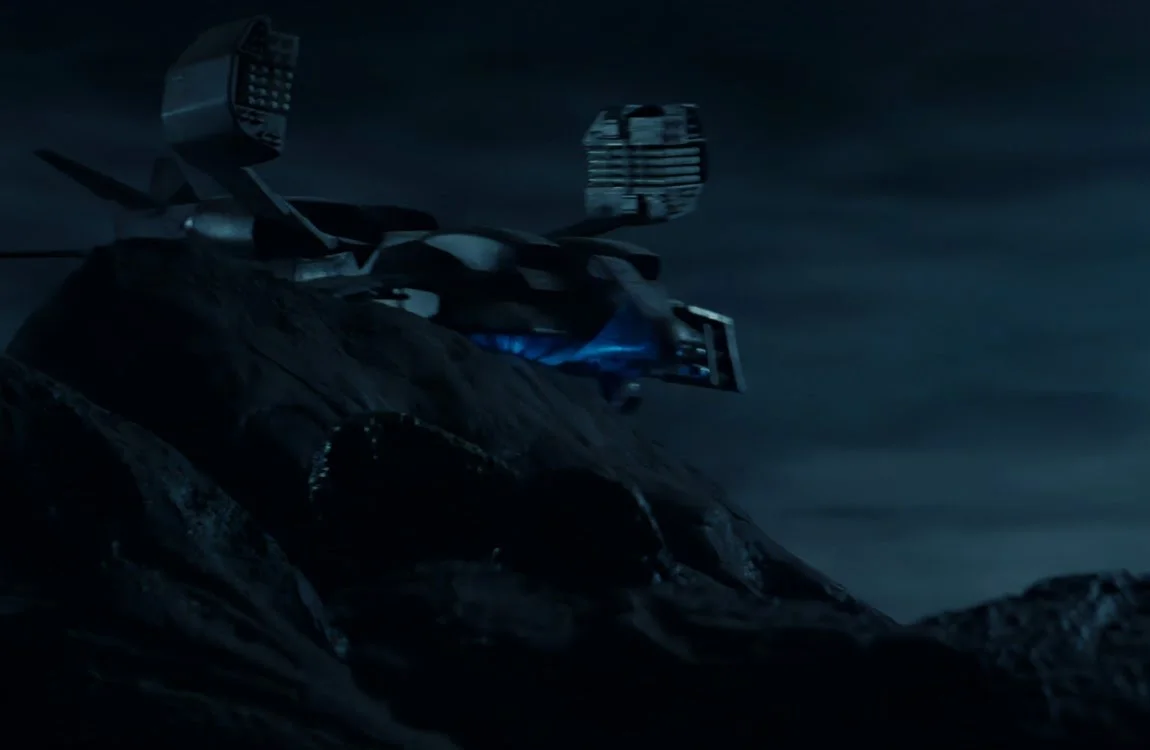
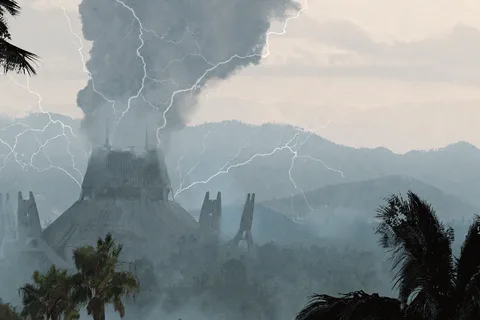
The Cheyenne gained its most famous operational history during the Colonial Marine deployment to LV-426. Two dropships were on board the USS Sulaco to transport Marines and equipment from orbit to the surface colony. During the mission, the "Bug Stomper" was destroyed when a lone Xenomorph sneaked on board and incapacitated Corporal Ferro, leading it to crash into the Atmosphere Processor. The surviving dropship named "Smart Ass" was remote piloted down from the USS Sulaco by Bishop, took a detour into the atmosphere processor, and finally returned to the Sulaco. However, the Alien Queen had snuck on board in the tail leg of the craft, but was defeated by Ellen Ripley in a P-5000 Power Loader soon after. A lone egg survived either on the Sulaco, or the dropship, leading to the events of Alien 3. The Smart Ass was lost together with the USS Sulaco, but multiple alternate fates for the ship exist.
Other Notable Missions And Crashes
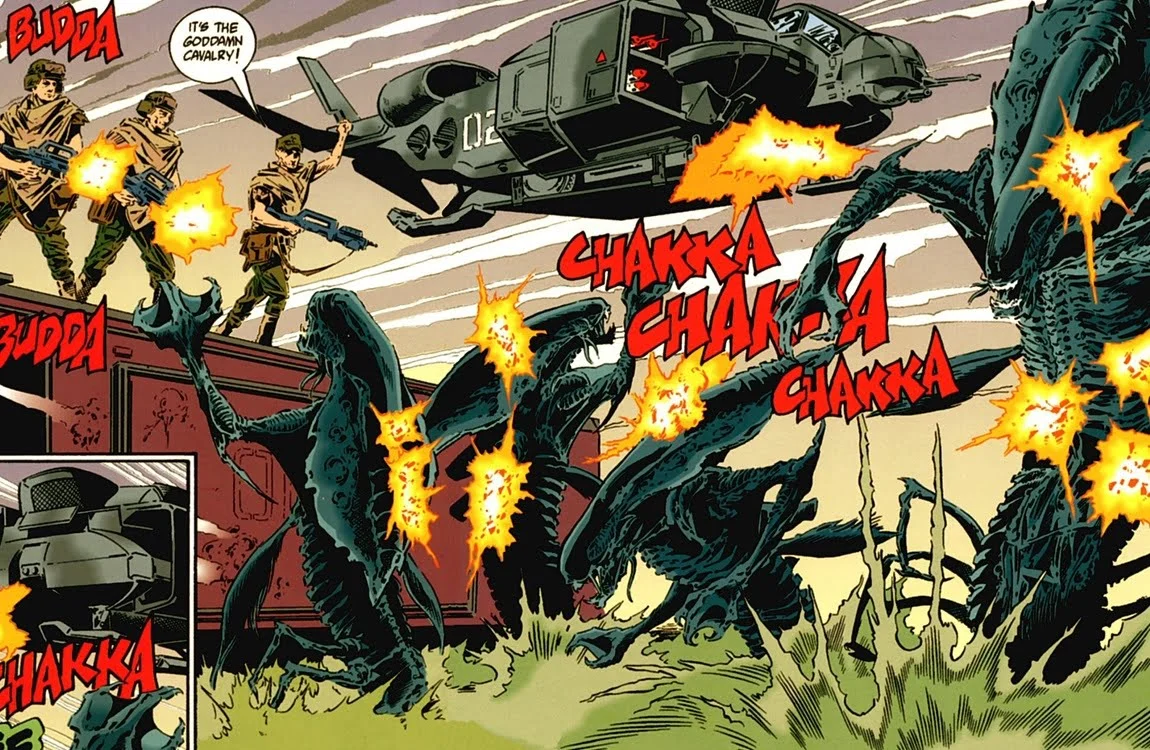
Beyond LV-426, Cheyenne dropships were deployed across numerous Colonial Marine operations, including planetary surveys, search-and-rescue missions, and armed responses to hostile encounters. Several recorded crashes occurred due to mechanical failure, enemy fire, or environmental hazards. A rare case of a Colonial Marine dropship in action happens in the Aliens: Colonial Marines comic book, shooting at aquatic Xenomorphs on Bracken's world. The dropships tend to crash often in the Aliens vs. Predator games, such as a UD-4L crashing on LV-1201 in Aliens vs. Predator 2 when Prince Predator takes a ride on top of it.
Behind The Scenes
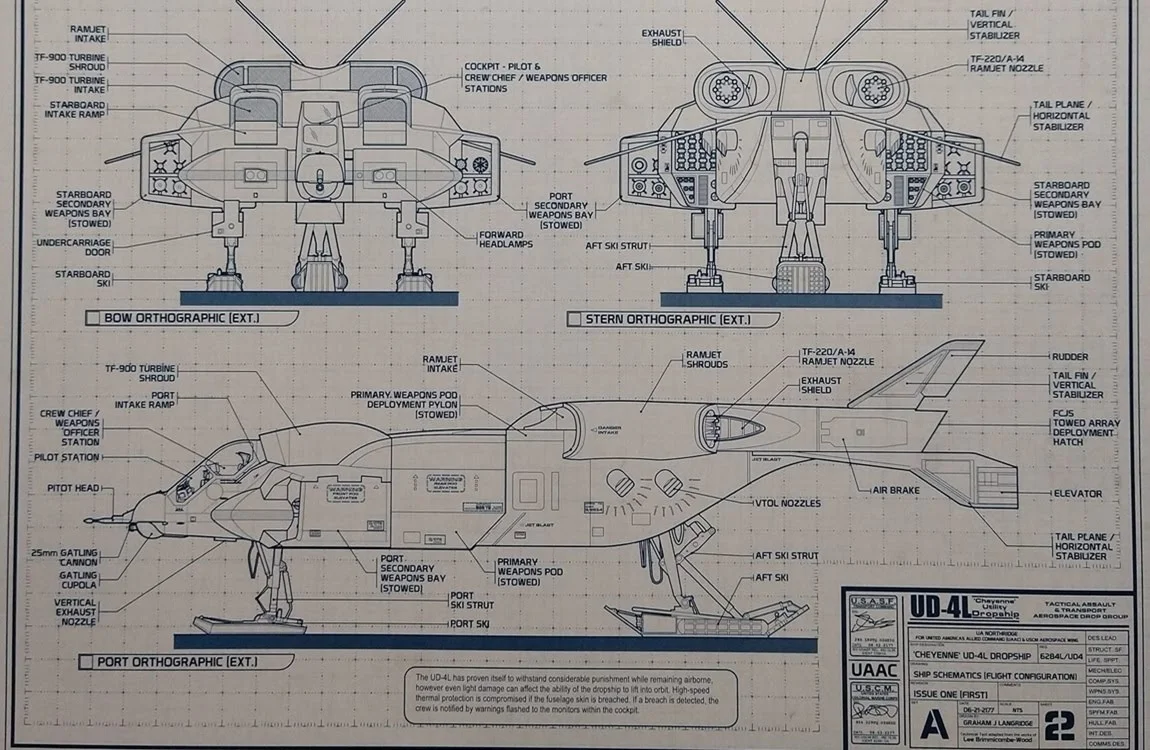
The UD-4 Cheyenne was designed to appear as a practical military workhorse rather than a sleek sci-fi craft. Multiple physical models were constructed for filming, including highly detailed miniatures used for exterior flight shots, crash sequences, and weapons effects, all captured through motion-control photography rather than digital animation. The troop bay interior was built as a full-scale set, allowing actors to interact naturally with the environment during deployment scenes. James Cameron later designed similar dropships, such as the C-21 Dragon, for the Avatar series. Detailed UD-4 dropship schematics have been provided in the Aliens Colonial Marine Tech Manual, Alien: The Blueprints, and the Weyland-Yutani Report books.
Merchandise
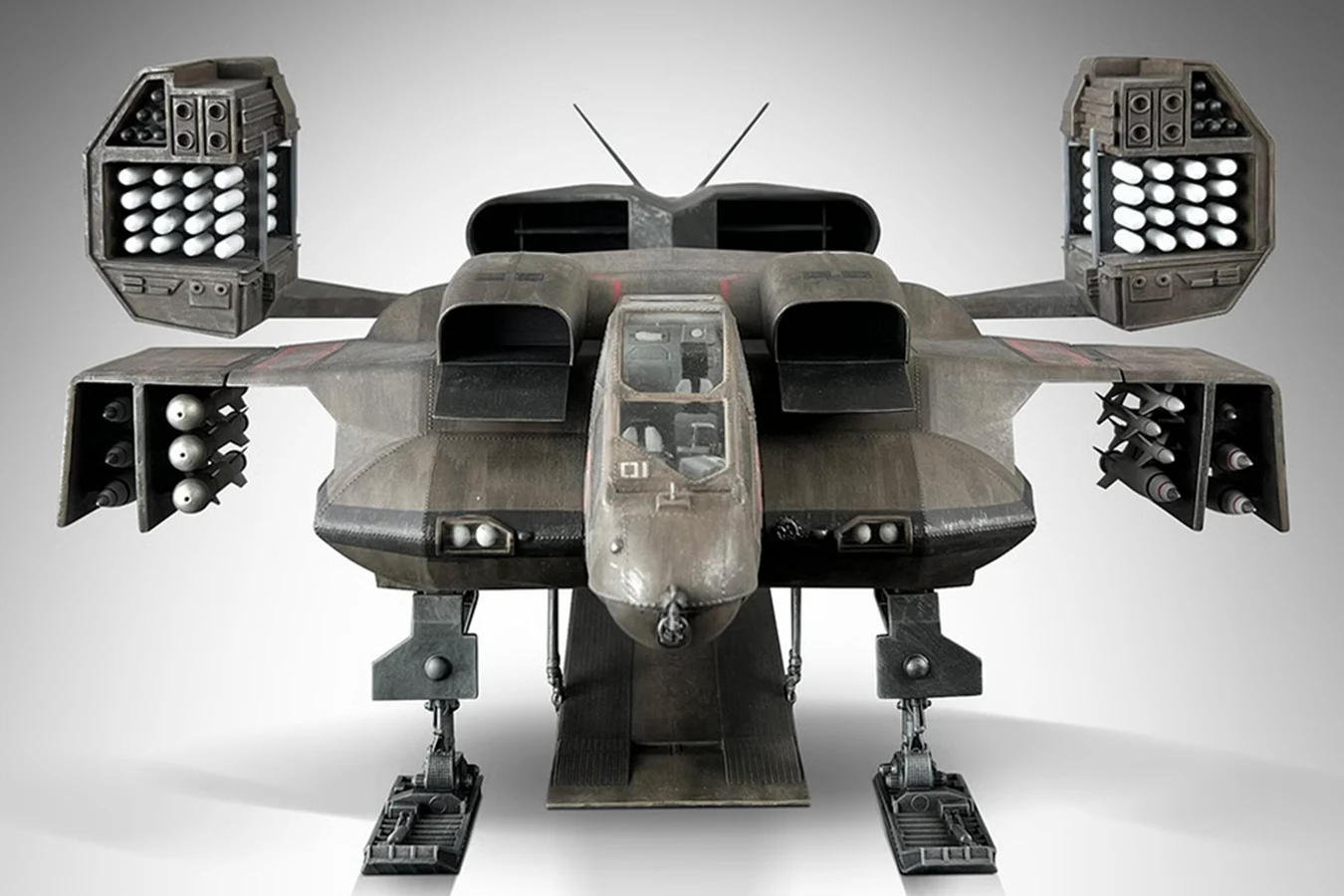
Hollywood Collectibles Group released a museum-scale UD-4 Cheyenne about 24 inches long, built as a companion piece to their large USCSS Nostromo and USS Sulaco ship replicas. The mixed-media model was shaped from film references and unpublished behind-the-scenes photos, with a detailed cockpit, folding weapons pods, landing gear, and weathered paint that matches the hangar and approach shots in Aliens. It ships with a black in-flight stand plus two rear ramps, one down for a landed APC loadout and one up for cruise display, so collectors can stage Bug Stomper or Smart Ass either on the pad or in the air. The standard run was limited to 750 pieces worldwide, while an HCG Exclusive edition of 250 added a roughly 7-inch M577 APC scaled to ride the cargo bay.
At smaller scales, Halcyon released the 1/72 plastic Drop-Ship kit (HAL02) in 1989, with waterslide decals for both Bug Stomper and Smart Ass, later reboxed in Japan by Tsukuda Hobby. Eaglemoss issued a pre-built XL Cheyenne in its Alien and Predator ship collection, a compact display piece rather than a build kit. Aoshima also sold 1/72 die-cast Cheyenne and M577 APC collectibles for collectors who wanted finished paint instead of a glue-and-paint Halcyon build.
Conclusion
The UD-4 "Cheyenne" Utility Dropship represented the backbone of Colonial Marine rapid deployment strategy. It was very capable at transporting troops, delivering armored vehicles, and providing close air support. However, its combat capabilities were only briefly seen in the Expanded lore. From its dramatic role on LV-426 to its lasting influence on sci-fi vehicle design, the Cheyenne remained one of the most iconic spacecraft in the Alien universe.
Sources
Movies
Comics
- William Gibson's Alien 3 (2018)
- Aliens: Colonial Marines (comic series) (1993)
Books
- Aliens Colonial Marine Tech Manual (1995)
- Alien: The Blueprints (2019)
- Weyland-Yutani Report (2014)
Games
- Aliens vs. Predator 2 (2001)
Tag Categories: Alien Universe Ships | Colonial Marine Lore | Alien Lore