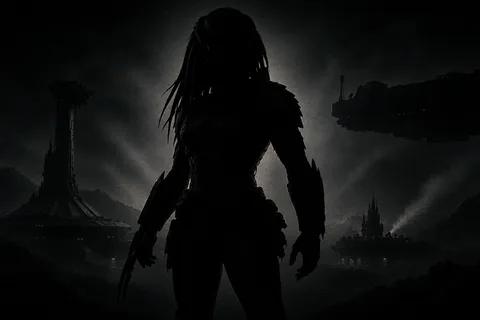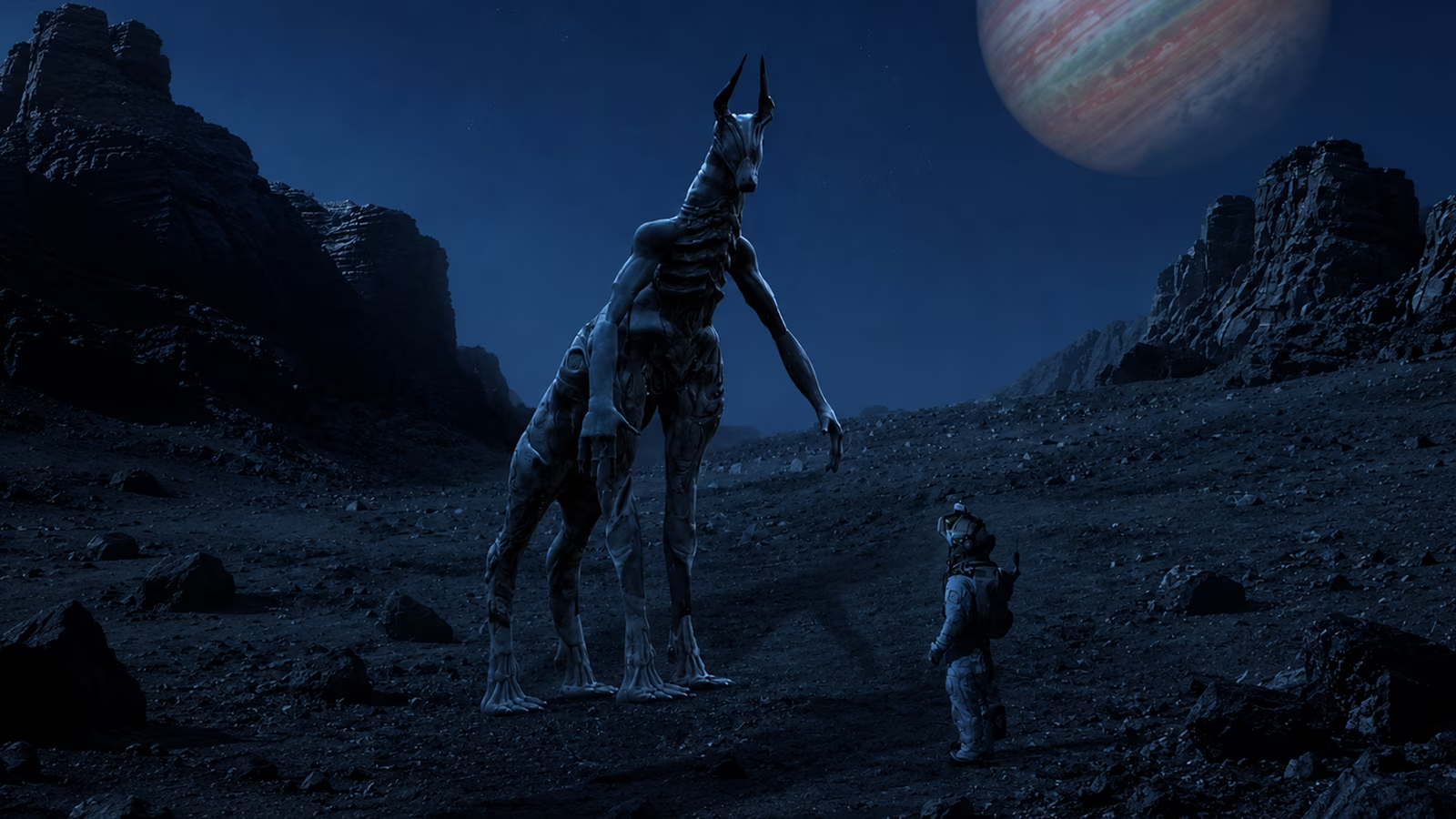

The Drukathi were an ancient alien race that once inhabited the Milky Way. Expanded lore places them millennia ahead of humanity as spacefarers, with biotechnology advanced enough that even the Yautja feared them after they had already "moved on" to another galaxy. Humans first found their dead aboard a buried ship on LV-178 in Alien: Out of the Shadows, and nicknamed the corpses dog-aliens or dog-people. Later, Elder Predators such as Kalakta used the name Drukathi for the silent force behind biotech the Rage later stole.
Appearance
No film has shown a living Drukathi. In Alien: Out of the Shadows, remains on LV-178 indicate a hexapedal body plan: four stocky legs, two thinner arms, bulky heads, and elongated snouts. Digits were long and fine enough to wear jewelry, and some corpses retained metallic cloth. Architecture on the site, including tall stairs and high arches, was scaled above human proportions. Some statues depict figures standing on their hind legs.
Documented remains include a family group of two adults and one child, found posed together with clothing and at least one ring still present. A separate chamber held about fifteen cocooned adults and two smaller bodies that may have been children, all with burst chests. Faces on those cocoons remained intact enough for identification, unlike other tunnel remains damaged by mining weapons.
The ruined city contained a dozen statues on high plinths around a central column. Intact figures differed in clothing, pose, and facial features, with carved marks at the bases interpreted as written language. The set has been read as commemorations of rulers, teachers, or explorers.
Technology
Drukathi hardware used an organic construction method comparable to that of the Space Jockeys. In Alien: Out of the Shadows, science officer Karen Sneddon concluded that the LV-178 derelict had been grown rather than assembled from metal plates. Interior structure featured curved surfaces without right angles, vein-like tubing, and layered decks. Ruptured conduits left solidified organic residue along damaged levels.
Surviving exterior features included a large wing section, hollows in the hull, and multiple outward blast ruptures with lasting scorch marks. One interior space contained a gallery above a deep pit filled with glassy fluid, ringed by identical metallic units interpreted as seats or control stations sized for non-human operators. Another doorway used a heavy curtain mechanism opened by wall projections. A separate laboratory held at least six matching movable workstations and sixteen eggs in waist-high wire enclosures around the perimeter.
City construction in Alien: Out of the Shadows combined durable stone with biotech materials. Mosaic paving and wall reliefs depicted war, daily life, star charts, spacecraft, large floating forms, and contact with other species. Some stone surfaces retained and re-emitted light after illumination. In the Rage War novels, Predators also attributed the Faze to Drukathi design: a genetically engineered organism that maintained and expanded the artificial planetoid later called Midsummer.
History
Little is recorded about Drukathi origins beyond their age. They were spacefaring long before humanity left Earth. The LV-178 infestation has been dated as older than human technological civilization.
Ancient Era
Yautja tradition holds that the race vacated the Milky Way for another galaxy, leaving ruins, relics, and a reputation for malevolence. At some point they took interest in Xenomorph XX121 and bred Xenomorphs for their own ends, without the honor code the Predators claim for the same practice. The LV-178 laboratory, with Queen eggs in wire enclosures, is the main physical evidence of that breeding program. The purpose of the program is not stated in the sources.
LV-178 In 2159
In 2159, as shown in Alien: Out of the Shadows, a Kelland Mining Company trimonite operation under LV-178 broke into a cavern nearly a mile below the surface. Kelland was owned through Prospectia and San Rei by Weyland-Yutani, and the freighter DSMO Marion supported the dig. Ellen Ripley, whose Narcissus shuttle had been diverted to the Marion between Alien and Aliens, entered the cavern with Marion survivors. The space was estimated at roughly two hundred yards across and held a buried vessel already partially explored by miners. The object was first taken for a temple or carved structure before being identified as a ship.
Not all of the hull was exposed. Visible sections included a wing-like surface and a damaged zone of outward ruptures rather than a single entry hole. From the blast epicenter, at least four lower decks were open in stacked layers. Survivors later speculated that the ship had been shot down, possibly by its own makers, after a Xenomorph outbreak aboard. The same infestation had already wiped out the local Drukathi population and spread into the adjacent city.
Interior finds included the cocoon chamber with fossilized hatched eggs, the Queen-egg laboratory, and a ruined city with mosaics and statues. Estimates of the city's age ranged from about one thousand to ten thousand years. Ripley advocated destroying the mine to prevent further Weyland-Yutani recovery of the site, including records compiled by Ash.
Sea Of Sorrows
Hundreds of years later, Weyland-Yutani returned to LV-178, then called New Galveston, in Alien: Sea of Sorrows. Empath Alan Decker, a relative of Ellen Ripley, was used to locate living Xenomorphs under the Sea of Sorrows, soft ground and silicon growth that had blocked further city construction after terraforming. A restarted trimonite dig uncovered a non-terrestrial vessel of unrecognized configuration, plus evidence of a settlement or base. Under prior land agreements, the company claimed ownership of the find, halted open digging until mercenaries arrived, and attempted to hold the site outside normal quarantine procedure.
A second team under Doctor Nigel Silas entered a ruined metropolis across former hills and valleys. Probe data indicated a possible military or industrial complex downhill from the breakthrough. Incomplete mummified remains at the city were burned or broken and described as long-limbed dog forms. Silicon tubes through the ship and rock were later judged hive growth rather than original Drukathi structure. Company control of both ship and city failed again.
Rage War
Far later, in Predator: Incursion and Alien: Invasion, dissident human scientists known as the Founders discovered the Drukathi artificial planetoid Midsummer. There they recovered advanced biotech, dormant Xenomorph specimens, and the Faze, which continued to maintain and expand the construct. Under Beatrix Maloney the group became the Rage, reverse-engineered the finds, and launched an invasion of the Human Sphere. Rage hulls of that period were irregular and organic in outline, compared by Lieutenant Johnny Mains to living organisms.
In Alien vs. Predator: Armageddon, Yaquita of the Wounded Clan pulled that name from the damaged Rage android Oscar. Elder Predators such as Kalakta treated the Drukathi as a continuing remote influence and linked the Rage War to efforts to keep younger species from growing too powerful. In Yautja tradition, the Drukathi remain among the rare beings associated with Yautja fear rather than the hunt.
Drukathi Xenomorph
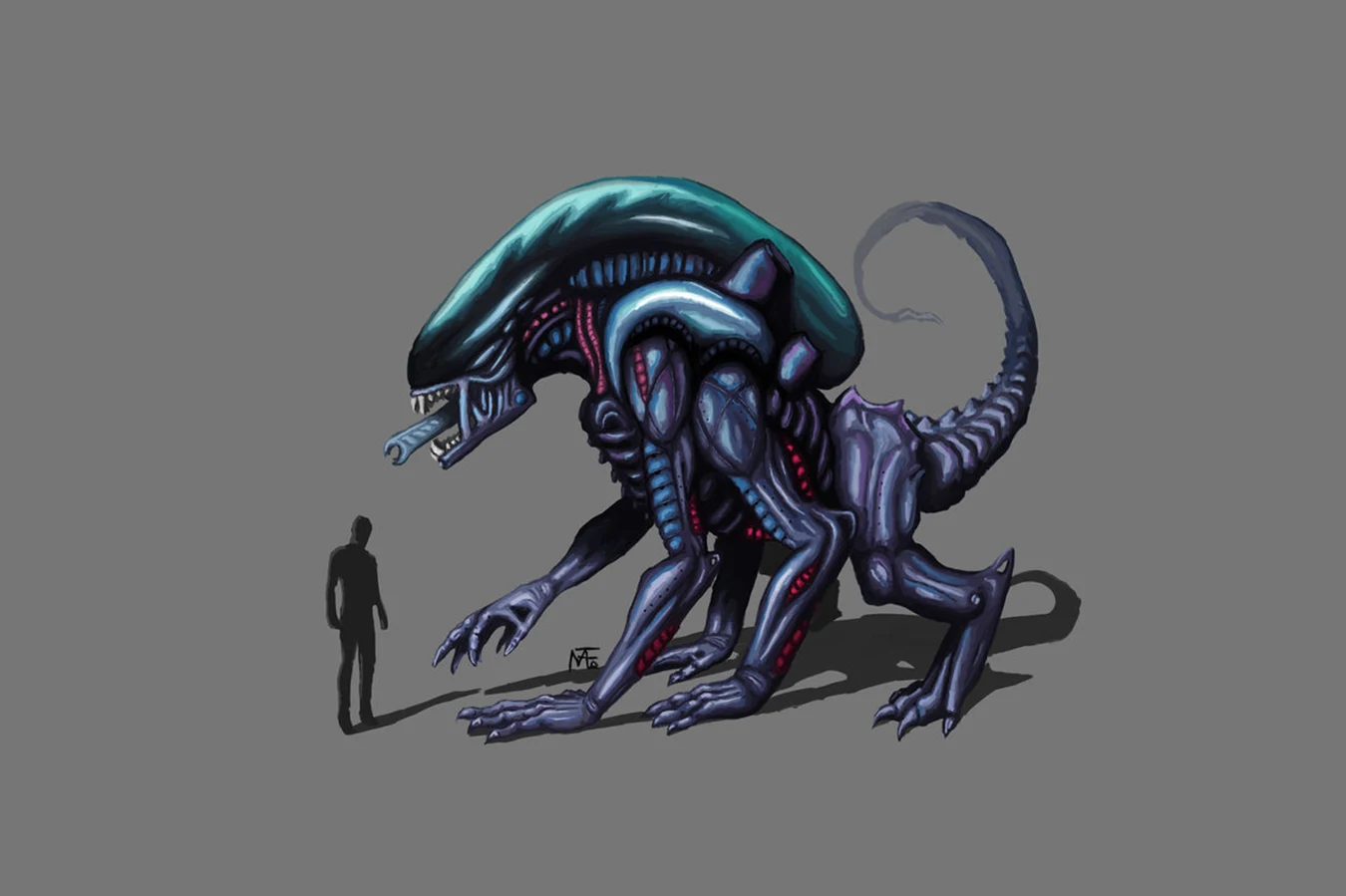
Xenomorphs gestated in Drukathi hosts on LV-178 inherited a larger, multi-limbed dog imprint through the DNA reflex. In Alien: Out of the Shadows, adults showed chunkier bodies, thicker legs, more limbs, and more prominent heads than human-spawned warriors from the Marion outbreak. They exceeded other quadrupedal strains such as the Runner in size. The laboratory held sixteen Queen eggs, rounder and more veined than other Ovomorphs on the ship, inside wire enclosures that may have functioned as stasis fields.
Those adults were first encountered in suspended animation and mistaken for statues until disturbed by miners. One later wounded Ripley during the destruction of the egg lab. Human-host and Drukathi-host forms appeared in the same outbreak. Fan art by Misterkarbunar depicts the Drukathi-host imprint as a hexapedal giant.
Similar Races
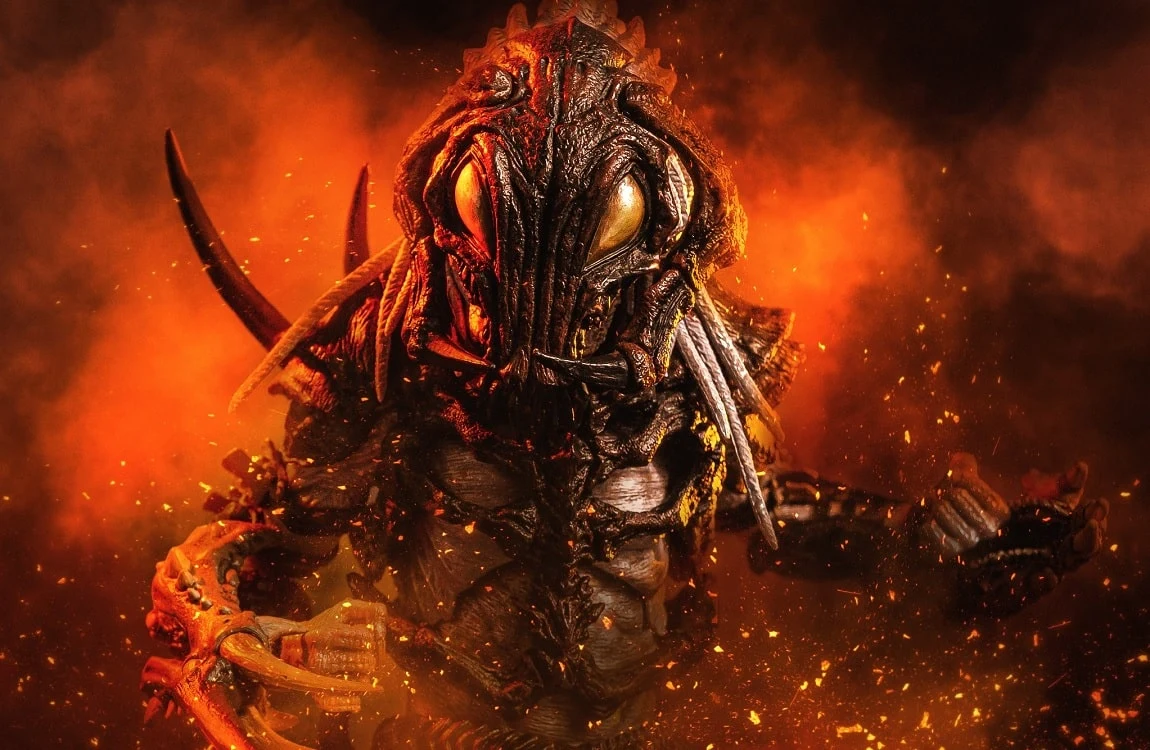
In Expanded Predator lore, the nearest parallel is the Amengi: insectoid conquerors who enslaved the early Predators, then called the Hish, on Yautja Prime. The Amengi ruled through occupation until Kaail's rebellion. The Drukathi are not presented as a conquered trophy people, and remain a threat-class species in Yautja memory after leaving the galaxy. Engineers, River Ghosts, and related entries appear with them among the other species that Yautja hunt.
Conclusion
The Drukathi were an ancient race that once lived in the Milky Way, bred Xenomorphs, and left grown ships and ruined cities on LV-178. Even after they moved on, the Yautja still feared them, and the Rage later stole what biotech those ruins and constructs still held.
Appearances
- Alien: Out of the Shadows (2014) - dog-alien corpses, grown derelict, and city ruins on LV-178
- Alien: Out of the Shadows audio drama (2016)
- Alien: Sea of Sorrows (2014) - W-Y rediscovery of the vessel, metropolis, and long-limbed dog remains
- Alien: Sea of Sorrows audio drama (2017)
- Predator: Incursion (2015) - Midsummer, Faze, and Rage War context
- Alien: Invasion (2016) - Faze and stolen Drukathi biotech
- Alien vs. Predator: Armageddon (2016) - Kalakta names the Drukathi and their biotech
Tag Categories: Predator Universe Creatures | Yautja Mythology | Predator Hunt | Predator Lore