Midsummer: Artificial Moon From The Rage War

Midsummer was the name a band of dissident human scientists, the Founders, gave to an artificial moon beyond known human space in Tim Lebbon's Rage War novels. They had left the colonies around 2400. In Predator: Incursion, the android Liliya, who traveled with that group, recorded that they first took the object for a small moon, then saw a giant spherical habitat perhaps five million years old, with new rooms extruded under the outer crust. Beatrix Maloney, one of those Founders, killed their leader Wordsworth on Midsummer. The group loaded sleeping adult Xenomorphs into the flagship Macbeth and left orbit, and she led that return as the Rage.
Name And Setting
Around 2400 those scientists left human space after trouble over longevity work and secret faster-than-light drives. They took three ships, Hamlet, Othello, and Macbeth, with about a thousand people on each hull, and fitted the drives at an independent port near the edge of the Sphere. Hamlet vanished on the outbound run. The two remaining ships later fell into orbit around a star and followed the path of its third planet, where seas of a jelly-like gel lengthened human life for a time.
That gel world was a stop on the way, not Midsummer. In Liliya's account the medicine worked long enough for them to find the habitat they then named Midsummer. It lay outside the Human Sphere, with no colonial government and no Weyland-Yutani survey tag. Macbeth went into orbit there, and Founders and shipborn went down to the surface and under the crust.
Structure
From a distance the object looked like a small moon. Close in, Midsummer was an artificial spherical habitat, perhaps five million years old, with an outer crust and rooms far below. Machine and living tissue were hard to tell apart in the tech they found. After long study it was clear the habitat was growing, with new areas pushed out by huge slug-like builders under that crust.
Some Founders wanted it as a home. Liliya treated it as a bad one, a place that harmed body and mind, and she spent lonely hours with a fossil set into the structure itself. A few people called the habitat haunted. She heard no ghosts, but she wrote that the echoes of whoever had lived there were a language none of them could follow, and that the place was not meant for them.
Fossils And The Faze
Traces of the beings that might have built or lived in Midsummer were scarce, and the best of them was buried the deepest. Liliya described a dog-like form larger than a dog, with four thick legs, thinner upper limbs, a half skull, a snout, rows of wide flat teeth, and shreds of a thin metallic covering. She wondered if the thing had ridden the habitat through space, then admitted it might only have been a builder's animal. In Alien: Invasion that dead species is only dog-like, with no other name.
In Alien vs. Predator: Armageddon, the Yautja Elder Kalakta used the name Drukathi for that leftover people. He confirmed to the human scientist Isa Palant that they had left this galaxy about a million years earlier, and that tools from their time were among the finds at Midsummer, including the Faze.
The slug-like builders under the crust were the same class of thing the Rage later called the Faze. One was brought onto Macbeth, where it wandered free, rebuilt the ship from the inside, and later made the engine room its home. A second Faze went to Othello. Wordsworth had refused to bring that presence aboard. After his death the Rage left it alone, because they never made useful contact and feared it might undo the work if they cut into it.
Xenomorphs And The Rage
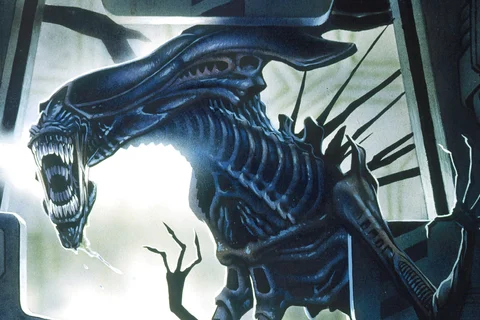
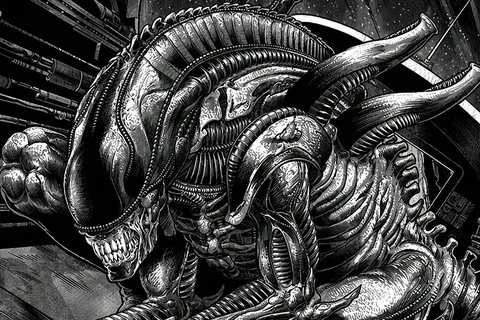
Deep in humid chambers that Liliya treated as rooms that should have been left alone, the Founders found thousands of hibernating, chitinous Xenomorphs. Wordsworth marked that find as the moment to leave. Maloney saw what the sleepers could become, gathered an inner group in secret under the habitat, and the fight with Wordsworth was brief and private. Liliya treated his death as Maloney's kill, and she suspected the android general Alexander had been the weapon used against him.
They stayed in orbit long enough to bring those sleepers onto Macbeth, adapt the holds, and run them against research Liliya had stolen in 2351 from the Weyland-Yutani destroyer USS Evelyn-Tew. Nano taken on Midsummer later linked android generals to about two thousand hatched troops each. From that same orbit they also spent more than twenty years and over five hundred unmanned drones hunting nests, then brought back a bound Queen and her eggs at high cost once the Faze was at work on Macbeth. Shipborn such as Sara were born on Midsummer and then lived most of their lives on Othello.
Macbeth and Othello then left on separate courses toward the Human Sphere, so the loss of one hull would not end the return. Liliya treated Midsummer as a place that could never be a home, and the Founders were forced off that artificial world. Maloney renamed the group the Rage. Nobody went back to that moon, and the invasion was run from the ships.
Conclusion
Midsummer was an unnamed artificial moon the Founders, those dissident human scientists, found beyond known human space, a five-million-year spherical habitat that grew new chambers under its crust. They took the Faze and sleeping Xenomorphs from it, Maloney killed Wordsworth there, and Macbeth and Othello left orbit. The Rage War that followed was run from those ships, not from the habitat they abandoned.
Appearances
- Predator: Incursion (2015)
- Alien: Invasion (2016)
Tag Categories: Alien Universe Planets | Predator Universe Planets | Avp Lore | Alien Lore | Predator Lore