
The United Americas was the colonial union of North, Central, and South America, and by the 2180s the most powerful colonizing nation in charted space. It formed in the early 2100s under the Washington Treaty so the Americas could catch the Three World Empire, which had planted the first extrasolar colonies. Colonial Marines, Canadian and Latin American forces, and the Outer Rim Defense Fleet served under United Americas Allied Command. Those forces held the American Arm, from the Outer Rim out through the Far Reach.
Formation
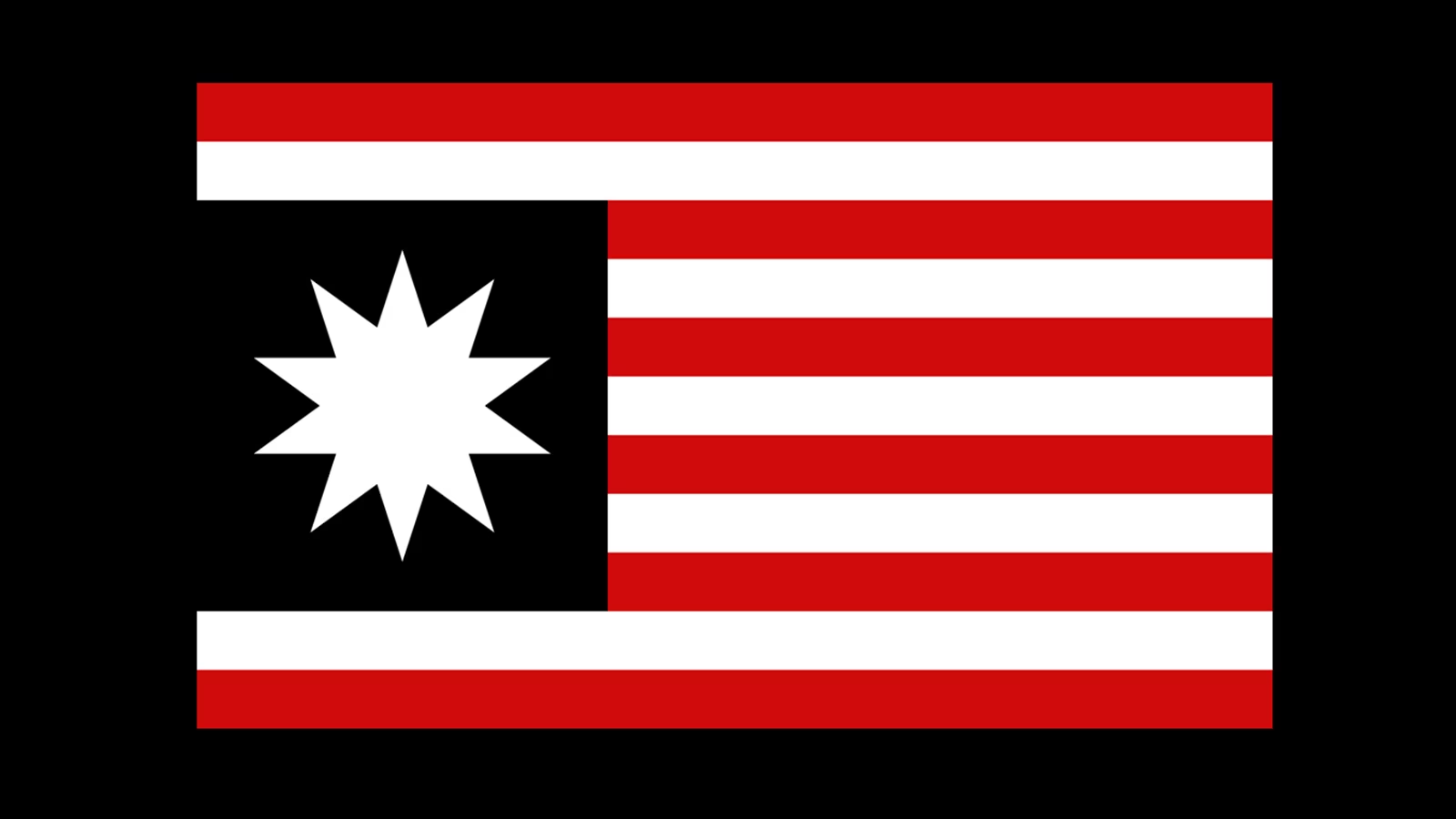
In 2103 the United States, Canada, and United Latin Americas left the United Nations Interplanetary Corps and began joining North, Central, and South America into one union. The Washington Treaty of 2104 set what each member state owed that union and when its forces could fight under a single flag. The United States stood at the front of the new government. Its military industry was in place before the merger, and that industry made the Colonial Marines the main peacekeeping force for the colonies. The flag carried a white eight-pointed star on a black corner and red and white stripes across the rest of the field.
Those same years carried the first large colony missions under the new flag. Weyland-Yutani and Hyperdyne Systems backed the government on ships that included the USCSS Covenant, the Concordat, the Arceon, the Affiance, and the Allegiance. The Covenant was announced in 2103 and launched the next year with more than 2,000 colonists and embryos bound for Origae-6. The Earth Savers, who wanted people forced back to Earth, tried to sabotage that launch and failed. The FBI then classified them as a terrorist organization.
Government
The union ran as an extension of the United States government. A president, a vice president, and a congress stood for the member signatories. Secretary of Defense De La Cruz led Allied Command in the first years of the union, with admirals and generals under that office planning the major campaigns. Out on the Frontier, a visitor was far more likely to meet a Colonial Marshal, an official from Colonial Administration, or a Marine commander than anyone from that congress.
Allied Command
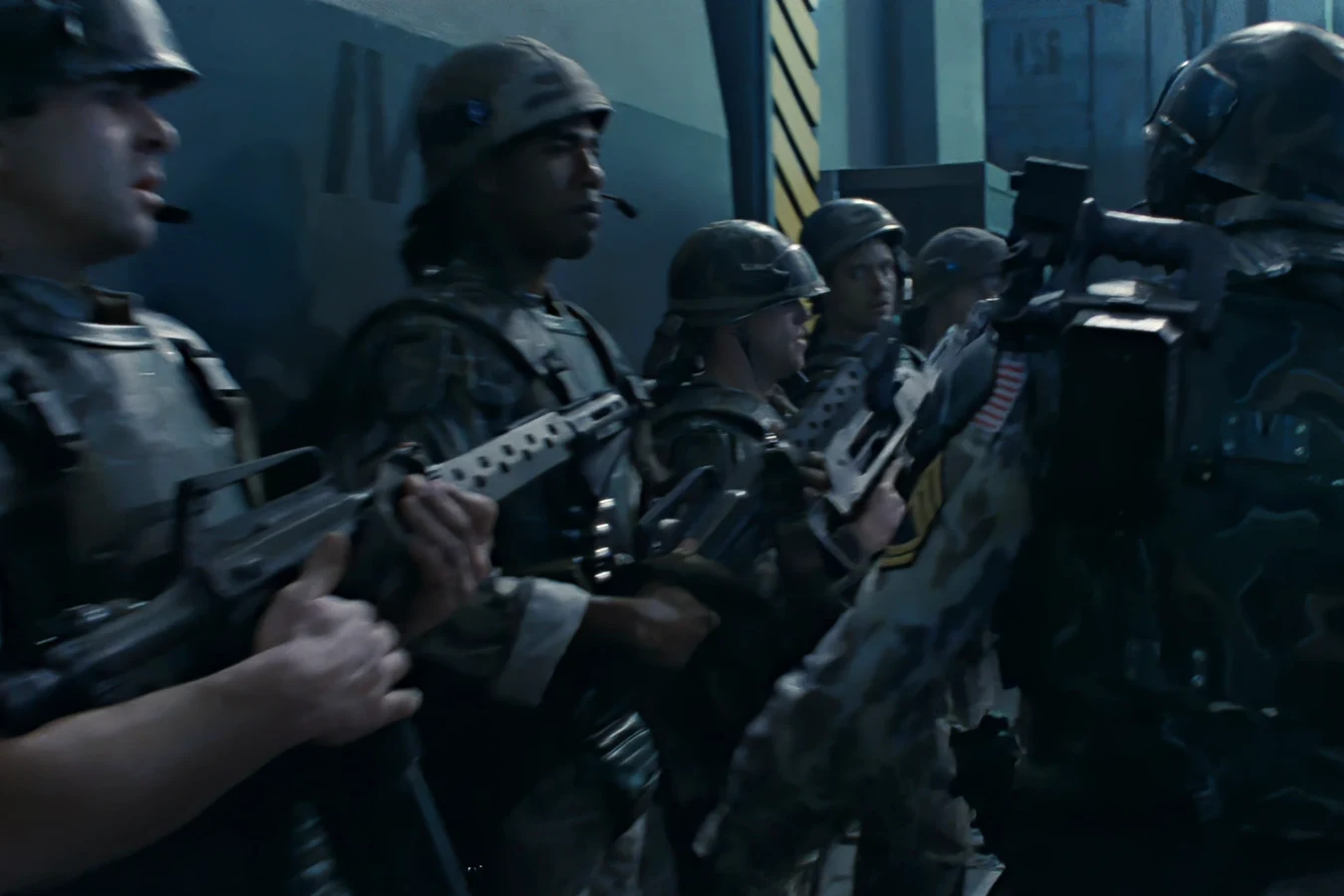
United Americas Allied Command was the joint military headquarters. It joined five services: the United States Colonial Marine Corps, the Canadian Colonial Armed Forces, the Latin American Colonial Navy, the United States AeroSpace Force, and the United Americas Outer Rim Defense Fleet. The Colonial Marine Corps was the spearhead, and that United States name stayed on the service after the merger. Founded before the union, it fielded its own frigates and troop transports, and it had fought on nearly thirty extrasolar worlds in the eight decades after the Corps began. A Marine unit could land on short notice and operate for a long stretch without a supply ship.
Treaties with the Three World Empire and the Independent Core System Colonies also put those Marines on worlds outside the United Americas. Weyland-Yutani holdings inside Allied Command meant the Corps could be ordered to guard company property. Many platoon commanders objected to those orders. The Empire fielded its own navy and the Royal Marines Commandos, and defense contracts put Colonial Marines on Empire Frontier colonies the Commandos could not cover.
Colonial Administration
Colonial Administration was the civil office charged with the rights of off-world colonists. It watched United Americas colonies and stations, moved food, parts, and vaccines, and was supposed to hold basic order on worlds the corporations ran day to day. For decades the office pushed for a minimum wage for colonists. Corporate lobbyists blocked that wage. On the Frontier the gap showed up as late supply ships, thin marshal coverage, and towns that had been promised support and then had to get by without it.
The Colonial Marshal Bureau was the police arm of that administration. Marshals ran offices through the colonies and worked with the Interstellar Commerce Commission to stop dangerous organisms and chemicals from moving in or out. Every major marshal office had a commission agent attached. The marshals also worked with United States federal agencies. The FBI carried the same name after the merger. The United American Colonial Guard and the United States Colonial Coast Guard covered security work outside Marine campaigns.
The American Arm
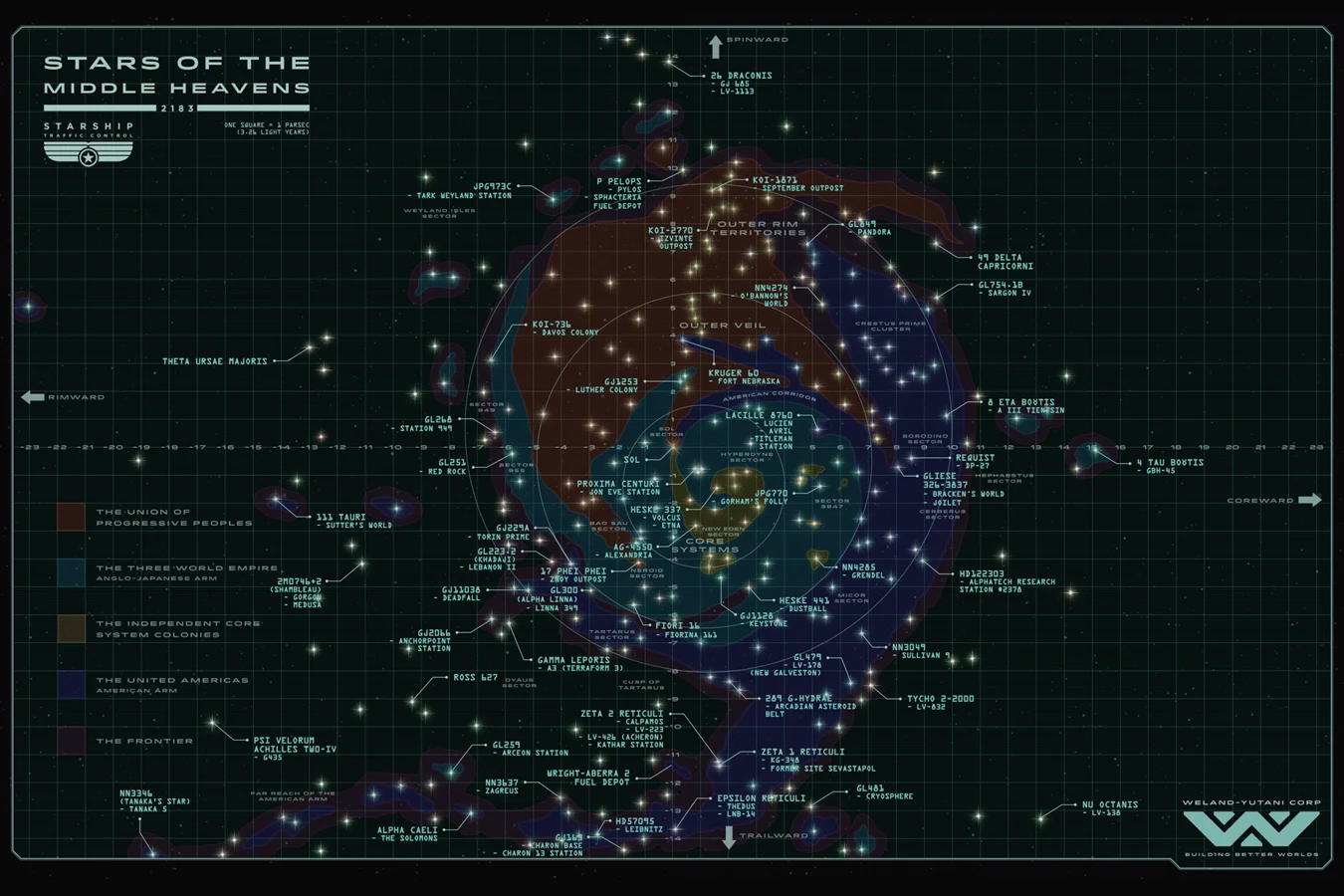
Charted space in the 2180s divided into three national domains: the American Arm of the United Americas, the Anglo-Japanese Arm of the Three World Empire, and the space held by the Union of Progressive Peoples. The American Arm filled most of the Outer Rim. Space truckers called the thinner United Americas strip through the Outer Veil the American Corridor, a lane about a parsec wide that led out to those Rim sectors. Past the Rim, the Far Reach was claimed and mostly uncharted. Truckers called that string of supply colonies the Pearl Necklace.
Terraform 3, also called Steer City, fed the Frontier from cattle range in the Gamma Leporis system. It was the third terraforming attempt there, after an asteroid wrecked one colony and a Seegson settlement was found empty. Dust storms every winter drove the herds underground. Lasalle Bionational bought land and put in automated meat plants. About 9,000 people lived there, with a small United Americas security detachment. Bracken's World, on the edge of the Borodino and Cerberus sectors, was a shallow-sea colony of kelp farmers, with an Alphatech outpost among the farms and a mine on the moon Joliet.
On the moon DP-27, in the Borodino Sector, an urban colony called the Sprawl lived under freezing rain. The moon was cold, about 5°C, with overcast skies and the town spread across flat land and large lakes. Seegson was a listed partner. After the factories closed and the rare-earth trade collapsed, the Colonial Marines opened their largest recruitment center in the Outer Rim there. Soldiers became the moon's main export. About 60,000 people lived in the Sprawl.
Hubs And Garrisons
Farther out, mining and shipping hubs such as Thedus and the Solomons were under United Americas protection and open to other pioneers. Ships were told to cross the uncharted lanes between those hubs at faster-than-light speed. Anchorpoint, the second station to use that name, was in neutral space a few parsecs from the fleet base at Liberty Echo and served the southern Outer Rim and the Far Reach. The Independent Core System Colonies governed it. Colonial Administration and the Interstellar Commerce Commission sent representatives there to settle disputes between colonies. The United Americas ran a marshal office on board and posted a small Marine garrison in tower four.
The Crestus Garrison Systems, labeled Prime, Alpha, Beta, Gamma, and Delta, were Allied Command bases in the American Arm near the Borodino Frontier. They were closed to unauthorized visitors, ringed with deep-space sensors, and patrolled by defense frigates. Career military families lived there, and the systems had no separate civilian colonies. Other single-service posts included Orbital Fort Nebraska, Surier 430, Georgia 525, Third Base, and Camp Pendleton on Earth.
The Outer Rim Defense Fleet had its Tartarus Sector headquarters at Liberty Echo on GL408, a frozen plain under Administrator Prescott Smith. About 50,000 military personnel served there, with a standing fleet of six Conestoga cruisers assigned to the sector and the Far Reach. A Weyland-Yutani weapons laboratory on that base held Xenomorph XX121 specimens under Colonel David Fagan.
Torin Prime Revolt
Torin Prime was a Paraguayan colony that refused the new union when colonial law arrived. In 2106 the J'Har insurgency took the planet's energy plants, killed officials, and held United Americas loyalists in camps that doubled as rebel headquarters. The revolt spread. On Thedus a labor dispute, pushed by J'Har advisors who wanted to cut military supply lines, lasted about four months. Retaking Torin Prime took nearly two years. At the end of that peacekeeping fight the troop carrier UAS Archangel was destroyed at Thedus, and more than 15,000 military and civilian people were killed.
Trade on Torin Prime fell short of what the colony had before the revolt. Sanctions blocked a recovery, the local government was barred from arming itself, and Allied Command ran security on the world directly. About 700,000 civilians and 50,000 security troops were on the world in the 2180s. The prison camp GR161 held as many prisoners then as it had after the first revolt.
An exile government under President Araceli Segarra spoke for the J'Har from off-world, while Para Guarani's faction turned to piracy. The planet held a large supply of rhenium, used in superalloys, and rebel sabotage stopped the union from mining it cleanly. United Americas intelligence expected a new J'Har coup, this time aimed at the whole Tartarus Sector, and suspected the Union of Progressive Peoples of backing it quietly. The Liberty Echo fleet prepared to answer.
Cold War With The UPP
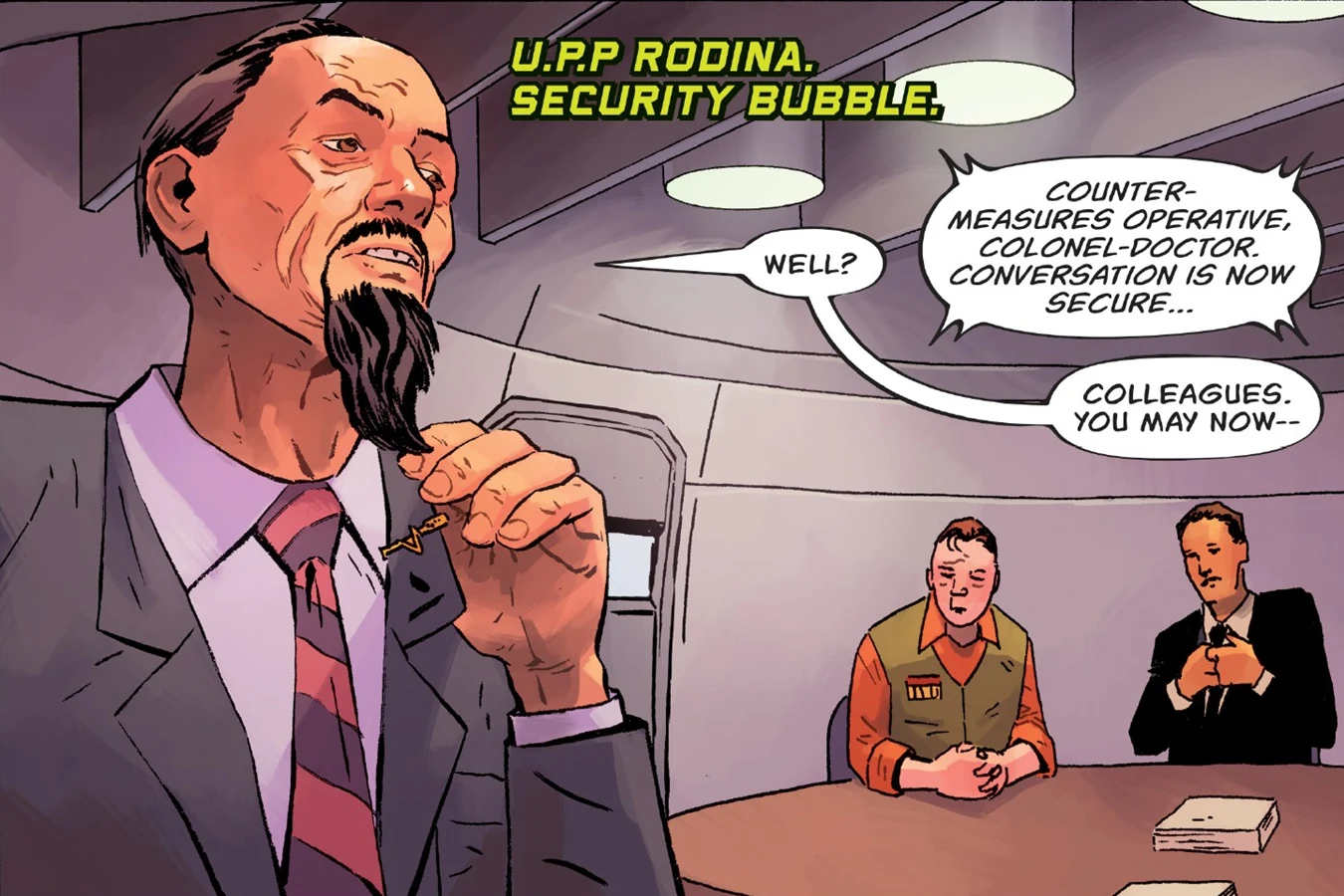
The Union of Progressive Peoples formed in the early 22nd century from China and Russia, later joined by Vietnam, Germany, Spain, and other Asian and Eastern European states, as a socialist answer to the Three World Empire and the United Americas. A cold war followed for decades. Border worlds changed hands or were wrecked in limited fights, and a large share of Colonial Navy and Marine strength went to that frontier. Many alarms were false. A two-person marshal office could watch a Union fleet enter a neighboring system and then learn the ships were a colonization expedition.
8 Eta Boötis A III, called Tientsin, was a border world in the Borodino Sector. In the 2160s the Union backed a coup. The United Americas sent Colonial Marines to support the old government. Colonists on the main island armed themselves against both sides and broke into factions. Neither power stayed to finish the war. They withdrew and left the towns without support, and the colony came apart. Nuclear strikes wrecked the resource-rich island chains. Weyland-Yutani later offered older atmosphere processors as aid. The government on Tientsin refused them. About 500,000 people lived there in the 2180s, and many senior Marine officers had served in that campaign. The Corps also opened a colonial draft in those years, the first in more than twenty years.
Three World Empire Borders
In the 2150s the United Americas annexed the Khadaji system, including the water colony called the Wells on Lebanon II, after the Three World Empire had settled it in the 2120s. The Marines crushed a local revolt in 2154 and remained on the moon. Petitions for better living standards were ignored by the larger United Americas government. A small South American member state then encouraged the Wells rebels, who sabotaged supply lines, as a way to demand better wages and supplies. The moon's spring water, iron, and uranium went out at a premium while the colonists lived in poor conditions.
In the 2170s, before the loss of Hadley's Hope, the forest world Linna 349 tried to leave the Three World Empire under Shane Boulton. The Empire asked Allied Command for troops and offered tariff and export treaties in return. The rebels, nicknamed Bug-Boys after the Marines treated the early raids as a nuisance, then got heavier weapons from an unidentified supplier and crippled the USS Sulaco with a strike from orbit. The Corps came back with ships, tanks, and heavy gear, broke the revolt, and left an occupation on the world. The Three World Empire asked the Corps to withdraw. The Corps refused to leave. Provisional Governor Vihaan Reddy, who ran the Empire's Frontier colonies from a guarded government compound, wanted the United Americas off Linna 349. The planet's main export was timber from native Karyta trees.
After Hadley's Hope
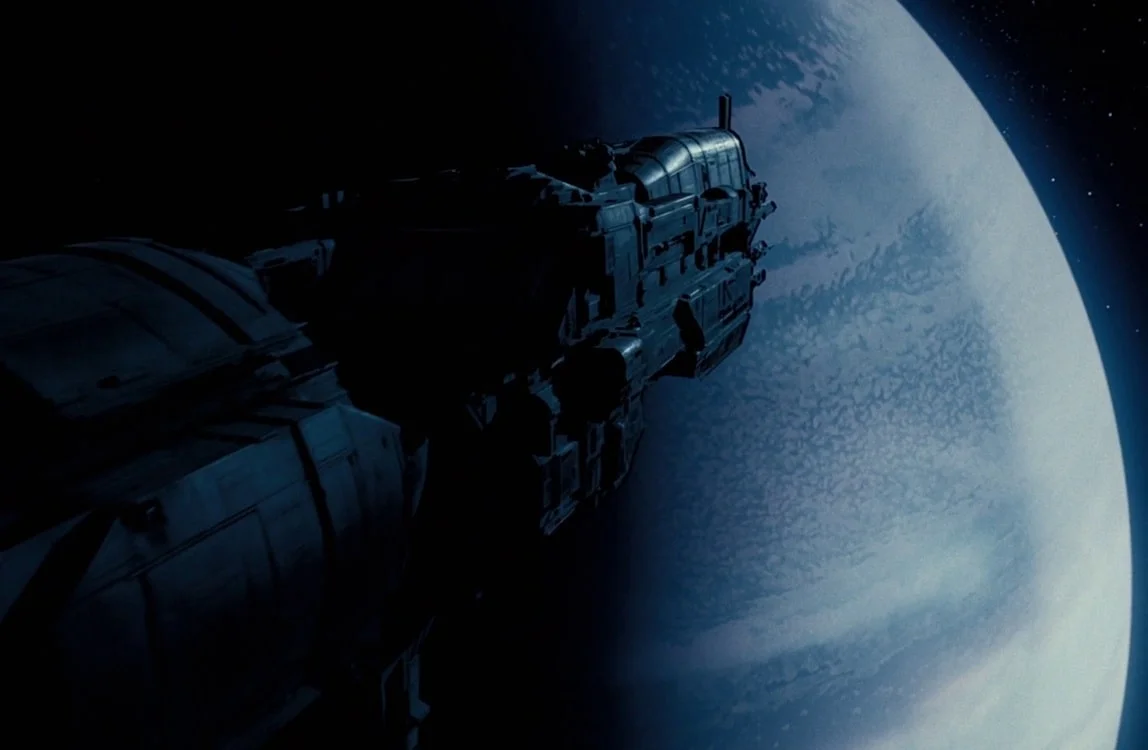
In 2179 contact stopped at Hadley's Hope on LV-426, a colony under the joint authority of Colonial Administration and Weyland-Yutani. Marines from the repaired Sulaco went to investigate. The atmosphere processor detonated and wrecked the colony, the ship disappeared, and an escape pod came down on Fiorina 161. Colonel Aaron Percival of the 4th Recon Battalion, 7th Marines, worked from Crestus Garrison System Delta with a battalion whose patrol area covered a wide stretch of the Outer Rim and the Frontier. His troops found growing evidence that Weyland-Yutani was behind the loss of Hadley's Hope. His tour of Outer Rim bases found discipline slipping, and many commanders no longer enforcing it.
Weyland-Yutani blamed a Union Space Operating Forces nuclear strike for Hadley's Hope and denied that any bioweapon had been there. Several Marine units had gone missing, and Allied Command opened a full investigation. The rift moved Marines from quiet colonies onto new campaigns. Towns that lost those garrisons elected their own marshals or hired mercenaries. If the break with Weyland-Yutani grew worse, the Three World Empire could be pulled into the fight.
Behind The Scenes
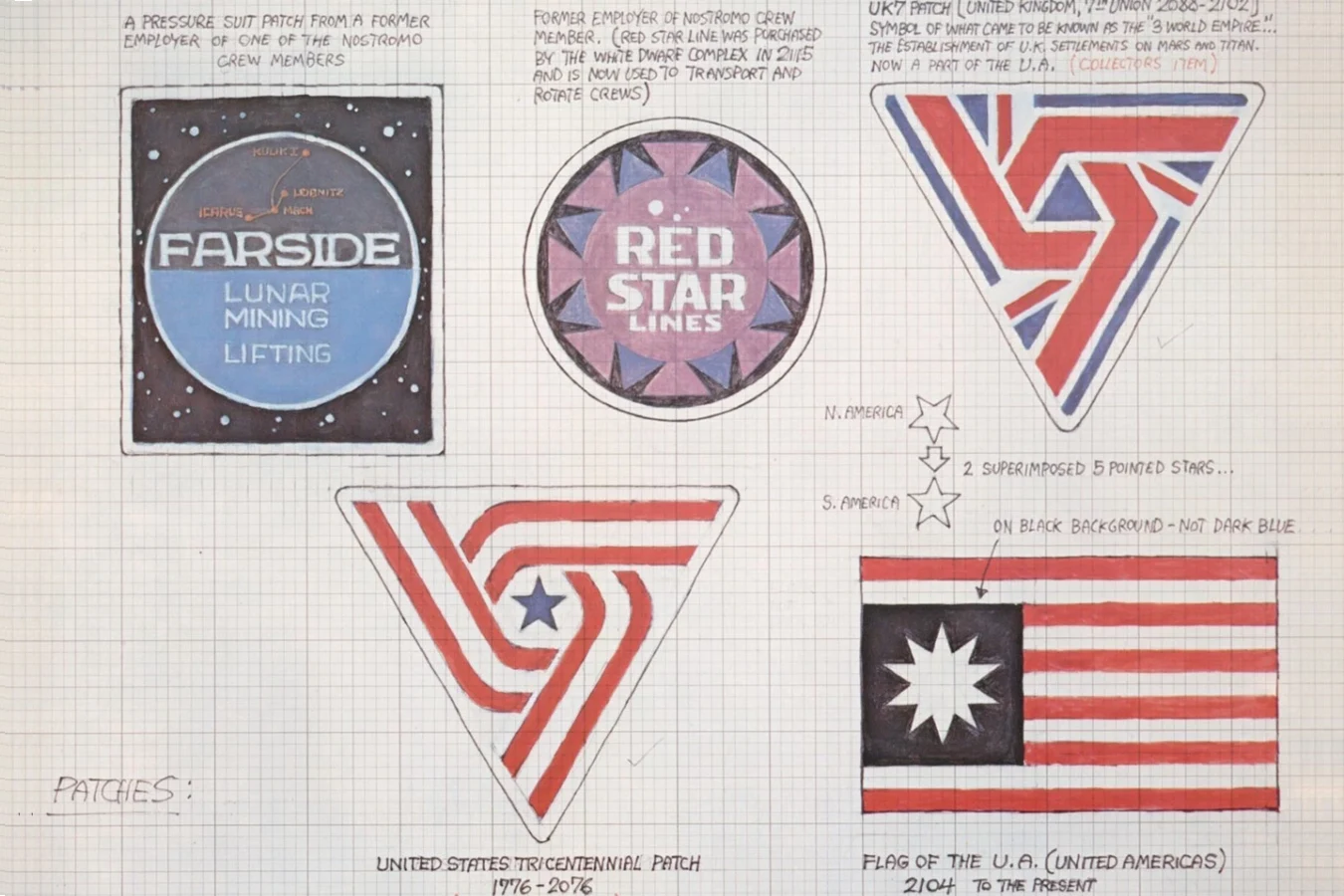
Ron Cobb's crew-insignia sheet for Alien drew the United Americas flag and dated it from 2104 onward. The note builds the white star from two five-pointed stars, one marked for North America and one for South America, and it specifies a black ground rather than dark blue. The same page includes a United States tricentennial patch covering 1976 to 2076, and a triangular patch his caption calls a symbol of the Three World Empire, connected to United Americas settlements on Mars and Titan and labeled afterward as a collector's item. A Farside Lunar Mining Lifting patch is marked as a pressure-suit badge from a former employer of a Nostromo crew member. The Red Star Lines patch notes that the White Dwarf complex bought the line in 2115 and then used it to move and rotate crews.
Lee Brimmicombe-Wood's Aliens: Colonial Marines Technical Manual in 1995 placed the Corps inside United Americas Allied Command and treated that service as the union's main striking arm in fiscal year 2179. Free League's Alien: The Roleplaying Game in 2019, and the 2025 Evolved Edition after it, added the civilian government around that military core: the Washington Treaty, a president and congress, Colonial Administration, the Marshal Bureau, and the American Arm. Andrew E.C. Gaska's Colonial Marines Operations Manual in 2021 added the 2103 exit from the United Nations Interplanetary Corps, Secretary of Defense De La Cruz, and the Colonial Guard and Coast Guard beside the five Allied Command services.
Conclusion
The United Americas was the union of North, Central, and South America, formed in 2103 and 2104 under the Washington Treaty so the Americas could catch the Three World Empire in space. Allied Command held the American Arm with the Colonial Marines, the Canadian and Latin American services, and the Outer Rim Defense Fleet, and Colonial Marshals policed the colonies the corporations supplied. The Torin Prime revolt was the union's first civil war. By the 2180s the same government was in a cold war with the Union of Progressive Peoples, occupied Linna 349 after a Three World Empire request it would not give back, and had split with Weyland-Yutani over the loss of Hadley's Hope.
Appearances
- Aliens: Colonial Marines Technical Manual by Lee Brimmicombe-Wood (Boxtree, 1995)
- Alien: The Roleplaying Game (Free League, 2019) and the Evolved Edition (2025)
- Colonial Marines Operations Manual by Andrew E.C. Gaska (Free League, 2021)
- Alien: Into Charybdis by Alex White (Titan Books, 2021)
- Aliens: Fireteam Elite (Cold Iron Studios, 2021)
- Alien: Bloodlines (Marvel Comics, 2021)
- Alien: Revival by Phillip Kennedy Johnson (Marvel Comics, 2022)
- Aliens vs. Predators: Ultimate Prey, "Scylla and Charybdis" by E. C. Myers (Titan Books, 2022)
- Aliens vs. Predators: Rift War by Weston Ochse and Yvonne Navarro (Titan Books, 2022)
- Aliens: Bishop by T. R. Napper (Titan Books, 2023)
- Alien: Seventh Circle by Philippa Ballantine (Titan Books, 2025)
- Alien: Cult by Gavin G. Smith (Titan Books, 2025)
Tag Categories: Colonial Marine Lore | Alien Lore