Aliens Colonial Marines Technical Manual: Lore Guide

Aliens Colonial Marines Technical Manual is a 1995 field guide by Lee Brimmicombe-Wood, first published in the UK by Boxtree and edited by Dave Hughes. It treats the United States Colonial Marine Corps as a working service in fiscal year 2179, the year of the Aliens drop, and fills in the guns, armor, dropships, and ships that the film only shows in passing.
Manual Overview
Brimmicombe-Wood wrote the book as an in-universe USCM manual dated to fiscal year 2179, with seven units from Corps organization through a company reconstruction of the LV-426 loss. Nigel Davies at Stone Studio in London designed the layouts. Bath Press Colourbooks in Glasgow printed the first UK run. The original paperback ran 159 pages under Boxtree.
The text mixes cutaway figures, tables of organization, and short field notes from invented Marines. Those notes cover drops on Cristóbal, Helene 215, Linna 349, and Tientsin at 8 Eta Boötis A III. The last unit turns from hardware to a Weyland-Yutani briefing that tries to rebuild the Nostromo encounter and the later Sulaco disaster from flight-recorder scraps and Ripley's ICC testimony.
The Corps
The National Security Act of 2101 set the Colonial Marines at four combat divisions and four aerospace wings. In fiscal year 2179 the Corps stood at 165,000 Marines, down from a peak of 240,000 in 2165 at the end of the Tientsin campaign. Reserve manpower sat near 50,000, enough for a fifth division and aerospace wing. The service sat inside the United Americas Allied Command as the main striking arm of the United Americas.
Operating forces answered to US Space Command from Houston and O'Niell station at L-4. Three Marine Space Forces covered the Network: Sol for the core systems, Eridani along the American and Chinese arms, and Herculis along the Anglo-Japanese arm out to about 35 parsecs. A typical aerospace wing ran some 300 dropships, 30 heavy-lift shuttles, and 100 strikeships. About 58 percent of Marines served in the operating forces.
Marine Space Force Dispositions
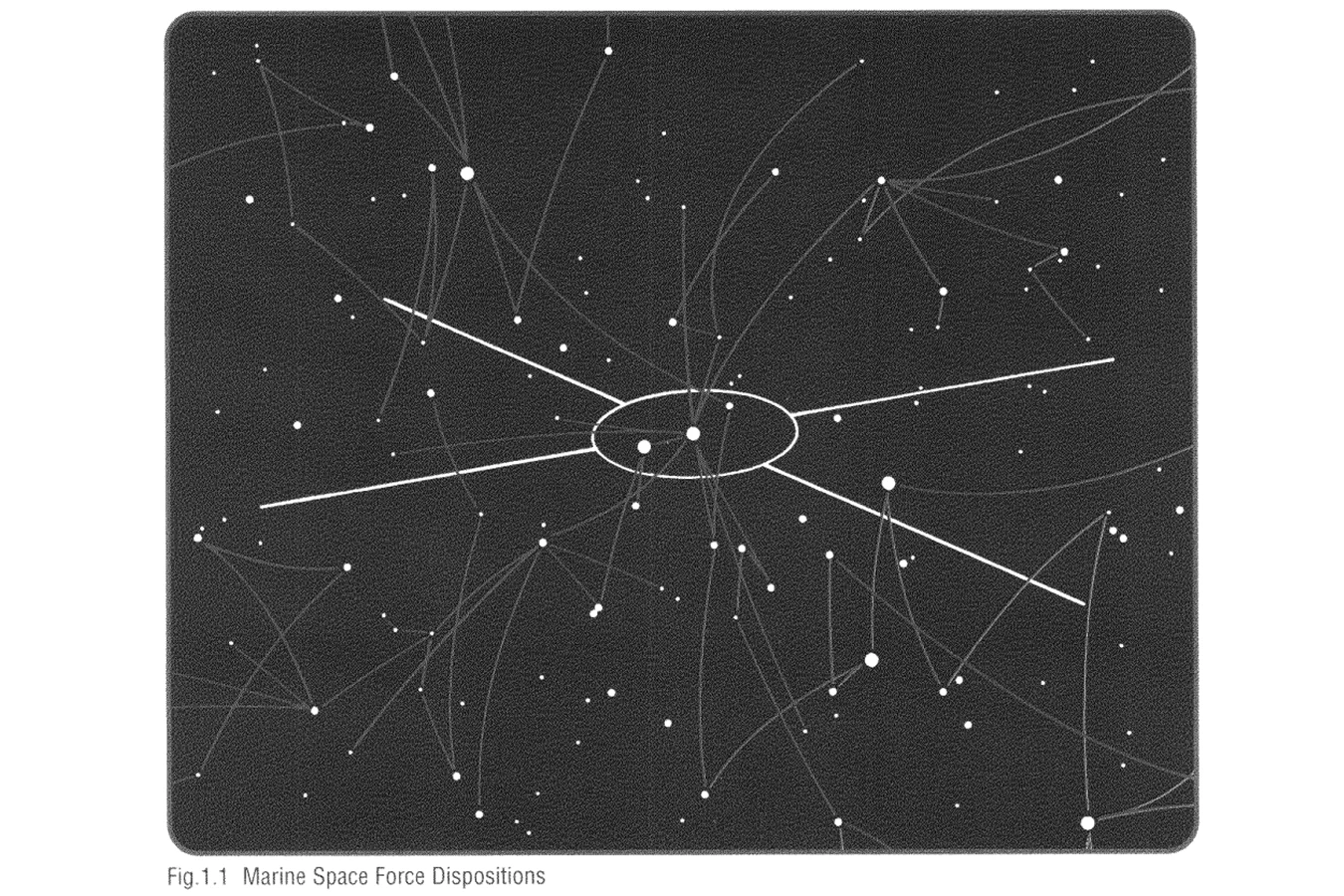
Fig. 1.1 is printed in that organization section. The drawing is a core oval and three heavy arms, with thinner routes between the posted systems. The manual calls the three force areas administrative. The shape of colonized space made them overlap, and combined operations between Sol, Eridani, and Herculis were routine.
Sol headquarters sat at O'Niell, with the 1st Division and 1st Wing split across Camp Lejeune, Camp Pendleton, Kennedy ASFB, O'Niell, and Gateway. Eridani headquarters sat at Happy Days on Helene 215. Herculis headquarters sat at Chinook 91 above Georgia 525. The 5th provisional reserve division stayed mostly in the continental United States and Panama, with two reserve regiments raisable on Aurore 510.
Recruits had to be high-school graduates with a clean record, between 147 and 200 centimeters tall, and able to pass a physical and simple written tests. Boot camps stayed at Parris Island, San Diego, and Guantanamo Bay. The average recruit was 178 centimeters and 72 kilograms, the women-to-men ratio was about 1:2.6, and about 24 percent washed out. Officers went through Camp Barrett at Quantico, with later tracks at Annapolis, Gateway, Kennedy, Fort Sill, Fort Knox, and a hostile-environments course at Camp Hanneken in Valles Marineris on Mars.
The Corps badge showed a launch column of seven stripes, three red and four white, beside four white stars on blue. Marines nicknamed it Tiptree's wigwam after the defense secretary who approved it in 2101. The three red stripes stood for aerospace, land, and sea. Unit badges were discouraged, though distant posts still painted unofficial marks.
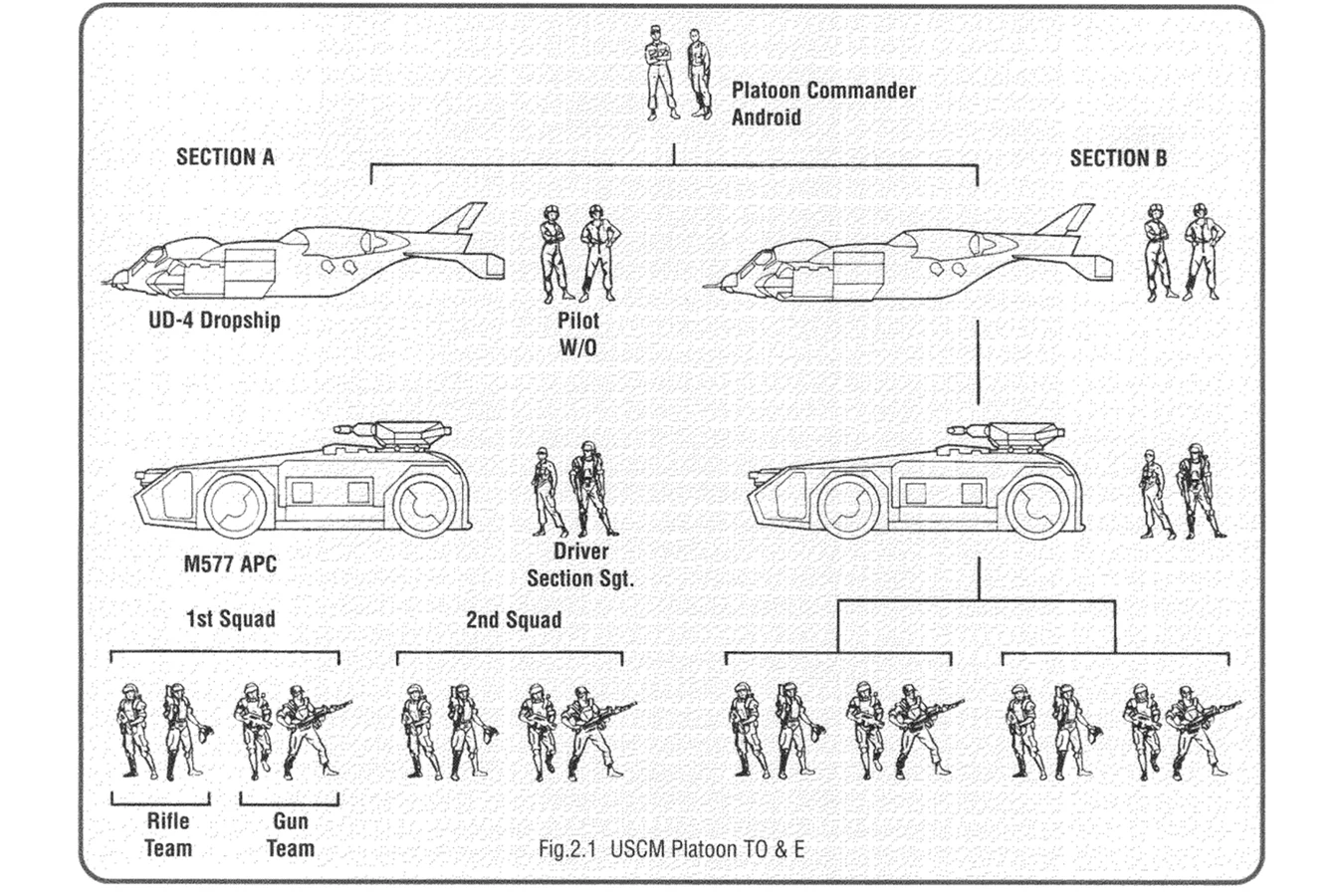
A rifle squad was four Marines: a Corporal, a Lance Corporal, and two Privates or PFCs, split into a rifle team and a gun team. Two squads plus a sergeant, an APC driver, and a dropship warrant officer made a section. Two sections under a lieutenant made a rifle platoon of 25 on paper, often fewer in the field, with one or two synthetics as advisers, medics, or spare drivers. Organic support for that platoon usually included eight M240 flamethrowers, eight UA-571 sentries, two M78 PIG plasma guns or M5 grenade launchers, eighteen M83 SADAR rockets, one M402 mortar, and sensors for a 1,000-meter front.
Infantry Armor And Kit
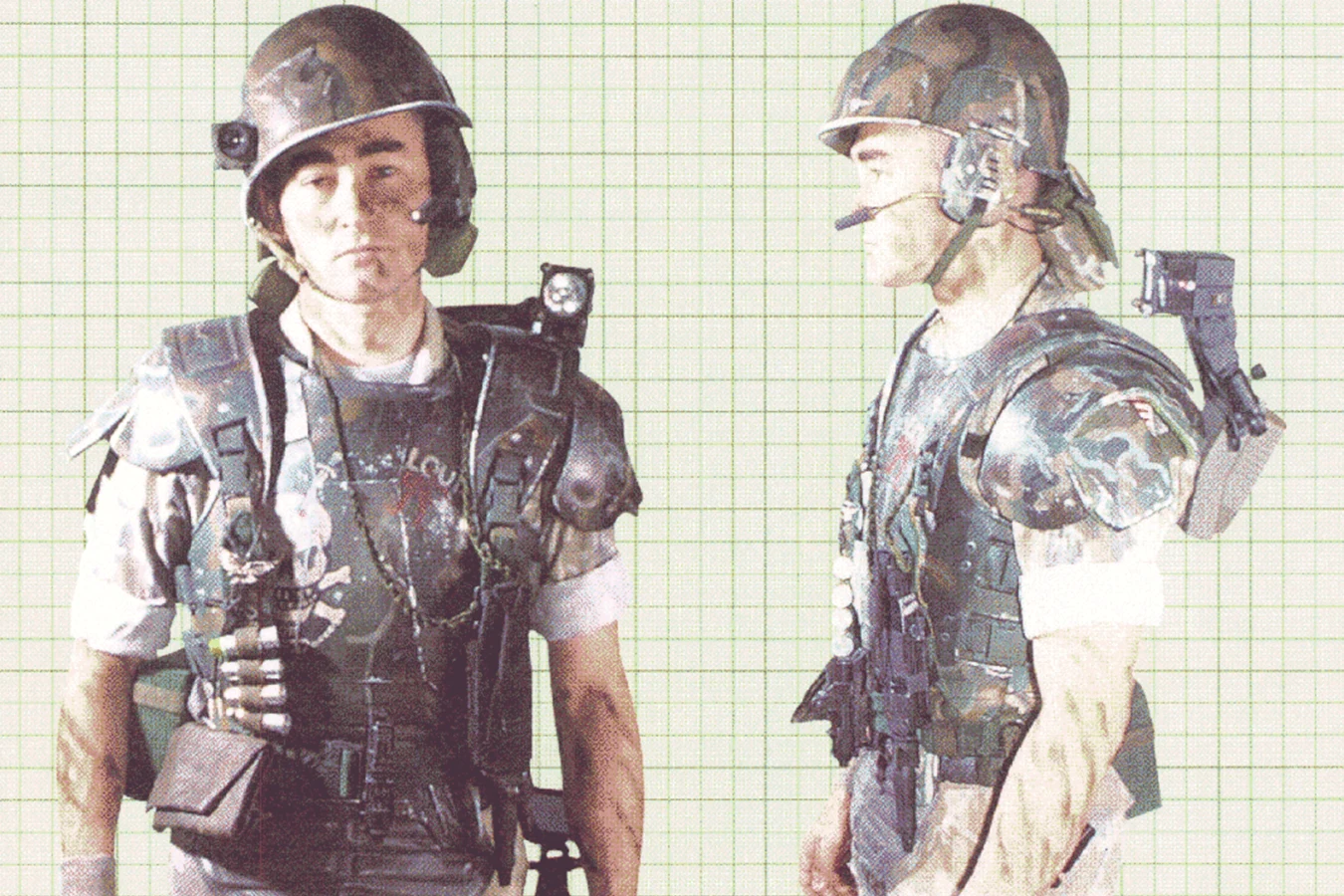
Standard battledress was a two-piece polycotton coverall printed in at least three colors, with dyes that absorbed infrared at different frequencies so a Marine's heat outline broke up. Those IR properties faded after repeated washing, so uniforms had to be replaced on a schedule. Boots came as the leather M3, the nylon-and-leather M7 jungle boot, and the lined M8A2 arctic boot, each with a Venlar micromesh sole against spikes. BiMex polarised shades were issued against laser dazzle and nuclear flash.
The M3 pattern personal armor copied the French Cuirasse de Combat as a rigid sandwich. An outer titanium-aluminide skin gave structure and ablative protection against lasers. A boron-carbide ceramic layer sat on graphite-composite carbon fiber to shatter a bullet and spread the hit, then a 1500-denier Venlar liner caught what energy remained. The shell was meant to stop fragments and small-arms fire, not dedicated tank-killers. A TNR halogen lamp clipped to the rear left shoulder and could come off as a hand torch. The IMP pack on a carbon-fiber A-frame held up to 24 kilograms.
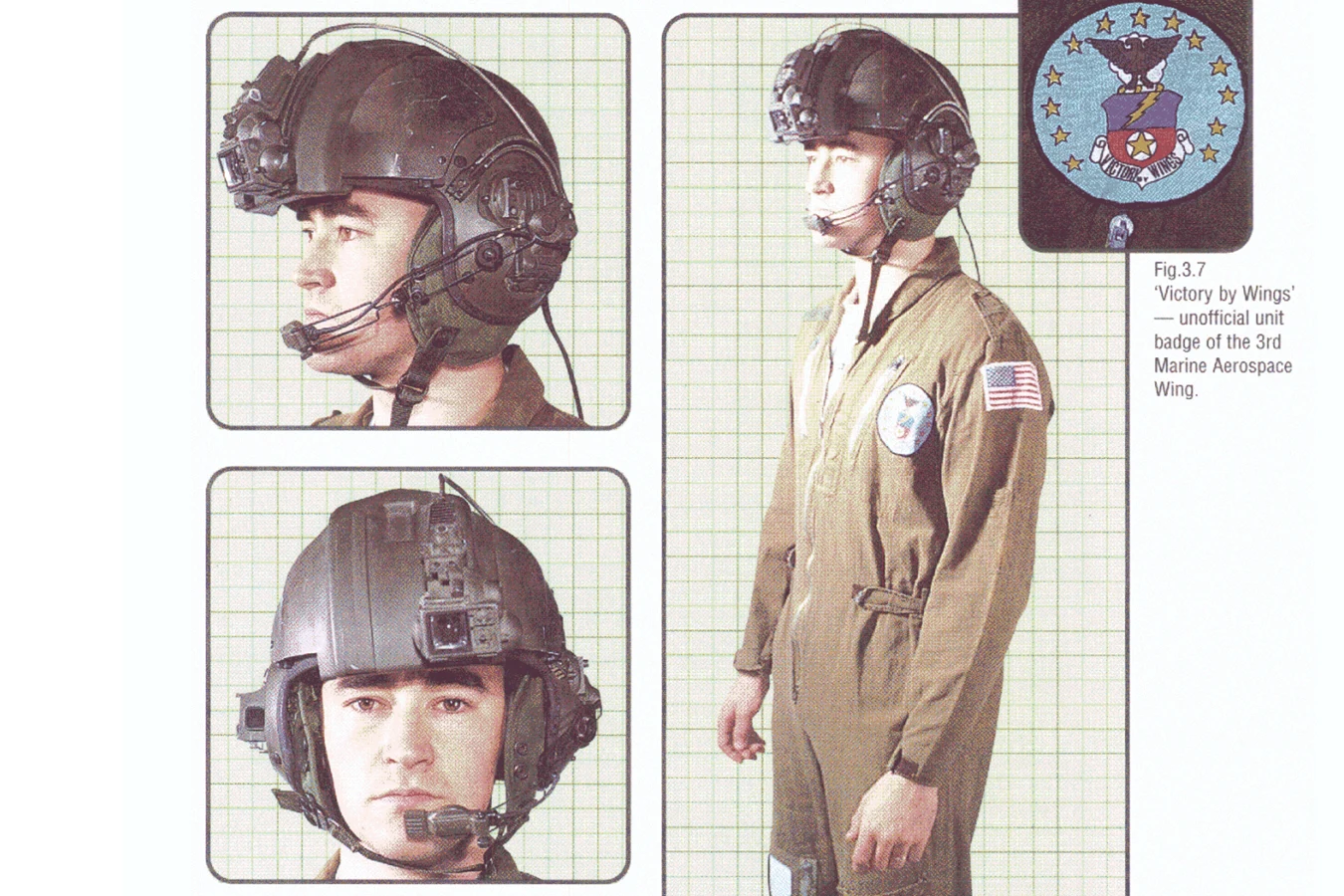
The M10 ballistic helmet carried a Motoca 419 tactical camera, a boom microphone, an IFF beacon, and the PRC 489/4 radio. A flip-down infrared sight over the right eye put the camera's thermal picture over the real view. Bio-monitors in the vest fed heart rate and breathing up that same helmet net so a section leader or medic could see who was still alive.
Infantry Weapons
Armat's M41A Pulse Rifle was the basic 10mm pulse-action rifle of the Corps and the US Army for the eight years before 2179. The service gun paired a titanium-aluminide receiver with a PN 30mm pump grenade launcher and a spring-loaded stock that ran from 69.5 to 84 centimeters. It fired the M309 10×24 caseless round, a 210-grain steel-jacketed explosive bullet at about 840 meters per second, from a U-bend clip rated at 99 rounds but filled to about 95 percent to cut jams. Cyclic rate was 900 rounds per minute, effective range 500 meters, and a lithium battery in the carrying handle was good for 10,000 rounds.
Common grenades were the red-capped M40 high-explosive fragmentation round, the green M38 HEAP, the blue M51A bounding airburst, the black M108 canister, the rare M230 baton, the white M60 phosphorous, and the M72A1 starshell. An M40 could also be used as a five-second hand grenade if the plastic cap came off and the nose twisted clockwise. The only other service rifle listed was the trials M41AE2, which dropped the launcher, added 8 centimeters of barrel and a bipod, and took an optional 300-round L-feed clip as a light support gun.
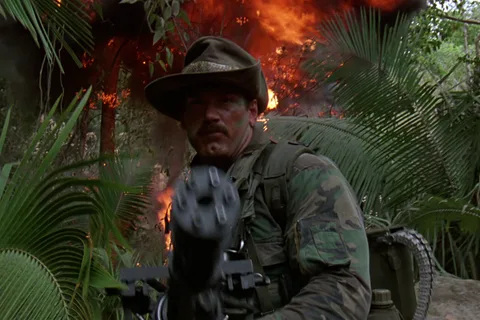
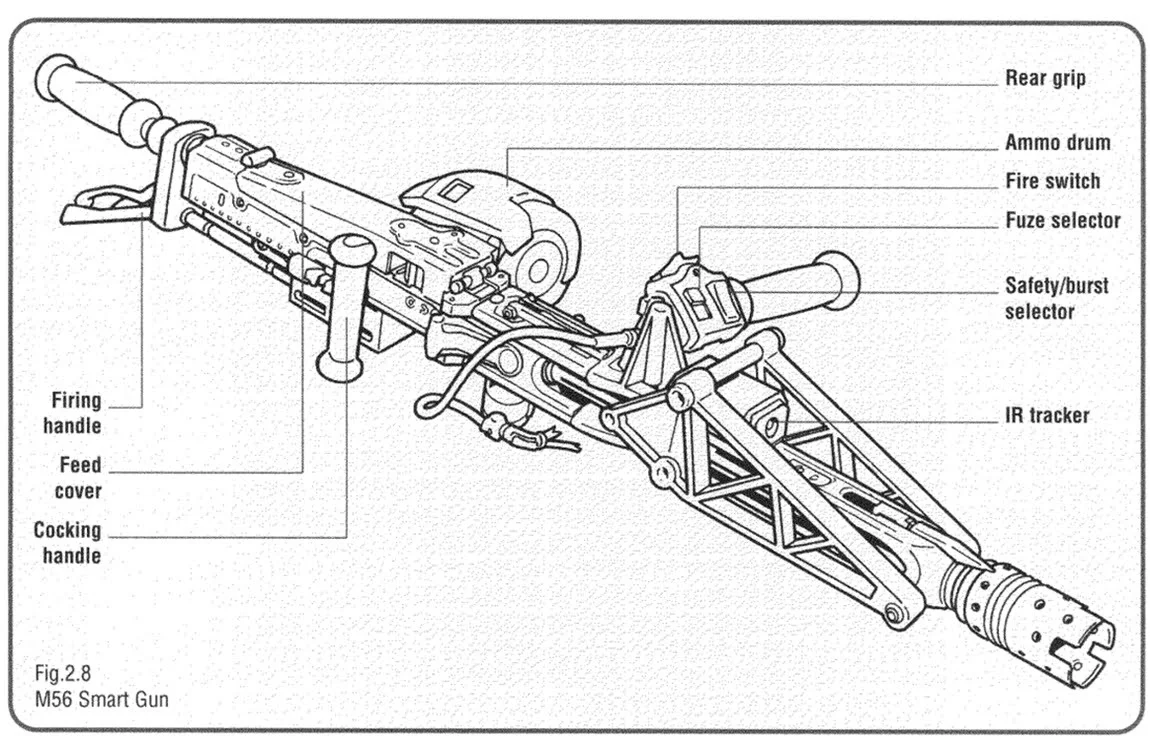
The squad machine gun was the M56 Smartgun, listed in service as the M56A2, a 10mm general-purpose gun effective to 1,500 meters. The whole harness, arm, and full ammo load massed 17.82 kilograms. The gun itself was 122 centimeters long with a 54.5-centimeter barrel, cycled near 1,200 rounds per minute, and fired the heavier M250 10×28 caseless round with Super or Delay fusing. Power came from a DV9 lithium battery good for 50,000 rounds.
The infrared tracker above the barrel used a 256×256 platinum-silicide array cooled to 77 K and watched a 30-degree cone. A lock box on the head-mounted sight marked center of mass, and the articulation arm steered the barrel there unless the gunner overrode it. Field notes warned that dust, heat shimmer, and dawn glare on Aurore could blind the tracker, and that the first round off a new drum often jammed if the gun loaded itself. An older M38 stayed in lockers as the backup some instructors still trusted.
The M42A scope rifle was the battalion sniper weapon, issued one per company and usually held in a pool of up to four scout-snipers. It was a bullpup 10mm pulse gun on a duratel frame, 101 centimeters long, 4.26 kilograms, with a 15-round match magazine and a twenty-power multi-spectral scope. Match M252 HEAP reached 2,950 meters. A long-range ball round reached 3,800 meters, and the optional classified PARGET link could redirect nearby sentry arcs.
The sidearm for the previous sixty years was the M4A3, a 9mm automatic with a 12-round magazine that weighed 0.95 kilograms loaded. Effective range was about 50 meters. A new M901 subcaliber resin-jacketed core was still a year from full issue because terminal ballistics were unfinished.
Platoon anti-armor sat on two different guns. The M78 PIG was a 15.2-kilogram phased-plasma rifle that fired vaporized cadmium telluride from a 30-round feed, claimed to open heavy-tank flank armor at 1,000 meters after a three-second charge. The disposable M83A2 SADAR was a 3.1-kilogram one-shot rocket, 64 centimeters closed and 90 centimeters extended, with a cooled infrared seeker that stayed live for twenty minutes and a 10-meter backblast lane. Unguided shots against bunkers stayed useful only inside about 200 meters.
Flamethrowers And Sentries
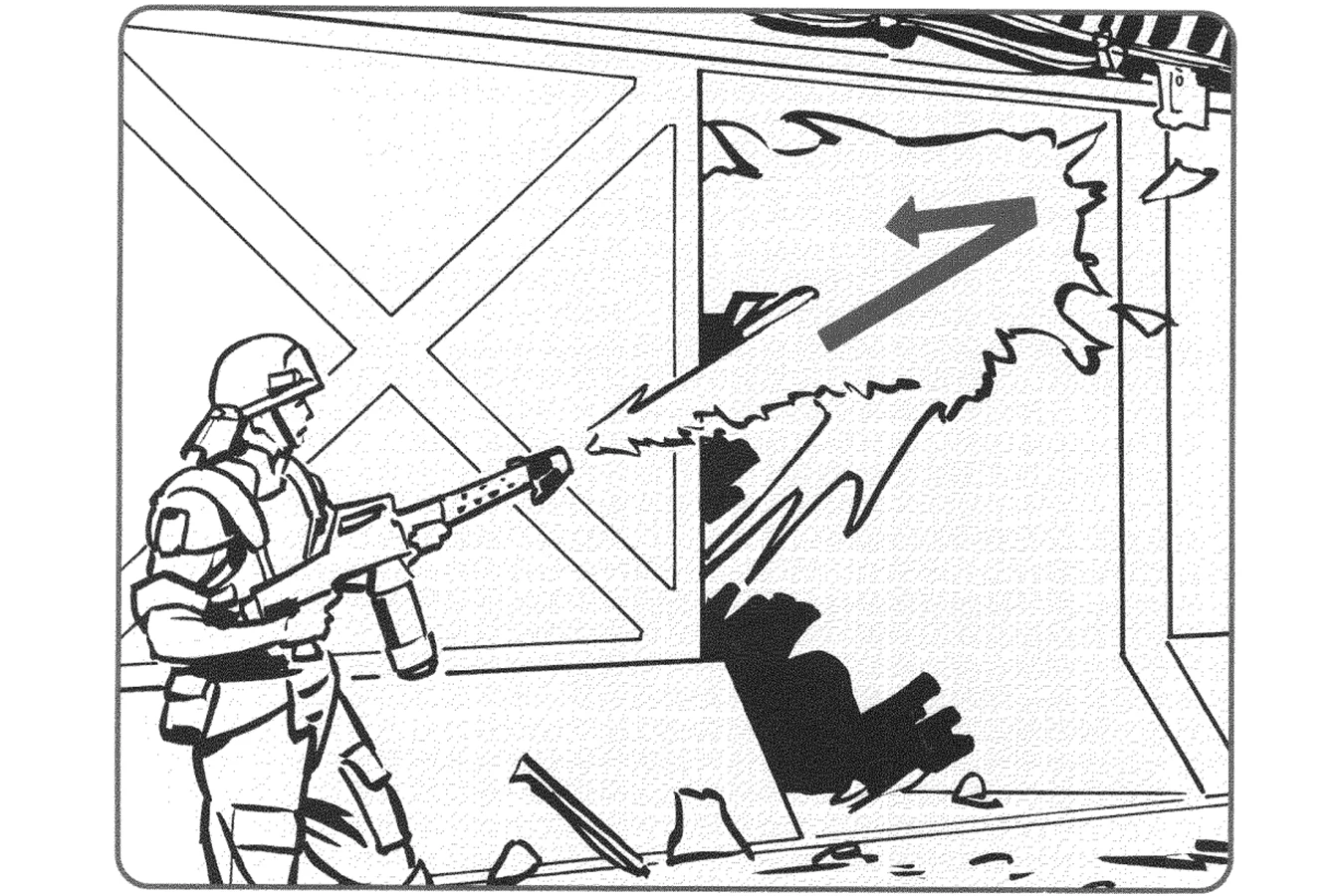
The M240A1 was an 88-centimeter USCM carbine flamethrower that weighed 2.7 kilograms with a full tank. Pressurised thickened napthal stuck and burned for about thirty seconds, with a direct range of 30 meters and a high-angle arc out to 50 meters. A full reservoir lasted about twenty seconds of fire. Operators could bounce a burst off a facing wall, or fire a wetshot of unlit fuel and ignite the mist on the next pull.
The UA 571-C remote sentry weighed 19.6 kilograms and could be assembled in under 150 seconds. It mounted a pulse machine gun on the same M250 HEAP round as the smartgun, cycled at 1,100 rounds per minute from a 500-round drum, and cut the feed if the breech ran hot enough to cook off. Sensors covered a 60-degree cone with infrared, ambient optics, an ultrasonic tracker, and lidar. In auto-remote the gun interrogated IFF in Marine comms gear and fired on a negative return.
Sister models were the laser UA 571-D and the 40mm grenade UA 571-F. Doctrine preferred several guns on a narrow front rather than one gun sweeping 360 degrees. A captured 21st Combat Cadre lieutenant on Helene 215 blamed a dead scout on an IFF beacon left live when the team tried to crawl past the wire.
Aerospace And The Cheyenne
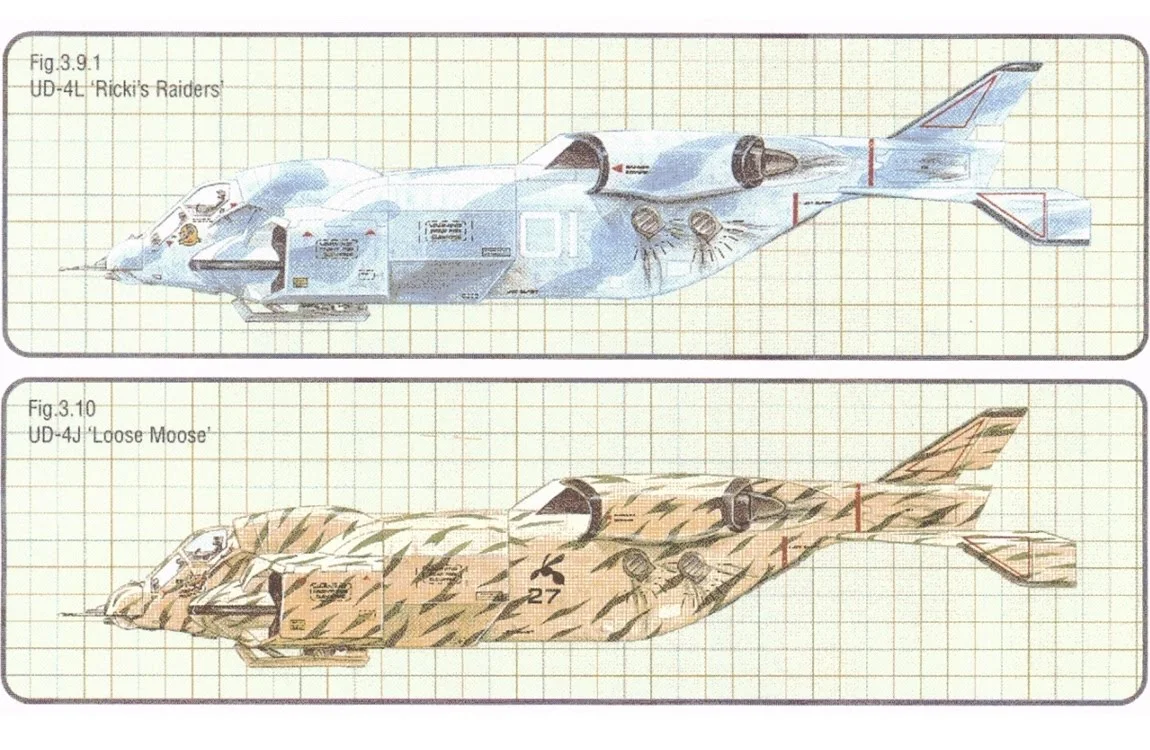
A Marine aerospace wing split into a Drop Group of about 200 ships tied to ground teams, a Tactical Group of six to eight squadrons, and a Support Group for casualty evacuation, rescue, and special insertion. Tactical types included the AD-19C/D Bearcat, AD-17A Cougar, and UD-22 Navaho gunship. The workhorse transport beside the Cheyenne was the CS-14 Briareos heavy-lift shuttle.
The UD-4L Cheyenne came out of a late-Tientsin requirement for a light shuttle that could lift 16,000 kilograms from an unprepared pad and still fly as a gunship. The lifting-body airframe wrapped a payload bay about 9.5 by 4.5 by 2.4 meters, large enough for an M577 with the turret stowed or a HALOS stores pallet. Skinning used a carbon-carbon inner layer, a single-crystal carbon heat spreader, and a ceramic outer coat for re-entry. Three extra seats sat forward of the bay, and a port step gantry dropped for crew access.
The figures show later Cheyenne marks with different lift turbines, nose guns, and weapons pods, plus a UPP copy. Early UD-4B ships used Atco Wyoming F23 turbines and carried fewer people without the later nose cannon. A planned UD-24 with a 70,000-kilogram lift was meant to haul tanks in the early 2180s. Until that ship arrived, armor stayed scarce on Marine drops.
The M577 And Variants
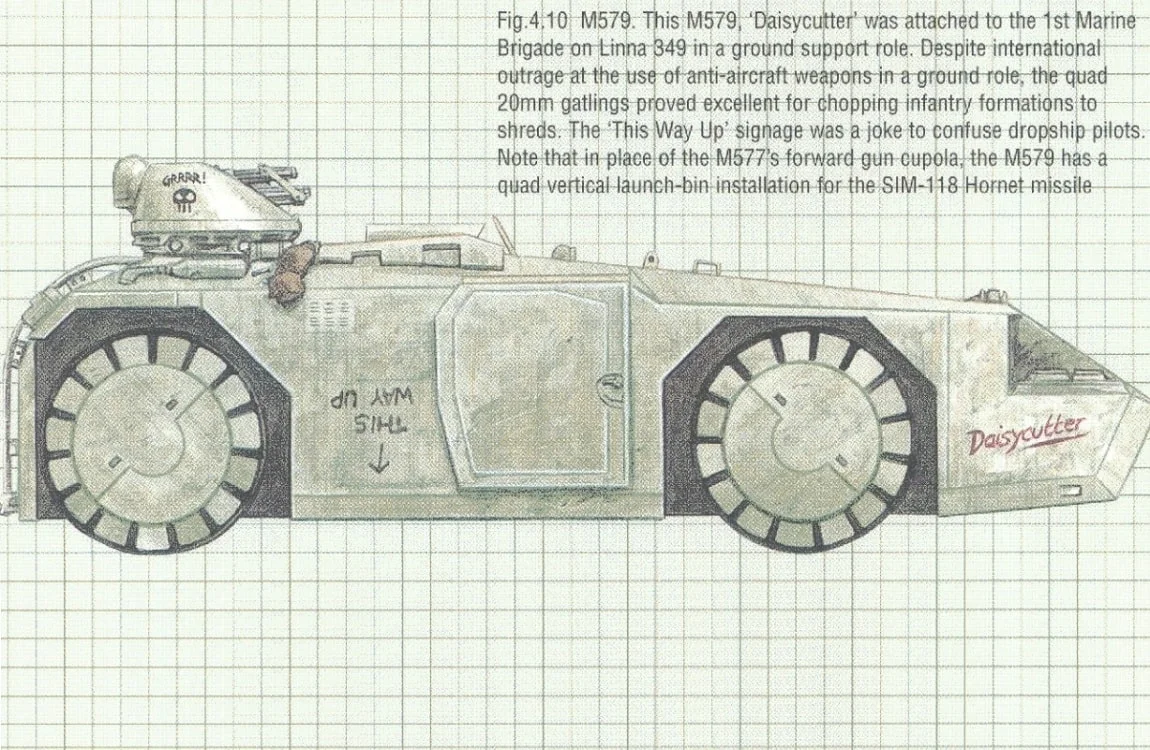
The M577 came from the Marine 70 plan for a cheap APC that a dropship could carry. Combat weight had to stay under 25,000 kilograms, and the service figure listed 14,500 kilograms, a 150 km/h road speed, and a 286 kW multi-fuel turbine through four 159-centimeter armored wheels. Two crew rode with twelve passengers on yoke harnesses for an orbital drop. Armor stopped fragments, small arms, and rifle grenades, not dedicated tank weapons.
A hull cupola carried twin Republic Electric RE700 20mm gatlings with 1,700 rounds of HE, HEAP, or Beehive flechette, but only across a 60-degree forward arc. The sliding rear turret came in three marks: the M577A with twin 20 mW Boyars PARS 150 plasma cannon, the M577A2 with twin 40 mW free-electron lasers, and the M577A3 with twin 20 MeV particle beams. Sensors mixed a thermal imager, 4× to 20× TV, ultraviolet, an ultrasonic tracker, and millimeter-wave radars good for a man-sized target to about 3,000 meters. Early turrets shipped without splashguards, so off-road mud packed the barrels until Houston issued a fix.
The pictured M579 Daisycutter sat on the same M570-family chassis with a quad 20mm gatling in place of the M577 cupola, slaved to a multi-spectrum sensor for point defense. The example in the book belonged to the 1st Marine force on the Linna 349 campaign. Other M570-series hulls also towed mortars and hauled stores once a drop was on the ground.
Tanks And Artillery
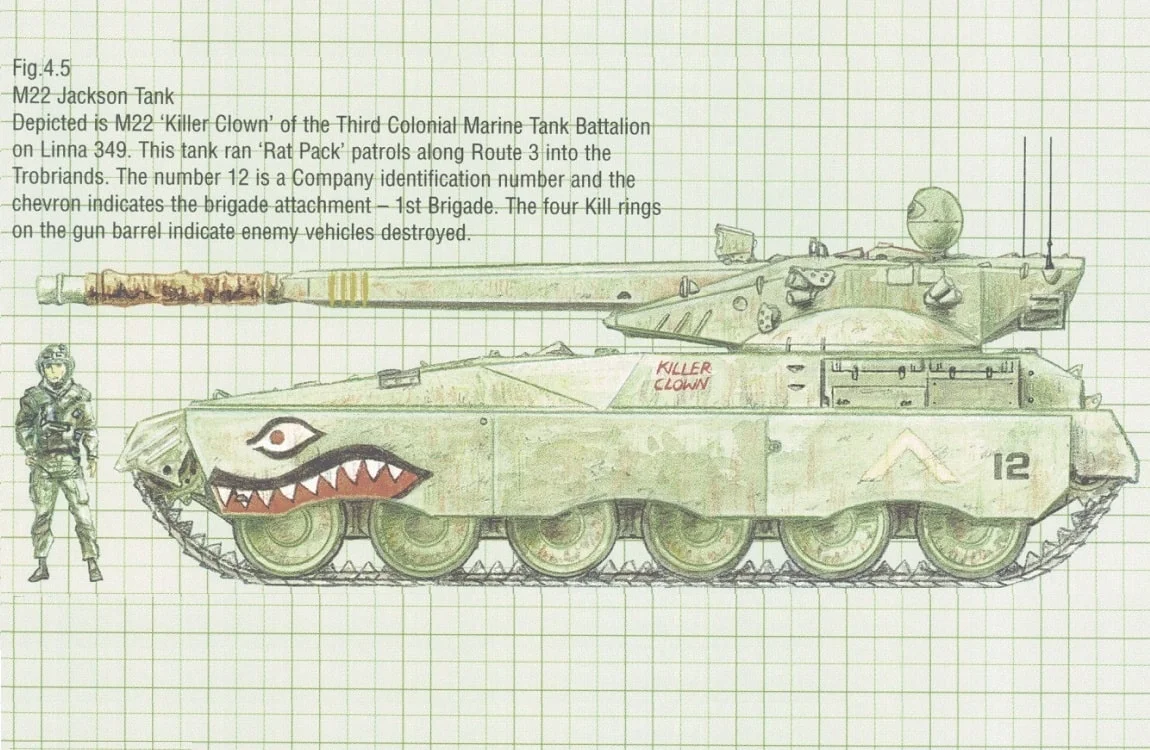
Six Marine tank battalions leaned on the medium M22A3 Jackson and the light M34A2 Longstreet because heavy starlift was scarce. The 2nd Battalion of the 1st Division had just taken the Army's M40 Ridgway heavy tank, with two more battalions slated before any decision to retire the Jackson. The pictured M22 Killer Clown of the 3rd Tank Battalion ran Rat Pack patrols on Route 3 into the Trobriands on Linna 349, with four kill rings on the gun and a 1st Brigade chevron. Without a UD-24, tanks still arrived in pieces rather than as a drop load.
A Marine Assault Unit was a reinforced battalion with its own starlift for at least 30 days of ground combat, two to four line companies, and a headquarters that owned recon, engineers, and a heavy-ordnance company. If the ships could lift it, an armor company of fourteen tanks could attach. Command guns included the 158mm tracked M292 self-propelled piece, a 38,000-kilogram vehicle with a 41-caliber tube, 78 autoloaded rounds, and binary liquid propellant. The A2 could put six rounds in the air in under ten seconds, with standard shells to 39 kilometers and a ramjet shot out to 62 kilometers. The plate in the book is Betty Mae, an M292A2 that supported the Harare assault on Linna 349, with a roof air-defense laser and field-painted camo. Infantry fire support at section level was the 80mm twin-tube M402 mortar: ten rounds from a rotary magazine in under eight seconds, about 70 kilograms with one magazine, or 200 rounds on an M572 carrier. The M201 multiple-launch rocket bins, HIM-122 Lancer anti-ballistic missiles, and HIM-78 Sprint space weapons sat at the same command level.
Combat Support
Synthetics rode with line units as drivers, pilots, medics, and scientific advisers, not as armed fighters. The Geneva rules barred combat programming, and the Corps classed them as property, though a 25 kW hydrogen cell and a 400-day refuel cycle made them too expensive to throw away. A carbon-fiber skeleton carried vat-grown silicone muscle, a Carbon-60 processor, 1 terabyte of fast RAM, and 1.2 petabytes of non-volatile memory. Most Marine units were built to look like quiet adults around forty, because troops would not work with a machine that looked like a machine.
A direct hit on the Carbon-60 processor or fuel cell killed a unit at once. Hydrostatic shock from small arms wrecked the fluid muscle even when the frame survived, and hard vacuum or corrosive air wrecked them as surely as it wrecked a human. One field note blamed company-built robots without naming a maker. The film later made Bishop the face of that platoon synthetic.
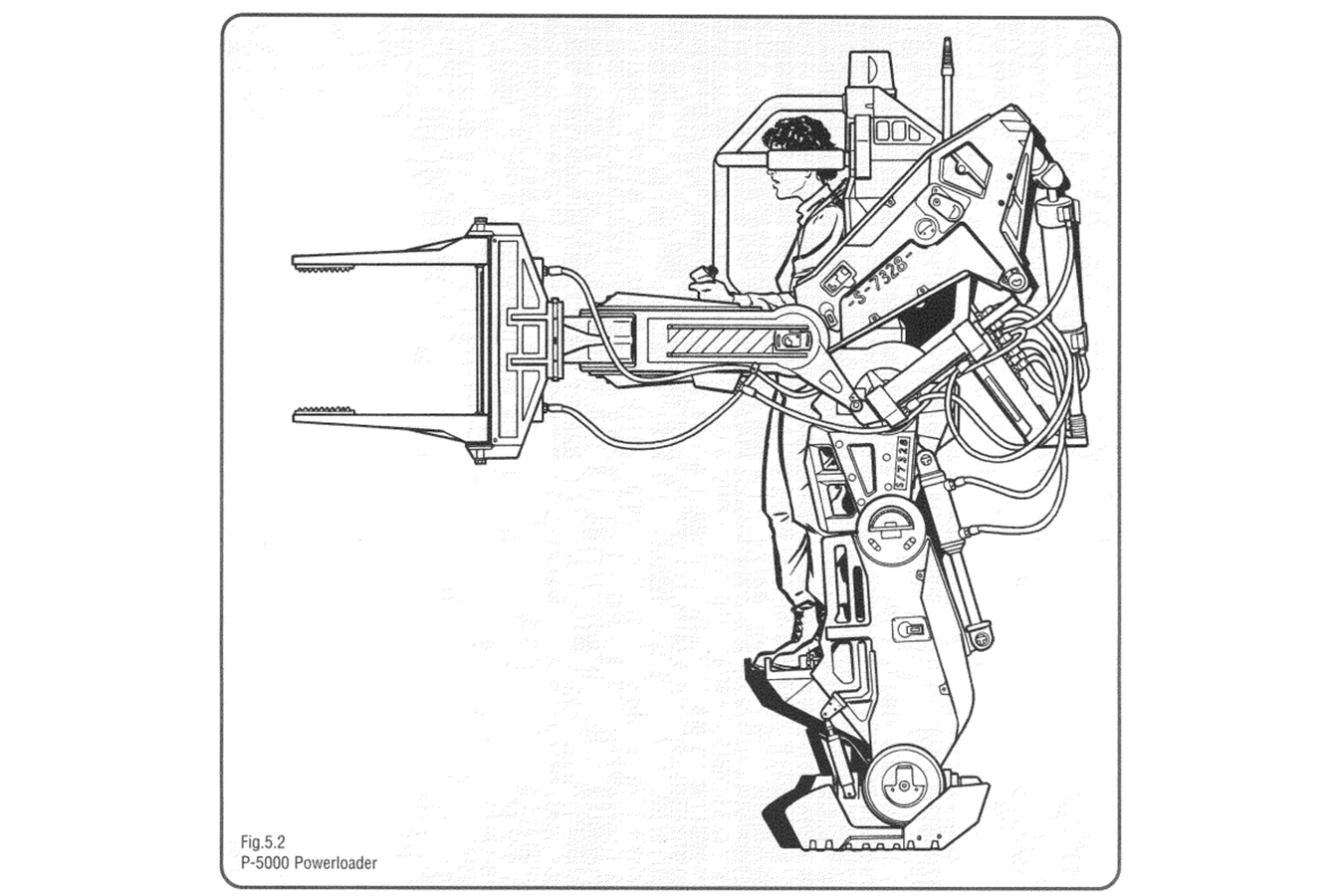
The Caterpillar P-5000 was the prime field loader, an anthropomorphic frame that could fine-handle 4,000 kilograms. A 65 kW hydrogen cell sat on the back, linear motors and hydraulics copied the operator's walk, and a roll cage came down over the harness. Operators needed the equivalent of a Class 2 civilian cargo license. Daily maintenance ran higher than a forklift, and a full load on the small feet put about three kilograms on each square centimeter of ground.
Land logistics still used the M570 all-terrain truck once the Cheyenne and Briareos had put the cargo down. Surveillance kit in the same unit included the handheld M314 Doppler scanner that later became standard fireteam gear. Command nets used the PRC 489/4 set built into smartgun armor, the same radio that carried IFF for the sentries.
The Sulaco And Starlift
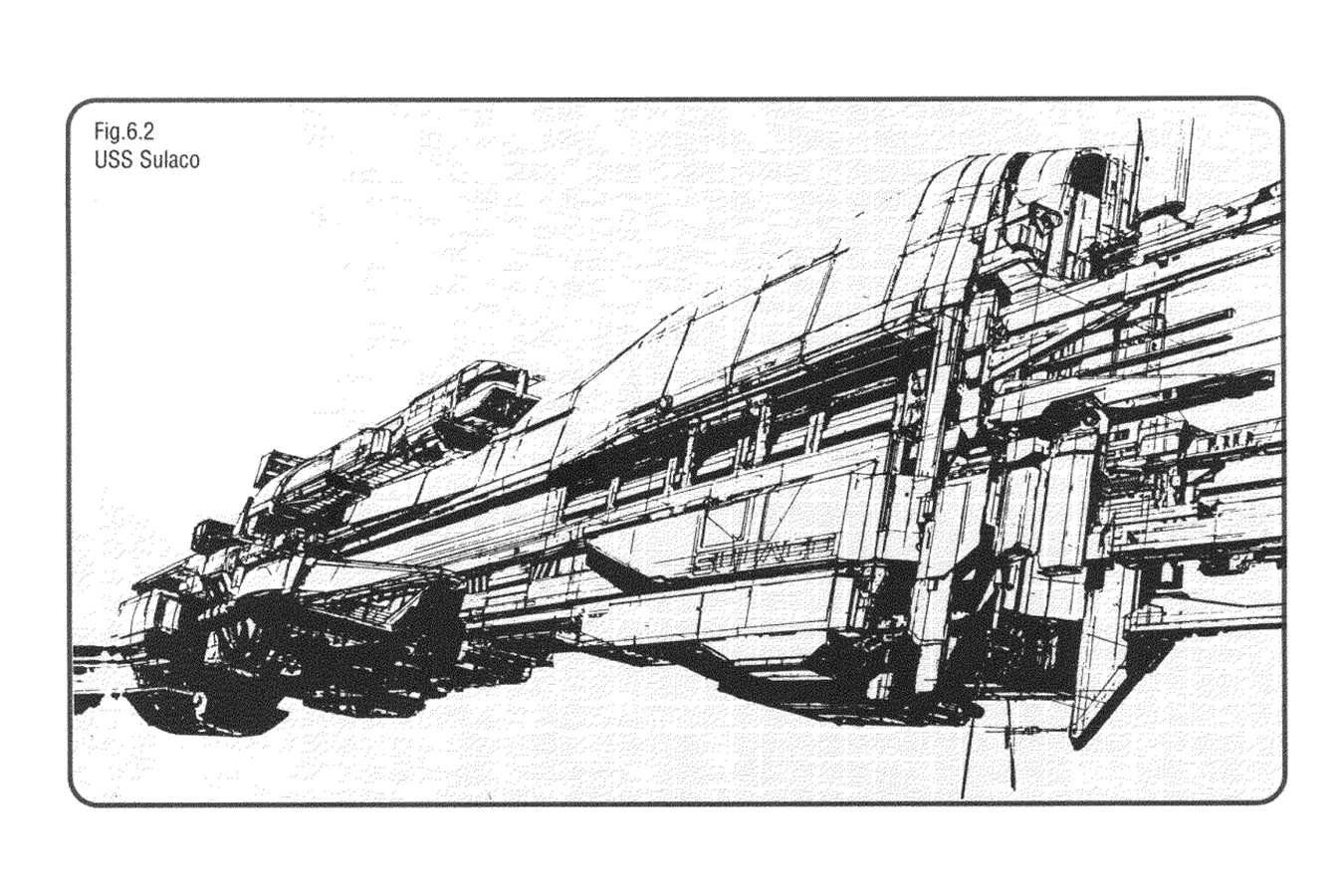
The USS Sulaco was the thirteenth Conestoga-class ship, more than 385 meters long and about 78,000 metric tons, laid out as an 8-17-0 hull around a Westingland A-59 lithium-hydride fusion plant rated at 3.6 terawatts. Of 36 Conestogas built, 27 were still in service in 2179, filling a gap until the first Bougainville-class attack transports commissioned the next year. After a Block 74 refit the Sulaco was due for five more years, then commercial sale. Hands in the fleet already called her unlucky after two ASAT hits at Linna 349 and a Gateway docking smash that killed five.
Four Gates-Heidmann GF-240 motors burned carbon-diamond against fusion plasma for sublight thrust, each able to push more than 35,100 metric tons for short burns. A Romberg-Rockwell Cygnus 5 tachyon shunt handled FTL at a cruise of 0.74 light years per sidereal day. Time in hyperdrive ran the other way from sublight dilation, so crews aged faster at high speed and slept in freezers to keep journeys usable. Ninety hypersleep capsules were fitted as standard, with room in the cargo hangars for up to 2,000 more.
A 28-terabyte Carbon-60 mainframe behind the flight deck could navigate and fight while the crew slept, with an 8-terabyte backup forward of the fusion torus. Five 25-by-10-meter hangar doors and a 30-by-30-meter hoist fed a dedicated bay for up to four shuttles. Twenty Type 337 emergency escape vehicles could launch in seconds, and automatics could load occupied capsules if the crew could not walk. A manual scuttle overrode reactor cooling and gave fifteen minutes to clear the blast.
Xenomorphs And LV-426
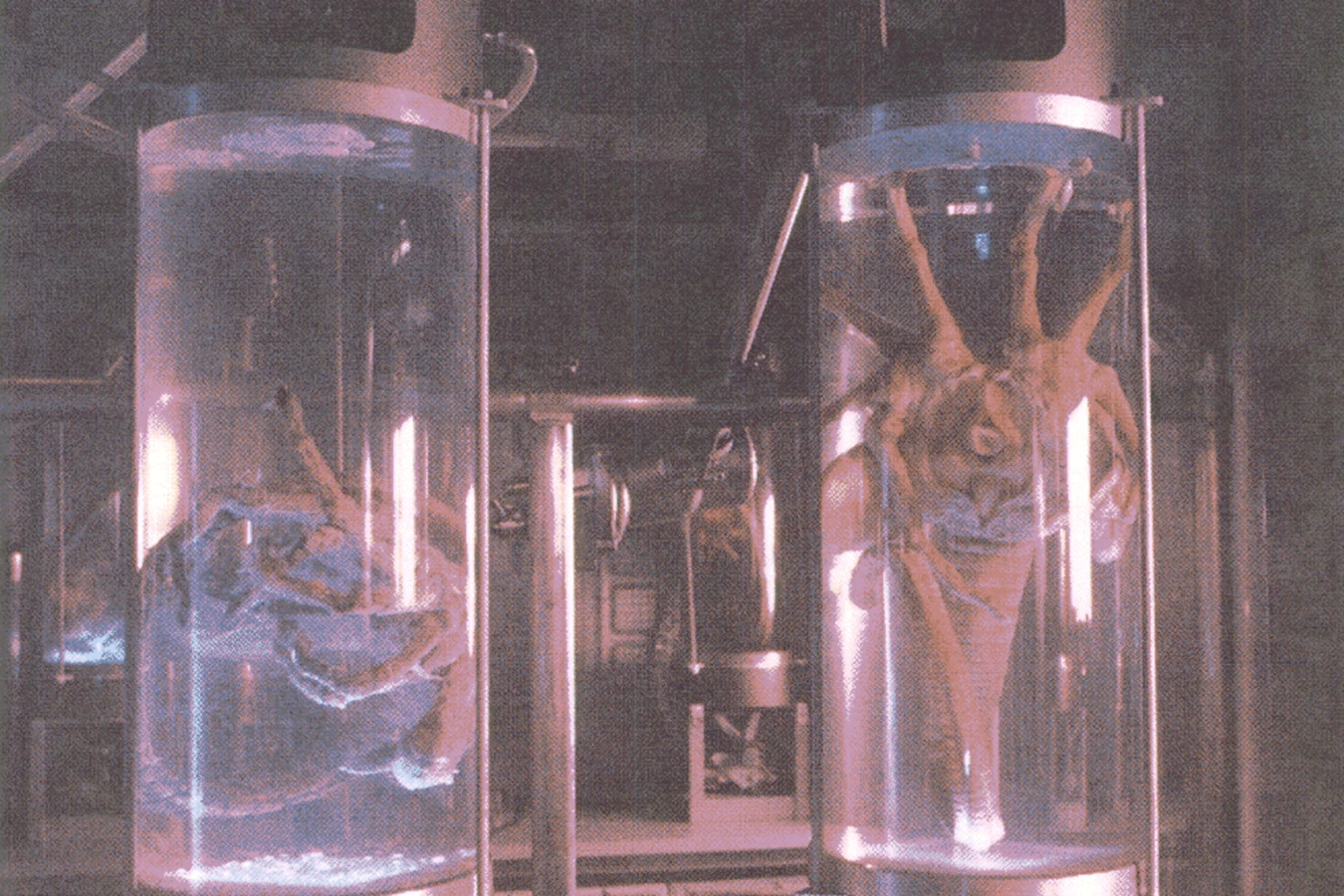
Unit 7 drops the hardware voice and prints company playbacks from Gateway after Space Command lost a starship near Zeta 2 Reticuli. A mass trace tagged the Sulaco on 12 August 2179. By 5 September a company officer confirmed Carter Burke was dead and that Bioweapons and D15 had locked the file. The next day's briefing set a live-capture job from Ripley's ICC account, a handful of extraction-team pictures, and the Sulaco flight recorder.
The Nostromo is listed as registration 180286, an M-class Lockmart CM-88B Bison refitted in 2116 as a 63,000-ton towing vehicle out of Panama, running automated refineries between Sol and 20 Reticuli. Mother was a 2.1-terabyte mainframe with a 2.0-terabyte backup. A Yutani T7A shunt cruised at 0.42 light years per day unladen, and two Rolls-Royce N66 Cyclone tunnels made 65,830 metric tons of thrust each. Seven capsules and a ship's cat had ICC leave for the rodents.
Zeta 2 Reticuli is a G1 V star about 36.7 light years from Earth, with a G2 V companion 5,800 AU away. The fourth planet is a brown-dwarf Jovian. Its second major moon is LV-426, named Acheron: 12,201 kilometers across, 0.86 g, tidally locked on a 5.07-day orbit. A French fly-by first treated the moons as ice balls. A 2130s survey found Acheron was rock, possibly captured in the last 40 million years, which would explain the brown dwarf's rings and the broken surface.
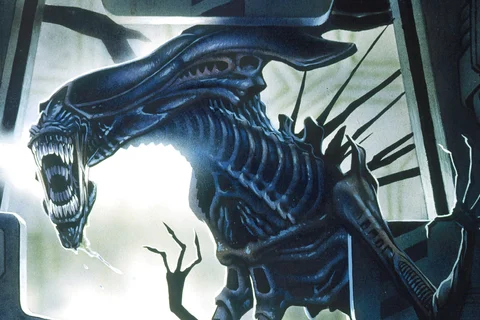
Dallas, Lambert, and Kane set down within 2,000 meters of the beacon at coordinates near +0°6'20", +39°0'2" and entered a hooked, ribbed derelict. A calcified crewmember showed a chest wound, Kane's approach to the egg chamber put a Facehugger on him, and the later birth on the Nostromo was a Chestburster. Ripley tried to hold quarantine, and Ash overrode her. The later Hadley's Hope mission, reconstructed from the Sulaco recorder, ended with no live specimen and a 1,500-meter Weyland-Yutani atmosphere processor that a fusion excursion could turn into a forty-megaton ground burst with a thirty-kilometer radius. The hive reconstruction put a Queen in a central chamber laying eggs, and Ripley tried to drop that Queen into an airlock. Explosive 10mm hits cracked an adult Xenomorph open and threw acid, so the briefing wanted non-penetrating loads for a live take.
A 14 September flash from the Shinyo Maru then told Mandec Research that Science Division was on the derelict, had recovered two lost specimens, and wanted weapons-free against other teams already on site. The Ilium range was judged likely to shelter the wreck from the processor blast, so eggs and the ship itself were still treated as recoverable prizes.
Editions And Reprints
Boxtree published the first UK paperback in 1995 from Broadwall House, London, at 159 pages. HarperPrism issued the first US trade paperback in June 1996 from the same Bath Press printing. Titan Books brought the manual back on 29 May 2012 at 160 pages, and that is the edition still sold as the current reprint.
No separate audiobook was issued with the Boxtree, HarperPrism, or Titan runs. Free League's later Colonial Marines Operations Manual is a different book, a tabletop operations text, not a reprint of Brimmicombe-Wood. The Alien RPG core rulebook is the parent of that operations text, a 2183 Year Zero game rather than a 2179 field manual.
Behind The Scenes
Brimmicombe-Wood is a British game designer whose other credits include the board games Downtown and The Burning Blue and the PC sims Ka-52 Team Alligator and Team Apache. He later designed at Guerrilla Games inside Sony Worldwide Studios. Hughes sold the project, handled the contracts, and edited the manuscript. Photographer Seamus Ryan shot original stills for the figures.
John and Liliana Bolton backed the book when it first looked dead. Boxtree head Adrian Sington bought a writer who had done simulated manuals rather than prior print books, and in-house editor Jake Lingwood steered the text. Collector Harry Harris lent a full set of Colonial Marine armor. Lawrence Nathan lent a working pulse rifle, a smartgun sight, grenades, and a motion tracker so the plates could match the film kit.
Captain Ian Mitchell of the TAVR advised on military practice, designed the scope rifle, and worked out the prone smartgun stance. Tony Valle designed the diamond reaction-mass drive. Mark Bovankovich set dropship materials, flight behavior, and the defensive suite. Terry Wiley designed the atmosphere processor and supplied the Zeta Reticuli numbers.
Doug McCarthy modeled the armor plates. John Gorman opened the Alien War walkthrough at the Trocadero in London for a photo shoot. Jim Campbell and Terry Jones supplied Xenomorph lifecycle notes and film dates. Orlando Murrish started the power-loader argument in 1986 that later became the P-5000 chapter.
Conclusion
Aliens Colonial Marines Technical Manual is Lee Brimmicombe-Wood's 1995 field guide to the Corps in the year of Aliens. It names the rifles, armor, Cheyenne marks, M577 family, and Conestoga hull that the film leaves unlabeled, then closes on a company attempt to rebuild the LV-426 loss from Ripley's testimony and the Sulaco recorder. Later games and rank charts kept using those tables as if they were standing orders.
External Sources
Tag Categories: Alien Merchandise | Alien Universe Reference Books