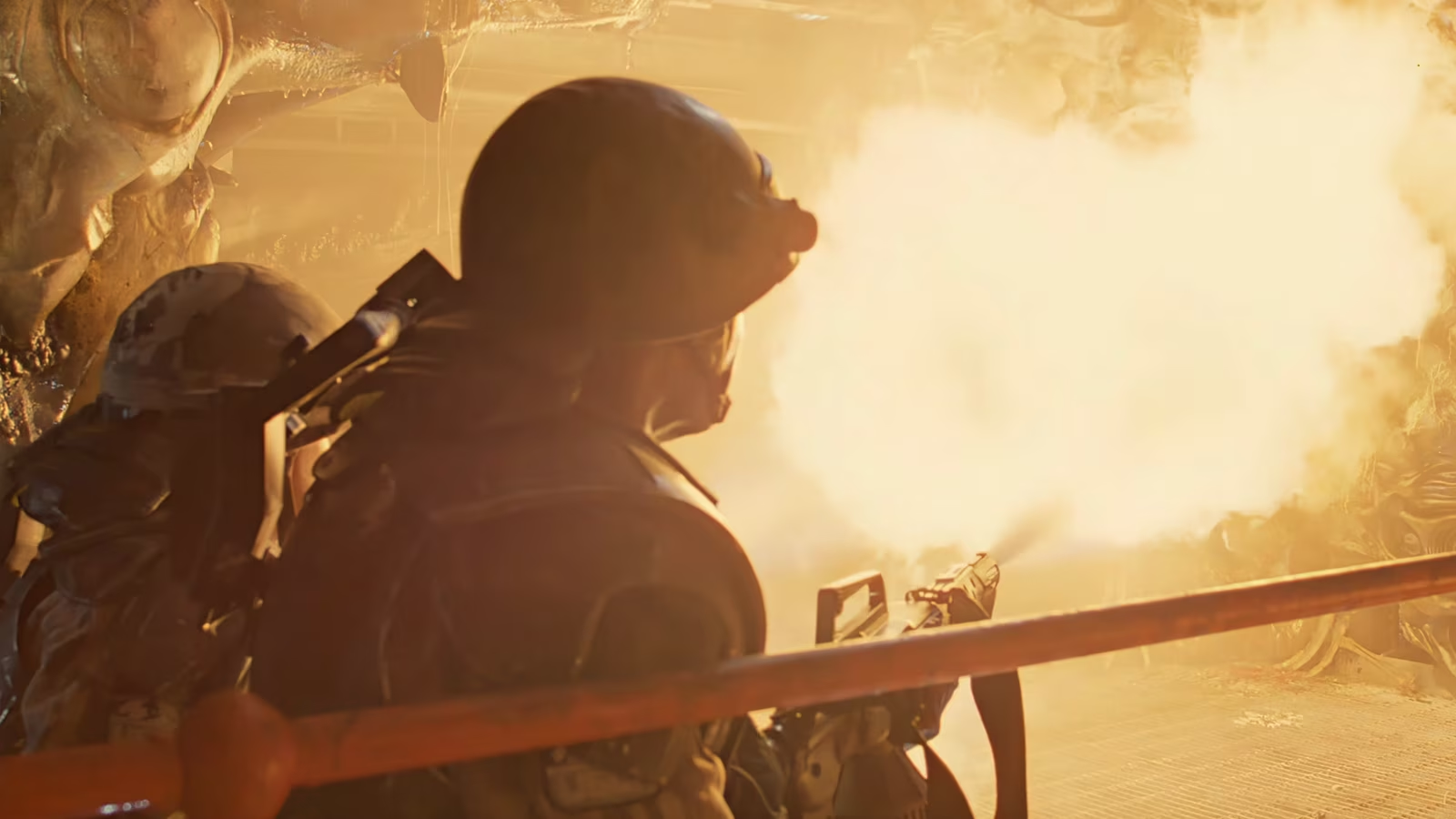

The M240 Flamethrower is the Colonial Marine carbine incinerator from Aliens. Marines also called it an incinerator rifle, or a Bake-a-Flake after a cereal ad. The Aliens Colonial Marines Technical Manual lists the service model as the M240A1, a lightweight close-combat flame unit for the squad and fireteam. In 2179 the Colonial Marines at Hadley's Hope used those tanks to burn a Chestburster, hold hive corridors, and send Ellen Ripley back into the processor with one taped to a pulse rifle.
Design And Specifications
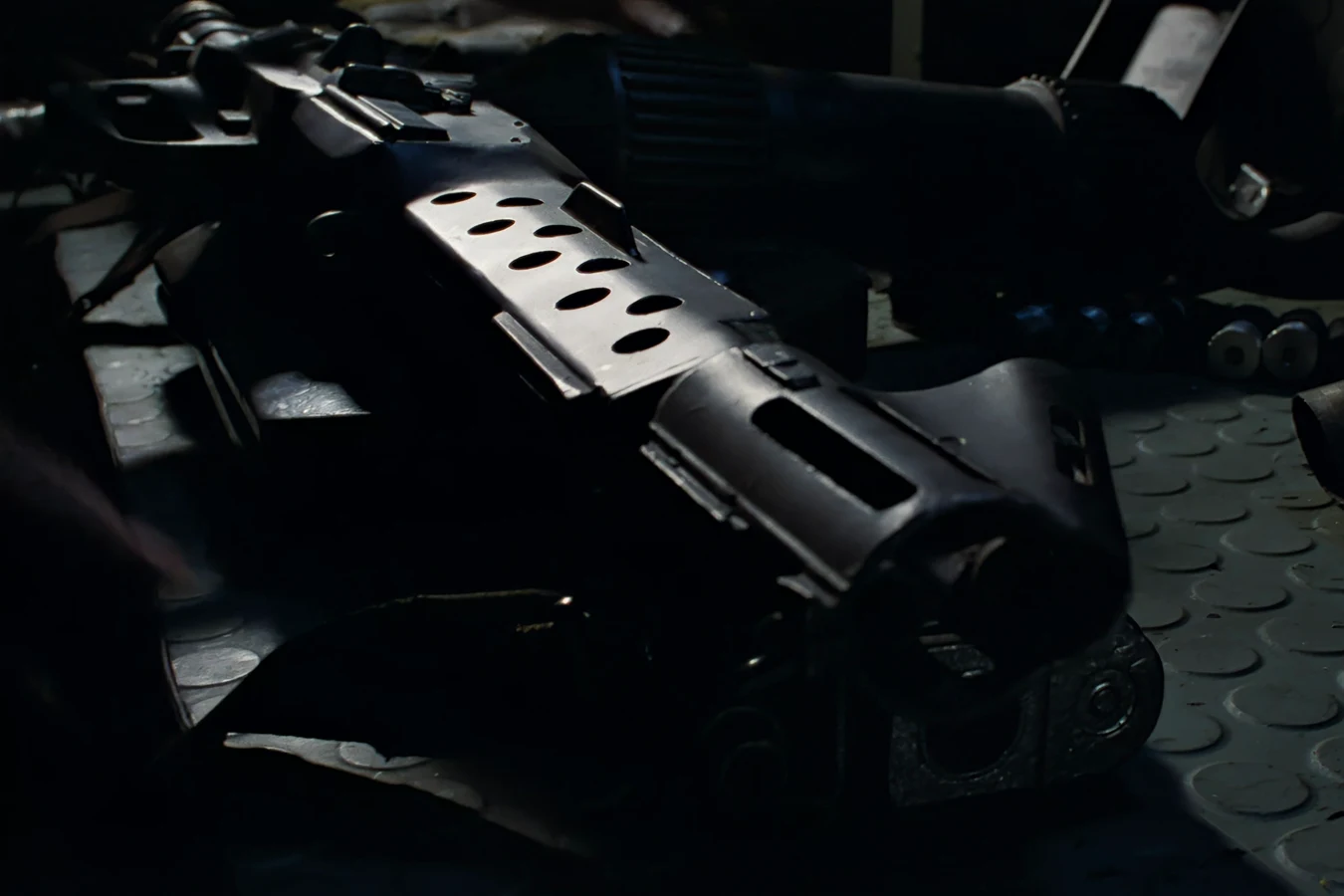
The M240A1 is a carbine-format flamethrower built for close work at squad and fireteam range. Pressurised, ultra-thickened napthal fuel leaves the barrel and is lit by a nozzle burner, so the weapon can put flame on a target out to 30 meters. Once a hit lands, fuel droplets stick and keep burning for about thirty seconds. A standard reservoir holds enough for a burst of up to twenty seconds. That mix of sticky burn and a short, hard stream made the incinerator one of the most feared kits in the Marine inventory, especially in tight rooms and hive corridors.
Flame can also be pushed through a firing slit or bunker aperture, so the incinerator was issued as a fortification tool as well as a close-combat gun. Many operators still disliked carrying one. The useful reach is short, and a hit on the fuel cell from shrapnel or small-arms fire can rupture the reservoir hard enough to take everyone nearby with it. At Neusheune, snipers on the other side started plinking those cells on purpose. A single clean hit would blow everything inside about ten meters. After that, the rest of the unit kept clear of the Bake-a-Flakers. PFC Matt Hanna of the 2nd Colonial Marine Brigade recorded that habit.
The weapon is 88 cm long and weighs 2.7 kg with a full reservoir. That is light enough to sling on a back plate or tape beside a M41A Pulse Rifle, which is how the Sulaco squad packed them. A standard rifle platoon carried eight M240 units with the rest of the support load, beside eight UA-571 remote sentries, rockets, and a mortar. The carbine shape, underslung tank, and top carry handle are the same silhouette later games label as the M240 Incinerator Unit.
Fuel, Ignition, And Controls
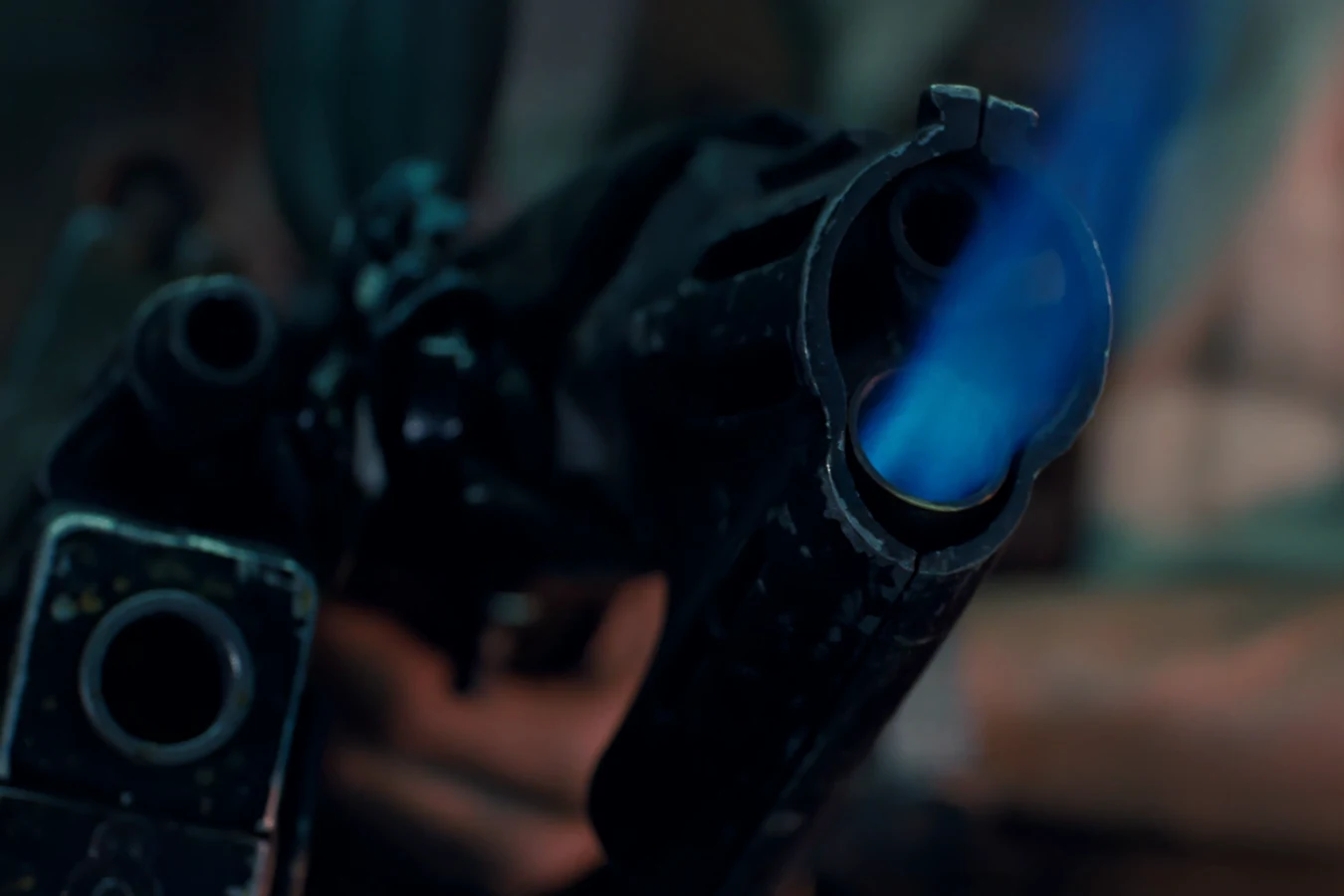
A valve at the rear of the M240 is the refuel point. The reservoir can also be unscrewed, refilled off the gun, or swapped for a fresh cell. That screw-off tank is the reload, not a belt or a magazine well. A twist-valve on the body sets how much thickened fuel is allowed through the barrel. A thumb switch on the handgrip lights the nozzle burner when pressed, which is the small blue pilot seen on the film props.
The shot itself is the handgrip trigger. Holding it keeps pressurised napthal leaving the muzzle until the trigger is released or the cell runs dry. There is no burst limiter. Twenty seconds of fuel is the whole combat load, so a long spray empties the weapon in one fight. The burner has to stay lit for a proper flame jet. With the burner off, the gun still throws wet fuel, which is the start of the wetshot described below.
Because the fuel is ultra-thickened, a hit does not splash and die the way a thin petrol mix would. Droplets cling to armor, resin, and skin and keep heating the target for about half a minute after the stream stops. That is the point of the incinerator in a hive: a Xenomorph that shrugs off a few pulse rounds still has to deal with burning gel on the carapace. It is also why a ruptured cell is so dangerous. The same sticky load that clings to a target will cling to the Marine who was carrying it.
Tactics And Limits
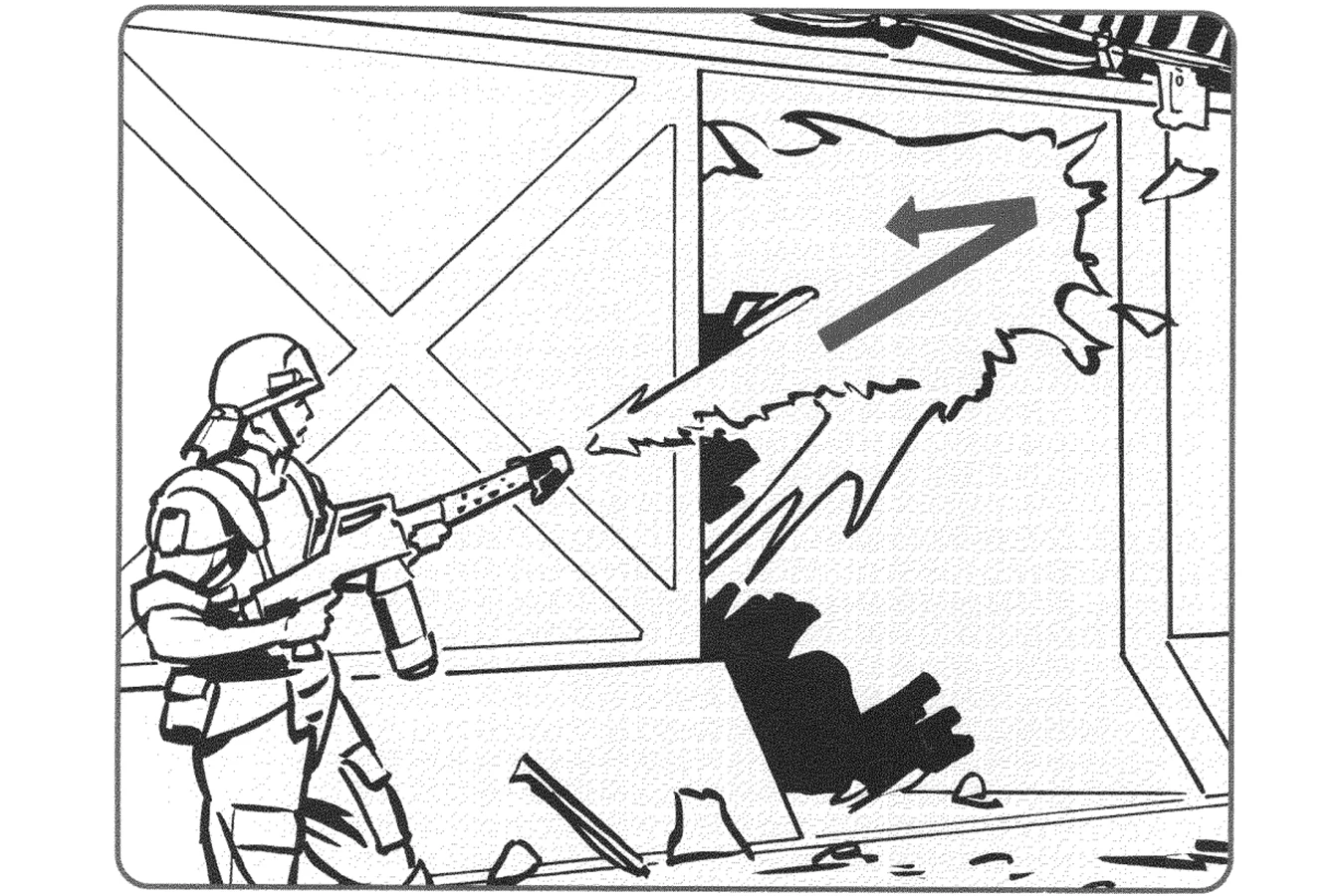
Direct fire is the standard shot. With the burner lit and the trigger held, flame reaches a target out to 30 meters. Range can be stretched by a high-angle shot, with the stream sent up at about 45 degrees so the burning fuel drops onto the target in an arc. That loft can reach about 50 meters. It is a weaker way to put fire through an armored slit or bunker aperture, because the stream is no longer a tight, flat jet. It is still the only way to stretch the carbine past its usual cut-off.
A wetshot starts with the nozzle burner switched off. A stream of thickened fuel is thrown at the enemy and then mists as it reaches the end of its path. The burner then needs to be clicked back on so the next shot can light that vapor, which makes a short, hard fireball instead of a straight jet. Another method is the blind-angle burst, used in close fighting inside a built-up area. A flame burst from an M240 can be bounced off a facing wall or deck so the fire wraps around a corner the operator cannot see. That bounce follows a curved path through a breach, the same idea as pumping flame through a bunker slit.
Because the thickened fuel is hard to put out, a commander has to check the ground before authorising flame. Kindling, burnable debris, and the wider environment all count. Naked flame is not permitted in any pressurised space with a high oxygen mix. Collateral burn is the standing limit on incendiary weapons like the M240, even when the target is a bunker or a hive. On Helene 215, at Tokonigara, one Marine hit a fighter who then stood still while the rounds in her bandolier pouches cooked off. The rest of the squad watched the pouches blow while she burned in place.
M240 In Alien RPG
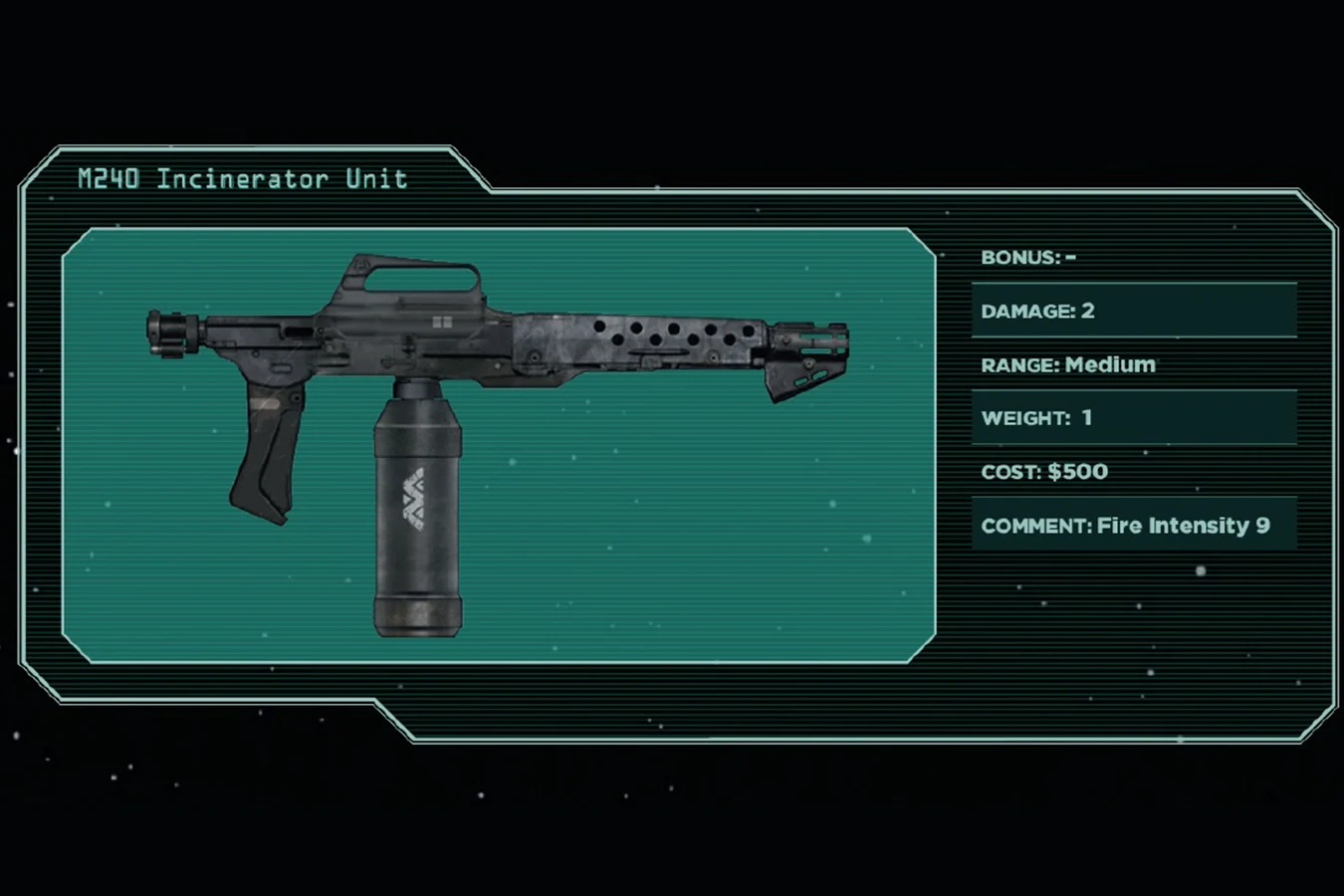
Free League's Alien RPG core rulebook keeps the film name as the M240 Incinerator Unit and puts a Weyland-Yutani mark on the underslung tank. The listed stats are damage 2, medium range, weight 1, and a $500 cost, with a comment of Fire Intensity 9. That intensity tag is the game's way of tracking how hard the burn is to ignore once it lands, which matches the Tech Manual's thirty-second cling time more than a single pulse-rifle hit. Later Marine books send players back to those core numbers when a squad takes incinerators into a hive or a sealed station.
The M240 At Hadley's Hope
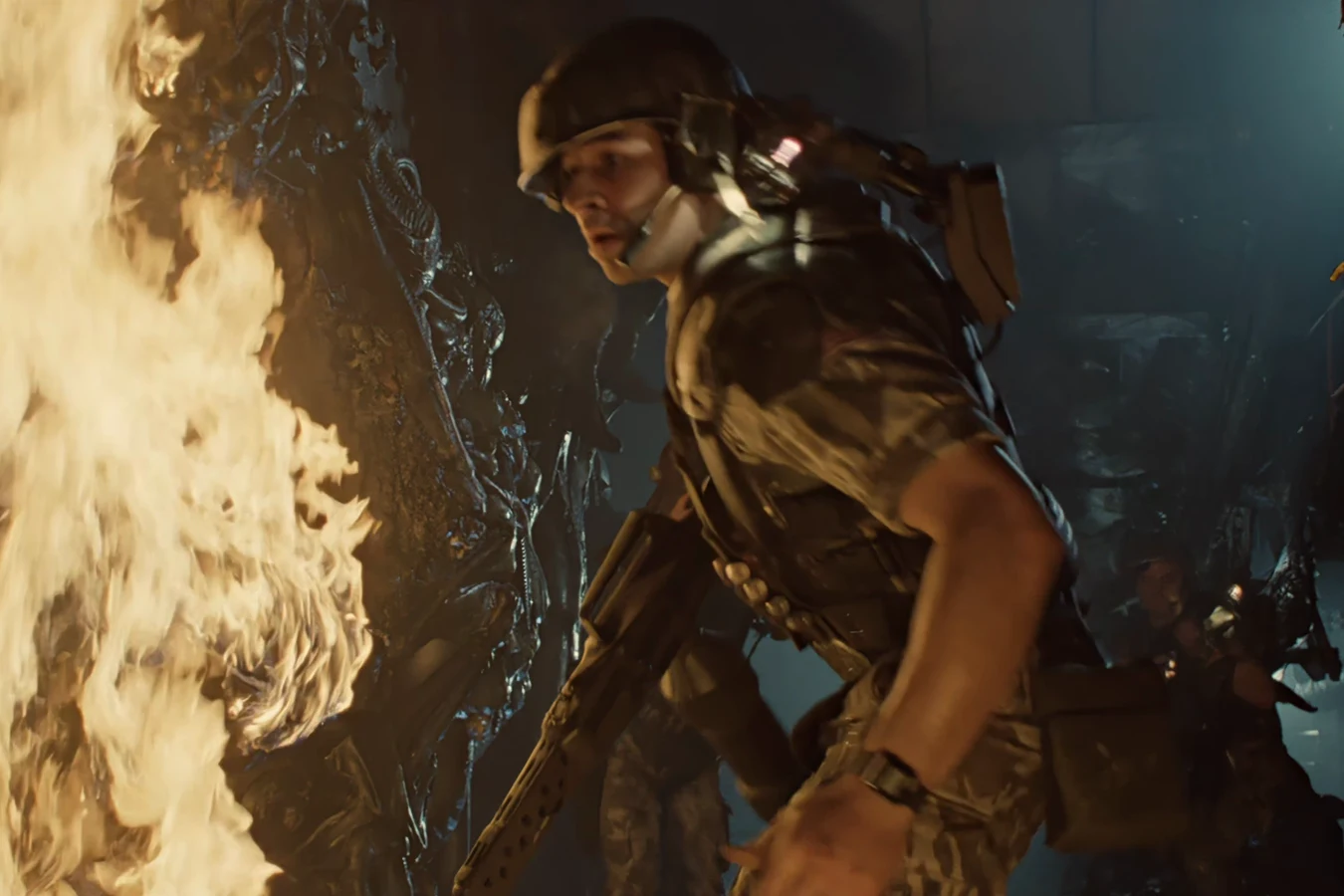
The USS Sulaco drop put several incinerators into the processor with the pulse rifles and M56 Smartguns. Private Wierzbowski and Private Frost carried flame units on the way in. Sergeant Apone had already pulled the magazines and grenades on Gorman's no-fire order when a living colonist birthed a Chestburster in the resin. Apone grabbed an M240 and burned it, the only clear Xenomorph kill among the ground team before the ambush.
Corporal Dietrich was the first Marine taken when a Warrior came off the wall beside her. In the scramble she fired her incinerator, lit Frost and his bag of confiscated magazines, and was dragged up into the hive as a host. The cook-off killed Private Crowe and wounded Wierzbowski. Drake dumped his empty Smartgun harness meters from the APC hatch and brought a flamethrower up from his back. A Warrior closed from behind, Vasquez tore it open, and acid hit Drake before he reached the door. His incinerator was still firing as he fell, and the stream set part of the APC on fire.
After the dropship crash, Hicks counted the usable kit left in the wrecked APC. Four pulse rifles with about fifty rounds each, fifteen M-40 grenades, four sealed sentry guns, and two half-empty flamethrowers were what remained. Those salvaged incinerators stayed unused through the operations holdout.
Ripley's Combined Weapon
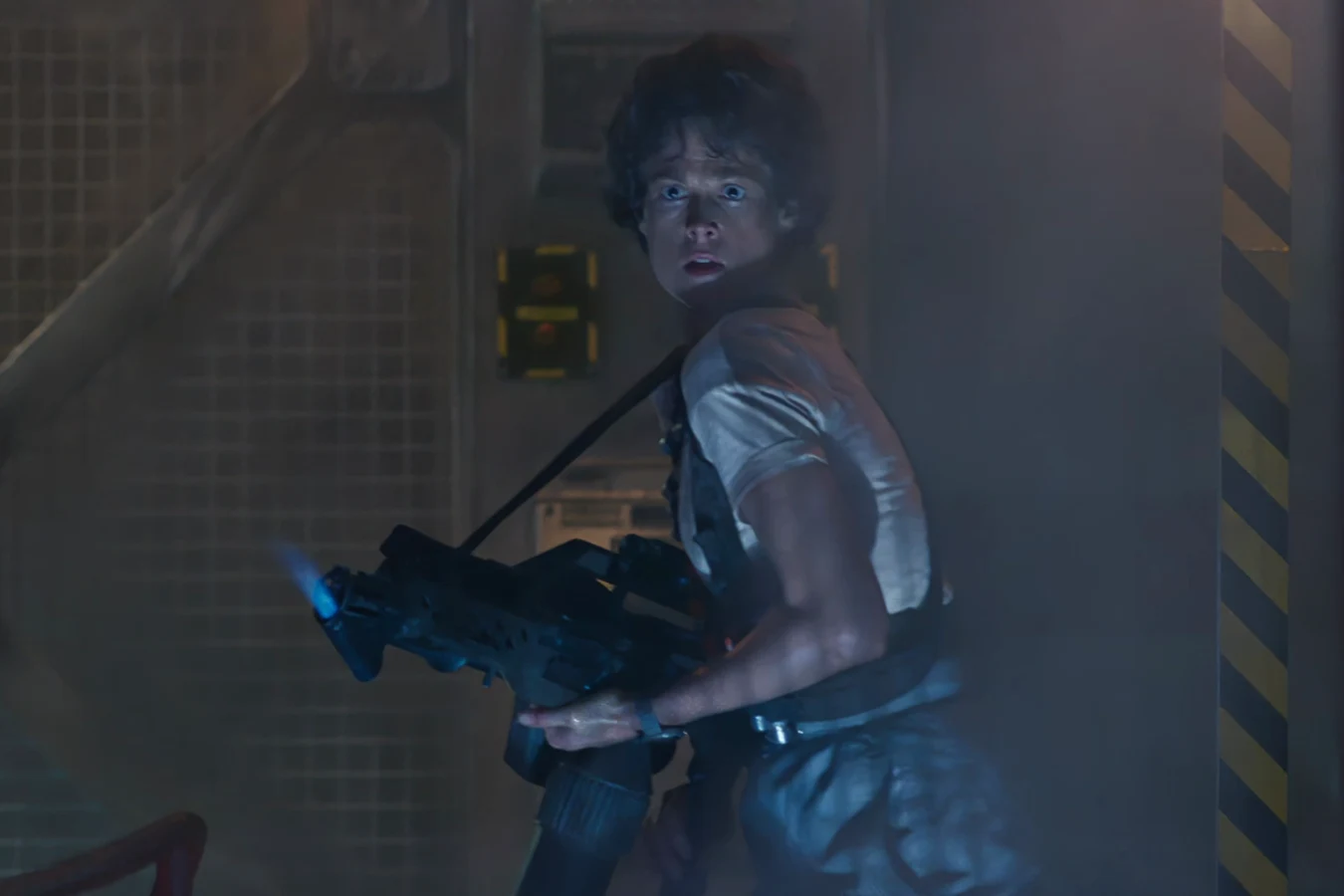
Ripley pulled an M240 off the second dropship rack, laid it with a pulse rifle, and taped the two guns together before she went after Newt. The incinerator rode on top, pilot light already burning, while the M41A handled the rifle work and the underbarrel grenades. She used that pair to cut down Warriors on the way in and to torch rows of eggs at the edge of the hive. There were no spare magazines and no spare fuel cell on that run, so the double weapon ran dry and had to be left behind when she pulled Newt out. The Queen followed them to the Sulaco anyway.
M240 In The Comics
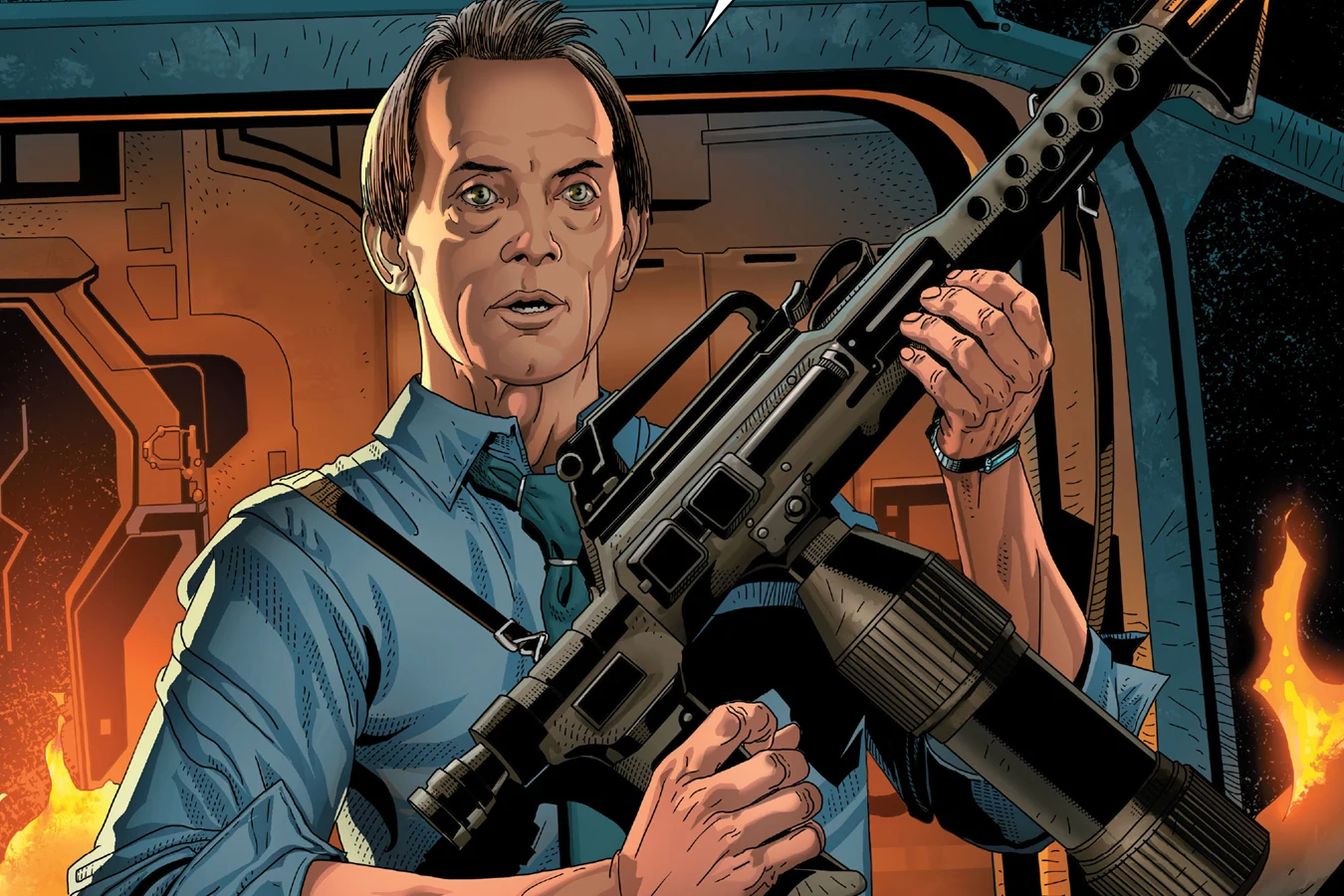
Marvel's Alien: Bloodlines in 2021 put an M240 in the hands of a later Bishop-model android on Epsilon Station. Phillip Kennedy Johnson wrote the six-issue run, and Salvador Larroca drew the Henriksen face on those chassis. When Gabriel Cruz and his son opened the station labs, that Bishop met them with the incinerator and drove a Drone off the team before the search for Danny moved into the hive.
Dark Horse had shown the same carbine shape in Aliens: Newt's Tale in 1992, during the processor sweep and the colony last stand. The film squad still carried the tanks there, including Apone's Chestburster burn and the later holdout.
M240 In The Games
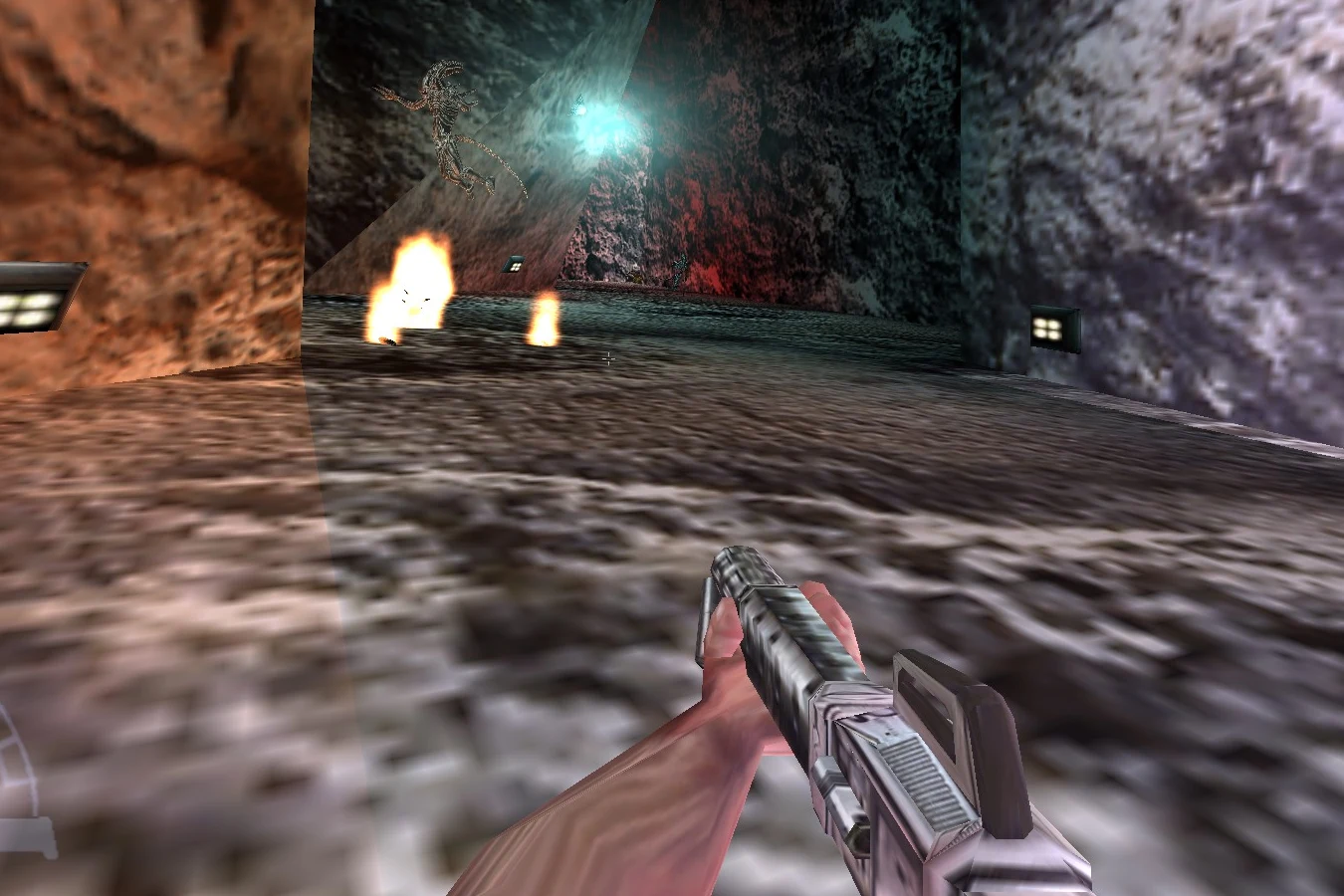
Aliens versus Predator in 1999 put the incinerator in the Marine's first-person kit beside the pulse rifle, shotgun, and Smartgun. The stream left burning patches on the deck, and a Marine who walked into that leftover fire took damage from his own shot. Aliens versus Predator 2 kept a flamethrower on the Colonial Marine loadout for the LV-1201 campaign.
Aliens: Colonial Marines later used the Tech Manual name, M240 Incinerator Unit, including a marked Frost tank and Ripley's taped pulse-rifle pairing. Aliens: Infestation and Aliens: Dark Descent also issued the same carbine to squads clearing hives, where the short range and leftover fire still defined how the gun was used.
Other Alien Universe Flamethrowers
The M240 is the Marine service incinerator, but it is not the first flame weapon in the films and it is not the last. Earlier ship crews built their own throwers, and later games fielded heavier burners that sit beside the carbine rather than replacing it.
Nostromo Flamethrower
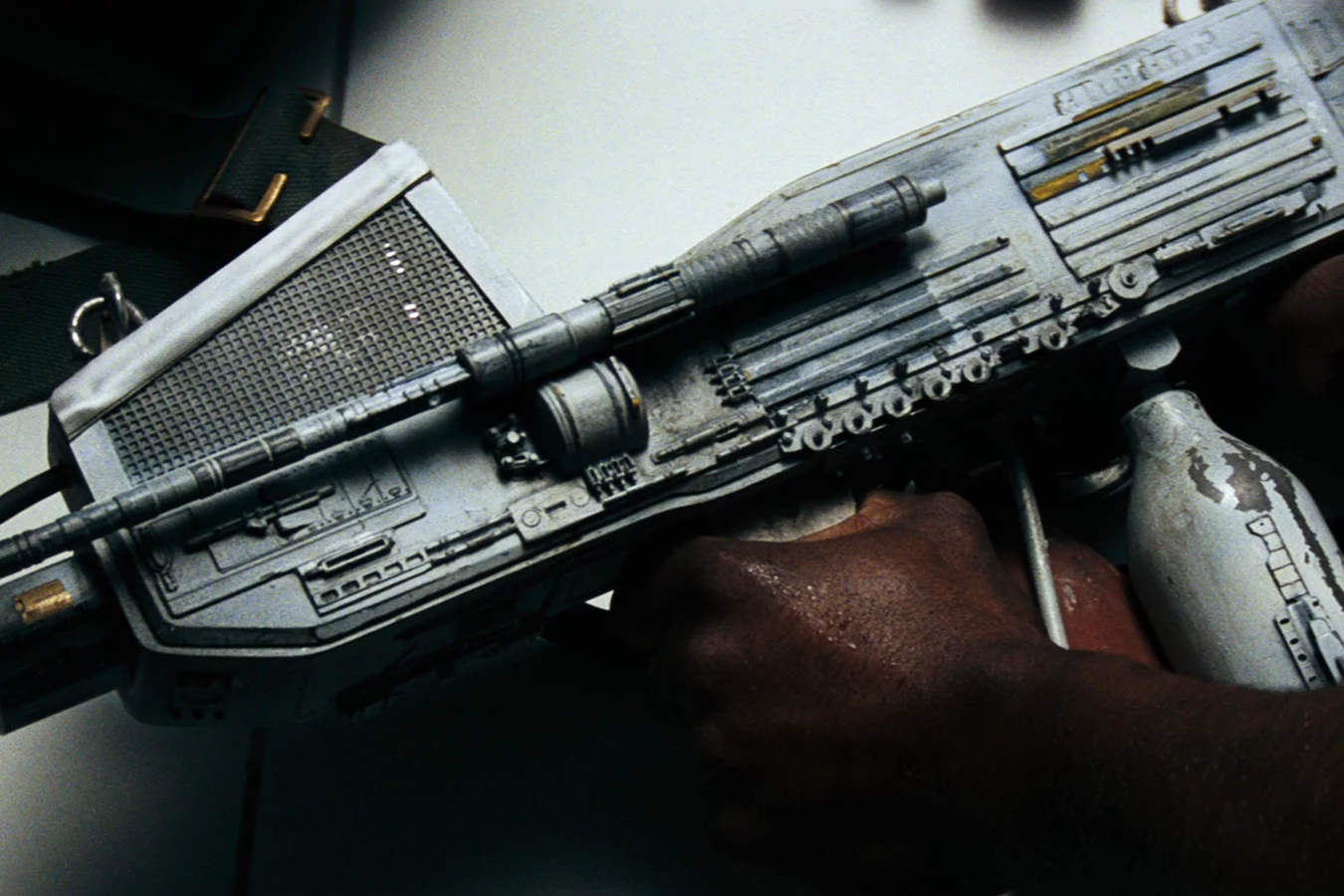
Alien armed the Nostromo crew with jury-rigged throwers that Dennis Parker put together from ship stores after the Chestburster grew into an adult Xenomorph. Those units used a white fuel bottle and a heavier industrial body, not the olive carbine tank of the later Marine gun. Dallas took one into the air shafts to push the creature toward an airlock, and the vents took him instead. Parker later held another thrower when the Alien closed on Lambert, then dropped it rather than burn her in the crossfire. Ripley carried one toward the Narcissus and left it behind when the tug was set to blow.
Draco Double Burner
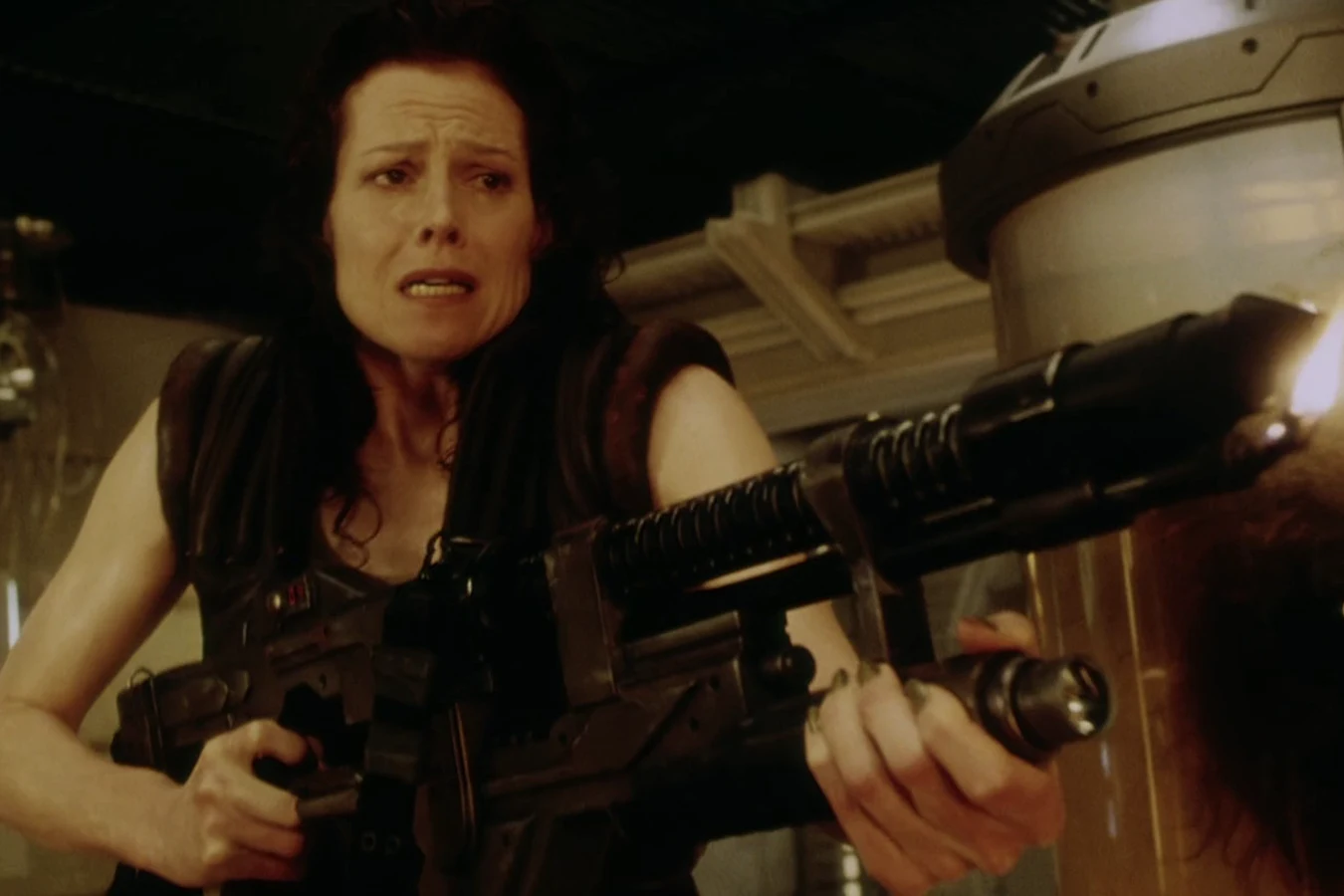
Alien: Resurrection issued the United Systems Military a combination gun called the Draco Double Burner, also tagged as an incinerator or flamer. Nigel Phelps designed the rifle, grenade launcher, and flame unit as one housing, with an LED counter on the receiver in the same spirit as the M41A ammo window. Ripley 8 used the flame mode to destroy the failed clones in the Auriga lab. Johner later used the rifle and grenade settings against Xenomorphs on the same ship. The hero flame prop ran gas to a nozzle under the top barrel, carried a Surefire light in the front grip, and used a 9-volt counter that ticked down when the lower trigger was pulled.
OCAP-91 Volcan
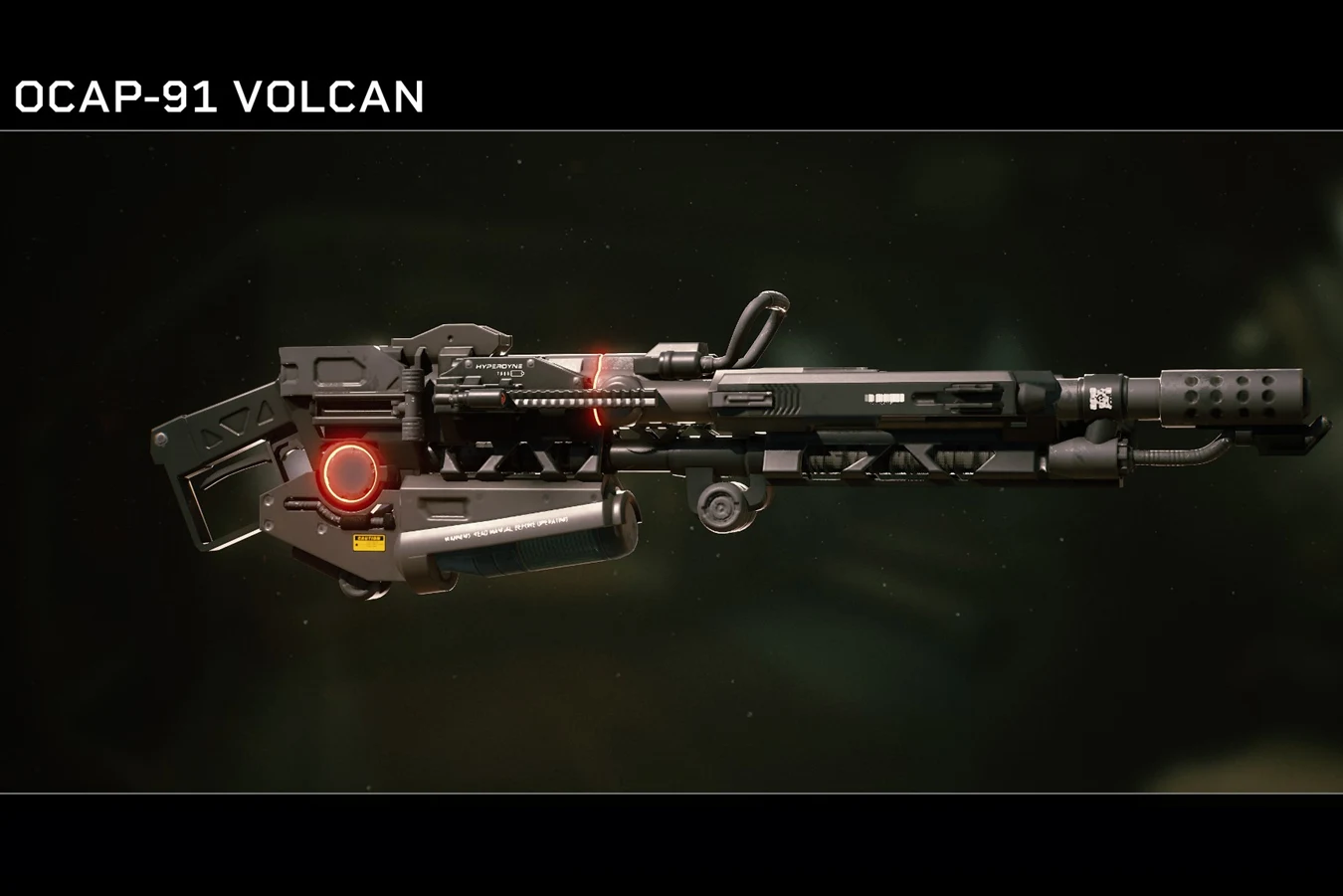
Aliens: Fireteam Elite and Aliens: Fireteam Elite 2 field the OCAP-91 Volcan, a heavy flamethrower rather than another M240 carbine. Farmers on Domingos Martins first built it to burn razor-coil vine after imported fertilizer made the mats too thick for ordinary defoliant. Hyperdyne later licensed a military version in 2191, after the Union of Progressive Peoples decided the Marine M240 had been a poor fit during the Hyades Revolts. The militarized Volcan needs a power-assist harness, throws about nine seconds of flame from a canister, and can take a backpack tank for a longer burn. In the first game it sits on the Demolisher and Lancer heavy kits. In the sequel it returns as a Marauder signature weapon, with full damage out to about 30 meters and a hard cut after that.
Merchandise
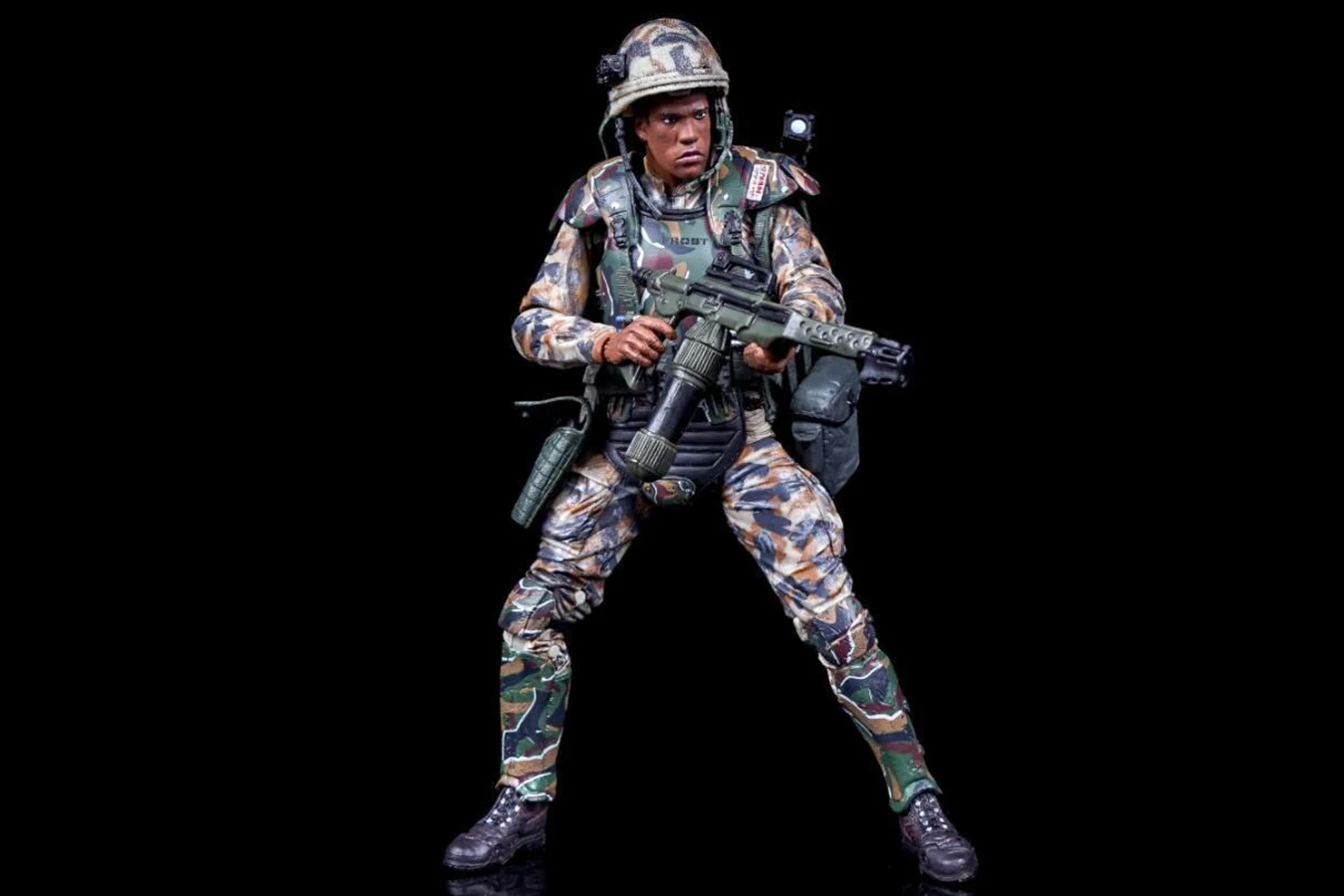
NECA packed an M240 with its 7-inch Private Ricco Frost figure in Aliens Series 9, released in September 2016 for the film's 30th anniversary. The Frosty kit used Ricco Ross's likeness, more than 25 points of articulation, a removable helmet, an ammo bag, a pistol that fits the holster, and the flamethrower as the main accessory. The USCM Arsenal Weapons Pack in 2017 added another 7-inch incinerator with a separate flame-effect piece, boxed with two sentry guns, laptops, a pulse rifle, a shotgun, and a pistol.
Behind The Scenes
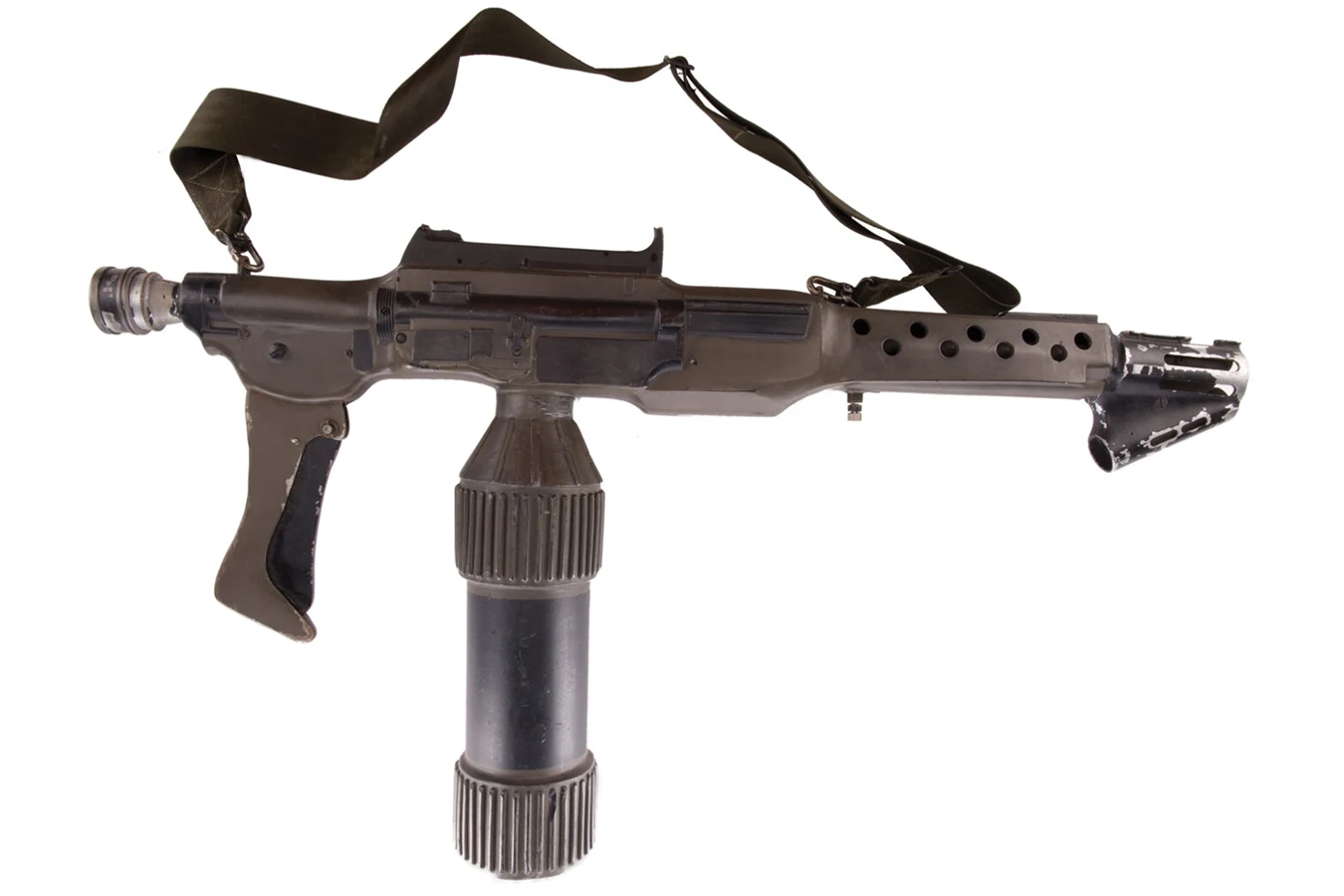
The Aliens incinerators were custom-built props, not dressed real flamethrowers. Armorers at Bapty & Co., including Simon Atherton, assembled the dummy guns from two M16A1 upper receivers cut and spliced together, with the carry handle facing forward and the ejection-port section turned backward. The front housing is an M203 grenade-launcher frame painted in the same Humbrol Brown Bess as the pulse rifles and sentry guns. A brass Hansen Manufacturing coupler from Cleveland sits on the muzzle, and the vertical ridges on the tank funnel are widely read as model-train track. Several versions were built for different setups on set.
Senior effects technician Nick Finlayson built the units that actually threw flame, under special-effects supervisor John Richardson. Some of those were liquid-fuel throwers, which is unusual for a feature, and they are the ones seen when Ripley burns the egg chamber. Gas-burning models were used for closer actor work. The surviving Prop Store Colonial Marine flamethrower still had a working blue pilot light fed by a gas cell hidden in the main housing, the same glow visible when Ripley carries the gun through the hive. Sigourney Weaver preferred that weapon to a rifle for the rescue scenes.
Conclusion
The M240A1 is a short-range Colonial Marine incinerator that throws sticky napthal for about twenty seconds and then has to be refilled. At Hadley's Hope those tanks burned the first Chestburster, lit Frost in the ambush, and went back into the processor taped to Ripley's pulse rifle. The Tech Manual later filled in the weight, the wetshot, the blind-angle bounce, and why Marines treated a full fuel cell as something to stand away from.
Appearances
- Aliens (1986)
- Aliens novelization by Alan Dean Foster (1986)
- Aliens: Newt's Tale (1992)
- Alien: Bloodlines (2021)
- Aliens versus Predator (1999)
- Aliens versus Predator 2 (2001)
- Aliens: Colonial Marines (2013)
- Aliens: Infestation (2011)
- Aliens: Dark Descent (2023)
Sources
- Aliens Colonial Marines Technical Manual (1995)
- Alien RPG Core Rulebook
- Aliens: Fireteam Elite (2021)
- Aliens: Fireteam Elite 2 (2026)
External Sources
Tag Categories: Alien Universe Weapons | Colonial Marine Lore | Alien Lore