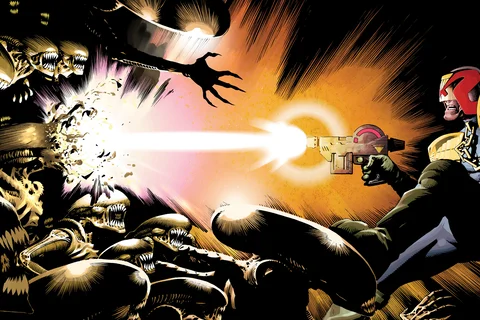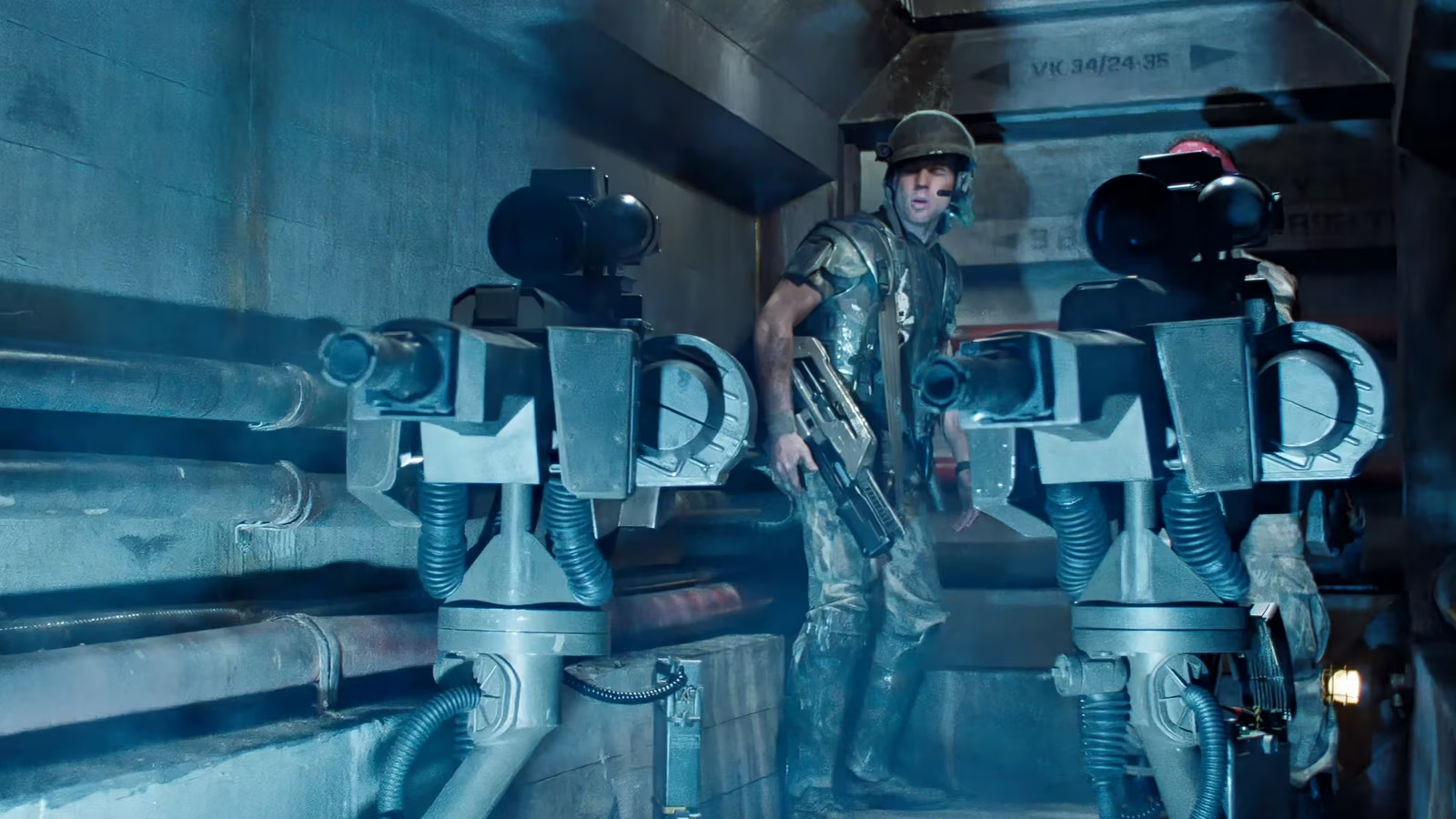

The UA 571-C Automated Sentry Gun is the Colonial Marine remote perimeter weapon from Aliens. Marines also called it a robot sentry or RSS gun. The Aliens Colonial Marines Technical Manual lists it as the UA 571-C Remote Sentry Weapons System, a man-portable tripod gun used by the USCM and the US Army. In 2179 the survivors at Hadley's Hope pulled four sealed units from the wrecked APC and used them to hold the corridors until the ammunition ran out.
Design And Specifications
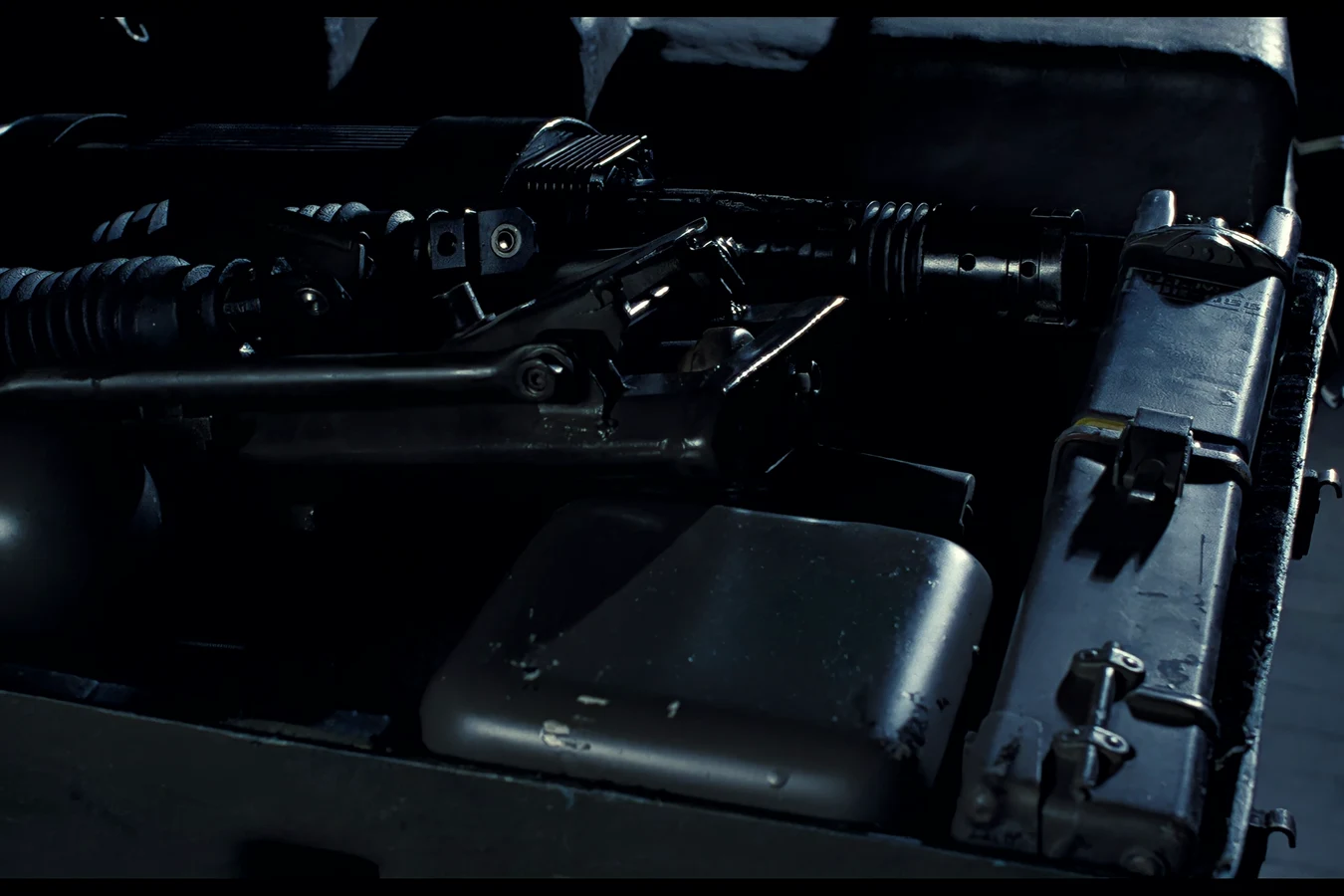
A remote sentry weighs 19.6 kg and can be assembled in under 150 seconds. The kit is a snap-open tripod, battery pack, breech and barrel assembly, sensor head, and a 500-round ammunition drum. A microwave datalink ties each gun to a portable command console. The weapon can sweep up to 360 degrees if the ground allows it, but Marine doctrine plants several units on a narrow front so their fields of fire overlap. A standard rifle platoon in the Tech Manual carries eight UA-571 remote sentries with the rest of the support load.
The C model mounts a pulse-action machine gun that fires the same M250 10×28mm HEAP caseless round as the M56 Smartgun. Later Alien RPG stats add Advanced Recognition Software for friend-or-foe sorting. The Colonial Marines Operations Manual keeps the UA 571-C name and sends players to those core stats. Its scenarios still plant the guns in overlapping pairs, including a four-gun canal that fires on anyone without a Deep Void IFF transponder.
Sensors, IFF, And The Command Console
The sensor array sits above the barrel and covers a 60-degree cone. The suite is a cooled infrared detector in the 3–5 µm and 8–13 µm bands, ambient-light optics, an ultrasonic motion tracker, and lidar. If a target's visual or thermal shape is already known, the software can watch for that profile only. Most emplacements run multi-spectral mode, where the gun cross-checks the sensors against each other before it fires. On Helene 215, a captured 21st Combat Cadre lieutenant described Marines using that mix after his scout left an IFF beacon live, and a robot sentry cut the man in two.
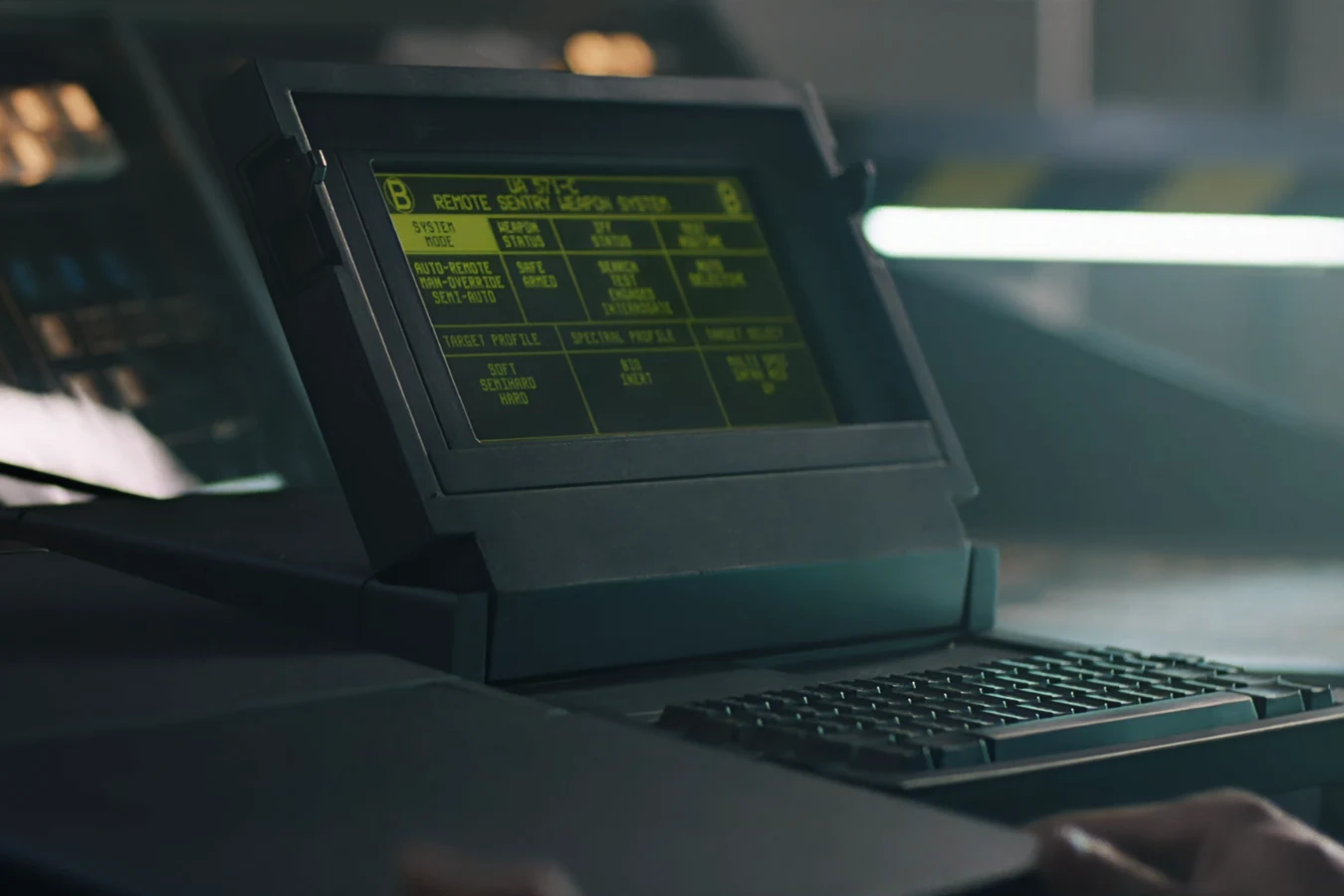
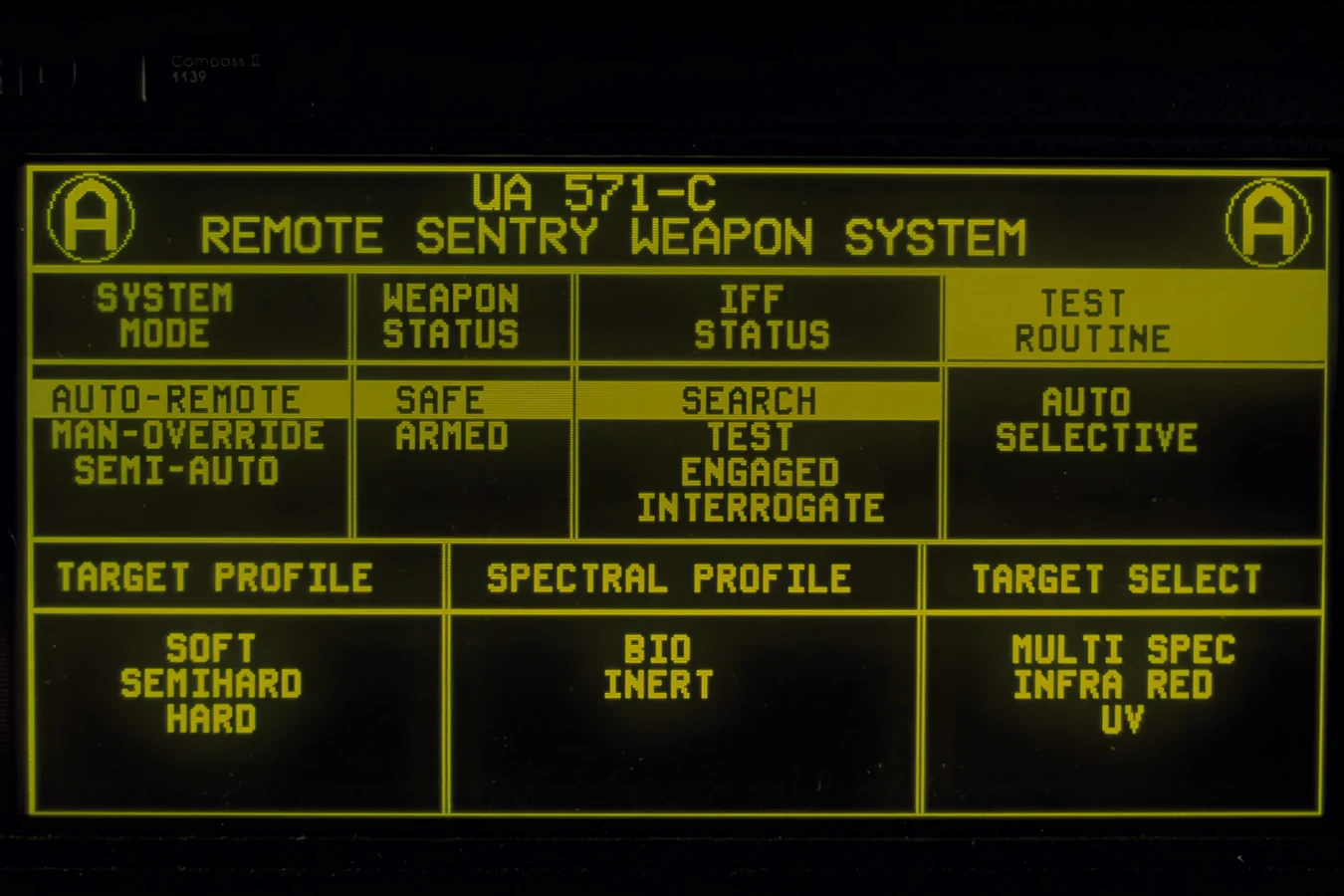
Auto-remote interrogates every contact with an Identification Friend or Foe transponder. Colonial Marine troops and vehicles carry that chip in their comms gear, and a valid return lets them pass. Anything without a match is treated as a target, including an enemy transponder that would otherwise hide from the optics. Manual override and semi-automatic send the contact back to the operator, who decides whether to fire. The film terminal is labeled UA 571-C Remote Sentry Weapon System and lists system mode, weapon status, IFF search, target profile, spectral profile, and sensor select.
Firepower
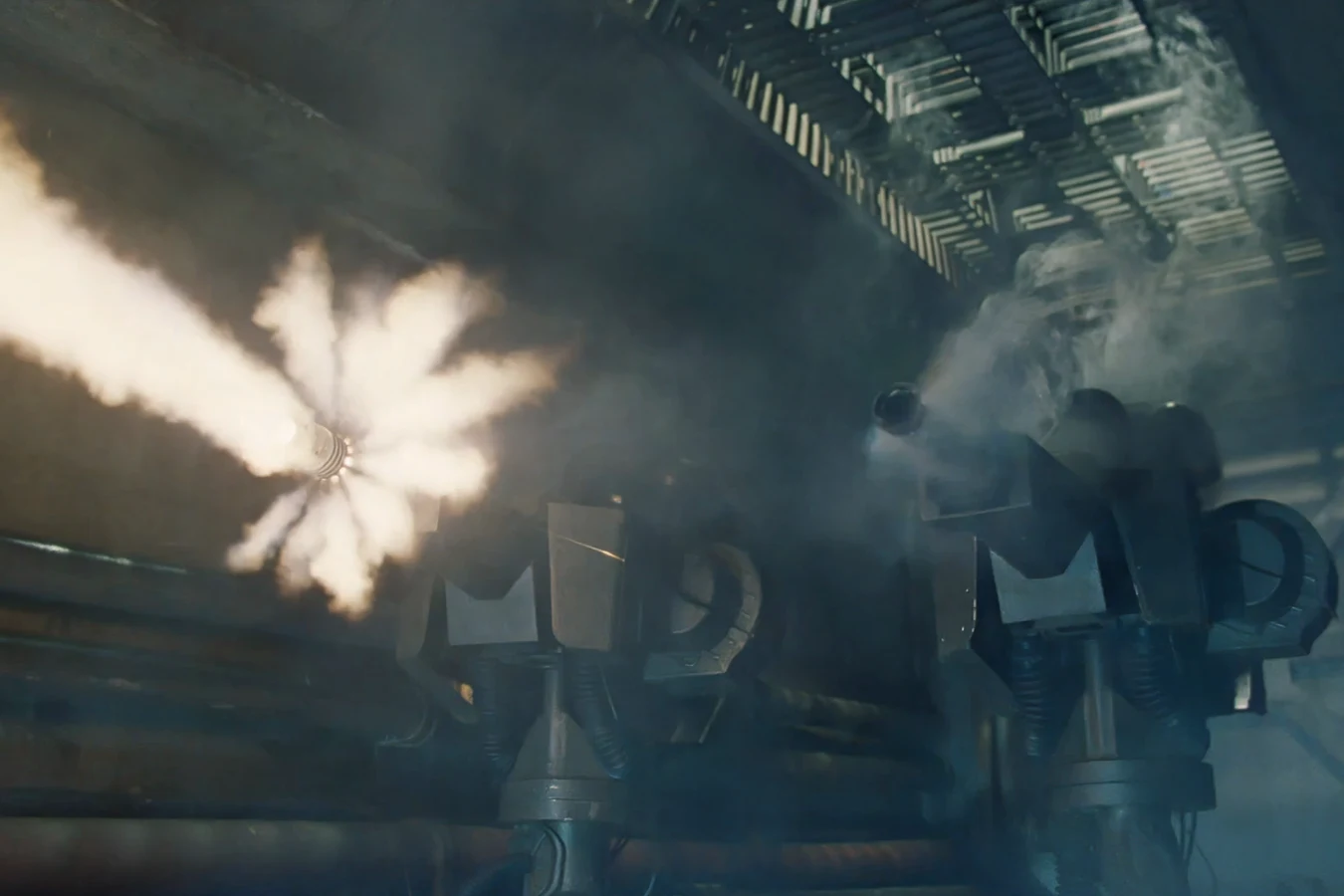
The C gun cycles at 1,100 rpm through an air-cooled barrel and feeds the same M250 10×28mm HEAP caseless round as the Smartgun. An automatic cutout stops new rounds from entering the breech if the gun gets hot enough to cook off a shell. That rate will empty a 500-round drum in under half a minute if the gun stays on the trigger, so the software is built to spend less.
When the weapon fires, servos in the tripod boresight the barrel on the selected target. Burst size and grouping follow the target profile so the drum lasts longer against a mixed contact list. HEAP hits are meant to throw a body back, so acid lands on the walls and floor instead of the armored receiver. Later Alien RPG stats list that same mount as an M30 Autocannon with full-auto and armor-piercing tags.
The Guns At Hadley's Hope
After the hive ambush and the APC fire, Hicks counted four robot-sentry units still packed in foam, with scanners and display relays intact. The rest of the usable kit was four pulse rifles with about fifty rounds each, fifteen M-40 grenades, and two half-empty flamethrowers. Ripley put one pair on the service tunnel that ran from the atmosphere processor into the colony, then sealed the fire door behind them. Welded barricades funneled the rest of the traffic into two corridors, where the remaining pair could fire without a roof-level flanking route.
Hudson and Vasquez locked the second gun onto its recoil-absorbing tripod, clipped the motion sensor to the firing gear, and flipped the activate switch. The diagnostic strip ran from yellow READY to red. They tested the pair on a thrown wastebasket, and both guns shredded the can before it hit the floor. Hudson had planted these units many times in the field, and he treated a green ready light as leave-it-and-forget-it hardware.
When the Warriors came up the tunnel, guns A and B tracked multiple contacts from full 500-round drums and emptied first. After those two drums ran dry, the hive beat on the fire door that sealed the service tunnel, and guns C and D opened up on the Operations approach once the swarm was inside the complex. Hadley's Hope security cameras showed shells blowing chitin apart and acid chewing holes in the deck, and the ammo counters and motion-sensor readouts ran to Hicks's laptop. Limbs kept coming until a hit landed square, then D went empty, the last gun followed, and the swarm pulled back through the smoke. Bishop was already in the conduit by then, crawling for the uplink that would bring the second dropship down.
Sentry Guns In Newt's Tale
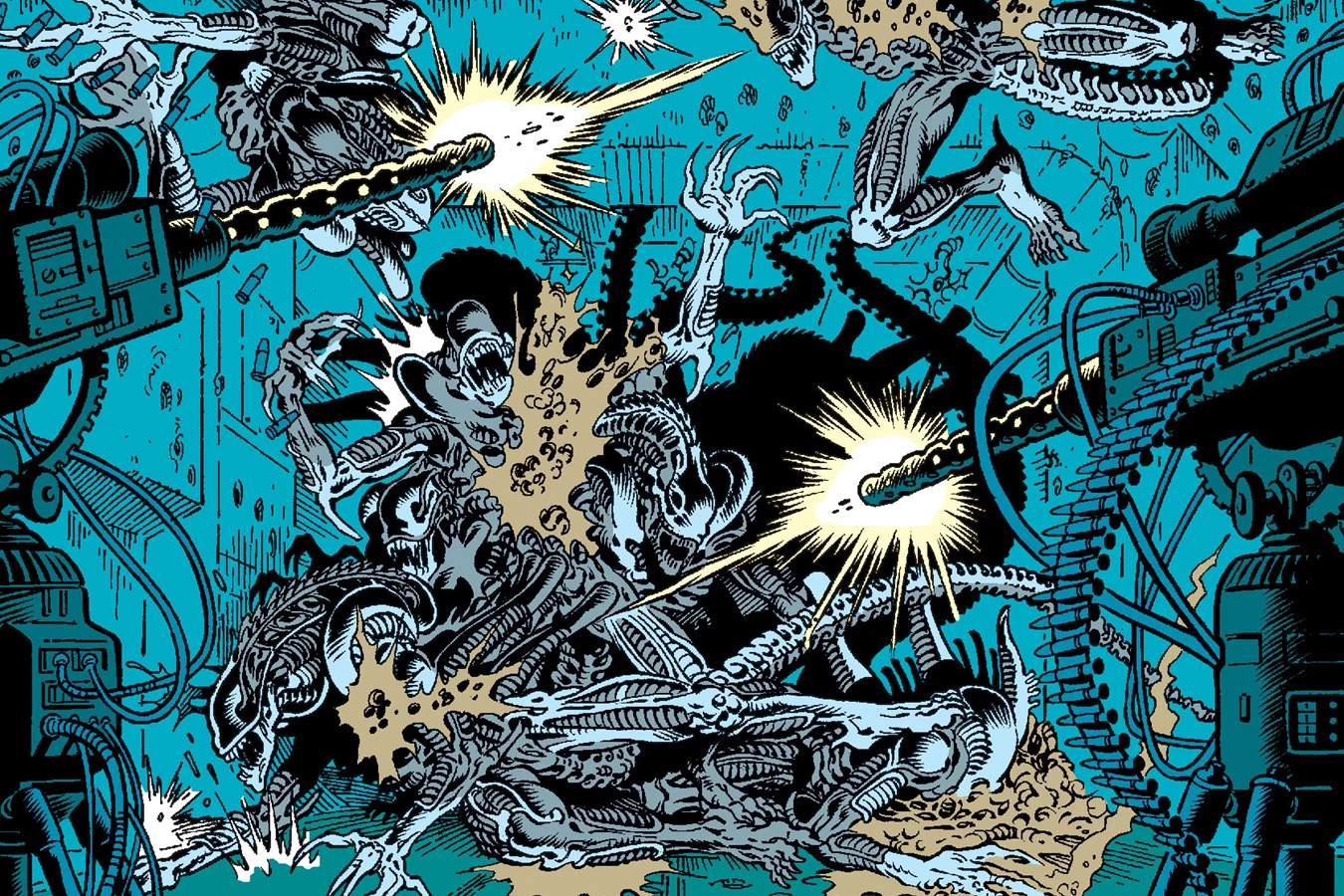
Dark Horse published Aliens: Newt's Tale as a two-issue miniseries in 1992, written by Mike Richardson with covers by John Bolton. The comic shows the corridor pair during the colony last stand, with Warriors coming apart in the overlapping fire and acid hitting the deck between the tripods.
The interiors draw thinner barrels fed by an external belt, closer to a World War II machine gun than the bulky UA 571-C housing. The heads climb much higher than the film guns, high enough to rake Warriors coming in above the corridor floor.
UA 571 Variants
The Tech Manual treats the C gun as one model in a family of remote sentry systems. The planted kit stays the same idea across the line: snap-open tripod, battery, sensor head, and a microwave link back to a command console. What changes is the weapon on the mount. A rifle platoon already lists eight UA-571 remote sentries in its support load, and extra UA-571 units can be attached down to the line platoons with mortars and anti-tank rockets.
The UA 571-D drops the pulse machine gun for a 20 mW high-frequency laser. That swap replaces the pulse machine gun and the M250 HEAP feed the C model uses. The UA 571-F goes the other way and mounts a 40 mm automatic grenade launcher, so the console is feeding grenade bursts instead of caseless HEAP. Both still follow the same emplacement doctrine as the C gun: several units on a narrow front with overlapping fields, or a human on the override switch.
Machinist Sentry Turret
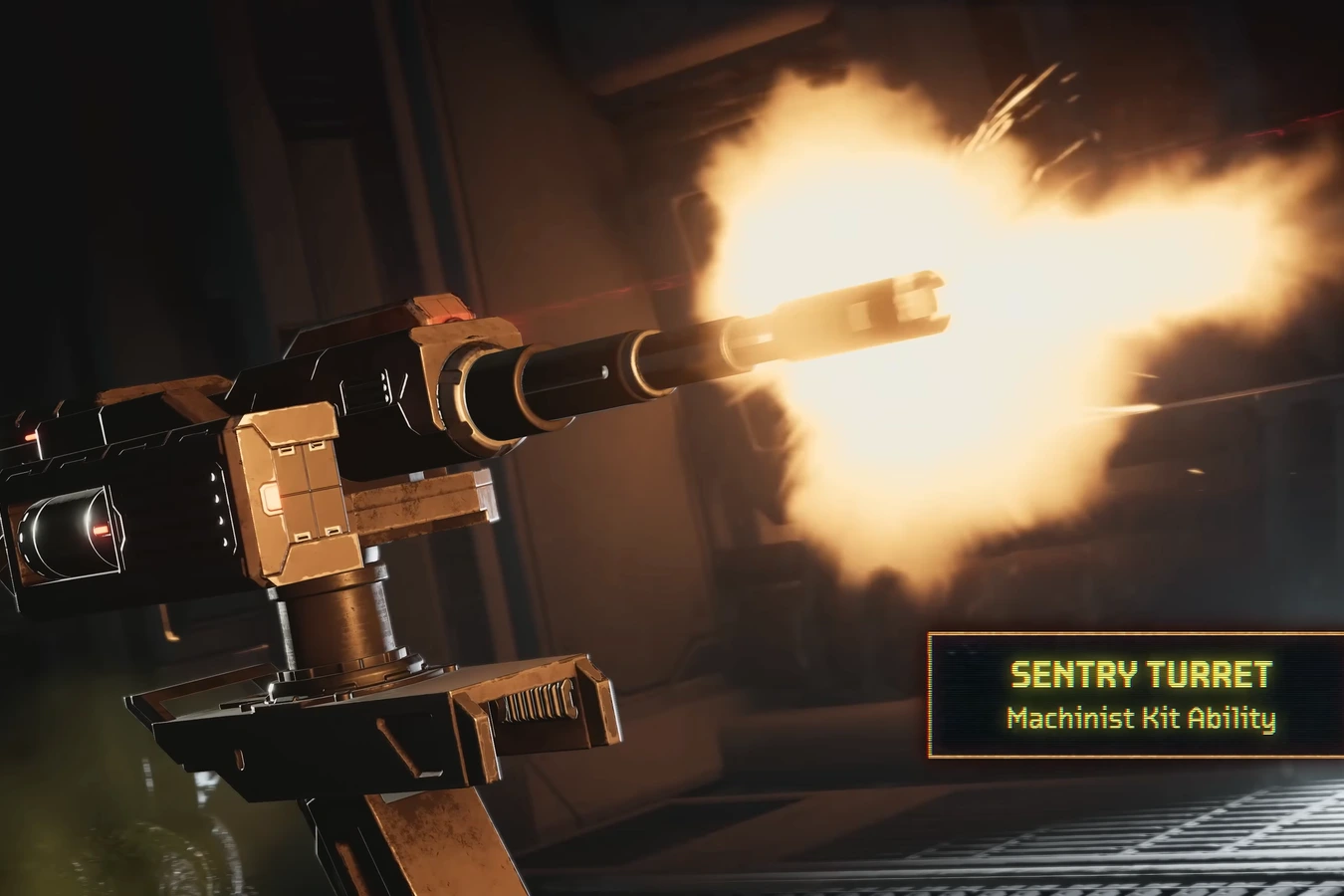
In Aliens: Fireteam Elite 2, the Machinist plants a remade Sentry Turret as its main deployable. The kit takes two modifiers: Gas Turret for area denial and Rumble Turret for a harder-hitting lane. Cross-Platform Synergy gives allies near the gun 10% damage resistance, and a Machinist next to it regenerates the turret by 5 health each second. Machine kills stack Scalable Machine Learning, adding 10% reload speed and stability up to five times.
Merchandise
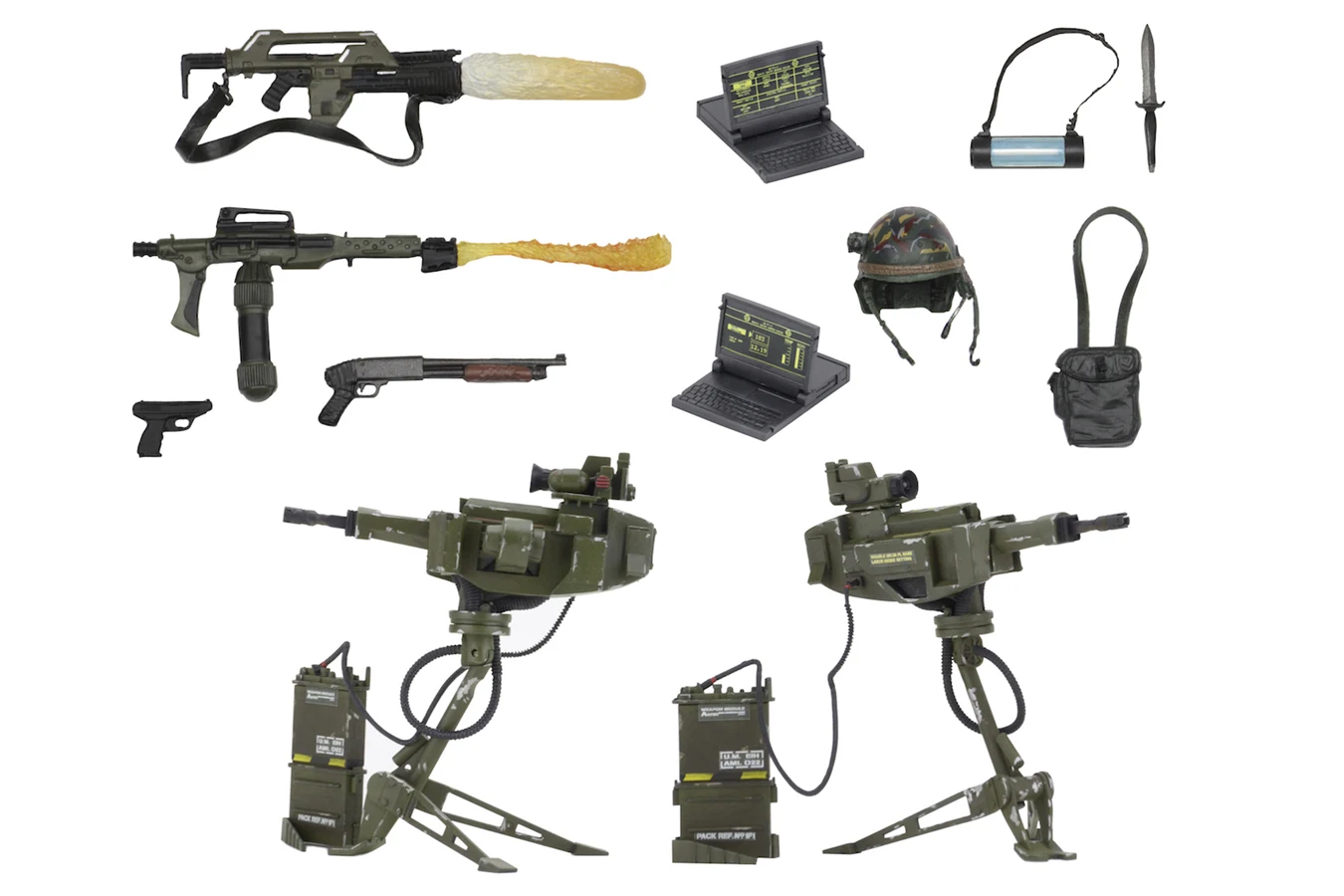
NECA packed two articulated sentry guns in the 14-piece USCM Arsenal Weapons Pack for its 7-inch Aliens line in 2017. Each gun sits on a folding tripod with a cable to a separate battery box, and the housings carry an MK-88 GP stamp. The same box holds two opening laptop terminals, a pulse rifle with a muzzle-flash piece, a flamethrower with a flame effect, a shotgun, a pistol, a knife, an ammo bag, a helmet, and a flashlight.
Behind The Scenes
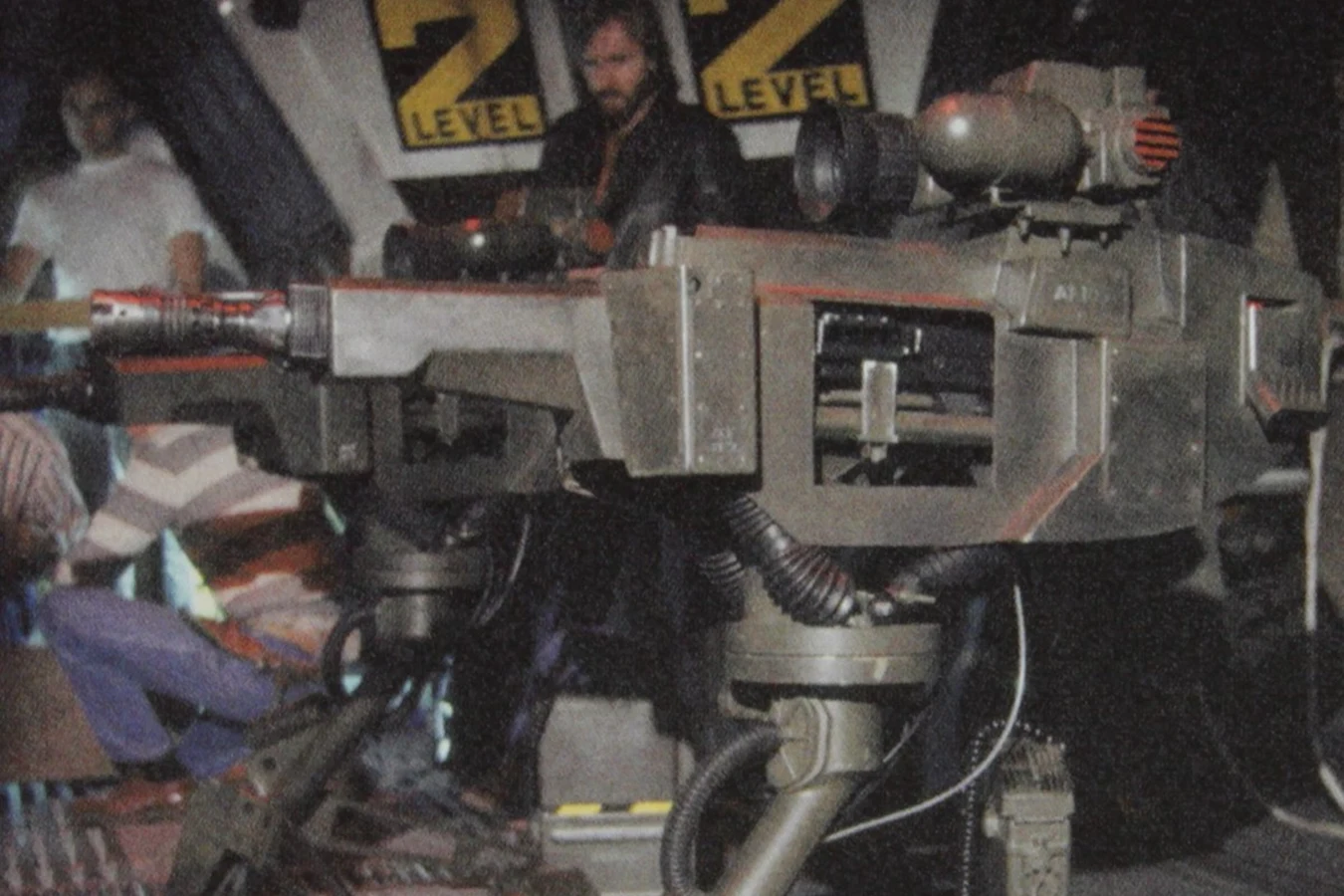
The Aliens props used the same German MG42 cores as the Smartgun builds, set on custom tripods about 45 inches tall and wrapped in bulky fiberglass shells. The side drums came from a Maxim magazine, which is why the prop is sometimes listed as a Maxim. Thorn EMI thermal handheld imagers sat on top as the sensor suite, and the same custom muzzle brakes used on the Smartguns finished the barrels. Armorer Simon Atherton worked with the special effects crew to add hydraulics so the heads could pan and tilt on their own. Only two complete props were built, even though the story uses four guns. The sentry sequence was cut from the 1986 theatrical release and restored in the Special Edition. One prop later went silver for Space Truckers. The surviving unit is the Prop Store sentry, still in the original Pulse Rifle grey-green.
Conclusion
The UA 571-C is a planted Colonial Marine gun that watches a corridor, checks IFF, and fires HEAP until the drum is empty. At Hadley's Hope the four recovered units bought the survivors a pause after the hive ambush, then ran dry against a rush they could not reload. Hicks, Hudson, and Vasquez got them up in time. The Tech Manual later filled in the weight, sensors, and sister models behind those robot sentries.
Appearances
- Aliens (1986) Special Edition
- Aliens novelization by Alan Dean Foster (1986)
- Aliens: Newt's Tale (1992)
- Aliens: Fireteam Elite 2 (2026)
Sources
- Aliens Colonial Marines Technical Manual (1995)
- Aliens: Colonial Marines Operations Manual (2021)
- Alien RPG Evolved Edition
External Sources
Tag Categories: Alien Universe Weapons | Colonial Marine Lore | Alien Lore