Aliens: Infestation (2011): Full Game Overview

Aliens: Infestation is a side-scrolling Metroidvania developed by WayForward Technologies and Gearbox Software, published by Sega for the Nintendo DS. Released in October 2011, it follows a squad of Colonial Marines from the USS Sephora who investigate the drifting USS Sulaco eighteen weeks after the events of Aliens (1986). The game is one of the stronger licensed titles on the handheld and still ranks highly on our best Alien games list for its atmosphere, exploration, and squad-based storytelling.
Game Overview
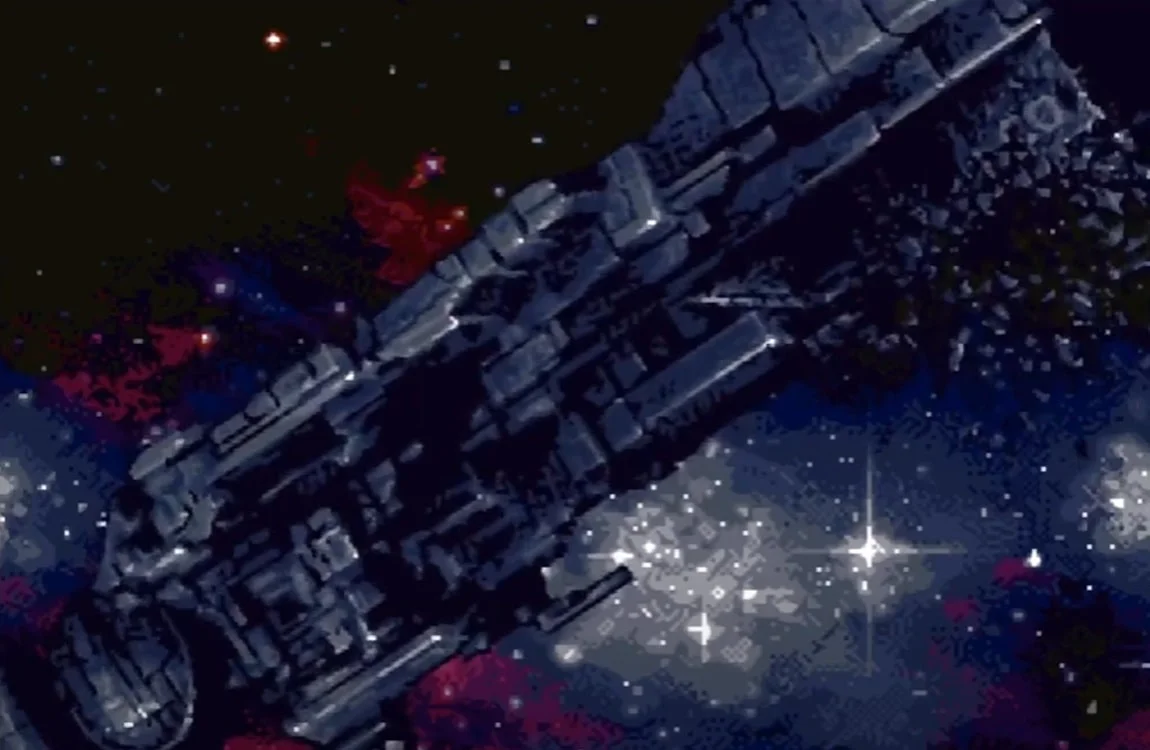
Aliens: Infestation plays like a portable fusion of Metroid-style exploration and Aliens-style combat. Players control one marine at a time from a four-person squad, moving through interconnected decks of the Sulaco, the surface of LV-426, the interior of the Derelict Ship, and a Weyland-Yutani research facility on Phobos. The maps are layered vertically and horizontally, with locked doors, backtracking, hidden routes, and multiple decks that reward careful searching rather than rushing forward.
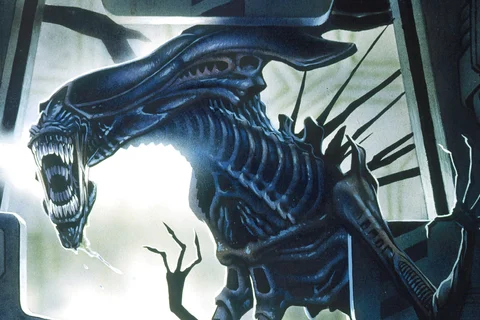
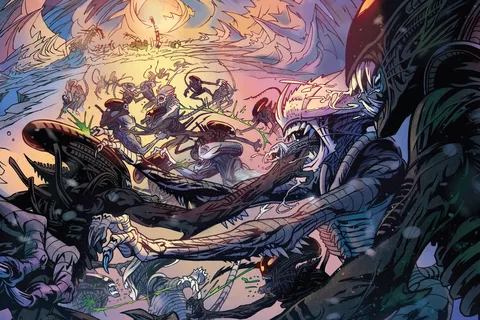
Combat emphasizes pulse rifles, shotguns, flamethrowers, grenades, and close-quarters firefights against Xenomorph Warriors, Facehuggers, Praetorians, and human opposition from the Union of Progressive Peoples. Cover art and character portraits were illustrated by comic artist Chris Bachalo, giving the marines a distinct visual identity separate from the later Aliens: Colonial Marines first-person shooter, even though both games share the Sulaco-and-Sephora premise.
Plot Summary
The story began when the USS Sephora discovered the USS Sulaco adrift near LV-426 with active lifeform readings aboard the warship. A Colonial Marine team boarded the Sulaco and found the vessel overrun by Xenomorphs while Union of Progressive Peoples soldiers had also infiltrated the ship. After fighting through hives and military opposition, the marines defeated a Xenomorph Queen aboard the Sulaco and descended to LV-426 to continue the investigation.
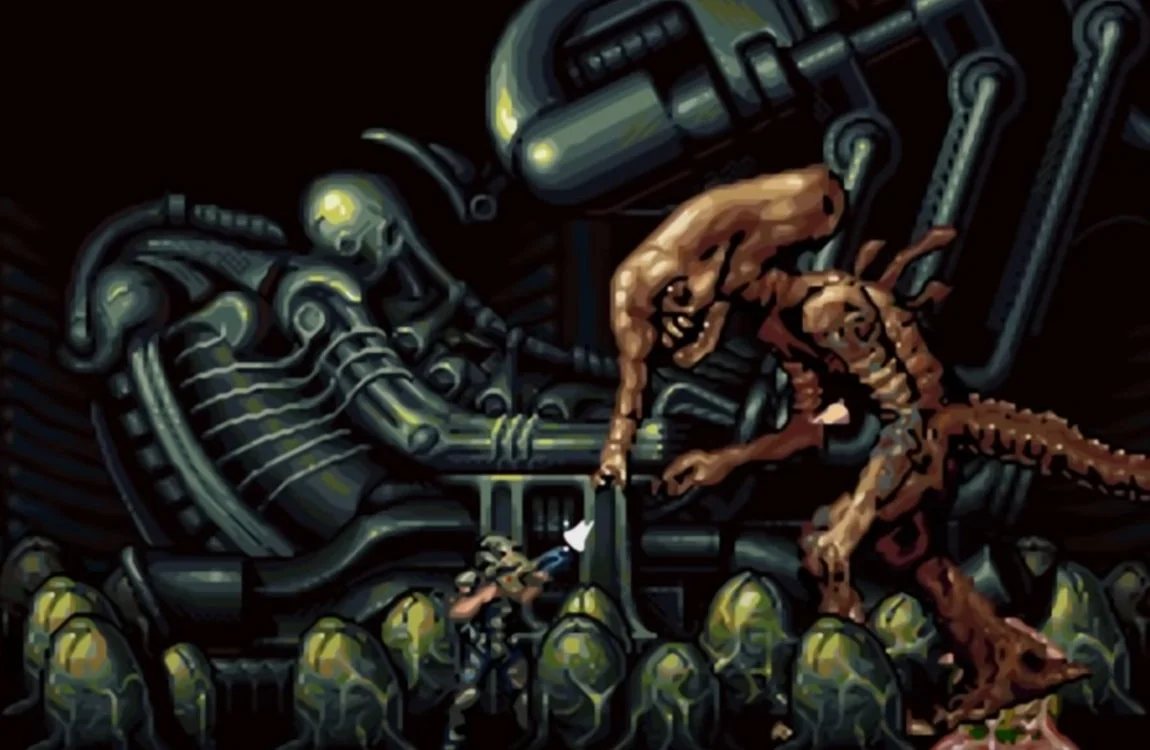
On the moon, the marines uncovered a U.P.P. operation attempting to harvest Xenomorphs for its own purposes. They destroyed the enemy communications array and tried to escape in an APC, but the vehicle crashed into the Derelict Ship and deposited the squad inside the Space Jockey chamber. There they fought a massive Space Jockey Xenomorph, a Jockey-born hybrid with an elephant-like trunk that reflected pre-Prometheus ideas about the Engineer hosts.
The investigation then led to a Weyland-Yutani laboratory on Phobos, where corporate scientists were running Xenomorph experiments including Gorilla Xenomorphs and other oversized variants. The marines returned to the Sulaco for a final confrontation with a gigantic hive monarch in the hangar, widely interpreted as either an Empress or Xenomorph King. The team escaped with their lives, leaving the Sulaco heavily damaged but still drifting in space rather than crashing onto LV-426.
Key Characters
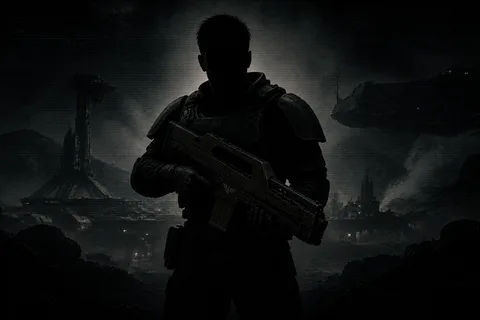
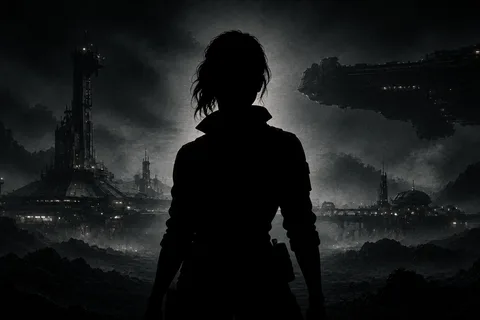
Aliens: Infestation focuses on a rotating squad of marines rather than a single fixed protagonist, with unique dialogue written for each recruitable character.
- John "Duke" Cameron - The default squad leader and the marine whose perspective shaped the main script.
- Zoe "Cutter" Kennedy - A standout squad member with some of the game's most distinctive dialogue and endings.
- The Four-Marine Squad - The core playable team whose members can be lost and replaced during the campaign.
- Fifteen Recruitable Marines - Optional survivors found throughout the game, each with their own voice and personality.
- Union of Progressive Peoples Soldiers - Rival human forces aboard the Sulaco and on LV-426, drawn from William Gibson's unproduced Alien 3 material.
- Weyland-Yutani Researchers - Corporate personnel conducting Xenomorph experiments on Phobos.
USS Sephora And USS Sulaco
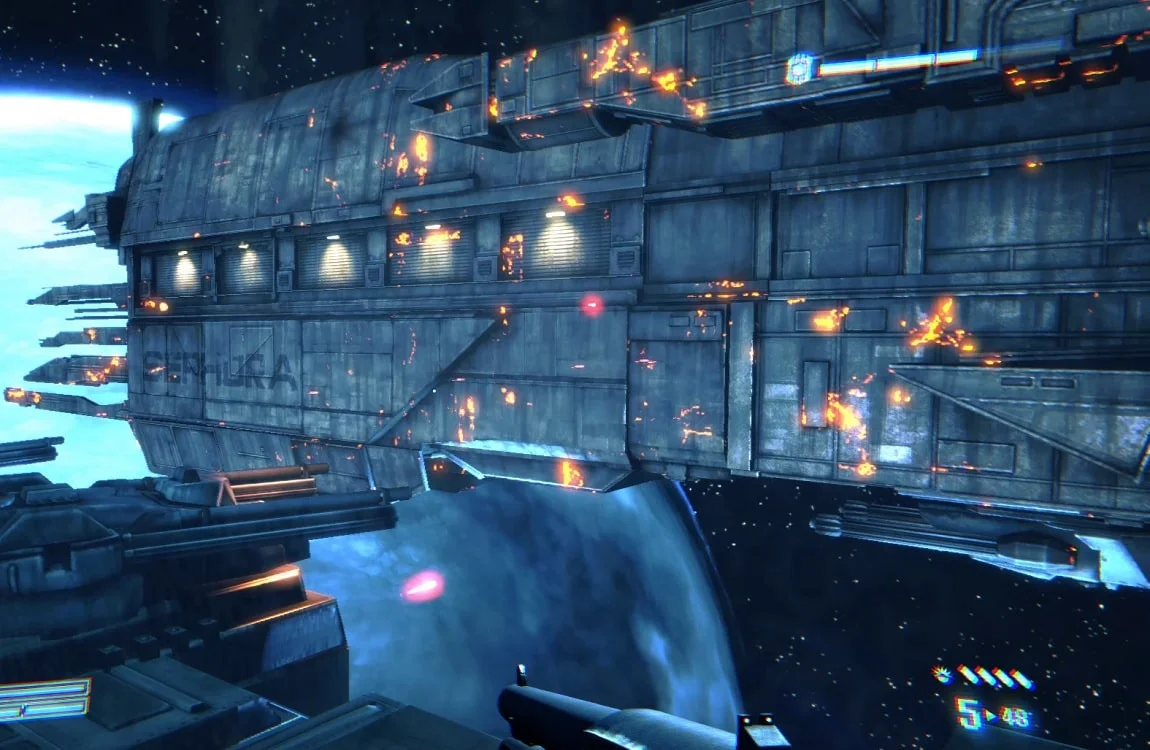
The USS Sephora and USS Sulaco are both Conestoga-class warships, and Infestation uses the same basic setup that later appeared in Aliens: Colonial Marines: a Sephora marine detachment investigates a drifting Sulaco near LV-426. In Infestation, however, the boarding happens eighteen weeks after Aliens, the playable marines are entirely different, and the primary human enemies are U.P.P. soldiers rather than Weyland-Yutani mercenaries. The Sulaco itself becomes a multi-deck dungeon filled with vents, labs, hangars, and hive zones rather than the linear first-person corridors of Gearbox's later game.
Infestation's version of the Sulaco boarding is also one of the alternate fates for the ship discussed across the site. Unlike Colonial Marines, which eventually crashed the Sulaco onto LV-426, Infestation left the warship damaged but still adrift in space after the final hangar battle.
LV-426 And The Derelict
After clearing much of the Sulaco, the campaign moved down to LV-426 itself, revisiting the moon's ruined colony landscape and the remains of Weyland-Yutani activity around the second atmosphere processor. The U.P.P. presence on the surface added a Cold War-style military conflict on top of the Xenomorph infestation, echoing ideas from Pat Cadigan's book of William Gibson's unused Alien 3 script and the later comic.
That Jockey-born creature became one of the game's most important contributions to expanded lore. It appeared inside the same Derelict featured in the films and was treated as a DNA-reflex expression of the ancient pilot host, long before Prometheus reframed the Space Jockeys as humanoid Engineers.
Phobos Research Facility
The Phobos section revealed Weyland-Yutani's deeper role in the conspiracy behind the infestation. Corporate scientists had moved beyond simple specimen recovery and were actively breeding specialized Xenomorph strains, including Gorilla Xenomorphs and other heavy experimental forms that ranked among the biggest Xenomorphs in licensed fiction.
Xenomorphs And Enemies
Aliens: Infestation reused many familiar Xenomorph ranks while introducing several memorable game-specific threats. Warriors, Facehuggers, Praetorians, and Queens filled out the hive forces aboard the Sulaco and on LV-426. The Space Jockey Xenomorph, Gorilla Xenomorphs, and the final hangar monarch gave the game some of its most distinctive boss encounters.
Human enemies were equally important to the story. The Union of Progressive Peoples provided a rival military faction with its own interest in Xenomorph bioweapons, a concept lifted from Gibson's unused Alien 3 material and echoed in alternate Hicks and Newt storylines. Together with Weyland-Yutani researchers and standard Xenomorph hordes, Infestation offered one of the richer human-versus-Alien conflicts in handheld Alien gaming.
Gameplay And Features
Aliens: Infestation is built around exploration, backtracking, and squad management rather than constant forward momentum. Players switch between marines in a four-person team, using each character's position to solve map puzzles, open new routes, and survive ambushes in tight corridors. If a marine died, another squad member took over immediately, and additional survivors could be recruited from the fifteen optional characters scattered through the campaign.
That permadeath structure gave the game real tension on a platform better known for family-friendly software. Weapons and gear are discovered through exploration rather than scripted loadouts, and the layered maps could be easy to get lost in without careful use of the in-game navigation tools. The M240 Incinerator Unit and other familiar USCM equipment also appeared here, linking Infestation to broader Colonial Marine weapons coverage across the franchise.
Alien Timeline Placement
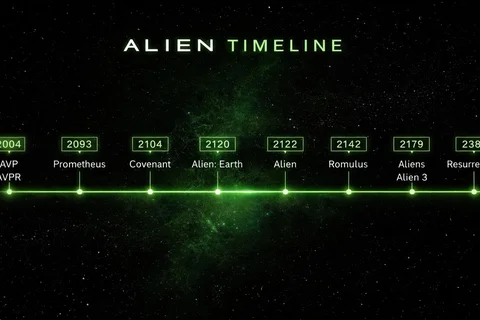
Aliens: Infestation is set in 2179 on the Alien timeline, shortly after the events of Aliens and around the timeframe of Alien 3. The game assumes the Sulaco remained in space after Ripley, Hicks, Newt, and Bishop entered hypersleep, then was found drifting near LV-426 before the EEV events of Fury 161 fully played out in film continuity. That placement made it one of several expanded-universe attempts to explain what happened to the warship between films.
Because Infestation shares the Sephora-and-Sulaco premise with Aliens: Colonial Marines but tells a very different story, the two games are often discussed together as conflicting branches of the same lore idea. Infestation fits more cleanly with William Gibson's U.P.P. concepts and a surviving drifting Sulaco, while Colonial Marines introduced the Hicks retcon and Sulaco crash storyline. Most modern franchise discussions treat Infestation as the stronger and more coherent of the two Sulaco follow-ups.
Development
WayForward Technologies developed Aliens: Infestation with involvement from Gearbox Software and publishing support from Sega. The project began life as a Nintendo DS port of Aliens: Colonial Marines before evolving into its own standalone title with a 2D Metroidvania structure. Director Adam Tierney, designer Cole Phillips, and the WayForward team leaned heavily into exploration, character-driven dialogue, and film-accurate environments rather than trying to replicate a first-person shooter on the handheld.
The connection to Colonial Marines explains shared concepts such as the Sephora, Sulaco investigation, and LV-426 return, but Infestation ultimately shipped two years earlier and became the better-regarded game. Chris Bachalo's character art and the large cast of marines with unique lines became one of the project's most praised creative choices and influenced later WayForward narrative design.
Release And Reception
Aliens: Infestation launched in North America on October 11, 2011, with earlier releases in Australia and Europe in late September. It received strong reviews for its atmosphere, exploration, art direction, and respectful use of the Aliens license, with many critics calling it one of the best movie tie-ins on the Nintendo DS. The multi-layered maps and squad permadeath were praised for creating tension, even if some players found the backtracking easy to get lost in.
The game never received a sequel or expansion, but its reputation has grown steadily in the years since the DS era ended. It remains a common recommendation for fans who want an Aliens game that captures squad action and horror without the broken execution of later Gearbox projects. For many players, it is still the best way to explore the Sulaco in game form.
Legacy
WayForward's 2011 DS game hit the Sulaco and Sephora two years before Colonial Marines, with Chris Bachalo portraits and a four-marine squad you swap as they die. It still plays as a strong handheld Aliens crawler. The Derelict's Space Jockey Xenomorph predates Prometheus recasting the pilot. U.P.P. troops on LV-426 come from William Gibson's unused Alien 3 material. No sequel followed.
External Sources
Tag Categories: Alien Games | Alien Merchandise