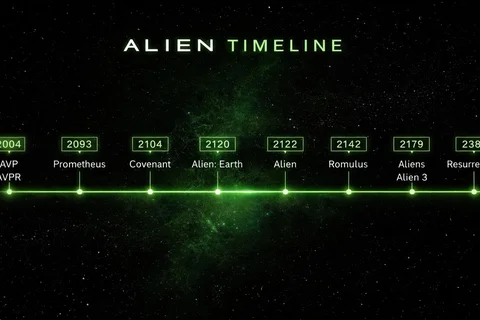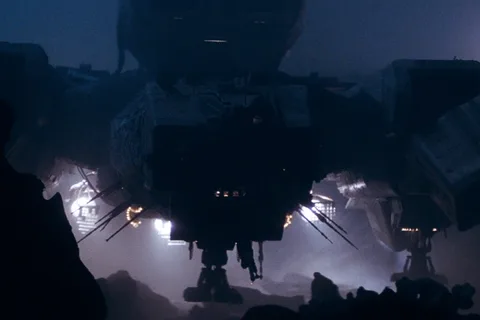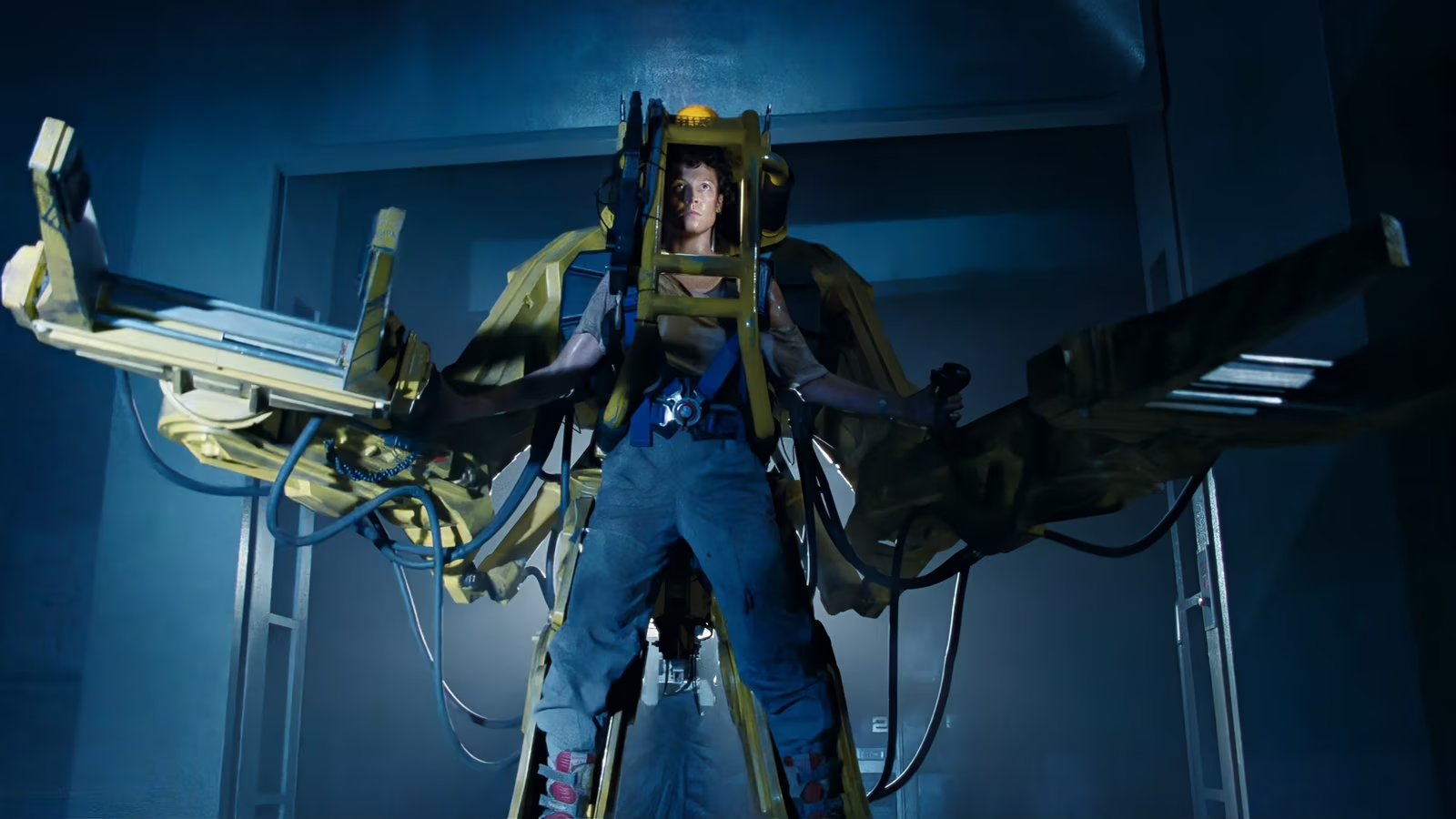

The P-5000 Power Loader is the Colonial Marine cargo exo-suit from Aliens. Caterpillar built it as a walking forklift for dockyards and spacecraft holds, not as a fighting machine. The Aliens Colonial Marines Technical Manual lists the service model as the P-5000 Powered Work Loader, the prime loader for logistic and support work. In 2179 Ellen Ripley used one on the Sulaco to fight the Alien Queen and dump her out an airlock.
Design And Specifications
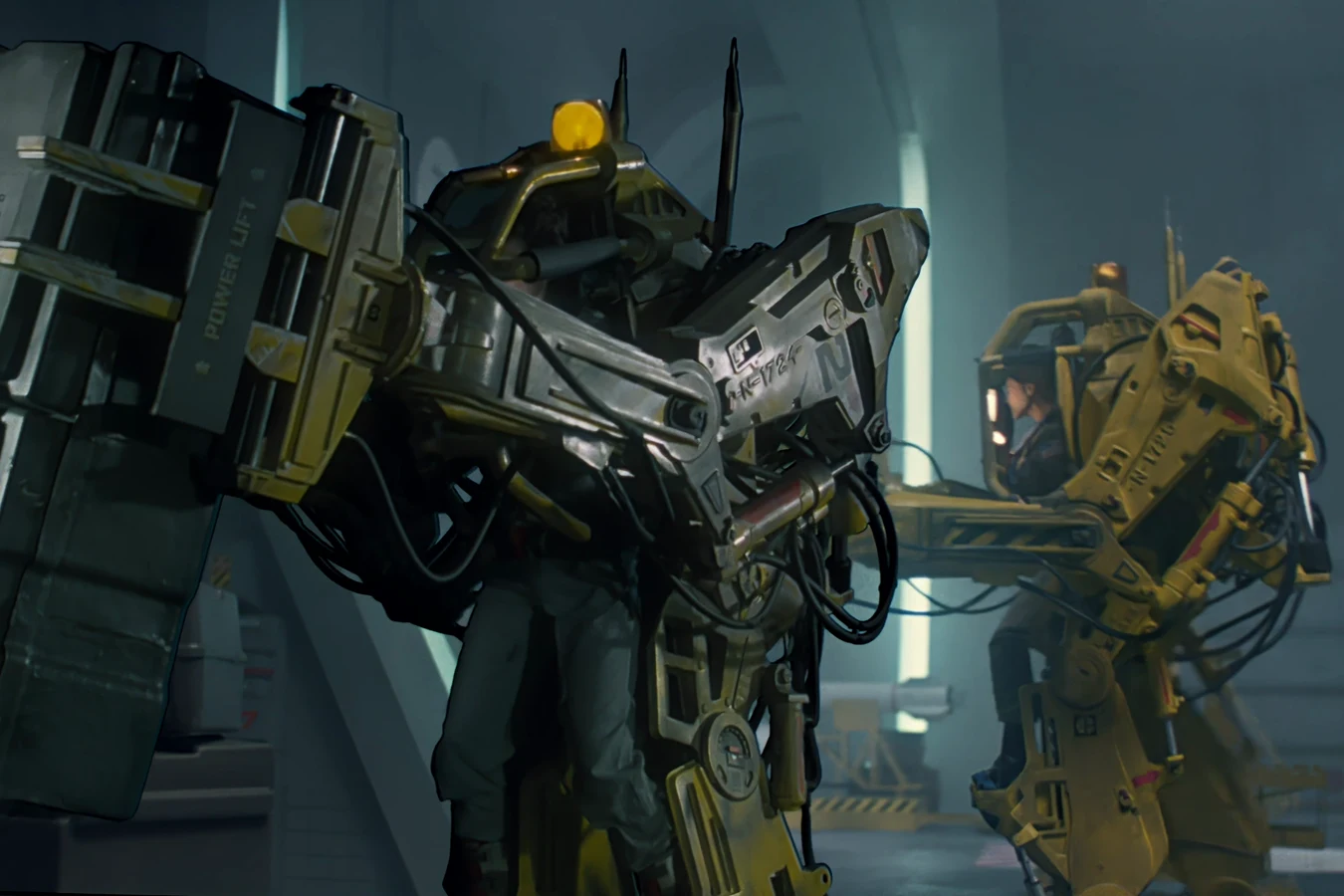
The United States Colonial Marine Corps picked the P-5000 as its prime loader for logistic and support operations. The machine is an anthropomorphic exoskeletal power frame, built to handle ordnance and cargo in rough field conditions and to do heavy maintenance away from a fixed workshop. Fine control on a load goes up to 4,000 kg, which made it a working alternative to forklifts, rigs, and cranes in tight bays. Film units on the USS Sulaco carried stencil codes such as N-1724 and N-1726 on the shoulder plates, with POWER LIFT marked on the claws.
A conventional forklift in Marine service needed about two hours of maintenance a week. Even a well-kept P-5000 needed that much every day, which is why loaders were treated as temperamental kit rather than set-and-forget cargo gear. PFC Steve Kerns of the 14th MAU recorded that habit. The extra upkeep was the price of a walking frame that could pick its way across broken ground and place a pallet where a wheeled lift could not go.
At LZ Grumpy on Helene 215, engineers dropped a crater bomb through triple-canopy jungle, then rappelled in with turbocutters to open a pad for the dropships. Root systems ran too deep to clear the stumps, and there was barely enough plasmatting for the landing pads. Power loaders picked their way across the remaining tree boles to offload the transports, then waded kilometres through jungle mulch with stores for the forward positions. Major Harrison Gerrity of the USCM Corps of Engineers put that job on the loaders because they could do everything the forklifts could and more.
Chassis, Power, And Motion
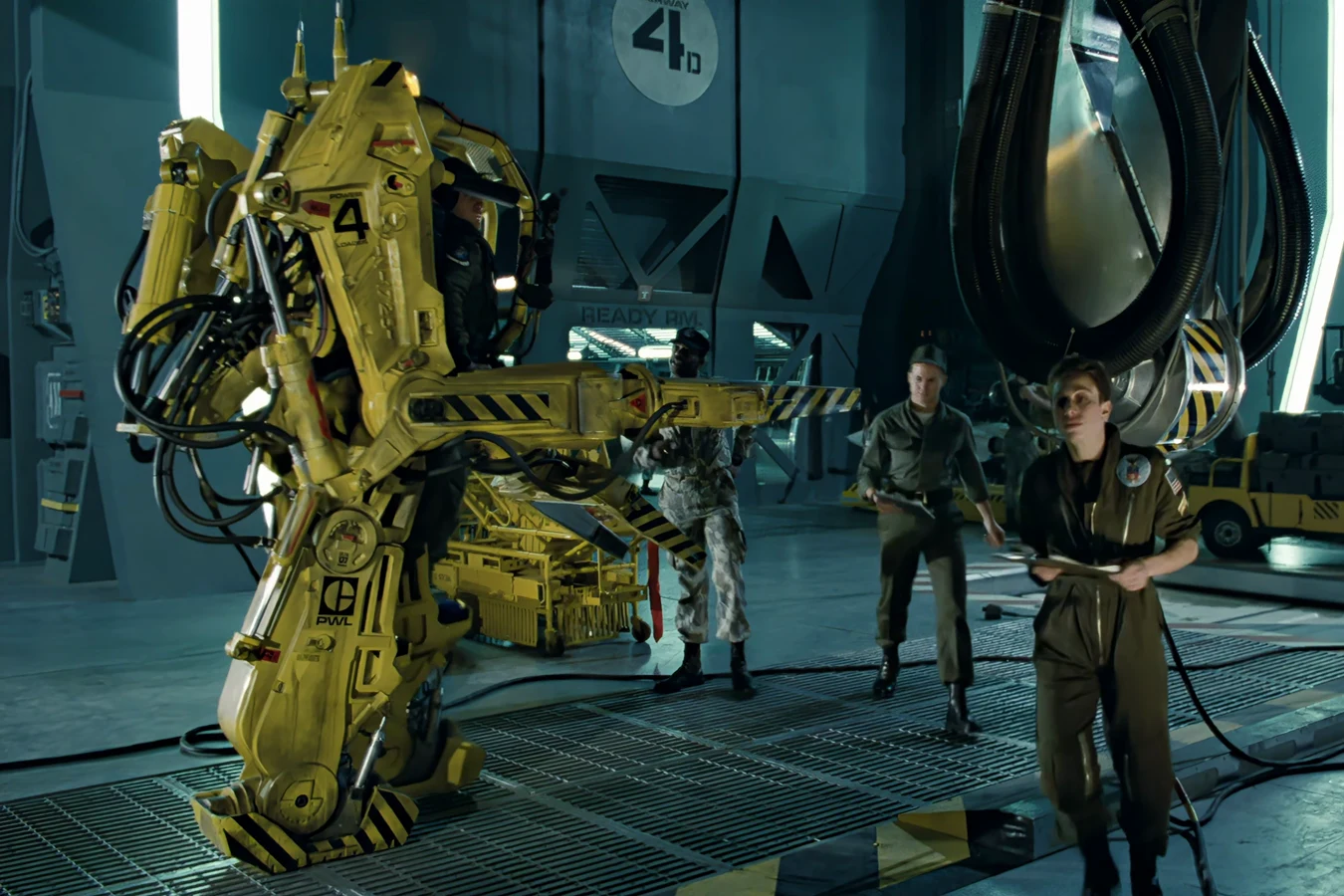
The chassis is a reinforced steel framework with two upper load-bearing points for the arms. A hydrogen fuel cell sits on the back of the frame and supplies up to 65 kW for the loader. Film units also carry the Caterpillar mark on the thigh plate above the letters PWL, along with analog gauges and a rotating amber beacon on the roll cage. Black-and-yellow hazard stripes mark the feet and claw edges so other deck crew can see the moving load.
The articulated legs attach through two semi-universal bearings on either side of the chassis, which allows up to 60 degrees of hip swivel on the x-axis. Knee bearings sit just below those hip joints. A pair of 20 kW linear motors drives hip motion through a fast-feedback loop slaved to the operator's own movement. Hydraulic actuators run from the main load-bearing points to the aft sections of the legs for fore-and-aft travel at the knees, while a second set of actuators at the ankles handles pitch.
Gyro-stabilisers keep the chassis from toppling while it stands still under load. Those gyros can also be rotated rapidly out of phase so the stabilisation system can be decoupled along chosen axes, which is what lets a bipedal frame take a step instead of locking itself upright. For very heavy lifts, crews can bolt up to 250 kg of concrete ballast to the underside of the chassis. Without that extra mass, a full pallet on outstretched arms is enough to tip a loader that is already working near its limit.
Arms, Manipulators, And Controls
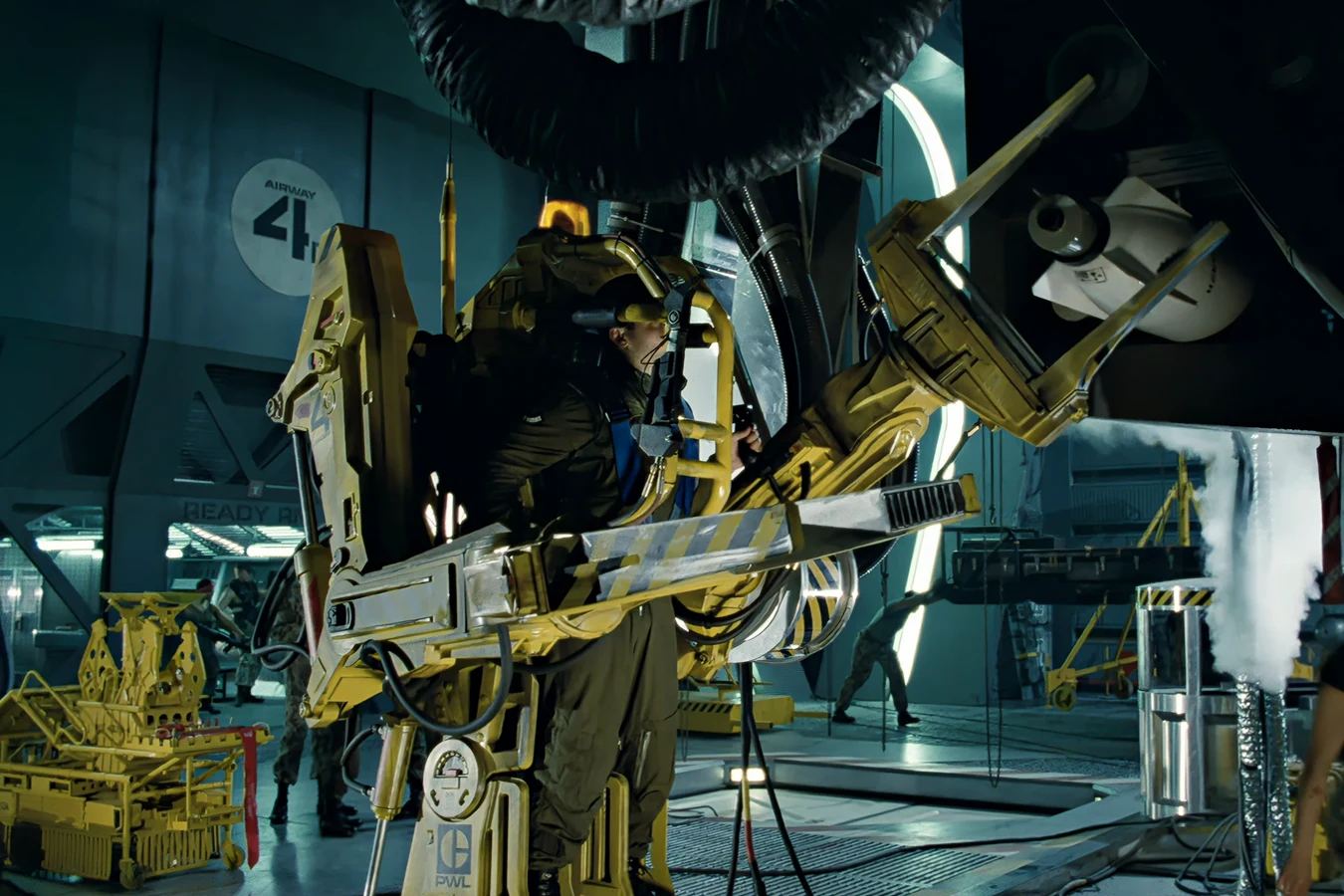
The arms attach at the very top of the chassis through a pair of complex universal bearings stressed to operate under loadings up to 4,000 kg. Linear motors handle motion in the y and z axes. Hydraulic actuators handle x-axis travel and the elbows. Each limb ends in a vice manipulator that takes standard P-60 and O-26 pallet grips and can rotate a full 360 degrees.
The operator runs those claws from a handgrip and joystick on the inside of each limb. Attachment points on the manipulators take maintenance tools such as cutters or welders, which is why a P-5000 can do more than lift a crate. On the Sulaco hangar deck, Ripley used that same grip to hoist white ordnance while Marines watched from the Ready Room doorway. The claw work is the whole point of the machine: place a load where a forklift cannot turn, then set it down without tearing the pallet.
Operation And Training
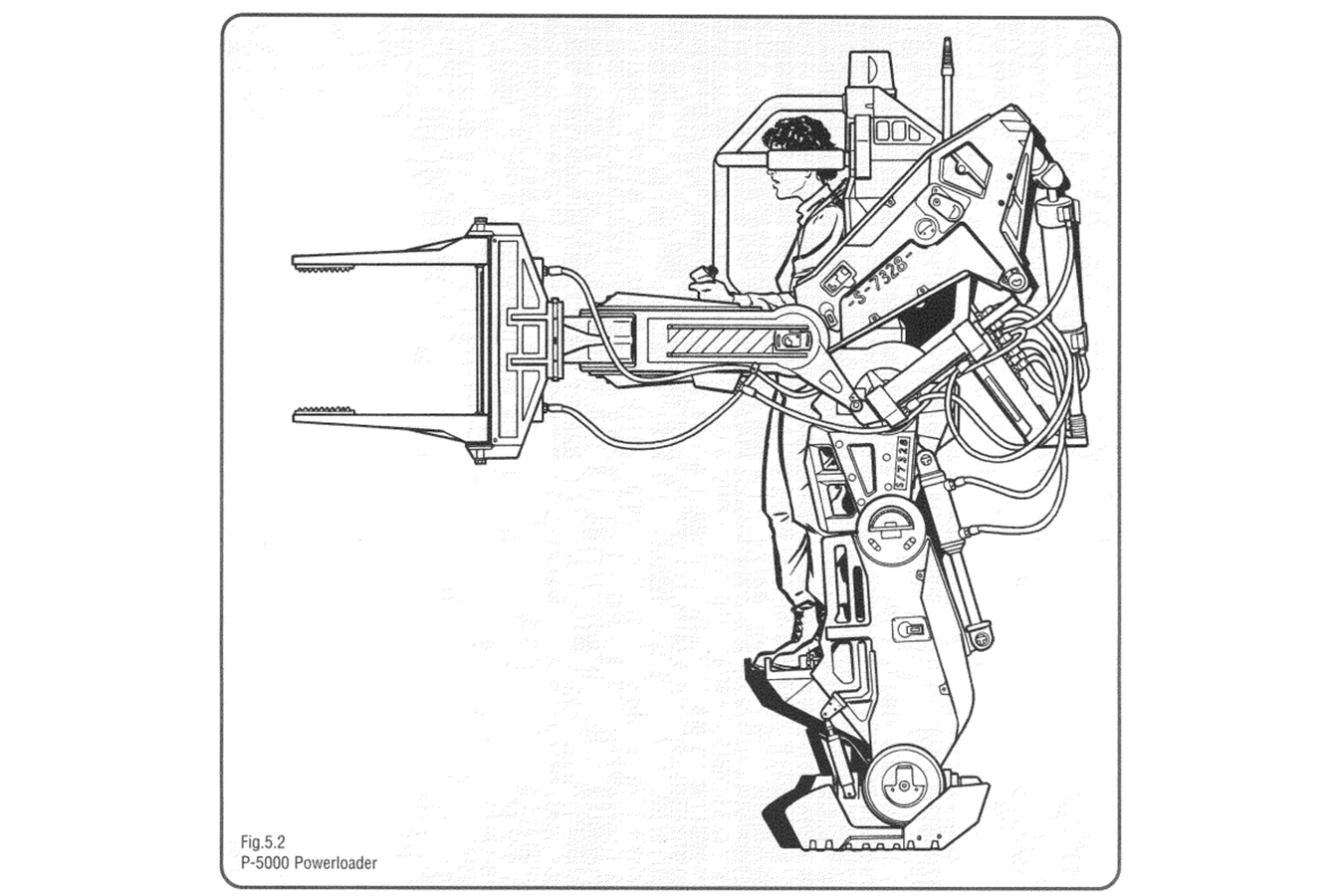
An operator backs into the P-5000 and buckles in with the webbing harness. A roll cage pulls down over the head and torso, and the feet snap into straps on the footplates. Power-up and systems diagnostics run from a punch keypad built into the handgrips. Once the loader is live, it slaves itself to the operator's limb movements and copies walking and lifting almost exactly.
Response time is almost instant. Computer controls dampen twitches and oscillations that come from involuntary movement, so a small jerk in the operator's arm does not become a wild swing in the claw. Trouble starts when the P-5000 is walking or reaching at full extension, because the system then boosts motion past what the operator can fine-tune. Standard operating procedure forbids those moves. Over rough ground the frame feeds back cues through the straps so the operator can keep footing, and automatic lockouts stop most motions that would topple the machine.
Each foot has only about 500 square centimeters of contact area. With a two-ton load that puts a downforce of about 3 kg per square centimeter, enough to sink a loader into mud and leave it stuck until another unit hauls it out. PFC Emmet Kane of the 14th MAU refused to take a full load over rough terrain for that reason. The same mass that makes the P-5000 useful in a hangar makes it a liability on soft ground.
Using a power loader well takes practice, because the frame has a habit of leading the operator's movement. Overcorrecting that lead induces oscillations in the control system, and hesitant or exaggerated motion stresses the load-bearing joints. A Class 2 civilian cargo-handling license is the civilian bar. Training takes about six weeks of simulator and hands-on time, then eight weeks for USCM qualification, with the extra time spent on rough-field work. After her flight license was pulled, Ripley worked the cargo docks Portside on Gateway Station and earned the class-two rating she later used on the Sulaco, in Alien: River of Pain.
Ripley Versus The Queen
Before the drop on LV-426, Ripley volunteered to help unload the ship and ran a P-5000 in front of Hicks and Apone. Spunkmeyer was already swinging racks into Bug Stomper in another loader on that same deck. Several loaders stood on the hangar deck as ordinary cargo gear, and she already knew how to run one from the Gateway docks.
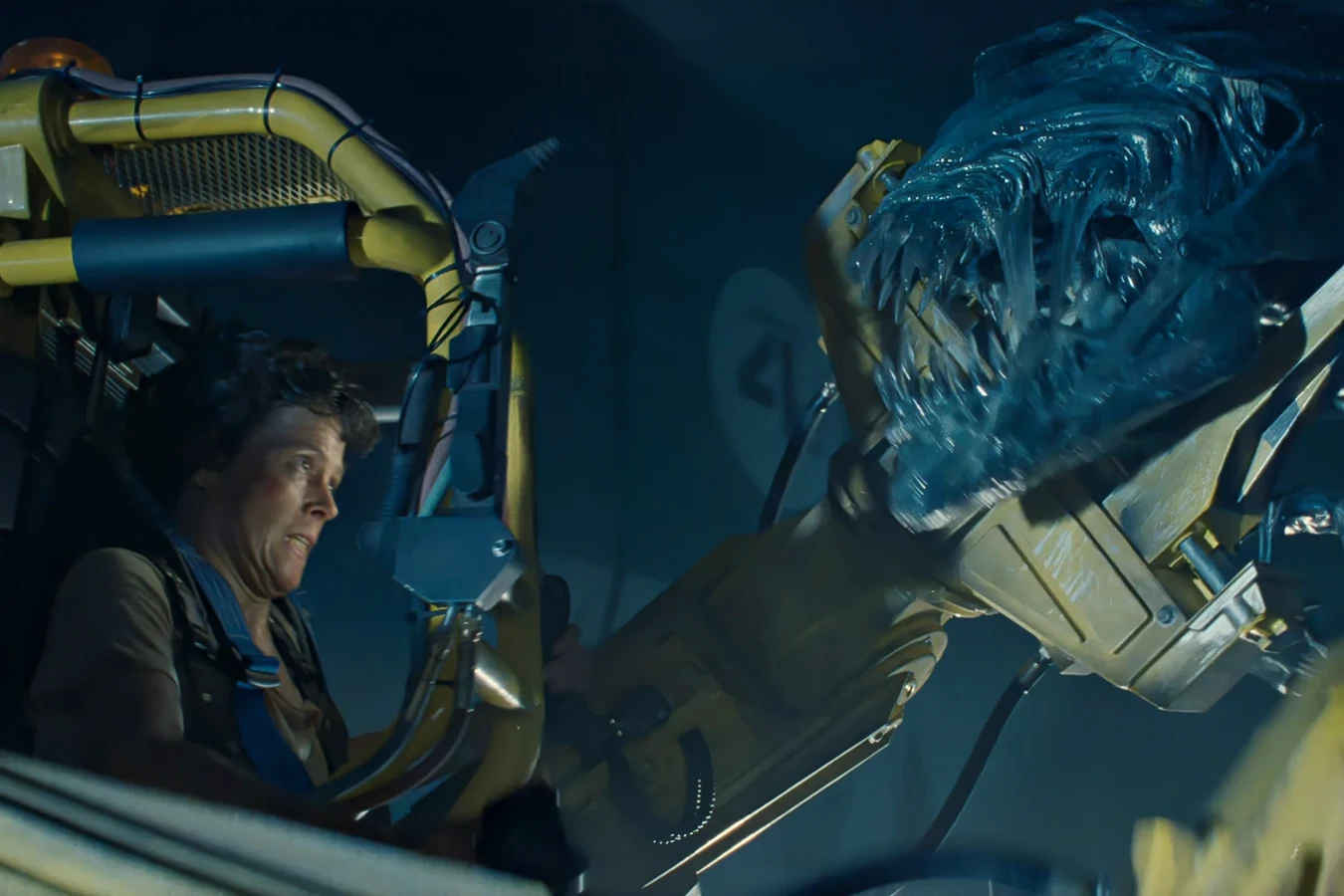
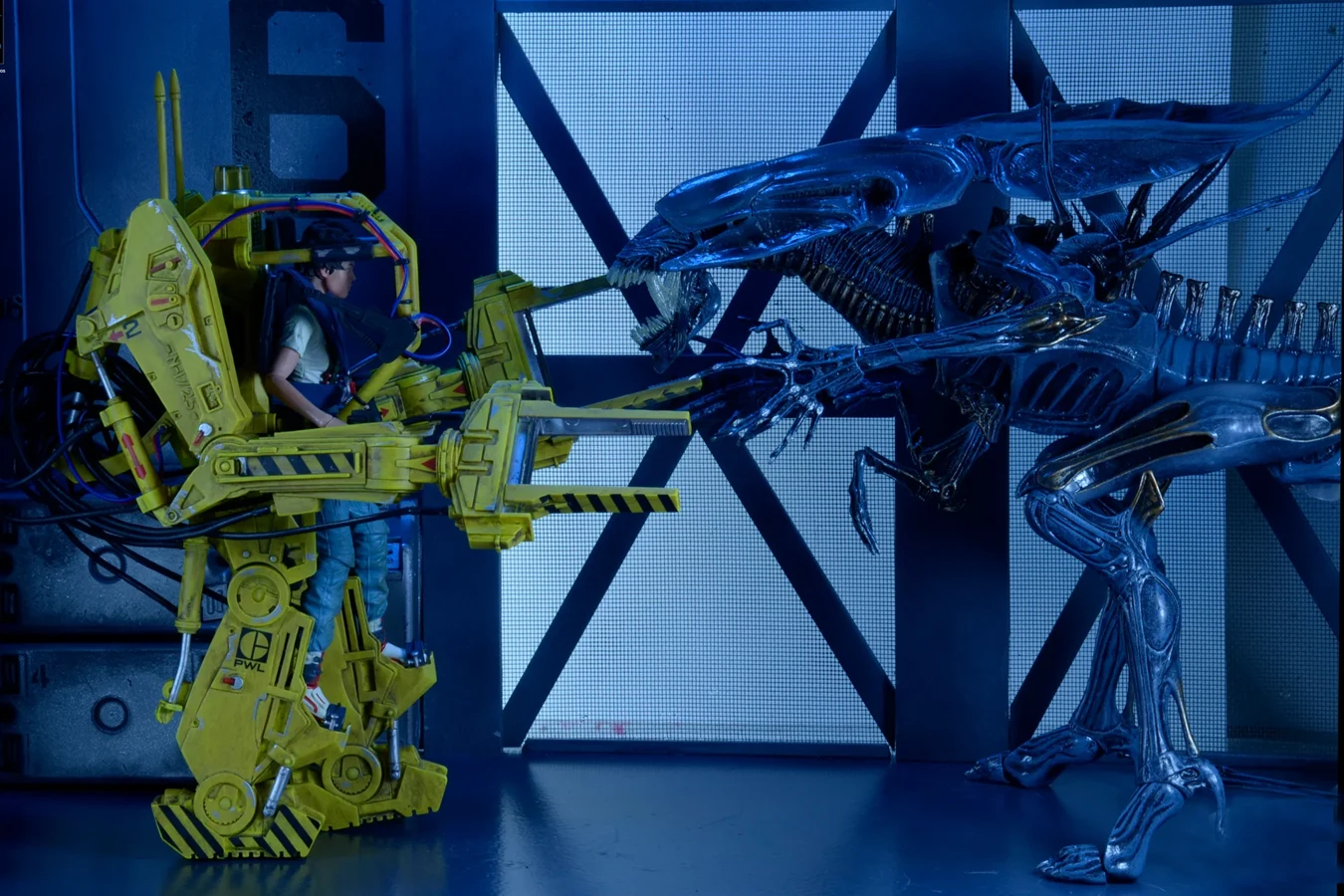
The Queen had ridden the dropship back from the processor and tore Bishop in half on the hangar floor. Newt went under the deck grating while Ripley backed into a loader, pulled the roll cage down, and walked the yellow frame into the Queen. The claws closed on the creature's jaws and arms, and the two of them wrestled across the bay until Ripley drove the Queen into the airlock and blew her into space. The P-5000 went out with her. Ripley, Newt, wounded Hicks, and the ruined Bishop then went into hypersleep for the trip home.
In Alien: The Cold Forge, Blue Marsalis later ran a P-5000 by remote and used it to kill Xenomorphs inside a company research station. In Alien: Inferno's Fall, miner Bianca Ting-Riley welded armor onto a P-5000 in the Svarog mine and used it against pathogen-mutated wildlife. That job used the onboard camera feed instead of an operator in the cage, and it still treated the loader as cargo gear pressed into a fight it was never built for. The suit had no resistance to Xenomorph blood, and the arms could fail under that kind of strain.
P-5000 In Alien Comics
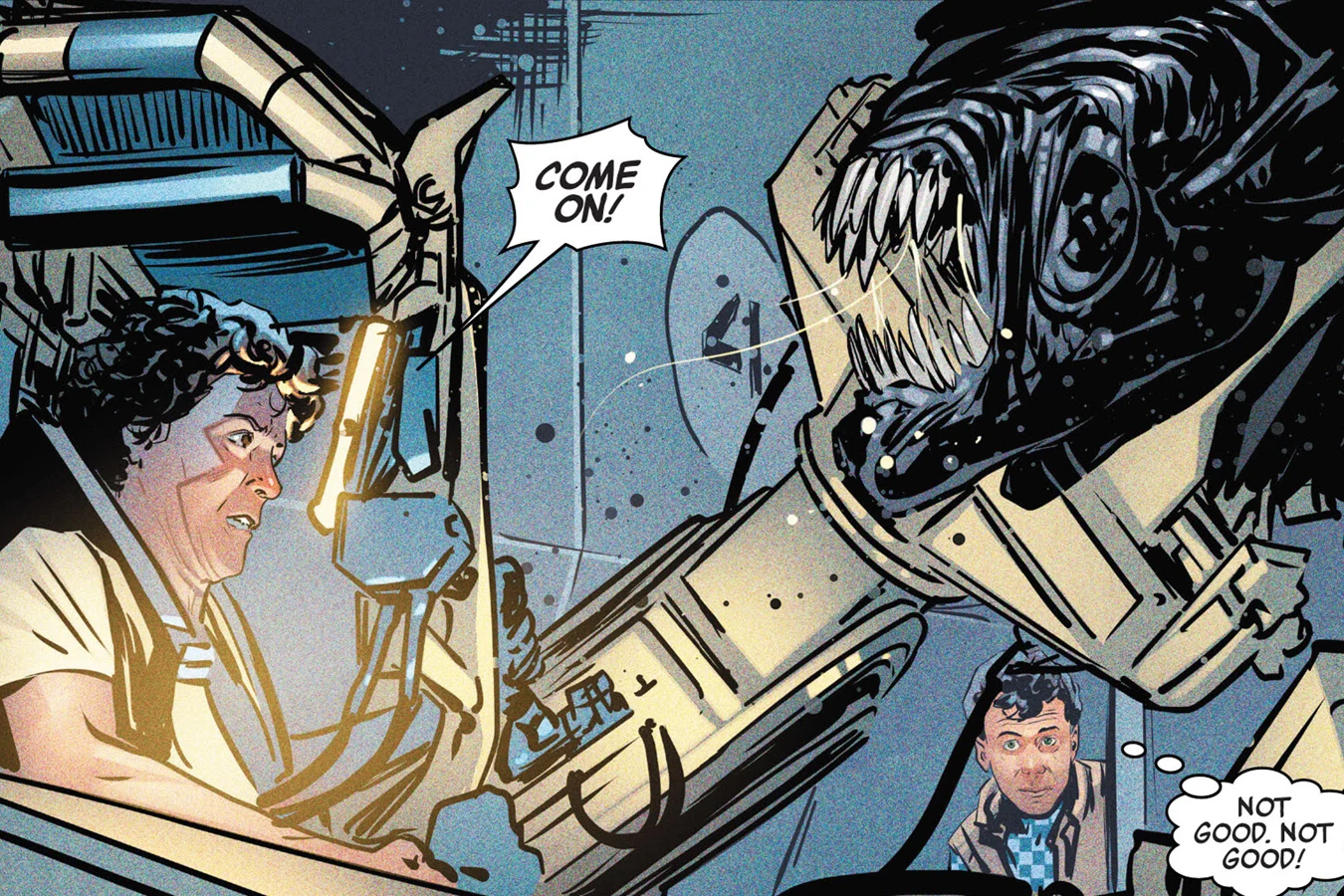
Dark Horse published Aliens: Newt's Tale as a two-issue miniseries in 1992, written by Mike Richardson with covers by John Bolton. The comic retells the film from Newt's side of the vents, including the hangar fight after the Queen tears Bishop apart. Ripley still straps into the loader, drives the Queen into the airlock, and gets Newt, Hicks, and Bishop into hypersleep for the trip home.
Marvel's Aliens: What If? in 2024 opened on the same Sulaco hangar, with Ripley in the P-5000 locking up with the Queen while Carter Burke watched from hiding. Paul Reiser, Leon Reiser, Adam F. Goldberg, Brian Volk-Weiss, and Hans Rodionoff wrote the five-issue run, and Guiu Vilanova drew the cargo-bay fight. After the survivors entered cryosleep, Burke sabotaged the ship and split the timeline. Later issues put Burke and his daughter Brie into Komatsu Kaiju mining armor instead of another Caterpillar loader.
P-5000 In Alien Games
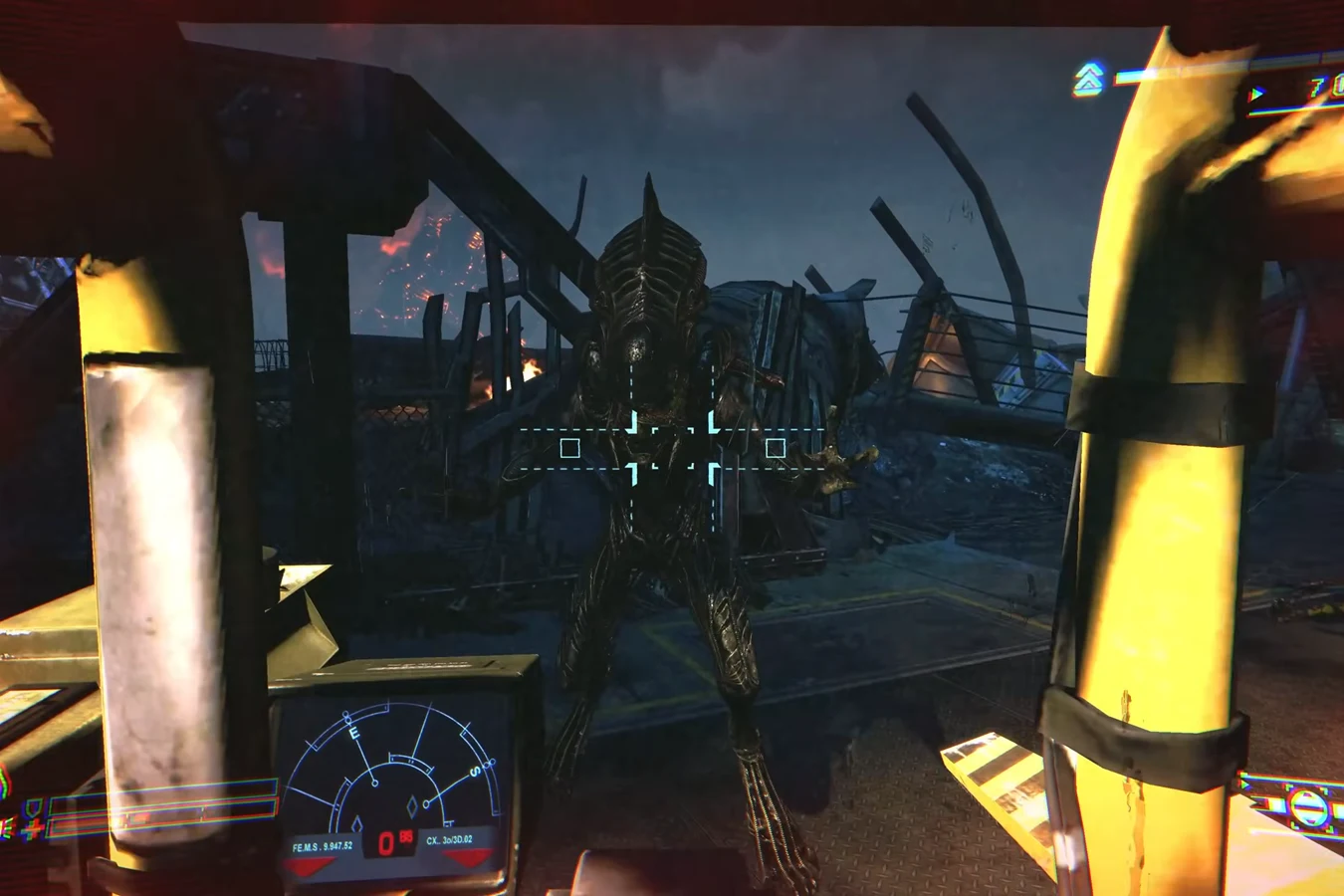
Aliens: Colonial Marines in 2013 put a P-5000 in the hands of Corporal Christopher Winter during the USS Sephora mission back to Hadley's Hope. Winter used a loader earlier to force an airlock, then climbed into another unit when the Raven, a huge armored Xenomorph, cornered the squad in a cargo space. A motion tracker was zip-tied to the roll cage. Winter broke the Raven's neck with the loader arm while Bella, Reid, and O'Neal covered him from the floor.
Early demos of that game showed a weaponized loader with an M56 Smartgun on one arm and an M240 incinerator on the other. That kit was cut before release, so the finished fight used the stock cargo claws. Loaders also sat unused in Sulaco and USS Sephora bays, including a unit left in the firing range, as scenery rather than a regular vehicle.
Similar Loaders
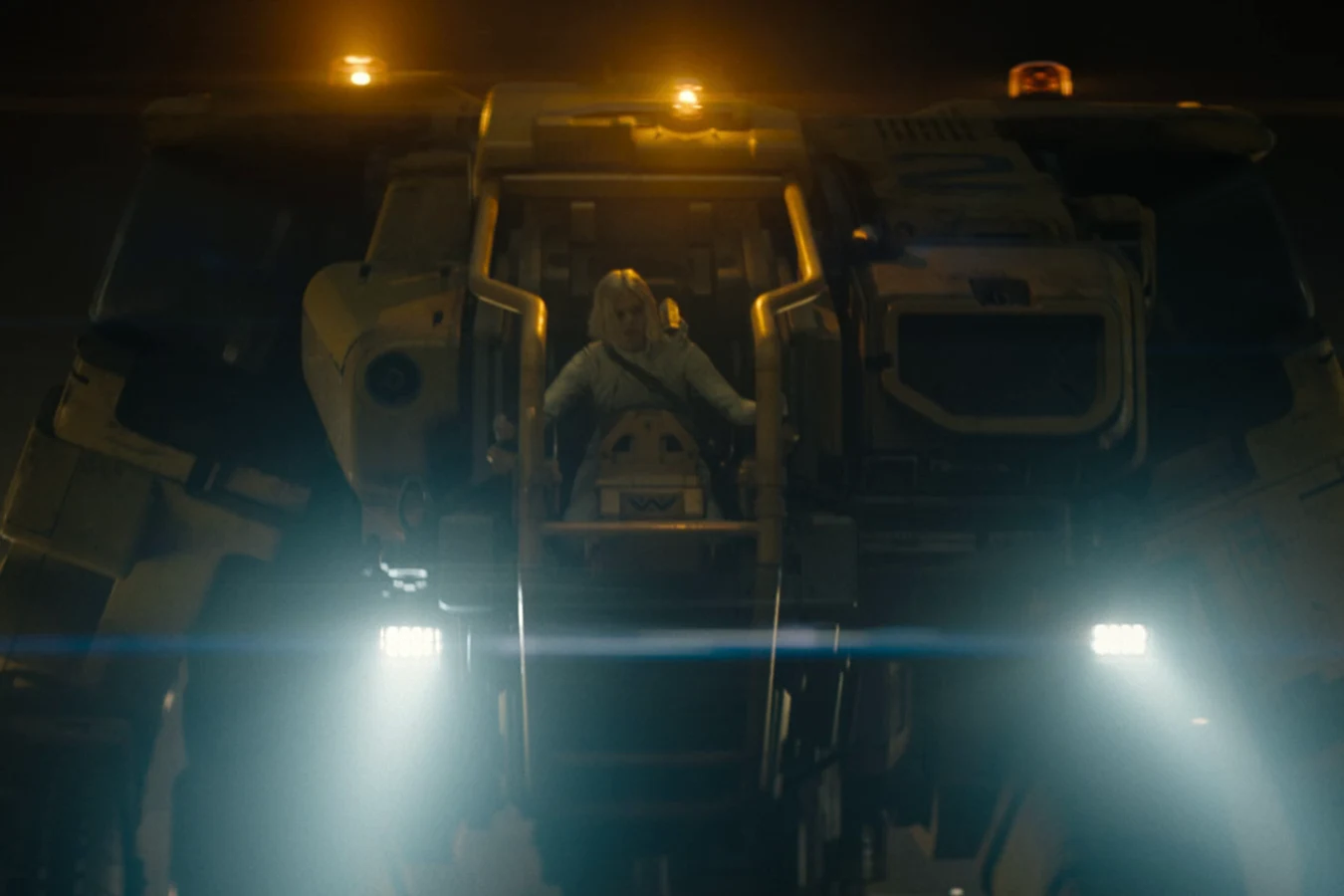
Weyland-Yutani later fielded the Super Power Loader on Genna during Predator: Badlands. That suit kept the yellow industrial frame and cargo job of the P-5000, but it enclosed the pilot and swapped the welder attachment for a built-in cutting saw. Tessa ran one against Dek and the Kalisk, and the creature tore the mech in half. The Caterpillar loader on the Sulaco stayed in one piece through its Queen fight, while the larger Weyland-Yutani suit on Genna did not.
Aliens versus Predator 2 put an armed upgrade of the same idea on LV-1201. The Exosuit kept the bipedal cargo stance, then added a flamethrower in the left arm and a rocket launcher and minigun in the right. Corporal Andrew Harrison and General Vassily Rykov both used it, and it did better against Xenomorphs than against Predators. The Komatsu Kaiju mining armor from Aliens: What If? went further from the Caterpillar pattern, with a drill on one arm and a flamethrower on the other.
Merchandise
Kenner released a Space Marine Power Loader in 1992 as item 65800 in the first Aliens toy wave. The vehicle stood over nine inches tall, held the 5-inch Lt. Ripley figure, and packed a spring-loaded Alienator missile plus grabbing claws. Kenner added pivoting guns on the arms and treaded feet that the film loader never had, so the toy could stand as one solid piece and play as a weapon rather than a forklift.
NECA shipped its first 7-inch-scale P-5000 Deluxe Vehicle in October 2015, after showing the sculpt at Toy Fair 2014. The loader stands over 11 inches tall, has more than 30 points of articulation, 20 wires and hoses, and working pistons. The canopy opens, the harness unbuckles, and the box includes alternate control-gripping hands for the separately sold Ripley figure. NECA brought the same deluxe vehicle back for the film's 40th anniversary as item 51799, in the same wave as the Ultra Deluxe Queen, an Ultimate Warrior, and an Alien Eggs accessory pack, with a late-2026 ship window.
Behind The Scenes
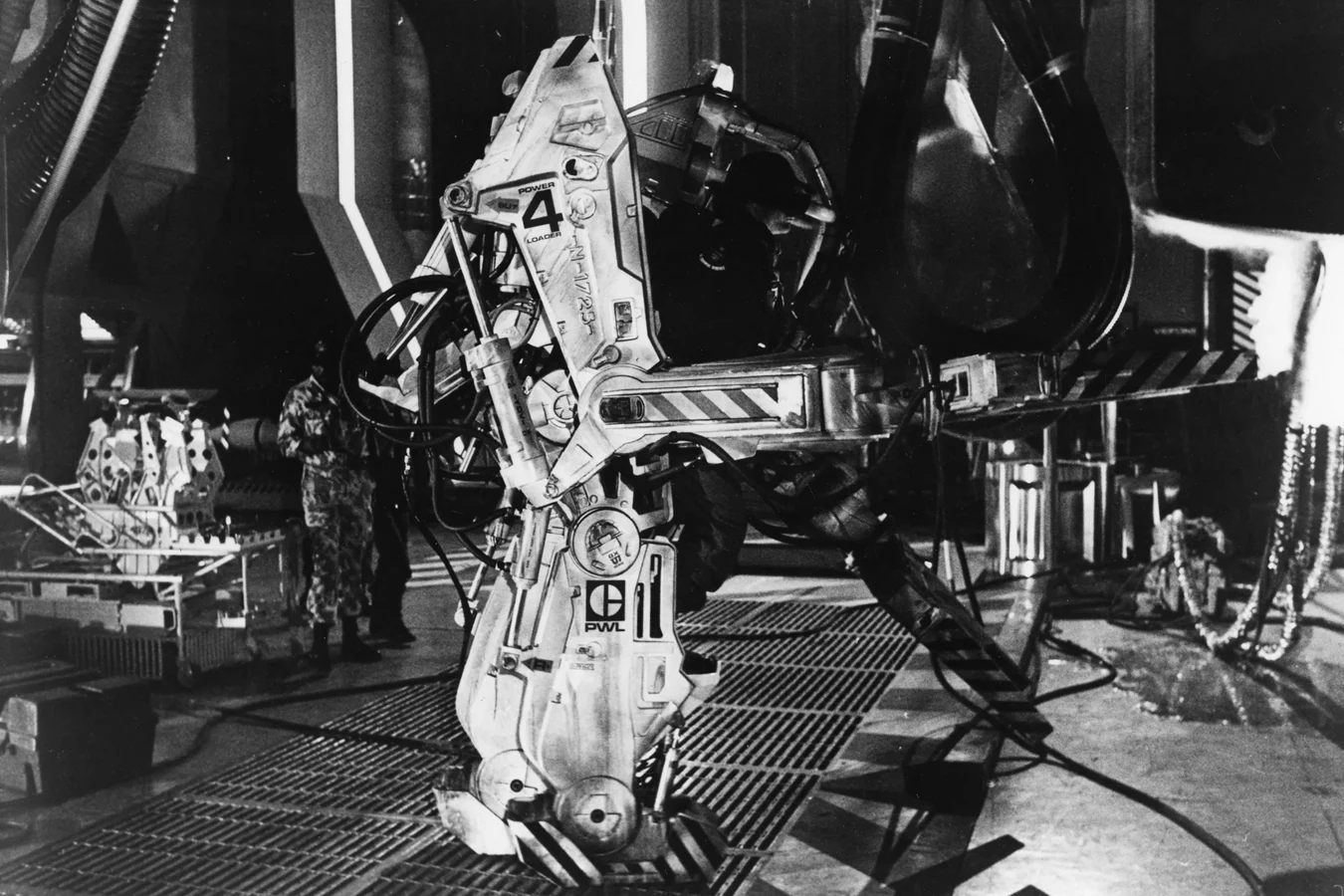
James Cameron first used a four-legged walking machine called the Spider in his short film Xenogenesis, then changed the idea to a two-legged forklift after The Empire Strikes Back put AT-AT walkers on screen. He wanted the Queen fight to be hand-to-hand, not a gun battle, and a cargo loader was the only exo-suit Ripley would already know how to run. Syd Mead drew early concepts once the production reached Pinewood, including a test dummy built from 2x2s and trash bags stuffed with newspaper. The finished film design is Cameron's, with Mead's work later feeding the Amplified Mobility Platform in Avatar.
Special effects supervisor John Richardson built the full-scale prop from aluminium, fibreglass, and PVC plastic. The finished machine weighed about 600 pounds. Stuntman John Lees hid inside the frame directly behind Sigourney Weaver and walked the suit while she sat in the cage, the same "dad lets the daughter walk on his feet" gag Cameron wanted. Wrists were radio-controlled, the pincers ran on cables, and the hydraulics on the arms and legs were cosmetic. Hidden counterweights disguised as machine parts kept the front from dropping, and a crane, a pole up the spine, or wires hidden in the shoulder antennae held the suit for walking shots.
Weaver rehearsed in the loader at lunch, circling the stage with Lees until they could move in sync. The Queen fight was among the last scenes shot, with Stan Winston's full-size Queen on the same hangar set. Miniature designer Phil Notaro and Doug Beswick built a smaller loader and Queen after principal photography, moved by rods through the floor and cable-operated arms, with a small Ripley doll in the cage. The background loader in Ripley's cargo demo is that miniature, the doll redressed as a Marine. The airlock drop smashed the miniature on the concrete, and the crew superglued it back together for about eight takes before the ninth shot destroyed it for good.
Conclusion
The P-5000 is a Caterpillar cargo exo-suit that lifts about four tons, runs on a 65 kW hydrogen cell, and needs a class-two operator who can keep the frame from leading their hands. On the Sulaco it loaded ordnance, then went into the airlock with the Queen after Ripley used it as a last weapon. Later books, comics, and games put the same yellow cage back into fights it was never built for, and the Super Power Loader on Genna showed how that idea grew larger without becoming any safer.
Appearances
- Aliens (1986)
- Aliens novelization by Alan Dean Foster (1986)
- Aliens: Newt's Tale (1992)
- Aliens Colonial Marines Technical Manual (1995)
- Aliens: Colonial Marines (2013)
- Alien: River of Pain (2014)
- Alien: The Cold Forge (2018)
- Aliens: What If? (2024)
External Sources
Tag Categories: Alien Universe Vehicles | Colonial Marine Lore | Alien Lore