Aliens: The Alien Comic Overview

Aliens: The Alien is a sixteen-page short story first published in Dark Horse Presents #56 on November 1, 1991, as part of that year's Giant Dark Horse Presents Annual. John Arcudi wrote the story, Tony Akins provided the pencils, and Paul Guinan handled the layouts and inks. The annual printed the short in black and white and split it into two eight-page halves at either end of the sixty-four-page issue. After the nuclear ending of Aliens: Female War, the story followed Earth's president from Gateway Station to the Space Jockey vessel that was terraforming the planet, and it closed with the destruction of that ship.
Plot Summary
The Terraforming Vessel
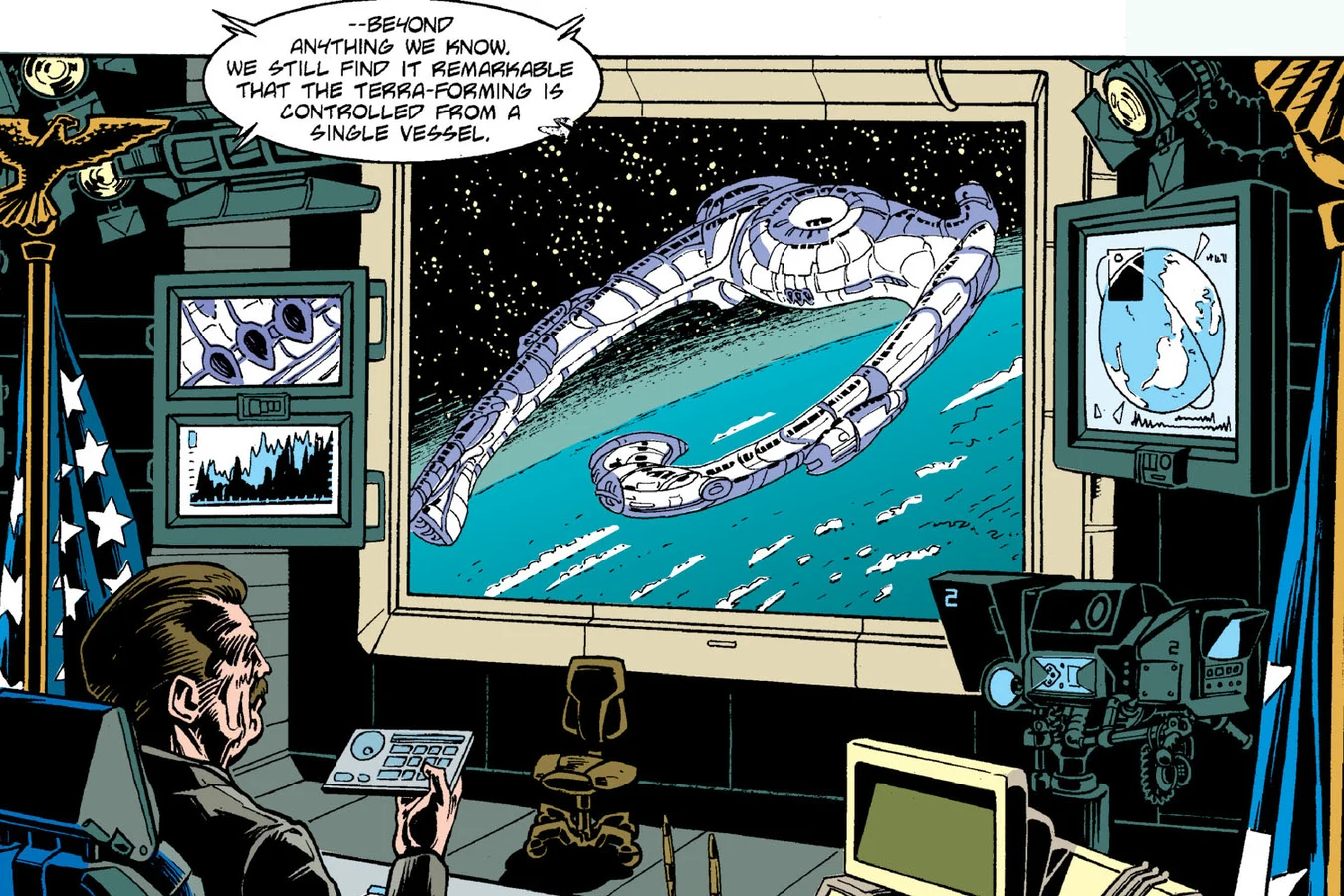
Restored satellite uplinks had returned footage of a single horseshoe-shaped Space Jockey ship in orbit around Earth. The terraforming of the ruined planet was being directed from that ship alone. Temperate zones had cooled by an average of nearly forty degrees since the worst of the war. Edwards presented these developments to the president as their shuttle approached Gateway Station. The scale of the change had already pushed Earth's remaining government toward an extreme response.
The ship belonged to the being Earth's officers called the Pilot, a living Space Jockey whose work had continued after the bombs of Female War. Officers treated the new footage as proof that one vessel controlled the entire climate-changing process. The president ended the transmission when the shuttle was about to dock at the station. The question of what to do about the Pilot traveled with him onto Gateway Station.
Gateway Station
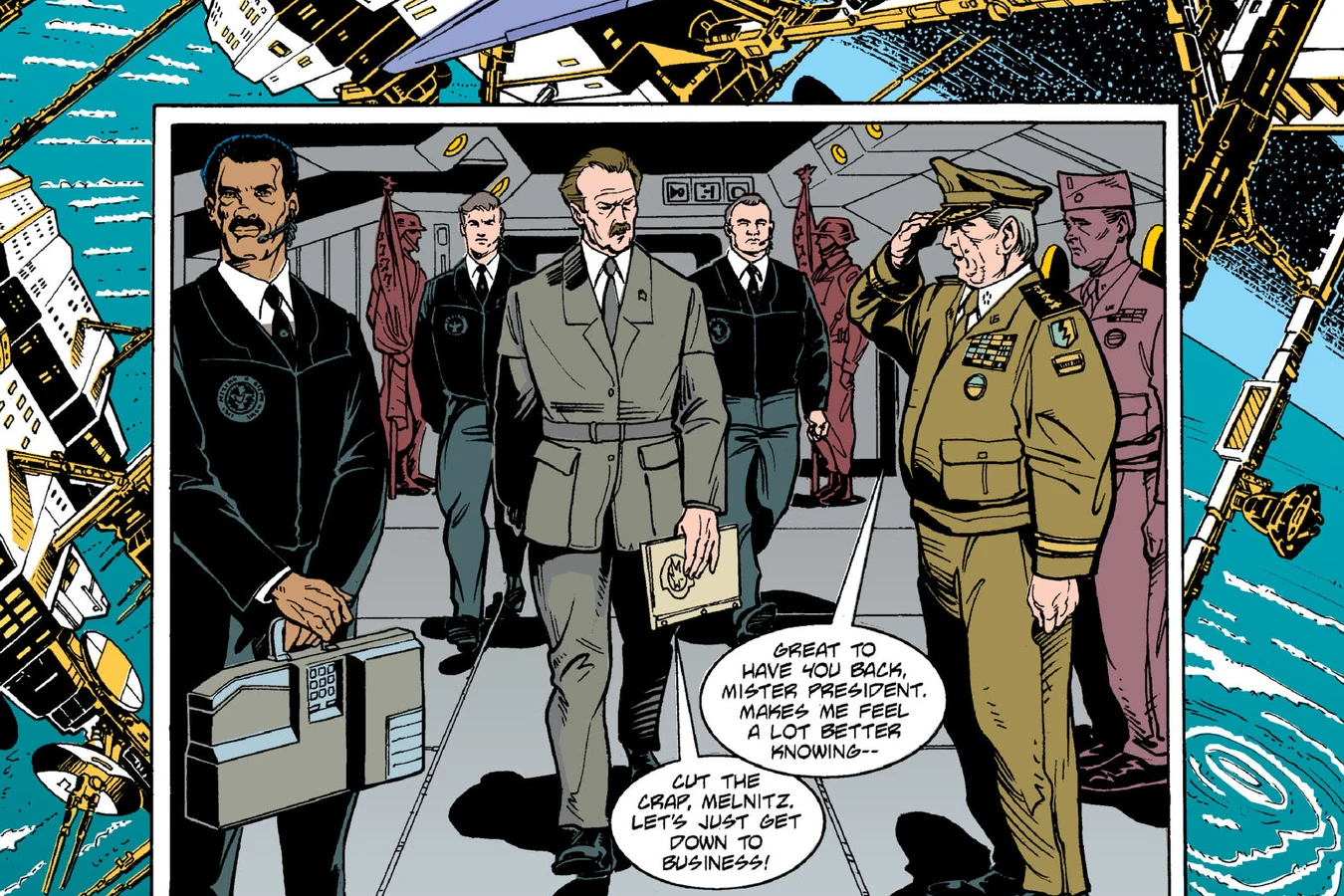
The president's party came aboard Gateway Station to a salute from Melnitz and the station's officers. The president waved the ceremony aside and called for the latest developments. Human forces had begun to re-establish a presence on Earth's surface, but the fighting there remained severe. One point in the last intelligence memo still troubled him. He had understood that Doctor Orona's buried bombs would leave the planet uninhabitable for years.
Melnitz turned that question over to Captain McQuade, the Gateway officer who could explain both the bombs and a great deal more. McQuade had already traced the planet's falling temperatures to an alien energy source during Female War. He now had a fuller account of the Pilot's actions, drawn from long observation and from a written record that had reached the station. The briefing began within minutes of the president's arrival.
Orona's Bombs
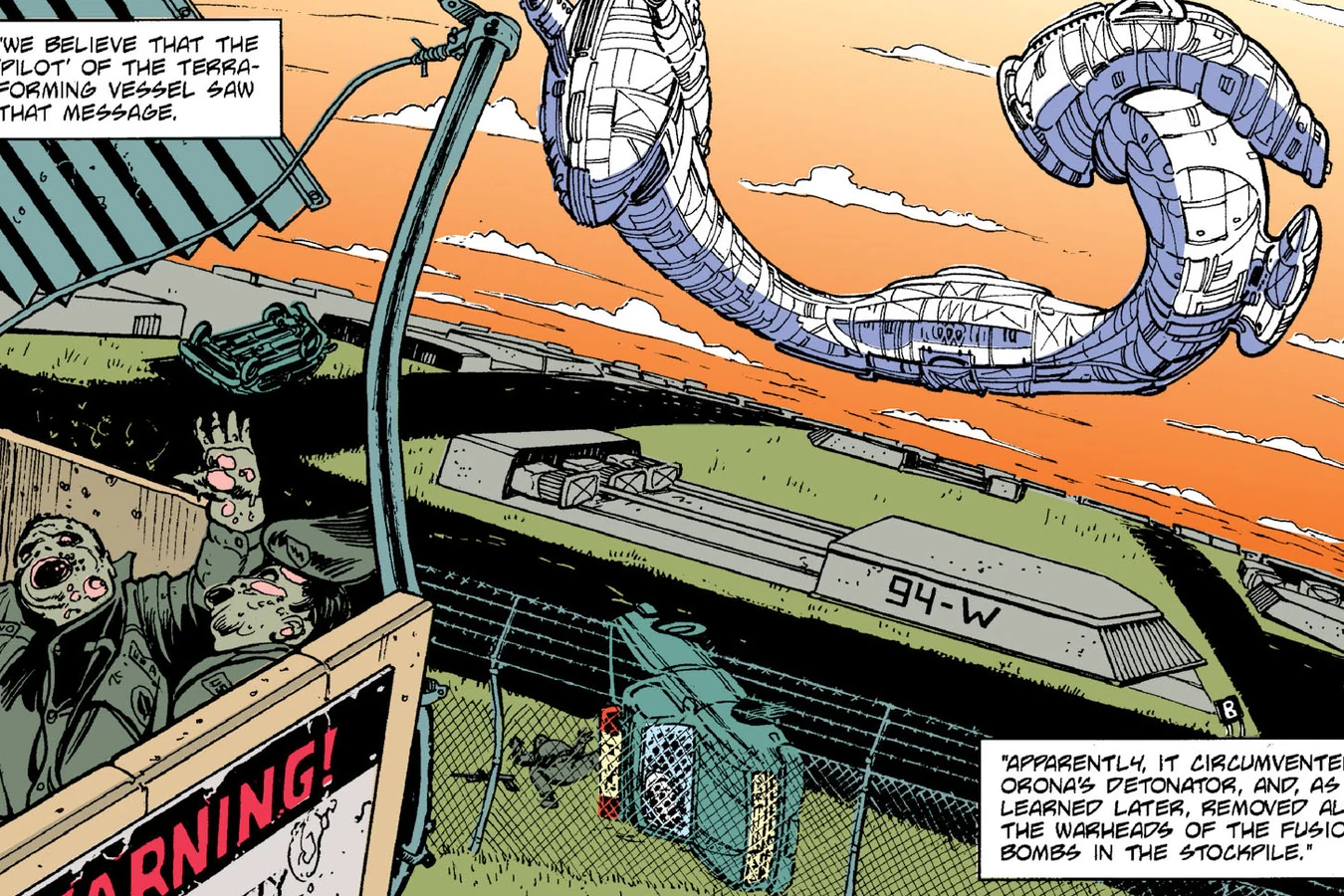
A full detonation of Doctor Orona's fusion stockpile would have wiped every living thing from the Earth. Orona had not hidden that intention. He had broadcast the plan into deep space, and the Pilot of the terraforming vessel had seen the message. The creature circumvented the detonators and removed the fusion warheads from the cache, a theft later confirmed by observation of the ship over the stockpile. Officers could not say whether the Pilot wanted those materials for a plasma generator or only meant to stop another human from threatening the world it had chosen as a home.
A book written by Billie, who had communicated with the Pilot after years in a mental institution, supplied the rest. Her record described a being that could transmit thoughts across light years. The Pilot had not destroyed the Xenomorphs itself because it did not know how to kill them without wrecking the planet it wanted. Ellen Ripley later lured millions of the creatures to the remaining bombs in Female War. Only a few older fission weapons left by the Pilot exploded, leaving Xenomorphs on Earth in hives across Brazil, Los Angeles, Buffalo, and thirty-seven other sites. Weeks of hive broadcasts produced a reply that left the president no other path.
The President's Address
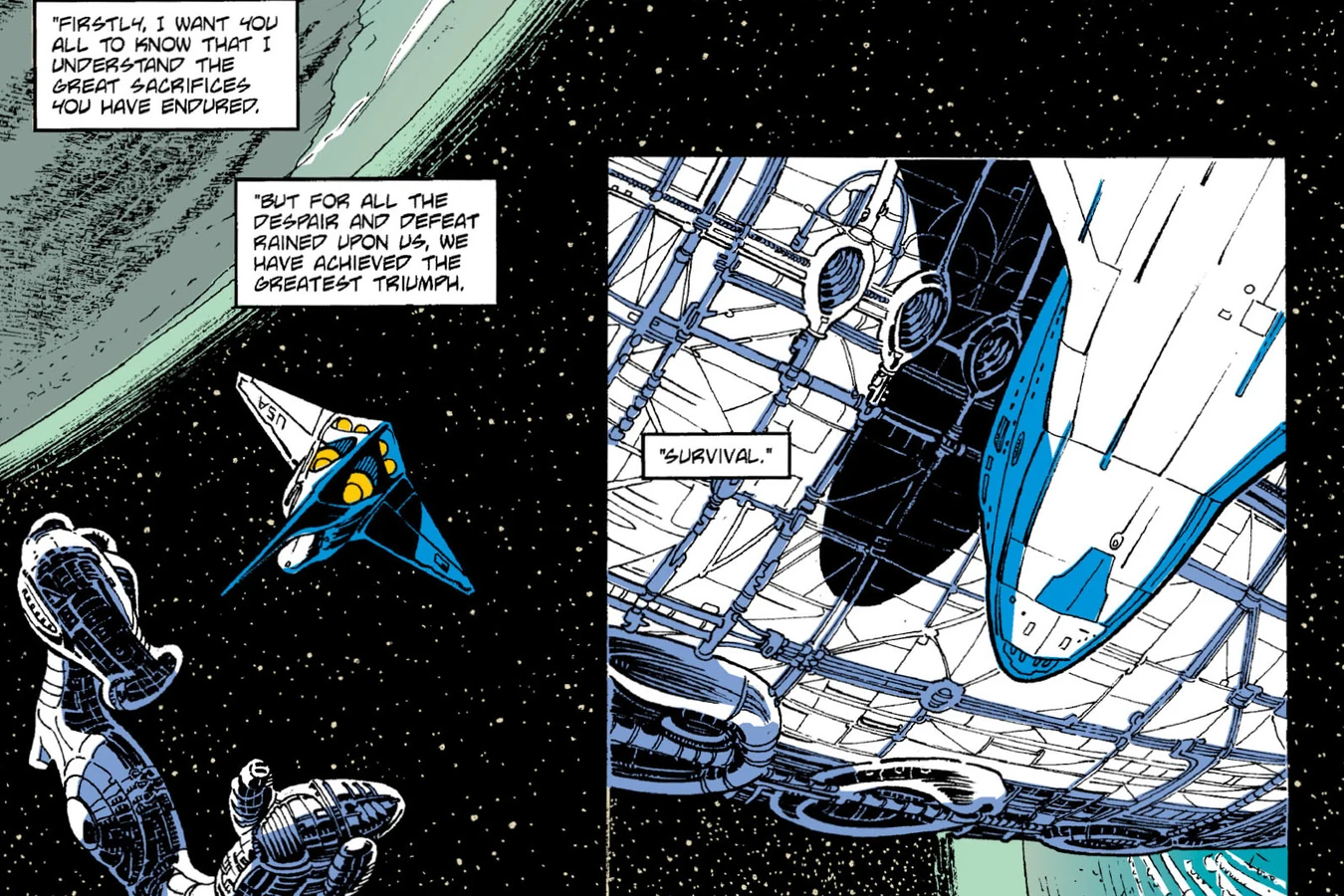
McQuade added that field tests had shown a limit to the Pilot's gifts. The creature could send its own thoughts, yet it had not demonstrated the ability to read human minds, which meant a hidden plan might still remain concealed. The president sent the others out of the room with that news and stood at a viewport above the wounded Earth. He then recorded an address to Americans scattered through space or still fighting for homes on the surface. He acknowledged the sacrifices they had endured and named survival as their greatest triumph.
After long debate with his advisers, he announced that he would enter face-to-face negotiations for the repopulation of Earth within the hour. Those talks were presented as a step toward peace rather than another war. A shuttle left Gateway Station for the terraforming vessel while that message went out. The public story described a meeting about a return to the homeworld. The extreme option raised at the start of the briefing traveled with the delegation.
The Pilot
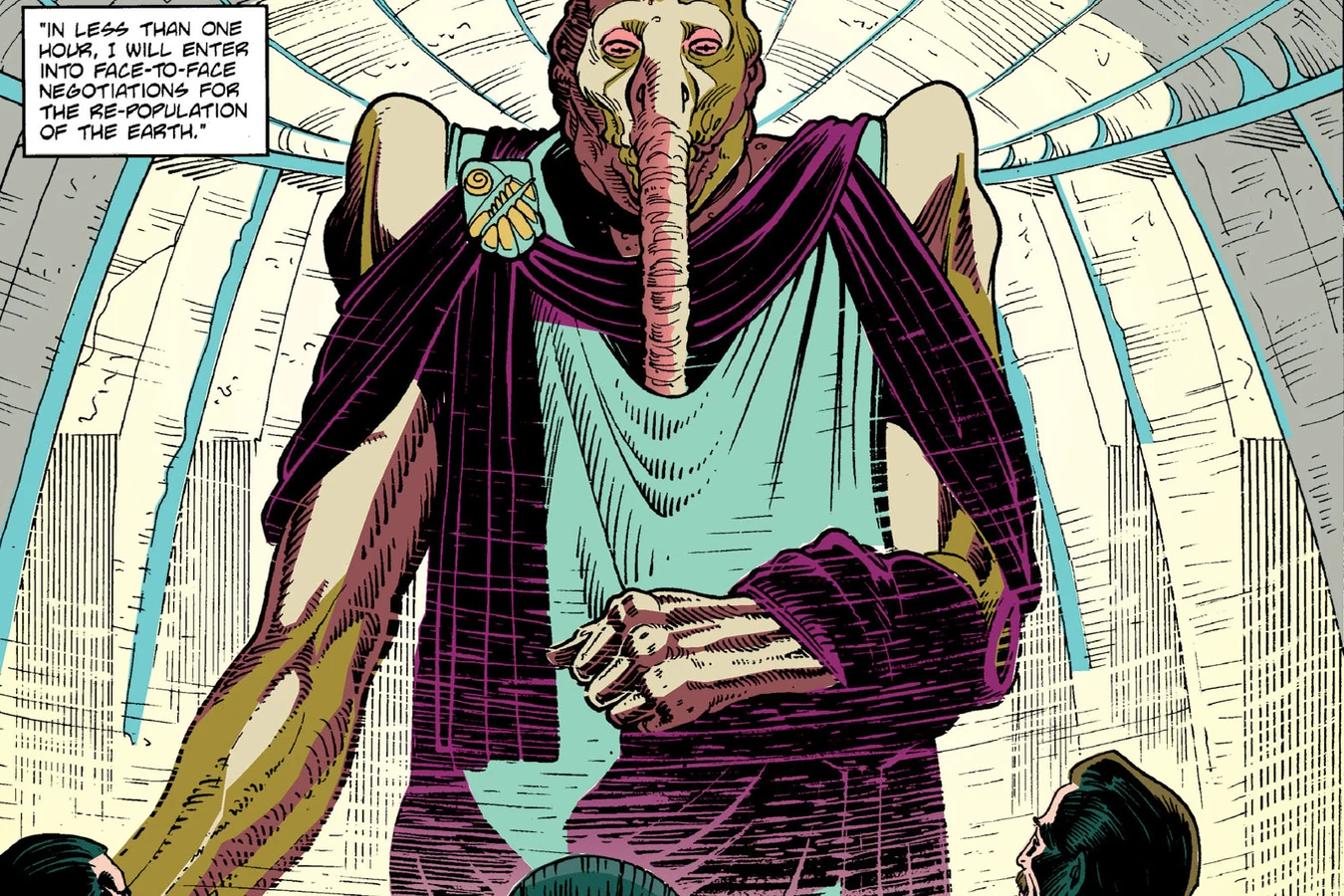
Inside the vessel the delegation met the Pilot, a living Space Jockey whose long-skulled, trunked face and robed body towered over the humans. The creature was clearly capable of altering Earth's climate by itself, yet its eyes held no readable expression. A flash of contact burst through the president's mind as the Pilot reached toward the group. The visitors were required to remove their clothing. A sudden burn then stripped the outer layer of their skin, killing residual bacteria that might have harmed their host.
Some of the party still feared that the Pilot might read and control human thoughts, while others argued that it would already have killed them if that were true. They were taken to a bridge without manual controls, its functions answering the Pilot's voice or some closer bond with the ship. The being appeared to be the only occupant, and images of Xenomorphs filled the space around it. The president introduced Secretary of State Robert Tessier, who stepped forward in greeting. The Pilot seized Tessier and hurled him aside after grasping the threat in the approach, and the remaining delegates turned to their contingency plan.
The Fight With The Pilot
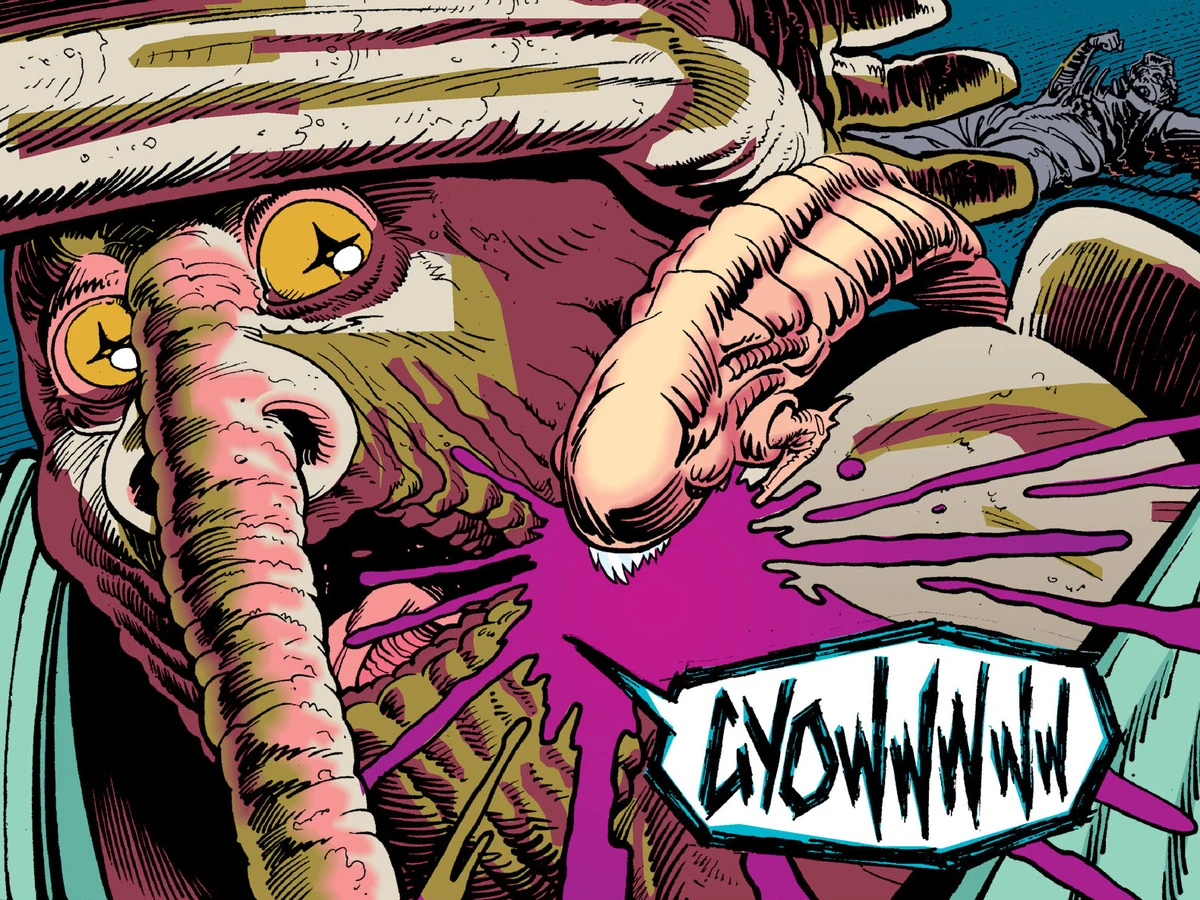
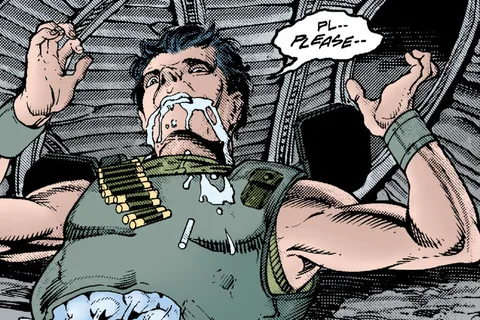
The fight that followed showed how far the delegation had underestimated their host. The Pilot was stronger than they had expected, and smarter as well. It hurled delegates aside and met the attackers who closed on it with enough force to tear one of them open. Several members of the party were androids, constructed well enough that their nature was not obvious, and the Pilot had not identified them in time. Those synthetics kept up the assault while the rest of the plan moved into place.
One synthetic tooth concealed less than a gram of lithium. The chamber inside that tooth was too small to hide much more, yet the plan depended on that scant measure. During the struggle an android placed the tooth in the Pilot's mouth, and the lithium reached its body. In this case that amount was more than enough. The being that had been stronger and smarter than its visitors expected died inside its own vessel, and its work on Earth's climate died with it.
The Ship Is Destroyed
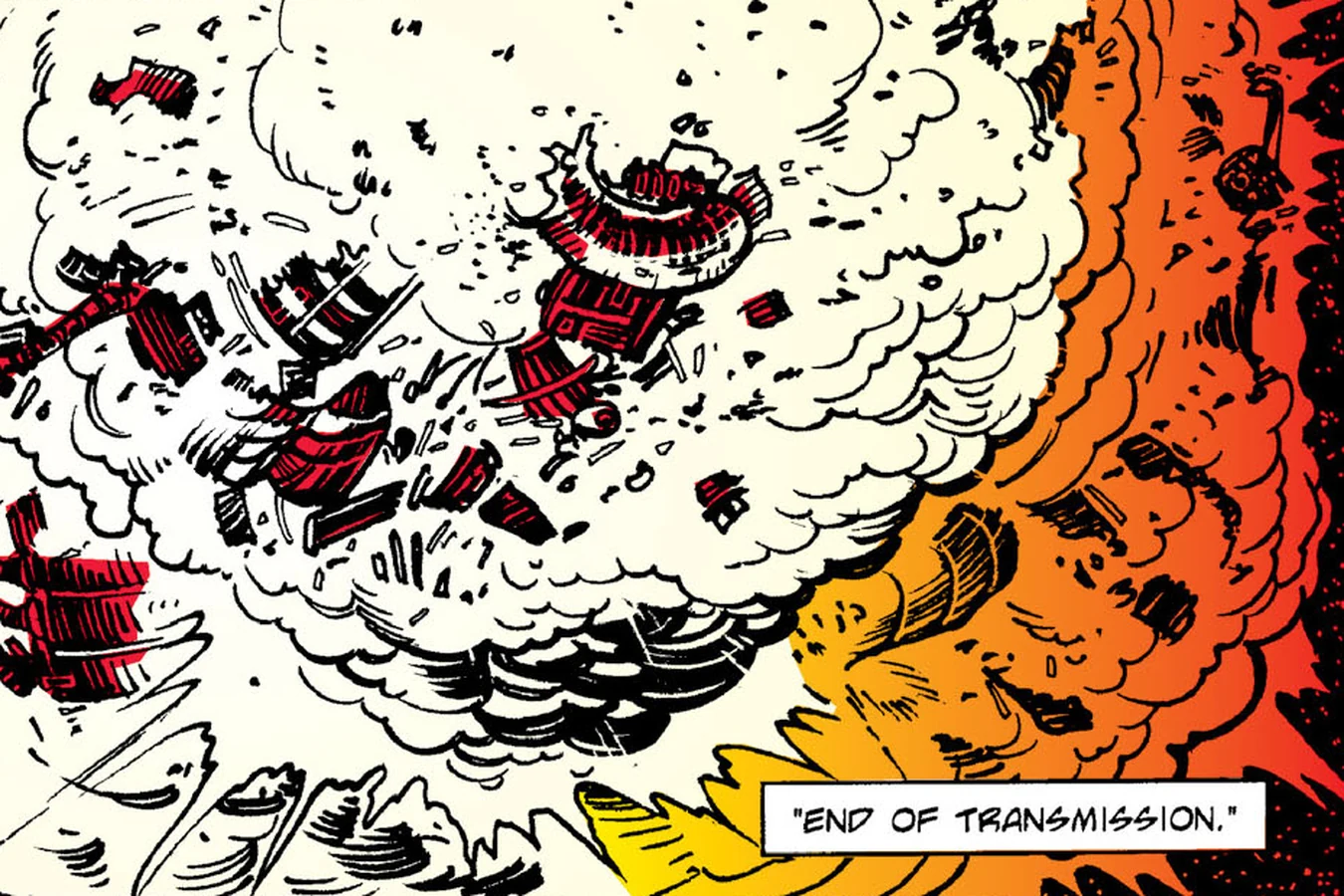
A damaged android then tore a communicator from inside its own torso and reported to Central Command under the name Mitchell. Operations aboard the enemy vessel had been interrupted, and the scheduled offensive was to be launched at once. The message presented that launch as the next step of a plan already in motion, not as a sudden improvisation. Missiles waited in silo 6-E on Earth for exactly this signal. The android held the channel open long enough for Central Command to act.
Missiles rose from that silo on Earth and struck the terraforming ship while the president was still aboard. The same transmission recorded that the president's participation in the mission had been vital and a wholly necessary sacrifice. The vessel broke apart in orbit as the warheads found it, and the signal from inside the ship went dead. The Pilot's work on the planet ended in that blast. Nothing of the terraforming effort remained except wreckage above a world the creature had already begun to change.
Editions
Dark Horse Presents #56 appeared in November 1991 as the Giant Dark Horse Presents Annual, a sixty-four-page square-bound special. The cover advertised that page count along with an Aliens' Finest Hour corner banner, and the short occupied sixteen of those pages in black and white. The first eight pages opened the annual and the last eight pages closed it, with the other anthology features placed between the two halves. Rachelle Menashe later colored the story for Dark Horse Presents: Aliens, a 1992 collection of the anthology's Alien shorts.
The colored version was reprinted in Aliens Omnibus Volume 1 in July 2007, where the story begins at page 367 after its own title illustration. Marvel later included it in Aliens Epic Collection: The Original Years Volume 2. Those collected editions present the sixteen pages as one continuous story rather than as two halves separated by unrelated features. The omnibus credits also list Willie Schubert on letters and Randy Stradley as editor, matching the original annual.
Differences Between Editions
The original annual printed The Alien in black and white, while the later collections use Rachelle Menashe's colors. That is the principal visual change between the first appearance and the version most readers now encounter. The original issue also split the story around the rest of the Giant Annual. A reader in 1991 finished the first half, continued through the other features, and then returned to the Pilot at the back of the book.
Collected editions gather those halves into a single sixteen-page sequence without the interrupting anthology material. The 2007 omnibus adds a painted title illustration by Den Beauvais and a separate credits page that were not part of the 1991 annual. The annual itself used a jam cover by Paul Guinan, John Byrne, Frank Miller, and Dave Johnson. That cover was modeled on the old DC Comics eighty-page giants rather than on Beauvais's later illustration.
Behind The Scenes
Dark Horse solicited the short as a two-part prologue to Aliens: Genocide, the miniseries John Arcudi was then developing with Mike Richardson. Randy Stradley edited the annual. The jam cover's Aliens portion came from Paul Guinan, with John Byrne, Frank Miller, and Dave Johnson supplying the other quadrants, and with colors credited to Steven Birch and Sean Tierney. The issue logo was the work of Jim Spivey, Carolyn Megyesi, and Jack Pollock.
The credits in Aliens Omnibus Volume 1 identify Tony Akins on pencils and Paul Guinan on layouts and inks, the same division listed for the original printing. The omnibus title page names Den Beauvais for the collection's story illustration, a credit that belongs to that 2007 presentation rather than to the 1991 annual. Dark Horse's own publication profile listed a November 1, 1991, release date matching the cover date. The original annual presented the short under the title The Alien, matching the name later used in the collected editions.
Conclusion
Aliens: The Alien closed the Earth-war movement gathered in Aliens Omnibus Volume 1 by showing how humanity removed the Space Jockey that had been reshaping the planet. John Arcudi, Tony Akins, and Paul Guinan presented the meeting as a planned sacrifice rather than a negotiation, and the missiles that followed left Earth without the Pilot's terraforming ship. The short also made clear that Orona's bombs had not finished every hive, a fact later stories such as Aliens: Genocide would take as given. Rachelle Menashe's colors carried that version into the collected editions that followed the 1991 annual.
External Sources
Tag Categories: Alien Comics