Aliens: Theory Of Alien Propagation Comic Overview

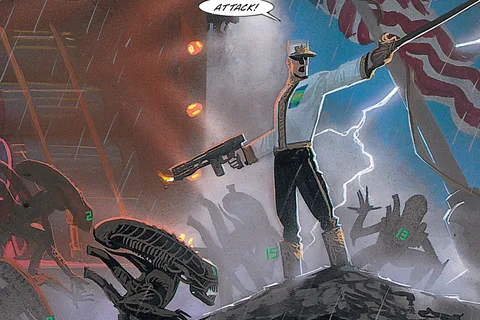
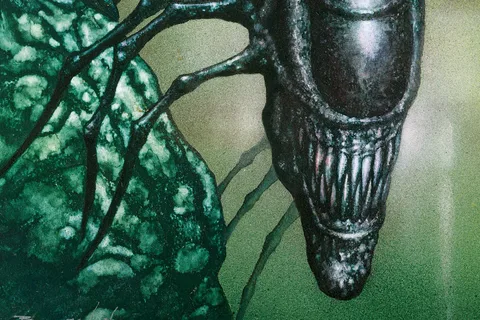
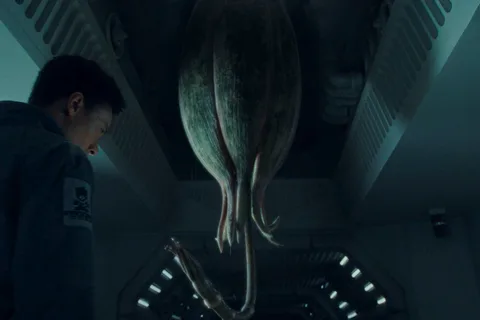
Aliens: Theory Of Alien Propagation is an eight-page short story first published in Dark Horse Presents #24 on November 1, 1988. Written by Mark Verheiden and illustrated by Mark A. Nelson, it accompanied Aliens: Outbreak through a confidential report by Dr. Waidslaw Orona. His account proposed how the Xenomorph reproduced, founded colonies and survived on a hostile homeworld. It also considered what happened when the creatures reached other environments. The report presented biological theories and acknowledged gaps in human knowledge rather than describing every possibility as an established fact.
Plot Summary
Research Premises

Dr. Waidslaw Orona, a civilian adviser to the Colonial Marine Corps, rejected the assumption that alien behavior should conform to human ideas of morality. He argued that people frequently abandoned their own ethical standards when circumstances made them inconvenient. Applying those standards to an unrelated organism therefore offered little reliable guidance. Much of what researchers believed about the Xenomorph remained conjecture. Orona emphasized that its difference from humanity was certain, while complete understanding of its behavior and origins remained beyond the available evidence.
Orona used the creatures' dense external skeletons and adaptability to infer a harsh native environment. Their ability to endure difficult conditions suggested that survival had required substantial physical protection, but the report did not establish an exact place of origin. The encounter on the Rim had provided evidence of organized hives and a reproductive hierarchy. From those observations, Orona developed a proposed account of colony growth. His broader explanation also considered unidentified extraterrestrials carrying biological samples between worlds, without resolving when or how the first transfer occurred.
Queen Reproduction
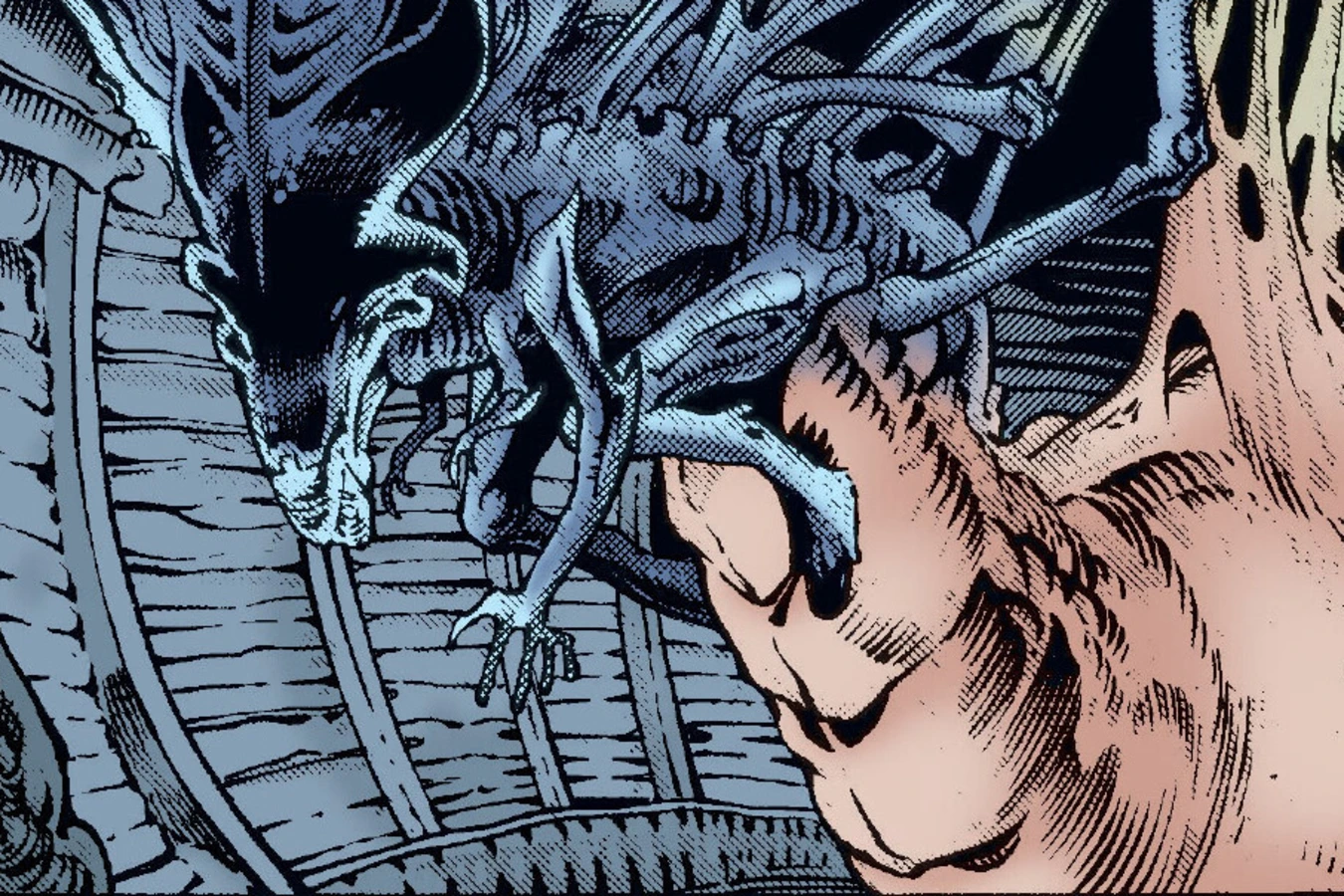
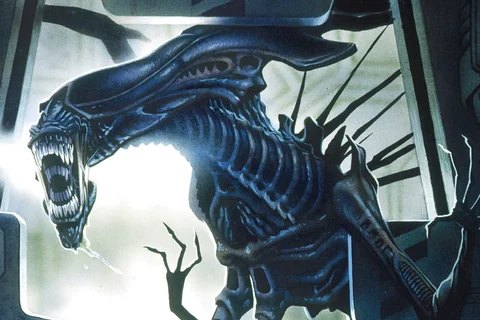
The report placed the Queen at the center of reproduction and suggested that she periodically produced offspring capable of founding additional colonies. Orona proposed that special eggs were removed from her chamber and sheltered elsewhere, protecting the developing generation from the adult Queen's hostility. Drones supplied host organisms for the young. To Orona, this behavior belonged to the species' normal reproductive process, however disturbing researchers found it. He compared its routine biological function with the care that human parents provided to their own children.
Orona described incubation as a comparatively short process, potentially lasting days or even hours. The developing creatures emerged violently from their hosts, after which the young Queens could struggle against one another. Their first independent encounters might therefore involve the killing of another member of their own species. Orona resisted treating that struggle as a simple demonstration of human evolutionary assumptions. He instead allowed that violence might help the new creatures establish their relationship with their surroundings, while leaving their internal experience and the precise significance of the fighting uncertain.
Colony Formation
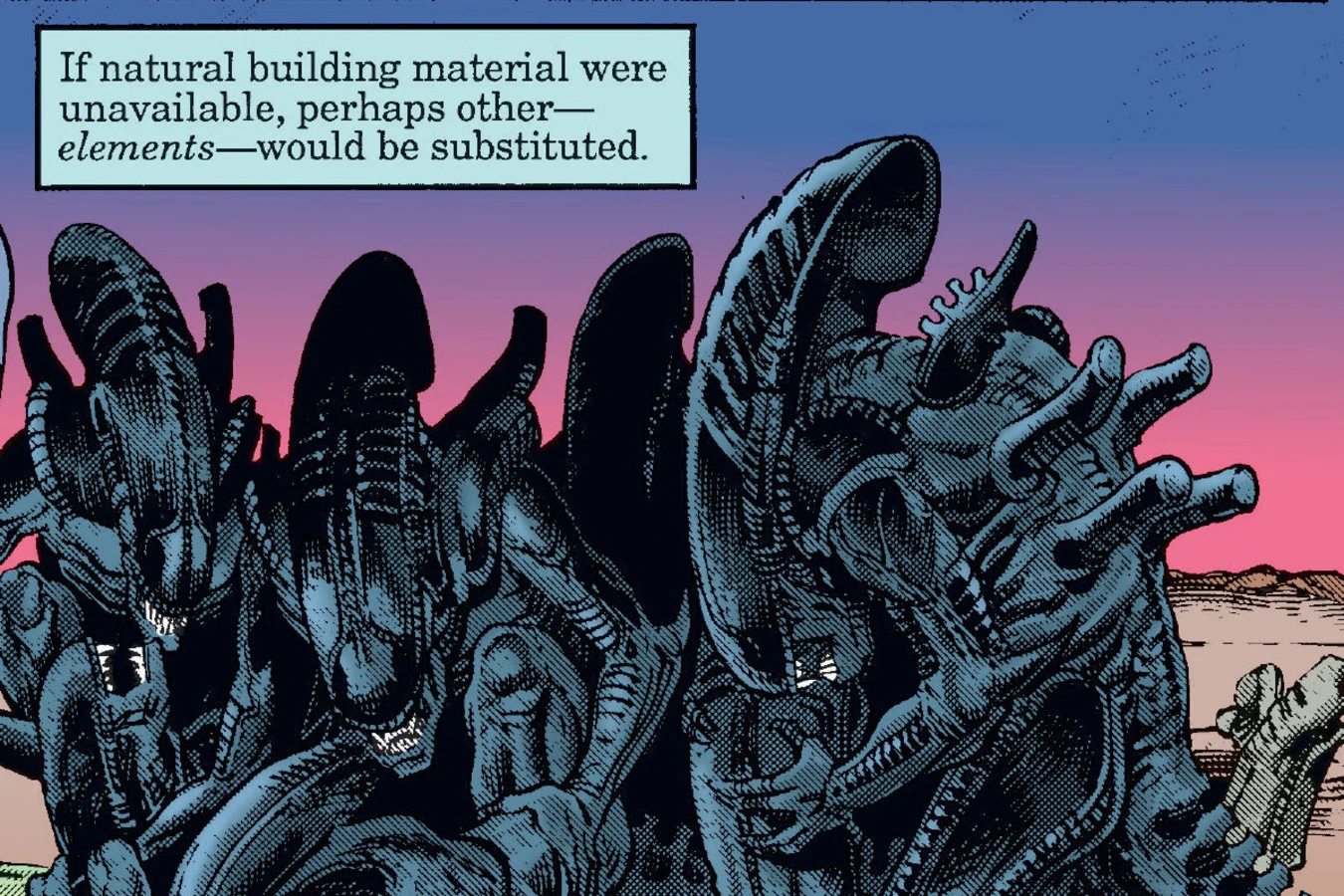
A surviving Queen eventually led a contingent of drones away from the original colony. Their immediate task was the construction of a new hive, with the workers subordinating their activities to the reproductive female and the colony's needs. Where ordinary construction materials were unavailable, Orona proposed that other substances could take their place. Those alternatives included the bodies of other organisms. The resulting structure was therefore not dependent upon a particular manufactured material or a supply system comparable to those required by a human settlement.
Orona described the nesting drive as sufficiently powerful to occupy the colony's early activity. He treated the use of biological remains as a practical response rather than an act requiring a human moral explanation. An individual Xenomorph did not need to understand life and death as people did for the collective to benefit from its remains. The survival and expansion of the hive took precedence over the continued existence of each worker. Dead bodies could reinforce the structure, returning material to the colony rather than remaining separate from its development.
Homeworld Ecology
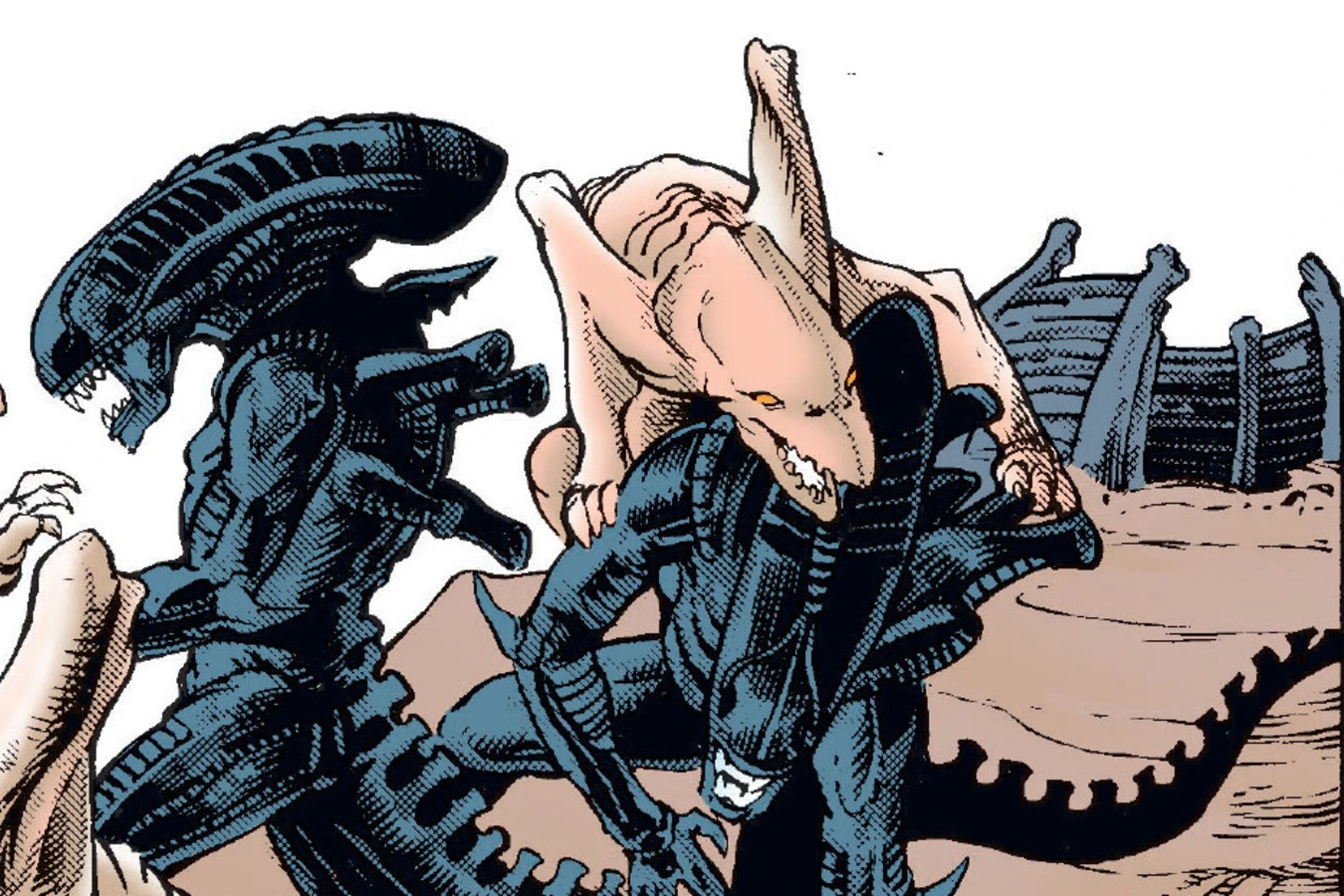
The proposed homeworld contained a wider ecosystem rather than an unlimited population of Xenomorphs. Orona argued that natural enemies would have developed alongside the creatures and helped regulate their numbers. Unidentified predators attacked adults and fed upon them, demonstrating the kind of ecological pressure his explanation required. Some Xenomorphs survived those encounters and others died. Within that account, the species' strength and reproductive efficiency did not remove it from the ordinary relationships between predators, prey and the environment that sustained them.
Orona connected those deaths with the continued maintenance of the hive. Bodies returned to the colony could become part of its walls, while the surviving population continued its reproductive cycle. The apparent balance depended upon conditions on the Xenomorph homeworld, including the presence of organisms capable of killing the adults. Removing the creatures from that environment would also remove those restrictions. His explanation therefore distinguished survival in a native ecosystem from the much more destructive infestations reported after the organisms reached planets where their natural enemies were absent.
Offworld Infestations
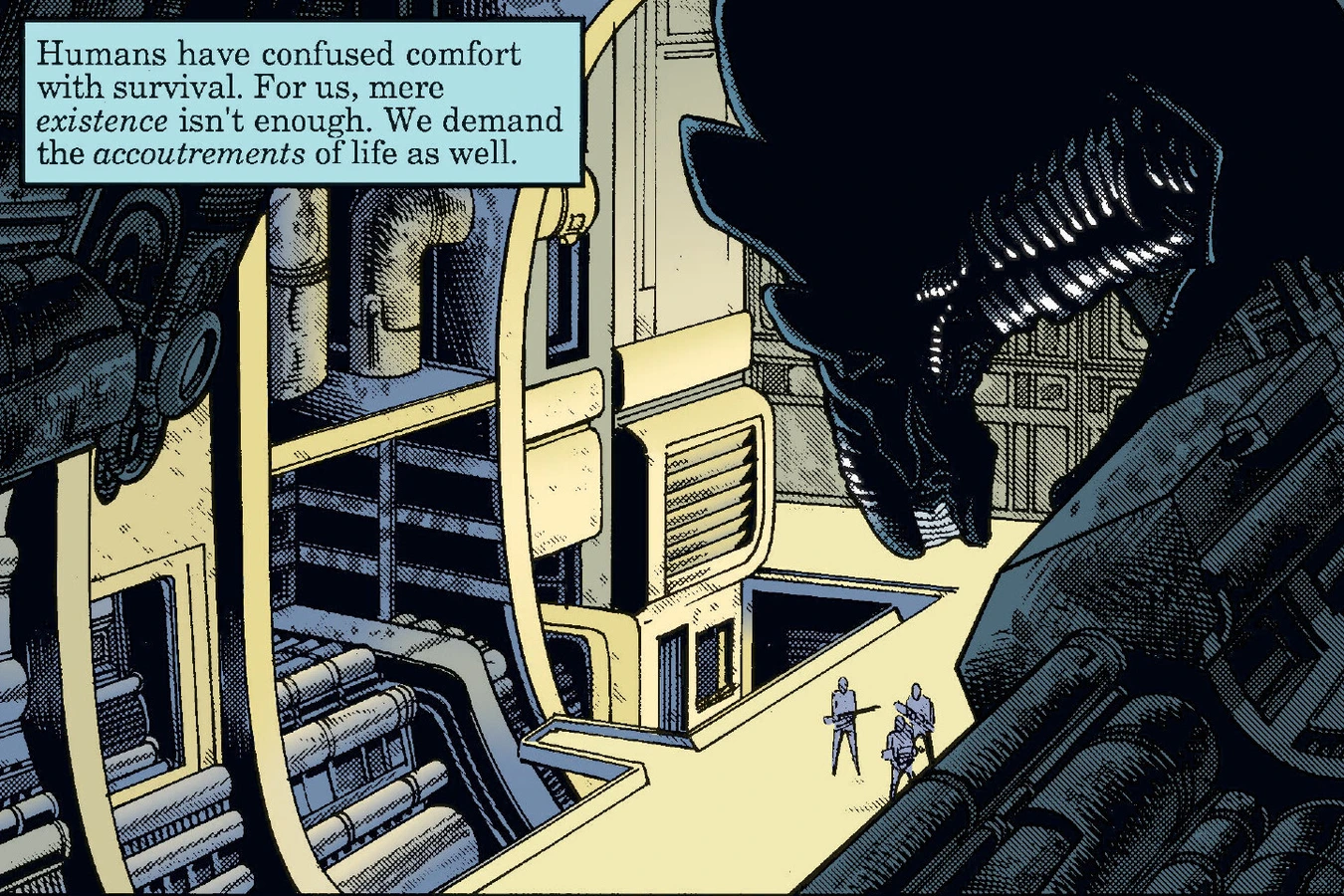
Orona did not identify a confirmed date or mechanism for the creatures' original departure from their homeworld. The transfer might have occurred millions of years earlier or within a much shorter period. What mattered to his account was the result: Xenomorphs had reached other worlds without the predators that normally restricted them. New environments supplied hosts and prey instead of the same established checks on their numbers. Once transported beyond their native habitat, the organisms could reproduce among populations that had not developed alongside them or adapted to the threat they presented.
Orona concluded that technological development did not by itself protect a population from infestation. Human settlements depended upon equipment and living conditions intended to provide more than immediate survival. The Xenomorphs had no corresponding need for comfort, and their behavior remained directed toward feeding, reproduction and continued existence. Industrial surroundings could therefore become another environment to exploit rather than an obstacle that prevented their spread. The report ended with that contrast between the requirements of human civilization and an organism able to continue its life cycle within the spaces people had built for themselves.
Editions
Dark Horse Presents #24 originally published the short in black and white, alongside unrelated anthology features. The story was subsequently collected in Aliens Omnibus Volume 1, where Chris Chalenor's colors accompanied Nelson's artwork. It also appeared in Marvel's Aliens: The Original Years Omnibus Volume 1. The report format remained the basis of these collected presentations, with Orona's account accompanying illustrations of the proposed reproductive cycle and encounters with other organisms. The short expanded the biological background associated with the original Aliens series rather than continuing a separate adventure for its human survivors.
Differences Between Editions
The original black-and-white presentation differed visually from the colored collected versions. In the compared omnibus editions, the most evident wording change concerned the location of the encounter used as evidence for Queen hierarchy. The 2007 Aliens Omnibus Volume 1 called it the Rim, while Aliens: The Original Years used Acheron. Both retained Waidslaw Orona as the author of the report and followed the same sequence of reproductive theories, hive construction, ecological limits and offworld spread. These changes did not turn his proposed explanation into a confirmed account of the species' origin.
Behind The Scenes
Mark Verheiden and Mark A. Nelson developed the short alongside the original Aliens comic, using Orona's research rather than a conventional mission narrative. Nelson also supplied the cover artwork for Dark Horse Presents #24, which Dark Horse described as a new sidebar to its ongoing series. The colored omnibus credits identified Chris Chalenor as the colorist and John Bolton as the artist of the separate title illustration. That illustration was distinct from Nelson's anthology cover, and the report itself remained an eight-page work within the larger collection.
Conclusion
Aliens: Theory Of Alien Propagation presented a proposed biological framework for the creatures encountered in the original comic series. Dr. Waidslaw Orona connected the production of new Queens with hive construction, the reuse of dead organisms and the influence of native predators. He then considered why the same creatures became especially destructive after reaching other worlds. The report acknowledged that much of this explanation remained speculative, leaving the exact origin and original transportation of the organisms unresolved while describing the consequences of their reproduction beyond the proposed homeworld.
External Sources
Tag Categories: Alien Comics