
D. Plumbicare, also known as the Orchid or Species 37, was a carnivorous extraterrestrial organism encountered in Alien: Earth. It was carried aboard the USCSS Maginot as part of a collection of five alien species brought toward Earth. Its hanging pod resembled a plant, but its leaves concealed a mouth and a retractable sensing organ. After the ship crashed in Prodigy City, the specimen passed into captivity on Neverland, where its apparent stillness concealed the strength to seize and engulf a human being.
Biology And History
Collection Aboard The Maginot
The Weyland-Yutani Corporation collected D. Plumbicare during the Maginot's sixty-five-year expedition and kept it among the living specimens in the ship's zoo. Science officer Chibuzo worked with Bronski to catalogue the cargo and observe its behavior. The collection also included the eye-like parasite T. Ocellus and Facehuggers, but the Orchid's plant-like appearance set it apart from those animals. Its crew-given classification connected it to terrestrial carnivorous plants without establishing that it belonged to an Earth lineage. The organism remained an alien specimen whose capabilities required further testing aboard the Maginot.
The Maginot Specimen Record
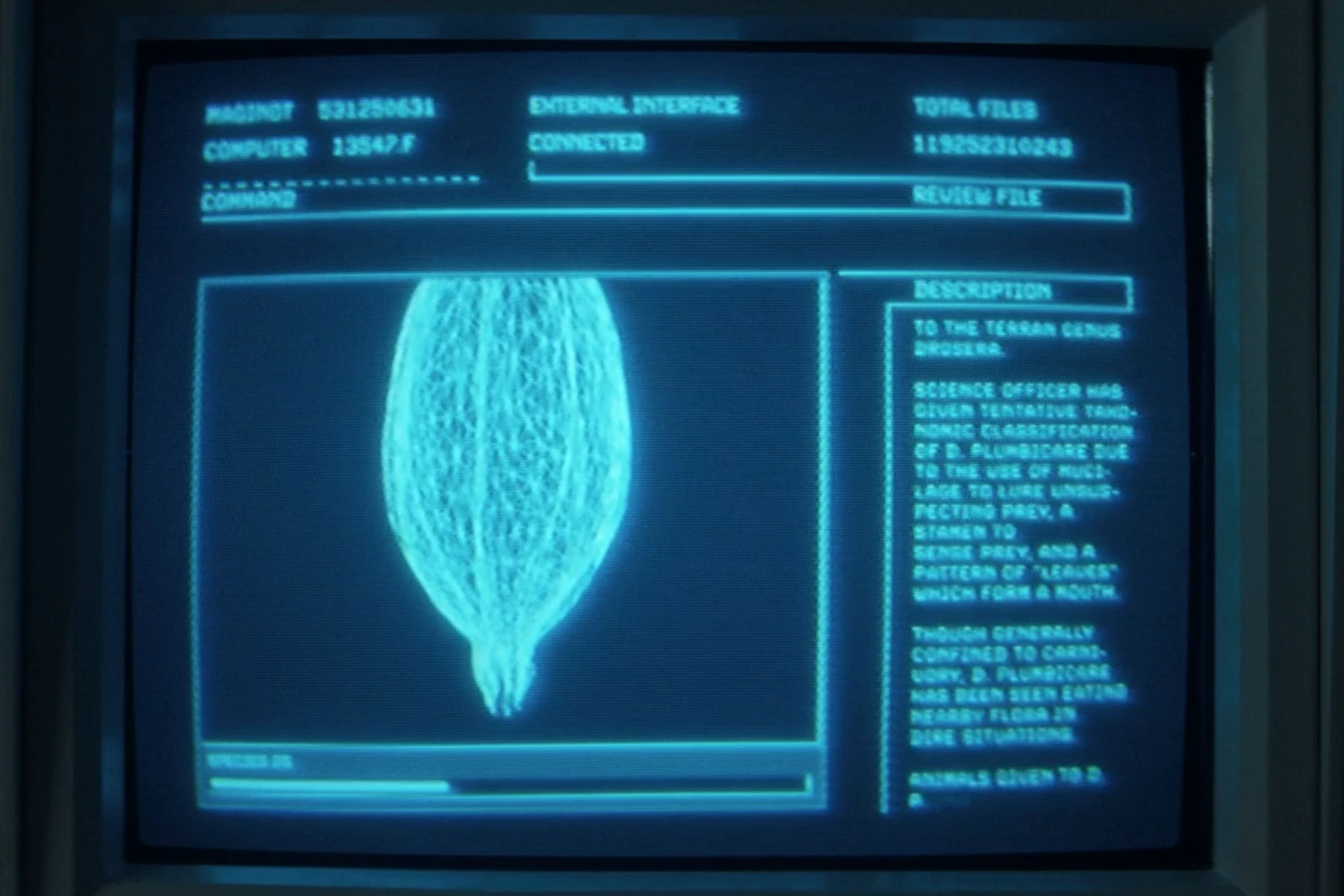
The Maginot specimen record compared the organism to the terrestrial genus Drosera and described its classification as tentative. The comparison rested on three observed features: mucilage used to lure prey, a stamen that sensed its surroundings, and a pattern of leaves that formed a mouth. The record also distinguished between the ways captive animals died and the digestive process that followed. Those observations gave D. Plumbicare a more detailed biological profile than its closed exterior suggested. They described a predator that gathered information and trapped food rather than a harmless specimen of unfamiliar vegetation.
Pod, Leaves And Sensing Stamen
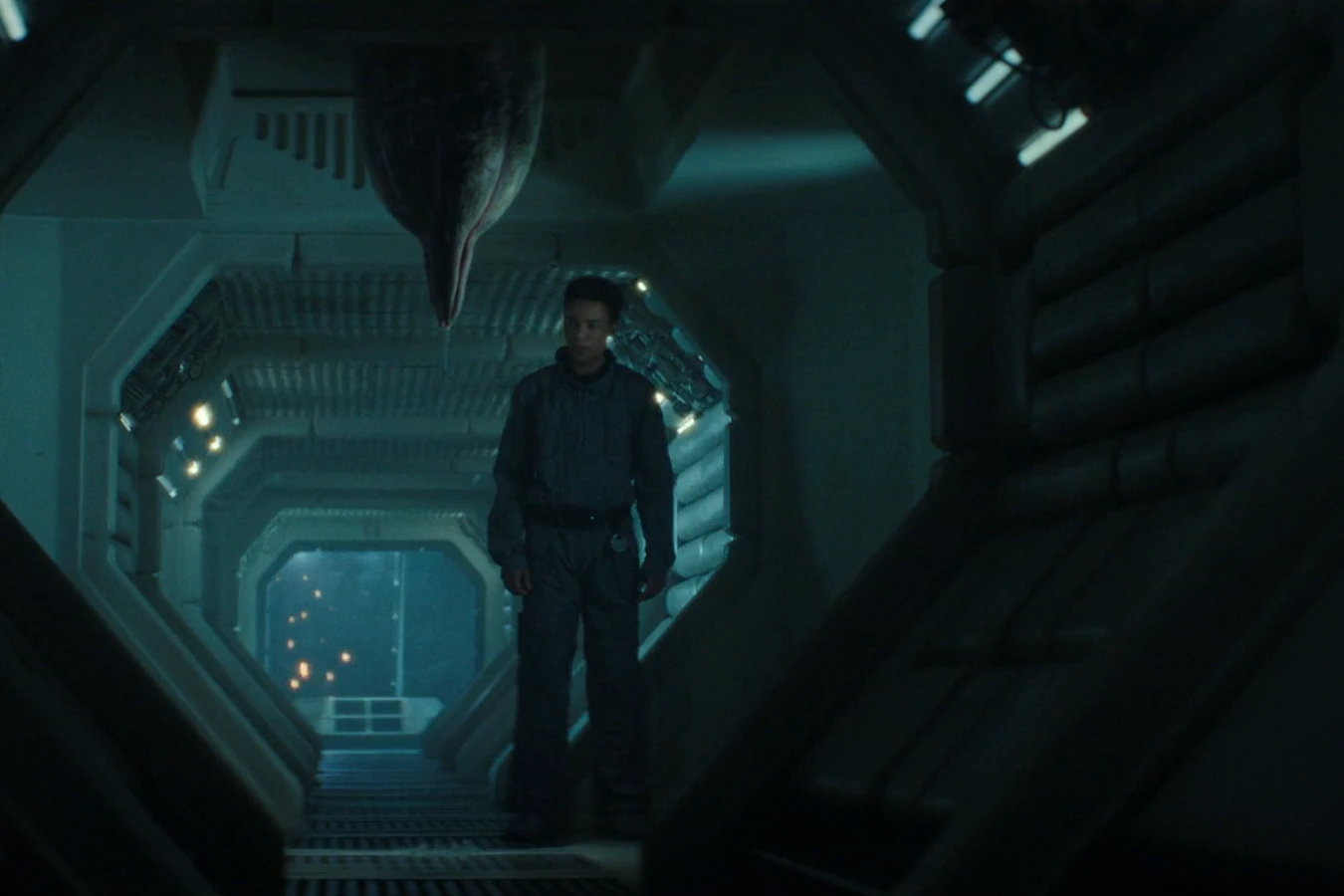
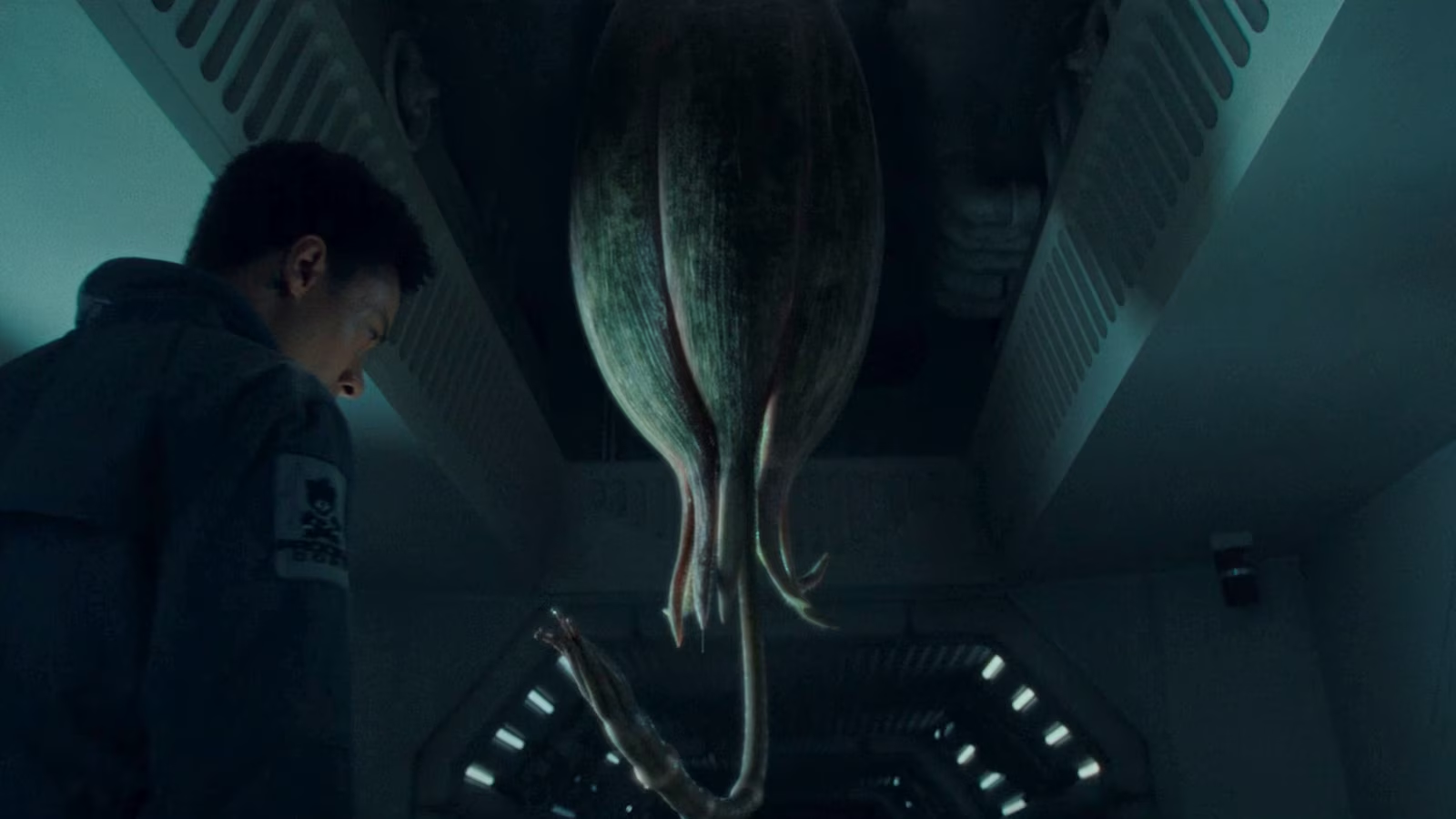
D. Plumbicare had a large, folded pod suspended above the ground, with a narrow extension ending in a retractable stamen. When that extension opened, its surrounding leaves peeled back and exposed the organ used to investigate nearby bodies. The stamen also measured atmospheric pressure and temperature, giving the organism a means of responding to changes beyond direct contact with prey. The distinction between plant and animal remained uncertain to its observers. Kirsh recognized the flora-like exterior but allowed that the creature might instead be fauna when he examined it inside the wreck of the Maginot.
Feeding And Defensive Closure
According to the Maginot observations, animals fed to the Orchid died through asphyxiation, dissolution, or exhaustion, with enzymatic breakdown beginning after death. Although primarily carnivorous, it also consumed nearby flora under difficult conditions. Its leaves served as more than a feeding trap. When threatened, or when environmental conditions became inhospitable, D. Plumbicare closed completely and resisted attempts to force it open. The crew applied many kilograms of pressure without reopening the pod. That resistance left the strength of its enclosing leaves unresolved, and the record called for further testing after the ship returned to Earth.
Encounter With Tootles
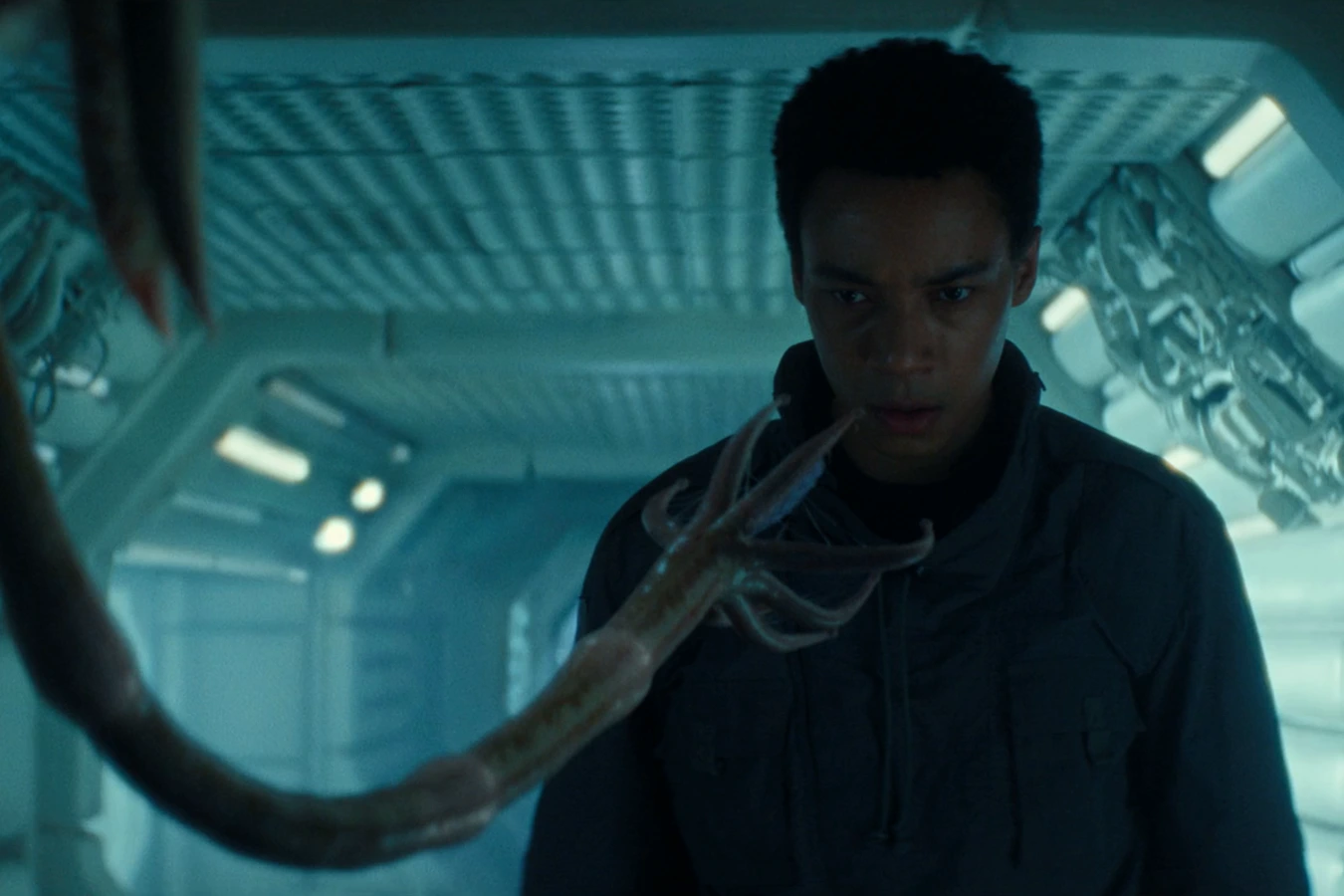
After the crash, the Orchid hung in a corridor outside the specimen laboratory, where Kirsh and the hybrids encountered it during their search of the wreck. Kirsh remained nearby with Tootles while the others went into the laboratory to find equipment for capturing it. The creature's position above the passage allowed it to remain largely motionless while the newcomers studied its shape. Tootles stayed close enough for the hanging organism to investigate him, and its lower leaves opened around the sensing extension. The exchange gave Kirsh an opportunity to observe the specimen outside its original enclosure.
When Kirsh was called into the laboratory, Tootles was left alone with the creature. Its filament extended toward him and moved around his face, but the encounter did not end in the violent engulfing attack it later used against a human soldier. Tootles had a synthetic body containing a child's consciousness, rather than ordinary human flesh. The difference separated this close inspection from the Orchid's later feeding behavior without proving that hybrids were immune to it. Curly called him back to the others, ending the encounter while D. Plumbicare remained suspended in the corridor.
Captivity On Neverland
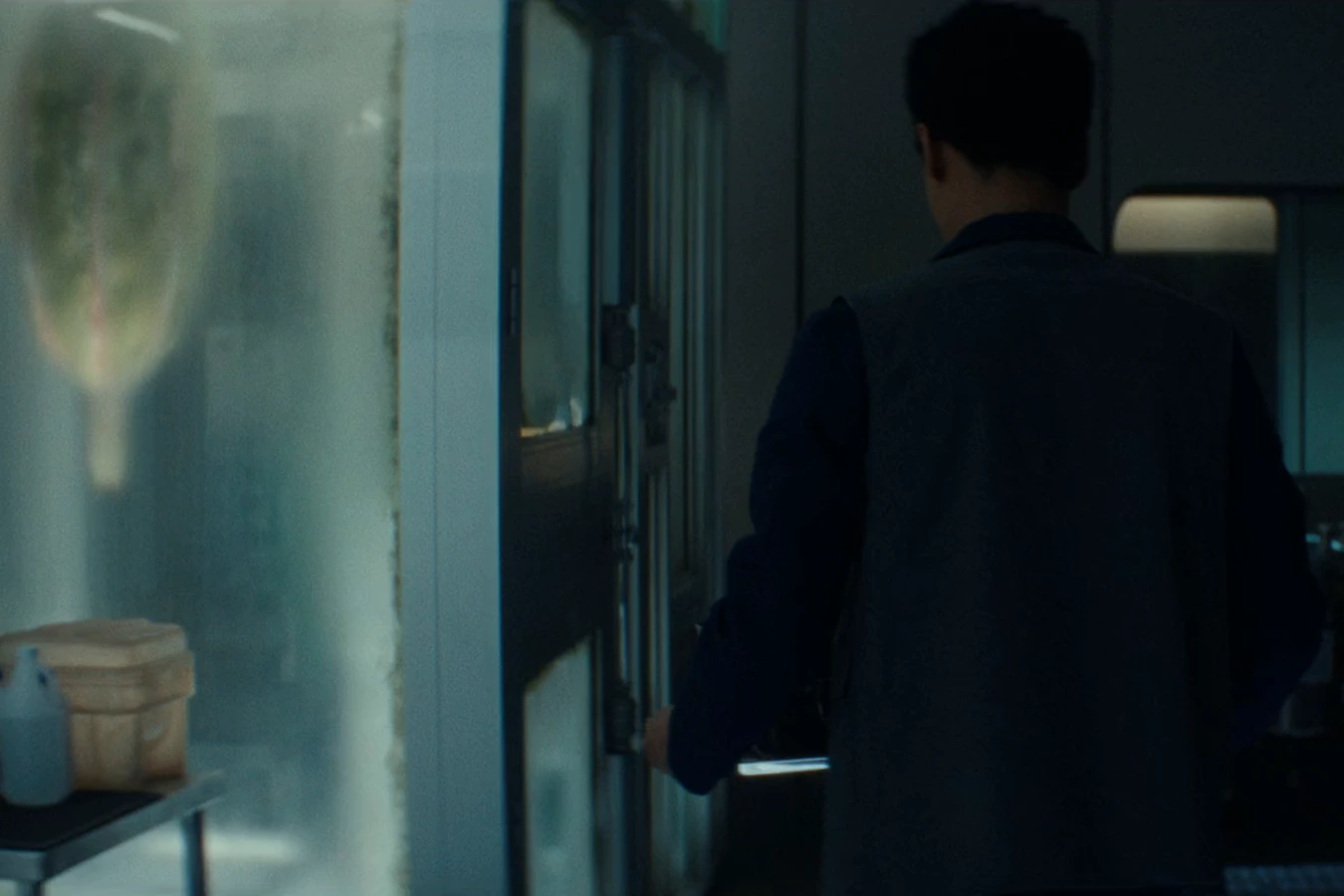
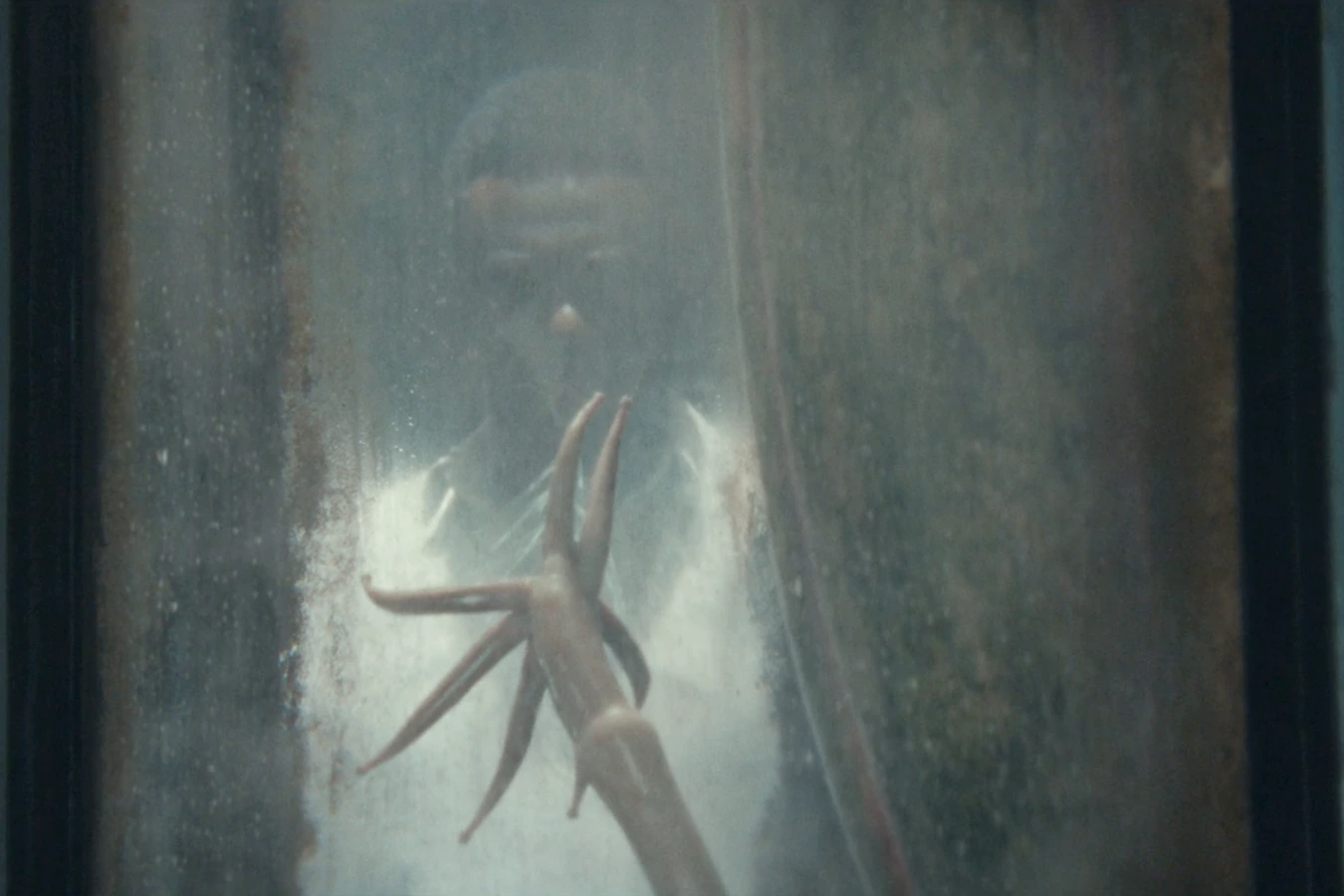
The recovered alien cargo was taken to Neverland, the island facility controlled by the Prodigy Corporation. Its chief executive, Boy Kavalier, wanted the organisms brought under his company's control rather than returned to Weyland-Yutani. Kirsh continued studying them with help from the hybrids, and the Orchid was displayed inside a tall transparent enclosure. The tank kept the suspended specimen visible while separating its reaching appendages from the surrounding laboratory. That separation was important because the apparent inactivity of D. Plumbicare did not reveal the speed or force with which its folded body could open around prey.
Escape From The Enclosure
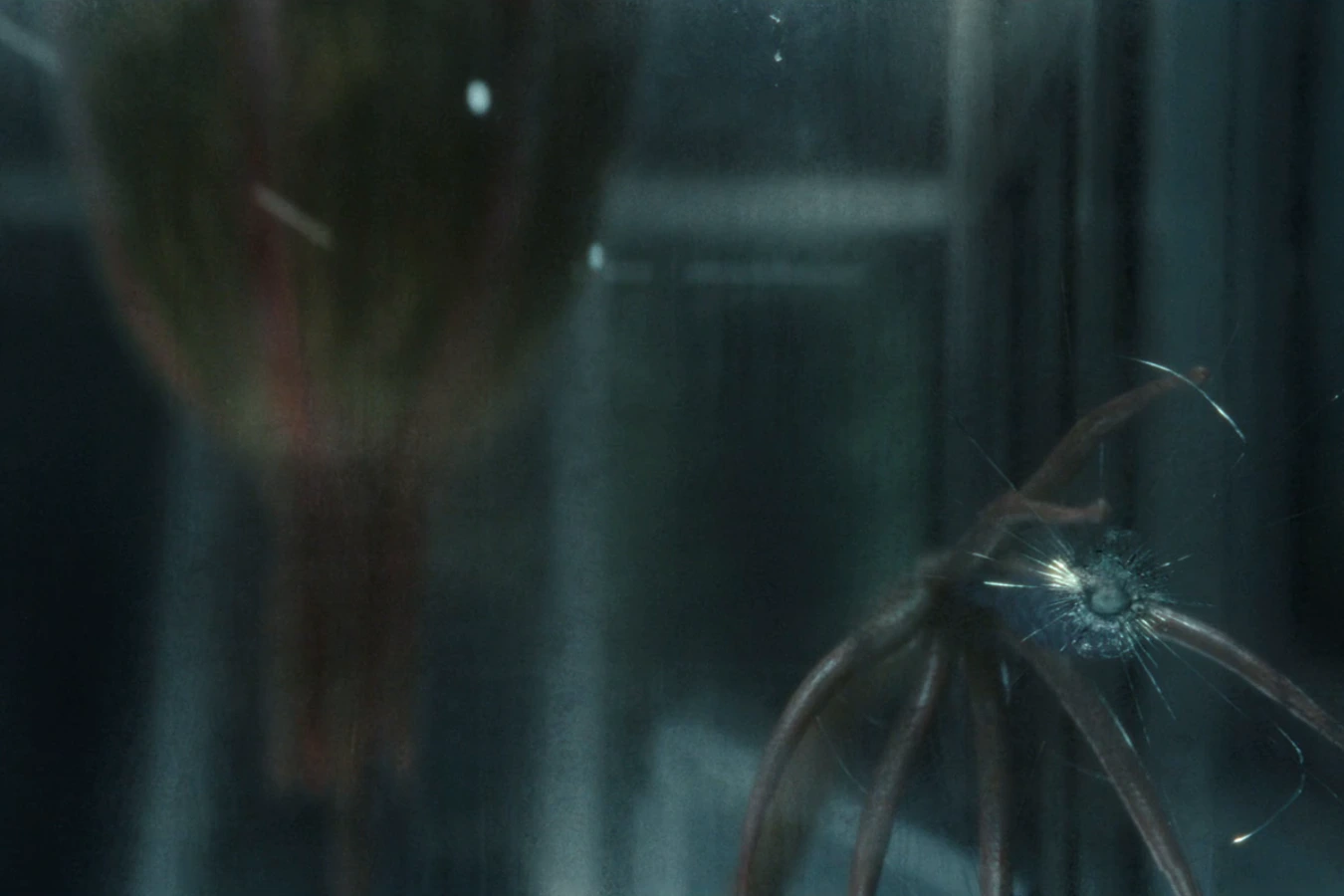
The laboratory's containment failed during the confrontation between Kirsh and the infiltrating Morrow. Kirsh fired at the intruder and missed, striking the enclosure that held the Orchid. Their fight damaged the barrier that had separated the organism from the room, and D. Plumbicare was subsequently loose above the laboratory floor. The breach did not require the creature to overcome an intact research installation by itself. Human and synthetic conflict had compromised its confinement first. Once free, it returned to the elevated hunting position that Kirsh had already observed aboard the crashed ship, with its folded body hanging over anyone who entered below.
The Death Of Siberian
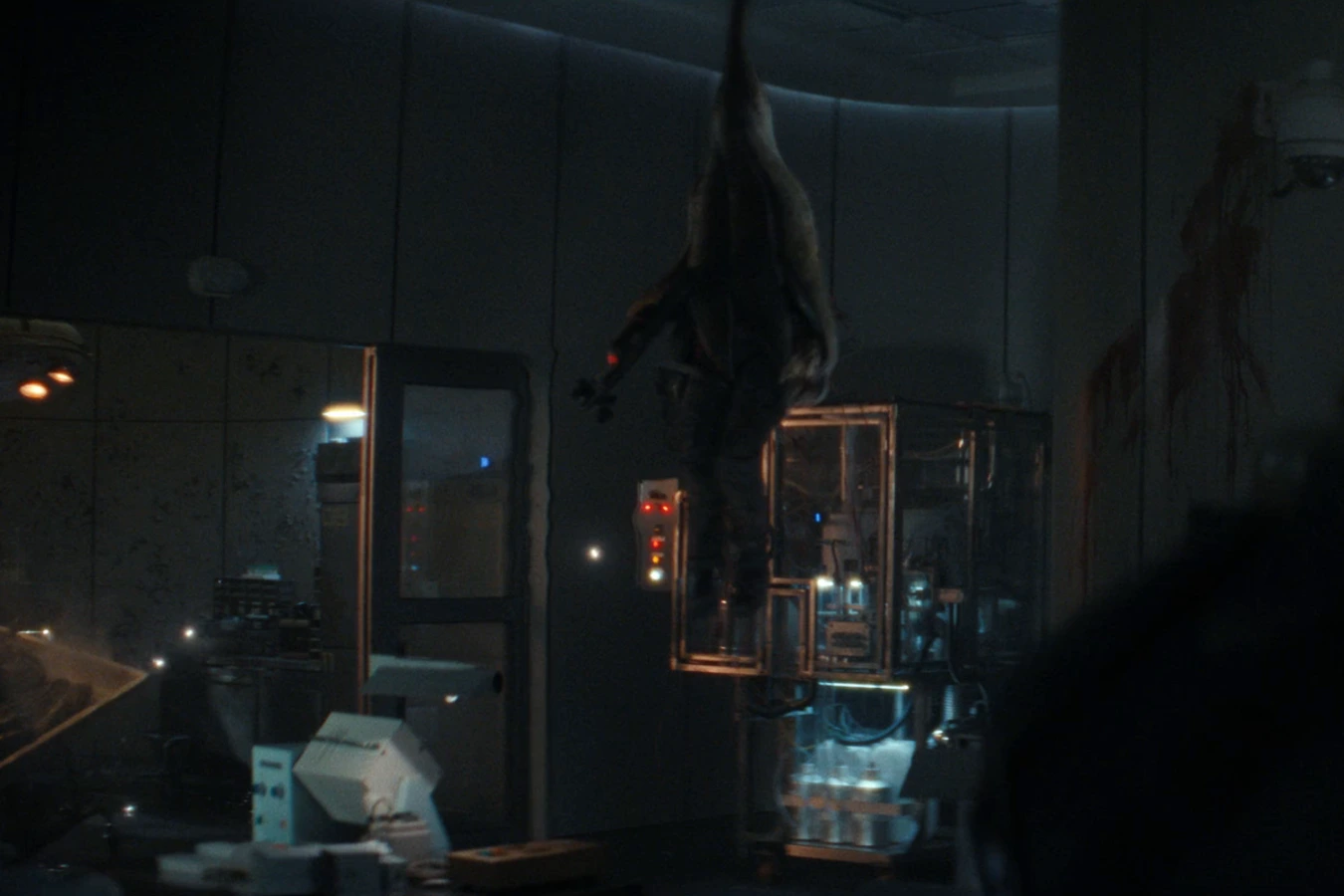
The Rashidi-led security search brought Siberian into the laboratory while the escaped predator waited overhead. The Orchid dropped toward her, opened its enclosing leaves and seized her before she could escape. Siberian fired her rifle as the creature hauled her upward, but the gunfire did not stop the attack. Its body closed around her and left her trapped inside the fleshy pod above the floor. The encounter ended in her death, demonstrating the danger that the Maginot feeding records had described long before the specimen reached Prodigy's island laboratory.
The attack differed sharply from the restrained investigation of Tootles in the wreck. Against Siberian, the Orchid used its height, reach and closing leaves as a single trap, taking the soldier from the floor rather than pursuing her through the room. The transparent enclosure had hidden none of its appearance, but confinement had prevented that combination of movements from reaching the people outside. Once the barrier was gone, D. Plumbicare needed no elaborate hunt to find a victim. Its documented strength and feeding behavior became an immediate threat to anyone who passed beneath its new perch.
Behind The Scenes
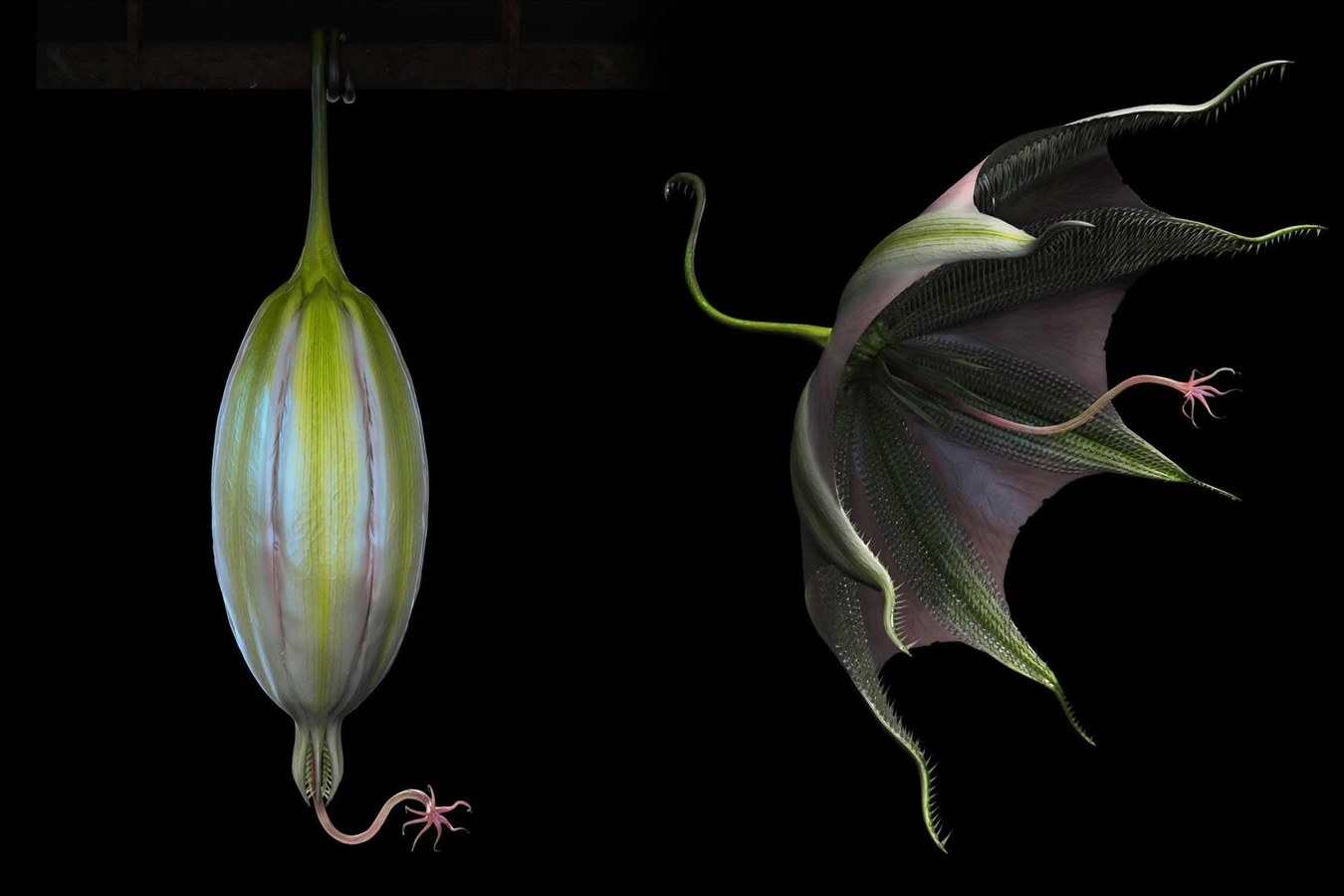
Weta Workshop developed the Orchid as a cross between a Venus flytrap and an umbrella, moving away from an earlier airborne concept. Noah Hawley wanted a plant-like creature that would be underestimated until its enclosing leaves opened to reveal rows of teeth. The workshop produced several practical versions for filming, including a closed static prop with a flexible stem and a poseable, detachable lure. Another version incorporated a membrane and an internal blood rig. Visual effects completed the creature's movements, combining the physical props with the more elaborate actions required for its feeding behavior.
Appearances
- Alien: Earth - "Mr. October" (2025)
- Alien: Earth - "Metamorphosis" (2025)
- Alien: Earth - "Observation" (2025)
- Alien: Earth - "In Space, No One..." (2025)
- Alien: Earth - "The Fly" (2025)
- Alien: Earth - "The Real Monsters" (2025)
Tag Categories: Alien Earth Lore | Alien Lore