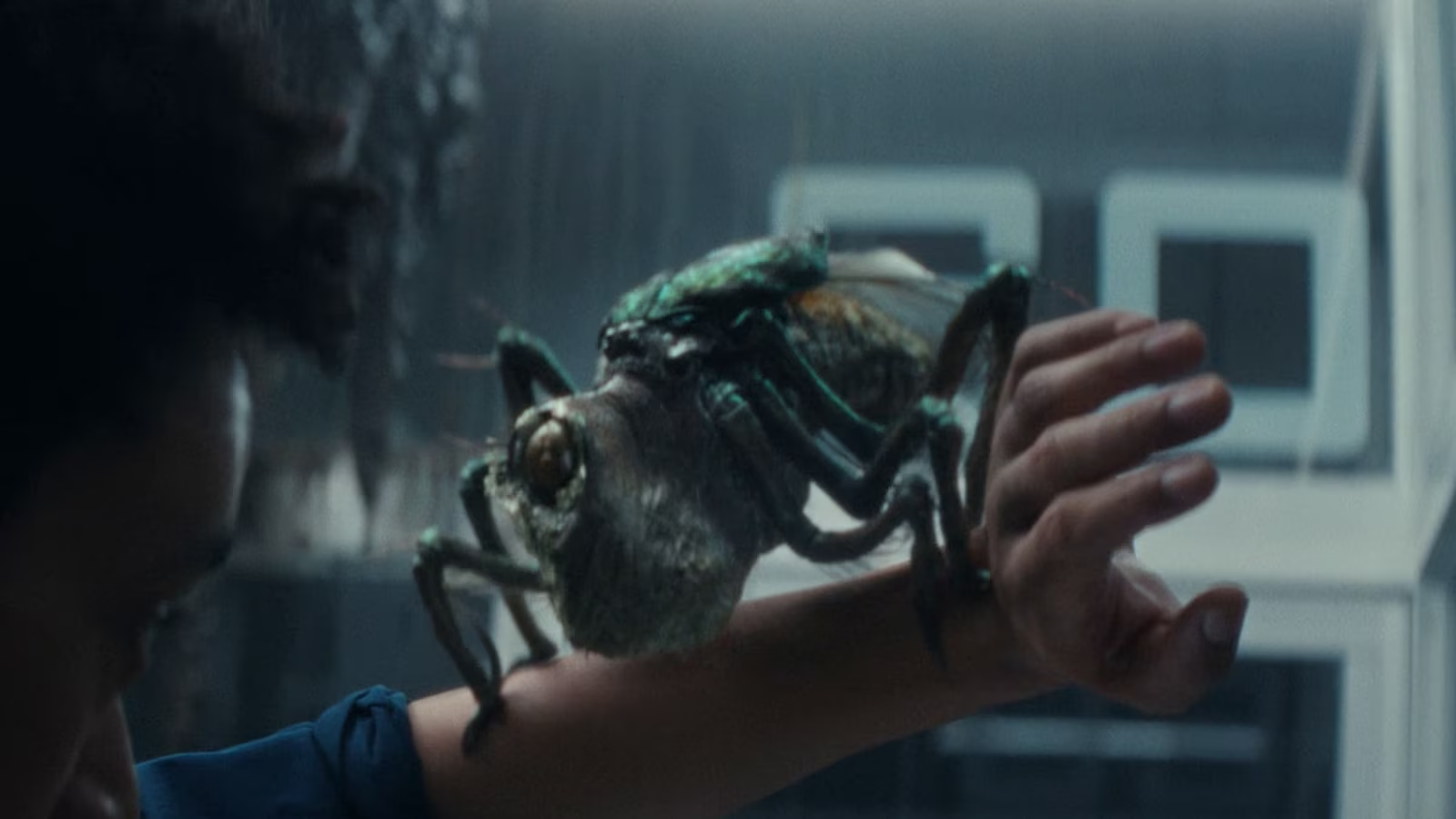

The Fly was an insect-like extraterrestrial organism encountered in Alien: Earth. It was among the five alien species transported aboard the USCSS Maginot and recovered by the Prodigy Corporation after the ship crashed. Unlike predators that depended on flesh or blood, it fed primarily on minerals and used corrosive secretions to dissolve material outside its body. That diet made synthetic bodies vulnerable to attack. On Neverland, captive specimens killed the hybrid Tootles, escaped their enclosure, and damaged laboratory equipment before security personnel stunned and recaptured them.
Biology And History
Collection And Captivity
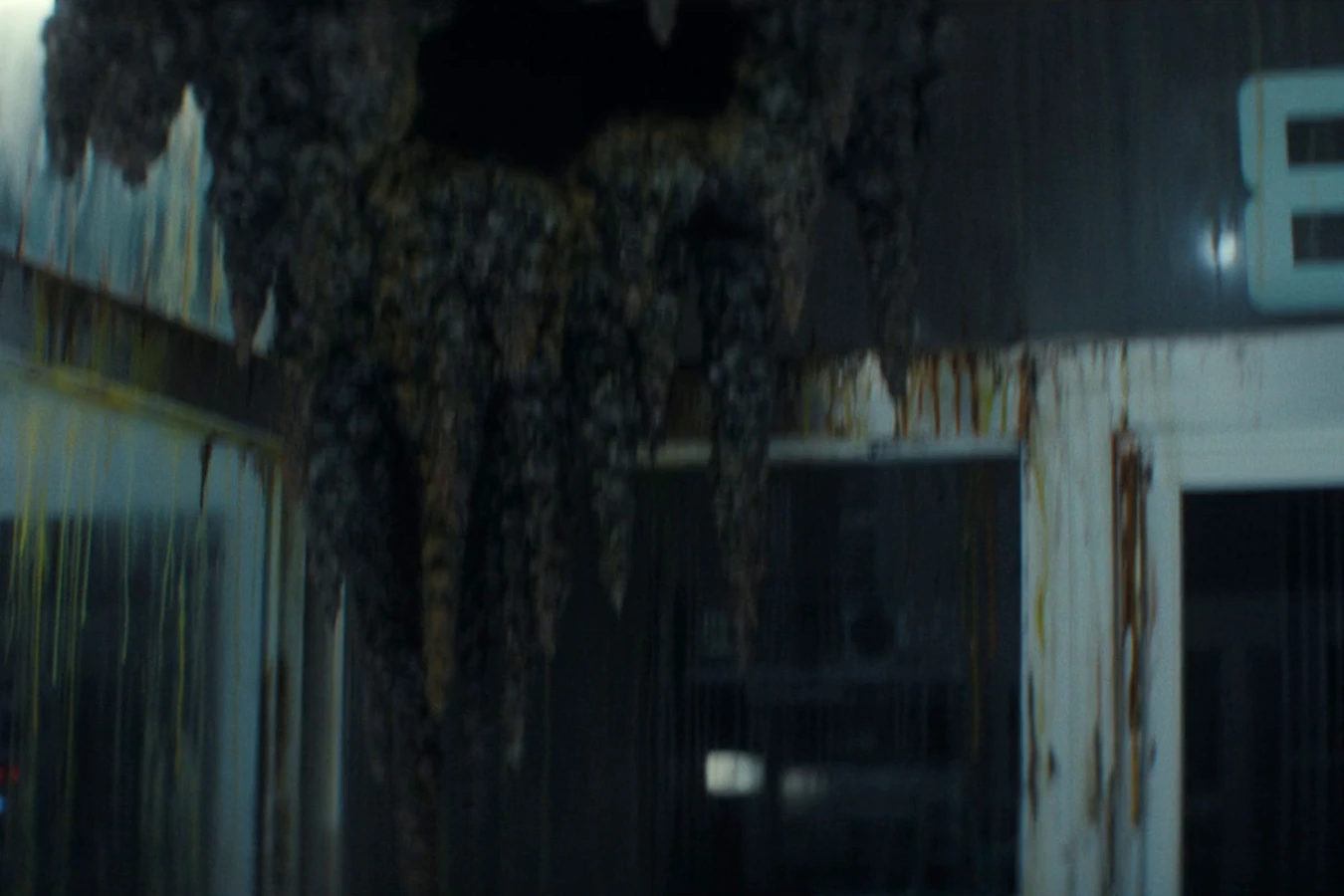
The Weyland-Yutani research expedition collected living examples of the species during the Maginot's sixty-five-year voyage. The Flies remained confined when the ship crashed in Prodigy City, allowing the rival company to recover them with the other specimens. Boy Kavalier ordered the captured organisms transferred to his island research facility rather than returned to their original owners. Their subsequent confinement placed them within the same laboratory as creatures with very different feeding habits. The move brought an organism capable of consuming manufactured materials into direct contact with Neverland's synthetic personnel and security systems.
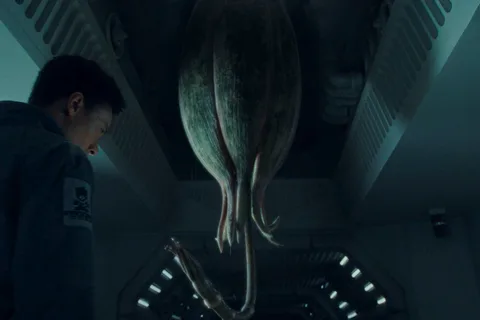
Kirsh studied the recovered cargo with assistance from the Lost Boys hybrids, including Tootles and Curly. The Fly enclosure contained a suspended nesting structure, with access controlled through the surrounding laboratory's doors and feeding equipment. Tootles was assigned to feed the specimens while Kirsh was away from the island. His instructions emphasized following the established procedure rather than improvising around it. The arrangement nevertheless left him alone beside organisms whose defensive and feeding behavior he could not safely predict, including the Flies concealed within their hanging nest.
Physical Characteristics
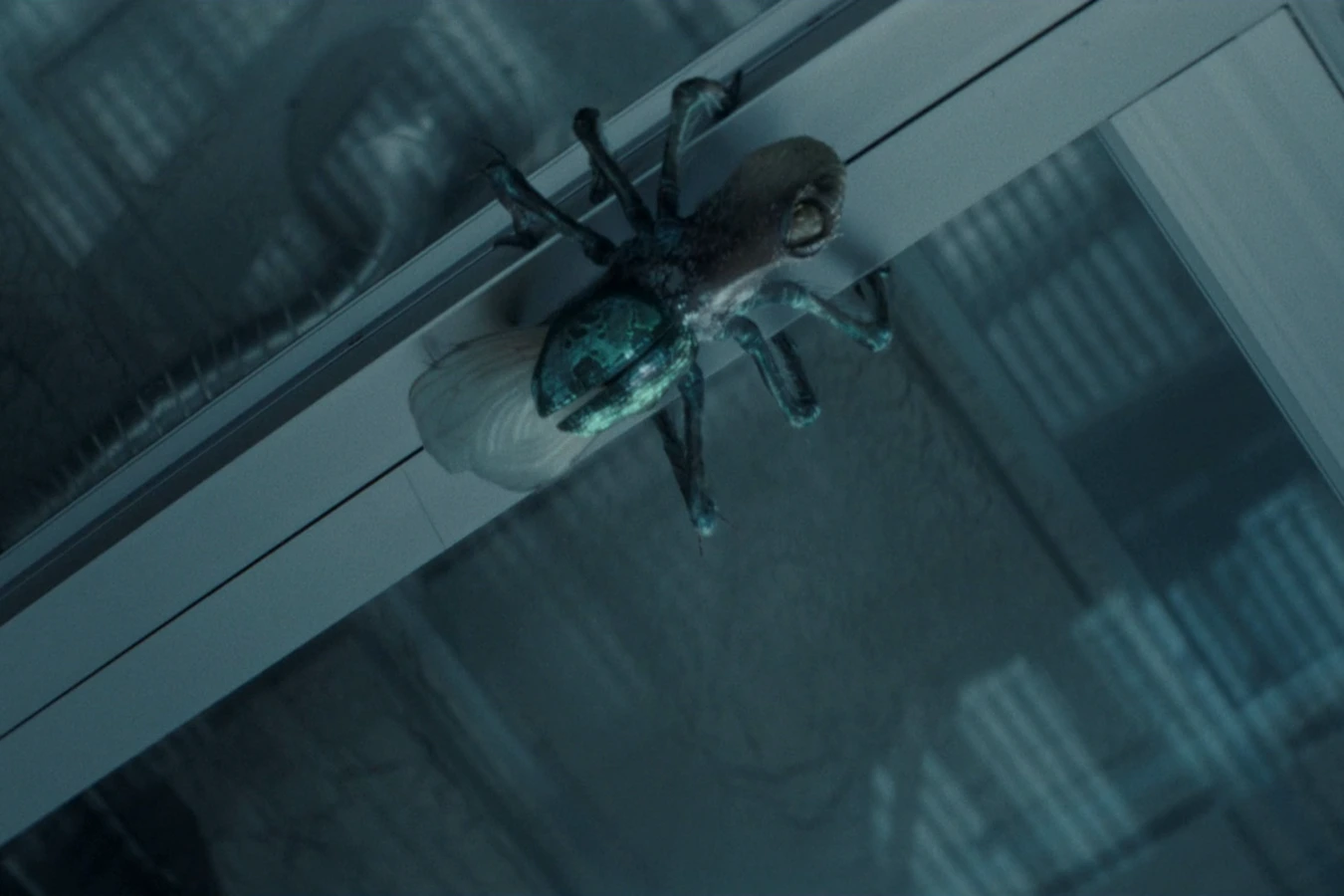
The Fly had a hard external body, six jointed legs, and wings that allowed it to move through the enclosure and laboratory. Its resemblance to a terrestrial insect did not establish that it belonged to an Earth species. The name described its general appearance rather than a confirmed scientific classification, and no species number was established for it. A prominent feeding appendage projected from the head, while the legs allowed it to grip a surface or a potential food source. Its ability to fly also let an escaped specimen reach elevated equipment beyond the floor of Neverland's laboratory.
Corrosive Feeding
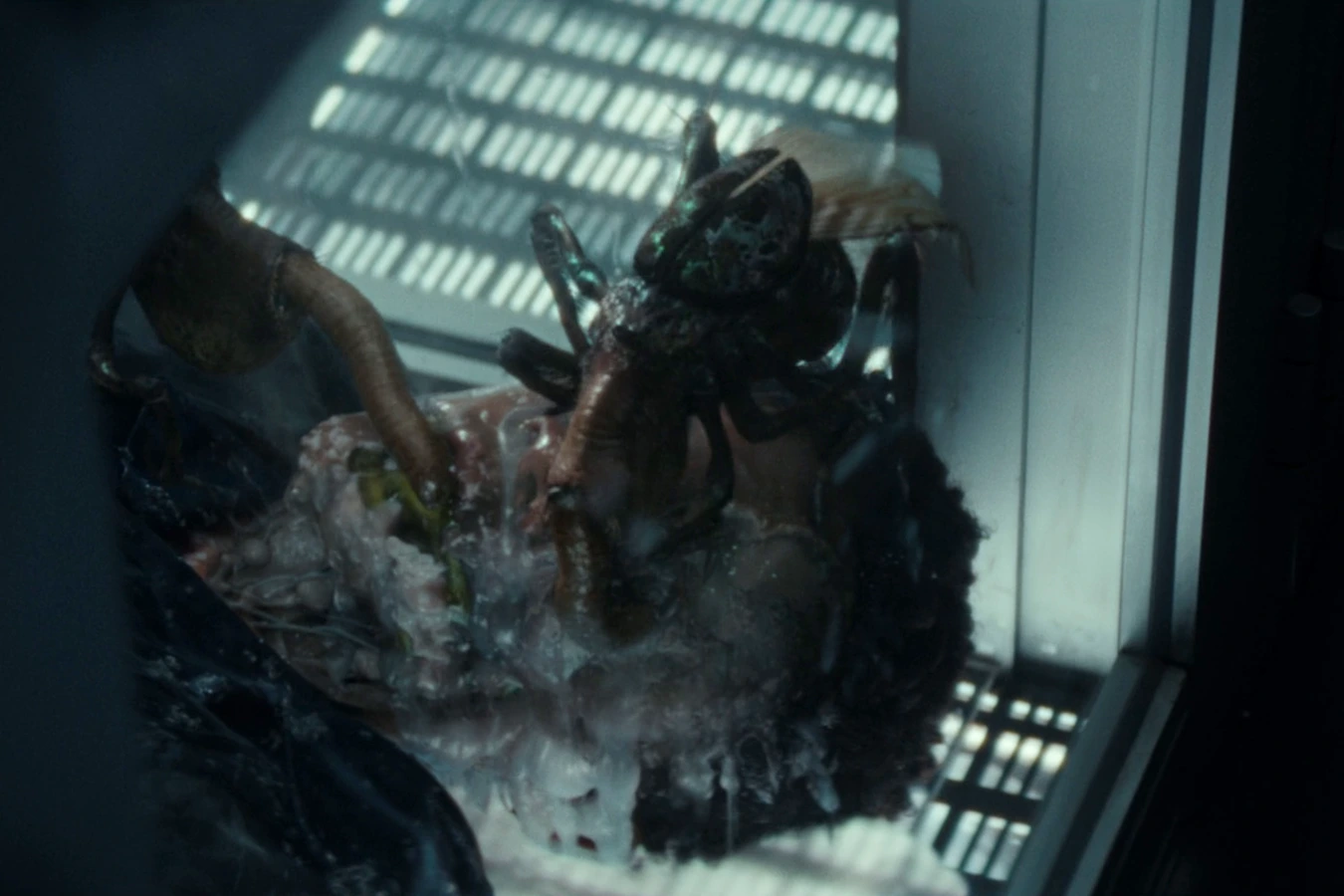
The Fly digested food outside its body before drawing the dissolved material through its proboscis. It released a corrosive fluid from the head's nozzle-like feeding apparatus, breaking down substances that it could not swallow intact. Metals, alloys, and other mineral materials formed part of its diet, including the manufactured components of synthetic bodies. The secretion could therefore damage a machine or a laboratory fitting without the creature needing to bite through the entire structure. At Neverland, the same process that allowed feeding also disabled equipment designed to keep the organisms under control.
Kirsh connected the mineral-based diet to the possibility that organic material had been scarce on the species' original world. That explanation was a hypothesis rather than a confirmed account of the planet's environment. What could be observed directly was the damage to Tootles and the feeding that followed. The specimens treated his artificial body as food despite the human consciousness associated with it. Their behavior distinguished them from the collection's flesh-eating predators, because the materials used to construct the Lost Boys provided no protection against an organism adapted to dissolve and consume inorganic substances.
Attack On Tootles
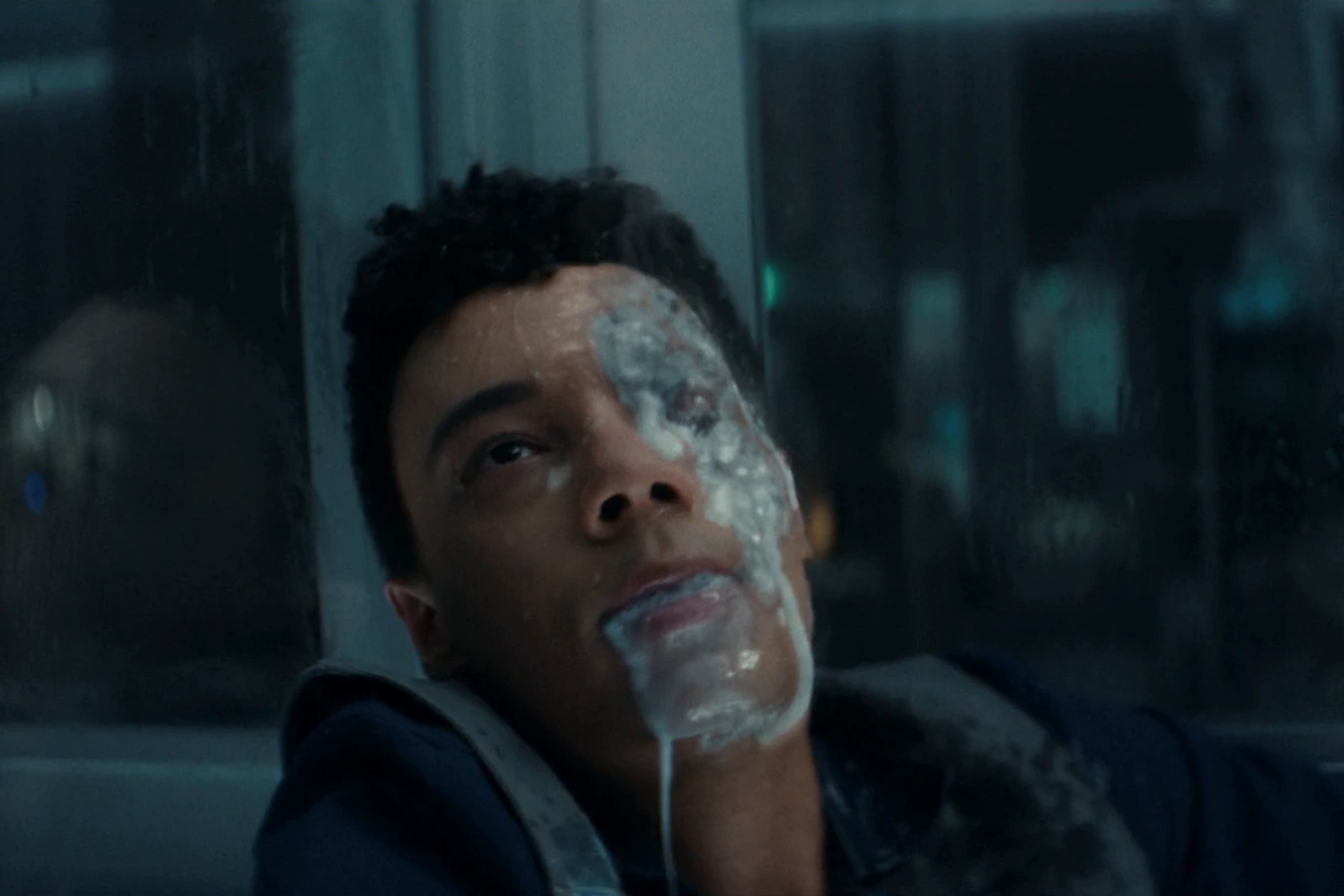
Tootles, who had adopted the name Isaac, reached the Fly habitat while completing his feeding duties. When the normal access mechanism failed, he opened the enclosure manually and entered to place the food inside. The neighboring sheep, controlled by T. Ocellus, startled him and the door closed, trapping him within reach of the nest. A Fly emerged, approached him, and landed on his arm. Its position brought its feeding apparatus close to his exposed face, while the locked enclosure prevented a quick withdrawal into the surrounding Neverland laboratory.
The Fly sprayed Tootles with corrosive fluid, severely damaging one side of his face and disabling him. He collapsed onto the enclosure floor, where the specimens continued feeding on the exposed material. His synthetic construction did not prevent the attack from killing him. After the body was discovered, Kirsh examined the surveillance record and rejected the explanation that the death had been an ordinary accident. Boy Kavalier also recognized that the sheep's intervention had benefited another organism, raising questions about the intelligence and intentions of the parasite controlling it rather than establishing similar planning by the Flies themselves.
Escape And Security Damage
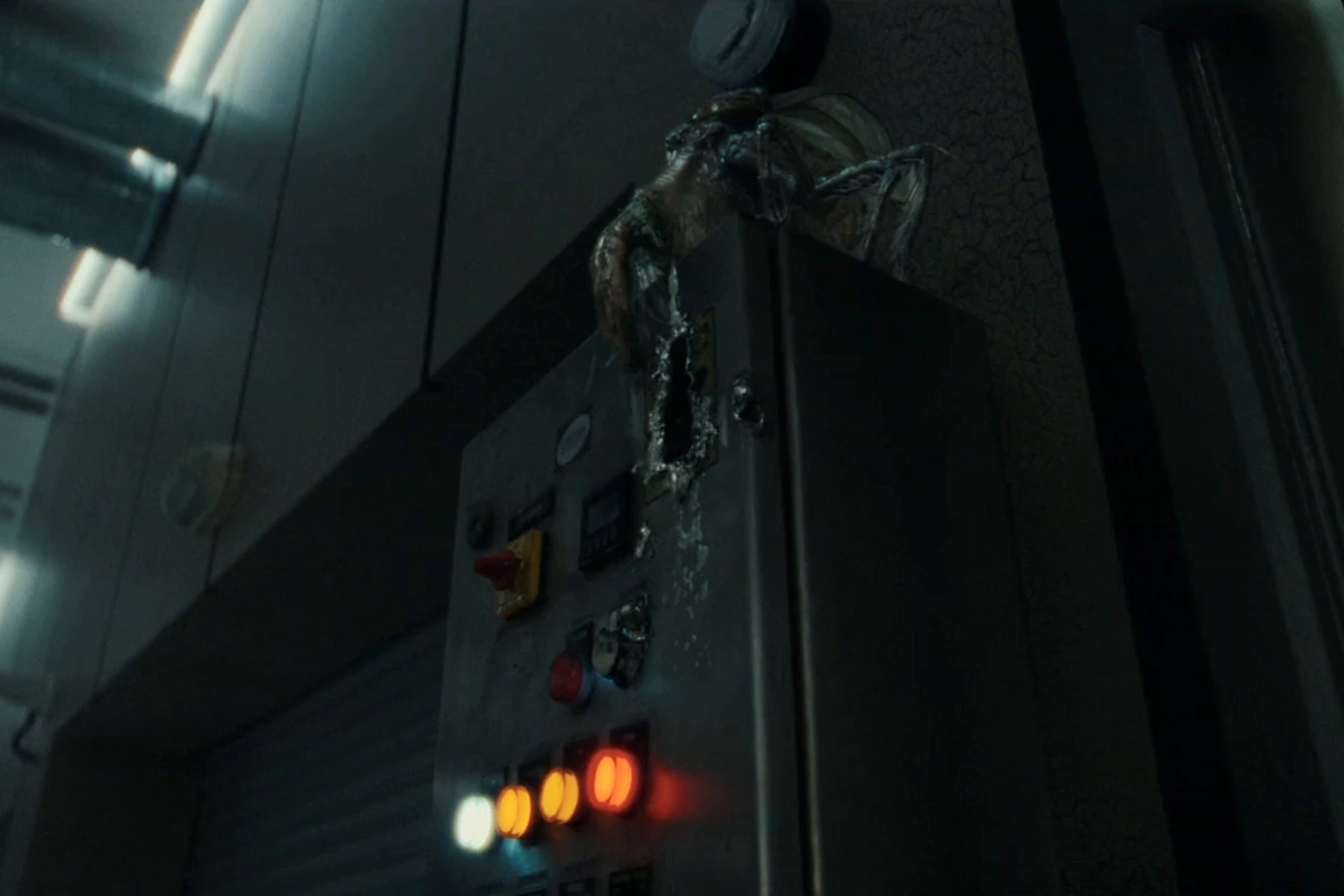
The Flies escaped the habitat after the attack and moved into the surrounding laboratory. One reached a security panel and damaged it with its corrosive feeding apparatus, interfering with the facility's equipment. Flight gave the organism access to a wall-mounted fitting rather than limiting it to surfaces beside its original enclosure. The breach also left the surviving personnel facing an active threat outside the area prepared for handling the specimens. Kirsh remained near the laboratory while security personnel approached with equipment intended to immobilize and recover the escaped organisms without leaving them loose among the remaining cargo.
Recapture
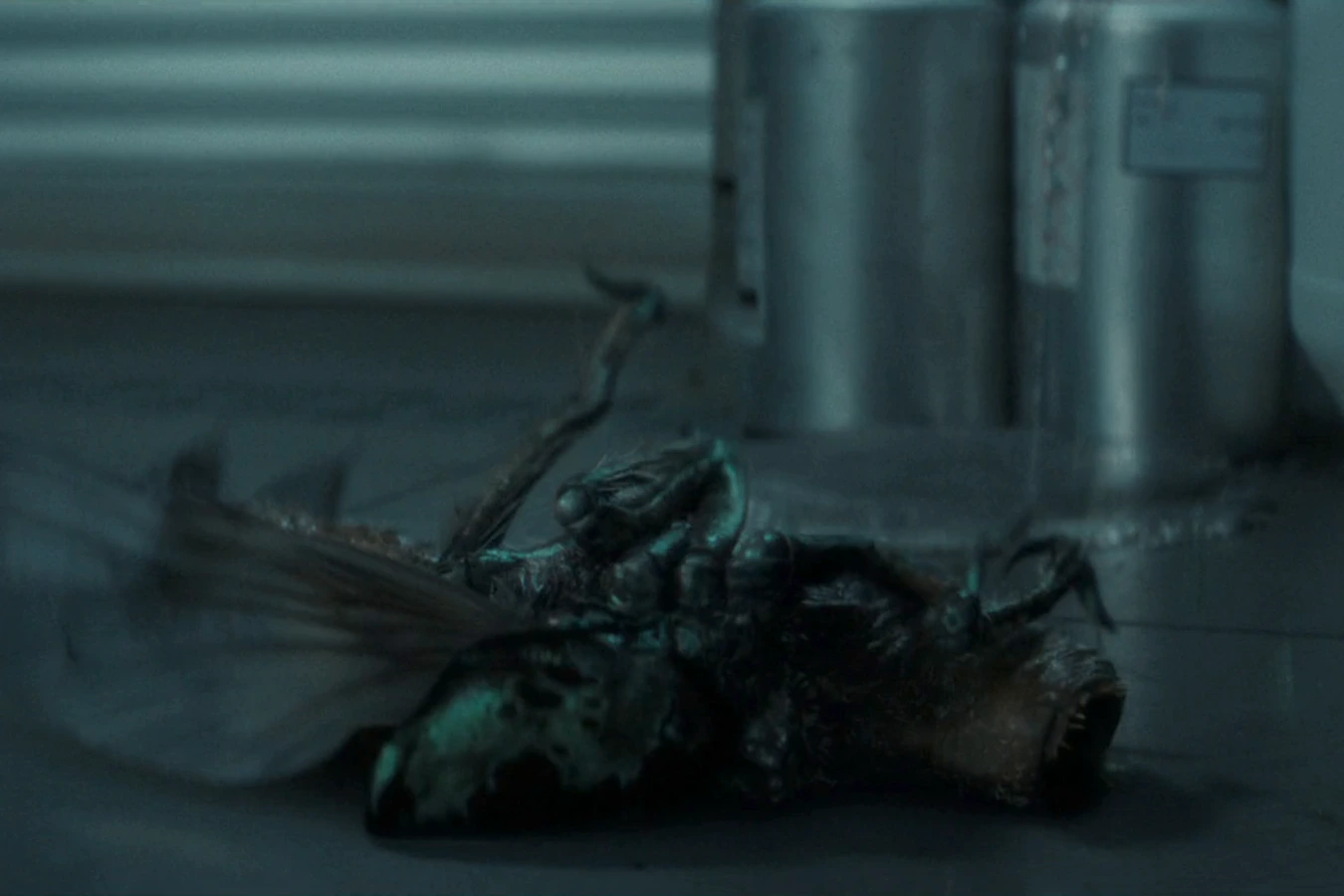
Prodigy's soldiers used electrical weapons to stun the escaped Flies and secure the laboratory. The operation immobilized the specimens rather than confirming that the species had been exterminated. Kirsh ordered the hybrid's body collected and the Fly returned to its cage, restoring containment after the feeding incident. Boy Kavalier subsequently prohibited the children from working in the laboratory, with an exception for Wendy under supervision. Attempts to recover Tootles through a reboot or restoration had not produced a working solution, leaving his death as the immediate consequence of the enclosure failure and the species' ability to consume synthetic material.
Behind The Scenes
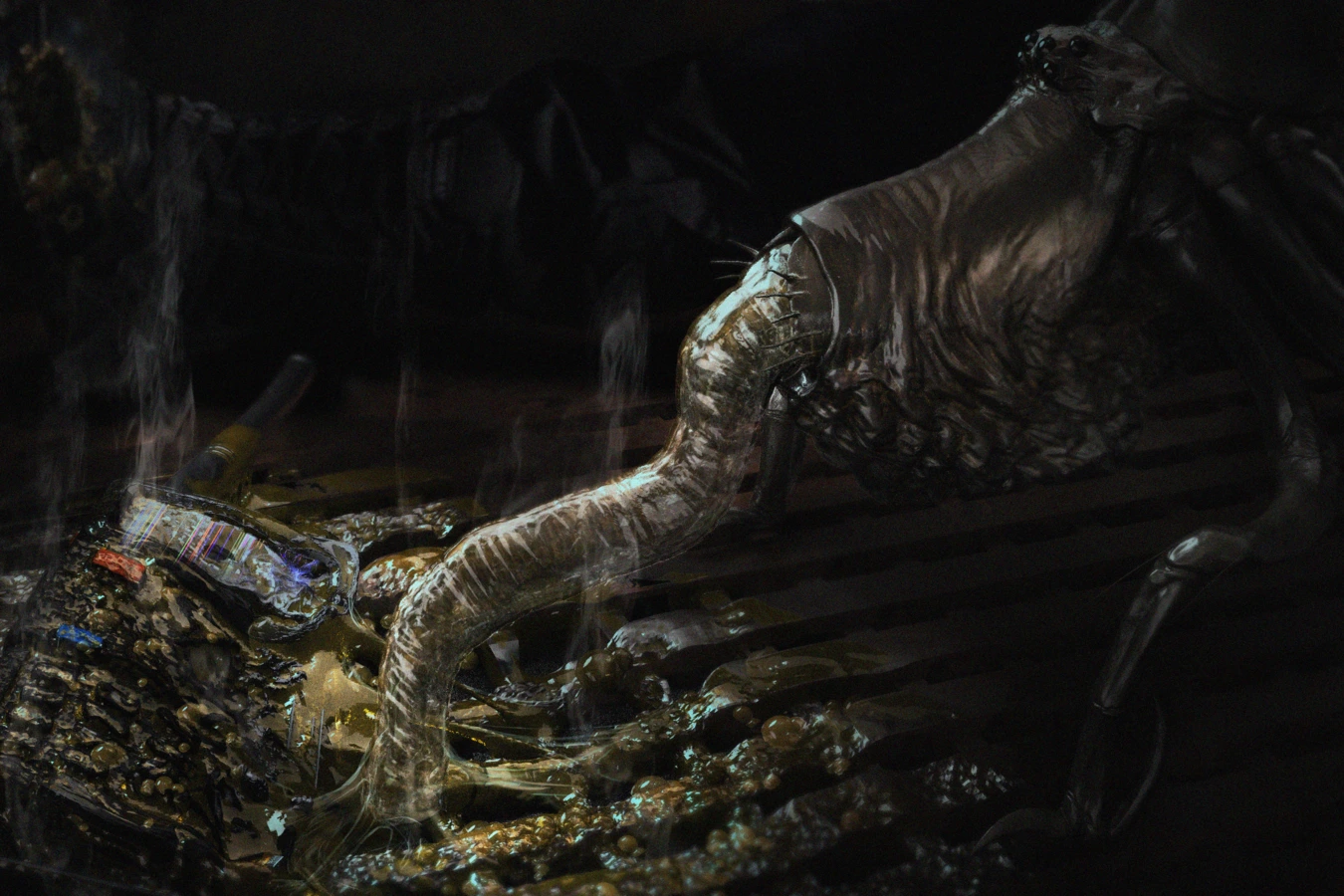
Concept artist Tahiwi Trenor-Hunt contributed to the Fly design for Weta Workshop, under art director Vaughan Flanagan. The creature's development included a nozzle for spraying digestive fluid and a telescoping proboscis for drawing in dissolved food. Its nest was designed as a hanging, stalactite-like structure rather than an ordinary terrestrial insect hive. Second Skin Studio built practical creatures and nesting material for the production, developing different nest arrangements and sizes. The physical work included attention to translucent wings, fine leg hairs, and the weight of the creatures so performers could interact with objects representing them on the set.
Second Skin Studio's work included static versions of the Fly and a moving version intended for a glass container. The final flying creature and its animated movement were completed by Untold Studios, combining the practical development with digital effects. The Fly's attack was featured in the sixth episode, which shared the creature's name, while the following episode showed the laboratory recovery and explained its feeding method. Those sequences established the threat to synthetic characters through external digestion, rather than treating the insect as a smaller version of the Xenomorph or giving it an unconfirmed numbered designation.
Conclusion
The Fly presented a different danger from the other organisms recovered from the Maginot. Its mineral diet and external digestion made synthetic bodies and laboratory equipment potential food, turning an apparently manageable captive insect into a lethal threat. The death of Tootles demonstrated that danger before the escaped specimens were stunned and recaptured. Its corrosive feeding method, hanging nest and capacity to damage artificial materials distinguished it from the flesh-eating predators held alongside it on Neverland, where confinement had not prevented a fatal encounter.
Appearances
- Alien: Earth - "The Fly" (2025)
- Alien: Earth - "Emergence" (2025)
Tag Categories: Alien Earth Lore | Alien Lore